







Abstract
Introduction:
This study explores the experiences and needs of older lesbian, gay, bisexual, and transgender (LGBT) adults in Thailand. Uncovering their unique challenges, needs, and the factors influencing their health and well-being is essential for policymaking and improving health care services.
Method:
A focused ethnographic approach was employed to explore the experiences and needs of 22 Thai older adults who self-identified as LGBT. Data were collected through in-depth interviews, transcribed, and analyzed thematically.
Results:
Six themes emerged: (1) understanding the lives of older LGBT adults; (2) social stigma, discrimination, and LGBT aging in Thai society; (3) influences of sociocultural and family acceptance; (4) LGBT relationships; (5) health and health care needs; and (6) envisioning a roadmap to aging with dignity and resilience.
Discussion:
The findings highlight the multifaceted lives of older LGBT adults in Thailand, shaped by complex intersections of identity, sociocultural contexts, and health. These insights underscore the importance of promoting social justice, equity, and dignity—regardless of age or gender identity.
Introduction
As the baby boomer generation continues to age, Thailand has shifted into a complete-aged society in 2023, with individuals aged 60 and older comprising over 20% of the total population. This proportion is projected to increase to 28% within the next two decades, transitioning the country into a super-aged society (National Statistics Office, 2024). The growing aging population presents significant challenges for health care systems and policies worldwide, including in Thailand. Despite advancements in global health and increased life expectancy, marginalized populations—such as lesbian, gay, bisexual, and transgender (LGBT) individuals—continue to experience health disparities (Choi & Meyer, 2016; Srithumsuk et al., 2024; UNDP & USAID, 2014; World Health Organization [WHO], 2016).
This study focuses on older LGBT adults, referring to sexual and gender minorities aged 50 and above. Compared with their heterosexual counterparts, LGBT older adults encounter significant disadvantages, unique barriers, and inequalities, particularly concerning health and well-being (Choi & Meyer, 2016; Srithumsuk et al., 2024). Despite being more vulnerable to health inequities and experiencing obstacles in accessing health care services, there is a dearth of research focusing on LGBT older individuals in Thailand.
Of the country’s official populations, the LGBT capital (2022) estimates that people who identify as LGBT make up a growing share of Thailand’s total population, accounting for 6% or 4 million people. However, within this rapidly aging demographic, there is a glaring absence of disaggregated data specific to LGBT older adults in Thailand. This lack of information underscores the marginalization of LGBT older individuals by the government, researchers, and demographers. Despite Thailand’s reputation as a “tolerant paradise” for LGBT individuals (Suriyasarn, 2014), societal acceptance remains incomplete due to entrenched prejudice and discrimination based on sexual orientation and gender identity. This situation presents a critical public health and policy challenge as LGBT individuals age and become integrated into an aging society (Srithumsuk et al., 2024).
A limited but expanding body of literature suggests that LGBT older individuals experiencing health disparities, stigma, and discrimination are less likely than their non-LGBT peers to receive instructions related to health care access and support them in making decisions (Brotman et al., 2015). Previous studies show the significant difference in health between older LGBT and non-LGBT individuals, related to health care access and the negative effects of stigmatization. They are more likely to postpone seeking necessary care, face higher risks of mental health issues, disability, and bear a disproportionate burden of diseases such as HIV/AIDS (Choi & Meyer, 2016; UNDP & USAID, 2014).
LGBT older persons have historically been underrepresented in health research. While this gap is narrowing, research examining the experiences and concerns of LGBT older people in Thailand is scarce. To date, available data clearly outline that LGBT older adults face unique challenges with respect to health care and decision-making in later life. Unfortunately, limited attention is directed to the rights, concerns, and specific needs of LGBT older people. To adequately appreciate the struggles and experiences of LGBT older person in relation to health in Thailand, it is essential to examine their thoughts, feelings, beliefs, and experiences by providing them with an opportunity to express, in their own words, details that make up the particular context of their lives.
Thus, this study aims to uncover the unique challenges, needs, and factors influencing the health and well-being of older LGBT persons living in Thailand. Understanding the issues facing LGBT older people and their unique needs is a vital first step in the effort to improve their overall health and well-being, promote positive experiences, reduce disparities in health, and subsequently promote justice and dignity. The consolidated criteria for reporting qualitative research (COREQ) were used to guide the conduct and reporting of our study (Tong et al., 2007).
Method
Ethical Considerations
Ethical approval to conduct the study has been obtained from the Research Ethics Committee of Assumption University (AUIRB Protocol No. 00003-2023). Informed consent was obtained before conducting all of the interviews, which includes a request to audio-record the interview and to return after the interview has been transcribed to check that the participants’ responses are reflective of their experiences (member checking).
Design
A focused ethnography is an emerging practical and useful research approach derived from the traditional ethnographic method, designed to examine and comprehend specific phenomena within particular contexts, often involving shorter, more intensive data collection periods, targeted observations, and interviews with key informants (Opara & Petrucka, 2024). This approach is useful in health care and social research, where understanding specialized experiences—such as those of aging LGBT individuals—requires a balance between depth and efficiency.
Setting and Sample
Twenty-two older LGBT adults aged 50 years or over participated in face-to-face, in-depth interviews from October 2023 to February 2024. Participants were recruited through purposive and snowball sampling, the researchers’ networks, and study posters. Most of them live and work in urban areas, particularly the Bangkok metropolitan region.
Data Collection
Data collection and analysis proceed concurrently from the very first interview. The interviews were semi-structured with open-ended questions based on an ethnographic approach. The participants were able to choose places for interviewing at their convenience (e.g., their houses or private rooms in coffee shops). The interviews focused on the participants’ life experiences, interactions with the health care system, and factors influencing their access to care, including the unique needs and challenges faced by older LGBT adults, considering sociocultural impacts on their lives. The interviews were conducted in a single round per participant, lasting approximately 50 to 60 minutes, with a voice record.
Data Analysis
Data analysis was guided by Roper and Shapira’s (2000) framework for ethnographic analysis using five strategies: (a) coding for descriptive labels, (b) sorting for patterns, (c) identifying outliers or negative cases, (d) generalizing themes, and (e) noting reflective remarks (e.g., ideas or insights from the research team when collecting data and reviewing interview). The data analysis was done in the original language (Thai) and the findings were translated into English and back-translated to ensure the quality of translation and enhance the integrity of the findings (Nurjannah et al., 2014). MAXQDA qualitative data analysis software was used as a tool to organize and code narrative data.
Results
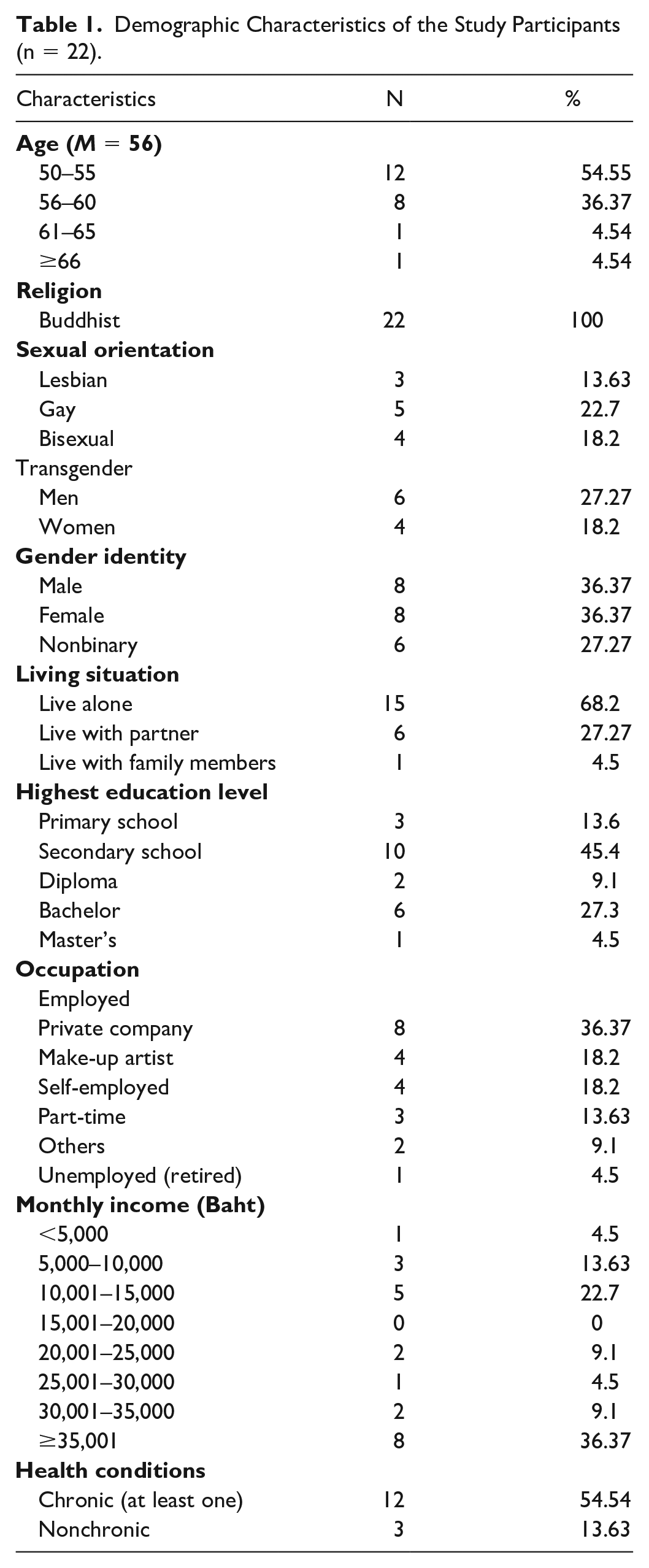
Demographic data such as age, religion, gender identity, sexual orientation, living situation, education, occupation, income, and health conditions were recorded and presented in Table 1.
Demographic Characteristics of the Study Participants (n = 22).
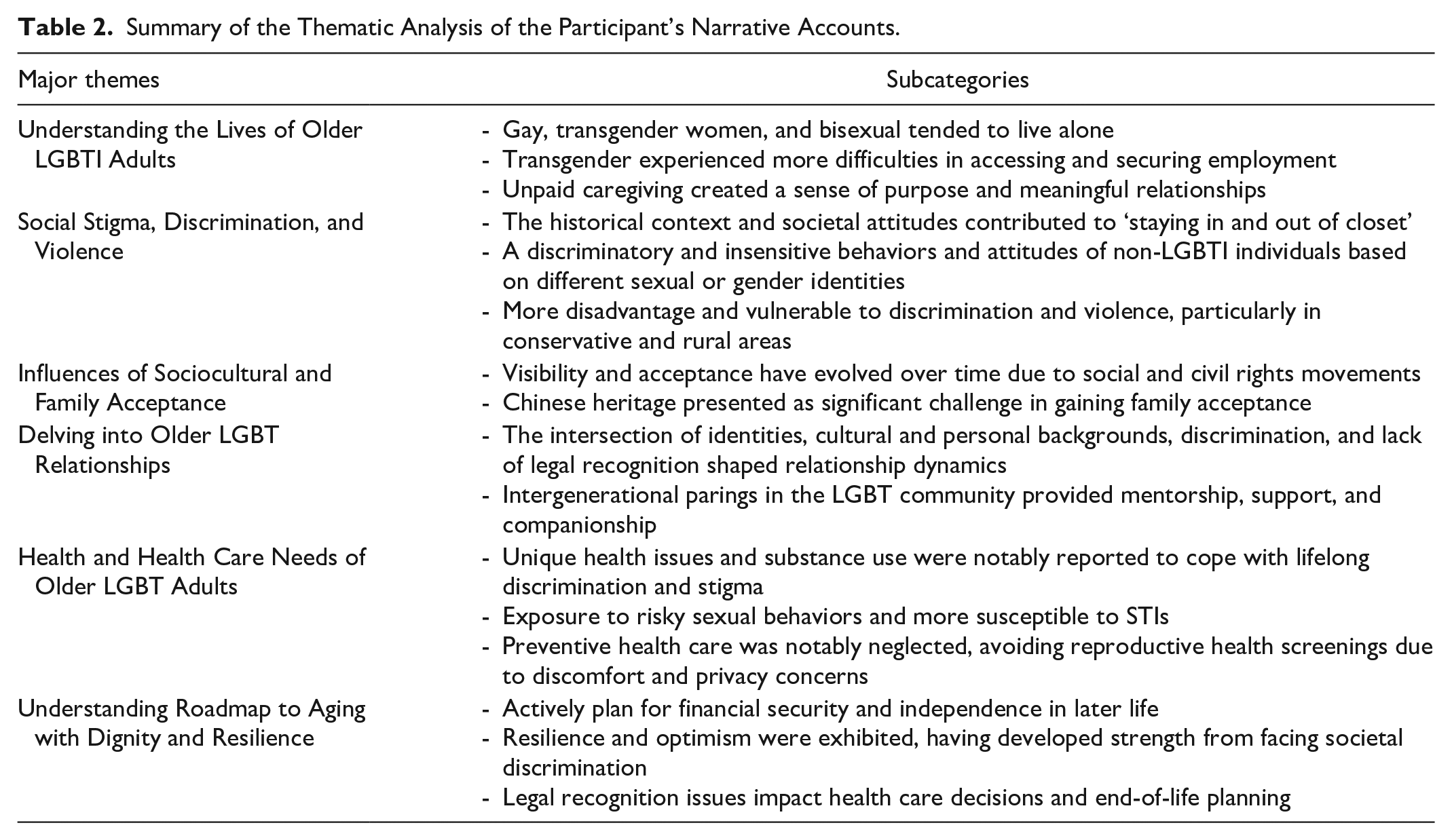
Six themes and 18 subthemes emerged that further exemplified participants’ experiences and unique needs including (a) understanding the lives of older LGBT adults; (b) social stigma, discrimination, and LGBT aging in Thai society; (c) influences of sociocultural and family acceptance; (d) LGBT relationships; (e) Health and health care needs; and (f) understanding roadmap to aging with dignity and resilience. Table 2 summarizes the thematic analysis of the participant’s narrative accounts.
Summary of the Thematic Analysis of the Participant’s Narrative Accounts.
Theme 1: Understanding the Lives of Older LGBT Adults
The experiences of older LGBT adults are shaped by their living arrangements, employment, and caregiving roles, reflecting both resilience and challenges. Many participants reported living alone, often as a result of family estrangement or life circumstances. While some shared spaces with partners, this was more common among lesbian and transgender men. As one participant, a transgender woman, described,
I live alone in the house that I bought for my mother and brother. Following my mother’s passing, my brother left me because he never loved me. I have been living alone in the space that was once meant for our shared family moments. (Participant 13, trans woman)
Employment remained a crucial aspect of life for many participants. Most were engaged in work, either in private companies, part-time jobs, or self-employment as makeup artists or entrepreneurs. However, employment discrimination due to LGBT identity was evident. One transgender woman recounted, “I encountered difficulties in securing employment due to my [LGBT] status as I got rejected so many times. It was a big obstacle because being considered a mental disorder” (Participant 08, trans woman).
Beyond their struggles, many participants found meaning through caregiving responsibilities. Several provided unpaid care for sick family members, older individuals, or younger relatives, despite the emotional and physical toll it placed on them. One participant shared, “I take all responsibilities for my brothers who are ill. Sometimes I feel very exhausted myself, but at the end of the day, being the caregiver gives me a sense of purpose” (Participant 05, lesbian). For these individuals, caregiving was not just an obligation but a role that affirmed their value within their families and communities.
Theme 2: Social Stigma, Discrimination, and Violence
For many older LGBT adults, navigating identity has been a lifelong challenge shaped by societal attitudes, discrimination, and personal resilience. Some participants have spent much of their lives concealing their identities, fearing rejection from family and friends. “I am unable to disclose my true identity to my family and friends. . . it’s not something that I can share with them” (Participant 04, gay), one interviewee shared, illustrating the internal struggle of staying in the closet. However, as societal acceptance has evolved, some participants have found the courage to embrace their identities more openly. One transgender man reflected on this shift, stating, “I have been living with my partner [in the closet] for years, and we can now openly express our affection by holding hands in public without fear of judgment”(Participant 16, trans man).
Despite progress, discrimination and stigma remain persistent realities. Many participants recounted experiences of mistreatment in both professional and social settings, reinforcing the intersectionality of age and LGBT identity. One woman described the hostility she faced at work, “When I worked as an electronics sales agent, I frequently endured instances where I was shouted at or spat upon, and in some distressing situations, some even allowed their dogs to attack me” (Participant 13, trans woman). The dehumanization and exclusion extended beyond employment—some participants felt they were denied basic rights due to being barred from donating blood to contribute to society.
For many, these experiences of discrimination and stigma were compounded by the threat of violence and prejudice, particularly in conservative or rural communities. Although Thailand has made strides in recognizing LGBT rights, deeply rooted biases persist in certain areas. One lesbian participant recalled the isolation she felt growing up,
I was raised and grew up in a rural community where being LGBT was considered a taboo. I eventually decided to migrate to a more urban area on my own, as I found it challenging to navigate and cope with the prevailing attitudes in my hometown. (Participant 07, lesbian)
Theme 3: Influences of Sociocultural and Family Acceptance
Older LGBT adults in Thailand have lived through decades of shifting societal and cultural landscapes. Once invisible, their identities were often unacknowledged or even rejected in public discourse. However, with the growing momentum of social movements advocating for equal rights, LGBT individuals have gained more visibility and recognition in recent years. One participant reflected on these changes, stating, “In the past, there was a lack of awareness and acceptance towards LGBT identities. Society was unwelcoming, and acceptance within family circles was also absent” (Participant 14, bisexual).
Despite these broader societal shifts, family acceptance and cultural backgrounds significantly influence LGBT members. Some participants, particularly those from Chinese-Thai families—reported stronger resistance and pressure from traditional norms. For some, family expectations led to forced marriages, emotional distress, and strained relationships. One participant painfully recalled,
My father, being of half-Chinese descent, forced me into a marriage with a man I did not love. This pressure stemmed from his fears that I might end up with a tomboy. Despite enduring years of a coerced marriage, I eventually made the difficult decision to escape my two young children. (Participant 07, lesbian)
While some have found acceptance within their families, others remain estranged to navigate life without familial support. The journey toward self-acceptance and societal recognition continues to be shaped by personal resilience and the broader cultural landscape.
Theme 4: Delving into Older LGBT Relationships
Just like their heterosexual counterparts, older LGBT adults experience a spectrum of relationships—ranging from loving, committed partnerships to strained, complex dynamics. Many participants described their relationships as sources of deep emotional support, companionship, and shared resilience. Some, particularly lesbian and transgender men, found stability and devotion within their partnerships. One participant shared,
We trust each other, and there is nothing that can come in to entangle us anymore . . . I don’t even think about being with anyone else. I wish to arrange a wedding for her, but our present circumstance is not stable [financially]. (Participant 16, trans man)
However, these relationships are often challenged by external societal forces, including discrimination, lack of legal protections, and family opposition. Some participants recounted stories of rejection by their partner’s family, and being forced to separate or hide their relationships. One participant painfully recalled,
His parents did not accept me. When he spent nights at my place, his parents confronted me at my workplace, shouting, “Why did you take our son?” Following that, they compelled him to be with a woman they had chosen for him. (Participant 11, trans woman)
For others, past relationships carried traumatic experiences of abuse and control, highlighting the vulnerability. One participant bravely recounted, “I endured physical and sexual abuse at the hands of my ex-husband; if I declined sex, he would be very mad and hit me” (Participant 10, bisexual).
Intergenerational relationships, whether romantic or platonic, also play a role in the lives of older LGBT individuals, offering companionship and mentorship across different age groups. Some participants described forming connections with younger partners, seeing them as sources of support and mutual understanding. One participant expressed, “Both of my partners are younger than me; one resides in Bangkok, while the other lives in a different province. I’m still deliberating, aiming to select the most suitable person who can provide the support I need” (Participant 19, gay).
Despite the unique challenges that LGBT relationships face, the pursuit of love, connection, and stability remains a universal experience. Many older LGBT individuals continue to navigate their relationships with resilience, seeking spaces where they can openly express love and companionship without fear of judgment.
Theme 5: Health and Health Care Needs of Older LGBT Adults
Aging as an LGBT individual presents distinct health challenges, shaped by a lifetime of navigating stigma, discrimination, and limited access to LGBT-friendly health care. Many participants reported living with chronic conditions such as high blood pressure, high cholesterol, and cancer. Some made difficult decisions regarding their treatment, balancing concerns about medical interventions with personal values and quality of life. One participant shared, “I’ve been diagnosed with terminal [colon] cancer three years ago, and now it has metastasized to my lungs. However, I have chosen not to pursue any treatment options as I do not believe they would be beneficial” (Participant 13, trans woman).
Substance abuse and risky behaviors were also present among some participants, often as coping mechanisms for past trauma and social exclusion. “Usually, I’m out partying with my [gay] partner and our friends, and yeah, sometimes we get into the drugs, especially meth,” admitted one participant (Participant 14, bisexual). In addition, some older LGBT adults engaged in sexual behaviors that increased their risk for HIV/AIDS and other STIs, often due to barriers in accessing preventive care. As one participant explained,
I rarely used condoms because of my job, honestly. I wasn’t sure if I might have caught HIV/AIDS. Then I found out about the Rainbow Sky Association of Thailand offering free blood tests. Right now, I’m on PrEP to prevent it. (Participant 3, gay)
Many participants delayed seeking health care, often waiting until symptoms became severe. The reasons varied—long wait times, fear of discrimination, and previous negative experiences with health care providers. One participant explained, “I don’t like going to see the doctors at hospitals. The last time I went, I had to wait forever, and it seriously messed with my day. It’s just not worth it for me” (Participant 1, trans man). Preventive care, particularly reproductive health screenings, was also commonly avoided. “I’ve never bothered with getting checked because I’ve never used them [referring to breasts and cervix], so I figured there shouldn’t be any problems.” (Participant 1, trans man)
When asked how health care services could be improved, participants emphasized the need for respect, sensitivity, and nonjudgmental care. Many wished for LGBT-friendly providers who understood their unique concerns. One participant stated,
I think staff should have specific knowledge and really understand where this group is coming from. If possible, it would be great to have providers who belong to this group . . . It’s like coming in and feeling like you’re chatting with a friend, someone you can open up to. (Participant 21, bisexual)
Theme 6: Understanding Roadmap to Aging With Dignity and Resilience
Older LGBT adults take proactive steps to ensure financial security, cultivate resilience, and make thoughtful long-term and end-of-life plans. They emphasized the importance of financial independence, engaging in budgeting, saving for retirement, investing in long-term care insurance, and creating wills or trusts to protect their assets and provide for loved ones. One participant described her meticulous planning, stating,
I’ve thought everything through and made plans for it all. If no one looks after me, it’s like not having any children to take care of me, so I have to be independent. I’ve been saving up for a while now—put money aside to buy gold, land, and whatever investments I can. I’ve also written a living will to make sure my partner has a place to live when I’m gone. (Participant 07, lesbian)
Beyond financial preparations, participants exhibited strong personal qualities that helped them navigate life’s challenges. Many emphasized resilience, optimism, and self-acceptance, enabling them to cope with societal pressures. One participant explained,
I’m pretty optimistic about things. I honestly don’t care much about how others see or perceive me. Sure, I’d like them to accept me for who I am, but I don’t really spend much time thinking about being the center of someone else’s attention. (Participant 5, lesbian)
Long-term planning emerged as a common theme, with participants carefully considering housing, lifestyle choices, health and wellness, and employment decisions to maintain a sense of security and fulfillment. Recognizing the absence of traditional family structures, many emphasized the importance of self-sufficiency. A trans man shared his perspective,
Upon retirement, I plan to return home and reside there permanently. Currently, I’m in the process of building a house in another province. As I’ve come to terms with the fact that I won’t have descendants, I’ve realized the importance of being my own primary support system, the first line of defense in managing all aspects of life. By ensuring I can care for myself to some extent, I alleviate numerous burdens. (Participant 9, transman)
In addition to long-term financial and lifestyle considerations, end-of-life planning was a significant concern. Many participants expressed a desire to remain in the comfort of their own home and avoid unnecessary medical interventions. One participant described her approach, stating,
Here is the thing, I have told [my partner] that if I have minor health issues that can be treated, take me to the hospital. But if it is something that won’t go away even with treatment, do not take me to the hospital. I would not want to do anything unnecessary. Like putting in an IV or tube or having surgery. If the treatment won’t fix the problem, why bother with it? (Participant 07, lesbian)
Discussion
The findings from the study shed light on the multifaceted lives of older LGBT adults in Thailand, highlighting their unique challenges, resilience, and aspirations. The results reveal that the experiences and needs of older LGBT adults are influenced by intersecting factors, including personal, socioeconomic, historical context, gender identity, legal and policy environment, and health systems.
From a personal perspective, the findings reveal a diversity of living arrangements among older LGBT adults, with a significant portion living alone. For some, living alone signifies independence and freedom, while for others, it may result from familial estrangement or the loss of loved ones, reflecting a trend observed in other studies (Freedman & Nicolle, 2020). However, it is essential to note that living alone does not necessarily equate to loneliness, as some older LGBT individuals found companionship and solace in pets or engaged in social activities outside the home, highlighting the importance of emotional support (Kim et al., 2016). Notably, lesbian and transgender men were more likely to report living with partners, highlighting variations in relationship dynamics within the LGBT community. This finding aligns with previous research indicating that lesbian and transgender individuals may be more likely to form long-term committed relationships compared with gay men and transgender women (Reczek, 2014). This diversity underscores the need for tailored housing and support services that recognize and accommodate the unique needs of older LGBT adults (Holman et al., 2020).
Employment presented both opportunities and obstacles, with some facing discrimination due to their LGBT status. Transgender individuals, in particular, reported challenges related to workplace dress codes and employment opportunities. These findings highlight the ongoing need for workplace diversity and inclusion initiatives that address the specific needs and concerns of older LGBT employees (Movement Advance Project, 2017). Furthermore, unpaid caregiving roles emerged as significant sources of purpose and fulfillment for participants, underscoring the importance of familial bonds within the LGBT community. However, caregiving responsibilities can also lead to caregiver burden and stress, highlighting the importance of support services tailored to the needs of LGBT caregivers (Fredriksen-Goldsen et al., 2014, 2023).
Social stigma, discrimination, and violence continue to impact the lives of older LGBT adults, despite societal progress. Many participants navigated the complexities of coming out and faced discrimination and violence, while some remained in the closet to avoid prejudice, both within their families and broader society. These findings are consistent with previous studies highlighted that discrimination against sexual minority persists in many cultures, contributing significantly to poorer psychological well-being among older sexual minorities (Chan et al., 2024; Feinstein et al., 2023; Pereira, 2022; Srithumsuk et al., 2024; Thummapol et al., 2021). The interplay of historical societal attitudes and familial acceptance influenced participants’ experiences, with recent movements that advocate for gender equality, contributing to increased visibility and acceptance of LGBT identities. Despite positive shifts, challenges such as discrimination, societal expectations, and family acceptance remain prevalent, particularly among participants from ethnically diverse backgrounds. Efforts to combat discrimination and promote acceptance of sexual minorities are crucial for improving the well-being of older LGBT adults.
Older LGBT relationships encompassed a diverse range of dynamics, from supportive partnerships to challenges stemming from societal discrimination, lack of legal recognition, and family rejection. The findings provide valuable insights into the unique experiences, challenges, and sources of resilience within this population, underscoring the intersectionality of identity and social context in shaping relationship experiences among older LGBT adults. Similar findings were found in the previous studies, examining the resilience and coping strategies of them in the face of adversity and highlighting the importance of supportive relationships in mitigating the adverse effects of minority stress and discrimination (Fredriksen-Goldsen et al., 2018; Li et al., 2023). Furthermore, intergenerational relationships emerged as a notable theme in the study, with participants describing both romantic and platonic connections with younger LGBT individuals. These relationships provide mentorship, support, and companionship across generational divides, contributing to the well-being and resilience of older LGBT adults. These findings resonate with the concept of mutual support, fostering a sense of belonging, empowerment, and solidarity observed in previous research (Srithumsuk et al., 2024; Thummapol et al., 2021). These relationships can help older LGBT adults combat social isolation, ageism, and discrimination while fostering mutual learning and growth.
Health and health care needs among older LGBT adults revealed unique challenges, including disparities in access to health care services and higher rates of chronic conditions and risky health behaviors. The findings are consistent with previous studies, highlighting the higher prevalence of chronic conditions, substance abuse and addiction, sexual behaviors and risk for HIV/AIDS and sexually transmitted infections (STIs) among LGBT older adults compared with their heterosexual counterparts (Fredriksen-Goldsen et al., 2018; Srithumsuk et al., 2024). These health disparities can be attributed to various factors, including minority stress, social marginalization, and the use of substances as a coping mechanism (Parent et al., 2018). In addition, many older LGBT participants delay or avoid health care services due to concerns about discrimination and a lack of LGBT-friendly providers. Align with previous studies, experiences of stigma, discrimination, and lack of culturally competent care are key barriers to accessing and avoiding health care services among older LGBT adults (Srithumsuk et al., 2024; Thummapol et al., 2021). Therefore, expectations for health care services emphasize the need for LGBT-friendly providers, and environments are required for them.
The findings underscore the significance of end-of-life planning among older LGBT adults, including considerations for where they want to stay before dying, financial planning, and ensuring their wishes are respected in legal and health care contexts. To address these concerns, health care providers can support older LGBT adults in making informed decisions about their care preferences and ensure that their end-of-life experiences align with their values, preferences, and identities. For example, older LGBT adults should be encouraged to engage in advance care planning, documenting their health care preferences and designating a trusted individual, such as a partner or chosen family member, to make medical decisions on their behalf. Research has shown that LGBT individuals are less likely to have these legal documents in place compared with their heterosexual counterparts, highlighting the importance of proactive end-of-life planning (Eldridge et al., 2015).
Implications and Recommendations
Addressing challenges facing older LGBT adults requires coordinated efforts across multiple sectors to understand the unique needs of sexual minorities. LGBT-friendly providers are crucial for building trust and improving health outcomes.
Nurses play a vital role in providing culturally competent care by understanding the intersection of sexual orientation, gender identity, and cultural backgrounds while supporting patients’ autonomy and dignity. They should advocate for inclusive policies and create respectful environments. Health care providers must create nonjudgmental spaces for discussing spiritual concerns and collaborate with faith leaders to bridge gaps between spiritual care and LGBT-affirming practices.
Policymakers should prioritize inclusive legislation protecting rights in the employment, health care, and housing sectors. Anti-discrimination laws and measures promoting social acceptance are essential. Further research is needed to explore the intersectional experiences of older LGBT adults. Understanding factors contributing to resilience and successful aging is crucial for developing effective interventions and systems.
Conclusion
The study provides valuable insights into the lives of older LGBT adults, illuminating the complex intersections of identity, social context, and well-being. Through focused ethnography, the study uncovered and underscored the pervasive challenges of social stigma, discrimination, and marginalization faced by individuals in Thailand, as well as the resilience and strength exhibited in navigating these barriers. Importantly, the study highlights the need for targeted interventions and policies to address their unique needs, including the promotion of inclusive health care services, workplace policies, and social support networks to promote social justice, equality, and dignity for all individuals, regardless of sexual orientation or gender identity.
Footnotes
Declaration of Conflicting Interests
The author(s) declared no potential conflicts of interest with respect to the research, authorship, and/or publication of this article.
Funding
The author(s) disclosed receipt of the following financial support for the research, authorship, and/or publication of this article: The author(s) received financial support from Assumption University. The provided funding was instrumental in facilitating the data collection and analysis phases of this study. The funder had no role in the study design, data collection and analysis, decision to publish, or preparation of the manuscript.
