







Abstract
This study analyzes patterns, demographic characteristics, and primary concerns of callers to Kyrgyzstan’s national helpline over a 3-year period (2021–2023). Descriptive analysis of 7,800 calls examined caller demographics, yearly trends, and primary concerns disaggregated by age and gender. Adults represented 71.1% of callers, with peak volume in 2022 (N = 3,100). Adults most frequently requested social assistance (20.6%) and administrative support (11.2%), while children reported psychological concerns (28%), family conflict (19.1%), and child-protection issues (16.7%). Female callers (62.1%) consistently outnumbered males across all categories. Findings reveal distinct age-based patterns, with adults seeking primarily instrumental support and children presenting psychological and relational concerns. The study underscores implications for strengthening age-appropriate helpline services and tailoring psychosocial resources for child callers in Kyrgyzstan and similar cultural contexts.
Background
Mental health has been widely noted as a public health concern, with persons facing mental health issues and their families disproportionately experiencing enormous challenges (Asamoah et al., 2024). Nonetheless, in contrast to traditional face-to-face consultation (Ahad et al., 2023; Cornally & McCarthy, 2011), many people with mental health crises rather prefer online mental health support due to fear of stigmatization, to making helplines (also known as crisis lines and hotlines) a reliable alternative. The World Health Organization (2018) highlights that helplines play a significant role in mental health service provision by encouraging people in crisis to alleviate distress and enabling problem-solving by offering confidential and immediate assistance. Practically, helplines provide a significant platform for various clients to address their immediate needs (Curll et al., 2024; Hoffberg et al., 2020). McClellan et al.’s (2022) research reports that contacting the helpline enabled 89% of respondents to address their problems more effectively. This further accentuates the relevance of helplines in supporting individuals in distress and various mental issues, including children and adults, providing them with risk management and a continuum of care (Gould et al., 2018). Along with multiple advantages, previous studies have highlighted challenges associated with helpline services. They predominantly include psychological and emotional barriers such as perceived effectiveness of speaking with a counselor, fear of the conversation linked to anxiety, being judged, misunderstood, or confronting painful thoughts and emotions during interaction, and emotional discomfort discussing suicidal thoughts (Brülhart et al., 2023; van der Burgt et al., 2023).
Kyrgyzstan has implemented a helpline-based assistance system in accordance with needs and global best practices. Since 2015, the helpline has remained operational to address emotional, psychological, and social challenges faced by children and adults across the country (MLSD KR, 2015). It has been operated by the government institution “Children’s Helpline Center” under the MLSSM. Since its inception, the helpline has had its unique phone number #111, which everyone can call to receive free support on any issues. According to the National Statistical Committee of the Kyrgyz Republic (2024), children represent one third of Kyrgyzstan’s population (2,692,194 as of 2024). The age distribution between boys (53%) and girls (47%) is almost equal, with a significant number of children (70.6%) living in rural areas. Thus, many might face challenges in accessing face-to-face social services, health care, education, and leisure activities (UNICEF, 2023). In contrast, around 79.2% of households in Kyrgyzstan have access to cell phones linked to the internet (NSC & UNICEF, 2024), making helpline services more available and accessible. However, access to a phone does not necessarily equate to independent or private access for children. In many low- and middle-income country (LMIC) contexts, phones are shared among family members, and phone-sharing behaviors coupled with low confidence in call privacy, which may reduce children’s willingness to contact helplines independently (Carlick & May-Chahal, 2025; Madonsela et al., 2023). This structural barrier may partially account for lower-than-expected call rates among child callers. Regarding adult callers, there is no separate helpline for adults; thus, they are also more likely to use children’s helpline for their inquiries. The helpline is moderately promoted on social media with 18,600 followers on Instagram (@tel_111.kg) and basic information on the Ministry’s website (MLSD KR, 2015).
Despite the existence and operations of the helpline for the past 10 years, limited studies have focused on evaluating the effectiveness of the helpline’s work, or any other research besides internal reporting and publications on the website and the Instagram page. Staff at the center where the helpline operates maintain call records across certain categories, which are systematic in nature. Based on the type of data available on the website of MLSSM in the section of Open Data (MLSSM KR, 2024), this study aims to analyze the patterns, demographic characteristics, and types of concerns of callers to Kyrgyzstan’s national helpline over a 3-year period (2021–2023).
The research focuses on the following research questions (RQs):
Theoretical Framework
Three major theories explain the gender and age disparities influencing the decision to utilize the helpline for assistance: help-seeking behavior theory, the feminist theory, and the lifespan development theory.
First, the help-seeking behavior theory provides a useful lens for understanding helpline use patterns in Kyrgyzstan. Rickwood et al. (2005) conceptualize help-seeking as the process of converting psychological distress into a request for assistance, noting that barriers can emerge at each of four decision points: recognizing a problem exists, deciding to seek help, selecting a help source, and engaging with that source. Building on this foundation, help-seeking behavior is understood as problem-focused, planned behavior involving interpersonal interaction with service providers (Cornally & McCarthy, 2011). The Integrated Behavioral Model of Mental Health Help-Seeking expands this understanding by providing a comprehensive framework for the factors influencing decisions to seek professional assistance (Hammer et al., 2024). According to this framework, help-seeking behavior is shaped by multiple interconnected determinants, including structural forces, cultural influences, environmental constraints, experience, evaluated need, mental health literacy, and social support (Spengler et al., 2023). These determinants influence beliefs about seeking help, which in turn shape attitudes, perceived norms, and personal agency, which are the mechanisms that collectively drive intention and subsequent help-seeking behavior. One crucial factor affecting help-seeking is gender. Research demonstrates significant gender differences in help-seeking patterns, with women more likely than men to seek professional help (Roth & Szlyk, 2020). Women typically report more favorable attitudes toward seeking help and demonstrate greater willingness to acknowledge difficulties. In contrast, traditional masculine norms, particularly self-reliance and emotional stoicism, reduce help-seeking among men (Vogel et al., 2011). Rickwood et al. (2005) found these gender differences emerge early, with girls becoming increasingly likely to seek help across adolescence while boys’ help-seeking declines.
Second, building on help-seeking theory, feminist theory highlights that girls may experience higher rates of psychological distress or abuse rooted in gendered power imbalances within family and institutional contexts (Mirzaei-Alavijeh et al., 2025), compounding their likelihood of turning to accessible services such as helplines. Feminist theory argues that social systems are structured around gendered power relations, where patriarchal norms shape whose needs are prioritized and whose distress is taken seriously (Capdevila & Zurbriggen, 2023; Puente-Martínez et al., 2025). Within many family and institutional contexts, women’s and girls’ emotional, psychological, and social concerns are frequently devalued, overlooked, or dismissed, limiting their access to formal support models (Sylaska & Edwards, 2014). From this perspective, the overrepresentation of women and girls in help-seeking may reflect not simply greater emotional openness, but rather structural marginalization. Women and girls may rely on the free and accessible services because they often have restricted financial autonomy, lower control over household resources, and fewer opportunities to seek paid mental health care (Puente-Martínez et al., 2022).
Third, building on both frameworks, the lifespan development theory offers a useful complementary lens for understanding help-seeking behavior, emphasizing that individuals’ needs and concerns shift across developmental stages. According to this theory, individuals experience age-specific psychological, cognitive, and social tasks such as identity exploration during adolescence, relationship restructuring in adulthood, or family and caregiving responsibilities at different stages of life (Rauvola & Rudolph, 2023). Each stage brings unique stressors, vulnerabilities, and help‑seeking patterns. Across the lifespan, these age-linked transitions and pressures shape when, why, and how individuals seek help. Accordingly, helplines that adapt to the diverse developmental needs of their users across the lifespan are better positioned to serve those most in need.
Current Study
To our knowledge, this is the first empirical analysis of a national helpline in Kyrgyzstan, located in Central Asia. The study provides a comprehensive 3-year dataset that captures both psychological and socio-administrative concerns. It also addresses a critical underrepresentation in the helpline literature. Existing research overwhelmingly focuses on high-income countries and primarily frames helplines as mental health crisis interventions (Hoffberg et al., 2020; Mahmood et al., 2024). In contrast, our analysis offers rare empirical evidence from Central Asia, a region largely absent from global helpline discourse. This is particularly significant given that Kyrgyzstan’s collectivist cultural context differs fundamentally from the Western individualist frameworks that underpin most existing helpline theory and design, a contrast that has direct implications for how help-seeking is understood, normalized, and practiced. This contribution is critical for expanding helpline research beyond Western-centric models and informing service design in similar LMIC contexts.
Our study moves beyond simple descriptive reporting by challenging dominant assumptions about helpline functions and extending the theories to LMIC contexts. Our findings reveal that the helpline in Kyrgyzstan operates a hybrid platform, addressing both psychosocial and socio-administrative needs. This insight gives an understanding that in resource-limited settings, helplines can serve as essential gateways to social services, reducing barriers for vulnerable populations. By documenting gender and age differences in help-seeking patterns, this study emphasizes the need for culturally and structurally informed models of helpline design. Notably, the interaction between developmental stage, particularly adolescence, and gender norms in a collectivist setting produces help-seeking dynamics that existing Western-derived models do not adequately capture, pointing to a theoretical gap this study begins to address. We ensure that these contributions advance theoretical understanding and inform practical strategies for improving access to care in underrepresented regions, ultimately making our study significant and offering further discussions.
Methods and Materials
Research Design
This study employed descriptive statistical analysis of de-identified data obtained from the helpline’s Supervising Center under the MLSSM of the Kyrgyz Republic. The helpline serves children and adults, operating 24/7 with trained professionals who manually document each contact according to standardized protocols. Data encompass all documented calls received between January 2021 and December 2023 (N = 7,800). Each contact was systematically recorded by helpline professionals, capturing key demographic information, types of requests (See Online Appendix 1), and other relevant details. The study population comprises all individuals who contacted the helpline. This figure reflects total contacts rather than unique callers, as the helpline’s anonymity protocols prevent linking multiple calls to individual users.
Data Collection and Processing
The dataset was obtained from the official open data repository of the MLSSM. The raw data was initially downloaded as three separate Excel documents. A comprehensive data cleaning process was conducted to ensure data quality and consistency, followed by standardization to establish uniform formatting and normalization procedures to optimize data integrity. Following initial cleaning, the documents were restructured and organized according to the RQs. The final step involved consolidating all three documents into a single master document in Excel format, serving as the foundation for all subsequent analyses.
Data Analysis
Analytical procedures were implemented using Python 3.11, leveraging the pandas library for data manipulation and Excel file processing. Data visualization was accomplished through matplotlib. The analytical methodology employed a systematic approach to examine service utilization patterns across the study period. Total service requests were aggregated by demographic groups for each year, and percentage distributions were calculated relative to annual totals to enable comparative analysis and identify temporal trends. This approach enabled the identification of patterns in service demand and utilization rates across different demographic groups during the 3-year observation period.
Rationale for Using This Method
Descriptive statistical analysis was selected for three key reasons. First, this represents the first systematic analysis of Kyrgyzstan’s national helpline data since 2015. In the absence of prior empirical research, descriptive analysis provides the necessary foundation for understanding basic usage patterns, caller demographics, and service demand trends. Second, given the exploratory nature of this research and the limited existing literature on helpline services in Central Asian contexts, descriptive statistics enable us to systematically document what is currently unknown, establishing an empirical baseline. This foundational work generates benchmark data against which future changes can be measured and identifies patterns that can inform specific hypotheses for subsequent investigation. Third, the data structure and anonymity protocols constrain methodological options. The helpline’s confidentiality measures prevent tracking individual callers across multiple contacts, and the dataset lacks certain contextual variables (e.g., exact caller age, socioeconomic status, and geographic location) necessary for more sophisticated statistical modeling. Descriptive analysis maximizes the value of available data while acknowledging these inherent limitations.
Ethical Considerations
The data were received from the open source and de-identified. As such, the Institutional Review Board (IRB) of the University of Alabama determined that the study was not human subject research and therefore exempt (IRB ID: 25-03-8541).
Results
The following Figures present the comprehensive analysis of helpline call patterns and request categories over the 3-year period from 2021 to 2023. Each visualization corresponds to one of the four RQs, systematically addressing trends in call volume, category distribution, demographic differences, and temporal shifts in service utilization.
RQ1 is addressed through Figure 1, which shows demographic patterns of total requests across 2021 to 2023 (N = 7,800).
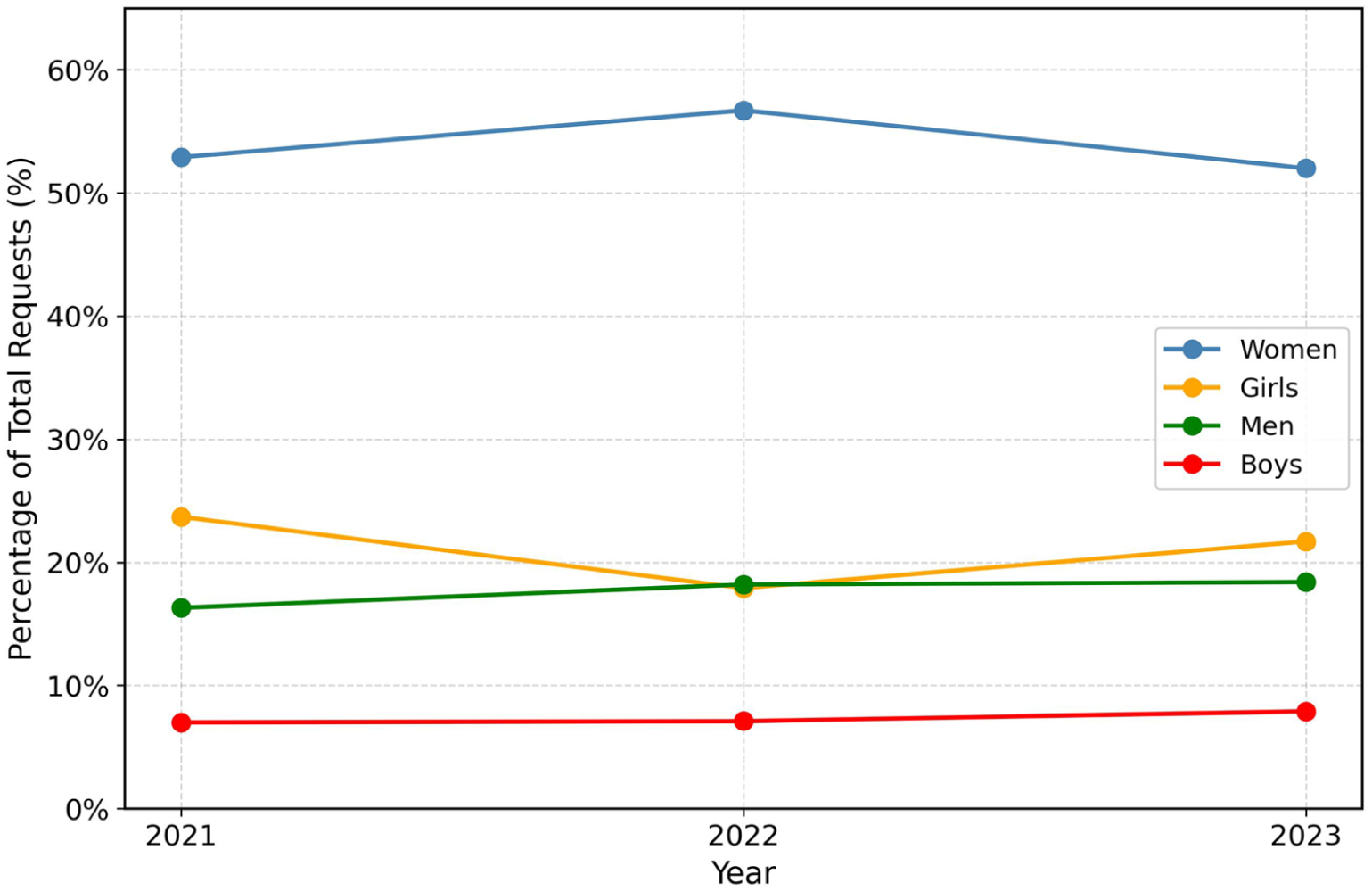
Demographic Patterns of Total Requests, 2021 to 2023 (N = 7,800)
Figure 1 shows helpline request volumes by gender and year (2021–2023) across 7,800 requests. Women consistently represented the majority: 52.9% in 2021 (1,367), 56.7% in 2022 (1,673), and 52.0% in 2023 (1,178). Girls were the second most frequent group at 23.7% (613), 17.9% (528), and 21.7% (492), respectively. Men ranked third with relatively stable shares: 16.3% (422), 18.2% (536), and 18.4% (416). Boys represented the smallest group, gradually increasing from 7.0% (182) to 7.9% (178). Female users, both adults and children, were more likely to engage with helpline services than males. Notably, 2022 marked the peak in total requests for every demographic group.
RQ2 is addressed through Figure 2, where helpline calls are distributed by volume and age groups from 2021 to 2023 (N = 7,800).
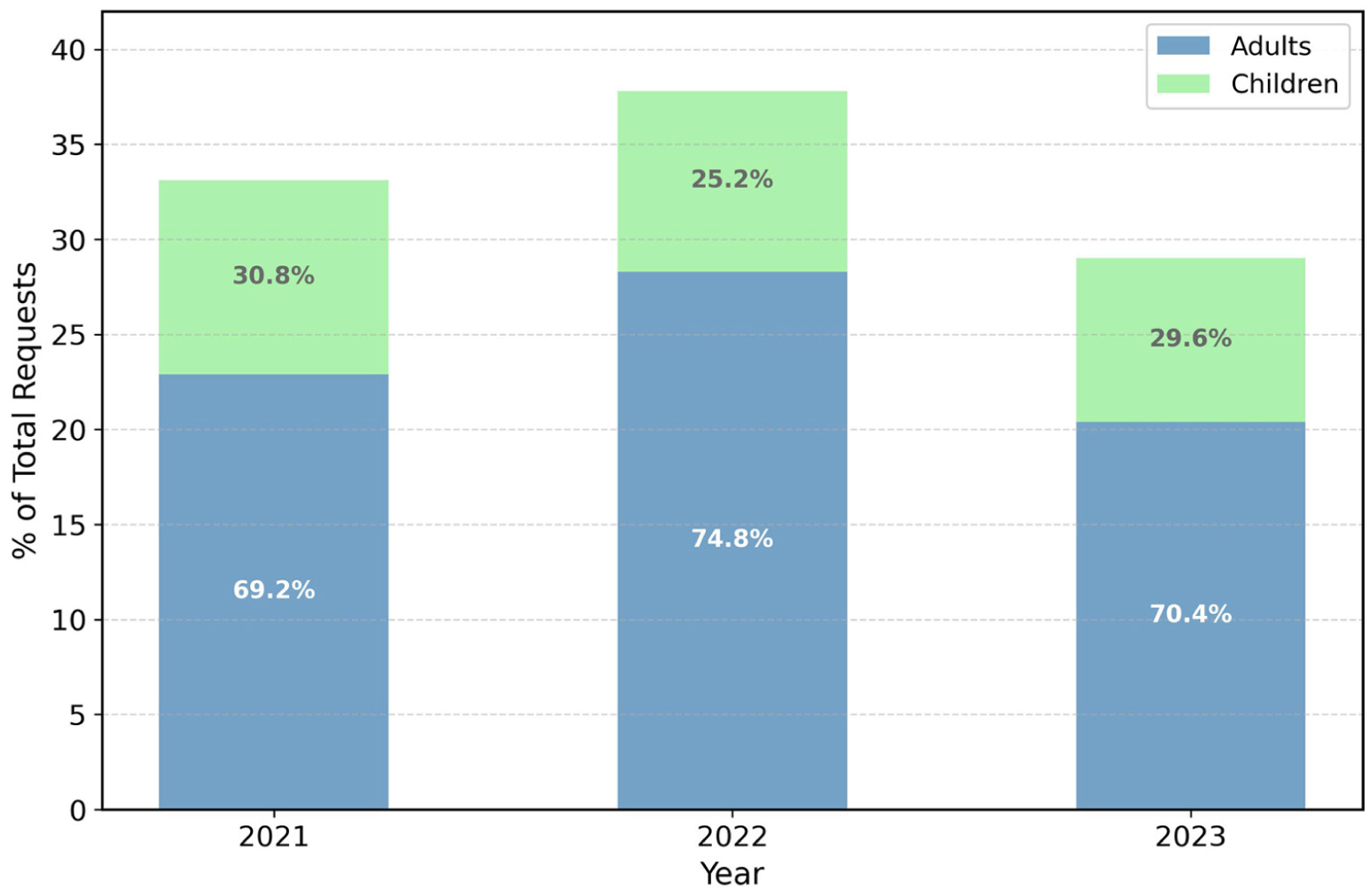
Distribution of Helpline Calls by Year and Age Groups, 2021 to 2023 (N = 7,800)
In Figure 2, the overall volume of calls increased in 2022, representing 37.8% of the total calls over the 3 years (2,952 requests). This was followed by 2021 with 33.1% (2,584 calls), and a decline in 2023 to 29.0% (2,264 calls). Adults consistently accounted for the majority of helpline contacts across all years. Their share ranged from 69.2% (1,789 calls) in 2021, increased to 74.8% (2,209 calls) in 2022, before decreasing slightly to 70.4% (1,594 calls) in 2023. Children represented a smaller, though still significant, proportion of total calls, varying between 25.2% (743 calls) in 2022 and 30.8% (795 calls) in 2021, with a slight rebound to 29.6% (670 calls) in 2023. This distribution highlights a consistent trend where adults make up roughly two thirds to three quarters of all helpline requests, while children contribute about one quarter to one third of contacts each year.
RQ3 is covered by Figure 3, with top helpline requests by category and year for the period from 2021 to 2023, with the total number of calls for all years (N = 7,800).
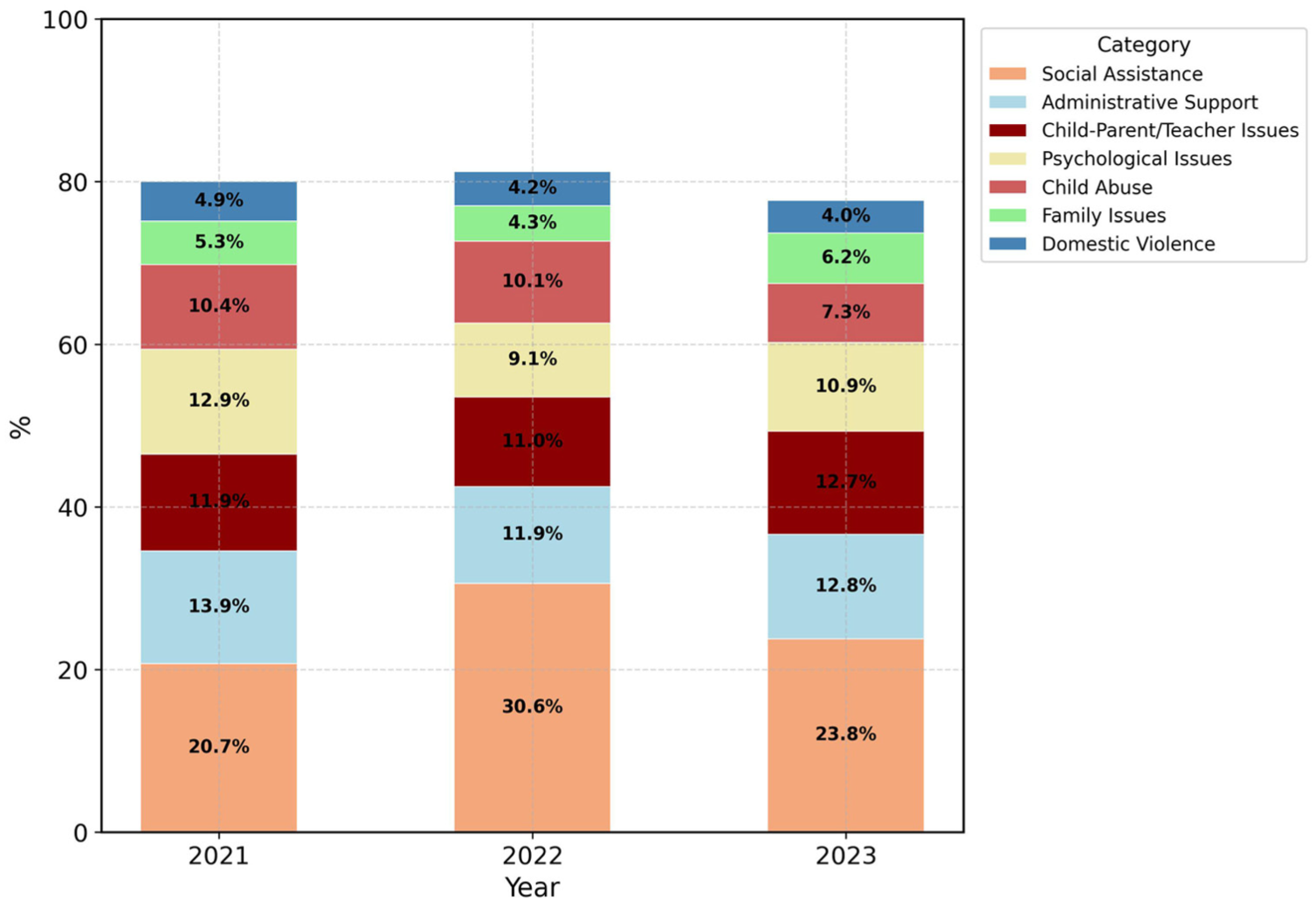
Top Helpline Requests by Category and Year, 2021 to 2023 (N = 7,800)
Figure 3 represents only the seven most frequently reported request categories. It shows that social assistance consistently represented the largest proportion of requests, rising from 20.7% (534) in 2021 to a peak of 30.6% (902) in 2022, before declining to 23.8% (539) in 2023. Administrative Support remained relatively stable, fluctuating between 11.9% (352) and 13.9% (360). Psychological issues showed a downward trend from 12.9% (334) in 2021 to 9.1% (268) in 2022, followed by a slight increase to 10.9% (247) in 2023, possibly reflecting evolving mental health stressors post-pandemic. Child–parent/teacher issues remained consistently high, increasing from 11.9% (307) to 12.7% (288), while child abuse declined from 10.4% (269) to 7.3% (165). Domestic violence requests decreased from 4.9% (126) to 4.0% (91). Education system issues increased from 3.6% (93) in 2021 to 5.3% (119) in 2023. Categories such as child neglect, medical support, and suicidal ideation remained lower in volume but showed small increases in 2023. Notably, suicidal ideation increased from 0.1% (3) in 2021 to 0.5% (10) in 2023. Overall, the data reflect shifting societal needs, with the most pronounced fluctuations in social assistance, psychological health, and child-focused concerns.
RQ4 is addressed in Figure 4, which illustrates the breakdown of helpline requests by category and age group from 2021 through 2023 (N = 7,800).
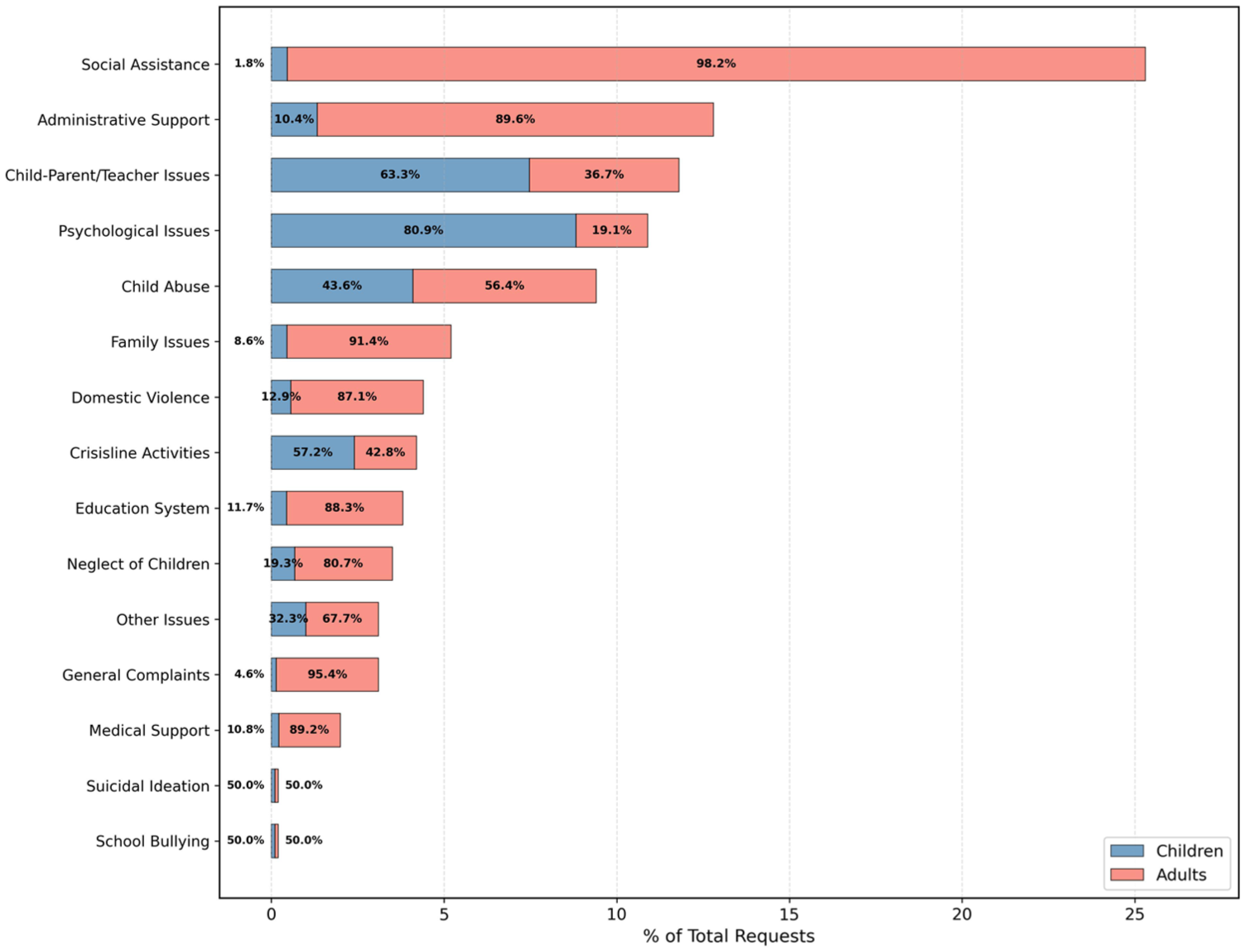
Breakdown of Helpline Requests by Category and Age Group, 2021 to 2023 (N = 7,800)
Figure 4 highlights that social assistance was the most reported issue at 25.3% (1,975), with 98.2% from adults. Administrative support followed at 12.8% (1,001), predominantly from adults. Child–parent/teacher issues represented 11.8% (919), with 63.3% from children. Psychological issues accounted for 10.9% (849), driven largely by children at 80.9%. Child abuse comprised 9.4% (731), with a substantial share from both groups—43.6% from children and 56.4% from adults. Family issues constituted 5.2% (406), with 91.4% from adults. Domestic violence followed at 4.4% (341), with 87.1% from adults. Less frequent categories reflected adult-dominated trends: Child neglect at 3.5% (275), education system at 3.8% (298), and general complaints at 3.1% (240). Medical support represented 2.0% (158), predominantly from adults. Helpline activities at 4.2% (325) showed a balance between children (57.2%) and adults (42.8%). Suicidal ideation and school bullying were the lowest-volume categories at 0.2% (17), disproportionately reported by children. Overall, children more frequently reported psychological, relational, and school-related concerns, while adults reported issues related to public services and institutional systems.
Discussions
Across the globe, past studies have explored the effectiveness of helplines in different countries (Hoffberg et al., 2020). Our study presents a unique perspective on helplines in an LMIC context. This is especially important given the limited research and the underrepresentation of Central Asian countries, such as Kyrgyzstan.
This 3-year descriptive study revealed steady interest and usage of the only country helpline service among both children and adults (Figure 1). The findings indicate that adults made up the majority of helpline users across all years (70%–75% of total calls), with women comprising over 60%. Research confirms that for some hotlines, this is usual when most callers are females (Doherty & Kartalova-O’Doherty, 2010; Matthews et al., 2023; Roth & Szlyk, 2020). This gender pattern in help-seeking behavior can be explained by several factors: women typically report more favorable attitudes toward seeking help, experience less self-stigma associated with service utilization, and often serve as primary problem-solvers within family systems (Hammer et al., 2024; Vogel et al., 2011). In addition, factors such as having a mental or behavioral disorder, experiencing suicidality, or interacting with other formal and informal sectors of the mental health and social service system were significant correlates of helpline use among female callers of all ages (Roth & Szlyk, 2020). From a feminist theory perspective, however, this overrepresentation of women and girls may reflect not simply greater emotional openness, but structural marginalization, whereby patriarchal norms devalue women’s and girls’ concerns within family and institutional systems, leaving the free helpline as one of the few accessible alternatives when financial autonomy is restricted and formal mental health care remains out of reach (Capdevila & Zurbriggen, 2023; Mirzaei-Alavijeh et al., 2025; Puente-Martínez et al., 2025).
In contrast, men’s lower help-seeking rates are often associated with conformity to traditional masculine norms such as self-reliance and emotional stoicism, which discourage acknowledgment of difficulties and external help-seeking (Vogel et al., 2011). The worldwide research indicates that the dynamics of calls might fluctuate over time depending on different immediate concerns (Zippelius et al., 2025) or increased demand for mental health services (van den Broek et al., 2023). This is well-supported by the findings of our research. The year 2022 was the peak period, representing the majority of total calls (Figure 2), demonstrating the highest demand for helpline services and coinciding with the greatest proportion of adult callers at 74.8%. However, in 2023, there was a significant decrease in calls. This may be explained by the fact that in 2022, there was a major reorganization of the Ministry and an improved promotion of the helpline.
The most prominent concerns for calling were about social assistance and administrative support, with a predominant number of adult callers (Figures 3 and 4). This indicates that although the primary goal of the helpline is to offer psychological assistance, it also serves as an important navigator in addressing social issues. In the context of help-seeking stages, adults demonstrate awareness and decision-making primarily around social and administrative challenges, rather than psychological distress, indicating that their perception of “problem” extends beyond mental health. This pattern aligns with Rickwood et al.’s (2005) finding that problem recognition itself can be a barrier where individuals may not identify certain issues as legitimate problems requiring help, particularly when mental health literacy is limited. Within this adult caller population, women callers represented half of the total requests, which may suggest that women place more trust in state services and serve as the main problem-solvers for diverse social issues within the family, as supported by Andara et al. (2025).
In contrast to adult patterns, children engage with the helpline for psychological and relational concerns, aligning more closely with traditional expectations of helpline use. Most calls from children were characterized by requests for consultation, advice, and psychological support, unlike adult calls (Figures 3 and 4). This is supported by Batchelor et al. (2021) and Mathieu et al. (2021), where family relationships and mental health are highlighted as the main reasons for children’s calls. Feminist theory highlights that girls may experience higher rates of psychological distress or abuse rooted in gendered power imbalances within family and institutional contexts (Mirzaei-Alavijeh et al., 2025), which may partially explain their greater representation among child callers seeking psychological support. The findings (Figure 4) show that calls from children seeking psychological help, reporting child-parent and/or teacher conflicts, and experiencing child abuse constituted the overwhelming majority of calls over 3 years. This pattern aligns with lifespan development theory, as children and adolescents navigating identity formation, emotional regulation, and emerging autonomy may turn to the helpline when these developmental tasks become overwhelming or are met with limited family or school support (Rauvola & Rudolph, 2023). This dynamic may reflect broader challenges in accessing formal mental health services, as structural barriers such as limited health insurance coverage and lack of established care relationships make it difficult for families to obtain mental health services for their children (Planey et al., 2019). These data demonstrate that this helpline is an important point of access for young people experiencing psychological distress. Beyond service-level barriers, the volume of calls from children may not fully reflect actual need. In many LMIC settings, children rely on family-shared devices rather than personal phones, meaning that the absence of a private line may silently deter independent help-seeking, a structural reality that likely suppresses child call rates beyond what demographic or psychological factors alone can explain (Madonsela et al., 2023), and may disproportionately affect boys, who already face social norm barriers to disclosing emotional concerns (Vogel et al., 2011).
It is worth noting that currently, the helpline is the only easily accessible, reliable, and well-promoted source for obtaining primary information on various issues, both for children and adults in Kyrgyzstan. Thus, the findings of this research underscore the critical role of the helpline in addressing both psychological and practical support needs in resource-limited settings, suggesting that in LMIC contexts, helplines function as essential bridges to social services for individuals who may otherwise lack pathways to formal support systems.
Limitations
Although these data represent an important starting place for characterizing the helpline service over 3 years, several limitations must be considered. One main limitation is the inability to assess every caller entry and the confidential nature of the service, including missing contextual variables such as socioeconomic status, geographic location, or exact age. Thus, we were unable to make statistical comparisons between groups or assess correlation or causation between variables. Therefore, our study was purely descriptive. Another notable limitation is that the dataset could not be disaggregated into finer developmental categories, such as children, adolescents, young adults, and older adults, due to how the data were originally organized in Excel files. Thus, we acknowledged that this limitation pertains to us to present a more analytical value than year-to-year breakdowns. In addition, data were accessible only from 2021 in the Open Data source, limiting the overview of the situation over other years. Another shortcoming is that data entry was performed by helpline professionals. This introduces potential sources of error: manual data entry increases the likelihood of recording errors, and call categorization may have been subjective, as professionals had to interpret and classify complex situations in real time. Finally, these professionals are primarily responsible for receiving and addressing calls, with data entry being a secondary task that could be affected by their primary counseling responsibilities.
Conclusion
This study provides the first empirical analysis of Kyrgyzstan’s national helpline, revealing critical insights into help-seeking patterns in a resource-limited Central Asian context. Our findings demonstrate that Kyrgyzstan’s helpline #111 functions as a hybrid platform, addressing both psychosocial and socio-administrative needs rather than serving solely as a mental health resource. Across 3 years, adults, particularly women, comprised most callers, with requests predominantly focused on social assistance and administrative support. In contrast, children primarily sought help for psychological and relational concerns, underscoring the helpline’s role as an accessible entry point for mental health support among minors.
Implications for Practice, Policy, and Future Research
The findings from this study offer several actionable pathways for strengthening helpline services in Kyrgyzstan and similar LMIC contexts.
For practice settings, we suggest that practitioners develop targeted promotion strategies that communicate age-appropriate messaging about helpline accessibility and confidentiality. Training protocols for helpline counselors should emphasize developmental considerations, ensuring staff can appropriately respond to the distinct psychosocial needs of child versus adult callers. Understanding age-related patterns in helpline usage can directly benefit communities by ensuring services are accessible and responsive to those most in need. For child callers specifically, developmentally appropriate interventions may reduce barriers to disclosure, increase engagement with services, and ultimately improve psychosocial outcomes. Communities benefit when helplines function as effective safety nets, particularly in contexts where formal mental health infrastructure is limited.
At the policy level, findings highlight the importance of national mental health strategies that recognize helplines as critical access points for vulnerable populations. Policymakers should consider mandating age-disaggregated data collection across all helpline services to enable ongoing monitoring of utilization patterns and unmet needs. Funding mechanisms should incentivize the development of culturally adapted evidence-informed protocols that address the specific barriers children and adolescents face in seeking help. National policy should also prioritize the promotion of school-based psychological counseling services and the development of targeted outreach campaigns encouraging boys to seek support, given the documented gender disparities in help-seeking behavior. Furthermore, helpline services should be reframed in policy discourse not solely as psychological services but also as general support services, a shift supported by the finding that psychological help-seeking represented only 12.9% at its peak in any year, suggesting that a broader service identity may better reflect and serve actual caller needs. Integration of helpline services within broader child protection and mental health systems can ensure coordinated responses and appropriate referral pathways.
Future research may benefit from qualitative investigations that could explore the underlying motivations and decision-making processes that lead individuals of different ages to contact helplines, illuminating barriers and facilitators to help-seeking. Comparative analyses of intervention modalities (examining what types of support are provided to and requested by different age groups) would enhance understanding of how services can be optimized. Longitudinal research designs tracking callers over time could reveal how contextual variables (e.g., family dynamics, socioeconomic stressors, and community resources) influence patterns of helpline utilization and outcomes. In addition, implementation research examining the adaptation and scale-up of evidence-based helpline models across diverse LMIC settings would strengthen the evidence base for sustainable, culturally responsive crisis support systems.
Collectively, these integrated approaches can advance helpline services as accessible, effective, and equitable resources for promoting mental health and well-being across the lifespan in Kyrgyzstan and beyond.
Supplemental Material
sj-docx-1-fis-10.1177_10443894261447547 – Supplemental material for Who Calls and Why: Kyrgyzstan’s Helpline Patterns (2021–2023)
Supplemental material, sj-docx-1-fis-10.1177_10443894261447547 for Who Calls and Why: Kyrgyzstan’s Helpline Patterns (2021–2023) by Leila Salimova, Sultan Mamytov and Philip Asamoah in Families in Society
Footnotes
Disposition editor: Cristina Mogro-Wilson

Funding
The authors received no financial support for the research, authorship, and/or publication of this article.
Declaration of Conflicting Interests
The authors declared no potential conflicts of interest with respect to the research, authorship, and/or publication of this article.
Supplemental Material
Supplemental material for this article is available online.
References
Supplementary Material
Please find the following supplemental material available below.
For Open Access articles published under a Creative Commons License, all supplemental material carries the same license as the article it is associated with.
For non-Open Access articles published, all supplemental material carries a non-exclusive license, and permission requests for re-use of supplemental material or any part of supplemental material shall be sent directly to the copyright owner as specified in the copyright notice associated with the article.
