







Abstract
Recently, novel material concepts for high-performance carbon fiber–reinforced composites with active stiffness control were presented in the literature. Although this new class of intelligent, smart, and responsive materials has wide application potential, actual design concepts using active stiffness control are still rare. The integration of smart materials into conventional products often requires radically new design concepts. This communication presents an innovative automotive hood design concept, which integrates active stiffness control composites in order to achieve improved design performance trade-offs in terms of structural weight reduction and vulnerable road user safety. The integration of active stiffness control composites in the hood structure aims to enable active stiffness reduction of the hood or bonnet structure in order to reduce head impact injuries in case of a collision, while satisfying the structural stiffness requirements and lightweight objectives under normal operating conditions. The design concept is investigated using simulation-based evaluation of static, dynamic, and lightweight design criteria. The results are promising, and the presented concept design is a step toward the realization of lightweight smart hood structures for head impact mitigation. Several design features could also be of interest for the integration of active stiffness control composites, in other applications.
Keywords
1. Introduction
The engineering design of structural components is often a compromise or trade-off in order to satisfy all design requirements during various operating conditions over the lifetime of the product. One way to improve specific structural performance is by the integration of sensors, processing systems, and actuators, to intelligently adapt the structural behavior to the current or expected load conditions. The combination of stimuli-responsive “smart” materials with electronic measurement or control systems has resulted in the development of a wide variety of structures of multi-functional material structures with so-called “smart” or “intelligent” behavior (Chopra, 2002; Ferreira et al., 2016; Spillman et al., 1996). Such smart materials have applications in sensors and actuators, or can enable structures to respond to varying external environments or operating environments.
Relatively recently, various promising concepts for material systems with variable stiffness have been presented in the literature (Bachinger, 2015; Bachinger et al., 2014, 2015; Gandhi and Kang, 2007; Henke and Gerlach, 2016; Maples et al., 2014; Rivas and Barbero, 2016; Tridech et al., 2013; Yuen et al., 2016). Among these are active stiffness control (ASC) approaches for high-performance carbon fiber reinforced polymer (CFRPs; Bachinger, 2015; Bachinger et al., 2014, 2015). Although such ASC composite materials have application potential for a range of industrially relevant structures, design concepts or actual applications using this promising new type of smart materials are still very rare. This might be partially due to the novelty of the stiffness control material concepts, but another important factor could be that efficient integration of these materials require revolutionarily different and unconventional structural design concepts.
In this communication, an innovative automotive hood design concept using a variant of this novel ASC composite material technology is presented and investigated. Although automotive hoods might seem simple structures at first glance, they are an excellent example of mechanical structures with conflicting design requirements that need compromises and trade-offs in the design process. During the overwhelming majority of the operating conditions, the structure should be stiff (for aerodynamic stability and acoustic comfort) and lightweight (to reduce energy consumption and environmental impact during driving); however, in the infrequent case of an impact with a pedestrian or other vulnerable road user (VRU), the hood structure should neither be too stiff, to avoid dangerous head injuries due to impact, nor be too flexible to avoid indirect impact contact with rigid components under the hood structure. Thus the rare but high-risk event of collision with a VRU enforces strongly conflicting design restrictions on hood structures, which considerably affect and challenge automotive hood designs (Baleki and Ferreira, 2009; Belingardi et al., 2010; Costi et al., 2011; Krishnamoorthy et al., 2015; Park and Park, 2018; Shojaeefard et al., 2014; Valladares et al., 2017).
From the application perspective, the objective of this work is to explore the potential of a new safety system concept, which combines a pedestrian-collision-detection system, with ASC to reduce the stiffness of the hood structure in order to reduce impact injuries in case of a collision. Actuation-based passive safety systems to reduce the injuries of VRUs during collisions with automotive hood structures already exist in the market, for example, pop-up hoods (Fredriksson et al., 2006) and external airbags (Yang et al., 2015). These safety systems, however, add considerable weight due to the additional components and actuators involved. The aim of the presented hood concept is to achieve an improved trade-off combination of head impact mitigation and weight reduction by integration of ASC composites into the hood structure, thus to improve specific (weight normalized) system performance in terms of structural stiffness and pedestrian safety.
From an engineering perspective, it is, however, a considerable challenge to efficiently integrate ASC materials in automotive components and structures. Although the idea of active stiffness reduction composite materials might seem straight forward to apply in existing designs, the amount of ASC material is strongly restricted for fast response times under realistic electrical power constraints. These additional constraints require unconventional structural design solutions. Where many modern structural design concepts achieve lightweight design by homogeneously distributed load paths throughout the structure, the application of ASC composites requires a design with high strain concentrations at a few key locations in order to reduce the amount and number of locations of the ASC material.
This article presents a hood design concept which addresses the aforementioned design challenges. The main innovation of the presented hood design concept with respect to other state-of-the-art hood designs is the application and integration of a recently developed ASC carbon fiber reinforced polymer (CFRP) material (Bachinger et al., 2014, 2015). Although some investigations on active stiffness variation based on temperature control are available in the literature for beams (Gandhi and Kang, 2007; Rivas and Barbero, 2016), the present communication is, to the authors’ knowledge, the first design concept with ASC composite material applied to an automotive component. The integration of the ASC material in order to achieve improved pedestrian safety led to several innovative design solutions in the geometry of the inner hood support structure. In the next section, a brief overview of modern and state-of-the-art technologies in hood design is presented, followed by a summary of technical hood design requirements. Section 4 provides a description of the stiffness-modifiable material and the new hood design concept. Section 5 presents the results of the simulation-based design evaluations, and a quantitative comparison with other hood designs. This is followed by a discussion, outlook and conclusions.
2. Automotive hood design: motivation, background, and challenges
Car manufacturers are constantly striving to improve the safety, efficiency, and cost aspects of their vehicles. The application of composite materials has contributed to design concept improvements with respect to weight reduction and vehicle safety. There is a wide variety of innovative applications of composites in automotive passive structural safety components such as bumper beams (Belingardi et al., 2015), crash boxes (Fang et al., 2016), car body structures (Liu et al., 2013), and other components (Wu et al., 2017). Besides improvements in passive safety and structural performance, the last decades have also seen the introduction of sensor-assisted safety systems such as anti-lock brake system (ABS), airbags, and various electronic driving assistance systems, up to recent developments toward autonomous driving. In more recent years, trade-offs between functionality and lightweight design were exploited by the development of intelligent and smart material systems for automotive applications, for example, suspension systems (Sassi et al., 2018), damage identification and monitoring (Nasir et al., 2015), vibration and noise control of structural thin-walled structures (Aridogan and Basdogan, 2015; Carrera and Valvano, 2017).
Despite the recent developments and implemented design improvements in lightweight design, noise reduction, and safety systems, automotive transportation still causes a considerable worldwide impact to the environment and public health (US Environmental Protection Agency (USEPA), 2016; World Health Organization (WHO), 2011, 2015). Recent reports of the WHO (2015, 2017) state that yearly, there are about 1.25 million deaths on the world’s roads. About half of those deaths are among so-called VRUs, which includes pedestrians, cyclists, and riders of motorcycles and mopeds (WHO, 2017). The increased density of motorized passenger vehicles in urban areas has increased the probability of collision with VRUs. Therefore, the objectives of regulations and car-assessment programs have been expanded to consider not only the safety of the car occupants but also the safety of the VRUs. This led to the development of various active, passive, and hybrid safety systems for VRU protection (Crandall and Crandall, 2002; Dollar et al., 2012; Fredriksson and Rosén, 2012; Gandhi and Trivedi, 2007; Geronimo et al., 2010; Mukhtar et al., 2015). One of the predominant sources of severe injuries and fatalities caused by vehicle-to-pedestrian collisions is head trauma (Crandall and Crandall, 2002; Yao et al., 2007). In the Euro new car assessment program (NCAP) pedestrian-protection assessment protocol and Economic Commission for Europe (ECE) regulations, standardized head impactor tests are included to evaluate the vehicle designs with respect to pedestrian compatibility. Investigations indicated a good correlation between a good score in such tests and injury severity in real-life crashes (Strandroth et al., 2011). The results of Crocetta et al. (2015) also indicated dependencies of head injuries on vehicle type and vehicle front shape. There are currently two main design methodologies employed for the protection of pedestrians in impacts against car hoods. They can be categorized as “passive” and “active” designs (Hu and Klinich, 2015).
In an active hood design, the Head Injury Criterion (HIC) requirements are met by designing the hood assembly with added countermeasures to reduce the impact accelerations. In terms of active hood design, two specific technologies have been applied more commonly. One is the pedestrian airbag (Jakobsson et al., 2013), which deploys over the stiff A-pillar and over the lower part of the windshield. The second technology is the kinematic deployable “pop-up” hood that provides the required deformation space between hard surfaces such as the engine and the hood structure by lifting up the whole rear part of the hood (refer, for example, Fredriksson et al., 2006, Krenn et al., 2003, and Wu and Chen, 2012 for more details). Although both approaches are relatively successful in impact mitigation, the technologies respectively add considerable cost and weight to the vehicle structure. For “pop-up” hoods, the impact compatibility of the hood structure also remains an important design factor. For a recent review of state-of-the-art vehicle design and safety systems targeting pedestrian safety, we refer to Hu and Klinich (2015).
In a passive hood design, the HIC requirements are met by designing the hood assembly such that structural compliance reduces the peak accelerations during impact. The structural requirements to achieve increased pedestrian impact protection increase the complexity of the automotive hood design process considerably. The challenge is that the structural stiffness of the hood design needs to be balanced such that during impact, the structural response is neither too stiff, nor too flexible (as contact with rigid components under the hood must be avoided). The dynamic impact targets combined with conventional structural stiffness requirements and the objective of lightweight design pose an interesting challenge in the design of vehicle hood structures. This challenge led to various studies on innovative hood designs and multi-material solutions also including fiber-reinforced composites (Belingardi et al., 2010; Costi et al., 2011; Kong et al., 2016; Krishnamoorthy et al., 2015; Park and Park, 2018; Shojaeefard et al., 2014).
Geometry and material choice are the two main design factors considered in designing the passive safety of a hood. Comparative studies between various hood design concepts were carried out by Baleki and Ferreira (2009) and Krishnamoorthy et al. (2015). In the study by Krishnamoorthy et al. (2015), the “multi-cone design,”“skeleton design,” and “grid design” were identified as promising concepts. Examples of these design concepts are shown in Figure 1. The results of the studies showed the following:
The multi-cone design is generally the heaviest option of the three and is recommended for smaller hoods.
The skeleton structure concept design is recommended for larger hoods.
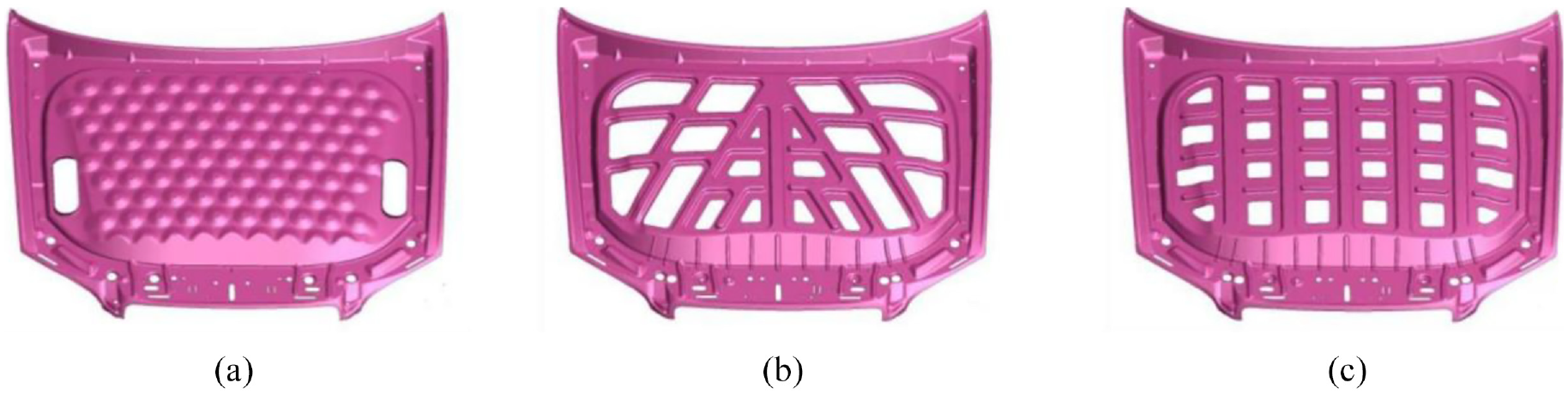
Different types of hood stiffness design: (a) multi-cone concept, (b) skeleton concept and (c) grid concept structures for inner hood designs from Krishnamoorthy et al. (2015).
Costi et al. (2011) applied various numerical optimization techniques with the goal of achieving a lightweight hood design while satisfying the design requirements. The resulting design to which we will refer to as the “x-concept” is shown in Figure 2.
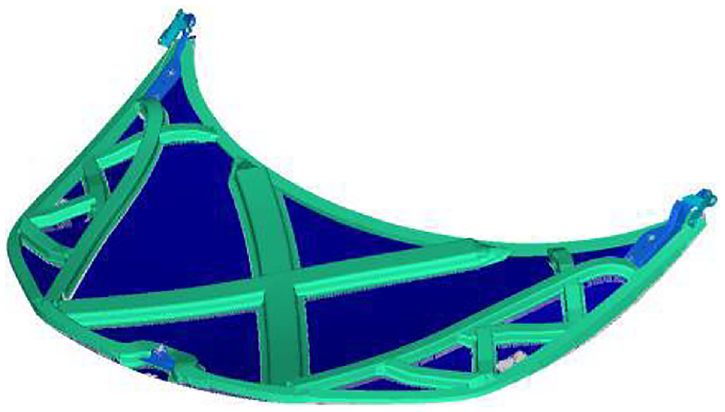
A mass-optimized inner hood geometry by Costi et al. (2011).
Although most commercial automotive hoods are made of steel, the design requirements can also be achieved with other materials such as aluminum or CFRP. Ikeda and Ishitobi (2003) have conducted various studies in order to determine the effect of material change on energy-absorption capacity and the global impact behavior (impact acceleration and energy absorption). Overall, it can be summarized that a universal optimal hood design does not exist. The best design solution depends on the available design space and functional requirements, targeted vehicle segment, and economical considerations. In this work, a compact car (United States) or small family car (European Union) vehicle segment is targeted. In the following sections, the technical design requirements for the hood design are described.
3. Technical design requirements
3.1. Head impact criteria for pedestrian safety
The Euro NCAP (2015b) Safety Assessment Program includes a test protocol for pedestrian protection. The protocol covers lower leg, upper leg, and head impact tests shown as A, B, C, and D in Figure 3, along with a schematic explanation of the wrap around distance (WAD).
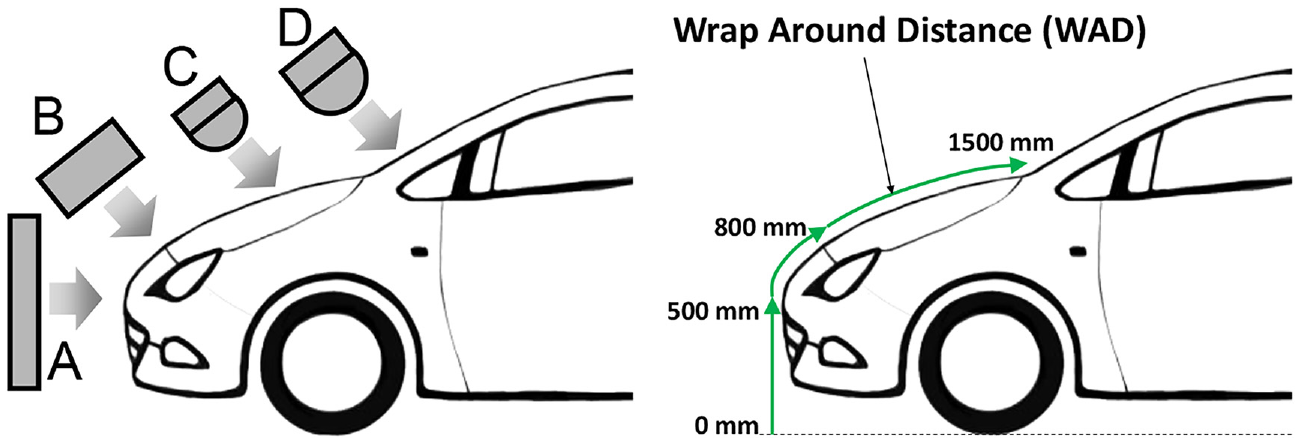
Overview of Euro NCAP pedestrian impact protocol tests types on the vehicle front (left); schematic overview of the wrap around distance (WAD) on the vehicle front (right).
The head impact test assessment results mainly depend on the hood structure, whereas the leg impact tests results are highly influenced by components adjacent to the hood. Because the focus of this communications is on the hood design concept, the results presented in this study are limited to the head impact test results.
The new hood concept is evaluated according to the Euro NCAP (2015b) test protocol. In that test protocol, semi-spherical headforms are used (3.5 kg for the child headform and 4.5 kg for the adult headform). The headforms are launched such that the angle at impact is 50° ± 2° (child headform) and 65° ± 2° (adult headform), at a velocity of 11.1 ± 0.2 m/s (which corresponds to an accident with a vehicle speed of 40 km/h). The measurements from the accelerometers mounted in the headforms are processed to calculate the corresponding HIC values, which are used in the evaluation/assessment according to the test protocol. The HIC is defined as
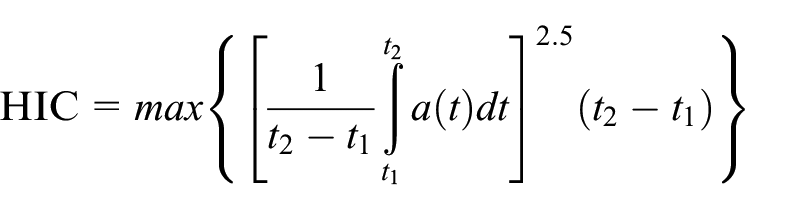
which corresponds to the maximum average acceleration value over time duration
3.2. Static stiffness
Based on benchmark tests of the Institute for Automotive Engineering of RWTH Aachen University and quality and manufacturing standards of automotive manufacturers within the consortium of the European project ENLIGHT, local and global static stiffness targets/requirements were defined. For reasons of brevity here, only the global static stiffness criteria that are used in the comparative assessment are described.
Four criteria regarding the global static stiffness of the hood structure have been defined, which can be evaluated by either physical testing or by numerical simulation of the physical test. The test and load configurations of the four criteria center compression (CC), longitudinal stiffness (LoS), lateral stiffness (LaS), and torsional stiffness (ToS) are summarized in Figure 4.
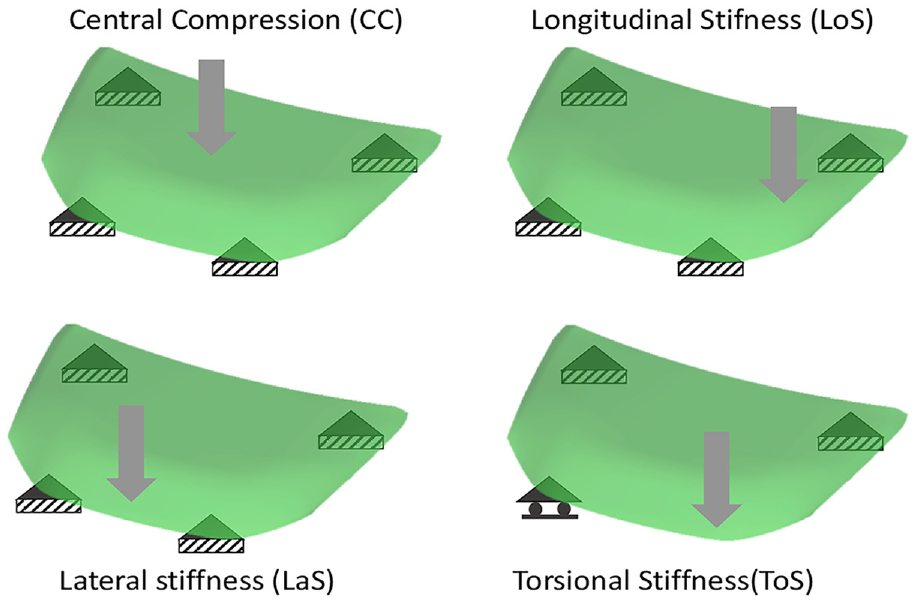
Evaluation criteria for hood concepts.
The stiffness in the load configurations is determined by applying a 100 N vertical force on the hood and measuring the vertical displacement component.
4. Description of a hood concept with integrated ASC composites
In this section, a smart hood concept is described, which integrates ASC composite material in order to enable active reduction of the structural stiffness combined with a lightweight design. The stiffness reduction targets improved the head impact compatibility of the hood structure in case of a pedestrian collision event. The overall aim of this new type of hood structure is to combine it with a sensing system in order to achieve a new safety system for head impact mitigation of VRUs.
The triggering input required to activate the softening of the material system is not discussed in this study, however, the availability of a sensing system for activation is assumed, since it is comparable with existing technologies for autonomous emergency braking (Edwards et al., 2014) and pop-up hoods (Fredriksson et al., 2006). For pedestrian collision applications, there are roughly two groups of sensing scenarios: collision-detection systems based on pressure sensors or accelerometers which detect the onset of the collision at the front of the car; and pre-crash sensing systems such as those based on radar (Heuel and Rohling, 2012) or optical vision sensing (Grubb et al., 2004) used for automatic braking or for advanced driver assistance systems. Collision-detection systems of the first type allow short safety system response times (in the range of 40–80 ms), which is typically sufficient for pop-up hoods or pedestrian airbags (Nagatomi et al., 2005; Yang et al., 2015). Pre-crash sensing and detection systems for active (and passive) safety device activation, anticipate and model possible collisions further in advance and thus allow longer response times (500 ms and more). The capabilities of such systems are improving rapidly, and are therefore becoming increasingly popular in the automotive industry. For more information and details of activation solutions or collision-sensing systems, we refer to reviews in literature (Gandhi and Trivedi, 2007; Geronimo et al., 2010; Mukhtar et al., 2015). The following sections focus on the integration of the hood geometry, the integration of the ASC material, and the resulting mechanical responses with respect to the structural design requirements described in the previous section.
4.1. ASC composite material
A new type of stiffness-modifiable materials, or composites with ASC, were recently developed and described in literature (Bachinger, 2015; Bachinger et al., 2014, 2015; Tridech et al., 2013). Currently, there are two main types of concepts or techniques to achieve ASC in carbon fiber functional materials. The first technique is based on resistive heating of the fibers with a thermoplastic coating between the fibers and a thermoset matrix (Bachinger et al., 2014; Tridech et al., 2013). The second technique is based on resistive heating of the fibers in a thermoplastic matrix material in (some of) the laminate layers (Bachinger et al., 2015). In both techniques, the active modification of the stiffness is caused by heating the thermoplastic material at the interface of the fibers above its glass transition temperature, which leads to a decrease in the shear modulus of the matrix material and decreased load transfer between the fibers and matrix material. On the macroscopic scale, the main stiffness reduction is therefore in the directions perpendicular to the reinforcement fibers. The macroscopic material stiffness in the fiber direction is only marginally reduced. The techniques described in literature (Bachinger, 2015; Bachinger et al., 2014, 2015; Tridech et al., 2013) enable a temporary reversible reduction of the flexural (bending) stiffness of the material of up to about 80% upon activation by electrical current. In a study by Bachinger et al. (2015), activation times of 500 ms have been considered, and further investigations for shorter activation times for stiffness reduction are ongoing.
The composite material used for the hood reinforcements and the stiffness modification in the ASC areas of the hood structure is a custom carbon fiber TeXtreme™ Spread Tow 12K unidirectional tape at 600 gsm impregnated with prepreg resin CPV4™. The material properties of the conventional CFRP hood reinforcements are identical to that of the ASC areas in the stiff state. The difference between ASC zones, and the regular reinforcements, is the placement of the electrodes, and non-continuous ply sections of the ASC zones. The elastic material properties of a unidirectional layer of this material in the stiff and in the soft state are summarized in Table 1. For the simulations, LS-DYNA R7.1.1 material model “MAT 58 laminated composite fabric” (see also Appendix 1) was used and combined with the stacking sequences described in the next section.
CFRP material data for the inner hood reinforcements (stiff state) and the ASC zones (stiff and soft state).
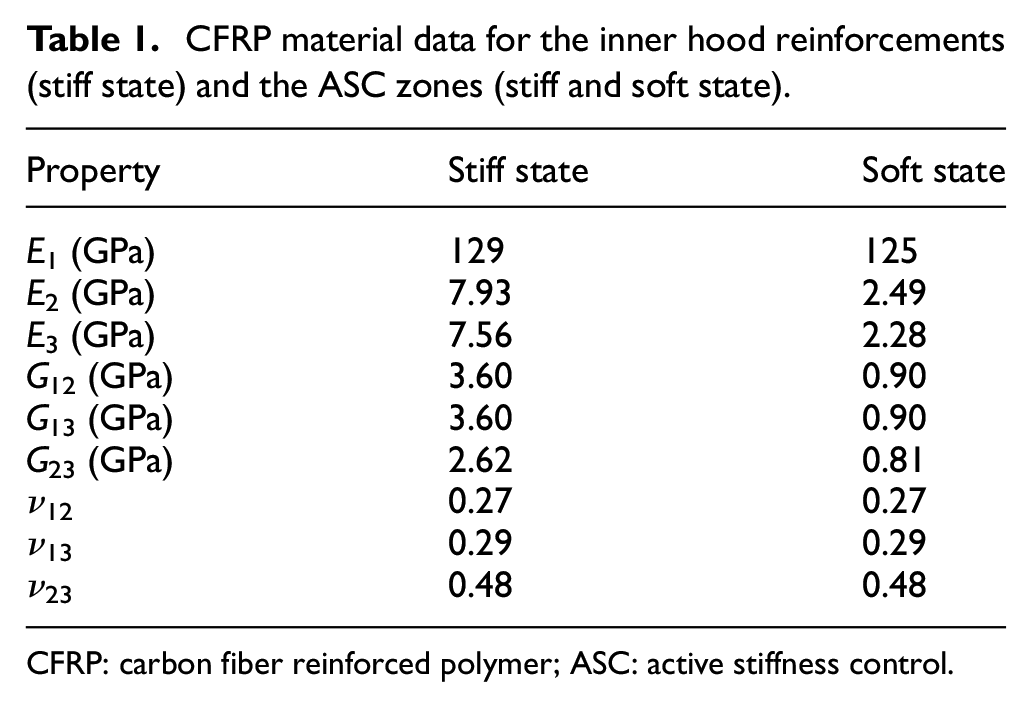
CFRP: carbon fiber reinforced polymer; ASC: active stiffness control.
4.2. Geometry and material integration
The design space and outer hood shape are shown from different angles in Figure 5. The design space available for the development of the hood was defined by the project partners within the ENLIGHT project.
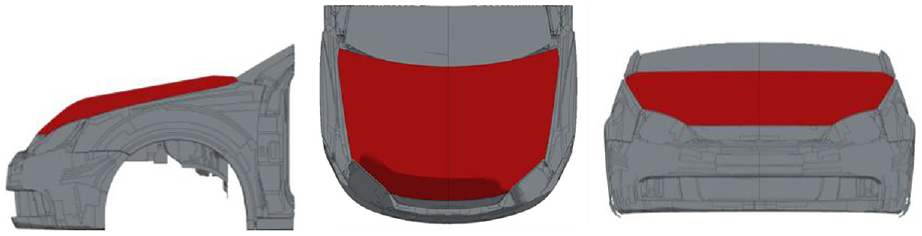
Geometry of hood fitted to design space.
The new hood concept design is composed of an outer shell and an inner support frame. As the hood concept for the ENLIGHT car is also designed to be lightweight, a similar x-shape design as described by Costi et al. (2011) was chosen (Figure 2). Several conceptual adjustments were made however: the inner support frame is composed of CFRP reinforcements that are directly joined with the aluminum outer hood by adhesive. The inner support frame also contains out-of-plane reinforcement ribs (simple out of plane stringers) instead of the closed reinforcement profiles (Figure 6). At the endpoints of the central x shape, where several out-of-plane reinforcement ribs come together, the ribs are not connected to each other. Due to the disconnected ribs, the stress distribution under out of plane deformations causes high stresses in the zones adjacent to the rib ends, where the ASC composite zones are located. This causes a decrease in stiffness in those regions, leading to larger global deformations of the hood structure and thus reduced the overall out-of-plane stiffness of the central region. Since the predominant stiffness reduction of the ASC composite zones is in the off-axis direction, the fiber orientation is purposefully not parallel to the reinforcement ribs of the inner hood structure. Another novel feature of the hood design is that the out-of-plane reinforcement ribs in the central area are not perpendicular to the outer hood plane but placed at an angle of 120° with respect to the plane of the outer hood (Figure 6). This enables local buckling of the ribs in the case of an impact near to the reinforcement ribs, which in turn reduces the local stiffness in case of impact while supplying considerable structural reinforcement in the undeformed state.
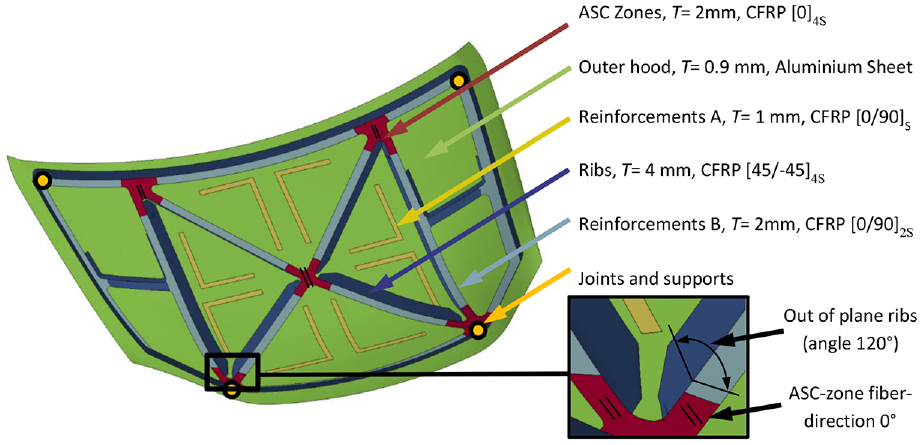
Overview of the hood design.
The resulting hood design concept is a multi-material design using aluminum (0.9 mm AA5052) sheet for the outer hood structure and regular CFRP combined with a few small ASC CFRP zones of for the inner hood structure. A layer thickness of 0.25 mm was used for the CFRP layups. Figure 6 provides a schematic overview of the final hood design, including the thickness T and the stacking sequences for the various inner hood reinforcements. If not indicated otherwise, the reference angles for the composite layups are in the longitudinal member direction. In the ENLIGHT Consortium (2016), other hood designs using different types of inner hood geometries and areas of activation were investigated. The presented design concept was the most feasible of those investigated and showed promising performance. Due to the complexity (non-linearity, non-convexity, and computational cost) of the design objectives and constraints (weight, static stiffness, and dynamic stiffness at many impact locations), numerical optimization is challenging. The presented design could serve as the nominal baseline model for numerical optimization studies in future follow-up activities.
For the activation or softening of the stiffness modifiable material, the required electric peak currents are proportional to the amount of material used. Since the specific energy required to quickly heat the material is considerable, the power source (batteries or capacitor bank) requirements for the activation of such a stiffness variable hood system, are typically only available in Electric or hybrid vehicles. In order to reduce the power requirements, as well as to shorten the activation times, the aim was to reduce the amount of stiffness modifiable CFRP by placing it at key locations where the stiffness reductions have a large effect; therefore, the presented hood concept design uses “flexible” ribs and reinforcements to concentrate the deformations occurring at impact in a large region to high strains in a few small regions in the hood design. The presented hood design contains only 36 g of ASC CFRP material zones with an area of 127 cm2. The results of the performance evaluation of the static stiffness and dynamic impact simulations will be described in the next section.
5. Simulation-based evaluation of the hood design
The static stiffness and dynamic head impact design criteria for the hood concept were evaluated using finite element method (FEM)-based simulations. The geometry of the hood design was represented by a FEM model with a nominal shell element size of 5 mm. The aluminum outer hood was represented by an elastoplastic material model. The ASC was modeled as a linear elastic laminate, in accordance with the respective material state (stiff or soft). For the static load cases, the stiff state was used, while for the dynamic head impact load cases, both stiff and soft states were evaluated. The following subsections provide a brief summary of the simulation results and the performance of the hood design.
5.1. Static stiffness analysis
The quasi-static load cases of the global stiffness requirements described in section 3 were evaluated by means of the implicit FEM solver of LSTC LS-DYNA (version 971 R6). In all load cases, loads of 100 N are applied in vertical direction, while applying the boundary conditions of the respective load cases as described in the previous section. For the four global stiffness criteria load cases, the contour plots of the out-of-plane deformations (in mm) for the final hood design are presented in Figure 7. Note that the contour plots look similar between the stiff and soft states for all load cases, while only the magnitudes of deformation vary. For this reason, only the contour plots of the stiff state are shown.
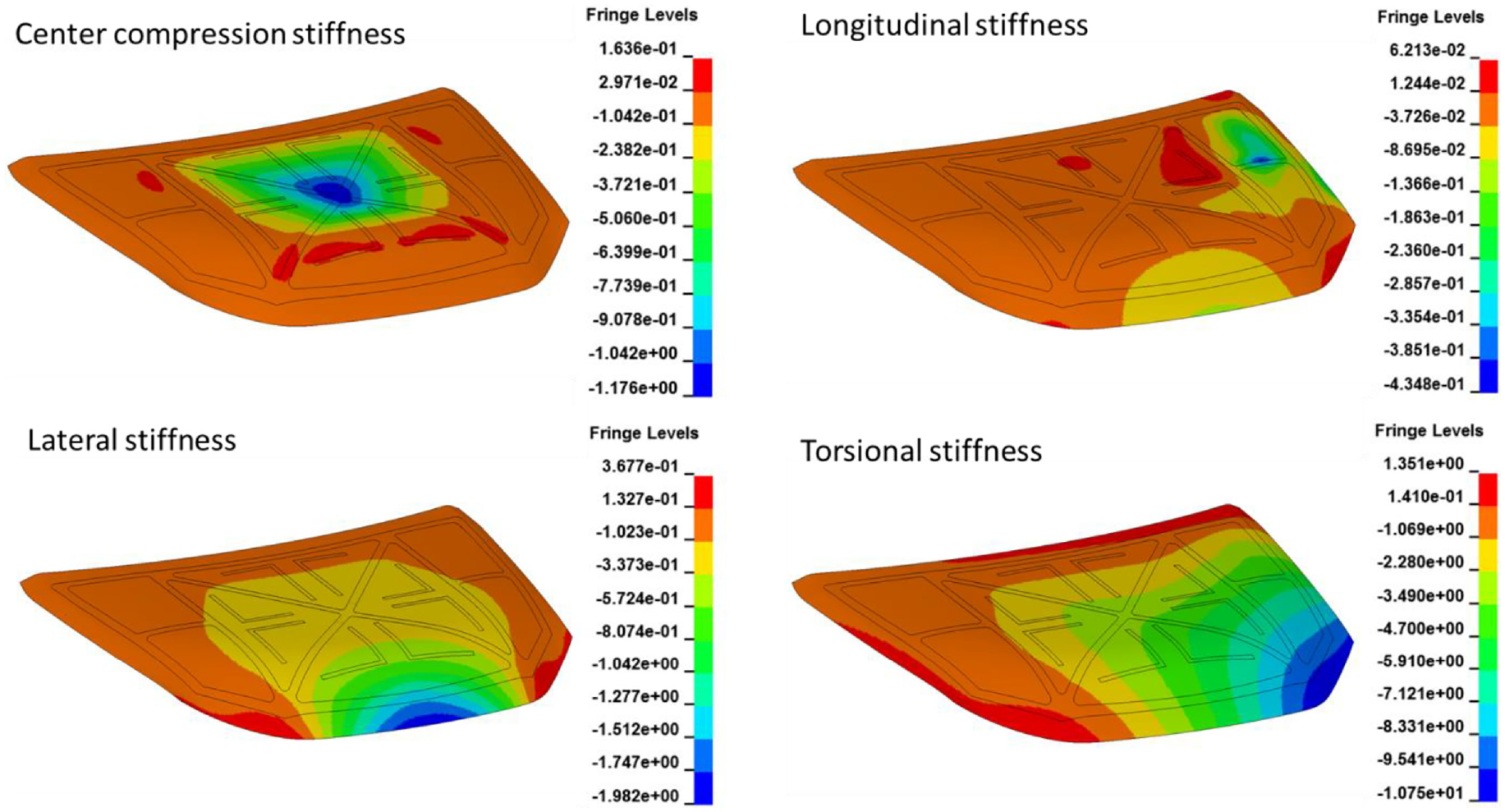
Overview of the out-of-plane deformation response of the hood design for the global stiffness load cases in the stiff state of the ASC zones.
The overall results of the simulation of the global stiffness performance of the hood design are summarized in Table 2 by the stiffness values of each load case. For each of them, the stiffness is calculated using the displacements at the point where the force is applied. The results show that the effect of the ASC material, on the static stiffness depends on the load case. The stiffness-reduction effect for the CC and ToS is between 15% and 25%, while for the lateral and LoS, the stiffness reduction difference is between 1% and 5%. The main stiffness reduction occurs in the central area with the x-shape construction, where the ASC design was targeted. Similar differences in local stiffness-reduction effects can be seen in the dynamic head impact simulation results in the following section.
Overview of the static stiffness values of the hood design.

5.2. Dynamic head impact performance
The performance of the hood in the dynamic head impact test according to the Euro NCAP (2015b) pedestrian protection protocol is evaluated by means of FEM simulation using the explicit LS-DYNA solver. Figure 8 shows the different WADs which are important for the assessment of the hood following Euro NCAP regulations. For the Euro NCAP test, the area of the hood between the WAD of 1000 mm and the WAD of 1700 mm defines the area of child head impact. For a realistic evaluation of the hood in terms of under-the-hood clearance, the structural parts underneath the hood are represented by a dummy package (green in Figure 8). This dummy package is modeled as rigid and has a distance of 100 mm to the hood in vertical direction. Other structural parts adjacent to the perimeter of the hood structure (brown in Figure 8) are also modeled as rigid and have a minimum clearance of 20 mm. Although the 100 mm clearance of the green package is too large to represent a typical deformation space for cars powered by conventional combustion engines, for electric vehicles, however, such a deformation space is not unrealistic. 1
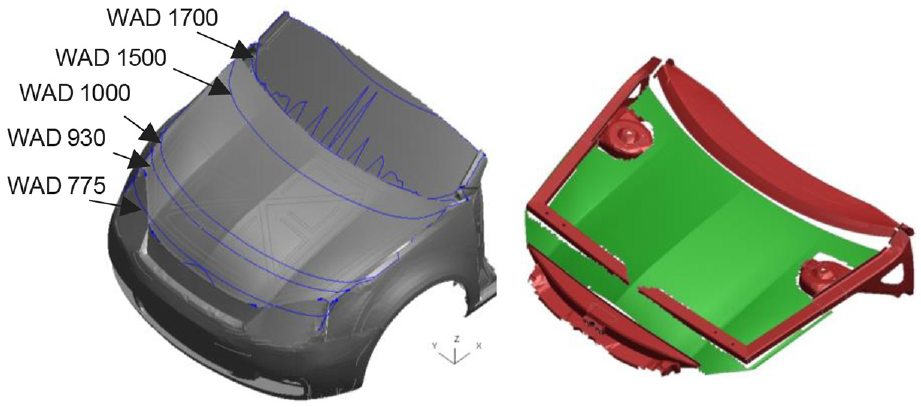
Definition of the impact area: upper front module structure and dummy package.
Figure 9 shows the evaluation of the hood according to Euro NCAP guidelines. For the pedestrian head impact assessment, the HIC results are assigned a score between 1 and 0 (1.0, 0.75, 0.5, 0.25, 0.0) based on the five categories ranging from good (score 1.0) to poor (score 0) (Euro NCAP, 2015a). As a performance measure for the head impact assessment, the percentage of total points gathered from the maximum score is multiplied by 24. 2 In the stiff state, the assessment score of the hood design is 16 points. With the activated stiffness reduction, the score improves by 12.5% to 18 points. The results thus indicated that the active stiffness-reduction hood concept improves pedestrian safety in terms of head impact scores. An overview of the test scores for all the impact points is given in Figure 9. The results indicate that most of the improvement in performance in stiffness-reduced state is achieved in the central area of the hood. As can be seen in Figure 9, a few of the impact locations achieve a higher score in the reduced stiffness state. This occurs in most cases at head impactor points in the vicinity of the rigid structures or components with a small spacing with respect to the hood (Figure 9).
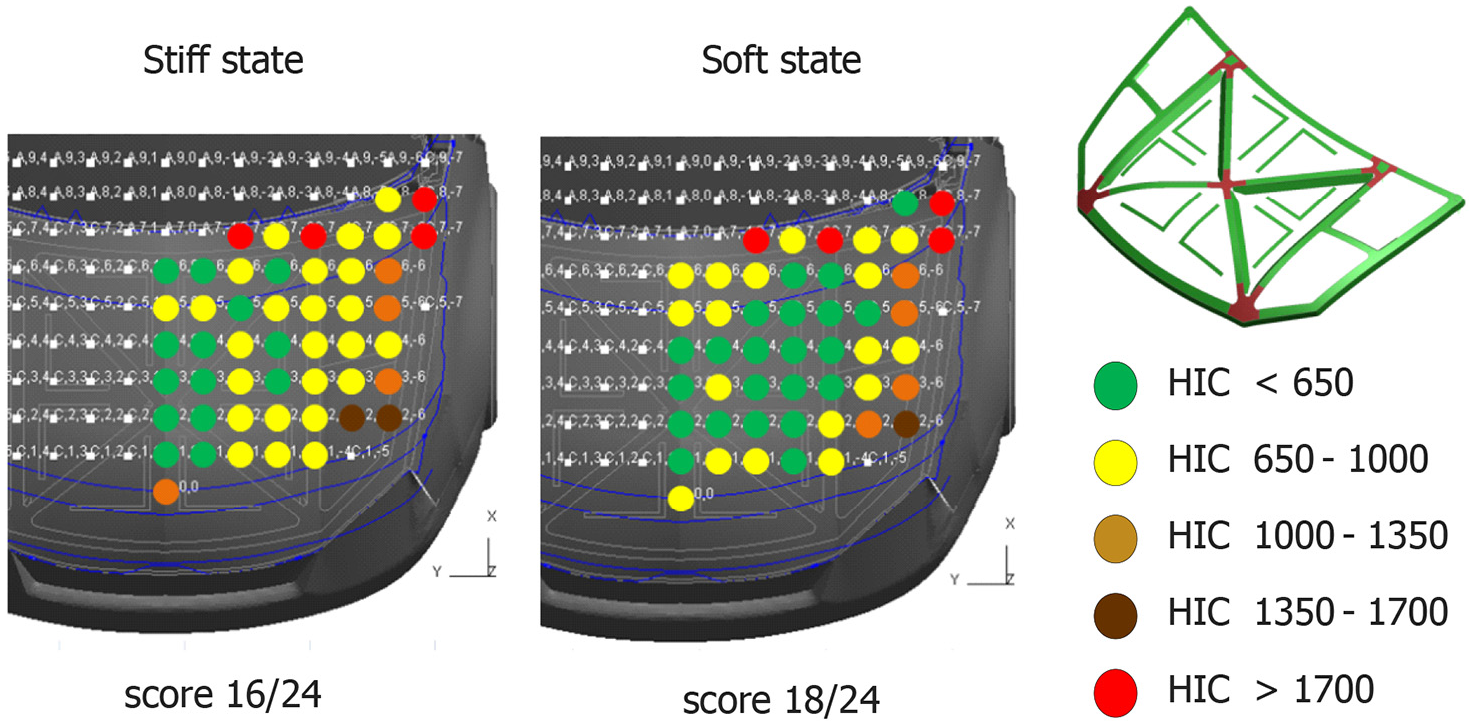
Head impact simulation HIC assessment (stiff and soft state).
6. A multidisciplinary performance comparison
Based on the size of the concept hood (length 1046 mm and width 1514 mm) and the availability of static stiffness, and dynamic impact performance results, four hoods of modern production vehicles have been selected for benchmarking purposes. An overview of the benchmark hood reference designs is given in Figure 10.
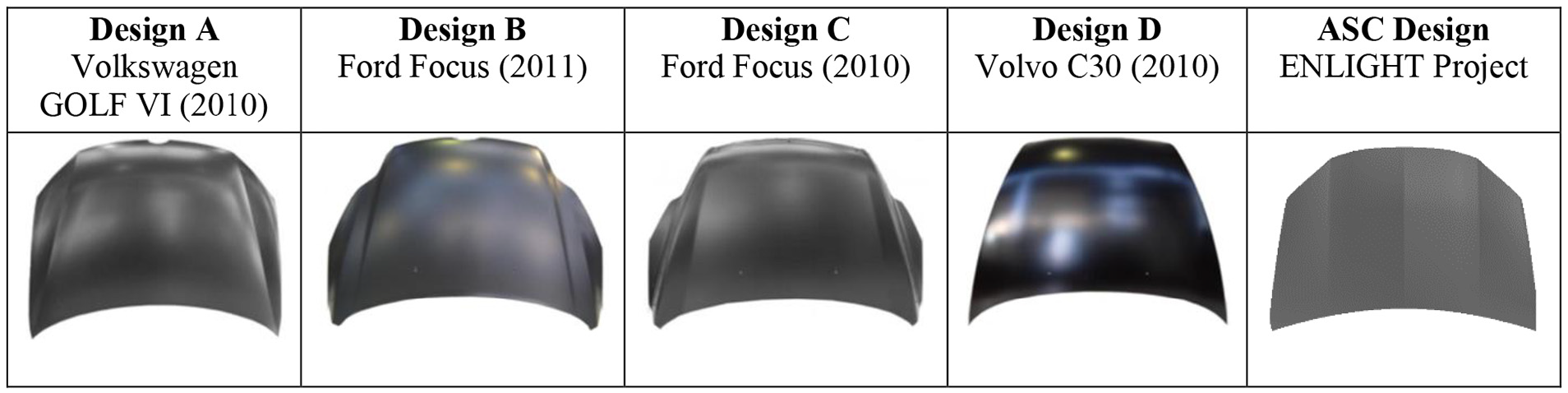
Overview of the shape of the reference hoods together with the current ASC hood design.
Table 3 provides a comparison of size, weight, and structural performance of the final design and the reference designs. The proposed hood concept performs comparably to the reference designs with respect to the global stiffness criteria while it is lighter than most of the other designs. To compare the performance with respect to the head impact safety, the Euro NCAP test results with relevance to hood impact locations were used. This is a subset of the total head impact score, since for the full protocol also the head impact in windshield area is tested. Compared to the mean of the reference designs, an overall weight saving of 35% on the hood mass was achieved by the ASC-based design. The total mass of reference design D is lower as that of the concept design but, although design D matches the length and width dimensions of the targeted hood design, it has a weight advantage due to its particular shape: the ratio between the effective surface area and the area spanned by its width and height is lower than those of the other hood designs, and the new concept design. The mass per effective unit area of the new hood design is lower than that of design D. Furthermore, the pedestrian protection score of the new hood design is significantly better than that of design D. In terms of overall performance, the new hood concept is thus an excellent trade-off between minimal weight, static stiffness, and pedestrian safety.
Overview of the hood structure benchmark results.
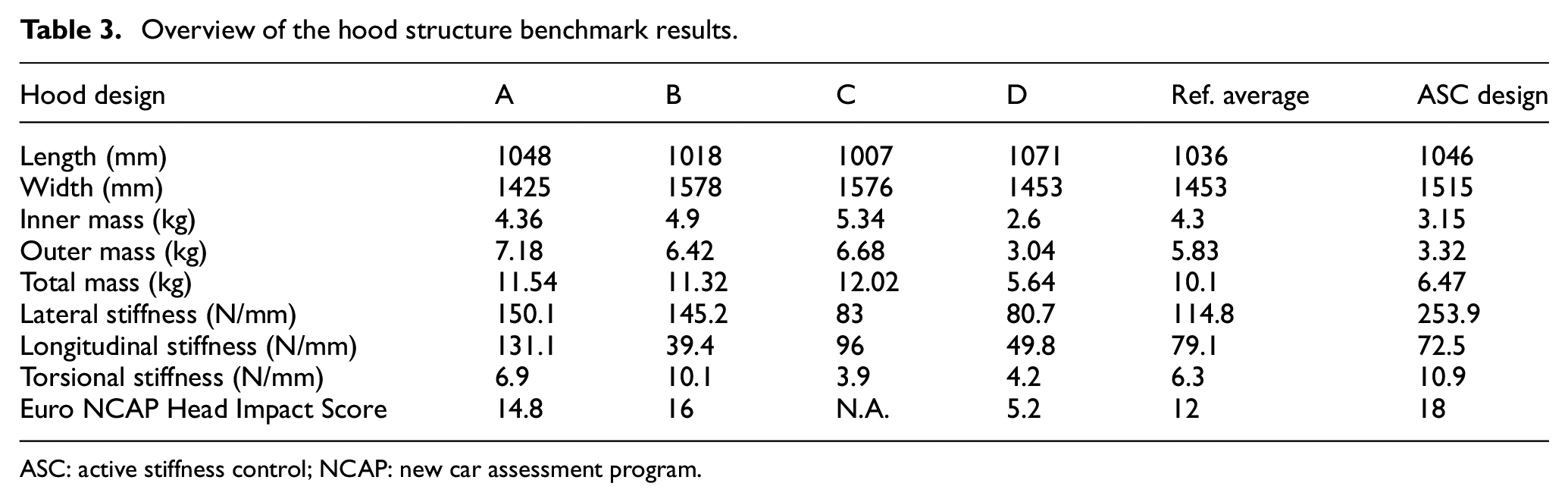
ASC: active stiffness control; NCAP: new car assessment program.
7. Discussion and outlook
The objective of this work was to develop and investigate a novel smart hood concept design with integrated ASC composite material, with the aim to achieve a lightweight design with high pedestrian safety. The results from a small multi-criteria performance comparison with four other benchmark hoods indicated that the new concept is an excellent performance trade-off between safety and weight reduction. It should however be noted that it is intrinsically difficult to compare the structural performance of hood structures of different vehicles. The benchmark hoods are designed for different external geometries and technical packaging conditions under the hood, due to the respective vehicle designs. The intention of the presented work is therefore not to claim that the new hood design is superior to other hood designs in the benchmark. The main aim of this work was to explore the application of a new smart material technology, for the application of an automotive hood system. The obtained results indicate that with the presented hood concept, a lightweight hood design with good structural performance can be achieved. Although only a small amount of ASC CFRP is integrated in the hood design, the active stiffness reduction of the hood structure in the soft state resulted in a better head impact assessment score, than in the stiff state. There are, however, still many areas for potential performance improvement of the presented concept design.
In this design concept, the state of the variable stiffness composite areas is binary (either in the stiff, or in the soft state). The results indicated that a few of the head impact test points achieved a lower score in the soft state, which indicates that also other intermediate states might be beneficial.
If the trend in the rapid development of pre-collision sensing systems continues, it might become feasible to recognize the size and position of the pedestrians before or during the collision and estimate the location or area of likely head impact. For tall pedestrians, head impact is, for example, more likely in areas closer to the windshield than for small children. The availability of such information and estimates can lead to further exploitation of the presented technology by activating only specific areas in particular (non-binary) stiffness states. This could lead to higher performance of active stiffness-reduction hood concepts, in terms of pedestrian safety in the future.
Similarly, as with conventional hood designs, the optimal design of an active stiffness-reduction hood concept is not universal, but dependent on the size, packaging, and properties of the adjacent components of the vehicle. The results of this concept study indicate, however, that under realistic assumptions, variable stiffness composites can be used in lightweight hood designs for hybrid-electric vehicles, and contribute to improved pedestrian safety. The potential of the ASC composite material could be further exploited by using simulation-based optimization approaches. The highly non-linear and non-convex simulation responses with respect to the design variables and the high computational cost involved require the use of efficient heuristic optimization numerical techniques such as those proposed by Liu et al. (2016) and Sala et al. (2017). The presented hood concept can serve as a starting point for the improvement and optimization of smart ASC-based hood designs in future activities.
The integration of active stiffness reduction composites could also be promising for other automotive application where stiffness reduction can be beneficial. Future work on the material development will focus on investigations on shorter activation times and other fiber-matrix combinations. An important next step in the design process is the evaluation of a prototype with respect to its mechanical performance under various loads and activation states.
8. Conclusion and final remarks
A novel smart and lightweight automotive hood concept is presented and investigated. The investigated hood design is composed of two parts; an aluminum outer hood and an inner hood using conventional CFRP combined with an ASC CFRP. The presented hood concept integrates novel ASC CFRP materials at a few key locations in order to enable stiffness reduction of the hood structure for head impact mitigation in the event of collision with a VRU. The overall structural performance of the new ASC-based design concept has been compared against several production hood designs of similar size. The simulation-based results show that the new smart hood concept has good trade-off performance with respect to lightweight, static stiffness, and dynamic head impact design criteria. The activation of the ASC zones which amounted only 36 g of the total hood structure, results in a static stiffness decrease between 1% and 25% depending on the load case, and an overall improvement of 12.5% for the dynamic head impact score. The presented considerations and results show the potential of ASC composite materials, for application in automotive pedestrian safety systems. The results are promising, but do not include economic considerations yet. In addition, several areas for design and concept improvement are identified, in order to set further steps toward lightweight ASC composite material based smart hood structures and safety systems. Further developments on this new class of smart hood structures and the combination with advanced with pre-crash sensing systems or pedestrian-collision-detection systems could enable a new type of safety system for head impact mitigation of VRUs.
Footnotes
Appendix 1
This appendix contains additional information regarding the simulation material models for the composite components of the presented hood concept. The static and dynamic simulations were performed using the implicit and explicit LS-DYNA finite element solvers. For the composite inner hood reinforcements and the ASC zones, different material layer material cards were defined using material type 58. Table 4 shows the material card for the layers of the conventional CFRP and ASC zones in the stiff state. Table 5 shows the material card for the ASC zones in the soft state. Table 6 shows the unit system used for the material card and the simulation models.
Acknowledgements
The authors would like to thank Mr Leif Hagebeuker and Mr Frederic Nuss at the Institute for Automotive Engineering of RWTH Aachen University, Germany, for their involvement with the HIC evaluations and the static stiffness tests of the benchmark hoods. We are also grateful to Oxeon AB, Sweden, for providing the composite material for the inner hood structure.
Declaration of conflicting interests
The author(s) declared no potential conflicts of interest with respect to the research, authorship, and/or publication of this article.
Funding
The author(s) disclosed receipt of the following financial support for the research, authorship, and/or publication of this article: This study was funded by the European Commission within the project ENLIGHT (Grant Agreement No: 314567).
