






Abstract
The utilization of nanocarbon black (nCB) in cementitious composites has shown significant potential for developing self-sensing concrete with intrinsic strain monitoring and damage detection capability. While nCB with different morphologies and surface areas have been used to produce self-sensing concrete, there is a considerable knowledge gap in understanding how the structure of nCB influences the performance of these smart materials. In this study, the effect of nCB structure on the mechanical and piezoresistive properties of nCB-based self-sensing concrete is investigated. The investigation concludes that the compressive strengths of all the nCB-based composites, regardless of nCB structure, show similar trends: as nCB dosage increases, strength initially increases compared to plain concrete, and then decreases. On the other hand, the composite with high-structure nCB, which has a branched morphology, possesses a very low and distinct percolation zone, beneficial to realizing large-scale implementation due to cost-efficiency. Moreover, it exhibits the highest strain sensitivity as well as highly repeatable and precisely synchronized response to the applied compressive stress-strain. The outcomes of this study shall contribute to the foundational knowledge base for the development of next-generation smart infrastructure, enabling real-time structural health monitoring to enhance safety and service life.
Keywords
Introduction
Structural health monitoring (SHM) is an emerging technology in civil engineering that can evaluate the health and residual strengths of structures in real time (Chong et al., 2003; Taheri, 2019). For concrete infrastructure, different types of electronic sensor systems have been adopted to sense stress-strain, damage, temperature, humidity, and many other parameters (Moyo et al., 2005; Sikarwar and Yadav, 2015; Taheri, 2019), so as to enable continuous monitoring and assessment of the conditions of structures under different kinds of mechanical and environmental loads. However, these sensors suffer from various limitations, including incompatibility with concrete, high installation and maintenance costs, and relatively short service life, which limit their large-scale implementation (Ou, 2006).
Smart cementitious composite (SCC) is a new development in concrete technology that can intrinsically sense its own stress-strain and damage. As a structural material itself, SCC can potentially benefit critical applications such as large-span bridges and offshore structures (Chung, 2002; Han et al., 2009, 2014). Different conductive filler materials, including carbon fiber (Azhari and Banthia, 2012; Ding et al., 2013), carbon nanotube (CNT) (Materazzi et al., 2013; Naqi et al., 2019; Schumacher and Thostenson, 2014) and steel fiber (Ahmad et al., 2025; Ahmed et al., 2021; Ding et al., 2019c; Hussain et al., 2019, 2022b; Kim et al., 2018), and other materials (Dong et al., 2020c; Goldfeld et al., 2016) have been used to develop SCC for different physical properties (Xi et al., 2025). Nanocarbon black (nCB) has been proven to be one of the most promising candidates for SCC due to its low cost (<1% of CNT) and outstanding electromechanical properties (Dong et al., 2020a, 2020b; Hussain et al., 2022a).
The influence of nCB on the piezoresistive and mechanical properties of cementitious composites has been explored in numerous studies. The structure of nCB (i.e. the number of primary particles making up an aggregate (Sánchez-González et al., 2005)) is considered the most critical parameter, which has a significant effect on electromechanical properties. According to ASTM D2414-21 (D2414-21, A, 2021), nCB structure is defined by the oil absorption capacity, where a higher structure corresponds to a larger particle count per aggregate. Dai et al. demonstrated that high-structure nCB decreases compressive strength but, at the same time, strain sensitivity increases within a low percolation zone of 0.7%–2.5% nCB (Dai et al., 2010). The decrease in strength is primarily due to the excessive aggregation of nCB, which leads to inadequate dispersion. Because of its highly branched morphology, high-structure nCB tends to exist as numerous interconnected aggregates, creating a continuous network that is challenging to disperse uniformly within a concrete mix. Meanwhile, the tendency to form continuous networks is conducive to achieving piezoresistivity at very low dosages. Another study reported an even lower percolation zone of 0.5%–2.0% nCB, and that compressive strength also decreases as nCB dosage increases (Dong et al., 2019). In contrast, Li et al. (2006) developed a nCB-filled cementitious composite where piezoresistivity emerged at a high nCB dosage of 15.0%. Other studies identified 12.0% and 7.0% nCB as the percolation thresholds, and noted that the addition of nCB was able to improve compressive strength up to a certain nCB dosage (Monteiro et al., 2017a). Although these studies did not explicitly describe the structure of the nCB used, it is hypothesized that the nCB used was low-structure, able to improve compressive strength up to a certain level, but requiring high nCB dosages to achieve notable piezoresistivity. Overall, nCB-filled cementitious composites exhibit a considerable variation in percolation zone, which extends from approximately 0.5%–15.0% nCB.
Although a wide range of nCB is commercially available, selecting the most suitable type for practical applications remains a significant challenge. As mentioned above, the structure of the nCB used strongly effects both the compressive strength and piezoresistive behavior of a cementitious composite. Moreover, the overall cost largely depends on the percolation threshold, that is, the critical nCB dosage required to form a conductive network, highlighting the importance of balance between performance optimization with economic feasibility. Consequently, understanding the structure-property relationship of nCB-filled cementitious matrices is essential to achieving both optimal performance and cost-efficiency for practical applications.
This study aims to systematically examine the effect of nCB structure on the mechanical and piezoresistive properties of cementitious composites. Specifically, it explores how different types of nCB, each with a different particle count per aggregate, affect compressive strength, percolation threshold, electrical conduction, and strain sensitivity. The results of this study shall contribute to the identification of the optimal nCB selection for field-deployable self-sensing SCC, facilitating the development of next-generation SHM systems to enhance the safety, durability, and cost-efficiency of critical civil infrastructure.
Experimental program
Raw materials and mix design
This study uses EN 197-1 CEM I 52.5N ordinary Portland cement produced by Green Island Cement Limited, Hong Kong. Silica fume (SF) is used as a supplementary material. A polycarboxylate-based superplasticizer (SP) with a solid content of 22.0 wt.% and a specific gravity of 1.05 is employed. Three different types of nCB are considered: nCB (Super P Li, TIMCAL) with a dibutyl phthalate oil (DBP) absorption of 290 mL/100g (nCB-290), nCB (Henan Lebang Water Purification Technology Co., Ltd) with a DBP absorption of 245 mL/100 g (nCB-245), and nCB (VXC72, CABOT) with a DBP absorption of 174 mL/100 g (nCB-174). The physical and chemical properties of the three types of nCB are given in Table 1.
Properties of nCB particles with different structures (supplied by manufacturers).
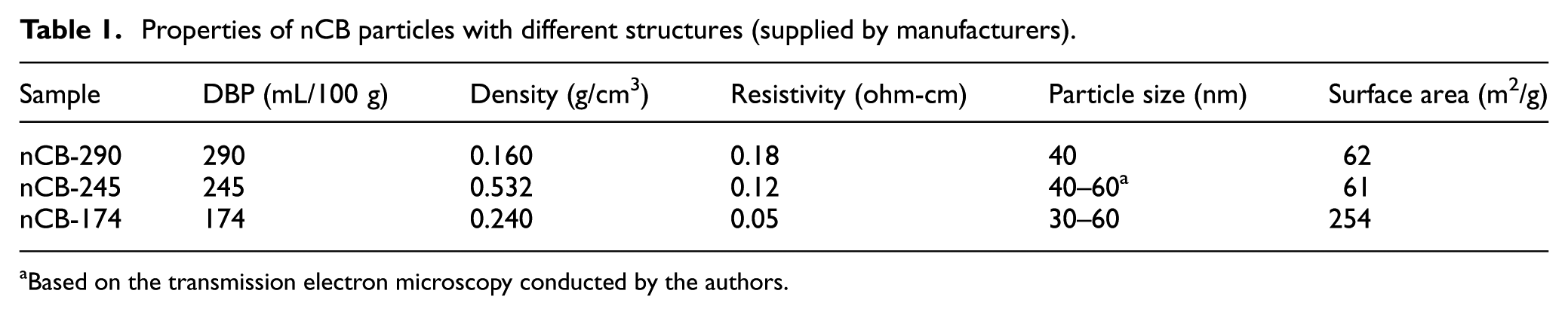
Based on the transmission electron microscopy conducted by the authors.
In this study, the base mix design for plain concrete (PC) consists of cement, SF and water. For nCB-filled composites, nCB of up to 5.0% of binder mass is added. The water-to-binder (w/b) ratio is 0.33, and SP is added according to nCB dosage in order to maintain flowability. The mix designs with different nCB dosages are detailed in Table 2.
Mix designs for plain concrete and nCB-filled cementitious composites.
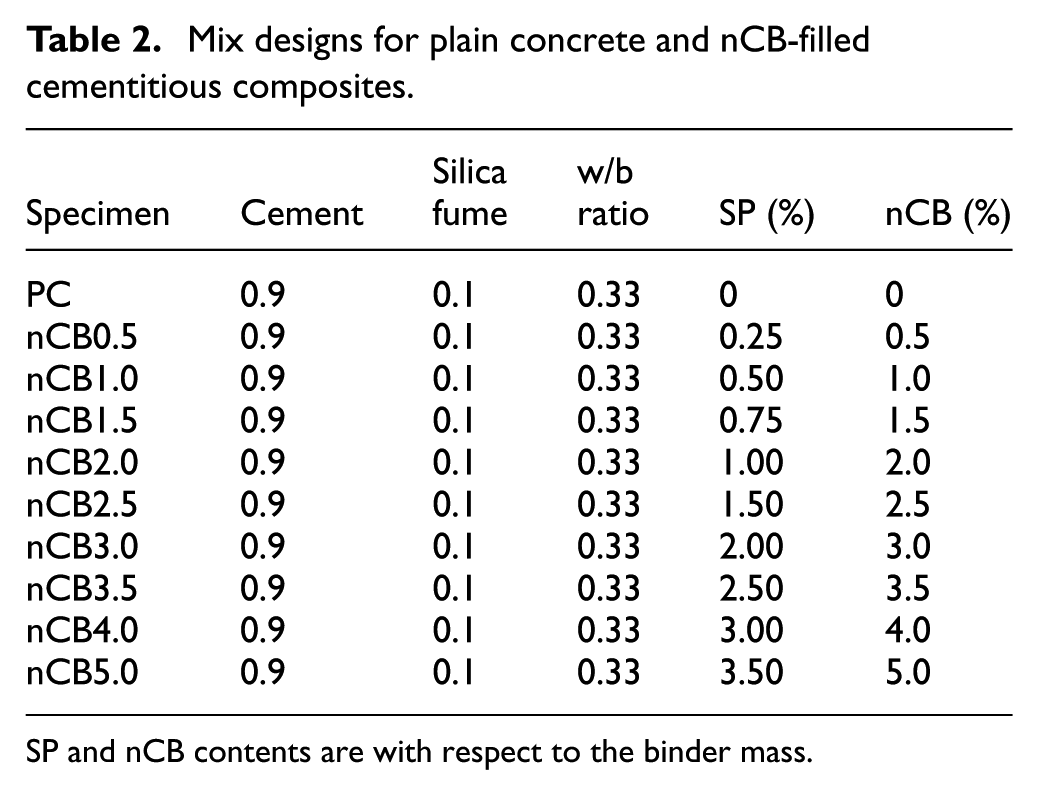
SP and nCB contents are with respect to the binder mass.
Structure of nCB
nCB was examined by transmission electron microscopy (TEM; Talos F200S G2 TEM, Thermo Fisher Scientific, USA), as shown in Figure 1(a)–(c). The morphology of nCB embodies three different levels: primary particle, aggregate, and agglomerate, as illustrated in Figure 1(d). nCB primary particles have sizes in the range of 20–80 nm (Wang et al., 2020) and are covalently bonded to form aggregates with sizes in the range of 100–300 nm (Badot et al., 2009; Cadiou et al., 2019; Endo et al., 2008). These aggregates further cluster loosely together into larger agglomerates. The high-resolution TEM images show that nCB primary particles exhibit a distinct core-shell architecture, and that the central region of each particle contains amorphous nuclei that are surrounded by layers of graphitic carbon. For all three types of nCB, the inner cores of the primary particles are similar, but the aggregates formed are different. The degree to which nCB primary particles aggregate is referred to as structure and is determined by the oil absorption capacity, as measured by DBP absorption (Pantea et al., 2003). High-structure nCB refers to nCB with branched, chain-like aggregates that consist of many primary particles, whereas aggregates with fewer primary particles exhibit a less branched morphology (Lin and Chung, 2007; Soboleva et al., 2010).
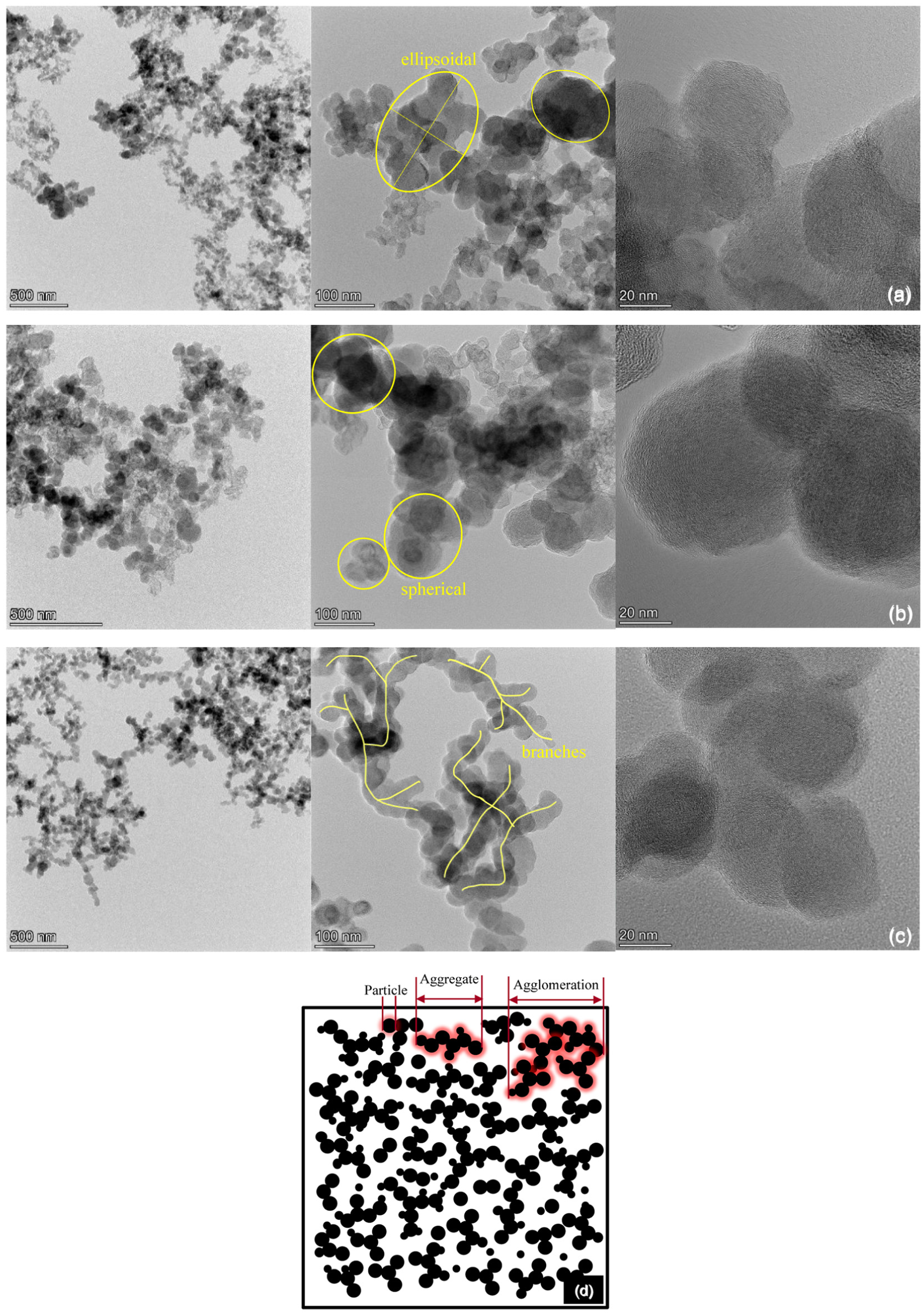
(a–c) High-magnification TEM images of (a) nCB-174, (b) nCB-245, and (c) nCB 290. (d) Schematic diagram of nCB in cementitious composites.
The yellow markings in the TEM images depict the structural arrangements of nCB aggregates, emphasizing shape and connectivity. This morphological framework, which governs inter-aggregate contact, percolation efficiency, and straininduced network evolution, influences strongly the mechanical and piezoresistive performances of nCB-filled cementitious composites. From Figure 1, it can be seen that nCB-174 consists mainly of ellipsoidal aggregates, whereas nCB245, mildly ellipsoidal to spherical aggregates. In contrast, the aggregates of nCB-290 demonstrate a highly branched morphology, which is conducive to the formation of more conductive pathways in cementitious composites. Also, the more severe agglomeration of nCB-290 is also beneficial to the electrical conductivity of cementitious composites, since excessive dispersion could disrupt the volumetric wiring structure responsible for electron transport (Soliman et al., 2020). As a result, cementitious composites containing nCB-290 would exhibit more distinct percolation at lower nCB dosages compared to those with lower-structure nCB, leading to several advantages, such as minimally affected flowability due to the use of less nCB, ease of fabrication, and reduced cost. Nevertheless, the higher level of agglomeration of nCB-290 would not favor the mechanical strength of cementitious composites due to the creation of more stress concentration points. Therefore, the selection of nCB with the appropriate structure is very crucial to fabricating cementitious composites with the desired electrical and mechanical properties.
Sample preparation
Figure 2 depicts the step-by-step preparation process of nCB-filled smart cementitious composites. It started with the dry mixing of cement, SF and nCB, which was followed by the addition of water and SP. The mixing continued until an acceptable fluidity level was reached. After that, the mix was poured into a 50 × 50 × 50 mm sample mold. For samples designated for piezoresistive testing, four copper meshes were embedded into each to enable four-probe electrical resistance measurement. The distance between the inner two electrodes was 2 cm and the area of the embedded part of each electrode was 2 cm2. After the casting, the samples were covered with a plastic sheet, left at room temperature for 24 h, demolded, and then immersed in normal tap water for 28 days at 22°C ± 3°C.
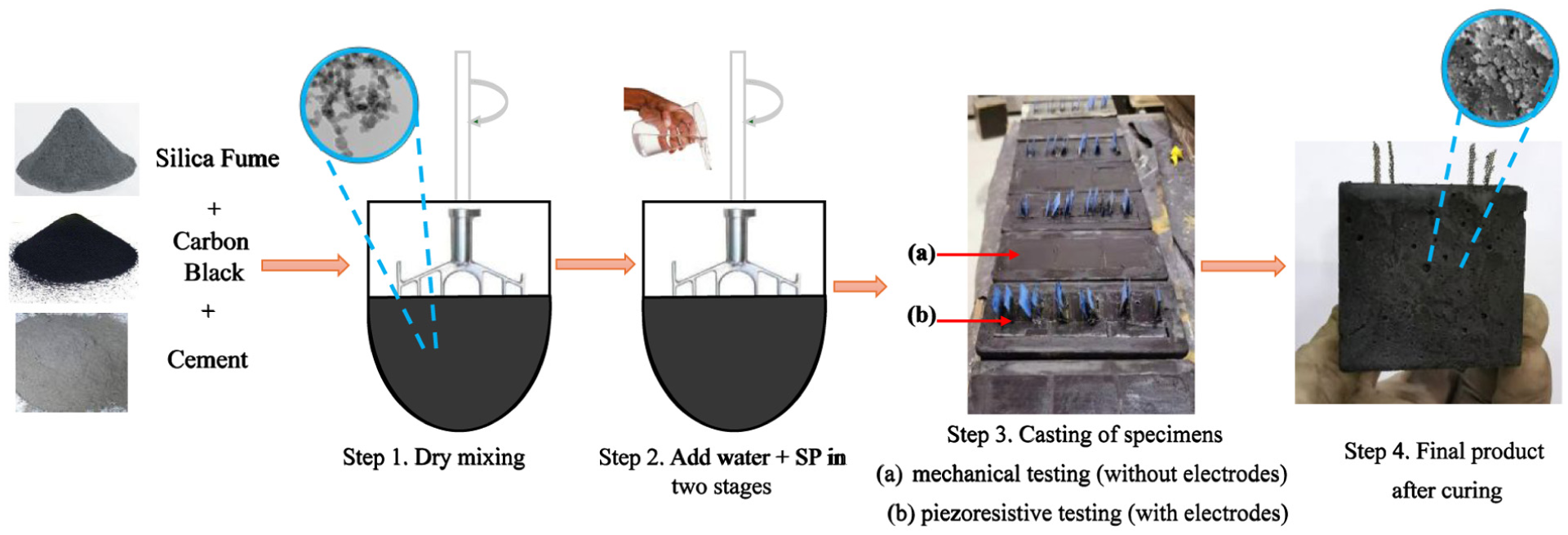
Fabrication process of nCB-filled smart cementitious composites.
Mechanical testing
Compressive strength testing was conducted using 50 mm cubic samples according to ASTM C109 (C109/C109M-05, A, 2005). The loading rate applied was 0.5 MPa/s.
Piezoresistive testing
The samples used for piezoresistive testing were dried at 50°C for 3 days, after 28 days of curing, to minimize moisture content. The purpose of this drying treatment is to suppress ionic conduction, thereby ensuring that the samples embody mostly electronic conduction (Hussain et al., 2025a). In real-life scenarios, ionic conduction occurs only as a supplement to electronic conduction in enabling piezoresistivity. Before testing, the samples were kept in an ambient environment to cool down, since temperature influences electrical properties (Dong et al., 2019; Lipscomb et al., 2009). The experimental setup for piezoresistive testing is shown in Figure 3. During testing, each sample was first subjected to four compressive loading cycles with a stress amplitude of 15 MPa, and then a monotonic compressive load until failure. The loading was applied using a universal testing machine (Instron 5982, Instron, USA) and at a rate of 0.40 mm/min (Ding et al., 2019b). The axial strains of the samples were measured by strain gages attached to two opposite sides of each sample. The resistances of the samples were measured by an LCR meter (U1733C, Keysight Technologies, Inc., USA), using the four-probe method, which helped to avoid contact resistance that would have existed if the two-probe method was applied (Chung, 2020).
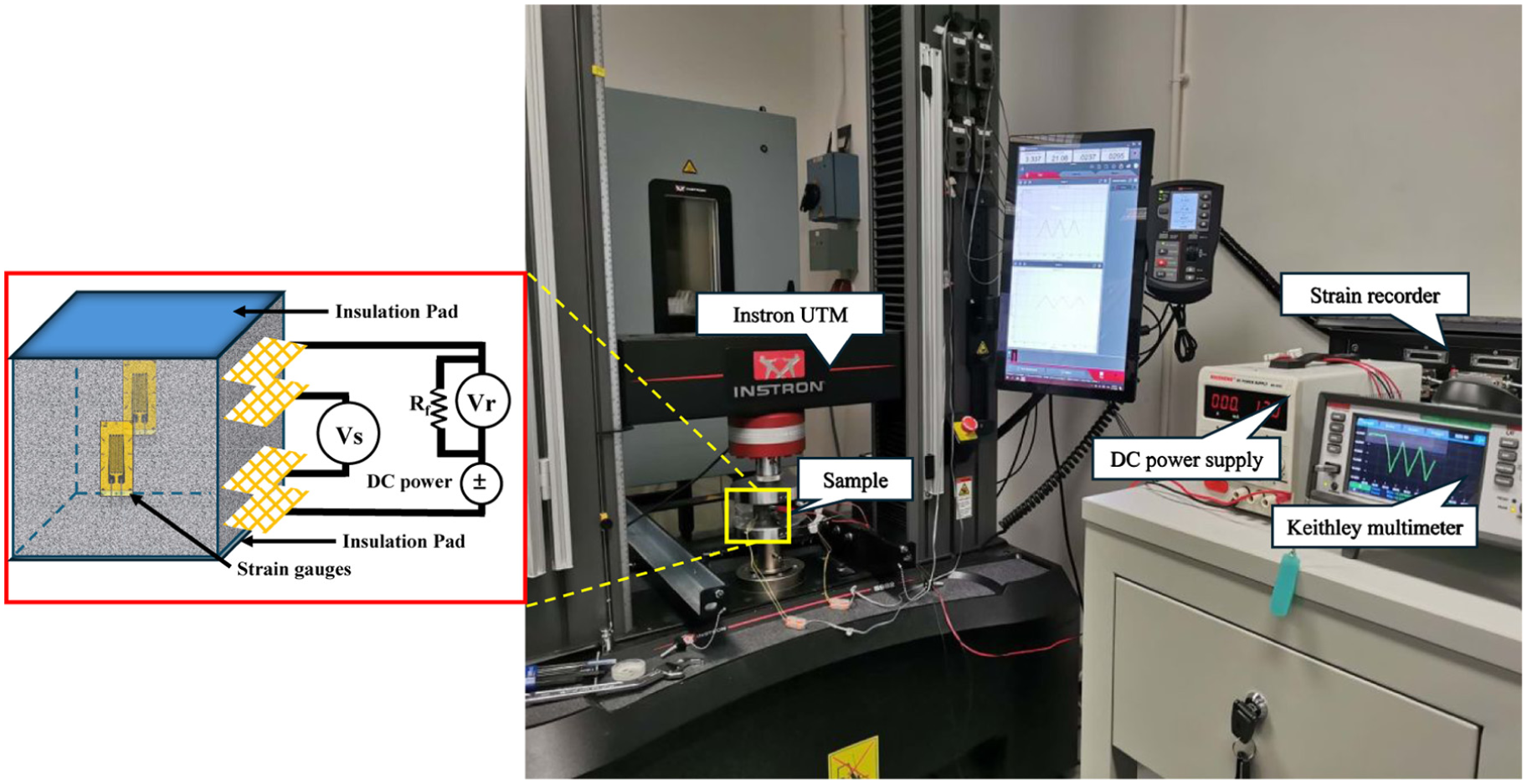
Setup for piezoresistive testing of nCB-filled cementitious composites.
The strain sensitivity of a sample is characterized by the so-called gage factor (GF; Amjadi et al., 2016), which is defined by:

where

where ρ0 is the initial resistivity of the sample before being loaded, and ρ is the resistivity of the sample under loading. Resistivity is defined by:

where R is the measured resistance of the sample, A is the area of the embedded part of each electrode (2 cm2), and L is the distance between the two inner electrodes (2 cm).
Results and discussion
Compressive strength
The compressive strengths of samples with different nCB dosages are illustrated in Figure 4. It can be observed that the strengths of all three types of nCB-filled samples follow a similar trend, initially maintaining at the same level but with sign of increase, and then starting to decrease. Generally speaking, the improvement in strength, though insufficiently significant, is attributed to the pore-filling effect of nCB, where nCB particles can fill the nano-level pores in cementitious composites to reduce porosity (Li et al., 2008; Ding et al., 2019c; Wen and Chung, 2007), as shown in Figure 5, leading to enhanced microstructural densification. In this respect, it is fair to deduce that nCB-174, which offers the most apparent improvement in strength, has a large range of particle sizes than the other two types of nCB, capable of filling a larger number of pores with different sizes. The subsequent reductions in strength are linked to lower flowability and improper compaction of matrices, caused by the absorption of larger amounts of water and SP, as well as higher porosity in matrices, both due to the addition of nCB (Hussain et al., 2022a). Also, nCB agglomerates, formed by strong van der Waals attractions between individual nCB particles, can act as stress concentration points which are significantly less resistant to loading than the surrounding C-S-H structures (Dong et al., 2019; Han et al., 2017). Moreover, the absorption of water by nCB may slow down the hydration process, which is essential to strength development, by impeding the interaction between water and cement particles (Lu et al., 2021, Hussain et al., 2022a).
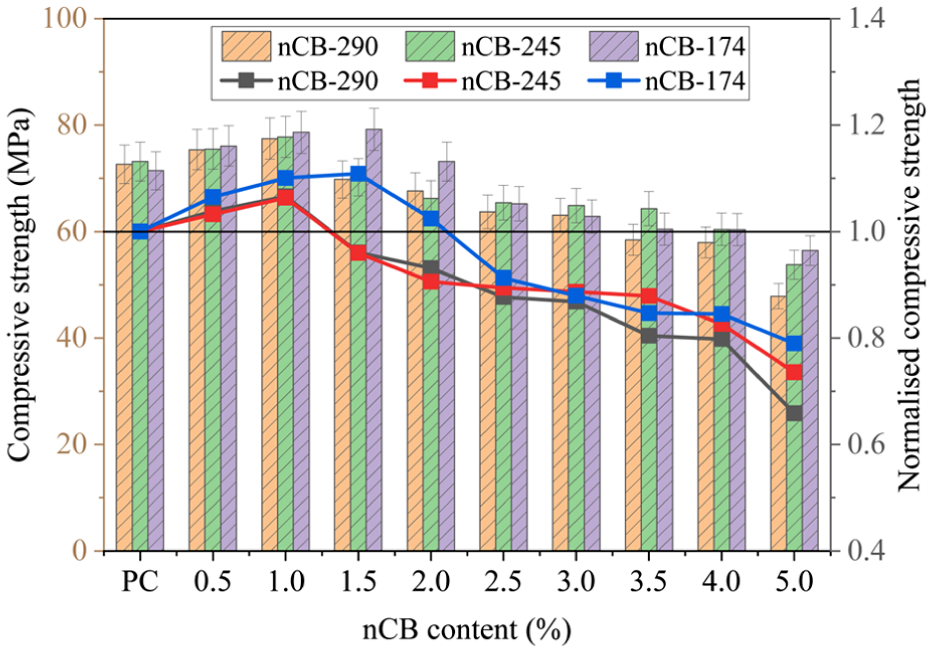
Compressive strengths of cementitious composites with different types of nCB and different nCB dosages (error bar: ±1 standard deviation of three replicate specimens).
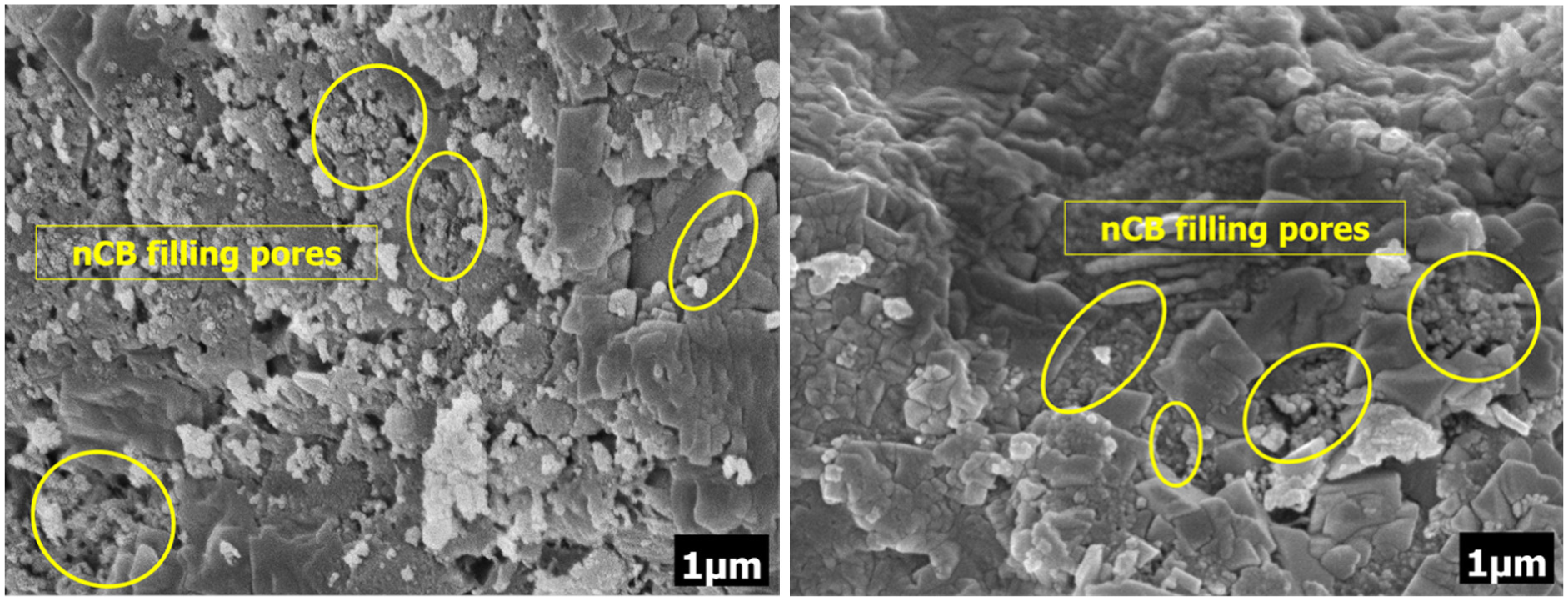
SEM images of cementitious composites with nCB-290.
Piezoresistive behavior
Percolation threshold
Percolation threshold is a crucial parameter for designing and optimizing nanofiller-filled composites designated for strain sensing. It is defined as the filler dosage at which a significant drop in resistivity occurs (Han et al., 2015a; Sun et al., 2017). In cementitious composites, there are two types of electrical conduction: ionic conduction and electronic conduction (quantum tunneling, field emission, and direct contact; Han et al., 2014). The resistivity versus filler dosage relationship of a nanofiller-filled composite can be divided into three zones, including a below-percolation zone, where the material behaves like an insulator, a percolation zone, where the resistivity of material is highly sensitive to morphological changes in the conductive network, and the above-percolation zone, where the material is fully conductive due to the dominance of direct contact between nanofillers. Within the percolation zone, when the nanofiller dosage is low, ionic conduction is the major form of electrical conduction, taking place through the pore solution of the cementitious matrix, which spans the capillary pores and acts as an electrolyte (Demircilioğlu et al., 2019; Han et al., 2020).
Figure 6 demonstrates the resistivities of the three different types of nCB-filled samples at different nCB dosages. For each sample, the resistance was measured over a 5- to 10-min interval until a stable signal had been attained. While non-oven dried samples showed certain resistance drifts due to the polarization effect, the resistances of the oven-dried samples used here were much more stable with significantly lower drifts. Filler material has direct influence on percolation (Dai et al., 2010; Li et al., 2006; Monteiro et al., 2017a; Sun et al., 2017). The filler materials used in this study are of the same chemical composition, that is, carbon, but different structures, resulting in different electromechanical properties (Nalon et al., 2020). From Figure 6, it can be observed that each type of nCB-filled samples has a very different percolation behavior: the percolation zones of the nCB-174, nCB-245, and nCB-290 samples are 0.5%–3.5% nCB, 2.0%–4.0% nCB, and 1.0%–2.0% nCB, respectively. Among all, the nCB-290 samples have the most distinct and narrowest percolation zone, attributed to the chain-like aggregates of nCB-290 which lead to an extensive volumetric wiring structure that is conducive to electrical conductivity.
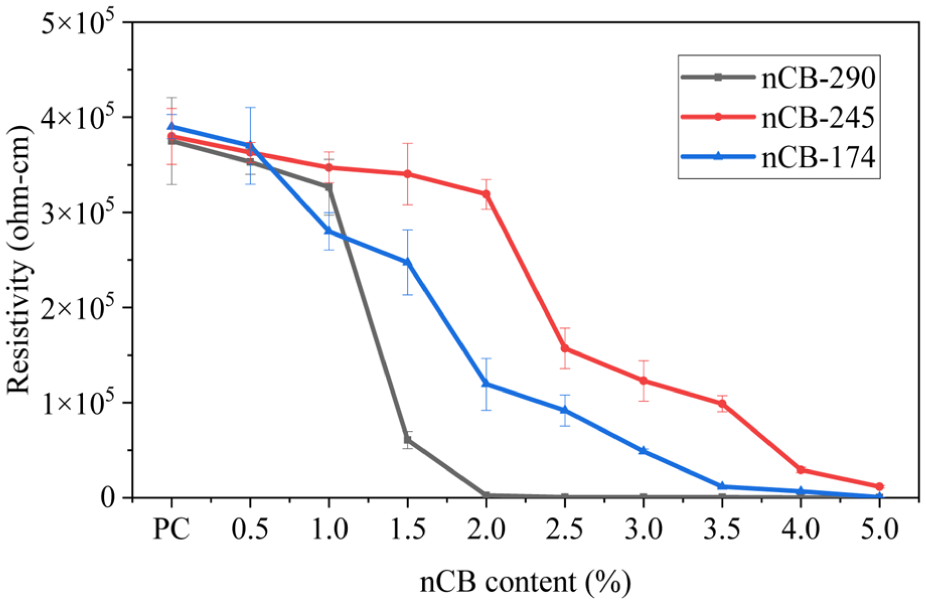
Resistivities of cementitious composites with different types of nCB and different nCB dosages (error bar: standard deviation of three replicate specimens).
For each type of nCB, a cementitious composite sample with nCB dosage at the corresponding percolation threshold (i.e. 2.0% nCB for nCB-290, 4.0% nCB for nCB-245, and 3.5% nCB for nCB-174), which would possess the highest strain sensitivity (Han et al., 2015b, 2019; Hussain et al., 2022a, 2023; Zhang et al., 2018), was used in the subsequent piezoresistive testing.
Cyclic compressive loading
The three nCB-filled samples, each with a distinct type of nCB, were subjected to cyclic compressive loading in order to evaluate the repeatability of their piezoresistive responses (Georgousis et al., 2017). The results presented in Figure 7 show precise synchronization between FCR and uniaxial cyclic compressive stress-strain. For each sample, when it was loaded in compression, its resistivity decreased, and as it was unloaded, its resistivity recovered. This can be attributed to the fact that the distances between nCB particles were reduced when the compressive load was applied, resulting in the construction of new conductive pathways through the quantum tunneling effect. Likewise, during the unloading process, the distances between nCB particles increased, disrupting the conductive pathways formed. The significant piezoresistive responses observed in these samples, whose nCB dosages are at the corresponding percolation threshold, can be attributed to the understanding that the predominant conduction mechanism in the samples is quantum tunneling (Spahr et al., 2017; Xiao et al., 2010), where changes in interparticle distance play a crucial role in determining piezoresistivity (Ding et al., 2019a; Li et al., 2024), that is, the resistivity between each pair of adjacent nCB particles increases exponentially with the distance between the nCB particles (Ding et al., 2019a; Simmons, 1963; Xiao et al., 2010). From the results, it can be concluded that the nCB-290 sample exhibits the highest FCR, followed by the nCB-245 sample and the nCB-174 sample. The highest strain sensitivity of the nCB-290 sample is attributed to the high structure of nCB-290, the aggregates of which have a large number of interconnected particles. As presented in Figure 8, nCB-290 particles are able to disperse homogenously in the cementitious composite, giving rise to a continuous and interconnected conductive network, which is essential to achieving high strain sensitivity.
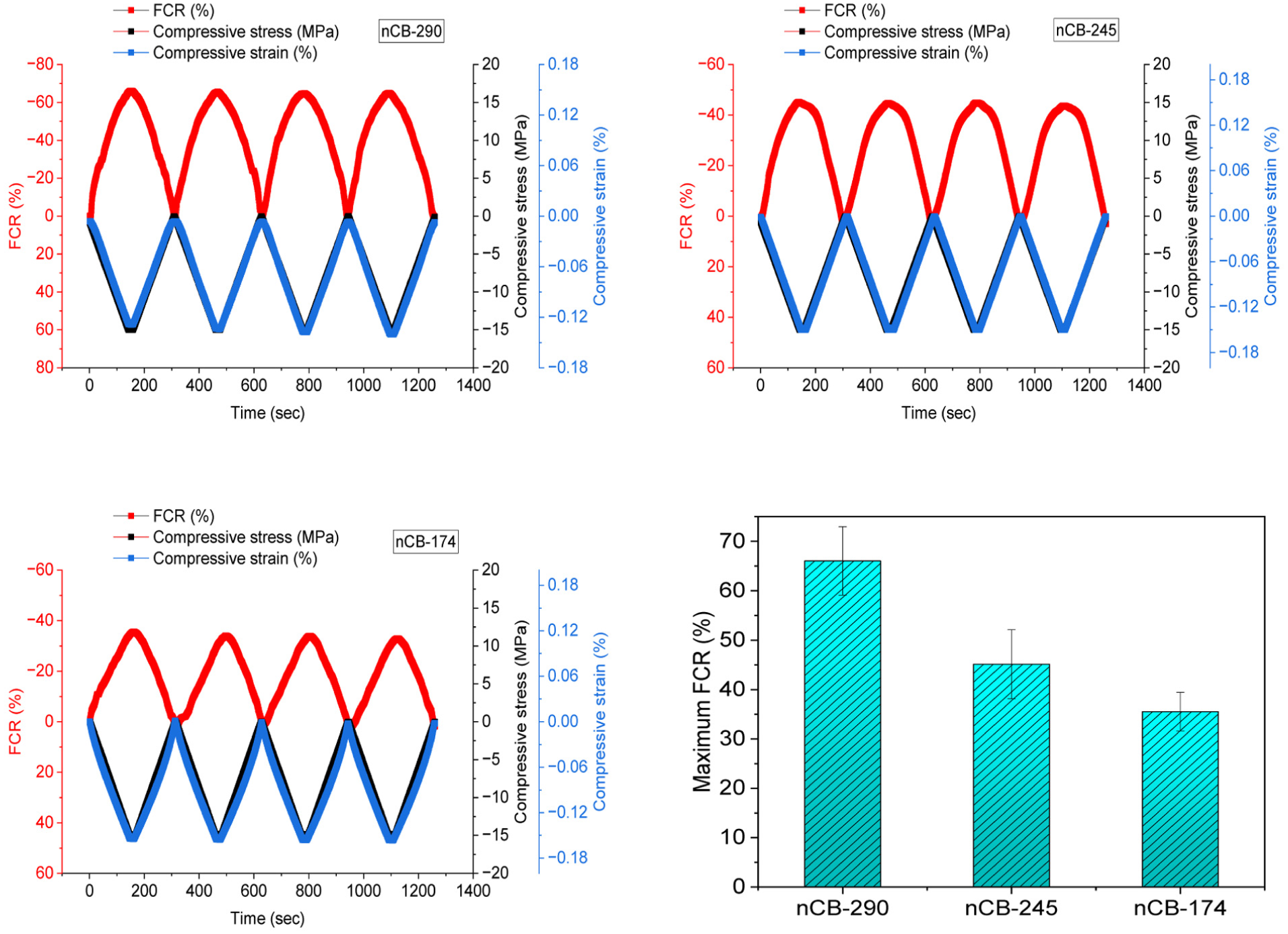
Responses of cementitious composites with different types of nCB and nCB dosages at the corresponding percolation threshold, to cyclic compressive loading (error bar: ±1 standard deviation of three replicate specimens).
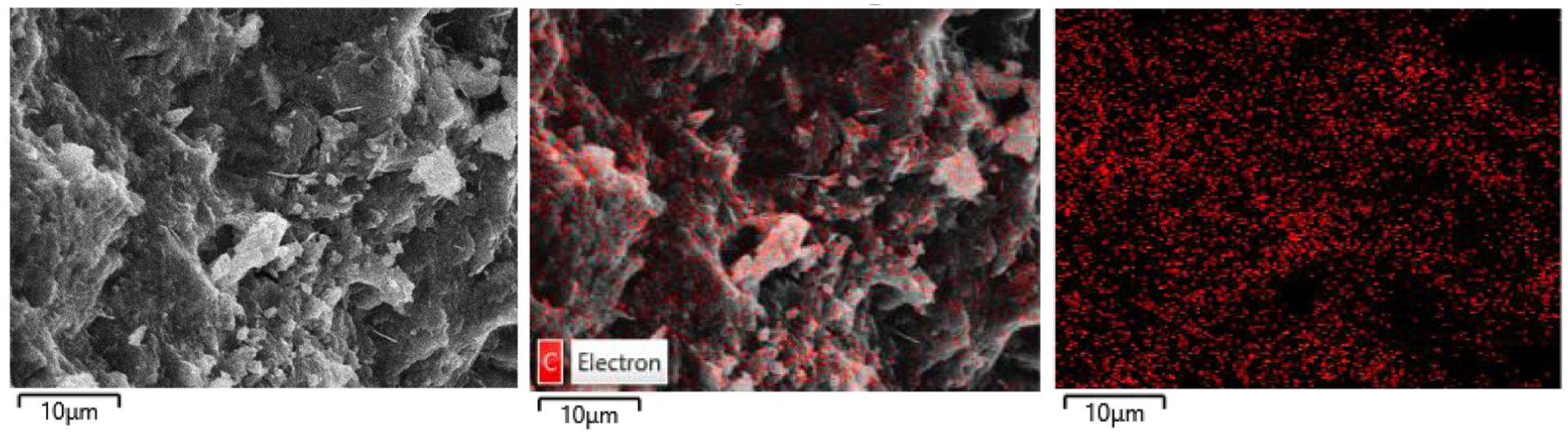
SEM-EDX mapping of carbon (red dots) in cementitious composite with nCB-290 at 2% nCB content.
Cycle-by-cycle metrics, including baseline drift, change in peak FCR, and change in hysteresis, were calculated to quantify the repeatability of the piezoresistive responses. For each response, the baseline drift or change in peak FCR is calculated by dividing the linear regression slope of the minimum or maximum FCRs of all cycles by the maximum FCR of the first cycle. The change in hysteresis is represented by the linear regression slope of the hysteresis values of all cycles, where the hysteresis value of each cycle is calculated by dividing the maximum difference between the responses during the loading and unloading stages at the same strain level by the difference between the maximum and minimum FCRs. The results show that the nCB-290 sample possesses the highest repeatability with a baseline drift of 0.28% per cycle, a change in peak FCR of 0.61% per cycle, and a change in hysteresis of 0.019% per cycle. For the nCB-174 and nCB-245 samples, the baseline drifts are 0.127% per cycle and 0.129% per cycle, the changes in peak FCR, 0.245% per cycle and 0.104% per cycle, and the changes in hysteresis, 0.42% per cycle and 0.34% per cycle.
Monotonic compressive loading
The three different nCB-filled samples were further subjected to monotonic compressive loading until failure in order to evaluate their strain sensitivities in terms of gage factor (GF). Figure 9 illustrates the FCR versus strain relationships of the samples, the slopes which are essentially the GFs (Amjadi et al., 2016) and can be quantified via linear regression. Expectedly, the nCB-290 sample, which exhibits the most intense response to cyclic compressive loading, has the highest GF, followed by the nCB-245 sample and the nCB-174 sample. Moreover, the responses of all three nCB samples exhibit a high level of linearity, as evident by the near-unity coefficients of determination (R2).
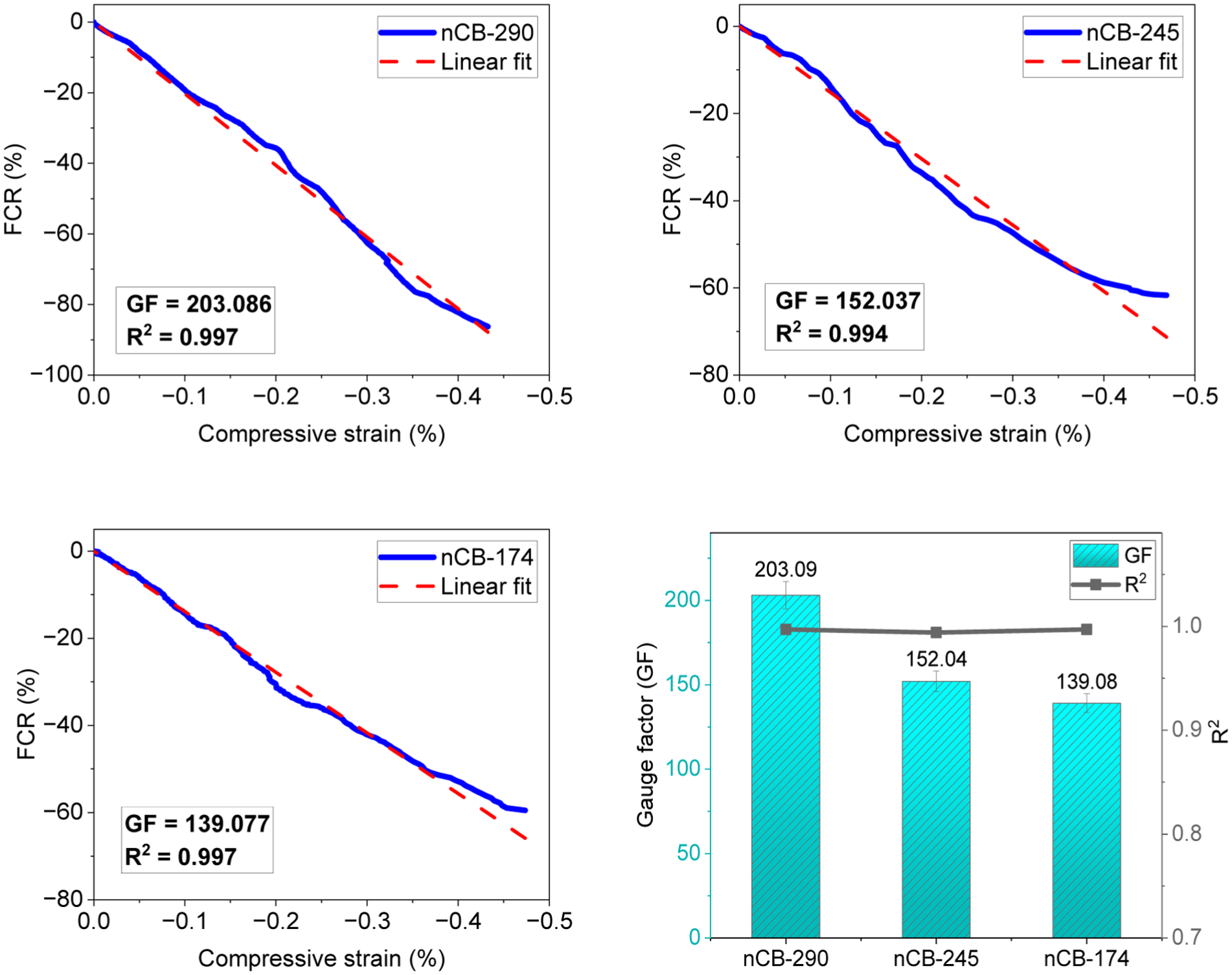
Responses of cementitious composites with different types of nCB and nCB dosages at the corresponding percolation threshold, to monotonic compressive loading (error bar: ±1 standard deviation of three replicate specimens).
Performance summary
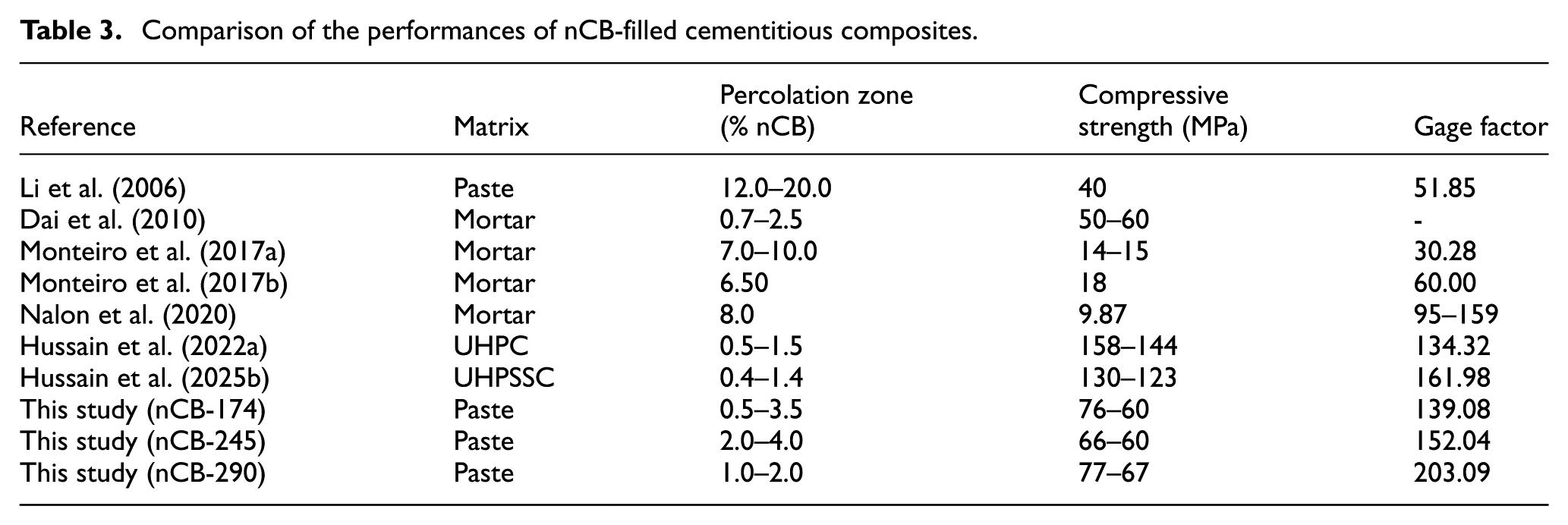
Table 3 compares the percolation zones, compressive strengths and gage factors obtained in this work with those reported by previous studies that also utilized nCB as conductive nanofillers. The low percolation thresholds are beneficial in terms of cost and ease of handling. The strengths are on par with the best of conventional concrete, while the gage factors are comparable to the best values reported across all previous works.
Comparison of the performances of nCB-filled cementitious composites.
Conclusion
This study investigates the mechanical and piezoresistive properties of three different types of nCB-filled cementitious composites, each encompassing a different nCB structure (i.e. number of nCB particles per nCB aggregate), drawing the following key conclusions.
The compressive strengths of the three types of nCB-filled composites show similar trends: an initial retainment, with sign of increase, with respect to nCB dosage, due to the pore-filling effect of nCB, followed by a decrease, due to intensified nCB agglomeration and matrix porosity, as a result of elevated nCB dosages. Among all, the nCB-174 samples have the highest strengths as well as the most apparent initial increase in strength with respect to nCB dosage.
The percolation zone of the nCB-290 composite is the lowest and narrowest, attributable to the branched structure of nCB-290 which is conducive to the formation of conductive networks. The percolation threshold is beneficial to achieving piezoresistivity at low costs, central to field-deployable solutions.
The nCB-290 sample has the highest strain sensitivity with a GF of 203.08. The GFs of the nCB-245 and nCB-174 samples are 152.07 and 139.03, respectively. The strain sensitivity of the nCB-filled composites is two orders of magnitude higher than that of conventional strain gages. The piezoresistive responses of the nCB-filled composites are highly repeatable and precisely synchronized with applied stress-strain.
The use of nCB in cementitious composites has shown great potential for developing self-sensing concrete for strain monitoring and damage detection. The results of this study shall contribute to the development of these highly strain-sensitive cementitious composites into cost-effective field-deployable solutions for monitoring the health of concrete infrastructure in critical applications. Future work shall emphasize on direct examination of the damage detection capability.
Footnotes
Funding
The authors disclosed receipt of the following financial support for the research, authorship, and/or publication of this article: The authors gratefully acknowledge the financial support provided by the Hong Kong Research Grants Council (Project No.: T22-502/18-R), the Guangdong-Hong Kong Joint Laboratory for Marine Infrastructure (Project No.: ZGR4), and the State Key Laboratory of Climate Resilience for Coastal Cities at The Hong Kong Polytechnic University.
Declaration of conflicting interests
The authors declared no potential conflicts of interest with respect to the research, authorship, and/or publication of this article.
Data availability statement
The datasets generated during and/or analyzed during the current study are available from the corresponding author on reasonable request.