






Abstract
This study investigates the experimental conditions necessary to observe a non-monotonic dependence of shear stress on quasi-static shear strain in structured magnetorheological (MR) fluids of a known composition. The research varies several key parameters, including the concentration and size of magnetic particles, the working gap between rheometer plates, the strength of the external magnetic field, and the material properties of the plates. Rheometric measurements are complemented by microstructural observations of low-concentration MR fluid specimens using X-ray computed microtomography. The results demonstrate that non-monotonic shear stress-strain behavior is characteristic of diluted MR suspensions with linear chain-like particle aggregates. Crucially, this phenomenon occurs only when using rheometer plates with magnetic microparticles embedded in their surface, and the microparticles must be of a size comparable to or larger than the transverse dimensions of the chain aggregates. Conversely, monotonic shear stress increases are observed with non-magnetic or entirely magnetic plates, irrespective of the MR fluid composition. These findings highlight the critical role of particle-structure interactions with the measuring geometry and provide insights into operating conditions for applications requiring precise control of static yield stress. The results also offer valuable experimental data to refine and validate models of MR fluid behavior under quasi-static shear.
Introduction
The magnetorheological (MR) effect, which arises from the ability of magnetic microparticles to form structures under the influence of an external magnetic field, has been extensively studied due to its potential applications in adaptive systems and devices (de Vicente, 2023; Osial et al., 2023; Pei and Zhou, 2026; Wereley, 2014). These microparticle structures, often referred to as chain or chain-like aggregates, exhibit morphologies that depend on factors such as the particle volume concentration, the strength of the magnetic field, and the applied mechanical load (Bossis et al., 2002, 2013; Hagenbüchle and Liu, 1997; Yu et al., 2024. The structures in concentrated suspensions differ significantly in their morphology from individual chain aggregates and are rather labyrinth-like. Separate aggregates in diluted suspensions of magnetic microparticles can be either chains of individual particles or columns of varying thickness. Respectively, the macroscopic response of structured MR suspension may differ for different particle aggregate morphologies. Currently, both various experimental approaches (Borin, 2020; Martínez-Cano et al., 2025) and high-resolution simulation methods (Fernandes and Faroughi, 2023; Wang et al., 2024, 2025; Yu et al., 2024) are used for microstructural studies of MR fluids. Various macroscopic and microscopic constitutive models of MR fluids are reviewed in detail by Pei and Peng (2022). Under conditions of constant shear flow, MR fluids structured in a magnetic field behave as viscoelastic solids in the “pre-yield” state, withstanding the applied shear stress without macroscopic flow. When the shear stress exceeds the static yield stress, the structured suspension transitions to the “post-yield” state. The static yield stress is determined by the mechanism of deformation and/or rupture of particle aggregates under the shear. Theoretical models and computer simulations used to predict the static yield stress considering both aggregates of magnetic microparticles in the form of simple linear chains, cylinders, or ellipsoids, and in the form of branched labyrinth structures (Bai and Chen, 2019; Bossis et al., 1997; Morillas and DeVicente, 2019; Wang et al., 2025; Zubarev et al., 2020). These predictions show a non-monotonic dependence of shear stress on macroscopic shear strain under certain conditions. From experimental point of view to evaluate the static yield stress, the quasi-static shear of a structured MR suspension can be realized using either a rheometer or customized apparatus (Borin et al., 2022; Tang and Conrad, 1996. The typical reported response under quasi-static shear of a structured MR fluid obtained experimentally is a monotonic stress growth, the slope of which determines the regions of pre- and post-yield behavior (Borin et al., 2022; Gandhi and Bullough, 2005; Li and Zhang, 2008; Tang and Conrad, 1996). Figure 1 schematically illustrates the monotonic and non-monotonic dependencies of shear stress on strain in question.
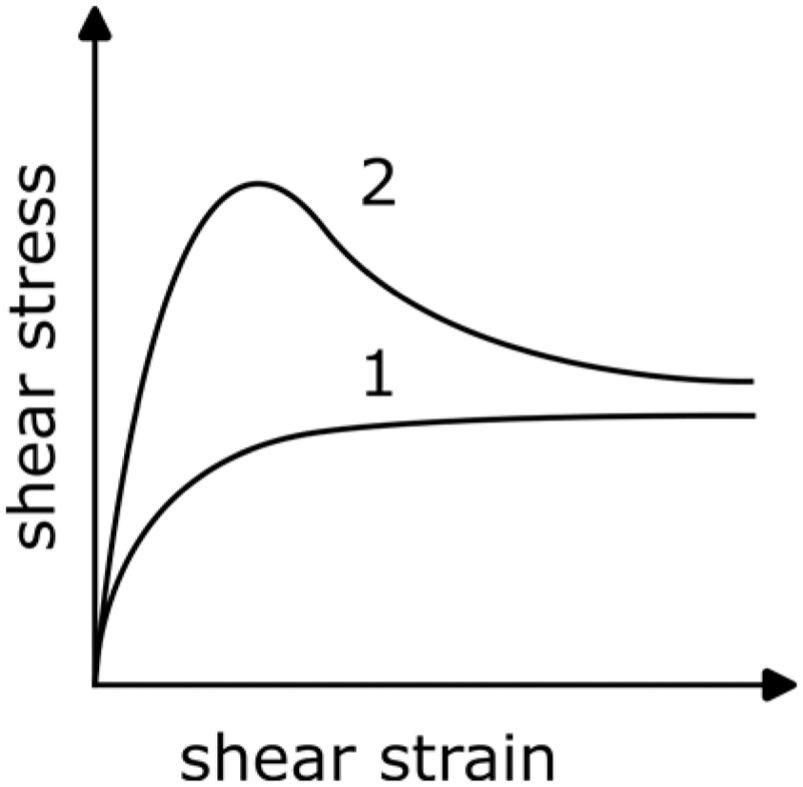
Schematic illustration of the monotonic (curve 1) and non-monotonic (curve 2) dependencies of shear stress on strain.
As pointed out in Zubarev et al. (2020), the state of the system with a decreasing dependence of stress on shear strain is mechanically absolutely unstable, since the smallest internal deformation fluctuations should grow rather than dissipate. Hence the difficulty in detecting such a state in experimental studies. Indeed, as mentioned above published experimental results demonstrate a monotonic dependence of shear stress on strain and time. The present study is devoted to attempts to find experimental conditions under which a non-monotonic dependence of shear stress versus quasi-static strain is observed for a structured MR fluid of the simplest possible and known composition.
In typical model representations, particle structures are inseparably linked to the surfaces between which the MR fluid is structured and sheared. In real experiments, however, the interaction between magnetic particles and the surfaces of the measuring geometry plays an important role in determining possible wall slip (Gómez-Ramírez et al., 2012; Jonkkari et al., 2012; Laun et al., 2011). In Borin et al. (2022) quasi-static shear was applied to structured MR fluids confined between non-magnetic surfaces modified using abrasive paper and a foamed open-pored material. All obtained stress-strain curves were monotonic, regardless used modifications. The issue of the surface modification also forms a part of the current study with experiments involving magnetic and non-magnetic plates; however, the surface roughness was not varied. Therefore, as the conditions of interaction between the structured MR fluid and the measuring geometry surfaces change over the study, it is also relevant to application-oriented aspects.
Materials and methodology
Samples
MR fluids used in the study were made from silicon oil Korasilon M10000 and different powders of magnetic microparticles as given in Table 1. The primary type of magnetic filler was BASF CM carbonyl iron powder (CIP), while other fillers were used for reference. Photographs of particles of used magnetic powders obtained by optical microscopy are shown in Figure 2. Concentration of the powders was varied between
Used selection of magnetic powder.
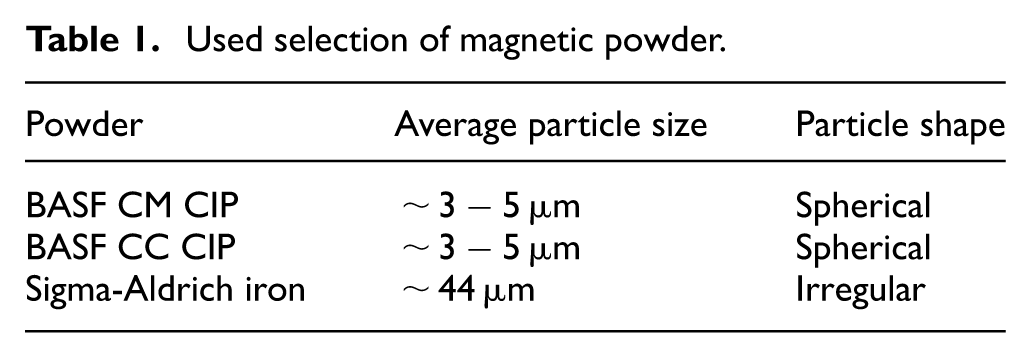
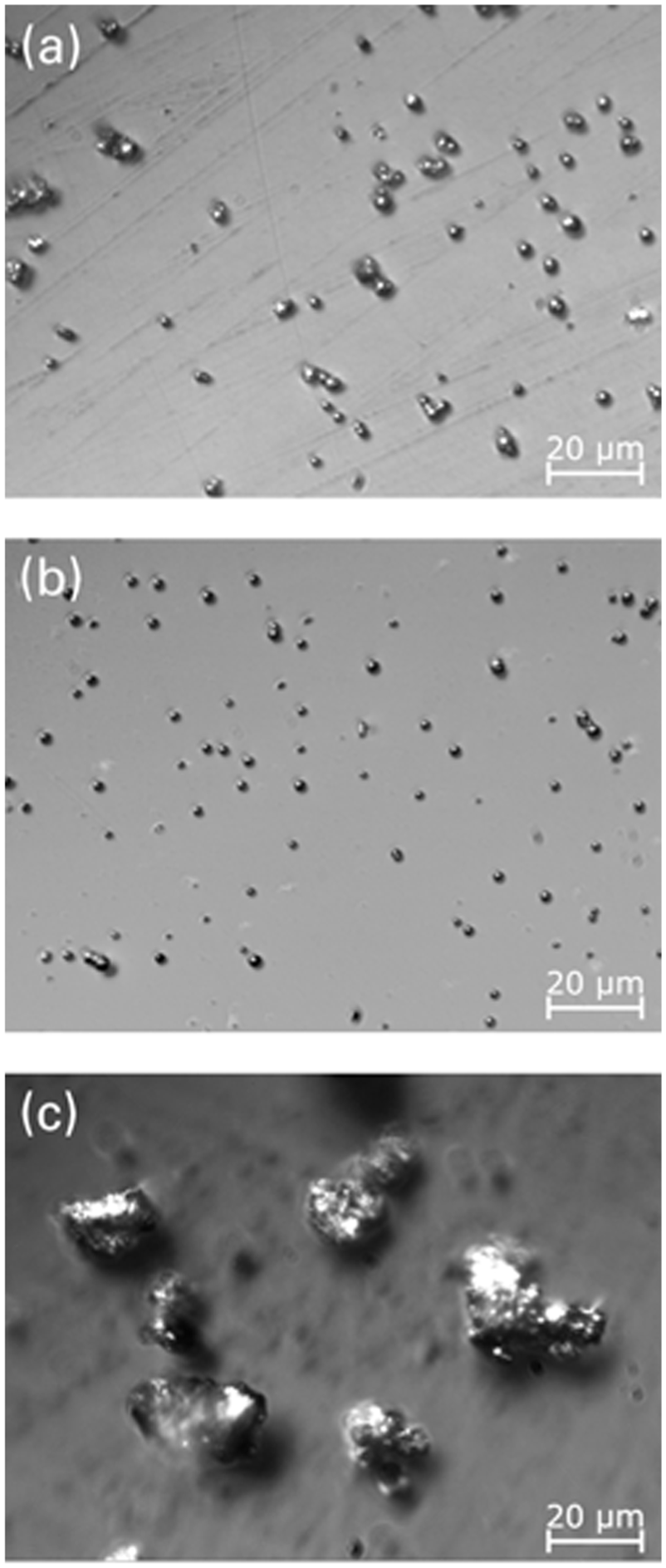
Microscopic images of the magnetic powder particles used: (a) BASF CM powder, (b) BASF CC powder, and (c) Sigma-Aldrich iron powder.
Rheometry
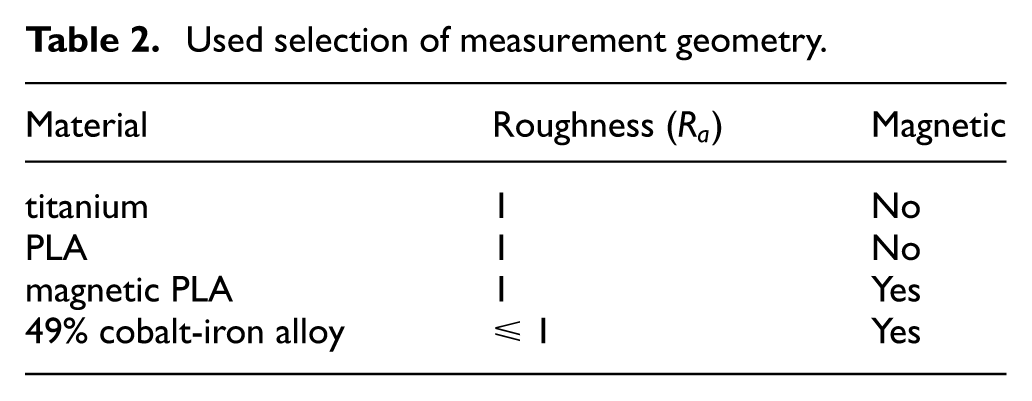
An Anton Paar Physica MCR 502 WESP rheometer (Anton Paar, Austria) equipped with a MRD cell was used for rheometric tests. Both standard titanium plate and modified surfaces with different magnetic properties were used as measurement geometries. As it turned out, the standard static lower plate of a commercial MRD cell is made of a material with a ferromagnetic component. For this reason, a non-magnetic plate made of polylactic acid (PLA) was used instead. The measurement configuration layout is shown in Figure 3. The modification of standard geometry (active rotor titanium plate diameter – 20 mm) was achieved by attaching thin discs made of various materials to the surface. Similar modifications have been used previously, see for example Borin et al. (2022) and Jonkkari et al. (2012). These modifications have a negligible effect on the uniformity of the magnetic field in the MRD cell as demonstrated in details in Jonkkari et al. (2012). Even when using magnetic modifiers, the field homogeneity in the measuring gap is no less than 93%. Information on the measurement geometry used is presented in Table 2. One notable feature is the use of a measuring geometry modifier manufactured from a commercially available iron-particle-filled filament called ’Protopasta Magnetic Iron PLA’ (Protoplant Inc.). Iron powder is added to the PLA filament to make the material magnetic. The volume fraction of iron particles in this filament is
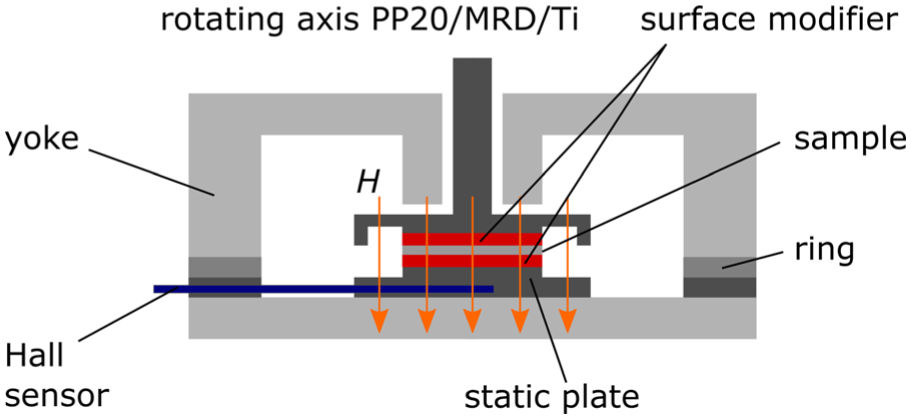
Schematic representation of the modified Anton Paar MRD measuring cell.
Used selection of measurement geometry.
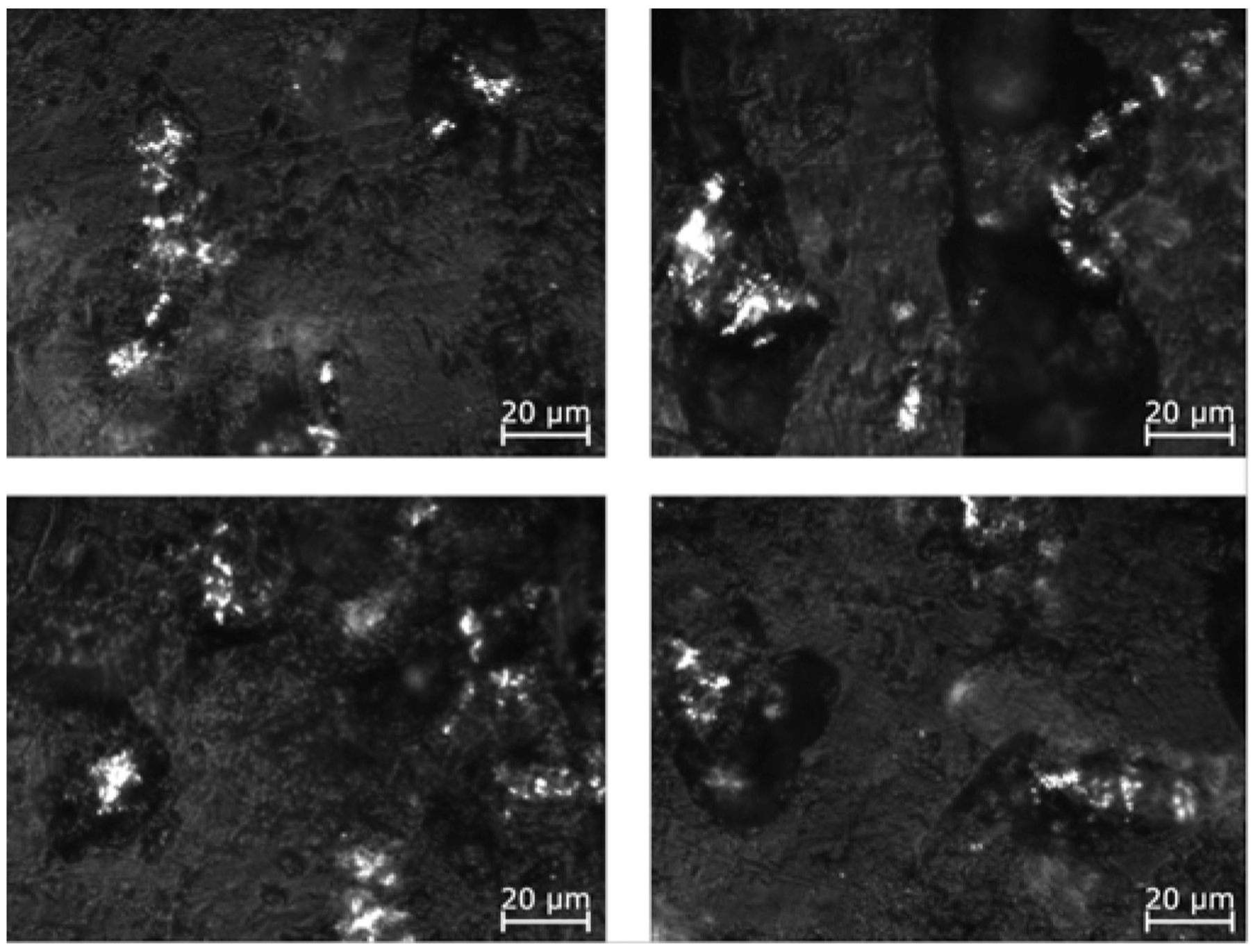
Selection of microscopic images of the measuring plate surface printed using iron particle-filled filament (magnetic PLA).
The used experimental procedure schematically illustrated in Figure 5. The MR fluid was first structured, that is, placed under the influence of a magnetic field for at least 60 s, which is long enough for magnetic dipoles to move to the point of contact (Borin, 2020; Wu et al., 2021). The sample was then loaded with a slowly increasing strain from 0 to 300% (
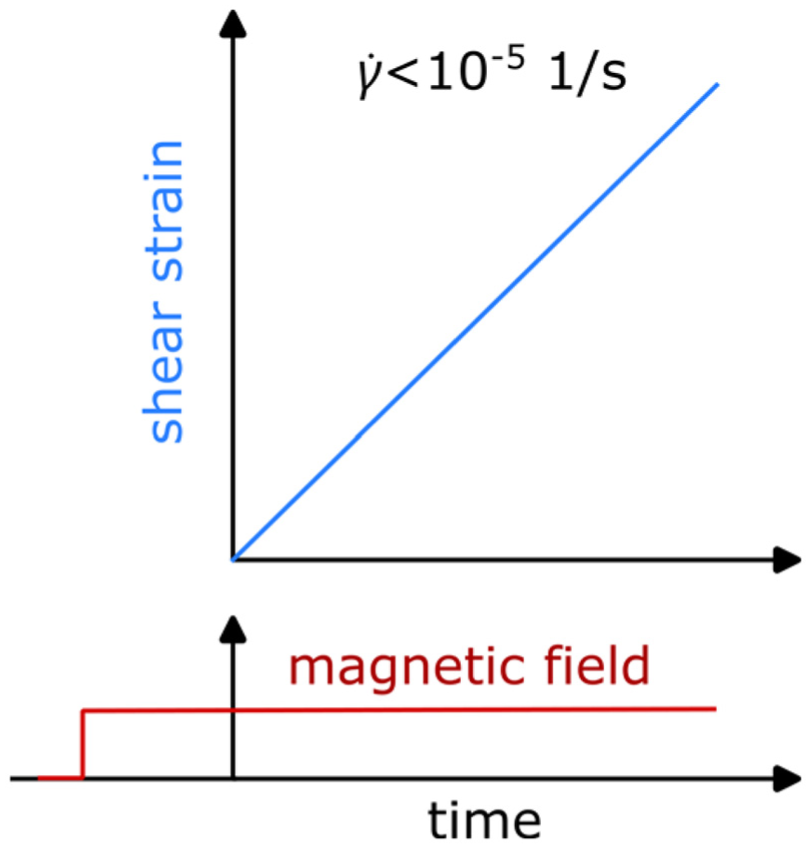
Procedure of the experiment.
For most measurements, the working gap between the static and rotating plates was set at 0.5 mm. To evaluate the influence of the gap size on the measurements, the gap size was varied from 0.1 to 0.5 mm in selected experiments. The maximum externally applied magnetic field flux density was set to B = 250 mT. This limitation is primarily due to the need to ensure temperature stability throughout the experiment. If a higher magnetic field is applied for the duration of the measurement, the cooling system of the cell will not stabilize the temperature uniformly enough. These temperature fluctuations then affect the measurement results. The set temperature of the measuring cell was maintained at 20°C. Measurements were performed at least three times for each sample type, geometry, and magnetic field, with a new specimen used each time. Replacing the specimen after each measurement eliminates issues related to the suspension’s gravitational stability and the influence of residual particle structures after the magnetic field is applied and the specimen is deformed.
Microstructure evaluation
In order to clarify and visualize the morphology of structures formed by suspended particles via magnetic structurization, the silicone oil of the carrier medium was replaced by a two-component polydimethylsiloxane (Neukasil RTV 230 and A149). Then the specimens were polymerized in a magnetic field in a configuration representing the working gap of the rheometer, that is, between two 20 mm plates made of corresponding magnetic and non-magnetic materials. External magnetic field was provided by the electromagnet BE-25 (Bruker, Germany). Microstructural investigations were carried out using the laboratory X-ray microtomography (
Results and discussion
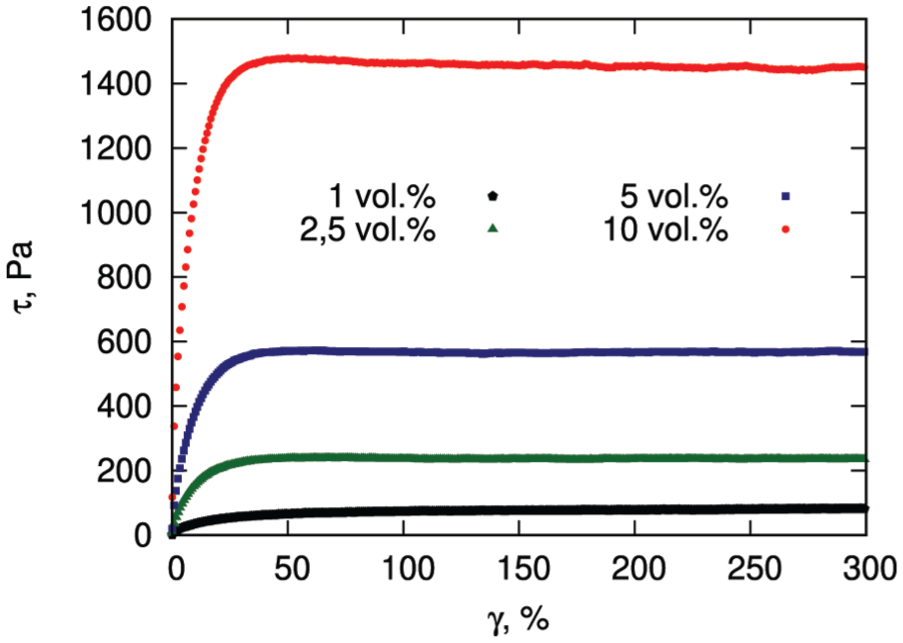
First, we subjected structured suspensions with different concentrations to quasi-static testing using non-magnetic rheometer plate geometry. As Figures 6 and 7 show, shear stress
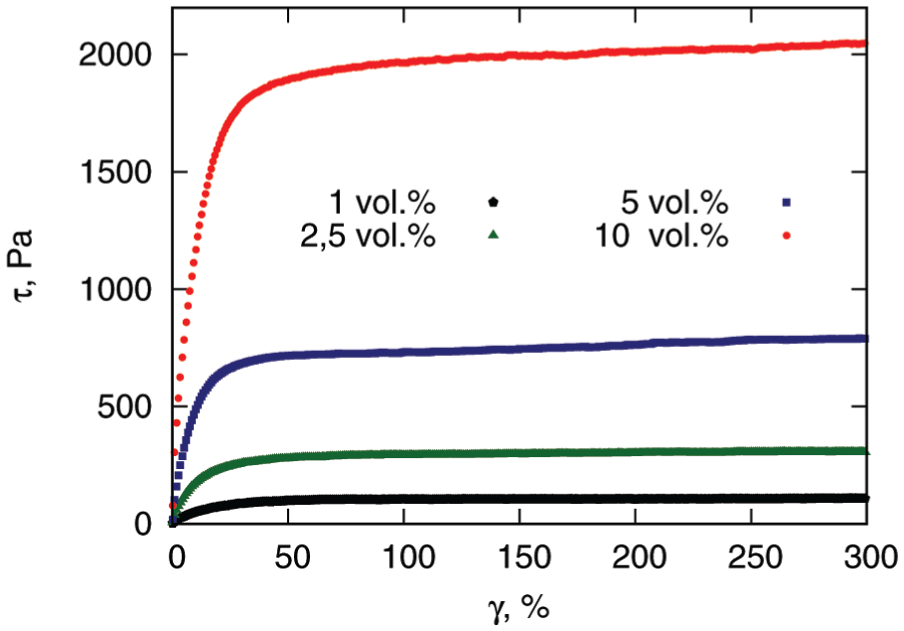
Stress-strain curves obtained using non-magnetic plates for the magnetic suspension of different concentration of BASF CM powder structured under 250 mT.
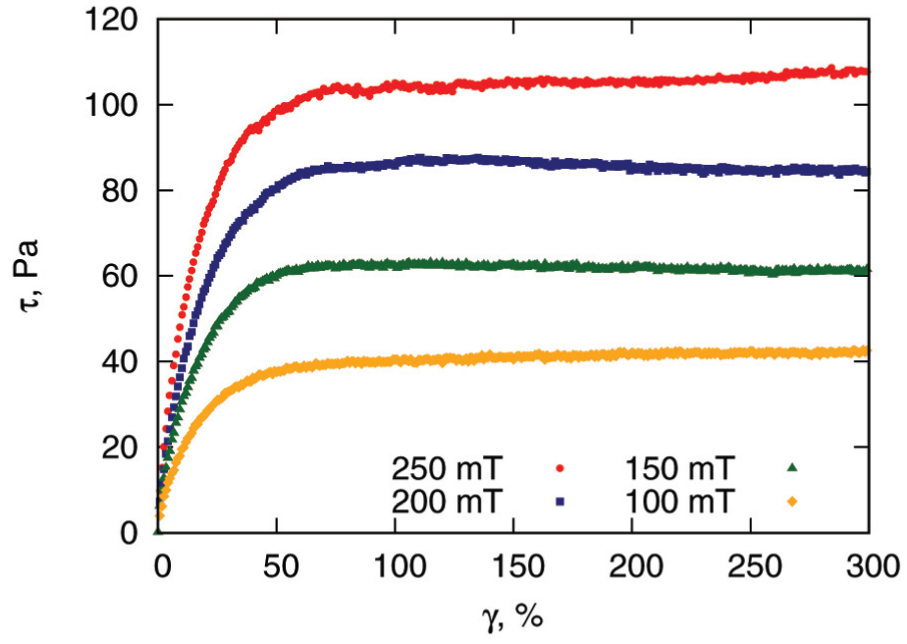
Stress-strain curves obtained using non-magnetic plates for the magnetic suspension of 1 vol.% of BASF CM powder structured under various magnetic field.
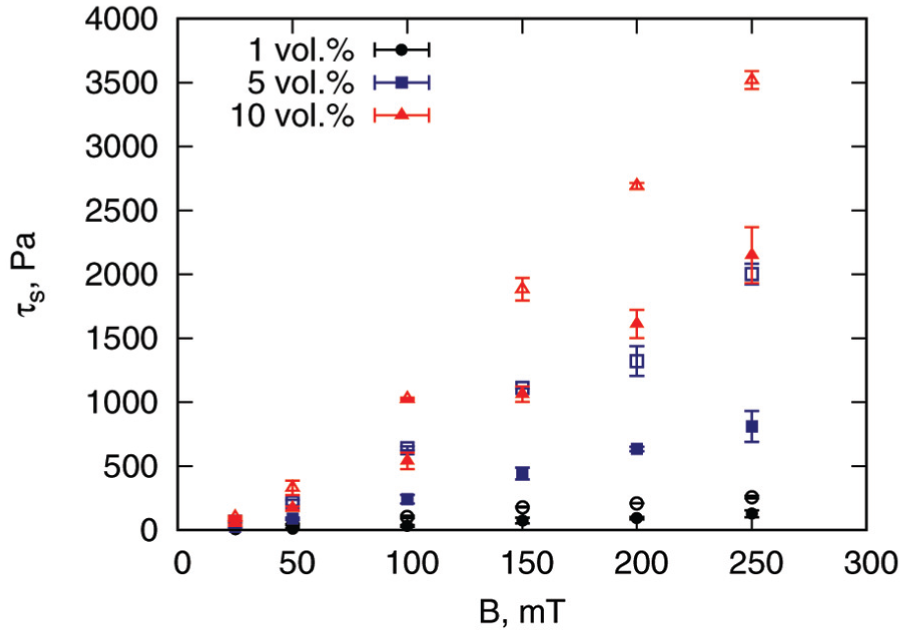
Static yield stress evaluated from the stress-strain curves of the magnetic suspensions with 1, 5 and 10 vol.% of BASF CM powder particles. Results obtained using non-magnetic plates (closed symbols) and magnetic cobalt-iron alloy plates (open symbols).
When using entirely magnetic plates made of cobalt-iron alloy, the dependencies
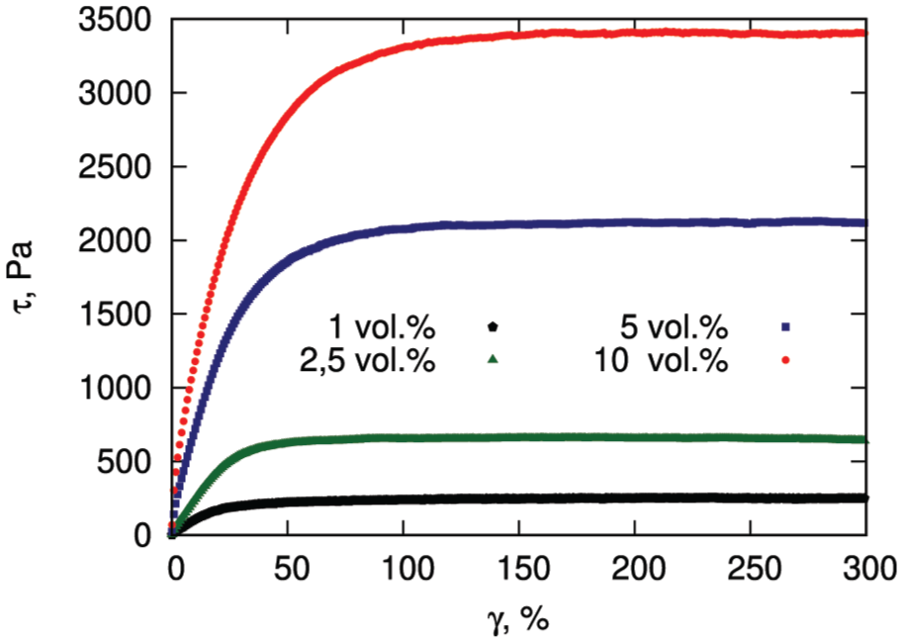
Stress-strain curves obtained using magnetic plates made of cobalt-iron alloy for the magnetic suspension of different concentration of BASF CM powder structured under 250 mT.
Using a powder with iron microparticles of the same or larger size does not change the qualitative result, though some quantitative variations are observable (see Figures 10 and 11).
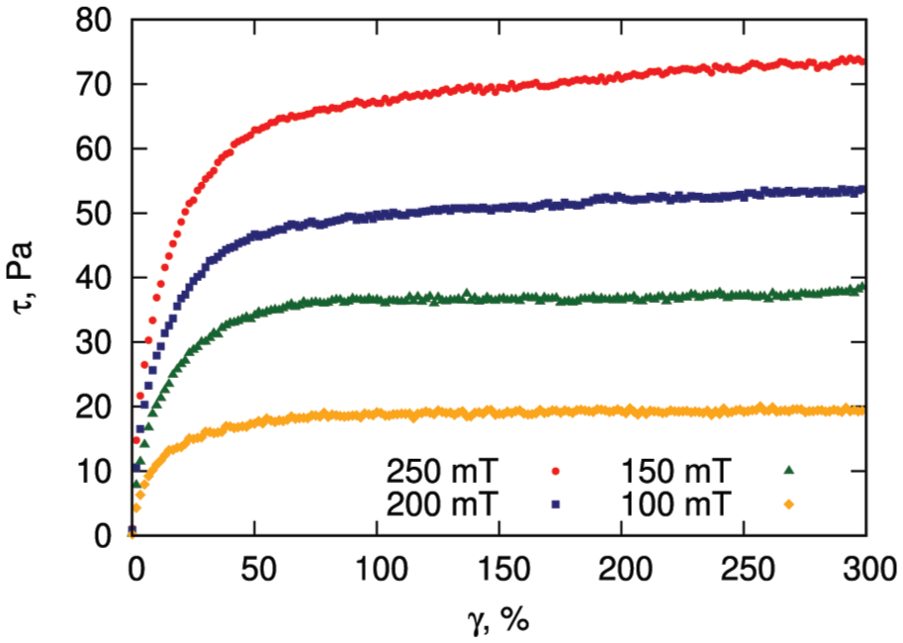
Stress-strain curves obtained using non-magnetic plates for the magnetic suspension of 1 vol.% of BASF CC powder structured under various magnetic field.
Stress-strain curves obtained using non-magnetic plates for the magnetic suspension of different concentration of Sigma-Aldrich iron powder (
Particular emphasis should be put on the results obtained using rheometer plates printed from magnetic PLA. This allows the plates to become magnetized when an external field is applied. However, magnetic particles are not located on the entire surface of these measuring geometry, that is, MR fluid particle aggregates come into contact with both magnetic and non-magnetic areas of the plates. The size of the particles on the surface of the plates ranges from
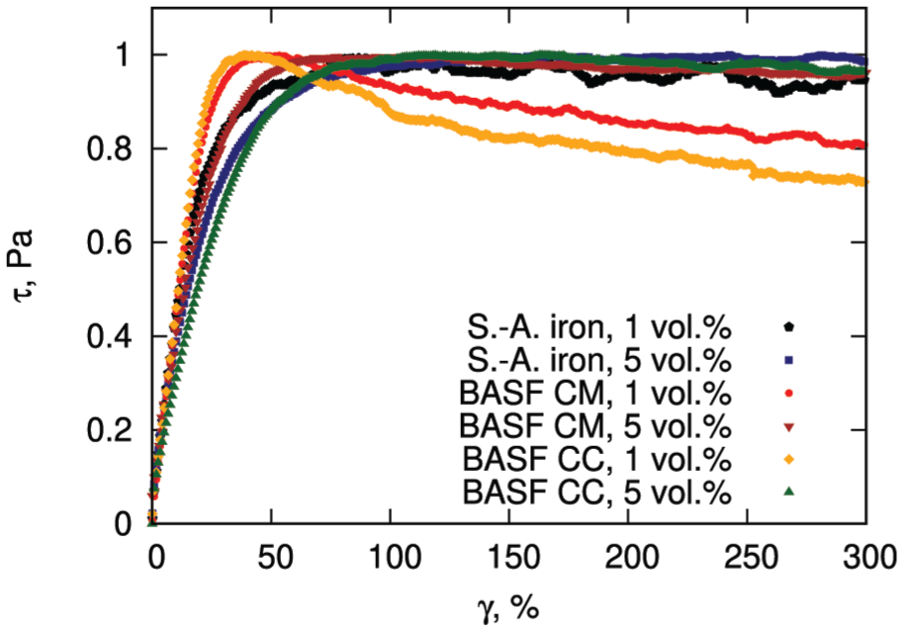
Normalized stress-strain curves obtained using magnetic PLA plates for various MR fluids structured under 250 mT.
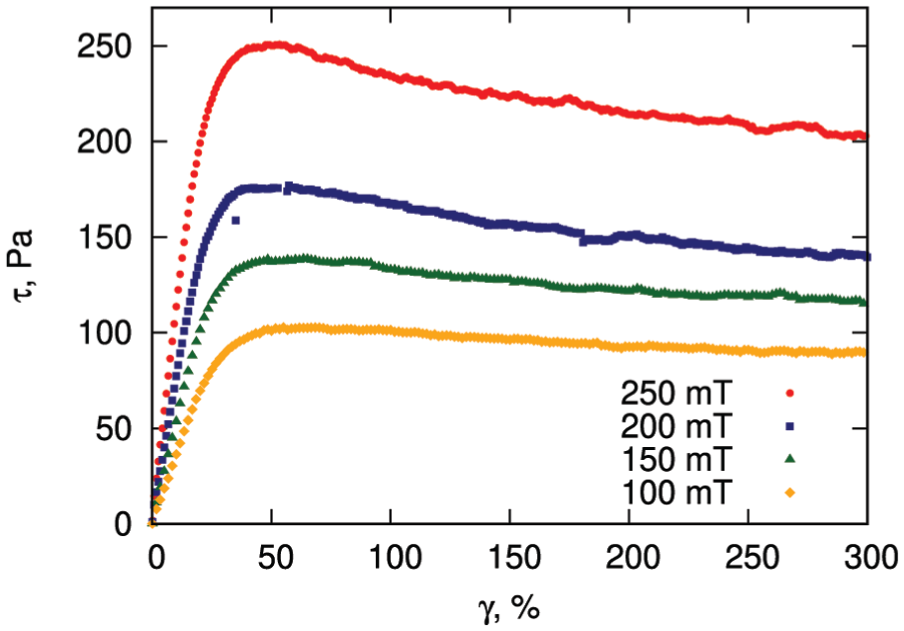
Stress-strain curves obtained using magnetic PLA plates for the magnetic suspension of 1 vol.% of BASF CM powder structured under various magnetic field.
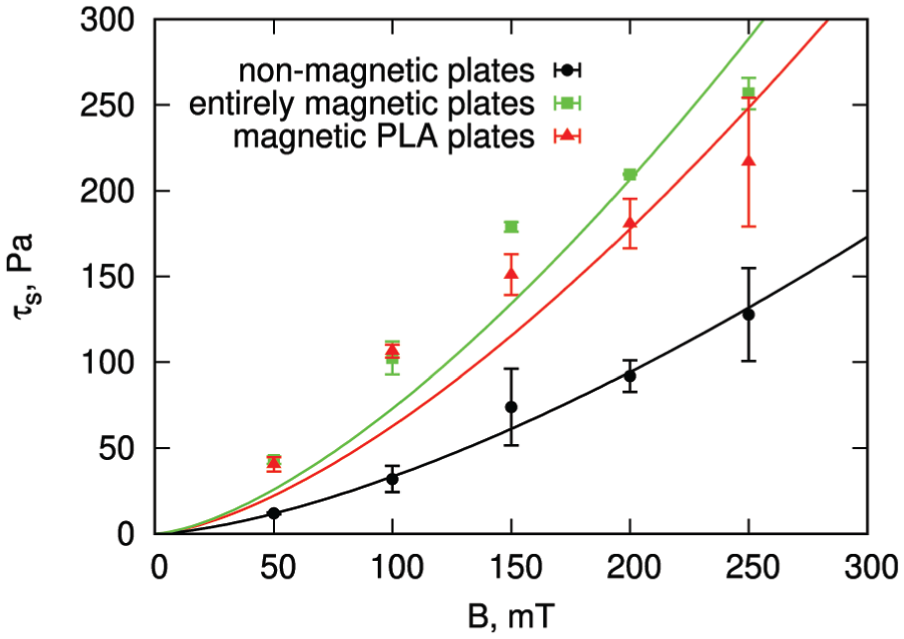
Static yield stress values obtained from the stress-strain curves measured using magnetic PLA plates as well as non-magnetic and entirely magnetic plates for the magnetic suspension of 1 vol.% of BASF CM powder at various structuring fields. Solid lines are fits
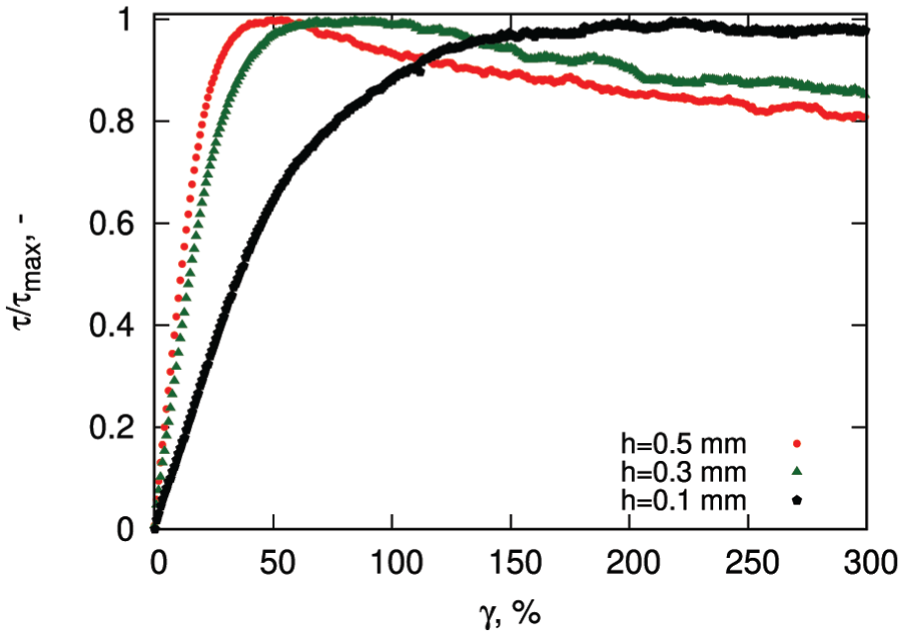
Normalized stress-strain curves obtained using magnetic PLA plates for the magnetic suspension of 1 vol.% of BASF CM powder structured under 250 mT. The results are presented for various gap sizes between the plates.
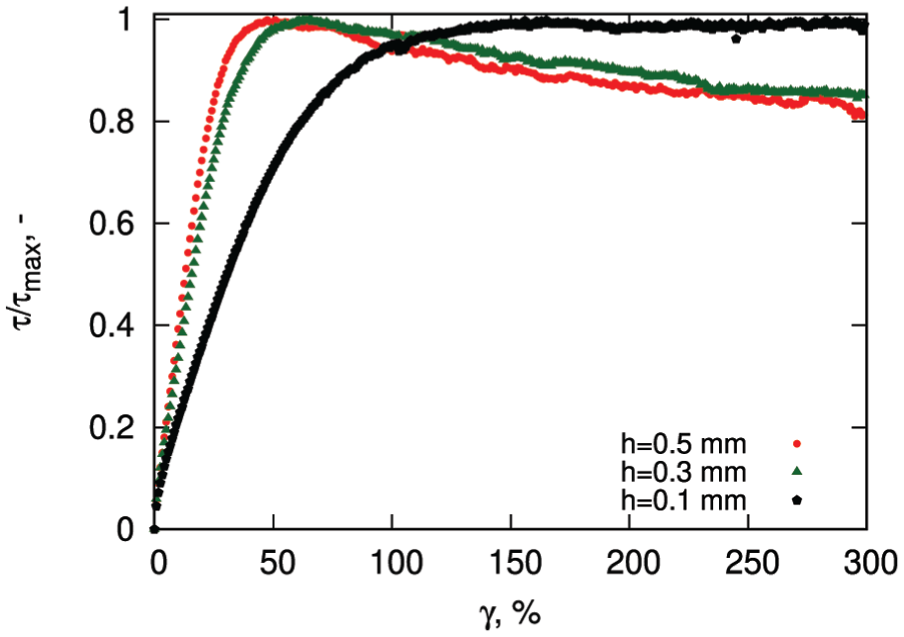
Normalized stress-strain curves obtained using magnetic PLA plates for the magnetic suspension of 1 vol.% of BASF CC powder structured under 250 mT. The results are presented for various gap sizes between the plates.
Changing the gap between the magnetic PLA plates leads to a qualitative change in the
The observed appearance of the non-monotonic
According to the obtained results, we are dealing with different interactions of different particle structures with different materials of the measurement geometry. Apparently, when using non-magnetic surfaces, particle structures slip at the lowest shear stress, with particle and particle aggregate sizes being of no fundamental importance. When using magnetic surfaces, the shear stress is higher due to magnetic interaction between particle structures and rheometer plates. Here again, the size of the particles and their aggregates is not decisive in terms of the deformation and structure rupturing mechanism. The appearance of the
Thus, it is essential to involve microstructural observations to illuminate the observed non-monotonic behavior. Let us first consider the influence of magnetic powder concentration on the morphology of particle aggregates formed as a result of MR fluid structuring. In MR fluids with a concentration of about 5 vol.% and more, particle aggregates take the form of fibrous structures rather than linear chain-like structures typical for lower concentrations. It has been reported in the past involving optical observations (Bossis et al., 2002) and simulations (Yu et al., 2024). Analysis of the three-dimensional microstructure using X-Ray
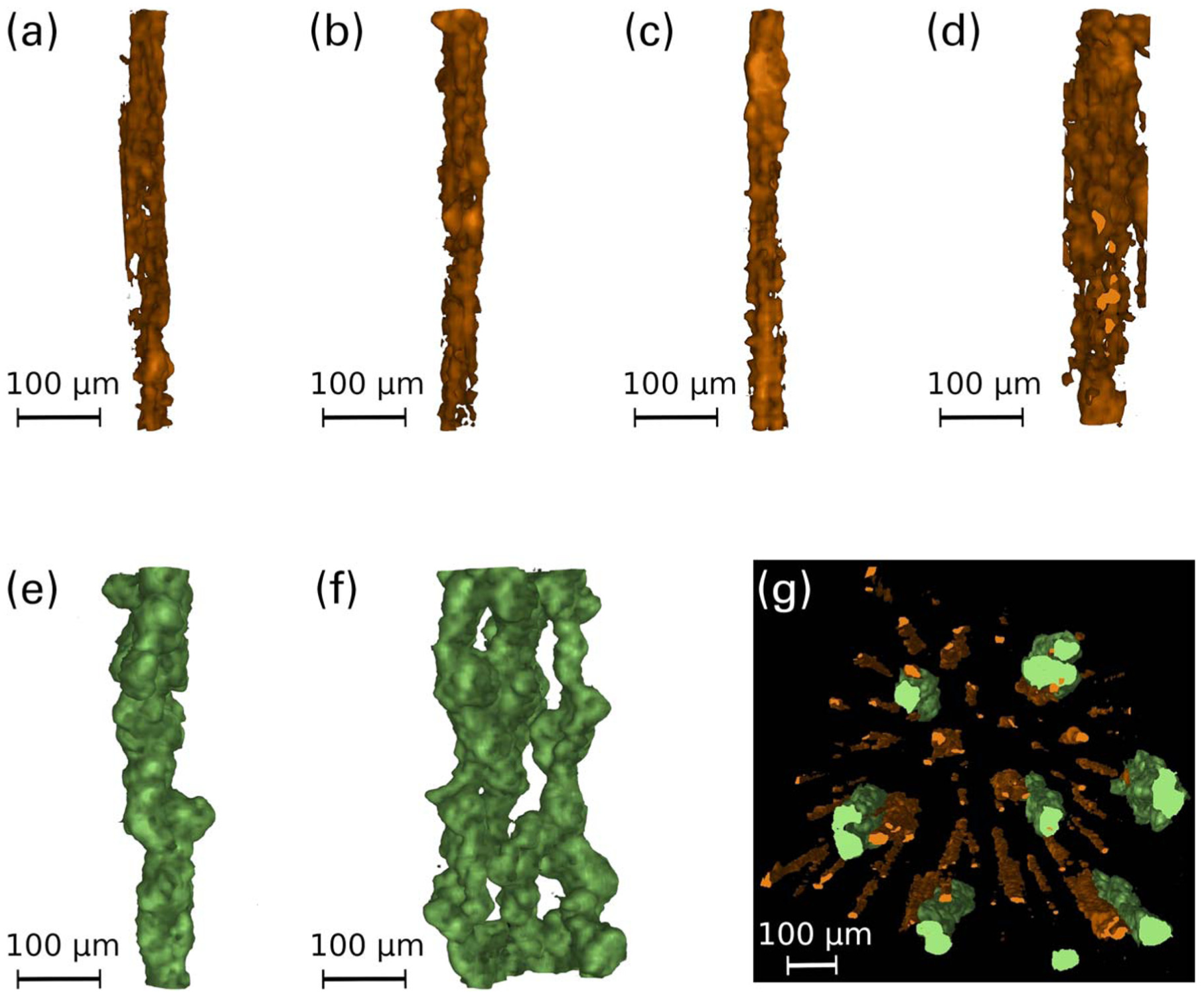
Visualization of the microstructure of the particle aggregates obtained using X-Ray
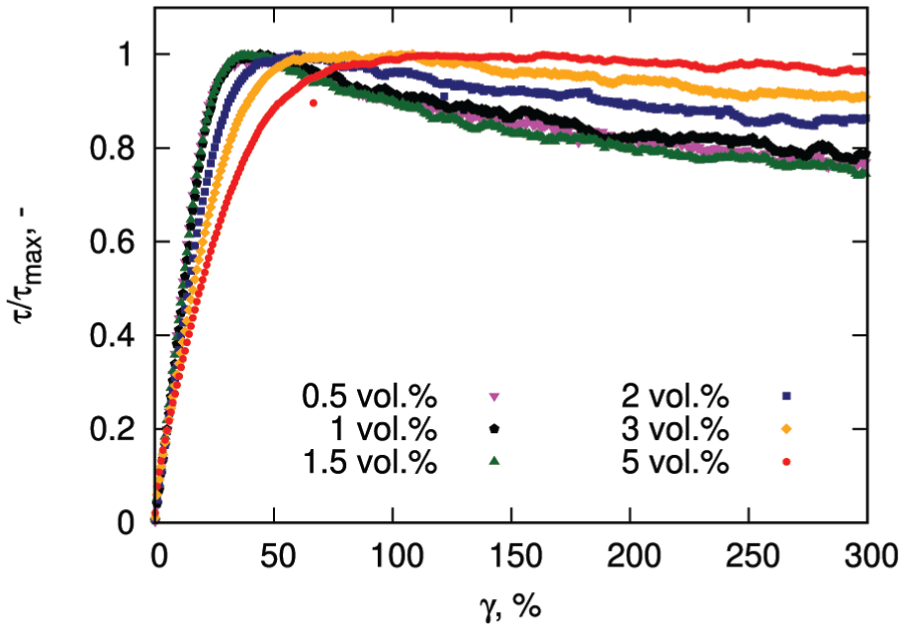
Normalized stress-strain curves obtained using magnetic PLA plates for the magnetic suspension of BASF CC powder with a volume concentration in the range of 0.5–5 vol.% structured in 250 mT.
In addition, when using rheometer plates made of homogeneous material, both magnetic and non-magnetic, the same linear aggregates appear in the diluted MR fluid as when using magnetic PLA, which has magnetic particles on its surface. This is shown in Figure 19. That is, for non-monotonic dependencies to appear, a specific interaction between the surfaces of the plates and the structure of the particles is also necessary. The strength of the magnetic field can affect the thickness of chain aggregates in diluted composites (Borbáth et al., 2012; Borin, 2020). Lower structuring fields are characterized by chains of single particles, while higher fields produce clusters consisting of bundles of chains. However, for the BASF CM and BASF CC particles used, the thickness of the aggregates, even at the maximum field applied (250 mT), is not larger than the size of the particles integrated into the surface of the magnetic PLA plate (Figure 17(a)–(c)). For this reason, the strength of the magnetic field used does not change the qualitative appearance of the curves obtained. Nor should one expect qualitative change in the curves at fields higher than 250 mT. As is known from Borbáth et al. (2012), the number and thickness of microparticle chain aggregates remain virtually unchanged at fields exceeding
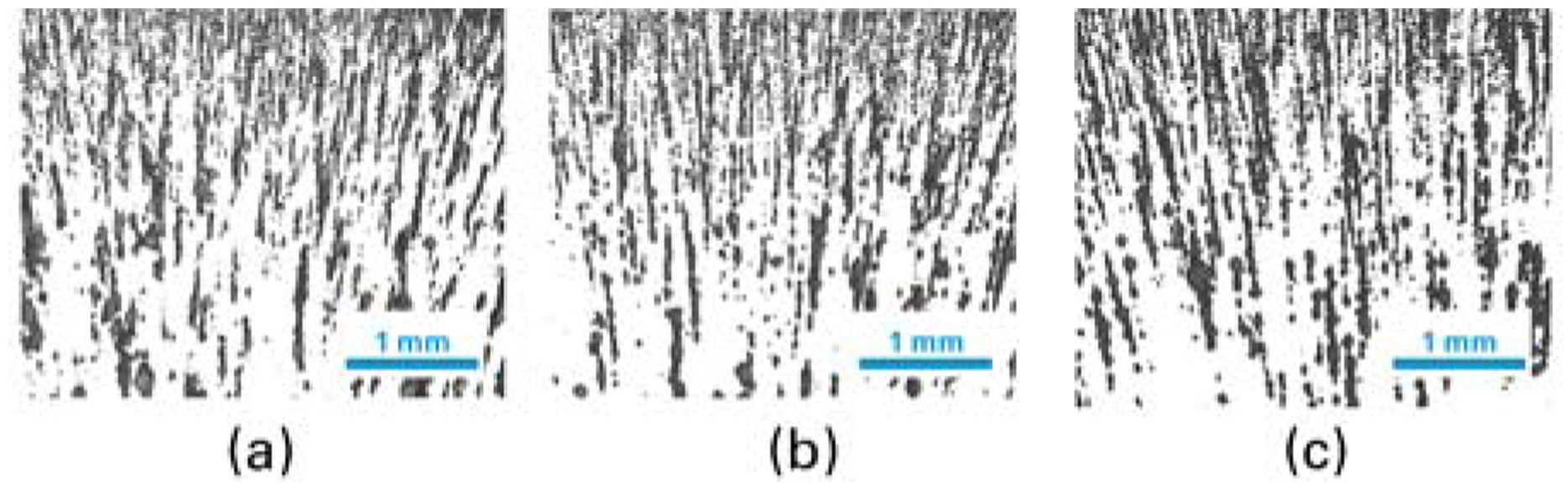
Visualization of the microstructure of the 1 vol.% of BASF CM powder structured under 250 mT in a gap between (a) non-magnetic plates made of PLA, (b) plates made of magnetic PLA and (c) entirely magnetic plates.
Summary and outlook
The response of a field-structured MR fluid to applied quasi-static shear differs for different measurement geometry surfaces used, for samples with different concentrations of magnetic particles and for different gap size between the plates of the measurement geometry. We determined an experimental condition under which a non-monotonic dependence of shear stress on deformation occurs at quasi-static shear of a structured MR fluid: specifically, it is necessary for the particles to form linear aggregates. In other words, the volume concentration of micron-sized particles should be lower, and the gap should be greater than a certain threshold value. For example, the threshold values could be
Significant alterations in material surface parameters, such as magnetic permeability and roughness, can be expected to significantly affect the behavior of MR fluids under quasi-static shear. The use of a material with higher magnetic susceptibility leads to higher shear stresses during quasi-static shearing. A similar result has previously been reported in the context of flow curves measurements (Laun et al., 2011). It should also be repeated that, variations in surface roughness also affects the response of MR fluids (Borin et al., 2022; Jonkkari et al., 2012), although it was not addressed in the present study. Additionally, special features may be observed in extremely dilute suspensions, including those based on magnetic nanoparticles, as has been reported very recently (Borin, 2026).
In addition to the fundamental importance, from an applied point of view, the results are essential for the choice of MR fluid and operating conditions for devices using magnetic control of the static yield stress. In particular, it is stated that the rheological characterization of the MR fluid should use a measurement geometry with properties identical to the intended working surface of the MR device.
Future studies should focus on systematically investigating the effects of surface properties, such as magnetic permeability and roughness, on MR fluid behavior. In addition to the use of homogeneous magnetic surfaces with varying permeability and roughness, surfaces containing a given distribution of localized magnetic phase inclusions of various sizes deserve special attention. The use of microparticles with distinct shape anisotropy, as well as bidisperse particle mixtures, can affect the stability of chain aggregates and, consequently, the quasi-static response of the MR fluid. Therefore, varying particle shape and utilizing bidisperse suspensions may be a worthy goal for ongoing studies. Furthermore, future research should focus on using obtained results to refine and validate microscopic models of the behavior of MR fluids.
Footnotes

Funding
The authors disclosed receipt of the following financial support for the research, authorship, and/or publication of this article: The financial support by German Federal Ministry of Research, Technology and Space within the KMU-innovativ - collaborative project “COGNAC” under contract number 13GW0632D is gratefully acknowledged.
Declaration of conflicting interests
The authors declared no potential conflicts of interest with respect to the research, authorship, and/or publication of this article.
Data availability statement
The data that support the findings of this study are available upon reasonable request from the authors.*