






Abstract
Students identified with emotional and behavioral disorders (EBD) often display a variety of challenging behaviors that can significantly affect both their learning and the dynamics of the student–teacher relationship. Addressing these challenges necessitates the development of authentic, meaningful connections between teachers and students, achieved through applying strategies designed to support student behavior and solidify a trusting relationship. This article introduces the TRUST mnemonic framework, a comprehensive, trauma-informed approach to help teachers build rapport, foster trust, engage, and support students with EBD. The framework encapsulates five principal strategies: transforming perceptions of challenging student behaviors, rapport-building, utilizing restorative practices, supplying choices, and teaming with student caregivers. Together, these strategies provide a structured model for fostering positive relationships and educational experiences while supporting student behavior, ultimately contributing to improved outcomes for students with EBD.
Ms. Sullivan began the school year excited about the possibilities of teaching third grade. During the first week of school, she struggled to connect with Landon, a student in her class identified with an emotional and behavioral disorder (EBD) and known for engaging in disruptive and potentially dangerous behaviors. During the first week of school, Landon regularly interrupted Ms. Sullivan while she was providing instruction by arguing with his peer neighbor. The following week, he began to run around the classroom loudly, singing songs during silent work time. On tough days, Landon would have emotional meltdowns that sometimes included throwing his personal belongings at other students and kicking the walls in the classroom. In response, Ms. Sullivan tried her best to remain calm and carry out the classroom management techniques she had learned in her teacher preparation program, including a detailed personalized token economy system, yet nothing seemed to work. After reading Landon’s cumulative file, it became clear that he had experienced personal hardships and trauma, including physical abuse, neglect, removal from his parents’ custody, and parental incarceration. As Ms. Sullivan learned about Landon’s background, she realized that he might not feel safe, supported, or connected in the classroom. She recognized that she would need to develop trust with Landon, which would require establishing a relationship. By fostering this trust, Ms. Sullivan understood that she could become a protective factor for Landon—a source of emotional support that could help buffer the adverse effects of his trauma and provide a sense of safety and stability.
Students like Landon, who receive special education services through the eligibility category of EBD, can exhibit both internalizing and externalizing behaviors that pose significant challenges for teachers, including burnout and attrition (Granger et al., 2023). Internalizing behavior challenges are directed inward, such as anxiety, withdrawal, and depression (Pollack et al., 2024). These manifestations can make it challenging for teachers to identify and address their students’ needs, including knowing how to support them in expressing their emotions while fostering trusting relationships (Knowles et al., 2020). Meanwhile, externalizing behavior challenges involve outward-directed behaviors, such as verbal outbursts (e.g., yelling, screaming, cursing) and physical aggression (e.g., hitting, kicking, spitting) toward peers and teachers (Cooper et al., 2020). The unpredictability of these behaviors often creates an atmosphere of uncertainty for teachers, making it challenging to build consistent, authentic connections with students as they try to remain flexible in their approach to managing student behavior (Granger et al., 2023; Nemer et al., 2019). These behaviors can also lead to mistrust, often hindering the relationship between the teacher and student (Granger et al., 2023; Nemer et al., 2019).
Trauma and Students With Emotional and Behavioral Disorders
Approximately 20% of U.S. students have reportedly experienced trauma (Spence et al., 2021), defined as “an emotional response to a terrible event” and can include observing or experiencing physical or sexual abuse or experiencing emotional or physical neglect (American Psychological Association, 2015, para. 1). Students with EBD are at a heightened risk for trauma, as their disability can both stem from and exacerbate the impact of trauma (Pollack et al., 2024). This trauma fundamentally changes how they perceive and interact with the world, often leaving them in a state of hypervigilance or emotional withdrawal (Van der Kolk, 2014). For example, a student with a history of physical abuse may experience trauma-related challenges with anxiety or depression in school and withdraw from class activities when their teacher inadvertently scares them by tapping on their shoulder to obtain their attention. If this same student responds to a tap on the shoulder with physical aggression (e.g., hitting or kicking their teacher), reactive, exclusionary policies such as restraint procedures are often used in response, which can create new traumas altogether (U.S. Commission on Civil Rights, 2019). This intersection of trauma and challenging behaviors highlights the need for teachers to adopt a trauma-informed lens that recognizes, understands, and addresses how trauma affects students’ behaviors, emotional regulation, and learning (Bland & Gershwin, 2023). This requires teachers to shift their mindset from asking, “What is wrong with this student?” to “What happened to this student?” and, more importantly, “How can I help this student feel safe and empowered to learn?”
Building Trusting Relationships With Students: The Foundation of Trauma-Informed Care
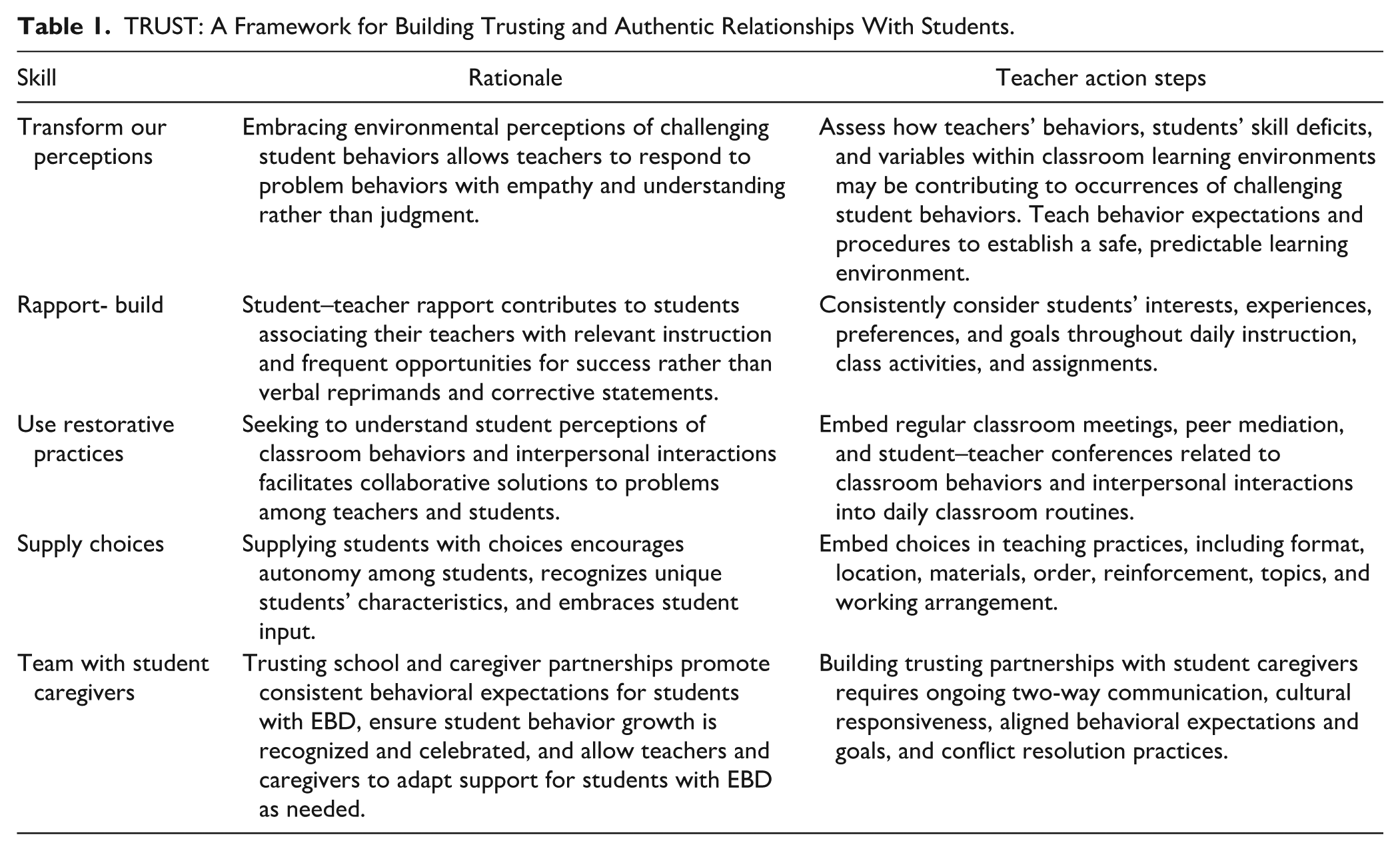
Trauma-informed care (TIC) recognizes and responds to the impact of trauma on student learning, behavior, and emotional well-being, emphasizing creating a safe, supportive, and inclusive environment where all students can thrive (Bland & Gershwin, 2023). An essential component of TIC is recognizing that meaningful student–teacher relationships can serve as protective factors, offering safety, connection, and stability to foster resilience in students with EBD, particularly those who have experienced trauma (Souers & Hall, 2016; Zolkoski, 2019). Trust is at the heart of these relationships and is foundational for their development and long-term success (Van der Kolk, 2014). While TIC encompasses a range of strategies, researchers emphasize that the foundation is establishing trusting relationships in which students feel safe, valued, and supported by a reliable adult (Bland & Gershwin, 2023; Cavanaugh, 2016). This focus is crucial because trauma can disrupt typical neurological and developmental pathways, making it difficult for students to regulate emotions and maintain healthy relationships with others (Spence et al., 2021; Van der Kolk, 2014). In response to this need, this manuscript describes the TRUST mnemonic framework (see Table 1), a classroom-based, relationship-driven methodology designed as a foundational component of TIC to help teachers develop and maintain strong relationships with students with EBD. The TRUST framework emphasizes building trust and personal connections with students with EBD to mitigate the effects of trauma, reduce challenging behaviors, and increase students’ engagement and success in schools (Bland & Gershwin, 2023; Souers & Hall, 2016). This framework includes adaptable, relationship-based strategies to build trust, support emotional regulation, and reduce challenging behaviors while promoting prosocial interactions (Pollack et al., 2024; Spence et al., 2021). Each component offers practical tools for creating a supportive classroom environment that addresses the unique needs of students with EBD (Jones & Greenwood, 2022). By focusing on understanding and connection, TRUST equips teachers with flexible, real-world strategies to meet students’ social, emotional, and behavioral needs.
TRUST: A Framework for Building Trusting and Authentic Relationships With Students.
T: Transform Our Perceptions
Establishing trusting relationships with students with EBD can be challenging because these students often struggle with self-regulation, emotional control, and interpersonal relationships due to their disability and/or experiences with trauma (Granger et al., 2023; Jones & Greenwood, 2022). These challenges can manifest as disruptive behaviors or withdrawal, making it difficult for students to feel connected to their teachers or peers (Cooper et al., 2020). Building trust with students with EBD involves creating a consistent, safe environment where students feel supported and understood (Bland & Gershwin, 2023). To do this, teachers must first understand that many students’ behaviors may stem from trauma or reflect a skill deficit (e.g., the ability to share or collaborate with others). As a result, teachers can respond to challenging behaviors with patience and compassion, recognizing the need to support skill development and emotional growth rather than using punishment strategies (Cavanaugh, 2016).
This process begins with teachers critically examining their perceptions of challenging behaviors and the students who display them. Research indicates that teachers often hold poorer perceptions of students with EBD than their peers (Knowles et al., 2020). This negative bias can affect how teachers interact with their students and view their challenging behaviors, leading to a cycle of negative perceptions and interactions, suggesting the need for teachers to observe and address any biases carefully (Friman, 2021). For example, teachers may attribute behaviors such as leaving the classroom without permission, frequent cell phone use, and task refusal as character deficits (e.g., the student is “unmotivated” or “lazy”) or to parent deficits (e.g., the parents fail to hold their child accountable for behavior). As a result, teachers may use punitive strategies to address these student behaviors, resulting in experiences that can lead students with EBD to view their teachers and the school environment as untrustworthy and unsupportive, creating a potential barrier to academic and social-emotional development (Friman, 2021).
To safeguard against forming negative judgments and perceptions of students with EBD, start by adopting approaches to understanding more about challenging behaviors by considering how environmental variables, before (i.e., antecedent variables) and after (i.e., consequent variables), can contribute to problem behaviors and maintain and increase future rates of problem behaviors (Cooper et al., 2020; Friman, 2021). To do this, consider internal factors, such as deficits in academic, social, or self-regulation skills, and external factors, such as trauma, conflicts with family members, or difficult transitions that may contribute to problem behaviors (Bland & Gershwin, 2023; Jones & Greenwood, 2022). Recognizing these underlying influences helps avoid character judgments and encourages a more supportive response to student behaviors (Friman, 2021). For example, consider how environmental variables (e.g., prompting a student to complete a non-preferred activity such as an independent math work), internal variables (e.g., math skill deficits making the activity challenging), and external variables (e.g., an argument with a peer making the student agitated before math) could contribute to occurrences of challenging task-avoidant behaviors, rather than blaming the student’s character.
By adopting this “circumstance lens,” challenging behaviors can be viewed as changeable when adjustments are made to the classroom learning environment rather than as perpetual disruptions to students’ learning (Friman, 2021). It is important not to take challenging behaviors personally and to maintain this perspective during this stage. Perspective-taking can reduce assumptions and foster empathy (Gaias et al., 2024). To do this, practice reflective activities, such as journaling or discussing behavioral challenges with a trusted colleague, allowing teachers to examine the circumstances, acknowledge biases, and explore evidence-based practices for addressing challenging behaviors (Gaias et al., 2024).
Creating a trusting student–teacher relationship involves more than understanding behavior—it requires active, intentional practices with teachers, providing physical and emotional safety for students (Bland & Gershwin, 2023). This can be achieved by establishing clear and consistent routines, setting predictable boundaries, and creating a classroom climate where students know what to expect daily (Jones & Greenwood, 2022). These strategies can reduce uncertainty, which can be particularly difficult for students with trauma, and help them feel more secure (Cavanaugh, 2016). To adapt learning environments and encourage student trust, establish and adhere to consistent classroom policies (e.g., classroom rules, routines, and procedures; Zaheer et al., 2019). First, ensure classroom policies are socially significant, justifying the need to adhere to them. The So What Test helps teachers ensure classroom policies are socially significant by focusing on goals and strategies that directly affect students’ well-being and social functioning, making behavior changes meaningful and lasting (Cooper et al., 2020). Simply put, if a student, guardian, or school administrator asks why adhering to a rule, routine, or procedure is important, the teacher should be able to provide a meaningful rationale.
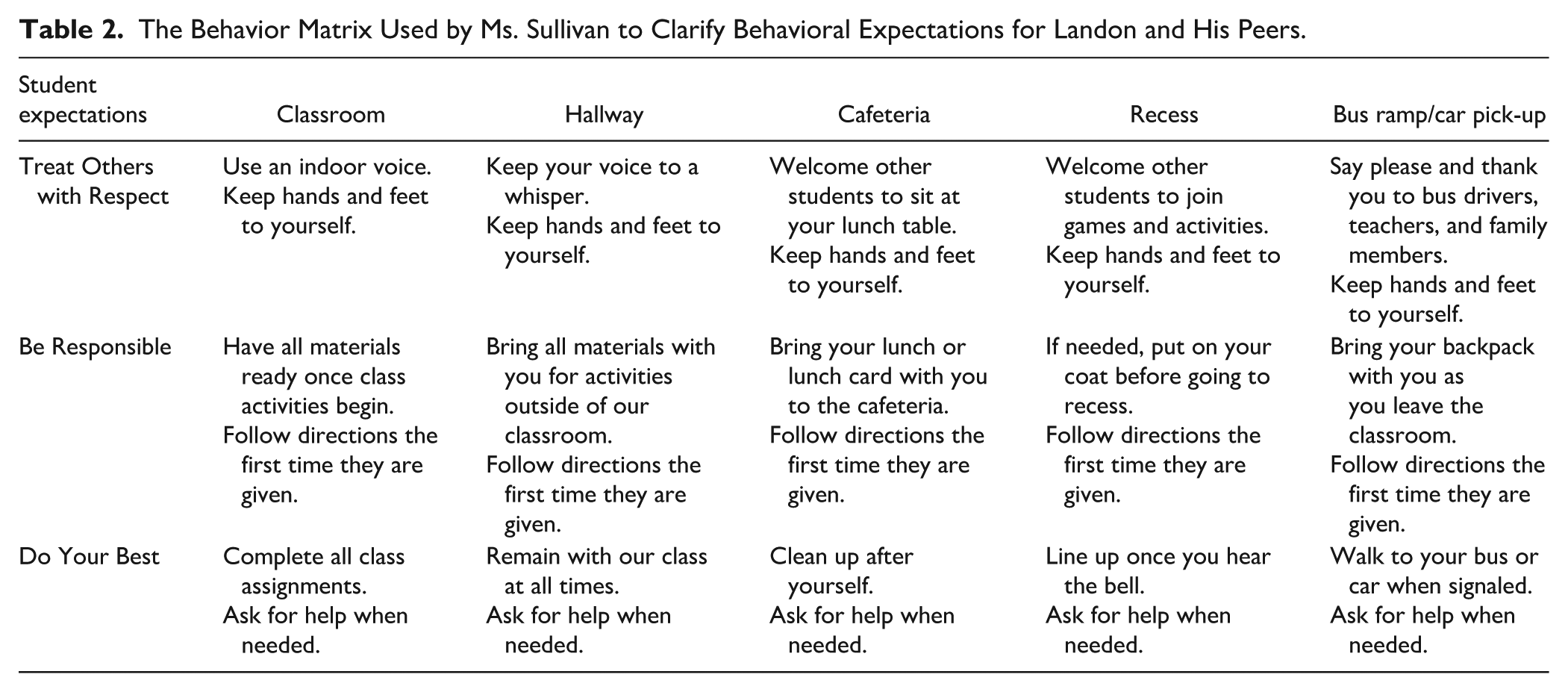
One way to confirm that the rules, routines, and procedures are socially significant is by including student input in developing classroom policies and aligning the policies with school and district policies and expectations (Zaheer et al., 2019). Second, ensure classroom policies pass the Stranger Test. For example, if a stranger (e.g., a person unfamiliar with class procedures) were to read the classroom policies, this person should be able to describe what the policies look like in action (Cooper et al., 2020). In addition, behavior matrices, which define behavioral expectations (e.g., being respectful) in school-wide settings (e.g., classrooms, school hallways) help clarify classroom policies and support consistent behavior support so students with EBD can feel physically, emotionally, and socially secure, and reduce triggers for students who may have experienced trauma (Bland & Gershwin, 2023). By implementing intentional practices, teachers can create a predictable and supportive learning environment that fosters trust, security, and emotional well-being.
Ms. Sullivan used a behavior matrix (see Table 2) to clarify and teach Landon expected behaviors across school settings. By providing examples of what these behaviors “looked like in action,” Ms. Sullivan created a trusting and predictable learning environment.
The Behavior Matrix Used by Ms. Sullivan to Clarify Behavioral Expectations for Landon and His Peers.
R: Rapport-Build
Rapport is a mutual feeling of trust and understanding that fosters a harmonious, empathetic connection where both parties feel understood, valued, and comfortable (Frisby & Housley Gaffney, 2015). Student–teacher rapport is associated with student engagement and achievement, as high levels of rapport can increase students’ intrinsic motivation to align their behavior with classroom expectations and participation (Zaheer et al., 2019). Rapport is essential when working with students with EBD, as frequent redirections, reprimands, and corrections can lead to adversarial student–teacher relationships (Jones & Greenwood, 2022; Nemer et al., 2019). Using redirections, reprimands, and corrections is not inherently problematic. For example, if students use their cell phones without permission, reminding them to put their phones away is an appropriate consequence. However, issues can arise if students consistently experience redirections, reprimands, and corrections without receiving positive praise (Wilson-Ching & Berger, 2024). As a result, students can begin to associate school with negative classroom experiences and teacher interactions (Wilson-Ching & Berger, 2024).
A good first step to building rapport with students with EBD is learning their preferences, strengths, interests, experiences, and goals for the future (Gaias et al., 2024). This information can be obtained through student questionnaires, student–teacher interactions, or observations of students (Marsh et al., 2023). One simple way to build rapport is through student-led greetings and farewells to facilitate rapport-building that easily fits into arrival and dismissal routines (Wilson-Ching & Berger, 2024). To do this, post a visual aid near the door, allowing students to choose their preferred greeting or farewell, such as a high five, fist bump, thumbs up, or a simple hello. Stand near the doorway at arrival and dismissal times, and upon entering or leaving the classroom, students indicate their choice by pointing to the visual or voicing their preference. This routine provides a designated time for teachers to check in with students with EBD and gather valuable insights daily. Brief student check-ins during these moments offer another effective strategy for building rapport and getting to know students (Wilson-Ching & Berger, 2024). Other times for brief check-ins with students include active monitoring during independent work time, group activities, or transitions between tasks. In addition, to address any concerns or challenges, use strategies such as circulating the room to provide quick feedback, using positive reinforcement for desired behavior, asking open-ended questions to assess understanding, and engaging students in brief, one-on-one check-ins (Cooper et al., 2020). Using visual or nonverbal cues (e.g., thumbs up) allows teachers to show support and ensure students with EBD feel seen and validated (Jones & Greenwood, 2022).
The second step to building and maintaining rapport involves adapting student–teacher interactions, instruction, and classroom learning environments to reflect the student’s unique characteristics (Underwood & Mensah, 2018). Incorporating students’ preferences, interests, and experiences from outside school into classroom instruction makes learning more relevant and engaging (Jones & Greenwood, 2022). To cultivate a supportive classroom community, acknowledge and celebrate student characteristics to promote an environment where everyone feels valued and respected (Gaias et al., 2024). In doing so, teachers can shift student perceptions of classroom environments and the nature of student–teacher interactions (Jones & Greenwood, 2022). When classroom instruction and learning activities reflect students’ interests, experiences, and future goals, students see their relevance, boosting engagement and success (Nemer et al., 2019; Underwood & Mensah, 2018). High student engagement also allows teachers to initiate more positive interactions, increasing the likelihood that students with EBD associate their teachers with praise rather than reprimands or corrections.
Ms. Sullivan distributed a brief questionnaire at the start of the school day to learn more about her students’ interests and preferences, with questions such as, “What is your favorite thing to do outside of school?” and “What is your favorite part of the school day?” After reviewing the responses, Ms. Sullivan noticed that many students, including Landon, loved physical education because it allowed them to move and interact with peers. She also learned that Landon had a cat. Ms. Sullivan incorporated these interests into the classroom activities to build rapport and increase engagement. She added movement during lessons and cooperative learning groups to encourage social interaction. For example, when Landon struggled with a writing task, she encouraged him to write about his cat. By embedding student interests into her teaching, Ms. Sullivan noticed improved relationships with her students, especially Landon, who was eager to greet her every morning with a story about his cat.
U: Use Restorative Practices
Teachers often rely on reactive, exclusionary disciplinary policies (e.g., office referrals and school suspension) to address challenging behaviors among students with EBD (Huguley et al., 2022). Unfortunately, these disciplinary practices can adversely affect student–teacher relationships, as students perceive their teachers and classrooms as sources of punishment and aversion (Forsberg & Leko, 2022). Reactive, exclusionary disciplinary policies often insufficiently address challenging behaviors in schools and unintentionally incentivize students to exhibit challenging behaviors (Cooper et al., 2020; U.S. Commission on Civil Rights, 2019). For example, a student with EBD who is frequently sent to the office or suspended will likely perceive the classroom environment as aversive, rendering opportunities to avoid or escape the classroom learning environment, especially reinforcing. Consequently, this student may engage in higher rates of challenging behaviors, which, through an overreliance on exclusionary disciplinary policies, have often allowed this student to avoid or escape the classroom or school environment altogether. This is problematic for students with EBD, who often engage in higher rates of challenging behaviors (Forsberg & Leko, 2022).
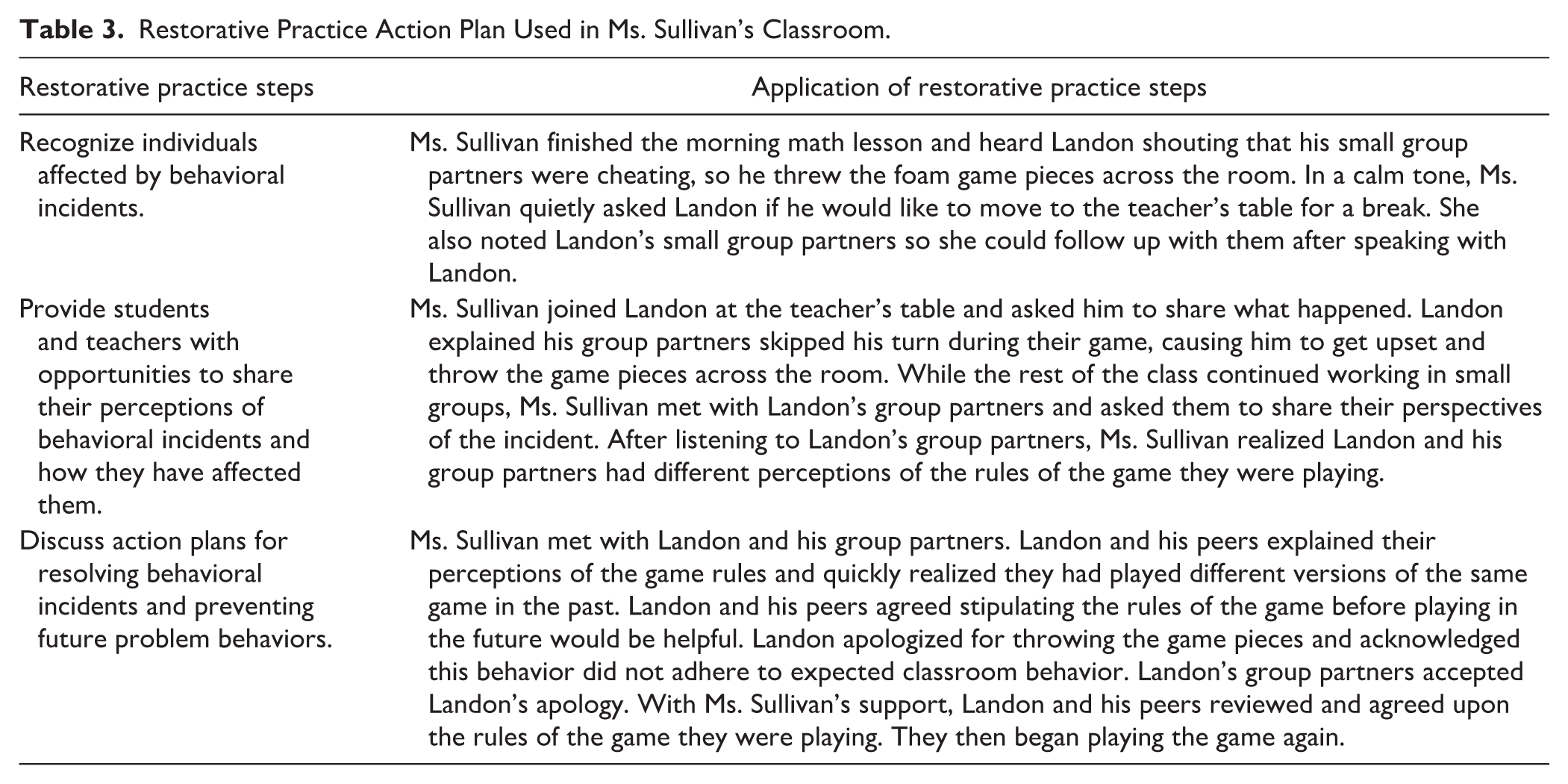
A viable alternative to the misuse and overuse of reactive, exclusionary disciplinary policies involves restorative practices (Huguley et al., 2022; Lodi et al., 2021). Restorative practices focus on strengthening relationships and teaching prosocial skills, which is imperative for students with EBD who often demonstrate social and emotional skill deficits (Forsberg & Leko, 2022). To implement restorative practices, follow three essential steps that prioritize relationship-building and collaborative problem-solving over blame-based, predominantly punitive responses to challenging behaviors. First, restorative practices involve recognizing the individuals impacted by the challenging behavioral incidents (i.e., students who exhibited challenging behaviors and students and teachers affected by these behaviors; Forsberg & Leko, 2022). This process involves regular classroom meetings dedicated to reconnecting as classroom communities after occurrences of challenging behaviors and discouraging future challenging behaviors from occurring, which could adversely affect students’ and teachers’ perceptions of safety and inclusivity (Kulkarni & Chong, 2021). For example, a classroom teacher may choose to facilitate a class meeting in response to a student damaging a classroom bulletin board to which all students contributed. It is important to note that these meetings should occur in a manner that prioritizes student respect and dignity (e.g., addressing the subsequent steps of restorative practices rather than blaming students or issuing punitive consequences in response to problem behaviors), as public confrontations related to challenging behaviors can be unnecessarily stigmatizing for students (Forsberg & Leko, 2022). Recognizing individuals affected by behavior incidents can also involve individual confidential student check-ins conducted by teachers and following up with students after the challenging behaviors.
Second, students and teachers are provided opportunities to share their perceptions of the behavioral incidents and how they have affected them (Forsberg & Leko, 2022). This process can involve students and teachers asking one another open-ended questions such as, “What did the behavior look like to you?,” “How did this behavior make you feel?,” “What can we do to resolve this issue?,” and “What can we do to try and prevent issues such as this one from happening again?” (Huang et al., 2023). Questions such as these encourage students and teachers to view classroom behaviors from the perspectives of others, thereby assisting students and teachers with a more comprehensive understanding of relationships between behaviors and perceptions of safety and inclusivity among all members of classroom learning communities (Forsberg & Leko, 2022). As students and teachers more holistically understand how others perceive classroom behaviors, it becomes easier to empathize with and understand the perspectives of other classroom members when discussing the behaviors.
Finally, students and teachers create action plans for resolving and preventing future challenging behavior incidents (Forsberg & Leko, 2022). During these meetings, students who exhibited challenging behaviors may apologize to their teachers and peers, and teachers can apologize for overly punitive actions (Lodi et al., 2021). Students and teachers may also discuss what they need to progress as contributing members of positive and inclusive classroom communities (Huang et al., 2023). Returning to a previous example, a student who damaged a classroom bulletin board created by their peers may be asked by their peers or teacher to help repair it or contribute to making a new one. The student who damaged the bulletin board might also explain that they felt excluded from a game during the incident and request to be included in future games. Open, honest communication among students with EBD, classmates, and teachers through meetings such as these can help students and teachers better understand each other’s perspectives, support students with understanding the impact of their behavior on others, and collaboratively brainstorm socially acceptable strategies students can use to prevent future challenging behaviors (Huang et al., 2023; Lodi et al., 2021).
Table 3 describes Ms. Sullivan’s restorative practice plan for responding to Landon’s challenging behavior. The restorative practices outlined in her action plan embrace conflict as a natural component of interpersonal interactions and discourage challenging behavior through social-emotional skills, relationships, and community building.
Restorative Practice Action Plan Used in Ms. Sullivan’s Classroom.
S: Supply Choices
Supplying students with EBD with choices across age and grade levels promotes building and maintaining trusting relationships (Jolivette et al., 2017). This involves presenting students with two or more options, providing students with time and opportunities to select from various options, and honoring student choices (Jolivette et al., 2017). When students with EBD experience a lack of opportunities to make choices in the classroom, it can exacerbate feelings of disempowerment and frustration, potentially leading to increased behavioral challenges (Cooper et al., 2020; Jones & Greenwood, 2022). Students view choices positively because choices allow students to exercise autonomy and independence in environments where decisions are typically made without their input (Ennis et al., 2021; Gushanas & Smith, 2024). By offering choices, teachers demonstrate a commitment to ensuring their students’ individuality, autonomy, and perspectives are recognized and reflected in classroom activities, which can positively affect their self-esteem and sense of belonging within the classroom community (Wilson-Ching & Berger, 2024). This enhanced sense of social-emotional safety and inclusivity strengthens student–teacher relationships by fostering students’ sense of ownership in their classroom environment (Jones & Greenwood, 2022; Royer et al., 2017).
Providing students with EBD with choices contributes to trusting student–teacher relationships by encouraging student engagement in classroom tasks and activities and discouraging challenging behaviors (Ennis et al., 2021; Royer et al., 2017). For example, choices can incentivize student engagement by allowing students with EBD to align class activities with their goals, interests, and preferences, thereby enhancing instructional engagement and cultivating opportunities for student success. Greater time-on-task increases opportunities for positive student–teacher interactions and minimizes the need for corrective feedback (Wilson-Ching & Berger, 2024). This can reduce challenging behaviors by making less preferred activities more engaging, decreasing students’ motivation to avoid or escape them (Ennis et al., 2021). Choices can involve choosing the order in which to complete class activities (e.g., reading or spelling), how to complete class activities (e.g., individually or with peers), where to complete activities (e.g., individual desks or class library), and options following the completion of class activities (e.g., drawing or computer; Jolivette et al., 2017; Royer et al., 2017). Teachers can offer choices as needs arise or embed them in instructional activities to address specific behavioral challenges. See Table 4 for instructional choices, descriptions, and implementation examples based on practical information and a compilation of research (Jolivette et al., 2017; Lane et al., 2018; Royer et al., 2017).
Strategies for Embedding Choices Into Classroom Instruction.
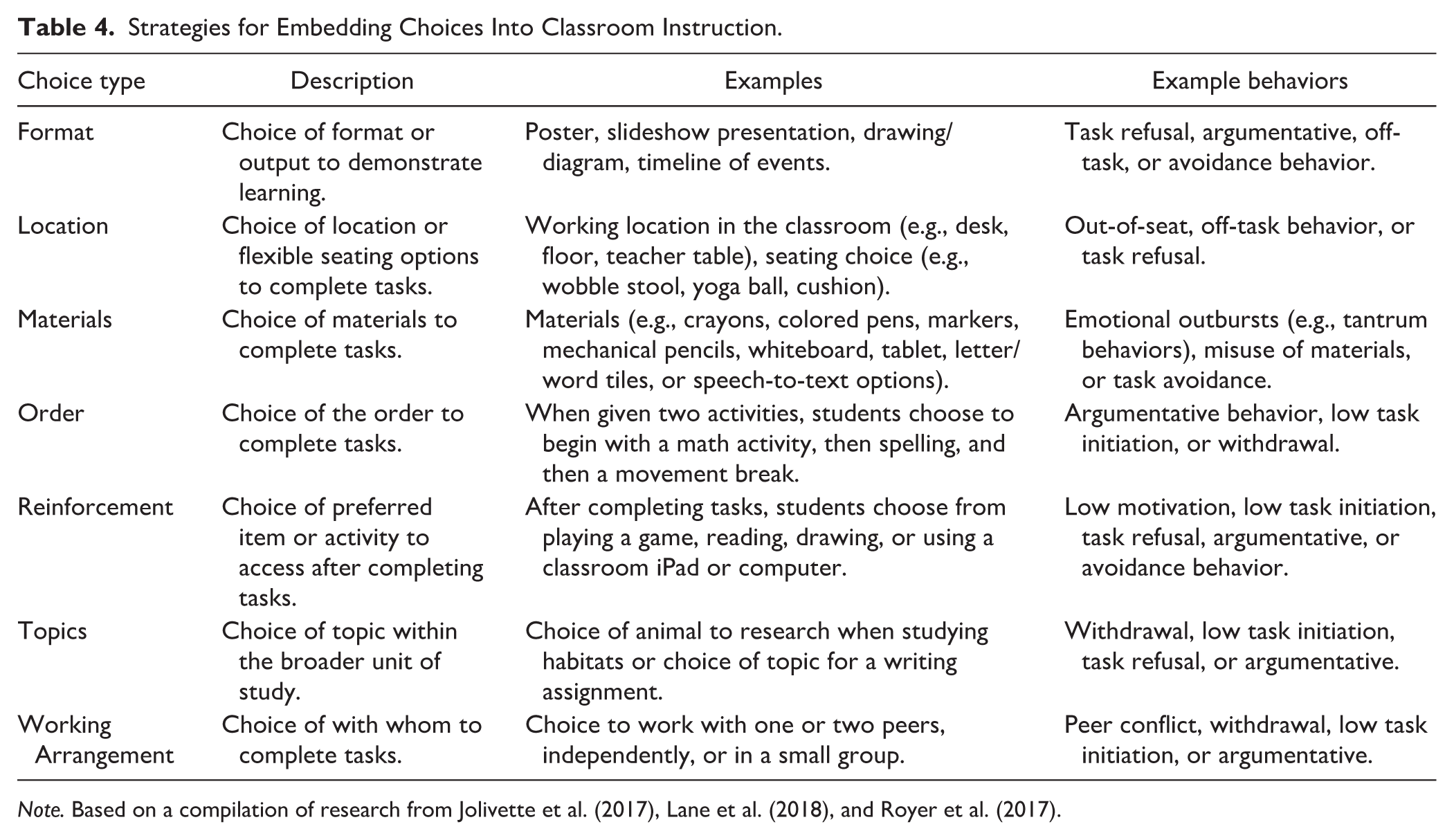
Note. Based on a compilation of research from Jolivette et al. (2017), Lane et al. (2018), and Royer et al. (2017).
When planning lessons, a good first step is considering choices that easily fit into the activity, learning objective, or behavioral need (Gushanas & Smith, 2024). For example, some choices, such as the working location or reinforcement after the academic task, can be implemented during most independent activities. While some choices can be easily incorporated (e.g., pencil or pen), others, such as choices of topics (e.g., animals or solar system), may require advanced planning. For example, a social studies historical figures unit might require a pre-planned class trip to the library to choose a book, and a science unit on animal habitats may require the advanced collection of materials and building in additional time for students to complete online research and make a slideshow presentation or diorama. For more complex choices, it is important to communicate the choices clearly to avoid confusion (Lane et al., 2018).
Next, it is also important to consider the challenging behavior and environmental variables that contribute to the behavior when supplying choices (Lane et al., 2018). For example, a student with EBD who is frequently argumentative or engages in task refusal might benefit from choosing the order in which assignments are completed, giving them a sense of control and reducing power struggles. Meanwhile, a student who is prone to avoidance behaviors could be offered a choice of working location (e.g., flexible seating options), a choice of alternate ways to demonstrate understanding (e.g., essay, slide presentation, oral presentation), or a choice of brain break activities after task completion. Aligning choices with specific behavioral needs while considering student interests and preferences fosters student autonomy, minimizes confrontation, and promotes a positive learning environment (Lane et al., 2018).
Lastly, consider the feasibility of the choice, the student’s needs, abilities, preferences, and the demands of the activity or task when offering choices (Jolivette et al., 2017). Use strategies such as providing clear and concise options, offering visual aids or prompts, and gradually increasing the complexity of choices to scaffold students’ decision-making skills and enhance their confidence in selecting options independently (Lane et al., 2018). In addition, offer guidance and support for students who struggle with making choices by reducing decisions into smaller, more manageable choices, providing verbal or visual cues, or facilitating discussions to help students weigh their options and make informed decisions (Lane et al., 2018). Ultimately, supplying choices to meet the diverse needs of students with EBD promotes a supportive and inclusive learning environment that empowers all learners to participate actively and succeed academically (Royer et al., 2017). Through increased engagement and decreased rates of challenging behaviors, students with EBD may experience more positive student–teacher interactions that foster trusting relationships (Gushanas & Smith, 2024).
Landon struggled to sustain focus during independent reading time and often roamed the classroom or distracted his peers. Ms. Sullivan embedded choices by providing options for reading materials that catered to Landon’s interests and reading level. She quickly observed an increase in his task engagement. Ms. Sullivan also observed that Landon exhibited tantrum behaviors and became argumentative when asked to write a summary of his reading. After considering Landon’s behavior and preferences, she gave Landon choices in how he wanted to demonstrate his understanding of his book, including the option to complete a bibliography, presentation, or poster. Ms. Sullivan noticed that these choices increased Landon’s time on task and decreased his tantrum behaviors.
T: Team With Student Caregivers
Building trusting and collaborative relationships with student caregivers—including parents, guardians, and other family members who support students—is essential for fostering student engagement and success, especially for students with EBD (Jones & Greenwood, 2022; Marsh et al., 2023). Teachers with strong, positive relationships with caregivers can better understand student needs, constructively interpret behaviors, and rely less on punitive measures (Huguley et al., 2022; Minke et al., 2014). However, despite these benefits, many caregivers report feeling judged or blamed for their child’s behavior, which can exacerbate mistrust, hinder productive collaboration, and increase caregiver–teacher conflict (Buchanan et al., 2016). These negative experiences can lead to a perpetual cycle of mistrust and frustration (Ishimaru, 2020).
Effective partnerships begin with consistent, two-way communication that values caregivers’ perspectives and expertise (Turnbull et al., 2022). The first step to initiate these connections is by learning caregivers’ preferences for communication, whether through in-person meetings, communication applications (e.g., ClassDojo), phone calls, or virtual options (e.g., Zoom), to create an approach that aligns with the family’s needs (Graham-Clay, 2024). To build on this, establish a schedule for ongoing two-way communication, balancing updates with positive feedback and constructive discussion of areas needing support. For example, send brief weekly summaries of student progress and, when possible, include specific examples of positive behaviors or achievements. By doing so, caregivers receive a well-rounded view of their child’s experience, strengthening trust and preventing communication from being solely about challenging behaviors (Turnbull et al., 2022). To build trust, approach sensitive topics empathetically, inviting caregivers’ perspectives. For example, asking, “Have you noticed any changes at home that might affect [student’s name] in school?” promotes open communication, supports collaborative problem-solving, and strengthens partnerships. Following up on agreed actions also helps ensure cohesive home-school support, reduces misunderstandings, and fosters proactive discussions to address progress and challenges effectively (Gershwin, 2024).
Culturally responsive practices are also essential for building meaningful partnerships with caregivers from diverse backgrounds (Marsh et al., 2023; Turnbull et al., 2022). Culturally responsive strategies help caregivers feel respected, understood, and engaged in their child’s educational experience (Harry & Ocasio-Stoutenburg, 2020). To do this, start by recognizing and valuing the unique cultural contexts influencing each family’s perspectives and needs (Turnbull et al., 2022). For example, some families may view education as a family responsibility or emphasize family-oriented goals, influencing how they engage with schools. Teachers can honor these values by inviting caregivers to discuss their goals and priorities, fostering a collaborative approach that respects family perspectives (Ishimaru, 2020). Adapting communication methods to meet caregivers’ language needs and literacy levels can help bridge language and literacy gaps (e.g., translated materials, audio recordings, or visual aids; Harry & Ocasio-Stoutenburg, 2020). For example, communicate in multiple formats, including translated materials, audio recordings, or visual aids, to ensure accessibility for caregivers with varied language skills or literacy levels (Graham-Clay, 2024; Marsh et al., 2023). In addition, be open to listening to family concerns and questions without judgment. Demonstrating openness and curiosity about different cultural perspectives—such as simple reflective questions like, “How can we support your family’s goals for your child’s education?”—can foster mutual respect and trust. This approach helps caregivers feel empowered and respected, enhancing the likelihood of sustained collaboration (Harry & Ocasio-Stoutenburg, 2020). Cultural brokers—community members who understand both the school’s expectations and the family’s cultural background—can also be instrumental in building trust and easing communication, especially during formal meetings such as Individualized Education Program (IEP) conferences, where technical language can be a barrier (Gershwin, 2024; Ishimaru, 2020). These brokers facilitate understanding so families feel supported and empowered (Ishimaru, 2020).
Finally, aligning behavioral goals between the home and school further strengthens outcomes for students with EBD and the caregiver–teacher partnership by creating continuity and supporting skill generalization (Buchanan et al., 2016). Researchers stress that aligning home and school expectations is crucial for students to understand and apply expected behaviors, as this continuity reinforces norms and supports the transfer of skills, like asking for help, to other settings. (Buchanan et al., 2016). Partner with caregivers to identify and reinforce behaviors that align with shared goals, using culturally responsive practices relevant to the student’s life and family values (Marsh et al., 2023; Turnbull et al., 2022). Research suggests that family involvement in behavior support reinforces students’ skills in real-world settings, promoting mastery and consistency (Buchanan et al., 2016); therefore, teachers can extend this learning beyond the classroom by engaging caregivers in selecting relevant scenarios for behavior practice, empowering students to apply their skills in diverse environments.
Ms. Sullivan reviewed her records and noticed that, although she had contacted Landon’s caregivers three times during the first week of school, each contact was about his challenging behaviors. Recognizing the importance of building a trusting teacher–caregiver relationship through ongoing two-way communication, Ms. Sullivan called Landon’s caregivers to share a success story. She shared that Landon supported a peer who needed help during math. Ms. Sullivan expressed her commitment to partnering with them for the school year. During the call, she also learned that Landon’s caregivers preferred phone communication over emails or video calls due to limited internet access and fluctuating work schedules. They shared that this was the first time they had received a positive call from a teacher and were excited to communicate consistently to support Landon’s academic and behavioral growth. Through this connection, Ms. Sullivan set a foundation for aligned goals and expectations, reinforcing that they would foster Landon’s success throughout the year.
Conclusion
Supporting students with EBD through the TRUST model is important for creating safe, supportive, and engaging learning environments (Bland & Gershwin, 2023; Cavanaugh, 2016). Teachers play a critical role as protective factors for these students, offering stability and compassion that fosters resilience and growth (Zolkoski, 2019). By focusing on understanding behavior through a trauma-informed lens, teachers can move away from punitive responses to challenging behavior and create strong, trusting relationships that promote emotional regulation and academic engagement (Bland & Gershwin, 2023; Cavanaugh, 2016). TRUST provides teachers with practical, adaptable strategies for building these crucial relationships, supporting the behavioral and emotional needs of students with EBD, and encouraging prosocial interactions. By recognizing the underlying trauma that often drives disruptive behavior and embracing restorative practices, teachers can foster stronger connections with students and their families, ensuring a holistic approach to learning and well-being (Souers & Hall, 2016). As demonstrated in the case of Landon, teachers like Ms. Sullivan can become protective factors, offering the safety, support, and stability students with EBD need to grow socially, emotionally, and behaviorally. These recommendations can assist teachers in building and maintaining trusting relationships with students in safe, enriching, and inclusive learning environments where all students can flourish.
Footnotes
Authors’ Note
The vignette from this manuscript is fictional and not based on actual people or events.
Declaration of Conflicting Interests
The author(s) declared no potential conflicts of interest with respect to the research, authorship, and/or publication of this article.
Funding
The author(s) received no financial support for the research, authorship, and/or publication of this article.
