






Abstract
The purpose of this qualitative study was to understand themes of parent-identified benefits and barriers to using math activities in the home setting. Specifically, parents of seven 4- to 5-year-old children with disabilities implemented math activities with their child for 3 weeks and provided feedback via logs and interviews. This served as an initial step toward identifying barriers to existing materials and iteratively developing a new, inclusive home math intervention. We used open coding to identify themes. Two benefit themes ((a) Improvements to the Child’s Behavior and Content Knowledge, (b) Increased Math Talk), three barrier themes ((a) Behavior Management Impedes Content Learning, (b) Lack of Confidence in Content and Teaching, (c) Factors Outside of the Study Impacts Capacity to Engage) and three recommendation themes were identified ((a) Prioritize Child Engagement, (b) Provide Explicit Instruction During Training, and (c) Prioritize Convenience and Ease). These themes offer insight into challenges with existing commercially available materials for families of children with disabilities, and future directions for the development of inclusive mathematics interventions.
Keywords
Introduction
The home serves as a critical setting for early learning, where parents’ engagement in academic activities contributes to individual differences in school readiness (e.g., Napoli & Purpura, 2018). Parents can be supported in developing positive home math environments, benefiting children’s math skills during the transition into formal schooling (Niklas et al., 2016). Researchers have developed naturalistic early math activities and interventions that parents can use with young children at home, with positive effects on parent-child math engagement and children’s numeracy (e.g., Mayer et al., 2023; Sonnenschein et al., 2016).
To date, researchers have not intentionally investigated how or if early home math activities used with children without identified disabilities meet the needs of children with disabilities and their families. Therefore, we elicited feedback from parents of young children with disabilities on the usability of home math environment activities commonly used in research with children without identified disabilities. Identifying families’ benefits and barriers to using these activities is a critical step in a longer-term iterative design process focused on developing a socially valid and effective home math intervention for children with diverse learning needs.
Home Learning Environments and Interventions for Children Without Identified Disabilities
The home learning environment refers to all aspects of the home that influence children’s academic success, including the physical space, people, and materials to which a child has access (Lehrl et al., 2020). The home math environment specifically consists of all math interactions between parents and children in the home, including the frequency of math-related activities and parent-child “math talk” (Daucourt et al., 2021). Math activities in the home might include playing number board games, doing patterning activities, building blocks, or playing card games (Ramani et al., 2015). Parent-child math talk refers to math-related utterances, such as talking about numbers or counting while preparing a meal, identifying quantities, numerals, or shapes in the environment (Daucourt et al., 2021).
The importance of the home math environment has been well-established (Daucourt et al., 2021; Nelson et al., 2024; Ramani et al., 2015), as engaging in home math activities more frequently is associated with children’s higher math skills. Parents’ math talk also has a positive association with children’s early math skills (Son & Hur, 2020). Given the role the home math environment plays in children’s math achievement, several studies have investigated the impact of math interventions conducted in the home learning environment. Home math interventions typically focus on increasing families’ engagement in home math activities and frequency of math talk through book reading, board games, or everyday family activities focused on math topics (Eason et al., 2022; Hendrix et al., 2019; Leyva et al., 2023).
Past home math interventions have successfully increased the frequency of math talk and children’s math skills (Eason et al., 2022). Parent training appears to be an especially important aspect of home intervention work, and a recent meta-analysis found that training provided to parents did not need to be extensive for it to be beneficial for improving children’s math outcomes (Nelson et al., 2024). The same meta-analysis found that families of young children with disabilities have been largely excluded from home math intervention research.
Children With Disabilities and Math Learning
Children with disabilities face disproportionate challenges in developing early numeracy skills (Gersten et al., 2009; Jimenez & Kemmery, 2013; Oswald et al., 2016; Titeca et al., 2015). They often begin kindergarten behind their peers in numeracy and exhibit slower growth across the early school years (Hojnoski et al., 2018). However, as with children without identified disabilities, children with disabilities can improve their early numerical skills through targeted intervention (Altindag Kumas & Sardohan Yildirim, 2024).
Literature on the home learning environment for families of children with disabilities, and the math learning environment in particular, is scarce. One mixed-methods study explored the home learning environment of elementary-aged children with Down syndrome and Williams syndrome (Ranzato et al., 2021). They found that, similar to populations of children without identified disabilities, families engaged in more literacy than math activities. Families still engaged in a wide variety of math-focused activities including counting during daily routines, playing board games, and telling time. The frequency of activities was correlated with children’s math achievement. This study suggests that there are individual differences in the home math environment of children with disabilities, and that targeted intervention may be beneficial.
The Present Study
The home learning environment is important for early academic learning (Daucourt et al., 2021; Nelson et al., 2024; Ramani et al., 2015) and supporting parents in developing positive home math environments is associated with gains in early academic skills (Eason et al., 2022; Hendrix et al., 2019). However, young children with disabilities have been largely excluded from home learning environment research, especially in early math (Nelson et al., 2024). This is problematic because parents of young children with disabilities have little evidence-based guidance on how to support their children’s math skill development at home (Fong et al., 2025). As this population has been underrepresented in past research, collaboration with parents offers an opportunity for designing an intervention with high social validity (Chan et al., 2023). These parents experience unique challenges, including increased issues balancing work and caregiving, difficulties accessing support, and heightened stress levels (Sarman & Tuncay, 2024), so incorporating their experiences is important for intervention design.
The present study is part of a larger intervention development project. Figure 1 illustrates the larger project, aimed at developing an effective and socially valid home math intervention for young children with disabilities and their families. The intervention is being iteratively designed through multiple revision cycles in collaboration with parents of children with disabilities. The iterative design activities will eventually lead to a full-scale pilot study with a randomly assigned sample of children in Year 3 of the study compared to an active control condition.
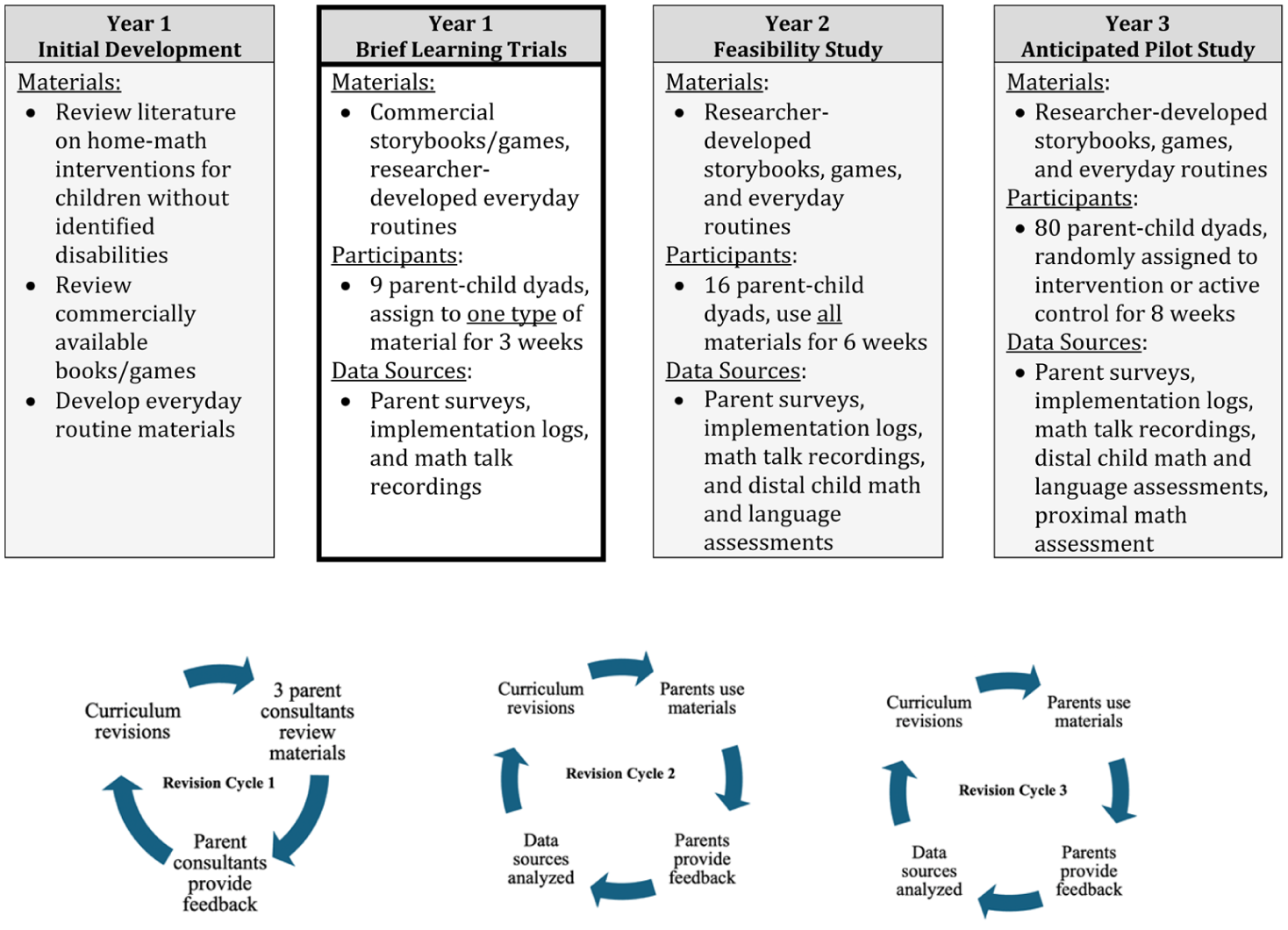
Iterative intervention development process.
This manuscript focuses on parent feedback given during the Brief Learning Trials in Year 1 of the study. The Brief Learning Trials phase was conducted to assess parents’ reactions to using home math materials that are commercially available or have been used in past research with the families of children without identified disabilities. Given the significant dearth of research on home math interventions for children with disabilities, investigating parents’ responses to previously used materials provides a starting point for understanding the benefits and barriers of existing materials for this specific population and guides the development of a new intervention. During the Initial Development phase, we identified number games, number storybooks, and everyday routines as some of the most used activities in home math intervention research for children without identified disabilities. We intentionally recruited families with children receiving services under a diverse range of disability categories to guide design that was inclusive to a variety of child strengths and needs.
This manuscript organizes broad themes of parent-identified benefits, barriers and recommendations for the design of home learning activities for children with disabilities using qualitative open coding methods of parent interviews and implementation logs. We were guided by three research questions related to the experiences and perceptions of parents of children with disabilities as they engaged with the home math materials:
Methods
Participants
The study began with the recruitment of nine parent/child dyads. Parents were recruited from a Pacific Northwest state. Our primary recruitment strategy included partnering with local public and private early childhood education centers that served children with disabilities to distribute recruitment materials to families. When early childhood centers agreed to partner with us, classroom teachers sent emails to parents and placed recruitment flyers in children’s backpacks. Centers also posted recruitment information in school newsletters and on social media pages. We also posted physical flyers to public bulletin boards at locations such as parks, evaluation clinics, grocery stores, museums, and community centers.
Informed consent was obtained from all participants included in the study. Two families left the study before completing social validity interviews, so data are reported for seven parent/child dyads. Children were 4–5 years old and qualified for early intervention or early childhood special education services under multiple categories (Autism Spectrum Disorder (n = 3); Developmental Delay (n = 1); Speech Language Impairment (n = 1); Developmental Delay and Speech Language Impairment (n = 1); being evaluated for services (n = 1)). Six of the parents identified as women, and one as a man. The breakdown of parents’ highest education level was as follows: Some high school (n = 1); Some college, but no degree (n = 3), Associate’s degree (n =1); Bachelor’s degree (n = 2). Five parents self-identified as White; one as African American; and one as Native Hawaiian and Māori. All families spoke English as their primary home language, but three also spoke a second language (Japanese, Spanish, and Māori).
Materials and Procedure
Parents were recruited to act as collaborators by providing input on three different types of home math activities that are commonly used in home math environment studies with children without identified disabilities: number games, number storybooks, and everyday routines (e.g., Purpura et al., 2021; Sonnenschein et al., 2016). Parent/child dyads were randomly assigned to engage with one of these three activity types for 3 weeks at home (n = 2 number games, n = 2 number story books, n = 3 everyday routines). We assigned families to only one activity type to gather more in-depth feedback to guide iterative material design.
Materials were either selected from existing sources (number games and number story books) or developed by the research team (everyday routines) during an initial development phase in which three parent consultants offered feedback. Researchers identified or created materials to target five numeracy skills: counting, cardinality, comparison of sets, numeral identification, and understanding one more or less. Examples of researcher-created tip sheets and routine cards are included in the Supplemental Material.
Parents who used the number games materials were given games that allowed children to practice their math skills while playing, such as counting the number of spaces on a board game. The research team created math tip sheets for each game to provide guidance on adjusting game play in different situations and to facilitate the use of math talk. Specifically, they received five researcher-developed or commercially available games: Duck Game (De Chambrier et al., 2021), Number Comparison Game (Scalise et al., 2017), Count Your Chickens!, Hi-Ho-Cherry-O, and Numbers Bingo!
Parents who used the number storybooks were provided with books that implicitly or explicitly targeted the five early numeracy skills. As with the games, the research team created math tip sheets for each storybook to facilitate the use of math talk while parents read with their child. They received five books and guides: What Do They Eat? (Gibson et al., 2020), One is a Piñata, Crash! Boom!, Baby Goes to Market, and Hippos Go Berserk!
Parents who used the everyday routines materials were provided with researcher-designed activities encouraging parents to engage in math talk with their child while carrying out common routines, such as going for a walk. The activities included routine prompts to use in any setting and structured activities (e.g., arts and crafts activities, recipe cards for cooking activities). For example, routine cards suggested, “Talk about and count numbers of animals—‘How many dogs do you see?’” These activities were designed to align with past researcher-developed activities (e.g., Leyva et al., 2023). These routine prompts were provided on physically printed cards and on a researcher-developed website that parents could access from their smartphones.
Parent trainers facilitated training sessions, with each session approximately 30 min long. Training was conducted either in person or on Zoom, based on convenience. The training contained information on the purpose of the study, importance of the home math environment, early math development, and how to use the intervention materials. Parents were only trained to use the materials of the condition that they were assigned to. Research protocols, such as how to fill in implementation logs and text message reminders, were also reviewed during the training session. In addition, parents received text message reminders during the 3 weeks of implementation. Throughout, we emphasized to parents that the focus of the study was on their experiences using the materials, and that we hoped they would feel comfortable providing honest feedback to aid in the revision of materials and processes. We also encouraged parents to adapt the existing materials to meet the needs of their child.
Data Collection
Interviews
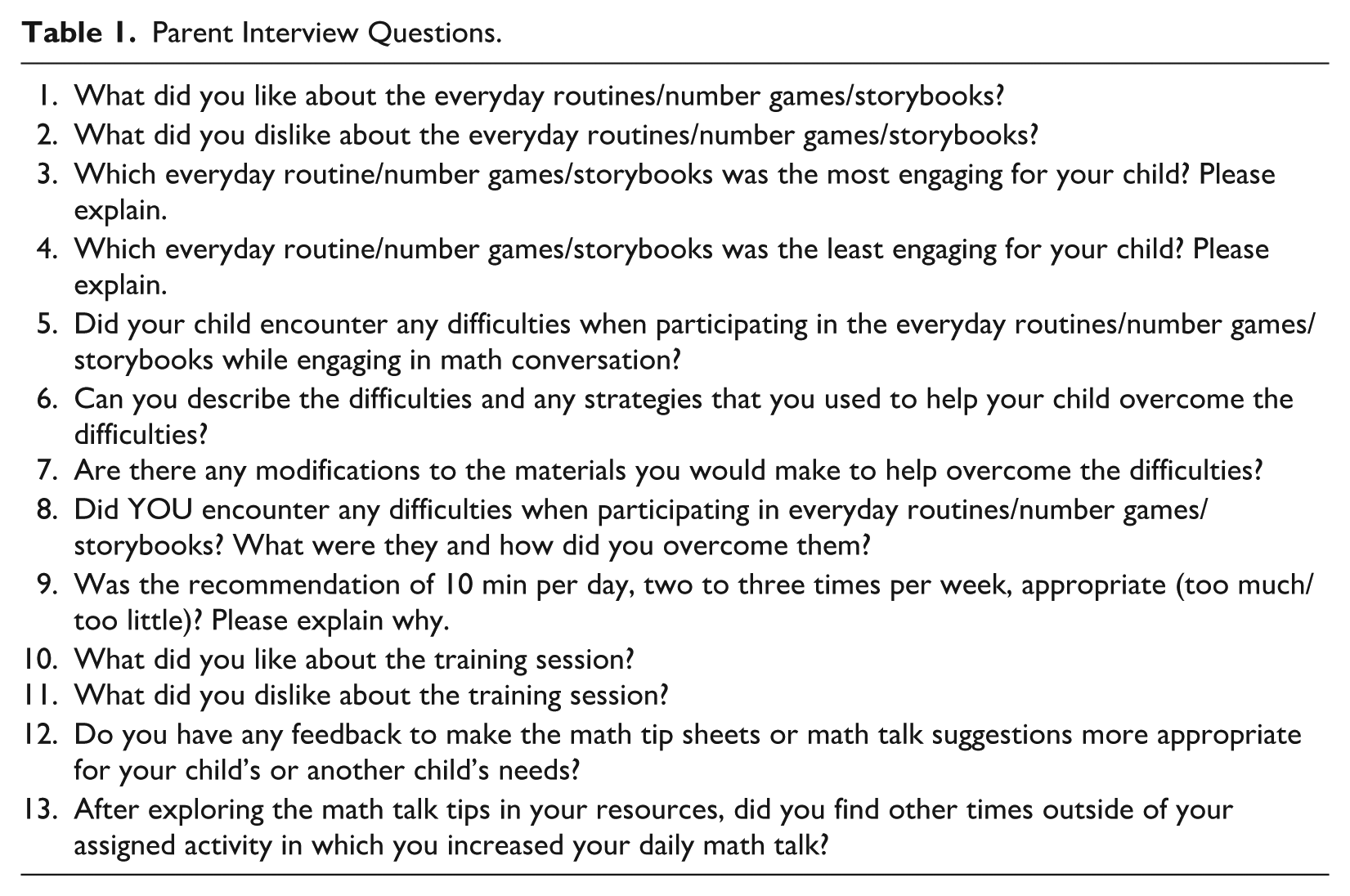
At the conclusion of the study, parents completed an interview with one of the researchers. At the start of the interview, parents were reminded that we wanted to know as much as possible about their experience. All seven families that completed the study participated in a social validity interview. The interviews were held at a time of the parent’s convenience and conducted either in person or on Zoom. All interviews were recorded for later transcription. They lasted from 20 to 25 min and were guided by a structured protocol (see questions in Table 1). We chose to use a structured interview format to ensure our ability to compare and contrast responses among participants as we aimed to iteratively develop the intervention materials and procedures.
Parent Interview Questions.
The recorded interviews were uploaded to a transcription program known as REV. REV uses AI to transcribe the recorded audio file. After the program analyzed the audio and produced a transcript, the transcript was reviewed for accuracy by a research team member. In some cases, the transcripts did not capture the correct words or duplicated words needed to be removed, but the program allows you to edit statements while playing back the audio. In these cases, a research team member edited the transcripts as necessary to record the parent’s words accurately. After the transcriptions were cleaned, they were downloaded to a Word Document, and question headers were added for ease of analysis.
Implementation Logs
Parents were also asked to document their experiences with home math activities in real time using a log. Parents were prompted to explain aspects of the activity that children enjoyed engaging with and any barriers the child or parent experienced. All three everyday routine parents returned logs, while only one storybook and one number games parent returned logs. Parent responses were transcribed from the logs into a Google sheet for coding.
Coder Training and Intercoder Agreement
Before coding began, Authors 1 and 2 engaged in structured practice coding to ensure familiarity with the coding scheme and to refine our analytic procedures. Because the full data set was not yet available when our training began, we used AI-generated interview transcripts and implementation logs for practice. To create these materials, Author 2 generated various prompts until the materials appeared to represent multiple viewpoints and mimic the language used by parents. This approach allowed us to simulate the structure, content, and variability of the actual data set, ensuring that coders were skilled at and confident with the coding scheme before when began coding. Practice coding began with collaboratively coding one AI-generated transcript, followed by independently coding an additional AI-generated transcript and discussing discrepancies. The same procedure was applied to the AI-generated logs. Throughout this process, the coding scheme was iteratively updated to clarify codes and capture relevant concepts. After completing this practice phase, we double-coded a subset of the real interview transcripts and logs.
Data Analysis
The eventual intervention we are developing will include all activity types in one condition; thus, we consider themes of parent responses across activity types. To begin the analysis of each data source, both researchers reviewed the full data source (i.e., we looked at one interview in entirety before moving on). During this familiarization phase (Saldaña, 2021), we kept notes of what we considered to be the most relevant takeaways about the treatment.
Coding Organization
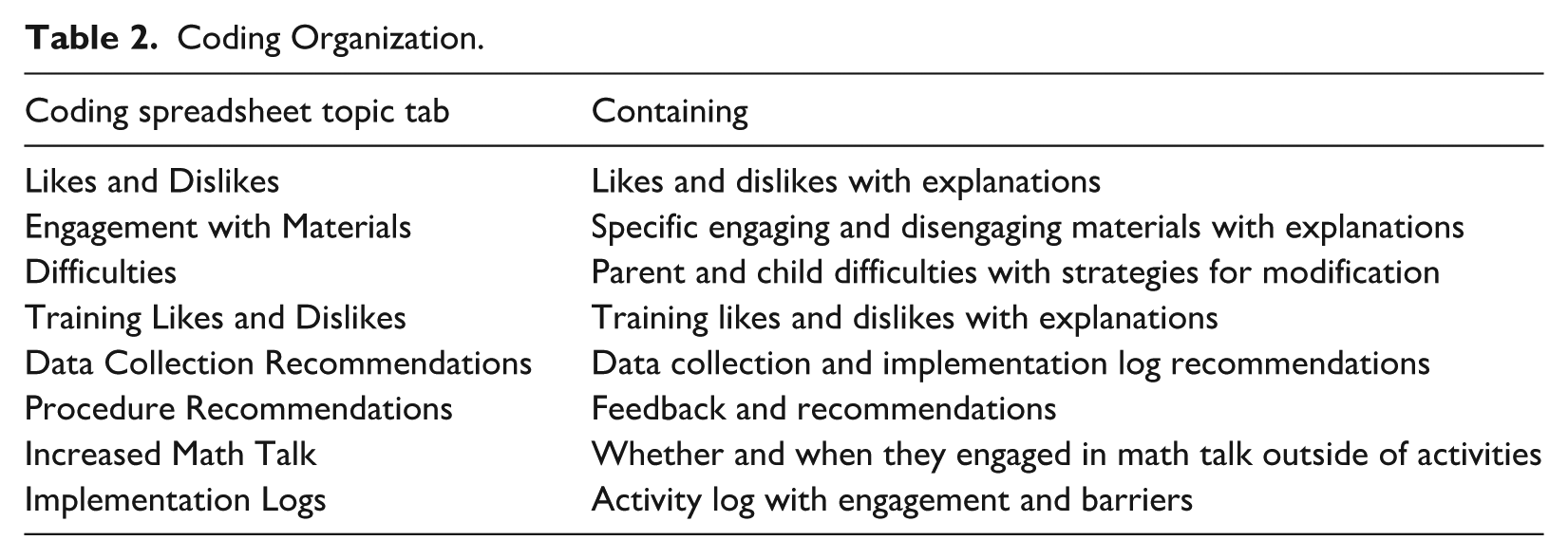
Coding was completed in a Google sheet. We created separate tabs for each topic of interest and a tab for the implementation logs. See Table 2 for more information on the coding scheme. While these topic tabs generally corresponded to interview questions, questions were sometimes grouped together. For example, the two interview questions about parent training (likes, dislikes) were grouped in the same tab (Training Likes and Dislikes). In addition, participant responses were grouped based on topic. In other words, as the quotes were reviewed, we placed them into a corresponding tab based on the topic the parent was discussing, as their responses often included thoughts on a topic other than the one they were asked about.
Coding Organization.
Open Coding of Interviews and Logs
The interviews and logs were analyzed using open coding (Saldaña, 2021). Due to the nature of this social validity data set, a coding scheme was not applied. The goal of the analysis was to determine parents’ perceptions of and beliefs about the activities and processes; thus, open coding allowed us to capture the parents’ insights without approaching the data using preconceived notions or theories. Open coding involved assigning descriptive codes to each meaningful unit of data, with a focus on minimization. In other words, after a quote was identified and placed in the Google sheet to indicate the concept being discussed, a code that described the quote by minimizing the quote down to its meaning was applied. For example, one parent stated the following difficulty: “It was frustrating getting him to sit still . . ..” We applied the difficulty code of “getting child to sit still” to describe the challenge faced.
Next, the coded data were collapsed within each tab/topic. We first made lists of all codes for each of the columns of information included for each topic and noted the number of times the code, or very similar codes, were used. For example, both parents who worked with the number games described difficulty maintaining child engagement.
Synthesizing and Finalizing Themes
To create benefit, barrier, and recommendation themes, we synthesized similar codes across activities. A parent described their child moving around the room and playing with other toys while they read the storybook, which was similar to the parents’ difficulty with maintaining child engagement while playing with number games. Another parent described their child throwing game materials. We combined these codes for parent difficulties to create a “Behavior management can prevent content learning” barrier pattern. After all coded data were collapsed, we returned to the interviews and logs to identify participant quotes that represented and rebutted the pattern. Our findings sections were written based on describing the patterns and including both representative quotes and counter quotes to indicate parent contradictions or disagreements.
Positionality and Trustworthiness
The coding team brought diverse, complementary expertise relevant to early intervention and parent-centered research. Author 1 is a learning sciences researcher with expertise in early childhood development and mathematics learning, particularly supporting children at-risk for difficulties. Author 2 is a literacy researcher with extensive experience teaching and supervising pre- and in-service educators across elementary and secondary contexts and supporting children struggling with literacy. The other authors were not involved in the coding process. Recognizing that our professional experiences and commitments to family-centered, inclusive early intervention could shape interpretation, we engaged in reflexive practices consistent with Tracy’s (2010) “sincerity” criterion. These included analytic memoing, collaborative review of coding decisions, discussion of assumptions and potential biases, and attention to disconfirming evidence. For example, when coding parent reports about challenges maintaining child engagement, coders discussed how their own classroom experiences might influence interpretation and explicitly considered alternative explanations before assigning codes.
To further enhance the trustworthiness of this study, we implemented multiple strategies aligned with established criteria for rigorous qualitative analysis (Lincoln & Guba, 1985; Schwandt et al., 2007; Stahl & King, 2020; Tracy, 2010, 2017) that included recommendations from the Qualitative Research (QR) Collective (Banks et al., 2023) and established frameworks for reflexivity. Consistent with Lincoln and Guba’s (1985) criteria for credibility, dependability, confirmability, and transferability, the two coders engaged in prolonged engagement with the data, including multiple full readings of transcripts and logs, collaborative familiarization, and iterative coding. Structured coder training involved both collaborative and independent practice coding and iterative refinement of the coding scheme. We double-coded 42% of the data, and the remaining data were reviewed by a second coder. Forty-two percent of the data represented one interview from each activity type. All discrepancies were resolved through discussion and negotiated agreement, ensuring interpretations were grounded in participants’ accounts, rather than relying solely on statistical measures of reliability (Schwandt et al., 2007). Analytic memos, frequent team discussions, and maintenance of an audit trail further supported reflexivity, transparency, and confirmability (Lincoln & Guba, 1985; Tracy, 2010, 2017). Finally, open coding allowed themes to emerge inductively, and the inclusion of representative and disconfirming quotes strengthened credibility and authenticity (Stahl & King, 2020).
Findings
Through analysis of parent interviews and implementation logs, we identified two benefits, three barriers, and three recommendation themes across activity types.
Benefits of Engaging in Home Math Activities
Parents were able to describe various ways in which introducing the home math activities were beneficial.
Benefit 1: Improvements in the Children’s Behavior and Content Knowledge
Throughout the study, parents saw improvements in their child’s behavior and content knowledge. Parents reported that their children started to more thoughtfully engage in math without becoming easily frustrated. One parent noted in their log:
Usually he gets frustrated if I ask him math questions, but today he was able to look and count the number on my hands, and when I added one more, he stopped, thought about it and answered. That’s a huge win.
Similarly, the home math activities often served as a means to calm their children or de-escalate situations where their behavior may have normally intensified. For example, one parent reported the book-reading activities calmed their child.
In addition to seeing behavioral improvements when engaging with math, the parents also acknowledged their child’s increased math knowledge as a benefit of engaging in the home math activities. Parents discussed that the activities prompted the child to think about and engage with math more than normal, which ultimately led to more knowledge of math. Parents noticed that their children built their understanding of specific math concepts and skills, such as counting backward and understanding greater than/less than. When describing why her child was engaged with some of the provided at-home routines, one parent mentioned: “He was able to engage even without me necessarily putting out the information, like he would just start doing the math on his own and start counting things at home.” This indicates that the child was not only developing math content knowledge but was also developing more independent skills. Every parent in the study said that their child’s understanding of numbers improved as a result of participating.
Benefit 2: Increase in Math Talk During Daily Interactions
All parents interviewed reported that daily math talk within and outside of assigned activity times increased for both them and their child as a result of participating. Parents viewed the activities as opportunities to focus on numbers with their children, which they had not naturally had otherwise. Parents noticed their child’s increased math talk in capacities such as playing, shopping, and everyday activities. For example, one parent reported that the number games motivated them to engage in family game nights, so their child talked more than normal during the games and specifically used more math talk. Other examples included the children engaging in increased math talk when recalling numbers, such as unlocking their iPad using a numerical code and when adding blocks to a tower. Regarding shopping, parents stated that their child was able to determine quantities of items from the store, and another parent discussed giving their child a specified amount of money to spend at the store. Everyday routines such as calendar planning and therapy visits were two activities in which the parents noticed their child’s math talk had increased. Perhaps an unexpected benefit, the parents also reported noticing their own increase in math talk as they engaged with their children. As a result of participating, parents found it easier to find opportunities for math talk, and their comfort level with math talk improved. Further, parents were hopeful about being able to facilitate math talk during their normal, routine activities in the future.
Barriers to Effective Home Math Activity Implementation
Parents indicated several barriers to using the provided activities, including behavior management, lack of confidence in math content and teaching, and the impact of other outside factors.
Barrier 1: Behavior Management Impedes Content Learning
Most difficulties indicated by parents were related to child distraction and lack of attention span, which led to challenging behaviors that impeded content learning. Every parent in the study mentioned a difficulty related to their need to focus on behavior management at least once during their interview. Parents found it difficult to manage children’s distractions due to other children (e.g., siblings) and with non-mathematical aspects of the materials themselves. For example, one parent in the everyday routines condition described how their child became distracted by the cooking activity and did not engage with the math content, “My son was too ecstatic and overwhelmed with the whole cooking aspect that he didn’t even want to talk about the math, he just wanted to do the cooking.” Distraction by the materials sometimes resulted in the need for parents to figure out ways to manage their child’s behavior. One parent described needing to hold on to the dice in a number game between throws, as the child just wanted to throw the dice across the room.
Parents also discussed their child’s lack of attention span, even on shorter activities. One parent found it challenging to get their child to sit still and engage with the games, but also noted that it varied from session to session,
It was a little frustrating getting him to sit still and getting him to try to understand . . . there were definitely times when he would throw his body on the ground and scream because he just didn’t want to do it. But then there were other times when he was like, oh, this looks familiar. Let’s play this again.
A barrier experienced by all parents was the need to focus on behavior management. More specifically, the parents discussed distractions and short attention spans as challenging to their child’s content learning.
Barrier 2: Lack of Confidence in Content and Teaching
Another theme that arose was parents’ lack of confidence in engaging in home math activities with their children, primarily concerning their self-efficacy in teaching math topics. One parent raised her concerns related to her own understanding of math concepts, stating, “She’s very advanced for me. I’m not that advanced when it comes to math, but she’s moving so fast to things that I don’t think she’s ready for yet. But she might be ready.” In this quote, the parent discusses both her own perceived difficulties with math, and how that impacts her understanding of what is developmentally appropriate for her child. Difficulty with identifying what is developmentally appropriate when it comes to early math came up in several parents’ interviews and implementation logs.
Another parent mentioned the difficulty of teaching foundational skills that feel “natural” to the parent, because “. . . as an adult you’re already kind of having those skills and tools, but you forgot how you got those tools in the first place . . ..” Parents also discussed not knowing how to teach their child math in the context of their child’s disability. One parent explained “It’s hard. We just don’t know how she processes everything . . ..” Others discussed specific characteristics of their child’s disability that made engaging with math content difficult (e.g., apraxia affecting their ability to say the count list), and their lack of confidence in how to assist them with math learning.
Barrier 3: Other Factors Impacting Capacity to Engage
Finally, parents brought up several other factors that negatively impacted their ability to implement activities with their children. Multiple parents discussed difficulty with fitting in the home math activities while managing all of the household schedules. One parent specifically noted difficulty with balancing the needs of two children on the autism spectrum,
It’s hard to follow a proper routine because both boys are on the spectrum and they’re both at different . . . but one’s on this side. My oldest is high needs. My youngest isn’t there, so it is hard. It was hard for me.
Another parent echoed these ideas, stating that, “as a parent of a special needs kiddo . . . I think trying to do anything regularly is just hard . . . to remember.” Parents also discussed both parents being tired and forgetting to engage in or log the activities. This sometimes created guilt as parents navigated their role as a research participant, with one parent expressing they were “feeling guilty I’m not doing all these things for you guys.” Many parents expressed that although they were excited about collaborating with us, engaging in the activities was sometimes burdensome and added to their responsibilities.
Recommendations Guiding Iterative Design
Next, we summarize recommendation themes made by parents that will guide future iterative activity design.
Recommendation 1: Prioritize Child Engagement
Several parent recommendations were related to the design of home math materials that held children’s focus and minimized behavioral issues (Barrier 1). One parent who engaged with the number games described how higher-level content led to child disengagement during a number comparison game,
I think the first card she drew ever in that game was like an eight, and she had to compare it to something else that was high and she was pretty annoyed . . . it was something that was similar to it. It wasn’t like one card had two and one had eight. She had to count, and she kind of hated that game from then on . . .
The parent suggested including different levels of content that children could build up to. Another parent who engaged with number games recommended making rules and routines of the games easier for children to understand, providing their child’s difficulty with turn-taking as an example. Several parents indicated that their children were drawn to specific books and games that featured bright colors or interesting tactile elements. One parent also suggested that providing stickers as rewards for completing activities was helpful for encouraging child engagement.
Recommendation 2: Provide Explicit Instruction During Training Sessions
Multiple parent recommendations focused on suggestions for expanding parent training topics, especially in the areas of strategies for engaging children and providing step-by-step instructions for procedural elements. The most common request among parents concerned providing clear, useful strategies on how to engage their children in math activities. One parent stated,
You guys also showed me how to do the more than/lesser than, which was a really challenging thing for me because I didn’t know how to even begin on how to show him more than/lesser than. But the examples you guys have actually helped.
This parent felt that the strategies provided by the research team during parent training addressed their lack of confidence in teaching specific math content (Barrier 2). Later in the interview, they recommended that the training include even more specific examples for how to engage children in math concepts and activities. Other parents also appreciated the strategies covered during training, such as shared math-book-reading strategies like pointing to the text and pictures in the books. One parent expressed curiosity and requested more information about how their child’s disability affects math learning. Although most parents encouraged a highly detailed training session including background knowledge on math development and engagement strategies, one parent suggested that training might not be necessary, as they felt the activity instructions were “self-explanatory.”
Parents also felt that the training needed to provide clear instructions on all procedural elements, especially filling out the implementation logs. Several parents brought up that they did not think the training adequately covered how and when to fill out the implementation logs. A parent who engaged with storybooks described filling out a paper log for the first time: “. . . maybe if there were some specifics . . . I kind of sat there for a minute and was like, okay, how do I write this out?” Parents who engaged with everyday routines also noted their uncertainty about what to fill in on the online log, with one stating, “I didn’t know that I wasn’t supposed to like . . . say no to any of those every single day if I didn’t do it.” The parent was unsure about how to fill in the online log, and suggested that spending more time on the log in the training would be helpful. Overall, parents mostly appreciated the training they received, but recommended specific areas for expansion in future iterations.
Recommendation 3: Prioritize Convenience and Ease
Parents consistently expressed satisfaction with aspects of the materials and process that they found to be convenient, and recommended modifications to make other aspects more convenient. Concerning materials, one parent spoke about the portability of a number game, “. . . what I liked about that one was we played it before bed one time, which was nice because it was super portable and you could play it in the room.” In this quote, the parent explains how the portability of the game made it more usable and feasible to fit into the family’s daily routine. Parents also had material recommendations when engaging with the everyday routines; one parent recommended fewer routine cards, as they found the number of cards to be “overwhelming.” However, another parent expressed that the routine cards were a convenient way to provide “step-by-step” structure to their math interactions throughout the day.
Regarding implementation and procedural elements, parents commented on the dosage suggestions and text message reminders. They generally felt that the suggestion to engage in activities for 10 min a day, two to three times a week, was appropriate and suggested that we not increase the dosage. One number games parent expressed that “Any more [time] would’ve honestly been not realistic for him . . .,” as they felt that 10 min was the amount of time their child could remain engaged before losing focus. Parents also appreciated the text message reminders we provided, but had some suggestions for improving their convenience, including sending them earlier in the day.
Beyond their recommendations to spend more time covering implementation logs in training, parents also provided suggestions for making the logs more convenient. Those using the paper logs suggested that an online log would be easier to access. Parents using both types of logs recommended formatting changes that would make them more convenient to use, including providing more space. Through implementation log and interview feedback, parents made several recommendations for making the activities and training more usable and convenient in future iterations.
Discussion
In this paper, we described benefits and barriers for families of young children with disabilities to implementing home math activities that have been used in past research with children without identified disabilities. We also summarized their recommendations for future design and implementation. Specifically, we hoped to guide the iterative development of a home math intervention for children with disabilities, an underrepresented group in the home math intervention literature base and offer broader insight for researchers implementing and studying home-based interventions for children with disabilities. This process allows us to take a strengths-based approach to designing feasible interventions (Division for Early Childhood [DEC], 2014). Below, we expand on the mentioned benefits, barriers, and recommendations, how they align with past home math research, and how they can guide future work.
Benefits
The benefits of the home math activities mentioned by parents included an increase in math talk during daily interactions with their child and improvements in the children’s behavior and content knowledge. These activities are specifically designed to increase parent-child math engagement and facilitate math content learning (e.g., Eason et al., 2022; Leyva et al., 2023), and it is promising that parents felt and articulated these benefits. Although behavioral benefits were not a targeted outcome of the activities, parents described behavioral benefits for their children such as a decrease in frustration when engaging with math content.
In past studies conducted with families of children without identified disabilities, similar activities have been used to successfully increase parents’ math talk. For example, Leyva et al. (2023) recruited families of U.S. preschoolers for an intervention study focused on providing video examples of using math talk during everyday family routines, using an exclusion criterion that the child could not have a documented intellectual or learning disability. They found that in families who were assigned to the intervention, parents significantly increased the amount of math talk they used with their child during a recorded play session compared to a control condition. Our qualitative findings align with and extend upon these quantitative results in a sample of children with disabilities; parents felt that engaging in our activities increased their comfort level with using math talk with their children, including during activities that were not part of the provided materials.
Barriers to Effective Implementation
The barriers of using the home math activities described by parents included a need to focus on behavioral management and guidance, a lack of confidence in math content and teaching, and factors outside of the study that affected their capacity to engage. We are considering these factors as we move to create meaningful and effective intervention activities.
Regarding behavior management, we can draw strategies from the body of research on behavior management and guidance for children in the preschool classroom (DuPaul & Cleminshaw, 2020). Researchers have also provided behavior management strategies for parents addressing challenging behaviors in the home (Chai & Lieberman-Betz, 2016), including for children with developmental delay (O’Nions et al., 2018). These strategies may be incorporated into the design of home math activities that, for example, follow predictable routines or incorporate choice.
Our finding that some parents lacked confidence in their math content knowledge and competency in teaching is similar to other past home math studies. Research has found that parents’ anxiety or lack of self-efficacy related to teaching math content can negatively impact children’s learning (Maloney et al., 2015). Specifically, parents with more mathematical confidence engage children in more complex numeracy interactions more often than parents with less mathematical confidence (Outhwaite et al., 2025). However, structured activities that scaffold positive parent-child math interactions can increase parents’ positive attitudes about math and children’s math learning (Berkowitz et al., 2015), suggesting they can be supported through activity design. In fact, one study found that a home math environment intervention was significantly more beneficial for parents with higher levels of math anxiety than those with lower math anxiety (Schaeffer et al., 2018).
Parents also indicated that factors outside of the study affected their ability to engage, aligning with research identifying family factors related to parent engagement and children’s academic learning. For example, several parents in our study discussed balancing the needs of multiple children when trying to implement the home math activities. Researchers have suggested that siblings may affect children’s academic development through the allocation of family time and resources (Korir, 2017), echoing the thoughts of parents in our study. A qualitative systematic review of facilitators and barriers to parents’ engagement with parenting programs also identified competing demands on parents’ time (e.g., career, housework, other caretaking roles) as a major barrier to participation (Mytton et al., 2014). Our findings extend this work by offering perspectives on competing demands they felt were specific to families of children with disabilities, including parenting multiple children with special needs and keeping a consistent schedule.
Recommendations
Parents recommended prioritizing child engagement and convenience when developing home math activities and providing explicit guidance during parent training sessions. Parents’ suggestions for prioritizing engagement align with developmentally-appropriate practice (DAP; Diamond & McCartney, 2022) guidelines for curricular design, which emphasize materials that are age-appropriate and meet the unique needs and strengths of the individual child. Several parents suggested adaptable materials for children at varying levels of prior knowledge, while others recommended adapting materials in ways that held children’s attention or reduced frustration. We will incorporate these specific ideas into the revision cycle to guide the development of intervention materials.
Several recommendations centered on parent training and support. Parents in our study engaged in an initial training session and were sent reminder text messages throughout implementation. Nelson et al.’s (2024) meta-analysis of caregiver-delivered early math interventions found a significant effect of the intensity of parent training, in that interventions that included initial training and follow-up support were more beneficial for children’s learning than those that included no training or initial training only. Follow-up supports can range from simple check-ins like text messages to at-home visits and coaching. Our results highlight some of the areas that parents believe are most beneficial for concentrating initial training time, including engagement strategies and clear instructions for procedural elements.
Limitations
Our findings should be interpreted considering some limitations. We worked with a small group of families to conduct an in-depth analysis of their feedback. However, the small sample size may impact the generalizability of their responses. We also only elicited families’ feedback on one type of activity to gather more detailed information about specific games, books, and routines. However, this meant we were unable to compare a family’s response across different types of activities. We also aimed to recruit the families of children who received early intervention services under a wide range of disability categories, but there are disability categories that were not represented in our sample. Furthermore, children receiving services under the same disability category also have a wide range of strengths and needs that may not be represented by the present sample. An additional 16 families will take part in the next round of development, broadening the feedback we receive.
Future Directions and Implications
In addition to our future rounds of development and testing of the intervention, our findings point to other potential areas of study. For example, we found that behavioral management is a barrier to using home math activities for parents of children with disabilities due to their children’s inattention and challenging behaviors. Future research may explore potential reasons underlying challenging behaviors. For example, considering parents’ suggestion to prioritize child engagement, some challenging behaviors may have arisen out of a misalignment between the child’s interest and the activity. Future research studies should also consider whether parent training in behavioral guidance strategies could improve families’ experiences and children’s home learning outcomes. In addition, our finding that parents believed the home math activities led to positive changes in children’s behavior could provide an interesting topic for future research. Specifically, research could concentrate on how engaging in home learning activities may positively impact child behavior—such as in de-escalating challenging behaviors—especially for young children with disabilities. In addition, our findings suggest that parents would benefit from a better understanding of how their child’s disability impacts math learning, and what they can do to support their child’s learning, as specifically related to their disability. Future research might consider evaluating how educating parents on disability might impact the outcomes of interventions.
Taken together, the parents’ thoughts indicate that intervention developers should have the following at the forefront of their thinking—the math content knowledge of parents and children, behavior management and child engagement, and convenience with consideration for busy and multilayered homes where interventions will take place. In particular, understanding how these factors intersect with specific experiences of families of children with disabilities provides crucial information for developing meaningful home-based interventions for use by these families.
Supplemental Material
sj-docx-1-jei-10.1177_10538151261456316 – Supplemental material for Parent-Identified Benefits, Barriers, and Recommendations for Using Home Math Materials With Their Young Children With Disabilities
Supplemental material, sj-docx-1-jei-10.1177_10538151261456316 for Parent-Identified Benefits, Barriers, and Recommendations for Using Home Math Materials With Their Young Children With Disabilities by Brianna L. Devlin, Hannah Carter, Janice Fong, Marah Sutherland and Gena Nelson in Journal of Early Intervention
Footnotes
Funding
The authors disclosed receipt of the following financial support for the research, authorship, and/or publication of this article: This work was supported by the National Science Foundation, Award # 2300233.
Declaration of Conflicting Interests
The authors declared no potential conflicts of interest with respect to the research, authorship, and/or publication of this article.
Supplemental Material
Supplemental material for this article is available online.
References
Supplementary Material
Please find the following supplemental material available below.
For Open Access articles published under a Creative Commons License, all supplemental material carries the same license as the article it is associated with.
For non-Open Access articles published, all supplemental material carries a non-exclusive license, and permission requests for re-use of supplemental material or any part of supplemental material shall be sent directly to the copyright owner as specified in the copyright notice associated with the article.
