







Abstract
The Grief Impairment Scale (GIS) is used to measure functional impairment due to grief following the death of a loved one. However, there is no information on its cross-cultural utility. Thus, this study assessed the measurement invariance of the GIS using a large sample of bereaved adults (N = 2060) from Peru, El Salvador, Ecuador, and Colombia. Specifically, we employed two measurement invariance techniques: multi-group confirmatory factor analysis (MG-CFA) and the alignment optimization method. The results indicated that the GIS demonstrated configural and metric invariance, but not scalar invariance through MG-CFA. The alignment optimization method indicated the presence of an approximate invariance. Therefore, the results suggest that the GIS measures grief-related impairment similarly across the four Latin American countries. Among the countries examined, Peru reported the highest average score on the GIS and had the highest percentage of cases at risk for clinically relevant functional impairment due to grief (6.2%). These findings support the cross-cultural validity of the GIS and lay the foundation for future comparisons.
Introduction
The death of a loved one is a universal experience (Thimm et al., 2019) that can bring significant stress to people's lives, causing emotional turmoil and major impairments in various daily functions at personal, social, and occupational levels (Shear, 2015; Simon et al., 2020). The World Health Organization (WHO, 2023) defines functional impairment as the deterioration of functioning in personal, family, social, work, educational, and other important areas of life. Although many of the bereaved experience minor difficulties in functional impairment, some experience significant impairments (Nielsen et al., 2020). Thus, functional impairment is a clinical criterion for diagnosing grief-related illnesses, such as prolonged grief disorder, which is characterized by yearning or preoccupation with the deceased, accompanied by intense emotional pain and functional impairment (WHO, 2019). Assessing grief-related functional impairment is also important in treatment planning and attending to patients’ specific needs (Killikelly & Maercker, 2017; Lichtenthal et al., 2018).
A longitudinal study with pre-pandemic data on relatives of terminally ill patients reported that 51% experienced functional impairment before the onset of grief, 27% experienced functional impairment six months after death, and 19% reported functional impairment three years after their loved one had passed (Nielsen et al., 2020). During the pandemic, approximately 63% of those grieving due to COVID-19 reported clinically significant functional impairment (Breen et al., 2021). During this pandemic period, the likelihood of experiencing functional impairment increased by 27% in those with greater separation distress, 25% in individuals with high levels of dysfunctional grief, and 13% in those with greater post-traumatic stress (Breen et al., 2021). Thus, the degree of functional impairment in grieving individuals during the pandemic exceeded the impairment experienced in the pre-pandemic period that was due to the death of family members in military service (Cozza et al., 2020), air accidents (Lenferink et al., 2017), or terminal illnesses (Nielsen et al., 2020).
It has been suggested that, once the COVID-19 pandemic has ended, there is a need to be prepared for a “pandemic of grief” (Caycho-Rodríguez, Valencia et al., 2023; Weinstock et al., 2021). In response, specialized interventions have been developed to address grief due to the death of a loved one from various causes and its post-pandemic consequences, focusing on meeting basic needs, managing emotional pain, adapting to life without the deceased, promoting community relationships and self-care, and finding meaning (Chokhani et al., 2024). This is even more important given the significant relationship between grief and impairment of daily functioning (Maccallum & Bryant, 2020; Nielsen et al., 2020), where the presence of separation distress or post-traumatic stress in individuals who have experienced the death of a loved one creates a higher risk of functional impairment (Breen et al., 2021; Lee & Neimeyer, 2022). In this post-pandemic context, it is valuable for health professionals to measure functional impairment to obtain information for diagnosing or treating the consequences associated with grief due to the death of a loved one (Lichtenthal et al., 2018).
In response, the Grief Impairment Scale (GIS; Lee & Neimeyer, 2023) was developed as a measure of functional impairment due to grief based on the biopsychosocial model of disease. This model emphasizes various domains of human functioning (Engel, 1977). Engel's biopsychosocial model (1977) was proposed as an improvement over the traditional biomedical model of disease, which posits that diseases are fundamentally explained by measurable biological changes, disregarding the individual experiencing the illness, their experiences, and attitudes toward the disease as well as the impact of living conditions and healthcare systems on the onset, presentation, and progression of diseases (Bolton & Gillett, 2019). In other words, Engel (1977) argued that the biomedical model overlooked a range of psychosocial health determinants owing to its mechanistic and reductionist orientation (Roberts, 2023). According to the biopsychosocial model (see Figure 1), illness is the product of dynamic interactions between psychological factors (e.g., attitudes and beliefs, expectations, emotional states, and coping strategies), social factors (e.g., family, school, and work contexts, peer relationships, economic situation, laws, and culture), and biological factors (e.g., genetics, pathophysiological changes, nutrition, sleep, exercise, medication, and physical environment) (Bolton, 2023). The biopsychosocial model aims to provide a theoretical and empirical foundation for understanding the determinants of illness and developing rational treatments in healthcare (Bolton & Gillett, 2019).
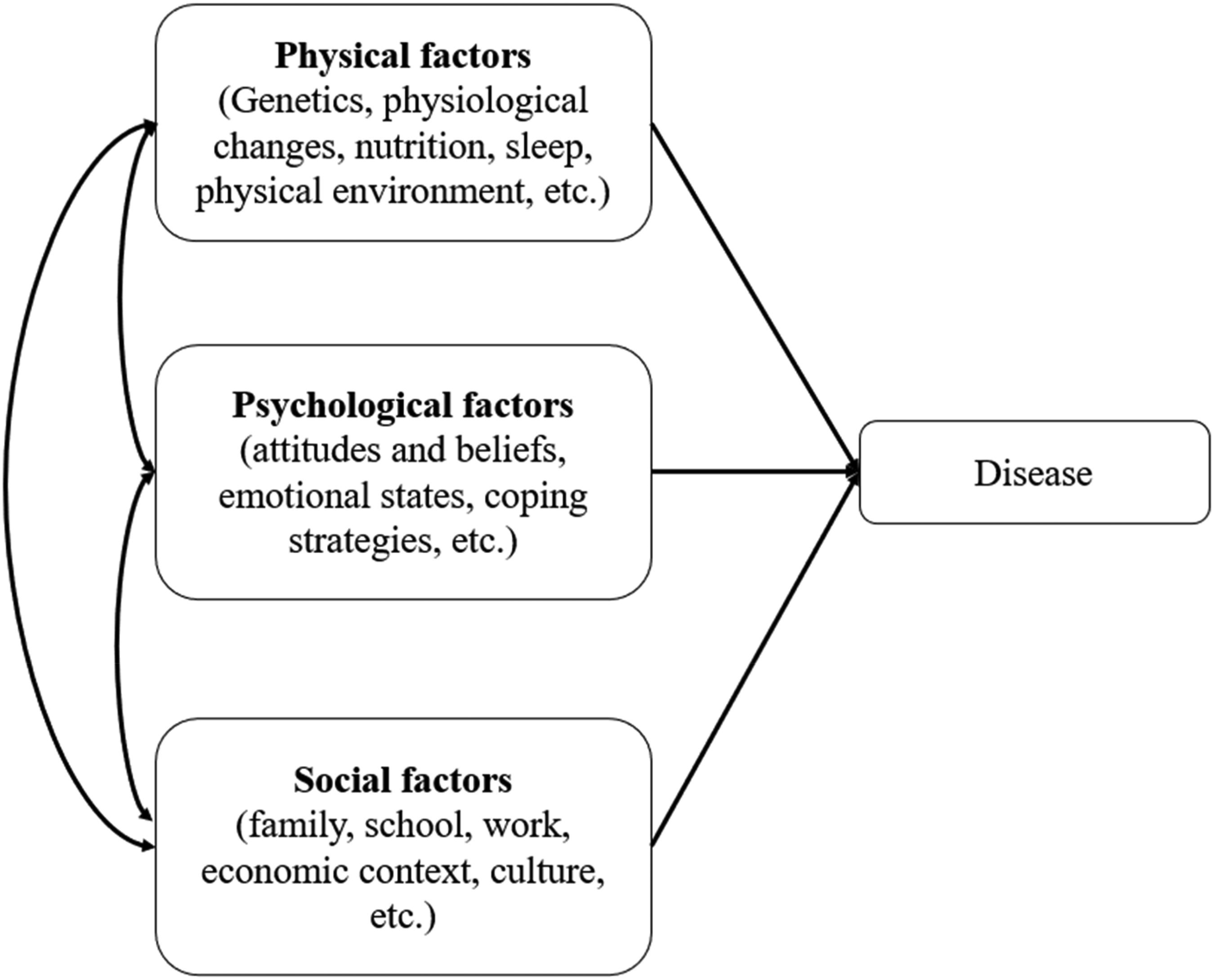
The biopsychosocial model.
According to the psychosocial model, each item of the GIS measures functional impairment due to grief in various areas of biological, psychological, and social functioning, such as the impact of grief on health and cognitive functioning; maladaptive coping, such as alcohol consumption or poor diet; inability to perform work; academic or household activities; and problems in social functioning (Harrison et al., 2022; Lee & Neimeyer, 2022). The original psychometric study of the GIS, conducted on a sample of American adults grieving the death of a loved one, reported the presence of a unifactorial structure, adequate evidence of convergent and divergent validity, good reliability, diagnostic precision, and evidence of measurement invariance based on age, sex, and racial characteristics (Lee & Neimeyer, 2023). Similar psychometric findings have been reported for the Spanish (Caycho-Rodríguez, Lee et al., 2023) and Persian (Yousefi & Jafari, 2023) versions of the GIS. A recent study indicated that GIS presented adequate psychometric evidence of validity based on internal structure, reliability, and invariance among samples from Peru and El Salvador based on psychometric network analysis (Caycho-Rodríguez, Travezaño-Cabrebra et al., 2024). While the psychometric network model is based on the assumption that the relationships between item scores are not explained by one or more underlying latent variables, current simulation studies suggest that it is important to evaluate the evidence of latent variables before analyzing or interpreting patterns of relationships between symptoms based on the network approach (Hallquist et al., 2021).
Although the psychometric findings of the GIS have been replicated in all previous studies, the way people experience, express, and cope with the death of a loved one, as well as its impact on daily functioning, is influenced by both individual experiences and the cultural context for which people live in (Lund, 2021; Silverman et al., 2021; Smid et al., 2018). Cross-cultural and multinational studies on functional impairment due to grief using self-report instruments have shown the absence of differences between countries (Hyland et al., 2024; Robinson et al., 2024). However, these findings are based on the assumption that people experience and express symptoms of impairment in the same way in all countries and that the instruments used measure the same underlying latent construct. The last assumption is associated with measurement invariance, which refers to the ability of an instrument to measure the same latent construct among specific groups (Van de Schoot et al., 2012; Van De Schoot et al., 2015). Establishing measurement invariance is a prerequisite for meaningful comparisons between groups (Brown 2015). In this sense, latent variable scores can be meaningfully compared between countries if the underlying structures of these latent variables are invariant or stable between groups (Davidov, Meuleman et al., 2014; Davidov, Muthen et al., 2018; Davidov, Schmidt et al., 2011). However, in the absence of measurement invariance, comparisons are not recommended, as interpretive biases may be generated as a result of differences between subgroups (Van de Schoot et al., 2012). Despite the importance of evaluating measurement invariance between countries, it is still a rare procedure in instruments administered to measure aspects of grief, except for some studies conducted in Latin America (Caycho-Rodríguez, Baños-Chaparro et al., 2024; Caycho-Rodríguez, Valencia et al., 2023). However, various studies have highlighted the importance of conducting measurement invariance studies in multinational research using self-report instruments (Boer et al., 2018; Davidov et al., 2014; Mavondo et al., 2003). This is valuable for determining dimensions that are independent or culture-specific when evaluating aspects of grief.
Death is a complex event that can have different meanings and consequences for individuals (Gonçalves et al., 2023). Individuals with different experiences and from various sociocultural environments may cope differently with death (Caycho-Rodríguez, Valencia et al., 2023), and therefore may experience more or less impairment in their daily functioning. Therefore, it is possible that measures of functional impairment due to grief may have different factorial structures, which could generate cross-cultural comparisons of functional impairment due to grief lacking construct validity. Seeking to ensure that the measure of functional impairment due to grief provides valid interpretations and ensures comparability between groups, it is necessary to have evidence of a clear factorial structure and measurement invariance. In this regard, the aim of this study was to test whether GIS shows measurement invariance among individuals from four Latin American countries who have experienced the death of a loved one. In this way, it is hoped to fill a gap in the scientific literature by evaluating the measurement invariance of GIS in different cultural contexts in Latin America. Having evidence that GIS is an invariant measure would suggest that the construct of functional impairment due to grief is assessed and interpreted in the same way across different countries. Therefore, GIS could be used as a measure to compare functional impairment due to grief across countries without the presence of interpretive biases (Putnick & Bornstein, 2016).
Methods
Participants and Procedure
The data used in this study were collected between August and November 2023 and were part of a larger project titled “Measurement of Functional Impairment Due to Grief in Latin America.” This project was approved by the Department of Medical Psychology at the Faculty of Medical Sciences of the National University of Asunción under Resolution No. 0708 00 2022 of the Governing Council of the Faculty of Medical Sciences of the National University of Asunción, Article 2, which refers to the ethical approval procedure for nonexperimental studies (approval code: 002_008_2023). The study adhered to the guidelines of the Helsinki Declaration, and the procedures were noninvasive and harmless. The inclusion criteria for the study were: (1) being over 18 years old, (2) having experienced the death of a loved one, and (3) voluntarily deciding to participate. Informed consent was obtained, and participants were asked to complete an online self-report questionnaire developed on Google Forms. The average response time was 15 min. The online survey was distributed through various social media platforms, such as Facebook and Instagram, and via email in each country. None of the participants received any compensation. Participation was anonymous, respecting the confidentiality of the data and participants’ right to withdraw from the study at any time.
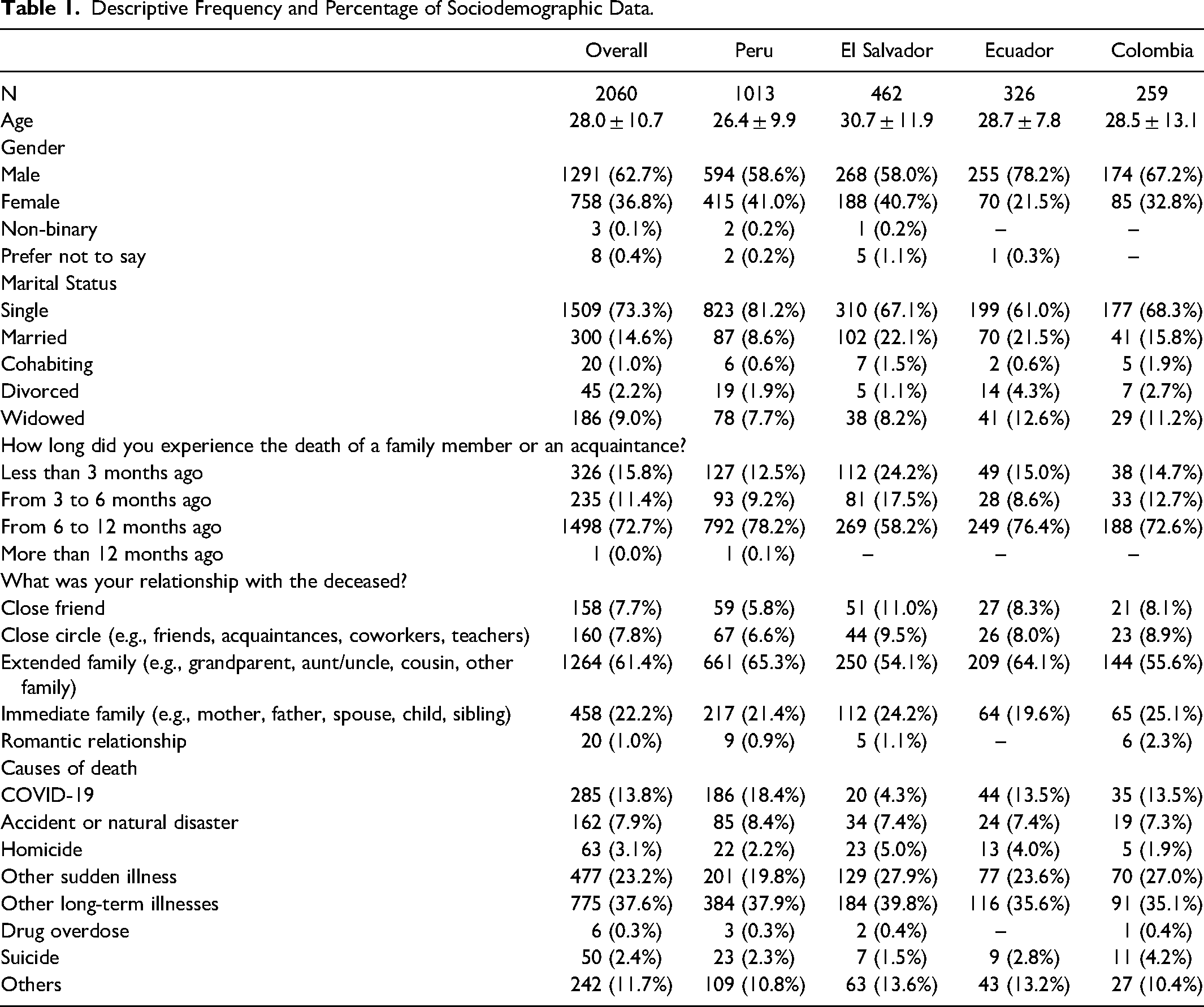
GIS was applied using a non-probabilistic snowball sampling method to a total sample of 2060 adults who had experienced the loss of a loved one in the last 12 months in Peru, El Salvador, Ecuador, and Colombia. The participants had an average age of 28 years (SD = 10.7 years). This average age varied between countries: Peru (26.4 years), El Salvador (30.7 years), Ecuador (28.7 years), and Colombia (28.5 years). There was a higher representation of males (62.7%) than females (36.8%), followed by a minority who identified as non-binary (0.1%) or preferred not to disclose their gender (0.4%). In Ecuador, no non-binary participants were registered, and in Colombia, there was no representation of non-binary genders or people who preferred not to specify their gender. Regarding marital status, single participants predominated (73.3%), followed by married (14.6%), widowed (9.0%), divorced (2.2%), and cohabiting (1.0%) participants, with a similar distribution in each analyzed country.
Subsequently, questions related to the loss of a loved one are presented. Regarding the time elapsed since the death of a family member or acquaintance, 15.8% experienced a loss less than three months ago, 11.4% experienced it between three and six months ago, and the majority (72.7%) experienced it six to 12 months ago. In addition, a single case was identified in which death occurred more than 12 months previously. In terms of closeness to the deceased, the following categories were observed: close friends (7.7%); close circles (e.g., friends, acquaintances, work colleagues, or teachers) (7.8%); extended family (e.g., grandfather, aunt/uncle, cousin, other family) (61.4%); immediate family (e.g., mother, father, spouse, child, or sibling) (22.2%); and romantic relationships (1.0%). Regarding the causes of death, the following distributions were identified: death from COVID-19 (13.8%), accidents or natural disasters (e.g., car accidents, fires, floods) (7.9%), homicide (3.1%), other sudden illnesses (e.g., stroke, heart attack) (23.2%), other long-term illnesses (e.g., cancer, chronic obstructive pulmonary disease [COPD], organ failure, other degenerative diseases) (37.6%), drug overdose (0.3%), suicide (2.4%), and others (11.7%). The same response trend was found within countries (see Table 1).
Descriptive Frequency and Percentage of Sociodemographic Data.
Instrument
The GIS was originally developed in English by Lee and Neimeyer (2023). It consists of five items that measure how individuals perceive the impact of grief due to the death of a loved one across different biopsychosocial domains of daily functioning. According to the instructions, participants were asked to indicate the frequency in the last 30 days that they had difficulties performing daily functions due to the pain of the death of a loved one, with response options ranging from 0 = 0 days/never to 4 = 30 days/always. The GIS is originally a unidimensional measure; therefore, the sum of the scores from each item results in a total score ranging from 0 to 20, where higher scores would indicate a higher frequency of functional impairment due to grief. A total GIS score of 9 or more indicates probable functional impairment due to grief, which could lead to further evaluation and/or treatment. The Spanish version of the GIS adapted and validated in Latin American countries was used (Caycho-Rodríguez, Lee et al., 2023; Caycho-Rodríguez, Travezaño-Cabrebra et al., 2024). The GIS was translated from English to Spanish using the forward-backward method (Beaton et al., 2000). First, a bilingual team member performed the initial translation from English to Spanish. Second, a professional translator, who was unaware of the original English version of the GIS, translated the first Spanish version back into English. Third, the original English and back-translated versions were compared, and no discrepancies were observed between them. Fourth, a group of research team members evaluated the Spanish version of GIS and concluded that it reflected the original English version. Fifth, the Spanish version was administered to a small group of participants to assess the clarity of the instructions and items. At this stage, the instructions and items were clearly written (Caycho-Rodríguez, Lee et al., 2023). The Spanish version of the GIS can be downloaded for free from the official instrument page: https://sites.google.com/cnu.edu/grief-impairment-scale?usp=sharing.
Data Analysis
Due to the disparity in sample sizes between countries, a data-matching technique was implemented, where the estimated average sample size per country (nmean = 462) was first identified. Consequently, the SMOTE algorithm was applied for data balancing (Wongvorachan et al., 2023), ensuring that, through replications, the data were equated to the previously estimated sample average. Subsequently, an ordinal item analysis was conducted. In this regard, response rates were examined, both in the total sample and by country, to detect response trends among the participants. Additionally, the presence of floor and ceiling effects, characterized by percentages greater than 15% in extreme responses, which indicates the existence of minimal (floor effect) and maximum (ceiling effect) responses, was identified (McHorney & Tarlov, 1995). In addition, the polychoric matrix was calculated to determine the associations between items. In this analysis, associations were considered weak if they were below .30, moderate if they were below .50, and strong if they were above .50 (Cohen, 1988).
In confirmatory factor analysis (CFA), the weighted least squares mean, and variance-adjusted estimator (WLSMV) were selected because of their suitability for ordinal data exhibiting floor or ceiling effects (Brown, 2015; Koziol and Bovaird, 2018). The unidimensional model found in the literature was evaluated using robust versions of comparative fit indices, such as the comparative fit index (CFI > .95), Tucker–Lewis index (TLI > .90), standardized root mean square residual (SRMR < .08), and root mean square error of approximation (RMSEA < .08) (Hu & Bentler, 1999). Furthermore, as fit issues were identified in the model, Modification Indices (MI) were examined to consider re-specification proposals that could optimize the model (Thoemmes et al., 2018). After modifying the model, it was re-evaluated using the previously mentioned fit indices. Additionally, item factor loadings were evaluated according to the criterion that loadings should be greater than .50 (Hair et al., 2009). Reliability was also examined through internal consistency using the omega coefficient (McDonald, 1999), which addresses the limitations associated with the alpha coefficient (Dunn et al., 2014).
Measurement invariance analysis of the model was conducted using the multi-group confirmatory factor analysis (MG-CFA) method and the alignment method. In the first method, a base configurational model for GIS invariance among countries was established. Subsequently, this model was compared with the model with factor load restrictions (metric model), and in turn, the last model was compared with the model with restricted intercepts (scalar model) (Brown, 2015). This was not continued owing to the difficulties in the last model. To consider the levels of invariance, the criterion of changes in estimators was followed, where ΔCFI values > .01 and ΔRMSEA > .015 indicate inadequate adjustments. In contrast, the conservative Δχ2 method has been used (Chen, 2007; Cheung & Rensvold, 2002). Approximate invariance through the alignment method considers that factor loadings and intercepts are not equal among groups; therefore, obtaining minimal differences between parameters is acceptable (Fischer & Karl, 2019). A base model without restrictions between groups was established and optimized using a loss function of components (Asparouhov & Muthén, 2014). The invariance criteria established that factor loadings should be equal to or greater than .40, and intercepts equal to or greater than .20 (Robitzsch, 2024). Parameter equivalence was evaluated based on the R2 index, where values close to unity indicated greater invariance. Additionally, the minimum percentage allowed the parameters to be considered invariant to be less than 25%, both for factor loadings and intercepts (Asparouhov & Muthén, 2014).
A comparative analysis between the countries was conducted by summing the item responses to obtain an overall assessment. Subsequently, the Welch test for multiple groups was applied, considering the homogeneity of variance. Afterward, the post-hoc Tukey test, recommended for balanced data, was conducted, and the effect size was evaluated using Cohen's d (1988) in each comparison, following the criteria of a small effect (.20), medium effect (.50), and strong effect (.80).
All analyses were conducted using the R software (version 4.2.2) and the following packages: psych (Revelle, 2023), lavaan (Rosseel, 2023), semTools (Jorgensen et al., 2022), sirt (Robitzsch, 2024), and PsyMetricTools (Ventura-León, 2024).
Results
Item Analysis
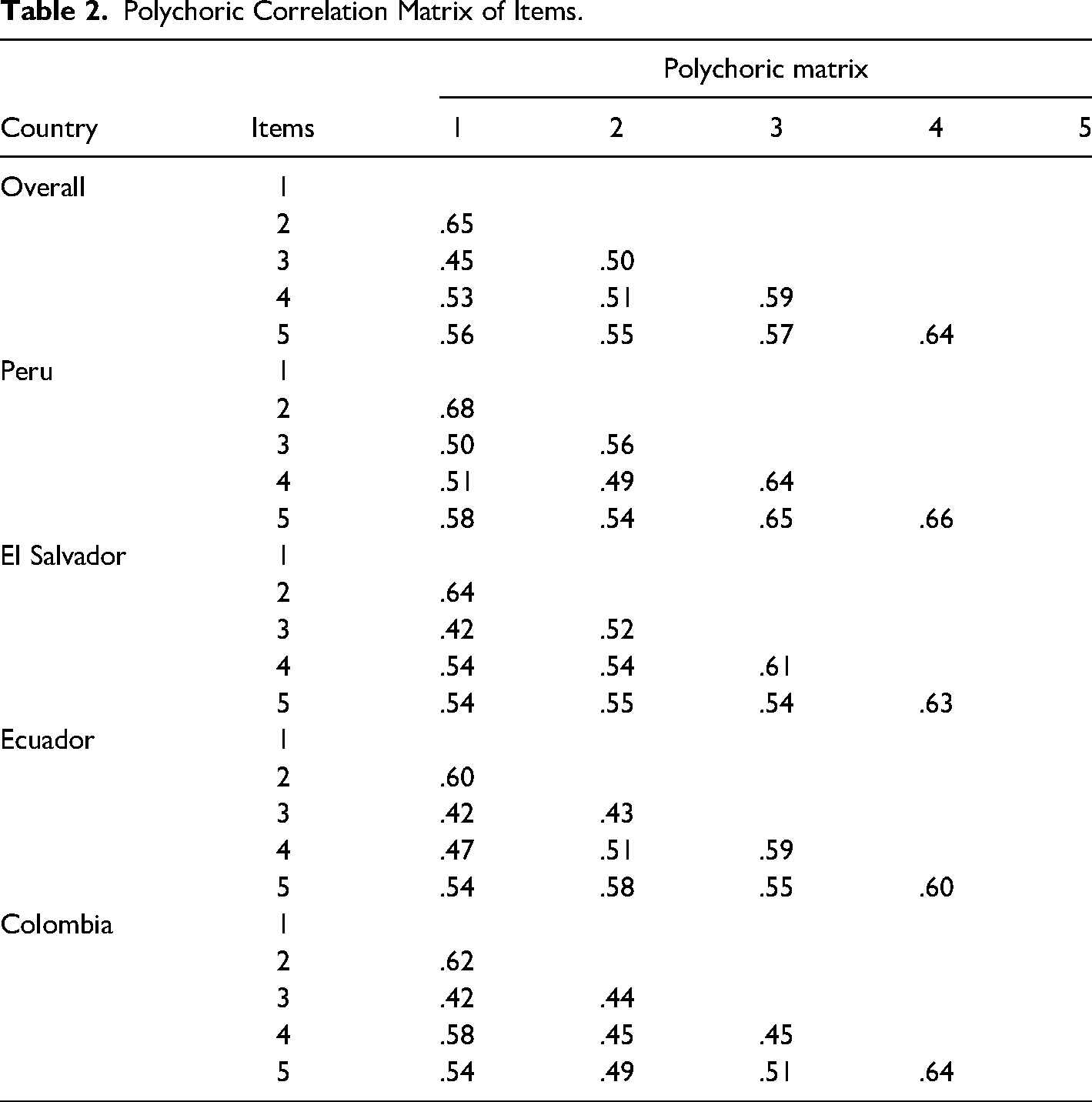
In the analysis of the descriptive statistics of the ordinal items, response frequencies were examined, showing a predominance of responses in the categories “0 days (never)” and “1 to 3 days (rarely)” (Figure 2). This trend remained consistent across all the studied countries, showing a floor effect (>15% of responses grouped at 0 days). Additionally, upon evaluating the polychoric correlation matrix, strong associations were observed between most items (e.g., items 1 and 2, items 4 and 5) as well as some moderate associations (e.g., items 1 and 3, items 2 and 3), indicating shared variability among these items (Table 2).
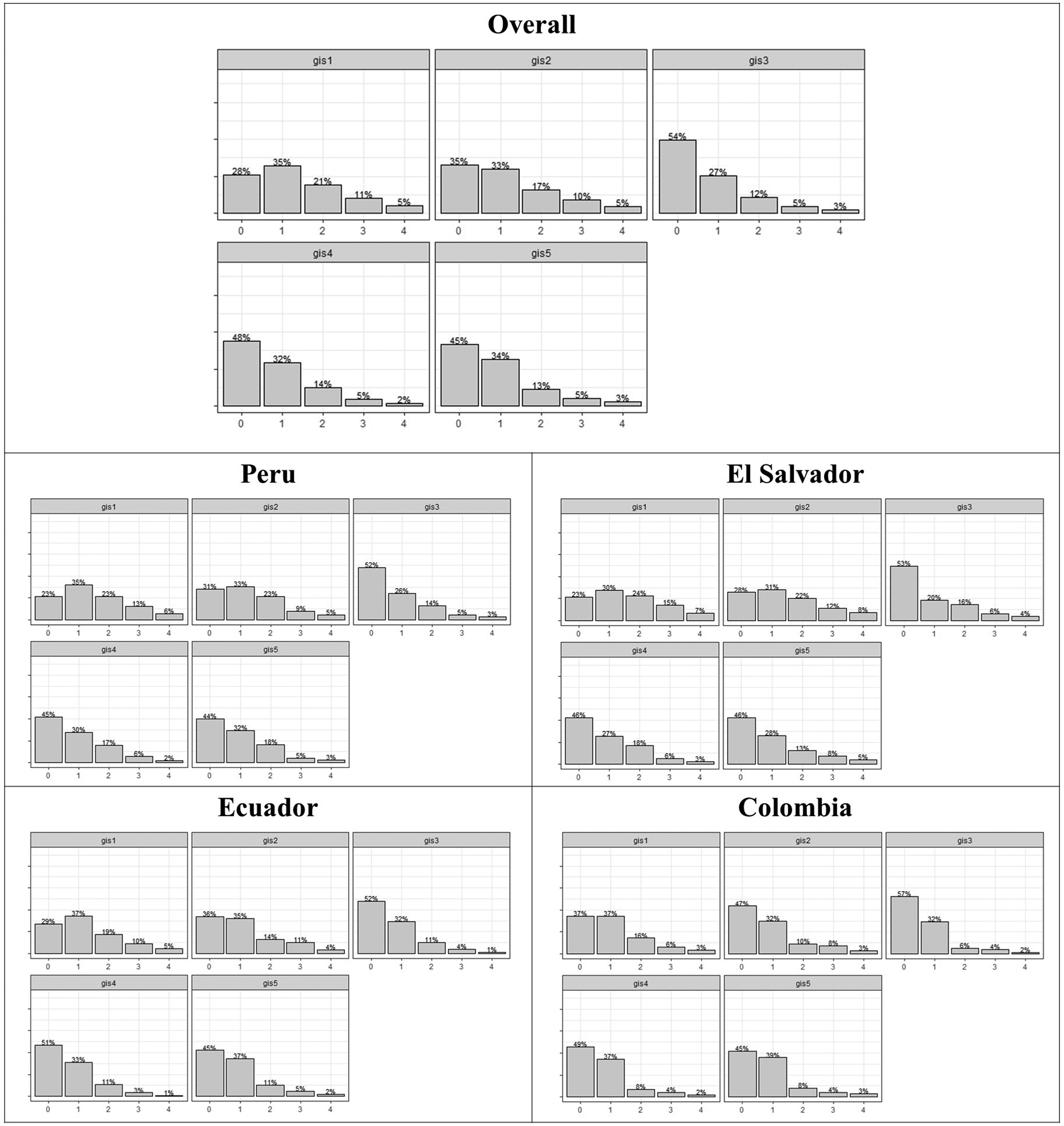
Response rates to items in the total sample and by country.
Polychoric Correlation Matrix of Items.
Factorial Model Evaluation
Table 3 presents the results of the unidimensional factorial model corresponding to GIS. This unidimensional model exhibited an acceptable fit according to most indices, although it showed an increase in error (RMSEA = .157). Upon analyzing the results by country, a similar difficulty was identified in the local models, with RMSEA values above .08. Based on this, the modification indices of the model were reviewed, suggesting a re-specification that involved correlating the errors of Items 1 and 2. Implementing this correction through error correlation yielded a more stable model in the total model fit indices (CFI = .995, TLI = .995, SRMR = .013, RMSEA = .050, CI = .032–.070). Additionally, an improvement in the fit indices of the countries was observed compared with the original unmodified model.
Evaluation of the Unidimensional Model of the GIS.
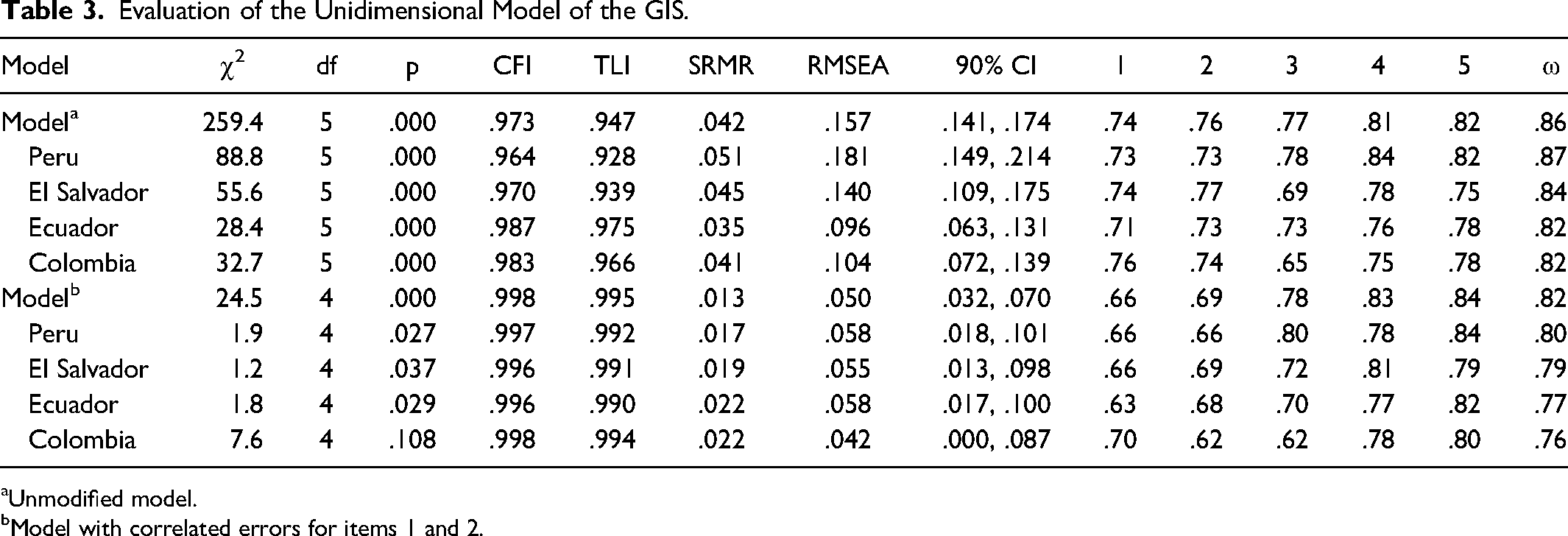
Unmodified model.
Model with correlated errors for items 1 and 2.
It is important to note that the error correlation specifically impacted the factorial load of the correlated items and omega coefficients. Despite this, all the obtained values remained within the expected ranges for factorial loads (>.50) and reliability (>.70), supporting the validity and internal consistency of the proposed model.
Multi-Group Invariance
The MG-CFA invariance analysis among the four countries (Table 4) began with an unrestricted configurational model, followed by a metric model and then a scalar model. Comparing the scalar and metric models, no significant differences were found within the expected limits (CFI and RMSEA < .01). Subsequently, the intercept of Item 1 was freed, and a partial model was obtained, which showed the same values as the non-partitioned model. This demonstrates that the differences with the metric model remained the same, leading to the conclusion that a metric model of the GIS was established that was consistent across the four analyzed countries.
Multigroup Invariance.
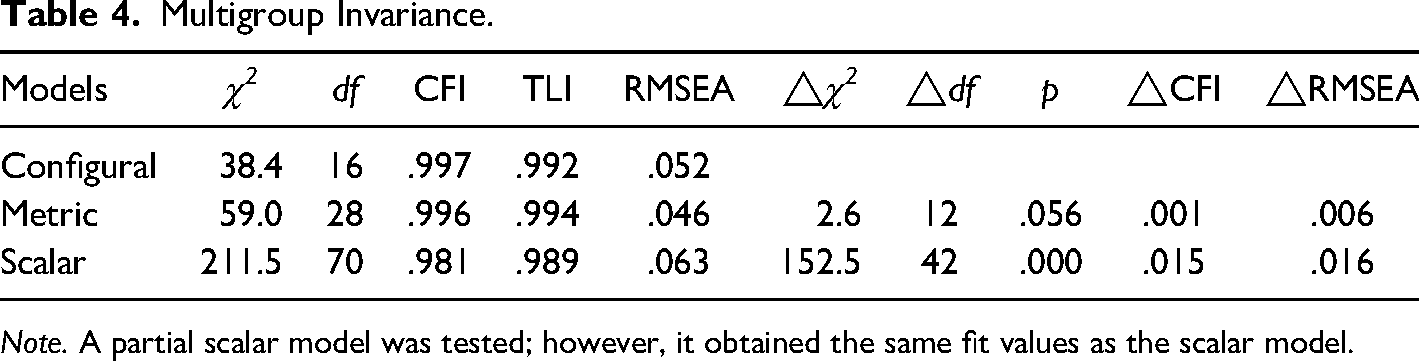
Note. A partial scalar model was tested; however, it obtained the same fit values as the scalar model.
Approximate Invariance
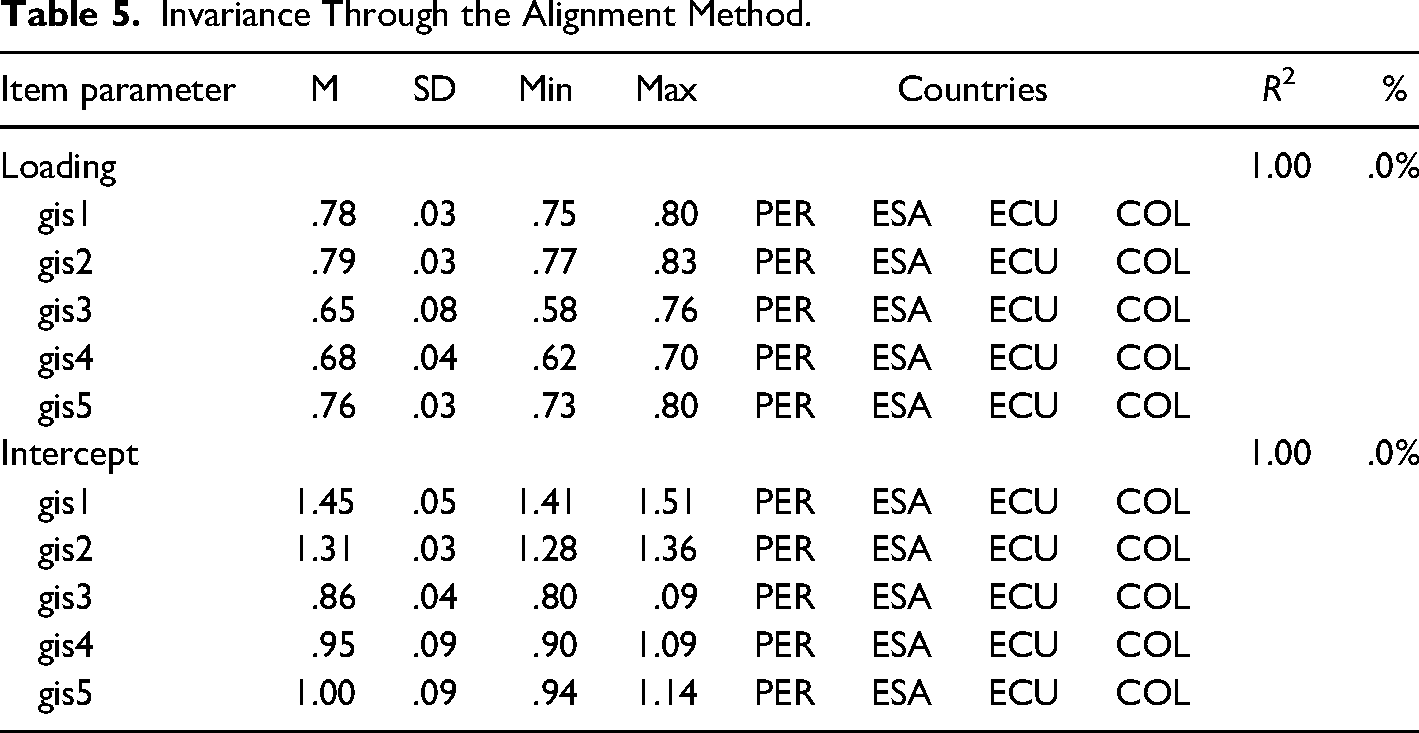
The approximate invariance of the factorial structure of the GIS scale was evaluated using the alignment method (Table 5). The results showed a total invariance in the parameters, with 0% invariant parameters (R2 = 1.00). This finding contrasts with the invariance previously analyzed in a multi-group context.
Invariance Through the Alignment Method.
Comparison of Functional Impairment Due to Grief Among Countries
The total values were calculated by summing the items in the unidimensional model. The comparative analysis revealed significant differences between countries (F[3, 1139] = 24.6, p < .001). In post-hoc analyses, significant differences were found between Peru (M = 5.83) and Ecuador (M = 4.35, d = .37), as well as between Peru and Colombia (M = 3.71, d = .47), El Salvador (M = 5.37), Ecuador (d = .25), and El Salvador and Colombia (d = .36). The effect sizes were small, although it is important to note that the difference between Peru and Colombia was moderate. However, no significant differences were detected between El Salvador and Peru (p > .05, d = .11), or between Ecuador and Colombia (p > .05, d = .12). Additionally, Figure 3 shows that Peru had the highest average, whereas the other countries had the lowest average. This result led to the evaluation of the percentage of cases at risk of clinically relevant functional impairment due to grief, using nine as a cutoff point to distinguish cases with and without functional impairment (Figure 4). It was observed that in Peru, there was a higher percentage of cases (6.2%) than in other countries as well as a smaller proportion (18.8%) of cases without functional impairment.
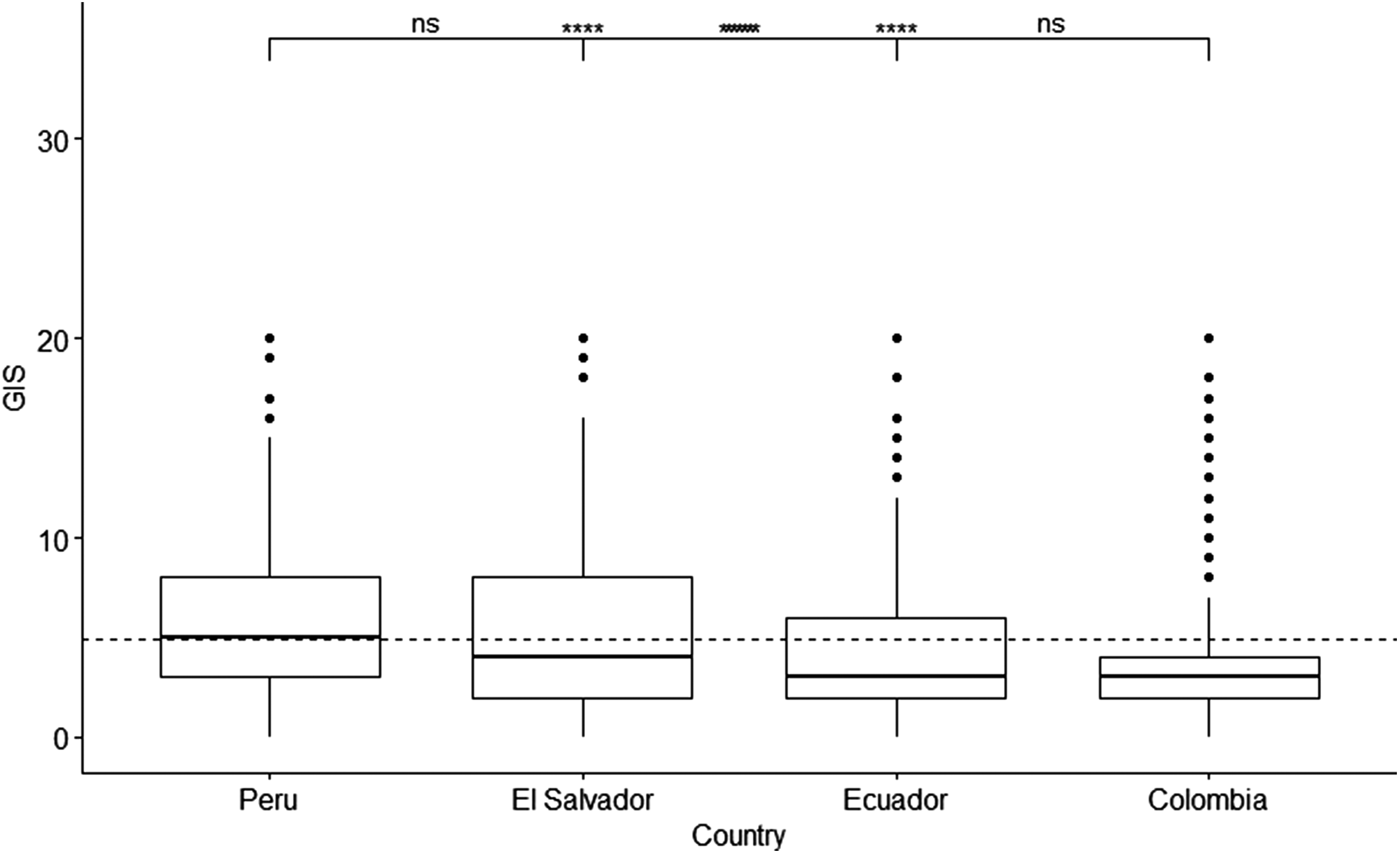
Comparison of GIS means between countries.
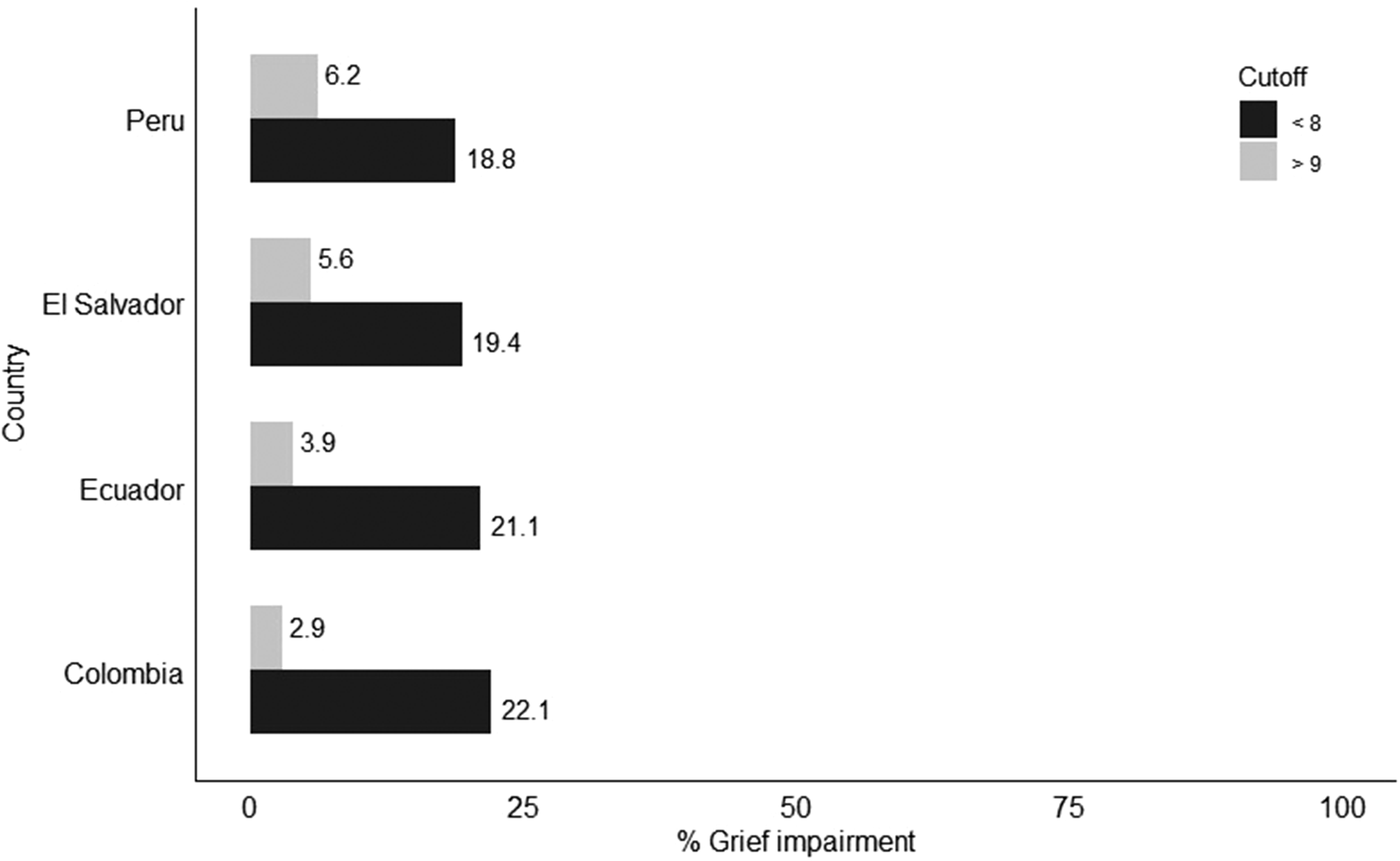
Percentage of cases reporting functional impairment among countries.
Discussion
The use of self-report measures is common practice in studies on grief due to the death of a loved one and its consequences (Sealey et al., 2023). The simplicity and low cost of these measures make them widely used, especially in low- and middle-income countries with limited access to sophisticated naturalistic and simulation techniques (Castro Ramírez et al., 2024). However, self-report measures often exhibit response bias and a potential lack of equivalence across culturally diverse populations (Özkan et al., 2006). This lack of equivalence could affect the validity of self-report measures in generating shared results among different countries. In this context, the present study evaluated the measurement invariance of GIS across four Latin American countries using two different methods (MG-CFA and Alignment). Overall, the findings indicate that the unidimensional structure of the GIS is invariant among individuals from the four Latin American countries. Additionally, significant differences in functional impairment due to grief were observed among the countries, with Peru reporting the highest average score on the GIS and the largest percentage of cases at risk of clinically relevant functional impairment due to grief compared with other countries.
Before evaluating measurement invariance, the hypothetical unidimensional model of the GIS was tested and confirmed, as established in previous studies (Caycho-Rodríguez, Lee et al., 2023; Lee & Neimeyer, 2023; Yousefi & Jafari, 2023). The results of the confirmatory factor analysis indicated that the unidimensional model proposed by Lee and Neimeyer (2023) was appropriate for each participating country. This is consistent with the original study (Lee & Neimeyer, 2023), Spanish (Caycho-Rodríguez, Lee et al., 2023), and Persian (Yousefi & Jafari, 2023) versions of the GIS. However, it is important to mention that initially, the unidimensional model (original model without modifications) showed RMSEA values above .08 in all countries. While this is expected in models with few degrees of freedom (Kenny et al., 2015; Taasoobshirazi & Wang, 2016), another model was tested that presented a correlation between the errors of items 1 and 2. This model, with correlated errors of items 1 and 2, which measure problems caused by grief in the functioning of cognitive processes and health, allowed for a model with better fit indices and factor loadings. The model with correlated errors of items 1 and 2 showed adequate reliability through internal consistency in all countries. Therefore, it can be argued that GIS provides reliable scores for each country included in this study. This model, with correlated errors of items 1 and 2, was used as the base model for further analysis. This result was also found in a psychometric study of the Spanish version of the GIS (Caycho-Rodríguez, Lee et al., 2023). The presence of correlated errors in factorial models appears to suggest similarity in task demands, measurement errors, response style to items, and proximity to item content (Dominguez-Lara, 2019). Therefore, establishing a correlation between the errors of Items 1 and 2 is conceptually acceptable because cognitive and physical health problems are related to adjustment issues following the death of a loved one (Eisma et al., 2015; Stroebe et al., 2007). The presence of a correlation between errors will avoid inadequate specification of the structure and loss of information (Brown, 2015). This result was not observed in the original study (Lee & Neimeyer, 2023) or in the Persian version of the GIS (Yousefi & Jafari, 2023), suggesting that some characteristics of how the death of a loved one is experienced in Latin America may affect cognitive and physical functioning. It has been previously mentioned that experiencing pain and grief due to the death of a loved one in Latin America, a region characterized by inequality, poverty, and a high number of chronic diseases, could negatively impact acceptance of the loss of loved ones (Caycho-Rodríguez, Valencia et al., 2023).
The measurement invariance of GIS was evaluated for the first time in a group of countries. First, the MG-CFA method was used to test for invariance across the four countries. The results indicated that the GIS demonstrated configural and metric invariance but not scalar invariance. Demonstrating evidence of configural invariance indicated that the factorial structure of GIS was consistent across the four Latin American samples. The finding of metric invariance provided further evidence to support the construct validity of the GIS as the item factor loadings were similar in the samples from the four countries. In this sense, the GIS consistently measured the same underlying construct of functional impairment due to grief across all countries in the study. However, the presence of scalar invariance was not demonstrated, which indicates that latent variables cannot be meaningfully compared between the groups of countries examined (Chen, 2008). A partial scalar invariance model was tested, but it showed the same values as the non-partitioned model, indicating that the differences with the metric model remained the same. Achieving total invariance is often challenging (Leitgöb et al., 2023). Therefore, it has been suggested that latent means can be compared under models of partial invariance or scalar equivalence, as non-equivalent items should not deeply impact the comparison of latent means (Byrne et al., 1989; Schmitt & Ali, 2015).
Additionally, alignment optimization analysis (Asparouhov & Muthén, 2014) was conducted, which allowed for approximate invariance instead of exact invariance (Magraw-Mickelson et al., 2020). The alignment optimization method allows for a degree of non-invariance among groups, where less than 20% of the non-invariant parameters are acceptable (Asparouhov & Muthén, 2014). In this study, the degree of non-equivalence among the parameters was 0% for factor loadings and intercepts, allowing for approximate measurement invariance among the samples of the evaluated countries. The alignment method allows the comparison of factor means without satisfying the exact scalar invariance, which is a very strict, unrealistic, and unsustainable outcome (Marsh et al., 2018). Moreover, this finding demonstrates that the scalar non-invariance identified using the MG-CFA method is an expected result of cross-cultural measurement tests (Rasmussen et al., 2015). This study was the first to employ the alignment method to evaluate the measurement invariance of a scale related to grief due to the death of a loved one and its consequences. This is a relatively novel statistical method for evaluating joint invariance in a relatively large number of groups, in this case, in four countries with different cultural, social, and health characteristics. The alignment method allows for greater flexibility than the traditional MG-CFA method. This is because the alignment method reduces the restrictions of iterative tests of metric and scalar invariance by applying a configural model that automatically identifies the best solution based on the minimum degree of non-invariance in all the important measurement parameters (Asparouhov & Muthén, 2014).
Having evidence of GIS measurement invariance allowed for unbiased comparisons, as possible differences between the average GIS scores would reflect true differences in functional impairment due to grief. Comparative analysis revealed significant differences between countries. This could be expected because the cultural differences between countries may impact emotional experiences and the management of grief due to the loss of a loved one (Jakoby, 2012; Silverman et al., 2021). As Latin America is a region with various stressors such as inequality, impoverished contexts, and a high presence of chronic diseases (Pablos-Méndez et al., 2020), differences in the experience of grief due to the death of a loved one are expected (Caycho-Rodríguez, Valencia et al., 2023). The results indicated that Peru reported the highest average score on the GIS and had the highest percentage of cases at risk of clinically relevant functional impairment due to grief (6.2%) compared with other countries. The percentage of people at risk of clinically relevant functional impairment due to grief may be related to the limitations of the national systems in addressing mental health problems. In Peru, despite the high susceptibility to mental health issues, the focus is on caring for people with physical illnesses (Calla-Torres et al., 2021). Despite the consequences of mental health issues, including functional impairment due to grief, people experiencing these problems in Peru do not have adequate access to care. It has been estimated that in Peru, between 69% and 85% of people who expressed a need for mental health care did not have access to such services due to limited financial resources and a lack of information on where to seek support (Toyama et al., 2017). This reality does not provide an appropriate space for managing grief and its consequences in various areas of life. However, since the creation of community mental health centers throughout Peru, access to care for people with mental health issues has increased from 11% to 26% (Villarreal-Zegarra et al., 2023). Nevertheless, it is important to continue the reorganization of the health system to develop better support strategies related to mental health.
This study has notable strengths worth mentioning, such as the participation of four countries from Central and South America. This provided more generalizable measurement invariance results for the GIS than those reported in previous studies conducted individually in each country. Additionally, two methods were used to test the measurement invariance, not just one. The consistent results of both methods ruled out the possibility that the potential lack of invariants is a product of the particular characteristics of a single method. Moreover, the findings of this study are part of a line of research on the scientific study of grief in different sociocultural contexts that has received much attention in recent years (Stroebe et al., 2008).
Although the study had strengths, the findings should be interpreted considering some limitations. First, the findings cannot be generalized from the samples to the populations of each country because of the sampling type and recruitment process. As the samples in each country were recruited through non-probabilistic sampling using an online survey, they cannot be considered representative of their respective populations. Therefore, future studies should conduct other probabilistic sampling procedures. Second, while the data provided a look at the perception of functional impairment due to grief in a set of different countries, the study was underrepresented by only one Central American and three South American countries. Data from more Latin American countries are required in the future. Third, the presence of common method bias is possible because the data were self-reported. Fourth, evidence of floor effects was observed, suggesting that the GIS response scale may not be sufficiently detailed to differentiate between low levels of functional impairment due to grief. Fifth, the countries that participated in the study varied significantly in terms of sample size. It has been suggested that sample size differences could affect the results of measurement invariance tests (Rutkowski & Svetina, 2017). However, it is important to remember that the data-matching technique used allows for adequate data balancing. Sixth, this study focused on the factorial structure and measurement invariance of the GIS and did not include other measures of functional impairment such as the IFI or the WSAS, which would have provided information on evidence of convergent validity, sensitivity, and specificity of the GIS. In addition, other forms of psychometric tests, such as sensitivity to change and test-retest reliability, have not been evaluated.
Conclusion and Implications
Despite these limitations, the study provided preliminary evidence that the unidimensional structure of the GIS is invariant among individuals from four Latin American countries. Thus, this study contributes to the literature by providing a brief and validated measure that can accurately assess functional impairment due to grief in four Latin American countries (Peru, El Salvador, Ecuador, and Colombia). These findings have several implications. First, for Peru and El Salvador, countries where the GIS has already been tested (Caycho-Rodríguez, Lee et al., 2023; Caycho-Rodríguez, Travezaño-Cabrebra et al., 2024), the current results corroborate previous findings, provide new evidence of validity, and increase confidence in the GIS as a valid and reliable measure for assessing functional impairment due to grief. For other countries where the unidimensional model of the GIS was confirmed (Ecuador and Colombia), it also provides international researchers with a valid and reliable measure. This is important because studies on the consequences of grief need validated measures specific to each country. Additionally, obtaining evidence of measurement invariance between countries is important when making comparisons. This finding is one of the main contributions to researchers and health professionals. That is, the results suggest that the use of GIS in different countries does not generate evaluation biases, which would help more accurately assess the impact of grief on daily functioning in each country and determine the role of cultural factors in functional impairment. Moreover, the fact that the unidimensional structure of GIS is maintained in all countries suggests that the unidimensional theoretical model proposed by Lee and Neimeyer (2023) adequately describes the subjective experience that individuals have of their functional impairment due to grief in four Latin American countries. In this way, researchers in the four countries have a more contextualized perspective to study and understand the functional impairment that individuals in mourning in their countries face, and on the other hand, health professionals can design interventions for functional impairment due to grief being more aware of the symptoms to consider. Owing to the consequences of grief in the current post-pandemic period, it is important for researchers and health professionals to have tools to monitor the consequences of grief on the daily functioning of individuals. While this study suggests that the GIS is a culture-free measure that can be used in large-scale epidemiological surveys applied to populations that have experienced the death of a loved one, to understand functional impairment due to grief, more studies are needed to provide more information on other psychometric properties of the GIS in a larger number of Latin American countries.
Footnotes
Author Contributions
TC-R, ShAL, and DEY-L provided the initial conception, organization, and main writing of the text. DEY-L, JV-L, and LWV analyzed the data and prepared all figures and tables. JB-Ch, PDV, CC-L, AT-C, JT, IB, MEL-R, MR-B, ARS-V, NO-K, RM-H, and DXP-C were involved in data collection and acted as consultants and contributors to research design, data analysis, and text writing. The first draft of the manuscript was written by TC-R TC-R, ShAL, and DEY-L, and all authors commented on the previous versions of the manuscript. All authors read and approved the final manuscript.
Author's Note
Lindsey W. Vilca is also affiliated at Universidad Señor de Sipán, Chiclayo, Peru.
Data Availability
The data presented in this study are available on request from the corresponding author.
Declaration of Conflicting Interests
The authors declared no potential conflicts of interest with respect to the research, authorship, and/or publication of this article.
Ethical Approval
This study analyzed a subset of data collected as part of a larger project titled “Measuring Functional Impairment Due to Grief in Latin America” which was approved by the Chair of Medical Psychology at the Faculty of Medical Sciences of the National University of Asunción under Resolution No. 0708 00 2022 of the Board of Directors of the Faculty of Medical Sciences of the National University of Asunción, Article 2, which refers to the ethical approval process for non-experimental studies (approval code: 002_008_2023).
Funding
The authors received no financial support for the research, authorship, and/or publication of this article.
Informed Consent
Informed consent was provided by all participants.
