







Abstract
Objective
Taking advantage of the broad coverage of Wireless Application Protocol (WAP), we developed a Content Management System (CMS)-programmed mobile learning application. This application can help the undergraduate to obtain a comprehensive understanding of concepts in Cleft lip and palate Phenotype, and Embryonic development (CPE). The present study aims to evaluate the feasibility and efficacy of the concept acquisition teaching model on the basis of WAP in a practical undergraduate course of CPE.
Design
The concept acquisition teaching model based on WAP was programmed by CMS, covering definitions of various cleft lip and palate, the mechanisms underlying the phenotypes, practical medical cases, as well as corresponding tests after learning.
Setting
The CPE concept acquisition teaching model was distributed to a total of 524 undergraduate students and 46 tutors participated in CPE teaching from seven highly ranked schools of stomatology in China since April 2022.
Participants
524 undergraduate students and 46 tutors from seven highly ranked schools of stomatology in China.
Interventions
The CPE concept acquisition teaching model.
Main outcome measures
The effectiveness of the CPE teaching model.
Results
The response rate to the survey was 100%. The grading of the questionnaires indicated that the students were satisfied with the usability, practicality, and outcome, whereas the tutors were more positive with the contents, cooperation, and outcome.
Conclusions
The present study demonstrated the feasibility and efficacy of the WAP-based concept acquisition teaching model of CPE and a high level of satisfaction among undergraduate students and tutors who major in Stomatology.
Keywords
Introduction
Learning medicine acquires great effort in memorizing medical concepts whose foundation relies on good apprehension of knowledge. The fulfillment of learning target is largely determined by the quality of memorization and apprehension. 1 The teaching model, the practical standard based on a certain education theory, aims to accomplish diverse learning targets for students. 2 Thus, the teaching model ought to be learning-target-centered, whereas learning targets determine any other elements of the teaching model. One of the teaching models with behavior processes through which conceptual-observational instruction influences teaching behavior is concept acquisition teaching. requiring both induction and deduction, the concept acquisition teaching model helps students with gaining new complex concepts by assembling their definitional constituents. Accordingly, the teaching model suits sophisticated situations for the medical education of undergraduate students, by illustrating intention, denotation, attribute, and differences in concepts.
The definition of cleft lip and palate phenotypes is the fundamental content that stomatology students must grasp and understand. 3 The embryonic development of congenital cleft lip and palate is relatively abstract and challenging to comprehend, and the diversity and complexity of its phenotypes are not comprehended by students.4,5 To facilitate students’ mastery and improve teaching efficiency, we therefore have designed an innovative teaching model of cleft lip and palate phenotype, and embryonic development (CPE) on the basis of the concept acquisition, in accordance with the orientation, operability, integrity, stability and flexibility of the teaching model. Intending to further eliminate the physical and time restriction, the CPE concept acquisition teaching model has been established with Content Management System (CMS) based on Wireless Application Protocol (WAP). Moreover, the enormous growth of mobile devices, smartphones in particular has greatly facilitated medical education.6,7 The easy access to the CPE concept acquisition teaching model through smartphones allows students to learn and practice anywhere at any time, acquiring the difficult basic content of cleft lip and palate through the “induction-deduction” mode of teaching. Consequently, the modification of the traditional teaching model into a WAP-based concept acquisition teaching model could benefit undergraduate medical education.
In the current study, the WAP-based concept acquisition teaching model for undergraduate education was evaluated by undergraduate students and tutors from seven highly ranked stomatology schools in China, aiming to demonstrate its feasibility and efficacy in CPE learning.
Materials and Methods
the Classification and Definition of Cleft lip and Palate Phenotypes
The classification and definition for cleft lip and palate phenotypes are sophisticated, in accordance with the national college planning textbook “Oral and Maxillofacial Surgery (8th Edition)” in China and related literature, 8 the most commonly used clinical classification phenotypes are employed in the teaching content of CPE. The most commonly used classification of cleft lip and palate included unilateral, bilateral, complete, and incomplete. Moreover, in the current study, we took advantage of unilateral incomplete cleft lip, unilateral complete cleft lip, bilateral incomplete cleft lip and bilateral complete cleft lip, and bilateral mixed cleft lip. As for the cleft palate, we utilized soft palate cleft, incomplete cleft palate, unilateral complete cleft palate, and bilateral complete cleft palate. Additionally, concepts including Simonart's band cleft lip, bilateral asymmetric cleft lip, cleft palate, and submucosal cleft were supplemented. Besides, the present study was reviewed and approved by the Ethics Committee of the School (anonymized), as well as all participants were performed with written informed consent.
Design and Production of WAP-Based Concept Acquisition Teaching Model for CPE
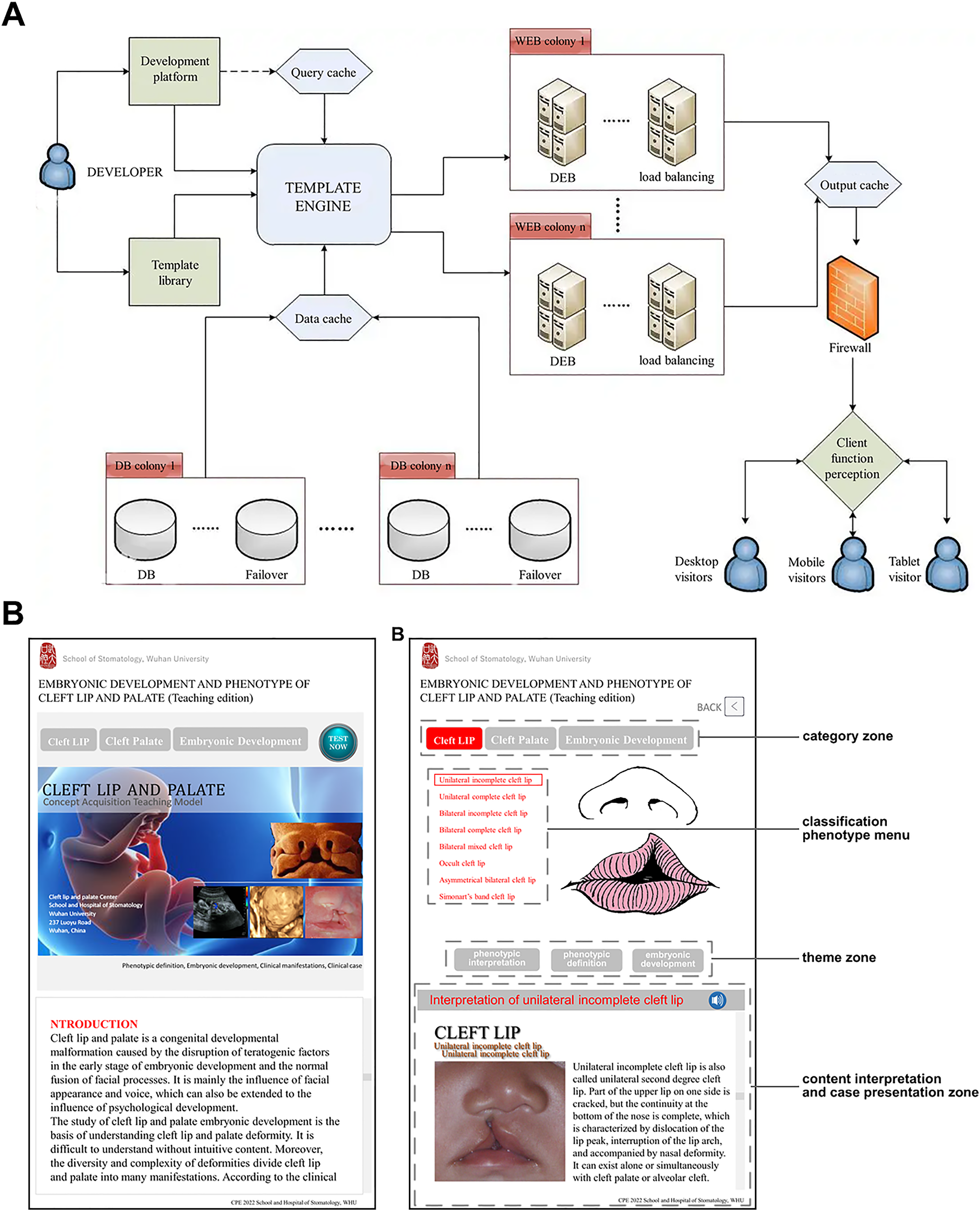
CMS is a commonly employed mobile website editing system. 9 Its functions under the framework of the website-building platform are not limited to text processing. Moreover, it can likewise process pictures, animations, audio, and even video streams (Figure 1A). The CPE teaching model is designed in accordance with the attributes of the concept acquisition teaching. On the basis of the standard textbooks of colleges and universities, the SiteServer CMS is adopted to create a teaching interface for CPE, and smartphones are employed as teaching tools and learning platforms. Besides, the teaching interface consists of a Category section, Classification and phenotype menu section, Subject section, Content interpretation, and medical record display Section (Figure 1B).
Participants
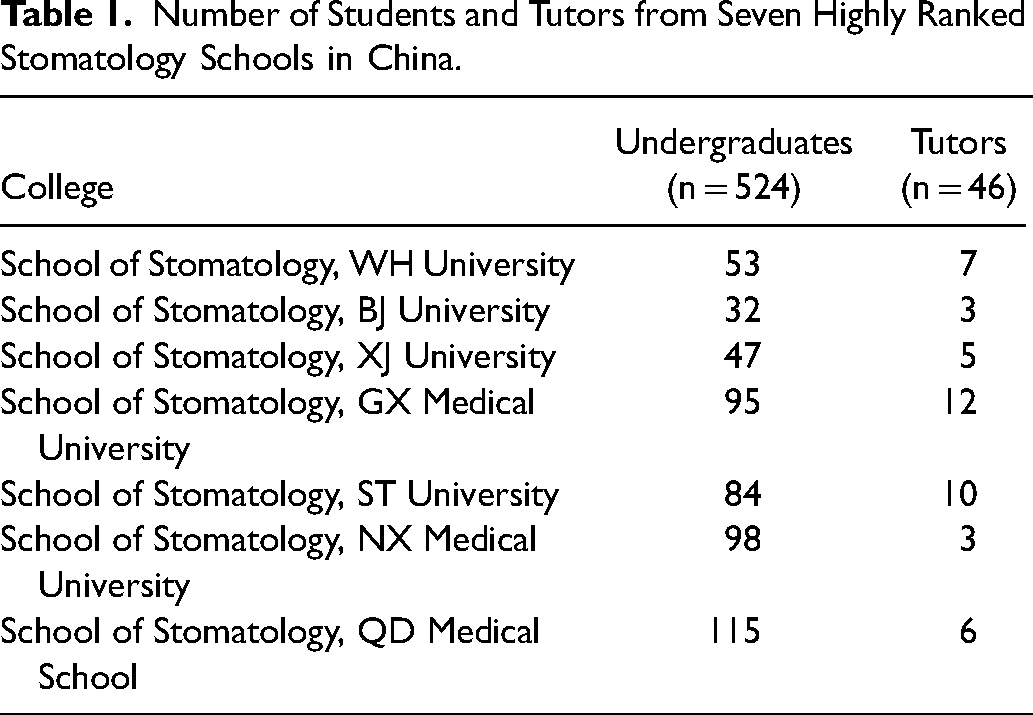
In the current study, the CPE concept acquisition teaching model was distributed to a total of 524 undergraduate students who are in the 4th/5th year of their undergraduate studies) and 46 tutors (professors or associate professors with multiple years of experience in teaching and practicing) from seven highly ranked schools of stomatology in China since April 2022 (Table 1). All the tutors have been pre-trained and studied the contents of CPE model before practical teaching. By scanning the QR code provided by the School of Stomatology, the application could be accessed online. All the tutors received professional training on the usage of the CPE concept acquisition teaching model online before practical teaching. All the students accessed to the CPE model under the guidance of the tutors. The time-lapse for CPE learning is two months. It should be emphasized that completing the survey was not mandatory for the undergraduate training. However, as studying with the CPE model was part of their learning course and their performances would be evaluated. The students were highly motivated to complete the survey as they would receive a certificate that acknowledges their contribution to the project. This certificate would be a valuable addition to their resumes and would benefit them when they apply for jobs in the future.
Number of Students and Tutors from Seven Highly Ranked Stomatology Schools in China.
Design of Questionnaire
Considering the attributes of the CPE concept acquisition teaching model, a survey questionnaire was designed using Wenjuan.com (Copyringht@2013-2022, version 2.6.7) The practical value of the CPE concept acquisition teaching model was assessed according to grading scores from questionnaires. There were two versions of the questionnaires. One was for teaching assessment, in which ten questions were given to respectively evaluate the content, method, compliance, outcome, and practicality of the model (Supplemental Table S1). Whereas the other was for assessing students, in which a total of ten questions were provided to test the content, method, usability, outcome, and practicality of the model (Supplemental Table S2). For each questionaire, a blank for open-ended feedback was included. And the evaluation scale ranged from one to ten (<five, poor; five-six, fair; seven-eight, good; >eight, excellent).
the Procedure of Teaching Practice and Assessment
The current study was conducted with undergraduate students and tutors in seven highly ranked stomatology schools. All the participants accessed the CPE concept acquisition teaching model with their own smartphones by scanning the QR code. After two months of learning, the participants filled out the CPE teaching practice evaluation questionnaire according to the learning experience and submit it online individually. And the teaching model was evaluated as a teaching tool and a learning tool by students and tutors, correspondingly.
Educational practice process: 1) The guidance of the CPE acquisition teaching model for a tutor; 2) CPE learning method training for students by designated tutors; 3) Completing learning and test by students; 4) Filling in the assessment questionnaire; 5) Online collection and analysis of questionnaire data by the School of Stomatology.
Statistical Analysis
Statistical analyses were performed using Prism 7.0 and all data are presented as the mean ± SD or the frequencies with percentages. The Shapiro-Wilk normality test was employed to determine a Gaussian distribution for the values. Substantial variations between the two groups were evaluated with Student's t-test for data that were normally distributed or with the Mann-Whitney test for non-normally distributed data. Two-way anova analyses were conducted for comparison within multiple groups. The correlations were determined by the r coefficient of Pearson. A two-tailed value of P < 0.05 was considered statistically significant.
Results
the WAP-Based CPE Concept Acquisition Teaching Model
The phenotypes of congenital cleft lip and palate were divided into two categories: cleft lip and cleft palate. In accordance with phenotype definition and embryonic development, knowledge expansion and concept fusion were carried out on its basis. The WAP-based software included several predominant sections including clinical manifestations of malformations, phenotypic definition, embryonic development, case report, voice interpretation, and self-test (Figure 2).
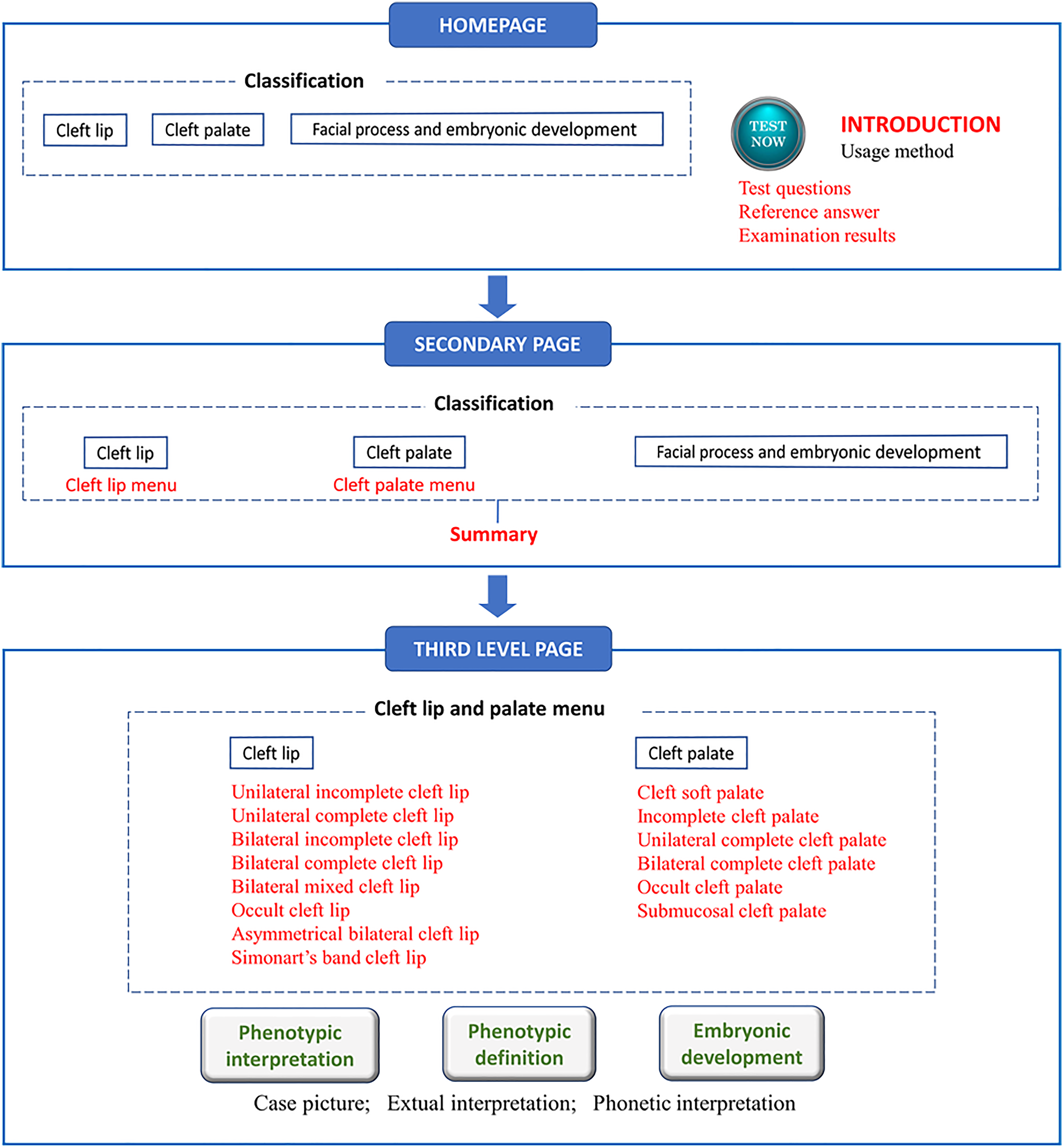
The structure of the WAP-based CPE concept acquisition teaching model. The blue boxes show the Three orderly stages of the CPE.
The CPE teaching model is free to sign up. By scanning the code provided, students could log in CPE teaching model with their smartphones. After logging in, the
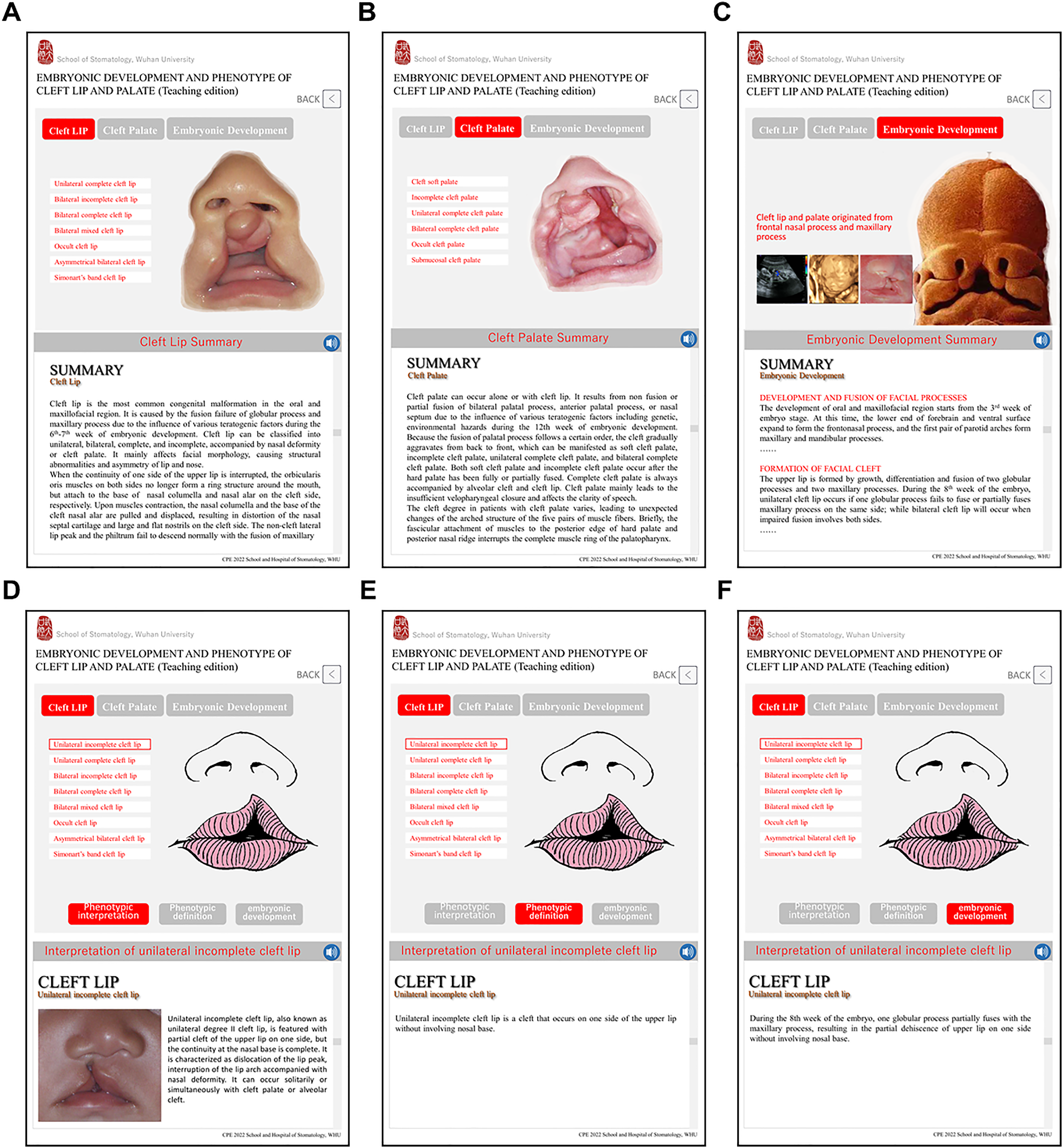
After choosing one phenotype button, students could click the
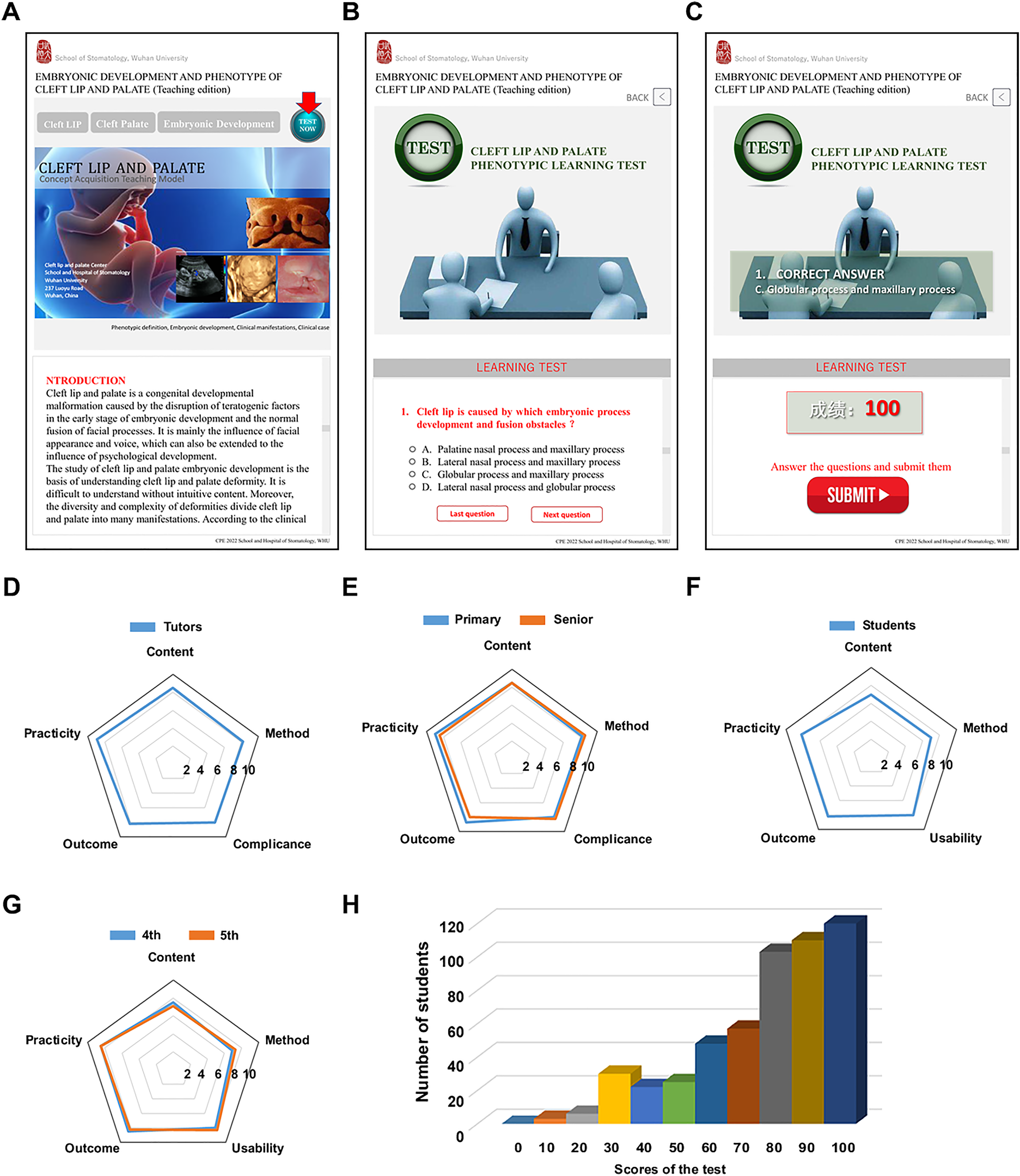
Eventually, students could accept the self-test by clicking the TEST button on the homepage (Figure 4A to C). The correction hints would be attached to each wrongly-answered quiz for the purpose of achieving repeated learning and memory strengthening. And the scores in their courses were not impacted by completing the self-tests or utilizing the WAP-based CPE model. Utilization of the software during the course of study is optional and not required.
Evaluation of Feasibility and Efficacy of WAP-Based CPE Concept Acquisition Teaching Model
The evaluation of the WAP-based CPE concept acquisition teaching model was first summarized by a questionnaire survey from all tutors and students (Table 2). The response rate to the questionnaire was 100% (524/524 for students and 46/46 for tutors). The results from the questionnaire analysis indicated that most tutors and students held positive views on the application of the WAP-based CPE teaching model.
Summary of Questionnaire for Tutors and Students.
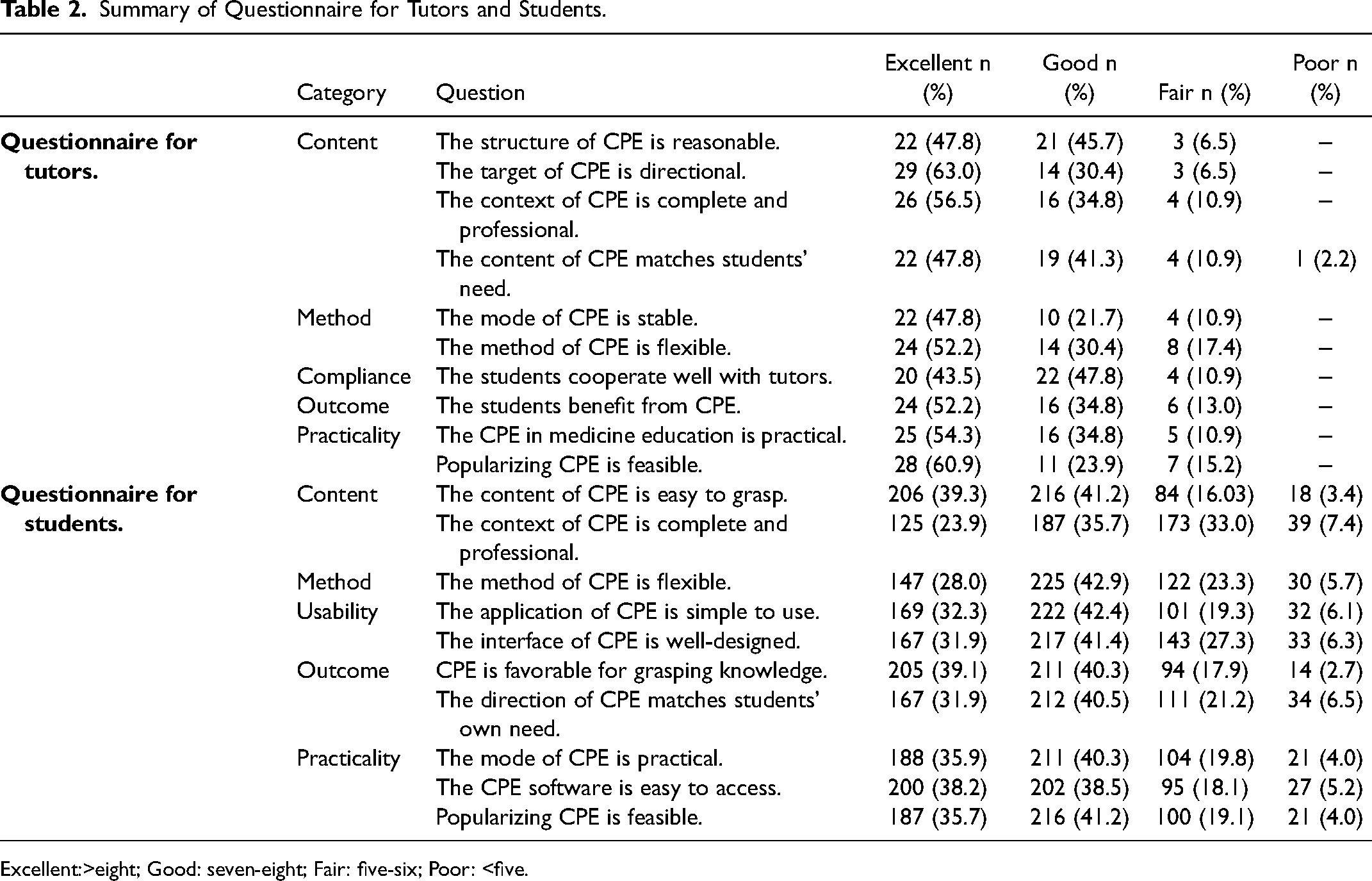
Excellent:>eight; Good: seven-eight; Fair: five-six; Poor: <five.
Approximately 90% of tutors commented positively about the content, method, compliance, outcome, as well as the practicality of the teaching model (Table 2). Additionally, all five of the abovementioned aspects were quite balanced, as the average scores given by tutors for these attributes were all higher than eight and very close. In the following, we asked whether the views of tutors with primary and senior profession title was divergent. In this regard, the scores of content, method, compliance, outcome, and practicality were compared within two groups of tutors but and yet found no significant distinctions (Figure 4D and E), indicating that the application of the CPE teaching model in practical education would not be affected by seniority.
We likewise analyzed the evaluation of the CPE teaching model from students. Compared to content and method, students were probably to give more positive comments on the usability, outcome, and practicality of CPE (Table 2). Similarly, we compared the evaluation of CPE finished by the 4th and 5th Grade undergraduates. There were no significant differences in content, method, usability, outcome, and practicality being discovered between undergraduates from the two grades (Figure 4F and G), further indicating the universality of the teaching model for undergraduates.
Apart from the analysis of subjective data collected from the questionnaire, the benefits of the CPE teaching model were studied more objectively by analyzing undergraduates’ self-test scores. As demonstrated in Figure 4H, the scores for more than 60% of undergraduates reached higher than 80, indicating the feasibility and efficacy of the WAP-based CPE teaching model.
Discussion
Cleft lip and palate occurred around one to two per 1000 births in the developed world. 10 Consequently, it was one of the most common congenital facial deformities. Despite the high incidence and distinct manifestation, the classification of cleft lip and palate was still complicated and a consensus had not been reached yet.3,11 The most commonly employed classification included unilateral, bilateral, complete, and incomplete symptons. 12 In the present study, we additionally covered bilateral mixed cleft lip as well as other concepts including Simonart's band cleft lip, bilateral asymmetric cleft lip, cleft palate and submucosal cleft, expecting to thoroughly clarify the knowledge points to students who had utilized the introduced instructional model. 13 It was presumed that cleft lip and palate were polygenic and multifactorial in origin with numerous genetic and environmental factors contributing, and hence the cause of it was not precisely determined. 14 Embryonically, cleft lip and palate resulted from the failure of the facial processes to grow or fuse appropriately during early development. 15 Both definition of cleft lip and palate and the embryonic development of the disease were key knowledge in undergraduate medical education and tough learning points for students. Accordingly, to fully understand cleft lip and palate as well as the embryonic development, tutors and students conventionally spent considerable time and effort on it in class.
In stomatology education, although textbooks were still central to teaching, but in the information age, we acquired knowledge in a much richer form. 16 Moreover, the traditional teaching method was featured with low student participation, single teaching content, limited access to knowledge and etc. 17 To strengthen the effectiveness of teaching and learning, we have designed and developed a concept acquisition teaching model for undergraduate CPE education. Though the concept of acquisition was first introduced in as early as the 1980s, it brought conceptual-observational instruction for the purpose that teaching behavior could be influenced with by evolution. 18 By assisting students with gaining new complex concepts of assembling definitional constituents, the teaching model specially matched the sophisticated situations for CPE education of undergrad students in which the quality of memorization and apprehension were immensely significant. By illustrating intention, denotation, attribute, and differences of concepts, we proposed that the application of the CPE concept acquisition teaching model would benefit tutors in teaching and students in learning. Accordingly, we innovatively broke through the traditional teaching mode of stomatology into a WAP-based application, so it could be easily distributed and freely accessed.
In the course of studying with concept acquisition of CPE, the majority of the respondents reported that the design of the WAP-based teaching model was ingenious and reasonable, assisting teaching well, and was willing to use it in the future (When we designed the questionnaire, we included an area to fill in “other comments” to collect open-ended feedback). Tutors could use the WAP-based concept acquisition teaching model to for the purpose of enhancing students’ understanding of sophisticated CPE systems. With the teaching model, the degree of participation was significantly promoted, which was conducive to the ecological construction of CPE education. Functions including courseware review, self-test, and other functions were likewise conducive to students’ knowledge mastery. And there was a larger distribution in the student questionnaire ranking compared to the tutors in Table 2. Due to the fact that students are fundamentally different from tutors (students have not yet fully studied cleft lip and palate surgery and the related developmental biology and genetics, while tutors have a thorough understanding of this knowledge). Consequently, on the condition that answering the question “the context of CPE is complete and professional”, students presume the content contained is not comprehensive enough, while tutors think it is comprehensive. Future studies will continue to investigate and monitor the students’ use of this software. The software has some limitations and we hope to enhance it in the future. First, parts of the content can be presented in the form of dynamic pictures, especially those in relation to embryonic development. Students can comprehend the temporal and spatial specificity of embryonic development through the use of dynamic images. Second, we hope to set up a more comprehensive examination database and present the questions randomly in the test section, which will more accurately reflect students’ comprehension of relevant knowledge. Third, each cleft lip and palate phenotype can be combined with the corresponding surgical protocol, facilitating students’ perceptual comprehension of the transitional learning from theory to clinical. The studies also have some limitations. Firstly, the study participants were all undergraduate students. This means that the study sample may not be representative of the broader population, which could limit the generalizability of our models. Secondly, as with any survey-based study, there is the potential for response bias, where participants may not respond objectively considering potential interests. Lastly, the study design itself may have limitations, such as the potential for confounding variables that were not accounted for in the survey questions.
Conclusion
The present study demonstrated the feasibility and efficacy of the WAP-based concept acquisition teaching model of CPE. The WAP-based mode not only eliminated physical limitations but also provided a resource-rich platform that could be accessed freely without a limit of time. Both tutors and students benefited from the application of the CPE concept acquisition teaching mode. And the universality of the WAP-based concept acquisition teaching model ensured that it not only performed well in teaching and learning CPE but also could be popularized in the education of another medical field. With the advent of the “Internet + ” era, medical education faced new opportunities and challenges. On the basis of the results of this study, it was recommended that the WAP-based concept acquisition teaching model of CPE enriched teaching implies working on improving teaching effectiveness.
Supplemental Material
sj-docx-1-cpc-10.1177_10556656231174433 - Supplemental material for A WAP-Based Concept Acquisition Teaching Model in Cleft Lip and Palate Phenotype and Embryonic Development: Functionality and Usability Study
Supplemental material, sj-docx-1-cpc-10.1177_10556656231174433 for A WAP-Based Concept Acquisition Teaching Model in Cleft Lip and Palate Phenotype and Embryonic Development: Functionality and Usability Study by Jiegang Yang, Jian Li, Chuanqi Qin and Xiazhou Fu in The Cleft Palate Craniofacial Journal
Footnotes
Acknowledgments
The authors would like to thank the tutors and students for participation in this study. We would like to express our gratitude to Hong-Ping Zhu at School and Hospital of Stomatology, Beijing University, Zhan-Ping Ren at School and Hospital of Stomatology, Xi’an Jiaotong University, Hai Kuang at School and Hospital of Stomatology, Guangxi Medical University, Shi-Jie Tang at School and Hospital of Stomatology, Xiamen University, Yong-Qing Huang at School and Hospital of Stomatology, Ningxia Medical University and Jian Sun at School and Hospital of Stomatology, Qingdao University for valuable contributions.
Data Availability Statement
All data that support the findings of this study are present in the manuscript and in the supplemental materials.
Declaration of Conflicting Interests
The author(s) declared no potential conflicts of interest with respect to the research, authorship, and/or publication of this article.
Funding
This work was supported by the National Natural Science Foundation of China (No. 81900987, No. 82100415).

Supplemental Material
Supplemental material for this article is available online.
References
Supplementary Material
Please find the following supplemental material available below.
For Open Access articles published under a Creative Commons License, all supplemental material carries the same license as the article it is associated with.
For non-Open Access articles published, all supplemental material carries a non-exclusive license, and permission requests for re-use of supplemental material or any part of supplemental material shall be sent directly to the copyright owner as specified in the copyright notice associated with the article.
