







Abstract
Musculoskeletal (MSK) injuries are the most common and debilitating work-related injuries among healthcare providers. These injuries often occur due to a lack of awareness and insufficient guidance during the early years of medical training. Recognizing the need to address this issue, the Comprehensive Cleft Care Workshop (CCCW) has taken steps to integrate an ergonomics session into its curriculum. The goal of this initiative is to enhance awareness on ergonomics, improve the integration of ergonomics into daily routine, and ultimately reduce the occurrence of MSK injuries among healthcare professionals.
Introduction
Delivering excellent cleft care is known to require long hours of strenuous work by physicians and therapists in clinic, surgeons in the Operating Room (OR), and nurses on hospital wards. This can impart a substantial toll on social, mental, and most importantly physical health. According to Hayes et al., musculoskeletal (MSK) disorders are the leading cause of work-related illnesses in the United States. 1 A cohort published in 2017 by Oranye et al. showed that 74.6% of healthcare MSK work-related injuries were idiopathic. 2 This fortifies the idea that healthcare workers evidently have improper awareness of adequate physical care which can eventually lead to a plethora of unintended disabilities. Surgeons are often required to work long hours under high levels of stress, which can have a negative impact on their overall well-being.3–10 A comprehensive meta-analysis of more than 5000 surveyed surgeons, showed that generalized pain was reported in 68%, numbness in 37%, stiffness in 45%, and fatigue in 71% of respondents. 11 Consequently, it was well documented that even though surgeons reported those signs and symptoms, they were reluctant to admit to their idiopathic injuries and they were less likely to seek medical attention. 11 The economic burden of work-related non-fatal injuries was as large as the cost of cancer, constituting $180 billion for 427 000 injuries. 12
Cleft care providers seem at particular risk. A survey of cleft surgeons and orthodontists revealed that 89.8% experienced MSK discomfort, including neck pain (71.2%), shoulder pain (52.5%), lower back pain (67.8%), and headaches (62.7%), and, concerningly, that pain interfered with leisure time. 8 For dentists specifically, MSK disorders are the top cause of early retirement, accounting for 29.5% of cases, 13 surpassing even cardiovascular diseases. Likewise, 87% of surgeons report significant pain while operating. Thirty-one percent sought surgical treatment for their work-related MSK discomfort, 27% required sick leave, and 9.2% terminated their operating career prematurely. 14
Ergonomics, from the Greek Ergon (work or labor) & nomos (natural laws) focuses on optimizing MSK anatomy and physiology. 15 The American College of Surgeons has called for action to help reduce surgeon burnout and potential surgeon shortages through implementation of ergonomics and strength training. 16 Three core tenets have been proposed: less time in back-breaking surgical positions, adopting a better posture while operating, and implementing exercises and stretching routines. However, little guidance for how to achieve these goals has been proposed. Here, we describe the rationale for and development of an ergonomics module for cleft providers, and report on the implementation of an ergonomics module in the context of a comprehensive cleft care workshop.
Methods
The Comprehensive Cleft Care Workshop (CCCW) is an annual three-and-a-half-day interdisciplinary workshop designed to teach contemporary, evidence-based knowledge and technical skills to learners globally. It has been conducted for five years, and includes didactic lectures, specialized breakout sessions, practical hands-on labs, and discussions.
A task force consisting of multidisciplinary cleft care providers (surgery, dentistry, speech, and psychology) who were among the CCCW faculty, together reviewed evidence of maladaptive behavior in their subspecialties and interventions to discuss and practice improved ergonomics. Themes of MSK health, advanced technology used in palatoplasty, ergonomic tips for cleft procedures, and the benefits of yoga, meditation, and breathing exercises were considered most important. The Ergonomics and Musculoskeletal Wellness Workshop was designed to address the typical needs of cleft providers. The workshop's objective was to introduce the concept of ergonomics and to provide wellness guidelines for cleft providers. The project does not require Institutions Review Board (IRB) review or participant consent since it does not include any interaction or intervention with human subjects or any access to identifiable private information.
Results
The Ergonomics and Musculoskeletal Wellness Workshop was 2 hours in duration, including 1 hour of didactics and 1 hour of practical demonstration and participation in yoga, stretching, and strengthening. Fifty attendees participated. Components included:
MSK health (challenges experienced by dentists in cleft care and how it compares to challenges experienced by cleft surgeons) Advanced technology used in palatoplasty (potential benefits and challenges of heads up videoscopes, robotics, and conventional and angled prism loupes were discussed) Ergonomic tips for cleft procedures (maladaptive positions can lead to physical strain and discomfort, intra-operative micro-breaks) Yoga, meditation, and breathing and how it can positively impact daily life Ergonomics and MSK wellness for cleft providers (a holistic approach on how to enhance and advance MSK longevity among cleft providers through integrating proactive changes in daily activities)
Several overall themes emerged from the didactic sessions. These guidelines highlight three controllable factors: postural awareness, patient and OR table positioning, and regular surgeon stretching and intra-operative micro-breaks. Furthermore, consensus recommendations regarding surgical instrument use were discussed (Tables 1 and 2).
Proper surgeon and patient positioning.
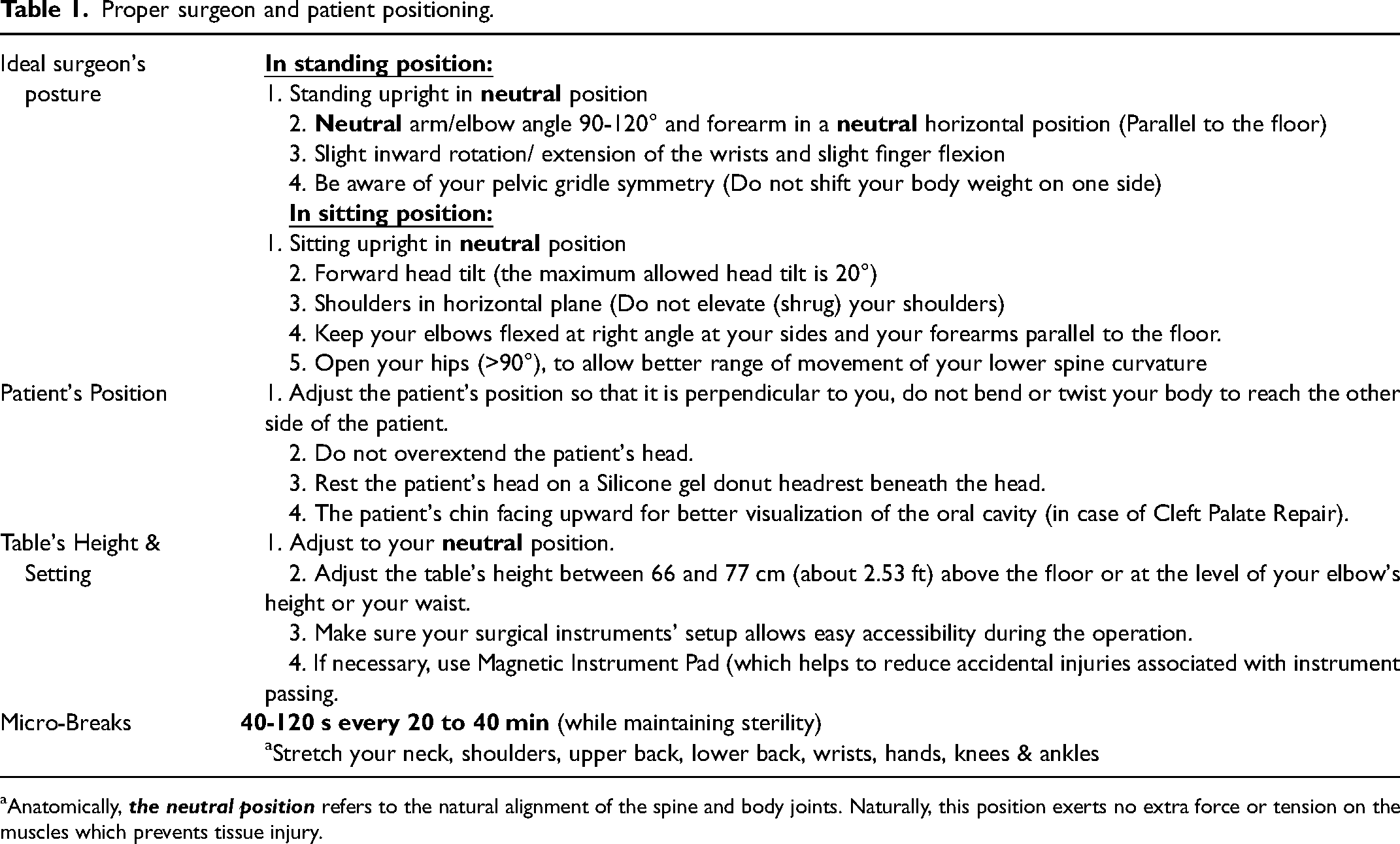
Anatomically,
Instruments guidelines.
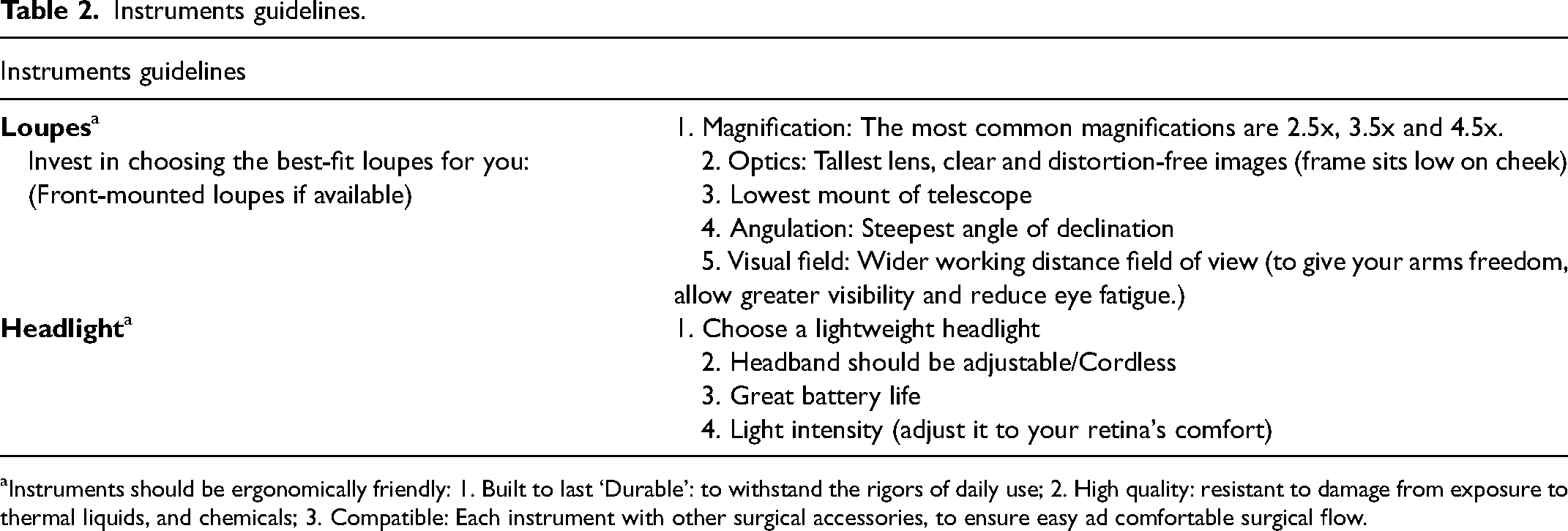
Instruments should be ergonomically friendly: 1. Built to last ‘Durable’: to withstand the rigors of daily use; 2. High quality: resistant to damage from exposure to thermal liquids, and chemicals; 3. Compatible: Each instrument with other surgical accessories, to ensure easy ad comfortable surgical flow.
In order to practice specific physical wellness maneuvers, an hour-long practical session included demonstration and participation of numerous exercises (yoga, stretching, and strength training). Coaching focused on the precise execution of each exercise and the optimal technique to prevent injuries and maximize muscle strength effectively. Components of a typical 30-60-min training program were suggested as follows: Begin with a thorough 5-10-min stretching session to warm up muscles and increase flexibility. Follow this with a 10-min core training session to strengthen abs and back muscles. Next, move on to weight training to target specific muscle groups and improve overall strength. Finally, finish the routine with aerobic exercises, which can help to improve cardiovascular health and promote fat burning. By adhering to this comprehensive training plan, one can achieve one's fitness goals while minimizing the risk of injury and maximizing one's overall physical performance (Figure 1).
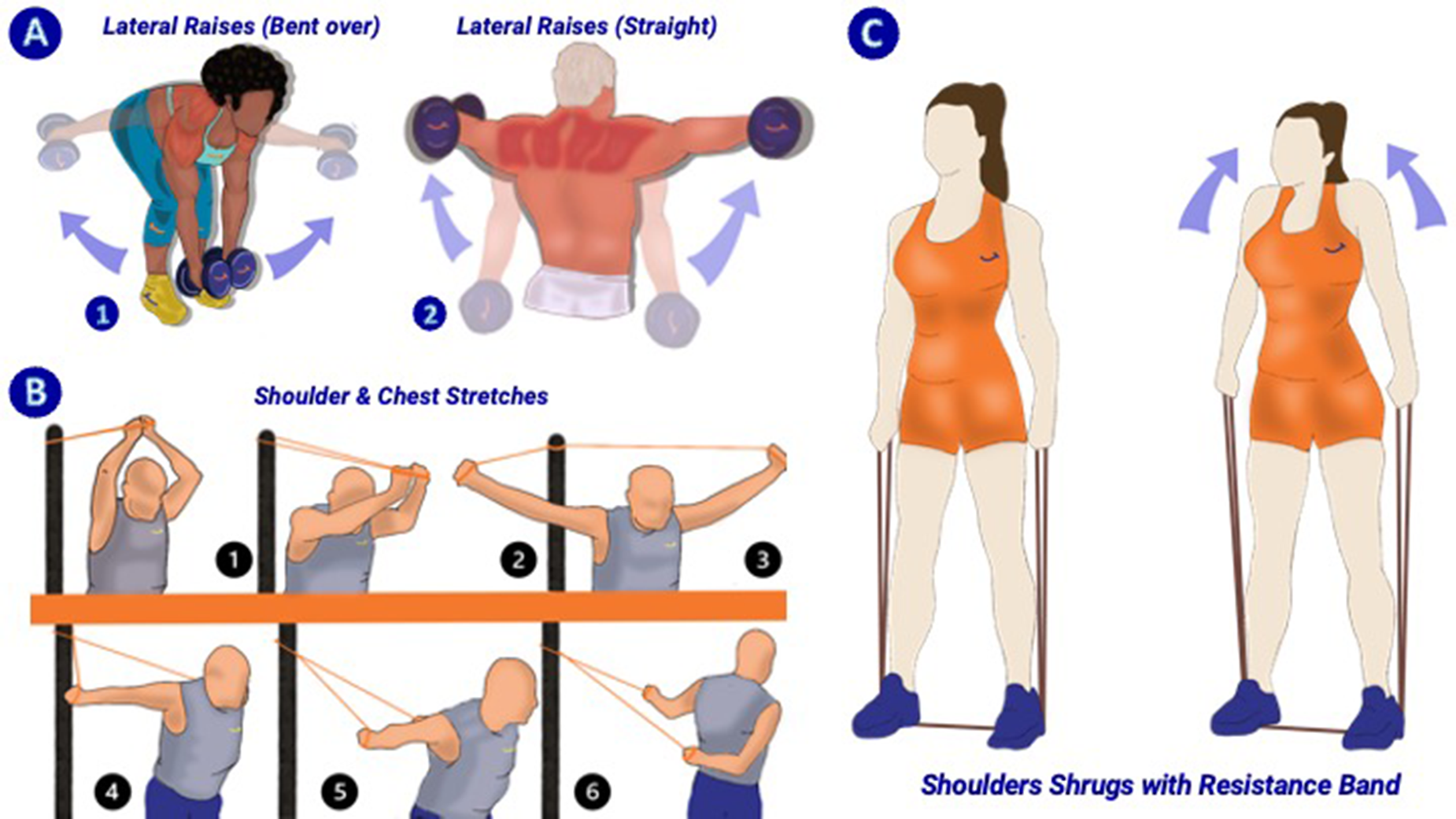
(A) Lateral Raises; 1. Bent over, 2. Straight. (B) Shoulder & Chest Stretches. (C) Shoulder Shrugs with Resistance Band.
Discussion
Daily practice of optimal MSK health is critical to preventing debilitating pain and disease, and an Ergonomics Workshop may be a useful adjunct in teaching such health measures. Unfortunately, few training programs devote the time and resources to instruct medical students and young healthcare professionals on how to properly care for their physical health. Given the extensive investment healthcare providers have made in their education and training, ergonomic practice is not only a health imperative but one which is economically obvious to sustaining a lasting career.
Several detrimental forces interplay to make ergonomics challenging for the cleft provider. First, the body loses its balance, endurance, flexibility, and strength as it ages. Second, workplace mechanisms are typically not suited for the surgeon, dentist, or cleft clinician to maintain appropriate posture and ergonomics during practice. And third, achieving physical health at work is inherently related to physical health outside of work; this interplay can create either a vicious cycle of health or contribute to a vicious cycle of disability. Understanding and confronting these factors is critical to effectively mitigating them.
We recommend that cleft clinicians employ exercise routines that adequately incorporate all four cornerstones of MSK agility. These cornerstones can be easily memorized by the acronym BEFS (Balance, Endurance, Flexibility, and Strength). 17 According to the American Heart Association, each adult should incorporate 150 minutes of heart pumping activity weekly (roughly settling at 20 minutes of exercise/day). 18 A simple 20-minute workout can easily and adequately target all four cornerstones.
Moreover, cleft providers should keep in mind our three basic pillars while going about their daily routine. They should aim to constantly avoid back & neck-breaking positions, improve their posture not only while operating but throughout their daily activities, and improve their time utilization for exercise and stretching. This can be easily memorized by three simple words: “Avoid, Adopt and Advance”. The 3 A's should constantly remind you to Avoid back breaking positions, Adopt a better posture and Advance your time utilization to allow maximum integration of exercises and stretching. For instance, introducing stretching exercises while doing daily static hospital activities like filling out patient charts and reviewing patient information, or into daily chores like washing your dishes or brushing your teeth, can achieve efficiencies.
Microbreaks are another potential paradigm shift, with one study showing 57% of participants reported significant physical gains in function and performance after incorporating stretching microbreaks intraoperatively. In addition, the study also found that the participants experienced reduced fatigue and stress from the workload. The duration of the break was about 1.5 minutes to 2 minutes every 20-40 minutes while operating. Furthermore, the breaks enhanced mental focus and communication between the team members, without any substantial compromise on operating time. Eighty-seven percent stated that they would continue to integrate the micro-breaks in their operating routine. 19 A systematic review done in 2022 by Walters et. al., defined surgical micropauses as 20-second breaks taken by surgical staff every 20 minutes. Results compiled showed that not only did surgical micropauses decrease discomfort levels, but it also reduced mistakes done during simulation surgical tasks by seven folds. 20
In 2019, Epstein et al. reported that only 29.5% of surgical training programs in the United States offered surgical ergonomics education. 21 They emphasized the necessity of dynamic ergonomics training, which should be frequently updated. Another study by Vaisbuch et al. surveyed 70 otolaryngologists to assess their knowledge and training in ergonomic practices. The results showed that only 24% of the surveyed otolaryngologists had received prior education or training on ergonomic principles. 22 This highlights a significant gap in awareness and understanding of ergonomics in otolaryngology, emphasizing the need for improved training and education. Healthcare providers should be educated early, even during undergraduate studies, on the importance of investing in their own bodies. They need to recognize that physical strain at a younger age can lead to long-term consequences. Implementing strength and core training, stretching, and proper posture can help preserve stamina and reduce neck, back, and shoulder pain.
Incorporating ergonomic workshops and sessions into meetings is a proactive step towards educating healthcare professionals about the importance of ergonomics in their daily work routines. By doing so, attendees can gain valuable insights into best practices for maintaining proper posture, using equipment correctly, and preventing injury. Furthermore, these workshops equip attendees with a wealth of resources and information that they can refer to long after the meeting has ended. The knowledge gained through these sessions can go a long way in improving healthcare professionals’ work habits and reducing the risk of injury or strain. Ultimately, implementing ergonomic workshops and sessions during meetings can help raise awareness, promote healthy work practices, and improve overall job performance.
Conclusion
Structured and evidence-based ergonomics training should be integrated within any medical curriculum, starting as early as medical school. Holistic multi-level continuous training with specific guidelines should be incorporated and implemented at every institution. Without intervention, physicians can fall into a vicious circle of chronic pain and poor coping habits that will eventually take a toll on their career. In the presence of such a simple and easily implemented solution, lack of awareness is no longer acceptable. Each institution and each healthcare professional in said institution should aim to create an ergonomic-friendly work environment that ensures healthy and pain-free living. Holistic training and stretching exercises are cost-effective tools that will build sustainable healthcare and reduce surgeon shortage. Adoption of all previously mentioned advice and exercises enhances career longevity and improves the atmosphere at work. Based on the initial positive feedback received directly from the workshop participants, the organizers have decided to expand the integration of ergonomics in future workshops. The primary objective of this decision is to allow a broader group of cleft providers to benefit from this intervention, while simultaneously allowing for the measurement of how this intervention is altering the practice of attending cleft healthcare providers. Moreover, future research is highly encouraged to build a reproducible model to study the impact of ergonomic training on different healthcare providers. By prioritizing exercise as a daily self-care practice, one can invest in one's own health, potentially adding quality years to one's life and avoiding preventable health issues. Make exercise a daily habit, prioritize one's health, and reap long-term benefits for one's body and mind.
Footnotes
Declaration of Conflicting Interests
The author(s) declared no potential conflicts of interest with respect to the research, authorship, and/or publication of this article.
Funding
The author(s) received no financial support for the research, authorship, and/or publication of this article.
