







Abstract
The study aims to reflect the lived experiences of professors and curriculum specialists about the functions and challenges of optional courses in the higher education curriculum. The impetus behind this study was to enhance the employability of undergraduate students. To fulfill this purpose, the qualitative research method was used to gather the data on participants’ lived experiences. For this purpose, the participants were selected through the purposeful snowball sampling method. The data were collected through individual interviews. The themes related to the function of implementing optional courses in the curriculum included enhancing technical and core competencies, facilitating employment, enriching the curriculum, interdisciplinary functions, the emergence of multiple identities in students, and attention to social needs. The results of the research on the challenges of incorporating optional courses into the higher education curriculum fell into two major categories: development challenges and implementation challenges including: resistance to curriculum changes, an imbalance between main and optional courses, misperception of optional courses, expanding the curriculum and its threat to the field identity, and an accurate needs assessment of optional courses. The second category of challenges included four dimensions: lack of departmental accountability, constraints of financial resources, disregard for teaching value, and weak inter-/intra-university communications. Despite the changes in the curriculum, the lack of serious attention to the development and implementation of optional courses has created a gulf between the university and society. Therefore, some reforms in the curriculum structure to facilitate students’ employability seem necessary.
Introduction
The efficiency of universities mandates that all activities incorporate the university's missions and purposes. Such efficiency ultimately fosters accountability in society (Purwito & Muljono, 2017). In recent years, the swift fluctuations in the labor market have highlighted the importance of programs associated with the authentic life of learners and the needs of employers and policymakers (Succi & Canovi, 2019).
One of the important policies of higher education in most countries is to enhance the quality of education (Mireku & Bervell, 2024). Neglecting this issue is one of the culprits for the crisis and unemployment of graduates (Wong & Li 2019). The employment of university graduates is invariably linked to the higher education system serving as a key marker of the external efficiency of universities (Luckett & Shay, 2020). The purpose of a bachelor's degree is to provide a balanced education and equip students with the required skills to have a specific career (Zhou et al., 2020). The curriculum of higher education thrives on the attention given to the features, needs, and interests of the learners in the educational system (Annala & Mäkinen, 2017). Priority given to students and consumers of the curriculum is a requirement in most models of designing and implementing higher education curricula. Curriculum content encourages students’ participation in three core, selective, and elective levels.
Compulsory courses are the cornerstone of the selected field, but there is a concern that curricula based merely on compulsory courses fail to equip students with the necessary skills required for qualification and jobs due to the unsatisfactory accommodation of students’ diverse needs (Irwin et al., 2019). In other words, the emphasis on compulsory courses means distance from the interests, talent, microskills, and the complex and changing needs of societies which have created a gulf between the university and the basic needs of society and industry (Rodríguez-Abitia et al., 2020). This gap makes employers look at university graduates as novices which means the loss of employment opportunities and increased unemployment among undergraduate graduates (Gorichanaz, 2022). Unlike the compulsory courses that students are required to take, optional and elective courses are developed based on the flexibility of the curriculum and rely on the talent, interest, and preparation of students based on the complexity of today's societies (Vanermen et al., 2022).
Optional courses have a wide scope, which means that students can consider courses according to the goals of the curriculum and their desired field. Of course, the limitation of facilities and the wide variety of audience needs have made the move toward optional curricula in higher education systems virtually impossible. Meanwhile, the balanced range of elective courses can be a good alternative according to the requirements; created for any type of curriculum (Sewell, 2022). Electives have many meanings, from specialized training to interest-based courses to off-campus courses. In its simplest form, elective courses are course content offered during any educational program in which the student has the freedom to choose a part of it (Mahajan & Singh, 2021). Providing elective courses can easily fulfill the needs and desires of students and cause them to make decisions in curriculum design and development. These courses, in addition to breaking the monotony of content in a fixed curriculum, provide multidimensional and diverse learning experiences and make interprofessional education possible (Thelin, 2008). Also, students feel more accountable and responsible by choosing their course content (Sewell, 2022). A change in higher education curricula from an all-embracing emphasis on compulsory courses toward a balanced ratio between compulsory, elective, and optional courses can be achieved by creating flexibility in the curriculum; and providing a forum for the necessary qualification and competence for students (Page et al., 2019). Encouraging students to participate in the curriculum design, their interests and needs can be included in the curriculum (Moschieri & Santalo, 2018). Research shows that students do not enjoy the compulsory lessons in the classroom and simply act as a duty (Ghonim & Eweda, 2017). The educational progress and skills of students in classes that are based on optional courses are far more favorable than compulsory courses (Ataç et al., 2018).
The implementation of optional courses does not occur in a policy vacuum; it is profoundly shaped by the governance structure of the higher education system. In decentralized systems (e.g., the United States, the United Kingdom, and Australia), individual universities or departments often possess substantial autonomy to design curricula, allocate credits, and respond to local labor market demands (Shay, 2022). In such contexts, the challenges of implementing optional courses tend to be local and resource-based (e.g., faculty resistance and budget constraints).
Aligned with the policies of the development program, the regulations for enhancing the employability skills of undergraduate students were issued to higher education institutions in Iran (Ministry of Science, Research and Technology of Iran, 2018). One notified regulation was the design and implementation of optional courses to meet societal needs. However, preliminary evidence suggests that optional courses in Iranian universities have been neglected, and their contributions to developing students’ competencies remain limited. existing research on optional courses in higher education provides limited guidance for centralized systems like Iran. International studies have primarily examined optional courses in decentralized, market-driven systems (e.g., Graham et al., 2020; Sewell, 2022) or within specific professional programs (e.g., Agarwal et al., 2015; Daly & Last, 2017). These studies focus predominantly on student perceptions and course selection behavior (Mahajan & Singh, 2021; Ting & Lee, 2012), leaving two critical gaps. First, the institutional and faculty-level challenges of designing and implementing optional courses remain under-theorized. We know little about how curriculum decision-makers—professors, department heads, and policymakers—navigate resistance, resource constraints, and identity threats when introducing optional courses. Second, and more importantly, no study has systematically examined how centralized education systems shape the functions and challenges of optional courses. In centralized systems where compulsory courses dominate and curricular flexibility is not a cultural norm, the introduction of optional courses may face unique obstacles not captured by research conducted in decentralized contexts.
This study addresses these gaps by exploring the lived experiences of professors and curriculum specialists in one of Iran's largest universities. Specifically, it asks: What are experts’ lived experiences with the functions and challenges of incorporating optional courses into a centralized higher education curriculum, particularly in relation to enhancing students’ employability? By focusing on a non-Western, centralized context and privileging the perspectives of curriculum implementers rather than students alone, this study contributes to the literature on curriculum reform and graduate employability in three ways: (1) it identifies context-specific challenges (e.g., resistance to change and misperception of optional courses) that may generalize to other centralized systems; (2) it extends theories of curricular flexibility by showing how optional courses can threaten disciplinary identity; and (3) it offers practical guidelines for policymakers in systems attempting to balance standardization with employability goals. This research aims to answer the following questions:
What are experts’ lived experiences with the functions and challenges of incorporating optional courses into the higher education curriculum and the requirements for the design and implementation of optional courses, particularly in relation to enhancing students’ employability?
Literature Review
Curriculum Flexibility and Governance in Higher Education
Curriculum flexibility and governance constitute a central tension in contemporary higher education reform. The OECD's landmark 2024 report defines curriculum flexibility as the extent to which curricula can adapt to diverse educational needs and contexts, while autonomy refers to the decision-making power of various stakeholders in shaping curricular content. However, flexibility is not a unidimensional concept; Tucker and Morris (2011) proposed a multiperspective framework that reconciles competing demands from learners, teachers, and institutions, arguing that meaningful flexibility must be negotiated across these three stakeholder groups rather than imposed unilaterally. Within this framework, Nehrbass et al. (2022) found that stakeholders readily accept standardization and quality assurance structures when they perceive these structures as beneficial, yet simultaneously expect those structures to remain permeable enough to preserve space for professional autonomy. This “flexibility within structure” paradox is particularly acute in centralized higher education systems, where top-down curriculum mandates frequently encounter faculty resistance when they are perceived as threatening disciplinary identity and pedagogical agency. As the Iranian case in this study illustrates, the governance model—specifically the degree of centralization versus institutional autonomy—profoundly shapes how optional courses are developed, perceived, and implemented. Comparative scholarship on other centralized systems, such as India's evolving governance landscape, confirms that flexible learning pathways and academic freedom remain contested domains where macrolevel accountability requirements often clash with microlevel pedagogical needs (Varghese & Malik, 2024). Understanding these governance dynamics is therefore essential for any curriculum reform aimed at enhancing graduate employability through optional course offerings.
Employability Skills and the “Skills Gap”
The persistent gap between graduates’ competencies and the dynamic demands of the labor market has become a defining challenge for higher education globally (Lestari et al., 2025). This “skills gap” is not merely a matter of unemployment but a deeper shortage of appropriate skills, where graduates often lack the transversal competencies most sought by employers, including critical thinking, problem-solving, communication, teamwork, and adaptability (Monteiro et al., 2025; Pérez Zúñiga et al., 2025). Recent systematic reviews confirm that the integration of these employability skills into higher education curricula remains partial, facing significant challenges in both measurement and implementation (Lestari et al., 2025; Scandurra et al., 2024). Consequently, graduates report feeling unprepared for the workforce; a 2025 national survey in the United States found that 48% of recent graduates felt unprepared to apply for entry-level positions in their field, while only 30% of 2025 graduates secured full-time jobs related to their degree (Cengage Group, 2025; Nietzel, 2025). Compounding this issue, research suggests that government-mandated employability interventions often yield inconclusive results, particularly in the absence of strong institutional collaboration and direct labor market communication (Scandurra et al., 2024). Thus, effectively bridging the skills gap requires not only a reorientation of curricula toward competency-based, experiential, and work-integrated learning but also the cultivation of systematic collaboration between higher education institutions and industry stakeholders (Vlachopoulos & Pachni Tsitiridou, 2026). These structural challenges, however, are further mediated by the governance context in which curriculum reforms are implemented, a dimension that is explored in the following section.
Curriculum Reform in Centralized Contexts
Curriculum reform in centralized higher education systems is frequently characterized by a fundamental tension between state-directed objectives and institutional autonomy. In many national contexts, governments have pursued aggressive, top-down restructuring to align university curricula with national development priorities and labor market demands, often triggering significant implementation challenges. China exemplifies this approach through its unprecedented campaign to re-engineer its higher education system, eliminating over 12,000 undergraduate programs deemed misaligned with national strategic needs while fast-tracking new ones in priority fields, a process Vice Minister of Education Wu Yan has described as an “adjustment of unprecedented scale and intensity” (Fan et al., 2025; Zhao, 2025). Similarly, India's National Education Policy (NEP) 2020 has sought to dramatically expand academic flexibility through major–minor frameworks and multidisciplinary pathways, yet implementation remains highly uneven, with colleges in smaller cities struggling to operationalize these reforms due to inadequate infrastructure, limited faculty expertise, and insufficient guidance from regulatory bodies (The Hindu, 2026). Even when reforms explicitly aim to enhance flexibility and student choice, centralized mandates frequently encounter resistance or dilution at the institutional level, as documented in South Africa, where despite widespread support for decolonizing curricula following the #RhodesMustFall movement, interviews with over 200 academics across 10 universities revealed that institutions systematically “temper radical ideas” during implementation, resulting in minimal actual curriculum change (McLaughlin & Ruby, 2025, p. 14). The governance model of “managed decentralization"—observed in systems such as China's—attempts to balance central oversight with operational autonomy, yet research demonstrates that pervasive central control in ideological and policy domains significantly constrains institutional autonomy and academic freedom (Green, 2023; Kuang & Abd Rani, 2025). These comparative cases illuminate that the success of optional course implementation in centralized systems depends not merely on policy design but on navigating deeper structural tensions: the pace of change, the adequacy of institutional capacity, the politics of faculty resistance, and the persistent gap between centralized intentions and localized realities.
Optional/Elective Courses as a Reform Mechanism
Optional or elective courses have emerged as a key curricular mechanism for enhancing flexibility, student agency, and employability within higher education reform agendas worldwide. Unlike compulsory courses, which prioritize disciplinary coherence and standardized knowledge, elective courses are designed to accommodate diverse student interests, cultivate transversal competencies, and respond to rapidly evolving labor market demands (Ghonim & Eweda, 2018; Mahajan & Singh, 2021). A growing body of evidence suggests that well-designed elective offerings can break the monotony of fixed curricula, provide multidimensional learning experiences, and foster interprofessional education (Sewell, 2022). Moreover, electives empower students to exercise choice and accountability in their own learning pathways, which has been shown to increase engagement and motivation (Ataç et al., 2018). However, the effectiveness of electives as a reform mechanism is highly contingent on institutional and governance contexts. In decentralized systems, universities often leverage electives to differentiate their programs and respond to local industry needs (Graham et al., 2020). By contrast, in centralized systems where credit allocations and course offerings are tightly regulated, optional courses may be relegated to a marginal role—typically comprising no more than 10% to 20% of total credits—thereby limiting their potential to meaningfully reshape graduate competencies (OECD, 2024). Recent comparative research on elective implementation in medical and engineering education further indicates that without systematic needs assessment, faculty development, and quality assurance mechanisms, optional courses risk becoming “add-ons” that neither integrate with core disciplinary learning nor adequately prepare students for employment (Agarwal et al., 2015; Striolo et al., 2023). Thus, while optional courses hold significant promise as a reform mechanism, their success depends on deliberate curriculum design, adequate resource allocation, and alignment with broader employability strategies—factors that are often mediated by the degree of centralization in the higher education system.
Despite growing recognition that optional courses can enhance graduate employability, the literature lacks an explicit conceptual framework explaining the causal mechanisms through which elective offerings translate into labor market outcomes. Drawing on competence-based employability theory (Yorke & Knight, 2006), we propose that optional courses influence employability through three interrelated pathways. First, technical competency development: optional courses allow students to acquire specialized, job-relevant skills that extend beyond the core disciplinary curriculum, directly addressing the skills gap documented by recent systematic reviews (Lestari et al., 2025; Monteiro et al., 2025). Second, transversal competency cultivation: by offering choice across disciplines, optional courses foster soft skills—including critical thinking, communication, and adaptability—which employers consistently rank as essential but which are rarely explicitly taught in compulsory courses (Succi & Canovi, 2019; Vlachopoulos & Pachni Tsitiridou, 2026). Third, interdisciplinary and identity flexibility: optional courses that cross-departmental boundaries enable students to develop multiple academic identities and integrative thinking abilities, enhancing their capacity to navigate complex, nonroutine workplace problems (Sewell, 2022; Striolo et al., 2023). However, these pathways are contingent on two moderating conditions: curricular design quality (i.e., optional courses must be intentionally aligned with employability outcomes rather than treated as peripheral add-ons) and governance context (i.e., centralized systems may constrain credit allocation, faculty autonomy, and industry linkage, thereby weakening the hypothesized pathways) (Nehrbass et al., 2022; OECD, 2024). This framework guides our empirical investigation by specifying that the functions of optional courses—such as enhancing competencies and facilitating employment—emerge only when design and contextual conditions are met, while challenges (e.g., resistance, misperception, and resource constraints) represent barriers that disrupt these pathways.
Research Method
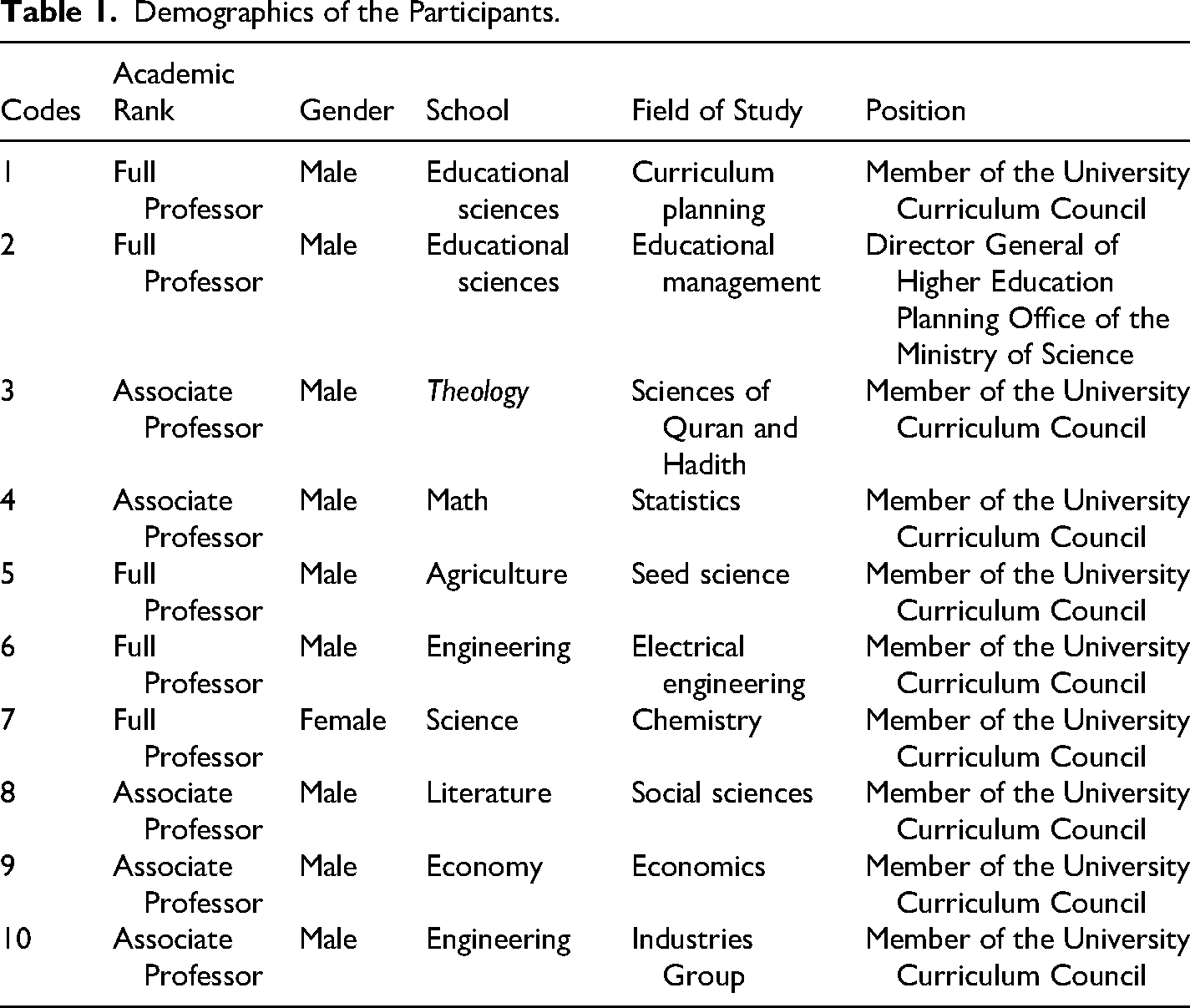
The current research, in terms of its purpose, is applied, and in terms of approach, is qualitative. Aligned with the purpose of the research, which seeks to reflect the experience of experts and course group managers about the contribution of optional courses in the higher education curriculum to increase employability, the phenomenological research method was employed. The main goal of phenomenological research is to figure out the essence of a single phenomenon. The exploration of the phenomenon occurs by studying a group of people who have all experienced the phenomenon (Creswell & Poth, 2016). In a phenomenological study, personal narratives are used to describe a person's lived experience with a particular phenomenon (Bernard et al., 2016). Therefore, phenomenology is perhaps ideally suited to the “messy” construct of teachers’ beliefs, as the development of a complex, detailed understanding of teachers’ beliefs can be established by talking directly with teachers and allowing them to tell their stories (Olafson & Gran, 2014). We used Colaizzi's descriptive phenomenological method. The study was carried out at Ferdowsi University, one of the largest universities in the east of Iran. To identify and recruit the participants, the purposeful sampling method was used (Table 1). For the individual interview, the heads of eight departments who hold a rank of Associate Professor or higher will be invited.
Demographics of the Participants.
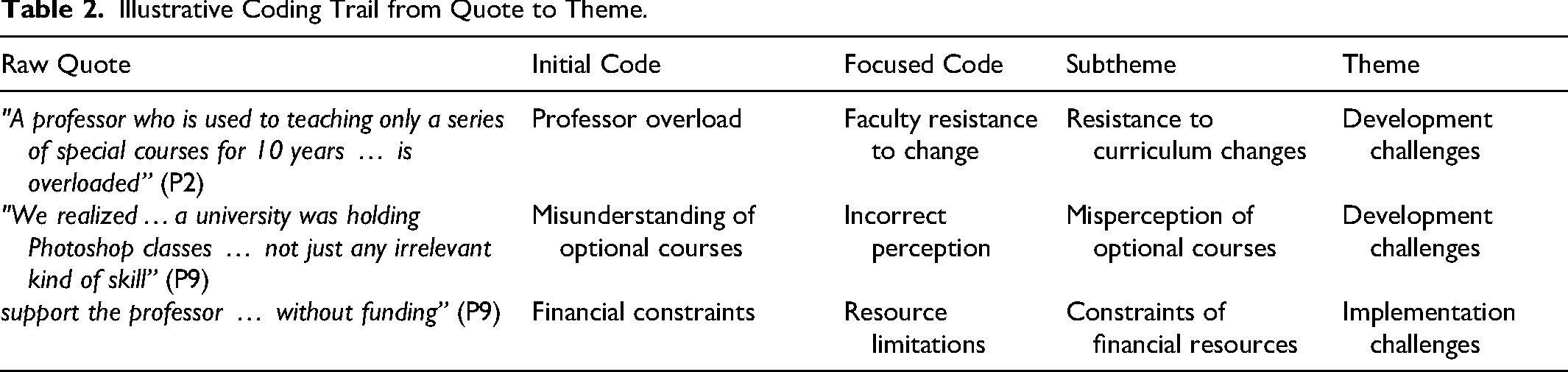
Illustrative Coding Trail from Quote to Theme.
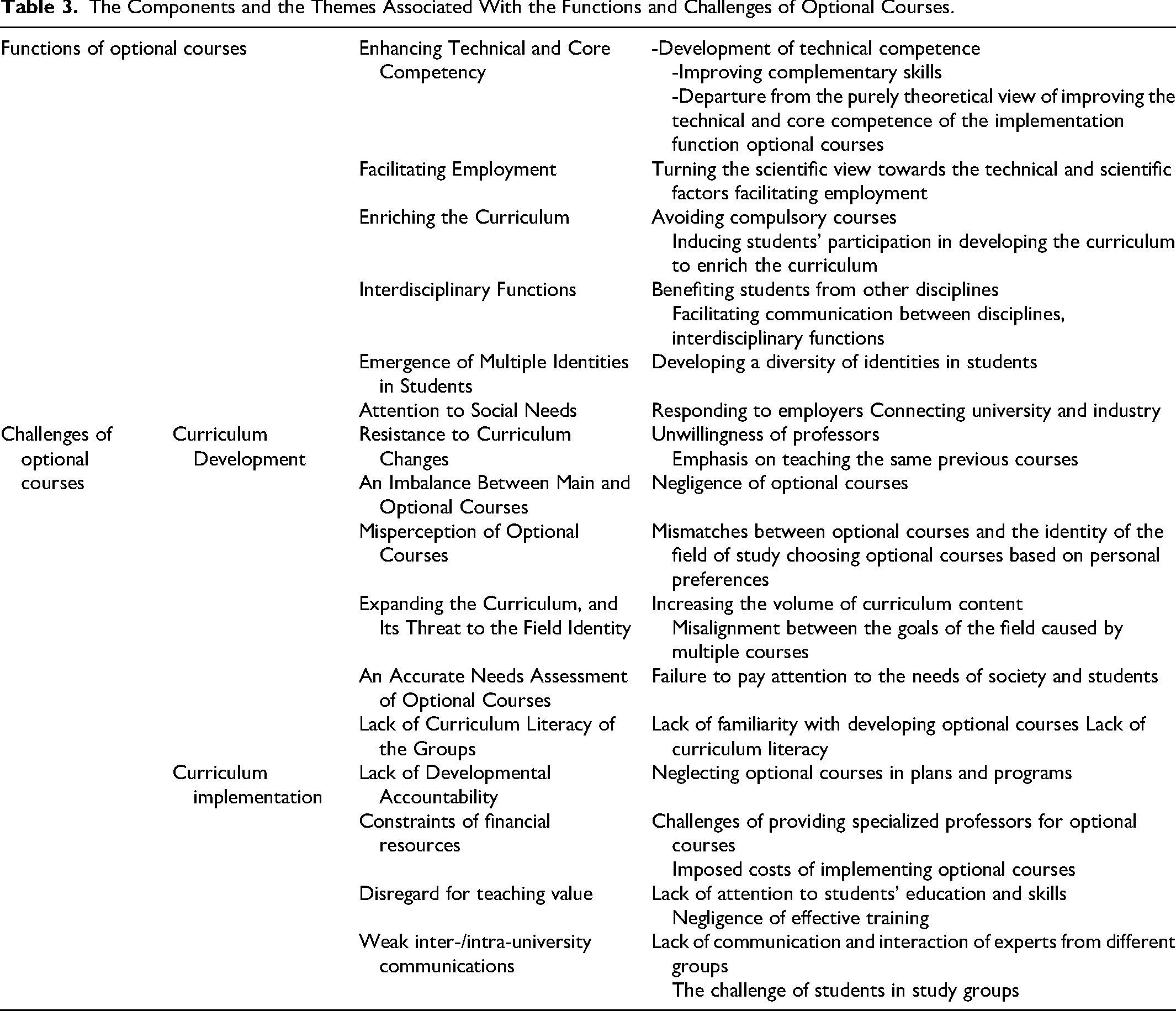
The Components and the Themes Associated With the Functions and Challenges of Optional Courses.
Participants
We used purposive sampling to select participants. The most important criterion for selecting participants was complete knowledge of employability policies and programs and experience in the process of designing and developing university curricula. Because it was important to select individuals who had sufficient experience in implementing employability programs for students, we used Intensity sampling. These are information-rich cases that manifest the phenomenon intensely, but not extremely. Aligned with the purpose of the research, 10 knowledgeable and key people were recruited to participate in the research. The Director General of Employability Policy Development at the Ministry of Science, Research, and Technology of Iran was selected as one of the participants in this study. Also, members of the university's curriculum planning council who were responsible for implementing those policies in the university were selected as participants. Table 1 shows the characteristics of the participants in the research.
Setting
This study was conducted in one of the main universities of Iran, which is the fourth comprehensive university in Iran based on the European International Ranking System in 2023. This university has 12 faculties and 66 majors. In 2020, the vice-chancellor of Education of the Ministry of Science announced the regulations for enhancing the employability of continuous undergraduate students in higher education centers. Designing and presenting optional courses based on the needs of society is one of the topics discussed in this regulation, to attract students’ attention and help them acquire basic skills, facilitating employability. The employability potential of undergraduate students in continuous programs was communicated to higher education institutions.
Data Collection
Based on the objectives of the current research, open-ended interview questions were developed. The reason is that open-ended interview questions provide an in-depth investigation of the subject. Before conducting the interview, a brief description of the purpose of the research was provided, and consent letters were signed by the participants. The members of the university curriculum planning council and the director general of the higher education planning office of the Ministry of Science, heads of departments, and professors were the subjects of the study. A preliminary interview was piloted with three participants to check the validity of the interview content. All interviews were conducted by the second author, who is a professional expert in the field of curriculum studies. In addition, no relationship was established between the interviewer and the participants before the study.
A total of 10 participants from several faculties were included in the study. The interviews were arranged and carried out in the office of the individuals. All interviews were conducted in person and no one else was present in the interview sessions. All the invitees participated in the interview (100%). Each interview lasted approximately 45 to 60 minutes. All the interviews were recorded and notes were taken by the second author. Following individual interviews, the content was reviewed to see whether more information was required. Then the interviews were transcribed verbatim. The transcripts were returned to the participants for comments and corrections, and the interview process continued until saturation. All data were stored confidentially and were only accessible to researchers.
Data Analysis
Based on the theory of Miles et al.'s (2020), three consecutive stages of qualitative data analysis were used for the interviews. While Colaizzi's method guided the philosophical orientation toward lived experience and essence, we operationalized the analytic process using Miles et al.'s (2020) framework as a practical coding and data management strategy. This integration is defensible because both approaches share: (a) an inductive orientation to meaning-making, (b) iterative movement between parts and whole (hermeneutic circle), and (c) commitment to participant voices.
Analysis proceeded through six phases:
Phase 1 (Transcription and familiarization): Interviews were transcribed verbatim by [author]. Each transcript was read three times while listening to audio recordings to verify accuracy and achieve immersion.
Phase 2 (Initial coding): Using MAXQDA, the first author conducted line-by-line descriptive coding, generating 147 distinct codes from 312 data segments.*
Phase 3 (Focused coding): Codes were grouped by similarity, producing 23 focused codes (e.g., “professor resistance,” “budget shortages,” “interdisciplinary benefits”).
Phase 4 (Category development): Focused codes were organized into 11 provisional categories through constant comparison.
Phase 5 (Theme formation): Categories were collapsed into six function themes and nine challenge themes through iterative discussion between authors.
Phase 6 (Theme reduction): Final themes were refined through two rounds of member checking (see below). (see Table 2 for an illustrative coding trail from raw quote to theme).
To assess and demonstrate consistency in the analysis, we used inter-rater reliability. For this purpose, 50% of the interviews were selected and coded by a second coder (MK). In each category, the average kappa values were between .82 and .88. (M = .85).
Result
What are experts’ lived experiences with the function of incorporating optional courses into the higher education curriculum, particularly in relation to enhancing students’ employability?
To answer this question, the researchers gathered data on the experiences of experts and heads of departments as research participants. The analysis of the data resulted in the following themes (see Table 3 for a summary).
Enhancing Technical and Core Competency
The participants acknowledged that the importance of the optional courses lies in developing technical and core competencies. They highlighted that optional courses allow students to reap the benefits of different subjects, and such diversity makes them gain fresh insight in analyzing issues from different angles and strengthens their critical and analytical abilities. Participant (3) states: “Today's complex world demands diverse skills. Optional courses provide this diversity, which ultimately develops students’ technical abilities.” In addition, there was a consensus that using optional courses can foster new interactions and smooth communication. Such connections were reported to contribute to more collaboration and learning opportunities and attributed technical competencies to soft skills. Participant (1) stated: “Optional courses boost creativity and innovation. Comparing different subject areas builds networking and cooperation skills, and these soft skills make it easier to acquire technical competencies.”
Facilitating Employment
Having different skills associated with students’ majors can boost their employability potential. Creating self-confidence and acquainting them with the intended employment foster the spirit of employability among students. Participant (2) stated: “I feel that if these courses are well developed and well implemented, for sure they can improve employability, which is our main concern in higher education.” Participant (8) also highlighted that “The goal of a bachelor's degree is to increase job chances. Specialized courses help, but if we let students choose a portion of their coursework as optional, we make a big step toward employability.”
Enriching the Curriculum
The participants stated that unless the curriculum has the required depth, it might promote a sense of credentialism and encourage the learners to avoid learning. Participant (6) states that: “Students are exasperated with compulsory courses and rigid content. Giving them choice changes their feelings and beliefs about the field. They see the curriculum as their own and engage more deeply with what it means to be a student.”
The curriculum serves as a basis for the most important process of the university system, which is learning. Education, research, and supply of specialized services by universities are largely dependent on the dynamics of curricula. Curricula are the points connecting university and society. This means that if social concerns and challenges are addressed in the curriculum, it can be considered as a support for solving society's problems. Therefore, if curricula are based on social needs and learners, they can make be more efficient. Participant (6) states: “The curriculum is the heart of higher education. Optional courses are a gateway to effectiveness; without them, we lose our way. Universities follow their own requirements instead of society's needs.”
Interdisciplinary Functions
The participants acknowledged that interdisciplinary studies generate interaction between two or more different disciplines lay the groundwork for the advancement and development of science and enhance the ability of science to unknot complex and multifaceted problems. Such interactions can range from a simple exchange of opinions to the mutual convergence of concepts, methodology, procedures, epistemology, data terminology, and the association of research and education in broad areas. The emergence and stagnation of many disciplines require a special look at the link between them. Also, the interests and backgrounds of learners make it possible to boost the capacity of alternative disciplines to create ideas. Despite selecting the major and pursuing it, a majority of students show a great interest in integrating and connecting multiple disciplines.
By offering optional courses aligning with their capacity and potential, students can be empowered to create and merge multiple disciplines. Participant (3) states that: “Optional courses can create a shared language among us professors in different fields … Maybe the thesis and dissertation will help us in this field … but courses expanding the disciplines and clarifying new perspectives need pondering … these optional courses can fulfill the potential of this enlightenment and expansion of the field well.” Participant (5) also states: “Why should limit my student to their field … then after four years they might feel they have chosen the wrong field? Why shouldn't they have a chance to have a look at the curricula of other fields? In doing so, the potential for interdisciplinarity with be developed … other issues and perspectives will be shed light on and flexibility and adaptability will be introduced to the field.”
Emergence of Multiple Identities in Students
The participants acknowledged that if the courses are well-organized, they can foster the diversity of students’ identities and yield positive outcomes. The capacities of the study field can be revised and the students can acquire capabilities, skills, norms, and a plural social structure through interactions between faculties and departments. Participant (9) states: “We closed the doors of faculties and departments; I don't allow interactions between groups, between curricula for the benefit of students … this procedure is doomed to failure.”
Attention to Social Needs
Curriculum should remain true to the needs of the society and the students’ competence should be fostered according to the society in question.
Participant (7) stated that “the optional courses can be tailored to the immediate, sectional and specific needs of the university and society … a new software has been released, in the main and specialized courses and this is not the same … The student knows that it helps, and so do I. Why should it be ignored? The function of optional courses is to help the beneficiaries in this way.”
What are experts’ lived experiences with the challenges of incorporating optional courses in the higher education curriculum, particularly in relation to enhancing students’ employability?
Five themes emerged on the challenges in developing optional courses in the curriculum of higher education: resistance to curriculum changes, an imbalance between main and optional courses, misperception of optional courses, expanding the curriculum, and its threat to the field identity, and an accurate needs assessment of optional courses. Optionality poses a threat to the identity of the field and the lack of curriculum literacy of the groups. Also, four dimensions emerged in the implementation of optional courses including lack of developmental accountability, constraints of financial resources, disregard for teaching value, and weak inter-/intra-university communications.
Challenges in the Development of Optional Courses
Resistance to Curriculum Changes
Change and resistance to the curriculum were among the most known challenges of optional courses from the perspective of the participants. This has been a concern of some educational councils and academic groups (4). He admitted that “Many faculty members don't like change. It's hard for a professor to fit in a new lesson—finding sources, mastering content, managing logistics. After two years, if the course isn't offered, a new one must replace it. So there's vocal dissent, not just reluctance.”
An Imbalance Between Main and Optional Courses
The small share of optional courses has discouraged some students from dealing with optional courses seriously during the undergraduate course. Participant (8) stated: “Really, in our group, these courses sometimes forcefully reach ten percent. Well, it is clear that the investment of the head of the department, the professors of the faculty and the faculty is less compared, and finally the contribution of the invited professors.”
Therefore, a proper balance between the main and optional courses of each field should reflect the identity of the field. The courses need to be made based on the requirements of the university. In doing so, optional courses in the desired field can be restored.
Misperception of Optional Courses
The participants in the research underscored that the incorrect perception of optional courses is the main factor rendering optional courses nonfunctioning and distorted. Many departments, especially in engineering science groups treated optional courses as extracurricular courses due to unfamiliarity with the nature of curriculum studies and caused a malfunction. Participant (9) mentioned: “We announced the mechanism, and many were silent. Later, we found a university with a strong background offering Photoshop classes—completely irrelevant. We held meetings to clarify that optional courses must relate to the field and core requirements, not just any skill.”
Therefore, it is necessary to present and understand the nature of the optional courses first. Then, the development and implementation of the curriculum could be based on the type of field and university and the existing field.
Expanding the Curriculum and Its Threat to the Identity
The emergence of new content and headlines was reported to contribute to the dynamics of the field and expand new horizons. However, such expansion of curricula was agreed to cause the pluralization of content and subsequently raise some issues such as the shortage of expert professors, a sharp decline in the number of students in some optional classes, and similar cases in the implementation of optional courses. Participant (7) stated: “This multiplicity of courses and topics will make us face a more serious challenge in the future, as we will practically lose the chance of implementing optional courses. We must ensure that optional courses lead to such a phenomenon.”
Also, according to the participants, the broadening of the curriculum can pose threats to the field. The emergence of courses and content to restoration of skills and requirements of society and student interests may distance themselves from the basic issues and core of the field, which can deteriorate the field's identity in the future. In this regard, the participant (4) admitted: “Sometimes a lesson can't run with only two to four students. And presenting such courses pulls students away from specialized training. Our field isn't purely skill-oriented, so we must be careful. Otherwise, we'll lose our core identity—we shouldn't fill ourselves with dessert.”
An Accurate Needs Assessment of Optional Courses
The dwindling value of optional courses in the curriculum is not hidden from the managers and specialists of the higher education course groups. What is crucial is attention to the requirements of developing optional courses. False perception of optional courses, either accidentally or intentionally, can undermine their function and purposes. Many departments have started optional courses according to domestic and foreign magazines, conferences, professors’ concerns, student theses and dissertations, and even personal preferences. However, the optional courses which aim at reconciliation of students with the curriculum, improving skills and competencies, and finally facilitating employability need to be based on the interests of undergraduate students. In such alignment, local opportunities, university requirements, and study groups. Participant (8) stated: “In two department head meetings, they approved optional courses without any facilitator or executive plan. That's indifference. We can't ignore local, cultural, geographical, and economic opportunities. That misperception was a disaster for optional courses.”
Challenges in the Implementation of Optional Courses
Lack of Departmental Accountability
The optimal implementation of optional courses is one of the duties of the academic department. Unfortunately, in some groups, concern for the advancement of the curriculum is a secondary priority. Undoubtedly, new procedures and their implementation are associated with myriad complications and challenges. Unless the concern and importance of the desired and accurate implementation of the curriculum are addressed, the compiled optional courses cannot be implemented optimally or even implemented.
Participant (4) admitted as such. “As a group manager, I worry that my energy goes to the wrong things. There are so many rules that we can't keep up. Frankly, making optional courses work has not been my priority.”
Constraints of Financial Resources
Undoubtedly, any alteration and modification in curriculums require financial assistance to be accurately and optimally implemented. Improving the quality of education necessitates investment in higher education. Any shortcomings and negligence of the management in supporting the quality of education and reforming and changing the curriculum will lead to the loss of opportunities and resources or give rise to greater complications such as employment. Therefore, by investing in higher education, no parallel expenses in the industry especially in terms of education and curricula can be spared for youth employment. Due to the dearth of financial support for the implementation of optional courses, some higher education institutions have taken other secondary concerns, and in practice, the implementation of these courses has been incomplete. Participant (9) also highlighted: “Without funding, we get nowhere. I can't fill a class or support a professor. Even expert perspectives can mislead. Needs assessment and industry interaction require money, which the ministry doesn't provide for creating and following up on courses.”
Disregard for Teaching Value
Attention should be drawn to the fact that developing and compiling optional courses cannot be useful unless the quality of education is addressed and the teaching and learning process are concerned. The academic atmosphere in higher education encourages research at the expense of education among academic and staff members. Specialists and leading professors choose to run postgraduate lessons rather than graduates. The quality of education and what happens in the classrooms are no longer their concern. The rules and atmosphere in higher education groups foster a competitive culture for research in most fields. Participant (3) said: “All attention is on research. Professors know they're valued for articles, books, and projects. Their concern is their resume and promotion. They don't dedicate time to teaching quality, especially for optional courses. That problem is widespread.”
Therefore, one of the basic hurdles associated with the optimal implementation of optional courses is the neglect of education. Therefore, by creating favorable mechanisms, measures, and ideas should be made in this area so that the importance of the teaching–learning process and the quality of education is revived and we witness the concern of professors regarding education in parallel with research.
Weak Inter-/Intra-University Communications
The optimal implementation of optional courses requires communication and interaction among faculties and departments. The participants noted that weak inter-/intra-university communications are among the challenges and issues facing the implementation of optional courses. A lack of information about the nature of optional courses, which can lead to the binding of departments and faculties can impede their implementation. Therefore, are reluctant to assign the trustees of some courses labeled as optional courses to other study groups and alternative faculties. Also, due to the lack of proper communication and the notified executive mechanism, the departments and students show resistance to having students in the desired courses. This becomes more complicated with the different levels of study groups as well as the nature and type of higher education institutions. Participant (9) states: “We offer a course, and a student is willing to take it at another faculty. I arrange it with the department head, but sometimes for ridiculous reasons, it never happens.”
The findings reveal a central tension between curricular flexibility (interdisciplinary learning, multiple identities, and social responsiveness) and disciplinary identity (preserving core coherence). Optional courses enhance employability only when three conditions align: accurate needs assessment, balanced credit weight, and faculty buy-in. Without these, misperception and resistance prevail. Implementation failures—weak accountability, underfunding, neglected teaching, and poor communication—form a self-reinforcing cycle that undermines even well-designed courses. Employability emerges not linearly but as a byproduct of technical skills, soft skills, confidence, and relevance. Conceptually, the study challenges two assumptions: that more optional courses automatically benefit students, and that employability equals narrow vocational training. Instead, effective curriculum reform requires anchored flexibility—optional courses as strategic extensions of core competencies. Failure to address developmental and implementation challenges renders optional courses symbolic, weakening both educational quality and employability outcomes.
Comparing the six function themes above reveals three cross-cutting patterns. First, participants consistently framed the value of optional courses in instrumental terms (competencies, employment, and social needs) rather than intrinsic educational goods—suggesting that the Ministry's employability mandate has successfully shaped faculty discourse, but also raising questions about whether optional courses are valued for what they teach or for what they deliver. Second, a hierarchy of perception emerged: themes of “multiple identities” and “interdisciplinary functions” were mentioned exclusively by university-level administrators, whereas department heads focused on technical competency and employment facilitation. This gap between those who design reforms and those who implement them may itself be a barrier to coherent change. Third, a causal logic gap pervades employability claims: despite eight participants endorsing “facilitating employment,” none described a mechanism linking optional course participation to actual labor market outcomes, leaving the policy rationale empirically underspecified.
Four features of the findings appear particular to Iran's governance context and would not necessarily generalize to decentralized systems. First, “attention to social needs” was framed around regional development and local industry (e.g., tourism and software) rather than market signaling or student consumer demand, reflecting a centralized system where universities serve state-defined development agendas. Second, “enriching the curriculum” was positioned as a corrective to the rigidity of compulsory courses—a function unnecessary in systems where flexibility is already normative. Third, “interdisciplinary functions” were discussed as a remedy to internal academic silos and as a way to create shared language among professors, with no mention of employer demand for T-shaped professionals. Fourth, the “emergence of multiple identities” was expressed through a language of departmental closure (“we closed the doors of faculties”), suggesting that optional courses may serve a reparative function for fragmented academic structures rather than merely an enrichment function.
Discussion
The current study examined the functions and challenges of optional courses in a centralized higher education system, using Iran as a case. The findings confirm that optional courses can enhance employability, but only when specific conditions are met—conditions that are often absent in centralized, rigidly structured curricula. Below, we interpret the six functions and nine challenges through the theoretical lenses introduced in the literature review.
Participants viewed optional courses as vehicles for both technical and soft skills. This aligns directly with Yorke and Knight's (2006) competence-based employability theory, which posits that employability emerges from a blend of disciplinary understanding, skills, efficacy beliefs, and metacognition. Optional courses in our study were reported to foster creativity, networking, and analytical thinking—precisely the transversal competencies that systematic reviews (Lestari et al., 2025; Monteiro et al., 2025) identify as missing in compulsory-only curricula. However, our findings also reveal a causal logic gap: while participants asserted that optional courses facilitate employment, none could specify the mechanism. This gap reflects a broader theoretical ambiguity in the literature about whether elective choice directly improves labor market outcomes or operates through mediating variables such as self-confidence or signal effects (Scandurra et al., 2024).
The results of the research show that interdisciplinary functions can be promoted by optional courses in the curriculum. Interdisciplinary courses provide the opportunity to cross the traditional boundaries of different disciplines of knowledge to secure the desired result. Creating pluralism in content and benefiting from this set of competencies is demanded in today's complex world. Moreover, interdisciplinary function leads to the improvement of students’ employability capacity. Striolo et al. (2023) acknowledge that attending interdisciplinary courses can equip learners with broader skills, which ultimately facilitates their employability.
The emergence of multiple student identities was framed as a reaction against “closed doors of faculties.” Theoretically, this relates to Goodson's (2013) work on curriculum change: programs succeed when they address implementers’ values and feelings. Departmental closure in our study reflects a defensive posture—faculty protecting disciplinary territory from what they perceive as dilution. Optional courses that deliberately cross-boundaries can therefore threaten field identity, a finding that extends the literature beyond student focused studies (e.g., Mahajan & Singh, 2021) to institutional identity politics. Participants' description of compulsory courses as exasperating and credentialist echoes Tucker and Morris's (2011) multiperspective framework, which holds that meaningful flexibility must reconcile learner, teacher, and institutional demands. In our centralized system, the structure (compulsory core) is so dominant that any optional space feels like a relief, not an integrated design feature. Nehrbass et al. (2022) found that stakeholders accept standardization when it is perceived as beneficial—but Iranian faculty and students do not perceive the current compulsory curriculum as beneficial. Thus, optional courses function as a corrective, not an enrichment. This is a distinctive feature of centralized systems, unlike decentralized contexts where flexibility is normative. Participants insisted that optional courses should address local industry needs (tourism, software, etc.). This is a hallmark of centralized, development-oriented higher education, where the state defines social needs. In decentralized systems, optional courses respond to student consumer demand or market signals. Our findings align with Hazelkorn's (2016) concept of “glocal” higher education, but with a twist: the “local” in Iran is interpreted through state-defined regional development, not student choice. Theoretically, this suggests that the function “attention to social needs” is governance-dependent.
The challenges of implementing optional courses in the higher education curriculum fall under two categories: development and implementation. In terms of development, there is resistance to changing the curriculum and the content and optional courses. According to Fullan (2002), curriculum change is multidimensional and more difficult than many people assume since its implementation and acceptance depend on the context in which the transformation is applied. As Goodson (2013) points out, a program succeeds if focuses on the abilities, feelings, and values of the program implementers. The development of optional courses in the curriculum can encounter resistance from some executives during its implementation. The lack of familiarity of some professors and often the interdisciplinary identity of these courses can cause resistance to the curriculum in the form of development. It is possible to make the development process of optional courses smoother by holding meetings with the department heads and curriculum groups regarding the development of optional courses and their limitations. Moreover, the curriculum literacy of the department regarding optional courses and striking a balance between optional courses and required courses of the field are among other challenges optional courses are faced with.
The first challenge identified in higher education is the resistance of many departments to changing the curriculum. Fullan (2002) noted that curriculum change is multidimensional and context-dependent. Our participants’ resistance (e.g., professors unwilling to develop new courses) is a classic implementation dip. However, in a centralized system with no tradition of elective choice, resistance is amplified because optional courses are perceived as extra work with no corresponding reward structure—a finding that supports Nehrbass et al.'s (2022) “flexibility within structure” condition: faculty accept flexibility only when structures (promotion and resources) are adjusted accordingly.
Misperception of optional courses is the main culprit of the nonfunctionality of optional courses and their distortion. Treating optional courses as extracurricular (e.g., Photoshop classes) reflects a lack of curriculum literacy at the departmental level. This extends the literature: most studies assume that faculty understand the pedagogical rationale for electives (Agarwal et al., 2015). In centralized systems where electives are a new policy imposition, such literacy cannot be assumed.
Optional courses in the curriculum can broaden the curriculum. This is the most theoretically novel finding. While Graham et al. (2020) discussed elective proliferation as a market differentiator, our participants feared that too many optional courses would erode the disciplinary core (“filling ourselves with dessert”). This fear is specific to systems where disciplinary identity is tightly coupled to state-approved core curricula. It echoes the essentialism-progressivism debate in curriculum theory: optional courses represent progressivist flexibility, but without a strong essentialist anchor, they are seen as dangerous.
Participants reported that optional courses were often approved based on personal preferences or conference topics, not student or labor market data. Theoretically, this is a failure of evidence-based curriculum design (Vlachopoulos & Pachni Tsitiridou, 2026). In centralized systems, the absence of market signals means that needs assessment must be deliberately structured—yet our findings show it is absent. The finding that optional courses are forced to 10% of credits illustrates what the OECD (2024) calls token flexibility—enough to satisfy policy language but insufficient to reshape competencies. Theoretically, this is a structural constraint that undermines all three employability pathways (technical, transversal, and identity flexibility).
In practice, optional courses encounter some challenges, the most important of which is the constraints of financial resources. This is a universal challenge, but its severity is heightened in centralized systems where universities have limited revenue diversification. The OECD (2024) notes that flexibility requires investment; our participants explicitly stated that without funding, optional courses remain unimplemented. Also, the difficulties of implementing optional courses in the curriculum, such as the number of courses, the number of students, and the allocation of experienced professors discourage academic groups in departments from cooperating. The study groups need to be sensitive to the educational quality of the students and pay heed to the better implementation of the optional courses in the curriculum by creating connections and interactions between the university courses and also the value of the education and career future of the students. Department heads admitted that optional courses were not their priority. This aligns with the managed decentralization paradox (Kuang & Abd Rani, 2025): central mandates (e.g., “add optional courses”) are issued, but no local accountability mechanisms ensure follow-through. In contrast, in decentralized systems, departmental reputation and student enrollment create natural accountability.
Weak inter-/intra-university communications operationalizes the governance gap. Even when a student wants to take an optional course in another faculty, bureaucratic hurdles prevent it. Comparative literature on centralized systems (e.g., China's “unprecedented” program elimination; Fan et al., 2025) shows that communication breakdowns are a predictable consequence of top down reform without horizontal coordination.
In centralized higher education systems like Iran's, optional course implementation faces distinct governance barriers. Top-down mandates without local ownership create a policy-implementation gap, fueling resistance—a pattern documented in China's program elimination (Fan et al., 2025) and South Africa's “tempered radicalism” (McLaughlin & Ruby, 2025). Rigid credit caps (e.g., 10% for electives) produce token flexibility (OECD, 2024), insufficient for employability. State-sanctioned disciplinary identities discourage deviation from core curricula, making optional courses feel like identity threats (Goodson, 2013). The absence of market signals means courses are designed around personal preferences rather than labor market needs (Vlachopoulos & Pachni Tsitiridou, 2026). Vertical compliance structures (Kuang & Abd Rani, 2025) undermine horizontal coordination, blocking cross-departmental enrollment. Without governance adjustments—higher credit ceilings, industry feedback channels, and local adaptation—optional courses remain symbolic policy artifacts, unable to bridge university and society (Scandurra et al., 2024).
Our findings extend existing theory in three ways. First, they specify that the three employability pathways (technical, transversal, and interdisciplinary) are contingent on curricular design quality and governance context. In centralized systems, the pathways are systematically weakened by token credit allocations, misperception, and identity threats. Second, they introduce the concept of reparative flexibility: optional courses in rigid systems function not to enrich but to repair structural deficits (e.g., departmental silos and student disengagement). Third, they demonstrate that disciplinary identity threat is a governance-specific challenge—absent from decentralized literature—because in centralized systems, disciplines are state-protected and any deviation is seen as dilution.
Conclusion
Despite policy intentions, the gap between university and society persists in Iran's higher education. Optional courses remain underdeveloped and underimplemented due to resistance, misperception, identity fears, and implementation barriers. Theoretically, successful optional course reform requires not merely adding electives but redesigning the entire governance architecture: balancing core and optional credits, investing in faculty development and incentives, building cross-departmental communication channels, and replacing symbolic compliance with evidence-based needs assessment. Without these changes, optional courses will continue to be a missed opportunity for what participants perceived as enhancing graduate employability. Importantly, this study captured expert and faculty perceptions of employability benefits, not direct labor market outcomes. Therefore, the assertion that optional courses can enhance students’ employability should be interpreted with caution. We did not measure employment rates, employer evaluations, or longitudinal career progression. The findings reflect lived experiences and beliefs about potential effects, not causal evidence.
Beyond this policy synthesis, the study offers three theoretical contributions to the higher education literature. First, we introduce the concept of reparative flexibility: in centralized systems, optional courses do not simply enrich an already flexible curriculum but repair structural deficits—student disengagement, departmental silos, and the university-society disconnect. Second, employability pathways (technical, transversal, and interdisciplinary) are governance-contingent; token credit caps, misperception, and identity protection systematically weaken these pathways. Third, disciplinary identity threat emerges as a distinct barrier when core curricula are state-sanctioned, unlike in market-driven systems where electives signal differentiation. Together, these contributions demonstrate that curriculum reform for employability cannot be decontextualized—governance architecture must be redesigned alongside course offerings.
Limitations and Future Research
This study's findings are bounded by several limitations. First, the research was conducted at a single large university in eastern Iran, limiting generalizability to other institutions or centralized systems with differing resources and local contexts. Second, the sample comprised exclusively senior policymakers and faculty, omitting the perspectives of undergraduate students and employers—key stakeholders whose experiences could validate or challenge the perceived employability benefits. Third, the phenomenological design prioritizes depth of lived experience over causal inference; it cannot establish whether optional courses directly improve labor market outcomes. Fourth, the mandated nature of optional courses in Iran's centralized system may produce unique challenges not present in contexts where electives are organically integrated. Finally, the study captures a snapshot during initial policy implementation; longitudinal research is needed to assess how resistance and perceived functions evolve as reforms institutionalize. Future studies should employ mixed-methods designs incorporating student and employer voices, comparative policy analysis across governance models, and longitudinal tracking to establish causal links between optional course participation and employability.
Footnotes

Funding
The authors received no financial support for the research, authorship, and/or publication of this article.
Declaration of Conflicting Interests
The authors declared no potential conflicts of interest with respect to the research, authorship, and/or publication of this article.