







Abstract
In this paper, based on the thought of Modified Wöhler Curve Method (MWCM), a new general model for predicting multiaxial fatigue life with influence of mean stress is presented. Different from the MWCM, the expressions of multiaxiality effect and mean stress effect are located separately in the proposed fatigue equation, so that the new model can consider the impact of both axial and torsional mean stresses, and the equation form possesses excellent extendibility and variability. The wildly used von Mises equivalent stress is adopted as the fatigue parameter to improve computational efficiency. Finally, in conjunction with the Itoh criterion, the model can be trivially extended to perform non-proportional fatigue prediction with different mean stresses. Some representative fatigue tests published in the previous literature are used to verify this study.
Introduction
As one of the main failure modes in real components, multiaxial fatigue has attracted much attention. The problem of performing fatigue assessment is further complicated when mean stress is included. This makes it evident that the sound engineering tools capable of accurately and efficiently estimating multiaxial fatigue damage with mean stress inference is needed.
Plenty of fatigue criteria have been derived, which can be subdivided into three major categories: stress-, strain- and energy-based approaches (Cristofori et al., 2008; Crossland, 1956; Fatemi and Socie, 1988; Findley, 1957; Gasiak and Pawliczek, 2003; Kluger et al., 2014; Liang and Chen, 2016; Liu and Yan, 2018ab; Marin, 1956; Mcdiarmid, 1994; Mishra et al., 2016; Papadopoulos, 2001; Shang and Wang, 1998; Shen and Akanda, 2016; Sines, 1961; Susmel and Lazzarin, 2002; Zghal et al., 2016; Zhan et al., 2016; Zhang et al., 2018; Zhu et al., 2016, 2017). From a different perspective, they can also be classified as the critical plane approaches and the stress invariant-based approaches. Susmel and Lazzarin (2002) ever considered that the most interesting and promising methodologies are those based on the critical plane concept. Thus, over the last decade, Susmel and his collaborators made a great effort to devise a novel approach that is suitable for estimating fatigue damage not only in plain specimens, but also in notched components, the well-known Modified Wöhler Curve Method (MWCM). The critical plane approaches seem to have more physical significance, especially when the fatigue parameters adopt the shear mechanical components, which are associated with the occurrence of slip bands on the surfaces. Unfortunately, the calculation of the range or mean value of the stress parameter on a critical plane is sometimes extremely time-consuming, limiting the application of these criteria to address practical problems.
As demonstrated by Cristofori et al. (2008): advanced design methodologies, such as computer-aided design, require the formalization of criteria which have to be efficient in calculation. In this scenario, stress invariant-based criteria are generally deemed to be the most promising ones to meet the above requirement. Meanwhile, Papadopoulos put forward a deviatoric stress space theory (Papadopoulos et al., 1997), so that the non-proportional loading paths can be properly described by the invariant quantities. This is why increased stress invariant-based criteria have been proposed and validated by researchers all along (Cristofori et al., 2008; Crossland, 1956; Marin, 1956; Sines, 1961).
The mean stress has always been an important fatigue influence. Recently, a comparison study of existing multiaxial fatigue criteria related to metallic materials with different mean stresses was performed by Kluger and Lagoda (2014). It showed that whether the empirical models (e.g., Goodman, 1899; Morrow, 1968) or the critical plane approaches (Findley, 1957; McDiarmid, 1994; Papadopoulos, 2001) could produce satisfactory predictions in the absence of mean stresses. However, when subjected to the loads including non-zero mean stresses, the calculated results are seriously different from the measured values, and the representative instances are the S355J0 alloy steel and 30NCD16 steel.
For the multiaxial fatigue assessment combined with mean stresses, a focus of dispute is whether the influence of shear mean stresses on multiaxial fatigue damage deserves to be taken into account. On the one hand, through a series of experiments, Sines (1961) achieved a conclusion that the presence of superimposed static torsional stresses can be neglected as long as maximum shear stress
In view of the above comparison of the multiaxial fatigue criteria and the ambiguous cognition on the contribution of shear mean stress, it is still a challenging issue to establish a general multiaxial mean stress fatigue life prediction model. Based on the thought of MWCM, a new general model aimed at addressing multiaxial mean stress effect is proposed in this paper. The wildly used von Mises equivalent stress is adopted as the fatigue parameter to improve computational efficiency. Different from the MWCM, the stress multiaxiality and mean stress effect are expressed separately in the fatigue equation, thus it has the capability to reflect the contribution of both axial and torsional mean stresses to multiaxial fatigue damage. In the final part, the authors make an attempt to extend the proposed model to evaluate non-proportional fatigue lives by combining with the Itoh criterion. The present study will be systematically validated with the experimental data reported in the previous literature.
A new model of multiaxial fatigue life prediction
The fatigue equation forms of the conventional mean stress methods can be reduced to the following expression

Different from the above traditional methods, a significant innovation point of MWCM is to comprehensively utilize both axial and torsional fatigue curves when estimating multiaxial fatigue life, as written


Inspired by the formulations of the conventional methods and MWCM, the new model adopts the following mathematical expression


It is trivial to validate that, in the axial and torsional cases, the values of multiaxial parameter ρ are equal to 1 and 0, respectively. Moreover, the material parameters
Based on the previous investigations on mean stress influence (e.g., Tao and Xia model (2007) and Marin general equation (1956)), and the fact that a constant (such as material tensile strength) does not affect the fitting accuracy mathematically, the proposed model selects the equivalent stress amplitude instead of the ultimate tensile strength in Marin equation as the second calibration information. The specific equation form of the new model can be expressed as

When subjected to pure tension and torsion, equation (6) can be respectively simplified as


Equation (7) is consistent with the axial mean stress model reported by Tao and Xia (2007). From the brief review of the previous discussion on the shear mean stress influence in introduction, it is reasonable to believe that the sensitivity to shear mean stresses is an individual material property. Therefore, the present model introduces a set of material parameters (
In the absence of mean stresses, equation (6) can be rewritten as

Then equations (7) and (8) under the axial and torsional loadings can be respectively simplified as


Equations (10) and (11) are the well-known axial and torsional S–N curve equation forms. In view of the complexity of multiaxial fatigue life prediction, and based on the interpolation law suggested by MWCM for characterizing the transition of multiaxial fatigue curves from axial to torsional cases, from the application point, it is assumed that the material parameters in equation (6) can be obtained by interpolating the material parameters in equations (7) and (8), i.e.




In this way, multiaxial fatigue life can be directly estimated from the stress invariant parameter and the multiaxial S–N curve with the attention on mean stress effect. In addition, from the perspective of equation structure, MWCM concentrates the descriptions of both mean stress and multiaxiality influences in one parameter

It is worth emphasizing that the fundamental purpose of this study is to propose a general multiaxial mean stress model with an invariance equation form as equations (4) and (6). Therefore, when the fatigue experiment amount is limited, the formulations with fewer material parameters can be adopted in the left part of equation (6) or (16). For instance, the modified verification equations for the 30NCD16 steel and 7075-T651 aluminum alloy in the subsequent sections.
Experimental verification and discussions
This section takes advantage of the representative fatigue tests of materials 18G2A steel and 30NCD16 steel to examine the proposed model. The experiments were carried out under the proportional loadings accompanied by non-zero mean stresses, and detailed experimental information can be found in Refs (Froustey and Lasserre, 1989; Gasiak and Pawliczek, 2001). Simultaneously, the famous MWCM is used as a comparison object in this validation process.
Calculated material coefficients and corresponding R-square values of the predicted materials.
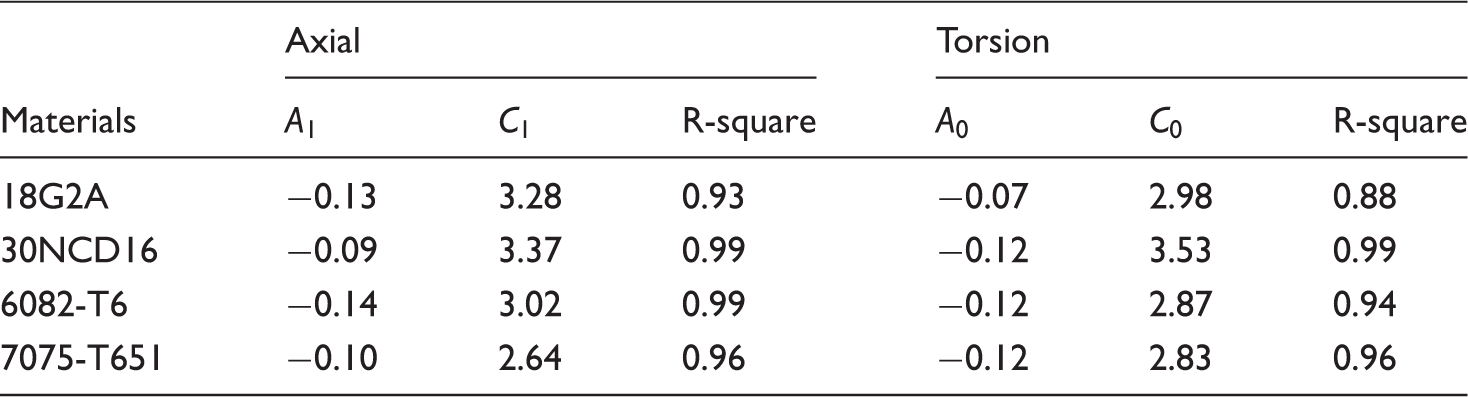
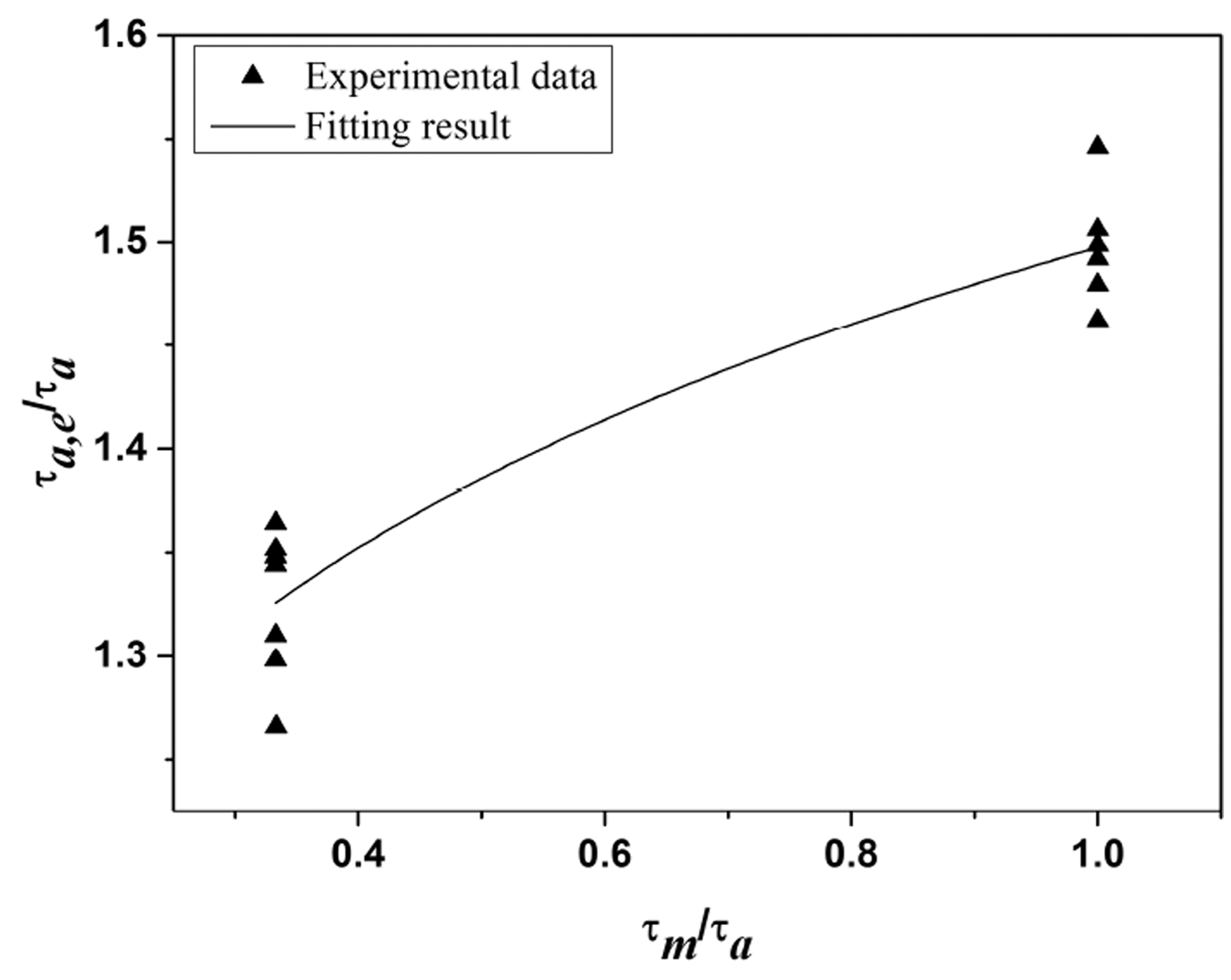
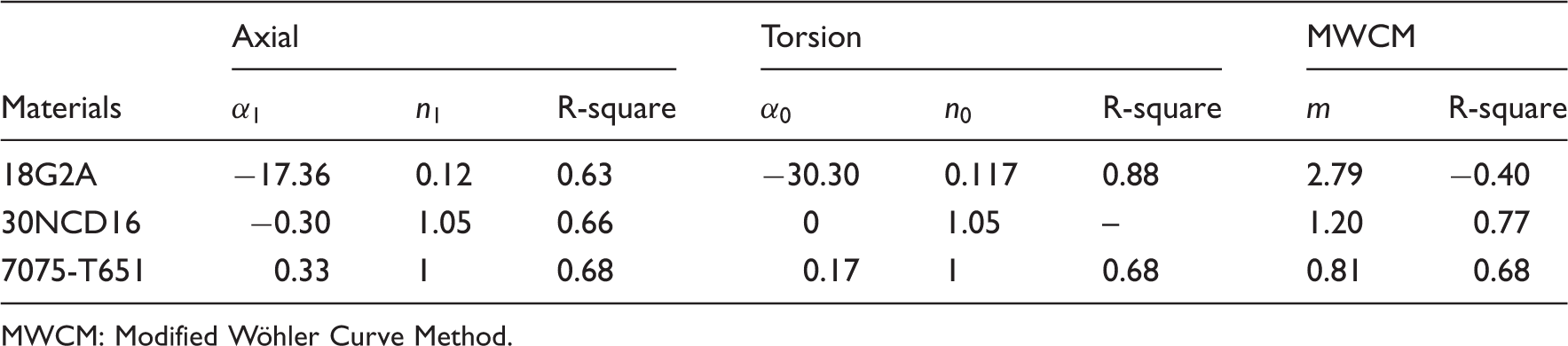
The axial fitting accuracy can be illustrated in terms of the relationship between the normalized equivalent stresses A comparison of experimental and fitting results of A comparison of experimental and fitting results of The calculated material parameters describing mean stress effect for 18G2A steel, 30NCD16 steel and 7075-T651 aluminum alloy. MWCM: Modified Wöhler Curve Method.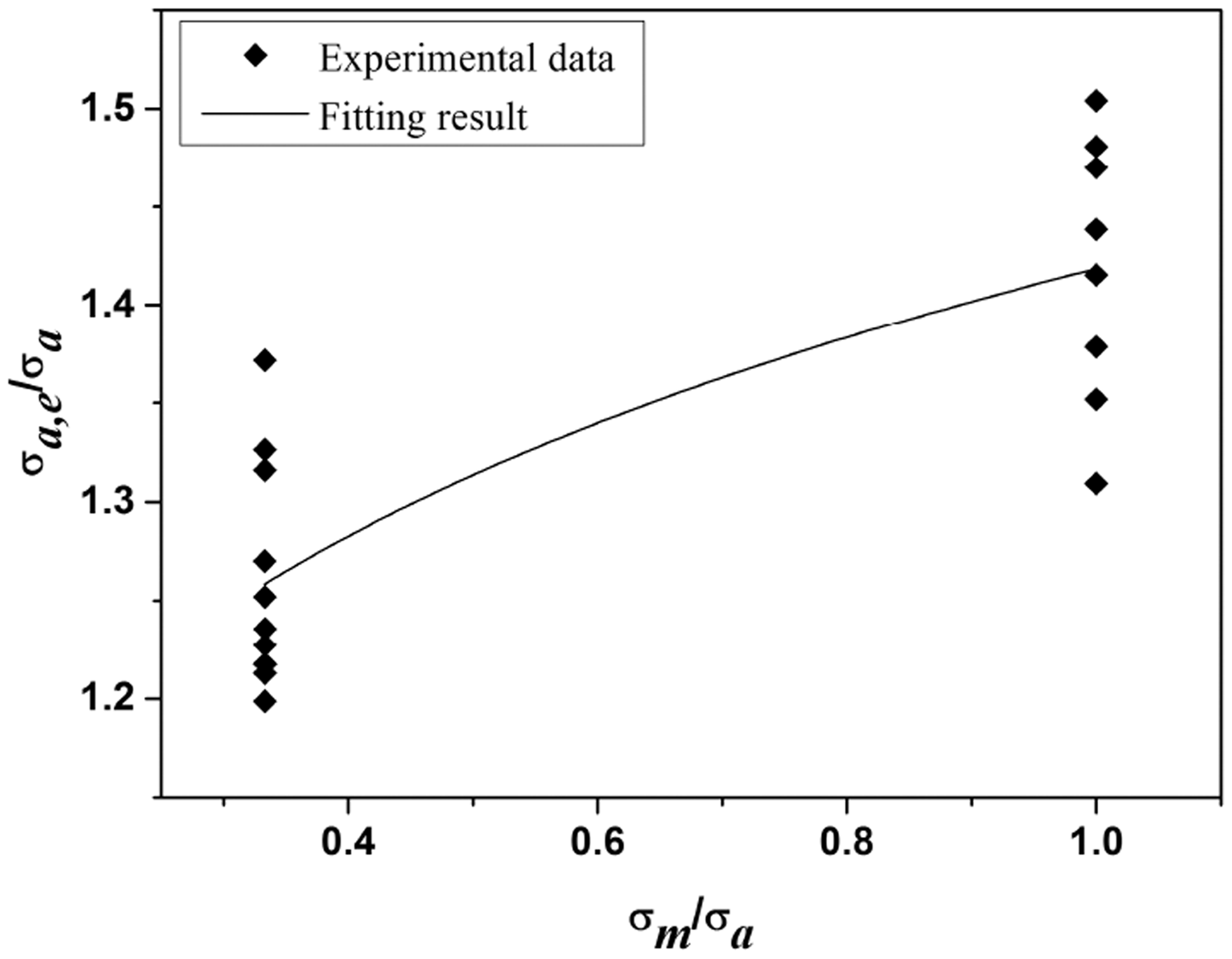
In order to quantify the prediction accuracy, the following two error indexes are introduced


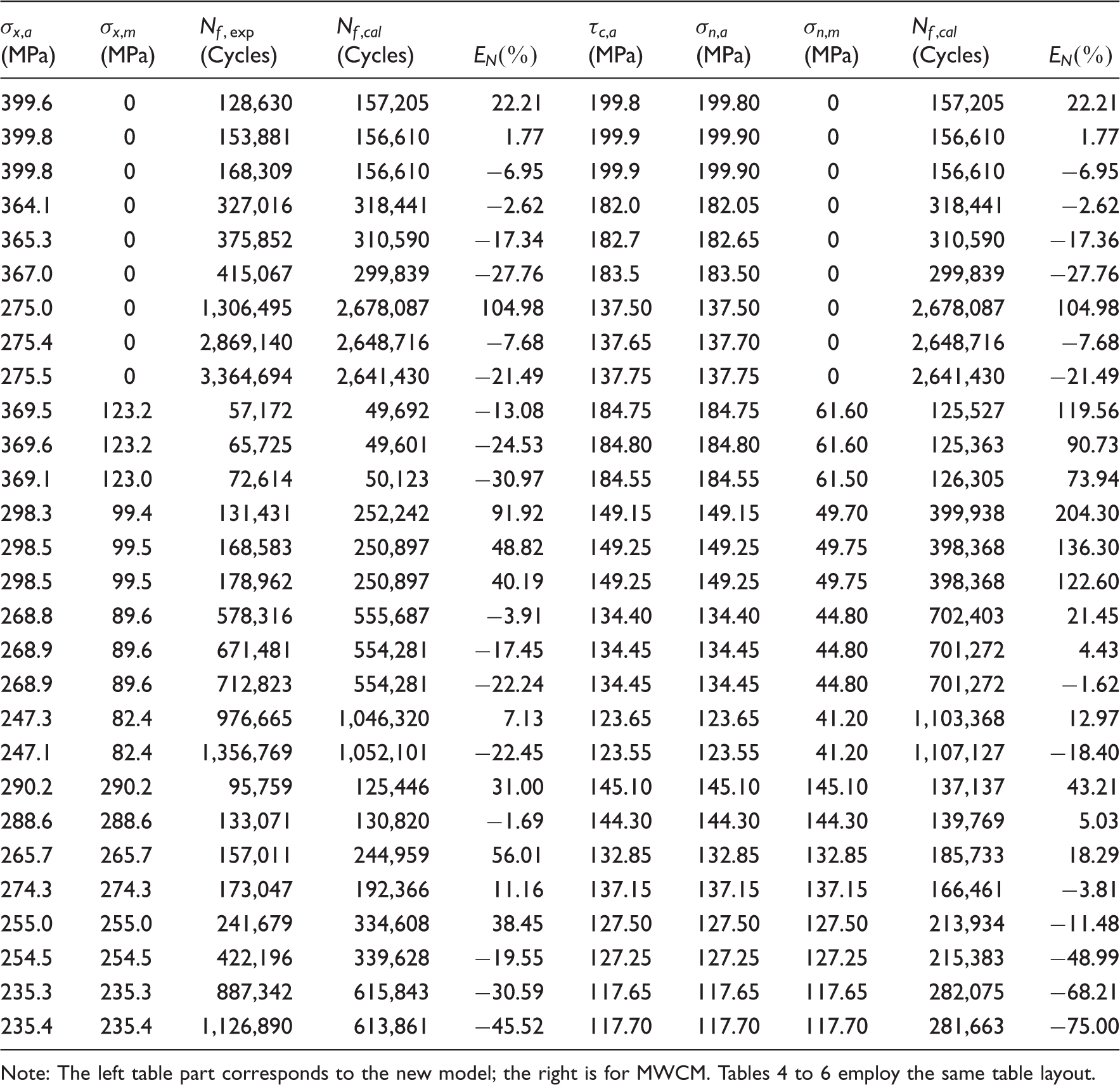
The comparisons of experimental and calculated lives by the new model and MWCM under bending loadings are shown in Figure 3, and the detailed values are listed in Table 3. For R = −1 cases, it can be observed that the results of the present model are same as those of the MWCM, with the relative error range [−27, 104] (%) and the error index 23%. Meanwhile, the vast majority of results with few exceptions are included in the scatter band of factor 2. However, turning to the R ≠ −1 cases, the present model provides intuitively better predictions compared to the MWCM, included in the scatter band of coefficient 2, with the relative error range [−45, 91] (%) and error index 29%. Whereas several results of MWCM fall outside the lines of factor 2 and even 3, within the relative error interval of [−75, 204] (%) and the error index 56%.
Comparisons of experimental and calculated lives by the new model and MWCM under bending loadings for 18G2A steel. Comparisons of experimental and calculated lives by the new model and MWCM under bending loadings for 18G2A steel.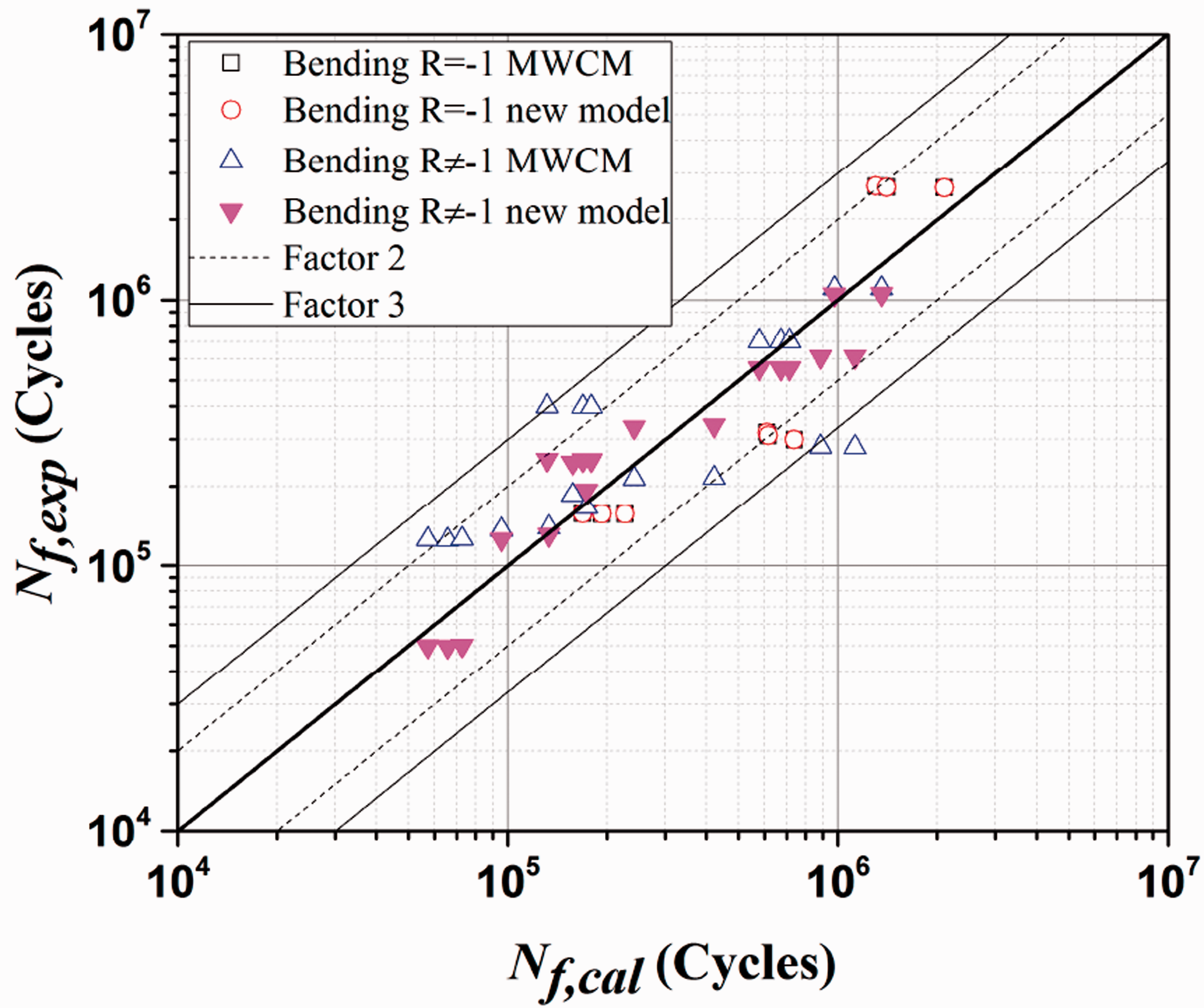
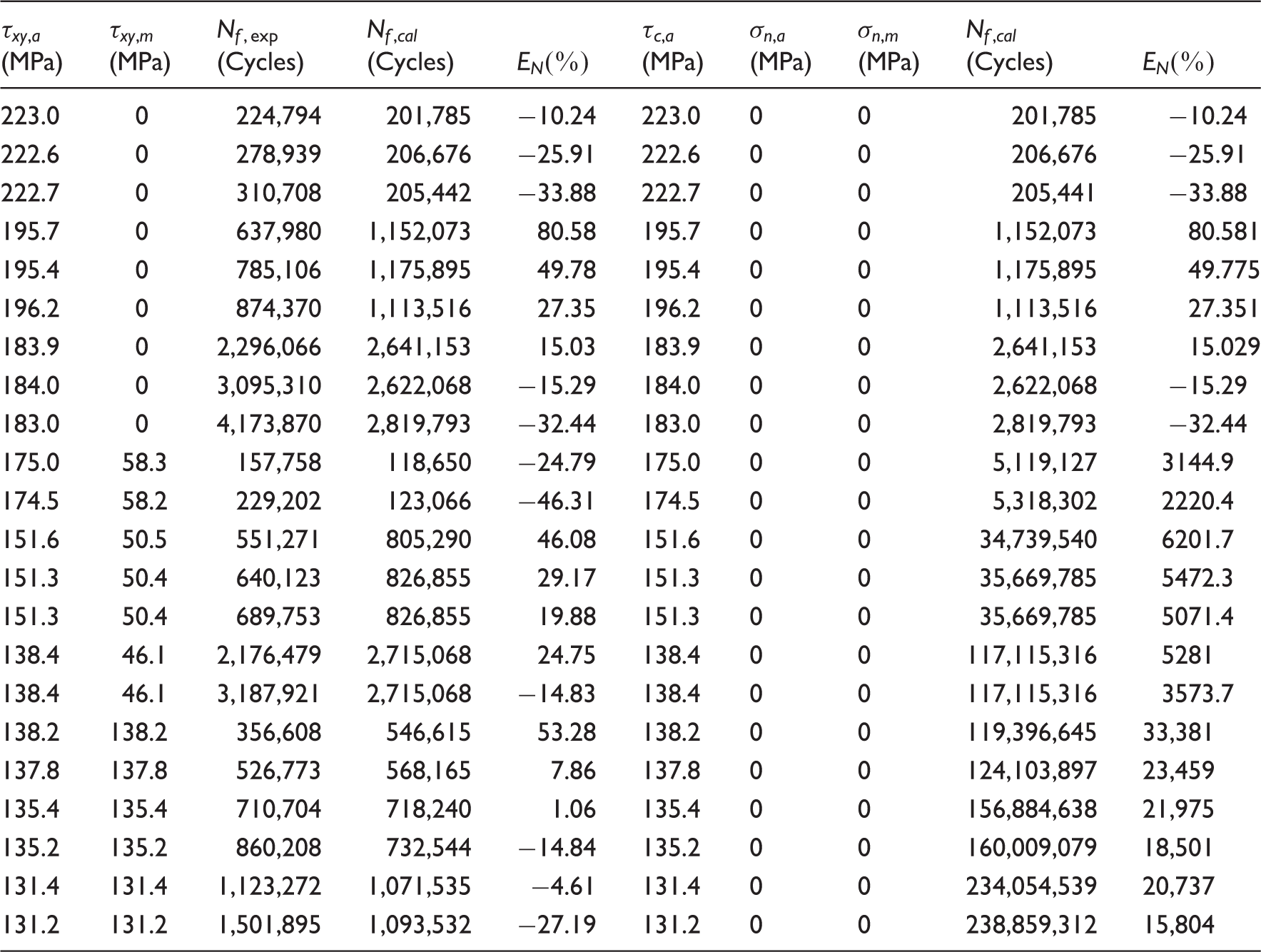
An identical comparison with the axial situations is carried out on torsional loadings. As illustrated in Table 4 and Figure 4, the predictions of the two compared approaches are still consistent in the R = −1 torsional cases, with the relative error range [−33, 80] (%) and the error index 32%. When subjected to the R ≠ −1 torsional loadings, the new model is obviously superior to the MWCM, and produces the predicted points located near the diagonal with the relative error range [−46, 53] (%) and an error index 24%. In contrast, the results calculated by the MWCM are unacceptable accompanied by an order of magnitude error.
Comparisons of experimental and calculated lives by the new model and MWCM under torsional loadings for 18G2A steel. Comparisons of experimental and calculated lives by the new model and MWCM under torsional loadings for 18G2A steel.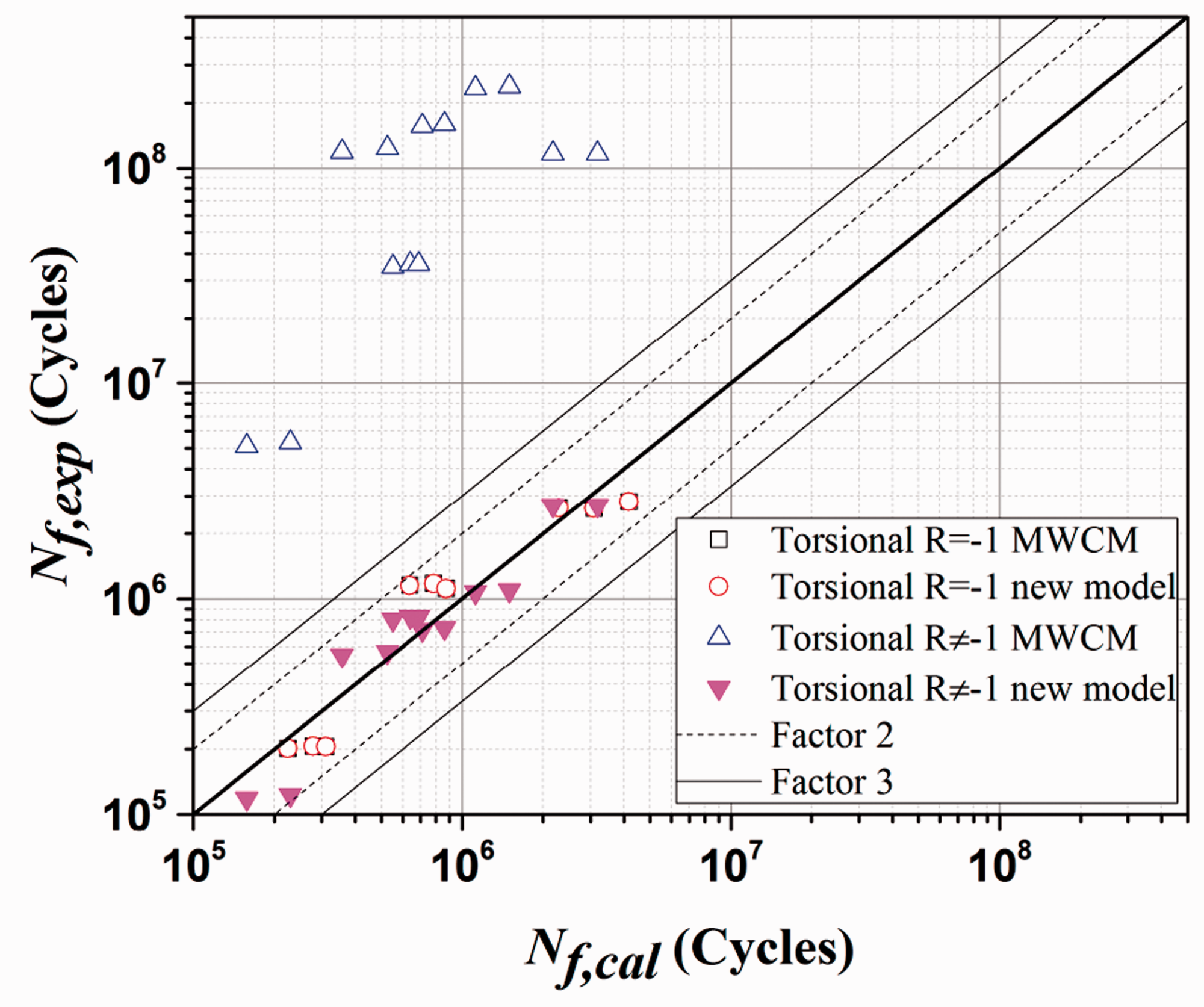
From the above comparisons, it can be found that, since the fatigue equations of the two models can be reduced to the same form under two basic R = −1 uniaxial loadings, there is no deviation in prediction accuracy between them. Perhaps due to the fact that there is only one material parameter m in the MWCM, the axial mean stress effect on 18G2A may not adequately addressed, so that the R ≠ −1 axial predictions of MWCM are not as good as those of the new model. Nevertheless, the new model can obtain the R ≠ −1 uniaxial results with the similar accuracy to those without shear mean stresses. Thus it can be concluded that equations (7) and (8) are capable of properly revealing the impact of the mean stress on both axial and torsional loadings in terms of an effective stress parameter
Furthermore, Figure 5 and Table 5 summarize the comparison results with regard to the multiaxial loadings. The R = −1 results calculated by the present model and MWCM are well correlated with the experiment, leading to the relative error ranges [−54,−12] (%), [−65, −37] (%) and error indexes 33%, 50%, respectively. This indicates that the definition of multiaxial parameter ρ in equation (5) has the ability to appropriately quantify the stress multiaxiality under proportional loadings.
Comparisons of experimental and calculated lives by the new model and MWCM under multiaxial loadings of R=−1 for 18G2A steel. Comparisons of experimental and calculated lives by the new model and MWCM under multiaxial loadings (18G2A).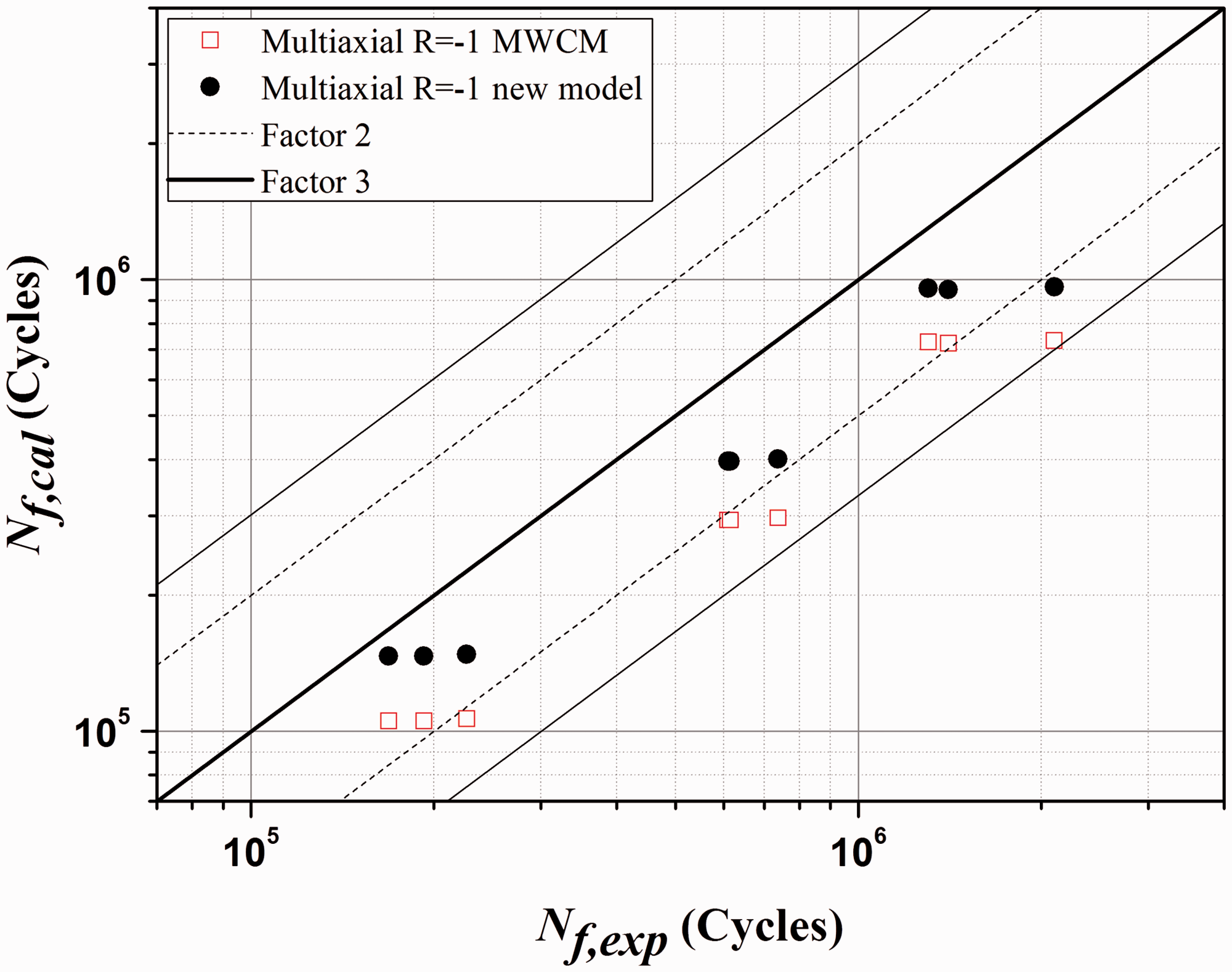
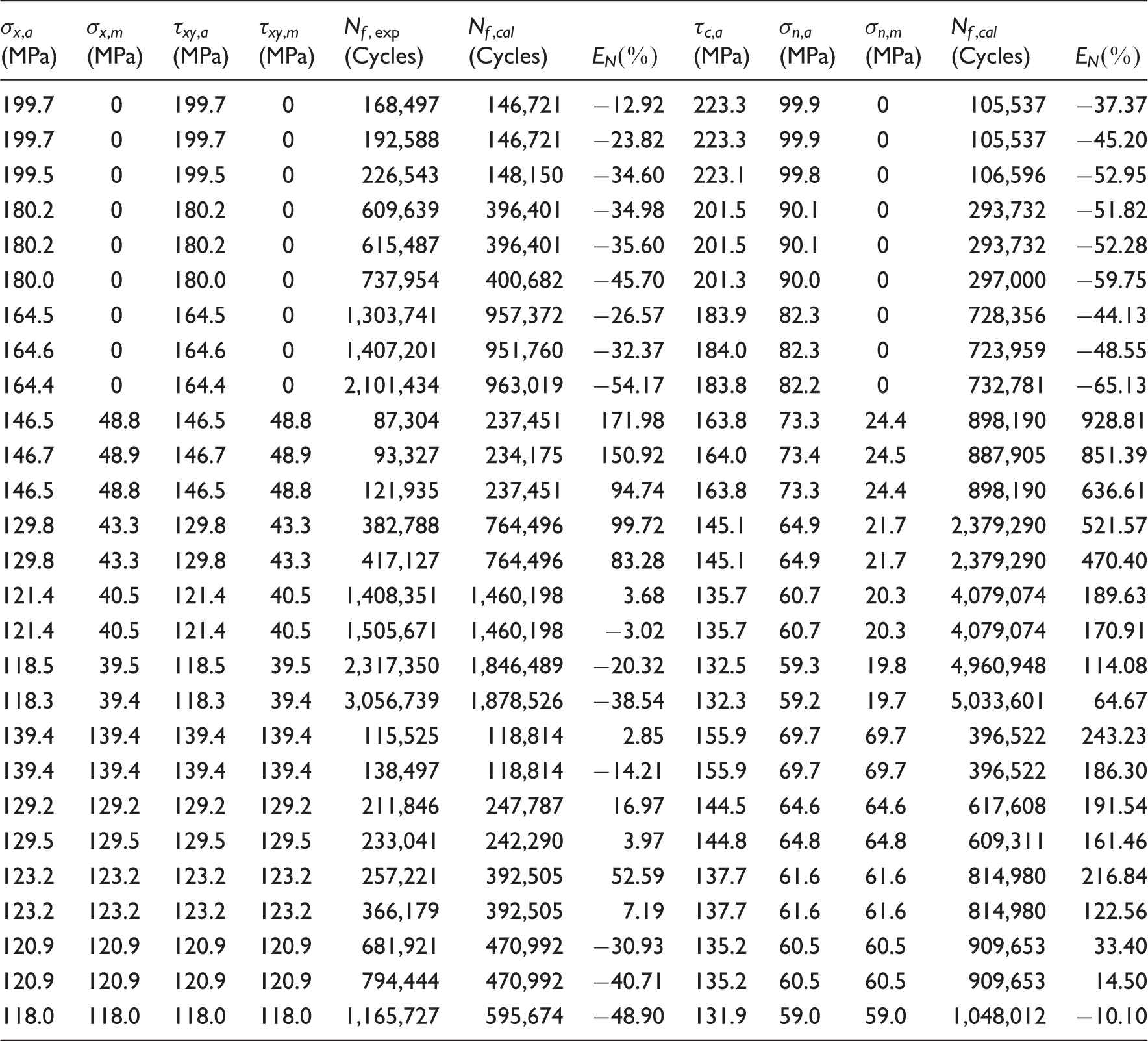
Turning to the R ≠ −1 multiaxial conditions shown in Figure 6, the predictions of the new model are satisfactory, falling within the interval of factor 2 lines, accompanied by a relative error range [−48, 171] (%) and an error index 49%. Meanwhile, it is simple to catch the phenomenon that the forecast precision of the new model under R ≠ −1 multiaxial loadings are close to that under R = −1 multiaxial loadings. The similar phenomenon can also be observed in the axial and torsional cases. This is benefited from that the proposed fatigue equation possesses invariable mathematical form independent of loading cases as given in equation (6); the simplified uniaxial equations (equation (7) and (8)) and multiaxial parameter ρ have been proved to be effective in representing the influences of mean stress and stress multiaxiality, respectively.
Comparisons of experimental and calculated lives by the new model and MWCM under multiaxial loadings of R ≠ −1 for 18G2A steel.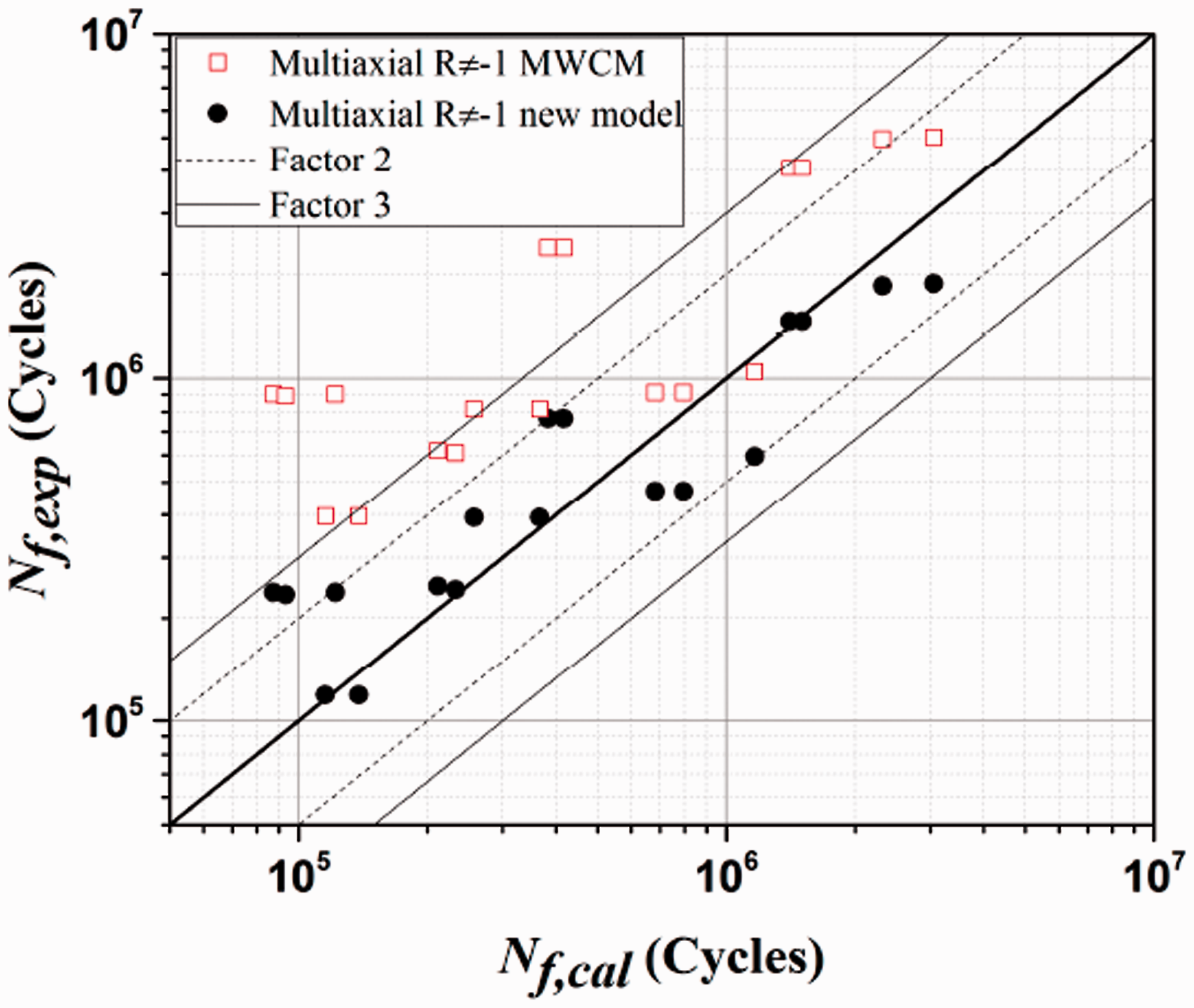
On the other hand, almost all the results of MWCM are located out of the factor 2 lines, with several points even out of the five or more scatter bandwidth on the non-conservative side in Figure 7. As to the reason for the poor accuracy of MWCM under the R ≠ −1 torsional and multiaxial loadings, an explanation was suggested by Cristofori et al. (2008) that fatigue behavior of 18G2A steel is highly sensitive to the presence of non-zero mean torsional stresses. In spite of this, the MWCM has no ability to handle this situation, due to the definition of effective multiaxial parameter Comparisons of experimental and calculated lives by the new model and MWCM under fully reversed loadings for 30NCD16 steel.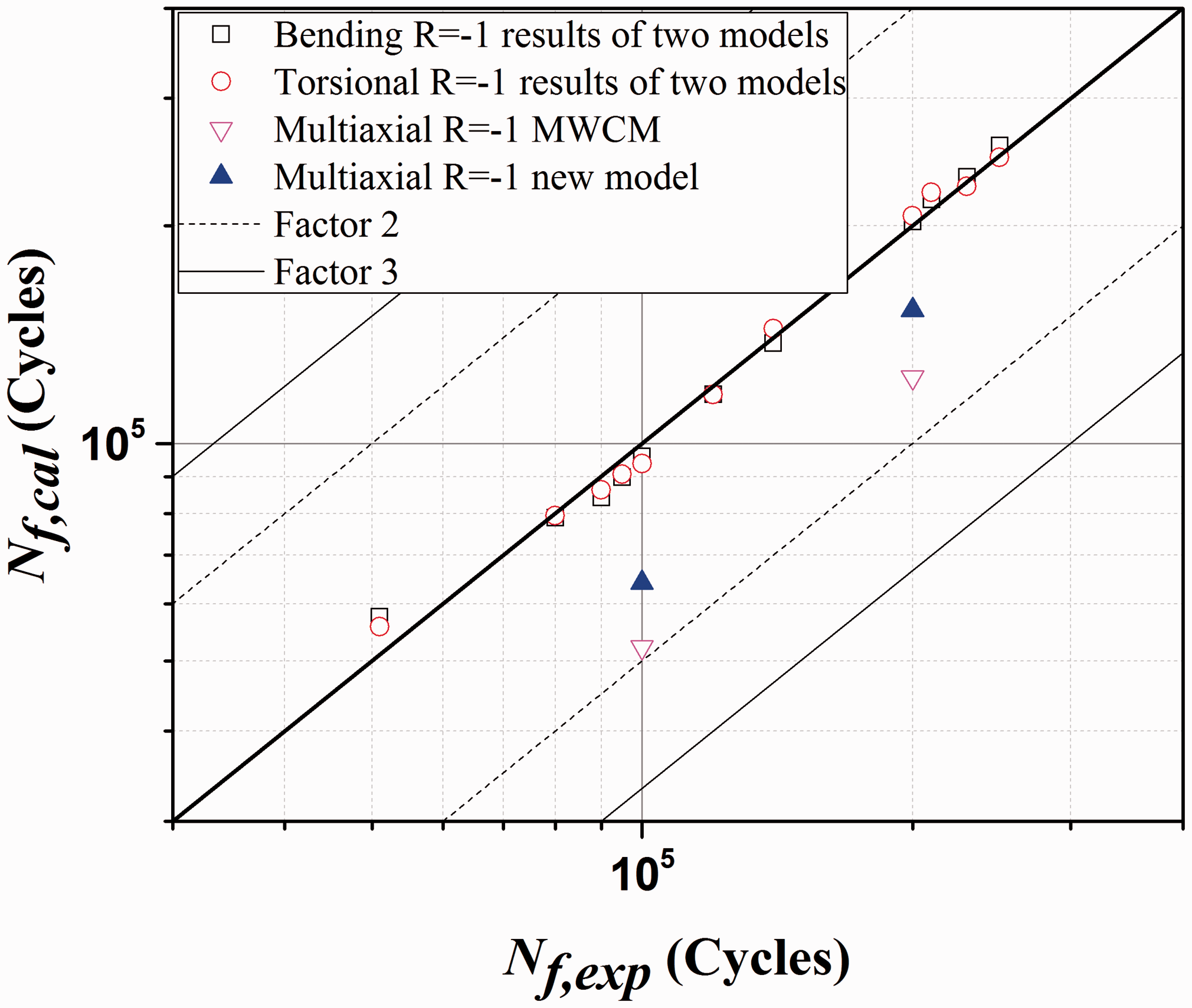
In addition, by comparing the R ≠ −1 torsional and multiaxial predictions of MWCM (Figures 4 and 6), it can be seen that the multiaxial accuracy is no longer as bad as the torsional one. This indicates that the influence of shear mean stress on multiaxial loadings is indeed slighter than that on torsional loadings, and it can be intuitively embodied by the proposed model. In detail, as listed in Table 2 that
To conclude, the present model has a capacity to properly consider the contribution of not only the axial mean stress but also the torsional mean stress to multiaxial fatigue life assessment, so that it can be applied to more diverse metallic materials, especially those have non-ignorable sensitivity to the shear mean stress effect.
As the second part, abundant conditions can be encountered in the fatigue researches. Such as the standpoint that the presence of mean torsional stresses can be neglected as long as it is within a certain range (Davoli et al., 2003; Sines, 1961), and some materials are indeed less sensitive to the impact of shear mean stresses. Furthermore, sometimes the R ≠ −1 torsional loading data is absence due to the limit of experiment amount. The effectiveness of the present model to the above conditions will be verified with the tests of 30NCD16 steel (Froustey and Lasserre, 1989). The torsional and multiaxial loadings of the tests do not include shear mean stresses, so that the shear mean stress effect is neglected for this material. Therefore, a new assignment operation of the parameters
In detail, it can be found from Figures 1 and 2 that the relationships between
Figure 7 presents an overall comparison for the fully reversed uniaxial and multiaxial loadings. The perfect results can be observed in the two basic uniaxial cases. Simultaneously, the R = −1 multiaxial results calculated by the present model are also slightly superior to those of MWCM, with the minor error indexes 29%. Furthermore, the predictions of two compared approaches applied to the loadings with different mean stresses are shown in Figures 8 and 9, and detailed numerical values are listed in Table 6. A set of close results can be achieved related to the R ≠ −1 axial loadings, with the error indexes 41% and 37%.
Comparisons of experimental and calculated lives by the new model and MWCM under bending loadings with different mean stresses for 30NCD16 steel. Comparisons of experimental and calculated lives by the new model and MWCM under multiaxial loadings with different mean stresses for 30NCD16 steel. Experimental and computational results related to 30NCD16 steel. Note: The last four rows are out-phase loadings with 90° shift.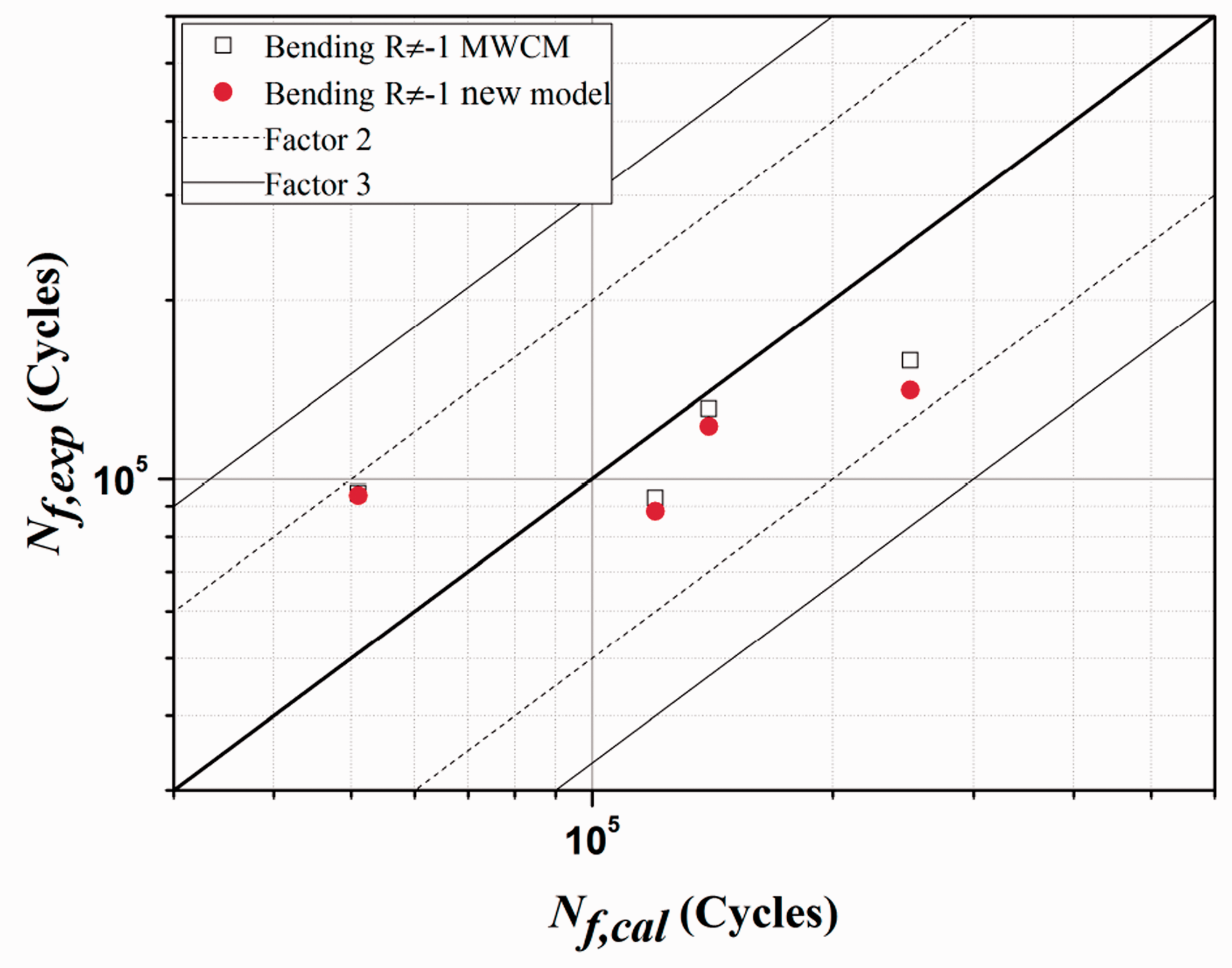
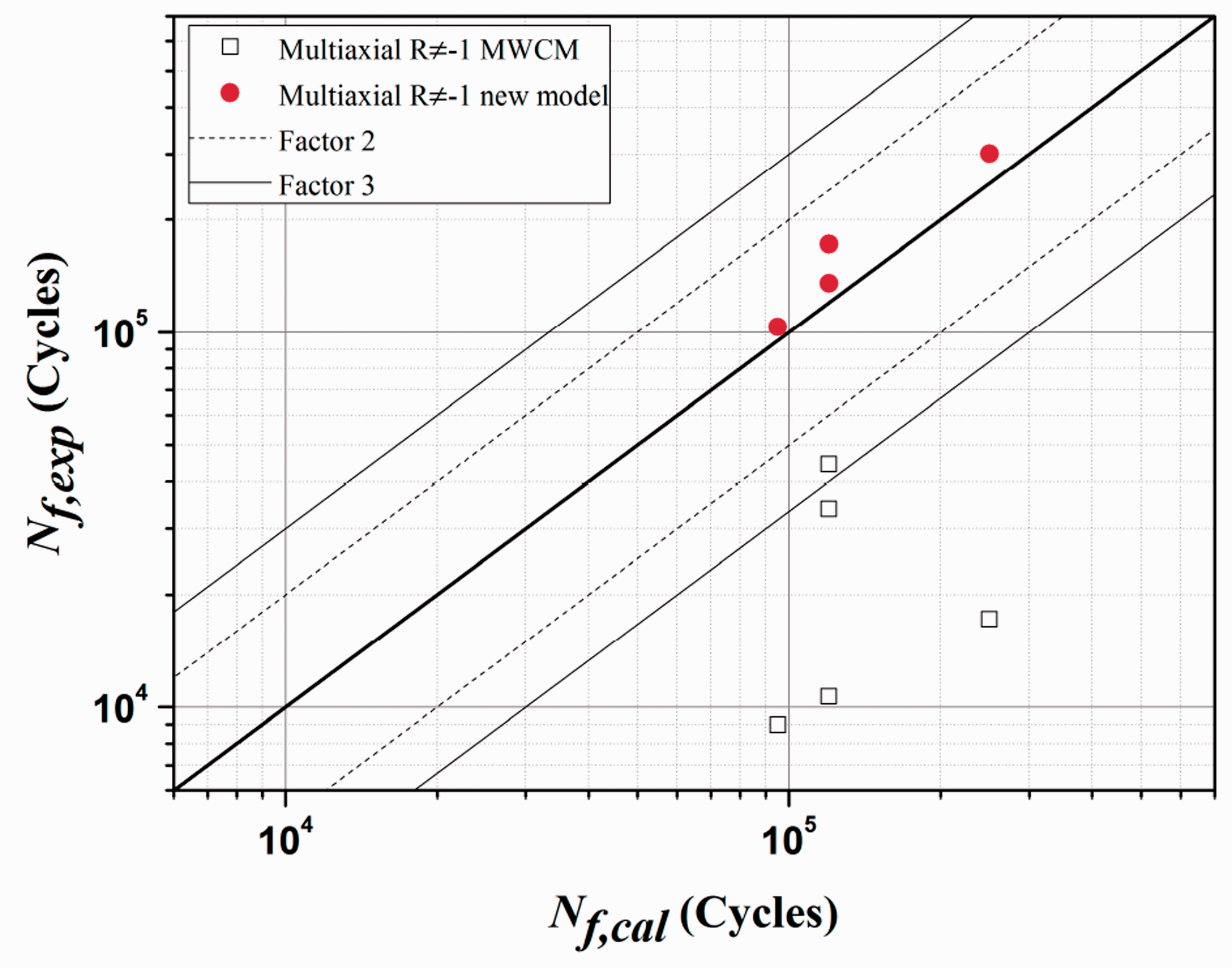
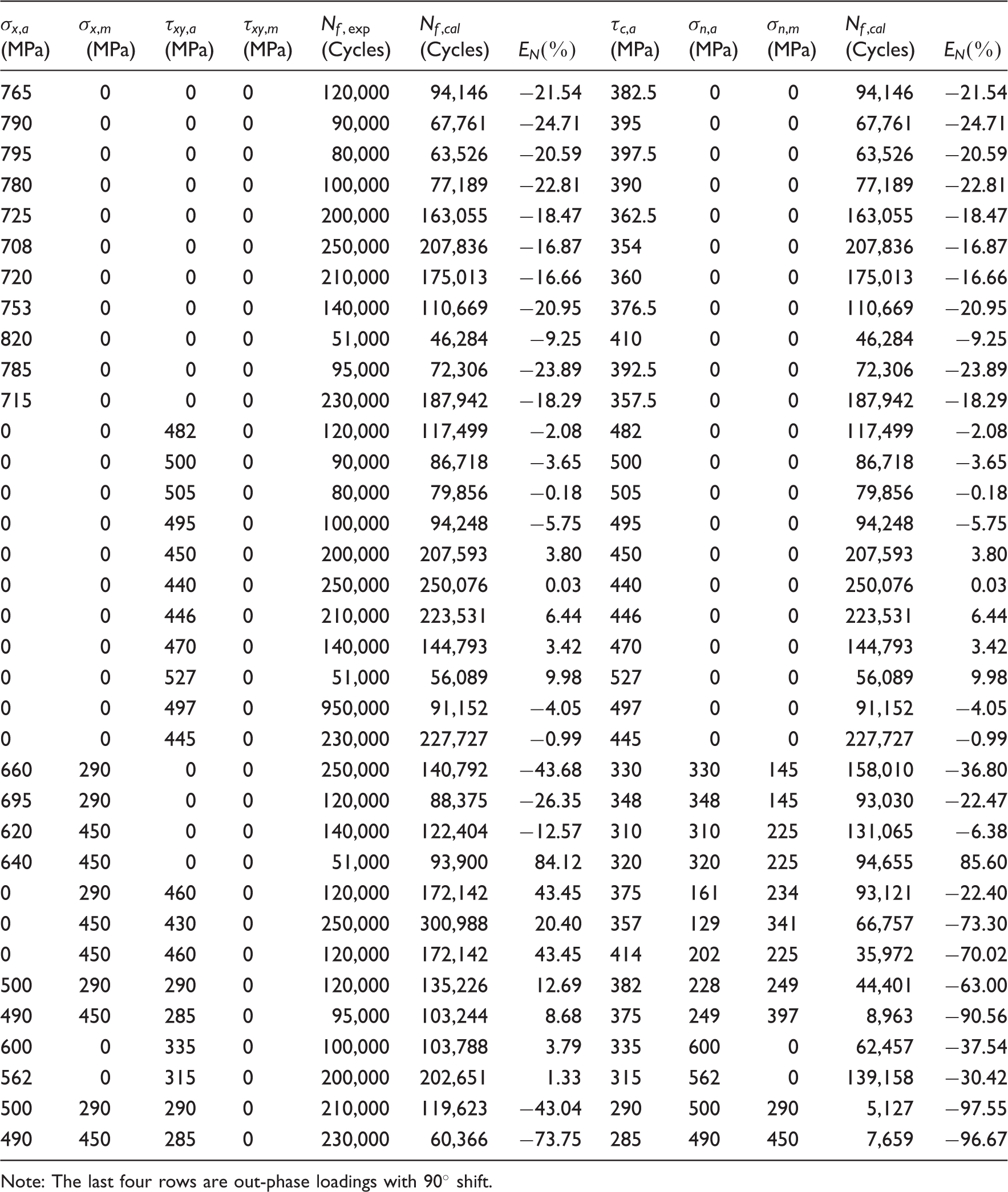
Turning to the R ≠ −1 multiaxial cases, the evaluated results by the present model are significantly superior to those of MWCM, resulting in the relative error range [8, 43] (%) and an error index 25%, and the points are included in the two scatter bandwidth in the chart. Whereas the MWCM leads to the results accompanied by the error range [−90, −22] (%) and the error index 63%, and most of them fall out of the three scatter bandwidth, with the error of 4 of the total 5 points being over 60%.
The scattered results produced by MWCM in Figure 9 can be explained by that, the axial mean stress effect on multiaxial loadings is slighter than that on axial loadings; in other words, following the same mean stress sensitivity index (m) determined by the axial cases may lead to large deviations in multiaxial situations. This further illustrates the rationality of the transition process expressed by equations (14) and (15). Additionally, it is worth mentioning that the calculated sensitivity index, m, of both validation materials are out of the range between 0 and 1, which is suggested by Susmel (2008), and thus it also implies that the range of MWCM performing mean stress fatigue assessment may be limited.
Different from the MWCM, which concentrates the descriptions of mean stress effect and multiaxial influence on one effective multiaxial parameter
The extended non-proportional fatigue life prediction equation
As discussed in the last section, the effectiveness of the proposed model for proportional aspect has been verified, and the fatigue equation structure is well extensible. Thus, in this section, the authors make a trial extension to make the proposed model applicable to non-proportional cases, which is a common loading form in engineering.
It has to admit that the non-proportional fatigue assessment is still an open problem. Recently, a widely developed viewpoint suggested that cyclic stress hardening response is closely contact with non-proportional fatigue damage. Therefore, in some criteria, typically Fatemi and Socie criterion (1988), both stress and strain components are adopted to form fatigue parameters. In conjunction with the cyclic constitutive relation of the evaluated material, the cyclic stress hardening or softening response can be introduced to account for non-proportional additional detriment.
However, there are always two sides to everything. The aforementioned cyclic constitutive relation is normally not readily accessible. Moreover, as reviewed on some non-proportional tests (Pejkowski, 2017), a conclusion can be drawn that the variation tendency of cyclic stress hardening and non-proportional hardening is inconsistent for some metallic materials. Consequently, the authors believe that a general engineering fatigue approach has to acknowledge that the sensitivity of fatigue life to non-proportional loadings is a material property.
For the purpose of extending the present stress controlled model to implement life forecast under non-proportional loadings, the widely approved non-proportional fatigue criterion proposed by Itoh et al. (1995) is used for reference, and it can be converted to the form of stress components

The purpose of Itoh criterion is to establish the relationship between the amplitudes of equivalent non-proportional stress and corresponding effective proportional stress, and the proposed mean stress model is precisely to describe the behavior of corresponding effective proportional stress with mean stresses. Thus, the extended non-proportional fatigue life prediction equation can be obtained by substituting 
The extended model will be validated with three sets of fatigue experimental data from Refs (Froustey and Lasserre, 1989; Susmel and Petrone, 2003; Zhang et al., 2016). The first instance is the out-phase part of 30NCD16 steel experiments, whose proportional part has been applied in the verification in the section Experimental verification and discussions. The non-proportionality effect is introduced by using the combined sinusoidal bending and torsion with 90° phase shift, and the out-phase loadings with non-zero mean axial stresses are also included. Under such out-phase loadings, the non-proportionality factor can be concisely decided as the ratio of the two principal axes of the elliptical loading path, and the material parameter a can be obtained by fitting the proportional and 90° out-phase experimental data, a=0.29.
The out-phase comparison results of the both models for 30NCD16 steel are shown in Figure 10, and the detailed values are listed in Table 6. As can be seen that, removing the fitting data of R = −1 out-phase loadings, i.e., Comparisons of experimental and calculated lives by the new model and MWCM under 90° out-phase loadings for 30NCD16 steel.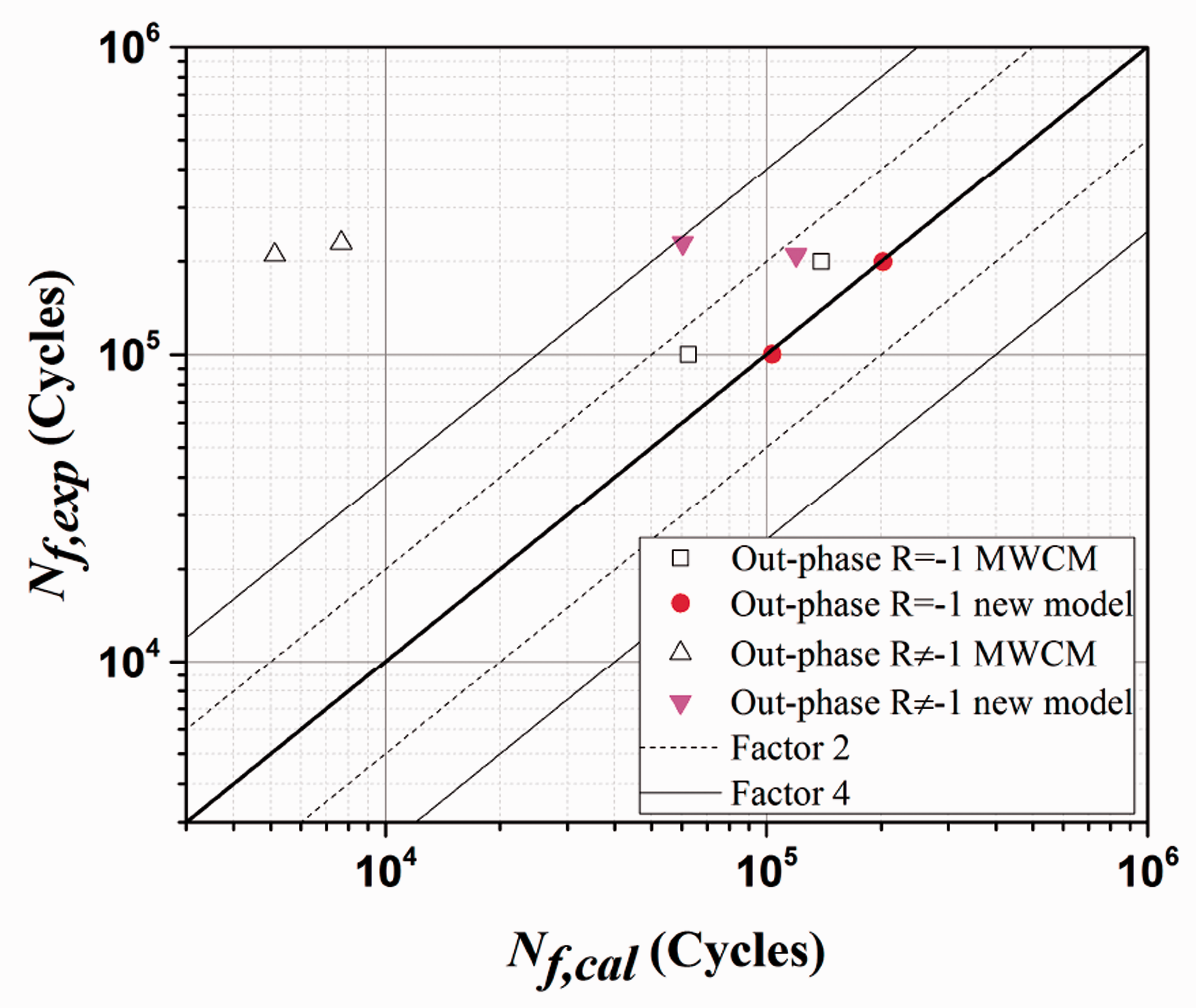
The second example consists of the tests on 6082-T6 solid cylindrical specimens conducted by Susmel and Petrone (2003). The combined sinusoidal axial and torsional loadings comprise two phase shifts (90° and 126°), and the material parameter a can be obtained by the identical measure as above. For comparison fairness, it have to declare that in this instance the parameter a is fitted by using the proportional loading data and only one point of 90° out-phase loading (Specimen Code: P46BT20), a=0.23.
Figure 11 shows the comparisons of experimental and calculated lives by the proposed model and MWCM for 6082-T6. It illustrates that each prediction of the new model under multiaxial in-phase loadings is better than the corresponding one of MWCM with an error reduced by approximately 10%. Meanwhile, for the non-proportional loadings with 90° and 126° phase shifts, it can be intuitively found that the precision of the present model is generally higher than that of MWCM accompanied by a less maximum error. In addition, as to the non-proportional fatigue assessment without mean stresses, a specialized study has been published by the present authors in the strain components form (Liu and Yan, 2018b), and readers are advised to acquire more information from it.
Comparisons of experimental and calculated lives by the new model and MWCM for 6082-T6.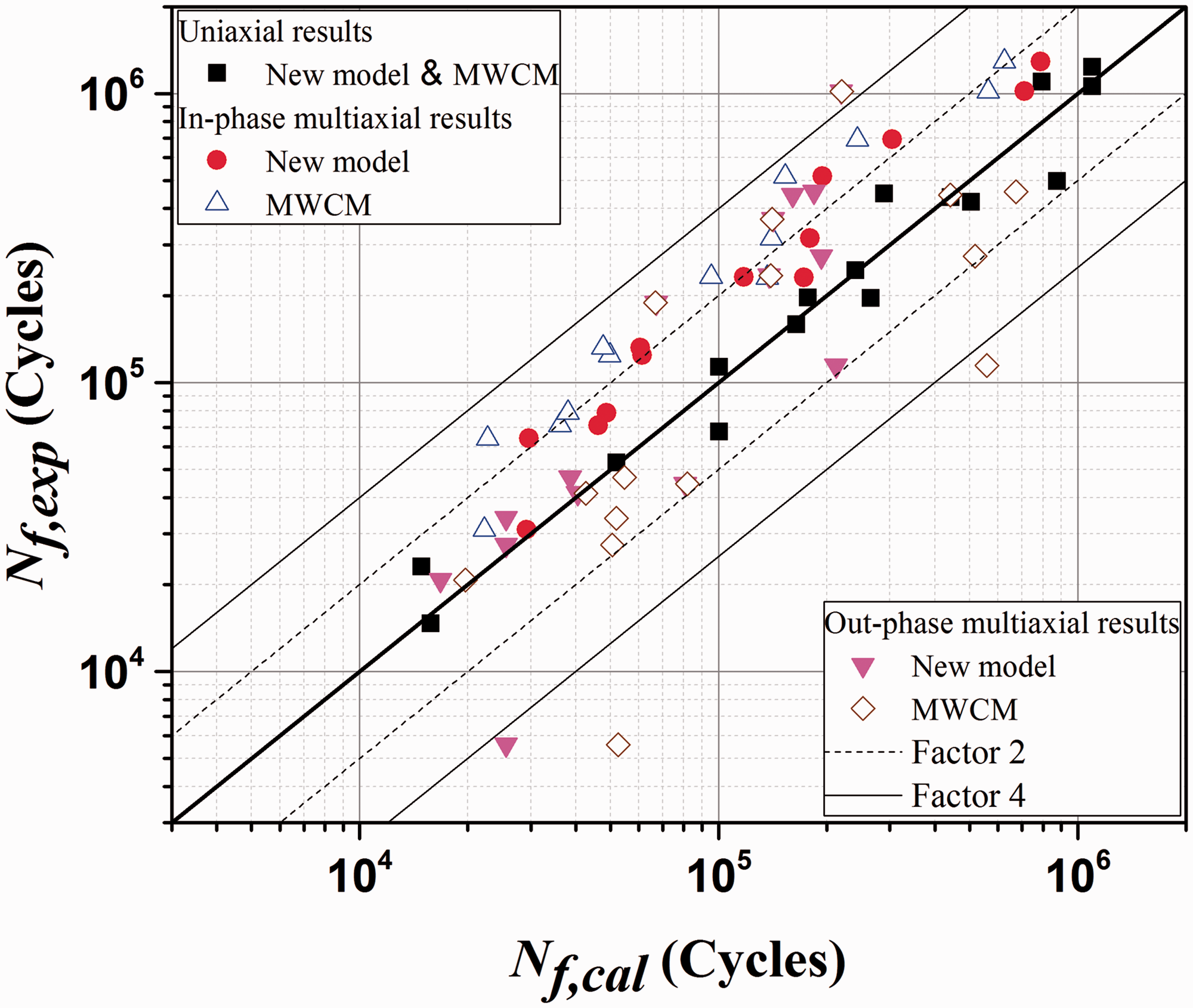
The final examination is on the 7075-T651 aluminum alloy (Zhang et al., 2016), which includes four phase shifts (30°, 45°, 90° and 180°). To reduce the number of required material parameters, the parameters n1 and n0 are taken as 1 for this example, and the calculated material parameters are listed in Tables 1 and 2, and a is equal to 0.23. Figure 12 presents an overall comparison of measured and calculated lives.
Comparisons of experimental and calculated lives by the new model and MWCM for 7075-T651 aluminum alloy.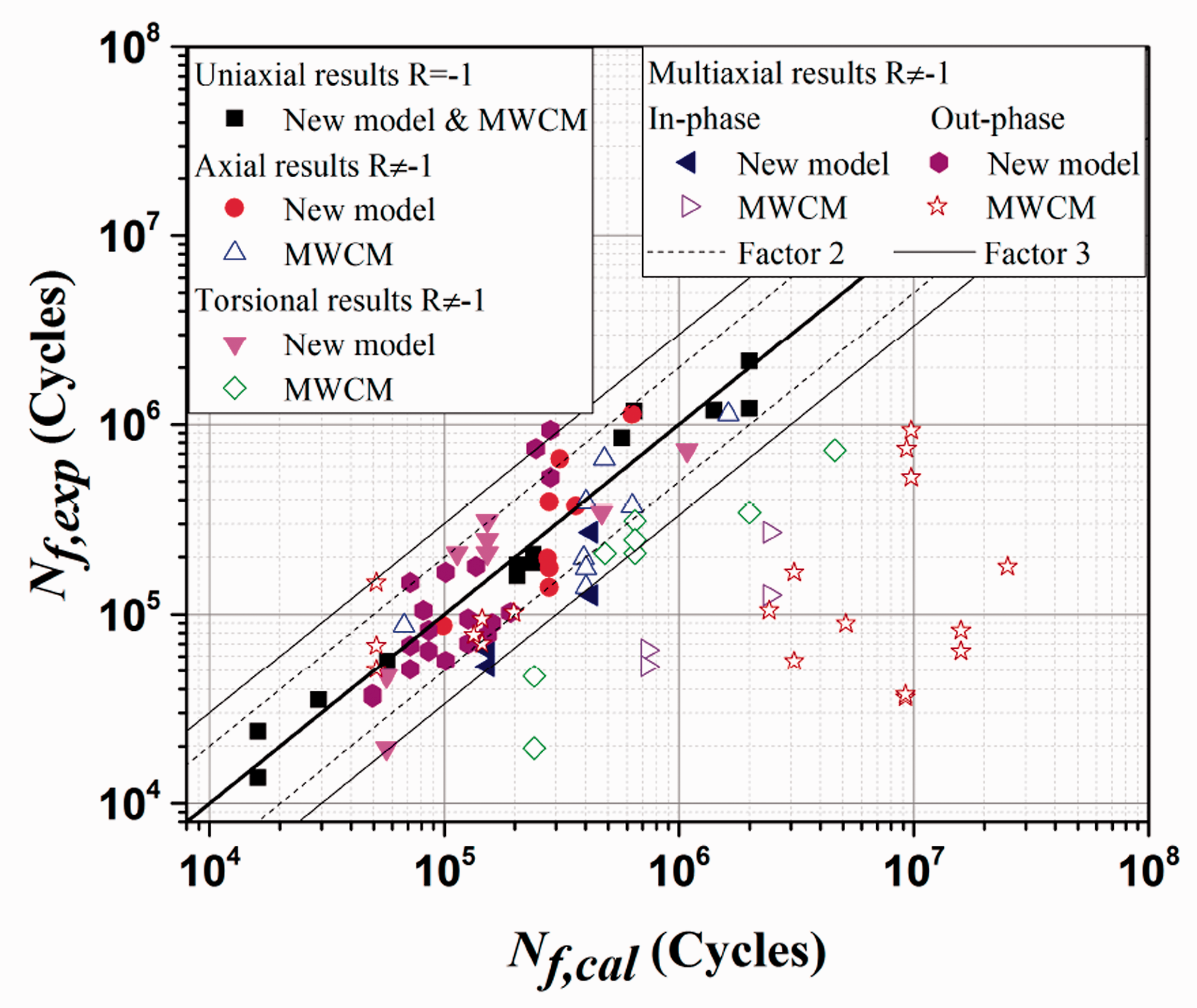
In detail, both models can obtain the axial satisfactory results, whether or not the mean stresses are contained. However, MWCM is once again invalid in the R ≠ −1 torsional cases, thus further affecting its multiaxial prediction accuracy in both in-phase and out-phase conditions. Contrarily, the extended model can achieve multiaxial results consistent with the accuracy of uniaxial results, regardless of whether the loads include the mean stresses. This indicates that the extended model has the ability to take full account of the influencing factors of each concern (multiaxial, mean stress and non-proportional effects).
To conclude, under the non-proportional loadings, although the proposed model needs to fit a material parameter a, it possesses the characteristics of high prediction accuracy and computational convenience, which is cost-efficient to make up for this shortcoming. In addition, for the energy-based methods, the process of calculating cyclic constitutive law will increase the computational complexity and time consuming. Meanwhile, as mentioned in above, the conclusion that the trend of cycle stress hardening and non-proportional hardening is uncertain for some materials may also affect their reliability of application.
Conclusions
In this paper, a new general model for predicting multiaxial fatigue life with influence of different mean stresses is presented. The following major conclusions can be drawn:
Based on the famous MWCM and conventional mean stress criteria, the new model adopts a mathematical equation with invariable form to take into account the multiaxial mean stress effect. A typical difference from MWCM is that the proposed model can consider the impact of shear mean stresses on finite fatigue life, which is in sympathy with the opinion of Papadopoulos on this aspect. The contribution of both axial and torsional mean stresses to multiaxial fatigue damage can be taken into account by the new model, which has been proved to be reasonable through experiments of 18G2A steel. Moreover, the model can be reduced to the form without considering the contribution of shear mean stresses as validated with material 30NCD16 steel. Benefited from the proposed fatigue equation structure, which places the part representing the multiaxial S–N curves (right part of equation (6)) and that indicating the mean stress influence (left part of equation (6)) on the two sides of equation individually, the model can separately address the two aspects for a given loading. In other words, these influence factors are separately located in the equation form, thus the present model possesses well extendibility and variability, and it can be trivially optimized by using the expressions of criteria that are more reasonable for the corresponding factor to replace the original one. Furthermore, an extended model applied to non-proportional loads is proposed by combining with the Itoh criterion, whose effectiveness has been proved by satisfactory prediction accuracy. A wildly used stress invariant (von Mises stress) is taken as the fatigue parameter, so that the model is convenient for application in the design phase of mechanical components, especially when the fatigue life is included in the objective function of optimal design.
Footnotes
Declaration of conflicting interests
The author(s) declared no potential conflicts of interest with respect to the research, authorship, and/or publication of this article.
Funding
The author(s) received no financial support for the research, authorship, and/or publication of this article.