






Abstract
The purpose of this study was to examine how doctoral experiences, coursework, and motivations influenced music education faculty members’ decisions to seek and remain in positions at doctoral-granting institutions. We surveyed 159 music education faculty members in the United States using an instrument addressing doctoral experiences, coursework, and career motivations. We analyzed data using descriptive statistics, exploratory factor analyses, and factorial MANOVAs to examine perceived influence and differences by gender, academic rank, and professional experience. We found that working closely with graduate music education faculty and conducting original research exerted the strongest influence, whereas undergraduate advising and university-sponsored private lessons exerted the weakest influence. Research-based coursework influenced career decisions more than applied coursework. Career motivations were primarily intrinsic and professional, including continued learning, commitment to teaching, and contributing to the profession. Few group differences emerged; however, we identified a significant interaction between gender and academic rank for pragmatic career considerations.
Keywords
Introduction
The quality, sustainability, and accessibility of music education in schools are closely tied to the preparation of music teachers and, by extension, to those who educate them. Music teacher educators play a central role in shaping instructional practice, professional identity, and pedagogical decision-making across K–12 and higher education contexts. Understanding how music teacher educators are prepared, and what influences individuals to pursue and remain in these roles, has direct implications for music teaching and learning.
Doctoral programs in music education serve as the primary pathway for preparing future music teacher educators. Prior research has documented concerns regarding recruitment and retention in doctoral study, including financial barriers, time commitments, and opportunity costs (Asmus, 2001; Martin, 2015; Nettles & Millett, 2006; Teachout, 2004). Although these structural factors are influential, they offer limited insight into how doctoral experiences shape professional identity, commitment, and career trajectories.
A growing body of scholarship identifies graduate experiences such as mentoring, research engagement, teaching opportunities, and coursework as key mechanisms of professional socialization (Austin & McDaniels, 2006; Bond et al., 2022; Bond & Koops, 2014; Conway et al., 2014; Pellegrino et al., 2014). In music education, researchers have emphasized supervised teaching, collaborative research, and faculty–student interaction in supporting confidence, identity development, and professional commitment (Bond et al., 2022; Conway et al., 2014; Madsen, 2003; Martin, 2015; Russell & Haston, 2015). However, most studies focus on graduate students during their programs, with less attention to the retrospective perspectives of individuals who enter and remain in music teacher educator roles.
Examining which doctoral experiences are retrospectively perceived as influential may provide insight into how programs can better support the preparation of music teacher educators and strengthen music teaching and learning across contexts. This perspective is especially relevant given evolving expectations for music teacher educators as researchers, mentors, and instructional leaders within complex educational environments. Therefore, the purpose of this study was to examine the influence of doctoral experiences, coursework, and career motivations on music education faculty members’ decisions to seek and remain in positions at doctoral-granting institutions. Specifically, we sought to identify which experiences and areas of coursework were perceived as most influential and whether these perceptions differed by gender, academic rank, or professional experience. Because the data are cross-sectional and retrospective, these constructs are treated as conceptually linked rather than temporally distinct.
Literature Review
Doctoral education in music education occupies a critical position in the sustainability of the profession, serving as the primary pathway for preparing future music teacher educators. Despite varied career outcomes and the need for more recent data, prior research indicates a potential shortage of well-prepared music teacher educators and a decline in individuals pursuing terminal degrees in the field (Asmus, 2001; Hickey, 2002; Martin, 2015; Teachout, 2004).
Researchers have consistently identified structural factors as barriers to doctoral study, including financial cost, opportunity cost, and time away from family (Nettles & Millett, 2006; Teachout, 2004). More recently, Hanson and Roberts (2023) found that Black doctoral students anticipated financial sacrifice when transitioning into faculty roles. These barriers, largely external to doctoral education, remain beyond the direct control of faculty, even when advocacy for support is possible.
In contrast, faculty exert considerable influence over the quality of graduate experiences. Scholars have suggested that meaningful preparation may mitigate structural barriers by enhancing the value of doctoral study. In music education, Madsen (2003) emphasized alignment between graduate experiences and effective teaching practice. Russell and Haston (2015) found that authentic, faculty-supervised learning experiences supported identity development, pedagogical growth, psychological development, and enjoyment. Springer (2020) reported that master’s students were primarily motivated by professional growth and intellectual engagement, often viewing the degree as a pathway to doctoral study, though research engagement was frequently limited to reading and discussion. These findings align with broader research indicating that supervised, contextualized experiences support professional competence and engagement (Bond et al., 2022; Dolan & Johnson, 2010).
Graduate experiences also influence commitment, confidence, and stress. While some studies report variability in professional commitment (Berg, 2010; Fresko et al., 1997), Russell and Haston (2015) found increased commitment, confidence, and reduced anxiety following graduate study. Conway et al. (2014) similarly observed that doctoral students’ confidence and professorial identity were strengthened through teaching and reflection. Related findings appear in broader research on teacher self-efficacy and stress (Hancock, 2008; Skaalvik & Skaalvik, 2007), suggesting that graduate experiences shape both immediate outcomes and longer-term professional orientations.
Graduate students’ instructional and mentoring roles introduce additional complexity. Undergraduate students often report positive perceptions of graduate instructors (Buerkel-Rothfuss & Fink, 1993; Cox et al., 2010), yet concerns persist that extensive responsibilities may undermine both undergraduate learning and graduate development (Tice & Lambert, 1993). This tension highlights the need to examine which experiences are perceived as beneficial or detrimental.
Mentoring is a central component of graduate education. Dolan and Johnson (2010) demonstrated that mentoring relationships benefit both mentors and mentees, contributing to research productivity, community, leadership development, and overall satisfaction. In music education, Bond et al. (2022) found that intentional mentoring supported identity development, professional integration, and access to collaborative opportunities, while limited mentoring was associated with weaker integration. Sims and Cassidy (2020) further identified mentoring as a protective factor against impostor phenomenon, with higher quality mentoring linked to reduced self-doubt and psychological distress.
Doctoral education also functions as a primary site of professional socialization into faculty roles. Teaching and research assistantships introduce norms and expectations of academic work (Conkling & Henry, 2008), though socialization processes are often inconsistent and unstructured (Alleman et al., 2025; Lester et al., 2025; Nyunt et al., 2024; Spinrad et al., 2022; Tierney & Bensimon, 1996). Doctoral students navigate identity transitions from learners to colleagues in training (Austin & McDaniels, 2006; Cho et al., 2011; McDaniels, 2023; McLean & Price, 2019; Nasser-Abu Alhija & Fresko, 2021; Nyquist et al., 1989).
In music education, this process is particularly complex due to the multifaceted roles of music teacher educators as teachers, researchers, mentors, and collaborators (Bond & Koops, 2014; Conway et al., 2010; Martin, 2015; Pellegrino et al., 2014). These roles are shaped through coursework, experiential learning, mentoring, and professional opportunities. Examining which experiences are perceived as influential by those who have entered and remained in these roles may provide insight into how doctoral programs can better prepare future faculty.
Such insight may inform decisions about allocating time and resources across research, teaching, and applied study; structuring mentoring relationships; and introducing students to the full scope of faculty responsibilities. If certain experiences are consistently linked to long-term commitment, programs may consider whether they are intentionally embedded and equitably accessible.
Method
Instrument
Participants completed a researcher-created Impact of Graduate Experiences and Interactions (IGEI) questionnaire. We developed the instrument based on previous research examining graduate experiences in music education (e.g., Teachout, 2004). Students enrolled in a graduate research course served as a focus group and helped us improve item clarity and identify additional potentially influential experiences and interactions.
Following this stage, we invited a panel of 10 music education faculty members from various institutions, either familiar with the content area or experienced in survey design, to review the questionnaire. Panel members provided feedback regarding questionnaire length, item clarity and comprehensiveness, and evidence of content validity, consistent with recommendations by Groves et al. (2004). Based on this feedback, we revised item wording, shortened question prompts, and added several items to better capture influential graduate experiences and interactions. The final version of the IGEI consisted of 15 items in the form of Likert-type and ipsative items and required approximately 8 min to complete.
Population, Procedure, and Sampling
To examine the influence of graduate experiences and interactions on participants’ decisions to seek and remain in positions at doctoral-granting institutions, we collected data from music education faculty members at such institutions in the United States. Data were collected prior to the height of the COVID-19 pandemic, when online and hybrid doctoral program models were less prevalent, which may have influenced some findings. However, because we examined both entry into and persistence within faculty roles, participants were not limited to early-career faculty, and analyses proceeded with this context in mind. Institutions offering doctoral degrees in music education were identified using the list compiled by Rutkowski and Webster (2011), which was updated through a web-based search. Faculty email addresses for individuals teaching music education at these institutions were then compiled using the same process.
We initially identified 337 faculty email addresses. Four individuals opted out of the study, and four addresses were invalid, resulting in a final population of 329 faculty members. Given the relatively small population size, the web-based questionnaire was distributed to all identified individuals. Following the initial distribution, 112 music teacher educators responded (34% response rate). After follow-up reminders, an additional 47 individuals responded, yielding a final sample of 159 participants (48% response rate, 5.6% margin of error). Compared with previous survey-based studies of music education faculty, including Hewitt and Thompson (2006; 35.66%), Brewer and Rickels (2012; 35.5%), and Chandler and Russell (2012; 32.6%), the response rate in the present study was higher than those reported in comparable national surveys. As Fowler (2013) noted, response rate and sampling error should be interpreted in relation to the sampling strategy and assessment of potential nonresponse bias. Accordingly, multiple analyses were conducted to examine nonresponse error.
To assess potential nonresponse error, we compared early and late respondents with late respondents serving as proxies for nonrespondents (Lindner et al., 2001; Miller & Smith, 1983). Bivariate analyses comparing the first 30 respondents with the last 30 respondents revealed no significant differences in major questionnaire items. In addition, 10 nonrespondents were contacted by phone and agreed to complete the questionnaire verbally. Comparisons revealed no significant differences between these individuals and the initial 30 respondents. Data from these 10 participants were not included in the final analysis.
Participant Demographics, Teaching Context, and Educational Background
One hundred fifty-nine participants completed the questionnaire. Of these, 47.2% identified as female, and the mean age was 51 years (range = 28–79), consistent with previous national studies of music teacher educators (e.g., Brewer & Rickels, 2012; Hewitt & Thompson, 2006). Participants reported an average of 5.7 semesters in residence, suggesting that many completed doctoral degrees within campus-based program structures.
Most participants (63.7%) were tenured, 25.0% were untenured but on the tenure track, and 11.3% held non–tenure-track positions. Academic rank was broadly distributed across full professors (31.4%), associate professors (29.6%), and assistant professors (25.2%), with smaller proportions identifying as lecturers (2.7%), instructors (2.0%), or other roles such as professor of practice or adjunct associate professor (9.6%). Participants had an average of 14 years of teaching experience at their current doctoral-granting institution and nearly 18 years of total college-level teaching experience. Prior to entering higher education, they reported an average of 8 years of PK–12 teaching experience.
Most participants earned master’s degrees in music education (64.2%), followed by performance (17.6%) and conducting (7.4%), with 10.1% in related or interdisciplinary fields. Master’s-level coursework was completed through a variety of formats, most commonly full-time academic-year study. During doctoral study, participants reported an average of 5.7 semesters in residence (range = 0–12). The majority earned a Ph.D. (81.0%), followed by the DMA (8.1%), Ed.D. (6.8%), DME (2.0%), or DA (0.7%). One participant reported earning a Ph.D. outside of music education, and one reported not completing a doctoral degree.
Findings
Influential Doctoral Degree Experiences
Participants rated the influence of various doctoral experiences on their desire to seek and remain in a music education position at a doctoral-granting institution. Descriptive results indicated that working with graduate music education faculty members and conducting original research for a doctoral capstone project were among the most influential experiences. In contrast, serving as an academic advisor for undergraduate students and participating in university-sponsored private lessons were among the least influential experiences. Descriptive statistics for all experiences are presented in Table 1.
Descriptive Statistics for All Experiences.
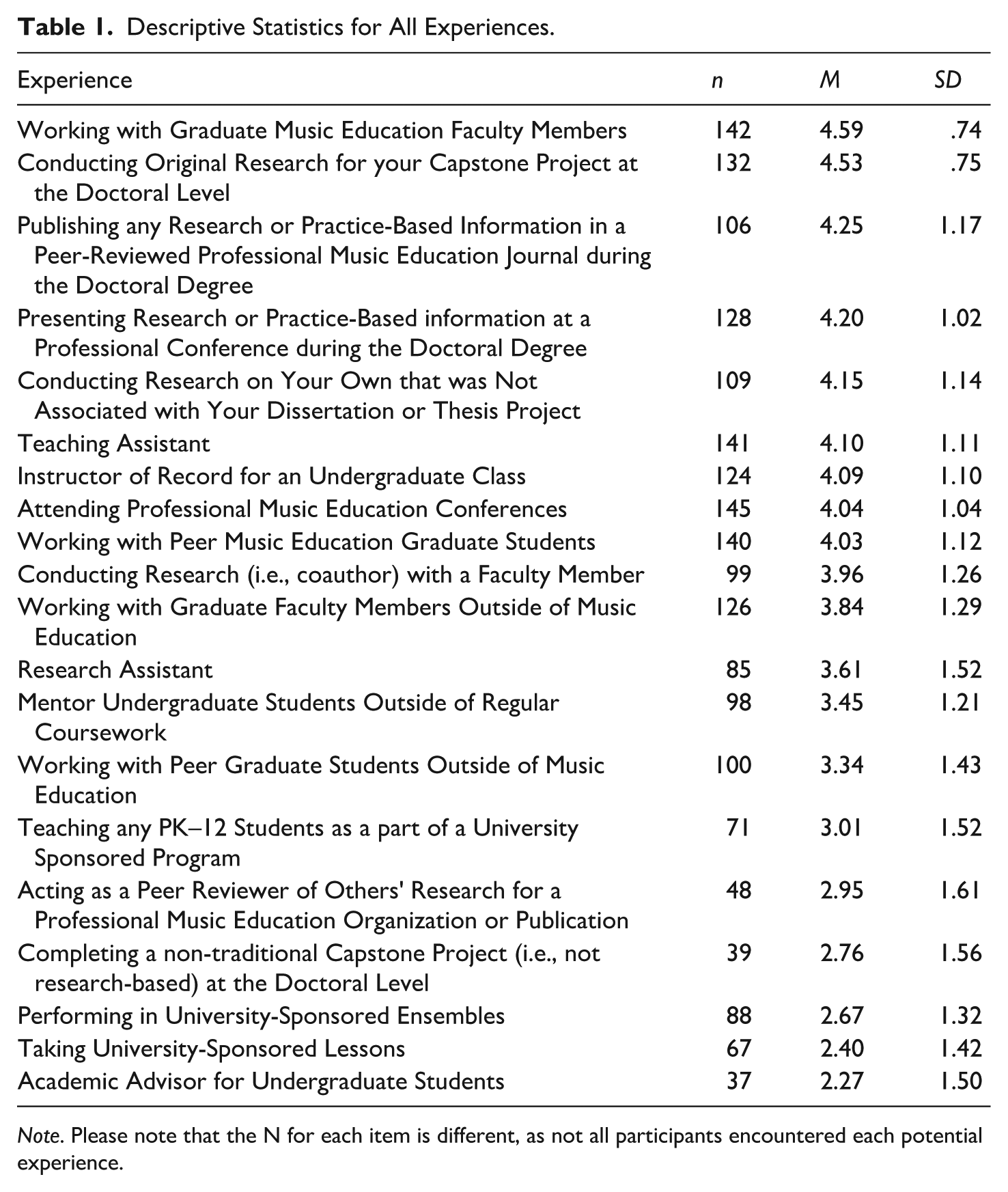
Note. Please note that the N for each item is different, as not all participants encountered each potential experience.
To examine whether participants’ reported experiences could be meaningfully grouped to facilitate subsequent analyses, we conducted a principal components analysis using oblique (Promax) rotation. Using an eigenvalue criterion of 1.0, six components emerged, accounting for 80.53% of the total variance. Bartlett’s test of sphericity indicated that the data were suitable for factor analysis (χ² = 386.30, p < .001). The component structure was interpretable, with strong item loadings and minimal cross-loadings (Refer to Table 2). Given the exploratory nature of this study and the absence of a priori theoretical model, we used factor analysis to identify interpretable groupings of experiences rather than to test predetermined constructs.
Principal Components Analysis of Influential Experiences.
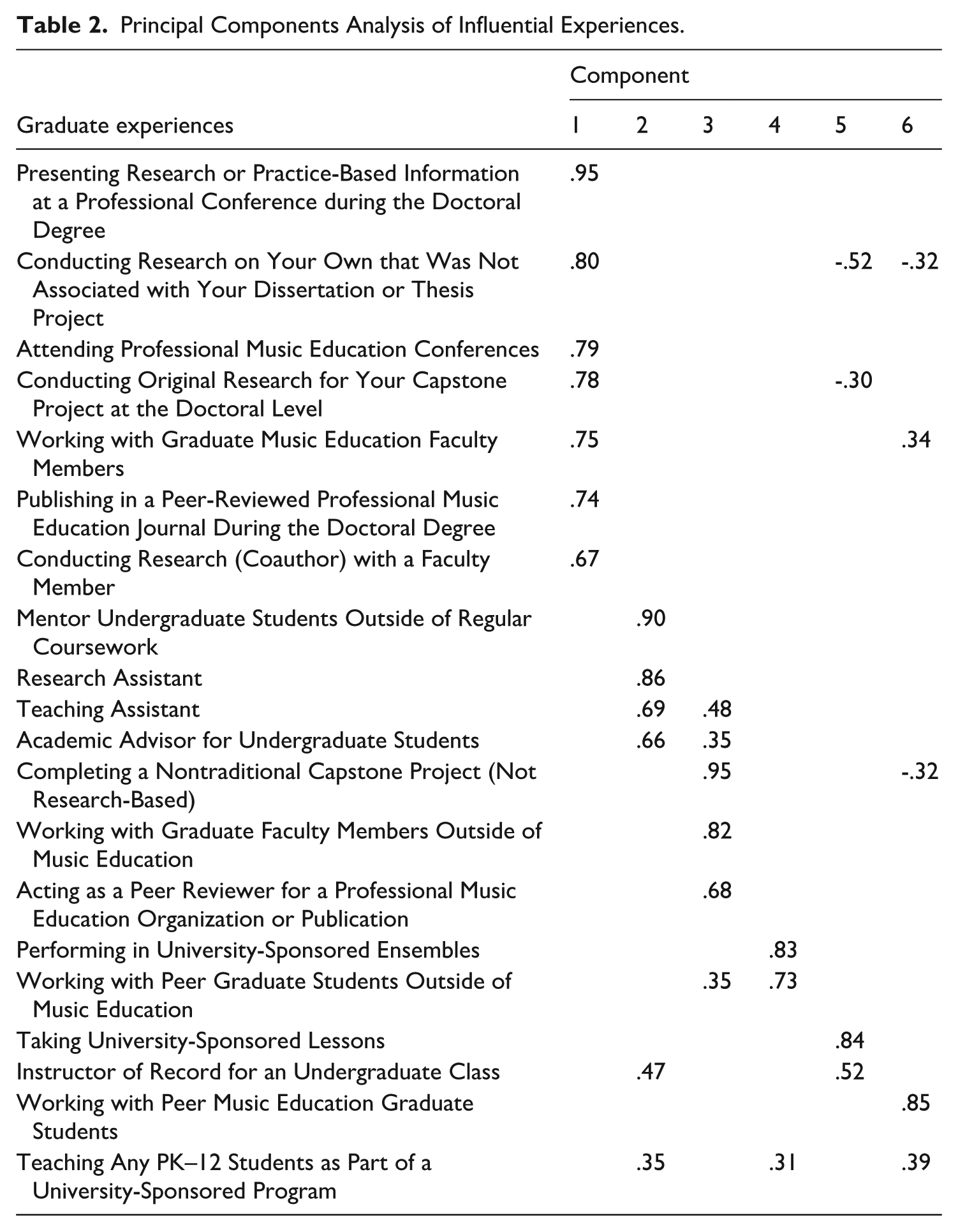
Although six components were initially extracted, three components were retained for interpretation. Components 4 through 6 were excluded from further analyses because they contained only one or two items. Intercomponent correlations were generally low, indicating that the retained components represented distinct dimensions of doctoral experiences. Components excluded from further analyses did not represent stable latent constructs and offered limited interpretive value.
The retained components reflected three broad categories of doctoral experiences. Component 1 included experiences related to scholarly work commonly required of music education faculty members, particularly at doctoral-granting institutions. Component 2 consisted primarily of experiences involving work with undergraduate students. Component 3 included experiences related to working with individuals and projects that were associated with, but not central to, traditional music education contexts.
To examine whether the perceived influence of these experiences differed by individual or professional characteristics, we conducted a factorial MANOVA. Based on the internal consistency of the retained components (Cronbach’s α = .89, .92, and .81, respectively), we created three composite variables by computing the mean of the items within each component. We then conducted a 2 X 3 Factorial MANOVA using gender and academic rank as the two categorical independent variables, and three of the six component variables as dependent variables. This analysis met the assumption of equality of covariance (Box’s M = 23.84, F = 1.05, p = .40). We found no significant main effects for gender, Wilks’ Λ = .722, F (3, 141) = 1.54, p = .26, or academic rank, Wilks’ Λ = .550, F (6, 282) = 1.39, p = .26. No significant interaction effects were observed between gender and rank, Wilks’ Λ = .414, F (6, 282) = 2.22, p = .07. Correlational analyses further indicated no significant relationships between the perceived influence of doctoral experiences and participants’ years of college teaching or years of PK–12 teaching.
Influential Doctoral Degree Coursework
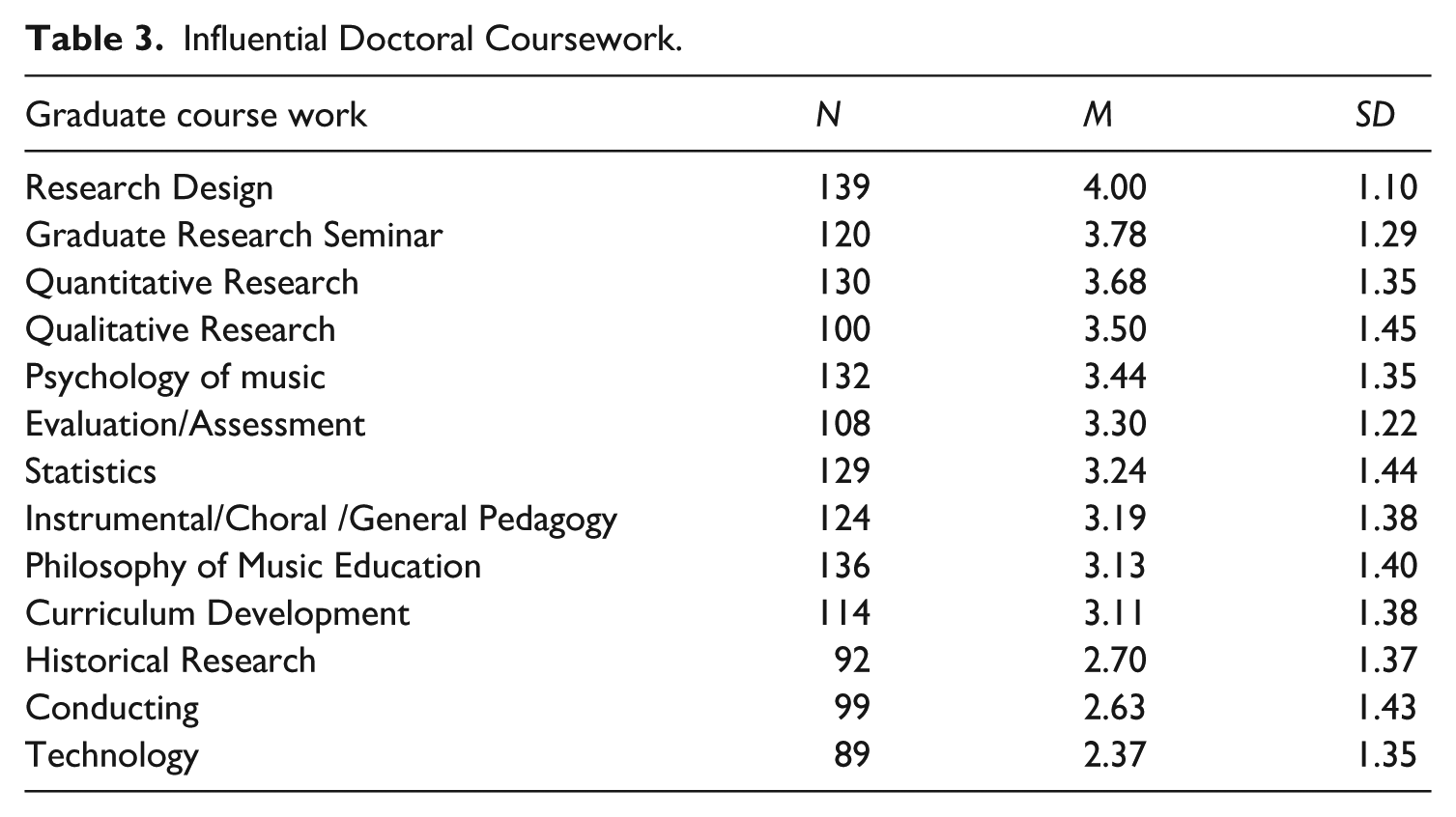
Participants responded to a series of items designed to assess the extent to which different doctoral-level courses influenced their desire to seek and remain in a music education position at a doctoral-granting institution. Respondents rated the influence of each course using a 5-point Likert-type scale (1 = not influential, 5 = extremely influential). Research-oriented courses (e.g., research design, research colloquium, quantitative research, and qualitative research) were rated as the most influential. In contrast, conducting and technology courses—which were also less frequently experienced—were rated as the least influential. Descriptive statistics for all coursework items are presented in Table 3.
Influential Doctoral Coursework.
To examine whether reported coursework influences could be meaningfully grouped to facilitate subsequent analyses, we conducted a factor analysis using an orthogonal Varimax rotation. We selected an orthogonal rotation to minimize correlations among components, as coursework categories represented more discrete curricular distinctions than the experiential items examined previously. The rotation converged in seven iterations. Using a minimum eigenvalue criterion of 1.0, four distinct components emerged, accounting for 70.11% of the total variance in responses. The resulting factor structure was interpretable, with all but one item loading above .60 and few cross-loadings exceeding .30 (Table 4). Sampling adequacy was established using the Kaiser–Meyer–Olkin measure (.65), and Bartlett’s test of sphericity indicated that the data were suitable for factor analysis (χ² = 330.10, p < .001).
Rotated Component Matrix, Influential Coursework.
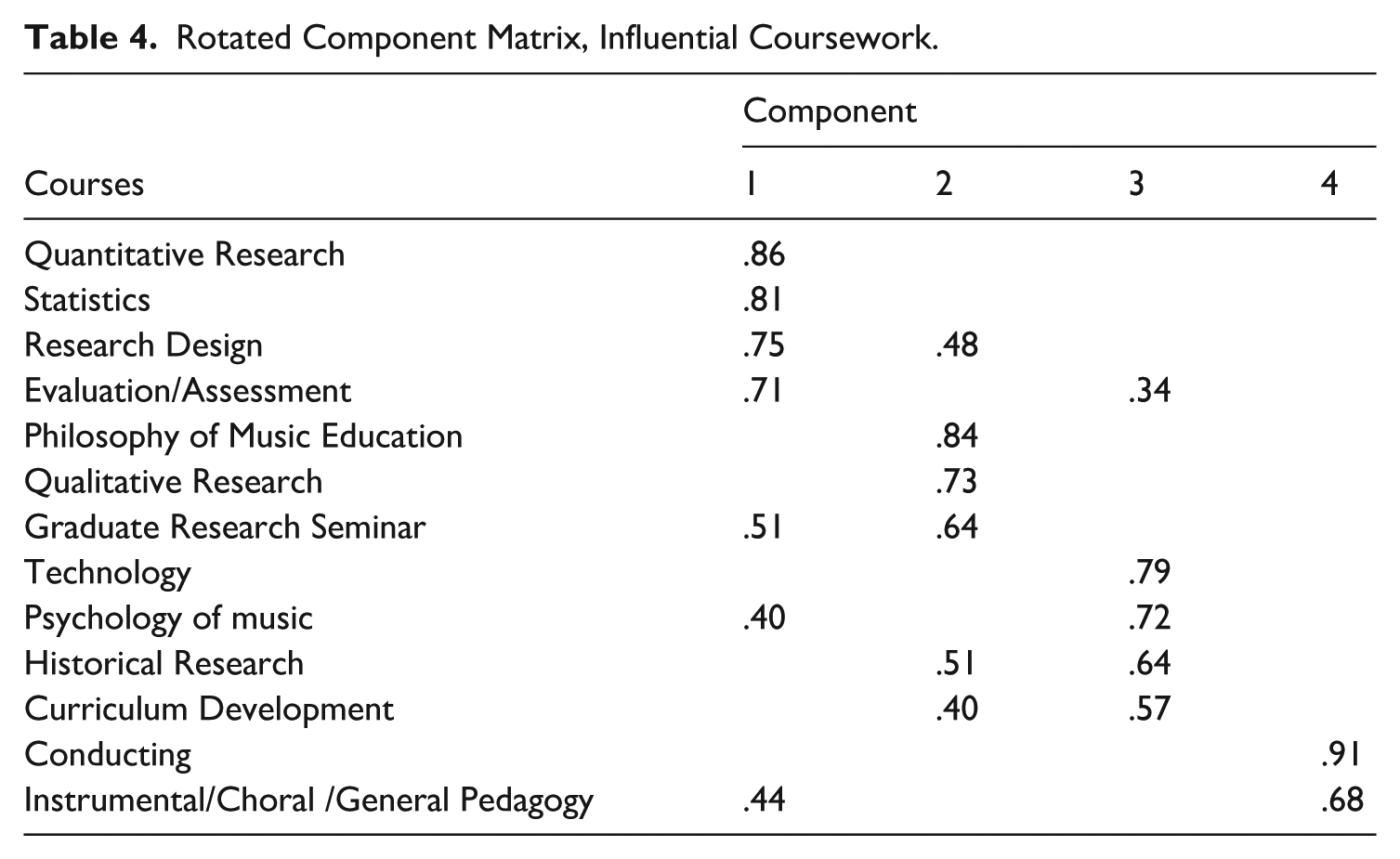
At first glance, these course groupings may appear counterintuitive when considered solely in terms of traditional curricular categories. However, the components may reflect broader faculty role orientations or occupational identities commonly observed among music education faculty members at doctoral-granting institutions. Specifically, the components appeared to align with profiles emphasizing quantitative research and assessment (Component 1), qualitative research and philosophy (Component 2), technology and curriculum specialization (Component 3), and applied pedagogy (Component 4). These interpretations are offered as tentative frameworks rather than definitive classifications, and alternative explanations—such as proxies for institutional curricular structures or individual program emphases—are also plausible. Future research using confirmatory or qualitative approaches may further clarify how doctoral coursework relates to faculty role development.
To examine whether the perceived influence of these coursework profiles varied by individual or professional characteristics, we conducted a factorial MANOVA. Given the high internal consistency of the components (Cronbach’s α = .91, .79, .85, and .90, respectively), we created four composite variables by computing the arithmetic mean of items within each component. Gender and academic rank served as categorical independent variables, and the four composite variables served as dependent variables.
The analysis met the assumption of equality of covariance (Box’s M = 38.67, F = .76, p = .87). Results indicated no significant main effects for gender, Wilks’ Λ = .958, F = .468, p = .76, or academic rank, Wilks’ Λ = .645, F = 1.28, p = .22. No significant interaction effects between gender and academic rank were observed, Wilks’ Λ = .830, F = 1.05, p = .40. In addition, correlational analyses revealed no significant relationships between the perceived influence of doctoral coursework and participants’ years of college teaching or years of PK–12 teaching.
Although no statistically significant differences emerged, descriptive trends suggested variation in perceived influence across academic rank. Using academic rank as a proxy for recency of doctoral completion, we examined changes in the perceived influence of the four coursework profiles over time (Refer to Figure 1). The perceived influence of quantitative research and assessment coursework appeared to decrease among more recent graduates (as indicated by pre-tenure rank), whereas qualitative research and philosophy coursework appeared to increase in perceived influence. The remaining coursework profiles remained relatively stable across ranks.
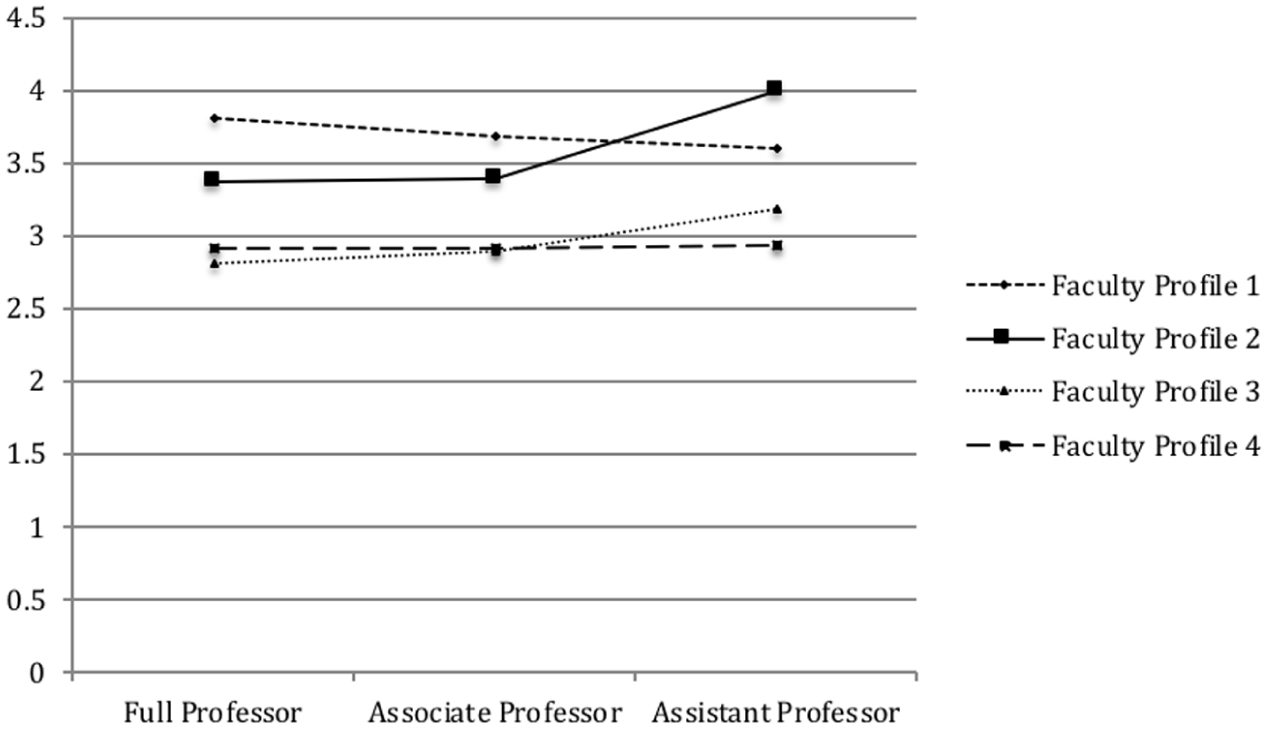
Trends in the Perceived Influence of Different Doctoral Coursework (Faculty Profiles).
Influential Reasons for Seeking and Keeping a Position at a Doctoral-Granting Institution
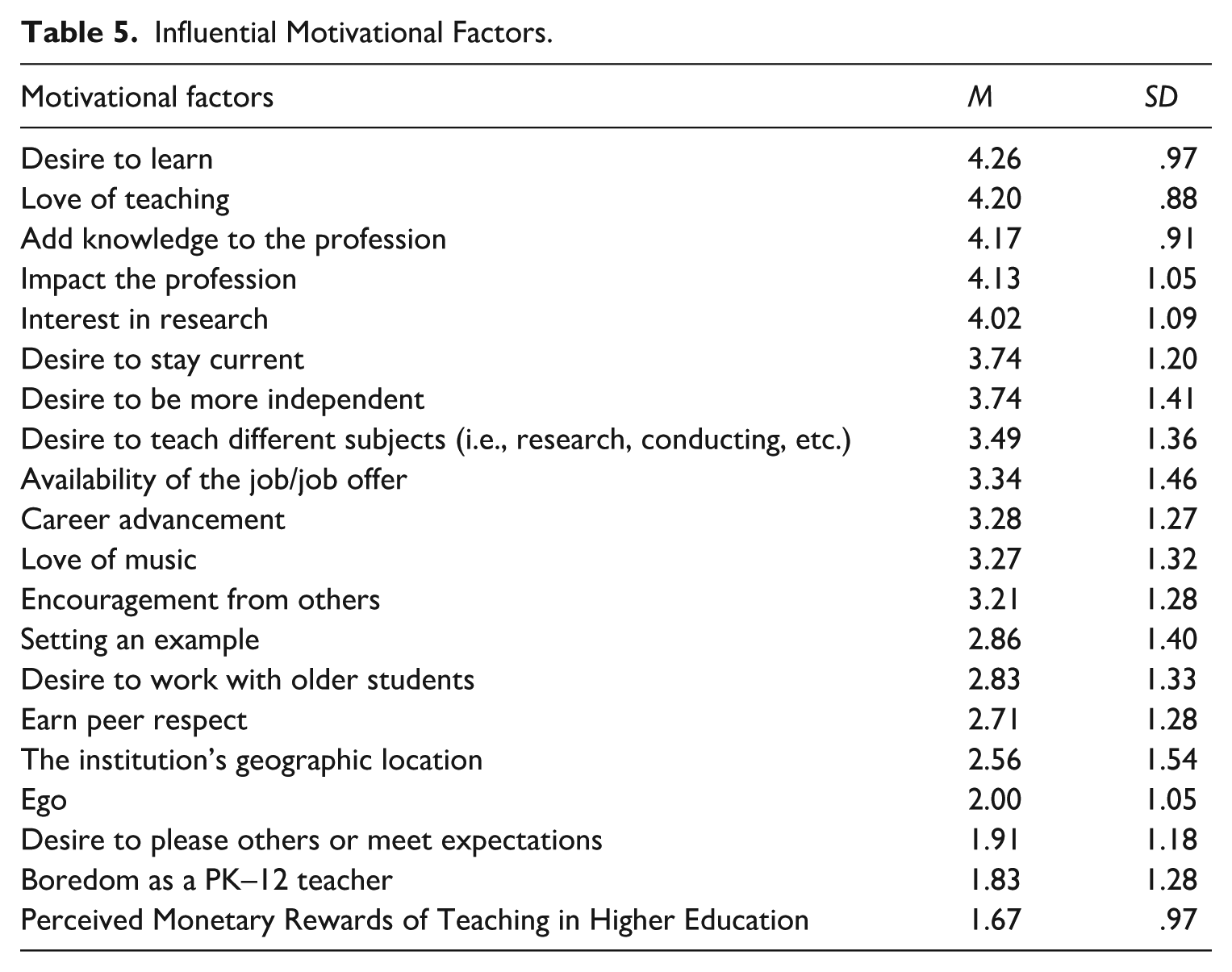
To examine participants’ reasons for seeking and remaining in positions at doctoral-granting institutions, participants responded to a series of items designed to assess the influence of various motivations using a 5-point Likert-type scale (1 = not influential, 5 = extremely influential). The most influential reasons for seeking and keeping a position in higher education included a desire to learn, a love of teaching, and a desire to contribute knowledge to the profession. In contrast, perceived monetary rewards and boredom with PK–12 teaching were among the least influential reasons. Descriptive statistics for all items are presented in Table 5.
Influential Motivational Factors.
To examine whether these reported reasons could be meaningfully grouped to facilitate subsequent analyses, we conducted a factor analysis using an orthogonal Varimax rotation to minimize correlations among components. In the absence of a predefined theoretical structure for these motivations, we employed factor analysis as an exploratory tool to identify interpretable groupings rather than to confirm latent constructs. The rotation converged in seven iterations. After examining multiple extraction solutions, we selected the most interpretable model, which consisted of five components accounting for 56.25% of the total variance in responses. All but two item loadings exceeded .50, and few cross-loadings were observed (Refer to Table 6). Sampling adequacy was established using the Kaiser–Meyer–Olkin measure (.75), and Bartlett’s test of sphericity indicated that the data were suitable for factor analysis (χ² = 828.95, p < .001).
Reasons for Seeking and Keeping a Position at a Doctoral-Granting Institution.
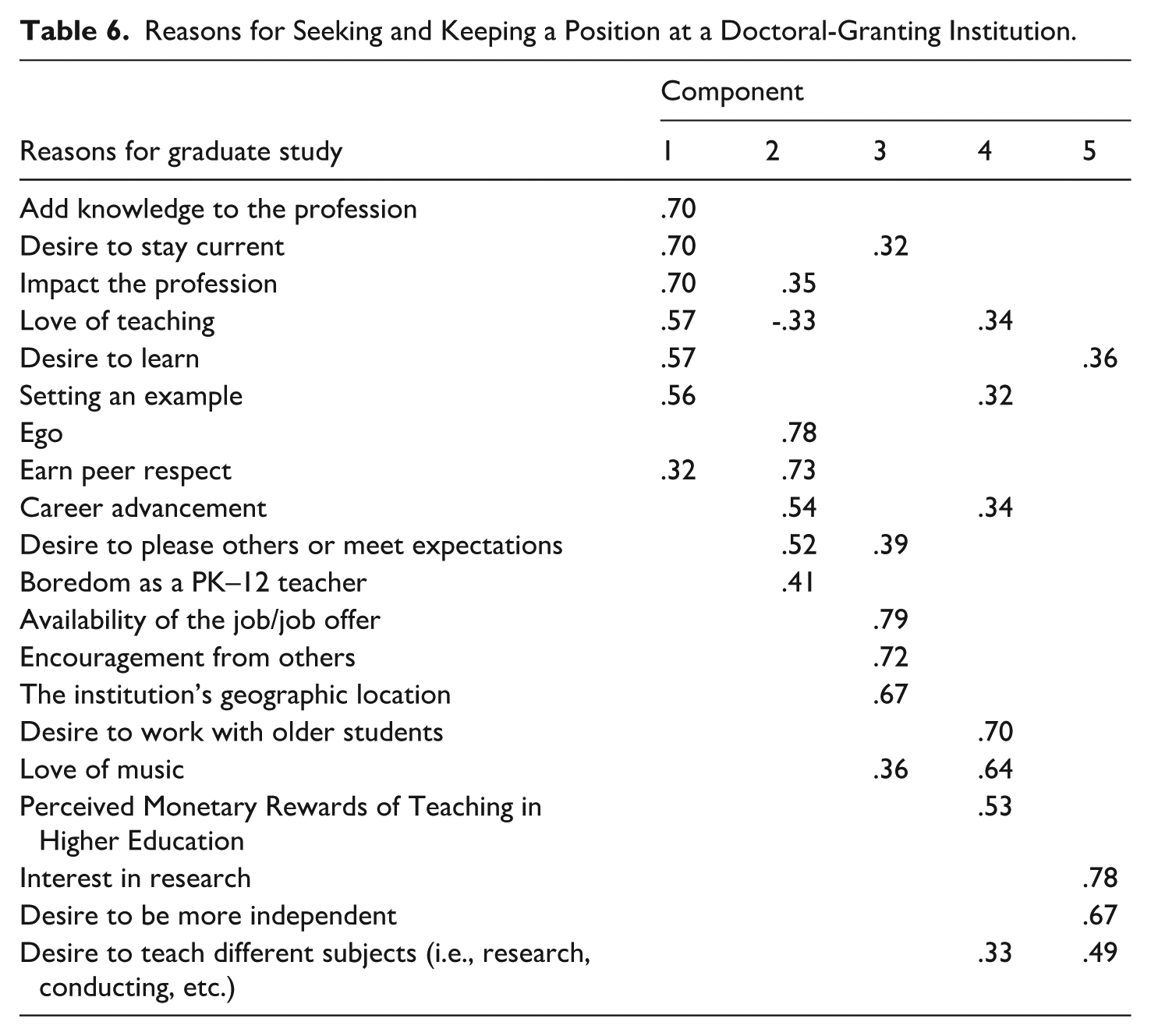
The resulting components reflected five categories of motivation. Component 1 included items related to professionalism. Component 2 consisted of non-musical or psychological motivations for seeking a position as a music teacher educator. Component 3 included pragmatic considerations related to employment (e.g., job location, availability of a position). Component 4 reflected motivations associated with changes in professional status, and Component 5 represented changes in professional activities.
To examine whether these motivations varied by individual or professional characteristics, we conducted a factorial MANOVA. Given the acceptable internal consistency of the components (Cronbach’s α = .91, .81, .92, .79, and .73, respectively), we created composite variables by computing the mean of the items within each component. Gender and academic rank served as categorical independent variables, and the five composite variables served as dependent variables.
The analysis met the assumption of equality of covariance (Box’s M = 32.12, F = .912, p = .71). We found no significant main effects for gender, Wilks’ Λ = .573, F = 1.17, p = .42, or academic rank, Wilks’ Λ = .320, F = 1.15, p = .38. A significant interaction effect between gender and academic rank was observed, Wilks’ Λ = .137, F = 2.55, p = .03, partial η² = .43. Post hoc analyses indicated that this interaction was specific to Component 3 (pragmatic motivations; e.g., location of position, job availability), F = 3.98, p = .007. Participants who identified as male reported greater influence of pragmatic considerations when they were assistant or associate professors compared to participants who identified as female.
Finally, through bivariate correlational analyses, we found no significant relationships between participants’ reported motivations for seeking and keeping a position at a doctoral-granting institution and their years of college teaching or years of PK–12 teaching. Taken together, the descriptive and factor-analytic findings indicate that motivations for seeking and keeping positions at doctoral-granting institutions cluster primarily around professional identity commitments, with pragmatic considerations functioning as contextually meaningful influences. The prominence of motivations such as contributing knowledge, impacting the profession, and love of teaching reflects patterns described in scholarship on graduate education and anticipatory socialization, in which advanced study fosters scholarly identity and professional leadership (Bond et al., 2022; Conway et al., 2014). Similarly, research on master’s-level preparation suggests that intrinsic motivations related to professional growth and academic stimulation often shape aspirations toward doctoral study and beyond (Springer, 2020). At the same time, the emergence of a distinct pragmatic component—centered on job availability and geographic location—aligns with literature emphasizing the structural constraints of academic labor markets and faculty mobility (Goldin, 2006; Smith & Calasanti, 2005). Interpreted alongside this body of scholarship, the findings suggest that faculty career trajectories are shaped by both evolving professional identity commitments and external institutional realities.
Discussion
We found that faculty members at doctoral-granting institutions generally perceived working with graduate music education faculty members and conducting original research as the most influential doctoral experiences shaping their desire to seek and remain in higher education. In contrast, serving as an academic advisor for undergraduate students was among the least influential experiences. We remain cautious about this interpretation, however, as the experiences of COVID-19, in which personal relationships may have become even more important, may have impacted this feeling. Indeed, some may have found more meaning in the role while others may have been overwhelmed or frustrated by the impact of the needs of undergraduates during that time. The perceived importance of working closely with graduate faculty may reflect the role of anticipatory socialization in doctoral education, whereby students learn professional norms, expectations, and identities through sustained interaction with future colleagues (Aypay et al., 2025; Bond & Koops, 2014; Braxton et al., 1995; Harris, 2020; MacPhail et al., 2019; Murray & Male, 2005; Van Lankveld et al., 2017). Similarly, participants identified research-based coursework (e.g., research design, research colloquium, quantitative and qualitative research) as the most influential doctoral courses, whereas conducting and technology courses—both less frequently experienced—were perceived as least influential. Factor-analysis results suggested that doctoral coursework may function less as discrete curricular categories and more as proxies for broader faculty role orientations. Descriptively, coursework profiles associated with qualitative research and philosophy and with curriculum appeared to increase in perceived influence among more recent faculty, while the perceived influence of quantitative research and assessment coursework appeared to decrease slightly. These trends should be interpreted cautiously, as no statistically significant differences were found based on gender, academic rank, or years of teaching experience.
Given the average of 18 years of collegiate teaching experience among participants, many likely completed their doctoral preparation in the early to mid-2000s. As such, the doctoral experiences reflected in this study largely represent preparation within earlier program structures, prior to the recent expansion of fully online and hybrid doctoral models and shifts in institutional expectations. These findings, therefore, offer insight into how doctoral experiences have influenced sustained faculty trajectories over time rather than solely capturing contemporary program design. Future research may examine how evolving doctoral structures shape both entry into and persistence within faculty roles, as well as how doctoral preparation influences subsequent approaches to teaching, advising, and professional practice.
Regarding motivations for seeking and remaining in positions at doctoral-granting institutions, participants most strongly endorsed intrinsic and professional reasons, including a desire to learn, a love of teaching, and a desire to contribute knowledge to the profession. Extrinsic motivations, such as perceived monetary rewards or boredom with PK–12 teaching, were among the least influential. These findings align with the view that entry into music teacher education faculty roles is primarily driven by professional identity and commitment (Pellegrino et al., 2014) rather than by pragmatic incentives alone.
Although no main effects of gender or rank were observed, we did identify a significant interaction between gender and academic rank for pragmatic motivations. Specifically, participants who identified as male reported greater influence of pragmatic considerations (e.g., job location, availability of a position) during the assistant and associate professor stages compared to participants who identified as female. The observed interaction between gender and academic rank should not be interpreted as reflecting differences in professional commitment or motivation to remain in higher education. Rather, pragmatic considerations may represent rational responses to structural conditions within academic labor markets, including geographic immobility, institutional opportunity structures, and the timing of available positions. Decisions related to job location and availability are often constrained by factors beyond individual preference, particularly during early and midcareer stages.
Prior researchers have demonstrated that these constraints are unevenly distributed across faculty members and may intersect with gendered expectations related to mobility, family responsibilities, and career sequencing (Goldin, 2006; Smith & Calasanti, 2005). Within this context, pragmatic motivations may reflect adaptive strategies rather than personal dispositions. Understanding how structural conditions shape career decision-making is therefore essential for interpreting faculty trajectories and for developing institutional practices that support equitable career sustainability.
Moreover, these findings should be interpreted in light of participants’ doctoral preparation contexts. Most respondents earned doctoral degrees in music education and reported sustained periods of in-residence study (M = 5.7 semesters), indicating substantial engagement within campus-based program structures. Doctoral education in music education, however, continues to expand through online, hybrid, and part-time models, which may organize mentoring relationships, research collaboration, and professional socialization in different ways. Accordingly, the influential experiences identified in this study should be understood within the preparation contexts represented in this sample, and further research may examine how varying delivery models shape faculty career trajectories.
Implications for Future Research
Based on this work, several directions for future research in music education and doctoral preparation emerge. This study should be replicated to account for evolving practices in graduate music education. As programs and faculty roles continue to change, the influence of these experiences may also shift. Participants identified sustained mentoring relationships, collaborative research engagement, and close interaction with graduate faculty as influential in their decisions to pursue and remain in faculty roles at doctoral-granting institutions. Future research should examine how doctoral programs structure these experiences and how variations in mentoring, research collaboration, and faculty engagement relate to long-term academic career trajectories.
The observed interaction between gender and career stage related to pragmatic motivations warrants further investigation. Future studies should examine structural conditions shaping faculty mobility and career decision making, including institutional hiring practices, geographic constraints, and labor market dynamics. Researchers may also consider how institutional leaders and policymakers use such information to support faculty development and sustainability, as well as how policies influence career trajectories across career stages.
As doctoral programs increasingly adopt varied instructional delivery formats, additional research should examine how influential graduate experiences develop across these contexts. Investigators may identify which experiences function consistently across formats and which are most strongly associated with professional identity development, research engagement, and long-term career aspirations.
We found that doctoral coursework may align with broader emphases in faculty roles rather than functioning solely as discrete curricular categories. Future research should examine whether additional role orientations emerge and how doctoral programs support their development. Longitudinal studies may provide insight into how coursework, mentoring, and professional experiences interact over time.
Several measurement and sampling considerations further indicate directions for future research. The study relied on binary gender identification and also did not include additional identity variables such as race, caregiving responsibilities, citizenship status, or disability. These factors may shape doctoral experiences, professional socialization, and career decision-making. Future research should adopt more inclusive measurement approaches to examine how intersecting identities and structural conditions influence access to and sustainability within music teacher education faculty roles. Comparative research across campus-based, hybrid, and fully online programs may clarify how residency structures influence teaching opportunities, assistantships, research collaboration, and professional socialization.
Finally, although survey-based research enables the identification of broad patterns, qualitative approaches can provide deeper insight into how individuals interpret their doctoral experiences. Future studies may examine both experiences that support professional commitment and those perceived as discouraging or misaligned with faculty preparation.
Implications for Doctoral Preparation and Program Design
Building on the findings of this study, several implications for doctoral preparation and program design warrant consideration. Participants identified sustained engagement with graduate music education faculty and the conduct of original research as especially influential doctoral experiences associated with entry into and persistence within faculty roles at doctoral-granting institutions. These findings suggest that research production and scholarly collaboration may contribute meaningfully to preparation for such positions.
Programs may therefore reflect on how doctoral coursework and mentoring opportunities relate to the professional responsibilities typical of doctoral-granting institutions. Because research-based coursework was perceived as particularly influential, departments might consider whether research methods and design courses include opportunities for extended scholarly writing, conference proposal development, or other forms of dissemination. Integrating coursework with opportunities to design, conduct, and share original research may strengthen continuity between doctoral study and subsequent academic expectations. Similarly, faculty–student research collaboration, such as co-authored publications or joint conference presentations, may provide structured exposure to scholarly production while supporting shared academic inquiry.
The organization of mentoring also merits reflection. Encouraging engagement with multiple faculty members, including secondary mentors, may broaden scholarly perspectives and support professional development. Programs may also consider how mentoring contributions are recognized within institutional structures. Because sustained faculty engagement was identified as influential, mentoring represents an important dimension of doctoral preparation. In some contexts, mentoring may be organized through informal or decentralized processes. Developing mechanisms to document and periodically review mentoring engagement may enhance transparency, support equitable distribution of responsibilities, and contribute to sustainable doctoral supervision. Aligning mentoring contributions with workload and evaluation systems may further reinforce their institutional value.
Participants reported that intrinsic and professional motivations were more influential than extrinsic incentives in pursuing faculty roles at doctoral-granting institutions. Recruitment materials and advising conversations may benefit from clearly communicating scholarly, teaching, and service expectations. Transparent articulation of these expectations may support informed professional decision-making.
The interaction between gender and academic rank underscores the relevance of structural conditions in academic career pathways. Pragmatic considerations such as job availability and geographic mobility appear to reflect labor market dynamics rather than differences in professional commitment. Institutions may therefore consider how advising practices and policy frameworks acknowledge these structural dimensions and support faculty sustainability across career stages.
Taken together, we suggest that doctoral program review may extend beyond course requirements to include mentoring access, research integration, expectation clarity, and structural awareness. Ongoing reflection in these areas may strengthen coherence between doctoral preparation and the professional contexts in which graduates pursue faculty careers at doctoral-granting institutions.
Footnotes

Ethical Considerations
This study was reviewed and approved by the institutional review board at the University of Hartford. All procedures involving human participants were conducted in accordance with institutional and ethical standards for research.
Consent to Participate
Informed consent was obtained from all participants prior to participation in the study.
Funding
The authors received no financial support for the research, authorship, and/or publication of this article.
Declaration of Conflicting Interests
The authors declared no potential conflicts of interest with respect to the research, authorship, and/or publication of this article.
Data Availability Statement
The data that support the findings of this study are available from the corresponding author upon reasonable request, subject to ethical and confidentiality considerations.