







Abstract
Crime within Arabic countries is significantly different from Western crime in type, frequency, and motivation. For example, motor vehicle theft (MVT) has constituted the largest proportion of property crime incidents in Saudi Arabia (SA) for decades. This is in stark contrast to Western countries where burglary and street theft dominate. Environmental criminology theories, such as routine activity theory and crime pattern theory, have the potential to help to investigate Arabic crime. However, there is no research that has sought to evaluate the validity of these theories within such a different cultural context. This article represents a first step in addressing this substantial research gap, taking MVT within SA as a case study. We evaluate previous MVT studies using an environmental criminology approach with a critical view to applying environmental criminology to an Arabic context. The article identifies a range of key features in SA that are different from typical Western contexts. These differences could limit the appropriateness of existing methodologies used to apply environmental criminology. The study also reveals that the methodologies associated with traditional environmental crime theory need adjusting more generally when working with MVT, not least to account for shifts in the location of opportunities for crime with time.
Introduction
Crime within Arabic countries is significantly different from Western crime in type, frequency, and motivation. Western commentators often concentrate on the difference in crime types, focusing on religious crimes, associated policing organizations, and cultural ramifications. However, the day-to-day experience of crime events inside most Arabic countries is vastly more centered on crimes that are common to both cultures and handled by standard policing. Even within this area of overlap, there are significant differences in modus operandi, spatial and temporal distributions, and socioeconomic drivers. Standard environmental criminology theories, such as routine activity theory (RAT) and crime pattern theory (CPT), have the potential to help investigate such crime, as elsewhere. However, the Western context in which these theories originated is substantially different from the Arabian context, and there is no research that has sought to evaluate the validity of these theories within such a different cultural context. This article represents a first step in addressing this substantial research gap.
Here, we take Saudi Arabia (SA) as a case study, although we recognize that there will be large cultural variations within Arabic countries. However, as a stable and flourishing country with a religious society, heavily oil-based socioeconomic system, and a desert climate, SA presents a series of themes which play out to a greater or lesser extent across the Arab world and provides an informative exemplar of the differences with Western culture that might play a role when trying to understanding crime. Specifically, this article utilizes motor vehicle theft (MVT) as a lens through which to examine the applicability of Western environmental criminology theory. MVT is especially pertinent as it has constituted the largest proportion of property crime incidents in SA for decades. This is in stark contrast to Western countries where burglary and street theft dominate and where these crimes have had an important role in the development of environmental criminology. For example, in the United States in 2015, larceny theft accounted for 71.4% of property crimes, followed by burglary (20%), with MVT making up about 9% of property crimes (Federal Bureau of Investigation [FBI], 2016). Meanwhile, in England and Wales, criminal damage accounted for the largest component of property crime in 2010, at about 24%, with burglary accounting for nearly 18% and MVT only 3.7% (Home Office, 2012). In Canada, in 2006, theft amounting to CA$5,000 or below accounted for 52% of property crimes, whereas MVT accounted for 13.6% and burglary 21.4% (Silver, 2007). The specific case study area chosen is Riyadh, the capital of SA.
Over the last two decades, MVT has accounted for the largest proportion of property crime incidents in SA. A study by Alwelaie (1993) indicated that the MVT in SA made up 24.7% of all property crimes between 1985 and 1990 (1406–1411 H under the Islamic Hijri calendar 1 ) and rises dramatically to 31% by 1435 H (≈2014; Ministry of Interior, 2015). In 2015, despite a reduction in most property crimes, MVT increased to account for 34% of property crimes by 1436 H (≈2015; Ministry of Interior, 2016). In the capital city, Riyadh, MVT accounted for 48.2% of all property crimes between 1430 H and 1434 H (2009 and 2013; Police Department in Riyadh, 2014).
Despite the clear evidence that SA suffers from a MVT problem, few studies have attempted to tease out its causality. This lack of research into the patterns and causes of crime is not just limited to MVT; the research literature offers few insights into the causation of any forms of crime in SA. The few articles on Saudi Arabian crime that have been published focus on the occurrence of crime from a geographical perspective, but generally do not engage with the associated theoretical explanatory frameworks. In addition, they struggle in the face of poor previous data availability, with consequential limited quantitative analyses (Aldawsari, 1997; AlMarzougi, Almatrafi, 2005; Alwelaie, 1993; Al-Ghamdi, & Alsyad, 1986; Al-Khalifah, 1997; Mahya, 2003). In short, they lack the appropriate contextualization or data that would be needed to apply a Western criminology theory to this very different geographical, cultural, and social context.
However, crime theory and explanation are important, especially for intelligent, practical policing. In the absence of understanding, policing becomes purely reactive rather than preemptive. Globally, many crime prevention strategies have been designed based on crime analysis research, which in turn is backed by theories from environmental criminology and similar disciplines (Paynich & Hill, 2011). Typically, these theories have been constructed from research undertaken in “Western” countries. For example, RAT was formulated from work in the United States (Cohen & Felson, 1979) and CPT from work in Canada (P. J. Brantingham & Brantingham, 1993). Within this article, we refer to “Western countries” as those that share similar cultural ideals and traditions to Europe, for example, United States, Canada, and Australia. Given its dominance within the field, we focus predominantly on literature emerging from the United States and Canada, with some relevant UK and Australian studies. It is beyond the scope of the article to encompass other Western literature, though this may form future work.
The main aim of this article is to explore the extent to which the concepts of RAT and CPT can be applied outside of their original contexts in a very different geographical and social context. To achieve this aim, in the second section, we first present an overview of the RAT and CPT and highlight the context within which they were originally formulated. Following this, we briefly review Western MVT studies contextualized within the theoretical frameworks. The third section discusses the social differences, environmental contexts, and legal circumstances that distinguish Saudi Arabian and Western contexts. The fourth section critically reviews the previous work on MVT in SA, highlighting a relative lack of relevant previous literature to draw on. Finally, we discuss how different contexts between the two environments could limit the appropriateness of these theories in the context of SA in the fifth section. The article concludes with thoughts and suggestions about how to reconcile Western criminology theory to a non-Western context in the sixth section.
Environmental Criminology and MVT
Environmental criminology focuses on the context surrounding a crime occurrence, such as offender and victim characteristics, the physical surroundings, and spatiotemporal aspects (Boba, 2005; P. J. Brantingham & Brantingham, 2008; Chainey & Ratcliffe, 2005). In environmental criminology, socioeconomic and demographic characteristics are important from the point of view of representing the location of (some) people involved in (some) crimes. It is not, generally, a field that gives a detailed understanding of the life stages and drivers of individual criminals. From an environmental criminology perspective, a crime event is the result of complex interactions between human behavior and the environment (Wortley & Mazerolle, 2008). Theories such as RAT and CPT seek to explain how opportunities exist and come together for crime to occur (Boba, 2005). This is particularly relevant for the study of MVT. In the following sections, we attempt to explain the socioeconomic and environmental conditions that were present during the formulation of RAT and CPT in order to provide the basis for considering the application of these theories to the Saudi Arabian context.
RAT
The core component of RAT is that crime is more likely to occur if there is a motivated offender who finds a suitable target (victim) with no capable guardian (Cohen & Felson, 1979). The three components must come together in place and time with the presence of appropriate situational conditions, such as physical features and social factors, to facilitate a crime (Felson, 1986). The following Figure 1 summarizes how this theory was derived in order to allow for a critique of these mechanisms in an Arabian context in the fifth section.
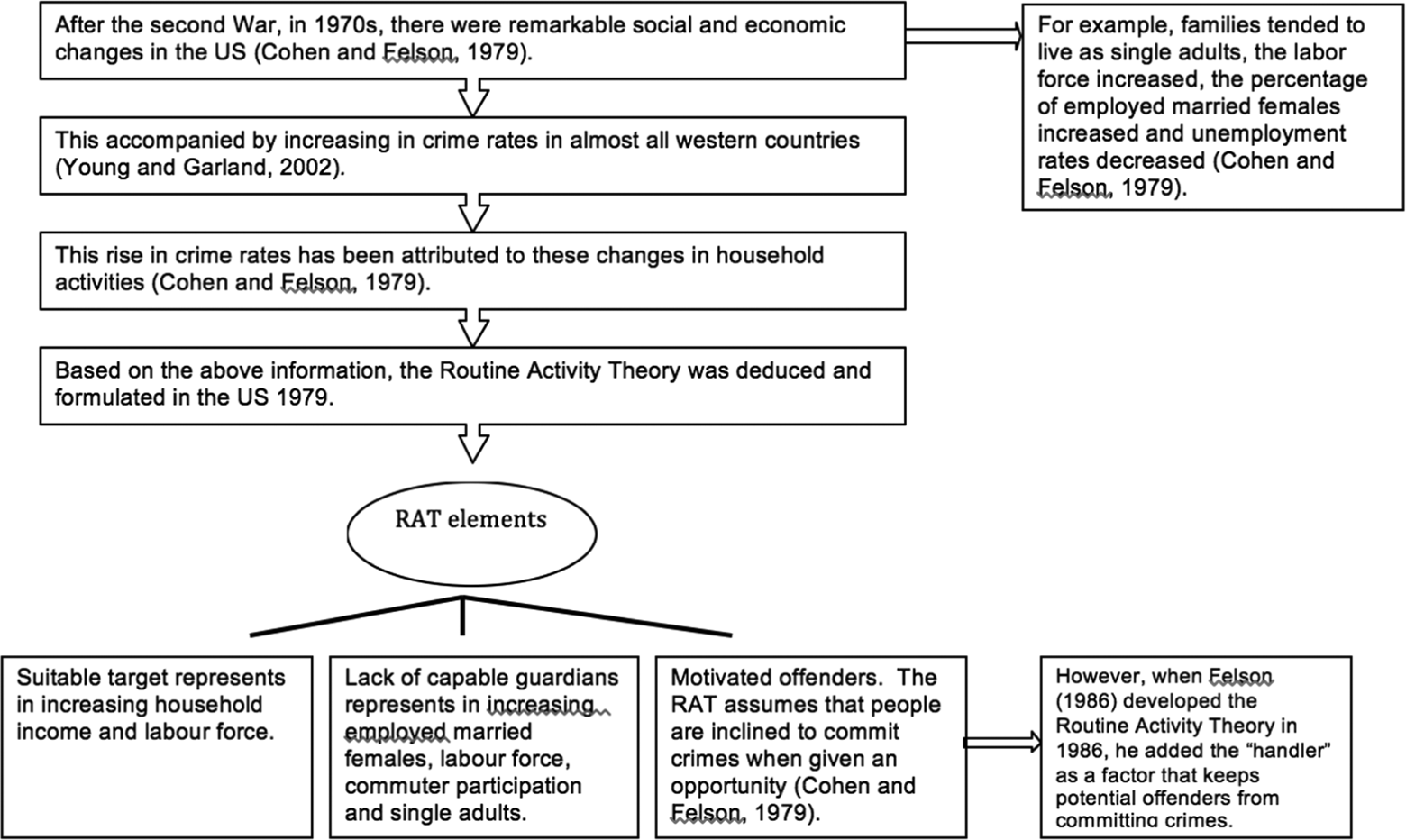
The process of how routine activity theory was derived.
The application of RAT focuses predominantly on burglary. For example, it proposes that the increase in burglaries during the daytime can be explained by the changing routine activity patterns of victims—when people go to work they leave their homes (and many suitable targets) without a capable guardian (Cohen & Felson, 1979). When the theory was first developed, it used four types of crime to test its ideas. Specifically, data for forcible rape, aggravated assault, robbery, and burglary that occurred in the United States in 1973 were evaluated. These crimes were statistically significant and correlated to household activity rates, supporting the theory that routine activities influence crime rates. MVT, however, was excluded from the analysis because it was highly correlated with the other predictor variables (Cohen & Felson, 1979). This, in itself, has interesting implications for the empirical analysis of RAT in SA, as the sixth section will discuss.
CPT
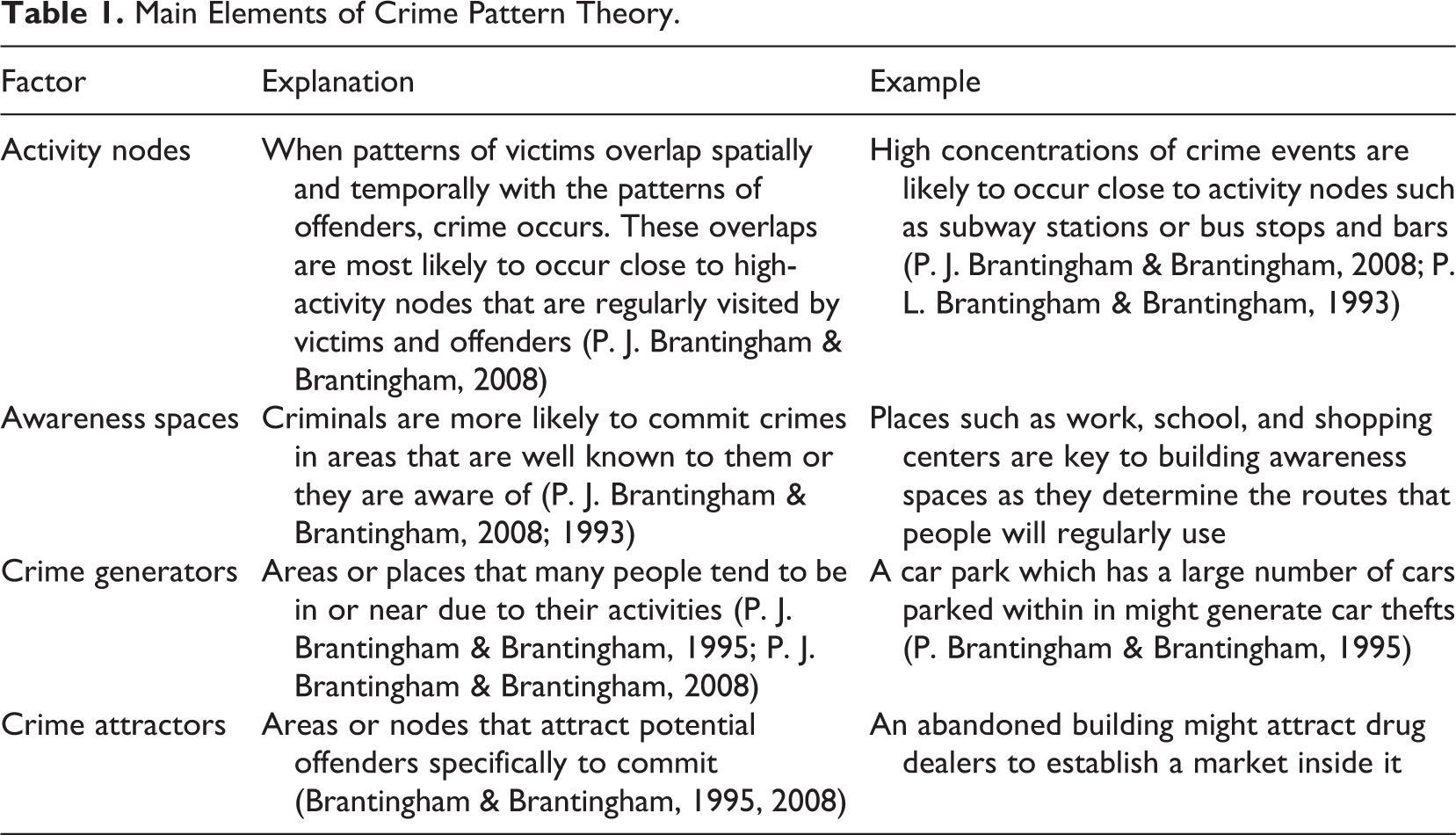
CPT was introduced by P. J. Brantingham and Brantingham (1993) in Canada and was derived by combining aspects of theories that had already been proposed, such as RATs, rational choice theory, and the geometry of crime theory (P. L. Brantingham & Brantingham, 1981). CPT attempts to show how the complexity of the crime occurrence process, which starts from individual offenders taking decisions in daily life, creates a crime template that influences the potential offender’s readiness to commit an offence (P. L. Brantingham, Wuschke, Frank, & Brantingham, 2011). The decision to commit a crime is influenced by triggering events, with the potential offender searching for suitable targets against an environmental backcloth (P. J. Brantingham & Brantingham, 1993; P. J. Brantingham, & Brantingham, 2008; P. L. Brantingham et al., 2011). Based on this theory, if the daily activities of the potential offender intersect in a place with a likely target, then a crime is more likely to occur (P. J. Brantingham & Brantingham, 2008). Table 1 represents the main concepts of CPT.
Main Elements of Crime Pattern Theory.
Existing MVT Studies in Western Countries
How have these theories been applied to MVT in the West? In general, few studies have been conducted on this type of crime in Western countries compared to other major crimes (Fleming, Brantingham, & Brantingham, 1994; Lockwood, 2012; Suresh & Tewksbury, 2013; Walsh & Taylor, 2007a), particularly in respect to the spatial patterns of MVT (Lu, 2006; Piza, Feng, Kennedy, & Caplan, 2016). We have reviewed the major studies in this area (Andresen, 2006; Copes, 1999; Henry & Bryan, 2000; Kennedy & Forde, 1990; Lu, 2006; Messner & Blau, 1987; Rengert, 1997; Rice & Smith, 2002; Roberts & Block, 2012; Walsh & Taylor, 2007b) and, in Table 2, endeavored to pull out those elements that utilize the same variables as the above theoretical frameworks.
An Overview of the Factors That Influence Motor Vehicle Theft (MVT) and How These Link Up to Routine Activity Theory.
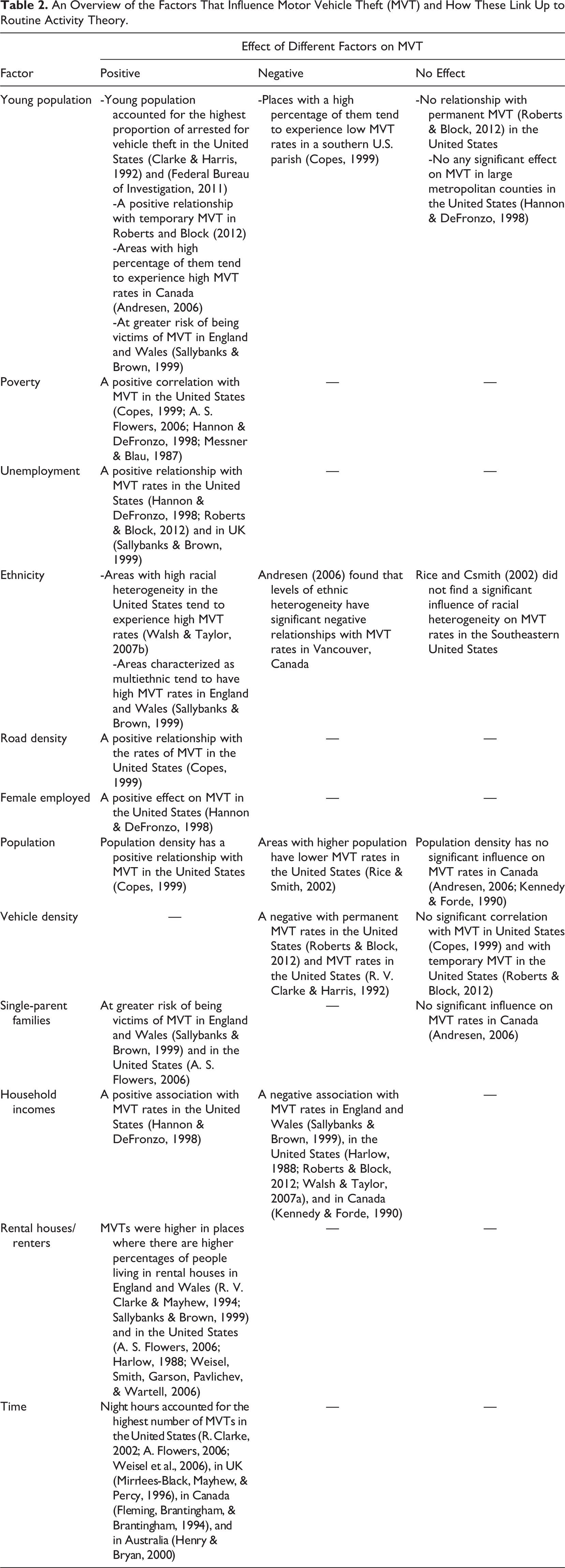
Twelve factors were identified and classified based on their statistical relationships to MVT—whether positive, negative, or neutral. Critically, however, in the case of some factors, the literature reveals contradictory results. These become important when examining the Saudi Arabian context in the fifth section, so we detail a number of these here.
There is a contradiction in the findings on the relationship between MVT and the size of the youth population: Copes (1991) found a negative relationship, whereas most others point to a positive relationship (Andresen, 2006; Roberts & Block, 2012). This is most likely due to colinearity with other variables and dependent on, for example, socioeconomic status. In themselves, young people may be less likely to have cars, but more likely to be offenders, and the balance is likely to rest on nuanced experiences of poverty. However, there are other issues where contradictions could reside. Recording issues or subsampling may have an effect. MVT can generally be divided into temporary MVT (“joyriding” theft for fun or travel) or permanent (theft for sale) thefts, and in some cases, these are archived differently. For example, permanent MVTs can be recorded out of MVT data sets as burglaries where cars are stolen as part of so-called Hanoi burglaries—burglaries for car keys where the car is specifically targeted. Roberts and Block (2012) and Tremblay, Clermont, and Cusson (1994) highlight that offenders who commit temporary MVT tend to target available vehicles that are easy to steal and located close to where the offenders live. This matches the profile of younger criminals discussed by J. E. Eck and Weisburd (1995), who suggest that criminals in their early years may tend to commit crimes near to their own residence, and that this might reverse for older criminals. Permanent MVT offenders certainly tend to be older adults and more professional at choosing their targets (Roberts & Block, 2012). Sample biases by crime type in MVT data sets will therefore align with age biases, with crimes by the more experienced being biased out of such data sets. A further explanation for contradictions in determining the effect of the number of local young people is that their influence may move and change with time. For example, the link between youth and crime may be notable in the places where young people live during sleeping hours, when young people stay in home, whereas during the daytime and evening, the links are more likely to be seen in places where young people are attracted.
Furthermore, there are contradictory results in the relationship between MVT and ethnic heterogeneity. This may be due to the different methods used in each study for measuring racial/ethnic heterogeneity within the studied areas. Again, the relationship between crime and the ethnic makeup of a population is likely to be strongly dependent on additional factors that play out negatively and positively with ethnicity. A number of the studies (Andresen, 2006; Rice & Smith, 2002; Sallybanks & Brown, 1999; Walsh & Taylor, 2007b) mentioned in Table 2 used high ethnic/racial heterogeneity as a measure of social disorganization. Hipp (2007), for example, suggested that high racial/ethnic heterogeneity contributes to reducing the levels of surveillance and guardianship in a community, consequently increasing crime rates within these areas. Equally, it is clear from Table 2 that ethnic diversity can decrease crime rates, implying either reduced offending or increased guardianship. There are a variety of methods one might use for measuring ethnic heterogeneity and the effect of mixed social groups on community cohesion, such as the ratio of different ethnic groups (Rice & Smith, 2002; Walsh & Taylor, 2007a) or the percentage of immigrants to total population (Andresen, 2006), and it is possible that different metrics will reveal different underlying processes. However, it seems likely that, on its own, ethnicity is very unlikely to pick up the nuanced relationship between social, ethnic, and economic mixing and community cohesion in every circumstance, even if it is a good proxy in many.
Hannon and DeFronzo (1998) found that the average income variable was significantly and positively correlated with MVT rates for a sample of large metropolitan counties in the United States. They explained that this finding could be the result of the high availability of suitable targets in areas with higher incomes. This seems in agreement with a principle hypothesis of RAT, which states that areas with relatively higher household incomes will experience higher property crime rates due to the availability of suitable targets (Hipp, 2007). However, a high family income might also be associated with higher values of the cars that have superior security systems, hence increasing the level of guardianship (Roberts & Block, 2012). Consequently, it might be expected that higher household incomes will have a negative association with MVT rates. This is a finding that has been reported in several studies (Harlow, 1988; Kennedy & Forde, 1990; Roberts & Block, 2012; Walsh & Taylor, 2007a).
A major concern of CPT is the factors of the built environment that work as crime attractors and generators (Andresen, Brantingham, & Kinney, 2010; Weisburd, Groff, & Yang, 2011). Table 3 shows crime studies that highlight the effect of a number of environmental variables on the occurrence of MVT incidents in Western countries.
Motor Vehicle Theft (MVT) Studies That Indicate the Effects of Environmental Variables.
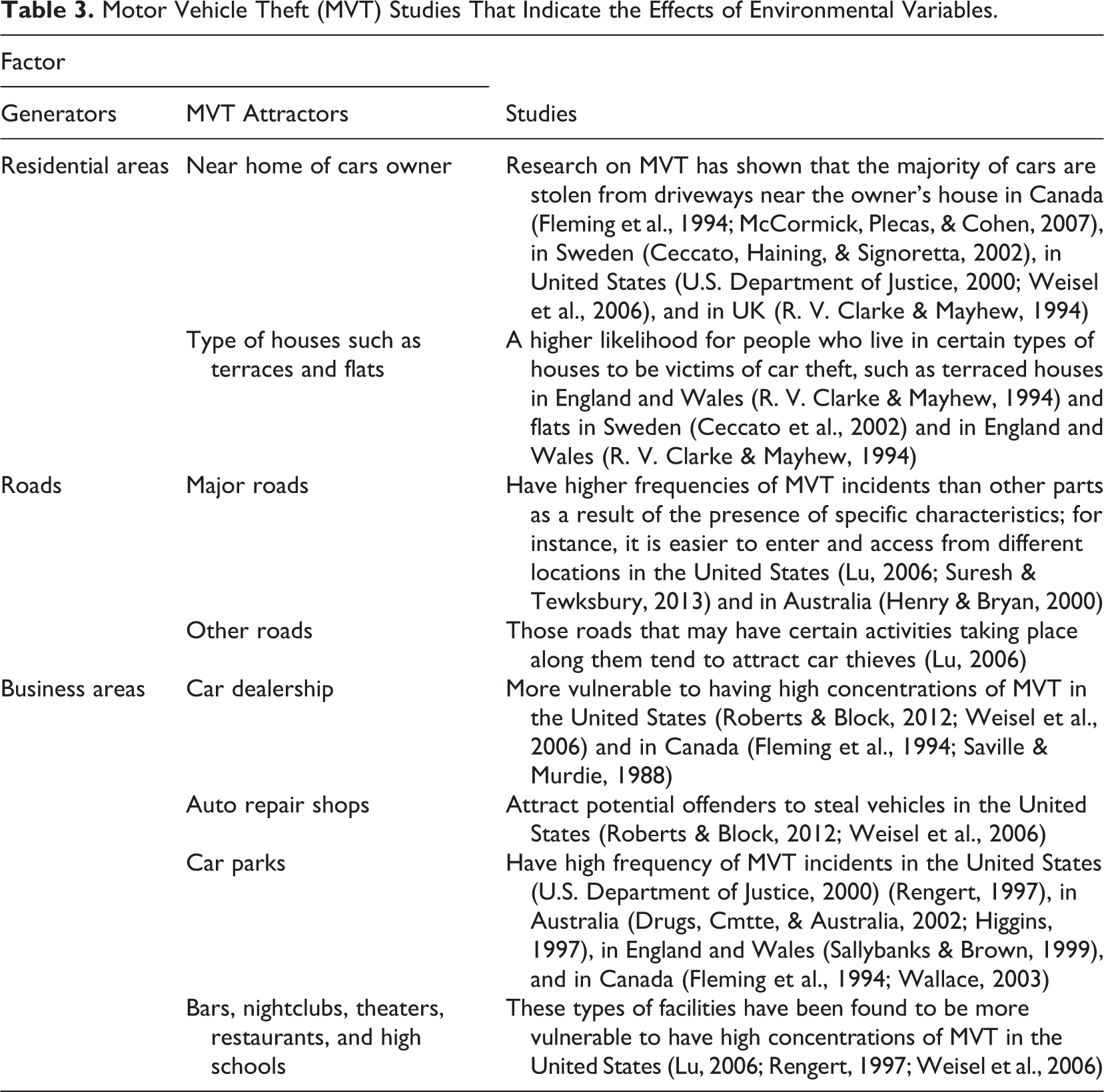
From Table 3, we can see that crime studies are consistent in reporting the influence of environmental features on MVT. However, there are some discrepancies. For example, Weisel, Smith, Garson, Pavlichev, and Wartell (2006) found that car dealerships and rental agencies exhibited a high frequency of MVTs among business locations in very rural areas in the United States. On the other hand, Canadian statistics from 2007 on MVT showed that car dealerships and car rental agencies had a very low percentage of MVT incidents, accounting for only 1% of all auto thefts in Canada (Dauvergne, 2008). This rather contradictory result may be due to the type of area studied. The analysis of Weisel et al. was conducted in very rural areas in the United States which often have lower MVT rates compared to urban areas (R. Clarke, 2002; Sallybanks & Brown, 1999). It also suggested that business areas exhibited the highest MVT rates, which contradicts a wide range of research that reported residential areas to have the highest MVT rates. Several studies (R. V. Clarke & Mayhew, 1994; Fleming et al., 1994; McCormick, Plecas, & Cohen, 2007; U.S. Department of Justice, 2000; Weisel, Smith, Garson, Pavlichev, & Wartell, 2006) have found that the highest frequency of MVT incidents occurred near the home of the vehicle’s owner.
Comparing the Saudi Arabian Context to Typical “Western” Contexts
SA has a range of key features that make it substantially different from typical Western contexts. This section attempts to identify these regional differences in order to discuss their effects on the applicability of RAT and CPT later. Here we focus on the UK and United States in our definition of “Western,” but most of the relationships hold across Western Europe and other industrialized countries. Future work might use a more nuanced definition of “Western,” but this is beyond the scope of this article.
Sociodemographics
The demographic structure of SA differs in a number of respects from the West. Firstly, the majority of Saudi’s population are young. About 70% of the population was under 29 years old in 2007 (Central Department of Statistics and Information, 2008a), while approximately 38% of the UK’s population was under 30 years old in 2008 (Office for National Statistics, 2009) and in the United States, about 40% of the population was under 29 years old in 2010 (U.S. Census Bureau, 2015). The Saudi population aged between 5 and 24 is the largest cohort, and as population becomes older, the size of the age cohorts decreases. In contrast, the largest age cohorts in the United States and UK are aged between 30 and 55.
SA has a larger proportion of foreigners who come to the country to work; they constituted 30% of the population in 2007, making up nearly 55% of the labor force (Central Department of Statistics and Information, 2008b). Furthermore, 70% of non-Saudis are male and the majority of them are aged between 29 and 39 (Central Department of Statistics and Information, 2007). Hence, the percentage of males in SA is 57% of the total population (Central Department of Statistics and Information, 2010). In contrast, the gender balance in the United States and UK is more balanced at 49.1% and 50.8%, respectively (Howden & Meyer, 2010; Office for National Statistics, 2015).
In SA, the proportion of females in the labor force is very low in comparison with Western countries. The percentage of females in the labor force was only 14.3% in 2011, while in the UK and the United States in 2011, females accounted for 46.1% and 46%, respectively (The World Bank, 2016). Furthermore, in 2009, just 11% of married women were in the labor force in the SA (Central Department of Statistics and Information, 2009), while in the UK and United States, the percentages were 72% in 2013 (Office for National Statistics, 2013) and 69.1% in 2011 (U.S. Bureau of Labor Statistics, 2013), respectively. Moreover, the average family size in SA was about six people in 2012 (Central Department of Statistics and Information, 2012) compared to 3.14 people in the United States in 2010 (Lofquist & Census, 2012), 2.3 people in the UK in 2012 (Compton, 2013), and 2.9 people in Canada in 2011. In Western countries, it is more common for people to live singly; young males and females often leave the parental home at about 20 years old (Office for National Statistics, 2014; Reher, 1998) which can weaken family ties (Reher, 1998). In contrast, Saudi families tend to live together (Qari, Balobaid, Rawashdeh, & Al-Sayed, 2013).
Although there are substantial sociodemographic differences between SA and Western counties, there are some similarities. Most relevant here is that the average number of vehicles per household is similar in SA, the United States, and the UK: 1.7 in 2010, 1.8 in 2013, and 1.2 in 2011, respectively, (Central Department of Statistics and Information, 2010; Feng & Luo, 2016; White, 2012).
Legal Systems
An important legal distinction is that SA adapts and implements Sharia (Islamic law) for all legislations and regulations, including criminal justice (Ali, 1985). Sharia is taken from the Muslim holy book “Quran” and from “the sayings, actions, and approvals of the Prophet Muhammad” called “Sunnah” (Aasi, 2003, p. 727). Islamic law (Sharia) aims to preserve the five basic needs of the individual: maintaining religion, maintaining the soul, maintaining the mind, maintaining descendants and morals, and maintaining property (Al-Bashar, 2001). Crime in Islamic law can be defined as a series of prohibitions that God has enjoined (Ḥumayd, 1979).
Since SA implements Sharia law, there are differences in legal systems when compared to Western countries. In the West, some acts are classified as legal but would be illegal under the Sharia and vice versa. For example, same-sex marriage is allowed by law in the United States (2004) and England and Wales (2014; Freedom to Marry, 2014). In contrast, homosexuality is still illegal in SA. Furthermore, drinking alcohol, which is illegal and punishable by law in SA (Sa’ud, 1984), is legal (albeit regulated) in other countries. As another example, polygamy is legal in SA and illegal in the United States and the UK. Therefore, these differences in criminal justice lead to variations in crime rates between countries, particularly for certain types of crimes, such as crimes against morals, religion, and beliefs.
Driving regulations present some substantial differences and are particularly important for this study. According to Saudi traffic legislation, women are not allowed to drive. For clarity, it is worth detailing that women found to be driving cars would not be considered to have stolen them: It is formally the crime of driving without a license. There is the potential for women to steal cars, but in practice, young males have been reported to account for the vast majority of MVT (McCaghy, Giordano, & Henson, 1977; Roberts & Block, 2012). Hence, females do not make up a numerically significant element of offenders, and the population can be taken as male when examining offender behavior.
Weekly Routines
The Hijri calendar (H) is the official calendar in SA. It is based on cycles of the lunar phase. Until July 2013, Thursday and Friday were the official weekend days in SA, after which the system switched to Fridays and Saturdays. This presents problems (and opportunities) for crime analysis work that explores weekly trends across this period, but such issues are not relevant here. The working day is usually 7 hr, from 7:30 a.m. until 2:30 p.m. In SA, as in many Muslim countries, there are specific days and months that have religious significance for Muslims. The most popular religious times are Ramadan, which is the ninth month of the Hijri calendar; Eid Alfater, which comes after Ramadan month ends; and Dhu Al-Hijjah, which is the last month of the Hijri calendar. As with religious and/or cultural holidays in other countries, these have a substantial impact on the routines of residence and hence the occurrence of crimes. There is strong empirical evidence for this in SA. For example, during Ramadan, the working hours change from 7 hr to 5 hr and run from 10 a.m. to 3 p.m. as fasting during the day and general celebrations make for busier social lives in the evenings. Traffic volume can be used to illustrate the patterns of daily activities. Figure 2 illustrates the considerable differences in traffic volumes during the month of Ramadan for Riyadh in 2011 compared to normal days.
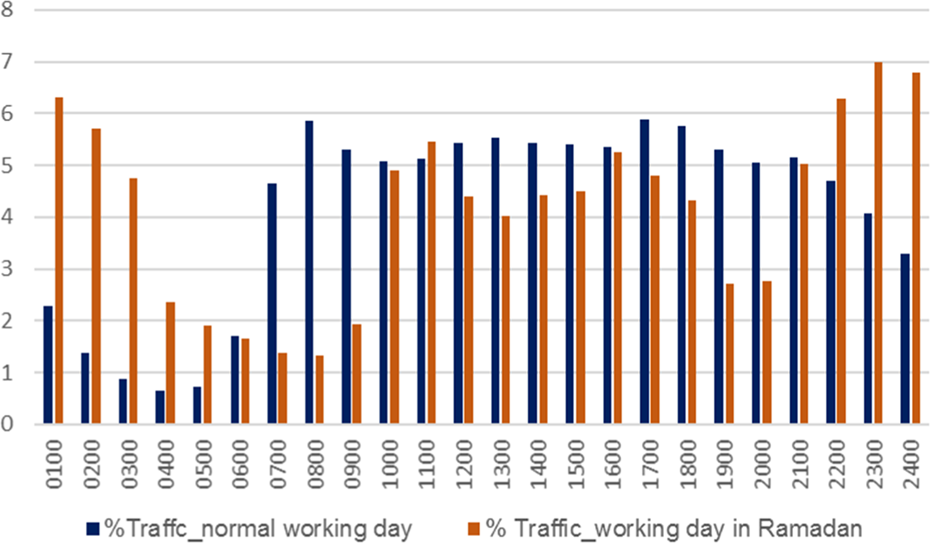
A bar chart showing the percentage of vehicle traffic for the working day on a normal day and during Ramadan in Riyadh. Source. High Commission for Development of Riyadh (2012).
An additional factor to routine activities is that religious obligations influence traffic. For example, Friday prayers occur in the mid-afternoon, and these prayers must be performed in a mosque. Consequently, this activity generates two patterns: (1) traffic going to the mosques and (2) traffic going from the mosques to homes or other places. However, it is worth noting that there are some people who walk to mosques, and there are others, such as some foreign workers, who are non-Muslims and therefore do not attend Mosques. Nevertheless, it is expected that this activity will substantially influence the Friday traffic patterns.
Figures 3 and 4 show traffic volumes for the United States and UK and illustrate that the trends are similar in the two countries. The highest traffic volumes during periods of commuting are in the morning between 6 a.m. and 8 a.m. and the evening between 4 p.m. and 5 p.m. Then the traffic decreases noticeably from 6 p.m. to reach the lowest levels in the early morning. This coincides with traditional working hours: Monday to Friday, approximately 9 a.m. to 5 p.m. These patterns of traffic volumes clearly indicate that Saudi daily patterns of activities are different from those for the British and Americans. For example, by comparing traffic patterns, people in SA tend to do some activities using vehicles during the evening time as the traffic volume is high until 9 p.m., whereas in the UK and United States during the working days, the traffic patterns show only high traffic volumes during the commuting periods. This may suggest that most people tend to stay at home in the evening or at least they are not using vehicles for their activities. Note, also, that the diurnal double peak is not present in the SA data—SA traffic peaks quickly and remains high throughout the day, perhaps reflecting the lack of public transport, which in the UK and United States could be used by the economically inactive during noncommuting periods thereby reducing counts of individual vehicles during these times.
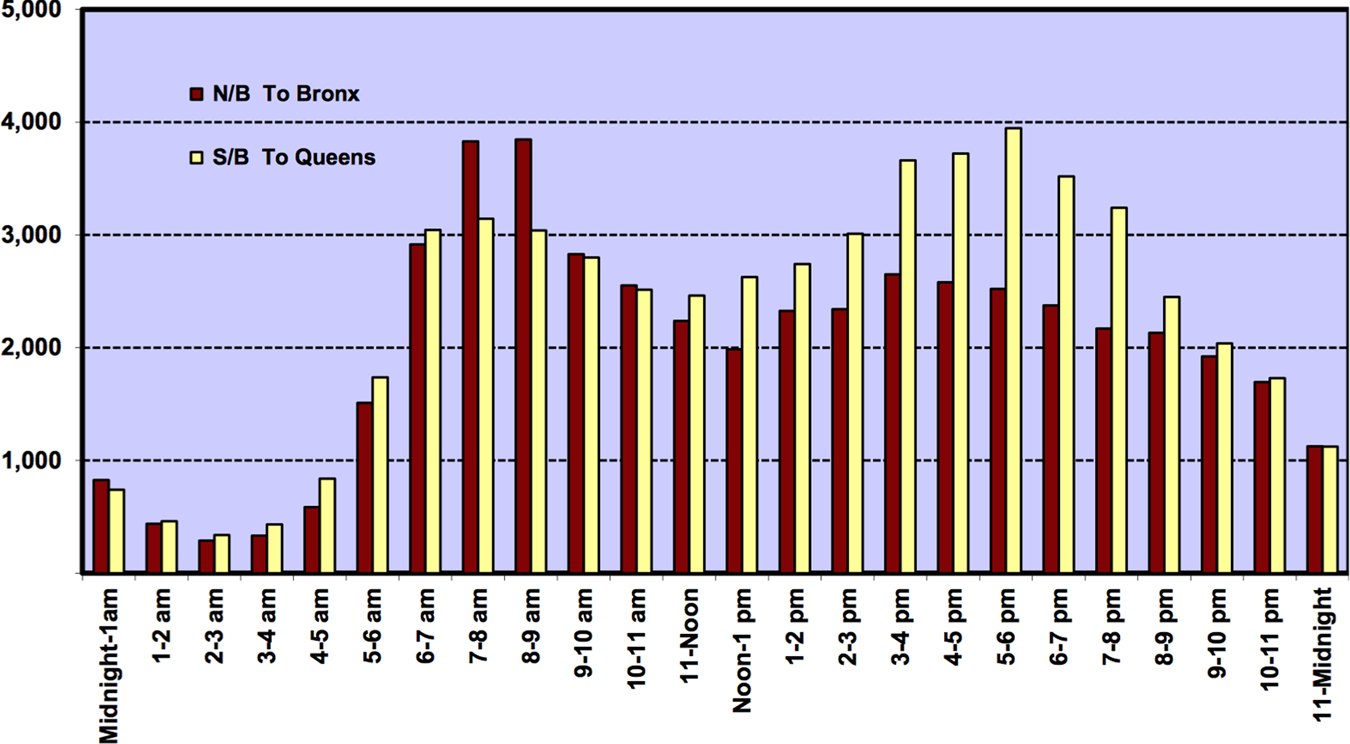
Hourly traffic volumes on Bronx–Whitestone Bridge, New York, in the United States in 2010. Source. Sadik-Khan (2012).
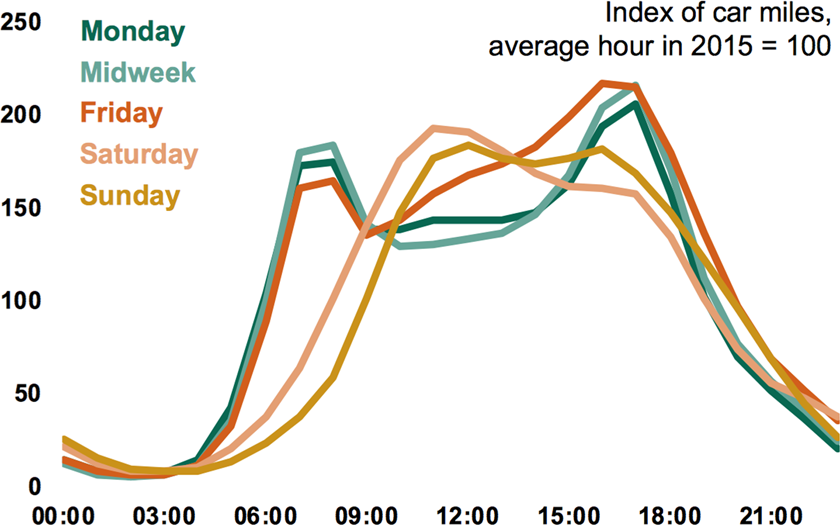
Daily car traffic trends on all roads in the UK. Source. Department for Transport (2016).
SA and Western countries differ not only in these socioeconomic factors but also in the physical environment. For example, vehicles are the main form of transportation in SA due to the lack of bus and train systems within its cities. This goes some degree to explaining the considerable gridlock that develops across the city during the day. It is worth noting that in Riyadh, the capital city, there is a large Metro rail system currently under construction. Another difference between the built environments is the architecture. In SA, a house is more likely to be surrounded by a walled-in courtyard, with the wall at least 2 m high for privacy (see Figure 5). These differences between the two environments will have a significant effect on crime statistics, as discussed in the fifth section.
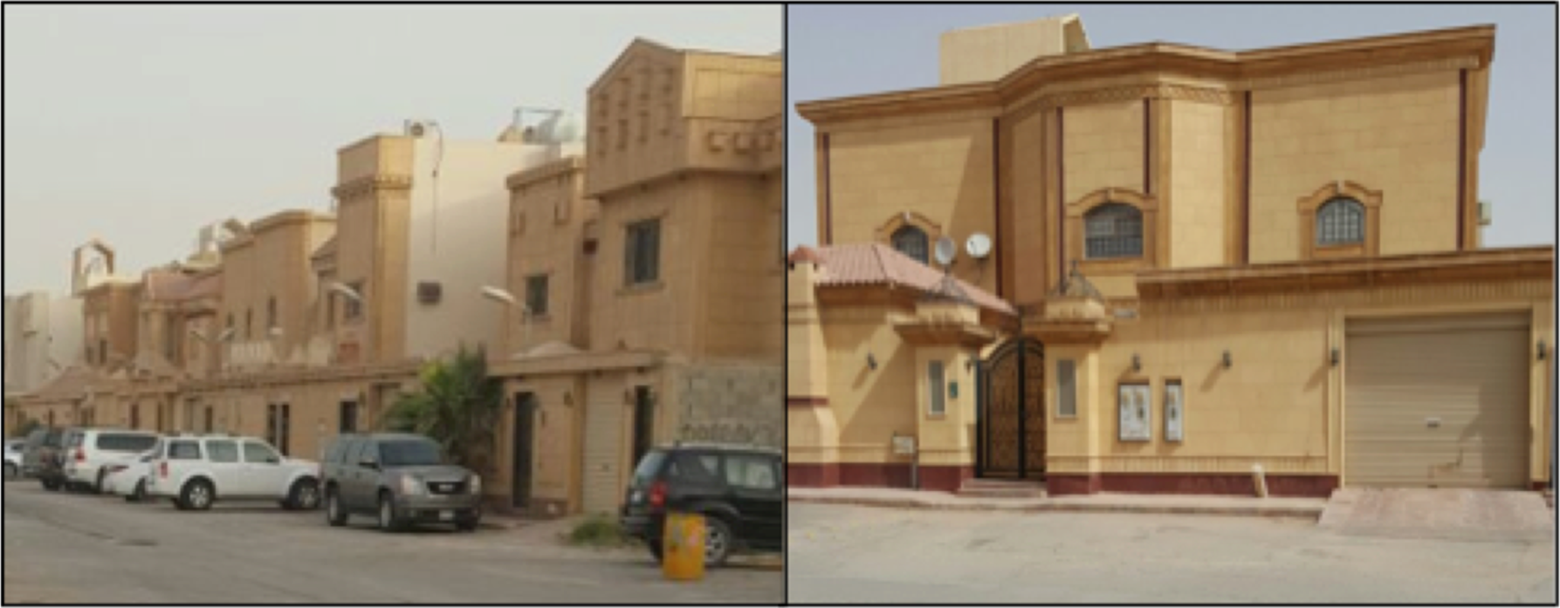
Street view shows houses and parked cars, Riyadh, Saudi Arabia. Source. Alotaibi (2016).
Crime in SA
Criminology Studies in SA
Over the last two decades, rates of recorded crime have increased in SA. Official Saudi statistics indicate that crime reported in 1413 H (1992) was 229,864 incidents (1,361 crimes per 100,000 population) reaching 454,304 incidents (1,476 crimes per 100,000 population) in 1434 H (2013; Ministry of Interior, 2014). This is an increase of nearly 11%. Despite this increase, the rate of crime incidents in SA is still considered to be relatively low in comparison with other countries. For example, according to the United Nations’ Surveys on Crime Trends and the Operations of Criminal Justice Systems in 2010, several types of crime in SA were classified as having the lowest rates in comparison with other countries, including burglary (in 2002), robbery (in 2000), assault (in 2002), and kidnapping (in 2002; Harrendorf, Heiskanen, & Malby, 2010)—although it is important to recognize that some of these differences might be partly an artifact of differences in national legal systems or in reporting/recording practice. Nevertheless, the definition of MVT crime varies little internationally, and in SA, it was classified as medium rate in 2002 (Harrendorf et al., 2010).
Yet little research on SA has attempted to understand this problem from the perspective of the geography of crime. This scarcity of research has been pointed out by a number of researchers (Al-Bashari, 1999; Almatrafi, 2005; Alwelaie, 1993). Al-Bashari (1999) indicated that this scarcity could be attributed to the difficulties that researchers face in gathering data about crime. The available literature on the geography of crime that has emerged from SA suffers from the absence of a wide range of significant data elements in general and those that focus on MVT specifically. The following sections will critique the available literature, highlighting the importance of research that is well grounded in sound theoretical perspectives.
Existing studies in SA have been primarily focused on the characteristics of offenders rather than victims, the geographical location of crime incidents or its surrounding factors. Little research on SA has attempted to understand this problem from the perspective of geography (i.e., by considering the spatial patterns of offending as well as other factors). This is despite the fact that there is no a priori reason why either the sociogeographics or urban forms/dynamics within the area should encourage us to hope that Western crime geographies can be assumed to play out in SA or the Arab World more generally. Table 4 summarizes the few relevant studies that are available. There are a number of limitations and weaknesses with the current state of the research field, which are important to consider. They will be summarized in the following paragraphs.
Saudi Studies on the Geography of Crime.
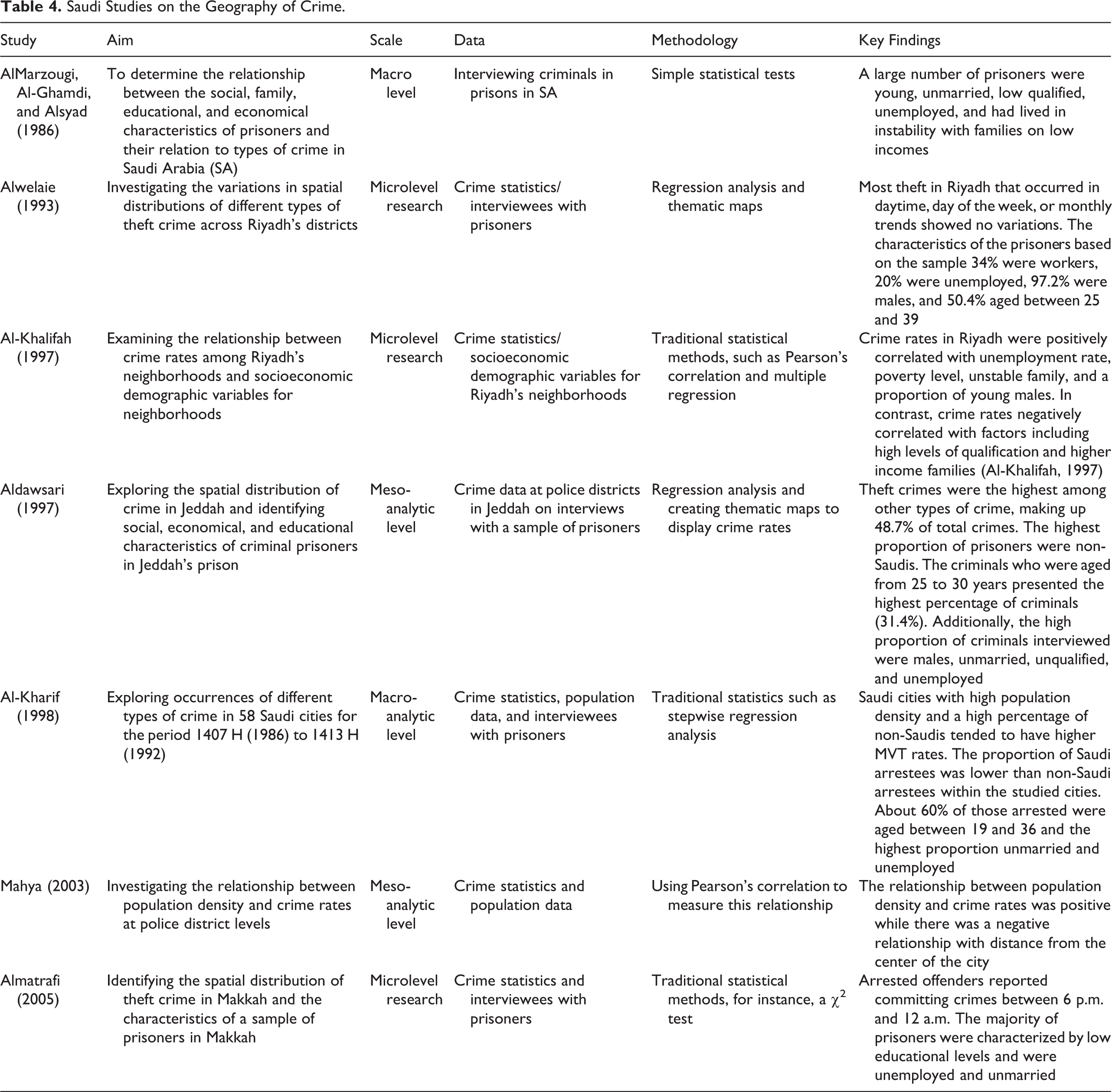
A major criticism of Alwelaie (1993) is the lack of theoretical contextualization for examining variables that influence each type of theft crime. The regression model could explain only 23% of the variations of MVT using the land-use variables. This weak model result suggests key explanatory variables in the environmental backcloth were missing from the analysis and/or the underlying population at risk was problematic. The latter issue certainly plays out in the study as the denominator used to calculate rates was resident population, and this only acts as a proxy for the real population of potential victims (the volume of available cars: Ceccato, Haining, & Signoretta, 2002; Weisel et al., 2006) at certain times of day. A further limitation of Alwelaie (1993) is that, despite attempting to examine the relationship between different types of theft crime and land-use characteristics for each district, the study did not show the locations where the types of land use influence different types of theft rates over the study area.
Although Al-Khalifah’s (1997) work is one of the most comprehensive for crimes carried out in Riyadh (the capital of SA), it too generates only a weak explanatory model for crime. The author examined the relationship between 27 independent variables and property crime rates and found only one variable (the percentage of households who were foreign workers) that was statistically significant. The model explained only 10% of crime theft in Riyadh. In part, this is because the study aggregated all property crimes, though underlying this issue is the fact that, in spite of introducing a number of criminology theories—for example, anomie theory, cultural conflict theory, social disorganization, and opportunity theory—the study ultimately does not use crime theory to conceptualize the model. A more developed theoretical framework would have dictated against aggregating all property crimes into a single measure as the important variations in motivational and contextual factors that are present in different types of property crime would have been more apparent.
This aggregation issue, which disguises the nuances in the crime system, is also seen in the study by Aldawsari (1997). In addition, it focuses solely on the characteristics of prisoners rather than the surrounding environmental and victim contexts. Aggregation, though spatial rather than between variables, is also an issue with Al-Kharif (1998), who explored occurrences of different types of crime in 58 Saudi cities for the period 1407 H (1986) to 1413 H (1992). His study was carried out at a macro-analytic level that ultimately masked key spatial scales of variation likely in crime systems.
In view of all that has been mentioned so far, it is apparent that these existing studies on the geography of crime in SA to date suffer from limitations in terms of the particular theoretical perspective applied, data used, and methods adapted.
MVT Studies in SA
A small number of studies analyze MVT specifically. These are primarily concerned with the characteristics of incarcerated offenders and are outlined in Table 5. They are typically based on interviewing convicted car thieves. Unfortunately, this population is likely to be at best of dubious representativeness and at worst biased. The population within prisons is likely to be a small sample of the overall MVT offender population and the proportion of arrested car thieves varies according to the police effort (Boba, 2005). Perhaps most critically, MVT has been reported to have a very low clearance rate. For example, in the United States, only 11.9% of MVTs were cleared by arrest or exceptional means (FBI, 2012a). In SA, the percentage of arrests for car theft during the period 1990–1992 was 6% (Al-Kharif, 1998), and 11.6% of the total reported MVT was in the Riyadh region in 2013 (Police Department in Riyadh, 2014). This would not matter if the sample was representative; however, Bryant (2012) has pointed out that the very low clearance for MVT leads to difficulty in identifying the characteristics of car thieves and generalizing the results yielded from the sample taken from arrestees could be misleading (Boba, 2005). Furthermore, the studies are based on subsamples which are often selective. For example, Al-Qahtani (2008), Al-Otaibi (2002), and Al-Shaheen (1996) interviewed car thieves who were juveniles, but not those who were older.
Saudi Arabia (SA) Studies that Focus on Motor Vehicle Theft (MVT).
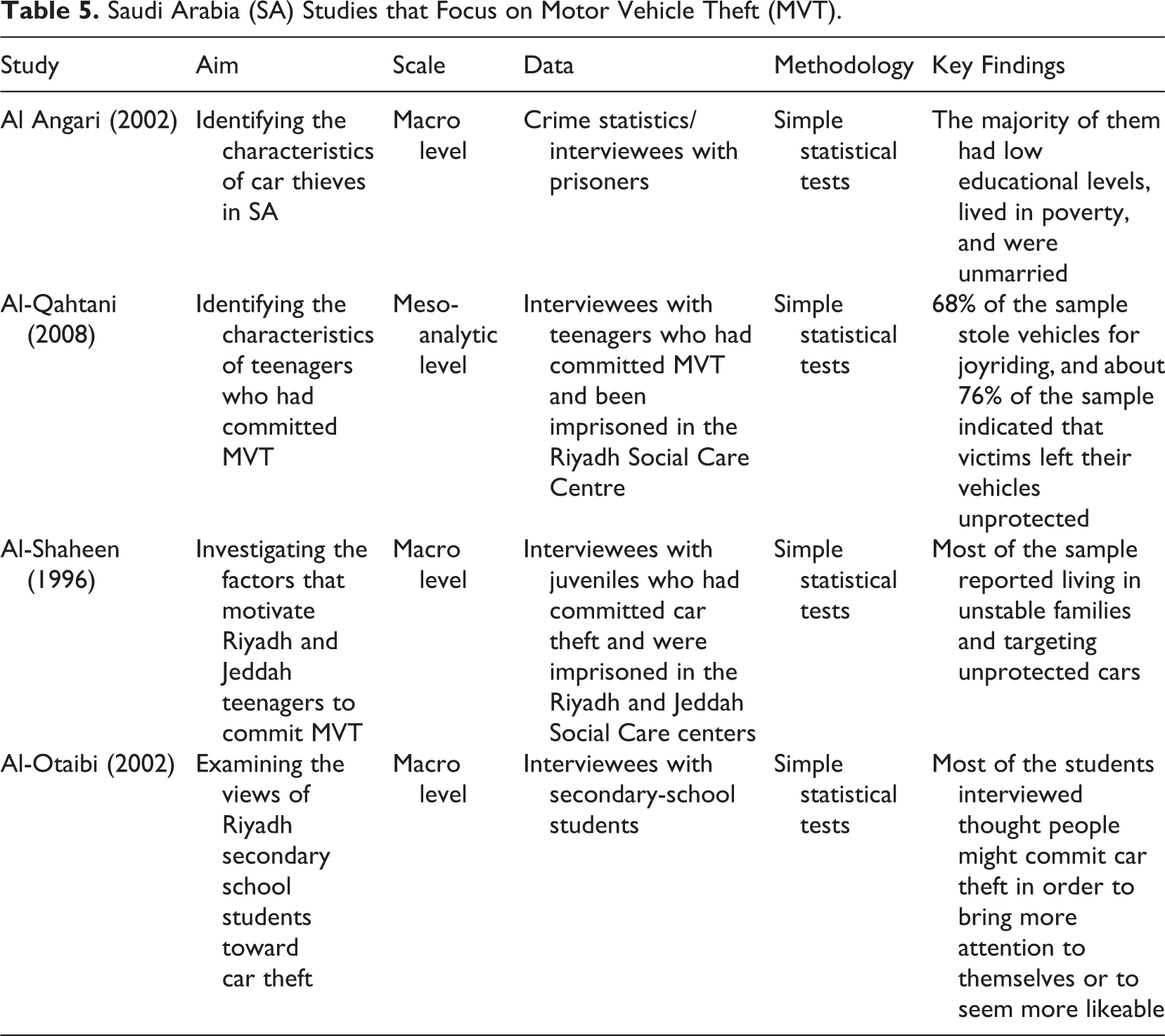
In conclusion, it is clear from the literature reviewed herein that most studies analyzing crime in SA, and in particular MVT, have primarily focused on the characteristics of offenders. There will be a range of significant elements contributing to MVT spatial patterns that the current literature does not address. Obviously, these should be further examined and appropriately studied with grounding in the theoretical frameworks developed within environmental criminology. Therefore, the following sections will evaluate whether RAT and CPT can be applied to explain MVT in SA or whether reformulating some essential aspects of these theories is required.
How Might Differences Between Two Environments Influence the Applicability of RAT and CPT?
Empirical tests relating to RAT and CPT tend to focus more on burglary and robbery in the United States and Canada (as discussed in RAT subsection). They utilize aggregate sociodemographic data sets to examine the risks associated with a given crime. Such studies generally do well in the West, where the theories were generated, but can the theories be so easily converted to sociodemographic aggregates in other cultures?
It seems likely that the crimes at the center of such theories may not be universally important. Each crime differs from another in the nature of the offence (Cornish & Clarke, 2008), the type of victim/target, the modus operandi, the characteristics of place in which the crime occurred, the consequences of crime, and so on. Furthermore, there are variations in the spatial distribution of the patterns for each type of crime, and thus, spatial relationships are different for each type of crime (J. Eck, Chainey, Cameron, & Wilson, 2005). Socioeconomic and demographic factors may influence the occurrence of burglary, but they may be less key in, for example, crimes against religion, where protest and individual psychology are likely to be more critical.
The Saudi Arabian context differs substantially from the Western context in terms of individual behavior, demographics, culture, society, and climate. It would therefore be unsurprising if the crime rates and types of crimes committed also varied substantially from the Western experience. RAT and CPT were originally developed within a specific cultural, socioeconomic, physical, and legal environment, and challenges might arise when they are applied outside of the originating context.
Applicability of RAT
RAT argues that high levels of property crime, for example, are the result of certain social and economic conditions, not just because of the underlying socioeconomic effect on offenders, but because of the opportunities those conditions create for crime. According to Cohen and Felson (1979), factors that can contribute to high levels of property crime include single adults living alone, females participating in the labor force, and a small household size, all of which results in the absence of capable guardians living in these homes during the day. These circumstances can contribute toward higher levels of residential burglaries being carried out against these households. These conditions are somewhat less applicable in the Saudi Arabian context, because in SA, the average family size is larger, the percentage of females in the labor force only 13.2% in 2011 (The World Bank, 2016), and only 11% of Saudi females who were married participated in the labor force in 2009 (Central Department of Statistics and Information, 2009). This does not just have an effect on the number of capable guardians within a home, but also around it. Felson and Clarke (1998) and Felson (1986) pointed out that capable guardians are likely to be persons such as housewives but also neighbors. Taking this context altogether, these conditions mean there are more capable guardians present in Saudi Arabian households during the day.
To a degree, the low rates of burglary in SA fit this RAT picture. However, what appears to be seen in SA instead is a displacement of crime type, to MVT, but in ways that run contrary to RAT. Under standard RAT, we would expect car thefts to be low, because there are more guardians around in residential areas during the day, and work areas have high ambient populations during working hours. However, this would be to ignore two aspects of MVT. The first is the high mobility of the target. We argue that the element of capable guardians is difficult to measure for MVT using demographic variables, which can be seen in previous studies. For example, published studies on the effect of population density are not consistent. Andresen (2006) and Copes (1999) both explored capable guardians, but Andresen (2006) found no significant effect, while Copes (1999) found a positive effect contrary to his expectations. The second is the relative risk associated with guardians. Given that during burglary in SA, there is a high risk of being interrupted by a guardian in a complex and unfamiliar space (the victim’s home), crime is displaced into MVT. In MVT, street areas that appear statistically to be of high guardianship often lack the necessary quick access and easy oversight associated with guardianship in the West, and the environment is one that is more familiar and open. The latter lowers the risk for offenders to be caught in the act, and indeed, this is seen in the fact that many MVTs in SA are perpetrated in petrol stations and shops, where people often leave their keys in the ignition while paying. These are high guardianship/high interruption rate, but low risk of capture/easy opportunity areas. Furthermore, as indicated, the people who stay in houses in the West are expected to play a role in protecting the vehicles parked outside their homes.
This element of self-protection is a core aspect of crime prevention through environmental design (CPTED; Cozens, Saville, & Hillier, 2005) and the opportunity, target, risk, effort, and payoff (OTREP) framework proposed by Kapland et al. (1978). Both approaches emphasize how the owner of any place being able to see their surroundings works as natural surveillance, which can contribute to reducing the opportunity for crime in the surrounding area. This can incorporate the role of RAT, whereby occupants of houses such as housewives serve as capable guardians (Felson, 1986). In SA, however, there are often high walls surrounding houses, which means that homeowners are unable to see the street areas (see Figure 5). Thus, potential car thieves in SA may have a lower level of risk, as espoused by CPTED (Cozens et al., 2005) and OTREP (Kapland et al., 1978). Therefore, occupants of houses in SA such as housewives are unable to play a role as capable guardians in preventing vehicle theft.
Little consideration has been given by both RAT and CPT to the setting of MVT occurrences, and few studies have attempted to contextualize MVT within the theoretical frameworks developed in environmental criminology. We could attribute this to the lower proportion of MVT compared to other property crimes in the West. According to FBI (2012b) figures in 2012, larceny theft and burglary accounted for the highest rates (68.5% and 23%, respectively) of all property crime, whereas MVT only accounted for 8% of property crimes. The lower home guardianship in the West, along with the shrinking of valuable goods to a portable size since the 1960s, favors burglary. In contrast, MVT targets have remained difficult to move and dispose of, and since the 1980s, they have increasingly contained sophisticated security devices (P. J. Brantingham & Brantingham, 1993; Cohen, Felson, & Land, 1980; Farrell, Tilley, Tseloni, & Mailley, 2011; Webb, 1994). In the United States, therefore, there has been a substantial reduction in MVT rates since the mid-1960s (Webb, 1994) in comparison with property crimes such as burglary (Cohen et al., 1980)—although it is worth highlighting that both have reduced (Van Dijk, Tseloni, & Farrell, 2012).
In addition to the spatiality of crime, the temporality of offences is culturally determined. Different community activities practiced by different cultures will have an influence on the routine activities of different peoples. In turn, these activities will influence patterns of crime events that occur at different periods of the day, week, and month. Both RAT and CPT suggest that there is a concentration of burglaries during the daytime when people go to work and when guardians are not present at home. Both theories look at the role of work patterns, time of day, and crime occurrence. As discussed, Cohen and Felson (1979) argue that burglaries have increased with the proportion of married women entering the workforce and the number of people traveling to work generally. Therefore, studies of the patterns of crime in the West are generally predicated on the dichotomy between working and residential hours. However, two issues may limit the applicability of this argument in terms of actual temporal patterns of MVT in terms of routine activities of people in SA.
Firstly, even the West, MVT incidents are not generally centered on low-guardianship working-hour patterns like the occurrences of burglaries; a wide range of studies have shown that the highest number of MVT incidents occurred during the night (R. Clarke, 2002; A. Flowers, 2006; Weisel et al., 2006) in the United States, in the UK (Mirrlees-Black, Mayhew, & Percy, 1996), Canada (Fleming et al., 1994), and Australia (Henry & Bryan, 2000). In SA, the dominance of MVT and the issues of guardianship make for a more complex crime distribution than in areas where burglary dominates. Secondly, many of the events that move communities within SA are not related to work. For example, people attend mosques at certain times of the day for prayers during the week and for more substantial periods during Friday prayer. The chart of traffic volume (Figure 2) shows that there is high traffic volume during the evening (outside working hours) because people in SA tend to do their shopping at night to avoid the hot weather of the daytime. We would expect these activities to influence crime patterns and opportunities in SA in the same way that working and commuting patterns do in the West.
This article is not the first to indicate the limitations of RAT in explaining certain crimes. Evidence shows that there is a tendency for the theory to be able to explain certain crimes, such as burglary, fairly well (Felson & Clarke, 1998), but it is limited when attempting to explain other crimes. For example, Miethe, Stafford, and Long (1987) show that RAT cannot adequately explain the occurrences of violent crime in comparison to its ability to explain and predict property crimes, since some violent crimes are the result of unplanned reactions. Furthermore, Yar (2005) finds that as a result of differences in context between cybercrime and property crimes, for example, applying RAT when trying to explain cybercrime has limitations. Nevertheless, applying RAT to alternative cultural settings highlights many of its difficulties, both in terms of theoretical applicability and in terms of practical use given the aggregate sociodemographic statistics generally collected by authorities. Most formal data sets are associated with residences, which is problematic when trying to understand the risk to movable objects and the risk associated with moving offenders, victims, and guardians. In the West, these formal data sets play to the dominance of property crimes, but in SA, we see a disjunction between data and crime type.
Applicability of CPT
CPT tries to explain how the opportunities available to the offender can vary over space and time. The readiness is based on the characteristics of the backcloth (P. J. Brantingham & Brantingham, 1993). For example, CPT might consider the role of drinking alcohol as an influential factor on the readiness of offenders to commit crime, but also, more specifically, as a behavior embedded in space—the locations of alcohol drinking becoming criminogenic areas. The theory highlights features of the built environment, such as pathways, wine bars, pubs, train stations, and bus stops that work as nodes of concentration for crime. These are culturally dependent and need determining separately for each culture. SA has very different built environment from that in Western countries. For example, it has no bars, train stations, or bus systems working inside of its cities, and drinking alcohol is illegal. In addition, due to the desert climate conditions in SA, no paths are used for cycling or walking during the normal commute to work. Thus, the main means of transport in the country is the motor vehicle. Cultural differences and differences in the built environment between SA and Western countries will clearly, therefore, result in different patterns of criminogenic nodes and opportunities.
The different criminogenic patterns can be clearly seen in the journey taken to commit MVT. Motor vehicles are the main form of transport in SA, and consequently, these vehicles are expected to be used by car thieves when traveling to commit vehicle theft. This will therefore affect the distance that offenders travel and also the time at which MVT offences are committed. Consequently, MVT in residential areas is not expected to be particularly common during working hours, as vehicles are taken to work. MVT will also be less common during evening times when people use vehicles to do activities, as can be seen from the traffic data (Figure 2). Thus, it is expected that, in SA, vehicle thefts, which occur near victims’ homes, are most likely to be limited to occurring during sleeping hours as vehicles are parked outside residents’ homes, and car thieves feel that they are less likely to be seen during these hours.
This view can be supported by the findings of Al Angari (2002), who conducted interviews with a large sample of cars thieves in SA. Al Angari (2002) found that vehicles stolen while parked outside victims’ houses accounted for fewer thefts than vehicles stolen while left unattended on the street with the engine running. Similarly, Al-Shaheen (1996) interviewed juveniles who committed car theft in Jeddah and Riyadh and found that most juveniles reported that they targeted unlocked cars with the keys in the ignition. Thus, in SA, it is expected that MVT is concentrated in residential areas where vehicles are more likely to be left unattended with the engine running, for example, when car owners are paying for groceries or petrol. In SA, grocery stores and petrol stations are common on streets in many residential neighborhoods, and drivers in this desert climate frequently leave their vehicles running with the air conditioning on. The low concentration of vehicle thefts near the homes of car owners is in contrast to Western countries, where MVT tends to occur in residential areas near the homes of car owners at nighttime in Canada (Fleming et al., 1994; McCormick et al., 2007), Sweden (Ceccato et al., 2002), the United States (U.S. Department of Justice, 2000; Weisel et al., 2006), and the UK. (R. V. Clarke & Mayhew, 1994). It is worth noting that future empirical work using data from SA will attempt to more strongly evidence some of these assertions.
Age is also a key factor that influences criminal mobility. This is supported by the ideas of J. E. Eck and Weisburd (1995), who suggest that criminals in their early years may tend to commit crimes near their own residences, which might be the reverse for older criminals. The majority of the SA population are young, which is in contrast to the structure of populations in the United States and UK (see Sociodemographics subsection). Consequently, patterns of MVT in SA could differ from the West for two reasons. Firstly, the young population of SA means offenders are, on average, more likely to commit MVT in places where they live, during dark hours when vehicles are parked outside with little surveillance. Secondly, offenders are more likely to commit vehicle theft in places where they are attracted to node activities.
Different characteristics that emerge in the context of crime are explored by David and Scott (1973). In their study, they compare juvenile delinquency in two cities, one in the United States and the other in Argentina. Both cities had similar socioeconomic, demographic, and climate characteristics but were substantially different in their built environments. David and Scott (1973) found that each city is dominated by certain types of crimes, and these crimes differ from each other. They conclude that these differences have arisen because of differences in the built environment. However, SA is not only different from Western countries in terms of built environment, but, as discussed above, in its ethnic, climate, culture, socioeconomic, and demographic conditions also.
The CPT tends to focus on the presence of activity nodes in explaining crimes; these nodes attract offenders and victims to the same locations. However, the dominance of MVT in SA complicates this picture: Crimes tend to occur not at the end point where victims are, but where the target cars are. They also take place not at high activity times, but at times where guardianship is weak or low risk. Hence, it is more complicated than at first sight to apply CPT.
Conclusions and Future Work
This work is a first step toward understanding the crime problem in SA using the RAT and CPT. It has concentrated on crimes common to both SA and the regions where these theories were developed and in doing so has raised a number of issues around their cross-cultural application, especially in Arabic countries. In particular, the dominance of MVT in SA causes complications, as MVT is not well embedded within either RAT or CPT in the West, maps poorly to standard government sociodemographic statistics used in practical applications of the theories, and, furthermore, cultural differences render the general theories difficult to apply in SA. The present study raises key questions about the appropriateness of the factors that represent the RAT elements in explaining MVT and indicates that substantial rethinking of the salient elements of an environmental backdrop may be needed in the application of CPT. In addition, Western studies on MVT reviewed so far have treated contributing factors as if they have consistent influence throughout the day. However, vehicles are not stationary objects but rather move from place to place. As a result, the characteristics of neighborhoods vary in their influence on MVT throughout the day.
More generally, these issues influence the usefulness of RAT and CPT across the crime system. While the fundamentals of the theories are sound and applicable, cultural differences (e.g., architectural oversight, the seclusion of women, the high security of residential garages at night) considerably complicate elements that would play out in RAT and CPT, both temporally and spatially, reducing their predictive utility. For example, they considerably complicate the notion of residential guardians and available targets. These features additionally shift crime to environments less commonly in action in the West (carjacking at service stations; street crime in the busiest areas of night-time economy) with the unfortunate ancillary that standard statistical metrics utilized in Western RAT and CPT studies, which tend to be residential, fail to capture key elements of the crime system, reducing predictability for these alternative crimes as well.
The next step in this research will attempt to apply the theories discussed here to explain MVT in SA, particularly in Riyadh, considering the theoretical concerns addressed in this article. In particular, there is a substantial need for reliable, comprehensive, empirical work to evidence the applicability of the theories in SA. For example, MVT was excluded in the original RAT analysis due to concerns about multicollinearity (Cohen & Felson, 1979). It will be interesting to determine whether a replication of this seminal work in SA will require the exclusion of MVT or possibly of a different crime due to multicollinearity. In terms of understanding MVT specifically, the analysis of vehicle recovery locations, as well as theft locations, will undoubtedly prove interesting. For example, an analysis of the recovery locations might help to shed light on the original motivation behind the theft (e.g., Roberts & Block, 2012; Wallace, 2003); the results of which might provide an interesting cross-national comparison and help to validate the underlying behavioral theories.
Footnotes
Declaration of Conflicting Interests
The authors declared no potential conflict of interest with respect to the research, authorship, and/or publication of this article.
Funding
The authors received no financial support for the research, authorship, and/or publication of this article.