Driven by advances in machine learning (ML), smart products improve over time through data-driven insights as ongoing user interactions generate usage data that enable the training, evaluation, and refinement of underlying algorithms. However, when firms implement strategies to collect more data to enhance product quality and profits, they must also consider strategic consumer behavior that may lead to unintended negative consequences. Specifically, consumers may intentionally postpone purchases in the early stages of a product’s development, anticipating future quality improvements and price reductions, which in turn complicates data collection during this critical period. Considering advancements in disruptive technologies, this study examines the critical yet underexplored economic impact of ML on pricing strategies. Few studies have focused on how ML influences profit maximization in the presence of strategic consumers. To address this gap, we develop two-period game-theoretic models that employ two dynamic pricing strategies, responsive versus preannounced pricing, to investigate how firms developing smart products adapt to the disruptive impact of ML, considering the behavior of strategic consumers. Our study provides several significant implications. First, we find that ML impacts firms’ profits by impacting consumers’ strategic behaviors in opposite directions. Second, under both dynamic pricing strategies, prices may initially be low and may either rise or decline over time. Third, we demonstrate that, different from findings in the existing literature on strategic consumer behavior, preannounced pricing policies are generally not optimal for the firm when its ability to leverage ML is relatively limited, and consumers are less strategic. Overall, this study makes three contributions to the literature. First, we clarify the impact of ML on a smart product firm’s profit. We find two effects in the application of ML: (1) a positive effect associated with ML (the “ effect”) and (2) a negative effect (the “ effect”). Second, this study highlights a fundamental economic mechanism for smart products in the presence of strategic consumers. Finally, it provides a decision-making tool for smart product firms to select an optimal dynamic pricing strategy.
Smart products have emerged as a transformative force in digital economy. By integrating embedded technology, connectivity, and machine learning (ML), these products provide adaptive functionality and personalized user experiences (Porter and Heppelmann, 2014). A defining economic feature is that product quality is not fixed at launch but evolves endogenously as ML algorithms are trained on user-generated data. Consequently, product performance improves with usage, fundamentally reshaping how firms create and capture value over time (Raff et al., 2020, Rane, 2023).
The economic importance of smart products is substantial. For example, revenue in the smart home market reached $115.70 billion in 2022 (Statista, 2022) and is projected to grow to $537.01 billion by 2030 (Prnewswire, 2022) in the global market. Similarly, the global electric vehicle (EV) market is expected to reach $1,318.2 billion by 2028 (Fortune, 2022). More broadly, McKinsey estimates that internet of things-enabled smart products could generate between $5.5 and $12.6 trillion in global economic value by 2030 (McKinsey, 2024). These trends highlight the need to understand the economic forces governing smart product markets.
Despite their widespread adoption, firms face a fundamental challenge: ML-driven quality improvement relies on data that are often scarce in a product’s early stages (Bansal et al., 2022; Nandy et al., 2022). To accelerate data collection, firms may lower early-stage prices to encourage adoption (Gurkan and de Véricourt, 2022; Hagiu and Wright, 2023). However, forward-looking consumers understand that early adoption contributes to future product quality and may strategically postpone purchases in anticipation of better performance, future price reductions, or privacy concerns (Mani and Chouk, 2017; Papanastasiou and Savva, 2017). This strategic waiting can impede early data accumulation, creating a fundamental tension between firm pricing incentives and consumer intertemporal purchase decisions.
This tension raises a central question in the study of disruptive technologies and technological innovation: How can firms managing smart products shape demand to fully leverage the value of ML in the presence of strategic consumers? Addressing this question is critical for understanding how ML impacts both consumer behavior and firms’ pricing decisions. In this paper, we attempt to answer this important question.
Motivation
This study is partially motivated by customers’ strategic waiting for smart products, driven by anticipated quality improvements enabled by machine learning. Questions frequently asked on social media, such as “Should I buy the current smart product or wait for a new version?” indicate that consumers often prefer the latest smart products and tend to delay their purchases (Lobel et al., 2016). This strategic behavior has a significant impact on quality improvement in smart products.
Smart products leverage ML as a core driver to continuously improve their quality, including performance, reliability, features, perceived quality, and serviceability through data-driven optimizations (e.g., Garvin, 1987). ML in smart products exhibits two main unique characteristics: First, ML-enabled products use data-driven learning. Data-driven learning enables smart products to tailor their functionalities to individual user preferences, patterns, or environments, resulting in highly personalized user experiences. The quality improvements of smart products largely depend on the volume, quality, and diversity of data gathered from real-world usage (Gregory et al., 2021, 2022; Porter and Heppelmann, 2015). Second, the smart products enabled by ML present continuous and autonomous improvement through the artificial intelligence (AI) flywheel effect. The AI flywheel effect refers to a self-reinforcing feedback loop in which more user interactions generate more data, which in turn improves AI models, enhances the user experience, and drives further interactions (Gurkan and de Véricourt, 2022; Hagiu and Wright, 2025). Smart products that employ ML are not static; they continuously improve their performance over time (Raff et al., 2020, Rane, 2023). The characteristics of ML shift the competition of smart products from pricing to the integration of price and quality as consumers increasingly seek differentiated value beyond low prices (Porter and Heppelmann, 2014, 2015).
Based on the above features, data collection is a crucial process for improving smart products. The strategic behavior of consumers poses challenges to firms in balancing extensive data collection for accuracy against potential diminishing returns. They may postpone purchases to optimize long-term benefits. These delays may reduce early demand, limiting initial data collection, hindering efforts to improve quality, and creating unique challenges for firms. Therefore, a firm may choose to offer lower prices to attract customers and collect more data in the early period, improve product quality, and ultimately achieve greater long-term profits. However, this strategy incurs higher training costs and less immediate profit. Conversely, higher initial prices boost immediate profits but limit data collection and future improvements. In this study, we examine how a firm strategically leverages pricing to manage this trade-off, taking into account ML’s impact on consumer behavior and its profitability.
Despite the increasing recognition of ML’s significance in smart products by both practitioners and academics, understanding its economic mechanism remains limited, particularly among strategic consumers. Online Table EC.1 outlines these research gaps. A number of studies examine dynamic pricing with strategic consumers but overlook the impact of ML on consumer behavior and the resulting quality improvements of smart products (Ahmadi et al., 2017; Bai et al., 2023; Levin et al., 2010). Our study addresses this gap by clarifying the economic mechanisms firms employ to leverage ML amidst strategic consumer behavior, offering valuable insights for product development and market strategy decisions.
Research questions and contributions
ML-enhanced smart products provide a competitive edge to businesses by introducing features and services based on data-driven customer insights. For instance, Amazon’s Alexa uses ML to improve its voice recognition ability and natural language comprehension, personalizing users’ experiences with various smart home devices and has thus become a market leader, boosting overall customer engagement and loyalty (Miller, 2016). Other successful ML applications include Google Nest Thermostat and Fitbit wearables.
In general, implementing ML is a costly and complex endeavor that requires specialized skills and ongoing maintenance. The success of ML models largely depends on the quantity and quality of the data collected; low-quality or insufficient data can result in suboptimal performance and customer dissatisfaction. Moreover, ongoing quality improvement of smart products is a significant factor for standing out in the market. Low sales volume might lead to a scarcity of user behavior data, making it impossible to optimize system and product design. At the same time, strategic consumer purchasing decisions directly shape the firm’s data collection process and thus influence the pace and direction of ML-driven improvement. Motivated by these considerations, our first research question is: What is the impact of ML on strategic consumers’ behavior and a firm’s profit?
The natural expectation is that ML enhances smart product quality, thereby benefiting the firm while imposing additional costs due to data collection and model training. In practice, however, the situation is more complex than it appears. We show that the influence of ML on a firm’s profits manifests through various impacts on consumers’ strategic behaviors. Specifically, we find two effects in the application of ML: (1) the effect and (2) the effect. The effect consists of two parts: the effect on quality improvement and the effect on demand pulling. The effect includes the negative effect on demand pushing and the cost of ML implementation. In Propositions 1 and 2, we discuss these effects in detail.
Given the great success of smart products in the market, some products have integrated ML but have not achieved the expected market success, such as the Moxie robot and Rabbit R1. Among those failed smart products, common reasons for low adoption rates at the early stage include high initial prices, privacy concerns, and limited subsequent quality improvements (EAI4Kids, 2025; Francis, 2024; Harding, 2024). However, in other cases, such as with the Amazon Echo Alexa, the company benefits from a decreasing price plan with an initial price set at $199.99 for the first generation, followed by a reduction to $99.99 for subsequent generations. Other smart products, such as Friend AI pendant, launched with a low price (about US $99) to quickly build an early user base, but its retail price soon increased to around US$129, signaling a shift toward capturing more value once initial demand was validated (Mehta, 2024). These contrasting pricing trajectories raise a fundamental question: why do some smart product firms benefit from an increasing price path, while others benefit from a decreasing one? Motivated by this observation, our second research question is: How are the firm’s pricing decisions modified to align with ML? Does a higher initial price benefit a smart product firm in the presence of strategic consumers?
When a smart product company lowers its initial price, it attracts more customers early on. This influx of consumer data can then help enhance the product’s future quality. In the aforementioned examples, the high sticker price of a smart product gave them the allure of a premium product, resulting in high consumer expectations. Based on these aspects, we may expect that a low initial price may benefit the smart product firm. However, after investigating the economic mechanism of smart products, we find that setting a lower initial price is not always the ideal strategy. In certain conditions, a higher initial selling price may be beneficial. Propositions 1 and 2 shed light on the fact that setting a decreasing price plan can benefit the firm. In this study, we examine the fundamental economic mechanisms for innovative products with ML in the presence of strategic consumers by characterizing smart products, identifying the decision-making structure, focusing on the trade-off between future quality improvements and current profit increases, and investigating the interactive relationships among pricing strategies, strategic consumer purchasing, and smart product quality improvements.
Next, we investigate how firms adapt their pricing decisions to manage strategic consumer purchasing behaviors in the presence of ML. In this regard, firms employ two primary strategies: responsive and preannounced pricing (Correa et al., 2016). Specifically, a responsive pricing strategy adjusts prices based on market demand and product characteristics, maximizing revenue by catering to consumers’ willingness to pay. For example, Amazon sets smart speaker prices at launch and does not disclose future prices. Conversely, preannounced pricing commits to a fixed price path, increasing transparency for consumers and influencing their purchase timing. Maintaining a constant price can be viewed as a special case of a preannounced price plan (Papanastasiou and Savva, 2017). In practice, many smart products, such as the Apple HomePod mini and DJI Osmo Pocket 3, adhere to a stable price trajectory over time (Apple.com, 2024; Button, 2025). Based on these findings, the third research question is as follows: Should a smart product firm dealing with strategic consumers set a price path in advance or dynamically adjust prices over time? To answer this question, we build a decision-making tool for selecting the optimal pricing strategy. For this purpose, we identify the conditions for the optimal pricing strategy and show the critical coordination among the ability to leverage ML, consumers’ discount factor, and the firm’s data-collection effort in the economic mechanism.
Literature review
This study’s scope is related to several streams of the literature, namely, economic models that incorporate ML, durable goods selling with updates, and dynamic pricing strategies in the presence of strategic consumers.
The field of computer science and economics has witnessed a rapid development of economic models incorporating ML (Bhargava et al., 2026; Fügener et al., 2022; Grass et al., 2023; Son et al., 2023). Relevant to this study is the effect of ML on quality improvement. Gregory et al. (2021, 2022) introduced the data network effect to qualitatively describe the compound effect of ML on value creation for consumers and value capture for firms. Hagiu and Wright (2023) offer a foundational framework for understanding how data-enabled learning, both across and within users, can reshape competitive dynamics and entrench firm advantages in digital markets. They find that across-user learning tends to yield higher profits for winners, while within-user learning creates switching costs but limits monopoly power. Gurkan and Vericourt (2022) analyze the flywheel effect of AI in the context of outsourcing, where the moral hazard may affect the optimal data size. Li et al. (2023b) focus on the impact of the shift in data ownership on service quality in online platforms. In this regard, the main differences between our paper and the existing literature are as follows. First, the literature does not consider the impact of ML on smart products in the presence of consumers’ strategic behaviors. We clarify this gap in the literature and identify two new effects: the ML positive effect ( effect) and the ML negative effect ( effect). Second, while the literature primarily focuses on data collection in ML, we also consider a firm’s ability to leverage ML. Finally, we consider the impact of ML on consumers’ strategic behaviors toward smart products, which the existing literature does not.
The second stream of literature is on durable goods selling with updates. The sale of durable goods, particularly those that require regular updates or improvements (e.g., electronics, vehicles), presents unique challenges for both firms and consumers. In such markets, strategic consumer behavior (Liang et al., 2014), social influence (Sun et al., 2022), update frequency (Druehl et al., 2009), pricing strategy (Yin et al., 2010), and procurement mechanism (Wang and Zhang, 2025) play significant roles in shaping demand and firms’ profits. We focus on the impact of consumers’ strategic behavior on the pricing of durable goods, as this is closely related to our study. Consumers often delay their purchases in anticipation of future product updates, price reductions, or enhanced versions (Guo and Dan, 2018; Liu and Zhang, 2013; Yin et al., 2010). As a result, firms must carefully design their pricing strategies and manage consumer expectations to maximize profitability while maintaining customer satisfaction. Dhebar (1994) shows that when consumers anticipate future updates, they may delay purchases, forcing monopolists to accelerate upgrades or lower prices to induce earlier adoption. Kornish (2001) extends the analysis of durable goods monopolists facing rapid sequential innovation, focusing on pricing strategies that sustain equilibrium under conditions of technological advancement. Kornish (2001) finds that equilibrium exists under rapid innovation due to the inability of the producer to credibly commit to future prices and product quality, which challenges prior conclusions by Dhebar (1994). Chien and Chu (2008) show that when frequent upgrades make consumers reluctant to buy, leasing durable goods can be more profitable for firms than selling them. Our study contributes to this stream of literature from the following perspective. First, the existing literature focuses on quality improvement as exogenous. In the presence of ML, our study considers quality improvement to be largely determined by the number of first-period consumers. Second, current literature seldom acknowledges that first-period purchasers can upgrade their product to match the quality of its second-generation version. Dhebar (1994) considers this but overlooks the potential limitations on improvements due to hardware constraints in first-generation products. However, our study considers that the first-period purchaser can upgrade their smart product quality to match the second-generation version, taking into account their limitations in improving quality.
The third stream examines dynamic pricing strategy for durable products in the presence of strategic consumers (Wei and Zhang, 2018; Zheng et al., 2023). The interaction between durable goods and strategic consumer behavior has been a key area of research in economics and marketing, as firms need to adapt their pricing and marketing strategies to manage consumer expectations and demand fluctuations (Chien and Chu, 2008). The literature has mainly focused on the implications of two pricing strategies: preannounced pricing and responsive pricing (Landsberger and Meilijson, 1985; Spann et al., 2015). Both strategies have been used extensively to examine various operational decisions, including stocking quantities (Chod and Rudi, 2005), quick-response implementation (Cachon and Swinney, 2011), the timing of new product launches (Lobel et al., 2016), and the introduction of products in the presence of social learning (Papanastasiou and Savva, 2017; Yu et al., 2016). An increasing number of studies have focused on which of these two strategies firms prefer. In this regard, the responsive price strategy might benefit a firm due to its flexibility. This strategy allows firms to optimally react to updated statuses and information (e.g., quality and demand information and leftover inventory). Spann et al. (2015) show that firms may struggle with price stability when consumers anticipate frequent updates. Consumers may expect continual improvements, and the firm must adjust its pricing model to account for this expectation. By using responsive pricing, firms can adjust prices dynamically to manage expectations and prevent excessive delays in purchases. However, consumers engaging in strategic behavior can experience negative effects from responsive pricing when the product’s price trajectory influences their adoption decisions (Coase, 1972). Therefore, when dealing with strategic customers, the literature generally suggests that firms may consider a preannounced pricing strategy (Aviv and Pazgal, 2008; Su and Zhang, 2008). Papanastasiou and Savva (2017) find that preannounce pricing, combined with social learning (consumer reviews and word-of-mouth), may outperform responsive pricing when the consumers are highly strategic. As the proportion of strategic consumers increases, preannounce pricing increasingly dominates responsive pricing (Aviv et al., 2019). We agree that preannounced pricing policies are optimal when ML is absent or the firm can effectively leverage ML in a stable market with minimal uncertainty. However, with ML, our analysis and numerical experiments show that firms may instead favor a responsive pricing strategy when consumers are highly strategic. Furthermore, existing research suggests that price reductions can cause strategic consumers to delay purchases, leading firms to favor higher-priced plans when consumers are strategic (Papanastasiou and Savva, 2017). However, the introduction of ML might alter this dynamic. Our findings indicate that the firm prefers a decreasing-price plan when its ability to leverage is moderate, and consumers are strategic.
Models
We consider a two-period model where a firm sells smart products whose quality can be improved based on the collected consumer data through data-driven ML. In the model description, the quality improvement and consumers’ utility settings reflect the unique features of smart products enabled by ML, which capture the insight that the more people purchase it, the more data can be collected and used, and the higher the quality becomes in the second period.
The Quality Improvement. We denote the smart product quality in intelligence by at period . Before entering the market, the firm exerts effort into the ML process with the initial data size and realizes the smart quality as . We normalize the initial training cost to zero since it is a sunk cost. In the first period, some consumers purchase the smart product while others wait. At the end of the period, the firm collects customer usage data to train the ML models further at a cost, improving the quality of the smart product. At the beginning of the second period, the firm has the probability of to achieve quality improvement as . In contrast, it has a probability of of failing to improve and maintaining the smart product quality as . The parameter denotes the ability of a firm to leverage ML with data. For ease of exposition, we fix . In the second period, the firm uses the data collected in the first period to train the ML algorithm. Let be the number of consumers who purchase in the first period. Building on the work of Fudenberg and Tirole (2000) and Zhang et al. (2022), we model the learning function as . The learning function describes the role of ML in quality improvement. Here, represents the firm’s overall investment in data infrastructure and capability. The effective data available for improving the intelligence quality of its smart products is therefore . We interpret data capability investment broadly as the firm’s strategic effort to build the technological and organizational capabilities necessary to acquire, process, and utilize usage data for smart-product improvement and ML-driven value creation. This includes enhancing sensing and data-processing systems and investing in data governance and privacy-preserving technologies, such as secure-by-design architectures and data minimization practices (Cloudian.com, 2025; Kiteworks.com, 2025; Peric, 2026). By strengthening both technical capability and consumer trust, greater investment in data capabilities facilitates the systematic acquisition of high-quality data while mitigating privacy concerns, thereby supporting sustained product improvement and ML-based performance gains. In line with the stream of analytical work in operations and marketing, we treat long-term technological investments, such as data infrastructure investment and the ability to leverage , as sunk and exogenous when analyzing short-run pricing or operational decisions (Li and Jain, 2016; Li et al., 2023a; Lobel et al., 2016). To focus on the effect of ML on firm and consumer actions, we normalize the unit production cost of smart products to zero.
Rational Expectation of Smart Products Quality in the Second Period. In practice, many customers have limited knowledge about ML, but they can be forward-looking. Even though they do not know the exact quality in the second period, they have rational expectations about what the values of could be. We assume that all consumers have the rational belief and denote it by , where is the consumers’ belief on the firm’s ability to leverage ML. If the firm is expected to successfully improve smart product quality in the second period, consumers expect the smart product quality as . If the firm is expected to fail to improve smart product quality in the second period, consumers expect the smart product quality to be . However, the firm has private information about its ability to leverage machine learning, while the consumers do not know the firm’s ability to leverage machine learning, , but a belief that is expressed through the uniform distribution, . Based on this, we can rewrite as . Thus, we have is uniformly distributed as . In the literature, a uniform distribution was generally chosen to describe the quality expectation (Guo and Zhao, 2009; Zhang and Li, 2021). The consumers’ rational expectation of the second-period smart products is given by , which indicates that the consumer expectations for the second-period products are positively related to the number of consumers who purchase in the first period. Importantly, in the analysis that follows, the number of consumers purchased in the first period will be an equilibrium outcome because it depends directly on customers’ first-period adoption decisions, which in turn depend on the firm’s pricing policy and the expectations on quality in the second period.
Smart Products with Updates. From the perspective of update and maintenance, smart products often need software updates to improve functionality, enhance security, or add new features. While such updates can improve smart product quality in the intelligence level at low cost, their effectiveness is ultimately constrained by the device’s hardware. For example, although the iPhone 15 can benefit from machine learning-driven updates, such as advanced image processing, better battery optimization, and stronger security, it cannot fully capitalize on these advancements due to hardware limitations like processor speed and memory capacity. As a result, its performance and functionality remain below that of the newer iPhone 16. Based on this phenomenon, we introduce a notion to quantify the gap between the maximum achievable quality level of an older-generation smart product after updates and the quality level of newer-generation products provided directly by the firm. The quality-improvement discount factor refers to the inherent limitation on how much the quality of earlier-generation smart products can be enhanced through software updates. The quality-improvement discount factor refers to the limitation or constraint on the extent to which smart products purchased earlier can have their quality improved through software updates. Let denote the quality improvement discount factor, which captures the limitation on achievable product improvement. If a consumer purchases the smart product in the first period, and the firm successfully enhances product quality in the second period, the resulting product quality could increase to through updating. Therefore, the rational consumer expectation of the smart product’s quality in the second period, conditional on purchasing in the first period, is given by . Consequently, as , consumers who purchase the smart product in the first period will experience negligible or no quality improvement in the subsequent period.
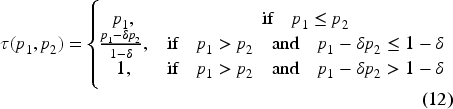
Consumers’ Utility. Following the literature on durable products (Aflaki et al., 2020; Besanko and Winston, 1990; Dhebar, 1994; Krishnan and Ramachandran, 2011; Liang et al., 2014; Lin et al., 2020), we model a consumer’s decision on a smart product as a single-purchase, lifetime-utility decision. The market consists of a continuum of consumers with total mass normalized to one, and each customer demands at most one unit of product during the selling season. As per Villas-Boas (2004), Li and Hitt (2008), and Papanastasiou and Savva (2017), customer ’s gross utility from purchasing the product comprises two components: a preference component, , and a quality component in intelligence, . The preference component value reflects the customer’s idiosyncratic preferences over the smart product’s ex-ante observable attributes (e.g., brand, color, hardware). We assume that preference components, , are distributed in the population according to the uniform distribution . The quality component represents the smart product’s quality in intelligence at time , where . If the consumer owns a product of , she would receive a utility of over its lifetime. Considering the continuous value that smart products achieve, the expected utility of consumers who purchase smart products in the first period consists of two parts: the value from the initial quality in the first period, , and the value from the potentially expected improved quality in the second period, , which captures a forward-looking consumer expectation at the moment of first-period purchase. While the quality benefit is not immediately available, the consumer making a durable purchase in the first period knows the product may be upgraded in the next period. This approach is consistent with rational expectations and forward-looking utility maximization models in the literature on updatable durable goods (Dhebar, 1994; Krishnan and Ramachandran, 2011). The wealth-equivalent net benefit of purchasing the smart product for customer in the first period is defined by
The net present value of the consumers’ expected utility who purchase in the second period is given by
where , is the price at period and is a discount factor that applies to second-period purchases. The parameter represents the disutility of delayed consumption, reflecting how much a consumer discounts future utility when she waits until the second period to purchase the product. It may also be interpreted as a measure of customers’ patience and, therefore, of how “strategic” consumers are (Cachon and Swinney, 2009; Zheng et al., 2023). Throughout our analysis, we say that customers are “myopic” when . The parameters and can reflect the types of smart products to some extent. Strategic patience might be high for costly, durable goods like EVs, but low for inexpensive, frequently replaceable devices. The quality-improvement discount factor is small when hardware limits ML upgrades, yet large when software updates can substantially enhance performance. We additionally examine an alternative formulation of the consumer’s utility function, presented in the online E-Companion for robustness purposes (e.g., the EC.3 section). We exclude the privacy cost from the utility function due to its nuanced influence on consumers’ intertemporal purchase decisions. In our extended model (e.g., the online EC.6 section), we reconsider this by accounting for how privacy costs affect both consumer utility and the firm’s pricing strategy. The extension preserves the main results, demonstrating the robustness of the core model.
Training Cost. According to Schwartz et al. (2020), three key factors contribute to the training expense involved in achieving a particular outcome: the size of the training data, which dictates the frequency of model execution throughout the training phase; the expense of running the model on an example, whether for training or during inference; and the number of hyperparameter trials, influencing the total number of model training iterations during development. The cumulative training cost in ML escalates linearly in relation to each of these variables. In this model, we focus on the impact of data size. For simplicity, we assume the training cost is positively linear in the available data size , that is, , where symbolizes the firm’s marginal effort for training ML models, for example, the expense of running the model on an example and the number of hyperparameter trials, the other two factors. To ensure that there exist equilibrium results in our models, we assume that . This condition guarantees positive first-period adoption, enabling data collection and ML-based quality improvement. If the marginal training cost exceeds this bound under a preannounced pricing strategy, all consumers delay purchase, no data are generated, and the data-driven dynamic mechanism ceases to operate. Economically, the constraint reflects that training costs must be sufficiently low relative to consumer patience () and data capability (), both of which increase the incentive to delay purchase, and also is consistent with practice since the firm cannot afford the infinite cost of training .
Game Sequences. Before the first period, the firm trains the ML models to potentially improve the quality of smart products in terms of intelligence to . In the first period, with quality , the firm determines the pricing strategy (responsive vs. preannounced) and either the first-period price (if responsive pricing is chosen) or the price plan (if preannounced pricing is chosen). In extension, we also consider a preannounced contingent pricing strategy, under which the firm preannounces a price plan contingent on whether the quality improvement is successful in the second period (e.g., online EC.4), and a preannounced pricing without commitment, under which the firm does not commit to the announced price (e.g., online EC.5). The results show some robustness to the preannounced pricing strategy. Next, given the product quality and price, consumers decide whether to purchase the smart product. Consumers exhibit forward-looking behavior: they observe the firm’s announcement and purchase the smart product in the first period only if the following two conditions hold simultaneously: (i) their expected utility from purchase in the first period is nonnegative, that is, and (ii) their expected utility from purchase in the first period is not lower than the expected utility of delaying their purchasing decision, that is, . Then, in the second period, the firm decides on (if responsive pricing is chosen). Any customers remaining in the market in the second period purchase a unit, provided their expected utility from doing so is nonnegative. The firm seeks to maximize its overall expected profit. Online Table EC.2 summarizes the explanation of all notions.
Responsive pricing strategy
This study analyzes the problem between the firm and consumers using backward induction. We begin with the benchmark case in which the firm does not apply ML. In other words, ML does not exist to improve product quality. Next, we analyze the case where the firm applies ML to improve product quality. Following Besanko and Winston (1990) and Papanastasiou and Savva (2017), we assume that consumers adopt a threshold purchasing rule in period 1 for any first-period price . This assumption is verified in equilibrium; the proof is provided in Lemma 3. All proofs can be found in the online E-companion.
Benchmark model of responsive pricing strategy without ML
To assess the value of ML, we begin with a brief discussion of the benchmark case where there is no data collection and ML ( and ). For example, in a model of a washing machine using a neural network, the algorithm parameters are preset and will not change while customers are using it (Kalkat, 2014; Wang and Ren, 2012). These old ML algorithms have also been used in smart products. In the benchmark case, data-enabled learning will not happen, and product quality in intelligence will be constant. The quality of products in the first and second periods is the same, . Given the threshold purchasing rule, consumers remaining in period 2 have mass , with idiosyncratic preferences uniformly distributed on , where . The firm chooses the second-period price to maximize . Thus, the firm charges , obtain profit , and consumers purchase provided their expected utility is nonnegative.
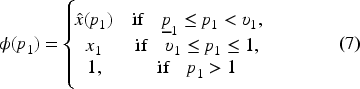
In the first period, the firm and consumers anticipate the effects of their actions on the quality of the smart product in the second period. Given a first-period price , consumer forms beliefs over and and purchases only if (1) and (2) . Therefore, the unique optimal purchasing strategy for the strategic consumers is to purchase in the first period only if , where
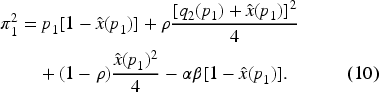
At the beginning of the first period, the firm, anticipating the consumer’s first-period response to any arbitrary price , as well as the outcome of the second-period subgame, determines the first-period price that maximizes its overall profit, which can be expressed by
In the absence of ML, the equilibrium dynamic pricing strategy is given by
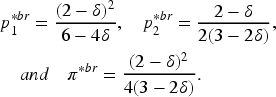
Furthermore, is decreasing (increasing) in , firm’s profit is decreasing in , and .
In the absence of , the firm always favors a decreasing price plan, that is, . As consumers become more patient, prices and tend to converge, and the company’s profit diminishes.
Dynamic pricing with ML
This section revisits the general model with ML-driven quality improvement by first solving the second-period subgame and then analyzing how shapes consumers’ first-period purchase decisions, the firm’s pricing strategy, and its profit.
Second-period subgame
At the start of the second period, we assume that the remaining consumers have total mass , with preferences uniformly distributed on ; consumers in purchased in the first period. With ML, product quality improves with probability , and remaining consumers observe . The firm, therefore, faces a lower willingness-to-pay market in period 2. Consumer purchases in period 2 if , that is, if .
The firm’s profits are defined by
The unique equilibrium of the second-period subgame is described in the following lemma.
Under responsive pricing, if the smart product quality is improved to , given any , a unique equilibrium exists in the second-period subgame played between the firm and consumers. Specifically,
(i) The firm’s optimal second-period pricing strategy is defined by
(ii) Customer purchases the smart product in the second period if .
Lemma 2 demonstrates that when the firm improves the quality of its smart product, the optimal price for maximizing profit is determined by both the ML impact () and customers’ initial purchasing decisions (), which are affected by the first-period price. If the actual is low, the firm sets a price where only a portion of consumers who remain in the market opt to purchase the product (). Conversely, if is high, it is most profitable for the firm to select a market-clearing price ().
Customers’ first-period purchasing strategy
In the first period, consumers form expectations about future ML-enabled quality improvements, while the firm recognizes that its initial price shapes both the equilibrium of the second-period subgame and its capacity to enhance product quality; given uncertainty over the realized second-period quality, both consumers and the firm hold rational probabilistic beliefs regarding the ensuing equilibrium. To analyze consumers’ first-period purchasing strategy for a given price , we restrict with to ensure a nondegenerate threshold policy, and the subsequent lemma formally characterizes consumers’ first-period adoption decisions.
(1) Under responsive pricing, a unique optimal first-period purchasing strategy exists for customers. Customer purchases the product in the first period if , where
and , , .
(2) The threshold and . When , ; when , if and . When , ; when and , .
(3) We have , , , and .
Lemma 3 shows that if the first-period price is too high (), all customers delay their purchasing decision (purchasing inertia) in anticipation of a significantly lower second-period price. If the first-period price is relatively low (), customers with higher valuations who purchase in the first period gain more utility than those who buy in the second period. The remaining consumers postpone their purchasing decisions. The key point of the lemma is that the success of early smart products can improve product intelligence in the future, enabling strategic consumers to make purchase decisions in advance: the more influential the quality improvement discount factor , the fewer strategic adoption delays there are. By contrast, the firm’s data capability affects consumer behavior differently. When is absent or small, the first-period product quality improves little over time; in this case, a higher may instead encourage strategic consumers to postpone their purchases in anticipation of future improvements. When both the discount factor and the data-collection effort are sufficiently large, their joint effect reshapes strategic behavior. As consumers become patient, they internalize the strong feedback from early adoption to future quality and are more inclined to purchase early rather than delay.
We do not consider the inertia strategy because the firm has no incentive to adopt ML under this model. Under the inertia strategy, the firm’s profit is ; however, this profit level can be exceeded even without employing , making the strategy dominated.
Firm’s pricing strategy
Three optimal pricing strategies and their conditions
In the first period, considering customer response to any price change , the impact of price changes on quality improvements, and the probabilistic equilibrium in the second-period subgame, the firm selects to maximize overall expected profits. The firm relies on customer usage data in the first period to improve ML models and upgrade product quality, thereby increasing profits in the subsequent period. We now consider the implications of ML for the smart product’s equilibrium price path and the firm’s expected profit.
We define as the first period price that can let , which keeps the equation valid, and equation (6) can be transformed to
If the firm fails to improve the smart product quality in the second period, the remaining customers will purchase the smart product if the utility is positive. In this case, the firm’s profit in the second period is defined by , and we can get the optimal prices and profit as and .
Combining equations (6) and (8), we need to discuss three cases that represent three different pricing strategies:
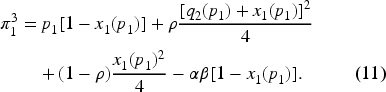
(1) When , the firm’s overall profit function is given by
In this case, the firm’s equilibrium pricing strategy is to adopt an Aggressive Strategy: setting a lower price in the first period to attract more consumers.
(2) When , the firm’s overall profit function is
In this case, the firm chooses a Conservative Strategy: setting a moderate first-period price and attracting a smaller mass of customers.
(3) When , the firm’s overall profit function is given
In this case, the firm’s equilibrium pricing strategy is to choose a Premium Strategy: it sets a high first-period price and attracts few customers to purchase in the first period.
Let and for ease of exposition. We assume that and , ensuring that the above profit functions are concave in . The equilibrium price path, comprising the first-period price that optimizes equations (9)–(11) and the second price, adjusted according to the first period demand, is outlined below.
Under responsive pricing in the presence of ML, any first-period price generates a unique equilibrium in the pricing-adoption game. Specifically, the optimal pricing strategies and are described in Table 1; where is the solution of , , , , , , , , , and .
The condition of an optimal pricing strategy under a responsive pricing strategy.
Region
Constraints
Equilibrium
Pricing strategy
A
Aggressive strategy
B
Conservative strategy
C
D
Premium strategy
Proposition 1 suggests that, under the responsive pricing strategy, the optimal prices for maximizing a firm’s overall profit are primarily influenced by several factors: the training cost , its ability to leverage ML to improve smart product quality , consumers’ discount factor , and the firm’s effort in collecting and integrating data .
Two machine learning effects ( and )
Before exploring the management insights further, it is essential to conduct a detailed examination of the drivers that influence the optimal responsive pricing strategy. We present new findings on decomposing the overall impact of ML into two main effects ( and ) and analyze the implications of each on customer behavior and firms’ prices and profits. For ease of exposition, we present a unified decomposition that applies to the different profit specifications analyzed under the responsive strategy. Across cases, the firm’s expected profit can be written as , where denotes second-period profit when ML-driven quality improvement is successful, and denotes second-period profit when quality improvement fails. In our model, takes alternative forms depending on the regime, including and .
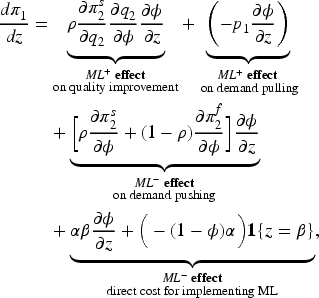
For any primitive parameter , we show that the equilibrium profit effect can be decomposed as
1. The effect has two components: quality improvement and demand pulling.
(i) The effect on quality improvement (mainly driven by operates on the valuations of consumers, and as such, has a significant impact on the firm’s price policy. Furthermore, a stronger capability increases the likelihood of the second-period quality improvement, strengthens its confidence in achieving quality improvement, and therefore motivates the firm to collect more data early; as increases, the firm may lower its first-period price to attract more consumers and support future quality gains. Furthermore, a higher data capability increases the increment in second-period quality enhancement, thereby increasing consumers’ valuations and allowing the firm to charge a higher second-period price.
(ii) The effect on demand pulling stimulates the first-period purchase. For instance, when , early buyers benefit from second-period quality improvements, which mitigate strategic waiting (e.g., ). A higher therefore increases consumers’ incentives to purchase in advance.
2. The effect includes the negative effect on demand pushing and the cost of ML implementation. First, the effect on demand pushing alters consumers’ purchase behavior in the first period: in the absence of or when is small, as increases, strategic consumers are more inclined to postpone their first-period purchase, anticipating superior smart products, leading to a significant number of strategic purchase delays. This effect might be detrimental, especially when the firm has a high probability of improving smart product quality in the second period. Second, the ML implementation incurs a high cost, which increases with and the number of consumers in the first period. Therefore, even with the benefit of massive data, the impact of on the firm’s profit is not monotone.
A decision tool for the firm in choosing the optimal responsive pricing strategy
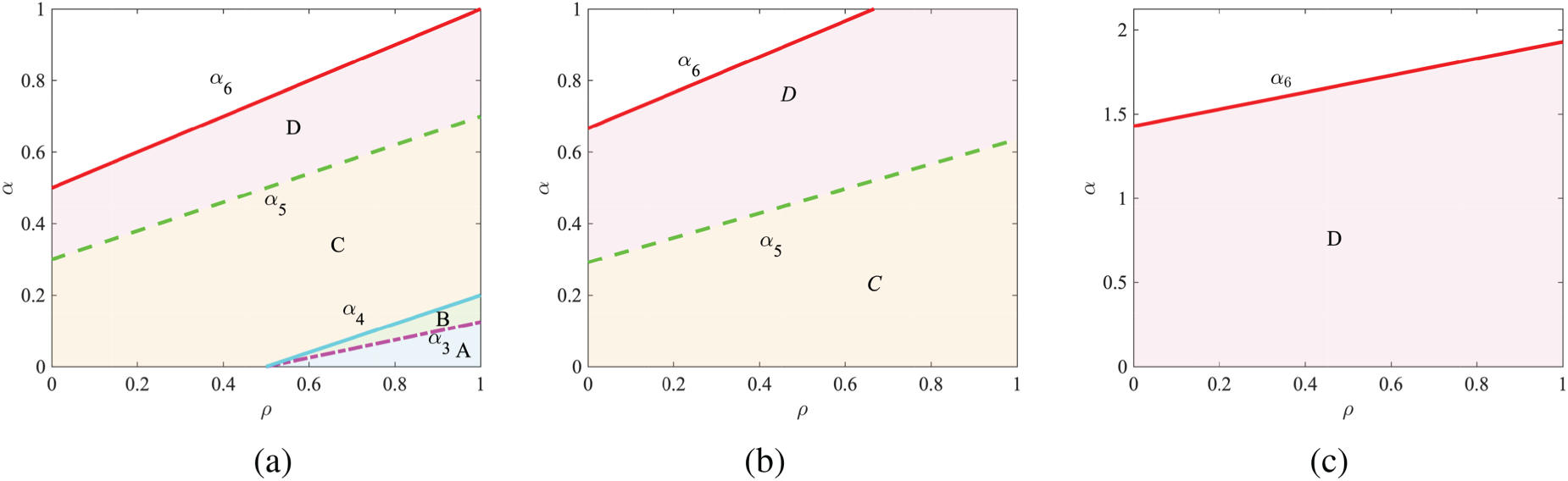
We then discuss the management insights from Proposition 1 and Table 1. These analyses provide a new decision tool for firms to choose the optimal responsive pricing strategy for smart products. We find that the aggressive pricing arises only when the firm has a strong capability to improve product quality in the second period successfully, this occurs when the firm exerts a high level of data capability (), possesses a strong ability to leverage (), and faces a low marginal training cost () (region A in Figure 1(a)). That is, when these conditions are satisfied, the firm might benefit from setting a low initial price. When the firm’s ability to improve smart product quality in the future decreases (e.g., it has a weak capability to leverage or can invest less effort in collecting usage data for training), it may tend to adopt a conservative, even premium, pricing strategy early.
The decision tool for the firm in choosing the optimal responsive pricing strategy (). (a) is large (), (b) is moderate (), and (c) is small ().
These results are ultimately driven by the fundamental trade-off between the and effects. When is large, the effect becomes dominant. In particular, as increases and the quality discount factor is relatively high (i.e., , under which and are positive), the firm shifts from a conservative pricing strategy (regions B and C in Figure 1) to an aggressive strategy (region A in Figure 1(a)). That is, the aggressive pricing strategy may be optimal as the effect rises and dominates the effect. This is interesting. Consumers who purchase smart products in the first period also enjoy improved intelligence in the second period. It may seem that firms with proficient skills can charge a relatively high price because they can improve product quality and generate greater consumer surplus. However, this cannot be true. The reasons may be as follows. First, the increase in indicates that the firm has confidence in improving the smart product’s quality, thereby further enhancing the effect on quality improvement. The enhanced effect can dominate the increasing effect as training data sizes expand. Second, when the firm has strong machine learning capabilities, consumers naturally expect much better products in the future. This expectation encourages them to delay purchasing, strengthening the effect and weakening early demand and data collection. Although the effect on demand pulling can attract some demand, it is often overwhelmed by the stronger waiting incentives when the data capability is high. Consequently, to attract more early adopters, the firm must lower its initial price to encourage early purchases and accelerate data accumulation for learning, thereby enhancing the effect on quality improvement. Even if demand and revenue decline in later periods, profit gains from enhanced smart product quality can offset these short-term losses.
When decreases and training cost increases (e.g., region D in Figure 1(b) and (c)), the effect outweighs the effect, and the firm might prefer a premium pricing strategy: setting a high price in the first period. This implies that if the firm struggles to improve the quality of its smart products due to inadequate data collection, limited machine learning capabilities, or excessive training costs, it tends to set higher initial prices. One might believe that the firm may require additional data to improve the quality of the smart product, particularly when facing challenges in product improvement. As a result, offering a lower price in the first period could be a strategic move to attract more customers. A lower initial price can lead the company to sacrifice early profits for future quality enhancements and profit growth, provided the effect outweighs the effect. However, this may not hold in our model. We find that if the firm faces such challenges in improving smart product quality, the effect is weak and might be dominated by the effect. Even though the firm sets a low price to collect more usage data, it cannot offset the negative impact of training. Furthermore, if the firm fails to improve the quality of its smart products in the second phase, a lower initial price becomes a significant burden due to high nonrefundable costs. As a result, when the firm has limited capacity to leverage and cannot reduce effort in collecting usage data, it tends to raise prices in the initial phase to ensure profitability throughout the period. In particular, when consumers are impatient, they would like to purchase smart products as soon as possible. This implies that the firm does not need to lower the price in the first period to attract consumers and collect data.
What are the roles of AI capabilities in the optimal responsive pricing strategy?
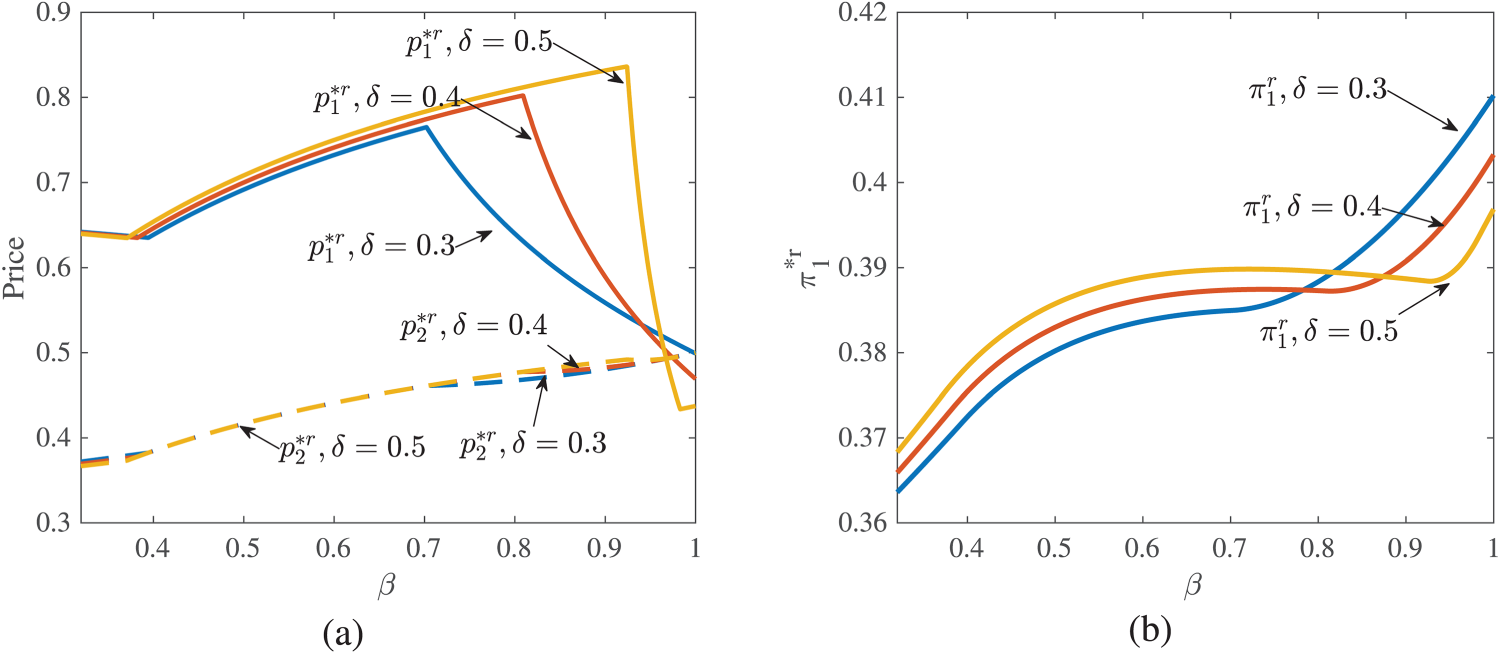
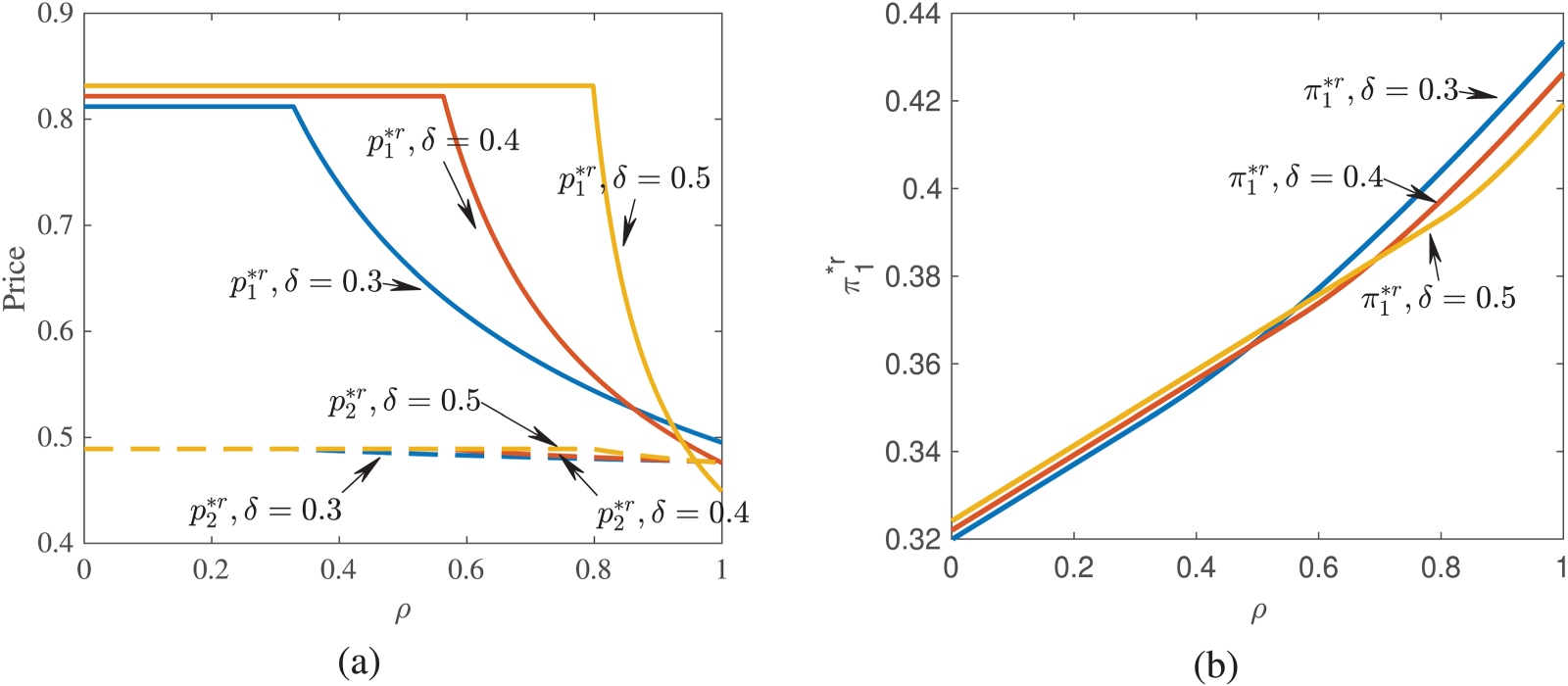
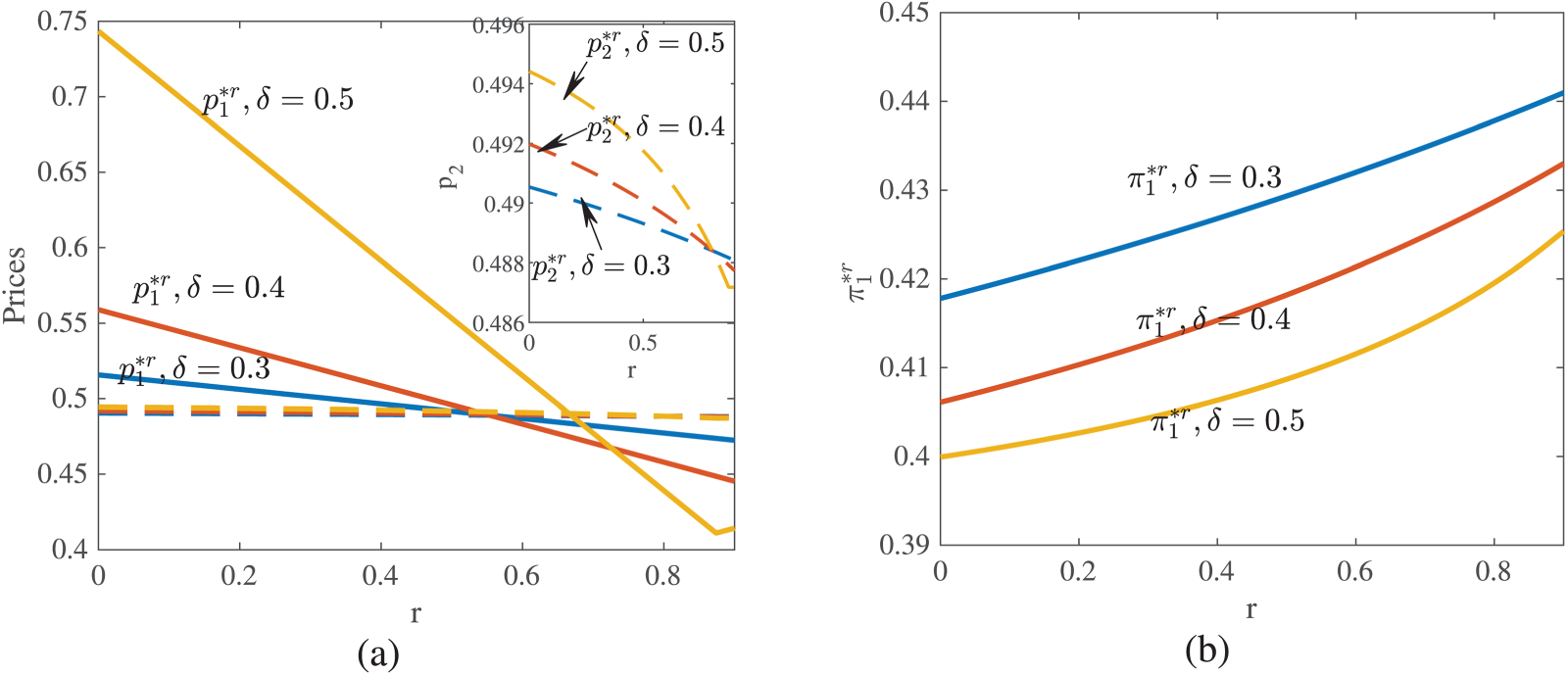
It is interesting to examine the roles of AI capabilities in the optimal responsive pricing strategy. Data capability (e.g., Figure 2), the ability to leverage ML (e.g., Figure 3), and the quality discount factor (e.g., Figure 4) are relevant to AI capabilities, including data collection capability, software capability, and hardware capability.
The impact of the data capability on a firm's prices and profit under the responsive pricing strategy (). (a) The impact of on prices and (b) the impact of on firm’s profit.
The impact of the ability to leverage ML on a firm’s prices and profit under the responsive pricing strategy (). (a) The impact of on prices and (b) the impact of on firm’s profit.
The impact of the quality discount factor under the responsive pricing strategy (). (a) The impact of on prices and (b) the impact of on firm’s profit.
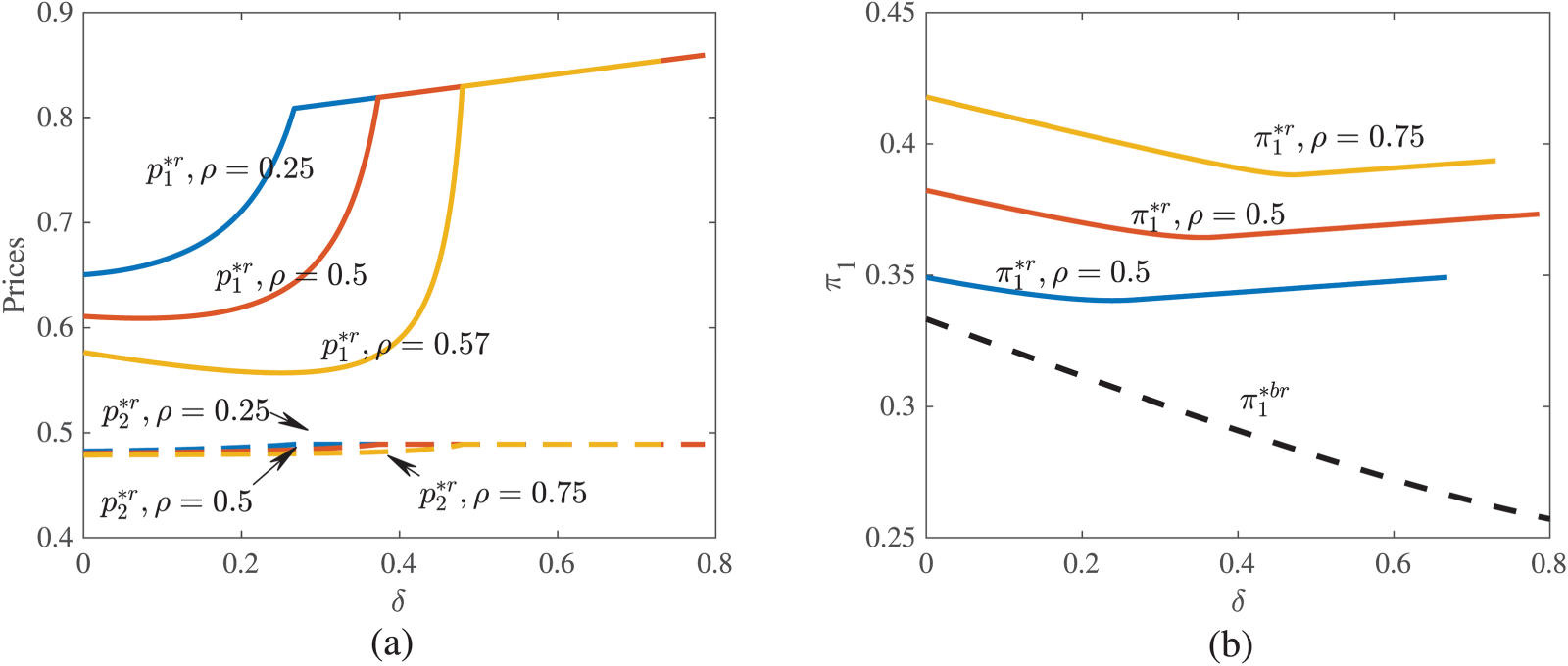
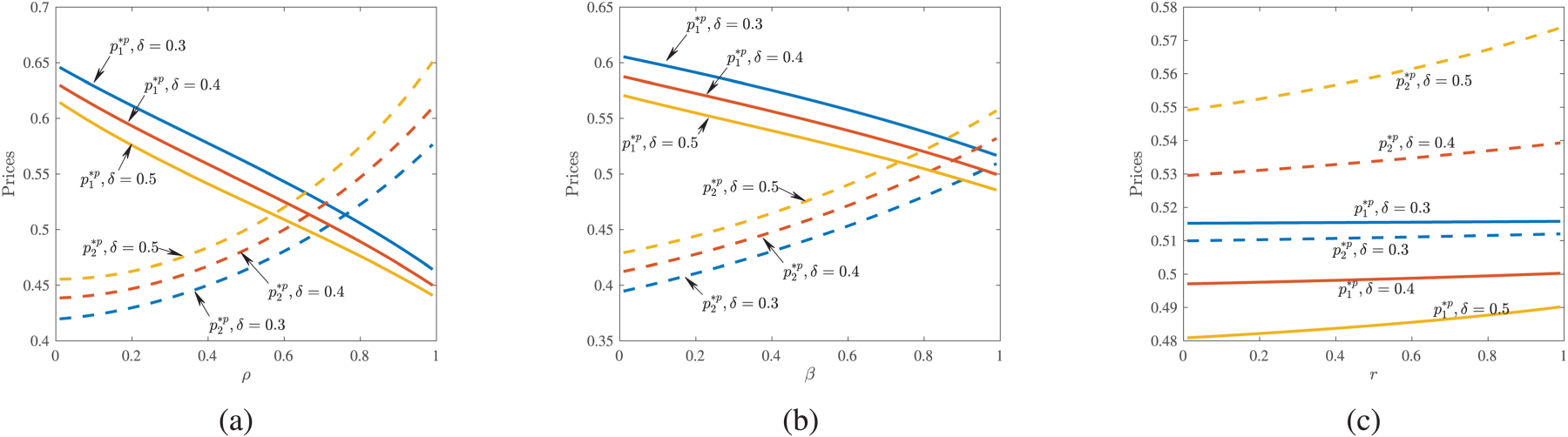
Several interesting observations can be made from our numerical experiments. Most notably, in the majority of parameter combinations, the equilibrium price path tends to be decreasing. The expected price path increases when the influential improvement is: a higher quality discount factor , a larger data capability , and a stronger capability to leverage . These conditions paint a picture of a smart product introduced with a high level of quality improvement over time. In such scenarios, the firm introduces the product at a low price, with the prospect of extracting high revenues later in the season by capitalizing on the improved smart products. In scenarios where the three conditions mentioned above do not apply, the expected price path remains decreasing.
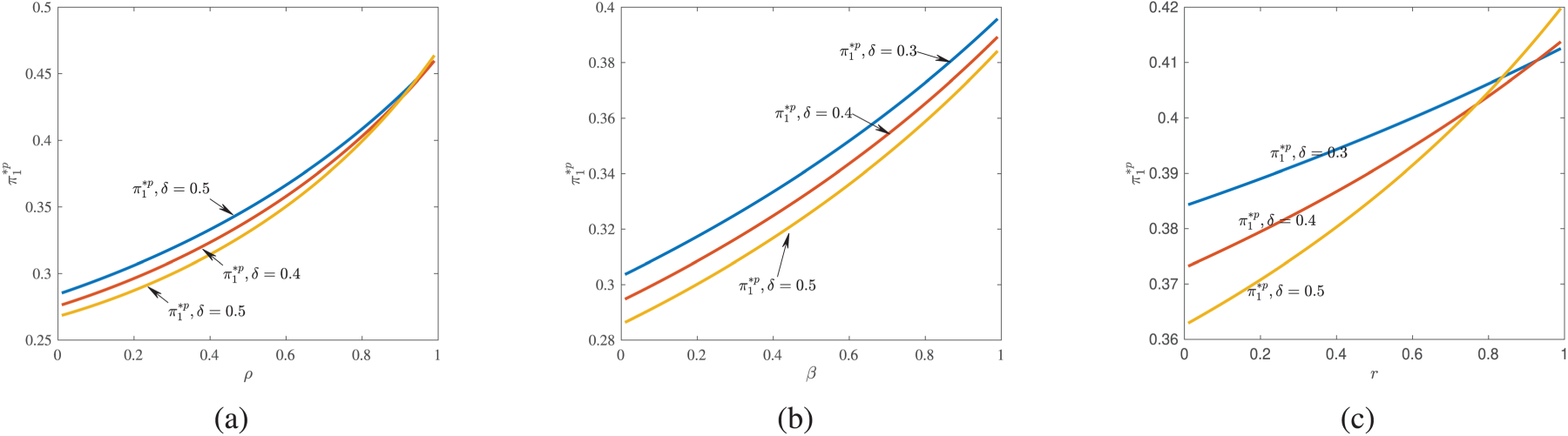
While the increase in the firm’s ability to leverage and the quality improvement discount factor increases the firm’s profit (e.g., Figures 3 and 4), the effects of data capability and the consumer discount factor on the firm’s pricing and profit are both nonmonotonic (e.g., Figures 2 and 5). First, the nonmonotonicity in arises from two opposing forces in the and effects. On the one hand, a greater data capability strengthens the effect by improving future product quality, which raises the second-period price, and can induce consumers to purchase earlier in anticipation of quality improvement when consumers become strategic. On the other hand, a greater data capability also amplifies the effect by increasing training costs and, when the quality improvement discount factor is small or absent, inducing consumers to delay their purchases. The interaction of these two forces generates the complicated, nonmonotonic relationship between and the firm’s price and profit.
The impact of the consumer’s discount factor under the responsive pricing strategy (). (a) The impact of on prices and (b) the impact of on firm’s profit.
Second, when the firm’s ability to leverage ML increases, the equilibrium first-period price and profit exhibit a nonmonotonic pattern in : they first fall and then rise. As shown in Lemma 3, when both and are high, consumers become more patient and are more willing to purchase early, thereby weakening the effect on demand. However, when is small, the number of early buyers is still limited. Even with strong ML capabilities, the firm must lower its first-period price to attract enough consumers and collect sufficient data, which reduces its first-period profit. As increases, consumers become more strategic and more inclined to buy early. Once the number of early consumers becomes large enough, the firm no longer needs to discount the first-period price to stimulate demand. Instead, it can raise the first-period price since consumers are more willing to purchase in advance, leading to higher first-period profit.
Can machine learning really make a profit for a firm?
Considering data collection cost and different AI capabilities of firms, it is a fundamental and nontrivial question to answer whether machine learning really makes a profit for a firm. To answer this question, we have:
In equilibrium, there exist thresholds such that when or the firm can achieve higher expected profit than it achieves without ML under responsive strategy if , where and and is the solution of , where and .
Corollary 1, depicted in Figure 5(b), suggests that integrating ML into smart products can be profitable for the firm if the training cost is not too high. This result confirms the advantages of ML for low and high values.
Preannounced pricing strategy
Next, we discuss the pricing-adoption game in which the firm implements a preannounced pricing policy. In the first period, the firm establishes the full price path . Customers consider this price path as given and make their purchasing decisions for each period.
Benchmark: preannounced pricing without ML
When there is no ML, each customer takes the preannounced price plan as given and times her purchasing decision to maximize her utility. Given any arbitrary price plan, it is straightforward to deduce that consumer will purchase the product in the first period provided , where
When the price plan for a smart product is either constant or increasing (), customers with nonnegative utility will make their purchase in the first period. On the other hand, when the price drops , either (i) a certain number of high-value customers choose to buy in the first period despite a lower second-period price to avoid reduced second-period utility (when ), or (ii) no customers make purchases in the first period due to a significantly lower second-period price (when ). Moreover, if customer does not buy during the first period, she will do so in the second, provided that .
Given the knowledge of the consumers’ response to any arbitrary price plan, the firm chooses to maximize its overall profit, given by . The firm’s optimal pricing policy is as follows.
Without ML, there exists a unique equilibrium ( and ) in the pricing-adoption game, given any preannounced price plan. The optimal pricing policy is
Furthermore, is decreasing in , while is increasing in , and .
Preannounced pricing with ML
We now return to the model where the firm improves product quality using ML and data collected in the first period. In the presence of , the customer anticipates a potential improvement in the quality of smart products. Once the firm announces its pricing policy, customers engage in a purchasing game among themselves.
Consumers’ purchasing strategy
The equilibrium strategy adopted by consumers is one characterized by free-riding, as customers are enticed to wait for the improved quality offered by ML rather than experimenting with the new product themselves. However, this tendency to delay is mediated by endogenous quality improvement. The larger the number of customers who strategically delay their purchase, the lower the quality of the smart product.
For any preannounced price plan , there exists a unique equilibrium in the consumers’ purchasing game between the consumers. Specifically,
(i) In the first period, customer purchases the product if , where
and .
(ii) The threshold possess the properties of , , , , if .
(iii) In the second period, customer purchases the product if .
Lemma 5 shows that increasing data capability and consumers’ patience enable them to delay their purchase decision. In contrast, the rise of the quality improvement discount factor encourages them to purchase in advance. These impacts differ slightly from those under the responsive strategy. Note that when , the inertia strategy applies: all customers are to postpone their purchases. We do not consider the inertia strategy in this model, since the firm has no incentive to adopt under it, as in the responsive strategy.
Firm’s pricing strategy
For the firm, optimizing the preannounced price plan is a complex task owing to the interactions among its pricing decisions, strategic consumers’ adoption decisions, and quality improvements. Given the customers’ response to any preannounced price plan, the firm chooses to maximize its expected profit, defined by
where the dependence of the threshold on and has been suppressed to simplify notation. The first term corresponds to the first-period profit, and the second and third terms correspond to the second-period expected profit, which is ex-ante uncertain owing to the uncertainty in leveraging ML.
In the presence of ML, in any preannounced price plan, a unique equilibrium exists in the pricing adoption if and , where . Furthermore:
the optimal pricing strategy in two periods are given by and ; the optimal profit under preannounced strategy is given by .
There exists a threshold such that if , the optimal price plan satisfies ; when and , there exists a threshold , such that if , the optimal plan satisfies .
and if ; and if .
Proposition 2 implies that when is introduced, the firm’s optimal preannounced pricing can reverse. Instead of the classic decreasing path without , the firm may strategically commit to an increasing price plan when the quality discount factor is small, and consumers are highly strategic.
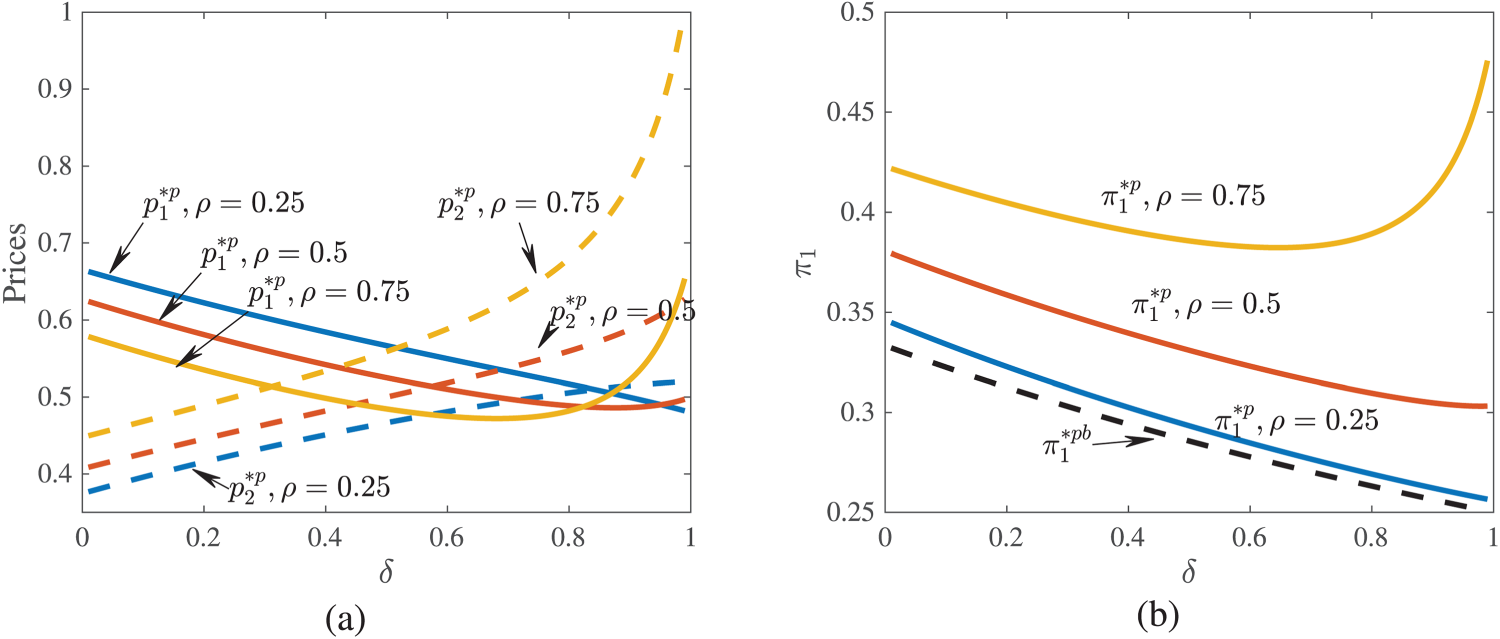
Figure 6(a) and (b) complements the findings of Proposition 2 and illustrates the combined impact of the effect and effect on the optimal price plan. The results illustrate that the firm’s decision to adopt an increasing price plan might depend on the quality discount factor, , of the smart product. For a relatively limited quality discount factor : the firm adopts an increasing price plan only when machine learning (ML) is highly influential. This influence is characterized by a higher ability to leverage ML (), significant effort in collecting data (), and highly strategic consumer behavior (). For a relatively large quality discount factor (): the firm employs an increasing price plan only when ML remains highly influential, with a higher ability to leverage ML () and significant effort in data collection (), but when consumers exhibit moderately strategic behavior (medium values of ).
The impact of the consumer discount factor under the preannounced pricing strategy (). (a) The impact of on price path and (b) the impact of on the firm’s profit.
Next, let us consider further drivers that influence the optimal preannounced pricing strategy. We examine the two main effects of ML, that is, effect and effect, by presenting the impact of the consumers’ discount factor (e.g., Figure 6), the quality improvement discount factor (e.g., Figures 7(c) and 8(c)), the firm’s ability to leverage (e.g., Figures 7(a) and 8(a)), and the data capability (e.g., Figures 7(b) and 8(b)) on a firm’s price path and profit.
The price path under preannounced pricing strategy (). (a) The impact of on price path (), (b) the impact of on price path (), and (c) the impact of on price path ().
First, as illustrated in Figure 6, when increases, although the firm initially reduces its first-period selling price to attract customers as they become more strategic, the effect on demand pulling and effect on quality improvement gradually dominate the effect on demand pushing. This predominance of the effect attracts customers with a higher willingness to pay in the first period, enabling the firm to establish a higher price in the first period and a lower price in the second period.
Second, the third term of Proposition 2 implies that the impact of on the firm’s prices under a preannounced pricing strategy is influenced by consumers’ patience. When consumers are less strategic (i.e., is small), the increase in leads the firm to set a lower price in two periods, whereas when consumers are more strategic (i.e., is large), the firm sets a higher price in two periods. When consumers are less strategic, they do not realize the value of the autonomous quality enhancement of the first-period products in the future, and the effect on demand pulling is subtle. Therefore, even though the rise of , the number of early adopters of smart products might still be insufficient, so prices need to be reduced to attract consumers. However, when consumers are more strategic, the value of the first-period quality improvement in smart products can be captured by consumers. In this regard, the firm has the motivation to set a higher price to capture consumers’ valuation. Furthermore, the quality discount factor seems to be beneficial for the firm’s profit.
Third, the effect on demand pushing (e.g., the increase in ) and effect on quality improvement (e.g., increases in and ) might cause a decrease in and an increase in . This is because an increase in and implies that the firm has greater confidence in successfully improving quality in the second period. To achieve this goal, the firm has a strong incentive to attract more consumers early and collect more usage data.
We next discuss whether the presence of ML is profitable for the smart product firm. While the firm can attempt to mitigate the negative effects of ML on strategic consumer behavior through pricing strategies, it remains unclear whether ML positively or negatively affects expected profits. Corollary 2 provides insight into this question.
In the presence of ML, there exist thresholds and such that when or , and , the firm can achieve higher expected profit than it achieves without ML, where is the solution of .
Corollary 2 can be shown in Figure 6(b), which numerically indicates, in most cases, that the firm’s profit under the preannounced pricing strategy is higher than under the benchmark model.
Comparison between responsive pricing and preannounced pricing
In this section, we compare the firm’s profits across pricing strategies and note that, consistent with recent work on strategic consumer behavior, our model reproduces the classic prediction that price pre-announcement becomes particularly important when ML is absent ().
Without machine learning, the firm’s profits are higher under preannounced pricing compared with those of responsive pricing.
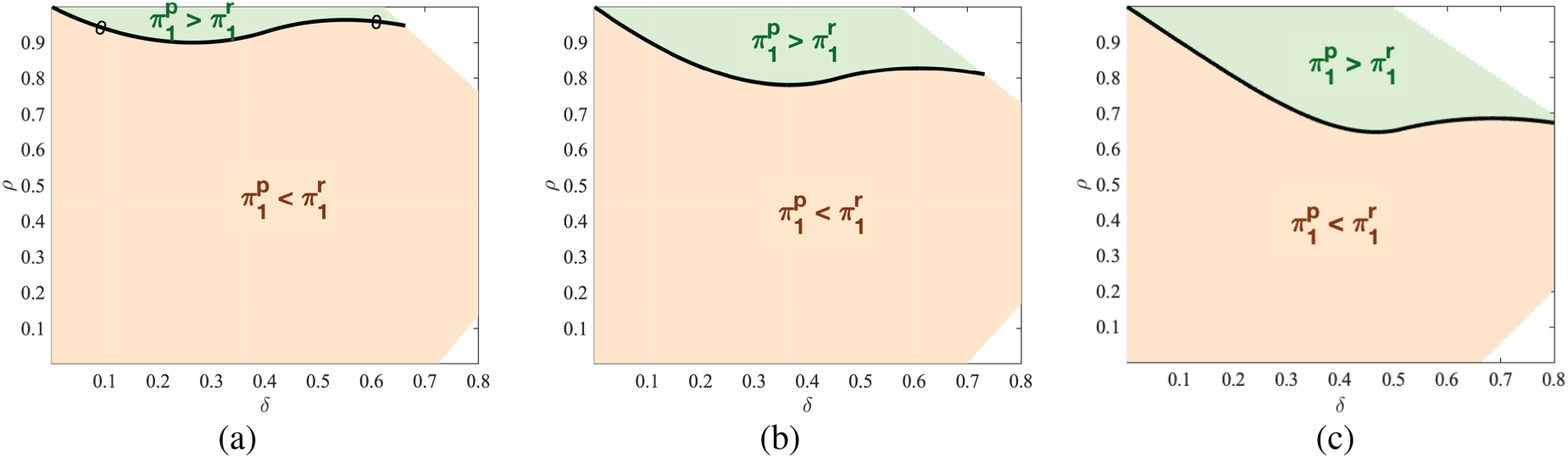
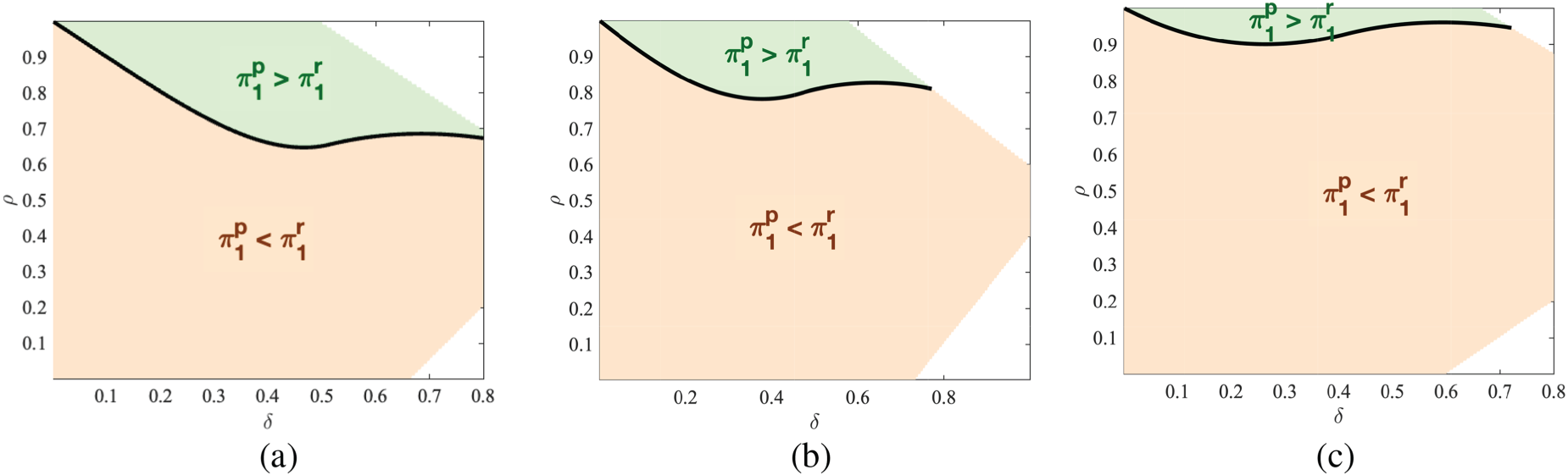
In the presence of , we examine whether firms prefer price commitment when has a significant influence. Interestingly, we find that the opposite can sometimes be true. Proposition 4 details this observation, which is also depicted in Figures 9 and 10.
The price path under preannounced pricing strategy (). (a) The impact of on price path (), (b) the impact of on price path (), and (c) the impact of on price path ().
The decision tool for the firm in choosing the optimal pricing strategy (). (a) , (b) , and (c) .
The decision tool for the firm in choosing the optimal pricing strategy (). (a) , (b) , and (c) .
With ML, there exist thresholds such that if , the firm’s profit is higher under responsive pricing than it is under a preannounced pricing strategy.
The main management insight is: Proposition 4 and Figures 9 and 10 provide a new decision tool in choosing the optimal pricing strategy between preannounced and responsive pricing. Proposition 4 implies that the best pricing strategy mainly depends on the consumer’s strategic behavior and the firm’s ability to leverage ML . The firm’s effort in collecting data and the marginal training cost can also impact the optimal pricing strategy decisions. More generally, our numerical study points to several observations: first, when the firm has relatively weak ability to leverage , for example, smaller , and consumers are less patient (e.g., region in Figure 9(a) to (c)), a responsive price plan is preferred; otherwise, the preannounced price plan is more likely be the optimal price strategy (e.g., region in Figure 9(a) to (c)). Second, as data capability increases, the preannounced price plan is getting more likely preferred (e.g., Figure 9(a) to (c)). Third, as the training cost rises, the likelihood of preferring a preannounced price plan also decreases (e.g., Figure 10(a) to (c)).
The rationale underlying these observations is as follows. With a preannounced pricing strategy, consumers can predict future prices and tend to purchase products in advance. This price transparency can offset the negative effect of on demand when data capabilities are substantial, leading patient consumers to expect that second-period smart products will likely improve and thus postpone their purchases (). When a firm’s ability to leverage is high, even though has an effect on quality improvement that benefits consumers who either buy early and upgrade in the second period or wait until then to purchase, the effect tends to outweigh the effect (since the effect demand pushing increases), including the high training costs. In such scenarios, the firm can prompt consumers to make strategic decisions by preannouncing its pricing strategy, enabling them to make more informed choices and consider purchasing in advance.
On the other hand, if a firm’s ability to leverage and collect data is limited, strategic consumers may struggle to foresee the quality of upcoming smart products due to uncertainty about future improvement. The flexibility offered by a responsive pricing policy is significantly advantageous to the firm when the valuations of second-period consumers and the smart product’s quality are likely to vary, given the firm’s limited capacity to improve product quality. As a result, as consumers become less patient (i.e., decreases), if the current product’s quality and price meet their needs, they might opt for an immediate purchase, since the future-improved product is less attractive and effects start to outweigh effects ( effect on demand pulling enhances). For this reason, when and are relatively low, the firm prefers the optimal responsive price plan to the optimal preannounced price path (which would entail fewer sales at a high price). Moreover, we note that when they prefer a responsive price plan, the advantage with respect to responsive policy gradually disappears as increases and as decreases.
Discussion and conclusion
Theoretical implications
First, this study offers theoretical implications for the economics of smart products with ML and operations management. Previous studies have primarily focused on the relationship between the platform’s AI capabilities, the value perceived in the platform by its users (Gregory et al., 2021, 2022), and the impact of the quantity of data on pricing strategies in the context of algorithm outsourcing (Gurkan and de Véricourt, 2022) or competition (Hagiu and Wright, 2023). However, these studies pay little attention to how ML’s advantages and effects for smart products change in the presence of strategic consumers, nor do they analyze the impact of ML on consumers’ strategic behaviors under different pricing strategies, leveraging data collection for quality improvement. By contrast, we proposed that ML brings about positive as well as negative effects on demand and profitability. In this regard, our study contributes to the literature on the economics of smart products by studying the optimal pricing strategy of products whose quality improves over time via ML.
Second, we identify significant implications for the optimal implementation of dynamic pricing. The interaction between durable goods and strategic consumer behavior is crucial in determining the optimal pricing strategies. Strategic consumers time their purchases based on expectations about future prices, product updates, or the availability of alternatives (Chien and Chu, 2008; Dhebar, 1994). Existing literature finds that decreasing prices might be one of the reasons that strategic consumers delay their purchases, and the firm prefers an increasing price plan when consumers are highly strategic (Papanastasiou and Savva, 2017). However, the presence of ML might reverse this finding. We find that the firm may prefer a decreasing-price plan when consumers are highly strategic. This is likely if its capacity to utilize is limited, but the effort required for data collection is substantial. The presence of a quality discount factor and a large data capability enhances the effect on demand pulling, mitigating consumers’ postponed behavior and leading more people to make purchases in advance.
Third, we provide insight into which policy type the firm prefers when facing strategic consumers in smart products. Some general findings of existing research are that preannounced pricing may be more effective in industries with relatively stable and predictable demand patterns (Besanko and Winston, 1990; Chod and Rudi, 2005; Elmaghraby et al., 2008). We concur with the optimality of preannounced pricing policies in the absence of ML, and when the firm has a large ability to leverage ML in the presence of ML, where the market is relatively stable, and there is less uncertainty. On the other hand, in markets with high uncertainty (Aviv et al., 2019) or where social learning is prominent (Papanastasiou and Savva, 2017), responsive pricing may provide better results by adapting to market conditions and consumer feedback. Aviv et al. (2019) caution that responsive pricing can exacerbate strategic consumer behavior, as consumers may hold off on purchases in anticipation of price adjustments. Papanastasiou and Savva (2017) find that, when consumers are strategic, and the influence of social learning is small, preannounced pricing may outperform responsive pricing. This might weaken the flexibility advantage of responsive pricing. However, once ML is introduced into the model, our analysis and numerical experiment indicate different findings: in the presence of ML, when consumers are strategic, and the ability to leverage is moderate, the firm might prefer a responsive pricing strategy.
Managerial implications
Our study also answered some questions with substantial managerial implications for smart product firms. The first research question was as follows: What is the impact of ML on strategic consumers’ behavior and a firm’s profit (ML effects)? We found that ML impacts firms’ prices and profits differently by impacting consumers’ strategic behaviors in opposite directions. We categorized these impacts into two opposite effects: the and the effects. First, the effect arises from two aspects: quality improvement and demand pulling. Intuitively, the former benefits smart product firms by increasing the expected value of the products for two-period consumers. Early adopters enjoy the benefits of limited autonomous software updates, while later adopters reap the advantages of new-version product updates. Second, except for the cost of implementing ML, the effect is partly driven by strategic consumers’ forward-looking behavior. This effect can harm profitability by reducing demand in the initial period, as consumers might prefer delayed purchases. Moreover, a firm’s ML capability can amplify the effect, leading to lower initial prices for smart products. These two effects jointly shape the firm’s pricing strategy. In particular, the firm must account for how consumers’ strategic features, the data-collection effort, and the quality-improvement discount factor influence purchasing behavior. The net effect of is not fixed but depends on the interaction of these forces and pricing strategies. In particular, under a responsive pricing strategy, an increase in the data-collection effort and quality-improvement discount factor can alter the direction and magnitude of ’s influence on consumers’ behavior. When the effort is high, as it increases, consumers may strategically delay their purchases, thereby strengthening the effect on demand, which also occurs under a preannounced pricing strategy. Conversely, when the data-collection effort is small, the responsive pricing strategy may change consumers’ behavior: increasing the data-collection effort may encourage earlier purchases.
The second research question was: How are the firm’s pricing decisions modified to align with the ML process? Does a higher initial price benefit a smart product firm in the presence of strategic consumers? Under a responsive pricing strategy, in the absence of ML, it is always optimal for the firm to choose a decreasing price plan. By contrast, in the presence of ML, setting a decreasing price plan is not always the optimal strategy for the firm. Under the responsive pricing strategy, when a firm has a high ability to leverage ML (and thus a higher likelihood of achieving quality improvements in the second period) and a large data capability (and thus a significant quality improvement), it is optimal to employ an increasing pricing strategy, that is, setting a sufficiently low price in the first period and then raising the price in the second period. Otherwise, choose a decrease that may be more beneficial. Such price path policies also hold under preannounced pricing. This appears counterintuitive, as one might expect that a firm with proficient ML capabilities can charge relatively high prices because it can significantly improve product quality and generate greater consumer surplus. Indeed, numerous tech companies have initially priced their smart products at a premium. However, this might not always be profitable for firms. The intuition underlying this result might stem from the firm’s desire to deter strategic purchasing delays. Consumers’ high expectations arising from firms’ great data-collection efforts can intensify the effect on early-period demand and limit data collection. In such scenarios, to ensure sufficient data for training the ML model and improving product quality, a firm might lower prices in the early stages. This provides the firm with potential management insights and highlights the need for caution when designing an intertemporal pricing policy. A high initial price does not necessarily accelerate investment recovery, just as a low initial price does not automatically yield greater long-run gains through rapid data accumulation. Instead, when determining a pricing path over time, the firm can take into account multiple factors: its own capabilities and data-collection effort, consumers’ strategic behavior, and how alternative pricing strategies differentially shape consumers’ purchase timing and decisions.
The final research question was: Should a smart product firm dealing with strategic consumers set a price path in advance or dynamically adjust prices over time? We find that the best pricing strategy depends on the consumer’s strategic behavior, the firm’s ability to leverage ML, the firm’s effort in collecting data, and the smart product quality-improvement discount. Interestingly, we find that when the firm has stronger capabilities in improving product quality, and consumers are more patient, a preannounced pricing plan is more likely to be optimal. Moreover, as training costs decrease, the preference for a preannounced pricing strategy also decreases. In such scenarios, the success of the smart product hinges on accumulating a large user base, and a preannounced price path is preferred, as it helps the firm lock in consumers early and secure the data needed for effective learning. Conversely, in the presence of ML, a firm may prefer a responsive pricing strategy when consumers are less strategic, and the firm’s AI capability is relatively weak (including the ability to leverage and the data capability). In this region, the effect becomes more pronounced and outweighs the effect, leading to a preference for the responsive pricing strategy. This highlights the importance of firms clearly understanding and leveraging the distinct role of their AI capabilities in shaping consumer behavior, which in turn helps the firm capture higher profits.
Limitations and future research directions
There are several promising research directions that can extend the findings of this study. First, although we account for the impact of data size on ML efficiency, we do not explicitly model third-party data acquisition and regulatory and ethical constraints on data acquisition and usage, which could affect firms’ ability to leverage external data sources and alter pricing dynamics. Furthermore, complex strategic behaviors regarding data sharing might also impact the data collection process and the evolution of the product. Incorporating these aspects in future research could offer a more comprehensive understanding of ML-driven pricing strategies. Second, our analysis assumes that all collected or purchased data is equally valuable, whereas, in practice, data quality and relevance may vary significantly, affecting the effectiveness of ML applications. Third, we do not model rapid iterative upgrades, which are important in many technological markets, as our focus is on dynamic pricing of ML-enabled smart products with strategic consumers. Incorporating update cycles would alter key assumptions and dilute the clarity of our findings. Future research could examine upgrade frequency and extend our framework to a continuous-time stochastic differential game setting to capture richer dynamic interactions under uncertainty. Fourth, we adopt a scalar representation of smart product quality to maintain analytical tractability and enable a clear modeling framework. However, in practice, improvements may span personalization, introduction of new functionalities, reliability, and robustness, among other facets, and user perceptions of these dimensions may vary significantly. Moreover, some ML enhancements operate as “black box” mechanisms, and certain improvements may introduce negative perceptions, such as concerns around privacy or transparency, which are not directly captured in the current formulation. We view this abstraction as an initial step that facilitates comparison across systems; future work could extend the model to multidimensional quality metrics or incorporate heterogeneous user perceptions to provide a richer and more nuanced representation of ML-driven quality improvements.
Supplemental Material
sj-pdf-1-pao-10.1177_10591478261451549 - Supplemental material for Economics of smart products with machine learning
Supplemental material, sj-pdf-1-pao-10.1177_10591478261451549 for Economics of smart products with machine learning by Menghuan Zhou, Yeming Gong, Liangfei Qiu and Ajay Kumar in Production and Operations Management
Footnotes
Acknowledgments
The authors sincerely thank the editors and reviewers for their valuable comments and suggestions, which have greatly improved the quality of this paper. They are especially grateful to the Senior Editor for his thoughtful guidance throughout the review process.
ORCID iDs
Menghuan Zhou
Yeming Gong
Liangfei Qiu
Ajay Kumar
Funding
The authors received no financial support for the research, authorship, and/or publication of this article.
Declaration of Conflicting Interests
The authors declared no potential conflicts of interest with respect to the research, authorship, and/or publication of this article.
Supplemental Material
Supplemental material for this article is available online (doi: ).
How to cite this article
Zhou M, Gong Y, Qiu L and Kumar A (2026) Economics of smart products with machine learning. Production and Operations Management x(x): 1–22.
References
1.
AflakiAFeldmanPSwinneyR (2020) Becoming strategic: Endogenous consumer time preferences and multiperiod pricing. Operations Research68(4): 1116–1131.
2.
AhmadiRIravaniFMamaniH (2017) Supply chain coordination in the presence of gray markets and strategic consumers. Production and Operations Management26(2): 252–272.
3.
Applecom (2024) Apple introduces HomePod mini in midnight. https://www.apple.com. (accessed 2 December 2025).
4.
AvivYPazgalA (2008) Optimal pricing of seasonal products in the presence of forward-looking consumers. Manufacturing & Service Operations Management10(3): 339–359.
5.
AvivYWeiMZhangF (2019) Responsive pricing of fashion products: The effects of demand learning and strategic consumer behavior. Management Science65(7): 2982–3000.
6.
BaiXChoiTLiY, et al. (2023) Implementing trade-in programs in the presence of resale platforms: Mode selection and pricing. Production and Operations Management32(10): 3193–3208.
7.
BansalASharmaRKathuriaM (2022) A systematic review on data scarcity problem in deep learning: Solution and applications. ACM Computing Surveys (CSUR)54(10s): 1–29.
8.
BesankoDWinstonWL (1990) Optimal price skimming by a monopolist facing rational consumers. Management Science36(5): 555–567.
9.
BhargavaHDubusARonayneD, et al. (2026) The strategic value of data sharing in interdependent markets. Management Science72(2): 1472–1488.
ElmaghrabyWGülcüAKeskinocakP (2008) Designing optimal preannounced markdowns in the presence of rational customers with multiunit demands. Manufacturing & Service Operations Management10(1): 126–148.
22.
Fortune (2022) Electric vehicle market size worth USD 1,318.22 billion, globally, by 2028 at 24.3% CAGR: Fortune business insights. https://www.globenewswire.com/ (accessed 6 June 2023).
23.
FrancisN (2024) Smart home outlook: The demand and price dynamics shaping the market into 2025. https://nielseniq.com (accessed 2 December 2025).
24.
FudenbergDTiroleJ (2000) Pricing a network good to deter entry. The Journal of Industrial Economics48(4): 373–390.
25.
FügenerAGrahlJGuptaA, et al. (2022) Cognitive challenges in human–artificial intelligence collaboration: Investigating the path toward productive delegation. Information Systems Research33(2): 678–696.
26.
GarvinD (1987) Competing on the eight dimensions of quality. Harvard Business School65(6): 101–109.
27.
GrassEOrtmannJBalcikB, et al. (2023) A machine learning approach to deal with ambiguity in the humanitarian decision-making. Production and Operations Management32(9): 2956–2974.
28.
GregoryRWHenfridssonOKaganerE, et al. (2021) The role of artificial intelligence and data network effects for creating user value. Academy of Management Review46(3): 534–551.
29.
GregoryRWHenfridssonOKaganerE, et al. (2022) Data network effects: Key conditions, shared data, and the data value duality. Academy of Management Review47(1): 189–192.
GuoZDanM (2018) A model of competition between perpetual software and software as a service. MIS Quarterly42(1): 101.
32.
GurkanHde VéricourtF (2022) Contracting, pricing, and data collection under the AI flywheel effect. Management Science68(12): 8791–8808.
33.
HagiuAWrightJ (2023) Data-enabled learning, network effects and competitive advantage. RAND Journal of Economics54(4): 638–667.
34.
HagiuAWrightJ (2025) Artificial intelligence and competition policy. International Journal of Industrial Organization103: 103134.
35.
HardingS (2024) This $800 emotional support robot for kids will soon be bricked—Without refunds. https://www.wired.com (accessed 2 December 2025).
36.
KalkatM (2014) Experimentally vibration and noise analysis of two types of washing machines with a proposed neural network predictor. Measurement47: 184–192.
KornishLJ (2001) Pricing for a durable-goods monopolist under rapid sequential innovation. Management Science47(11): 1552–1561.
39.
KrishnanVRamachandranK (2011) Integrated product architecture and pricing for managing sequential innovation. Management Science57(11): 2040–2053.
40.
LandsbergerMMeilijsonI (1985) Intertemporal price discrimination and sales strategy under incomplete information. The RAND Journal of Economics16(3): 424–430.
41.
LevinYMcGillJNediakM (2010) Optimal dynamic pricing of perishable items by a monopolist facing strategic consumers. Production and Operations Management19(1): 40–60.
42.
LiKJJainS (2016) Behavior-based pricing: An analysis of the impact of peer-induced fairness. Management Science62(9): 2705–2721.
43.
LiRXiaoLYaoD (2023a) Dynamic pricing and production control in a two-item make-to-stock system with flexible dual sourcing and lost sales. Production and Operations Management32(10): 3119–3137.
44.
LiSLiuYFengJ (2023b) Who should own the data? The impact of data ownership shift from the service provider to consumers. Journal of Management Information Systems40(2): 366–400.
45.
LiXHittLM (2008) Self-selection and information role of online product reviews. Information Systems Research19(4): 456–474.
46.
LiangCÇakanyıldırımMSethiSP (2014) Analysis of product rollover strategies in the presence of strategic customers. Management Science60(4): 1033–1056.
47.
LinMPanXAZhengQ (2020) Platform pricing with strategic buyers: The impact of future production cost. Production and Operations Management29(5): 1122–1144.
48.
LiuQZhangD (2013) Dynamic pricing competition with strategic customers under vertical product differentiation. Management Science59(1): 84–101.
49.
LobelIPatelJVulcanoG, et al. (2016) Optimizing product launches in the presence of strategic consumers. Management Science62(6): 1778–1799.
50.
ManiZChoukI (2017) Drivers of consumers’ resistance to smart products. Journal of Marketing Management33(1-2): 76–97.
NandyADuanCKulikHJ (2022) Audacity of huge: Overcoming challenges of data scarcity and data quality for machine learning in computational materials discovery. Current Opinion in Chemical Engineering36: 100778.
55.
PapanastasiouYSavvaN (2017) Dynamic pricing in the presence of social learning and strategic consumers. Management Science63(4): 919–939.
56.
PericD (2026) What is a data capability, and how are we approaching this at Wesfarmers? https://www.wesfarmers.com.au (accessed 21 February 2026).
57.
PorterMEHeppelmannJE (2014) How smart, connected products are transforming competition. Harvard Business Review92(11): 64–88.
58.
PorterMEHeppelmannJE (2015) How smart, connected products are transforming companies. Harvard Business Review93(10): 96–114.
59.
Prnewswire (2022) Smart home market size worth $537.01 billion by 2030: Grand view research. https://www.prnewswire.com (accessed 6 June 2023).
60.
RaffSWentzelDObwegeserN (2020) Smart products: Conceptual review, synthesis, and research directions. Journal of Product Innovation Management37(5): 379–404.
61.
RaneN (2023) Enhancing customer loyalty through artificial intelligence (AI), internet of things (IoT), and big data technologies: Improving customer satisfaction, engagement, relationship, and experience. In: Internet of Things (IoT), and big data technologies: Improving customer satisfaction, engagement, relationship, and experience (13 October 2023).
62.
SchwartzRDodgeJSmithNA, et al. (2020) Green AI. Communications of the ACM63(12): 54–63.
63.
SonYOhWImI (2023) The voice of commerce: How smart speakers reshape digital content consumption and preferences. MIS Quarterly47(2): 857–874.
64.
SpannMFischerMTellisGJ (2015) Skimming or penetration? Strategic dynamic pricing for new products. Marketing Science34(2): 235–249.
WangAZRenGF (2012) The design of neural network fuzzy controller in washing machine. In: 2012 International conference on computing, measurement, control and sensor network, pp.136–139. IEEE.
70.
WangYZhangJ (2025) Procurement strategy selection and mechanism design for technology upgrade products. Production and Operations Management. DOI: 10.1177/10591478251399293.
71.
WeiMZhangF (2018) Advance selling to strategic consumers: Preorder contingent production strategy with advance selling target. Production and Operations Management27(7): 1221–1235.
72.
YinSRaySGurnaniH, et al. (2010) Durable products with multiple used goods markets: Product upgrade and retail pricing implications. Marketing Science29(3): 540–560.
73.
YuMDeboLKapuscinskiR (2016) Strategic waiting for consumer-generated quality information: Dynamic pricing of new experience goods. Management Science62(2): 410–435.
74.
ZhangJLiKJ (2021) Quality disclosure under consumer loss aversion. Management Science67(8): 5052–5069.
75.
ZhangXGuoXYueW, et al. (2022) Servitization for the environment? The impact of data-centric product-service models. Journal of Management Information Systems39(4): 1146–1183.
76.
ZhengRShouBChenY (2023) Differential pricing in social networks with strategic consumers. Production and Operations Management32(8): 2638–2655.
Supplementary Material
Please find the following supplemental material available below.
For Open Access articles published under a Creative Commons License, all supplemental material carries the same license as the article it is associated with.
For non-Open Access articles published, all supplemental material carries a non-exclusive license, and permission requests for re-use of supplemental material or any part of supplemental material shall be sent directly to the copyright owner as specified in the copyright notice associated with the article.