






Abstract
Objective:
To review the pharmacology, microbiology, efficacy, and safety of lefamulin.
Data Sources:
A literature search was performed using PubMed and Google Scholar (2010 to end-April 2020) with the search terms BC-3781 and lefamulin. Other resources included abstracts presented at recent conferences, prescribing information, and the manufacturer’s and Food and Drug Administration websites.
Study Selection and Data Extraction:
All relevant English-language articles of studies assessing the efficacy and safety of lefamulin were included.
Data Synthesis:
Lefamulin is a pleuromutilin antibiotic with activity against Staphylococcus aureus, Streptococcus pneumoniae, and atypical bacteria. Lefamulin, given at the dose of 150 mg intravenously or 600 mg orally on an empty stomach every 12 hours for 5 to 7 days, was proven noninferior to moxifloxacin for the treatment of community-acquired bacterial pneumonia (CABP). Common adverse reactions include injection site reactions, hepatic enzyme elevation, gastrointestinal upset, hypokalemia, insomnia, and headache. Lefamulin is associated with QT prolongation, and concomitant use with CYP3A substrates that prolong the QT interval is contraindicated. Lefamulin may cause fetal harm.
Relevance to Patient Care and Clinical Practice:
Lefamulin is a novel antibiotic with a unique mechanism of action. It represents an alternative option to β-lactams and macrolides in the treatment of adults with CABP and an alternative option to amoxicillin and doxycycline in the outpatient setting given the rise in resistance to macrolides and safety concerns with fluoroquinolones. Nausea, vomiting, and diarrhea may limit the tolerability of the oral formulation.
Conclusions:
Lefamulin is the first systemic pleuromutilin antibiotic that has proven safe and effective for adults with CABP.
Introduction
Lefamulin is the first systemic antibiotic from the pleuromutilin class. 1 Lefamulin (Xenleta, Nabriva Therapeutics) was approved by the Food and Drug Administration (FDA) for the treatment of adults with community-acquired bacterial pneumonia (CABP) on August 19, 2019.1,2 Lefamulin was granted priority review because it is designated as a Qualified Infectious Disease Product by the FDA, which is given to antibacterial and antifungal agents that are intended to treat serious or life-threatening infections. 2 CABP is associated with high morbidity and mortality, with one study estimating more than 1.5 million adult hospitalizations annually in the United States for community-acquired pneumonia and 100 000 related deaths. 3 Lefamulin has activity against Staphylococcus aureus, Streptococcus pneumoniae, and atypical bacteria, which provides coverage against the most common bacteria that cause CABP, as well as provides comparable blood levels when given in either intravenous or oral formulation.4-6 This article reviews the pharmacology, microbiology, efficacy, safety, dosing, and administration of lefamulin and focuses on the role of the drug in the treatment of CABP.
Data Sources
A literature search was conducted using PubMed (2010 to end-April 2020) and Google Scholar (2010 to end-April 2020) with the search terms BC-3781 and lefamulin. Other sources included abstracts presented at recent conferences, the prescribing information, and the manufacturer’s and FDA websites. References were reviewed for additional data sources. All published data in English were reviewed, including abstracts and poster presentations.
Chemistry and Pharmacology
Pleuromutilins are natural products that were first isolated in the 1950s from Clitophilus scyphoides (formerly known as Pleurotus mutilus), an edible mushroom that inhibits the growth of S aureus.1,7,8 The naturally occurring pleuromutilin consists of a tricyclic diterpenoid structure.1,7 Chemical modifications of the naturally occurring compound were focused at position C14 and led to the development of 2 semisynthetic pleuromutilins approved for veterinary use: tiamulin (in 1979) and valnemulin (in 1999).7,8 The first pleuromutilin approved for human use was retapamulin, which is a lipophilic, topically administered pleuromutilin ointment that was approved in 2007 for the topical treatment of impetigo caused by methicillin-susceptible S aureus (MSSA) or Streptococcus pyogenes.8,9 Extensive modification of the side chain at position C14 resulted in lefamulin. 1
Like other pleuromutilins, lefamulin inhibits bacterial protein synthesis. Lefamulin binds to and interacts with domain V of the 23s rRNA of the 50S bacterial ribosomal subunit at the peptidyl transferase center, which prevents correct positioning for peptide transfer in the A- and P-sites, ultimately inhibiting peptide bond formation.1,8,10 The binding pocket of the bacterial ribosome closes around pleuromutilin antibiotics, causing an induced fit, which tightens the binding pocket around these drugs.1,10
Microbiology
Lefamulin has shown in vitro activity against aerobic Gram-positive bacteria, a limited number of fastidious Gram-negative bacteria, and also atypical bacteria.4,5,11,12 Table 1 shows the in vitro microbiology data for the drug.4,5,11,12 Lefamulin retained activity against drug-susceptible and certain drug-resistant strains of S pneumoniae, the most frequently isolated bacterial etiology of CABP. 5 Values of minimum inhibitory concentration that inhibits the growth of 50% of organisms (MIC50) and 90% of organisms (MIC90) were (MIC50/90) 0.06/0.12 µg/mL against S pneumoniae strains that were resistant to β-lactams and macrolides as well as strains that were multidrug resistant or extensive drug resistant. Lefamulin only displayed higher MIC values (MIC50/90 of 0.06/0.25 µg/mL) for levofloxacin nonsusceptible strains of S pneumoniae. 5 Lefamulin displays bactericidal activity in vitro against S pneumoniae, Haemophilus influenzae, and Mycoplasma pneumoniae and is bacteriostatic against S aureus and S pyogenes. 10 Lefamulin has limited Gram-negative activity and is not active against Enterobacterales, Acinetobacter baumannii, or Pseudomonas aeruginosa.1,10 Lefamulin is also not active against the Gram-positive bacteria Enterococcus faecalis.1,13 Lefamulin is approved by the FDA for the treatment of adults with CABP caused by the following susceptible microorganisms: S pneumoniae, MSSA, H influenzae, Legionella pneumophila, M pneumoniae, and Chlamydophila pneumoniae. 10 Lefamulin is not approved by the FDA for the treatment of CABP caused by methicillin-resistant S aureus (MRSA). 10
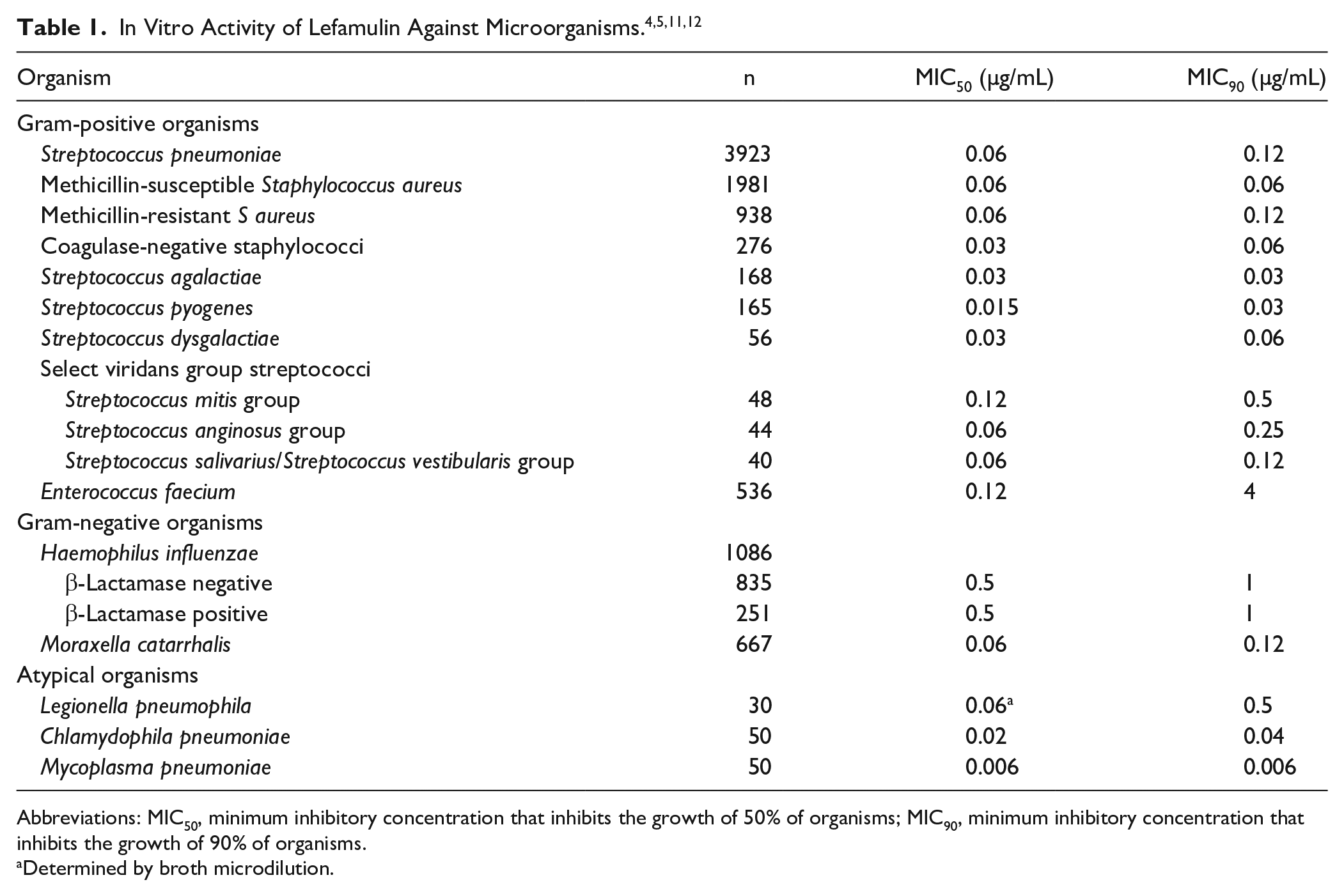
Abbreviations: MIC50, minimum inhibitory concentration that inhibits the growth of 50% of organisms; MIC90, minimum inhibitory concentration that inhibits the growth of 90% of organisms.
Determined by broth microdilution.
Lefamulin was also initially developed for the treatment of acute bacterial skin and skin structure infections (ABSSSIs), which are commonly caused by Gram-positive pathogens, although only 1 phase 2 trial was completed in adults with ABSSSI, and it is not indicated for this use.12-14 In vitro microbiology data for lefamulin against Gram-positive pathogens is included in Table 1.4,5,11,12 Lefamulin is highly active in vitro against isolates of MSSA and MRSA, and displayed MIC50/90 values of 0.06/0.06 µg/mL against MSSA and 0.06/0.12 µg/mL against MRSA. 5 The activity of lefamulin is not affected by the presence of Panton-Valentine leucocidin in S aureus. 1 Lefamulin inhibited 99.7% of isolates of MSSA at an MIC value of 0.25 µg/mL, which is the defined MIC value for susceptible isolates, as indicated in Table 2.5,15 Lefamulin exhibited potent activity in vitro against coagulase-negative staphylococci, β-hemolytic streptococci, and viridans group streptococci. 12 Lefamulin has also shown in vitro activity against Enterococcus faecium, with MIC50/90 values of 0.12/4 µg/mL. 12 It demonstrated lower MICs for vancomycin-nonsusceptible strains of E faecium as compared with vancomycin-susceptible strains (MIC50/90 of 0.06/0.25 µg/mL as compared with MIC50/90 of 0.12/greater than 16 µg/mL). 12 As previously stated, lefamulin is bacteriostatic against S aureus and S pyogenes and does not have activity against E faecalis.1,10,13
Minimum Inhibitory Concentrations and Disk Diffusion Zones for Lefamulin. 15
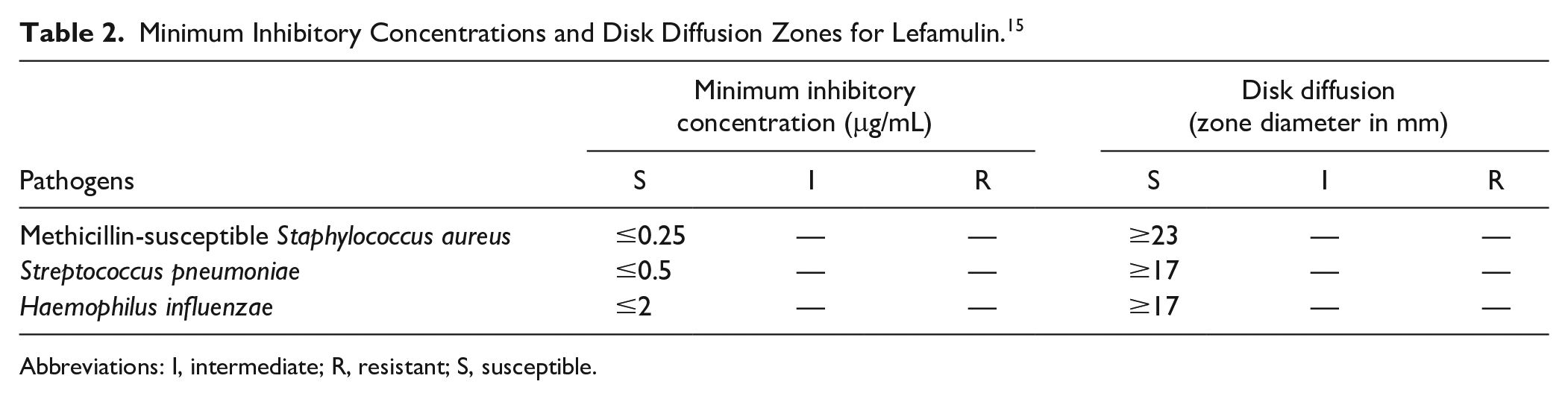
Abbreviations: I, intermediate; R, resistant; S, susceptible.
Although not indicated for this use, lefamulin has also been shown to have in vitro activity against bacterial pathogens that cause sexually transmitted infections. 16 Lefamulin displayed MIC50/90 values of 0.02/0.04 µg/mL against Chlamydia trachomatis, an MIC50 value of 0.063 µg/mL against Mycoplasma genitalium, including against strains that were resistant to fluoroquinolones and macrolides, and displayed the same MIC50 and MIC90 values (MIC50/90 of 0.12/0.5 µg/mL) against Neisseria gonorrhoeae strains that were susceptible or resistant to fluoroquinolones, tetracyclines, or penicillins. 16
The FDA has identified interpretive MICs and disk diffusion diameters for susceptible isolates, as indicated in Table 2. 15 Isolates with MIC results other than those defined as susceptible should be submitted to a reference laboratory for further testing because the current absence of resistant isolates precludes defining criteria other than susceptible. 15
Resistance
The unique mechanism of action of pleuromutilins is believed to be the reason for the lack of cross-resistance with certain other antimicrobial classes, including macrolides, fluoroquinolones, and tetracyclines and for the low potential of development of resistance to lefamulin. 1 The rates of spontaneous mutation frequencies in vitro at 2 to 8 times the MIC were as follows: 2 × 10⁻⁹ to less than 2 × 10⁻¹¹ for S aureus, less than 1 × 10⁻⁹ to less than 3 × 10⁻¹⁰ for S pneumoniae, and less than 4 × 10⁻⁹ to less than 2 × 10⁻¹⁰ for S pyogenes.1,10 Resistance development at concentrations below the MIC required more than 1 mutational step, and no resistant clones were detected at concentrations ≥4 times the MIC.1,10 Mutations in 23S rRNA and the genes that encode the ribosomal proteins L3 and L4 were identified in vitro as a main mechanism of resistance to lefamulin. 1 Additional mechanisms of resistance that were identified in clinical isolates include protection or modification of the pleuromutilin ribosomal target site ATP-binding cassette (ABC)-F proteins such as vga (A,B,E), Isa(E), sal(A), or Cfr methyl transferase.1,10,11 Presence of Cfr methyl transferase has the potential to cause cross-resistance between lefamulin and clindamycin or oxazolidinones. 17
Pharmacokinetics and Pharmacodynamics
Lefamulin has been studied and is available as both intravenous and oral formulations. Table 3 shows the pharmacokinetic parameters of lefamulin as evaluated in patients with CABP. 10 In healthy individuals, the time to peak plasma concentration was 0.88 to 2 hours after administration of oral lefamulin. 6 The mean bioavailability of the oral tablet formulation is 25%, and it is affected by concomitant administration of a high-fat or high-calorie meal. 6 Lefamulin exposure was similar and achieved bioequivalence between intravenous lefamulin and oral lefamulin following oral administration in the fasted state or oral administration in the fasted state followed by a meal 1 hour later. 6 This study did not find bioequivalence between oral administration of lefamulin in the fed state and either oral administration in the fasted state or intravenous administration. 6 Based on these results, it is recommended to take lefamulin in a fasted state 1 hour before or 2 hours after a meal. 10
Pharmacokinetic Parameters of Lefamulin in Patients With CABP. 10
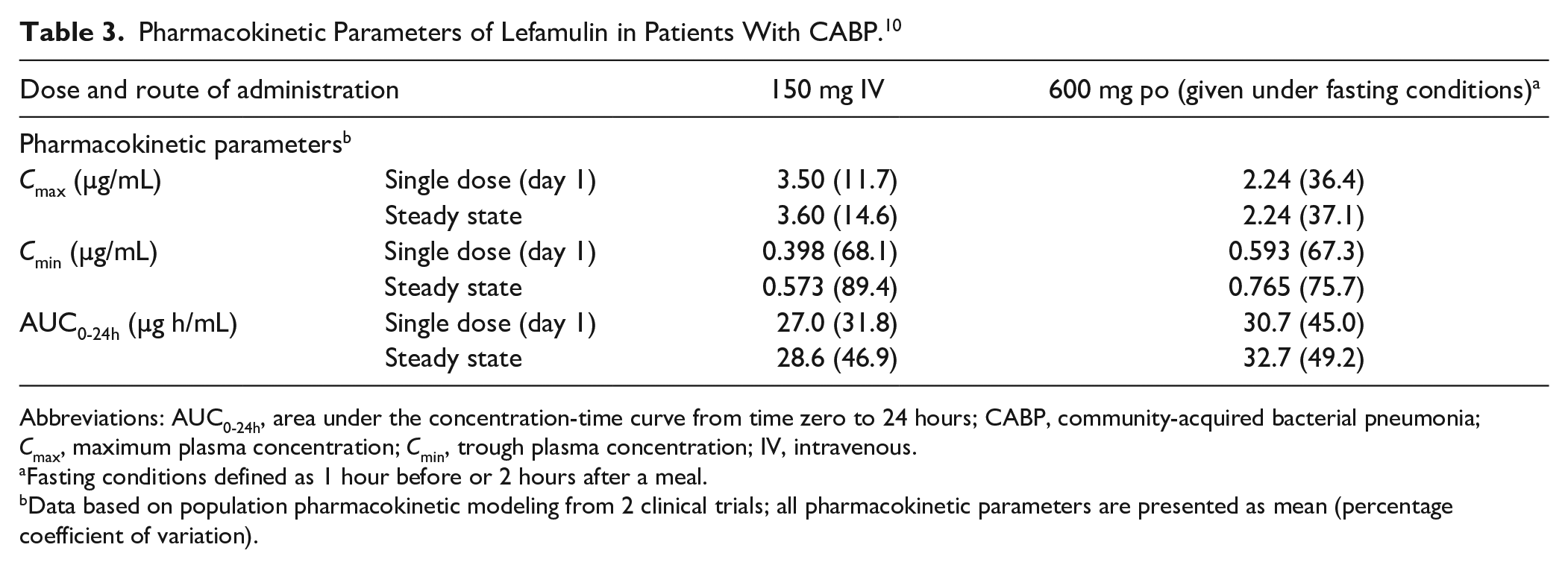
Abbreviations: AUC0-24h, area under the concentration-time curve from time zero to 24 hours; CABP, community-acquired bacterial pneumonia; Cmax, maximum plasma concentration; Cmin, trough plasma concentration; IV, intravenous.
Fasting conditions defined as 1 hour before or 2 hours after a meal.
Data based on population pharmacokinetic modeling from 2 clinical trials; all pharmacokinetic parameters are presented as mean (percentage coefficient of variation).
The pharmacokinetics of lefamulin have been evaluated in healthy adults and those with infections. The mean plasma protein binding of lefamulin ranges from 94.8% to 97.1% in healthy adults. 10 The terminal half-life range was 9.43 to 10.7 hours, and the volume of distribution at steady state ranged from 117 to 160 L following a single intravenous dose of 150 mg in a small study in healthy adults. 18 In a pharmacokinetic analysis of data from those who received lefamulin 150 mg intravenously twice daily in the phase 2 trial on ABSSSI, the mean half-life was 13.2 hours (±5.79 hours), and the mean volume of distribution was 211 L (±10.2%). 19 Following intravenous administration in patients with CABP, the mean steady-state volume of distribution was 86.1 L (range: 34.2-153 L), and the mean elimination half-life was approximately 8 hours. 10 Lefamulin rapidly penetrated into interstitial fluids of skeletal muscle, adipose tissue, and epithelial lining fluid (ELF) following a single intravenous dose of 150 mg administered to healthy men. 20 Exposure levels of unbound lefamulin in ELF were 5.7 times higher than those achieved in plasma, which is similar to accumulation effects that have been shown for macrolides and fluoroquinolones. 20 The penetration of lefamulin at this target site may be a result of its active transportation into ELF by P-glycoprotein (P-gp). 20 In a neutropenic murine pneumonia model, lefamulin rapidly penetrated and accumulated in macrophages, and its in vitro antibacterial activity was unaffected by the presence of pulmonary surfactant. 21
Lefamulin is a substrate and inhibitor of CYP3A and a substrate of P-gp in vitro.22,23 In healthy individuals, 77.3% of the drug was excreted in feces and 15.5% was excreted in urine following a single intravenous dose of 150 mg, whereas 88.5% of drug was excreted in feces and 5.3% was excreted in urine after a single oral dose of 600 mg was given. 10
There are no significant differences in the pharmacokinetic parameters of lefamulin based on age, sex, race, weight, or renal impairment.10,24 The majority of lefamulin and its major metabolites are nonrenally eliminated, so that no dosage adjustment is required based on any degree of renal impairment. 24 Lefamulin can be given without regard to timing of hemodialysis. 24 Following administration of intravenous lefamulin to noninfected patients, the half-life was prolonged (17.5 vs 11.5 hours) and protein binding was reduced, resulting in an increased area under the curve (AUC) in those with severe hepatic impairment as compared with those with normal hepatic function. 10 Following administration of a single intravenous dose of 150 mg of lefamulin in an open-label study, mean concentrations of lefamulin and its major metabolite were comparable for those with normal, moderate, or severe hepatic impairment through the first 12 hours after the start of infusion, and slightly slower rates of elimination were found in the later elimination phases for those with hepatic impairment. 25 Although the authors of this poster abstract concluded that no dosage adjustment appears to be required, the manufacturer’s prescribing information states that the dosing of intravenous lefamulin should be reduced to 150 mg every 24 hours in patients with severe hepatic impairment (Child-Pugh Class C).10,25 Lefamulin tablets are not recommended for patients with moderate or severe hepatic impairment (Child-Pugh Class B or C) because the oral formulation has not been studied in this patient population. 10
In neutropenic murine thigh infection models, lefamulin exhibited both time- and concentration-dependent killing, and its efficacy was most strongly correlated with the 24-hour AUC/MIC (AUC0-24h/MIC) ratio. 26 Analyses of pharmacokinetic and pharmacodynamic target attainment using pharmacokinetic models, Monte Carlo simulation, nonclinical pharmacokinetic and pharmacodynamic targets for efficacy for S pneumoniae and S aureus (defined as median total-drug ELF and free-drug plasma AUC:MIC ratio targets that resulted in a bacterial reduction of 1 log10 colony forming units [cfu] reduction from baseline), and in vitro data support the recommended dosing of lefamulin for CABP. 27 At the MIC90 value of 0.12 µg/mL for S pneumoniae and 0.12 µg/mL for S aureus, the probability of attaining a total-drug ELF AUC:MIC ratio target that resulted in a 1 log10 cfu reduction was ≥99.2% with lefamulin for S pneumoniae and 92.7% to 100% for S aureus for intravenous and oral dosing regimens, respectively, under both fed and fasting conditions. 27
Clinical Efficacy
Several clinical trials were conducted to determine dosing regimen selection and to assess the efficacy and safety of lefamulin in the treatment of ABSSSIs and CABP.14,28,29 Table 4 is a summary of the results of published phase 2 and phase 3 clinical trials of lefamulin.14,28,29
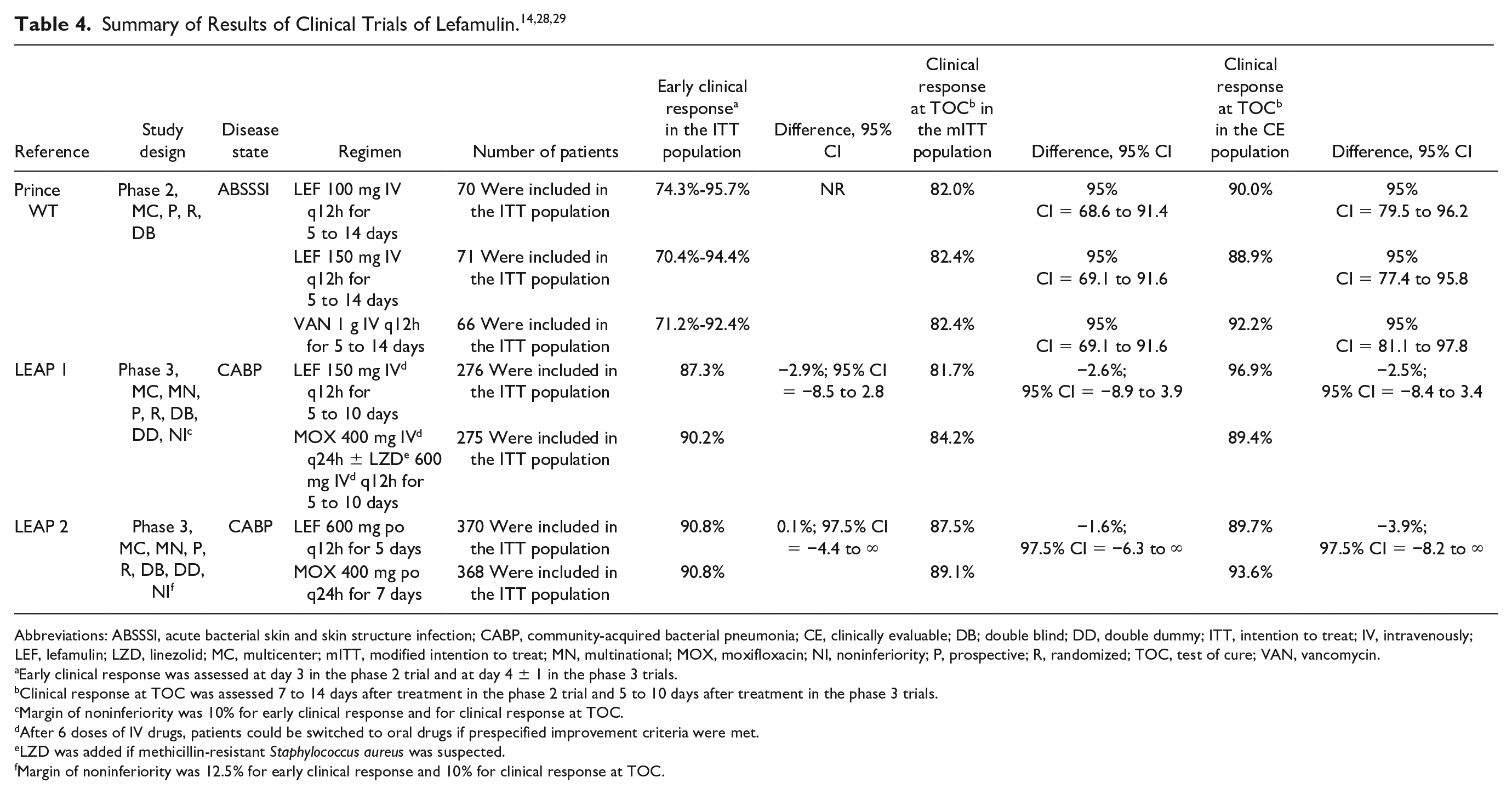
Abbreviations: ABSSSI, acute bacterial skin and skin structure infection; CABP, community-acquired bacterial pneumonia; CE, clinically evaluable; DB; double blind; DD, double dummy; ITT, intention to treat; IV, intravenously; LEF, lefamulin; LZD, linezolid; MC, multicenter; mITT, modified intention to treat; MN, multinational; MOX, moxifloxacin; NI, noninferiority; P, prospective; R, randomized; TOC, test of cure; VAN, vancomycin.
Early clinical response was assessed at day 3 in the phase 2 trial and at day 4 ± 1 in the phase 3 trials.
Clinical response at TOC was assessed 7 to 14 days after treatment in the phase 2 trial and 5 to 10 days after treatment in the phase 3 trials.
Margin of noninferiority was 10% for early clinical response and for clinical response at TOC.
After 6 doses of IV drugs, patients could be switched to oral drugs if prespecified improvement criteria were met.
LZD was added if methicillin-resistant Staphylococcus aureus was suspected.
Margin of noninferiority was 12.5% for early clinical response and 10% for clinical response at TOC.
Phase 2 Trial
This trial enrolled adults with ABSSSIs known or suspected to be caused by a Gram-positive pathogen and requiring intravenous antibiotic therapy. 14 Participants were randomized to receive either lefamulin 100 mg, lefamulin 150 mg, or vancomycin 1 g intravenously every 12 hours for 5 to 14 days. Participants with confirmed Gram-negative pathogens in any arms were permitted to receive aztreonam intravenously every 8 hours, and those in the vancomycin arm had doses adjusted according to institutional guidelines. The early clinical response at day 3 was assessed in the intention-to-treat (ITT) population using 4 different definitions: (1) absence of fever; (2) no increase in the area of erythema plus absence of fever; (3) no increase in the area of erythema, no increase in the area of swelling, and absence of fever; and (4) a ≥20% reduction in the area of erythema from baseline. The ITT population included participants who received ≥1 dose of study drug. The coprimary end points were clinical response rates at test of cure (TOC) 7 to 14 days after treatment in the modified ITT (mITT) and clinically evaluable (CE) populations. Clinical response was defined as resolution of all signs and symptoms of the infection or improvement such that no further antimicrobial therapy was necessary. The mITT population included participants in the ITT population who had a Gram-positive pathogen isolated from a blood culture or the ABSSSI site. The CE population included participants who had a confirmed ABSSSI, met the inclusion/exclusion criteria, and fully complied with the protocol. The 3 treatment groups were comparable with respect to age, gender, and race/ethnicity, but the percentage of participants with diabetes mellitus and the mean body mass index were higher in the lefamulin 150-mg arm. The mean duration of therapy was 7 days for all study drugs. Clinical and microbiological success rates were comparable in all 3 treatment arms. In the subset of participants with MRSA isolates, clinical success at TOC in the mITT population occurred in 29/34 (85.3%) participants in the lefamulin 100-mg arm, 28/32 (87.5%) in the lefamulin 150-mg arm, and 32/39 (82.1%) in the vancomycin arm. All 8 participants aged ≥65 years across all treatment arms achieved clinical success at TOC visit in the mITT population. Limitations included not selecting early clinical response as a primary end point and the small representation of older adults aged ≥65 years. Although these results provided a proof of concept for the use of lefamulin in the treatment of ABSSSIs, no further trials in ABSSSIs were conducted.
Phase 3 Trials
LEAP 1 and LEAP 2 were noninferiority trials with similar study designs and end points that enrolled adults with CABP.28,29 The FDA primary end point was early clinical response rate 96 ± 24 hours after the first dose of the study drug in the ITT population. The early clinical response was defined as improvement in ≥2 CABP signs and symptoms, no worsening in any CABP signs and symptoms, and no receipt of a concomitant, nonstudy antibiotic for CABP. The ITT population included all randomized participants. The EMA coprimary end points were clinical response rates 5 to 10 days after the last dose of the study drug in the mITT and CE populations. Clinical response was defined as resolution of CABP signs and symptoms or improvement such that no additional antibiotic was administered for CABP. The mITT population included participants in the ITT population who received ≥1 study drug. The CE population included participants who met the following predefined criteria: no indeterminate clinical response; completed ≥48 hours of study drug; no receipt of a nonstudy, systemic antibiotic with activity against CABP pathogens; and no additional factor that might confound the assessment of efficacy. Response rates in the microbiological ITT (microITT) population, which was defined as all participants in the ITT population who had ≥1 baseline pathogen detected, were also recorded.
In LEAP 1, participants were randomized to receive either lefamulin 150 mg intravenously every 12 hours or moxifloxacin intravenously every 24 hours for 5 to 10 days. 28 In the initial protocol, patients with MRSA or L pneumophila infection and those with S pneumoniae bacteremia received 10 days of therapy. Otherwise, patients treated with lefamulin received 5 days of therapy and those treated with moxifloxacin received 7 days of therapy. A protocol amendment changed the therapy duration to 7 days for both groups, except in patients with MRSA infection, who received 10 days of therapy. After 6 doses of parenteral therapy, participants were permitted to switch to oral lefamulin 600 mg every 12 hours or oral moxifloxacin 400 mg every 24 hours if predefined criteria were met. Participants with suspected MRSA at screening in the moxifloxacin arm were permitted to receive linezolid 600 mg intravenously every 12 hours, and if a baseline culture did not confirm MRSA, linezolid was discontinued. In the lefamulin arm, the median age of participants was 61.0 years, 47.8% were older adults (ie, age ≥65 years), 61.6% were male, 86.6% were white, the mean body mass index was 26.5 kg/m2, 1.4% had a PORT risk class V, 2.5% had bacteremia, and 1.1% had severe renal impairment (ie, creatinine clearance <30 mL/min). In the moxifloxacin arm, the median age of participants was 59.6 years, 39.3% were older adults (ie, age ≥65 years), 58.2% were male, 86.9% were white, the mean body mass index was 26.3 kg/m2, 1.1% had a PORT risk class V, 1.1% had bacteremia, and 1.1% had severe renal impairment (ie, creatinine clearance <30 mL/min). The median duration of intravenous therapy was 7 days for lefamulin and 6 days for moxifloxacin, and the median duration of oral therapy was 4 days for both lefamulin and moxifloxacin. Early clinical response occurred in 241 (87.3%) participants in the lefamulin arm and 248 (90.2%) in the moxifloxacin arm, resulting in a difference of −2.9% (95% CI = −8.5 to 2.8), which met the criterion for noninferiority. Clinical success in the mITT population occurred in 223 (81.7%) participants in the lefamulin arm and 230 (84.2%) in the moxifloxacin arm, resulting in a difference of −2.6% (95% CI = −8.9 to 3.9), which met the criterion for noninferiority. Clinical success in the CE population occurred in 205 (86.9%) participants in the lefamulin arm and 219 (89.4%) in the moxifloxacin arm, resulting in a difference of −2.5% (95% CI = −8.4 to 3.4), which met the criterion for noninferiority. In the subset of participants with S pneumoniae isolates in the microITT population, early clinical response occurred in 82/93 (88.2%) participants in the lefamulin arm and 91/97 (93.8%) in the moxifloxacin arm, whereas clinical success occurred in 79/93 (84.9%) participants in the lefamulin arm and 85/97 (87.6%) in the moxifloxacin arm. Lefamulin would not have met the criteria for noninferiority to moxifloxacin under the original protocol that specified a shorter duration of therapy with lefamulin. A subpopulation analysis suggested that although lefamulin was noninferior to moxifloxacin in participants aged ≥65 years, it appeared to be less efficacious than moxifloxacin in those aged <65 years; however, the results in younger adults were confounded by those meeting minor ATS severity criteria, and a detailed post hoc analysis failed to identify any ATS variables that could explain these results. Limitations of LEAP 1 include the small representation of participants with PORT risk class V, those with bacteremia, and those with severe renal impairment and the lack of confirmed MRSA infections.
In LEAP 2, participants were randomized to receive either lefamulin 600 mg orally every 12 hours for 5 days or moxifloxacin orally every 24 hours for 7 days. 29 Participants with PORT risk class V were excluded. In the lefamulin arm, the median age of participants was 57.4 years, 36.8% were older adults (ie, age ≥65 years), 55.9% were male, 74.1% were white, the mean body mass index was 26.5 kg/m2, 10.8% had a PORT risk class IV, 1.6% had bacteremia, and 18.4% had moderate to severe renal impairment (ie, creatinine clearance <60 mL/min). In the moxifloxacin arm, the median age of participants was 57.7 years, 38.3% were older adults (ie, age ≥65 years), 48.9% were male, 73.4% were white, the mean body mass index was 26.5 kg/m2, 11.4% had a PORT risk class IV, 2.4% had bacteremia, and 19.8% had moderate to severe renal impairment (ie, creatine clearance <60 mL/min). The median duration of therapy was 5.0 days for lefamulin and 6.7 days for moxifloxacin. Early clinical response occurred in 336 (90.8%) participants in the lefamulin arm and 334 (90.8%) in the moxifloxacin arm, resulting in a difference of 0.1% (97.5% CI = −4.4 to ∞), which met the criterion for noninferiority. Clinical success in the mITT population occurred in 322 (87.5%) participants in the lefamulin arm and 328 (89.1%) in the moxifloxacin arm, resulting in a difference of −1.6% (97.5% CI = −6.3 to ∞), which met the criterion for noninferiority. Clinical success in the CE population occurred in 296 (89.7%) participants in the lefamulin arm and 305 (93.6%) in the moxifloxacin arm, resulting in a difference of −3.9% (97.5% CI = −8.2 to ∞), which met the criterion for noninferiority. In the subset of participants with S pneumoniae isolates in the microITT population, early clinical response occurred in 110/123 (89.4%) participants in the lefamulin arm and 115/126 (91.3%) in the moxifloxacin arm, whereas clinical success occurred in 105/123 (85.4%) participants in the lefamulin arm and 108/126 (85.7%) in the moxifloxacin arm. Subpopulation analyses suggested that lefamulin was noninferior to moxifloxacin in participants across all age groups. Limitations of LEAP 2 include the small representation of participants with bacteremia and the exclusion of those with MRSA infections.
A recent analysis of hospitalized patients from the LEAP trials found that lefamulin and moxifloxacin had a comparable time to clinical response, which is considered a proxy for “discharge readiness” in CABP. 30
Tolerability and Safety
Lefamulin is contraindicated in patients with known hypersensitivity to pleuromutilins (eg, retapamulin). 10 Lefamulin carries warnings related to QT prolongation and should not be used in patients with known QT interval prolongation and in those with ventricular arrhythmias. If use of lefamulin cannot be avoided in these high-risk patient populations, ECG monitoring is recommended. Monitoring is also recommended in patients with renal failure requiring dialysis and those with any degree of hepatic impairment because metabolic disturbances associated with these conditions may lead to QT prolongation. Because lefamulin was associated with embryo-fetal toxicity in rats and rabbits, it has the potential to cause fetal harm in pregnant women. Therefore, women of childbearing potential should be tested for pregnancy prior to use, and those receiving lefamulin should be advised to use effective contraception during treatment and for 2 days after the last dose. There is a pregnancy pharmacovigilance program for lefamulin, and health care providers should report lefamulin exposure during pregnancy. Because lefamulin was excreted in the milk of lactating rats, women should pump and discard milk during treatment with lefamulin and for 2 days after the last dose because of the potential for serious adverse effects, including QT prolongation, in breastfed infants. Like all systemic antibiotics, lefamulin carries a warning regarding the risk of Clostridioides difficile infection (CDI). No cases of CDI occurred in the trial on ABSSSIs and in the LEAP 1 trial, but 1 participant in the LEAP 2 trial developed CDI approximately 1 week after completing a 5-day course of lefamulin and was successfully treated with oral vancomycin.14,28,29 Like all antibiotics, lefamulin also carries a warning regarding the development of drug-resistant bacteria. 10
Safety data from phase 1 and 2 clinical trials suggest that lefamulin is well tolerated.6,20 No serious adverse events were reported, and no participant discontinued the study drug because of an adverse event.6,20 In a study of a single 150-mg lefamulin dose administered intravenously to 12 healthy male participants, 7 (58.3%) reported adverse events; 13 events were of mild intensity, and 7 were of moderate intensity. 20 Four participants (33.3%) experienced 10 adverse events possibly or probably related to lefamulin: headache, increased serum bilirubin levels, increased body temperature, diarrhea, malaise, chills, and local infusion site pain. In 4 other studies of 150-mg lefamulin dose administered intravenously every 12 hours to 71 participants with ABSSSIs and 600-mg single and repeated dose given orally to 45 healthy participants, all adverse events were mild or moderate in severity. 6 Gastrointestinal adverse events occurred in 18 participants (25.4%) who received lefamulin intravenously and were the most common adverse events in those who received the study drug orally. Oral administration of lefamulin in the fasted state was associated with more gastrointestinal adverse events than in the fed state or after intravenous administration.
Table 5 displays common adverse drug reactions observed in the ABSSSIs, LEAP 1, and LEAP 2 trials.14,28,29 In the ABSSSIs trial, rates of treatment-emergent adverse events (TEAEs) were lower in the lefamulin 150-mg arm (39.4%) than in the vancomycin arm (53.0%). 14 Most were mild or moderate in intensity. Local signs and symptoms at the site of infusion were more frequently reported in the lefamulin arm than in the vancomycin arm, but most were mild in intensity. No change in ECG was of clinical significance, and no drug-related cardiovascular events were reported. The mean maximum increase in QTcF interval was 12.3 ms in the lefamulin 150-mg arm and 7 ms in the vancomycin arm. One participant in the lefamulin 150-mg arm and 1 in the vancomycin arm had a QTcF interval of >450 ms. Two participants (2.8%) discontinued study medication following a TEAE in the lefamulin 150-mg arm (infusion site pain, dyspnea) and 1 (1.5%) in the vancomycin arm (drug eruption).
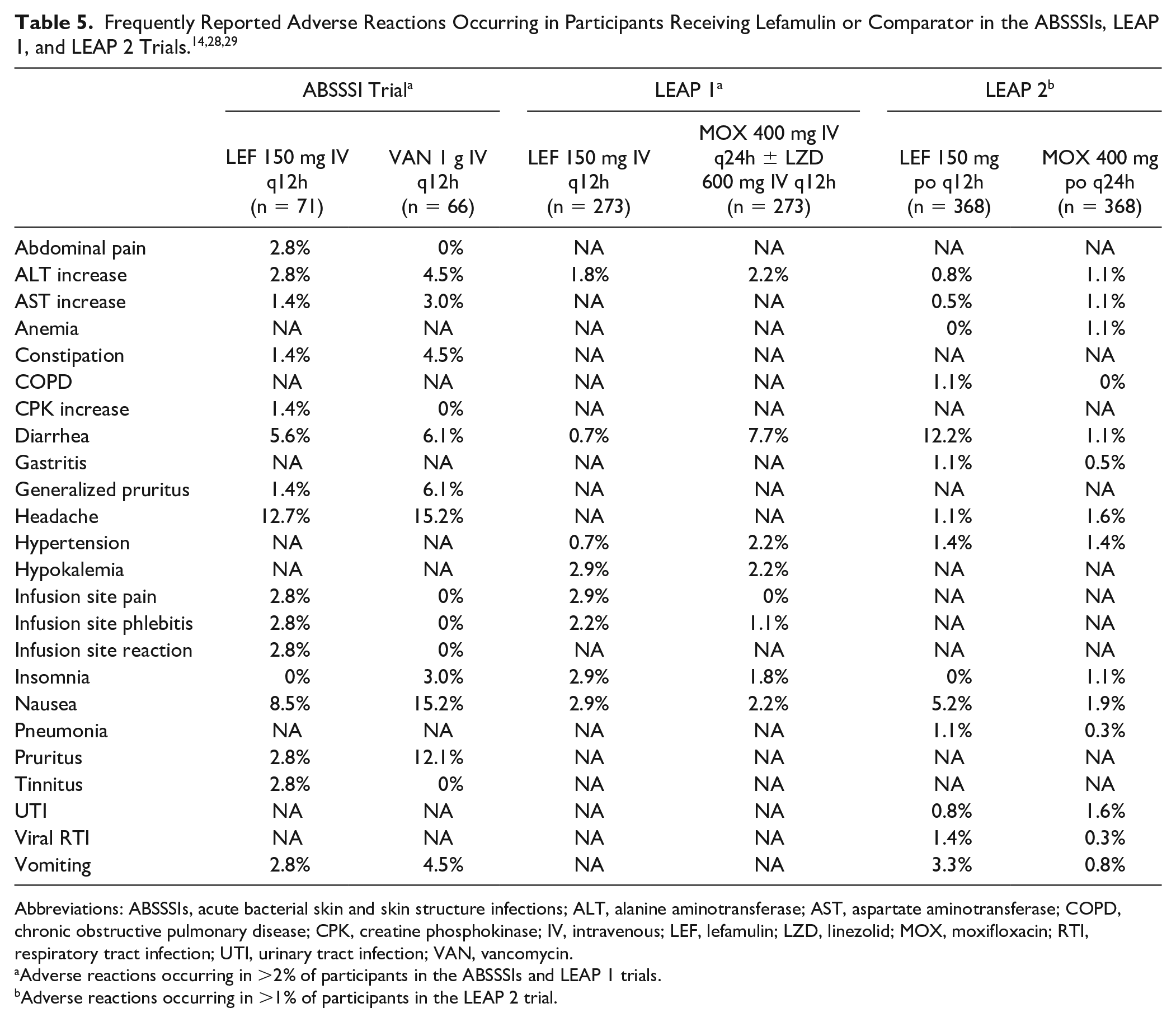
Abbreviations: ABSSSIs, acute bacterial skin and skin structure infections; ALT, alanine aminotransferase; AST, aspartate aminotransferase; COPD, chronic obstructive pulmonary disease; CPK, creatine phosphokinase; IV, intravenous; LEF, lefamulin; LZD, linezolid; MOX, moxifloxacin; RTI, respiratory tract infection; UTI, urinary tract infection; VAN, vancomycin.
Adverse reactions occurring in >2% of participants in the ABSSSIs and LEAP 1 trials.
Adverse reactions occurring in >1% of participants in the LEAP 2 trial.
In the LEAP 1 trial, rates of TEAEs were similar between treatment arms (38.1% vs 37.7%). 28 Most were mild or moderate in severity. Fewer gastrointestinal TEAEs were reported with lefamulin than moxifloxacin (6.6% vs 13.6%), and none led to a study drug discontinuation. However, more infusion site reactions were reported with lefamulin than moxifloxacin (7.7% vs 3.7%), and 1 participant in each arm discontinued the study because of these reactions. No liver function test–associated TEAE resulted in study drug discontinuation in both arms. The incidences of cardiac disorders were 2.9% in the lefamulin arm and 4.0% in the moxifloxacin arm. Three participants in the lefamulin arm and 5 in the moxifloxacin arm had nonserious QT interval prolongation; 1 participant in the lefamulin arm and 3 in the moxifloxacin arm had their study drug discontinued because of QT prolongation. The mean increase in QTcF interval was 13.8 ms in the lefamulin arm and 16.4 ms in the moxifloxacin arm. No lefamulin-treated participant and 2 moxifloxacin-treated participants had a postbaseline increase of >60 ms that resulted in a value >480 ms. Pleural effusion leading to study drug discontinuation occurred in 1 participant in the lefamulin arm and 2 in the moxifloxacin arm. Worsening pneumonia was reported in 4 participants in the lefamulin arm and 1 in the moxifloxacin arm. TEAEs leading to study drug discontinuation occurred in 2.9% of participants in the lefamulin arm and 4.4% of participants in the moxifloxacin arm. Serious TEAEs occurred in 1.1% of participants in the lefamulin arm (injection site reaction, increased liver function test, increased alanine aminotransferase) and 0.4% of participants in the moxifloxacin arm (angioedema). Only the case of angioedema resulted in study drug discontinuation.
In the oral-only LEAP 2 trial, rates of TEAEs were higher in the lefamulin arm (32.6%) than the moxifloxacin arm (25.0%). 29 Most were mild or moderate in severity. More gastrointestinal TEAEs were reported with lefamulin than moxifloxacin (17.9% vs 7.6%). Two participants in the lefamulin arm and 1 in the moxifloxacin arm discontinued the study drug because of vomiting. No liver function test–associated TEAE resulted in study drug discontinuation in both arms. The incidences of cardiac disorders were similar in both arms (2.2% vs 2.4%). One participant in the lefamulin arm had a mild QT interval prolongation. The mean increase in QTcF interval was 9.5 ms in the lefamulin arm and 11.6 ms in the moxifloxacin arm. TEAEs leading to study drug discontinuation occurred in 3.3% of participants in the lefamulin arm and 2.4% of participants in the moxifloxacin arm. Serious TEAEs occurred in 4.6% of participants in the lefamulin arm and 4.9% of participants in the moxifloxacin arm. No treatment-related serious TEAEs was reported in the lefamulin arm, and 1 participant in the moxifloxacin arm had a serious TEAE possibly related to the study drug (myocardial infarction).
Drug Interactions
Coadministration of oral rifampin with intravenous lefamulin reduced the mean lefamulin AUC0-inf and maximum plasma concentration (Cmax) by 28% and 8%, respectively, and coadministration with oral lefamulin reduced the mean lefamulin AUC0-inf and Cmax by 72% and 57%, respectively. 10 Therefore, the use of lefamulin intravenously or orally with strong or moderate CYP3A inducers or P-gp inducers should be avoided because of the potential for reduced efficacy of lefamulin, unless the benefit outweighs the risk. Coadministration of oral ketoconazole with intravenous lefamulin increased the mean lefamulin AUC0-inf and Cmax by 31% and 6%, respectively, and coadministration with oral lefamulin increased the lefamulin AUC0-inf and Cmax by 165% and 58%, respectively. Therefore, the use of lefamulin tablets with strong CYP3A inhibitors or P-gp inhibitors should be avoided because of increased risk of lefamulin-associated adverse effects, and monitoring for adverse effects is recommended with the use of lefamulin tablets with moderate CYP3A inhibitors or P-gp inhibitors. Coadministration of midazolam with intravenous lefamulin did not result in clinically significant differences in the pharmacokinetics of midazolam; however, coadministration with oral lefamulin increased the mean midazolam AUC0-inf and Cmax by 200% and 100%, respectively. Therefore, monitoring for CYP3A substrate-associated adverse effects is recommended with the use of lefamulin tablets with sensitive CYP3A substrates such as alprazolam, midazolam, diltiazem, verapamil, simvastatin, and vardenafil. Coadministration of digoxin with oral lefamulin did not result in clinically significant differences in the pharmacokinetics of digoxin. Lefamulin tablets are contraindicated with CYP3A substrates that prolong the QT interval because of the potential for increased plasma concentrations of these drugs leading to additive QT prolongation and possibly torsades de pointes. Similarly, the use of lefamulin parenterally or orally with other drugs that affect cardiac conduction such as certain antiarrhythmics, antipsychotics, tricyclic antidepressants, macrolides, and fluoroquinolones should be avoided. 10
Availability, Dosage, and Administration
The drug is supplied in single-use vials containing 150 mg of lefamulin (equivalent to 168 mg of lefamulin acetate) in 15 mL normal saline. 10 The vials contain a clear colorless solution. Each vial of lefamulin should be diluted in the supplied 250 mL of 10-mM citrate-buffered normal saline bag prior to intravenous administration. The vials should be stored in a refrigerator between 2 and 8 °C. After dilution, the bags can be stored for up to 24 hours at room temperature between 20 and 25 °C, with excursions permitted between 15 and 30 °C, and up to 48 hours in a refrigerator. The diluted solution of lefamulin should be infused intravenously over 60 minutes. Lefamulin is also supplied as 600-mg, blue, oval-shaped tablets (equivalent to 671 mg of lefamulin acetate) to be swallowed whole with a glass of water. Patients should be instructed to take lefamulin 1 hour before or 2 hours after a meal and to avoid crushing or dividing the tablets. The recommended intravenous dose of lefamulin for CABP is 150 mg every 12 hours for 5 to 7 days, with the option to switch to oral tablets to complete the course of treatment. The recommended oral dose of lefamulin for CABP is 600 mg every 12 hours for 5 days. No dosage adjustment is needed in patients with renal impairment, including those on dialysis, and no dosage adjustment for lefamulin given intravenously is needed in patients with mild or moderate hepatic impairment, but the dosing interval should be extended to every 24 hours in those with severe hepatic impairment. No dosage adjustment for lefamulin given orally is needed in patients with mild hepatic impairment; however, the use of lefamulin tablets is not recommended in patients with moderate or severe hepatic impairment. 10
Relevance to Patient Care and Clinical Practice
Lefamulin provides clinicians with a twice-daily parenteral and oral antibiotic option for the treatment of adults with CABP caused by S pneumoniae, MSSA, H influenzae, L pneumophila, M pneumoniae, and C pneumoniae. 10 Because lefamulin is active against both typical and atypical pathogens, it is given as monotherapy for the empirical treatment of CABP and is, therefore, an attractive alternative to the combination of β-lactam plus macrolide; it can be used as a fluoroquinolone-sparing antibiotic and to facilitate hospital discharge.28,29,31 Lefamulin is also an alternative to amoxicillin and doxycycline for the treatment of CABP in the outpatient setting given the rise of macrolide-resistant S pneumoniae and the recent recommendations to drop their use as monotherapy for CABP.29,31 Unlike β-lactams and fluoroquinolones, lefamulin is not clinically active against Enterobacterales and therefore provides a more targeted activity against the pathogens that commonly cause CABP while sparing the intra-abdominal and gastrointestinal flora.10,31 Using an antibiotic with a more targeted spectrum of activity is consistent with good antibiotic stewardship practices. 32 Lefamulin has a novel mechanism of action, which should preserve its activity against pathogens that are resistant to other commonly used antibiotics. 1 As a pleuromutilin antibiotic, lefamulin can be given to patients who are allergic to other antibiotics commonly used in the treatment of CABP such as β-lactams, macrolides, tetracyclines, and fluoroquinolones. Unlike fluoroquinolones, lefamulin was not associated with dysglycemia, neuropathy, photosensitivity, or tendinopathy in clinical trials.28,29,33 In addition, lefamulin was not associated with nephrotoxicity in clinical trials, and no dose adjustment is warranted in patients with renal impairment.10,28,29
Despite the advantages of lefamulin, there are several disadvantages associated with its use. The oral dose of lefamulin is 4 times the intravenous dose and was associated with more nausea, vomiting, and diarrhea than moxifloxacin in the all-oral LEAP 2 trial.10,29 One case of CDI was also reported in clinical trials.28,29 Like fluoroquinolones and macrolides, lefamulin was associated with QT prolongation in clinical trials, and the concomitant use of lefamulin tablets with CYP3A substrates that prolong the QT interval is contraindicated.10,28,29,34 Unlike β-lactam, lefamulin is primarily metabolized by CYP3A4 and is associated with several drug interactions via the CYP3A and P-gp pathways. 10 Like fluoroquinolones, lefamulin was associated with embryo-fetal toxicity in animals, and women of childbearing potential should be tested for pregnancy prior to use.10,32
Lefamulin is active in vitro against MRSA, N gonorrhoeae, C trachomatis, and M genitalium; however, it is not approved by the FDA for the treatment of MRSA infections or any sexually transmitted disease.5,16 Although there is 1 published phase 2 study on the use of lefamulin for ABSSSIs, no phase 3 trials were conducted to assess its efficacy in the treatment of ABSSSIs, and this is not an approved indication for its use. 14 When deciding on the inclusion or exclusion of lefamulin on formulary, the institution’s antibiogram and patterns of antimicrobial resistance must be considered. In addition, to prevent inappropriate use, institutions should consider developing criteria for the use of lefamulin, which can include patients at risk of renal dysfunction or fluoroquinolone-associated toxicities and those with antibiotic intolerances or allergies. The average wholesale price of a 150-mg lefamulin infusion is $123.00, and the average wholesale price of a 600-mg tablet is $600.00. 35 Although the cost of lefamulin relative to other alternative agents is an important factor to consider when deciding to add to the formulary, there are no currently published studies examining the cost-effectiveness of the use of lefamulin.
Conclusion
With the approval of lefamulin, clinicians now have an additional novel antibiotic with a unique mechanism of action for the treatment of adults with CAPB. Lefamulin has been shown to be noninferior to moxifloxacin for the treatment of CABP. The most common adverse reactions associated with lefamulin are infusion site reactions, hepatic enzyme elevation, gastrointestinal upset, hypokalemia, insomnia, and headache. Lefamulin may cause fetal harm and is associated with QT prolongation, and concomitant use of lefamulin tablets with CYP3A substrates that prolong the QT interval is contraindicated. The oral formulation of lefamulin should be taken on empty stomach because food decreases absorption. Lefamulin may be particularly useful in patients with CABP for whom fluoroquinolones are not appropriate, those with allergy to several antibiotics, and those at high risk of acute kidney injury.
Footnotes
Authors’ Note
Dr Chahine serves on the speakers’ bureaus of Merck & Co, Inc, and Paratek Pharmaceuticals, Inc. Dr Sucher has nothing to disclose.
Declaration of Conflicting Interests
The authors declared the following potential conflicts of interest with respect to the research, authorship, and/or publication of this article: Dr. Chahine serves on the speaker’s bureaus of Merck & Co, Inc. and Paratek Pharmaceuticals, Inc. Dr. Sucher has nothing to disclose.
Funding
The authors received no financial support for the research, authorship, and/or publication of this article.
