






Abstract
Background:
Missed medication doses are a common and often preventable medication-related error that have been associated with an increased length of stay and mortality. Hemodialysis is a common, relatively predictable reason that patients are unavailable, resulting in missed doses.
Objective:
To evaluate the implications of a pharmacist-led intervention to standardize the medication administration times for patients requiring hemodialysis who were prescribed antihypertensives, antiepileptics, apixaban, and/or antimicrobials.
Methods:
A retrospective preanalysis and postanalysis of a pharmacist-led intervention were performed at a single-center, safety net hospital. Patients receiving dialysis and prescribed one of the targeted medications were included. The primary endpoint was the composite of missed and delayed doses.
Results:
A total of 25 patients receiving 126 dialysis sessions in the preintervention group and 29 patients receiving 80 dialysis sessions in the postintervention group were included for analysis. For the primary endpoint, 118 (18%) versus 57 (9.3%) doses were missed or delayed in the preintervention versus postintervention group, respectively (P < 0.001). The primary endpoint was driven by fewer delayed doses in the postgroup. The number of antimicrobials given on a correct schedule increased in the postintervention group (98.3% vs 99.1%, P = 0.044).
Conclusion and Relevance:
A pharmacist-led intervention for standard medication administration times in patients requiring hemodialysis increased the number of prescribed medication doses given and given on time. The intervention also led to more antimicrobials administered at appropriate times relative to dialysis sessions.
Introduction
The Institute for Safe Medication Practices (ISMP) has identified missed medication doses as a common medication-related error. The rate of missed inpatient medication doses reported in the literature is wide-ranging, between 1.3% and 12.4%.1-10 Although antibiotic doses can be critical for inpatients, they are missed 5% to 36% of the time.4,6,10 Medication doses are missed for a variety of reasons but 2% to 16.5% of doses are missed because the patient is not available (eg, the patient is off the floor).2,4,6,10
Missed doses have been associated with adverse effects, including an increased risk of intensive care unit transfer, increased length of stay, and mortality.8,11,12 In a 3-year period, the UK National Patient Safety Agency received reports of 27 deaths, 68 severe harms, and 21 383 other patient safety incidents relating to omitted or delayed doses. 13 O’Grady et al reviewed 1882 medication incidents categorized as omitted or delayed medications. Among those incidents, there were 6 patient deaths and 581 patient harms determined to be related to medication omission. 14 There were no published data found describing the incidence of, or adverse events related to, omitted doses in patients requiring hemodialysis.
The ISMP released a guideline in 2011 for the timely administration of scheduled medications in the acute care setting, including defining time-critical medications and operational suggestions to support timely administration. This guideline recognized that a one-size-fits-all approach may not be appropriate for all types of inpatients. 15 To date, there is little published literature describing the efficacy of interventions to reduce missed medications. The literature available often described strategies that required increased personnel and appeared to lack optimal technological support.16,17 The lack of validated interventions prompted the researchers to evaluate processes in patients requiring hemodialysis, a population at high risk for missed doses due to off the floor time.
There are numerous available technologies that help mitigate missed doses, such as an electronic health record (EHR), including computerized provider order entry (CPOE), prospective pharmacist verification, barcode medication administration (BCMA), profiled automated dispensing cabinets (ADCs), and intravenous pump interoperability. Despite these technologies, standard medication administration times are not always appropriate or attainable for inpatients who require hemodialysis. At many institutions, dialysis requires patients to be off the floor in a separate dialysis unit for up to 5 hours. Depending on institution-specific policies and practices, medications due during dialysis may be administered prior to their due time, while the patient is dialyzing, late after the patient returns to their room, or the dose may be missed.
For medications that are dialyzable, it is important that they are administered after dialysis on dialysis days. For antihypertensive medications, whether dialyzable or not, determining the most appropriate administration times in relation to the timing of dialysis is especially challenging. Intradialytic hypotension is associated with inadequate dialysis, loss of vascular access, cardiovascular events, and mortality.18-21 Antihypertensive medications are one of many possible causes of intradialytic hypotension (eg, sepsis, decompensated heart failure). In fact, withholding antihypertensives does not correlate with less hypotension, but is associated with uncontrolled hypertension during a dialysis session, which can also lead to negative cardiovascular outcomes and mortality.22-24 In addition to the antihypertensive medication class, anticoagulants, antiepileptics, and antimicrobials are commonly prescribed to patients receiving hemodialysis and are associated with measurable outcomes, such as clotting, seizures, and recurrent infection. The objective was to evaluate whether a pharmacist-led intervention to standardize medication administration times for patients requiring hemodialysis could decrease missed and delayed doses.
Methods
This was a single center, retrospective, institutional review board (IRB) approved study, preimplementation and postimplementation of standardized medication administration times for inpatients receiving hemodialysis, conducted at a safety net institution in Indianapolis. The preintervention group was admitted between July and September 2019 and the postintervention group was admitted between July and October 2021.
Intervention Development
Starting in March 2021, the research team reviewed current workflow for patients receiving hemodialysis, reviewed medication incidents related to off the floor time for dialysis, and collected data on historical dialysis run times. This review, along with multidisciplinary discussions with nurses, nephrologists, and hospitalists identified the following: patients receiving hemodialysis were typically off the floor in the morning during 0900 and 1200 hours standard medication administration times; however, intensive care unit (ICU) patients dialyzed in their hospital rooms and some inpatients had afternoon sessions. The nurses performing dialysis were contracted with a separate dialysis company so they did not administer medications ordered by the primary team with due times during the dialysis session. Patients often received their medications late (after dialysis) or not at all (missed doses). Regardless of morning or afternoon session, 1500 hours was a time that most patients were in their hospital room available for routine medication administration. It was not feasible in the EHR (Epic) to proactively notify pharmacists whether the patient was going to dialyze in the morning or afternoon, but dialysis start and end times were viewable in a flow sheet in real time. Finally, it was preferred to avoid medication administration during shift change (0700, 1900 hours) and to minimize sleep interruptions (eg, avoid overnight administration times) unless thought to be clinically necessary.
Pharmacist-Led Intervention
The pharmacist-led intervention was 3-fold: development of standard medication administration times for patients receiving hemodialysis (Table 1), clinical pharmacists’ daily workflow optimizations, and pharmacist education. To optimize pharmacists’ daily workflow, new medication frequencies (daily dialysis, twice-daily dialysis, and 3 times daily dialysis) were created in the EHR to match the standard dialysis medication administration times for dialyzable medications in Table 1. These new frequency options were available to providers but were never automatically populated. In situations when the provider did not select the dialysis scheduling, the pharmacist could edit the frequency during the pharmacist verification activity.
Standard Dialysis Medication Administration Times.
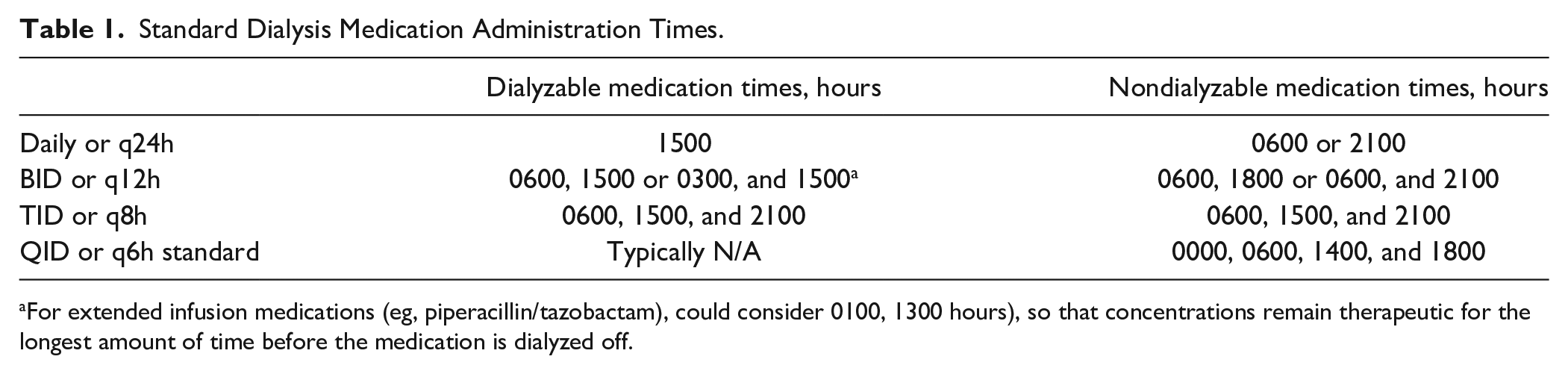
For extended infusion medications (eg, piperacillin/tazobactam), could consider 0100, 1300 hours), so that concentrations remain therapeutic for the longest amount of time before the medication is dialyzed off.
Next, the kidney function change task was edited. The kidney function change task was an existing function in the EHR that triggered an alert for changes in serum creatinine of 25% or more. To complete this task, the pharmacist reviewed active medications for appropriate dosing. Addressing the kidney function change task was part of the day shift pharmacists’ workflow. Active hemodialysis orders were added as a trigger within this kidney function change task list, so that patients receiving dialysis were now included in this review. Finally, we created templates for pharmacists to document their medication assessments and plans for patients receiving dialysis (Figure 1).

Pharmacist Documentation Template.
Pharmacist education occurred through an in-person presentation and written educational materials. The education focused on the daily workflow changes described previously. The pharmacist education referred pharmacists to the institution’s referential database, Lexicomp, to determine whether a medication was dialyzable and for renal dosing recommendations. The education also described best practices for approaching antihypertensive medications, including reviewing blood pressure (BP), assessing the need for ultrafiltration, and encouraging shift-to-shift communication.
Data Collection
A patient list was obtained from the EHR and included any patient receiving hemodialysis in the inpatient setting during the study time frame. Patients were included if they received at least 1 dialysis session and were prescribed at least 1 medication from the targeted medication classes. All in-room and off the floor dialysis sessions and medication dose opportunities were evaluated. Patients were excluded if they were admitted during an extended EHR downtime (August 2021) that affected the use of the EHR. The primary outcome was the composite of missed or delayed doses. Secondary outcomes included occurrences of intradialytic hypotension and hypertension, seizures, clotting events, and percentage of appropriately timed antimicrobials in relation to hemodialysis. Clotting events were defined as deep vein thrombosis, pulmonary embolism, transient ischemic attack, and/or stroke during hospital admission.
For included patients, a chart review determined the specific number of dose opportunities and number of doses missed for antihypertensive, antiepileptic, apixaban, and antimicrobial agents regardless of indication. All dosage forms (excluding ophthalmic and otic preparations) of the following medications were included in the evaluation based on formulary and patient population: amlodipine, carvedilol, clonidine, hydralazine, isosorbide dinitrate, isosorbide mononitrate, lisinopril, losartan, metoprolol succinate, metoprolol tartrate, minoxidil, carbamazepine, lacosamide, levetiracetam, apixaban, all antibiotics, all antivirals, all antiretrovirals, and all antifungals. Doses were counted as given on time if administered within a 1-hour window on each side of the due time, late if given after the 2-hour window, or missed if the dose was not given for a reason other than patient declined. 15 Doses were excluded from the total count and missed/delayed counts if the patient declined the medication. Patient charts were also reviewed for clinical events possibly related to those medications (ie, clotting or seizures). Hypertension and hypotension were evaluated for each BP check during dialysis sessions and defined as follows: hypotension as systolic BP <90 mm Hg; hypertension as systolic BP >180 mm Hg OR diastolic BP >120 mm Hg.18,22,25 BP data were only collected for patients who were prescribed antihypertensives. Only a single occurrence of hypertension and/or hypotension was counted per session. For antimicrobials, if an agent was dialyzable and given before dialysis, it was documented as incorrect schedule.
Statistics
Statistical tests were performed using Minitab 18.1 statistical software (Minitab Inc., State College, Pennsylvania). The Fisher exact or χ2 tests were used to detect differences in nominal data within each subgroup (eg, missed dose, delayed dose, and combined missed or delayed). The significance level (alpha) was predetermined to be less than .05. An a priori power calculation was not performed as this was a convenience sample of all patients meeting inclusion criteria during the defined study period.
Results
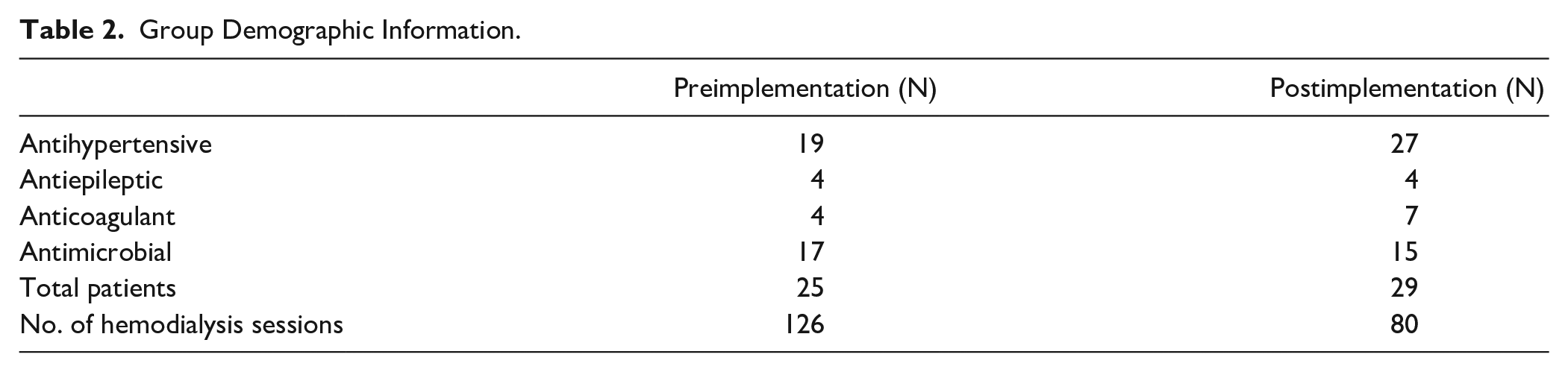
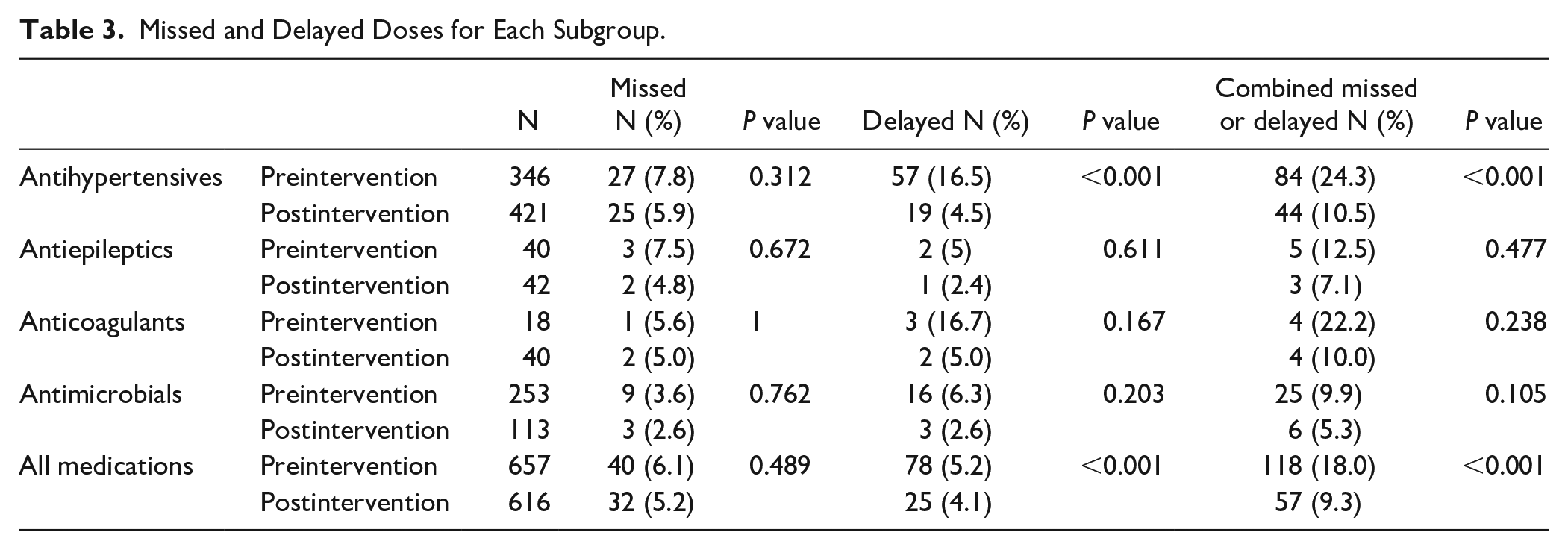
In the preintervention group, 25 inpatients receiving 126 hemodialysis sessions met the inclusion criteria. In the postintervention group, 29 patients receiving a total of 80 hemodialysis sessions met inclusion criteria (Table 2). Table 2 outlines which medication classes patients in each group received. For the primary endpoint, the preintervention versus postintervention groups had 118 (18%) versus 57 (9.3%) of scheduled doses that were missed and delayed (P < 0.001; Table 3). Figure 2 also describes the composite of missed and delayed doses for each of the medication classes, with only the antihypertensive group having a statistically significant difference preintervention and postintervention.
Group Demographic Information.
Missed and Delayed Doses for Each Subgroup.
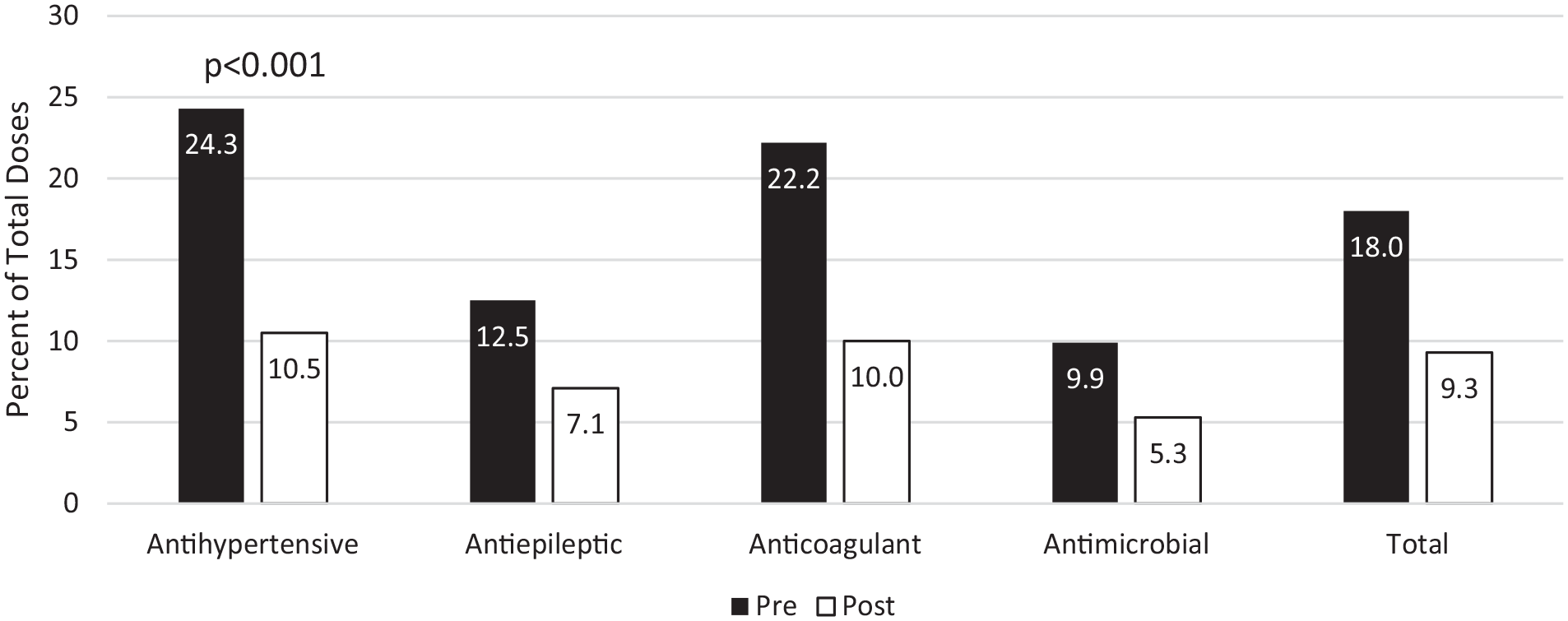
Missed or delayed doses.
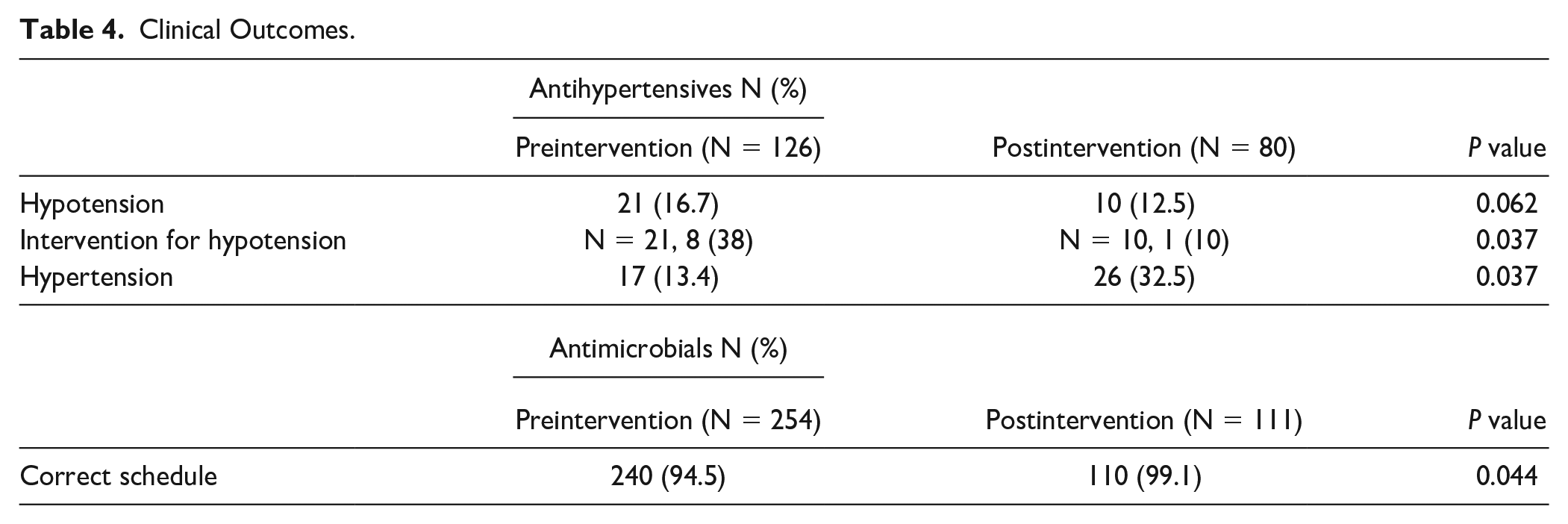
Clinical outcomes for each of the medication classes are outlined in Table 4. Episodes of intradialytic hypotension and the need for intervention for hypotensive events (stopping dialysis or administering fluid bolus) was lower in the postintervention group. There were more episodes of intradialytic hypertension in the postintervention versus preintervention group. There were no seizure events or clotting events in either study group. The number of antimicrobials given on a correct schedule for patients receiving hemodialysis increased from 240 (98.3%; preintervention) to 110 (99.1%; postintervention) after the implementation of standardized medication times (P = 0.044).
Clinical Outcomes.
Discussion
The pharmacist-led intervention began as a performance improvement initiative. The intervention was implemented 7 days a week without adding any new positions and required minimal change in the current inpatient pharmacy workflow. Upon discovering that the intervention design was unique to other published implementation strategies, in that it targeted a specific population at high risk of missed doses and included a clinical evaluation of when medications should be timed in relation to hemodialysis, the research group pursued IRB approval for a retrospective study of the intervention.
In assessing the wide-ranging rates of missed doses among published studies, one reason for these variable rates is likely due to differences in definitions among the studies. For example, some studies included delayed doses in their missed dose definition and others reported delayed doses separately.1-10 Our study recorded missed and delayed doses separately and evaluated a composite of the 2. In addition, most studies included patients declining a dose in the count of total missed doses; whereas, our study excluded declined doses from the count of missed doses and the denominator as our intervention was unlikely to impact the number of declined doses.1-10
Another reason why rates of missed doses in published studies may be variable is due to differences in technology supporting the medication use process at institutions. Many study sites did not report whether they had or were published prior to the widespread use of technologies such as EHR, CPOE, BCMA, and/or ADC, which all improve timely administration of medications.1-10 In fact, in many of the studies, “medication not available” was one of the most common reasons for missed doses.2-4,9,10,26 The study institution utilized all of these technologies in both study time periods. Aside from intravenous antimicrobials, nearly all doses of studied medications were stocked on the floor in an ADC. Because of these technologies and the high rate of ADC stocking of the medications studied, the researchers expected to have relatively low rates of missed doses. However, it was unknown whether patients requiring hemodialysis would also experience low rates of missed doses. This study found that missed doses for patients requiring hemodialysis occurred at about the average rate as published literature. Although the postintervention group had a lower incidence of missed doses, this was not a statistically significant finding.
Delayed doses were reported separately as delayed doses were expected to occur often for patients requiring hemodialysis who are off the floor for about 5 hours, 3 times weekly. The studied intervention led to a statistically significant reduction in delayed doses. By having pharmacists better anticipate and avoid administration times when a patient would be off the floor, nurses and providers no longer needed to assess and determine whether and when to give a medication late after the patient returned from dialysis. More importantly, patients received more doses of their medications on time after the pharmacist-led intervention.
Findings related to hypertension and hypotension outcomes are idea generating. However, this study was not powered to evaluate frequency of hypertension and hypotension. Without baseline characteristics to describe severity of illness or comorbidities, no conclusions can be drawn about the effect of the intervention on incidence of and interventions for hypertension/hypotension events.
Regarding the seizure and clotting clinical outcomes, it is unsurprising that no events occurred in either study group due to the relatively small number of patients included for those medication classes, and the short time frame evaluated, during the admission. For antimicrobial timing, the frequency that these doses were administered correctly in relation to the timing of dialysis increased to 99.1% in the postintervention group. Infections are common in patients requiring dialysis, so properly timed antimicrobials, especially antimicrobials removed by dialysis, are important for their clinical improvement.
The strengths of this study include the ability to show a reduction in the composite of missed and delayed doses in an institution with many existing technologies aimed at improving the safety and accuracy of the medication use process. The addition of another published missed dose rate in a modern setting adds to the literature on rates of missed doses. The studied intervention would be practical to replicate at other institutions as no new staff was needed for implementation and off the floor dialysis is a common practice at other institutions. In addition, the intervention could be adapted to other inpatient populations who are off the floor at predictable times. Finally, the preintervention group time period was selected to avoid the COVID-19 pandemic and to be the same time of year as the postintervention group. During the COVID-19 pandemic, high patient census and need for additional personal protective equipment could have resulted in more missed and delayed doses, adding a confounder to results.
There were several study limitations. Baseline characteristics were not collected, given that the research originated as a process improvement initiative and clinical outcomes were not a primary focus of the study. For example, hypotension and hypertension can occur for a variety of reasons, and information on various confounding disease states or medications (eg, pressors) that affect BP was not collected. The study also did not capture the impact on pharmacist workflow and time spent on interventions, which could be evaluated in the future. In either group, a pharmacist may have adjusted the frequency to remove doses due prior to dialysis with a verbal order from a provider; this scenario would not have been captured as a missed dose. It would be difficult to evaluate retrospectively how frequently this occurred. Future studies could explore interventions aimed at increasing the likelihood of normotension during dialysis and be designed to assess clinical outcomes in dialysis.18-21,23,24 More specifically, future studies could explore the clinical impact (eg, clinical cure rates or time for resolution of infection) of more appropriately timed antimicrobials in dialysis.
Conclusion and Relevance
A pharmacist-led intervention for standard medication administration times in patients requiring hemodialysis increased the number of medication doses given and given on time. The intervention also led to more antimicrobials administered at appropriate times relative to dialysis sessions.
Footnotes
Declaration of Conflicting Interests
The authors declared no potential conflicts of interest with respect to the research, authorship, and/or publication of this article.
Funding
The authors received no financial support for the research, authorship, and/or publication of this article.
