







Abstract
Bangladesh, a developing country with a large working population, has limited implementation of safety and ergonomics practices in workplace settings, leading to high rates of workplace injury and incidents. While much of the world has advanced towards robotics and automation, the workforce in Bangladesh remains involved in labor-intensive jobs. Therefore, understanding ergonomics practices and education can be beneficial to reduce workplace injuries in Bangladesh. This article presents a scoping review that summarizes the current state of ergonomics practices and educational opportunities in the country to pave the way for future research and development in this area.
INTRODUCTION
Bangladesh, a country located in South Asia, is home to approximately 173.6 million people and ranks eighth globally in population (World Health Organization, 2025). The country has experienced rapid industrial growth, supported by a workforce of over 100 million (Bangladesh Bureau of Statistics, 2024). However, workplace safety and ergonomic practices remain limited, and, in some industries, they are completely absent. This deficiency increases the risk of injuries and high fatalities of workers/users in the workplace. For example, the Bangladesh Institute of Labor Studies reported an average of 647 occupational injuries and 959 fatalities from 2015 to 2020 (BILS, 2015, 2016, 2017, 2018, 2019, 2020). The primary risks for these injuries and fatalities were attributed to workplace accidents, such as fire (21,073 fire cases in 2020; 24,102 fire cases in 2022) (BFSCD, 2024), poor workplace conditions, collisions and crashes, slips, trips, and falls. Recent statistics indicate that in Bangladesh, 185 construction worker fatalities were documented, with 70 deaths attributed specifically to falls (Zabeen & Saad, 2025). Additionally, inadequate amounts of trained professionals in the domains of workplace safety and insufficient regulatory compliance also contribute to such high rates of workplace accidents and injuries. Therefore, it is of high importance to study the current status quo of safety education and practices in Bangladesh to mitigate workplace fatalities and injuries. In this context, Ergonomics, often referred to as human factors, functions as a multidimensional scientific discipline that bridges the gap between human capability and system design by analyzing how individuals interact with tools, technology, and organizational structures. By combining data from anatomy, physiology, and psychology, the profession applies specialized design principles to tasks, products, and environments to ensure they are fundamentally compatible with the physical and cognitive limitations of the human body.
In general, The International Ergonomics Association (IEA) divides Human Factors and Ergonomics (HFE) into four intersecting domains: physical, cognitive, organizational, and environmental. While these domains collectively determine systemic occupational safety, this scoping review primarily situates itself within physical ergonomics. Specifically, it synthesizes data on anthropometric mismatches and biomechanical risk factors driving musculoskeletal disorders (MSDs) across labor-intensive industries in Bangladesh. Acknowledging the integrated nature of HFE, the review also evaluates secondary overlaps with organizational ergonomics such as occupational safety compliance in the ready-made garment sector and environmental ergonomics, including the effects of heat, humidity, and noise on metal workers. By optimizing these three interactions, HFE professionals aim to reduce the risk of injuries, total workers’ well-being, and enhance productivity in the workplace. Although this scientific field of HFE thrives in developed nations, it remains a relatively overlooked area in developing and underdeveloped countries like Bangladesh, where most industrial tasks are labor-intensive, with a lack of focus on human-centric tools, machines, and work environment designs, which are further complicated by the lack of trained HFE professionals (Ahasan & Imbeau, 2003; Hossain et al., 2018). For example, in the ready-made garments (RMG) industry, workers frequently face a high rate of occupational injuries due to the nature of high labor-intensive manual job demands and poor work environmental designs, for example, between 2005 and 2013, approximately 1512 fatalities and 10,259 injuries were reported among RMG workers alone.
Literature shows that job-related high physical demands can lead to various bodily injuries, pain, discomfort, or impaired function (da Costa & Vieira, 2010). Among them, the most common forms of injuries are musculoskeletal disorders (MSDs), which are defined as injury conditions that affect the musculoskeletal system, including muscles, bones, tendons, ligaments, cartilage, and associated tissues. MSDs are exacerbated by work-related ergonomic risk factors, such as awkward postures, forceful exertions, repetitive motions, exposure to vibration, etc. All these risks, in combination, can result in developing and worsening MSDs. In 2010, the cost of MSDs across most labor-intensive industries, in Bangladesh, was $147·38 million, accounting for about 0·13% of Bangladesh’s GDP (Ferdous et al., 2022). Given the economic importance of these labor-intensive, injury-prone industries, this study primarily aimed to explore the current state of ergonomic research and education in Bangladesh through a scoping review of MSD-related workplace risk factors. The secondary objective was to identify gaps and future pathways for total workers’ well-being and sustainable educational plans to generate next-generation trained HFE professionals in Bangladesh.
Methodology
A scoping review is considered the most appropriate method to map and synthesize the available evidence on a given topic (Colquhoun et al., 2014). It is particularly effective for identifying knowledge gaps and exploring key concepts, aligning with the study objectives (Arksey & O'malley, 2005). Additionally, the scoping review offers flexibility to examine research methodologies, contributing to a clearer understanding of current scientific production and informing future systematic reviews. As such, the scoping review of this study adhered to the frameworks proposed by Arksey and O'malley (2005) and the PRISMA-ScR checklist. Studies included in this article were limited to those published in peer-reviewed journals only. Articles were sourced from PubMed, Web of Science, Google Scholar, and ScienceDirect from 2014 to March 2025. The search strategy was composed of the terms “Musculoskeletal health,” “Musculoskeletal Disorders,” “Ergonomics,” “Occupational Safety,” “Ergonomic Design,” and “Bangladesh.” For final inclusion, studies were required to (a) address ergonomics, occupational safety, or ergonomic design in Bangladesh and (b) provide empirical evidence or information on ergonomics practice. During the title and abstract screening phase, the Rayyan® application was used to automatically exclude duplicate texts and eliminate files with more than 95% similarity. Full-text analysis and data extraction were conducted using the Mendeley® reference manager. These tools facilitate efficient records management and data organization, thereby reducing review time. Each step was conducted to ensure data integrity and quality, with reconciliation measures implemented to resolve discrepancies between reviewers, who worked independently and anonymously. Two authors independently reviewed the titles and abstracts to determine eligibility for full-text evaluation. All potentially relevant articles were obtained and reviewed in full. Disagreements between reviewers were resolved with the assistance of a third reviewer. The study selection process was detailed using the PRISMA flowchart. During each round of title and abstract screening, the Rayyan application was maintained in blinded mode to ensure independent screening. Of the 95 initially identified articles, 23 met the inclusion criteria (Figure 1). Prisma Chart showing the Flow Diagram of Paper Selection.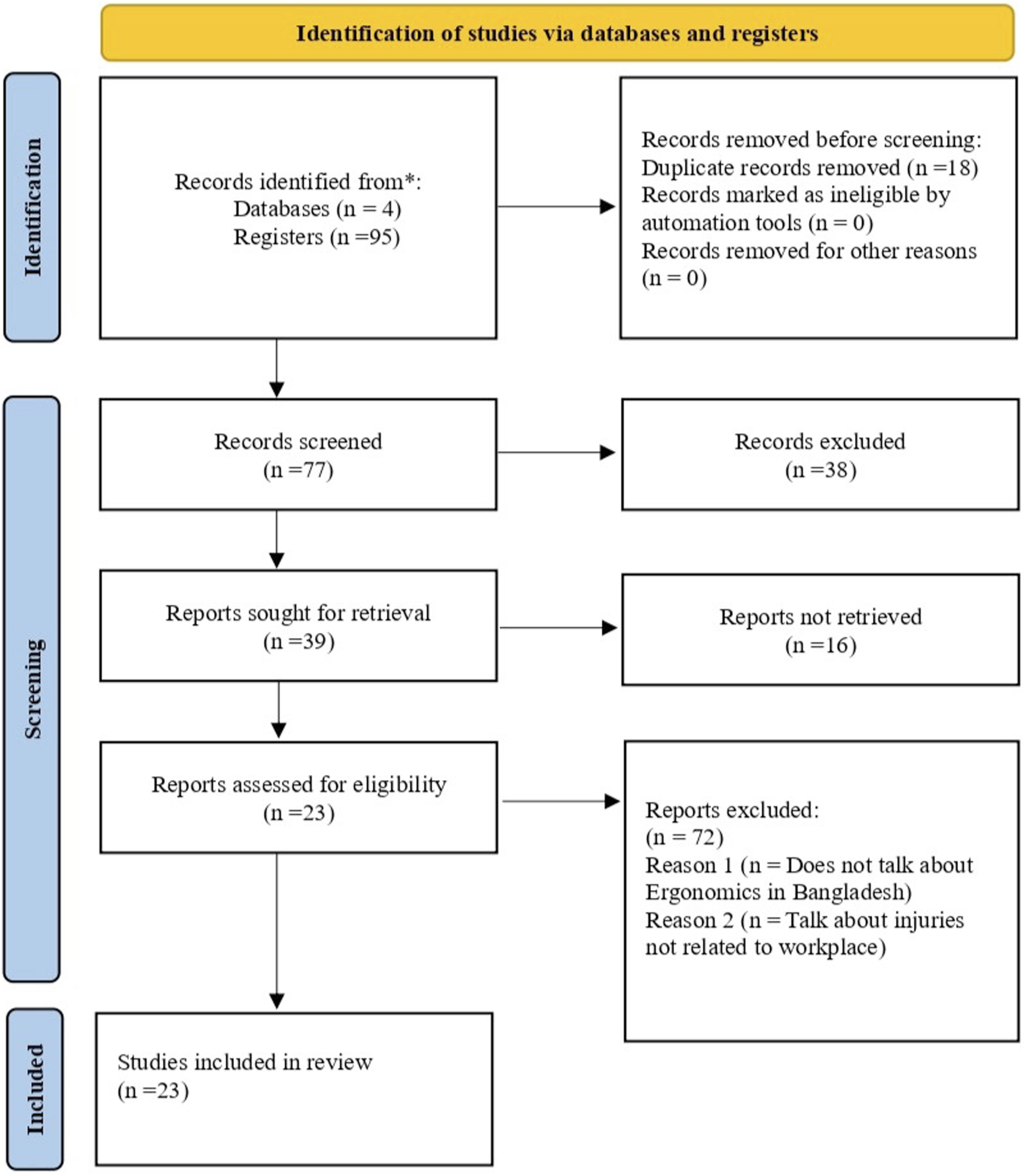
Results
Literature shows that the study of MSD risks and prevention methods can be achieved through a thorough investigation of two primary research and educational domains of HFE: anthropometry, and biomechanics. The following studies have been grouped by these two domains and industrial sectors and discussed considering these three broader categories.
Anthropometric Studies
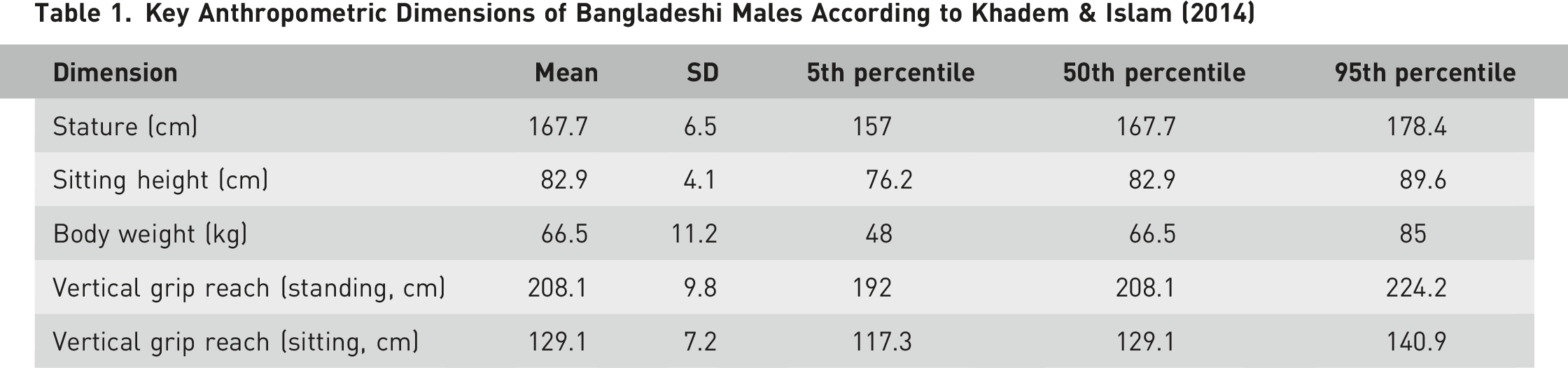
Key Anthropometric Dimensions of Bangladeshi Males According to Khadem & Islam (2014)
Educational Sectors
Some studies documented anthropometric data of students (consisting only primary and high schools) and teachers and investigated the compatibility of classroom furniture (Parvez et al., 2018; Rahman, Hossain, et al., 2019). The aim of their study is to identify ergonomic mismatches between classroom furniture and anthropometric measurements of Bangladeshi students, identifying significant discrepancies that cause discomfort, musculoskeletal problems, and reduced classroom focus, with furniture being particularly ill-suited for female demographics.
Both studies found that seat height and desktop height were too high, and seat width was insufficient, with greater mismatches for girls due to unaccommodated measurements like larger hip breadth and thigh clearance. They propose revised furniture dimensions to significantly reduce mismatches and enhance comfort and learning outcomes (Figure 2). This chart displays the dimensional mismatch percentages for existing school furniture among primary school students (ages 5–7, mixed gender) and secondary school girls (ages 10–15) in Bangladesh based on Parvez et al. (2018) and Rahman, Hossain, et al., 2019’s.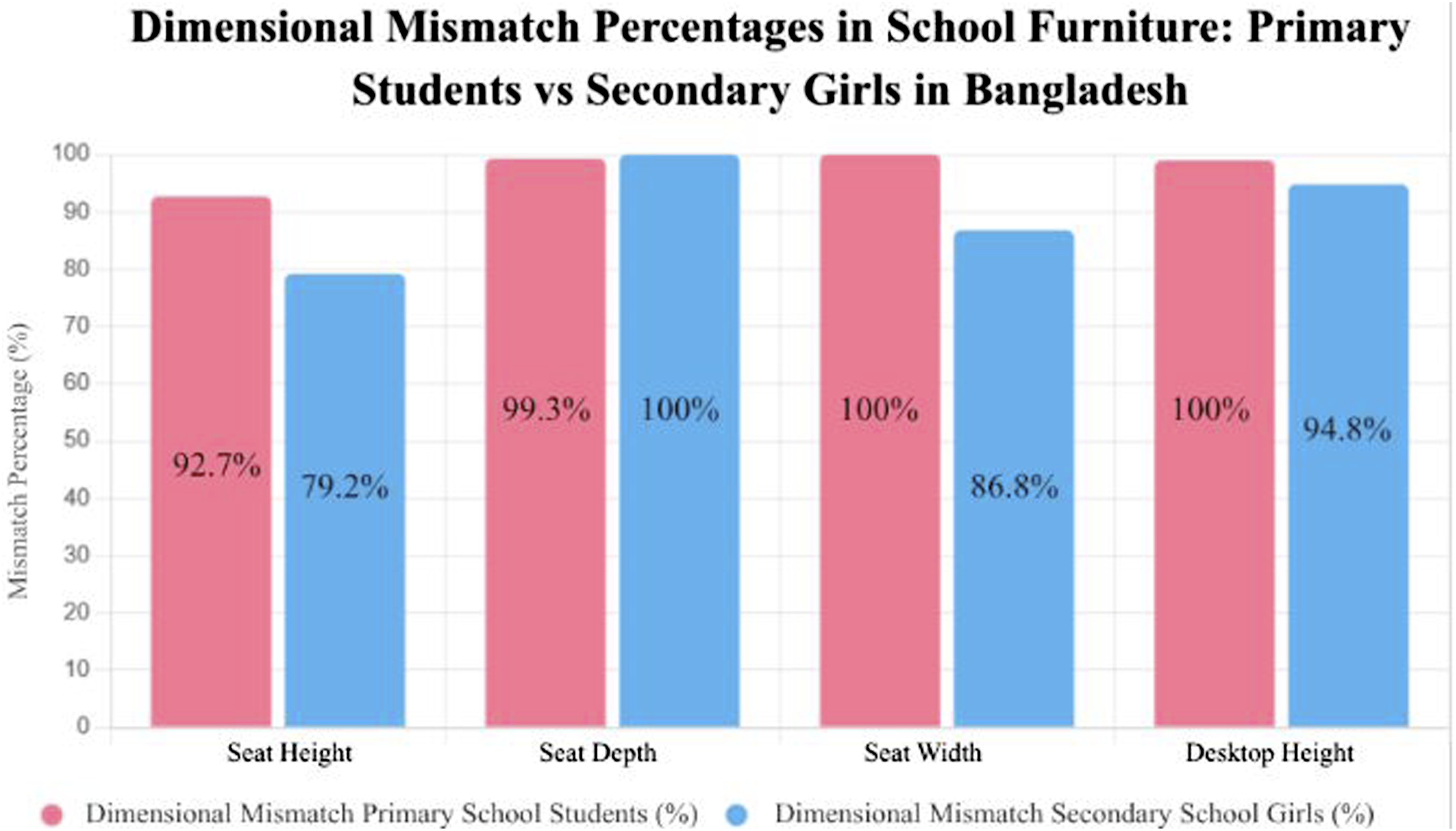
Transportation Sectors
Another anthropometric study was performed on driving seats (Halder et al., 2018) and passenger seats (Hoque et al., 2016) found high MSD rates among truck drivers (Table 3) 91–98% mismatch among seat height resulting in discomfort among 69% passengers. The implementation of non-adjustable seat designs, featuring hinged armrests and dimensions tailored to local anthropometric data, resulted in improved fit rates. These revised dimensions generally conform to the Business and Institutional Furniture Manufacturer’s Association (BIFMA) guidelines.
RMG Sector
Ali et al. (2014) found substantial mismatches between garment industry furniture and the anthropometric characteristics of Bangladeshi garment workers (Table 3).
The studies on anthropometry are fragmented, and its application is not well practiced in the workplace of Bangladesh. In-depth research is needed to create a comprehensive database for male and female adults in Bangladesh to facilitate designing work tools according to the need of this large number of the work population.
Biomechanical Studies
In addition to the discrepancies observed in anthropometric measurements, several factors may influence occupational safety, which must be evaluated through the lens of biomedical research. In Bangladesh, however, all such studies have relied exclusively on survey methodologies without the application of specialized equipment such as 3D motion capture, electromyography (EMG), or similar tools.
Healthcare Sector
Workplace related MSDs are very prevalent among healthcare providers due to the nature of their jobs. Healthcare providers face more (84%) MSDs than the general population (22–26%) (Jacquier-Bret & Gorce, 2023; Kim-Fine et al., 2013) because they acquire awkward posture for prolonged periods that lead to muscle fatigue and eventually MSDs. Therefore, it is vital to apply ergonomics to reduce the onset of MSDs. Though several studies have been done on MSDs of surgeons around the world, we could find only one study (Kundu et al., 2025) on MSDs of surgeons in Bangladesh. This is a survey-based (Nordic Musculoskeletal Questionnaire (NMQ) and a Numeric Pain Rating Scale (NPRS) study performed on 159 surgeons working in various hospitals. The participants were working in various hospitals. The study revealed that lower back pain affected 57.9%, with 25.8% unable to perform normal work due to pain. The article shed light on MSDs of surgeons, but literature demands more work in this field targeting separate health care sectors to implement future improvements.
Industrial Workers
Jobs such as manual labor or non-office sitting jobs are considered industrial works/blue collar jobs in this review article. Several studies showed that industrial workers experience MSDS in their lifetime. Studies performed on blue collar workers include rickshaw pullers (Rahman, Khan, et al., 2019), (Rahman, Khan, et al., 2019) construction workers (Muhammad et al., 2013), automobile mechanics (Akter et al., 2016), sawmill workers (Rahman, Hasan, & Datta, 2019), metal handling workers (Ahasan et al., 1999). High prevalence of MSDs is common in these studies (Table 3).
All these studies indicate that a larger population in Bangladesh work as manual laborers but most of the workplace do not meet the rules of ergonomics to ensure a safe workplace in Bangladesh (Figure 3). Illustration of the distribution of pain severity among 159 surgeons in Bangladesh (Kundu et al., 2025).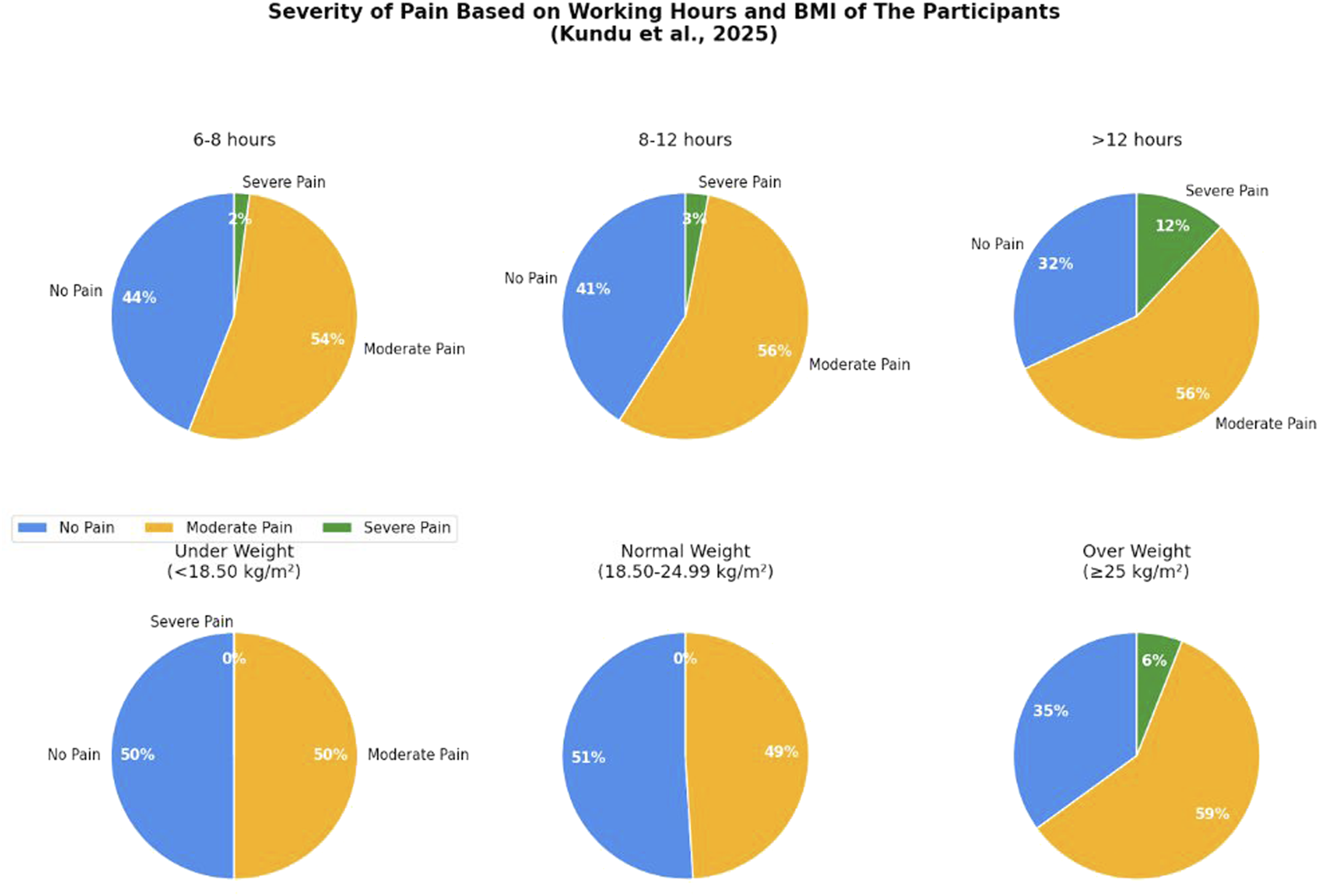
RMG Sector
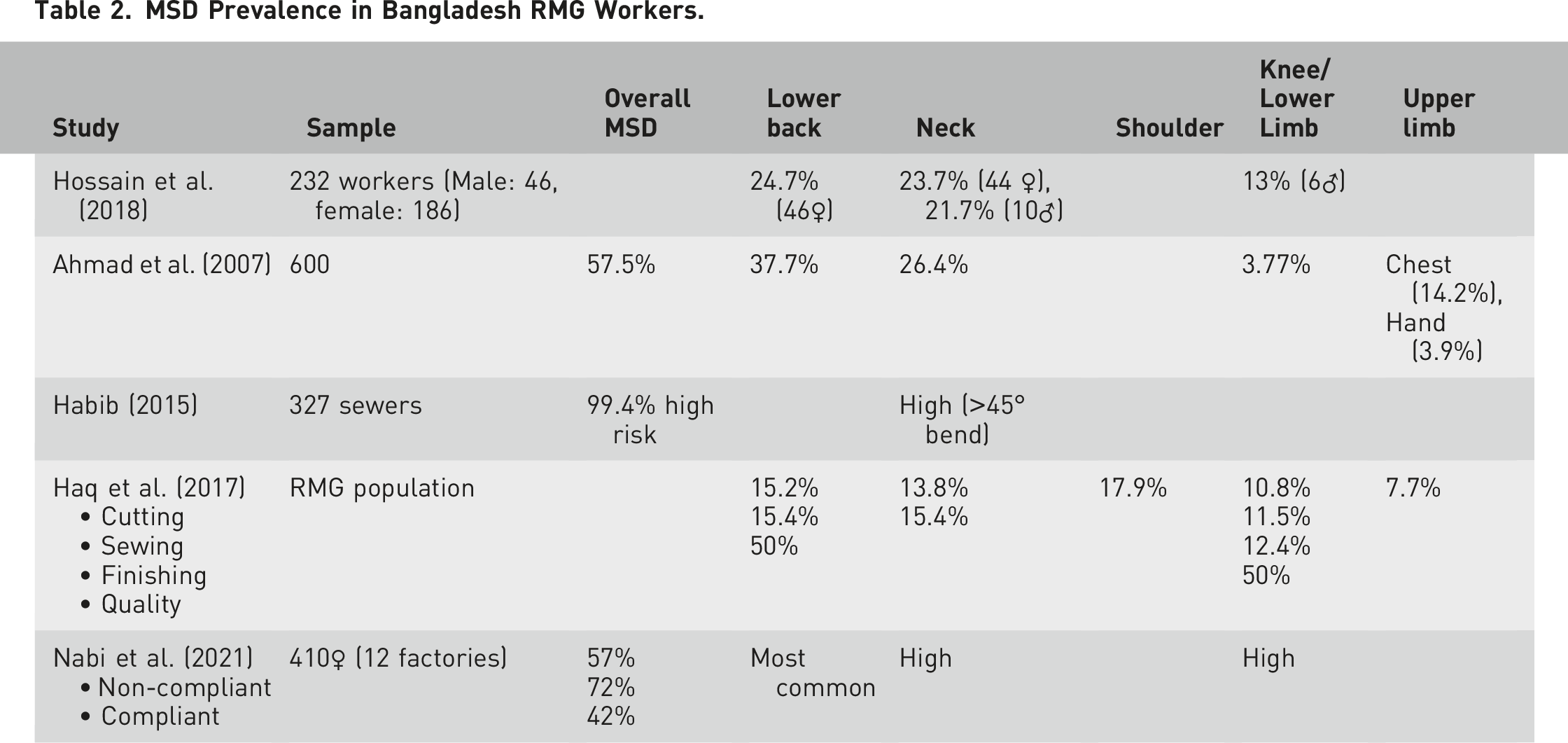
MSD Prevalence in Bangladesh RMG Workers.
Office Sectors
Traditional office sitting work environment is part of a major population segment in Bangladesh. We found few studies exploring the MSDs symptoms of office workers in Bangladesh. A cross-sectional study (Habib et al., 2015) performed on 200 paper-based office workers revealed that 76.0% (n = 152) of participants developed MSDs in 12 months, In two separate studies conducted on bank employees (Musa et al., 2024; Rahman et al., 2022) found significant presence of MSDs due to absence of ergonomic workstations.
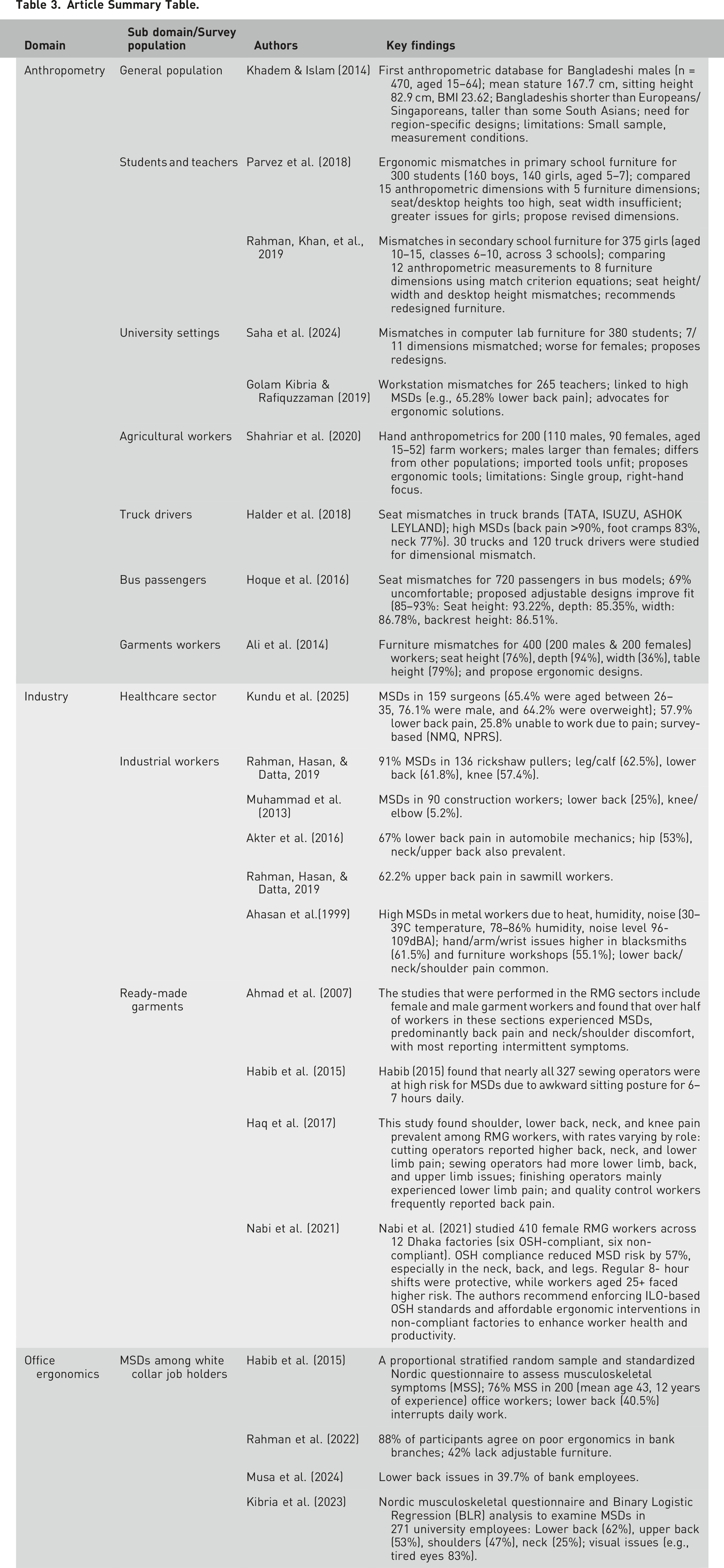
Article Summary Table.
Ergonomics Education in Academic Institutions
In Bangladesh, ergonomics is studied under the Department of Industrial Engineering, Biomedical Engineering and Architecture in Bangladesh University of Engineering and Technology (BUET), Jessore Institute of Science and Technology, Shahjalal University of Science and Technology (SUST), Ahsanullah University of Science and Technology (AUST), State University Bangladesh (SUB), Prime Asia University, North-South University (NSU), Pabna University of Science and Technology (PUST), and Military Institute of Science and Technology (MIST). Despite a few fragmented studies in the medical sector, no comprehensive ergonomics/safety related course is found in any educational institution.
A summary of the papers discussed in the “Results” section is provided below (Table 3).
DISCUSSION
Adoption of ergonomic practice in industrial domain of Bangladesh remains quite unsatisfactory, leading to high prevalence of work-related MSDs among working class of all sectors. Multiple factors including the prioritization of productivity, cost reduction, and shorter production times to meet buyer demands impede the adoption of ergonomic standards in industrial sectors of Bangladesh (Hoque et al., 2020). Lack of awareness and sufficient education among industrial workers leads them to work in unsafe conditions (Ahasan et al., 1999). Many industries are too reluctant to implement ergonomic practices due to high initial costs and lack of immediate visible benefits (Hoque et al., 2020).
Ergonomics is still a new concept in Bangladesh, which explains the near-total lack of local research. However, this gap is part of a larger trend across South Asia and other developing countries. Because ergonomics originated in the West, early standards often ignored the unique physical traits and cultures of non-Western workers Chapanis (1974). In fact, importing Western technology into South Asia without adapting it to local climates and body types has historically caused severe problems Sen (1984). Even though these regions urgently need better workplace design to reduce high injury rates, the field is still rarely practiced due to a basic lack of awareness and support from industry leaders Shahnavaz (1989). While comparing with other developing countries in South Asia and South-East Asia region, ergonomics research in Bangladesh shares similarities in addressing high prevalence of MSDs, labor-intensive activity across industrial sectors and budget constraints (O’Neill, 2005; Scott & Charteris, 2006). Most research emphasizes low-cost remedies for work-related MSDs in the agricultural and manufacturing sectors. For instance, 50 gender sensitive agricultural tools were developed in India which achieved up to 87% cardiac load reduction among female farmers (Kumar et al., 2021). In Vietnam, a program named Work Improvement in Neighborhood Development (WIND) was run from 2001 to 2007. It resulted in 246,000 cases of postural and material handling improvements among manufacturing workers with a cost of less than $10 (Kawakami et al., 2008). India used to experience high accident rates (34%) in spinning mills, that was mitigated by workstation redesign (Kumar et al., 2021). Malaysia addressed low back pain among electrical workers (Aziz et al., 2015) quantitatively using Surface Electromyogram (sEMG), Bangladesh relies on more preliminary, survey-based research that highlights high rates of musculoskeletal issues. No special measures were found to address this prevalence of MSDs among occupational workers (Kundu et al., 2025; Musa et al., 2024).
Current review paper presents a comprehensive synthesis of existing research on ergonomics in Bangladesh highlighting trends and research gaps. The current body of work is dominated by scattered, survey-based studies with minimal focus on application-oriented research work. A centralized national database on anthropometry of Bangladesh population is still absent with prevalence of fragmented effort on anthropometric data collection, and no national archive has been developed. Additionally, significant deficiencies persist within the educational curriculum, underscoring the need for integration of ergonomics education and training. The subsequent sections of this paper propose directions for future research that may bridge these gaps and advance the development of ergonomics practice and scholarship in Bangladesh.
FUTURE RESEARCH DIRECTIONS
The absence of ergonomics practices in the workplace can bring considerable consequences for both employees and employers. A study to investigate cost of poor ergonomics in New York workplaces found that direct costs in form of worker injury amounted $868,804 per reported case on average and indirect costs (loss of productivity) can go up to 3–4 times of that (Graziano, 2025). Besides, studies have shown that even in a safe environment, further ergonomic intervention can even improve worker safety and productivity. One such study on material handling workers showed further diminishing MSDs by 30–40% by improvising additional ergonomic design (e.g., height-adjustable tables and workbenches, anti-fatigue matting, optimized reach zones) in workstation which eventually led to lesser injury costs (Clemes, 2025). Lacking ergonomic practices in Bangladesh is one of the reasons for high MSD prevalence. From above studies (Ahasan et al., 1999; Akter et al., 2016; Muhammad et al., 2013; Rahman, Hasan, & Datta, 2019), it is evident that lack of awareness and knowledge regarding ergonomics among blue collar job holders make them more susceptible to such injuries. So, organizing training camps can be a future initiative to address this issue. Many studies (Ali et al., 2014) found workstation mismatches with worker anthropometry in certain industries (Garments sector) and the same study showed that MSDs can occur from such dimensional mismatches. This could be possible as most factory equipment are imported in Bangladesh as evident from the studies on truck drivers and bus passengers’ seats (Hoque et al., 2016; Halder et al., 2018). So, more industries should be investigated for such mismatches. Introduction of research related to adjustable workstations could be an effective ergonomic intervention in this regard.
Another observation from the studies was found that studies regarding anthropometry are both scarce and fragmented. Lack of conferences in Bangladesh could work as a hindrance in data sharing for studies which may lead to such scattered and scarce data. Also lack of academic curriculum on ergonomics is a major cause of lack of ergonomic awareness among common people in Bangladesh. Therefore, more courses/academic curriculum should be offered.
In short, future research directions may include developing comprehensive anthropometric archive, arranging and developing training sessions for factory personnel to inform them about importance of ergonomic practices, investigation into industrial work setups ergonomic compatibility with Bangladeshi population, collaboration across international platforms and also arranging more domestic conferences on human factors and ergonomics for developing more informed data and development of course curriculum for integration and collaboration of medical and engineering studies.
Supplemental Material
Supplemental material - Workplace Ergonomics in Bangladesh: A Scoping Review of Anthropometric Mismatches and Musculoskeletal Disorders
Supplemental material for Workplace Ergonomics in Bangladesh: A Scoping Review of Anthropometric Mismatches and Musculoskeletal Disorders by Atanu Sen Gupta, Anindya Sen, Ferdous Sarwar, Suman K Chowdhury and Pramiti Sarker in Ergonomics in Design
Footnotes

Funding
The authors received no financial support for the research, authorship, and/or publication of this article.
Declaration of Conflicting Interests
The authors declared no potential conflicts of interest with respect to the research, authorship, and/or publication of this article.
Supplemental Material
Supplemental material is available online.
References
Supplementary Material
Please find the following supplemental material available below.
For Open Access articles published under a Creative Commons License, all supplemental material carries the same license as the article it is associated with.
For non-Open Access articles published, all supplemental material carries a non-exclusive license, and permission requests for re-use of supplemental material or any part of supplemental material shall be sent directly to the copyright owner as specified in the copyright notice associated with the article.
