







Abstract
Eight patients underwent surgery on 15 feet for rheumatoid forefoot problems. Thirteen of the 15 feet that were operated upon had an attempt to preserve the hallux metatarsophalangeal joint while resectional arthroplasty was performed on the lesser MP joints. All of the 13 feet that had the MP joint preserved had a well-preserved joint space preoperatively and no active signs of inflammation at the time of this procedure. Eight feet underwent a distal Chevron osteotomy to realign the great toe, two feet underwent an IP fusion as only the IP joint had evidence of erosive changes, and one foot underwent a combination of a Chevron osteotomy and a proximal phalangeal osteotomy (Akin procedure). Two patients had no surgery on their first ray as it was well aligned with no evidence of erosive changes.
Of the 13 feet that did not have a fusion performed, 11 had development of a valgus deformity or inflammatory erosions. The average time to failure was 24 months (range, six to 36 months). The Chevron/Akin procedure remained successful at 18 months and one of the IP fusions was successful at six years after surgery. Although patients with rheumatoid forefoot disease may on occasion have a well-preserved hallux MP joint with minimal or no deformity and no active inflammation, with severe lesser toe involvement, most of these patients will fail a surgical procedure which does not involve fusion of the hallux MP joint.
INTRODUCTION
Forefoot involvement is extremely common in patients with chronic rheumatoid arthritis. 6 Chronic inflammation eventually leads to capsular stretching with subsequent development of deformity and dislocation. Fixed hammering of the lesser toes will also develop in addition to severe hallux valgus deformities of the great toe MP joint. Although various operative procedures have been advocated for treatment of rheumatoid forefoot deformity, the most common procedure recommended at this time is hallux MP fusion with resectional arthroplasty of the lesser metatarsal heads. 2
Although the typical rheumatoid forefoot deformity includes severe involvement of the great toe MP joint in addition to the lesser MP joints, occasionally, the hallux MP joint may have minimal involvement with minimal or no valgus deformity and a well-preserved joint space. Little has been written on the proper management of patients with this clinical scenario. Graham reported on four patients in a series of 104 rheumatoid forefoot reconstructions who had not had a hallux MP fusion. 5 One patient was lost to follow-up, but the other three patients developed significant involvement of the first MP joint. He recommended arthrodesis of an uninvolved MP joint based upon this small series of patients. Cracchiolo, in a text on foot surgery, recommended that the hallux MP joint be spared if it is well aligned without evidence of synovitis. 3 With a well-preserved joint space, he recommended a routine hallux valgus repair.
The purpose of the present study is to report the results of 13 feet which had either an attempt at preservation or no surgery of the hallux MP joint in addition to resectional arthroplasty of the lesser MP joints in patients with significant rheumatoid forefoot involvement.
MATERIALS AND METHODS
Eight patients were included who were either operated on at our institution (three patients) or seen in follow-up after surgery elsewhere. At most recent follow-up, 15 of the 16 feet of these patients had a surgical forefoot procedure performed. Two of the 15 feet underwent a hallux MP fusion and resectional arthroplasty of the lesser MP joints on the contralateral foot and were excluded from this analysis. Of the 13 feet in the study group, all had resectional arthroplasty of the lesser MP joints for dislocation and significant metatarsalgia.
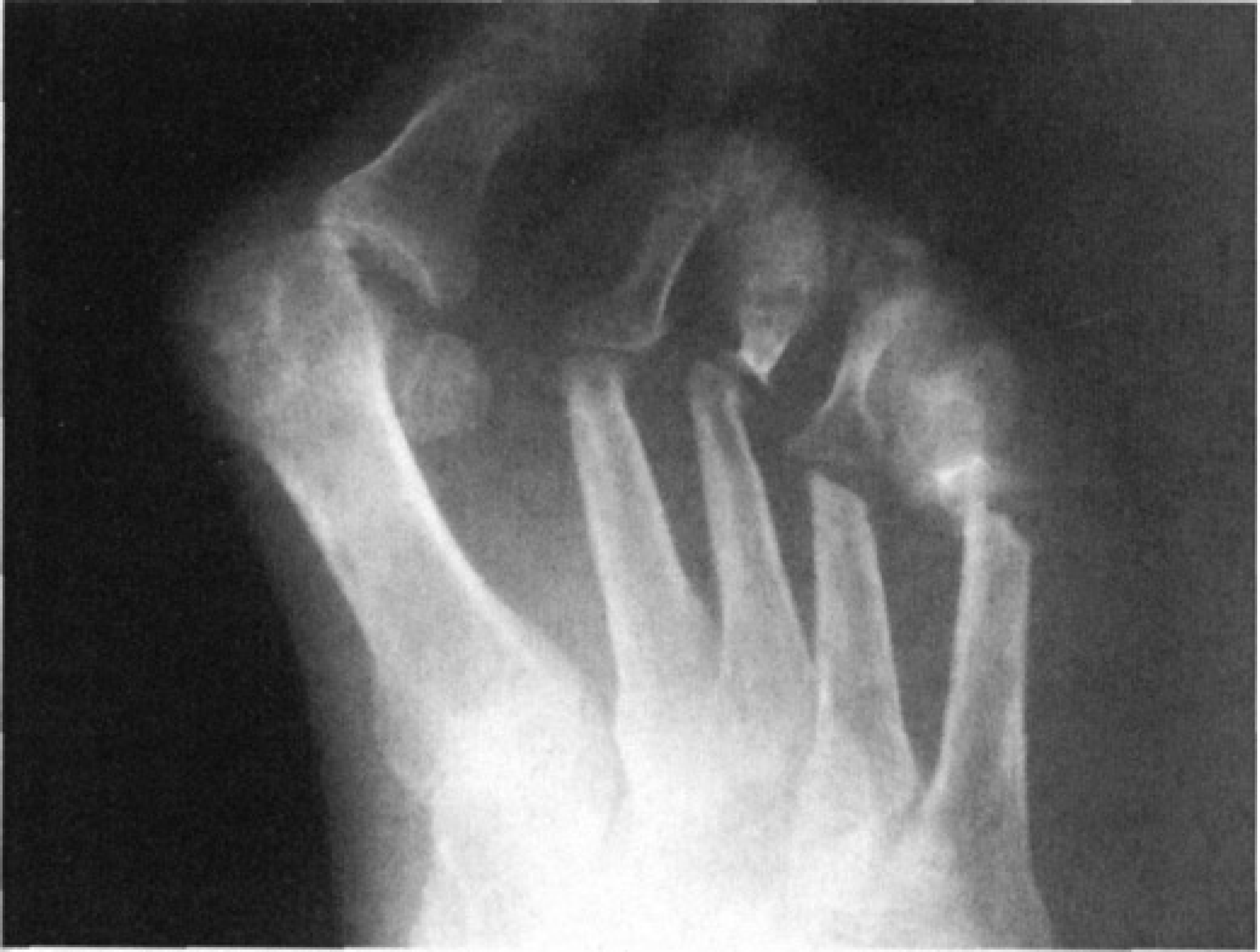
Forty-year-old female who presented to an outside practitioner five years prior with complaints of mild hallux valgus and severe callosities beneath both feet. She underwent a Chevron bunionectomy on both sides and resectional arthroplasties on the second through fifth MP heads. She states by two years after surgery, she had severe valgus deformities of her great toe on both feet.
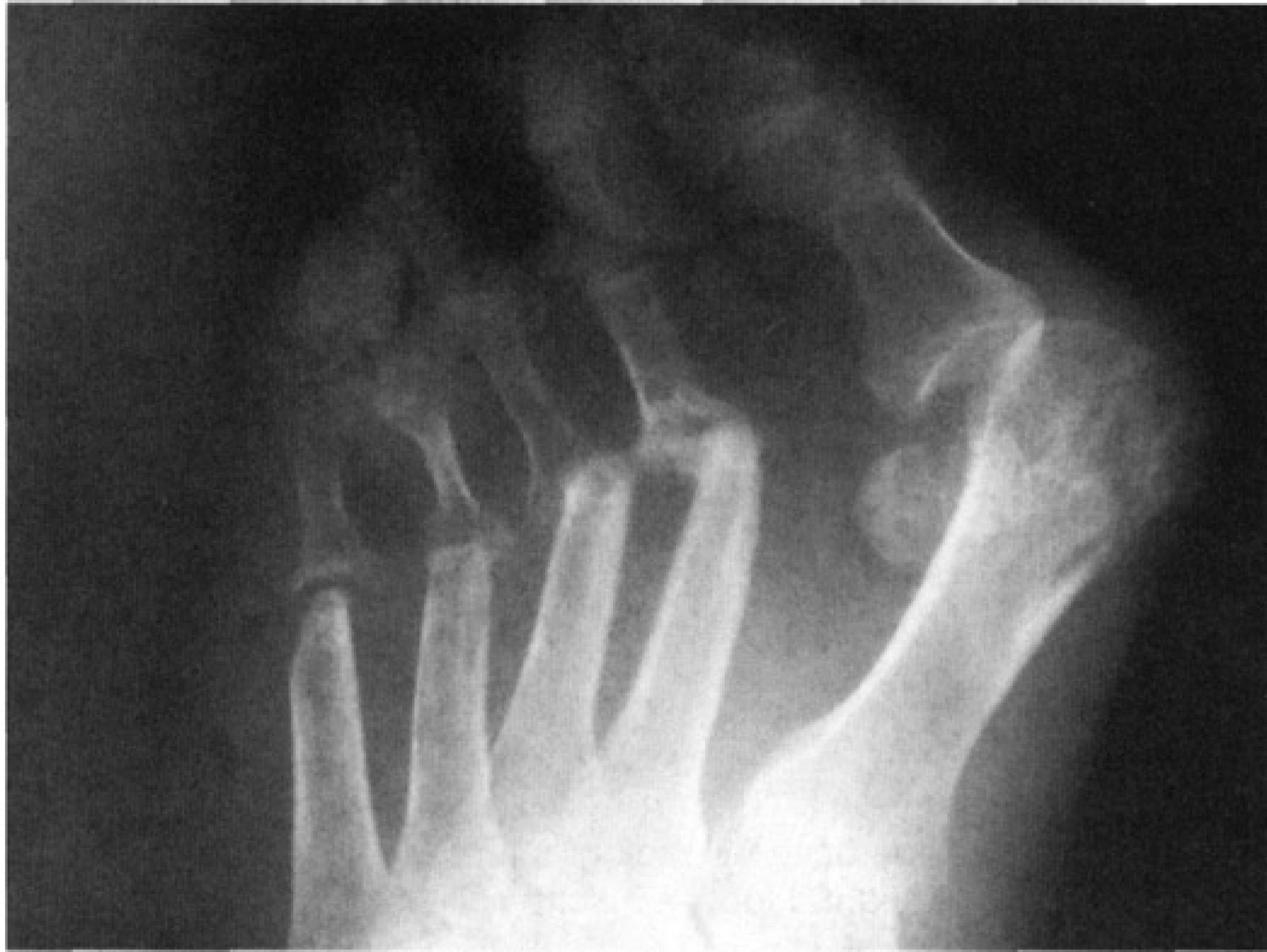
Preoperative AP radiograph of left foot with similar findings.
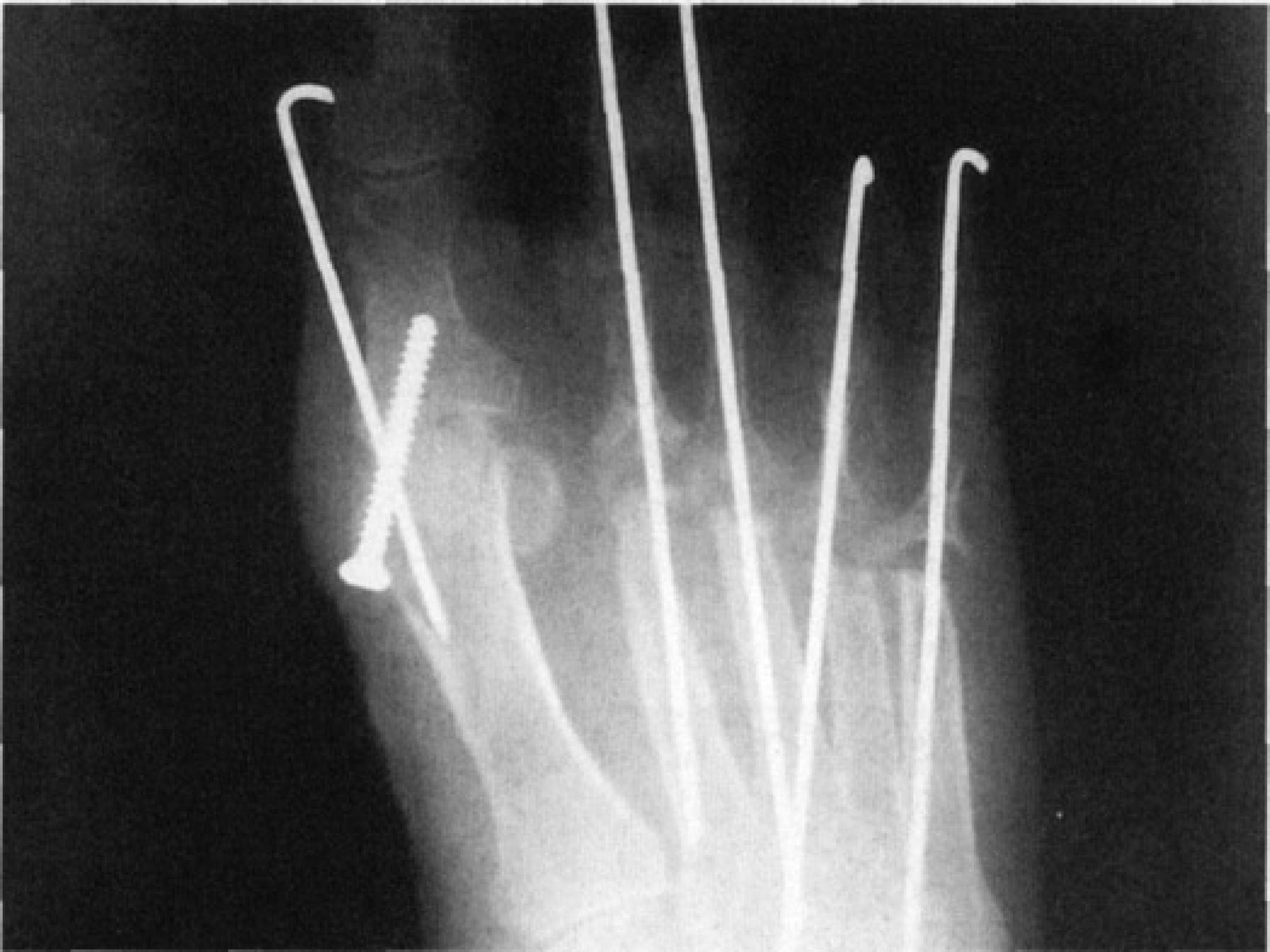
Immediate postoperative AP radiograph of right foot demonstrating hallux MP fusion and redo resectional arthroplasty of the lesser MP joints with K-wires in place.
All 13 of the feet had a normal or minimally narrowed joint space of the hallux metatarsophalangeal joint on preoperative X-ray compared to the lesser MP joints (Fig. 1a). The average age of the patients was 47 years and all of the patients were female. All of the patients had failed nonoperative shoewear modifications and medical treatment for their problem. All of the patients were on medications for rheumatoid arthritis, including a non-steroidal anti-inflammatory in all eight patients. All of the patients had used various doses of prednisone at one time or another, and four patients were actively using methotrexate at the time of surgery. None of the patients had evidence of significant tenderness of the hallux MP joint on physical examination preoperatively.
Of the 13 feet which had an attempted hallux MP preservation, eight of the patients underwent a distal Chevron bunionectomy for mild to moderate hallux valgus (Fig. 1), one patient had a well-aligned hallux MP joint but severe involvement of the IP joint and had an IP fusion performed, another had an IP fusion and a capsulorrhaphy of the MP joint (Fig. 2), one foot had a Chevron osteotomy with an Akin procedure for correction of hallux valgus and hallux valgus interphalangeus with well-preserved MP and IP joints, and two feet had no apparent involvement of the first ray and thus had no procedure on the great toe.
Five of the eight patients were examined and new X-rays were obtained at most recent follow-up. Three of the patients were evaluated by chart review for their most recent follow-up, all of whom were seen by the first author. All patients had standard AP and lateral radiographs preoperatively, postoperatively, and at most recent follow-up.
Results
Eleven of the 13 feet which had an attempted hallux MP preservation developed a valgus deformity or significant inflammatory synovitis by most recent follow-up. The average time to failure was 24 months (range, six to 36 months). Two patients continued to have a well-aligned hallux MP joint with no evidence of synovitis. The Chevron-Akin procedure remains successful at 18 months following surgery with no complaints. The IP fusion with lesser MP resectional arthoplasty had a well-aligned hallux MP joint six years following surgery.
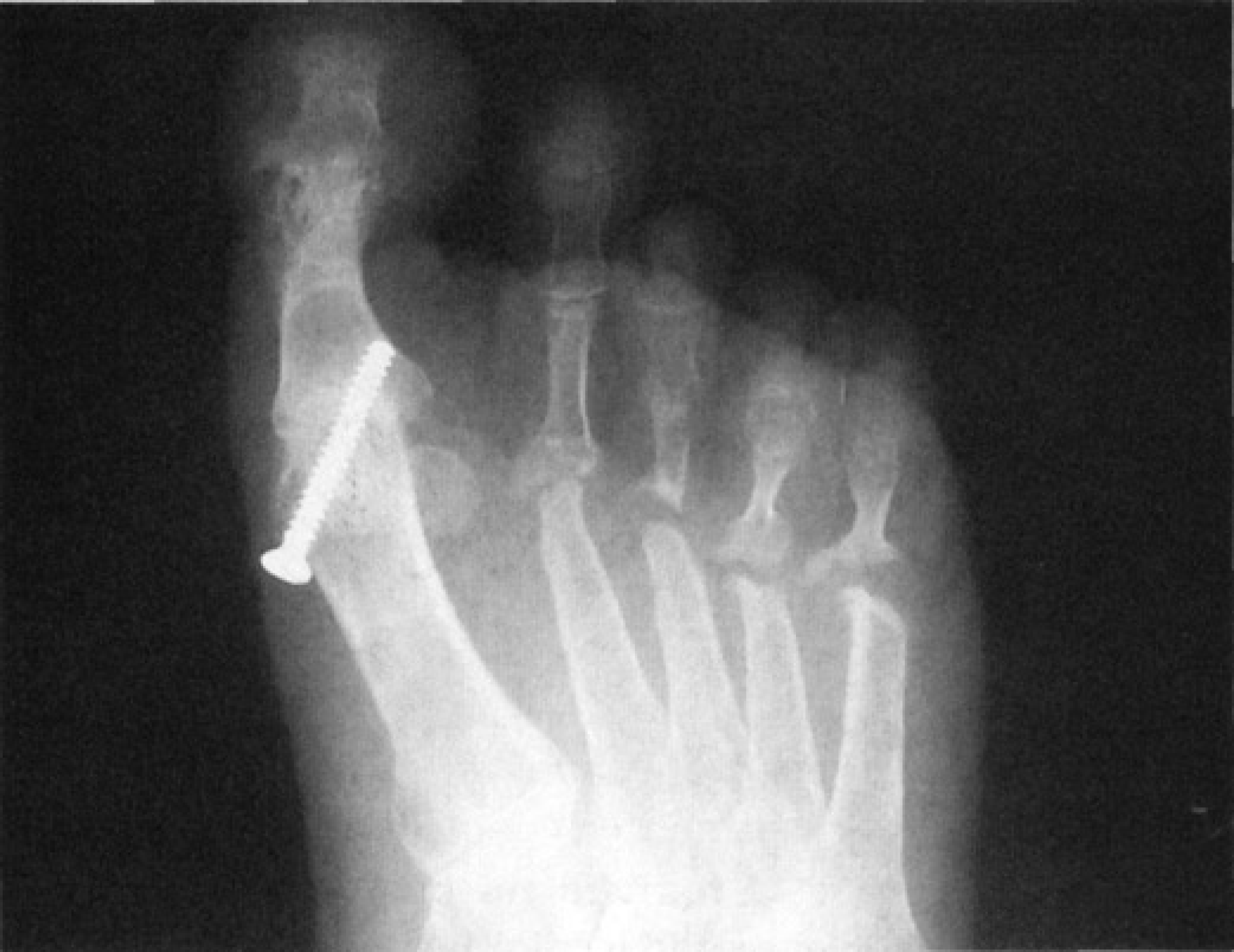
Final postoperative AP radiograph of the right foot demonstrating well-aligned foot with solid hallux MP fusion.
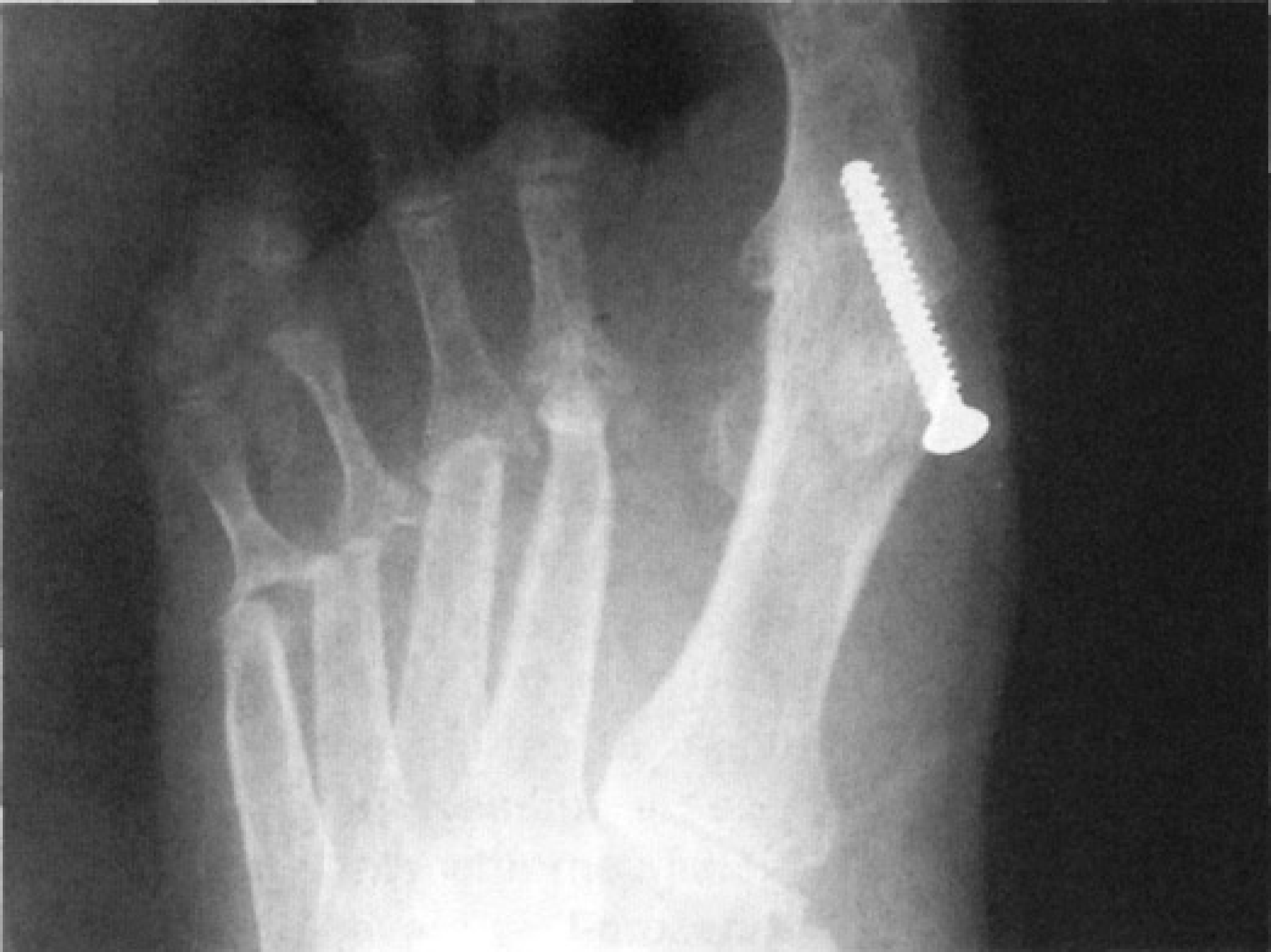
Postoperative AP radiograph of the left foot demonstrating solid hallux MP fusion with well-aligned lesser MP joints.
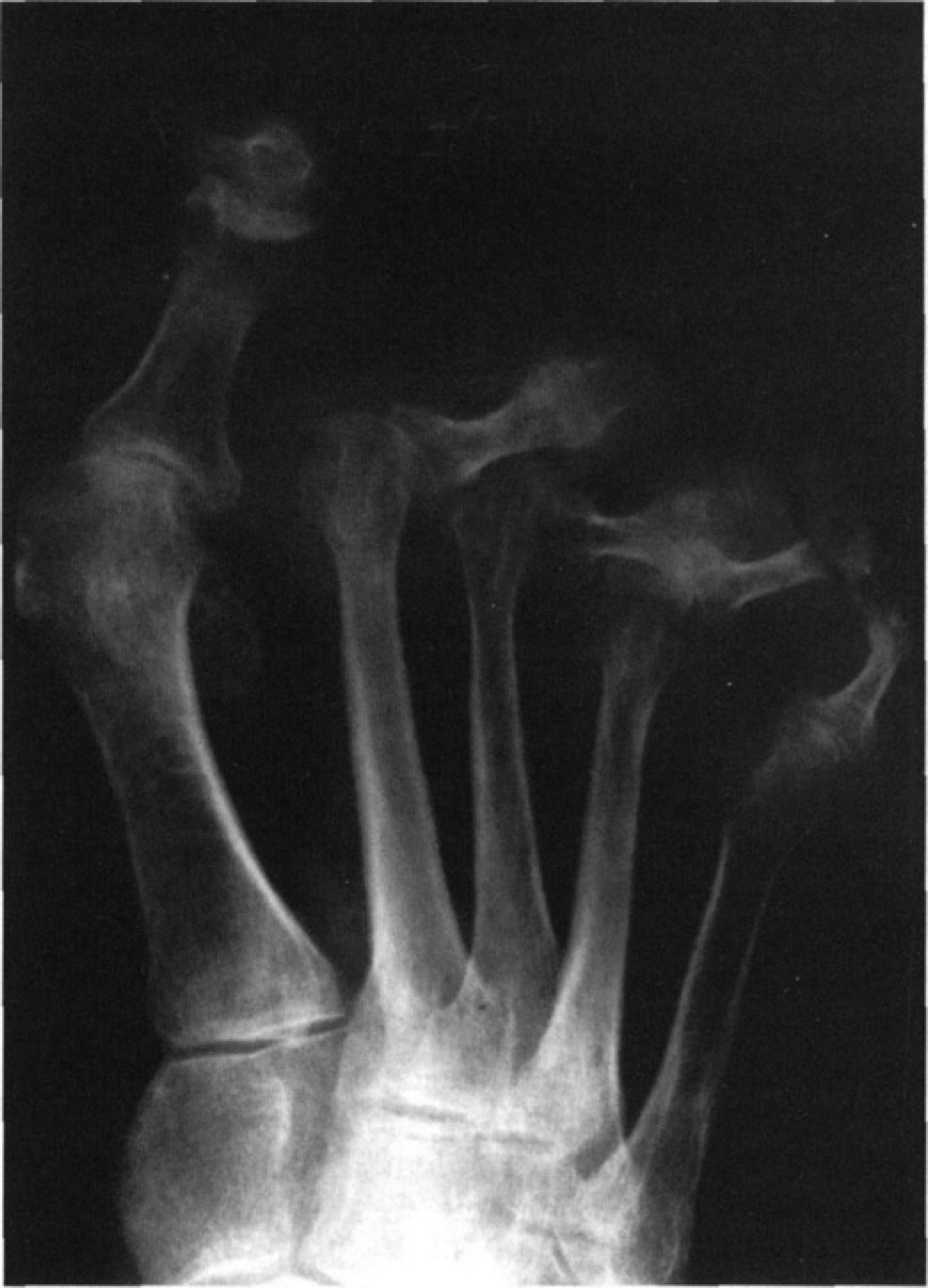
Preoperative AP radiograph of the right foot. Note well-preserved hallux MP joint space. Contralateral foot underwent hallux MP fusion and resectional arthroplasty of the lesser MPs.
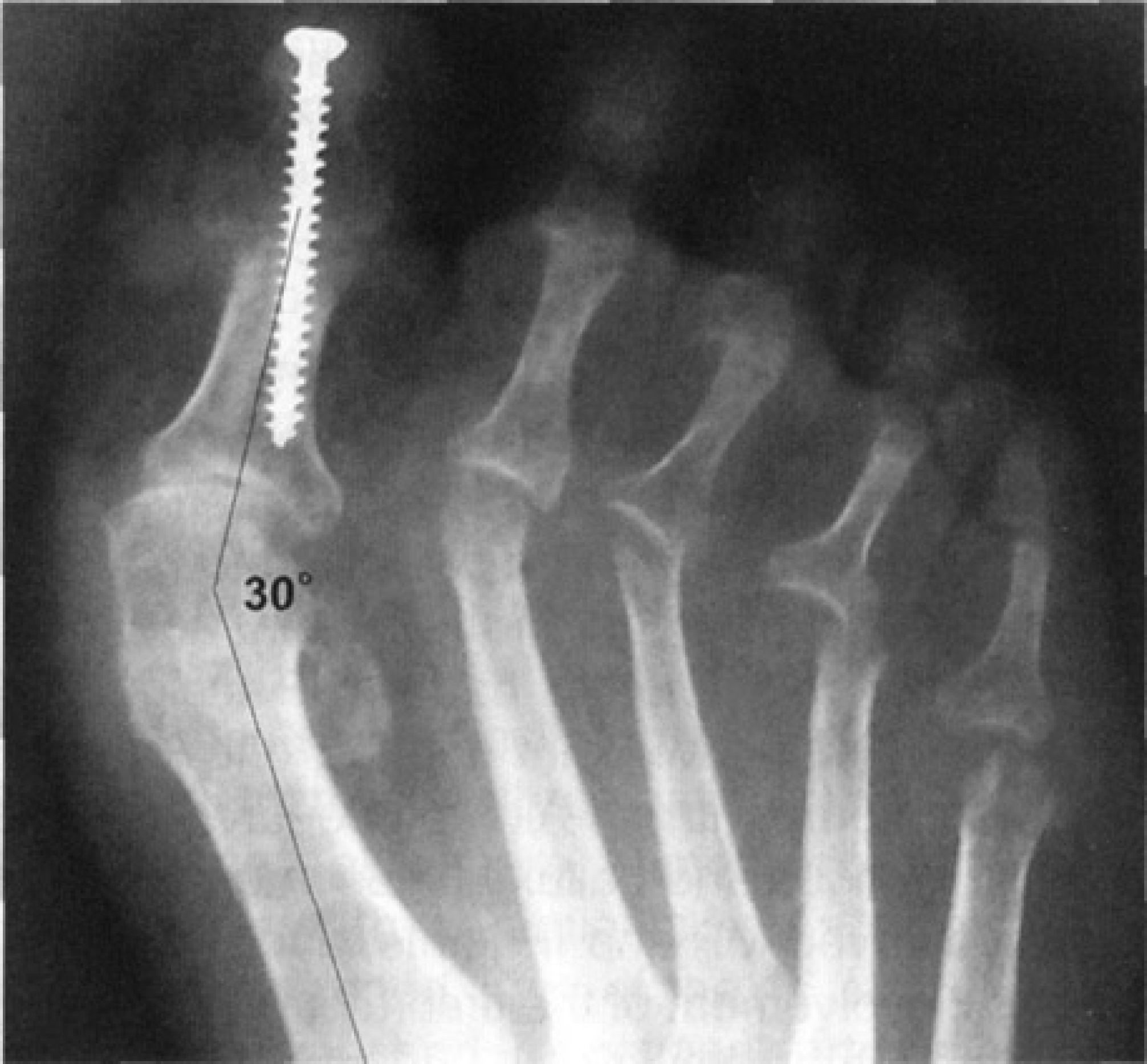
Intraoperative fluoroscopic view demonstrated a 10° hallux valgus angle. This postoperative AP radiograph six weeks following surgery demonstrates a recurrent hallux valgus of 30°.
Of the 11 patients who developed a valgus deformity or significant synovitis, five have undergone hallux MP fusion. In three of these patients, the valgus deformity of the great toe caused a recurrent, severe valgus deformity of the lesser MP joints requiring a redo resectional arthroplasty to realign the lesser MP joints. Although symptomatic, the other six patients who have developed a valgus deformity or active synovitis of the hallux MP joint have not desired revision surgery of their forefoot at this time.
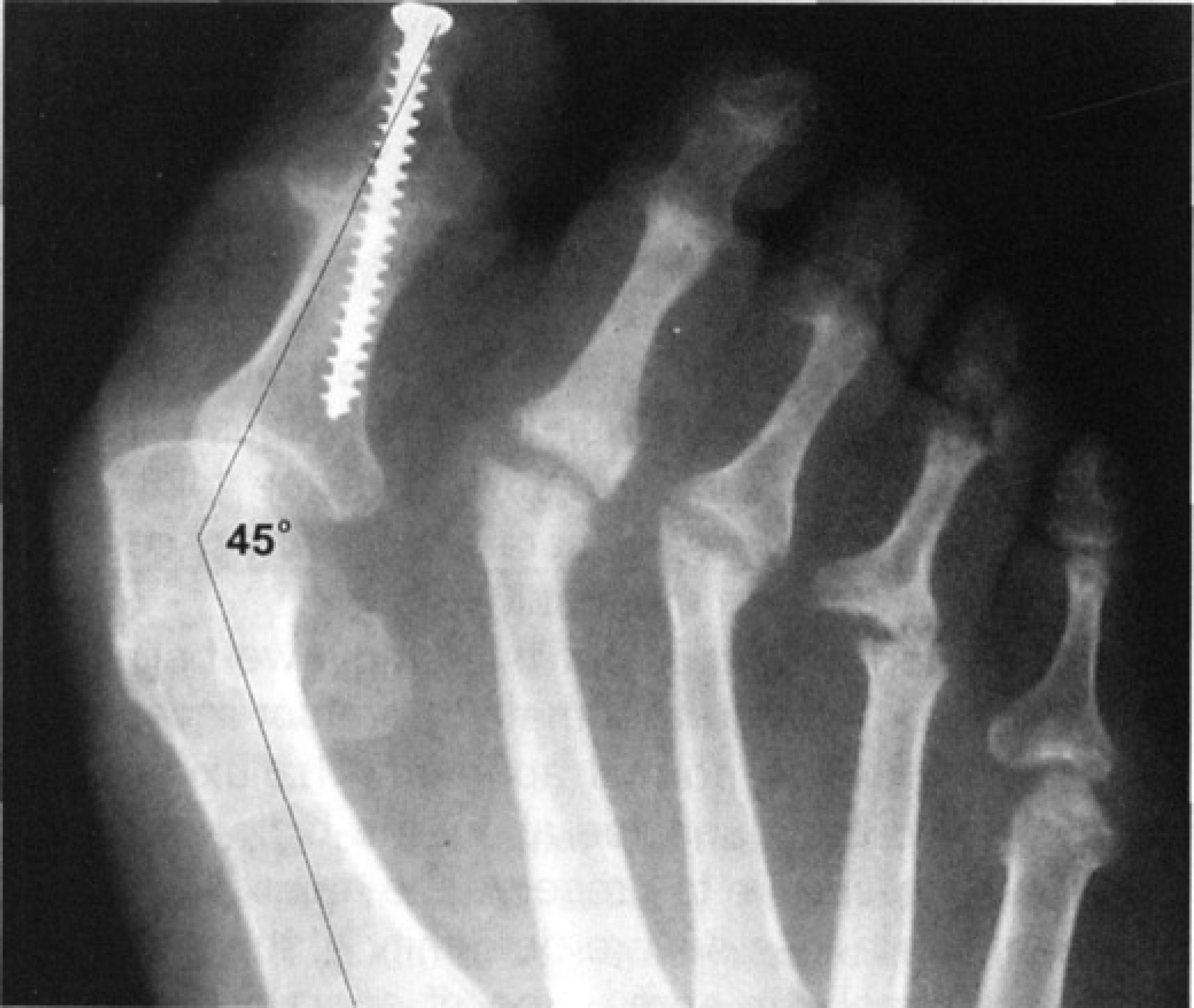
Postoperative AP radiograph at six months following surgery demonstrates severe lateral subluxation with approximately 45° hallux valgus angle with solid IP fusion. Note valgus deformity of lesser MP resectional arthroplasty sites.
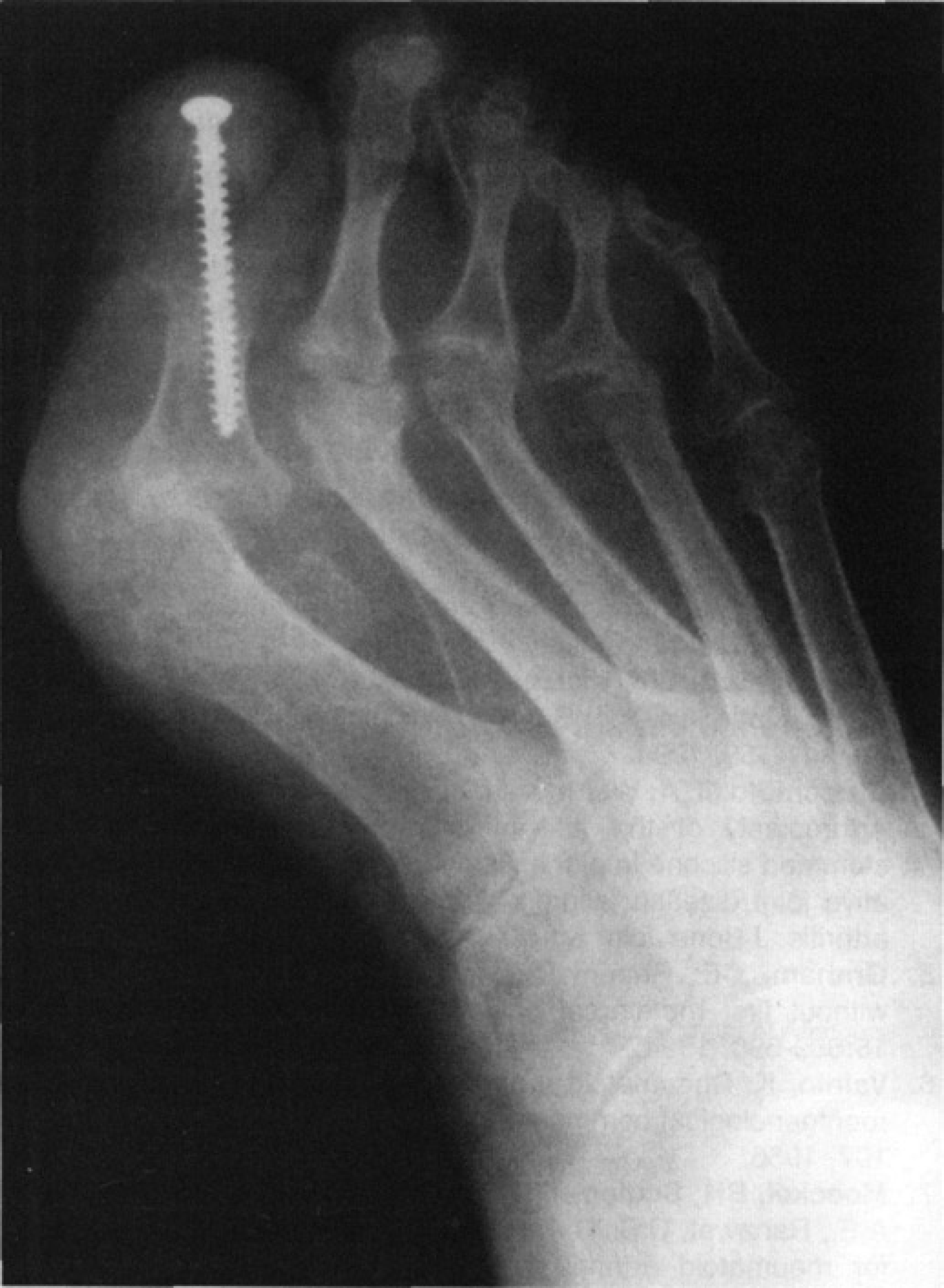
Five-year follow-up AP radiograph demonstrating complete dislocation of hallux MP joint with severe recurrent valgus deformity of the lesser MP joints.
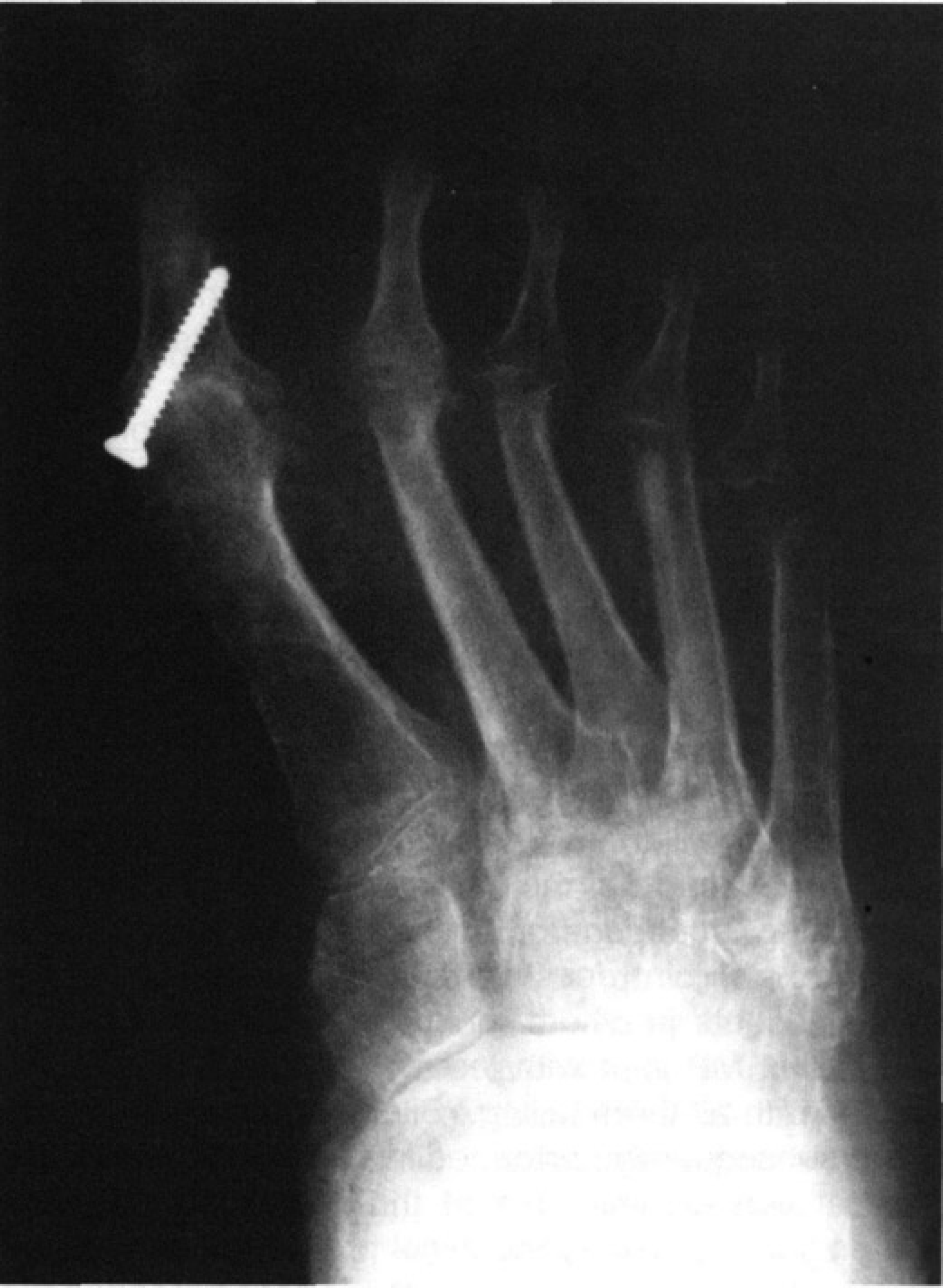
Final follow-up AP radiograph demonstrating well-aligned hallux MP fusion with well-aligned lesser MP joints following redo resectional arthroplasty.
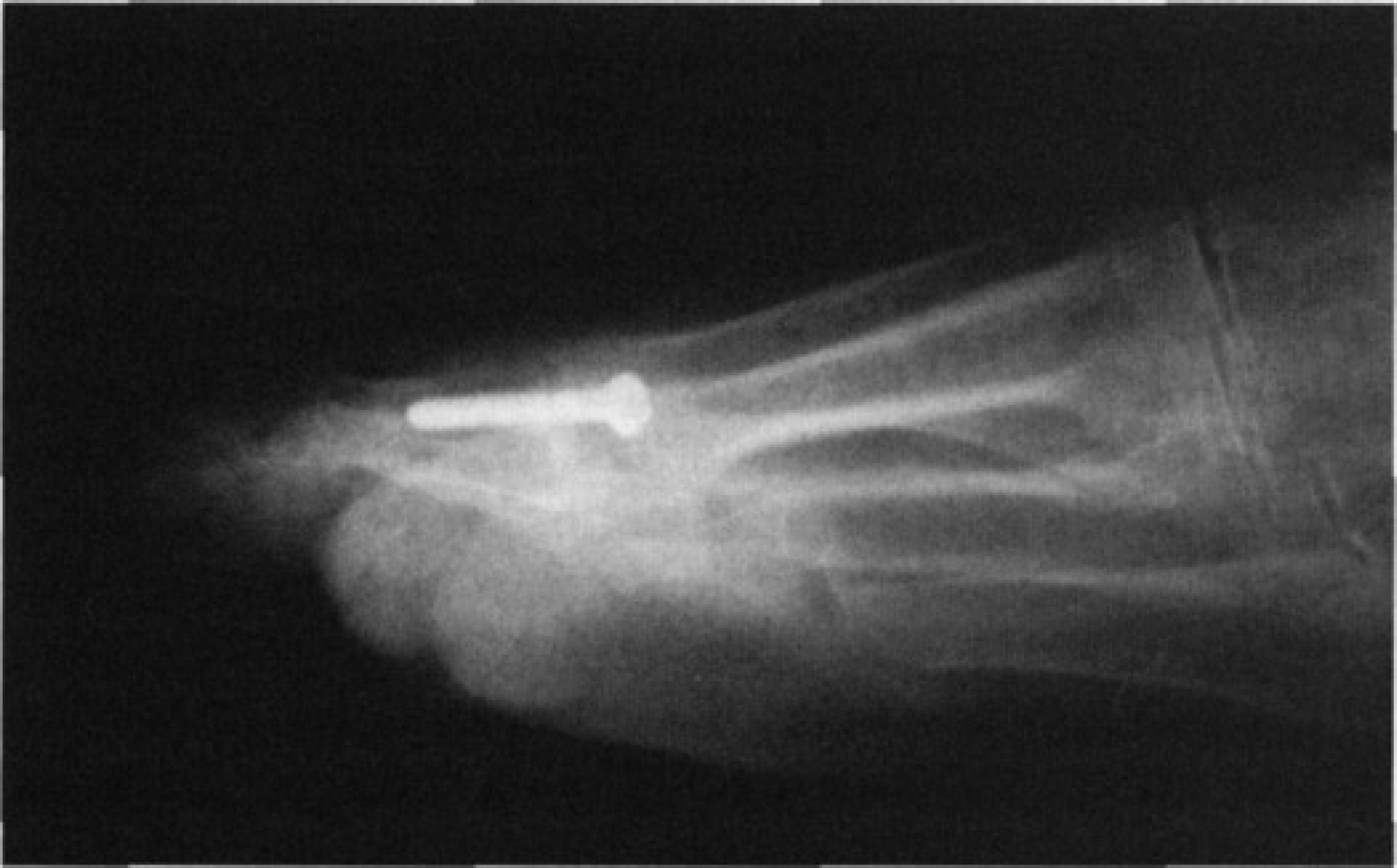
Follow-up lateral radiograph demonstrating solid MP fusion and well-aligned lesser MP resectional arthroplasties.
DISCUSSION
Chronic inflammation of the metatarsophalangeal joints in patients with rheumatoid arthritis leads to forefoot deformity in approximately 90% of adults with this condition. 6 The inflammation generally leads to laxity, which in the lesser metatarsophalangeal joints, eventually leads to dislocation. Most forefoot surgeons now treat the lesser metatarsophalangeal dislocation with resectional arthroplasty of the metatarsal head as was performed in all eight of these patients. Most surgeons treat the symptomatic hallux MP joint with arthrodesis and have noted excellent long-term results. Coughlin noted in a consecutive series of 43 patients where 58 feet had undergone surgery that all first MP joints had successfully fused with 45 feet reporting excellent or good results, only two reporting fair results, and no poor results. 2 Some surgeons also recommend silicone hinged implants for the hallux MP joint in patients with rheumatoid arthritis. 4,7 Although resectional arthroplasty has been described, 1 recurrent valgus deformity and instability of the first ray has lead to less enthusiasm for this procedure.
Since the majority of rheumatoid patients have significant involvement of the hallux MP joint, a large series describing treatment of the uninvolved or minimally involved MP joint does not exist. Graham reported on three patients in whom no surgery was performed on the hallux MP joint with lesser MP resectional arthroplasty, with all three failing. 5 Bilateral hallux MP fusions were subsequently performed in each of these patients; one at two months, one at three years, and one at seven years following the initial procedure. In contrast, in a textbook discussion, Cracchiolo recommended that a hallux with no evidence of malalignment or synovitis should be left alone. 3 He also felt that hallux valgus deformity without joint space narrowing could be treated with routine hallux valgus repair, whereas with significant joint destruction, he advocated arthrodesis or silicone implant. Our study, similar to the three patients reported by Graham, demonstrates an extremely high rate of failure within three years of lesser MP surgery with attempts at preserving the hallux MP joint. Only two of the 13 feet in this series did not fail by three years after surgery. One of these feet had a hallux IP fusion with no evidence of involvement of the hallux MP joint, and the other had evidence of hallux valgus with a well-preserved joint space with no active evidence of synovitis and underwent a Chevron-Akin procedure. The latter patient, however, is only 18 months following surgery and has failed on her contralateral side where a Chevron osteotomy alone was performed.
The pathologic process causing rheumatoid forefoot deformity has been well defined. Chronic inflammation leads to capsular distention and subsequent deformity, dislocation, and joint destruction. Although none of the patients in this series had clinical evidence of synovitis preoperatively, all of the patients had active rheumatoid arthritis requiring treatment with a minimum of a nonsteroidal anti-inflammatory. It appears that despite no clinical evidence of synovitis, these patients either all had subclinical evidence of synovitis or subsequently developed synovitis, which allowed the hallux MP capsule to eventually stretch, leading to a valgus deformity or development of active synovitis of the joint. Also, resection of the lesser metatarsal heads certainly increases the load on the first MP joint.
Based upon the results of this study, we believe all patients who undergo rheumatoid forefoot reconstructive surgery with a normal appearing hallux MP joint space should be counseled about the high-risk of failure of any procedure to preserve the hallux MP joint. If a patient has a less severe deformity of the hallux MP joint which requires some type of operative intervention, we now recommend a hallux MP fusion as part of the initial procedure to prevent an early failure. Additionally, patients who develop a valgus deformity of the great toe after a failure at preservation are at risk of developing a recurrent valgus deformity of the lesser MP resectional arthroplasty sites and should have early revision surgery to a hallux MP fusion. If patients have no apparent involvement of the hallux MP joint radiographically with normal alignment, they are offered a hallux MP fusion as part of their initial procedure and are counseled that without the fusion, there is a high likelihood of failure within three years of their lesser MP resectional arthroplasty.