






Abstract

INTRODUCTION
Calcaneal fractures are rarely encountered in children. Although most of these patients are reported to have good outcomes with nonoperative treatment, most authors advocate operative treatment of these fractures in children if the fracture is significantly displaced. 1,3
CASE REPORT
A 15-year-old cross-country runner fell and sustained an axial load to his heel. He was otherwise healthy with no prior medical problems. He denied any pain or limitations in activities prior to injury. His uninjured side was noted to have absent subtalar motion. Although the plain radiograph revealed the presence of an intraarticular calcaneus fracture with decreased Bohler's angle, the coalition was not clearly seen (Figs. 1 and 2). To evaluate the anatomy of the fracture and also to confirm our suspicion of a coalition, computed tomograph was performed (Figs. 3 and 4).
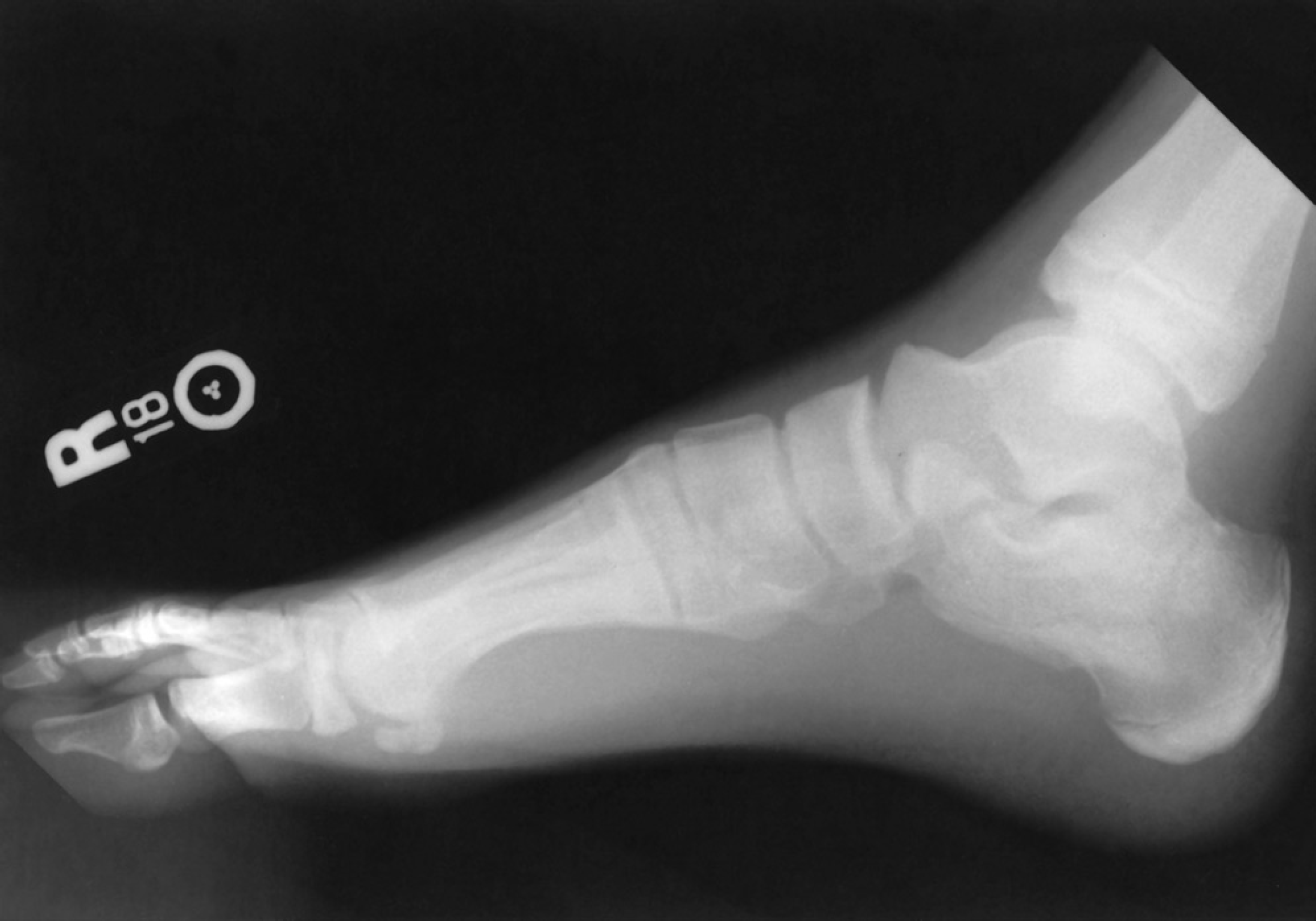
Lateral view demonstrating the fracture.
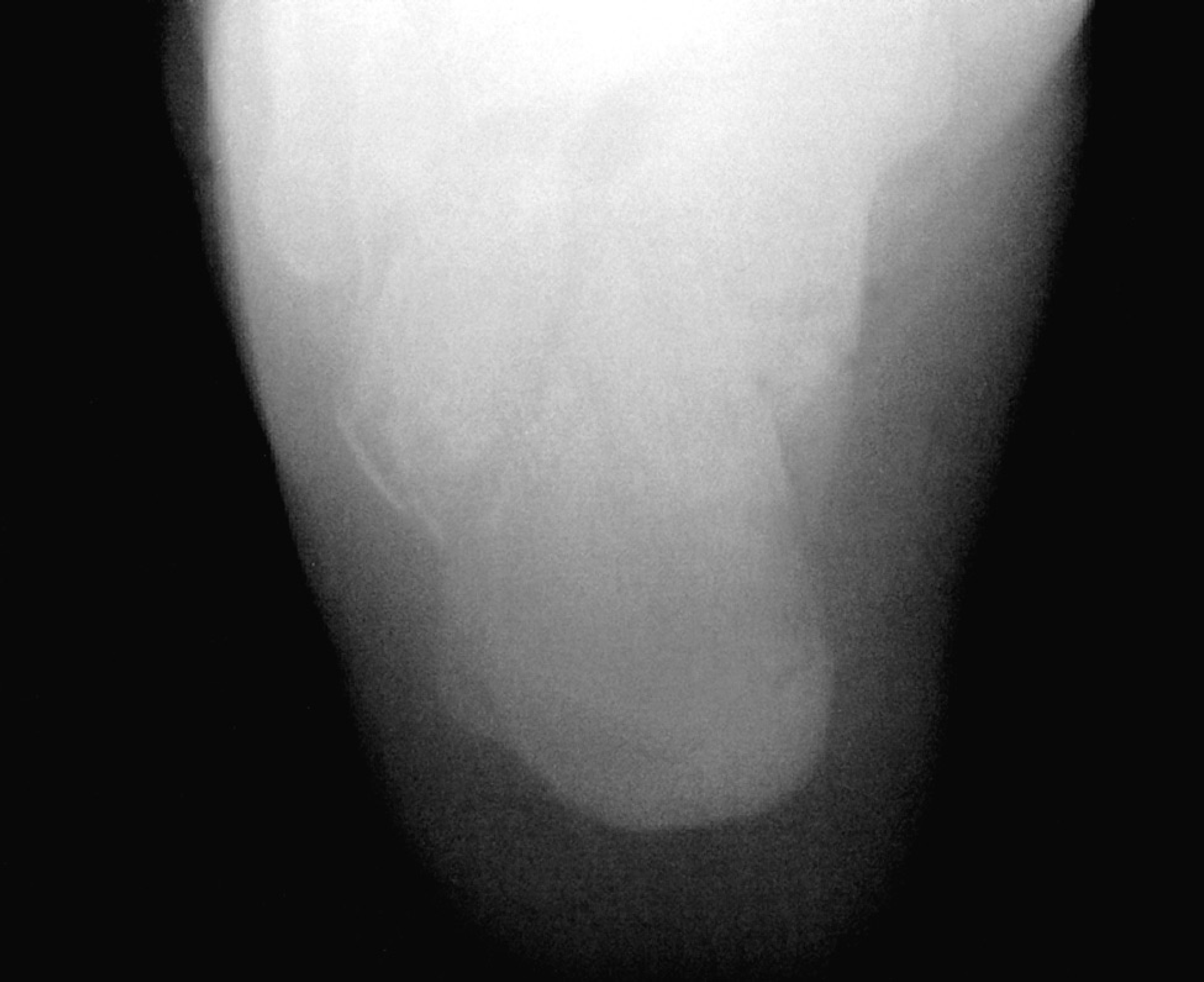
Axial view demonstrating the widened heel.
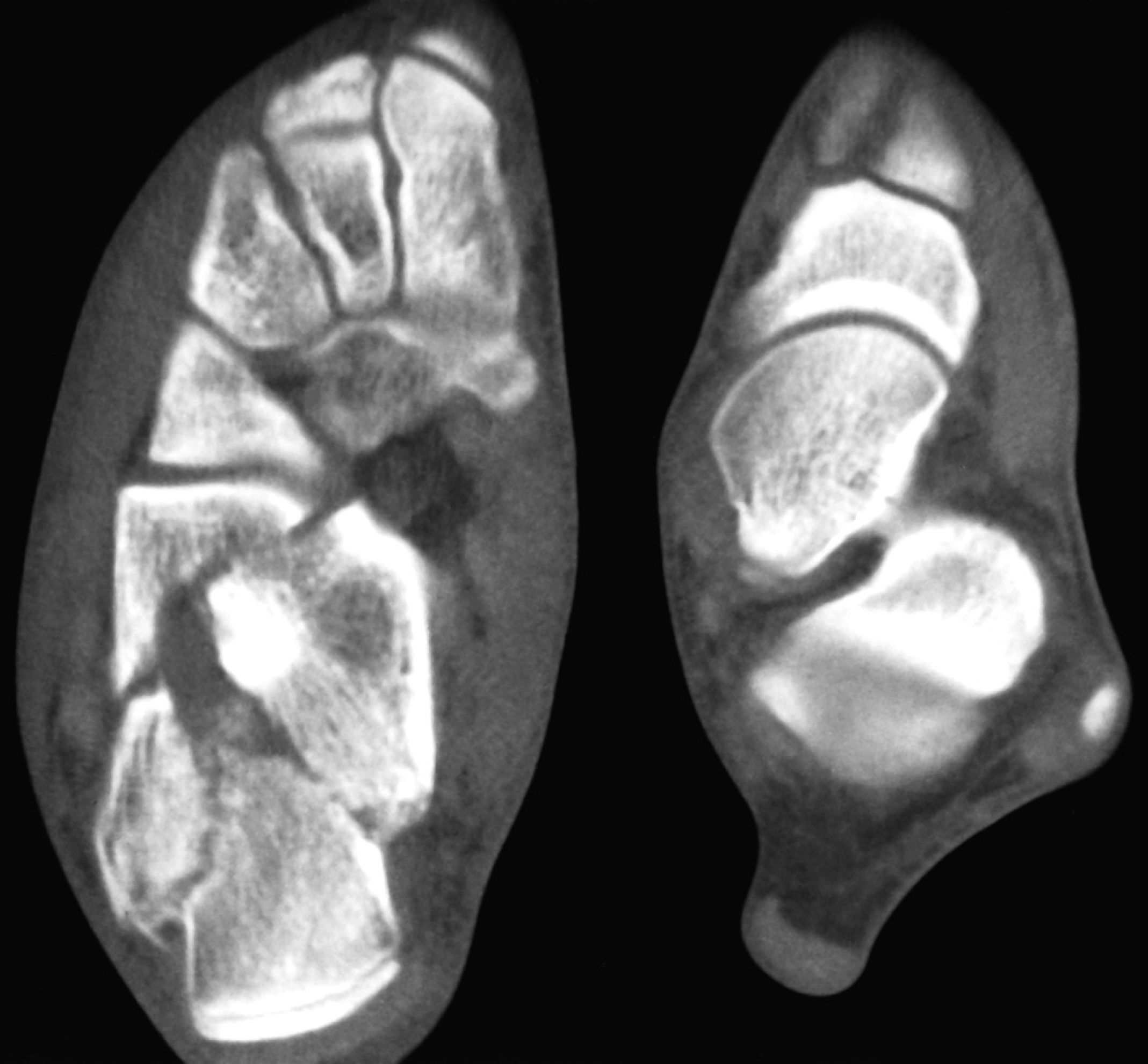
Axial CT demonstrating the displaced fracture.
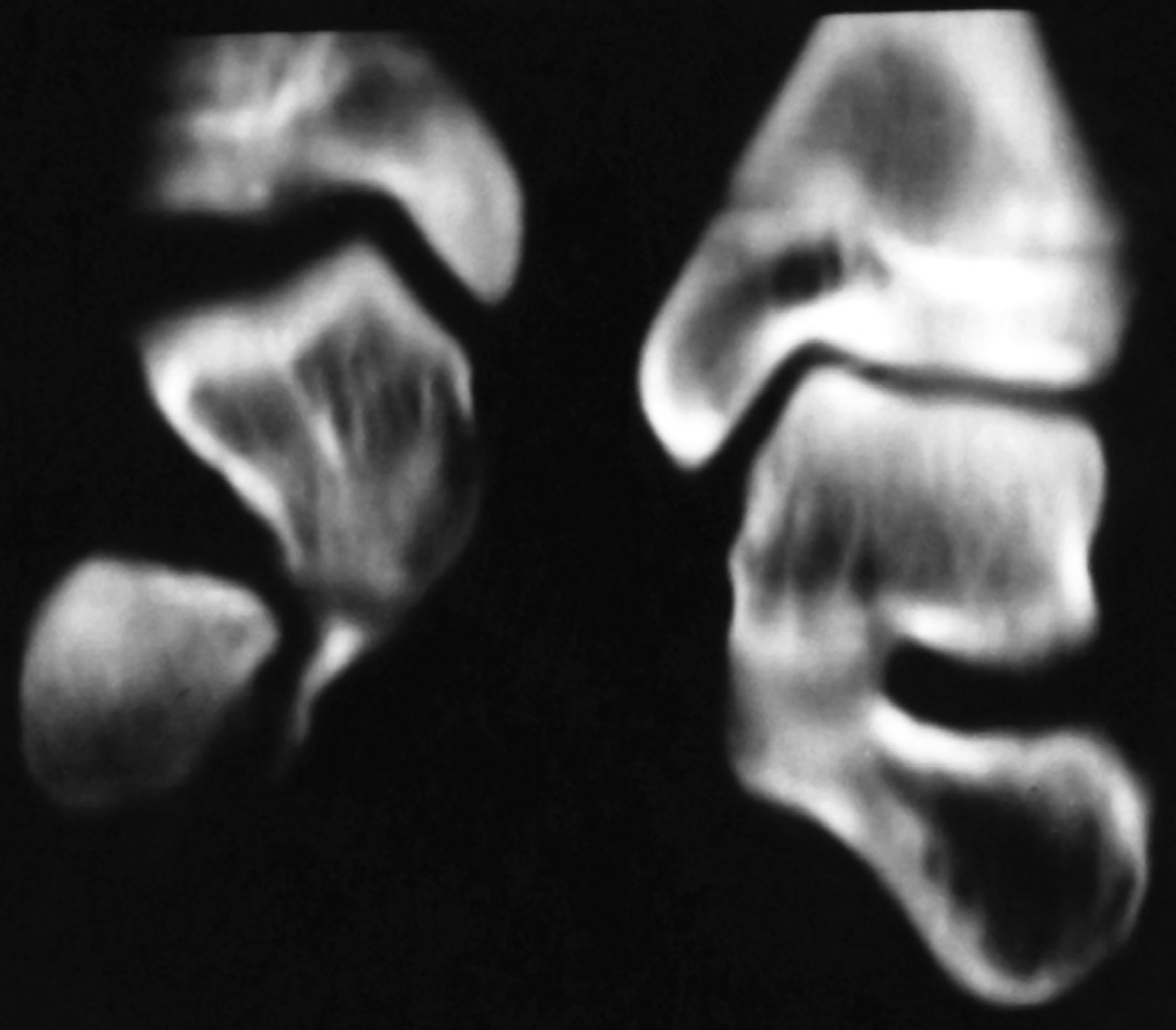
Sagittal CT through the middle facet fibrous coalition bilaterally.
Middle facet coalition, likely fibrous, was suggested bilaterally (Fig. 4). Given the fracture displacement, we proceeded with open reduction and internal fixation using the modified Letournel lateral approach at 14 days (Figs. 5 and 6). Intraoperatively, the middle facet coalition was confirmed. The fracture healed uneventfully, and the patient returned to full activities to include cross-country running and surfing at 4 years from the injury. The follow-up radiographs at 4 years demonstrate maintenance of the reduction (Figs. 7 and 8). The hardware was not symptomatic, and he demonstrated equal ankle range of motion (Fig. 9).
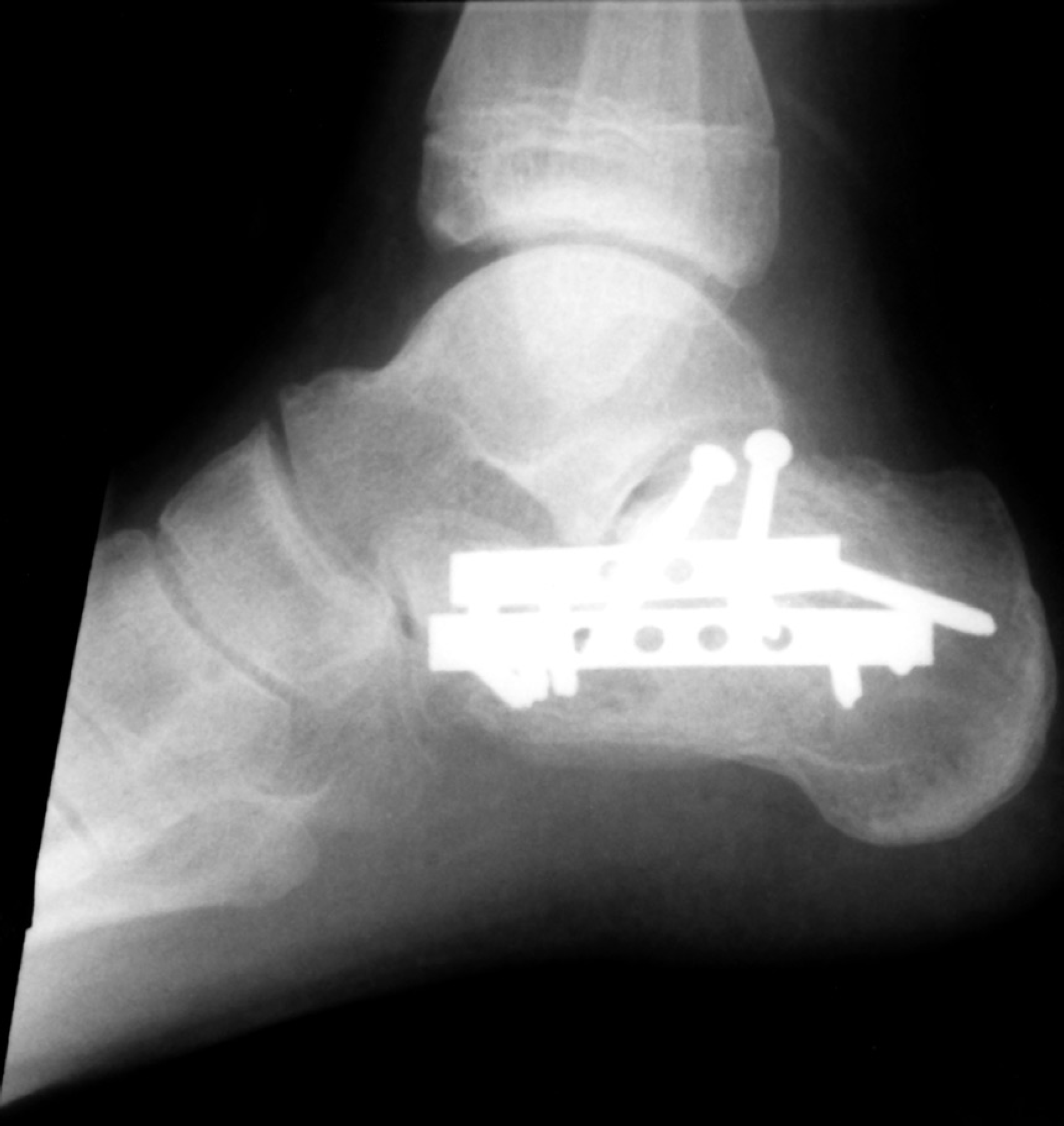
Postoperative lateral view.
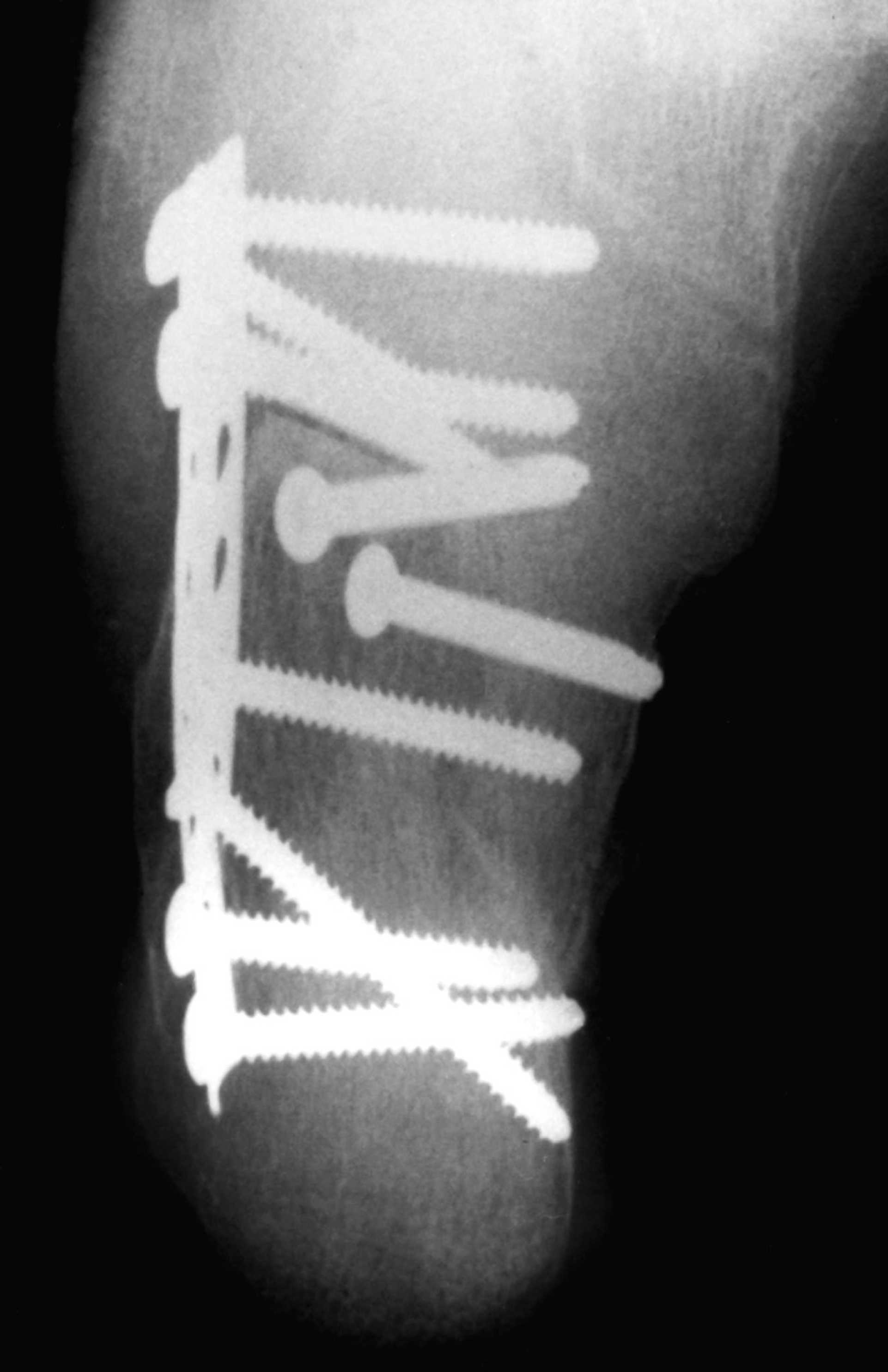
Postoperative axial view demonstrating normal width of heel.

Postoperative lateral view (at 4 years).
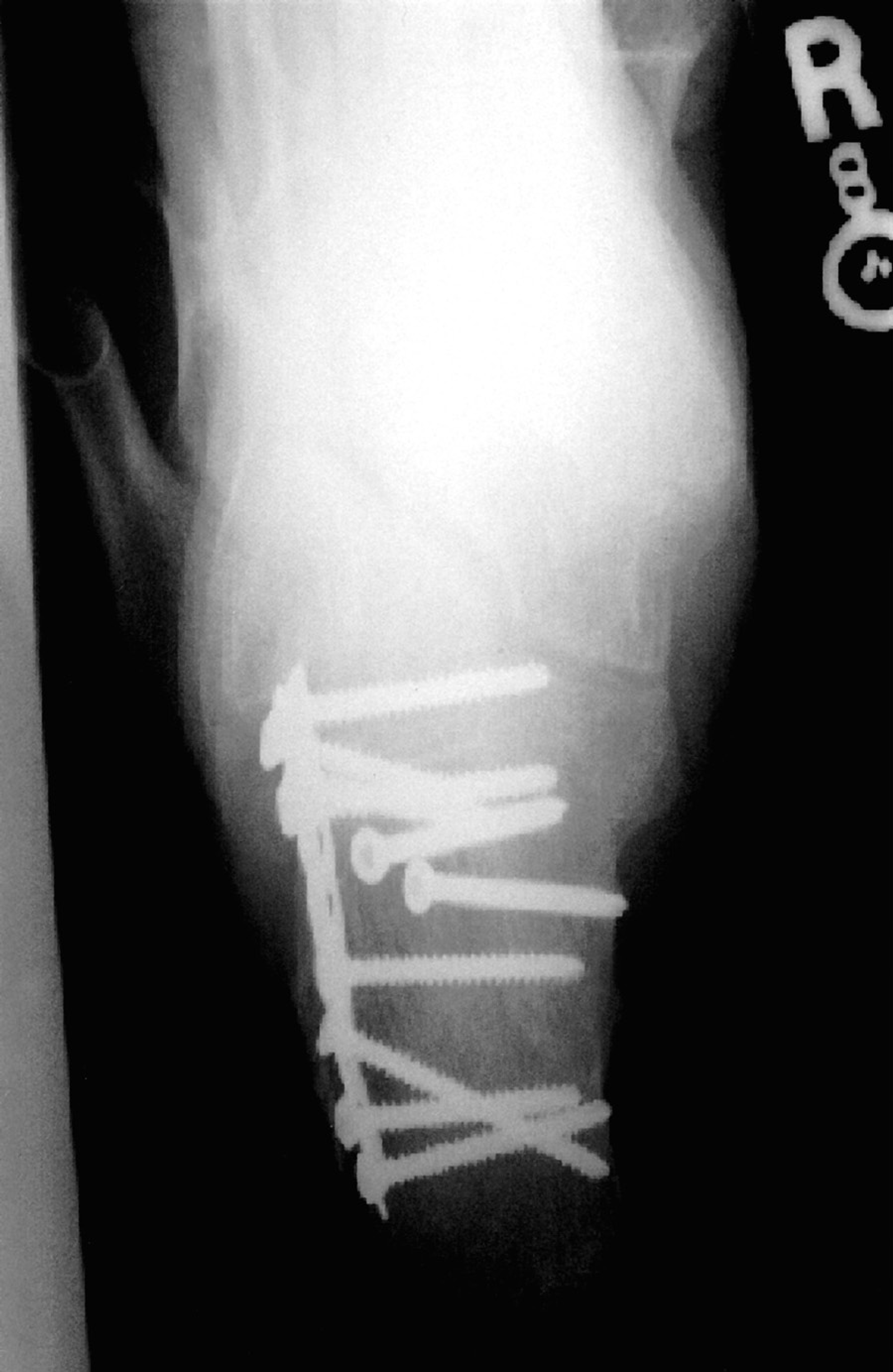
Postoperative axial view (at 4 years).
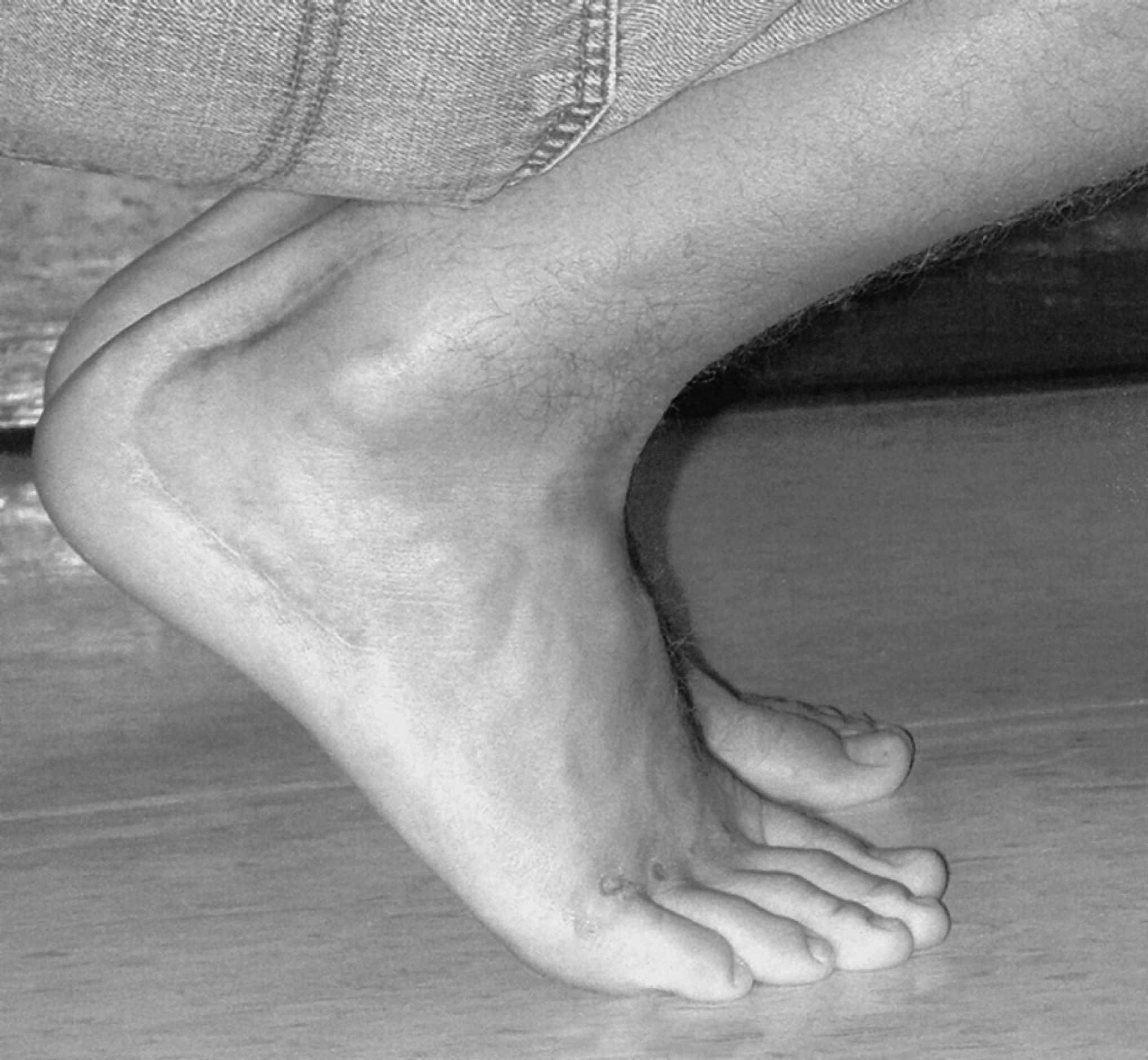
Clinical photograph at 4 years.
DISCUSSION
Although tarsal coalition is thought to occur in less than 1% of the population, its true incidence in unknown. 4 Calcaneal fractures make up only 2% of pediatric foot injuries. 1
Operative treatment was elected in our case because of the depressed Bohler's angle and widened heel. The surgical options included open reduction and internal fixation with excision of the coalition, primary subtalar fusion, or isolated open reduction and internal fixation without addressing the coalition. The literature was completely void of any clinical guidance in this setting. We opted to address the fracture only, as the patient did not exhibit any preexisting symptoms. Argument certainly could have been be made for either an excision of the coalition and internal fixation of the fracture, or treating the injury nonoperatively and performing a subtalar fusion at a later setting. However, no support for either of these options exists in the literature. We hope that our report will prompt other surgeons to share their experience in treating this injury, so that treatment guidelines can be eventually established.
SUMMARY
We report a 15-year-old male who sustained a displaced intraarticular calcaneus fracture after falling from a height. The preoperative evaluation suggested, and intraoperative findings confirmed, the presence of a previously asymptomatic middle facet talocalcaneal coalition. Open reduction and internal fixation was performed, without excision of the intact coalition. At 4-year follow-up, the patient was completely asymptomatic and had returned to full activities, including competitive cross-country running.