






Abstract
This study introduces an adapted theoretical framework that integrates aesthetic and environmental psychology to explain how multisensory stimuli influence consumer responses. It focuses on a negative quadratic relationship between arousal and consumer reactions, challenging the linear assumptions often cited in stimulus–behavior research. A laboratory experiment was conducted using multisensory stimuli (sound/music and lighting) and motivational scenarios within an immersive café environment modeled in Revit. A total of eighty-nine student participants were randomly assigned to one of eight experimental conditions. Using SPSS, a series of mixed-design ANOVAs was performed to examine the effects of lighting, sound, and motivation on perceived comfort and arousal. Pearson correlations, as well as linear and quadratic regressions, were used to investigate the proposed arousal function. The results indicate that an intermediate level of arousal (a negative quadratic function) better predicts behavioral responses. Lighting and sound were found to significantly influence comfort and arousal. Comfort emerged as a stronger predictor of pleasure, while pleasure more strongly predicted behavioral intentions. This study contributes to atmospherics and hospitality design research by validating the S-O-R-B (Stimuli–Organism–Response–Behavior) framework, adapted from the S-O-R paradigm, environmental psychology, and aesthetic theory. The proposed framework offers a more nuanced understanding of how sensory inputs shape user experience and provides practical guidance for hospitality stakeholders on optimizing store stimuli to enhance design performance and foster creativity.
Keywords
Introduction
In the post-pandemic era, brick-and-mortar (B&M) stores have re-emerged as vital spaces for commerce, social interaction, and community engagement. 1 These physical environments contribute to the attractiveness and vibrancy of urban and community life. As competition among B&M stores intensifies—especially with the rise of online platforms—business scholars have turned their attention to the role of the physical environment. Kotler’s seminal work on “atmospherics” introduced the idea that designing a store with careful attention to sensory stimuli can draw attention to products, enhance emotional responses, and improve perceptions of brand quality, increasing purchase likelihood. 2 Bitner’s “servicescape” model further expanded this concept by incorporating dimensions such as layout, furnishings, and signage. 3
Building on this foundation, research shows that well-designed environments evoke emotional and cognitive responses that shape shopping behaviors and enhance satisfaction. 4 These environments also improve product display quality, streamline shopping logistics, and foster social interaction. 5 Empirical studies have consistently shown that architectural and sensory stimuli—such as lighting, 6 music, 7 color, 8 signage and layout, 9 and decorative feature 10 —influence consumer perceptions of brand quality, service experience, and shopping satisfaction. 11 These stimuli further drive behaviors such as willingness to spend time, 12 willingness to buy, 13 re-patronage intent, 14 willingness to socialize, 15 positive word-of-mouth, 16 perceived service/product quality, 17 and satisfaction/liking. 18
However, most research isolates individual stimuli, overlooking the inherently multisensory nature of in-store experiences. 19 Studies that address multisensory environments often treat sensory inputs holistically without examining the intensity or contribution of each element. 20 For instance, Elmashhara and Soares found that color and music influenced satisfaction and word-of-mouth through the desire to stay, but did not analyze specific qualities of each stimulus. 21 Similarly, Lashkova et al. examined sound, scent, lighting, and taste in supermarkets as a unified “sensory experience,” leaving individual effects unclear. 22 This gap underscores the need for nuanced research on how varying degrees of multisensory stimuli interact to shape perceptions and behaviors in B&M settings.
As online retail and service channels matured—particularly during challenging times for physical stores—retailers, marketers, and business scholars began to recognize the inherent limitations of digital commerce. Online platforms offer convenience but lack sensory engagement and social interaction. 23 To address this, many adopted omnichannel strategies, integrating digital and physical experiences through tools like in-store digital assistants, online ordering with pickup, seamless returns, and contactless checkout. These approaches enhance brand loyalty and in-store spending, 24 particularly in premium segments where consumers value both convenience and sensory-rich experiences. 25
“Online platforms offer convenience but lack sensory engagement and social interaction”
Gauri et al. 26 and Joy et al. 27 argue that physical and digital retail formats are expected to continue converging, with physical stores playing a vital role in delivering immersive, socially engaging experiences. Joseph Pine and Gilmore 28 emphasize “authentic shopping experiences” in the experiential economy, especially within the hospitality sector, while Kent 29 highlights “creative space” for strengthening brand identity and consumer engagement. Empirical studies support these views, showing that stimuli such as lighting, music, and layout can evoke emotional responses and enhance sensory brand experiences, especially in hedonic contexts. 30 Features like intuitive navigation, effective layouts, and aesthetically novel displays further contribute to the hedonic quality of B&M environments. 31
However, translating sensory research into practical design strategies remains challenging. Many studies assume linear stimulus–response relationships, overlooking the complexity of sensory integration. Theoretical models such as Berlyne’s aesthetic theory 32 and Mehrabian and Russell’s environmental psychology model 33 suggest a negative quadratic relationship between arousal and consumer responses, where both under- and overstimulation can reduce satisfaction. Yet, few studies have tested these curvilinear effects, despite warnings that overstimulation can overwhelm consumers. 34
Methodologically, both laboratory and field experiments have been used to study sensory stimuli. Lab settings offer control but lack ecological validity, while field studies provide realism but limit stimulus manipulation. Photo-realistic virtual environments created with 3D modeling software offer a promising alternative, balancing control and realism. 35 Lighting and sound remain the most studied stimuli due to their ease of manipulation and strong influence on perception.
This study has two primary aims. First, it introduces an adapted theoretical framework that integrates aesthetic and environmental psychology to explain how sensory stimuli influence consumer responses, emphasizing a negative quadratic relationship between arousal and aesthetic experience, emotional states, and behavior. This framework refines the Stimulus–Organism–Response (S-O-R) paradigm 36 by offering a more nuanced understanding of hedonic and aesthetic experiences.
Second, the study presents empirical findings from a laboratory experiment employing multisensory stimuli—specifically lighting and sound—within a café setting, a typical B&M environment for leisure and social interaction. It examines both the individual and interactive effects of these stimuli on emotional states and behavioral responses. The findings offer practical guidance for hospitality stakeholders and designers on optimizing sensory composition to enhance emotional engagement, improve in-store experiences, and strengthen overall business performance.
Literature Review and Hypothesis Development
Theoretical Framework: Comfort, Arousal, and Pleasure
Comfort Versus Pleasure
The S-O-R model is widely used in atmospheric research to examine how store stimuli influence consumer behavior. Adapted from Mehrabian and Russell’s environmental psychology theory, 37 the S-O-R framework 38 identifies pleasure and arousal as key emotional responses to stimuli and predicts behaviors such as shopping enjoyment, time spent in-store, exploration, interaction with sales personnel, and purchase intentions. Lazaris et al. confirm that these emotional states mediate the effects of store quality on shopping behaviors. 39
Many studies adopt a two-dimensional model of emotional states (positive and negative). 40 Doucé and Adams demonstrated through lab and field experiments that sensory cues such as lighting, music tempo, scent, and color significantly shape consumer evaluations. 41 Their field study found that approach behaviors were influenced by these stimuli, while product and store evaluations were driven by pleasure. Importantly, excessive stimulation diminished positive responses, reinforcing the need to consider non-linear effects rather than simple linear assumptions.
Pleasure—defined as joy or satisfaction induced by stimuli—strongly predicts approach–avoidance behaviors. 42 Hedonic experiences are influenced by environmental factors such as layout, air quality, lighting, and music, which shape purchase intentions and perceptions of brand quality. 43 Numerous studies confirm that sensory elements—lighting, 44 scent, 45 color, 46 sound, 47 décor, and layout—enhance pleasure, which in turn affects satisfaction, 48 time spent, 49 and spending. 50
However, Berlyne’s aesthetic theory contrasts with the S-O-R view by proposing that pleasure depends on stimulation level (arousal), with both under- and overstimulation reducing enjoyment. 51 Scitovsky introduced comfort as a shopping motivator, emphasizing physical and psychological ease as central to design. 52 Comfort is linked to convenience and usability and may operate independently of arousal. Evidence suggests comfort predicts satisfaction and loyalty more reliably than abstract notions of pleasure. 53 Bitner’s servicescape model 54 also highlights comfort as a key physiological response, though it remains underexplored in atmospheric research.
Together, these perspectives suggest that comfort underpins emotional responses and shopping behavior. While pleasure and arousal are well-studied, comfort’s role as a precursor to pleasure—and its independence from arousal—requires further exploration. This study proposes the following hypotheses:
Arousal and Its Quadratic Relationship with Pleasure
Arousal refers to a feeling state ranging from excitement or alertness to boredom or inattention and is often triggered by sensory stimuli in built environments. Mehrabian and Russell proposed that arousal depends on the “information rate”—the perceived environmental load—defined by contrasts such as complex/simple, new/old, and crowded/empty. 55 They suggested a negative quadratic relationship between arousal and behavior, where moderate arousal optimizes approach behaviors (e.g., exploration), while both low and high arousal levels reduce favorable outcomes. This aligns with Berlyne’s aesthetic theory, which argues that optimal hedonic experiences occur at intermediate stimulation levels. 56 For designers, this principle underscores the need to balance sensory input to avoid overstimulation or boredom.
Studies support this view. Lashkova et al. found that positive sensory experiences, such as ambient music, scent, and lighting, enhance satisfaction and brand loyalty, while static stimuli may lead to boredom, requiring novelty to sustain engagement. 57 Similarly, Kaltcheva and Weitz suggested that arousal influences pleasant feelings and shopping behavior, 58 and Bhatt et al. observed that in luxury retail settings, stimuli, such as lighting, music, layout, and displays, influence affective experiences and satisfaction, particularly among recreational shoppers. 59
However, findings on arousal remain inconsistent. Hashmi et al. found that lighting, layout, design, and scent induced arousal and mediated shopping enjoyment but did not significantly affect impulse buying. 60 Zhang et al. observed that arousal from background music in livestream commerce positively influenced purchase intent. 61 In physical stores, Donovan and Rossiter found a positive linear relationship between arousal and approach behaviors, 62 but later work reported a negative correlation under pleasant conditions. 63 These inconsistencies suggest that prior research often assumes linear effects, overlooking the potential for a quadratic pattern.
To address this gap, the present study examines whether arousal predicts pleasure in a quadratic manner, proposing the following hypothesis:
Motivation and Sensory Stimuli: Lighting and Sound
Motivation
Understanding shopping motivation is essential because successful service and product offerings depend on consumer intent. Research shows that satisfaction improves when environmental stimulation aligns with consumers’ arousal expectations. 64 Task-oriented shoppers generally prefer low-stimulation environments, while recreational shoppers favor higher stimulation. This interaction between motivation and environmental cues significantly influences pleasant feelings, which, in turn, affect behavioral intentions. 65
This concept has practical implications for store design, enabling designers to predict and evaluate design performance based on expected arousal levels. Accordingly, this study introduces three motivational scenarios—neutral, low-, and high-arousal motivations—with the following hypothesis:
Lighting and Sound
This study examines lighting and sound as environmental stimuli and their effects on perceived comfort, arousal, and their interaction in shaping pleasure and shopping intentions. Both stimuli are widely studied in atmospheric research and are relatively easy to implement or modify in existing hospitality environments. 66
Lighting influences consumer behaviors such as time spent, enjoyment, willingness to return, positive word-of-mouth, willingness to buy, and affiliation intent. 67 It can even affect food choices 68 and taste perception in restaurants. 69 Preferences vary across cultures. 70 This study tests four lighting levels—darkest, low intermediate, high intermediate, and brightest—to assess their impact on comfort and arousal.
Music and sound also play a key role in shaping consumer experience. A meta-analysis of sixty-six studies found that music enhances pleasure and shopping intentions, though not always arousal. 71 Music tempo affects enjoyment, time spent, and willingness to return, 72 and matching tempo and volume to consumer expectations improves approach behaviors. 73 Music also improves mood, perceived service quality, and re-patronage intent in restaurants. 74 Fast-tempo music increases arousal and purchase intent in fast-food settings, 75 and background music in livestream commerce also boosts arousal and purchase intent. 76
This study will test various sound conditions—slow and fast music, street noise, and no sound—to explore their effects on comfort and arousal.
Research Methodology
Data Collection and Lab Experiment
A laboratory experiment was carried out at the Design College of a large research university in the United States, with ethical approval from the university’s Institutional Review Board (IRB). Students were recruited through college email lists and announcements in large lecture classes. Participants could enter a raffle to win one of two $50 bookstore gift cards. Out of 121 volunteers who signed up, eighty-nine (74%) participated.
Paper surveys were used to collect data. Participants were randomly assigned to one of eight experimental sessions, which included three motivation conditions (between-subjects), four lighting conditions (within-subjects), and four sound conditions (between-subjects). The sessions took place in a classroom measuring thirty-five by forty feet. A pre-experiment session was held to explain the survey, adjust the room’s ambient conditions, and collect consent forms. A summary of the experimental treatments is shown in Figure 1.
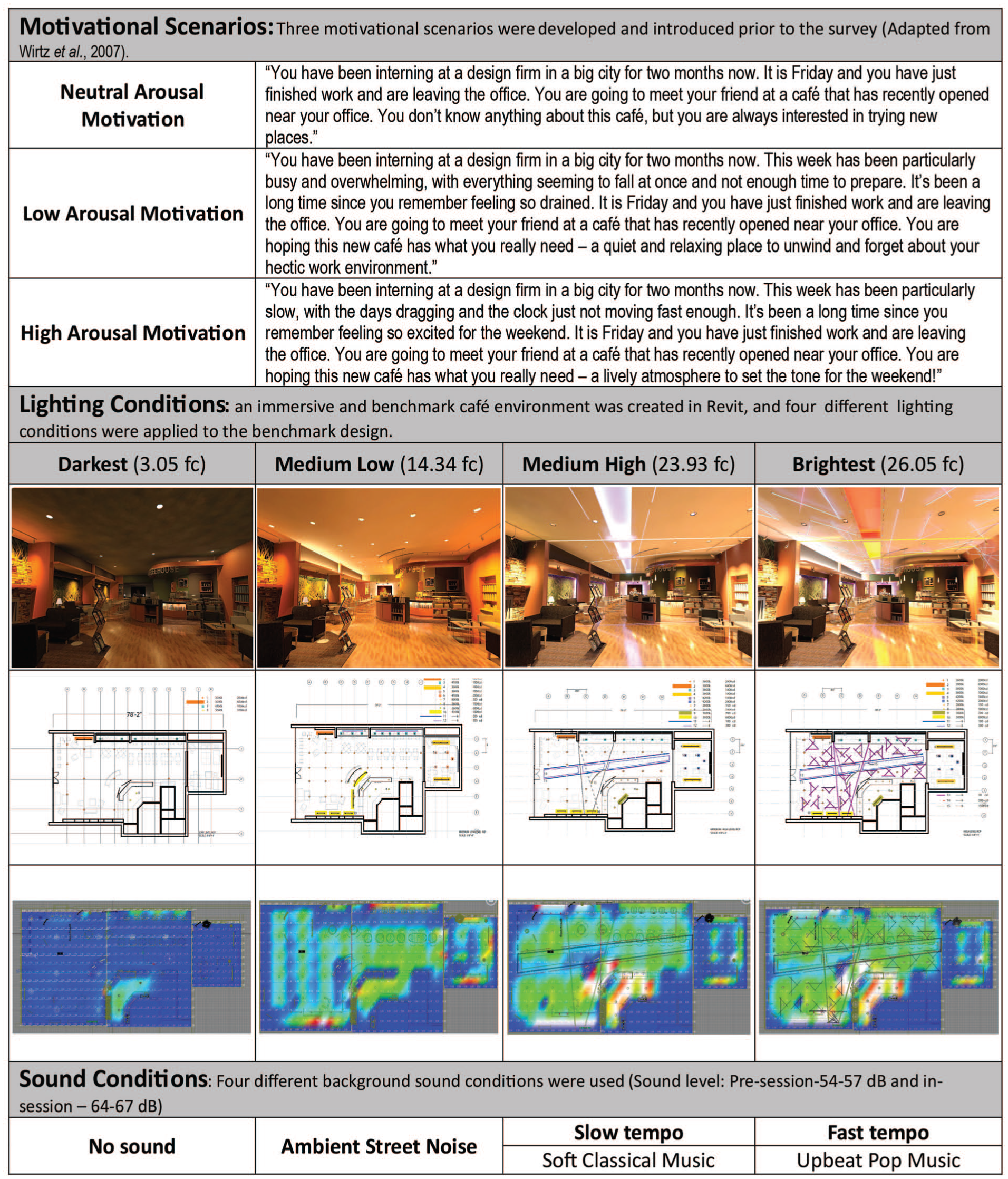
Experiment treatments: an immersive and benchmark café environment was created in Revit, and four different lighting and sound conditions were applied to the benchmark design.
At the start of each session, participants were introduced to one of three motivational scenarios (neutral, low, or high arousal) and completed a survey on their emotional state. They were then shown four café images, each with a different lighting condition (darkest, medium-low, medium-high, and brightest), projected in random order. These lighting conditions varied in color, brightness, fixture type, and layout. Lighting levels were calculated using 3D Studio MAX with IES (Illuminating Engineering Society) data. It was expected that medium lighting would be more comfortable, while darker or brighter settings might reduce comfort. Higher brightness and complexity were also expected to increase arousal.
During each lighting condition, one of four sound environments was played through ceiling-mounted speakers: no sound, soft classical music, upbeat pop music, or ambient street noise. Soft classical and pop music were expected to be more comfortable, while street noise was considered less pleasant. Ambient sound levels were measured before each session (54–57 dB), and experimental sound levels ranged from 64 to 69 dB. Music tempo and style were expected to influence arousal.
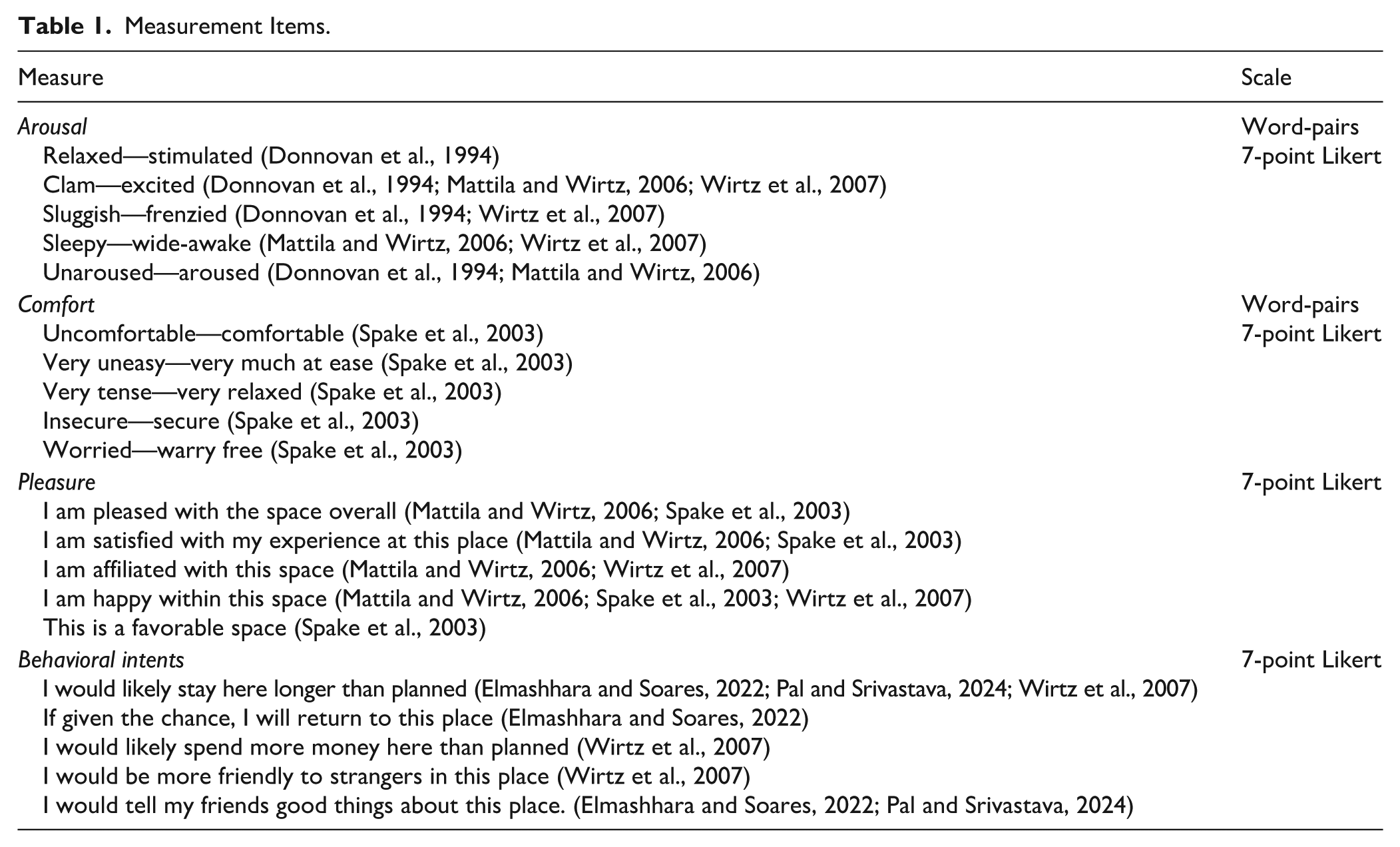
Participants rated their comfort, arousal, pleasure, and behavioral intentions under each lighting condition using a 7-point Likert scale (see Table 1). The motivational scenario and sound condition remained constant throughout each session, which lasted about thirty minutes.
Measurement Items.
Data Analysis
Survey responses were manually entered into IBM® SPSS for analysis. Mean scores for arousal, comfort, pleasure, and behavioral intentions were calculated. The primary research goal was to explore how perceived comfort and arousal relate to pleasure and behavioral intentions, with particular attention to whether arousal followed a quadratic pattern. To examine this, data from the four lighting conditions (a repeated-measure design) were restructured into long format to allow for correlation analysis among comfort, arousal, pleasure, and shopping intent. Pearson correlation and regression analyses, including quadratic regression, were conducted. In addition, two sets of three-way mixed-design ANOVAs were performed to assess the effects of lighting, sound, and motivation on comfort and arousal. The control group (neutral motivation scenario) was excluded from these analyses due to inconsistencies in the sound conditions administered.
Results
Reliability and Normality
Reliability tests using Cronbach’s alpha (α) showed excellent internal consistency for all measured variables: arousal (α = .924), comfort (α = .915), pleasure (α = .957), and shopping intentions (α = .912). 77 The Kolmogorov–Smirnov (K–S) test was used to check if the data followed a normal distribution. Most scores were normally distributed (p > .05), but a few combinations of lighting and sound showed non-normal results:
Arousal: Medium-low lighting with ambient noise, D(28) = 0.193, p < .05
Comfort: Medium-low lighting with soft classical music, D(23) = 0.201, p < .05
Comfort: Medium-high lighting with ambient noise, D(28) = 0.189, p < .05
Pleasure: Medium-low lighting with ambient noise, D(28) = 0.178, p < .05
Pleasure: Medium-high lighting with ambient noise, D(28) = 0.201, p < .05
These exceptions should be considered when interpreting the results.
Relationships Among Variables
Pearson correlation analysis (see Table 2) showed strong positive relationships between comfort and pleasure (r = .835, p < .001), comfort and shopping intentions (r = .749, p < .001), and pleasure and shopping intention (r = .880, p < .001). Comfort was more strongly associated with pleasure than with shopping intentions, suggesting that comfort is a better predictor of pleasure than of shopping intent.
Relationships Among Variables.
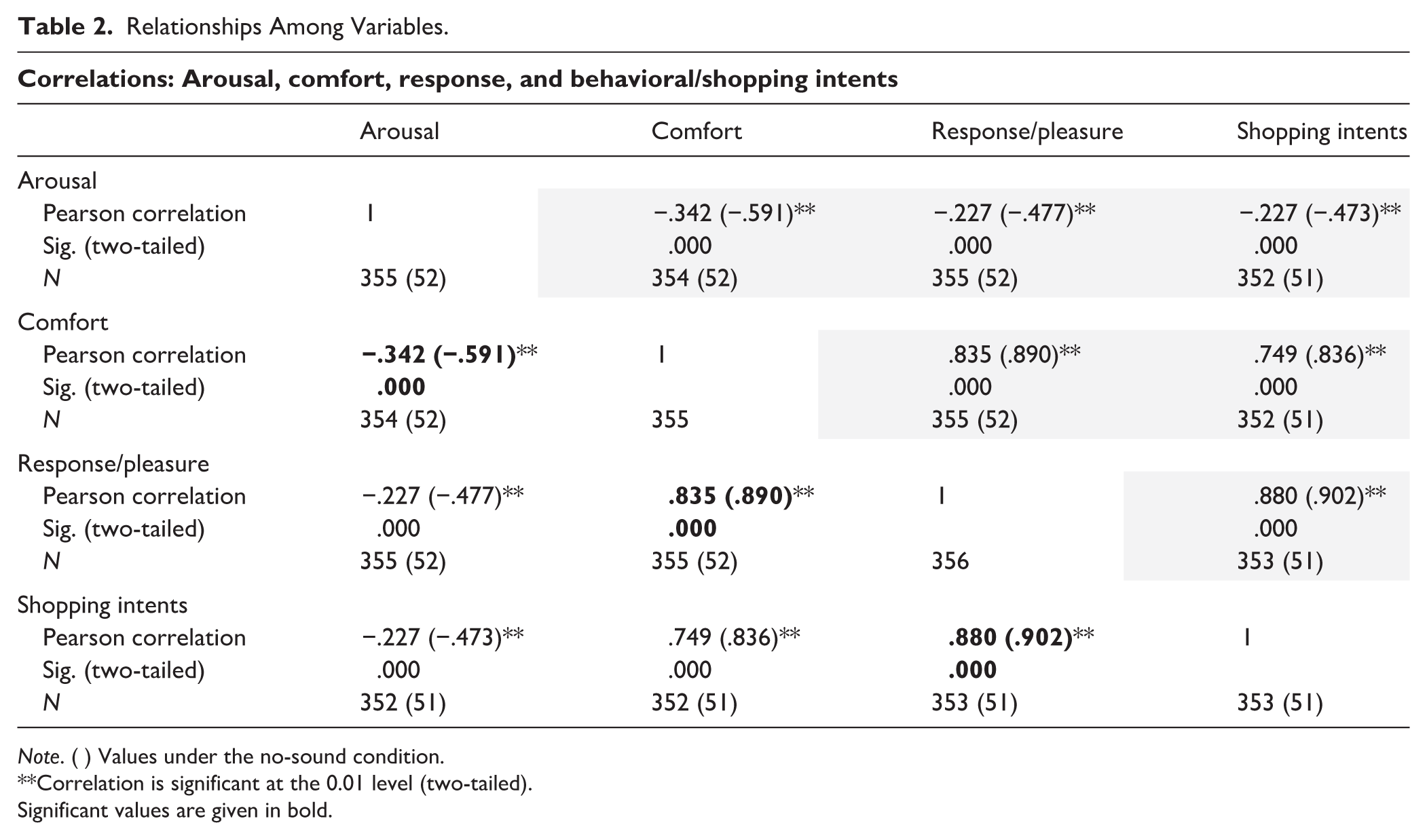
Note. ( ) Values under the no-sound condition.
Correlation is significant at the 0.01 level (two-tailed).
Significant values are given in bold.
Regression analysis confirmed that comfort (see Table 3) significantly predicted pleasure, F(1, 353) = 814.69, p < .001, R2 = .698, supporting Hypothesis H1. This relationship was even stronger under the no-sound condition (R = .890, R2 = .793). Pleasure also significantly predicted shopping intentions, F(1, 351) = 1,200.21, p < .001, R2 = .774, supporting Hypothesis H2. Again, this relationship improved under the no-sound condition (R = .902, R2 = .814).
Regression Model Summary—Comfort to Response/Pleasure and Response/Pleasure to Behavioral Intents (Linear).
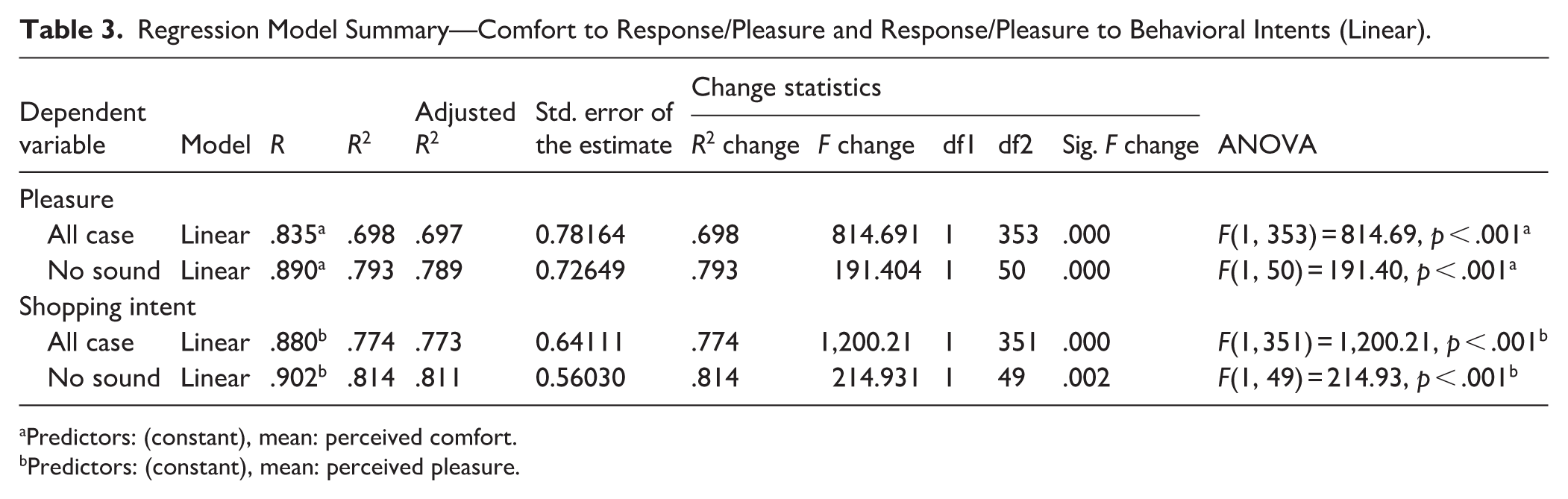
Predictors: (constant), mean: perceived comfort.
Predictors: (constant), mean: perceived pleasure.
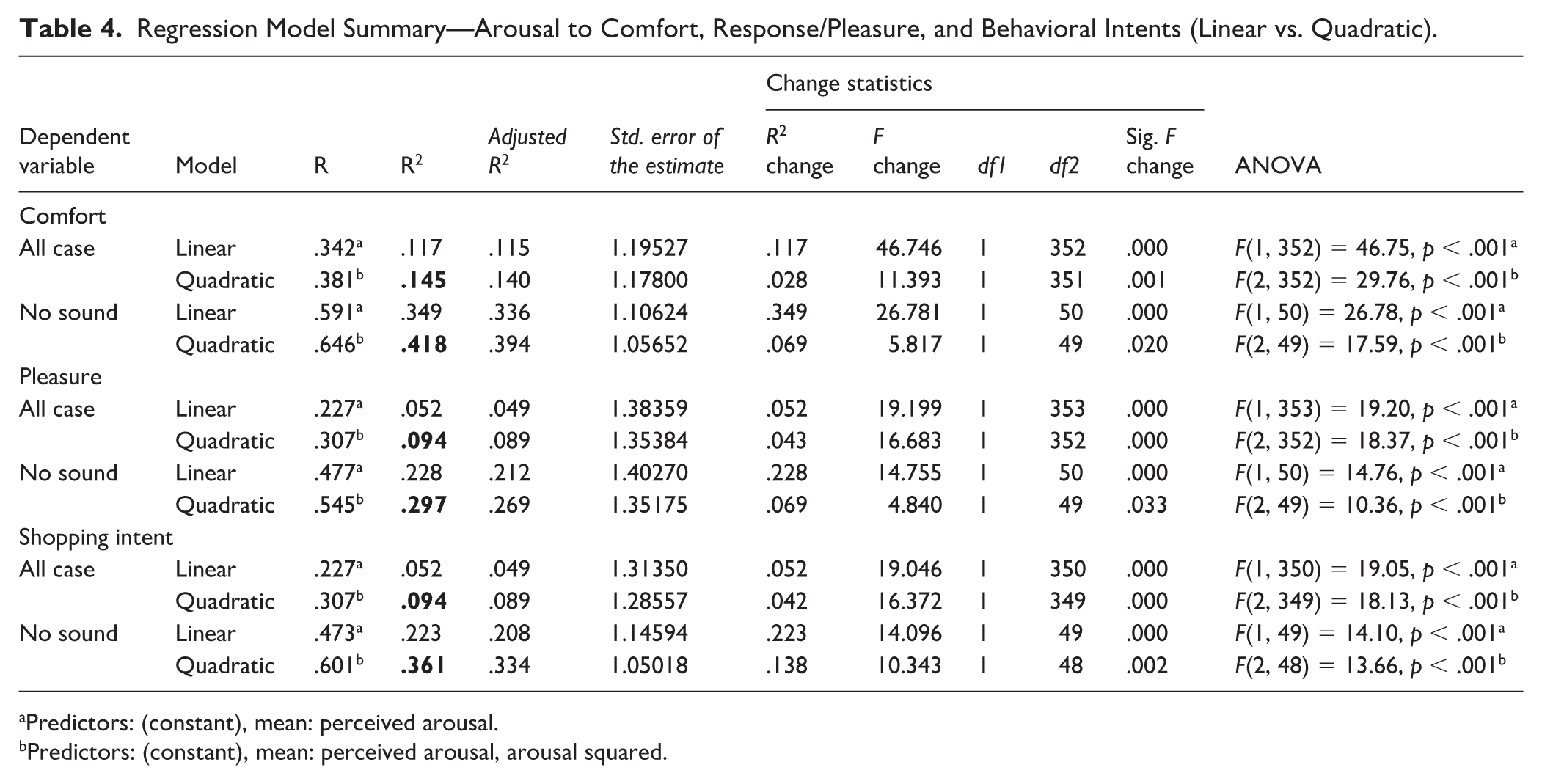
Arousal (see Tables 2 and Table 4) was negatively correlated with comfort (r = −.342, p < .001), pleasure (r = −.227, p < .001), and shopping intentions (r = −.227, p < .001), contradicting Hypothesis H3. The arousal–comfort relationship was stronger under the no-sound condition (r = −.591, p < .001), suggesting that arousal has a greater impact in neutral environments. This aligns with Donovan et al., who found a negative relationship between arousal and shopping intentions. 78
Regression Model Summary—Arousal to Comfort, Response/Pleasure, and Behavioral Intents (Linear vs. Quadratic).
Predictors: (constant), mean: perceived arousal.
Predictors: (constant), mean: perceived arousal, arousal squared.
Arousal: Linear Versus Quadratic Effects
Hypothesis H4 proposed a quadratic relationship between arousal and pleasure. Regression analysis (see Table 4) showed that arousal significantly predicted comfort in both linear (R2 = .117) and quadratic (R2 = .145) models. Under the no-sound condition, the quadratic model improved substantially (R2 = .418, F(2, 49) = 17.59, p < .001).
Quadratic models also better explained the relationships between arousal and pleasure (R2 = .094, F(2, 352) = 18.37, p < .001) and between arousal and shopping intent (R2 = .094, F(2, 349) = 18.13, p < .001), compared to their linear models (R2 = .052 for both). The quadratic model for arousal–comfort had the strongest explanatory power, supporting a revised H4: arousal influences comfort in a negative quadratic pattern, where moderate arousal levels optimize comfort. This effect was more evident in neutral environments or when lighting was the first stimulus introduced without sound.
Model Prediction: Comfort and Arousal in Relation to Pleasure
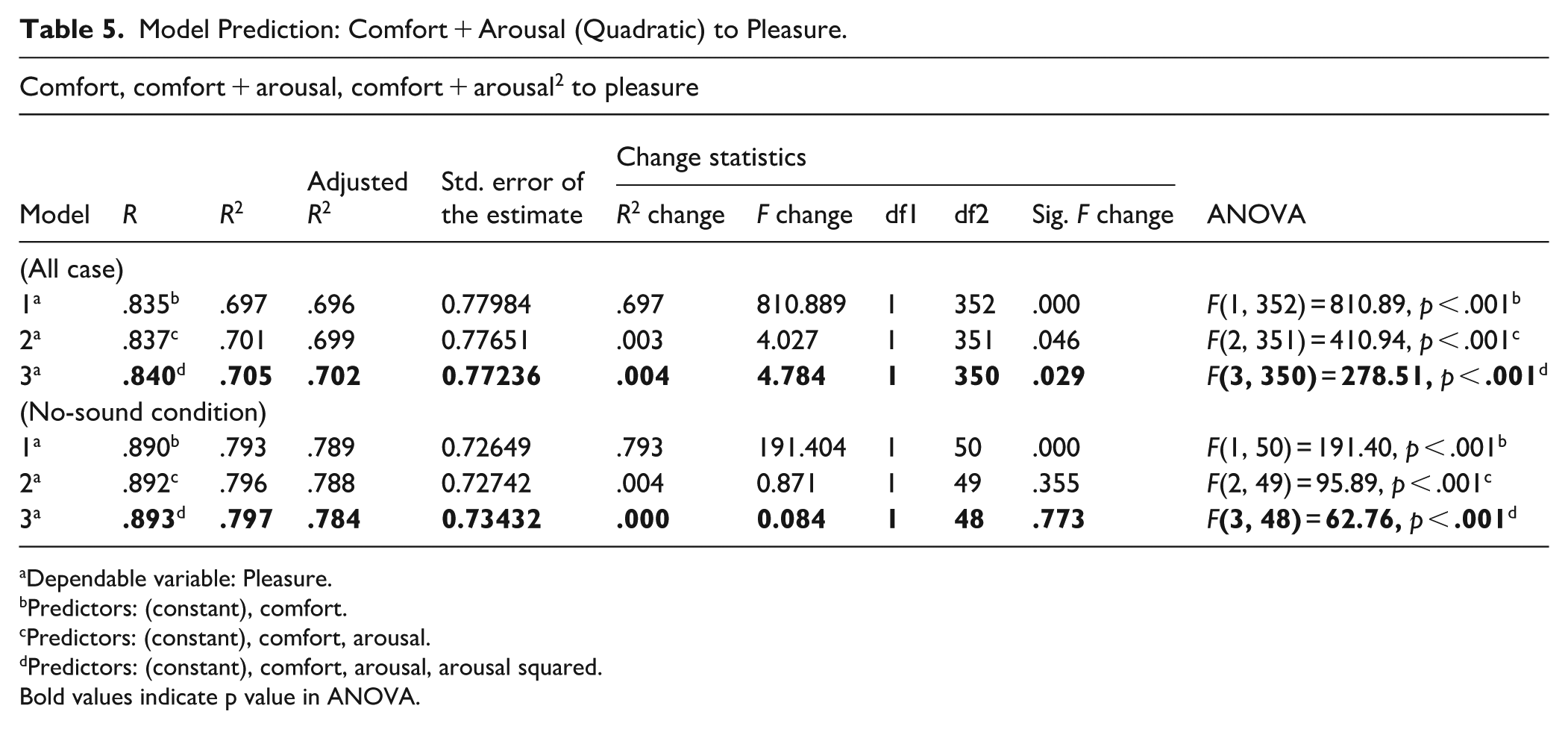
Results showed that arousal has a negative quadratic relationship with comfort, while comfort has a linear relationship with pleasure. To explore how arousal and comfort together influence pleasure, three regression models were tested: (1) comfort only, (2) comfort + arousal, and (3) comfort + arousal2.
All models were significant (p < .001), with high explanatory power (see Table 5):
Comfort only: R2 = .697
Comfort + arousal: R2 = .701
Comfort + arousal2: R2 = .705
Model Prediction: Comfort + Arousal (Quadratic) to Pleasure.
Dependable variable: Pleasure.
Predictors: (constant), comfort.
Predictors: (constant), comfort, arousal.
Predictors: (constant), comfort, arousal, arousal squared.
Bold values indicate p value in ANOVA.
The quadratic model provided the best fit, F(3, 350) = 278.51, p < .001, R2 = .705, suggesting that while comfort is the main predictor of pleasure, arousal adds value when modeled quadratically. However, the improvement was modest.
Under the no-sound condition, the quadratic model’s predictive power increased significantly (R2 = .797, F(3, 48) = 62.76, p < .001), compared to the comfort-only model (R2 = .698). This suggests that in neutral environments, arousal plays a more important role in shaping pleasure. This may also suggest that if in-store sensory stimuli become neutral, introducing new stimuli may have a significant effect to improve perceived comfort, mediating perceived pleasure.
Effects of Lighting, Motivation, and Sound on Perceived Comfort
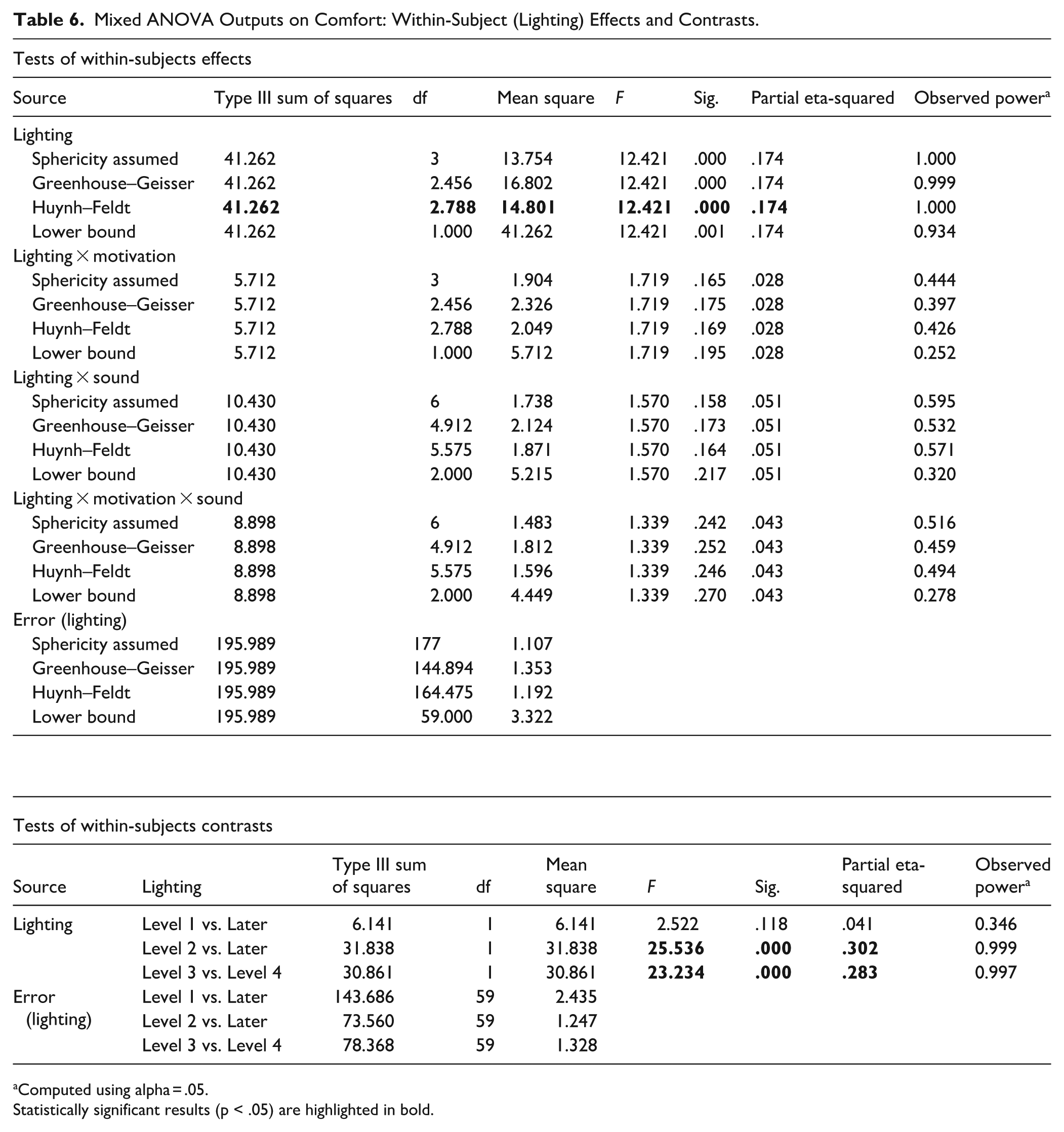
A 4 × 2 × 3 mixed-design ANOVA was conducted to examine the effects of lighting, motivation, and sound on perceived comfort (see Tables 6 and 7). Mauchly’s test indicated a violation of the sphericity assumption for lighting, χ2(5) = 18.15, p < .05. Therefore, Huynh-Feldt corrections were applied (ε = .93). Levene’s test confirmed homogeneity of variances across groups (p > .05).
Mixed ANOVA Outputs on Comfort: Within-Subject (Lighting) Effects and Contrasts.
Computed using alpha = .05.
Statistically significant results (p < .05) are highlighted in bold.
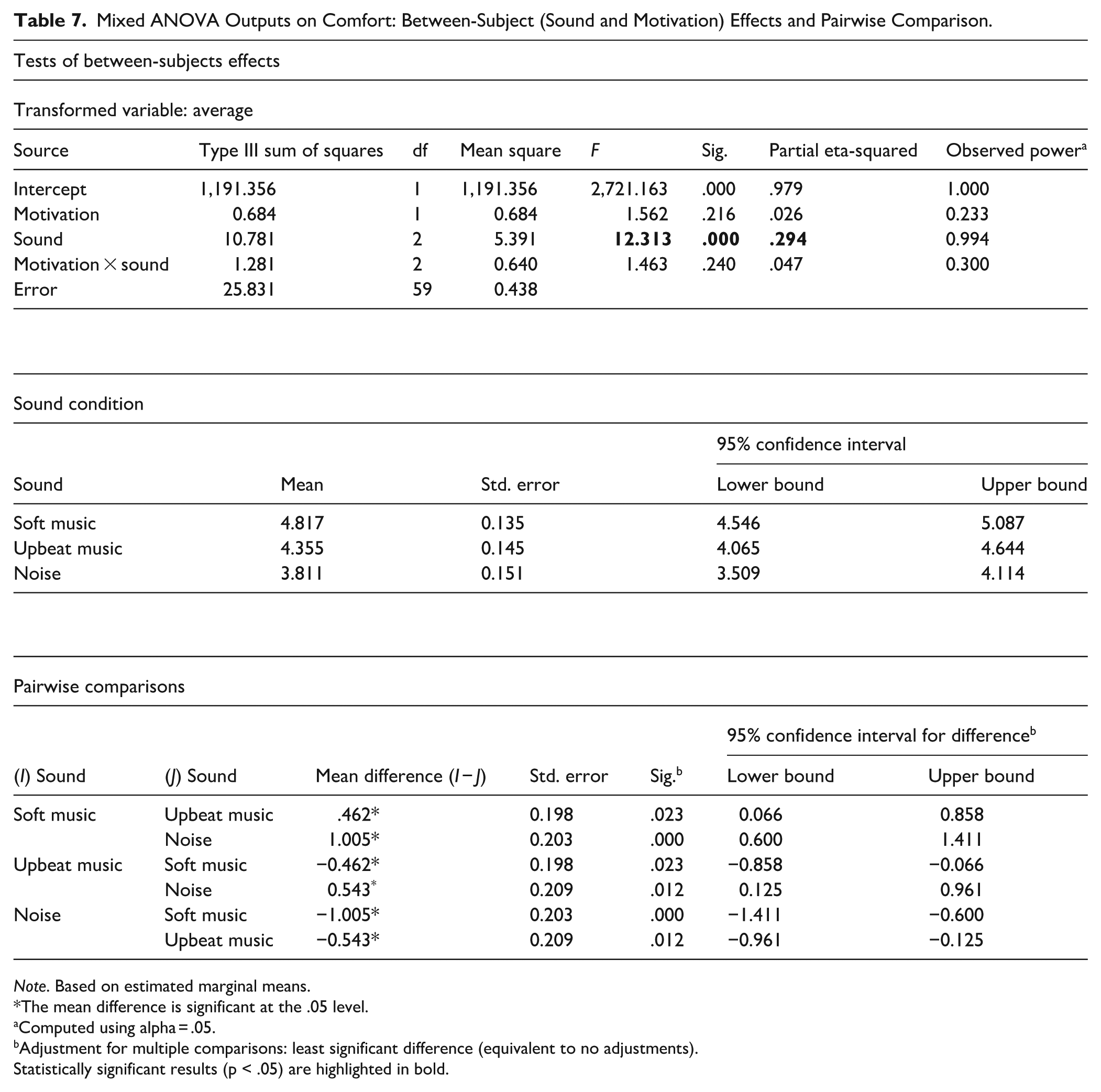
Mixed ANOVA Outputs on Comfort: Between-Subject (Sound and Motivation) Effects and Pairwise Comparison.
Note. Based on estimated marginal means.
The mean difference is significant at the .05 level.
Computed using alpha = .05.
Adjustment for multiple comparisons: least significant difference (equivalent to no adjustments).
Statistically significant results (p < .05) are highlighted in bold.
There was a significant medium effect of lighting on comfort (see Table 6), F(2.79, 164.48) = 12.42, p < .001, ηp2 = .17. Medium-low lighting (M = 4.72, SE = .14) led to higher comfort than medium-high lighting (M = 4.36, SE = .13), F(1, 59) = 25.54, ηp2 = .30. The brightest lighting (M = 3.67, SE = 0.13) resulted in the lowest comfort, F(1, 59) = 30.86, ηp2 = .28. No significant difference was found between the darkest and medium-low lighting. Overall, medium-low lighting produced the highest comfort, supporting Hypothesis H6.
Sound (see Table 7) also had a significantly large effect on comfort, F(2, 59) = 12.31, p < .001, ηp2 = .294. Soft music (M = 4.82, SE = .14) led to higher comfort than upbeat music (M = 4.36, SE = 0.15) and noise (M = 3.81, SE = 0.15). Noise produced the lowest comfort ratings. These results support Hypothesis H7.
Motivation (see Table 7) had no significant effect on comfort, F(1, 59) = 1.562, p > .1, ηp2 = .026, and no significant interactions were found among lighting, motivation, and sound, F(5.575, 164.48) = 1.34, p > .1, ηp2 = .04. Therefore, Hypothesis H5 is not supported.
Effects of Lighting, Motivation, and Sound on Perceived Arousal
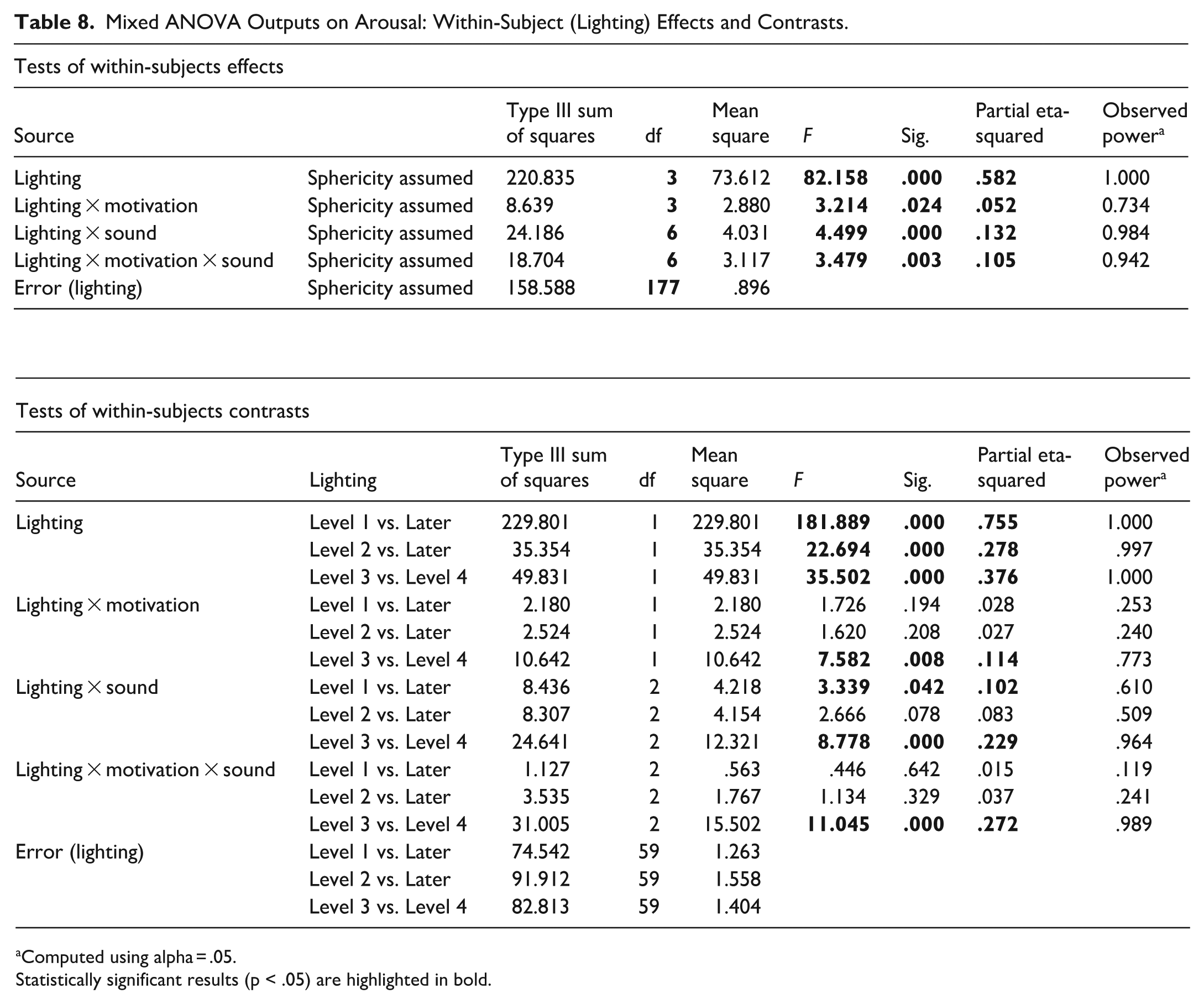
A 4 × 2 × 3 mixed-design ANOVA was conducted to examine the effects of lighting, motivation, and sound on perceived arousal (see Tables 8 and 9). Mauchly’s test confirmed that the assumption of sphericity was met for lighting, χ2(5) = 4.97, p > .05. Levene’s test indicated homogeneity of variances across lighting conditions (p > .05), with the exception of the medium-low condition, F(5, 59) = 2.50, p < .05. This was resolved by using the median score, F(5, 59) = 1.99, p > .05.
Mixed ANOVA Outputs on Arousal: Within-Subject (Lighting) Effects and Contrasts.
Computed using alpha = .05.
Statistically significant results (p < .05) are highlighted in bold.
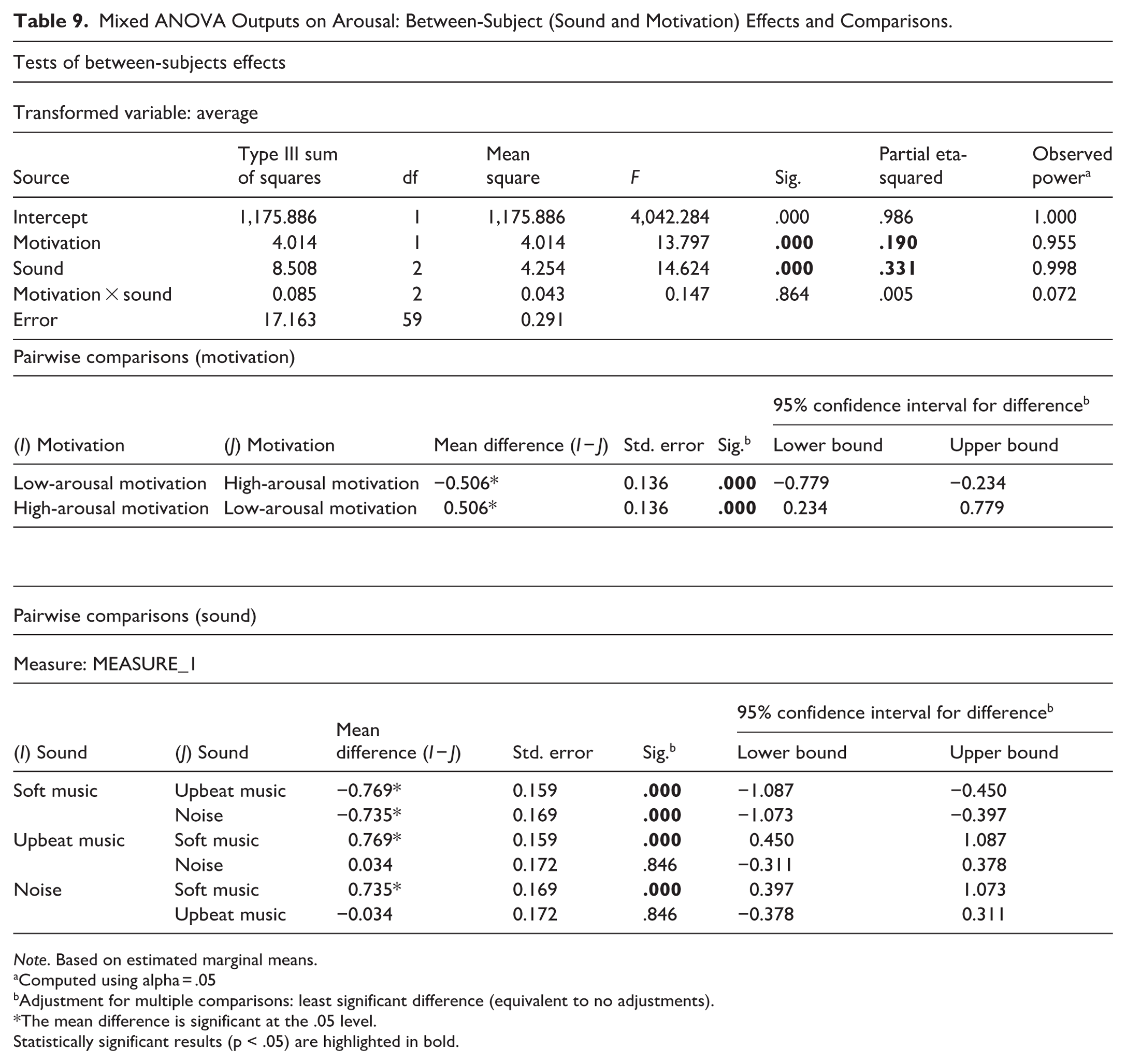
Mixed ANOVA Outputs on Arousal: Between-Subject (Sound and Motivation) Effects and Comparisons.
Note. Based on estimated marginal means.
Computed using alpha = .05
Adjustment for multiple comparisons: least significant difference (equivalent to no adjustments).
The mean difference is significant at the .05 level.
Statistically significant results (p < .05) are highlighted in bold.
Lighting had a significant and large main effect on arousal (see Table 8), F(3, 177) = 82.16, p < .001, ηp2 = .58. Post hoc comparisons revealed significant differences between all lighting conditions (p < .001), with arousal increasing progressively from the darkest (M = 2.90, SE = .11) to the brightest condition (M = 5.51, SE = .12). These findings support Hypothesis H6.
Sound (see Table 9) also had a significant and large effect, F(2, 59) = 14.62, p < .001, ηp2 = 0.33. Soft music (M = 3.83, SE = 0.11) resulted in significantly lower arousal than both upbeat music (M = 4.60, SE = 0.12) and noise (M = 4.57, SE = 0.13), p < .001. No significant difference was observed between upbeat music and noise. These results support Hypothesis H7.
Motivation (see Table 9) had a significant medium effect on arousal, F(1, 59) = 13.80, p < .001, ηp2 = .19. High-arousal motivation (M = 4.59, SE = .10) elicited greater arousal than low-arousal motivation (M = 4.08, SE = .09), supporting Hypothesis H5.
Interaction Between Lighting and Sound
A significant interaction was found between lighting and sound (see Table 8), F(6, 177) = 4.50, p < .001, ηp2 = .13. Helmert contrasts revealed significant differences between the darkest and medium-low lighting conditions, F(2, 59) = 3.34, p < .05, ηp2 = .10, and between medium-high and brightest lighting, F(2, 59) = 8.78, p < .001, ηp2 = .23.
The results showed that under the darkest lighting, upbeat music induced higher arousal (M = 3.47, SE = 0.19) than noise (M = 2.75, SE = 0.21). Under medium-low lighting, noise elicited higher arousal (M = 4.85, SE = 0.25) than upbeat music (M = 4.14, SE = 0.22). Under medium-high lighting, upbeat music again induced higher arousal (M = 5.13, SE = 0.22) than noise (M = 4.43, SE = 0.24). However, under the brightest lighting, noise resulted in higher arousal (M = 6.24, SE = 0.23) than upbeat music (M = 5.66, SE = 0.20). In addition, under medium-high lighting, arousal levels were similar for soft music (M = 4.29, SE = 0.21) and noise (M = 4.43, SE = 0.24), whereas under the brightest lighting, soft music (M = 4.63, SE = 0.19) significantly reduced arousal compared to noise (M = 6.24, SE = 0.23).
These findings suggest that soft music generally reduces arousal across lighting conditions, particularly under high-stimulation environments. Conversely, noise may amplify arousal when paired with intense lighting.
Interaction Between Lighting and Motivation
A small but significant interaction was observed between lighting and motivation (see Table 8), F(3, 177) = 3.21, p < .05, ηp2 = .05. Helmert contrasts revealed a significant difference between medium-high and brightest lighting, F(1, 59) = 7.58, p < .01, ηp2 = .11.
Under the brightest lighting, arousal levels were similar for low (M = 5.44, SE = 0.16) and high motivation (M = 5.58, SE = 0.18). However, under medium-high lighting, arousal was lower for low motivation (M = 4.14, SE = 0.17) than for high motivation (M = 5.10, SE = 0.19). These results suggest that low-arousal motivational cues may help reduce arousal in moderately stimulating environments.
Interaction Between Lighting, Motivation, and Sound
A significant three-way interaction was found between lighting, motivation, and sound (see Table 8), F(6, 177) = 3.48, p < .005, ηp2 = .11. Helmert contrasts showed a significant difference in arousal between medium-high and brightest lighting across sound and motivation conditions, F(2, 59) = 11.05, p < .001, ηp2 = .27.
Under low motivation, soft music significantly reduced arousal under medium-high lighting (M = 3.30, SE = 0.30) compared to upbeat music (M = 5.11, SE = 0.31). Under the brightest lighting, arousal levels were similar for soft (M = 4.88, SE = 0.28) and upbeat music (M = 5.26, SE = 0.29). Under high motivation, arousal levels were similar for soft (M = 5.28, SE = 0.30) and upbeat music (M = 5.15, SE = 0.31) under medium-high lighting, but diverged under the brightest lighting, where upbeat music increased arousal (M = 6.07, SE = 0.29) and soft music reduced it (M = 4.37, SE = 0.28). These findings suggest that under high motivational states, upbeat music intensifies arousal in highly stimulating environments, whereas soft music is particularly effective in reducing arousal under bright lighting conditions.
No significant interaction was found between motivation and sound alone, F(2, 59) = 0.147, p > .5, ηp2 = .005 (see Table 9).
Conclusion and Discussion
This study proposes that comfort and arousal are internal psychological factors that predict perceived pleasure (preference) in response to environmental stimuli. Pleasure, in turn, influences behavioral intentions within service environments. Drawing on the Stimuli–Organism–Response–Behavior (SORB) framework, the research hypothesizes a negative quadratic relationship between arousal and user responses, suggesting that an optimal level of arousal enhances pleasant feeling or aesthetic experiences. 79 This paradigm is applicable across both architectural and hospitality design contexts, where predicting user behavior and optimizing the composition of sensory stimuli are essential for creating environments that are both aesthetically pleasing and functionally effective.
To test this, a laboratory experiment was conducted using a photo-realistic virtual café environment developed in Revit and 3DS Max. Various lighting and sound conditions (multisensory stimuli) and motivational scenarios (high- vs. low-arousal expectations) were applied. The findings are summarized in Figure 2.
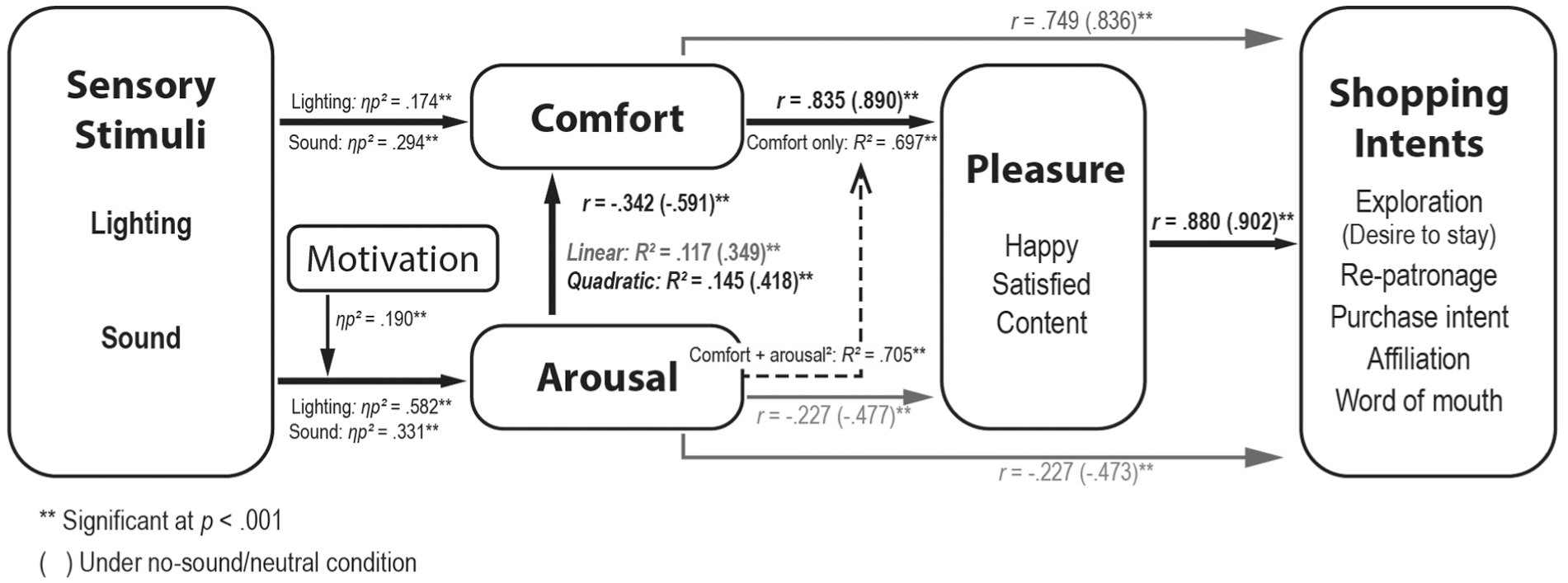
Summary of the results.
Adaptive framework: Comfort and Arousal Toward Response and Behaviors
The results confirmed that comfort is a better predictor of preference (pleasure) in café design. Therefore, pleasure should be understood as a dependent variable of comfort in the composition of sensory stimuli in hospitality environments. This finding aligns with Spake et al., who found that comfort has the strongest correlation to satisfaction (a form of pleasure). 80 From a designer’s perspective, this is significant because comfort provides clearer and more manageable design criteria—such as thermal, visual, acoustic, physiological, privacy, and social comfort—than the more abstract notion of pleasure. As Hagtvedt and Chandukala 81 and Kupfer et al. 82 suggested, comfort can enhance perceived convenience, thereby improving shopping efficiency through factors such as ease of navigation, ambient quality, and effective shopping logistics, often determined by store layout.
Perceived comfort demonstrated the highest correlation with perceived pleasure (like–dislike), while pleasure was the most robust predictor of behavioral intentions. Both comfort (r = .749) and pleasure (r = .880) were significantly and positively correlated with behavioral outcomes such as extended stay, likelihood of revisiting, sociability, and word-of-mouth promotion. However, the stronger correlation of pleasure suggests it is a more reliable predictor of behavioral responses in café environments.
Although arousal was hypothesized to be independent of comfort and to exhibit a negative quadratic relationship with pleasure, the results (see Table 2) indicate that arousal is more significantly and negatively correlated with comfort. The quadratic function of arousal (see Table 4) proved to be a better predictor of perceived comfort. This relationship becomes more pronounced in neutral environments (e.g., empty or habituated spaces), supporting the notion that an intermediate level of arousal optimizes comfort, thereby enhancing preference and behavioral outcomes. Thus, comfort emerges as a dependent variable influenced by the quadratic function of arousal.
Further analysis revealed that an intermediate arousal level elicited the highest comfort. Specifically, medium-low lighting conditions (medium-low arousal) produced the highest comfort ratings, slightly surpassing those under the darkest conditions (lowest arousal), although the difference was not statistically significant. Conversely, the brightest lighting (highest arousal) resulted in the lowest comfort levels. While the negative linear regression model between arousal and comfort (r = −.342, p < .001) is significant—suggesting that overstimulation induces more discomfort than low arousal—this model could not explain why the intermediate condition elicited the highest comfort. The negative quadratic model more effectively captured this relationship. This supports the recommendation that designers should exercise caution when increasing arousal through environmental stimuli, as overstimulation may reduce comfort. In café design, less arousing environments are generally preferable to overly stimulating ones.
“…designers should exercise caution when increasing arousal through environmental stimuli,…”
The correlation between arousal and comfort (r = −.591) was strongest, and the negative quadratic regression model (R2 = .418) was the best fit for the observed data than the linear model (R2 = .349) in a neutral environment (Tables 2 and 4, no sound). This suggests that the negative quadratic effect of arousal is most pronounced when stimuli are introduced into an initially empty space. When additional stimuli are layered onto an existing environment, the quadratic effect diminishes, although minor improvements can still be achieved if arousal levels remain within acceptable ranges. This insight aids stakeholders in optimizing design strategies and establishing performance criteria. Another implication is that when a café environment or its sensory composition becomes neutral due to design fatigue or customer habituation, introducing new stimuli can enhance comfort and thereby promote positive shopping behaviors.
The study also found that perceived arousal from design stimuli influences perceived comfort. A medium-low arousal level induced the highest comfort in the café setting. When examining the interaction between comfort and arousal in predicting pleasure, a slight improvement was observed when using a quadratic function of arousal alongside comfort (see Table 5). This suggests that while comfort is a primary predictor of pleasure and is itself influenced by arousal, careful modulation of arousal can further enhance the prediction of pleasure. Designers should therefore ensure that expressive design elements remain within comfort thresholds. The negative quadratic model continues to outperform the linear model in this context.
It is notable that arousal had a significant and negative linear correlation with both pleasure (r = −.277) and shopping intentions (r = −.277), while its correlation with comfort was stronger (r = −.342). The quadratic regression model explained more variance in comfort (R2 = .145) than the linear model (R2 = .117). This raises the question of whether arousal independently and directly influences pleasure and shopping intentions. It may suggest that arousal serves dual functions in hospitality settings: as a functional component and as an attention-generating mechanism. When hospitality practitioners develop physical store designs, both functional and attention-related aspects of sensory stimuli must work in tandem. In such cases, the effect of arousal on comfort may have a major impact, while additional arousal may offer only modest improvements. However, as previously discussed, introducing new stimuli to increase arousal may also directly enhance pleasure and behavioral intentions, suggesting a valuable avenue for future research.
Sensory Stimuli and Interactions in Relation to Comfort and Arousal
Lighting
The results showed that, regardless of sound and motivational conditions, the medium-low lighting condition induced the highest levels of perceived comfort in a café environment, while the brightest (most complex) lighting condition induced the least. It was hypothesized that under high-motivational scenarios, participants might prefer medium-high lighting over medium-low; however, this was not supported. Consequently, both medium–high and brightest lighting configurations should be avoided to optimize comfort in café settings.
“…medium–high and brightest lighting configurations should be avoided to optimize comfort in café settings.”
Interestingly, the darkest condition, initially hypothesized to induce discomfort, did not significantly reduce comfort. This may be explained by two factors: first, consumers may prefer dimly lit cafés over brightly lit ones; second, participants may have perceived the darkest lighting condition as acceptable due to the limitations of screen-based visualization. This aligns with Lefebvre et al., who found that dim ambient lighting in restaurants enhances perceived taste compared to bright lighting. 83 In other words, the projected image may not have accurately conveyed the real-world lighting quality.
Lighting also strongly influenced perceived arousal. The brightest lighting induced the highest arousal, followed by medium-high, medium-low, and darkest conditions. While no significant interactive effects were found between lighting and sound or motivation on perceived comfort, these interactions significantly influenced perceived arousal, which, in turn, mediated comfort. This suggests that lighting indirectly affects comfort through its impact on arousal.
Sound/Music
Sound had a strong influence on perceived comfort. Across all lighting and motivational conditions, soft music was rated as the most comfortable, while ambient noise induced the least comfort—even less than upbeat music. This contrasts with Pantoja and Borges, who found that fast-tempo music in fast-food settings enhanced mood, food evaluation, and purchase intent. 84 The discrepancy may be due to differences in store type and consumer expectations: cafés are typically associated with relaxation, whereas fast-food environments are more dynamic.
Sound also significantly influenced perceived arousal. Soft music induced the lowest arousal, while both upbeat music and noise induced higher levels. Although arousal levels between noise and upbeat music were not significantly different, noise was associated with significantly lower comfort. When ambient noise cannot be avoided, soft music may be used to mask it and improve comfort.
Motivation for Comfort
Motivation did not significantly moderate perceived comfort, suggesting that consumers may already have established expectations for café environments. However, motivation did influence perceived arousal: high-arousal motivational scenarios increased perceived arousal, while low-arousal scenarios reduced it. This indicates that while motivation may not be a primary design consideration for comfort, it plays a role in managing arousal levels.
Interactions Between Stimuli
The interaction between lighting and sound influenced perceived arousal but not comfort. Under the brightest lighting conditions, soft music significantly reduced perceived arousal compared to noise or upbeat music. This trend was consistent across other lighting conditions, suggesting that music—particularly soft music—can help regulate arousal in overstimulating environments.
Interestingly, under the darkest and medium–high lighting conditions, noise induced less arousal than upbeat music. While soft music consistently produced the most optimized arousal levels, the underlying cause of this pattern remains unclear and warrants further investigation.
Motivation also influenced arousal under specific lighting conditions. For example, under medium-high lighting, low-arousal motivation reduced perceived arousal, while high-arousal motivation increased it. This suggests that individuals with high-arousal motivation are more sensitive to architectural stimuli in medium-high environments. Similarly, under low-motivational conditions, upbeat music increased arousal, while soft music reduced it. In high-motivational scenarios, soft music reduced arousal even in the brightest environments, while upbeat music increased it.
Although these findings may not directly apply to cafés—where medium-low lighting and soft music are optimal—they offer valuable insights. For instance, in overstimulating environments, soft music can be used to reduce arousal before considering costly design renovations.
Contribution and Opportunities
This study advances atmospheric research and hospitality design by empirically validating the S-O-R-B (Stimuli–Organism–Response–Behavior) framework. It demonstrates that sensory stimuli influence internal states—comfort and arousal—which mediate perceived pleasure and directly affect behavioral intentions. The findings also support the application of a negative quadratic model of arousal, offering a more nuanced understanding of how sensory inputs shape user experience.
From a design perspective, the results suggest that optimizing arousal—rather than maximizing sensory stimulation—is more effective for enhancing user experience. Overly complex or intense stimuli may reduce comfort and pleasure, while moderate stimuli can enhance both. This insight can help hospitality and design professionals prioritize cost-effective, comfort-enhancing elements such as lighting and music over expensive, high-arousal features.
Several limitations should be acknowledged. First, the use of projected images rather than immersive or real-world settings may not fully capture environmental effects. Participants may have perceived extreme lighting conditions, such as the darkest and brightest settings, as more acceptable on screen than they would in physical spaces. Future research could address this limitation by employing immersive technologies, such as virtual reality or navigable 3D models, to improve ecological validity.
Second, the participant pool consisted primarily of design students, which narrows demographic diversity and limits external validity and the generalization of findings to broader audiences. Broader sampling, including individuals from varied academic and cultural background would strengthen generalizability. Online surveys could also be used to broaden demographic reach and capture a wider range of perspectives.
Third, the experiment focused on café environments that are socially and hedonically oriented spaces, and the results may not be applicable to other store types. While cafés emphasize relaxation and aesthetic engagement, environments such as grocery stores, apparel outlets, or healthcare-related retail/service spaces may involve different motivational and sensory expectations. This constraint is important because utilitarian retail/service environments often prioritize efficiency and functionality over hedonic experience. Future research should examine whether the proposed framework and quadratic arousal model hold across diverse retail and service typologies.
Finally, this research opens new avenues for empirical investigation. Studies could explore the S-O-R-B framework across different store types and sensory configurations, incorporating immersive technologies and diverse participant pools. Extending the analysis to environments with different hedonic–utilitarian balances will refine our understanding of how sensory stimuli interact with user motivation, comfort, and behavioral outcomes. Such work can inform evidence-based design strategies that optimize sensory composition for varied hospitality settings.
Footnotes
Acknowledgements
I am grateful to the College of Design, University of Oregon, for providing the necessary resources and support throughout this research, especially the financial support from the AAA Summer Research Award and the Graduate Research Fellow Award by the Department of Architecture. Special thanks to my fellow undergraduate and graduate students for their support and assistance during this research.

Ethical Considerations
Ethical approval for this study was granted by the University of Oregon Institutional Review Board (IRB Protocol Number: 06112012.016). The study was conducted in accordance with the ethical standards for research involving human participants.
Consent to Participate
Informed consent was obtained from all individual participants included in the study. Participants were informed about the purpose of the research, the procedures involved, and their right to withdraw at any time without any consequences. Written consent was obtained from each participant prior to their inclusion in the study.
Funding
The authors disclosed receipt of the following financial support for the research, authorship, and/or publication of this article: This research is funded by the AAA Summer Research Award and the Graduate Research Fellow Award from the Department of Architecture, College of Design, University of Oregon.
Declaration of Conflicting Interests
The authors declared no potential conflicts of interest with respect to the research, authorship, and/or publication of this article.