







Abstract
This study psychometrically evaluated the Protective Behavioral Strategies Scale-20 (PBSS-20) in a nationally recruited sample of sexual and non-sexual minority students. Participants included 1,730 college students (Mage = 19.41) from 12 universities, who were predominantly White non-Hispanic (63.6%), female (70%), and heterosexual (67.6%). Participants reported demographics and completed measures of hazardous alcohol use, alcohol-related negative consequences, and alcohol protective behavioral strategy use. Exploratory structural equation modeling (ESEM) and bifactor ESEM revealed an adequate model fit of the PBSS-20, supporting the hypothesized factor structure. Invariance testing revealed a similar factor structure for both sexual and non-sexual minority students. The PBSS-20 total and subscale scores were negatively associated with all alcohol outcome measures for all groups. This study provides additional support for the generalizability and utility of the PBSS-20, with suggestions for further refinement of the measure. This study has implications for measuring safe drinking behaviors among sexual and non-sexual minority college students.
Introduction
Alcohol is commonly used by college students, with 50% of students aged 18–25 drinking alcohol within the previous month (Substance Abuse and Mental Health Services Administration [SAMHSA], 2023a). Over one quarter (29.5%) of college students participating in the 2022 National Survey of Drug Use and Health reported hazardous alcohol use, and 14.1% met the criteria for an alcohol use disorder (SAMHSA, 2023a). Further, college students were more likely to drink alcohol within the previous year and engaged in more hazardous alcohol use within the past two weeks relative to their non-college peers (Patrick et al., 2022). Therefore, college students are a unique group of individuals who might be more likely to experience harmful alcohol outcomes (Patrick et al., 2022; SAMHSA, 2023a). Indeed, hazardous alcohol use is associated with more alcohol-related negative consequences for college students, such as death, injury to self or others, developing an alcohol use disorder, and more (SAMHSA, 2023a; White et al., 2018). Given these findings, additional research is needed to better examine how individual differences of college students may contribute to the ways they engage in hazardous alcohol use or experience alcohol-related negative consequences differently, to better inform harm reduction efforts for this unique population.
Sexual Minority College Students’ Alcohol Use and Consequences
Sexual minority individuals are defined as those who have engaged in sexual contact with or are attracted to members of the same gender or individuals who identify as gay, bisexual, or lesbian (Centers for Disease Control and Prevention [CDC], 2022). While limited research has examined sexual minority college students’ alcohol use and outcomes, evidence has shown that at least some sexual minority students tend to engage in more hazardous alcohol use (Coulter et al., 2016) and were more often classified as binge drinkers compared to non-sexual minority college students (Eisenberg & Wechsler, 2003; Jasinski & Ford, 2007; McCabe et al., 2005). Therefore, some sexual minority students might be at a higher risk of experiencing harmful outcomes from engaging in hazardous alcohol use compared to their non-sexual minority peers (Coulter et al., 2016; Eisenberg & Wechsler, 2003; Jasinski & Ford, 2007; McCabe et al., 2005). Given the evidence that at least some sexual minority individuals tend to engage in more hazardous alcohol use, these students might experience more specific alcohol-related negative consequences than their non-sexual minority peers. Research suggests that students who identify as sexual minorities generally experience more alcohol-related negative consequences than non-sexual minority students (Kerr et al., 2014), even if alcohol use was lower or not significantly different among these two groups (Fenkl et al., 2020; McCabe et al., 2003, 2004). Further research should examine how to successfully develop and integrate interventions on college campuses to reduce harmful outcomes for these potentially at-risk individuals.
Harm Reduction and Protective Behavioral Strategies
Research has emphasized the importance of alcohol protective behavioral strategies (PBSA) as an effective approach to harm reduction (Cox et al., 2024). PBSA are harm reduction behaviors that individuals engage in before, during, and after drinking alcohol to reduce alcohol-related negative consequences without abstaining from alcohol consumption (Cox et al., 2024; Martens et al., 2004; Pearson, 2013; Prince et al., 2013). Recently, Cox and colleagues (2024) cited that a majority (80%) of studies in their systematic review on PBSA found significant negative associations between PBSA use and either hazardous alcohol use or alcohol-related negative consequences. These findings confirm prior studies demonstrating that PBSA can be a successful harm reduction strategy. Further, PBSA has been shown to mediate or moderate relationships between hazardous alcohol use and negative consequences with numerous social cognitive predictors (Lemoine et al., 2020; Madson, Moorer, et al., 2013) and mental health predictors (Jordan et al., 2019; Villarosa et al., 2014, 2018).
The PBSA literature generally supports the existence of three specific subtypes of PBSA: stopping/limiting drinking (SLD), manner of drinking (MOD), and serious harm reduction (SHR) strategies (Martens et al., 2004, 2005; Pearson, 2013). SLD strategies are related to limiting alcohol consumption by setting drinking limits or stopping drinking at specified times, MOD strategies are related to both the rate and means by which alcohol is consumed, and SHR strategies are typically unrelated to alcohol consumption but include methods of ensuring one’s or other’s safety while consuming alcohol and after consumption (Martens et al., 2004, 2005; Pearson, 2013). Increased use of all three PBSA subtypes is typically associated with fewer alcohol-related negative consequences (Cox et al., 2024; Prince et al., 2013), with MOD strategies empirically supported as the subtype most associated with less hazardous alcohol use (Cox et al., 2024). Overall, college students tend to use SHR strategies the most, and women typically utilize all PBSA subtypes more than men (LaBrie et al., 2011; Pearson, 2013; Prince et al., 2013; Treloar et al., 2014; Walters et al., 2007).
A clear gap in the PBSA literature involves studying PBSA use among sexual minority individuals, with very limited research involving these populations to date (Ebersole et al., 2012, 2015; Litt et al., 2013). Litt and colleagues (2013) found that both SHR and SLD strategies served as protective factors between generalized anxiety disorder (GAD) and alcohol-related negative consequences among a national sample of sexual minority young adult women. Interestingly, MOD strategies were the least utilized among this sample (Litt et al., 2013), suggesting a potential difference in PBSA utilization among sexual minority individuals.
Ebersole and colleagues (2015) found that sexual minority college students engaging in hazardous alcohol use reported more PBSA use, which was associated with experiencing fewer alcohol-related negative consequences. However, among sexual minority college students who engaged in non-hazardous alcohol use, greater PBSA use was associated with more alcohol-related negative consequences, which conflicts with trends seen among college students’ PBSA use (Ebersole et al., 2015). Furthermore, Ebersole and colleagues (2012) found PBSA use was a partial mediator between positive reinforcing motives and alcohol-related negative consequences, but not between negative reinforcing motives and alcohol-related negative consequences. This finding differs from the trends among the overall college student population (Ebersole et al., 2012). One potential explanation offered for these divergent findings was the assessment of PBSA. Therefore, reviewing the psychometric properties, strengths, and limitations of PBSA measures is essential, as the findings could help determine whether interventions may differ for sexual minority college students.
Assessment of Protective Behavioral Strategy Use
The Protective Behavioral Strategies Scale (PBSS; Martens et al., 2005) is the most widely used measure to assess PBSA (Cox et al., 2024). One strength of the PBSS is its validity, as confirmatory factor analysis supported the three-factor structure of SLD, MOD, and SHR strategies (Martens et al., 2007) initially established using exploratory factor analysis (Martens et al., 2005). Further, the measure has been utilized in various studies evaluating PBSA use among college students (Cox et al., 2024). The PBSS does have some psychometric limitations, such as the low internal consistency of the SHR subscale (Martens et al., 2007) and scalar variance among college men and women (Treloar et al., 2014), which suggests that the PBSS, in its original form, may not function equally across genders. Subsequent research has suggested several solutions to improve the psychometric performance of the PBSS, such as a possible four-factor structure of the PBSS for college males, with the original three-factor structure for college females (Walters et al., 2007). Furthermore, a revised version of the PBSS (PBSS-R; Madson, Arnau, et al., 2013) developed to address this limitation demonstrated invariance among White, non-Hispanic college students and African American college students, and college men and women (Madson, Arnau, et al., 2013). In addition, the low internal consistency of the SHR subscale was remedied by both the PBSS-R (Madson, Arnau, et al., 2013) and the Protective Behavioral Strategies Scale-20 (PBSS-20; Treloar et al., 2015). Finally, research has noted that the PBSS may have potentially biased items among diverse groups of college students (Martin et al., 2019, 2020). For example, “Avoid drinking games” and “Use a designated driver” are just a few of six items within the PBSS that appear to have significant group differences between White and Black college students (Martin et al., 2019), meaning clinicians and researchers should not evaluate group differences regarding PBSA use among these two racial groups with this measure. Therefore, it might be beneficial to use a revised version of the PBSS, such as the PBSS-R or PBSS-20, which are more psychometrically sound when examining PBSA use among college students. Indeed, the PBSS-R and PBSS-20 are the most used measures other than the PBSS when examining PBSA use among college students (Cox et al., 2024), demonstrating their utility within this population.
The PBSS-20 improved upon the previous psychometric concerns of the PBSS and has many psychometric strengths. Specifically, the PBSS-20 demonstrated adequate test–retest reliability when administered 1 month apart, improved internal consistency for the SHR subscale, improved concurrent validity with the SHR subscale, and the improved SHR subscale demonstrated better predictive validity at a follow-up administration (Treloar et al., 2015). As evidence of construct validity, the PBSS-20 correlated with other PBSA measures, such as the Protective Drinking Practices Scale (r = .85; Jordan et al., 2021), a measure of protective behaviors designed to protect college students from harmful alcohol outcomes. Finally, a strength of the PBSS-20 is that a Spanish adaptation has been created for Spanish university students, with the three subscale solution supported (Sánchez-García et al., 2020).
Limitations of the PBSS-20 include a lack of generalizability among populations other than college students (Grazioli et al., 2019; Richards et al., 2018) and across other sociodemographic variables among college students, such as gender (Treloar et al., 2015). Further, the PBSS-20 has shown that specific item-level differences significantly vary in their effectiveness in reducing harmful alcohol outcomes among college males and females, suggesting that items may not function similarly by sex assigned at birth (Blanchard et al., 2021). Therefore, previous item-level bias concerns within the PBSS might still apply to the PBSS-20 (Martin et al., 2019, 2020). A lack of thorough invariance testing, along with the prior concerns, calls into question the utility of using the PBSS-20 measure and generalizing the results to all college students. These concerns warrant additional research to evaluate if the measure functions similarly among different groups of college students, such as sexual minority college students, as the PBSS-20 has not been properly validated for use with this high-risk group. Given the evidence that at least some sexual minority college students engage in more hazardous alcohol use and experience more alcohol-related negative consequences, the PBSS-20 may not be equipped to accurately capture PBSA use among sexual minority college students without further psychometric testing of the measure.
Present Study
College campuses need accurate estimations of alcohol use and use of protective strategies to strengthen harm reduction interventions for students, but previous studies demonstrated that alcohol use, alcohol outcomes, and protective behavioral strategy use may be different for sexual minority college students compared to other college students (Ebersole et al., 2012, 2015; Kerr et al., 2014; SAMHSA, 2023b). Specifically, there is concern that the PBSS and the PBSS-20, common measures of alcohol protective behavioral strategies (PBSA), function differently among minority groups (Cox et al., 2024). Therefore, the present study examined the factor structure and construct validity of the PBSS-20 in a nationally recruited sample of college students and compared these properties between sexual and non-sexual minority college students.
Method
Participants and Procedures
This project involved a secondary data analysis from a multiple-investigator, multi-site study, including 12 universities across 12 states (i.e., Arkansas, California, Colorado, Florida, Mississippi, Montana, New Mexico, Oklahoma, Pennsylvania, Texas, Wisconsin, Wyoming), intending to represent the major regions of the country (i.e., the Midwest, Northeast, Southeast, Southwest, West; Hurlocker et al., 2022). The University of Southern Mississippi’s institutional review board (IRB) approved the study’s procedures, and the data were collected in the Fall 2020 and Spring 2021 semesters. The study procedures were standardized using the same Qualtrics survey for all data collection sites that recruited college student participants from psychology research participation pools. Eligible participants reviewed an electronic consent form, and consenting participants then proceeded to an hour-long online survey in which they were compensated for participation with research credits. Participants were eligible for inclusion in the current study if they used alcohol in the past month, were between the ages of 18 and 25, identified their sexual orientation, completed all measures of alcohol outcomes and PBSA use, and passed at least two of three validity checks. Participants who completed the survey faster than 95% of the sample were also removed to increase data reliability (Meade & Craig, 2012). Finally, data quality was ensured by utilizing long string indices for the PBSS-20 measure to identify and remove participants that chose the same numerical value for nine or more consecutive items at any point for the measure’s items (DeSimone & Harms, 2017). Therefore, 1,951 participants were removed from the original 3,681 after screening and cleaning the data, with the final sample size resulting in 1,730 participants for the current study. The final sample was well above the recommended sample size of 400 for the psychometric analyses (N = 1,730), as the gold standard is having 20 subjects per variable for the items in the PBSS-20 (Pituch & Stevens, 2016). In addition, Chen (2007) recommended a sample size of 300 participants per group for invariance testing, and the final sample size exceeded those recommendations for sexual minority college students (n = 560) and for non-sexual minority college students (n = 1,170).
As seen in Table 1, most of the sample identified as female (70%) and White non-Hispanic (63.6%), with an average age of 19.41 years old (SD = 1.46). Most participants were college freshmen (47.8%) or sophomores (25.4%) and identified as completely heterosexual (67.6%).
Demographic Characteristics of the Full Sample.
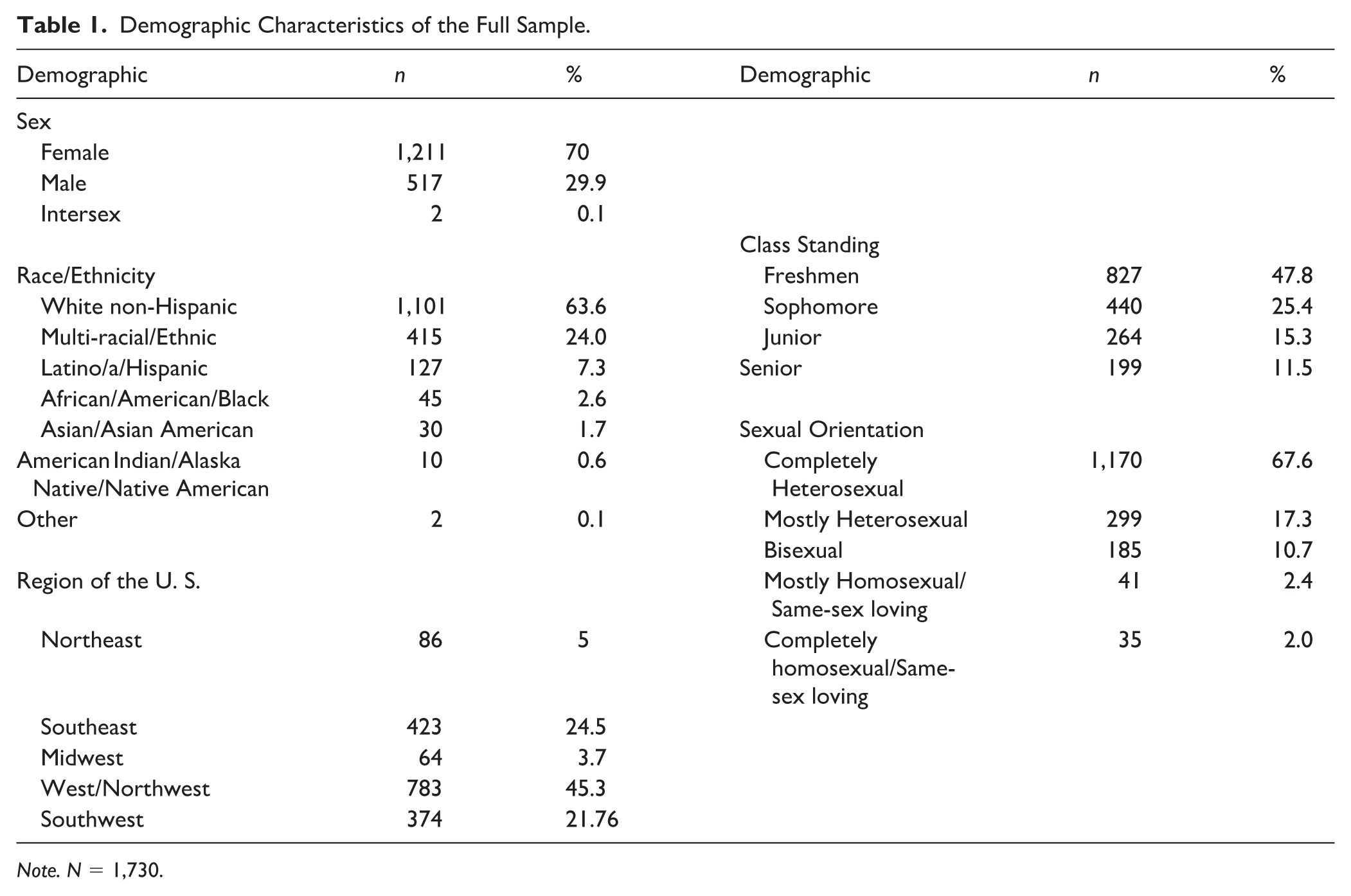
Note. N = 1,730.
Measures
Protective Behavioral Strategy Use
The PBSS-20 (Treloar et al., 2015) is a measure of participants’ use of alcohol protective behavioral strategies. The measure consists of 20 six-point Likert-type scale items ranging from 1 “never” to 6 “always.” The PBSS-20 consists of three subscales: Stopping/Limiting Drinking (SLD), Manner of Drinking (MOD), and Serious Harm Reduction (SHR). The SLD subscale score (7 items) ranges from 7 to 42, the MOD subscale score (5 items) ranges from 5 to 30, and the SHR subscale score (8 items) ranges from 8 to 48. The PBSS-20 total score was obtained by summing the scores from all 20 items across all three subscales and ranged from 20 to 120. Higher subscale scores indicated greater use of each SLD, MOD, and SHR strategies, respectively, and a higher PBSS-20 total score meant greater use of all PBSA strategies. The PBSS-20 has demonstrated very good internal consistency in studies examining alcohol use among college students: SLD (α = .87), MOD (α = .87), and SHR (α = .93; Lemoine et al., 2020). The PBSS-20 total score (α = .87) and each subscale score, SLD (α = .83), MOD (α = .78), and SHR (α = .76), had acceptable internal consistency for the current sample.
Typical Weekly Drinking
The Daily Drinking Questionnaire (DDQ; Collins et al., 1985) is a measure of typical weekly drinking rates. Participants who indicated they drank alcohol within the previous 30 days received images of standard drinks, which included one shot of hard liquor, 5 oz. of wine, 10 oz. of a wine cooler, and 12 oz. of beer, and were asked to indicate how many standard drinks they consumed within the previous week. Typical weekly drinks reported by participants were summed to indicate the total number of standard drinks consumed.
Alcohol-Related Negative Consequences
The Brief Young Adult Alcohol Consequences Questionnaire (B-YAACQ; Kahler et al., 2005) is a measure of alcohol-related negative consequences among college students. The measure consists of 24 binary items, with participants responding with either 0 “no” or 1 “yes.” Examples of items include, “I have had a hangover (headache, sick stomach) the morning after I have been drinking” and “The quality of my work or schoolwork has suffered because of my drinking.” Responses are summed to produce a total score ranging from 0 to 24, with higher scores indicating more alcohol-related negative consequences. Internal consistency was adequate (α = .83) in the development study (Kahler et al., 2005) and strong (α = .91) in a more recent study using a college student sample (Hoover et al., 2023). Furthermore, the B-YAACQ had evidence of good internal consistency (α = .84) and test–retest reliability (α = .89) when administered at a six-week follow-up point (Kahler et al., 2008). The B-YAACQ demonstrated good internal consistency for the current sample (α = .88).
Hazardous Alcohol Use
The Alcohol Use Disorder Identification Test-United States-Consumption Subscale (AUDIT-US-C; CDC, 2014) is a screening measure to evaluate harmful alcohol use within the college student sample. The AUDIT-US-C consists of the first three items of the United States-Alcohol Use Disorder Identification Test (US-AUDIT; Babor et al., 2017), which measure alcohol consumption according to United States recommendations rather than by the World Health Organization (Higgins-Biddle & Babor, 2018). Items include “How often do you have a drink containing alcohol?” “How many drinks containing alcohol do you have on a typical day you are drinking?” and “How often do you have 5 or more drinks for men or 4 or more drinks for women on one occasion?” The three items utilize a seven-point scale, with items one and three ranging from 0 “Never” to 6 “Daily,” and item two ranging from 0 “1 drink” to 6 “10 or more drinks.” Total scores on the measure are the sum of the three items, ranging from 0 to 18, with higher scores indicating more hazardous drinking either daily or on one occasion. The AUDIT-US-C demonstrated adequate internal consistency (α = .67) previously when used with a college student sample (Hoover et al., 2023) and for the current sample (α = .71).
Data Analytic Plan
The current study’s data were analyzed using Mplus, version 8.10 (Muthén & Muthén, 2021) and IBM SPSS Statistics, version 27 (IBM Corp, 2026). We reported how we determined our sample size, all data exclusions, all manipulations, and all measures in the present study, and we follow Journal Article Reporting Standards (JARS; Kazak, 2018). A confirmatory factor analysis (CFA) using maximum likelihood estimation was conducted to evaluate the first-order three latent factor structure of the PBSS-20 found by Treloar and colleagues (2015) with a large nationally recruited sample of college students. The planned fit indicators used to evaluate the models included the comparative fit index (CFI), the root-mean-square error approximation (RMSEA), and the chi-square test. Good fit was based on the threshold of CFI >.95 and RMSE <.06, with an adequate fit based on a CFI >.90 and an RMSE <.08 (Bentler & Bonett, 1980; Browne & Cudeck, 1992; Hu & Bentler, 1998). Finally, factor loadings for the model were interpreted as high (.70), moderate (.50), or low (.35; Clark & Bowles, 2018).
To evaluate whether the PBSS-20 would demonstrate variance between sexual and non-sexual minority college students, a comparison of a freely estimated model to a fully constrained model occurred. A significant change in the CFI (> .01) or RMSEA (> .015) indicated a meaningful difference in the model between sexual and non-sexual minority college students (Chen, 2007). If a significant difference between the freely estimated and fully constrained model was found, further invariance testing occurred between a freely estimated model and models with specific parameters becoming more constrained. As constraints were added to the model, the model fit was expected to deteriorate. A χ2 difference test was used to compare the models to determine if the decrement in fit was statistically significant. Finally, using the criteria proposed by Hu and Bentler (1998), the overall model fit indices, including CFI, RMSEA, and χ2, were used to examine each model. Consistent with recommended practices by the CDC (2022) for the operationalization of sexual minority status, any individual who self-identified as anything other than exclusively heterosexual was classified within the sexual minority group for the current study. Therefore, participants were classified as sexual minority students (n = 560) if they selected any of the following options as best describing themselves: “Mostly heterosexual,” “Bisexual,” “Mostly homosexual/same-sex loving,” or “Completely homosexual/same-sex loving.” Participants were classified as non-sexual minority students (n = 1,170) if they selected “Completely heterosexual.” To ensure this binary categorization best reflected participants’ sexual identity, we examined correlations between self-reported sexual identity and measures of physical, sexual, and emotional attraction to men, women, and other gender identities. The binary sexual minority classification variable (non-sexual minority student vs. sexual minority student) had significant positive correlations with physical, sexual, and emotional attraction to men, women, and other gender identities, suggesting the binary categorization is indeed reflective of participants’ more nuanced sexual attraction and preferences, and therefore an appropriate operationalization of sexual identity in the present study. Invariance testing continued with three subscale latent factors combined to form a second-order total score factor, which indicated total PBSA use and represented the overall construct of PBSA.
To evaluate the construct validity of the PBSS-20, bivariate correlational analyses were conducted for all measures, which included the PBSS-20 total score and all three subscale scores (i.e., SLD, MOD, and SHR) with typical weekly drinking (DDQ), alcohol-related negative consequences (B-YAACQ), and hazardous alcohol use (AUDIT-US-C). These correlations were run for the total sample as well as for participants who identified as sexual minorities and non-sexual minorities separately.
Results
Summary Statistics
Means, standard deviations, and intercorrelations for all study measures are presented for the entire sample in Table 2. The entire sample, on average, reported drinking about 10.6 standard drinks per week (SD = 9.44), experienced 6.57 (SD = 4.94) alcohol-related negative consequences within the past 30 days, and averaged a score of 6.11 on the AUDIT-US-C (SD = 2.77). Students, on average, utilized SHR strategies the most (M = 42.10, SD = 5.50), followed by SLD strategies (M = 25.29, SD = 7.81), and finally MOD strategies (M = 17.13, SD = 5.46). In addition, means and standard deviations for all study measures are presented for sexual and non-sexual minority students in Table 2.
Full Sample Means, Standard Deviations, and Intercorrelations.
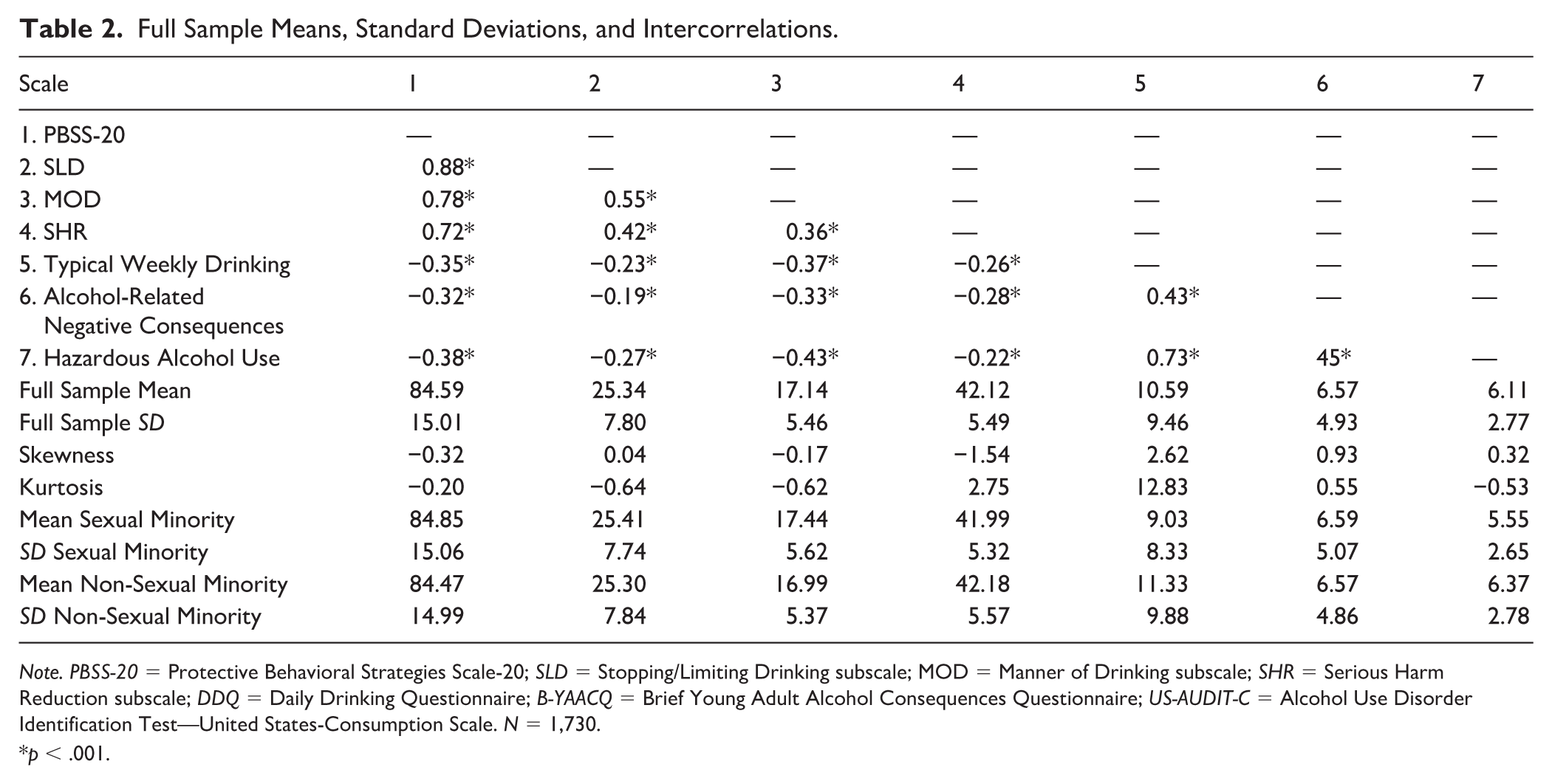
Note. PBSS-20 = Protective Behavioral Strategies Scale-20; SLD = Stopping/Limiting Drinking subscale; MOD = Manner of Drinking subscale; SHR = Serious Harm Reduction subscale; DDQ = Daily Drinking Questionnaire; B-YAACQ = Brief Young Adult Alcohol Consequences Questionnaire; US-AUDIT-C = Alcohol Use Disorder Identification Test—United States-Consumption Scale. N = 1,730.
p < .001.
Validating the PBSS-20 for the Entire Sample
As seen in Table 3, the three latent factors, first-order model of the PBSS-20, showed less than adequate fit to the data, MLχ2 (167) = 1,622.656, p < .001, RMSEA = 0.071 (90% CI = 0.068, 0.074; p < .001), CFI = 0.871, TLI = 0.853. Specifically, the CFI value fell below the recommended criteria for an adequate model fit, despite the RMSEA value indicating an adequate model fit. Given that no theoretical justification existed for altering the model, other psychometric approaches were considered. Exploratory structural equation modeling (ESEM) assesses model fit in both a confirmatory and exploratory manner (Morin et al., 2020). This method is preferred over CFA, given that previous research has indicated that CFA is too restrictive for most multidimensional measures within psychology (Marsh et al., 2011). Further, the restrictive nature of CFA possibly contributed to the current poor model fit. Therefore, an oblique target rotation ESEM model was first utilized to assess the model fit of the PBSS-20. The oblique target rotation was chosen due to being the most prominent in the literature (van Zyl & ten Klooster, 2022). The oblique target rotation allows items to load onto their hypothesized target factors, while also allowing them to cross-load onto the other factors in an exploratory manner (Reise et al., 2010; Swami et al., 2023). These exploratory cross-loadings are constrained to be as close to zero as possible (Reise et al., 2010; Swami et al., 2023). Finally, this rotation choice allows the three factors to correlate with one another (Reise et al., 2010; Swami et al., 2023). The three latent-factor ESEM model of the PBSS-20 showed adequate fit to the data, MLχ2 (190) = 1,071.080, p < .001, RMSEA = 0.064 (90% CI = 0.060, 0.067; p < .001), CFI = 0.917, TLI = 0.881. All items loaded significantly on their respective target latent factors (all ps < .001), with loadings of .23 and above. The correlations among all three subscale scores were significant (all ps < .001), with correlation coefficients ranging from .38 to .60.
Model Comparisons of the PBSS-20.
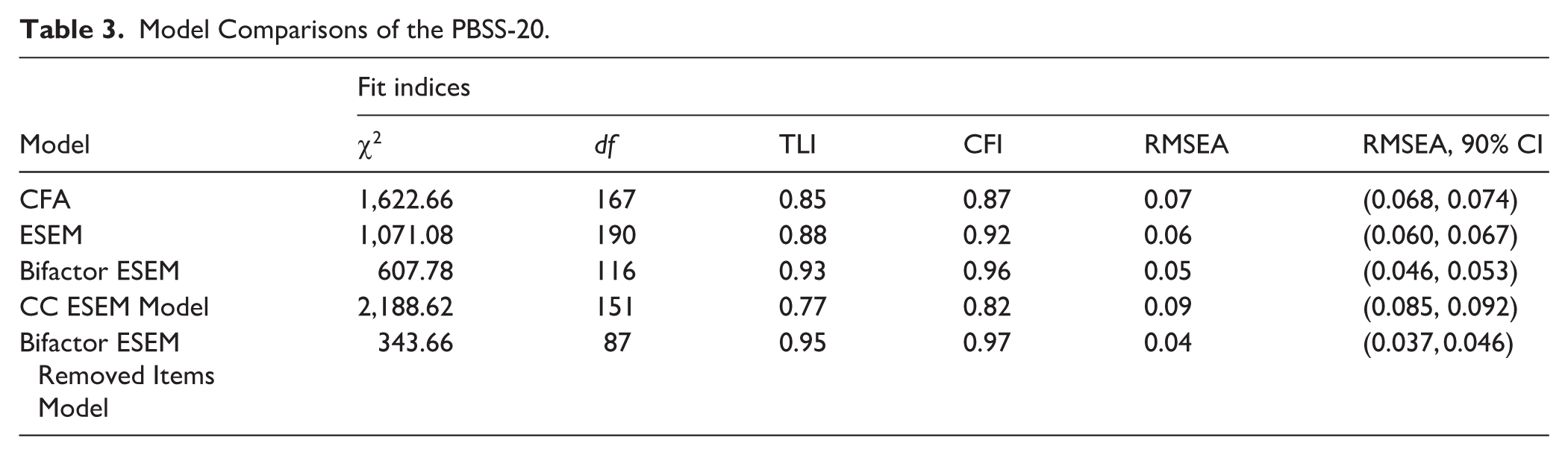
Given that the ESEM model had adequate fit statistics, a bifactor ESEM model was conducted to assess the model fit given the theoretical hierarchical nature of the measure. Bifactor ESEM is preferred when a measure is theorized to have a higher-order construct, such as the PBSS-20 total score in the current study (Gegenfurtner, 2022; Morin et al., 2020). An orthogonal target rotation bifactor ESEM model was conducted, including the PBSS-20 total score as a global factor. The target orthogonal rotation is the preferred method in the literature for bifactor models and performs similarly to the oblique target rotation, with the notable difference of excluding factor correlations (Gegenfurtner, 2022; Morin et al., 2020; van Zyl & ten Klooster, 2022). The bifactor ESEM model of the PBSS-20 showed good fit to the data, MLχ2 (116) = 607.779, p < .001, RMSEA = 0.050 (90% CI = 0.046, 0.053; p < .001), CFI = 0.956, TLI = 0.929. All items significantly loaded on the general factor (i.e., the PBSS-20 total score; ps < .001), ranging from 0.19 to 0.72. However, not all items loaded significantly on their respective target latent factors.
Factor Loadings
Despite adequate model fit for the ESEM model and good fit for the bifactor ESEM model, there were concerns about items with low target loadings. As seen in Table 4, Items 2, “Alternate alcohol and non-alcoholic drinks,” and 6, “Drink water while drinking alcohol,” had low target loadings onto the SLD factor. Further, these two items had significant negative loadings onto the target SLD factor (ps < .001) when introducing the global factor (i.e., the PBSS-20 total score) in the bifactor ESEM model. Moreover, numerous items had low target loadings on the SLD factor in the bifactor ESEM model, seen in Table 4. In addition, Item 18, “Avoid combining alcohol with marijuana,” had a significant, but low positive target loading (p < .05) onto the SHR factor in both models. To remedy these concerns, some exploratory models were examined.
PBSS-20 Standardized Factor Loadings and Factor Correlations.
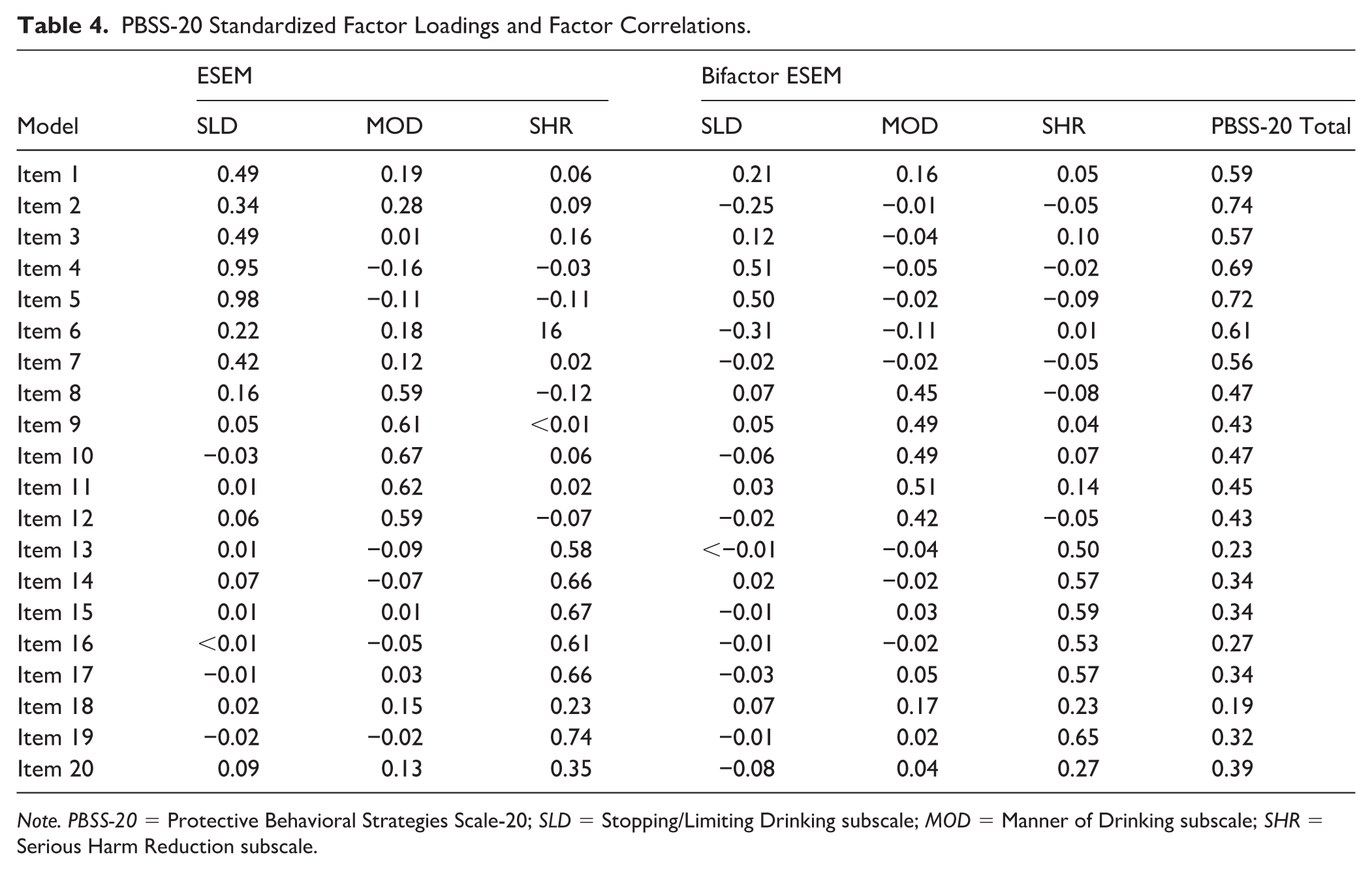
Note. PBSS-20 = Protective Behavioral Strategies Scale-20; SLD = Stopping/Limiting Drinking subscale; MOD = Manner of Drinking subscale; SHR = Serious Harm Reduction subscale.
A model with the SLD and MOD factors collapsed together was first examined. Previous models have demonstrated that those constructs were better represented by a Controlled Consumption factor, such as in the PBSS-R (Madson, Arnau, et al., 2013). This exploratory model resulted in a poor model fit, MLχ2 (151) = 2,188.62, p < .001, RMSEA = 0.088 (90% CI = 0.085, 0.092, p < .001), CFI = 0.820, TLI = 0.773. Given this, another exploratory model was examined, where items two and six were removed from the model to assess target loadings for the other SLD items in the bifactor ESEM model. IRT analyses have demonstrated significant differences in discrimination for both items among college males and females (Blanchard et al., 2021), and the development of the Protective Drinking Practices Scale (PDPS) utilizing IRT analysis (Martin et al., 2020) retained Item 2 but did not retain Item 6. In addition, when conducting invariance testing of PBSA among Black and White college students, error terms for both items were allowed to correlate due to modification indices identifying that the content of the items likely overlapped (Martin et al., 2019). Despite these findings, neither item was modified, and no single item was created to include the content of both items in any psychometric study. Therefore, both items were removed from the measure in the current study to examine the target loadings of the other SLD items in the bifactor ESEM model. This resulted in an inadmissible solution. Specifically, Item 13 “Use a designated driver,” produced a negative residual variance and had a correlation greater than one (i.e., 1.25). This result suggested potential multicollinearity, thus limiting the model’s interpretability based on prior guidelines within the psychometric literature (Reise et al., 2013). In addition, numerous items still had low target loadings onto the SLD factor. Given that theoretical justifications for altering the model further were not warranted, the original PBSS-20 model was retained, and invariance testing was conducted for both the ESEM and bifactor ESEM models to examine if the potential low target loadings were a result of variance between the sexual and non-sexual minority groups.
Invariance Testing
Invariance testing was used to compare the reliability of the PBSS-20 for both non-sexual and sexual minority groups. As seen in Table 5, the PBSS-20 demonstrated configural (i.e., freely constrained), metric (i.e., factor loadings constrained), and scalar invariance (i.e., factor loadings and item intercepts constrained) between the sexual and non-sexual minority groups for the ESEM model. Further, the scalar model with the 3 first-order correlations constrained also demonstrated invariance between both groups. This was due to the Wald test of parameter constraints being non-significant, W(3) = 3.06, p = .38, indicating no significant differences for the model fit between the two groups. All items for both groups loaded significantly on their respective target factors for all models (all ps < .001), with loadings of .30 and above for all models. Factor correlations between the three subscales were significant for both models (all ps < .001), ranging from 0.42 to 0.69 for sexual minority college students and from 0.42 to 0.63 for non-sexual minority college students for the configural invariant model. The metric invariant model factor correlations ranged from 0.41 to 0.62 for non-sexual minority college students and from 0.43 to 0.70 for sexual minority college students. Factor correlations ranged from 0.41 to 0.62 for non-sexual minority college students and from 0.43 to 0.70 for sexual minority college students for the scalar invariant model. Finally, the scalar invariant model with the additional factor correlations constrained had factor correlations that ranged from 0.41 to 0.62 for non-sexual minority students and from 0.43 to 0.70 for sexual minority students. Residual variances were checked to confirm that they were non-negative for both groups before proceeding with further model constraints.
Tests of Invariance for the PBSS-20 Factors.
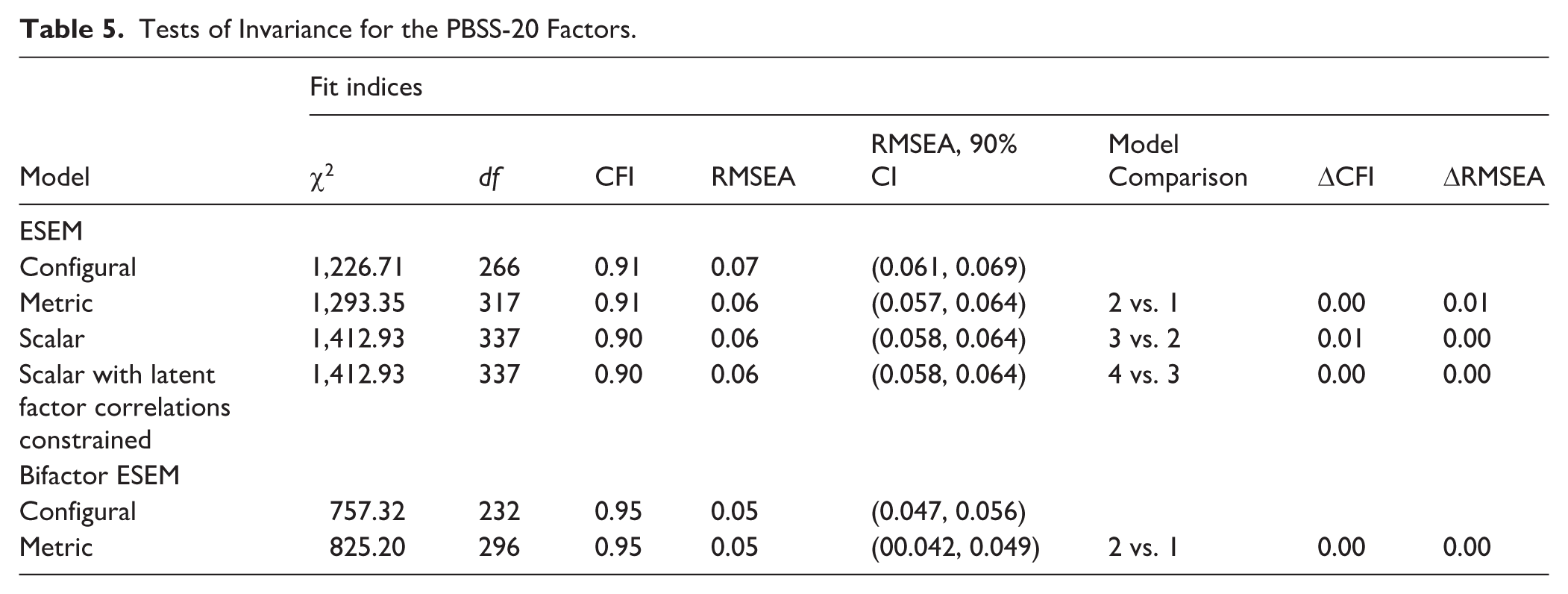
Invariance testing was then conducted for the bifactor ESEM model. As seen in Table 5, the PBSS-20 demonstrated configural (i.e., freely constrained), metric (i.e., factor loadings constrained), and scalar invariance (i.e., factor loadings and item intercepts constrained) between the sexual and non-sexual minority groups for the bifactor ESEM model. An image of the ESEM model, including factor correlations, can be seen in Figure 1, with the ESEM bifactor model shown in Figure 2.
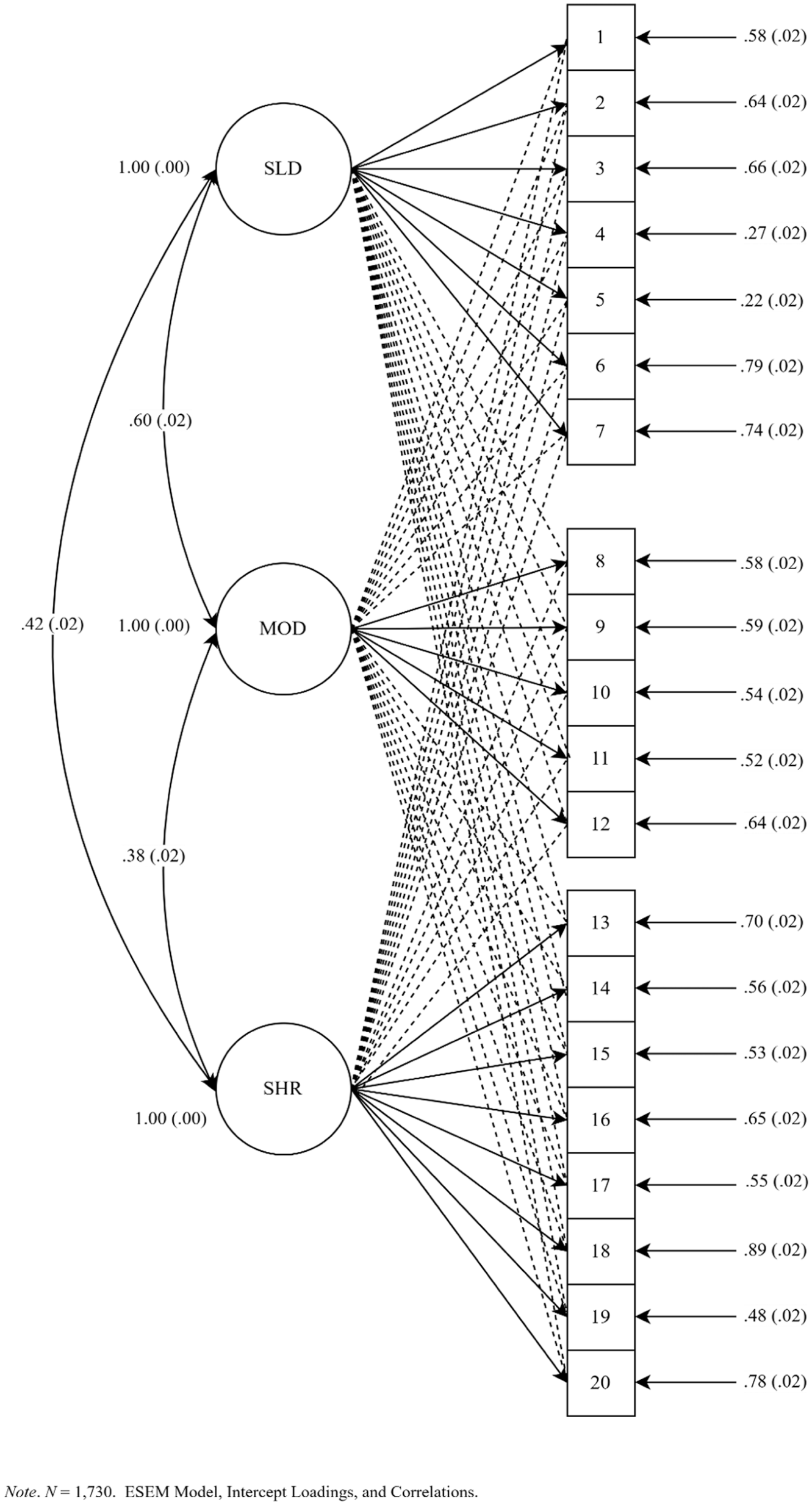
ESEM model of the PBSS-20 for a large national sample.
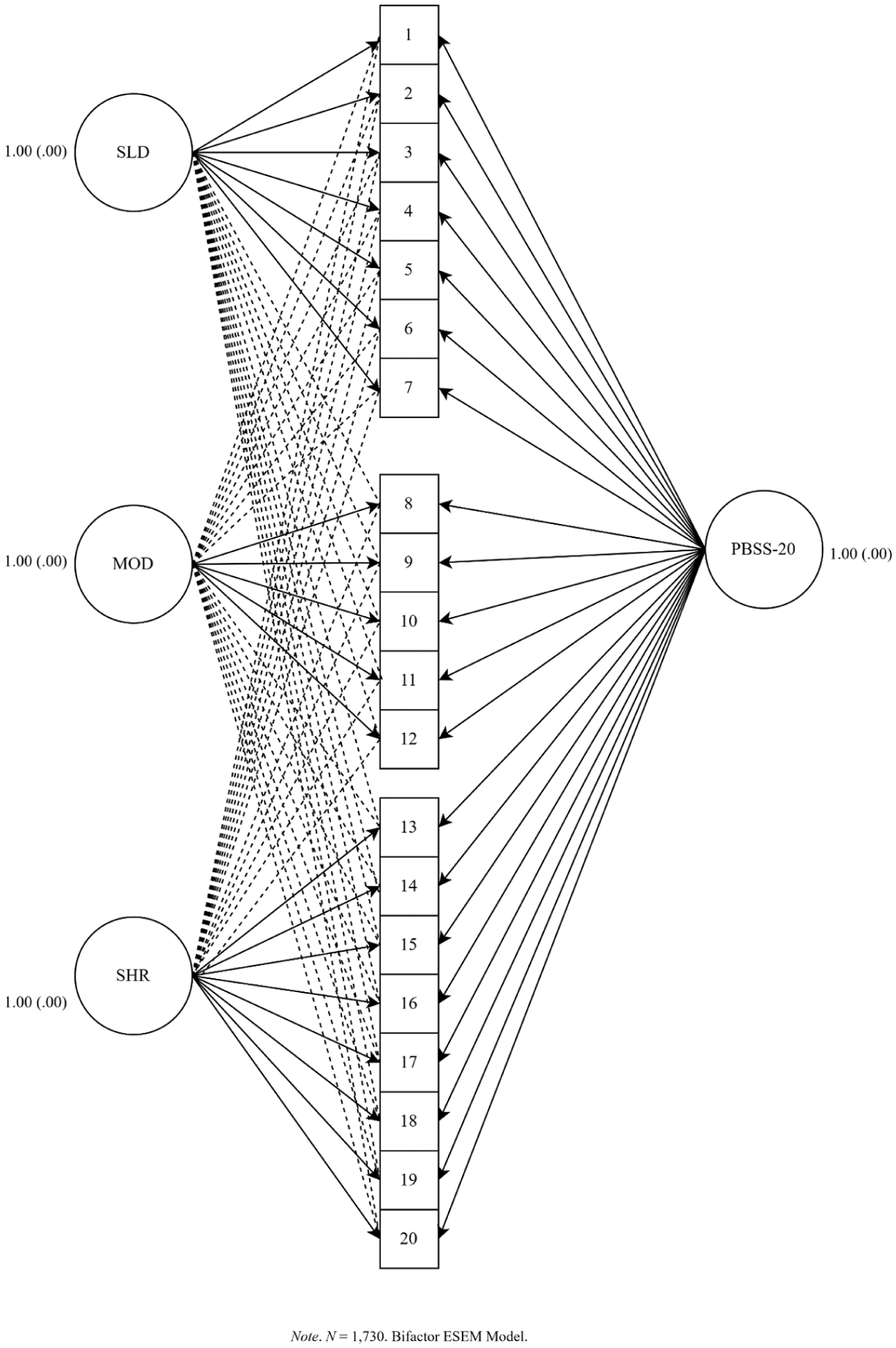
Bifactor ESEM model of the PBSS-20 for a large national sample.
Construct Validity
The PBSS-20 total score and each subscale score had significant negative correlations (all ps < .001) with typical weekly drinking (DDQ), alcohol-related negative consequences (B-YAACQ), and hazardous alcohol use (AUDIT-US-C) for the full sample, as seen in Table 6. In addition, the PBSS-20 total score and each subscale score had significant negative correlations (all ps < .001) with all alcohol outcome measures for both the sexual minority student sample and the non-sexual minority student sample separately. These results suggest that greater utilization of each type of PBSA and total PBSA has significant negative associations with typical weekly drinking, hazardous alcohol use, and alcohol-related negative consequences. This suggests that, for the entire sample as well as for the non-sexual minority and sexual minority groups, the PBSS-20 demonstrated good construct validity with other constructs related to alcohol use and related behaviors.
Full Sample Construct Validity Correlations.
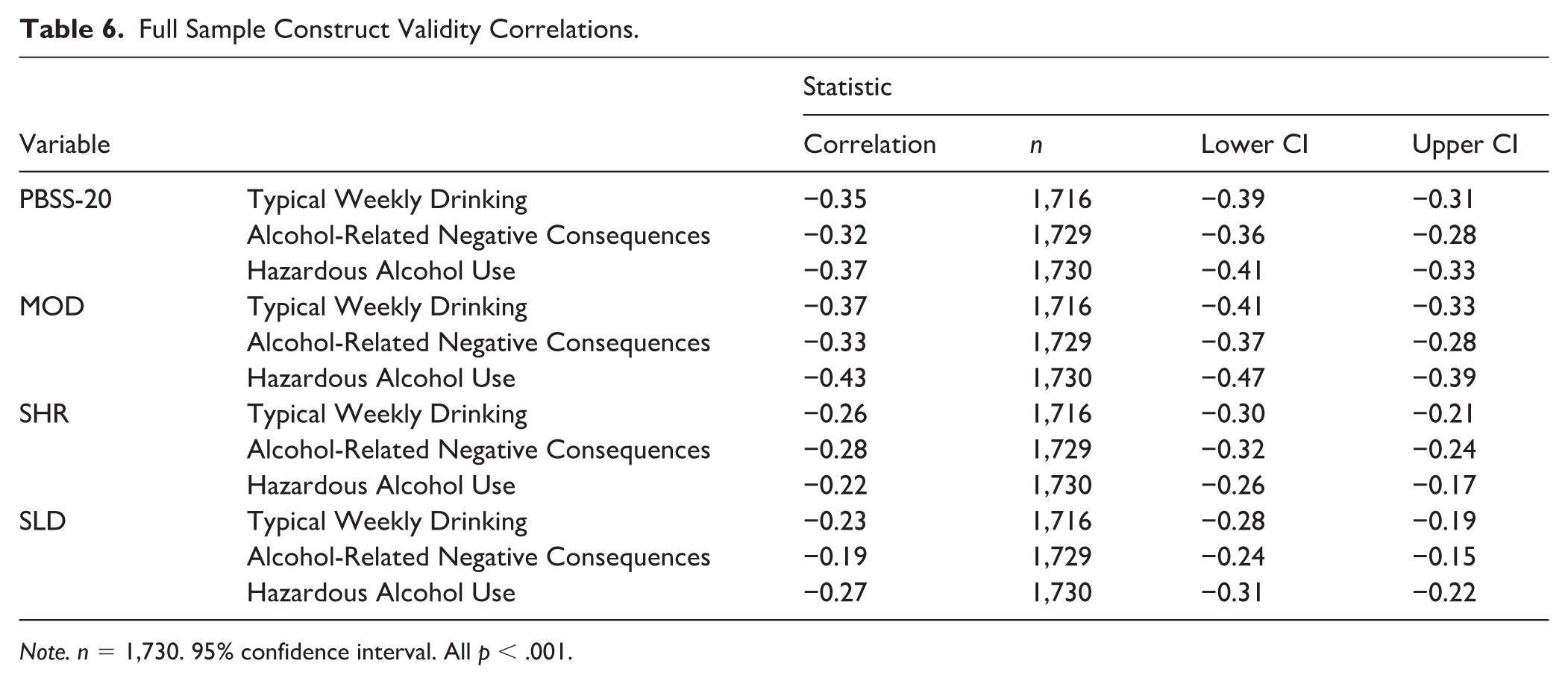
Note. n = 1,730. 95% confidence interval. All p < .001.
These correlations were examined to determine if statistically significant differences in the sizes of correlations occurred between the PBSS-20 and other variables. Both the MOD and SLD factors had significantly larger correlations in relation to hazardous alcohol use, compared to their association with alcohol-related negative consequences (ps ≤ .001) for the entire sample. There were no significant differences in correlation sizes for sexual minority students. Among the non-sexual minority group, statistically significant differences in the sizes of correlations occurred between the PBSS-20 total, MOD, and SLD factors in relation to hazardous alcohol use, compared to their associations with alcohol-related negative consequences (ps ≤ .05). Overall, these differences suggest that MOD, SLD, and the total score had significantly greater negative associations with hazardous alcohol use, compared to alcohol-related negative consequences for non-sexual minority students.
Discussion
The purpose of this study was to evaluate the psychometric properties of the PBSS-20 within a nationally recruited sample of college students and to determine if the measure functioned similarly among sexual and non-sexual minority college students. The hypothesized PBSS-20 factor structure demonstrated adequate model fit within a large nationally recruited sample, advancing the utility of the PBSS-20. The relationships among the three subscales provided evidence that they accurately represent distinctly different PBSA strategies, and therefore, the 3 first-order factors should be retained. Thus, the current findings extend the generalizability of using the PBSS-20 in its current form among college and university campuses across the United States as an effective harm reduction measure in both clinical and research settings. Despite the adequate and good model fit of the PBSS-20 within the current study, our data demonstrate concerns regarding item loadings when utilizing ESEM and bifactor ESEM analyses. Specifically, items two, “Alternate alcohol and non-alcoholic drinks,” and six, “Drink water while drinking alcohol,” demonstrated low target loadings in both models. Prior studies have identified the similarity between these two items, noting their content overlaps (Martin et al., 2019), and it could be hard for respondents to distinguish the nuances that exist between these behaviors. Further research should examine whether the two items should be rewritten to ensure they are more distinguishable by participants, thus measuring different aspects of the SLD factor, or if they should be combined into a single, more generalizable item. In addition, future work may indicate that only item two should be retained, such as in the PDPS (Martin et al., 2020). Regarding the low target loading for Item 18, “Avoid combining alcohol with marijuana,” previous IRT analysis has demonstrated the item’s removal when creating the PDPS (Martin et al., 2020). It is possible the item is loading poorly in the current model due to the item assessing simultaneous alcohol and cannabis use, and research is being conducted to better assess PBS in relation to simultaneous alcohol and cannabis use (Teasdale & Schepis, 2025). Finally, the low target loadings could be due to prior literature assuming that the distinct types of PBSA are separate, but related constructs (i.e., the subscales), that combine to reflect overall PBSA use (i.e., the total score; Cox et al., 2024; Pearson, 2013). However, the present study is one of the first to simultaneously examine the relationships of the PBSS-20 items with their target factors, in conjunction with a global factor representing the PBSS-20 total score. Our findings suggest that the items loading onto the SLD factor perform poorly when also accounting for the total score. Therefore, further research using IRT, ESEM, and bifactor ESEM analyses could determine whether the PBSS-20 should be used without a total score, or to help modify items within the SLD factor if the total score is to be retained, to create a more generalizable and comprehensive model.
Lack of significant variance in the PBSS-20 suggests the measure functions similarly across sexual and non-sexual minority college students. Therefore, similarities and differences in PBSA utilization among both groups (i.e., means on the PBSS-20 total and subscale scores) are presumed to be due to true differences in the use of this construct, and not due to scores being largely influenced by error in the measure’s construction. Evidence for the PBSS-20 functioning similarly among both groups is consistent with prior psychometric research evaluating PBSA measures among differing groups of college students, such as the PBSS-R (Madson, Arnau, et al., 2013) and the PBSS-20 Spanish-adapted version (Sánchez-García et al., 2020). In addition, the low target factor loadings within the current study were not due to variability of the measure between sexual and non-sexual minority students. Overall, the current study provides early evidence that the measure is appropriate for use with sexual minority college students.
The PBSS-20 demonstrated good construct validity for both the entire sample and sexual and non-sexual minority students separately. Correlations provided evidence that the PBSS-20 measured what the developers intended to measure and is appropriately related to weekly drinking behaviors, problematic drinking, and negative consequences associated with alcohol use with both non-sexual minority college students (Hoover et al., 2023; Jordan et al., 2021; Martin et al., 2019) and sexual minority college students (Ebersole et al., 2012, 2015). The significant differences in the sizes of correlations could suggest further refinement of the measure, particularly among the SLD factor and its relation to typical weekly drinking, hazardous alcohol use, and alcohol-related negative consequences. Further, the significantly larger correlations for the MOD and SLD factors in relation to hazardous alcohol use as compared to alcohol-related negative consequences provide support for further examining the measure, given these harm reduction strategies are specifically designed to protect against alcohol-related negative consequences (Cox et al., 2024; Martens et al., 2004; Pearson, 2013).
Research and Clinical Implications
The current study has several implications. Clinically, the components of the measure can be used to educate and provide feedback to sexual and non-sexual minority college students across the United States regarding their use of harm reduction strategies in relation to their hazardous alcohol use and alcohol-related negative consequences. The results of the current study allow researchers to accurately assess group similarities and differences between sexual and non-sexual minority college students based on mean scores on the PBSS-20. Future research should focus on evaluating the measure further among more accurate representations of sexual minority college students, as well as different subgroups of sexual minority college students (i.e., bisexual versus lesbian college students; bisexual versus non-sexual minority college students), to determine if the measure functions similarly with different operationalizations of sexual minority status. This would be an important next step in clarifying whether alcohol use differs for sexual minority students, given that the literature is mixed to date. Furthermore, the measure should be evaluated with other minority groups of college students, such as gender minority individuals (i.e., transgender college students), to further evaluate the generalizability and utility of the measure.
Given the utility of the PBSS-20 with sexual minority college students, it is important to then investigate how these students utilize PBSA in relation to social cognitive factors, contextual factors (Coulter et al., 2016), and social and mental health factors (Kalb et al., 2018). In addition, more college campuses are becoming inclusive spaces for sexual minority college students (Woodford & Kulick, 2014), which could change the social landscape and reduce disparities in drinking behaviors demonstrated in previous research among sexual and non-sexual minority college students. Finally, it would be advantageous to evaluate specific strategy differences in PBSA use among non-sexual and sexual minority college students or within-group differences among sexual minority college students to further understand if the individual strategies are being utilized similarly.
Strengths and Limitations
The current study has several limitations. The manner in which sexual orientation was operationally defined for this study may not capture the full nuance of sexual identity. Specifically, it is possible that individuals who reported they were “mostly heterosexual” and classified as sexual minority students might not see themselves as such, which could conflate the findings. As the field of psychology continues to investigate how to conceptualize sexual orientation, gender identity, and gender expression, more research evaluating how this measure, and other PBS measures, function among individuals who identify as sexual minorities is warranted. Indeed, there are notable differences in bisexual individuals’ alcohol use behaviors and negative consequences, relative to straight and gay/lesbian individuals (Jasinski & Ford, 2007; McCabe et al., 2005). It is possible that this research could explain the low target factor loadings found within the current study. Gender minority individuals were excluded from the current study due to an extremely low sample size. Given that alcohol use disparities exist for gender minority individuals relative to other sexual minority, non-sexual minority, and non-gender minority individuals (Gilmore et al., 2024; Hughto et al., 2021), further research would benefit from psychometrically evaluating this measure among this population to further develop a more generalized measure. Further research should also attempt to establish a systematic method of operationalizing gender and sexual orientation to appropriately categorize individuals to facilitate meaningful comparisons across studies.
In addition, data were collected during the COVID-19 pandemic, and differing drinking behaviors occurred during this time among college students (Graupensperger et al., 2021; Jackson et al., 2021). Specifically, typical weekly drinking rates were generally lower among college students during the pandemic (Graupensperger et al., 2021), a trend that is also reflected in this study’s sample. Further, means of PBSA usage were higher in the current study compared to studies before and after the COVID-19 pandemic (Ebersole et al., 2015; Hoover et al., 2023; Treloar et al., 2015), potentially limiting the generalizability of the results to only representing PBSA during the COVID-19 pandemic. Most of our sample was White non-Hispanic, female, and resided within the West and Northwest regions of the country, limiting the generalizability of the current findings. Indeed, PBSA differences exist among different racial groups, by sex assigned at birth, and among the major regions of the country (Blanchard et al., 2021; Treloar et al., 2014; Walters et al., 2007). Therefore, further research with more balanced demographic characteristics would help the utility of the measure and allow the measure to be more generalizable to the differing groups of college students across the country. Finally, while the sample sizes for each group in the current study were very large, the difference in sample sizes between the sexual and non-sexual minority groups could make it more difficult to detect true variance if it existed. Indeed, the chi-square test statistic is weighted by each group’s size; therefore, it is possible that the model fits well within the non-sexual minority group but contains non-invariant parameters in the sexual minority group (Brown, 2006). Therefore, non-invariance might be masked due to the model fit within the larger group (Brown, 2006). This problem has been observed in other psychometric evaluation studies using PBSA measures (Madson, Arnau, et al., 2013), and may be inherent to research on minority groups, as they are by nature smaller than majority groups.
Overall, the current study has a major strength in the large nationally recruited sample of college students utilized. This sample helps generalize the use of the measure across areas of the country that have slightly differing drinking behaviors. The current study provides evidence that the PBSS-20 is appropriate to use with sexual minority college students, further expanding the utility of the measure. Finally, the current study’s findings appear promising; further replication and psychometric evaluation of the PBSS-20 with post-pandemic and more diverse samples are still needed, but the present study offers evidence supporting the use of the PBSS-20 with sexual and non-sexual minority college students.
Conclusion
In summary, the current study provides more evidence for the utility of the PBSS-20 scale with differing groups of college students across the country and provides recommendations for its improvement and reevaluation. Further, the study established invariance across sexual minority status and increased the interpretability of the scale by confirming a higher-order factor model. Finally, our assessment of construct validity demonstrated that an increased use of alcohol protective behavioral strategies for both sexual and non-sexual minority college students is associated with fewer alcohol-related negative consequences experienced and less hazardous alcohol use. These findings support the refinement of the PBSS-20 scale and have implications for college student harm reduction.
Footnotes

Ethical Considerations
A single-site institutional review board (IRB) approved the study’s procedures (i.e., The University of Southern Mississippi, protocol number 24-0379).
Informed Consent Statement
Eligible participants reviewed an electronic consent form, and consenting participants then proceeded to an hour-long online survey in which they were compensated for participation with research credits within the original, larger study.
Author Contributions
The primary author and the coauthors are responsible for the following tasks:
Alex W. Melville: Conceptualization, data curation, formal analysis, investigation, methodology, project administration, software, writing original draft, writing – review & editing. Ashley C. T. Jones: Investigation, project administration, writing – review & editing. Richard S. Mohn: Formal analysis, software. Eric R. Dahlen: Writing – review & editing. Michael B. Madson: Conceptualization, data curation, investigation, methodology, writing – review & editing. Harm Reduction Research Team: Data curation, resources.
Funding
The authors received no financial support for the research, authorship, and/or publication of this article.
Declaration of Conflicting Interests
The authors declared no potential conflicts of interest with respect to the research, authorship, and/or publication of this article.