







Abstract
This article deals with the development and use of different gradient beam theories in order to predict the vibrational behavior of single-walled carbon nanotubes (SWCNTs). To address the problem of free vibration, the Euler–Bernoulli and Timoshenko beam theories in conjunction with the gradient elasticity theories including stress, strain and combined strain/inertia are implemented. The generalized differential quadrature method is employed to numerically solve the problem which can treat various boundary conditions. The results generated from the present gradient models are compared with those from molecular dynamics simulations as a benchmark of good accuracy and the proper values of small length scales used in the gradient models are proposed. This study shows prominent differences between various gradient models when the nanotube becomes very short (for aspect ratios of approximately lower than six). It is indicated that applying the strain gradient elasticity by incorporation of inertia gradients yields more reliable results especially for shorter length SWCNTs on account of two small-scale factors related to the inertia and strain gradients. Moreover, since with the reduction in the aspect ratio of nanotubes the effects of boundary conditions become dominant, a discussion is given to investigate the influence of end conditions on the vibrational characteristics of SWCNTs.
Keywords
1. Introduction
Of all of the nanostructured materials, carbon nanotubes (CNTs) (Iijima, 1991) have acquired paramount importance in the context of nanotechnology, as evidenced by the large number of research papers that have emerged in the technical literature. This is mainly due to their remarkable physical, electrical, and mechanical properties (Rafii-Tabar, 2004; Ho et al., 2004; Manchado et al., 2005; Sumfleth et al., 2010; Bellucci, 2008). Investigations on mechanical characteristics of CNTs have focused both on theoretical and experimental methods. Since performing controlled experiments at the nanometer scale is very complicated and prohibitively expensive, the theoretical modeling and analysis of nanostructured materials has become increasingly important.
The theoretical modeling of nanomaterials can be divided into two main categories: atomistic models and continuum models. In spite of the ascendency of the atomistic models compared with the continuum-based models, in engineering applications where the structures may be in a scale of several micrometers, the atomistic simulation will be computationally expensive which makes it difficult to analyze such structures. Consequently, continuum models have been one of the most applied models in this field due to their computational efficiency as well as satisfactory accuracy. Many researchers have successfully applied the continuum mechanics to describe the mechanical behavior of nanostructures (Pantano et al., 2004; Dequesnes et al., 2004; Gibson et al., 2007; Ouakad and Younis, 2010, 2011a,b; Ansari and Hemmatnezhad, 2011; Ansari et al., 2011a,b,c,d,e,f,g,h). However, the classical continuum models have a serious shortcoming; the size effects cannot be captured by these models. Hence, the extension of the classical continuum mechanics to accommodate the size dependence of nanostructures becomes a topic of major concern. So far, different modified continuum theories have been developed to solve boundary-value problems by the concentration on the size effects and elimination of singularities from crack tips and dislocation lines which can be categorized into two groups: integral models and gradient models. According to Eringen (1983, 2002), in the integral models, the nonlocal terms are incorporated into integral equations of elasticity. Eringen’s nonlocal elasticity has gained much popularity among the research workers owing to its efficiency as well as simplicity in analyzing the behavior of various nanostructures. There are many researches in which the behavior of nanostructured materials is studied via this format of continuum mechanics (Peddieson et al., 2003; Sudak, 2003; Wang, 2005; Li and Kardomateas, 2007; Hu et al., 2008; Shen and Zhang, 2010a,b; Ansari et al., 2010a,b, 2011a,b,c,d,e,f,g,h, Ansari and Rouhi, 2011) The gradient elasticity theories initiated by Aifantis (1984) can also be regarded as alternative approaches to the nonlocal elasticity.
More recently, attention has focused on the gradient elasticity theories to study the size effect on different problems of nano- and micro-structures (Askes and Aifantis, 2009; Wang, 2010; Aifantis, 2011; Akgoz and Civalek, 2011). However, to the best of the authors’ knowledge, a few papers published on the application of these theories to CNT problems. In addition, short CNTs are finding significant application in nanodevices (Yoon et al., 2011) and there are a number of research papers in which the behavior of CNTs in the aspect ratio range of
Motivated by this, in the present work the authors investigate the vibrational characteristics of SWCNTs on the basis of different gradient elasticity theories with the focus on lower values of aspect ratio. To this end, the Euler–Bernoulli beam (EBB) and Timoshenko beam (TB) theories are implemented into which the stress gradient (or nonlocal), strain gradient and combined strain/inertia gradient theories are incorporated. Since the boundary conditions considerably affect the mechanical behavior of nanostructured materials (Ansari et al., 2011a,b,c,d,e,f,g,h), developing powerful numerical solution methods capable of treating different boundary conditions is undoubtedly essential and can play an important role in the advancement of nanotechnology. Thus, to obtain the natural frequencies of SWCNTs with different end conditions, the generalized differential quadrature (GDQ) numerical method has been employed herein. The GDQ method has shown excellent accuracy, efficiency and great potential in solving complicated partial differential equations (Ansari et al., 2010a,b, 2011a,b,c,d,e,f,g,h). To validate the present analysis and in order to obtain the proper values of small length scales used in the gradient theories, molecular dynamics (MD) simulations are also conducted for an armchair SWCNT with different aspect ratios and end conditions. Comparative results between various gradient elasticity theories and also different beam assumptions are presented in predicting the free vibration response of SWCNTs.
2. Gradient elasticity theories
According to Eringen (1983, 2002), in the nonlocal elasticity theory, the stress tensor at a reference point x is considered to be a functional of the strain tensor at all the points of the body. The nonlocal constitutive equation in the stress gradient (nonlocal) theory can be given as


3. Beam theories on the basis of gradient elasticity
Consider an SWCNT of length L, Young’s modulus E, Poisson’s ratio ν, shear modulus Schematic of a single-walled carbon nanotube.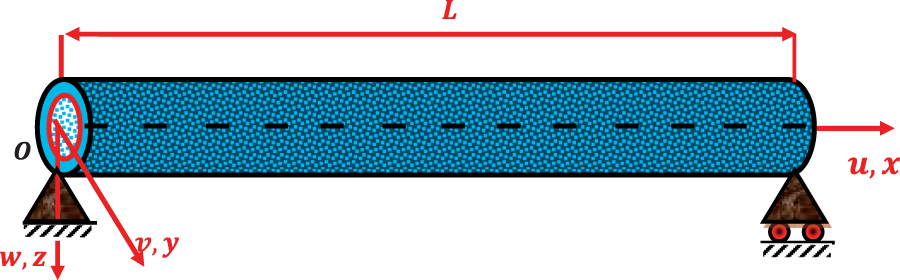
3.1. Stress gradient beam models
In the case of stress gradient (nonlocal) elasticity the axial and shear equivalents of Equation (1) are written as




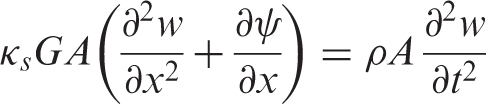
Also, the conventional TB governing equations read as



3.2. Strain gradient beam models
Hooke’s law for the stress and strain relations in the context of strain gradient elasticity is formulated as follows


Based on the Equation (8a), the governing equation of the strain gradient EBB model is given by

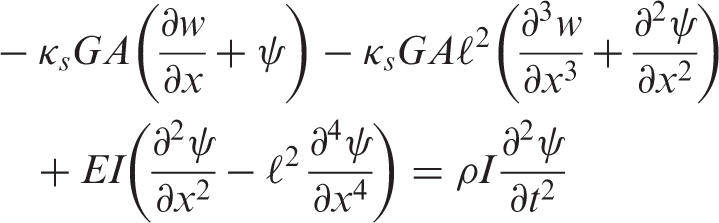
Furthermore, for the case of TB model we have

3.3. Combined strain/inertia gradient beam models
The strain gradient elasticity by incorporating inertia gradients yields the following stress–strain relations


Thus, the governing equation of the EBB model with strain and inertia gradients is of the form

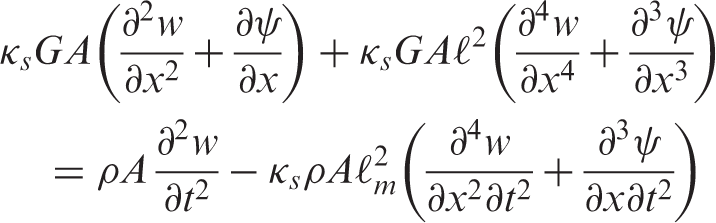
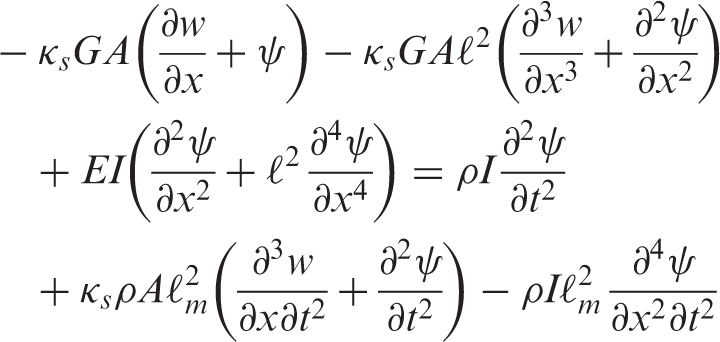
Moreover, for the TB model with the combined strain/inertia gradients one can obtain
4. Generalized differential quadrature method
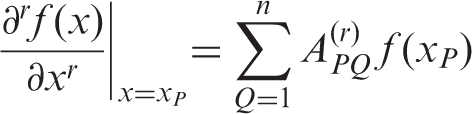
The fundamental idea of the differential quadrature method lies in the approximation of the partial derivative of a function with respect to a coordinate at a discrete point as a weighted linear sum of the function values at all discrete points along that coordinate direction. Let

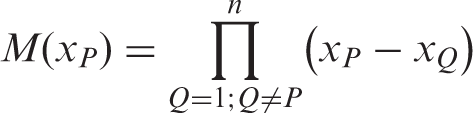
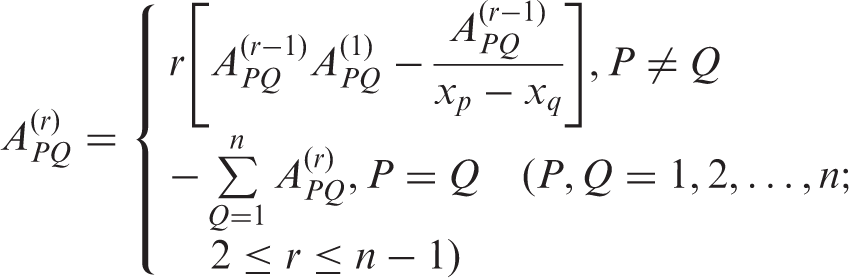
The weighting coefficients of higher-order derivatives can be obtained through the following recurrence relation
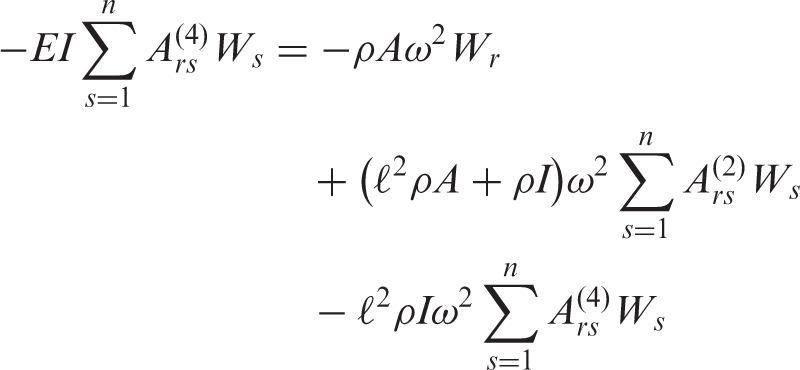
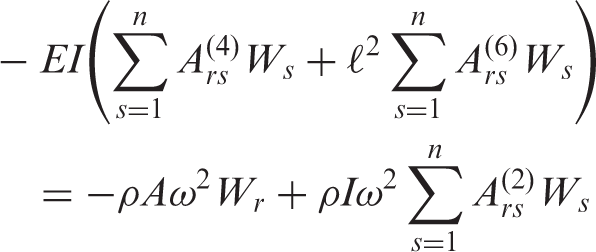
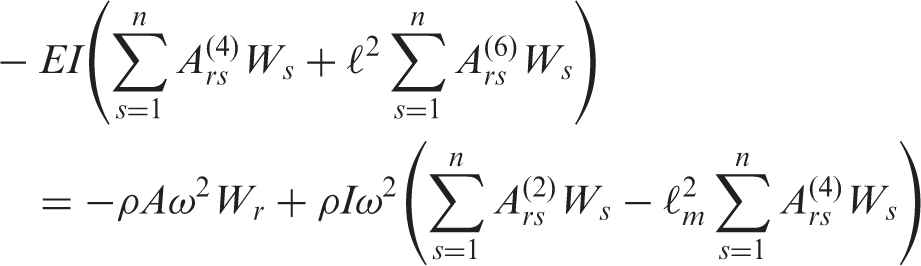
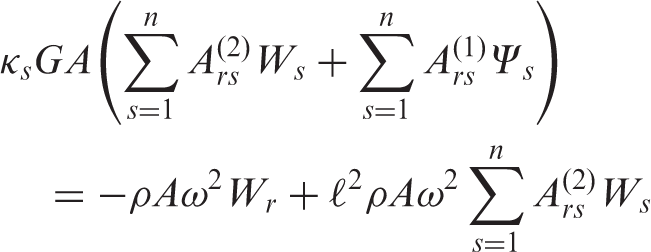
4.1. GDQ analog of the governing equations
The field variables (


For the EBB model:
classical theory
stress gradient theory
strain gradient theory
combined strain/inertia gradient theory
classical theory
stress gradient theory
strain gradient theory
combined strain/inertia gradient theory
For the TB model:




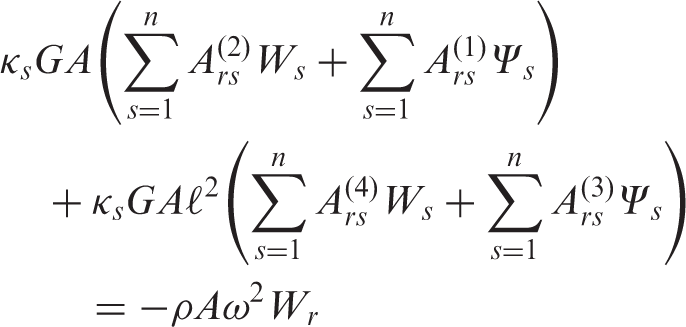

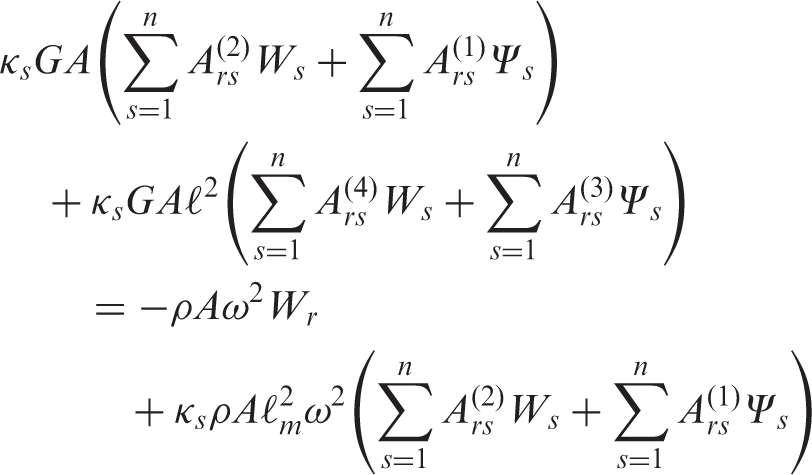
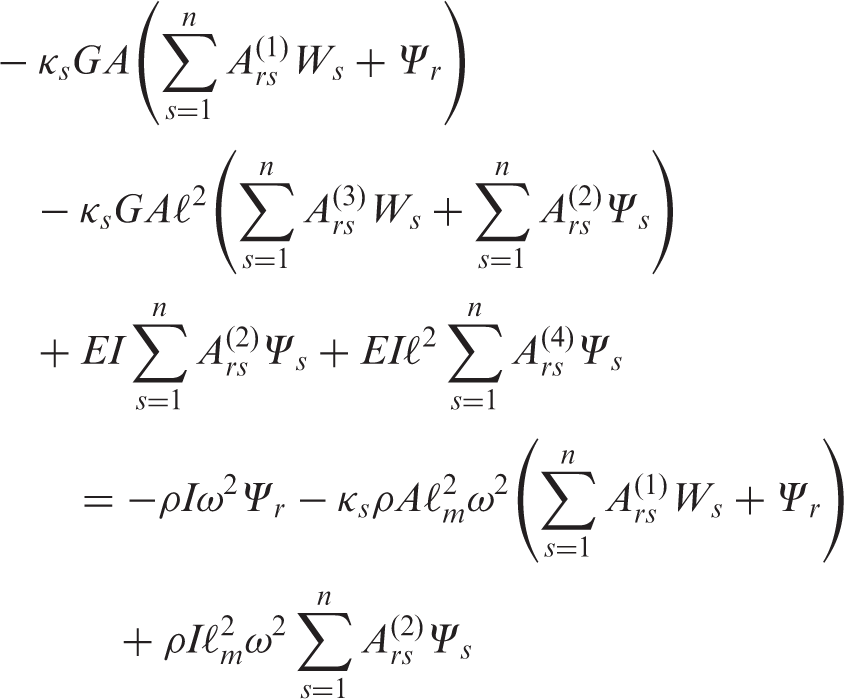
4.2. GDQ analog of the boundary conditions
Using the GDQ approximation, the discretized counterparts of different boundary conditions at the rth given point for each beam theory are as follows.
For EBB theory:
simply supported–simply supported
clamped–clamped
clamped–simply supported
clamped–free
simply supported–simply supported
clamped–clamped
clamped–simply supported
clamped–free
For the TB theory:












Rearranging the quadrature analogs of governing equations and boundary conditions within the framework of a generalized eigenvalue problem yields the natural frequencies of SWCNT.
5. Numerical results and discussion
Convergence study of fundamental frequencies (THz) of an SWCNT with different boundary conditions corresponding to different beam models (
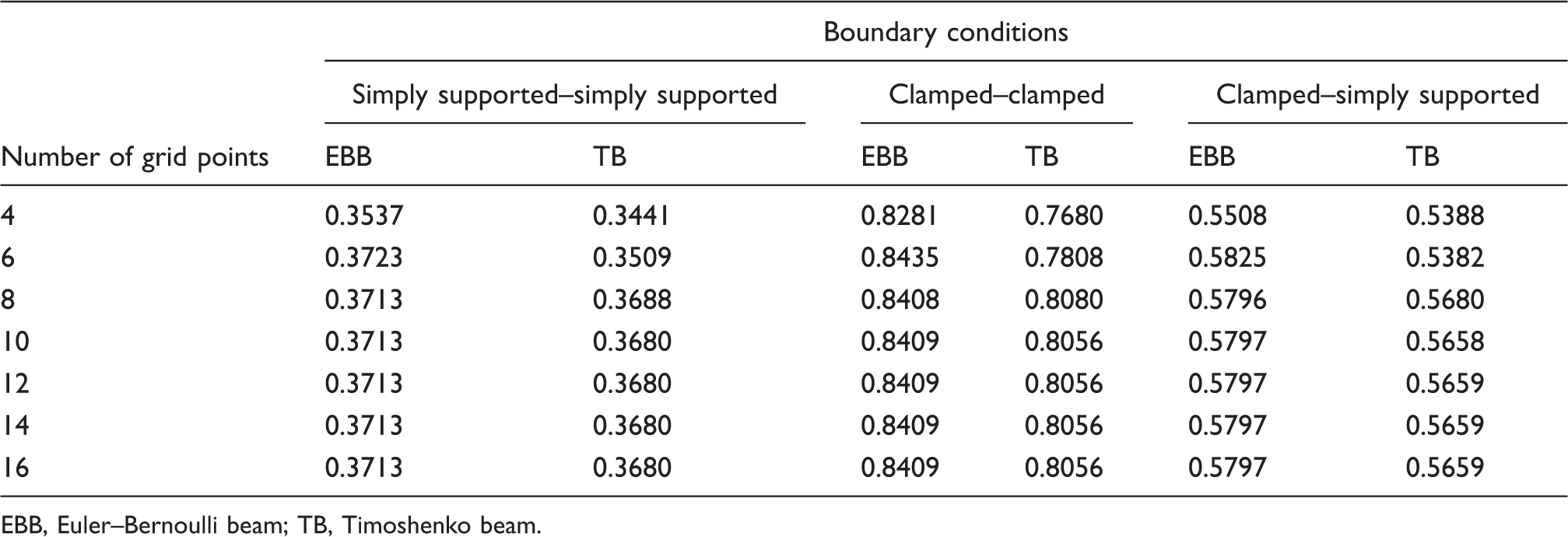
EBB, Euler–Bernoulli beam; TB, Timoshenko beam.
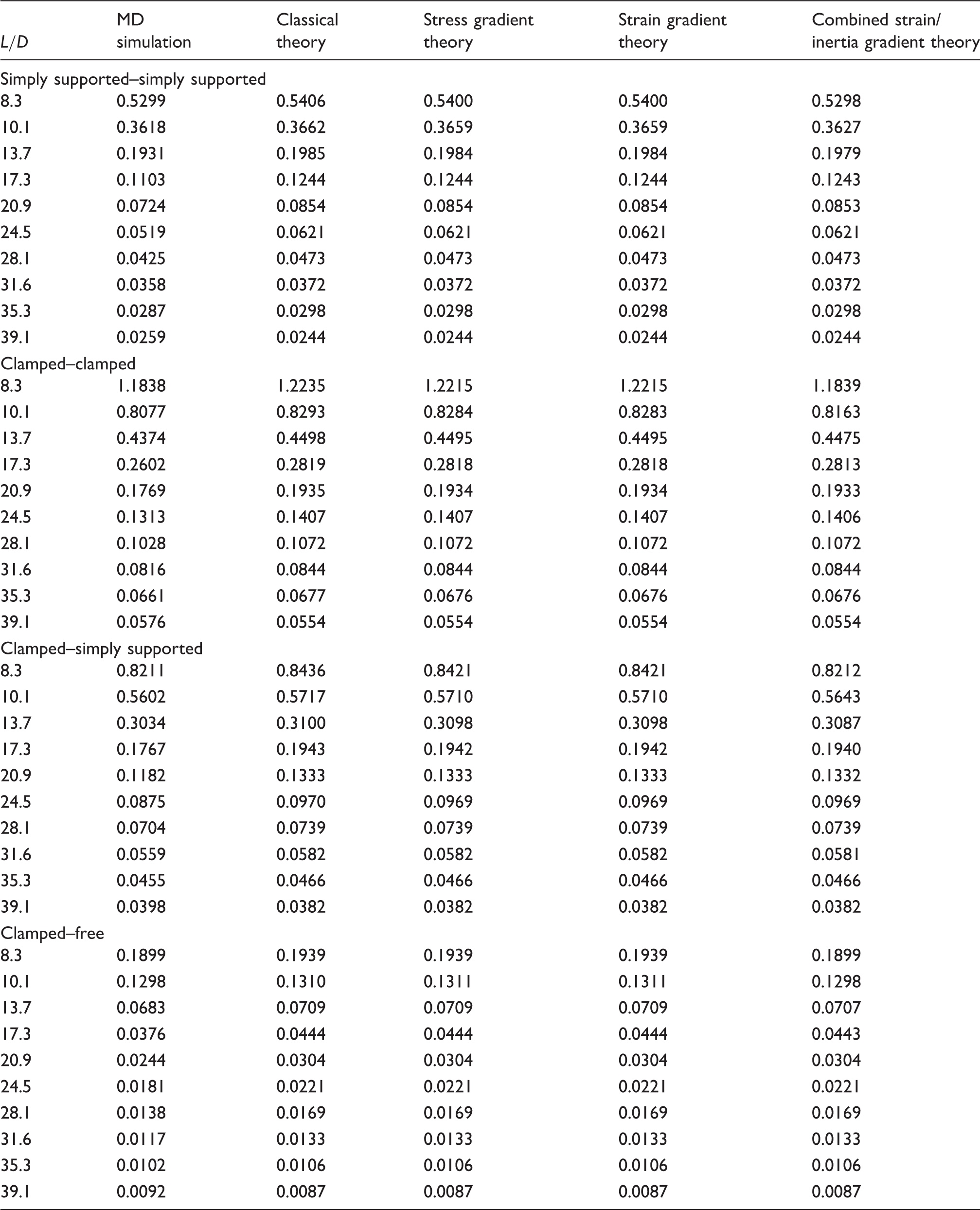
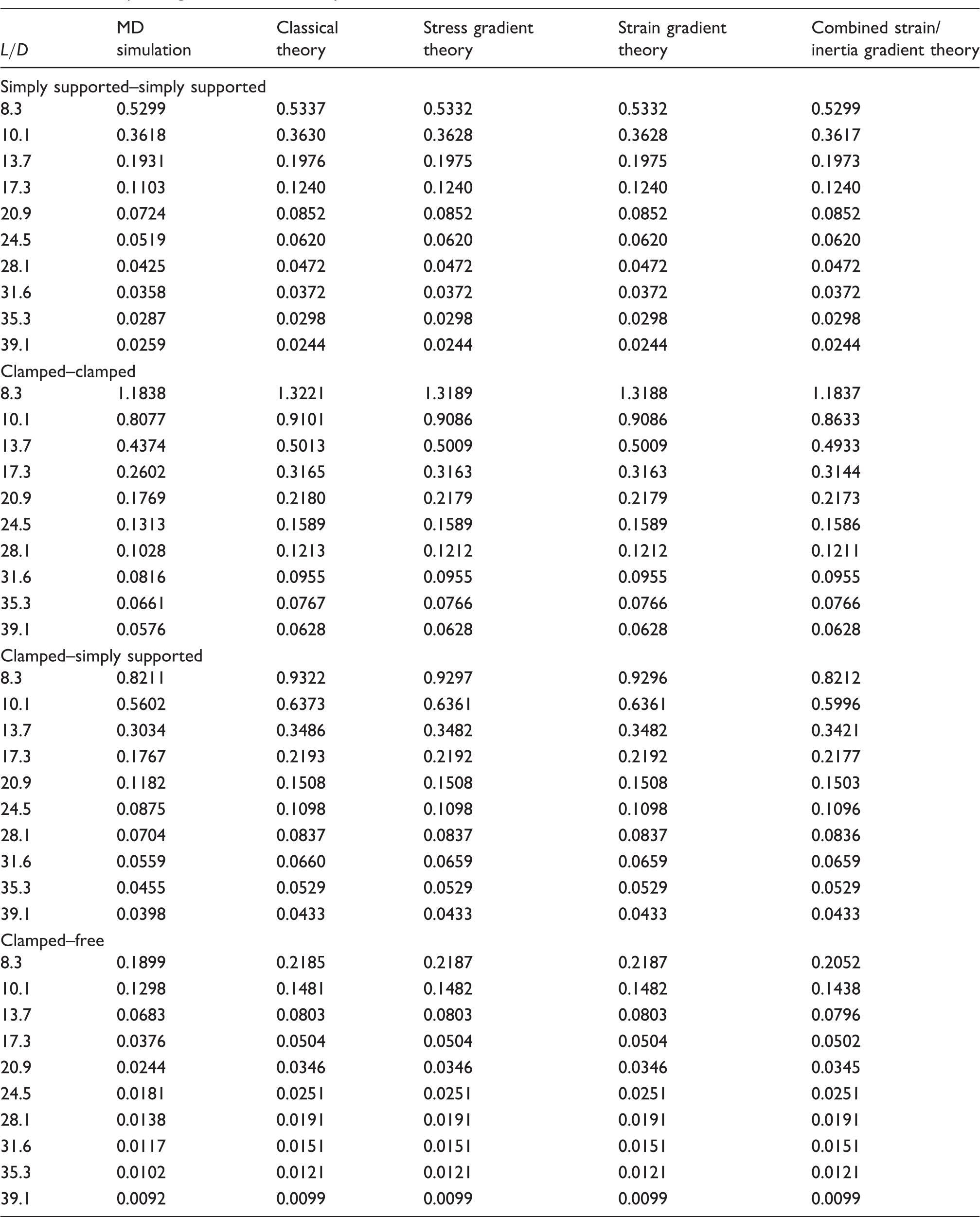
Adjustment of the small length scales used in the gradient models plays an important role in order to precisely predict the response of nanotubes. Some recent research has proposed the values of small-scale factors by comparing the results of continuum models with those of MD simulations (Ansari and Rouhi, 2011; Duan et al., 2007). Following the aforementioned treatment, in the present study, the proper values of small length scales corresponding to an (8,8) armchair SWCNT with four commonly used boundary conditions are determined through matching the fundamental frequencies calculated by the gradient continuum beam models with those obtained from MD simulations. To this end, the adaptive intermolecular reactive empirical bond order (AIREBO) potential is adopted in the NanoHive simulator (Nanorex Inc., 2005) to perform the MD simulations presented in the current analysis. Furthermore, the nanotubes are allowed to vibrate freely for 10,000 timesteps of
Calibrated ratios of
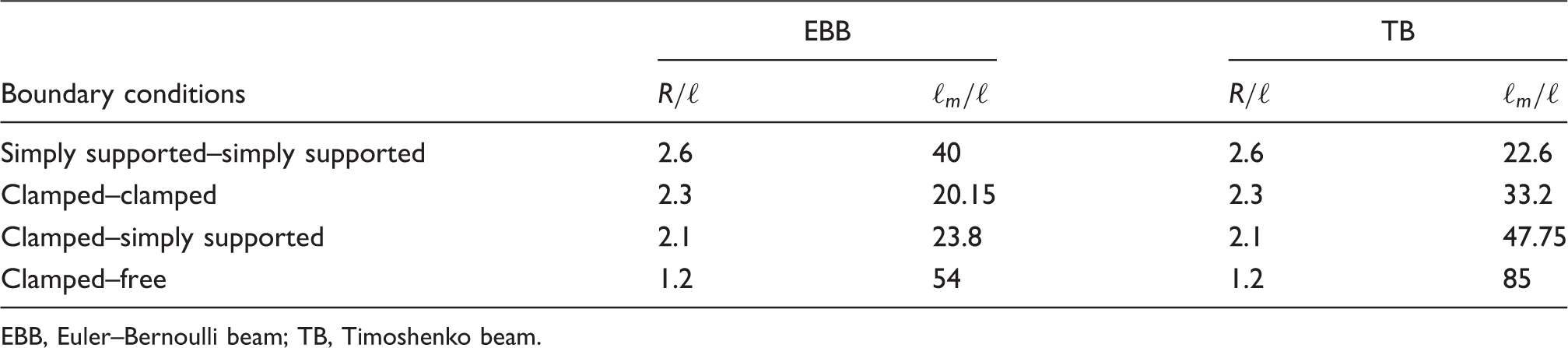
EBB, Euler–Bernoulli beam; TB, Timoshenko beam.
Fundamental frequencies (THz) predicted by different Euler–Bernoulli beam models and by the MD simulations for (8,8) SWCNTs corresponding to various boundary conditions
Fundamental frequencies (THz) predicted by different Timoshenko beam models and by the MD simulations for (8,8) SWCNTs corresponding to various boundary conditions
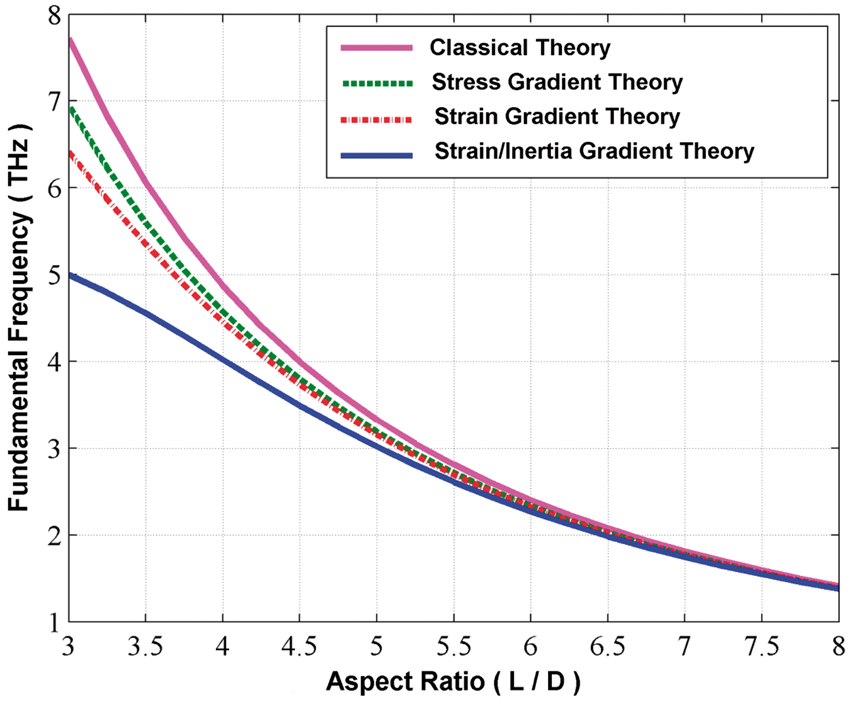
In order to investigate the difference between various gradient models, the fundamental frequencies of fully clamped SWCNTs are shown in Figures 2 and 3 for lower values of aspect ratio ranging from 3 to 8 corresponding to the EBB and TB theories, respectively. From these figures, it is observed that the discrepancy between different gradient beam models becomes more pronounced for SWCNTs of very low aspect ratios. With increasing the ratio of length to diameter, the difference between various gradient models decreases so that the frequency envelopes tend to converge. According to Figures 2 and 3, for aspect ratios higher than approximately 6.5 and 7.25 corresponding to the EBB and TB theories, respectively, the classical, stress, strain and combined strain/inertia gradient models give almost identical frequencies. It is further observed that the results of combined strain/inertia gradient model are lower than those of other gradient models. This observation means that the strain/inertia gradient model can accommodate the results of other models.
Variation of fundamental frequency with aspect ratio for (8,8) armchair SWCNTs based on the Euler–Bernoulli beam theory ( Variation of fundamental frequency with aspect ratio for (8,8) armchair SWCNTs based on the Timoshenko beam theory (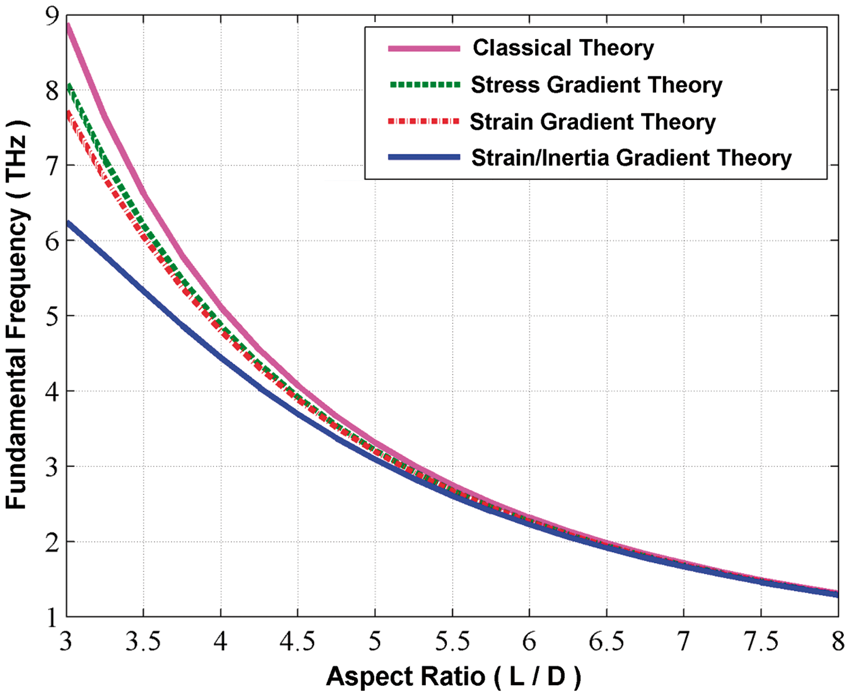
The effect of boundary conditions on the vibration characteristics of SWCNT can be studied in Figure 4. In this figure the fundamental frequencies of combined strain/inertia gradient TB model are plotted against the aspect ratio corresponding to four commonly used boundary conditions. As can be inferred from this figure, the value of frequency is greatly affected by the type of boundary conditions especially for shorter length nanotubes. As the length increases, frequencies tend to decrease and the effect tube end conditions diminish so that the frequency envelopes tend to converge. According to the results shown in this figure, the values of frequency related to the SWCNT with clamped–free boundary conditions are smaller than those of fully simply supported SWCNT and the latter ones are also smaller than those of SWCNT with clamped–simply supported boundary conditions. Also, the highest values of frequency are associated with fully clamped SWCNT.
Variation of fundamental frequency with aspect ratio for (8,8) SWCNTs with different boundary conditions based on the combined strain/inertia gradient Timoshenko beam model (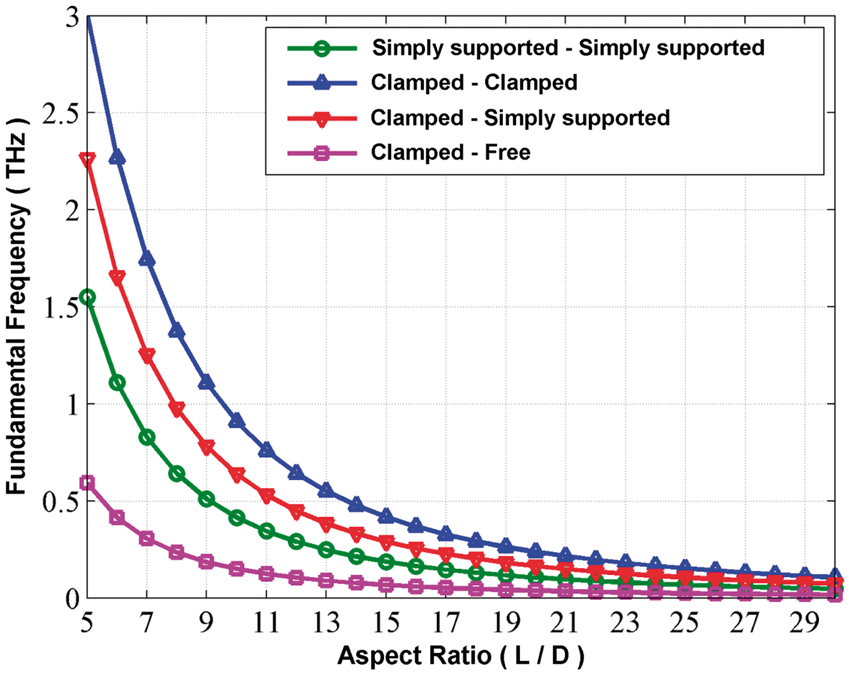
Figure 5 provides a comparison between the EBB and TB theories in predicting the vibrational behavior of SWCNTs. The fundamental frequencies obtained from the combined strain/inertia gradient EBB and TB models for simply supported–simply supported end conditions are plotted in this figure for length of nanotube ranging from 4 to 16 nm. As would be expected, the difference between the results of these beam theories is relatively more prominent at low values of length. Figure 5 clarifies that for the length up to approximately 10 nm, the EBB theory tends to overestimate the frequencies of SWCNT. For instance, at Comparison between the fundamental frequencies of fully simply supported (8,8) SWCNT obtained from the combined strain/inertia gradient Euler–Bernoulli beam (EBB) and Timoshenko beam (TB) models (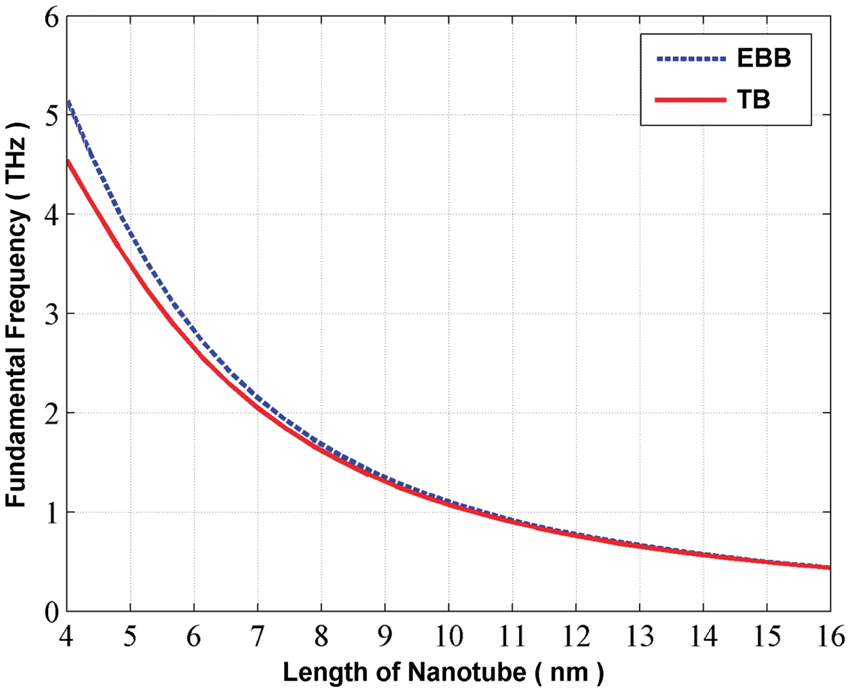
6. Conclusion
In this work, based on the gradient elasticity, the free vibration of SWCNTs was studied. To this end, the EBB and TB models within the framework of the stress, strain and combined strain/inertia gradient theories were developed. The generalized differential quadrature method was employed to obtain the natural frequencies of SWCNTs with different boundary conditions. To validate the present methodology, MD simulations were also conducted for an armchair SWCNT with different aspect ratios and boundary conditions. Moreover, the appropriate values of small length scales were extracted through comparison between the results of continuum models and those from MD simulations. It was concluded that the calibrated values of small length scales are dependent on the boundary conditions. Numerical results showed that the discrepancy between different gradient theories is more pronounced for shorter nanotubes and also applying the combined strain/inertia gradient theory for shorter SWCNTs leads to very accurate results which are in excellent agreement with the MD ones due to two small length scales relevant to the inertia and strain gradients. The effect of boundary conditions on the free vibration of SWCNTs was studied in this work and it was observed that the difference between the results of SWCNTs with various end conditions is more prominent for lower values of aspect ratio. Furthermore, comparison between the results of EBB and TB theories revealed that the EBB model tend to overestimate the frequencies of short SWCNTs.
Footnotes
Funding
This research received no specific grant from any funding agency in the public, commercial, or not-for-profit sectors.