The propagation of waves in micropolar thermoelastic homogeneous plate with two temperatures subjected to stress free thermally insulated and isothermal conditions is investigated. The secular equations for both symmetric and skew-symmetric wave mode of propagation have been derived. Helmholtz decomposition technique has been used to simplify mathematical model and frequency equations for different mechanical conditions. The regions of secular equations are obtained and some special cases such as thin plate and short wavelength waves of the secular equations are also discussed. The phase velocity and attenuation coefficient are computed numerically and depicted graphically. The amplitudes of stress components and thermodynamic temperature distribution for the symmetric and skew-symmetric wave modes are computed analytically and presented graphically. Results of some earlier workers have been deduced as particular cases.
The theory of micropolar elasticity, introduced and developed by Eringen (1966), has aroused much interest in recent years because of its possible utility in investigating the deformation properties of solids for which the classical theory is inadequate. The micropolar theory is believed to be particularly useful in investigating material consisting of bar-like molecules,which exhibit microrotational effects and can support body and surface couples. A micropolar continuum is a collection of interconnected particles in the form of small rigid bodies undergoing both translational and rotational motions. The force at a point of the surface element of the bodies is completely characterized by stress vector and couple stress vector at that point.
The linear theory of micropolar thermoelasticity was developed by extending the theory of micropolar continua to include the thermal effect. The comprehensive review on the subject was given by Eringen (1970, 1999) and Nowacki (1986). Touchert et al. (1968) also derived the basic equations of the linear theory of micropolar coupled thermoelasticity. Dost and Tabarrok (1978) presented the generalized thermoelasticity by using the Green and Lindsay theory. Chandrasekharaiah (1986) developed a heat flux dependent micropolar thermoelasticity. Boschi and Iesan (1973) extended a generalized theory of micropolar thermoelasticity that permits the transmission of heat as thermal waves at finite speed.
Thermoelasticity with two temperatures is one of the non-classical theories of the thermoelasticity of elastic solids. The main difference of this theory with respect to the classical one is the thermal dependence. Chen et al. (1968, 1969) have formulated a theory of heat conduction in deformable bodies. This depends on two distinct temperatures, the conductive temperature Φ and thermodynamic temperature T. Chen et al. (1969) have suggested that the difference between these two temperatures is proportional to the heat supply. These two temperatures may be equal under certain conditions for a time independent situation. However for time dependent problems, relating to wave propagation, these two temperatures are in general different, regardless of the presence of heat supply. The two temperatures and the strain are found to have representation in the form of a travelling wave pulse, a response which occurs instantaneously throughout the body (Boley, 1956). Warren and Chen (1973) investigated wave propagation in the two temperature theory of thermoelasticity.
Youssef (2006) presented a new theory of generalized thermoelasticity by taking into account the theory of heat conduction in deformable bodies, which depends on distinct conductive and thermodynamic temperatures. He also established a uniqueness theorem for the equation of two temperature generalized linear thermoelasticity for a homogeneous and isotropic body. Recently, Puri and Jordan (2006) studied the propagation of plane waves with two temperatures. Youssef and Al-Lehaibi (2007) and Youssef and Al-Harby (2007) investigated various problems on the basis of two temperature thermoelasticity with relaxation time and showed that the obtained results are qualitatively different as compared to those in the case of one temperature thermoelasticity. Magana and Quintanilla (2009) investigated the uniqueness and growth of solution in two temperature generalized thermoelastic theories. Mukhopadhyay and Kumar (2009) studied thermoelastic interaction on two temperature generalized thermoelasticity in an infinite medium with a cylindrical cavity. Recently, Kumar and Mukhopadhyay (2010) studied the effect of thermal relaxation time on plane wave propagation under two temperature thermoelasticity. Kaushal et al. (2010) studied the propagation of waves in generalized thermoelastic continua with two temperatures.Kaushal et al. (2011) studied the wave propagation in temperature rate dependent thermoelasticity with two temperatures.
In this paper, the propagation of waves is studied in a homogeneous micropolar thermoelastic plate of finite thickness with two temperatures. The secular equations for different conditions of solutions have been deduced from the present one. The phase velocity and attenuation coefficient are computed numerically and depicted graphically.
The amplitudes of stress components and thermodynamic temperature distribution for the symmetric and skew-symmetric wave modes are computed analytically and presented graphically.
2. Basic equations
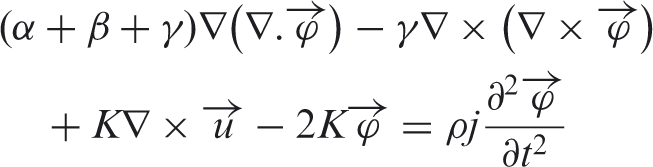
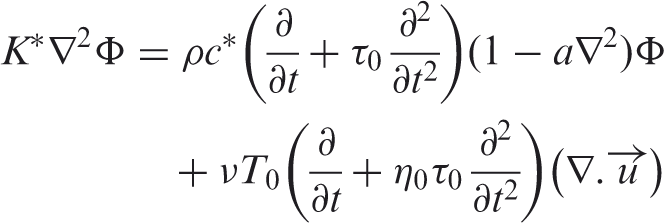
Following Eringen (1966), Green and Lindsay (1972) and Ezzat and Awad (2010), the field equations in an isotropic, homogeneous and micropolar elastic medium in the context of a generalized theory of thermoelasticity with two temperatures, without body forces, body couples and heat sources, are given by
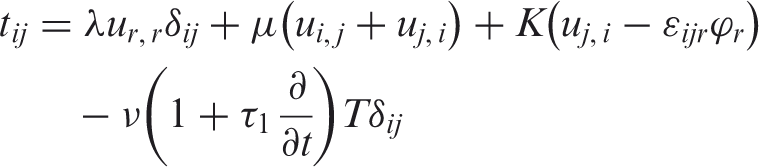
and the constitutive relations are
where λ and μ are Lame's constants. K, α, β and γ are micropolar constants. are the components of the stress tensor and are the components of couple stress tensor. and are the displacement and microrotation vectors, ρ is the density, j is the microinertia, is the thermal conductivity, is the specific heat at constant strain, T is the thermodynamic temperature, Φ is the conductive temperature, T0 is the reference temperature, where is the coefficient of linear thermal expansion is the Kronecker delta, is the alternating tensor. T and Φ are connected by the relation , where a is two temperature parameter. For the Lord Shulman (L-S) theory = 1, and for the Green-Lindsay (G-L) theory = 0, . The thermal relaxation time and satisfy the inequalities for the G-L theory only and is the Laplacian operator.
3. Formulation of the problem
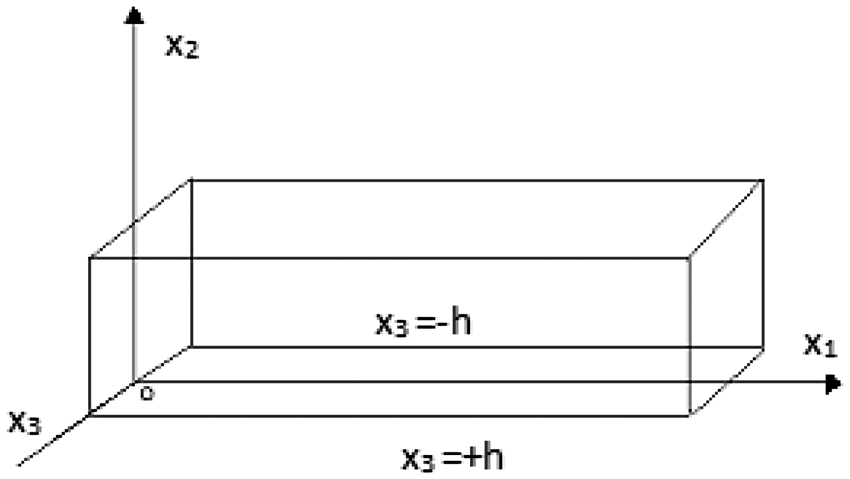
An infinite homogeneous isotropic thermally conducted micropolar elastic plate of thickness , initially undisturbed and at uniform temperature T0 is considered. The origin of the co-ordinate system is taken at the middle surface of the plate and x3-axis normal to it along the thickness. The surface is subjected to different boundary conditions. The -plane is chosen to coincide with the middle surface and x3-axis normal to it along the thickness as illustrated in Figure 1. The propagation of plane waves in the x1x3 – plane with wavefront parallel to the x2-axis is considered so that the field components in the x2-direction vanish and are independent of x2-coordinates.
Geometry of the problem.
For the two-dimensional problem, there is taken
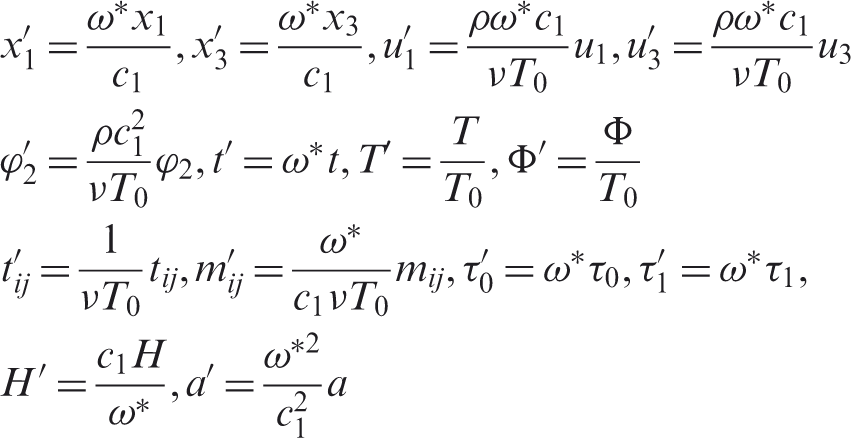
For convenience, the following non-dimensional quantities are introduced
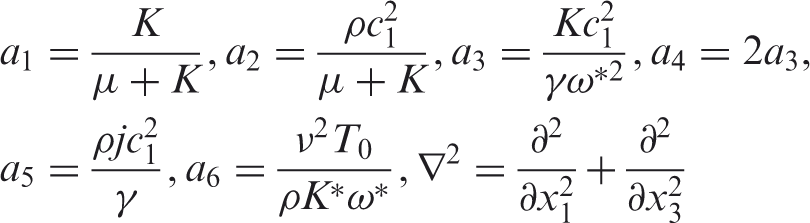
where
The expressions relating the displacement components u1 and u3 to the potential functions ϕ and ψ in dimensionless form are taken as
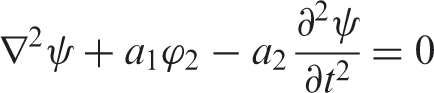
Making use of equations (6) to (8) in equations (1) to (3) and after suppressing the primes, the following is obtained
where
The solutions of equations (9) to (12) are assumed of the form
where c = is the non-dimensional phase velocity, ω is the frequency and ξ is the wave number.
The appropriate potentials and will be obtained as
where
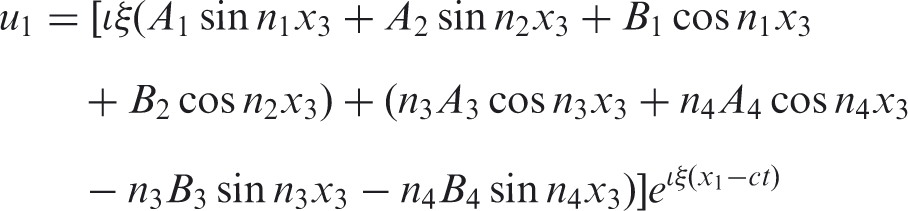
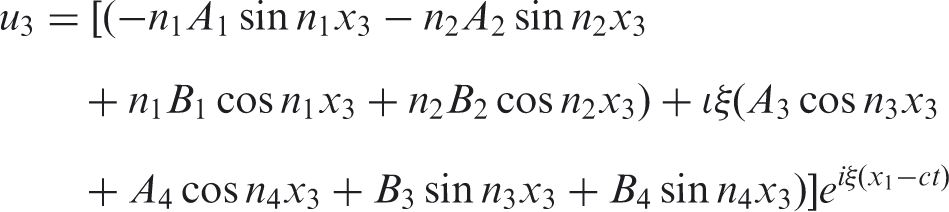
With the help of equations (8), (20) and (22) the displacement components u1 and u3 are obtained as
4. Boundary conditions
The following mechanical and thermal boundary conditions are considered at the plate surfaces
4.1. Mechanical conditions
The non-dimensional mechanical boundary conditions at are given as
4.2. Thermal conditions
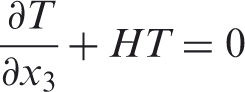
The thermal boundary conditions at are given by
where H is the surface heat transfer coefficient. Here H → 0 corresponds to thermal insulated boundaries and H → ∞ refers to isothermal one.
5. Derivation of the secular equations
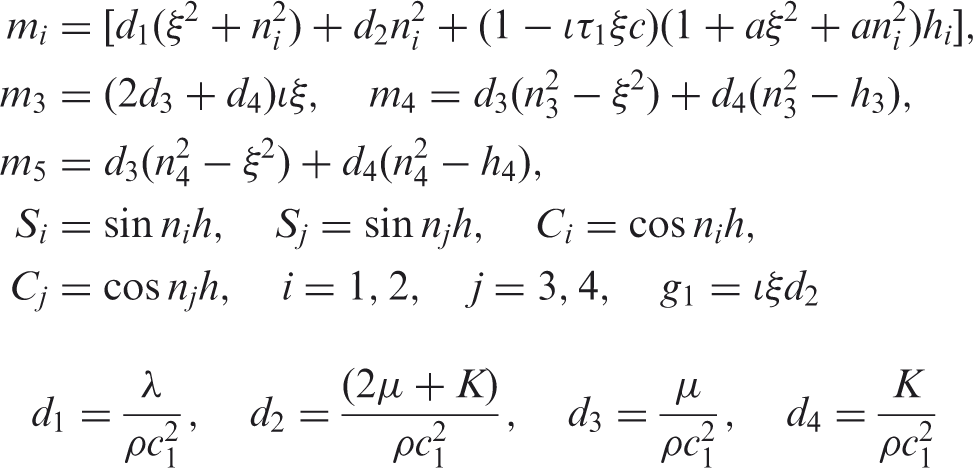
Using the boundary conditions (26) and (27) on the surfaces of the plate and with the help of equations (20) to (23), a system of eight simultaneous equations is obtained:
where
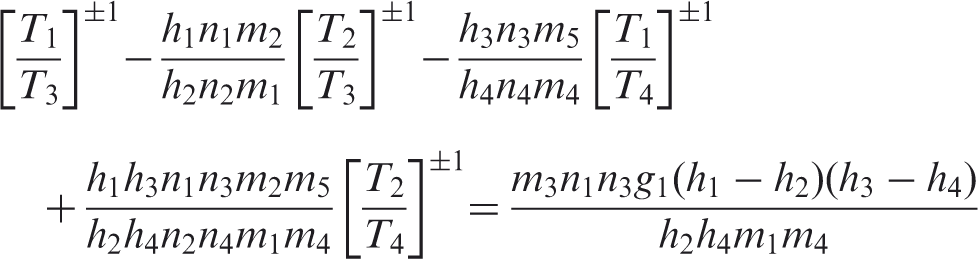
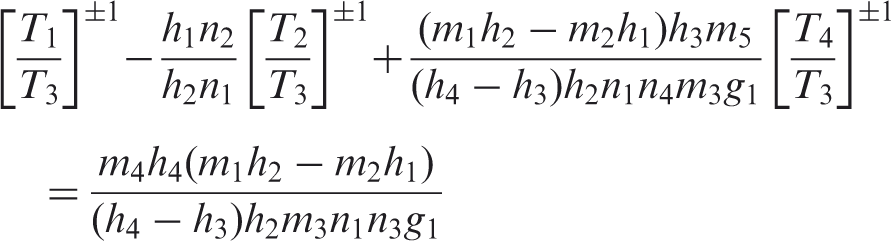
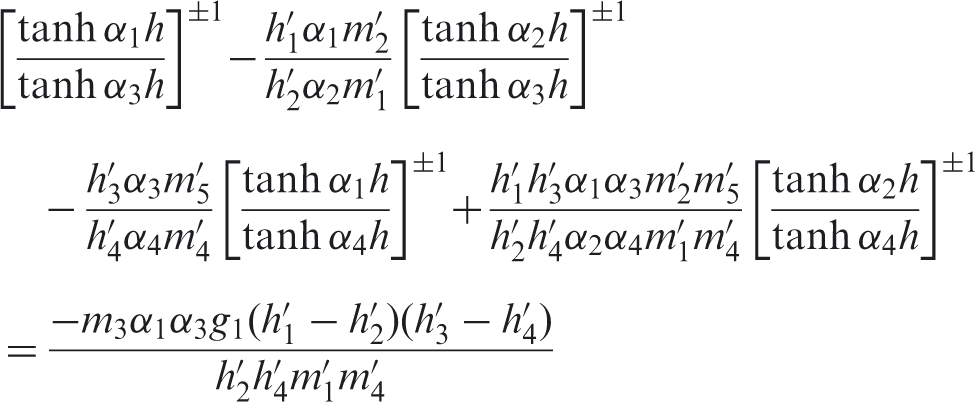
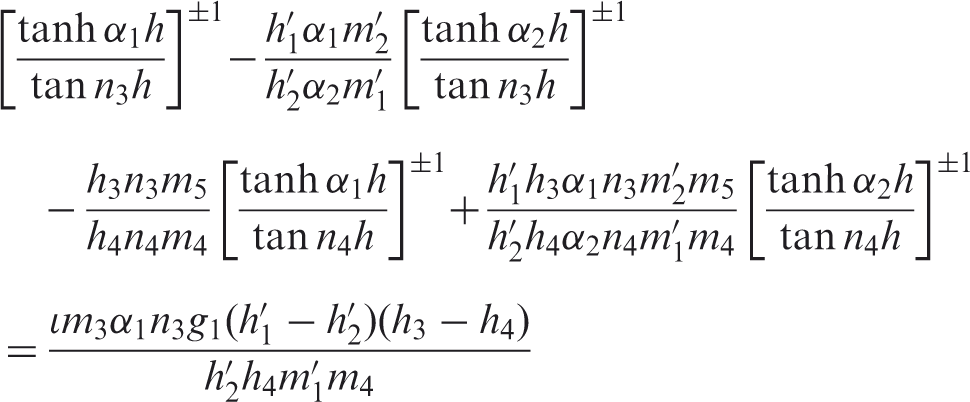
The system of equations (28) to (35) has a non-trivial solution if the determinant of the coefficients of amplitudes vanishes. After simplification, the secular equations for the plate with stress free and couple stress free thermally insulated and isothermal boundaries are obtained as:
(A) for stress free insulated boundaries () of the plate,
(B) for stress free isothermal boundaries () of the plate,
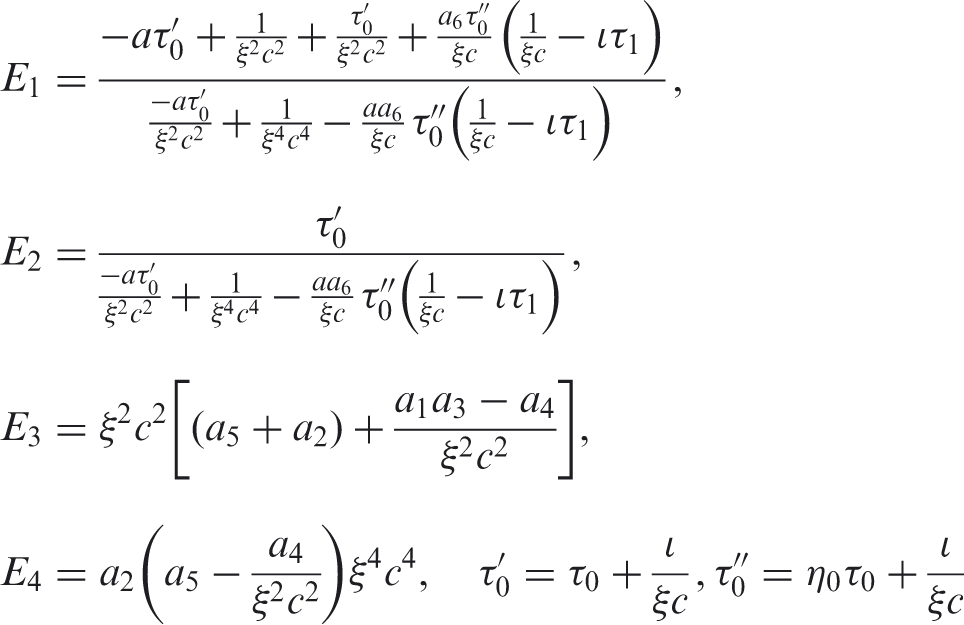
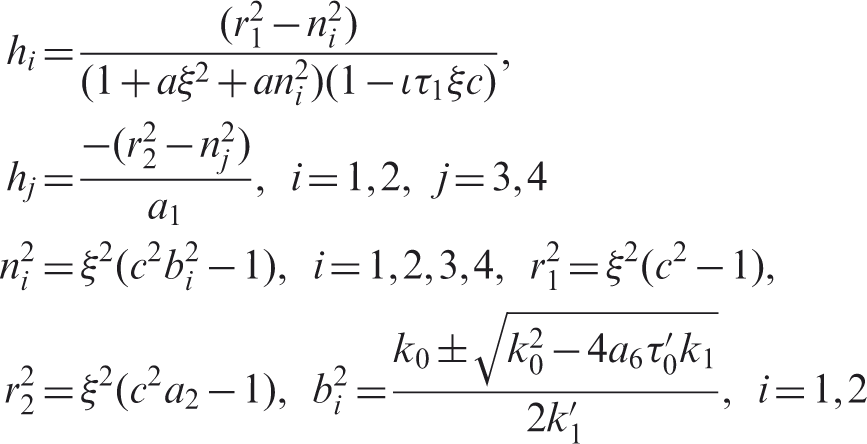
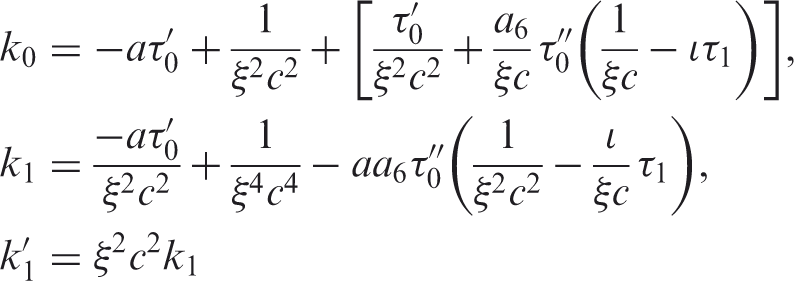
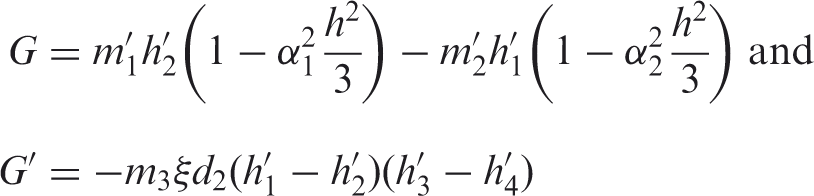
where
Here the superscript + 1 refers to skew-symmetric and −1 refers to symmetric modes.
Equations (36) and (37) are the most general dispersion relations involving wave number and phase velocity of various modes of propagation in micropolar thermoelastic plate under the considered situations. These equations can be recognized as modified Rayleigh-Lamb equations which respectively govern the symmetric and skew-symmetric modes of wave propagation for stress and couple stress free, thermally insulated and isothermal micropolar thermoelastic plate with two temperatures.
5.1. Particular case
In this case, if , the secular equations in micropolar generalized thermoelastic plate are obtained and these equations are similar to equations (5.1) and (5.2) (Kumar and Partap, 2007b).
6. Regions of the secular equation
In order to explore various regions of the secular equations, equation (36) is considered as an example. Depending upon whether are real, purely imaginary or complex, the frequency equation (36) is correspondingly altered as follows:
Region I: When the characteristic roots are of the type so that are purely imaginary or complex numbers. This ensures that the superposition of partial waves has the property of exponential decay. The secular equation (36) becomes
Region II. In case the characteristic roots and for are real, the frequency equation can be obtained from equation (36) as
Region III. In this case, the characteristic roots are given by and the secular equation is given by equation (36).
Similar regions can be characterized for the secular equation (37).
7. Thin plate results
Let us consider the case when transverse wavelength with respect to thickness of the plate is quite large, so that . In Region I, upon retaining the first two terms in the expansion of hyperbolic tangents, equation (38) reduces to
where
In Region II, upon retaining the first term in the expansion of hyperbolic tangent and circular tangent functions, equation (39) reduces to
8. Waves of short wavelength
Some information on the asymptotic behavior is obtainable when the transverse wavelength with respect to the thickness of the plate is quite small so that . For . So the equations (36) and (37) reduce to
The equations (42) and (43) are respectively the Rayleigh surface wave equations for stress and couple stress free thermally insulated micropolar thermoelastic half-space with two temperatures.
Taking in equations (42) and (43), our results similar with those obtained by Kumar and Partap (2007b) (equations (7.1) and (7.2)).
9. Amplitudes of stress components and thermodynamic temperature distribution
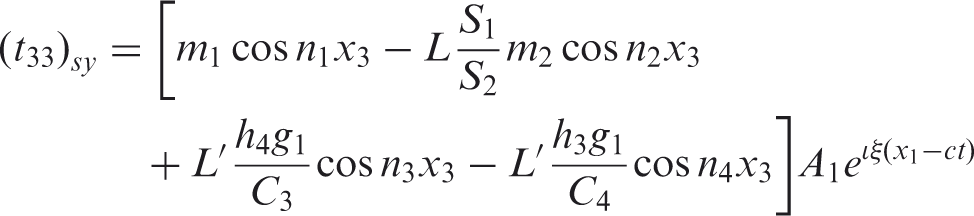
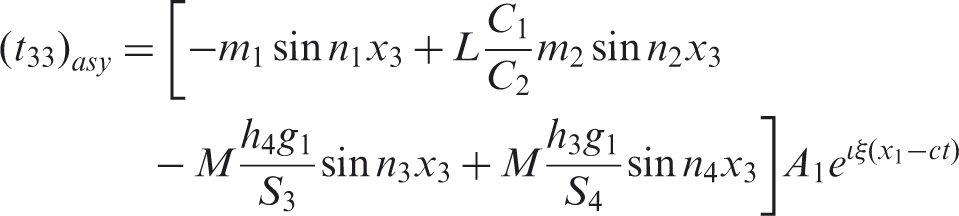
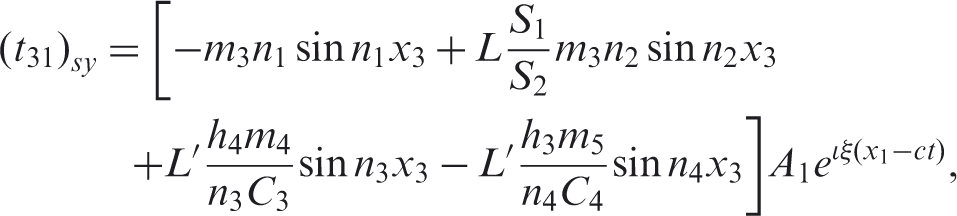
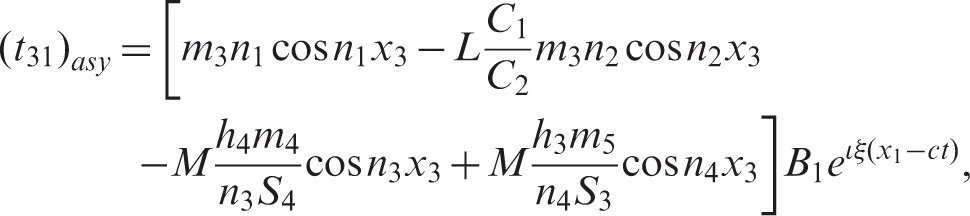
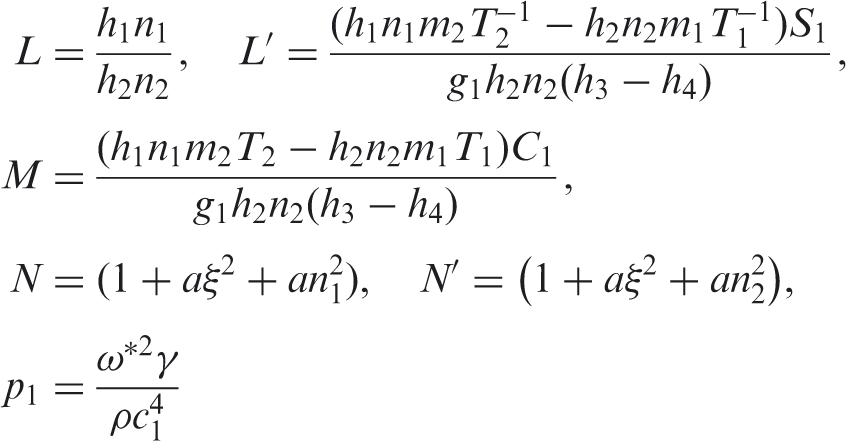
The amplitudes of stress components and thermodynamic temperature distribution for symmetric and skew-symmetric modes of waves have been computed for micropolar thermoelastic plate. Using equations (20) to (25) and (28) to (35), there follows
where
10. Numerical results and discussion
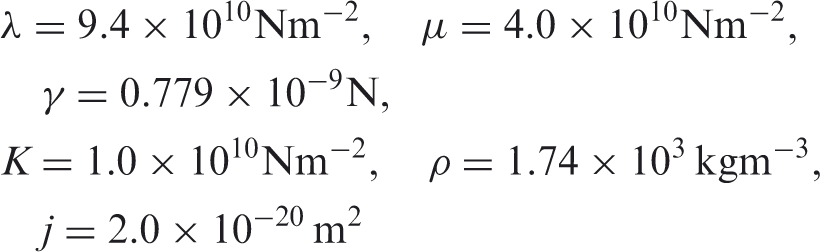
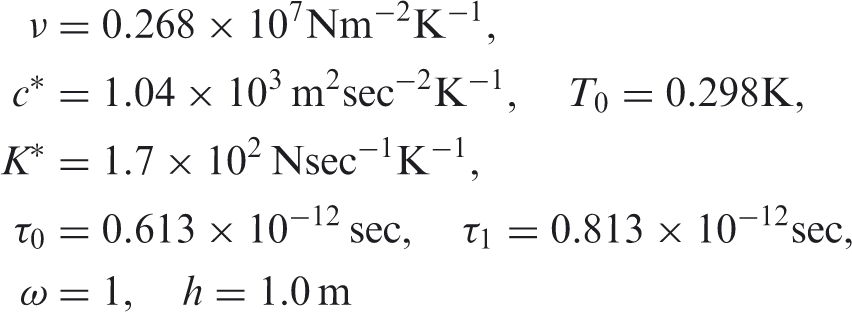
With a view to illustrating theoretical results obtained in the preceding sections and comparing these in the context of various theories of thermoelasticity, we now present some numerical results. The material chosen for this purpose is magnesium crystal (micropolar elastic solid), the physical data for which is given below:
10.1. Micropolar parameters
10.2. Thermal parameters
In general, wave number and phase velocity of the waves are complex quantities, therfore, the waves are attenuated in space. If there is written
then where and Q are real numbers. This shows that V is the propagation speed and Q is the attenuation coefficient of waves. Using equation (52) in secular equation (36), the value of propagation speed V and attenuation coefficient Q for different modes of propagation can be obtained.
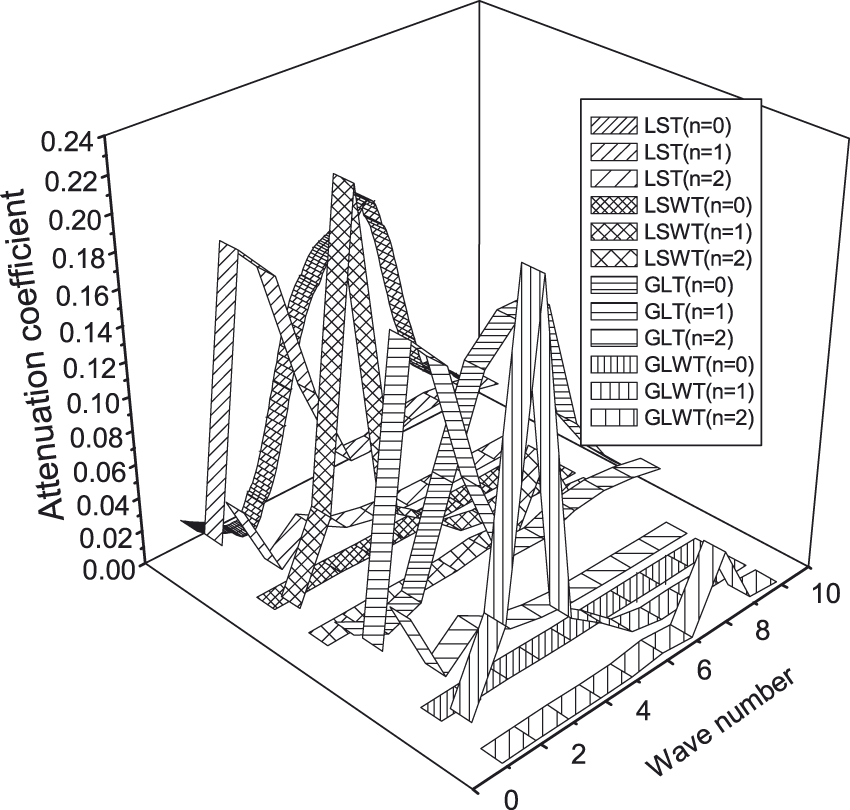
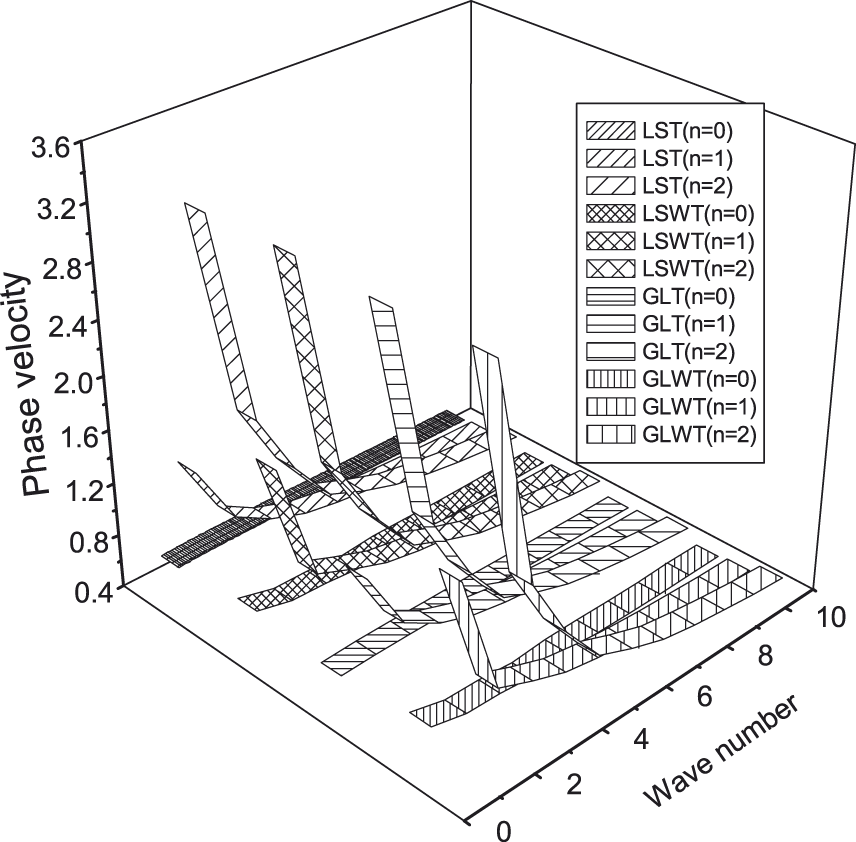
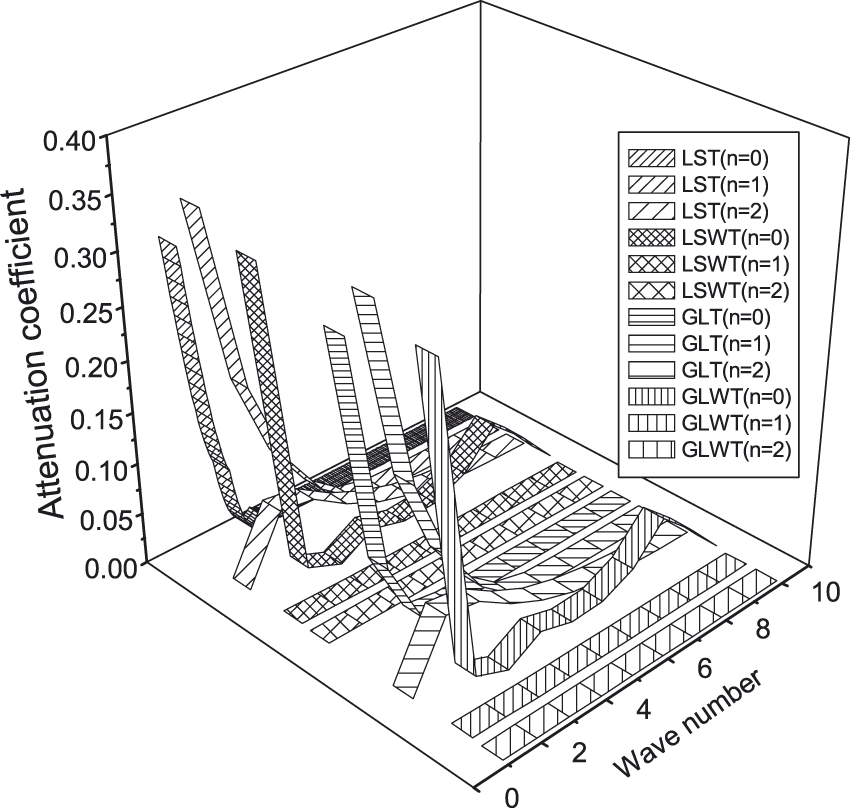
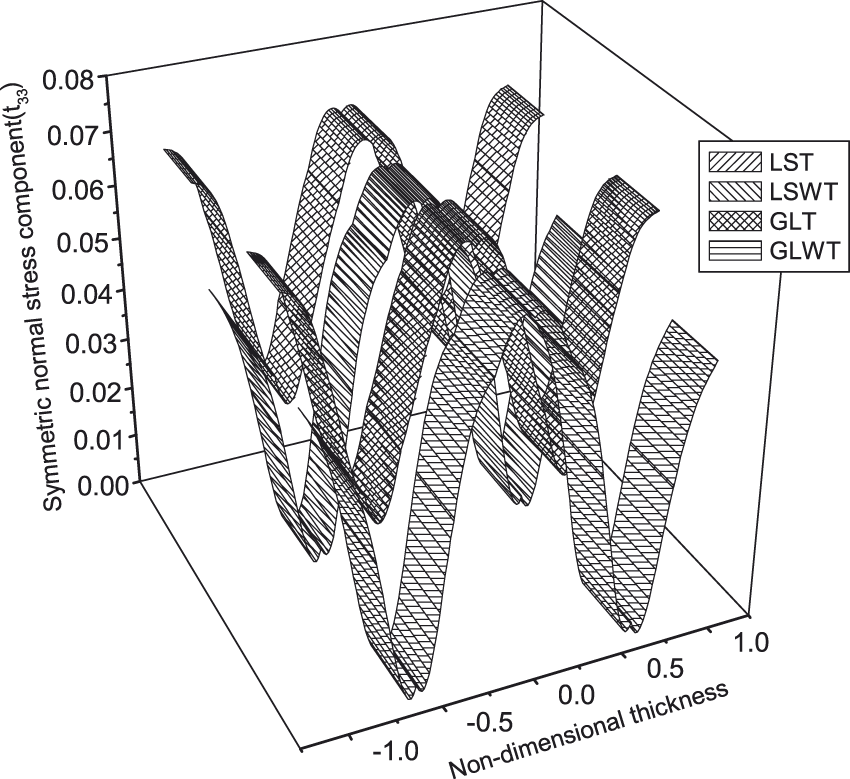
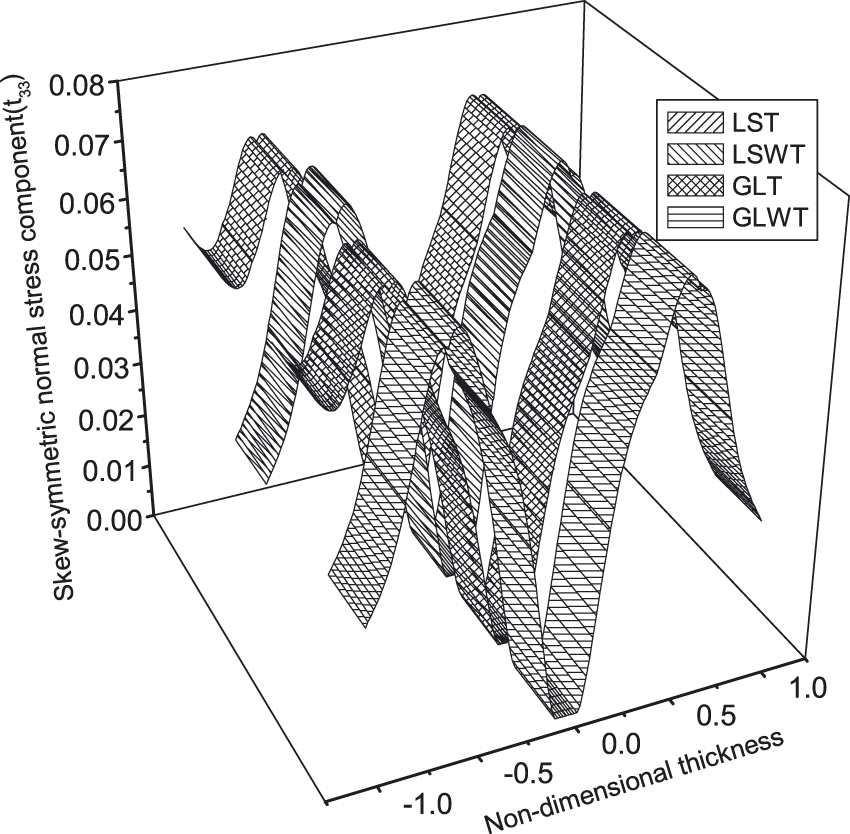
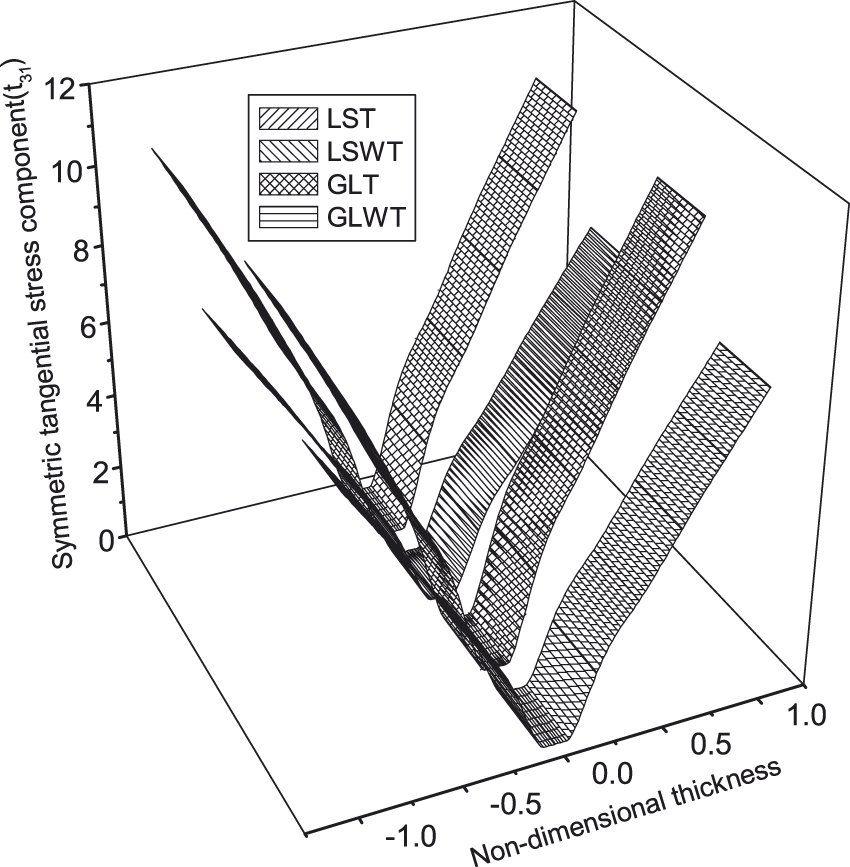
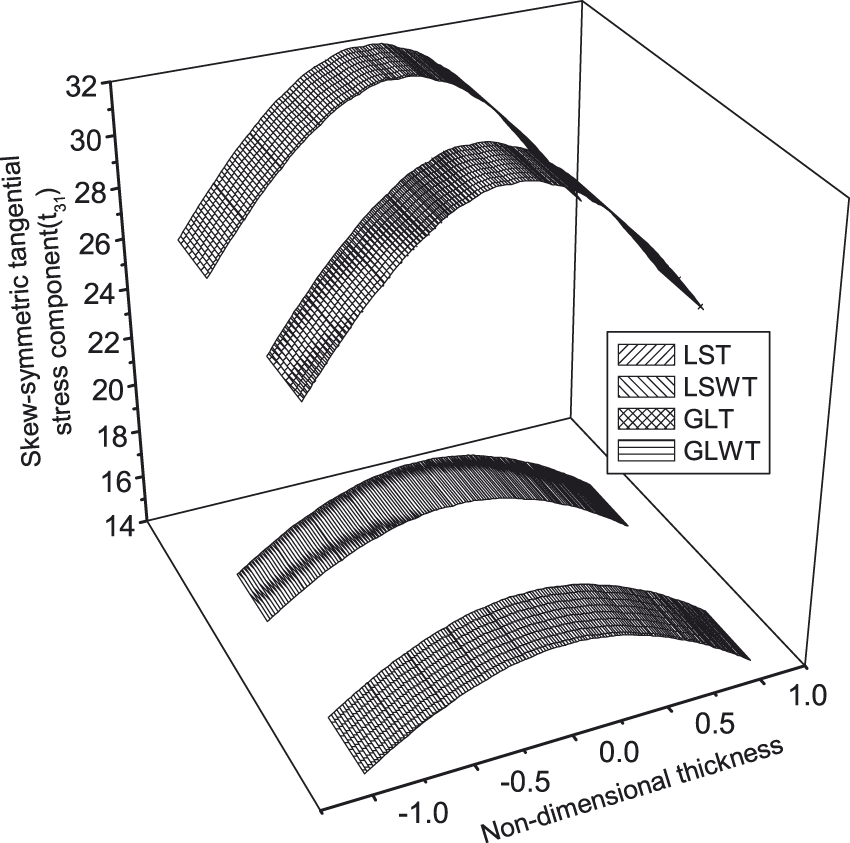
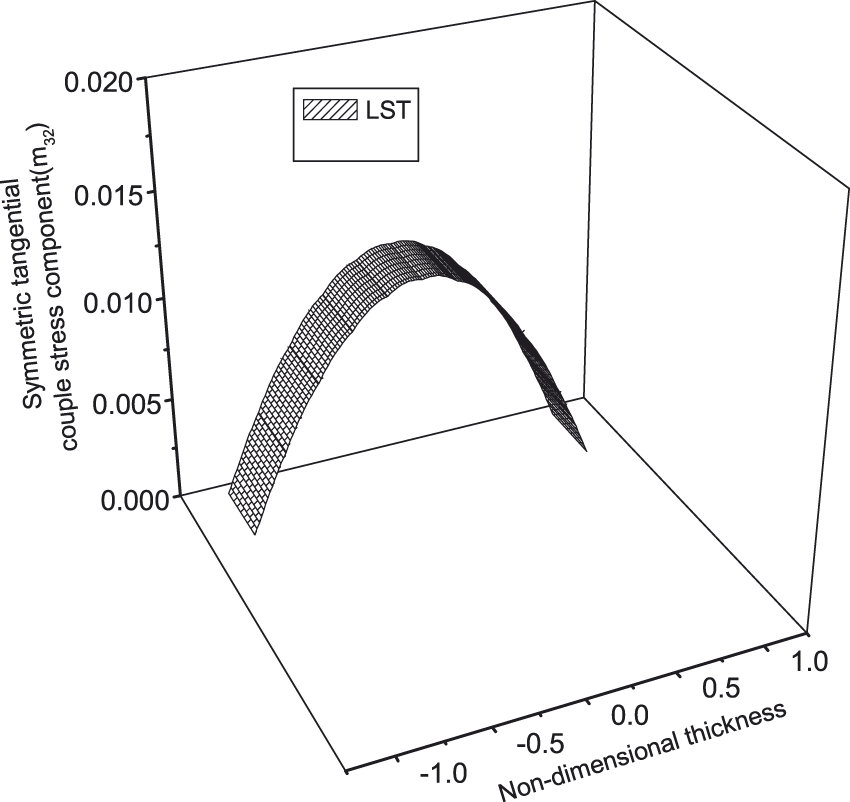
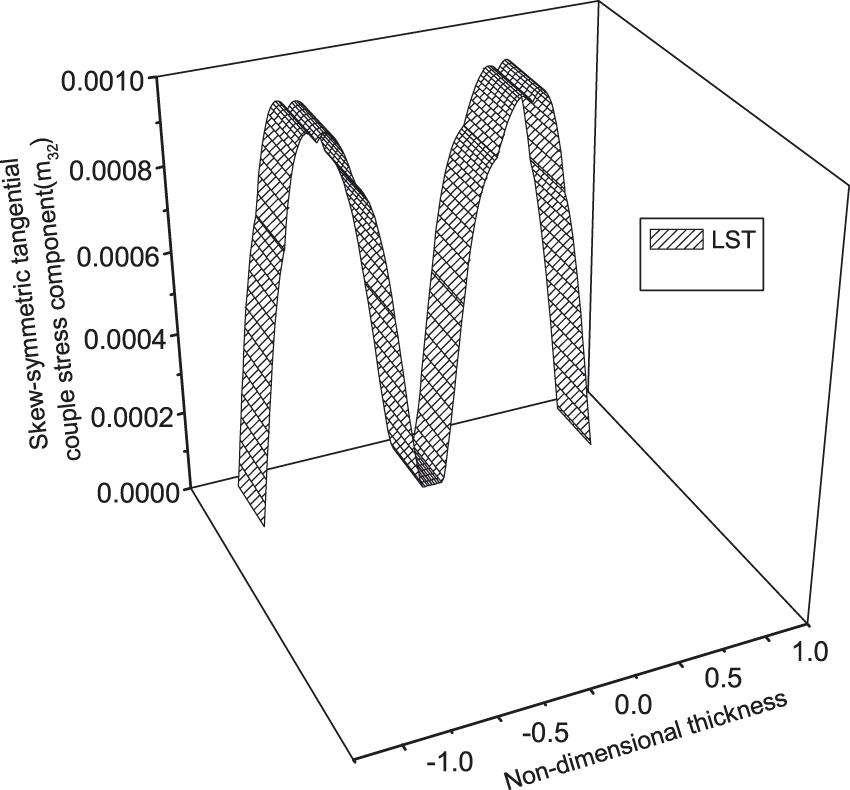
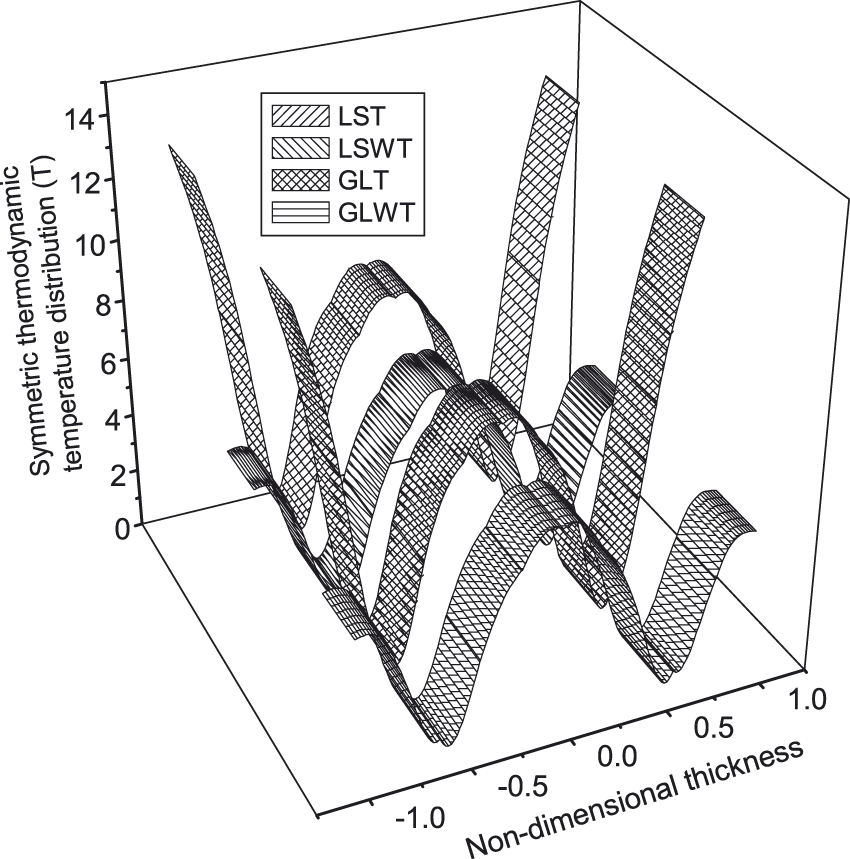
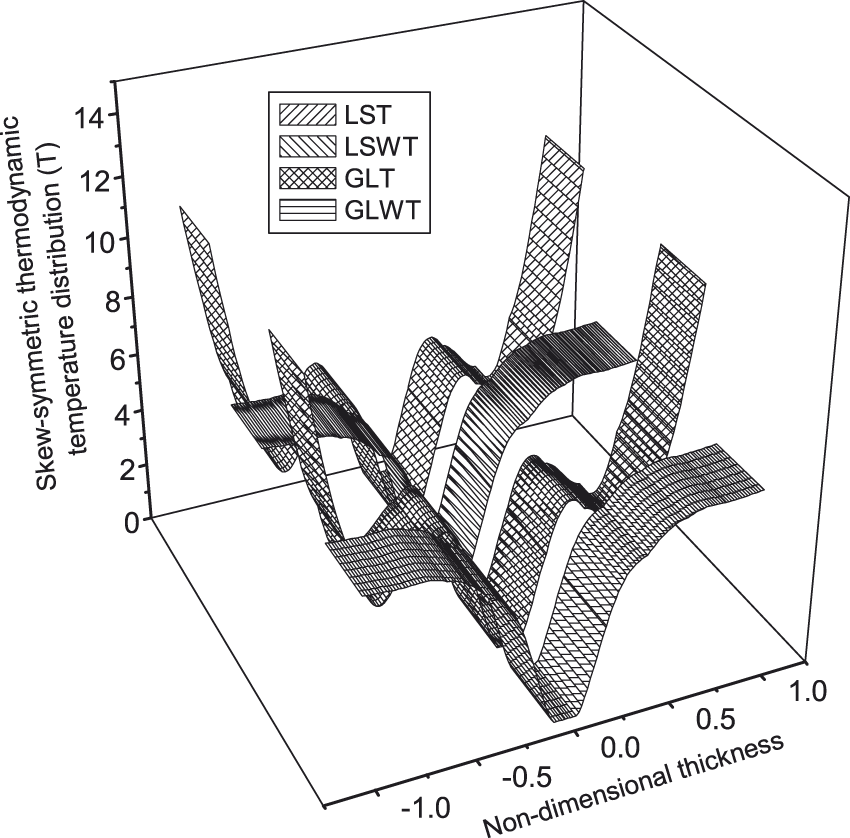
The non-dimensional phase velocity and attenuation coefficient of symmetric and skew-symmetric modes of wave propagation in the context of the L-S theory and G-L theory of thermoelasticity with two temperatures and without two temperatures have been computed for various values of non-dimensional wave number from dispersion equation (36) for stress free thermally insulated boundaries and have been represented graphically for different modes to . In Figures 2 to 5 LST correspond to the L-S theory of thermoelasticity with two temperatures for different modes to , LSWT correspond to the L-S theory of thermoelasticity for different modes to , GLT correspond to the G-L theory of thermoelasticity with two temperatures for different modes to and GLWT correspond to the G-L theory of thermoelasticity for different modes to .The amplitudes of stress components and thermodynamic temperature distribution for symmetric and skew-symmetric modes including and excluding the two temperatures effect are presented graphically in Figures 6 to 13. LST correspond to the L-S theory of thermoelasticity with two temperatures, LSWT correspond to the L-S theory of thermoelasticity, GLT correspond to the G-L theory of thermoelasticity with two temperatures and GLWT correspond to the G-L theory of thermoelasticity.
Variation of phase velocity for symmetric modes of wave propagation.
Variation of attenuation coefficient for symmetric modes of wave propagation.
Variation of phase velocity for skew-symmetric modes of wave propagation.
For symmetric modes of wave propagation, it is noticed that for mode, phase velocity for LST, LSWT, GLT and GLWT decrease with an increase in wave number and the values for LST and GLT remain more than the values for LSWT and GLWT for , repectively, except at for GLT and in the remaining region, the behavior is reversed. For , the phase velocities for LST, LSWT, GLT and GLWT oscillate with an increase in wave number and for mode, the velocities for LST and GLT decrease with wave number.
It is noticed that for skew-symmetric modes of propagation, for mode, the velocities for LST and GLT remain more than the velocities for LSWT and GLWT respectively in the whole region, except at , where the behavior is reversed. For mode, the velocities for LST in comparison with GLT remain more in the region and with further increase in wave number they coincide. It is noticed that for , skew-symmetric modes of propagation, the velocities for LST, GLT, LSWT and GLWT decrease in the whole region.
The attenuation coefficients of symmetric and skew-symmetric modes have been plotted including and excluding two temperatures effect in Figures 3 and 5 respectively.
The attenuation coefficient for symmetric mode attains the maximum value at for LST and GLT and at for LSWT and GLWT. For symmetric mode, LST and GLT attain maximum value at . For symmetric mode, the magnitude of attenuation coefficient for LST and GLT remain more than the values for LSWT and GLWT in the whole region except at , where the behavior is reversed.
The magnitude of attenuation coefficient for skew-symmetric mode for LSWT and GLWT is greater than the values for LST and GLT respectively in the whole region, except for . For skew symmetric mode the amplitude of attenuation coefficient for GLWT remain more than the amplitude for LSWT in the region and and in the remaining region the behavior is reversed. For higher skew-symmetric mode , the amplitude of attenuation coefficient attains maximum value 0.0638 for LST and GLT at and the effect of two temperatures increase the magnitude of attenuation coefficient for mode.
Figure 6 depicts the variation of tangential stress component for symmetric mode. The amplitude of attain maximum value at the surfaces. The value of for GLT remain more than the value for LST in the whole region that reveals the effect of two relaxation times.
Figure 7 shows the variation of tangential stress component for skew-symmetric mode and its value is maximum at the center for LST, GLT, LSWT and GLWT. The value of for LST remains more than that of LSWT and GLT remain more than that of GLWT in the whole region that shows the effect of two temperatures.
Figure 8 depicts that the amplitude of normal stress component for the symmetric mode oscillate and attain maximum value at the center for LST, GLT, LSWT and GLWT. The values of for the G-L theory remain more than the values for the L-S theory.
Variation of attenuation coefficient for skew-symmetric modes of wave propagation.
Figure 9 depicts the variation of normal stress component for skew-symmetric mode. The amplitude of is minimum at the center. The value of for GLT remain more than that of LST in the whole region.
Figure 10 shows the variation of the symmetric amplitude of tangential couple stress component . The amplitude of first increase to attain maximum value 0.01075 at the center of the plate and then decrease with an increase in thickness of the plate.
Variation of amplitude of symmetric normal stress component t33 with respect to non-dimensional thickness.
Variation of amplitude of skew-symmetric normal stress component t33 with respect to non-dimensional thickness.
Variation of amplitude of symmetric tangential stress component t31 with respect to non-dimensional thickness.
Variation of amplitude of skew-symmetric tangential stress component t31 with respect to non-dimensional thickness.
Variation of amplitude of symmetric tangential couple stress component m32 with respect to non-dimensional thickness.
Figure 11 depicts that the amplitude of skew-symmetric tangential couple stress component is very small at the center and at the surfaces.
Variation of amplitude of skew-symmetric tangential couple stress component m32 with respect to non-dimensional thickness.
Figure 12 depicts the variation of amplitude of symmetric thermodynamic temperature distribution T. The values of T oscillate in the whole region. The values of T for the L-S theory remain more than the values for the G-L theory in the whole region. It is noticed that the values for LST in comparison with LSWT and GLT in comparison with GLWT remain more in the whole region that reveals the effect of two temperatures.
Variation of amplitude of symmetric thermodynamic temperature distribution T with respect to non-dimensional thickness.
Figure 13 shows the variation of amplitude of skew-symmetric thermodynamic temperature distribution T. The values of T for LST, GLT, LSWT and GLWT first decrease with thickness up to the center of the plate and then increase.
Variation of amplitude of skew-symmetric thermodynamic temperature distribution T with respect to non-dimensional thickness.
11. Conclusions
At short wavelength limits, the secular equations for symmetric and skew-symmetric waves in stress free micropolar thermoelastic plate with two temperatures reduce to Rayleigh surface frequency equations.
The phase velocities of higher modes of propagation, symmetric and skew-symmetric attain quite large values at vanishing wave number which sharply slashes down with slight oscillation with an increase in wave number.
The amplitude of skew-symmetric thermodynamic temperature distribution T, tangential couple stress component and normal stress component of the plate is very small at the center. The value of symmetric tangential stress component is very small at the center and maximum at the surfaces.
It is observed that the values of symmetric and skew-symmetric thermodynamic temperature distribution T, tangential stress component and symmetric normal stress component for LST and GLT remain more than the values for LSWT and GLWT respectively that reveal the effect of two temperatures.
Footnotes
Funding
This research received no specific grant from any funding agency in the public, commercial, or not-for-profit sectors.
References
1.
BoleyM (1956) Thermoelastic and irreversible thermodynamics. Journal of Applied Physics27: 240–253.
2.
BoschiEIesanD (1973) A generalized theory of linear micropolar thermoelasticity. Meccanica7: 154–157.
3.
ChandrasekharaiahDS (1986) Heat flux dependent micropolar thermoelasticity. International Journal of Engineering Science24: 1389–1395.
4.
ChenPJGurtinMEWilliamsWO (1968) A note on non simple heat conduction. Zeitschrift für angewandte Mathematik und Physik19: 960–970.
5.
ChenPJGurtinMEWilliamsWO (1969) On the thermoelastic material with two temperatures. Zeitschrift für angewandte Mathematik und Physik20: 107–112.
6.
DostSTabarrokB (1978) Generalized micropolar thermoelasticity. International Journal of Engineering Science16: 173–178.
7.
EringenAC (1966) Linear theory of micropolar elasticity. Journal of Applied Mathematics and Mechanics15: 909–923.
8.
EringenAC (1970) Foundations of micropolar thermoelasticity. International Centre for Mechanical Science, Udline Course and Lectures 23, Berlin, Germany: Springer-Verlag.
9.
EringenAC (1999) Microcontinuum Field Theories I: Foundations and Solids, Berlin, Germany: Springer-Verlag.
10.
EzzatMAAwadES (2010) Constitutive relations, Uniqueness of solution and thermal shock application in the linear theory of micropolar generalized thermoelasticity involving two temperatures. Journal of Thermal Stresses33: 226–250.
11.
GreenAELindsayKA (1972) Thermoelasticity. Journal of Elasticity2: 1–7.
12.
KaushalSSharmaNKumarR (2010) Propagation of waves in generalized thermoelastic continua with two temperature. International Journal of Applied Mechanics and Engineering15: 1111–1127.
13.
KaushalSKumarRMiglaniA (2011) Wave propagation in temperature rate dependent thermoelasticity with two temperatures. Mathematical Sciences5: 125–146.
14.
KumarRGognaML (1988) Propagation of waves in micropolar elastic layer with stretch immersed in an infinite liquid. International Journal of Engineering Science27: 89–99.
15.
KumarRMukhopadhyayS (2010) Effect of thermal relaxation time on plane wave propagation under two temperature thermoelasticity. International Journal of Engineering Science48: 128–139.
16.
KumarRPartapG (2006) Rayleigh Lamb waves in micropolar isotropic elastic plate. Applied Mathematics and Mechanics27: 1049–1059.
17.
KumarRPartapG (2007a) Propagation of micropolar thermoelastic waves in plate. International Journal of Applied Mechanics and Engineering12: 655–675.
18.
KumarRPartapG (2007b) Wave propagation in a circular crested micropolar generalized thermoelastic plate. Buletinul Institutului Polithehnic din Iasi3–4: 53–72.
19.
KumarRPartapG (2010) Propagation of waves in micropolar thermoelastic cubic crystals. Applied Mathematics and Information Sciences4: 107–123.
20.
MaganaAQuintanillaR (2009) Uniqueness and growth of solution in two temperature generalized thermoelastic theories. Mathematics and Mechanics of Solids14: 622–634.
21.
MukhopadhyaySKumarR (2009) Thermoelastic interaction on two temperature generalized thermoelasticity in an infinite medium with a cylindrical cavity. Journal of Thermal Stresses32: 341–360.
22.
NowackiW (1986) Theory of Asymmetric Elasticity, Oxford, UK: Pergamon.
23.
NowackiWNowackiWK (1969) Propagation of monochromatic waves in an infinite micropolar elastic plate. Bulletin de l’Academie Polonaise des Sciences, Sere des Sciences Techniques17: 45–53.
24.
PuriPJordanP (2006) On the propagation of harmonic plane waves under the two temperature theory. International Journal of Engineering Science44: 1113–1126.
25.
SharmaJNKumarS (2009) Lamb waves in micropolar thermoelastic solid plates immersed in liquid with varying temperature. Meccanica44: 305–319.
26.
SharmaJNKumarSSharmaYD (2008) Propagation of Rayleigh waves in microstretch thermoelastic continua under inviscid fluid loadings. Journal of Thermal Stresses31: 18–39.
27.
Tomar SK (2002) Wave propagation in a micropolar elastic layer. In Proceedings of National Academy of Sciences, India, vol. 72(A)IV, pp. 339–350.
28.
TomarSK (2005) Wave propagation in a micropolar plate with voids. Journal of Vibration and Control11: 849–863.
29.
TouchertTRClausWDJrArimanT (1968) The linear theory of micropolar thermoelasticity. International Journal of Engineering Science6: 37–47.
30.
WarrenWEChenPJ (1973) Wave propagation in the two temperature theory of thermoelasticity. Acta Mechanica16: 21–23.
31.
YoussefHM (2006) Theory of two temperature generalized thermoelasticity. IMA Journal of Applied Mathematics71: 383–390.
32.
YoussefHMAl-HarbyHA (2007) State space approach of two temperature generalized thermoelasticity of infinite body with a spherical cavity subjected to different types of thermal loading. Archive of Applied Mechanics77: 675–687.
33.
YoussefHMAl-LehaibiEA (2007) A state approach of two temperature generalized thermoelasticity of one dimensional problem. International Journal of Solids and Structures44: 1550–1562.