






Abstract
Recent federal laws and state policies reflect the government’s investment in improving education and employment outcomes for youth with foster care histories. However, little research has assessed the roles of these programs using national data. Drawing on data from the National Youth in Transitions Database (NYTD) (n = 7797), this study examines the roles that state-level policies and programs, youth-level participation in programs and services, and youth characteristics play in youths’ connection to employment and education (“connectedness”) at age 21. Results from multilevel regression analyses find that foster youth in states with widely available tuition waiver programs increases the odds of connectedness to school. The amount of time youth spend in extended foster care, as well as receipt of postsecondary education aid and services, also increases connectedness. Study findings underscore the importance of material and relational supports in supporting foster youths’ connection to employment and education in early adulthood.
Keywords
The majority of young people become employed and/or enroll in postsecondary education as they transition into adulthood. However, it is estimated that 1 in 9 young people are not working or enrolled in school (Lewis, 2020), who are often referred to as “disconnected youth” or “opportunity youth.” This group of young people may be at an increased vulnerability for negative outcomes into adulthood and has become the focus of various programs and policies aimed at increasing connectedness to work and school (Fernandes & Gabe, 2009). Young people with foster care histories are particularly susceptible to being disconnected from school and work as they enter adulthood. At age 21, approximately one-third of former foster youth are neither working nor in school, a rate that is significantly higher than that of same-age peers in the general population (Courtney et al., 2018b). These disparities have been found to persist in early adulthood. For example, one study found that 49% of youth formerly in foster care are employed at age 25/26, compared to approximately 70% of the general population (Okpych & Courtney, 2014). Since foster youth may not have a family safety net after leaving care, disconnection from work and school is detrimental to their economic stability and livelihood (e.g., Curry & Abrams, 2015). However, being connected to school and/or employment (“connectedness”) can serve as an important protective factor that can reduce risk factors and improve outcomes among various vulnerable groups, including youth (Steiner et al., 2019).
Factors Associated with Foster Youth Connectedness to Education and Employment
Youth in foster care face multiple challenges as they transition into adulthood that contribute to concerning educational and employment outcomes, including placement and school instability while in care (Hook & Courtney, 2011), early pregnancy and parenthood (Dworsky & Gitlow, 2017; Hook & Courtney, 2011), mental health and substance use disorders, and homelessness and criminal justice system involvement (Courtney et al., 2011). Studies examining connectedness to education and employment among foster youth report differences by gender, race and ethnicity, disability status, and parental status on connectedness to school and work. Females are more likely than males to enroll in higher education (Courtney & Hook, 2017; Rosenberg & Kim, 2018; Watt & Kim, 2019), although not all studies report statistically significant gender differences (e.g., Barnow et al., 2015; Okpych & Courtney, 2017). Findings by race and ethnicity are mixed. Some studies found that, compared to white youth, African American youth, youth identifying as another race, and/or Hispanic youth are more likely to enroll in college (Courtney & Hook, 2017; Rosenberg & Kim, 2018; Watt & Kim, 2019), while other studies find no differences (Barnow et al., 2015; Okpych & Courtney, 2017). Dworsky and Gitlow (2017) found that only half of young parents were employed during the first year after leaving care, many of whom were not consistently employed. The presence of a disability also decreases the odds of connectedness to postsecondary education and employment at age 21 (Cheatham et al., 2020; Kim et al., 2019; Rosenberg & Kim, 2018), particularly among those diagnosed with an emotional disability (Cheatham et al., 2020).
Foster care experiences also appear to influence connectedness. The number of foster care placements and placement instability decreases postsecondary education attainment at age 21 (Kim et al., 2019; Rosenberg & Kim, 2018), and placement in congregate care settings (e.g., group homes) predicts lower odds of advancing to postsecondary education relative to other placement types (Courtney & Hook, 2017; Rosenberg & Kim, 2018). Some factors have been found to promote connection to education and employment in early adulthood. These include higher educational attainment in late adolescence (Hook & Courtney, 2011; Okpych & Courtney, 2014) and employment experience prior to exiting care (Stewart et al., 2014).
Policies Targeting Postsecondary Education and Employment among Foster Youth
In the past two decades, several federal laws have enhanced opportunities to access postsecondary education, training, and employment for older youth in care (for review see Okpych, 2021). The 1999 Foster Care Independence Act (FCIA) funds independent living (IL) services and was amended in 2001 to establish education and training vouchers (ETV), US$5000 per year that foster you can use toward postsecondary education and training. Research on IL services shows that most youth in care do not receive postsecondary education and employment IL services (Okpych, 2015), and rigorous evaluations of promising IL programs have found few significant impacts on higher education and employment (Administration for Children and Families, n.d.). Further, difficulties in monitoring IL programs have persisted across states, but have recently improved with the development of the National Youth in Transition Database (NYTD). Research on ETVs has shown considerable variation in ETV use and expenditures across states (Simmel et al., 2013), and early findings suggest that ETV receipt increases the odds of first-year college persistence (Okpych et al., 2020).
The Fostering Connections to Success and Increasing Adoptions Act (2008) was a monumental federal law that provides federal reimbursement to states to extend the foster care age limit beyond age 18 and up to age 21. Youth who are in care on their 18th birthday in one of the nearly 30 states with federally approved extended foster care (EFC) laws can remain in care until their 21st birthday if they meet one of five eligibility criteria, which includes working or being enrolled in school. EFC, although varied by state, provides an array of services, including academic support, career preparation, employment training, case management, mentoring, and counseling. Early research on the impact of EFC has found that more time in EFC increases employment (Courtney et al., 2018a) and college enrollment (Courtney et al., 2018b; Courtney & Hook, 2017; Okpych & Courtney, 2020).
About half of US states offer some form of a postsecondary education tuition and fee waiver for youth formerly in foster care (see Hernandez et al., 2017 and Parker & Sarubbi, 2017 for review of state policies). However, little is known about tuition waiver use and impact. A recent study in Texas found that waiver utilization increased bachelor’s degree completion for foster youth, but also reported that the waiver was underutilized by many eligible students (Watt & Faulkner, 2020).
In summary, recent laws and state policies reflect the government’s investment in improving education and employment outcomes for youth with care histories. However, little research has assessed the roles of these various programs using national data. Furthermore, we have much to learn about other possible contributors of connectedness (e.g., disparities, risk, and protective factors). Finally, few existing studies have examined education and employment. Since young adults may be going to school instead of working, working instead of going to school, or pursuing both, it is important to evaluate these outcomes concurrently.
This article addresses these research gaps by examining the roles that state-level policies and programs, youth-level participation in programs and services, and youth characteristics play in connectedness to employment and education. This knowledge can inform regional and federal policy decisions around allocating funding, reducing costs, designing and evaluating programs, and prioritizing programs that enhance connection to the workforce and higher education.
Research Questions
1. At the state level, do four policies/programs (i.e., EFC, ETV expenditure, FCIA expenditure, and state tuition waiver) increase the odds of youth connectedness at age 21? 2. At the youth level, does receiving services and resources from the policies/programs (i.e., years in EFC, educational financial assistance, employment training, and postsecondary education training) increase the odds of youth connectedness at age 21? 3. Are disparities by youth characteristics (gender, race, ethnicity, disability status, parental status, and substance abuse status) present in connectedness at age 21?
Methods
Data
Data come from the National Youth in Transition Database (NYTD). The 1999 FCIA law mandates US states, Washington D.C., and Puerto Rico to collect longitudinal outcome data on a representative sample of foster youth. Beginning in 2011, every 3 years states initiate data collection with a new cohort of 17-year-olds. For each cohort, data are collected at age 17, 19, and 21. Youth are eligible for NYTD if their 17th birthday falls within the fiscal year of the baseline survey and were in foster care within the 45-day period after their 17th birthday.
We analyzed data from the second NYTD cohort (N = 23,523), which excludes 257 youth in care in Puerto Rico. A total of 16,238 young people completed the baseline NYTD interview in 2014 (response rate = 69.0%). Follow-up interviews were conducted at age 19 (in 2016) and age 21 (in 2018). Baseline respondents were eligible for the follow-up surveys if they met the following criteria: (1) were in foster care on the day they completed the baseline survey, (2) completed the baseline survey within 45 days of their 17th birthday, and (3) provided a valid response to at least one survey item. States had the option of selecting a random sample of baseline respondents for follow-up interview, and 15 states utilized this option. Of the 12,273 youths eligible for the age-21 interviews, 7797 participated (63.7% response rate for the eligible age-21 sample). Of the 4476 age-21 survey nonrespondents, 3074 were unable to be located, 627 declined to participate, and 775 were not interviewed for some other reason (e.g., being incarcerated, being incapacitated, death, runaway or missing, parental refusal, did not provide valid responses during the age-21 interview, and no reason given). The analytic sample includes the 7797 youths who completed age-17 and age-21 interviews. We ran Bonferroni-adjusted tests to examine differences in baseline youth characteristics between the youth who did and did not complete the age-21 surveys, and we found some differences that suggest the age-21 participants displayed fewer risk factors and more protective factors than age-21 nonparticipants. For example, compared to NYTD baseline participants who did not complete the age-21 survey, those who did complete the age-21 survey were more likely to be female, Hispanic, and employed at age 17. The age-21 respondents were less likely than nonrespondents to have an intellectual disability, to have youth drug/alcohol problem or behavioral problem as a removal reason, to have been reunified, to have exited care to adoption or guardianship, to have ever spent a night in jail, and to have an alcohol/substance abuse assessment/referral.
Data collected from the NYTD surveys were linked to two other child welfare administrative datasets: The Adoptions and Foster Care Reporting System (AFCARS) and the NYTD Services file. AFCARS provided information on study participants’ foster care history and the NYTD Services data provided information on participants’ receipt of FCIA-funded education and employment IL services. Publicly available data were obtained to create several state-level variables such as youth unemployment rate and college enrollment rate.
Variables
Outcome Variables: Youth Connectedness
Two measures of connectedness at age 21 were created: a binary measure of connectedness status (1 = currently enrolled/employed and 0 = neither) and a multi-category measure of connectedness type (1 = neither enrolled nor employed, 2 = employed only, 3 = enrolled only, and 4 = employed and enrolled). Both part-time and full-time employments were counted.
Independent Variables: Youth-level Service Receipt and State-level Programs
Four binary variables (1 = yes and 0 = no) indicated if youth received four types of IL services between their age-17 and age-21 interviews. First, career preparation includes services that prepare youth to find, apply for, and retain employment (e.g., vocational and career assessment, resume writing, and job coaching). Second, employment programs or vocational training develop a youth’s skills for a particular trade or vocation through classes, on-site training, apprenticeships, internships, or summer employment. Third, educational financial assistance provides funding for education or training (e.g., tuition assistance, scholarships, educational preparation services, and other education expenses). Fourth, postsecondary education support services are designed to promote college access and completion (e.g., test preparation classes, college counseling, financial aid application assistance, and college tutoring). A continuous measure captured the number of years a youth remained in EFC (range 0–3 years).
A second set of independent variables were state-level measures of important policies and programs hypothesized to increase youth connectedness. One measure indicated whether the state had a tuition and fee waiver program in 2016 that was specifically available to foster youth (1 = no tuition wavier program, 2 = tuition wavier program available to some foster youth, and 3 = tuition waiver program available to all foster youth) (Hernandez et al., 2017; Parker & Sarubbi, 2017). A binary measure indicated whether the state had a federally approved EFC law in effect at the time of the participant’s 18th birthday (1 = yes and 0 = no) (C. Heath, personal communication, February 18, 2020). Based on a state’s foster care population, federal funding is allocated to each state for IL services and ETVs. Two variables captured the percentage of unspent funding for FCIA IL services and for ETVs (A. Fernandes-Alcantara, personal communication, January 17, 2020 and March 16, 2020). Since these percentages fluctuated over years, for each state we took the average of 2014, 2015, and 2016.
Control Variables
Several sets of youth-level and state-level measures served as control variables in the regression analyses. Demographic characteristics included the youth’s age at the age-17 interview, number of years between the age-17 and age-21 surveys, gender, race, and ethnicity. Drawing from the age-17 surveys, binary measures captured youths’ current employment status, enrollment status, and high school completion status (diploma/GED vs. neither). Binary measures also indicated whether youth had ever been homeless, had ever spent a night in a correctional facility, were a parent, had ever been referred to alcohol or drug abuse assessment or counseling, and had an adult they could turn to for advice or companionship.
Several youth-level measures were created from AFCARS data. Binary variables indicated whether youth had an intellectual disability, had a vision or hearing disability, or had another documented medical disability. Several measures captured aspects of youths’ foster care involvement, including the age they first entered care, the number of years in care in their current foster care episode, number of foster care episodes, and the average number of placements they were in for each year in care. Binary measures were created for each of the following removal reasons: physical abuse, sexual abuse, neglect, youth alcohol or drug problem, and youth behavior problem. Two measures indicated if the youth had exited care to reunification and if they exited care to an adoption/guardianship arrangement.
We also created measures of whether youth had received each of the four education- and employment-related IL services (described above) between their 14th birthday and their age-17 interview. These served as important controls for the youth-level independent variables because they adjusted for youths’ proclivity to receive services.
Drawing on publicly available data, we created two state-level control variables: the college enrollment rate for youth ages 18–24 and the unemployment rate for youth ages 20–24 (both averaged across the years 2014–2016). As a measure of housing affordability, we also controlled for the average fair market rent for a two-bedroom apartment at the county level, which was the average rent for 2015 and 2016 for each county.
Analyses
Multilevel modeling (MLM) was used to estimate associations between the youth- and state-level predictors and the connectedness outcomes. MLM is appropriate for data that have more than one level, such as youth (level 1) nested within states (level 2). This approach explicitly models characteristics at both levels and accounts for the lack of independence between observations arising from the shared context of youth who reside in the same state (Snijders & Bosker, 2011). A binary logistic MLM was used for the two-category connectedness outcome, and a multinomial logistic MLM was used for the four-category outcome. State-level predictors were analyzed as fixed effects.
In all analyses, we applied survey weights that accounted for the random sampling procedures utilized by 15 states and the nonresponse at the baseline and age-21 interview waves. The survey weights also standardized our estimates so that the sample (n = 7797) reflected the gender and race distributions within each state of the NYTD population of interest (N = 23,523). There were a nontrival number of cases missing data on a predictor (29%), and we used multiple imputation by chained equations (MICE) to address the missingness (White et al., 2011). MICE is an advanced statistical procedure that draws on the distribution of observed data to generate plausible imputed values estimated by a series of iterative regression analyses. Multiple complete datasets are then combined during the analysis phase to generate a single set of regression results. We generated 35 imputed datasets, which satisfy the guidelines proposed by both Graham and colleagues (2007) and White and colleagues (2010).
Results
Descriptive Statistics
Descriptive Statistics of Sample (Weighted Means and Percentages) (n = 7797).

State-Level Characteristics (weighted Means and Percentages) (n = 7797).
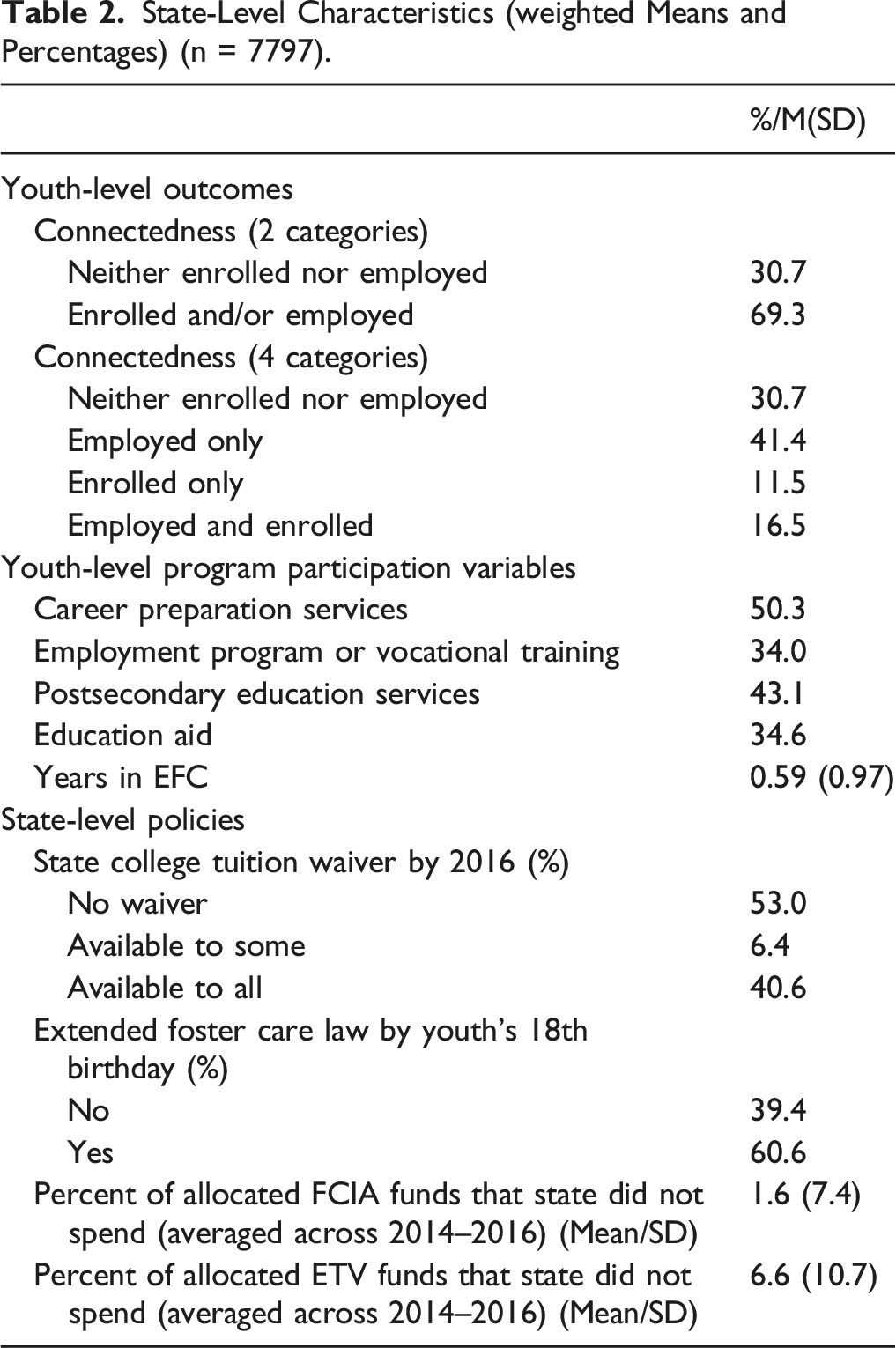
At the state level, more than half of youth were placed in a state without a state college tuition waiver in 2016. However, about one-in-four were in a state with tuition waiver programs that were widely available to foster youth. About three-fifths of youth were placed in a state with a federally approved EFC law at the time of their 18th birthday. The overwhelming majority of youth were in states that spent all of their allocated IL and ETV funding. About 81% of youth were in states that spent all of their FCIA funding, and roughly 39% of youth were in states that spent all of their ETV funding.
Multilevel Binary Logistic Regression Results: Predictors of Connectedness Status (Employed/Enrolled vs. Neither) at Age 21 (n = 7672).
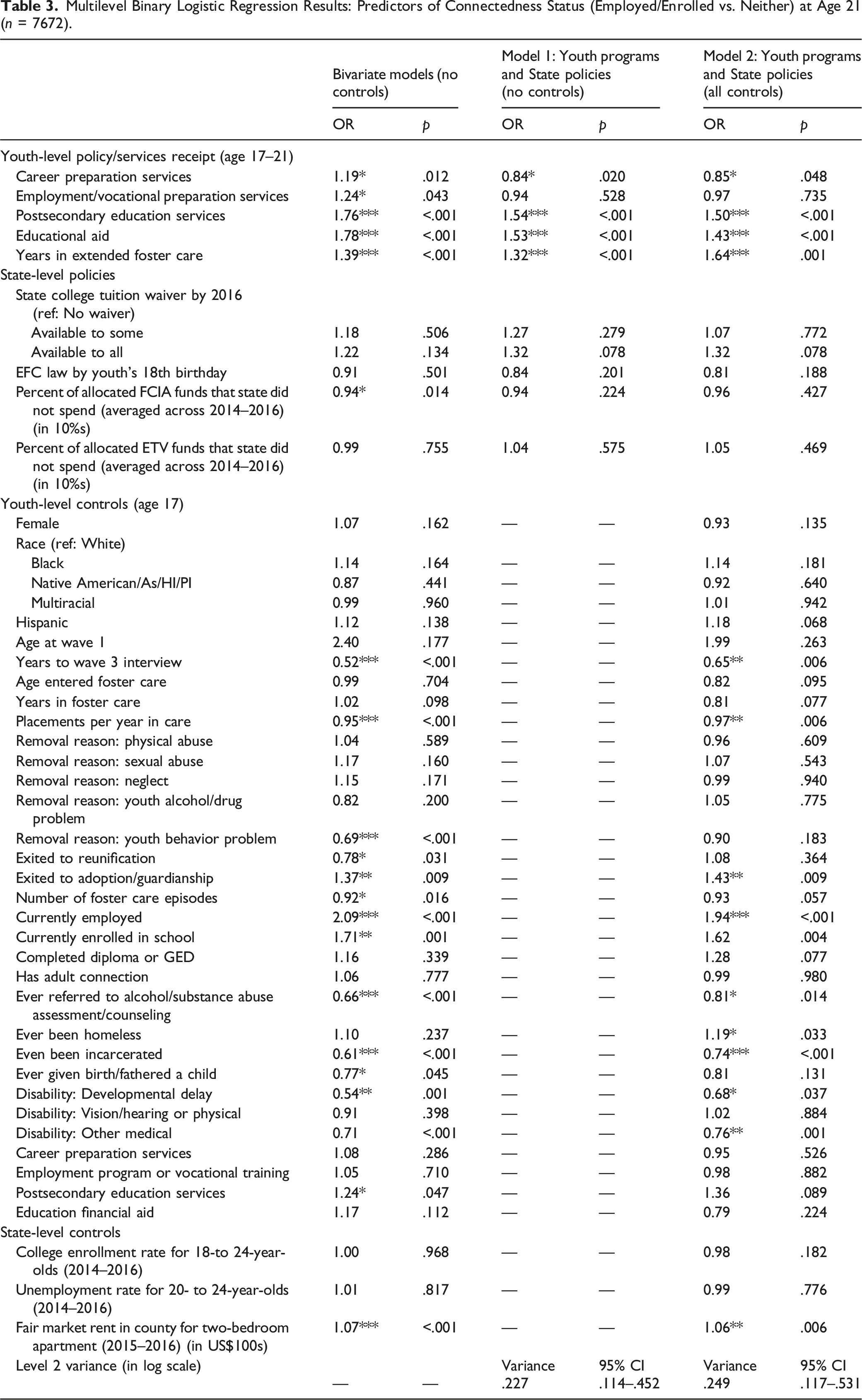
The regression results in Table 3 are displayed as odds ratios (ORs) to ease interpretation. The first column presents results from multiple bivariate regression models, in which the outcome was regressed on each predictor variable separately. These unadjusted estimates showed that receipt of the youth-level services is associated with increased odds of connectedness at age 21. In the bivariate models, only one of the state-level policies was statistically significantly associated with connectedness. Every 10% increase in unspent FCIA funds is expected to decrease the odds of connectedness by about 6%.
Model 1 displays results of a regression model that contains the youth-level services and state-level policies/programs. The estimates for postsecondary education IL services, receipt of educational aid, and time in EFC decreased when controlling for other youth-level services and state-level policies, but all three remained positively associated with youth connectedness. Receipt of employment/vocational preparation IL services was no longer significantly associated with connectedness, and the association between career preparation services became negatively associated with connectedness. When comparing youth similar in their receipt of other services and in the state-level policies, receiving career preparation IL services is expected to decrease the odds of connectedness by about 16%. This flip in coefficient was due primarily to correlations with educational aid and receipt of postsecondary education services. Youth who received career preparation services tended to also receive educational aid and postsecondary education support, which were both positively correlated with connectedness. After holding these constant, receipt of career preparation services became negatively associated with connectedness. None of the state-level policies were significantly associated with youth connectedness in this model.
Model 2 displays the results of the full regression model with all predictors and controls. The odds of being connected at age 21 were about 50% greater for youth who received postsecondary education IL services than for youth who did not. Similarly, youth who received educational aid had about 43% greater odds of being connected than did youth who did not receive aid. Participating in EFC was also positively associated with connectedness, with each year in EFC increasing the expected odds of connectedness by 64%. Receipt of career preparation services remained negatively associated with connectedness. As in Model 1, none of the state-level policies were significantly associated with connectedness. One policy was marginally statistically significant; youth in states with a tuition waiver available to all foster youth were more likely to be connected than youth in states with no tuition waiver (p = .078).
The full model also showed several youth-level factors that were significantly associated with the odds of connectedness at age 21. Youth who had been employed and youth who had been enrolled at the time of their age-17 interview were more likely than their counterparts to be connected at age 21. Youth who exited care to adoption or guardianship during their most recent foster care episode were also more likely than their peers to be connected at age 21. There were also some factors at age 17 that significantly decreased youths’ odds of being connected, including greater placement instability in foster care, ever being referred to an alcohol/substance use assessment or counseling, and a history of incarceration. Youth with an intellectual disability and youth with other medical disabilities were both less likely than their counterparts to be connected at age 21. We did not find significant differences in the expected odds of connectedness by gender or race, although there was a marginally significant association by ethnicity, with the odds of connectedness being higher for Hispanic than non-Hispanic youth. Youth who had ever been homeless before their age-17 interview were more likely than youth who had never experienced homelessness to be connected. Finally, youth in counties with higher rent costs had greater odds of being connected than youth where rent was less expensive.
Connectedness to Education and Employment
Multilevel Multinomial Logistic Regression Results: Predictors of Connectedness Type at Age 21 (n = 7672).
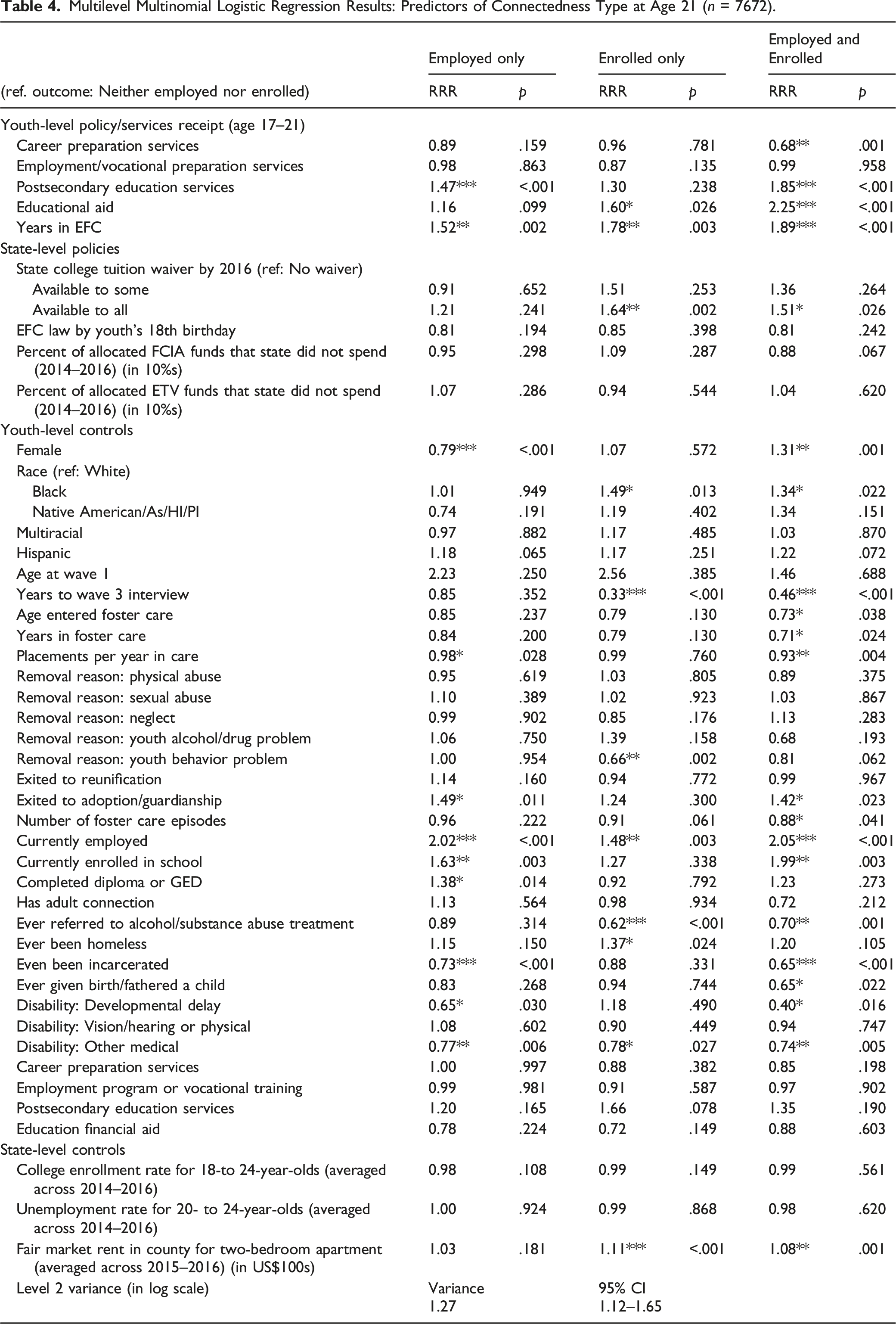
In terms of state-level policies, only college tuition waivers were significantly associated with youth connectedness type. Compared to youth in states with no program, youth in states with a waiver program available to all foster youth were more likely to be enrolled only and to be employed/enrolled than to be disconnected.
Several associations were found between youth characteristics and their connectedness status at age 21. Compared to males, females were less likely to be only working (vs. disconnected) and more likely to be employed/enrolled. Compared to white youth, black youth were more likely to be enrolled in school and employed/enrolled than to be disconnected. Employment and enrollment at age 17 were positively associated with connectedness type, while placement instability in care, removal due to youth behavior problem, a history of being referred for alcohol or substance use problems, a history of incarceration, and having a child were all risk factors of being disconnected at age 21. Youth with an intellectual disability and other medical disabilities were also less likely than their peers to be connected at age 21. Youth who had ever been homeless before their age-17 interview were more likely than their counterparts to be enrolled only than to be disconnected. Finally, higher county rent costs were associated with an increased odds of being enrolled only and being employed/enrolled.
Discussion
This study makes an important contribution to the existing literature on connectedness to education and employment for youth with care histories. Harnessing national data, we examined youth disparities in connectedness, the roles of state policies, and the influence of youth receipt of IL services. At age 21, about 7 in 10 youth were connected to school and/or work. Most youth were only working or only going to school (53%), while about 17% were doing both. It is important to recognize that many factors affect whether youth were connected to school, work, or both and is likely affected by an interplay of contextual factors (e.g., available jobs and affordable and accessible schools), youths’ immediate opportunities and constraints (e.g., needing to put school on hold to work), and youths’ desires and preferences.
One finding is that few state-level policies were significantly associated with connectedness to employment or education at age 21. This may not be surprising, as we found that only about 6% of the variation in youth connectedness is attributable to variation between states. Further, simply having a state program in place may not be as influential as youth receiving and benefitting from the program. For example, the majority of states had a federally approved EFC policy, but only 45% of the youth in this study spent any time in extended care. When we look at differences in the amount of time youth spent in extended care, rather than simply whether an EFC policy was in place, we see that time in EFC is positively associated with connectedness.
One state-level program that was found to be significantly associated with youth connectedness is state tuition waivers. Foster youth residing in a state with a college tuition waiver program were significantly more likely to be enrolled in postsecondary education and to be enrolled and employed than were youth residing in a state with no waiver, but only when the program was available to all students with foster care involvement. This is an important finding as a growing number of states are adopting tuition waivers for youth with foster care histories. Recent evidence shows that tuition waivers increase postsecondary success (Watt & Faulkner, 2020) and when combined with other resources, such as ETVs and participation in campus support programs (Okpych et al., 2020), tuition waivers may be an important promoter of college persistence. However, Watt and colleagues (2019; 2020) found that tuition waivers are often underutilized, suggesting that policies may not be structured in a way that students can use them to reduce their financial burden. Therefore, it is critical for future research to examine the reasons students are not utilizing waivers when they are available. Further, states and child welfare departments should examine barriers that can limit access to tuition waivers (e.g., limited publicity and difficult-to-navigate application processes) to broaden their reach and impact.
It is possible that some state-level programs were inadequately measured in this study. Specifically, a state’s percentage of unspent FCIA IL service funds and unspent ETV funds may not be an accurate measure of the impact of these programs. For example, a state with 15% unspent FCIA funds could be capturing a surplus of funding for youth in the state or an underutilization of funding. These measures also do not capture other sources of state funding (e.g., sources of aid that render ETV unnecessary). A better state-level measure may be the average amounts of FCIA funding/ETV funding a state spends on each eligible youth. Further, from a predictive standpoint, it may be more important to precisely measure youth participation in these programs. This includes the types, quality, and dosage of IL services a youth receives, and the specific ETV amount disbursed to a youth (in combination with other sources of aid). Research has found that many students may not have access to ETVs or FICA-funded programs (Okpych, 2015; Okpych et al., 2020; Simmel et al., 2013). Future research should explore how states are utilizing FCIA funding and how that is related to youth connectedness.
When we move from state-level policy differences to youth-level differences in service receipt, we find several significant impacts on connectedness. Consistent with a growing number of studies (Courtney et al., 2018a; Courtney & Hook, 2017; Okpych & Courtney, 2020), our results find that more time spent in EFC increases youths’ odds of being connected to education and employment. As noted earlier, simply being in a state with an EFC did not significantly increase the odds of connectedness, but the number of years spent in EFC did. Presumably, more time in extended care allows youth to take advantage of the available services and supports, and to stave off hardships (e.g., housing insecurity) that may be more likely to occur without the protection of EFC. However, more research is needed to pinpoint specific mechanisms of how time in EFC translates to improved education and employment outcomes.
This study also found that youth were significantly more likely to be connected to work and education if they participated in postsecondary education services and received educational aid. These findings highlight the importance of connecting youth to financial resources and types of services that target postsecondary education and training. Given that postsecondary education services were predictive of being employed/enrolled as well as being employed only, these services may give youth enough exposure to higher education that enable them to secure employment at age 21. Receipt of employment and vocational services (e.g., apprenticeships and internships) was not significantly associated with connectedness, and surprisingly, receipt of career preparation services decreased the odds of employed and enrolled. As explained in the findings, this negative association emerged after controlling for youths’ receipt of postsecondary education services and aid. It is possible that there was negative selection among youth in career preparation programs. That is, youth who are at greater risk for poor postsecondary and employment outcomes may be referred to career preparation services to help them explore careers and learn basic work-related skills. Future research should examine IL services at a more granular level, such as rigor of the program curricula, dosage, and youth engagement.
This study found several differences in connectedness based on youths’ demographic and background characteristics. We did not find significant differences by gender, race, or ethnicity when evaluating youths’ connectedness status (connected vs. not). However, a few differences emerged when examining connectedness type. Females were less likely than males to be employed only, but more likely to be employed and enrolled. Studies with foster youth have found that women enroll in postsecondary education at higher rates than men (e.g., Kim et al., 2019). Compared to white youth, Black youth were more likely to be enrolled and to be employed/enrolled. This finding is encouraging and points to the need to promote access to postsecondary education among Black youth with foster care histories through specialized programming and mentorship. We also found that youth with an intellectual disability and other medical disabilities had lower odds of connectedness to school and work than their peers. Previous research has suggested that services (e.g., IL services and special education) offered to foster youth with disabilities in high school may promote completion, but did not extend to postsecondary education and employment (Cheatham et al., 2020). Future research should examine the policies and practices for youth with disabilities as they transition into adulthood.
Several factors were found to increase the odds of youth connectedness. At age 17, youth who were employed, enrolled, and who had completed a high school/GED were more likely than their counterparts to be connected at age 21 to school and/or work. This is consistent with previous research (e.g., Okpych & Courtney, 2017) and likely reflects youth who have acquired academic proficiency and developed habits (e.g., timeliness and grit) needed to keep a job and advance to higher education. Interestingly, youth who had ever been homeless were more likely to enroll in school than to be disconnected. This was a surprising finding. It may be that experiences with homelessness steel youths’ resolve to pursue higher education to avoid facing similar circumstances, or they may have received additional services around the time of their homelessness (Rosenberg & Kim, 2018). More research is needed to see if this finding is replicated with different samples of foster youth and to explore education and employment among youth with care histories who have experienced homelessness.
Findings also identified several risk factors and barriers to being connected. Youth who are parents at age 17 (5% of the sample) were less likely than nonparents to be employed and enrolled in postsecondary education than to be disconnected. We did not find that young parents were significantly less likely than nonparents to be enrolled only or employed only. It may be that there were contextual constraints (e.g., lack of available and affordable child care and other supports) that made it unrealistic to pursue both school and work (Courtney & Hook, 2017; Dworsky & Gitlow, 2017), or perhaps the youth did not desire to simultaneously work and go to school. A history of incarceration, substance and alcohol issues, and being placed in foster care because of behavior problems each decreased the odds of being employed and/or enrolled. These findings may speak to both individual challenges and systemic barriers, such as racism and inequality in access to services, employment, and postsecondary education. Community-based programs that focus on rehabilitation rather than punishment are needed for youth involved with the criminal justice system (Park et al., 2020).
This study found that some aspects of youths’ experiences in foster care were associated with connectedness. Consistent with previous studies, less time in foster care before age 18 (Stewart et al., 2014), fewer foster care episodes, and placement stability (Rosenberg & Kim, 2018) were associated with more favorable employment and/or education outcomes. Youth who exited to adoption or guardianship also fared better than youth who did not exit to adoption or guardianship. These findings reinforce existing child welfare priorities that advocate for increased placement stability and permanency among youth in care (Geiger & Beltran, 2017).
Study Limitations
This study is one of the most comprehensive and rigorous analyses of NYTD data examining important outcomes relevant to young adults’ economic mobility and stability. However, there are some limitations that are important to note when interpreting the findings. First, the measures of connectedness were taken at a single point in time when youth were about 21 years old, and do not capture long-term trends and later advancements in employment and postsecondary education. Research also shows that youth with foster care histories often take longer to complete their high school education/GED or delay enrollment in postsecondary education (Okpych, 2021), which may impact connectedness to school and/or employment at age 21. With limited context provided by the data, we do not know the full set of circumstances of why youth may be enrolled, employed, or both. The NYTD is useful to compare individual cases and between-state differences longitudinally; however, the data are limited in the breadth and depth of the information that is collected (e.g., questions with only yes/no answers). Second, while the regression analyses included a wide range of covariates, unmeasured confounding variables may have still influenced the accuracy of the predictor estimates. Third, non-participation in the baseline and age-21 interviews was not random. We took steps to ensure the sample reflected the gender and racial distributions of the population of interest; however, there may be important differences between respondents and nonrespondents that could have affected the estimates. Fourth, many of the measures are self-reported and may contain some error. Fifth, the state variables were based on the location of the responsible child welfare department, but some youth may have lived elsewhere (e.g., attending college out of state) and the local contexts of their current residence at age 21 were not captured. Finally, the time in EFC variable may be endogenous with connectedness since enrolling in postsecondary education and maintaining employment are two of the eligibility requirements of EFC. However, the positive associations reported between time in EFC and youth connectedness are consistent with other studies that used more rigorous methods (e.g., Courtney et al., 2018a; Courtney & Hook, 2017).
Conclusion
The role of connectedness to education and employment among young people, particularly those who may be more vulnerable to disconnection, continues to be an important conduit toward favorable outcomes into adulthood. This study finds that receipt of resources such as extended foster care and postsecondary education services and funding play important roles in promoting connectedness to work and school in early adulthood. More research is needed to more closely and rigorously evaluation the impacts of these programs, and to understand modifiable youth characteristics that can promote connectedness.
Footnotes
Acknowledgments
Funding is gratefully acknowledged by the University of Wisconsin–Madison’s Institute for Research on Poverty (IRP)’s Extramural Small Grants program for Research to Inform Child Support Policies and Programs, a program of the U.S. Department of Health and Human Services, Office of the Assistant Secretary for Planning and Evaluation (ASPE).
Author’s Note
The data used in this publication were made available by the National Data Archive on Child Abuse and Neglect, Cornell University, Ithaca, NY, and have been used with permission. Data from the National Youth in Transition Database (NYTD) were originally collected by the states and provided to the Children’s Bureau. Funding for the project was provided by the Children’s Bureau, Administration on Children, Youth and Families, U.S. Department of Health and Human Services. The collector of the original data, the funder, the Archive, Cornell University, and their agents or employees bear no responsibility for the analyses or interpretations presented here.
Declaration of Conflicting Interests
The author(s) declared no potential conflicts of interest with respect to the research, authorship, and/or publication of this article.
Funding
The author(s) disclosed receipt of the following financial support for the research, authorship, and/or publication of this article: This research was supported by the extramural small grant program on youth employment from the Institute for Research on Poverty at the University of Wisconsin-Madison and the U.S. Department of Health and Human Services, Office of the Assistant Secretary for Planning and Evaluation (ASPE).
