






Abstract
Extended foster care (EFC) is an important policy that supports human capital attainment for foster youth transitioning to adult independence. Previous studies have examined youth- and policy-level factors’ influence on EFC participation and human capital outcomes (e.g., education, employment). Still, few studies have examined contextual factors (e.g., county characteristics). We explore how local contexts, or county-level attributes, influence youths’ EFC participation and human capital outcomes (i.e., postsecondary education enrollment and earnings). We analyze two datasets from California Youth Transitions to Adulthood Study: survey data with rich youth-level information (n = 529) and state child welfare administrative data with a larger sample size (n = 2392). After controlling for a wide range of youth characteristics and adjusting between-county variations, regression results find that several county characteristics predict youths’ EFC participation and human capital outcomes at age 21, such as political atmosphere and worker’s satisfaction with cross-system collaboration. We conclude with a discussion of implications for research and practice.
Introduction
Participating in extended foster care (EFC) and accruing human capital—the acquired skills, experiences, and knowledge (e.g., educational attainment, job training) that have societal importance and utility (Coleman, 1988)—can better prepare youth for the transition to adult self-sufficiency (Courtney et al., 2017; Hook & Courtney, 2011; Lee & Berrick, 2014; Osgood et al., 2010; Schelbe, 2011). A body of research has examined predictors of foster youths’ participation in EFC and acquisition of human capital. Most of these studies have examined youth-level characteristics and conditions as predictors (e.g., Courtney et al., 2018; Kim et al., 2019; Rosenberg & Kim, 2018). Other research has explored system-level factors, including regional policy. These studies have primarily focused on estimating the impacts of extended care policy on the length of EFC stay and on education and employment outcomes in early adulthood (Courtney et al., 2018; Hook & Courtney, 2011; Okpych & Courtney, 2020).
Despite the importance of individual-level characteristics and policy changes on foster youths’ outcomes, there is a lack of research on how contextual factors, particularly county-level contexts, could mediate the influence of EFC policy on EFC participation and human capital acquisition. Our study draws on multiple data sources to examine which local contexts (or county-level factors) are associated with EFC participation and education and employment outcomes up to age 21.
Research on EFC and Human Capital Outcomes
EFC policy and administration
The Fostering Connections to Success and Increasing Adoptions Act of 2008 (Fostering Connections) gave states the option to extend the age limit of foster care from age 18 to age 21. The law recognizes that foster youth may not be prepared for independence and self-sufficiency at age 18 and provides additional time, services, and supports for youth to acquire human capital during the transition to adulthood. Many of the provisions in Fostering Connections are designed to facilitate foster youths’ capacity to acquire human capital by increasing access to concrete financial support (e.g., housing subsidy, living allowance) and services and training in various domains necessary for independent living. To participate in EFC, the law also requires youth to be enrolled in school (i.e., completing a high school diploma or an equivalent credential, enrolled in a postsecondary or vocational program), actively employed (i.e., at least 80 hours per month), engaged in activities designed to remove barriers to employment, or unable to meet these provisions due to a documented medical condition (Administration for Children and Families, 2017). Our previous research in California found that youths’ time in EFC significantly improved their education and employment outcomes at ages 19, 21, and 23 (Courtney et al., 2018, 2021; Courtney & Okpych, 2017).
When examining the impact of EFC on foster youth outcomes, the child welfare administration system and circumstances of sub-state geographies (e.g., regions and counties) are important to consider. As of 2019, 28 states, the District of Columbia, and nine tribal nations had federally-approved EFC laws (Fernandes-Alcantara, 2019). Of the 28 states, 18 have centralized systems whereby services are state-administered, nine have decentralized systems in which child welfare services are state-supervised and county-administered, and one has a semi-centralized system in which services are partially state- and county-administered. Arguably, one might expect more variation in how child welfare systems operate in decentralized systems than centralized systems, as more autonomy and discretion are given to regional or county offices in the organization and delivery of services (Kettle, 2002). Previous studies find that decentralized child welfare systems offer more flexibility in addressing local needs but are less effective in achieving some high-priority goals (e.g., achieving legal permanency upon discharge) due to differences in county context and administrative capacity, as well as discretionary use of public resources by county child welfare departments (Elgin & Carter, 2019; Hutchcroft, 2001).
However, variation between local contexts is still relevant and important in states with a centralized child welfare system. For example, Peters and colleagues (2012; 2008) found that in one state-run child welfare system, EFC participation rates were influenced by practices and advocacy of the county-administered juvenile courts. Despite the importance of sub-state context, few studies have examined how regional contexts can influence youths’ EFC participation and human capital outcomes.
Factors Associated with EFC Participation
Most studies on youth participation in EFC have examined if and for how long youth remain in care past age 18 using youth-level factors as predictors (e.g., demographic characteristics, maltreatment and foster care history, behavioral health and disability, and criminal justice involvement). Regarding factors associated with youths’ participation in EFC, entering foster care at a young age (ages 0–5), and high rates of foster care placement changes have been found to predict increases in the likelihood that youth participate in EFC (Eastman et al., 2017). While females (vs. males) and non-White youth (vs. White youth) have been found to spend more time in EFC, experiencing foster care placement instability, entering care at an older age (ages 10+), frequent alcohol use, externalizing behavior problems, and juvenile justice system involvement are factors that predicted less time in EFC (McCoy et al., 2008; Park et al., 2020; Peters, 2012). Few studies have examined the influence of EFC policy and county-level factors on youths’ EFC participation. Okpych et al., 2020; Park et al., 2020a, 2020b found that California’s implementation of EFC policy increased the amount of time youth stayed in care past their 18th birthday by about 15 months. The same study showed that youths’ time in EFC varied up to six months based on their placement county, suggesting county-level attributes’ influence on the amount of time youth stayed in EFC. Given the federal eligibility requirements for EFC participation (i.e., working toward high school diploma or equivalency, enrolled in postsecondary education, employed at least 80 hours per month, participating in a program to acquire employment, or have a documented medical condition), some youth may not meet the eligibility criteria to participate in federally-funded EFC. Based on studies conducted in Illinois before the implementation of the Fostering Connections Act, Peters and colleagues (2012; 2008) reported that county political affiliation, court advocacy, dependency court characteristics, and juvenile court characteristics are each associated with remaining in care past youths’ 18th birthday.
Factors Associated with Human Capital Outcomes among Foster Youth
Educational outcomes
Most studies of predictors of educational attainment have investigated individual-level factors, such as youths’ academic background, foster care history, behavioral health, and other risk and protective factors. For example, youths’ reading proficiency, high school grades, grade level completion, educational aspirations, educational preparedness, past work experience, social capital, and participation in independent living services have been found to promote secondary and postsecondary outcomes (Courtney & Hook, 2017; Kim et al., 2019; Okpych et al., 2017; Okpych & Courtney, 2017; Torres-García et al., 2019; Villegas et al., 2014). Conversely, educational attainment tends to be negatively associated with grade repetition, high school mobility, learning disabilities, avoidant attachment, substance abuse, histories of certain types of maltreatment, foster care placement type and instability, homelessness, incarceration, and early parenthood (Clemens et al., 2016; Courtney & Hook, 2017; Okpych et al., 2017; Okpych & Courtney, 2017, 2018; Rosenberg & Kim, 2018; Villegas et al., 2014). Some research has estimated the impact of EFC on educational outcomes. More time spent in EFC has been found to increase the likelihood of completing high school and enrolling in college (Courtney et al., 2018a, 2018b; Courtney & Hook, 2017; Okpych et al., 2017, 2019, 2020). The role of the county context is less understood. One study found that youth in rural and suburban counties were more likely to complete high school or a GED (Okpych et al., 2017). Another study found that child welfare workers’ satisfaction with secondary education system collaboration and youths’ satisfaction with education-focused training and services were positively associated with earning a high school credential (Courtney et al., 2019). To our knowledge, associations between county-level factors and postsecondary education outcomes have not been investigated.
Employment Outcomes
Past research on predictors of employment outcomes has shown the prominent role of youth-level educational factors. For example, earning a high school credential and completing some college were found to increase youths’ earning (Naccarato et al., 2010). Conversely, lower educational attainment has been found to decrease the likelihood of being employed and having lower earnings (Hook & Courtney, 2011; Naccarato et al., 2010; Okpych & Courtney, 2014; Pecora et al., 2006). Youths’ participation in independent living services and job training programs has also significantly predicted better employment outcomes (Dworsky & Havlicek, 2010; Kim et al., 2019). However, having a diagnosed disability, being involved with child welfare and juvenile justice, previous incarceration, foster care placement type, placement instability, running from placements, homelessness, and being a parent have been associated with poorer employment outcomes (Dworsky & Gitlow, 2017; Hook & Courtney, 2011; Rosenberg & Kim, 2018). Other youth-level risk factors such as being racial/ethnic and gender minorities, substance use, mental health issues, and criminal justice involvement have been associated with fewer employment opportunities and lower earnings (Dworsky & Havlicek, 2010; Hook & Courtney, 2011; Naccarato et al., 2010). The few studies that have examined the effects of EFC policy on employment outcomes have found that remaining in foster care past age 18 is associated with better employment outcomes (Courtney et al., 2018; Hook & Courtney, 2011; Rosenberg & Abbott, 2019). Like education, existing research has not explored county-level factors as predictors of employment outcomes for older youth in care.
Our review of extant literature shows that EFC policy and youth-level factors have received considerable attention as predictors of EFC participation and human capital outcomes, while contextual factors (e.g., county-level contexts) have been largely unexplored. The purpose of this study is to investigate several county-level factors’ relationships with EFC participation and two key human capital outcomes: employment and postsecondary education participation.
Method
Data
In this paper, we draw on multiple data sources from the California Youth Transitions to Adulthood Study (CalYOUTH), a multi-year project evaluating the impact of EFC on youths’ outcomes in California. The data sources include a longitudinal youth survey, a caseworker survey, and various state administrative data. First, CalYOUTH conducted interviews with a representative sample of transition-age foster youth in California (Courtney et al., 2014). Eligible participants for this study included youth who were between ages 16.75 and 17.75 in December 2012, and had been in California foster care for at least six months (see Courtney et al., 2014 for additional information on the recruitment process). The surveys gathered extensive information on youths’ characteristics, foster care experiences, and several outcome domains. Four waves of interviews were completed roughly two years apart, beginning in 2013. This paper draws on data collected from the baseline interview in 2013 when participants were about 17 years old and the third interview wave in 2017 when the youth were about 21 years old. The study was approved by the UNIVERSITY Institutional Review Board.
Second, CalYOUTH surveyed a representative sample of 306 California child welfare workers in 2015. To be eligible for this study, workers had to be supervising a youth who was participating in the longitudinal study, and the youth had to be in care on June 1, 2015 (n = 295 workers, response rate = 96%) (for more information on the study methods, see Courtney et al., 2016). As front-line service providers with close and frequent contact with youth and other service providers, caseworkers’ perceptions are useful to capture county-level contexts (e.g., service availability, quality of inter-system collaboration). In total, 45 out of the state’s 58 counties are represented in the caseworker survey. However, in 15 counties, fewer than three caseworkers responded to the caseworker survey. We decided to exclude youth in these counties from the main analyses, resulting in the exclusion of 120 youths (5.0% of the final administrative sample) in the administrative data sample supervised in 15 counties and 56 youths (10.6% of the final youth survey sample) in the youth survey sample supervised in 14 counties. Results of sensitivity analyses that included the small counties are reported in text. The precision of our estimates of county context measures based on the caseworker survey is sensitive to the number of responses we have within a county, running the risk that the estimates for counties with very few workers may misrepresent the county context. Ten of the 15 excluded counties were rural counties (i.e., every municipality had fewer than 50,000 residents). These rural counties tended to have few caseworkers and smaller numbers of youth in EFC, and are often under-resourced compared to urban or large urban counties (Elgin & Carter, 2019).
Lastly, this paper draws on administrative data from multiple sources. The California’s Child Welfare Services/Case Management System (CWS/CMS) contains information on the youths’ foster care history. Youths’ postsecondary education records came from the National Student Clearinghouse (NSC), which captures information on about 97% of currently enrolled students and 99% of postsecondary education institutions in the United States. The California Employment Development Department (EDD) provides data on quarterly wages captured by California Department of Social Services’ unemployment insurance system. We used three publicly available data sources: American Community Survey estimates, the United States Department of Housing and Urban Development’s (HUD) fair market rent estimates, and California Secretary of State’s voter registration data to estimate the county-level unemployment rate, fair market rent for a 2-bedroom unit, and political atmosphere, respectively.
Sample
We leverage two samples: an administrative data sample and a youth survey sample. The administrative data sample and youth survey sample each have unique strengths and limitations. The administrative data sample has a large sample size (i.e., greater statistical power) but fewer youth-level variables. The youth survey sample has a smaller sample size but contains extensive youth-level information that are relevant to the current analyses and not available in the administrate data (e.g., academic background, satisfaction with foster care, social support).
The administrative data sample includes 2392 youth who were between 16.75 and 17.75 years old at the time of the sample draw (i.e., December 2012), stayed in care for at least six months after age 16, were supervised by county child welfare agencies in California, and were supervised in counties with more than three caseworker responses. The administrative data sample includes youth from 30 counties in California, excluding seven counties with no youth satisfying the criteria above, six counties with no caseworker responses (23 youths from these six counties were excluded from the sample), and 15 counties with fewer than three caseworker responses (120 youths from these counties were excluded from the sample).
Youth who were randomly selected to participate in the longitudinal study are a subset of the administrative data sample. A stratified random sample of 880 youth was drawn (see Courtney et al., 2014 for detailed information on the sampling procedures). During the baseline field period in 2013, 117 youths were deemed to be ineligible for the study for various reasons (e.g., relocating out of state, running away for at least two months) (see Courtney et al., 2014 for more information). Of the 763 eligible youths, 727 completed the baseline survey (response rate = 95%). Out of these 727 respondents, four youths refused to participate in future surveys, and two became deceased before the Wave 3 interviews. From the 721 eligible participants, 616 youths completed the Wave 3 interviews (follow-up rate = 85%). After excluding 87 youths who either did not grant permission to access to their administrative records (n = 12), whose records could not be located in the administrative datasets (n = 13), or who were placed in counties with no caseworker survey responses (n = 6 from 3 counties) or fewer than three responses (n = 56 from 14 counties), the final youth survey sample includes 529 youths from 30 counties.
Outcome Variables
We created the first outcome using ADMIN DATA SYSTEM data to measure the length of youths’ time in EFC, calculated by the number of months youth were in care between their 18th and 21st birthdays (range 0–36 months). For youth who left and reentered care after their 18th birthday, we counted the total number of months they were in care across all episodes. We assigned a zero to youth who exited care before their 18th birthday. NSC data were used to indicate whether youth enrolled in a certification-granting postsecondary education institution (i.e., college, university, or vocational school) by their 21st birthday (0 = no, 1 = yes). Finally, the employment outcome was constructed from EDD data: total earnings between ages 18 and 21. Postsecondary education enrollment and earnings from employment are commonly used human capital outcomes that have lifelong implications for self-sufficiency and independent living (Dworsky & Gitlow, 2017; Hook & Courtney, 2011; Rosenberg & Kim, 2018).
County-level Variables
We captured three county-level attributes from publicly available data. We obtained counties’ youth unemployment rate (i.e., ages 16–24) on the year youth turned 18 from the 2013 or 2014 American Community Survey 1-Year estimate. To measure county-level housing affordability and living expenses, we used HUD’s fair market rent estimates for a 2-bedroom unit in the year youth turned 18 (i.e., 2013 or 2014). Finally, we captured the average percentages of voters registered as Republicans in the year youth turned 18 from the California Secretary of State’s office website as proxies for the counties’ political atmosphere. Previous research found regional political preferences to influence decentralized governance systems’ service administration processes and outcomes (Elgin & Carter, 2019; Hutchcroft, 2001).
We constructed five county-level variables using the CalYOUTH caseworker survey data. First, caseworkers rated the availability of training and services for transition-age foster youth in their counties on a 4-point scale (1 = no training/services, 2 = few training/services, 3 = some training/services, 4 = a wide range of training/services) in seven areas: secondary education, postsecondary education, employment, health education, mental health, substance use, and availability of housing options. To estimate a county’s overall service availability, we first calculated individual caseworkers’ average perception across the seven areas and then took the average among all caseworkers in each county. We also included outcome-specific predictors: perceived availability of training and services for postsecondary education and employment were used in the analyses predicting youths’ education and employment outcomes, respectively.
Second, caseworkers rated their satisfaction with collaboration in each of the service systems in the seven areas mentioned above. Response options ranged from 1 “completely dissatisfied” to 5 “completely satisfied.” We averaged each caseworker’s satisfaction across the seven service systems and took the average of all workers in the county. We created separate measures for satisfaction with postsecondary education and employment service systems.
Third, caseworkers rated the attitudes of court personnel (i.e., county judges, youth attorneys, and county attorneys) in their county regarding EFC on a five-point scale (1 = very unsupportive, 2 = unsupportive, 3 = indifferent, 4 = supportive, 5 = very supportive). Following the method described above, we calculated a county-level average of EFC supportiveness. This measure was only used in the model predicting youths’ time in EFC, given existing evidence on the influence of the court system on youths’ EFC participation (Peters, 2012; Peters et al., 2008).
The fourth variable measured county caseworkers’ average perception of the age youth were ready to live independently. As front-line service providers, caseworkers possess significant discretion over youths’ EFC trajectory and utilization of relevant services that can help their transition to adulthood (Lipsky, 1980). In counties where caseworkers see youth as needing more time before they are prepared to live independently, youth may spend more time in EFC and benefit from receiving extra services and training.
Fifth, caseworkers identified the area(s) of child welfare services in which they work: emergency response, family maintenance (i.e., pre-placement preventive services), family reunification (i.e., services intended to reunite with their families children who have been removed from home and placed into out-of-home care settings), permanent placement (i.e., services intended to achieve legal permanency for children in out-of-home care through adoption or guardianship when family reunification is deemed inappropriate), and specialized services for older youth (i.e., Independent Living Program, Extended Foster Care). Both emergency response and family maintenance involve caseworkers in providing services to families where a child remains in the home, whereas family reunification, permanent placement, and specialized services focus on children in out-of-home care settings (i.e., nonrelative foster homes, kinship foster homes, group care, and supervised independent living arrangements). There has been growing interest in developing casework practice better tailored to the needs of older youth in foster care (Courtney et al., 2019; McDaniel et al., 2019), and some California counties have moved further in that direction than others. To estimate the percentage of specialized caseworkers serving transition-age foster youth, we first identified respondents that only selected “specialized services for older youth” and then calculated the percentage of such caseworkers in each county. We view this as a measure of the degree to which case management for older youth in a county is carried out by professionals whose practice is focused on this population.
Youth-level Variables
To more accurately estimate relationships between county-level factors and youth outcomes, we controlled for a wide range of youth-level variables that were potential confounders using ADMIN DATA SYSTEM data. In the administrative data sample analyses, we controlled for youths’ gender, race/ethnicity, and presence of a physical disability as documented by their caseworker. We also controlled for youths’ foster care history (i.e., age of first foster care entry, main placement type before age 18, placement change rate per year, ever in probation-supervised foster care before age 18) and the number of types of maltreatment allegations (i.e., sexual abuse, physical abuse, severe/general neglect, emotional abuse, caretaker absence/incapacity) that were screened-in reports (i.e., substantiated, unfound, or inconclusive). In the analysis predicting education and employment outcomes, we controlled for youths’ EFC participation: (1) never participated in EFC (left the foster care before 18th birthday); (2) in care on 18th birthday and left before 21st birthday; (3) in care on 18th birthday, left before 21st birthday, and reentered EFC; and (4) in care on 18th birthday and stayed until 21st birthday.
In the youth survey sample analyses, we controlled for the ADMIN DATA SYSTEM variables described above and additional variables constructed from the baseline survey data. The variables included demographic characteristics (i.e., age at Wave 1 survey, youth was born in the United States, sexual orientation), foster care experiences (i.e., general satisfaction with foster care, frequency of contact with caseworker), and risk and protective factors (i.e., reading proficiency at age 17, social support). In the analyses investigating postsecondary enrollment, we also controlled for whether youth ever repeated a grade and whether they were ever in a special education classroom, both from the Wave 1 youth survey. In the analyses examining youths’ earnings, we controlled for the total earnings between ages 17 and 18 calculated from EDD data.
Analytic Approach
We first report descriptive statistics of variables included in the analyses. For the youth survey sample, we applied survey weights that accounted for the sampling design and expanded findings to the target population. Considering the nested nature of the data (Level 1 = youth, Level 2 = county), we used multilevel mixed-effects regression to examine the associations between the county-level factors and each outcome net of youth-level controls and county-level cluster effects. Analyses were run on both the administrative data sample and the youth survey sample. We used multilevel mixed-effects linear regression to predict the number of months youth spent in EFC. Given that 10.0% of the administrative sample and 7.0% of the youth survey sample left foster care before their 18th birthday (assigned zero value to their months in EFC), we ran multilevel mixed-effects Tobit regression as sensitivity and robustness check. The relationships between county-level attributes and youth outcomes were almost identical. We used multilevel mixed-effects linear probability models to predict youths’ postsecondary education enrollment outcome (Heckman & Snyder, 1997). Finally, we applied multilevel mixed-effects linear regression to estimate youths’ total earnings from employment between ages 18 and 21. To manage high influence cases, we top-coded total earnings values greater than three standard deviations above the mean (earnings above $63,927, which affected 38 youths in the administrative data sample and nine youth in the youth survey sample.). We ran the analyses without recoding as a sensitivity analysis, and findings are almost identical.
To address missing data in the youth survey sample data, we used multiple imputation by chained equations (White et al., 2011) to construct 40 imputed datasets. Missing data in the administrative sample was minimal (<1.0%), and we only included youth with complete data. Given a sizable number of youth excluded from the analyses due to a limited number of caseworker responses from their supervising county, we ran separate sensitivity analyses that included these youths: 120 youths (5.0% of the final administrative sample) in the administrative data sample supervised in 15 counties and 56 youths (10.6% of the final youth survey sample) in the youth survey sample supervised in 14 counties. The results were nearly identical to the analyses that excluded those counties.
Results
Descriptive Statistics
Descriptive statistics for the administrative data sample and the youth survey sample.
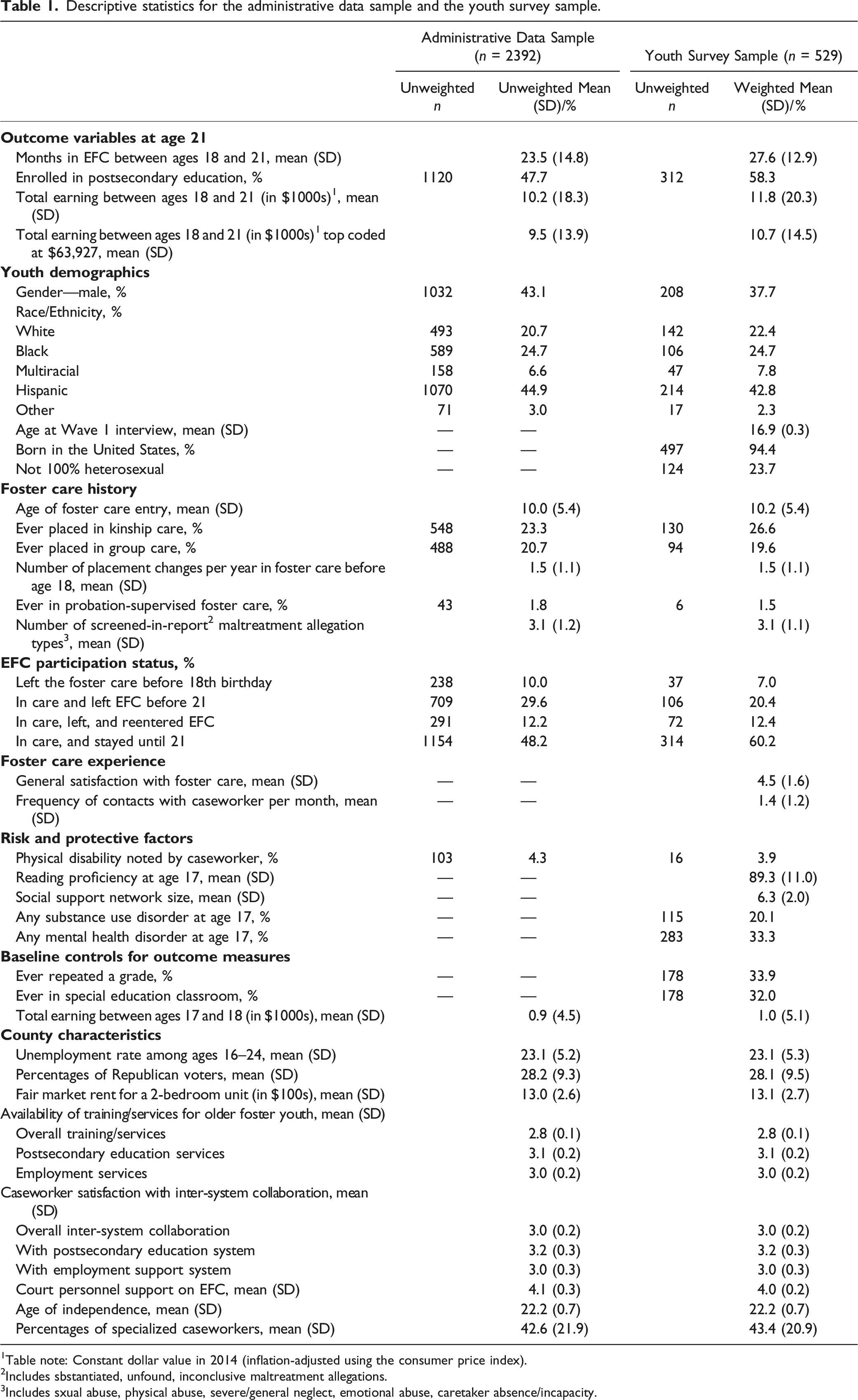
1Table note: Constant dollar value in 2014 (inflation-adjusted using the consumer price index).
Includes sbstantiated, unfound, inconclusive maltreatment allegations.
Includes sxual abuse, physical abuse, severe/general neglect, emotional abuse, caretaker absence/incapacity.
In both samples, youth were supervised in counties where about 23 percent of young adults were unemployed, 28 percent of registered voters were Republicans, and an average two-bedroom unit cost about $1300 per month. On average, county caseworkers perceived that “some training and services” were available in their counties (2.8 in the range of 0–4) and were “neither satisfied nor dissatisfied” with the collaboration they had with other service systems (3.0 in the range of 1–5). On average, caseworkers viewed court personnel to be “supportive” (4.1 in the range of 1–5) of EFC implementation and believed that youth were ready to live on their own at age 22 (range 20–25). Lastly, when averaging across youth in the youth survey sample, the average percentage of caseworkers in the youths’ county that specialized in serving older youth was about 40 percent.
Multilevel Mixed-effects Regression Analyses Results
Months in EFC
Abbreviated results from regression analyses using the administrative data sample (n = 2392).
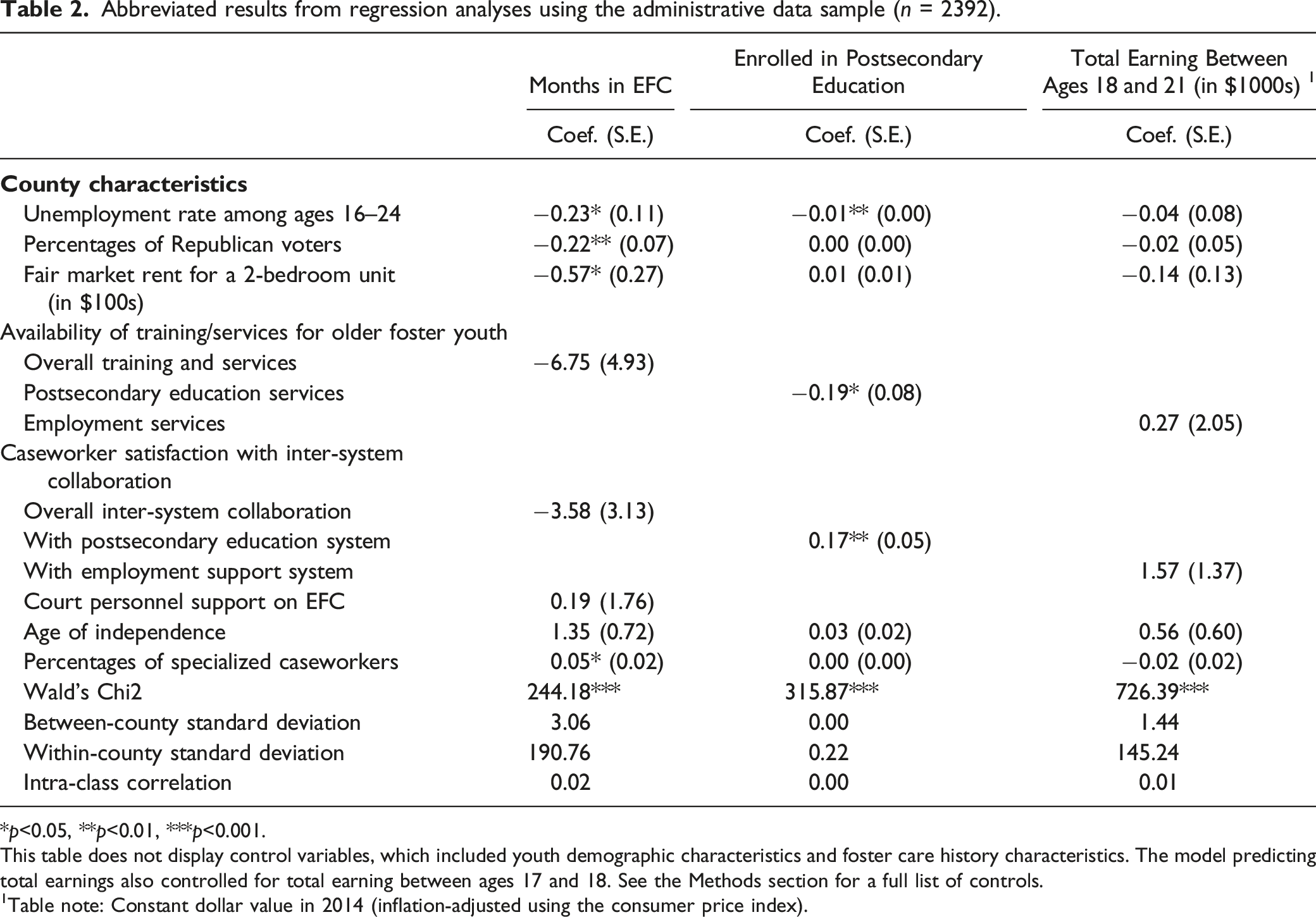
*p<0.05, **p<0.01, ***p<0.001.
This table does not display control variables, which included youth demographic characteristics and foster care history characteristics. The model predicting total earnings also controlled for total earning between ages 17 and 18. See the Methods section for a full list of controls.
1Table note: Constant dollar value in 2014 (inflation-adjusted using the consumer price index).
Abbreviated results from regression analyses using the youth survey sample (n = 529).
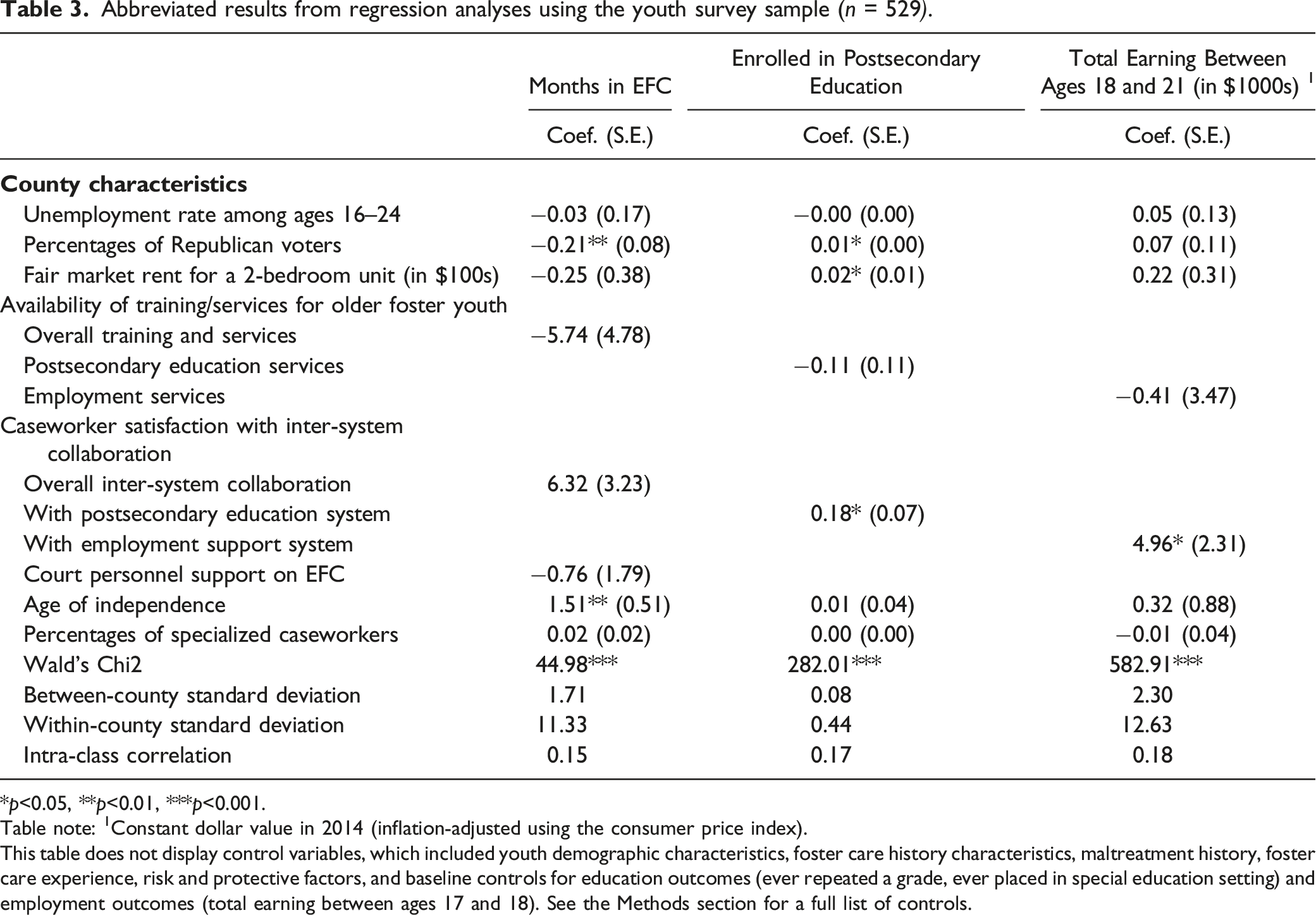
*p<0.05, **p<0.01, ***p<0.001.
Table note: 1Constant dollar value in 2014 (inflation-adjusted using the consumer price index).
This table does not display control variables, which included youth demographic characteristics, foster care history characteristics, maltreatment history, foster care experience, risk and protective factors, and baseline controls for education outcomes (ever repeated a grade, ever placed in special education setting) and employment outcomes (total earning between ages 17 and 18). See the Methods section for a full list of controls.
In the administrative data sample, a ten percentage-point increase in the percent of a county’s caseworker staff specialized in working with transition-age youth was associated with an increase of about half a month spent in EFC (coef. = 0.05, p = .024). We did not find a similar statistically significant relationship in the youth survey sample. In the youth survey sample (but not in the administrative data sample), county-average caseworker perceptions about the age youth are ready to be independent were significantly associated with time in EFC (coef. = 1.51, p = .003). In other words, for each additional year caseworkers perceived youth needing to be ready to live independently, the predicted time youth spent in EFC increased by 1.5 months.
Education and Employment Outcomes
Regarding youths’ postsecondary education outcome, caseworkers’ satisfaction with collaboration with postsecondary education systems was positively associated with the probability of youths’ postsecondary enrollment by age 21 in both the administrative data sample (coef. = 0.17, p = .001) and youth survey sample (coef. = 0.18, p = .010). In the administrative data sample (but not in the youth survey sample), youth supervised in counties with higher unemployment rates for young adults had a lower probability of enrolling in college by age 21 (coef. = −0.01, p = .009). A negative association was found between perceptions of greater availability of postsecondary services and the probability of enrolling, but the association was not statistically significant (coef. = −0.00, p = .979) after omitting the satisfaction with inter-system collaboration covariate (highly correlated with perceptions of postsecondary education services and training availability; corr. = .459). Likewise, in the youth survey sample analysis, the education outcome variable’s positive associations with the percentage of Republican voters and fair market rent variables were no longer statistically significant (p > .10) when the other variable was omitted from the analysis (correlation between two variables was −0.69). Regarding the analyses of the employment outcome, we found one statistically significant relationship. In the youth survey sample, youth were expected to earn higher wages when county caseworkers were more satisfied with their county’s collaborations with employment services (coef. = 5.46, p = .026).
In interpreting the mixed-effects regression results, the intra-class correlation is a useful descriptive measure showing the proportion of the total variance in the outcome variable accounted for by the county-level variance. In the administrative data sample analyses with all predictors, about zero to two percent of the variance in the outcome variables’ was explained by between-county differences. The intra-class correlations from the empty models (without predictors) were a little bit higher: 4% for the model predicting youth time in EFC; 2% for the model estimating youth’s post-secondary education enrollment; and 1% for the analysis using earnings between 18 and 21 as an outcome. The analyses based on the imputed youth survey data with all predictors showed that the between-county variance accounted for about 15%–17% of the total variance. However, these are inflated figures because of the imputation procedure applied to the youth survey sample data. In 40 separate mixed-effects regression analyses with individual imputed datasets and all predictors, the between-county variance accounted for about two to three percent of the total variance. The empty multi-level models (i.e., without predictors) with the raw youth survey data (i.e., not imputed) showed higher intra-class correlation values: 6% for the model predicting youth time in EFC; 4% in estimating youth’s post-secondary education enrollment; and 2% for the analysis using earnings between 18 and 21 as an outcome.
Discussion
Our study addresses notable gaps in the literature by examining the role that county-level context plays in foster youths’ EFC participation and human capital outcomes. After controlling for a range of youth characteristics and county-level clustering effects, we find that certain aspects of the supervising county play important roles in youths’ EFC stay, postsecondary education enrollment, and earnings from employment in early adulthood.
One important finding is that a greater percentage of caseworkers in a county working exclusively with transition-age foster youth increased the amount of time that youth stayed in EFC. Given the growing evidence of the positive influence of remaining in care into early adulthood on youth outcomes, this finding illustrates one potential benefit of specialized case management for young adults in care (Courtney et al., 2019; McDaniel et al., 2019). Specialized workers may be more knowledgeable of the complexity and uniqueness of the needs of young adults, including ways to support them in meeting education or employment participation requirements for remaining in EFC under the Fostering Connections Act (McDaniel et al., 2019). It may be that larger percentages of specialized caseworkers in a county reflects greater investment in supporting youth in EFC. In that case, the positive relationship between the percentage of specialized caseworkers and time in EFC may not be surprising. Our analysis also highlights another relationship between youths’ time in EFC and average county caseworkers’ perceptions on the age youth can be independent. The finding emphasizes caseworkers’ potential to make substantive differences in youths’ EFC experience as potential advocates and supporters of youths to receive extra years of financial assistance, social supports, and training and services facilitating their adulthood transition. However, as our results also suggest, simply hiring more specialized caseworkers or changing caseworker perspectives may not be sufficient for improving education and employment outcomes. These outcomes are likely influenced by a host of youth characteristics, institutional characteristics, other county attributes (e.g., the quality of independent living services and inter-system collaboration qualities), and how specialized caseworkers and youth collaborate in planning (Park et al., 2020). Future qualitative, longitudinal, and evaluation research should explore if and how a service delivery approach using specialized caseworkers can improve youth outcomes in the context of EFC.
Second, county child welfare workers’ levels of satisfaction with their collaboration with education and employment service systems were positively associated with youths’ education and employment outcomes, respectively, after controlling for youth-level and county-level attributes. Inter-system collaboration is an important way for county child welfare departments to leverage external resources and capacities to address the multifaceted needs of transition-age youth. In counties where caseworkers were more satisfied with the inter-system collaboration, transition-age foster youth appeared to reap the benefits. This may have stemmed from youth receiving extra resources and supports from postsecondary education and employment service fields, but further research will need to investigate mediators. Our findings encourage county child welfare administrators and caseworkers to establish and nurture collaborative relationships with other service fields since young adults in care need to learn how to navigate different adult-serving systems, often concurrently, as they transition to adulthood.
Another notable finding is that foster youth in counties with greater percentages of Republican voters are expected to spend less time in EFC, highlighting a potential consequence of the decentralized child welfare system in California. In politically conservative counties, financial expenditures for EFC may receive more scrutiny, especially when county governments are financially constrained and receive a block grant from a state to cover child welfare services expenditures. In these circumstances, county administrators may elect to allocate funding to services in ways that are more politically popular or less expensive. In addition, consistent with conservative political philosophy, the notions of small government and self-sufficiency might be promoted in counties with a more conservative electorate (Hutchcroft, 2001), which could play out in various ways to shorten youths’ length of stay in EFC (e.g., discouraging youth from participating in EFC or failing to fund services that make EFC appealing to young adults). The negative association between youth unemployment rate and the expected probability of college enrollment goes against conventional research that finds young adults tend to seek education when faced with harsh labor market conditions (Barr & Turner, 2015). However, those studies are generally based on the universe of young adults, most of whom can rely on financial and in-kind support (e.g., housing) from their families to pursue postsecondary education, support that youth in foster care are much less likely to have. At age 21, over one-third of the youth survey participants who were currently enrolled in college, or had been enrolled since their last interview, relied on earnings from employment or savings to help pay for college (Courtney et al., 2018). Perhaps particularly difficult county-level labor markets leave some young adults in care needing to work more just to make ends meet, inhibiting their ability to pursue postsecondary education. Future studies of foster youth should investigate whether this unexpected finding is replicated.
Limitations
Our findings should be interpreted with the following limitations in mind. First, our analyses include youth from 30 counties out of 58 counties in California. Although our samples capture counties that supervise the care of the vast majority of foster youth in California, we do not have full representation from rural counties with smaller populations of foster youth and counties with fewer caseworker survey responses. Second, we rely on caseworkers’ self-reports to generate measures of multiple county-level factors. Although we pooled data from multiple caseworkers in each county to minimize biases from individual responses, some counties had information from relatively few workers. Further, we could not validate if workers’ perceptions were accurate representations of county characteristics. Front-line service providers working closely with transition-age foster youth in other service fields (e.g., assisting with financial aid applications, providing vocational counseling) may have different perspectives on availability of services and inter-system collaboration. Third, since we included all members of our youth survey and administrative samples in our analyses of outcomes at age 21, not only those who were in care through their 21st birthday, our findings may understate the influence of county-level variation in the operation of the child welfare system on youths’ outcomes. Aspects of the county child welfare agency operation, including the use of specialized case management and its collaboration with other systems, should have more of an influence on the outcomes of youth who remain in care than those who are no longer in care. Fourth, our findings may not generalize to other child welfare service systems and regional contexts. California has a county-administered child welfare system, implemented extended foster care to age 21, and characteristics that differ from other states and counties. For example, there are several initiatives in California aimed at improving education and college support for older youth in care, such as supplementing federal education and training voucher funding with state dollars and developing a state funding stream to expand and improve campus-based support programs (Okpych et al., 2020).
Conclusion
This study provides valuable insights into the roles that county-level contexts can play in transition-age foster youths’ EFC participation and education and employment outcomes. In addition to youth-level and policy-level factors that have been the primary focus of prior research, intermediate-level factors (e.g., county-level political and economic context county and independent living services capacity) can exert important influence on foster youth experiences and outcomes. To better understand how county and organizational contexts shape youths’ experiences, we need to rely on multilevel studies (e.g., youth embedded in the county and/or service provider contexts) and intersectional studies (e.g., how county child welfare departments support parenting youth).
Addressing the current study’s limitations in capturing county-level contexts also calls for developing studies that apply mixed methods (e.g., qualitative interviews and administrative data analysis) and broaden the sampling frame (e.g., representative samples of child welfare caseworkers and administrators, court personnel, and providers in other service settings that frequently interact with the child welfare system). Finally, addressing county-level variation in child welfare department capacity, youth EFC participation, and youth outcomes should be critically important issues for state-level administrators and policymakers. Although decentralized child welfare systems ostensibly allow county governments to provide responsive services by accommodating local needs and priorities, our findings add to a growing body of scholarship indicating that allowing county-level discretion can contributes to inequities in youth access to EFC and other services.
Footnotes
Acknowledgments
The authors wish to acknowledge the California Department of Social Services and California County Welfare Directors Association for their collaboration of the CalYOUTH study. We would like to recognize our project funders: the Conrad N. Hilton Foundation, the Reissa Foundation, the Walter S. Johnson Foundation, the California Wellness Foundation, and the Zellerbach Family Foundation. Last, but certainly not least, we would also like to thank the youth and child welfare workers whose participation in this survey research have made the dissemination of findings possible.
Declaration of Conflicting Interests
The author(s) declared no potential conflicts of interest with respect to the research, authorship, and/or publication of this article.
Funding
The author(s) received no financial support for the research, authorship, and/or publication of this article.
Disclaimer
The findings reported herein were performed with the permission of the California Department of Social Services. The opinions and conclusions expressed herein are solely those of the authors and should not be considered as representing the policy of the collaborating agency or any agency of the California government.
