







Abstract
Artificial intelligence (AI) has taken the forefront in discussions of the future of media and education. Although there are valid concerns, AI has the potential to be useful in learning new skills, particularly those related to computer programming. This case study depicts the ways AI was introduced to assist in teaching coding, specifically in a mobile application development course. Applying transformational teaching theory, this study assesses student perceptions of AI as it affects the acquisition and mastery of key concepts, strategies for learning and discovery, and the attitudes and mindsets associated with using AI for learning to code.
Introduction
A recent technological advance that has taken the forefront in discussions of the future of media is Artificial intelligence (AI). AI has the potential to introduce dramatic changes to the ways we disseminate and share knowledge and a future in which machines can rapidly and efficiently process information and communicate in a human-like manner. Generative AI refers to a system that is trained to recognize patterns in large datasets, rather than being specifically programmed (Pavlik, 2023). Although there are many potential benefits to the use of AI, this autonomy from human intervention within generative systems has introduced valid concerns about their potential threats to our notions of communication, creativity, and humanity. There will be no doubt be years of discussion ahead regarding the practical, ethical, social, and legal ramifications of the application of technologies driven by AI.
As such, students are experimenting with these platforms for school, work, and play, without consideration of the learning objectives and ethical implications of such usage. Faculty have also begun experimenting with these tools for a range of personal and professional applications, from creating social media posts to designing visuals, brainstorming ideas, making travel arrangements, assisting with grading and research projects, and more.
One area in which AI has potential to be useful is in gaining new skills, and it can be particularly useful in learning computer programming. As mobile devices—both iPhone and Android—and their associated applications have become the most prominent ways that users experience online information, students need exposure to mobile application development processes. Beyond creating responsively designed websites, the skill set for creating a mobile application has a higher barrier to entry than the text-based languages of web development and require different languages and tools than interactive features that run native in a web browser (Royal, 2019). This advanced skill set requires trained faculty to teach these courses.
Anyone who has taught a coding class can relate to the need for competent teaching assistance to help students with the range of issues that can arise in the practice of coding. It is often difficult for one faculty member to support student needs, even in a small laboratory class. Having an additional support instructor can improve the transfer of knowledge and student experience. However, finding qualified assistance on these advanced coding topics can be difficult. Possessing knowledge, problem-solving skills, tenacity, and vast amounts of patience are needed when teaching programming concepts.
Enter AI, with its rules-driven nature, numerous examples across the Web from sites such as GitHub and Stack Overflow on which it can be trained, and seemingly endless patience. It can be particularly adept at providing code samples and explanations across a range of programming languages. This can be useful to faculty trying to learn new technologies and create specific examples to introduce in curriculum. It can also be useful for students who are struggling with code concepts, error messages, and desired functionality.
This case study depicts the ways in which AI was introduced in a mobile application development course. Using transformational teaching theory (Slavich & Zimbardo, 2012), this study assesses student perceptions of the use of AI as it affects the acquisition and mastery of key concepts, strategies for learning and discovery, and the attitudes and mindsets associated with using AI for learning to code.
Review of Literature
Teaching Computer Programming
Digital skills have become an important part of journalism curricula over the past three decades, addressing market demand for graduates able to operate in a digital environment (Hossain & Wenger, 2024). Coding specifically was identified in a list of 21 core skills needed in news organizations, under the category of “transformational skills,” or those competencies needed “to address and adapt to acute, broad and ongoing changes in the news audience, distribution, editorial practices and presentation” (Stencel & Perry, 2016, p. 5). Coding skills were identified across three levels—conceptual, limited application, and regular practice—in several roles, in media organizations, including data journalists, web developers, product managers, user-experience designers, social media managers, and newsroom leadership (Royal & Kosterich, 2024). However, journalists often must practice a “do-it-yourself” philosophy toward gaining the programming skills necessary to execute investigative and data-related storytelling (Sørmo Strømme, 2023).
Programming skills, while traditionally taught in computer science departments, have been included in some journalism programs since the early 2000s when web design languages, such as Hypertext Markup Language (HTML) and Cascading Stylesheets (CSS), were introduced in curricula (Lee, 2022; Royal, 2005). Over time, interactive programming techniques, including JavaScript and Python, were added in some programs to support visualization and data analysis (Angus & Doherty, 2015; Chimbel, 2015; Ferber, 2013; Lewis, 2021; Royal, 2017; Treadwell et al., 2016). Courses in data journalism were introduced that often included some level of programming training (Lewis, 2021; Treadwell et al., 2016). Various reports were produced analyzing the presence of data journalism and coding courses in media curricula (Berrett & Phillips, 2016; Foust & Bradshaw, 2020; Sarachan, 2019). The prominence of the iPhone and other mobile devices in the mid-2000s ushered in a focus on mobile journalism, and the need to create responsively designed websites and mobile applications. Of accredited journalism programs, however, Foust and Bradshaw (2020, p. 341) found that 40% do not offer any coding courses, primarily due to lack of faculty expertise in this area.
AI in Media Education
AI has become a frequently discussed topic with the introduction of the ChatGPT platform by OpenAI in November 2022. Other companies have joined this trend with Microsoft launching Copilot and AI features appearing in everyday platforms, such as Facebook, Adobe products, Canva, Figma, and Google search. The concept of AI, however, has roots that go back more than 70 years in which researchers and organizations began to explore the ways computer output could simulate human intelligence (Metz, 2022).
The specific type of AI, known as Generative AI, is named as such because of its ability to generate new content, including text, sounds, or visuals, based on user input or prompts. Also known as large language models (LLMs), it uses networks that simulate neural brain processes to analyze and present data, using human language and providing interactive responses. In fact, the GPT in ChatGPT stands for Generative Pre-trained Transformer (Kasneci et al., 2023).
Educators, experts, professionals, and everyday citizens have quickly formed both positive and negative opinions about the use and future of AI. Many express concerns regarding the reliability of results, bias in the data used for training, replacement of humans in certain jobs, threats to creativity, and general questions regarding what it means to be human (Anderson & Rainie, 2023; Broussard et al., 2019; Kurzweil, 2024; Sundar & Liao, 2023). However, there can be benefits to the assistance of AI across a range of personal and professional uses (Galloway & Swiatek, 2018; Newman et al., 2024; Simon, 2024). A balance of optimism and skepticism, often held by the same person, seems to pervade the environment, posing questions about the preparedness of our education, legal, judicial, and legislative systems in handling decisions about AI in the future.
Focusing on the role of AI to assist in teaching environments, Holmes et al. (2019, p. 102) stated that “intelligent tutoring systems (ITS) are among the most common applications of AI in education.” Their report with the Center for Curriculum Redesign depicts Artificial Intelligence Education (AIED) to substitute, augment, modify, and redefine teaching in beneficial ways. “The role of the teacher continues to evolve and is eventually transformed; one where their time is used more effectively and efficiently, and where their expertise is better deployed, leveraged, and augmented” (Holmes et al., 2019, p. 159).
A study of accredited journalism programs found that AI was the technology that most (51%) planned to incorporate into the curriculum in the next 3–5 years (Hossain & Wenger, 2024). Media education has not yet fully incorporated AI “despite the fact that technology has the potential to help develop skills to become a better communication professional” (Luttrell et al., 2020, p. 471).
Transformational Teaching
Slavich and Zimbardo (2012, p. 576) define transformational teaching as “the expressed or unexpressed goal to increase students’ mastery of key course concepts while transforming their learning-related attitudes, values, beliefs, and skills.” Drawing on principles from transformational leadership, it emphasizes the creation of a supportive and challenging learning environment (Bass, 1985; Burns, 1978). “Transformational teaching involves creating dynamic relationships between teachers, students, and a shared body of knowledge to promote student learning and personal growth” (Slavich & Zimbardo, 2012, p. 569). It contains elements of related learning theories, including active (Bonwell & Eison, 1991), collaborative (Aronson & Patnoe, 1997), and problem-based learning (Amador et al., 2006; Barrett, 2010; Barrows, 1996). These methods share theoretical roots in constructivism (Piaget, 1926) and social constructivism, (Vygotsky, 1986) and emphasize the importance of active engagement and critical thinking, demonstrating higher levels of the Bloom’s (1956) taxonomy elements of analysis, synthesis, and evaluation (Ullah et al., 2020).
Transformational teaching is based on three basic principles:
Facilitate acquisition and mastery of key course concepts;
Enhance strategies and skills for learning and discovery;
Promote positive learning-related attitudes, values, and beliefs (Slavich & Zimbardo, 2012, p. 581)
Background
The author is participant-researcher in this study, serving as the instructor of the Mobile Media Development course. It is an undergraduate course at a large university in central Texas taught in a computer laboratory with enrollments ranging from 12 to 18 students.
iPhone development includes the interactive development environment (IDE) XCode and the Swift language. Swift was released in 2015, replacing the Objective C language previously used (Coursera, 2024). Apple initially employed the Storyboard method within the XCode IDE, which was a primarily visual interface of dragging and dropping library items, elements such as text boxes, images, buttons, tabs, sliders and switches, and adding Swift code to make the application functional.
Because the course is best taught in an in-person setting, due to the technology requirements and need for student assistance, the pandemic prevented it from being taught for several semesters. In Spring 2023, the course was relaunched, but like most technology tools, updates, changes, and new approaches were required. Although the Storyboard method was still available, Apple had introduced SwiftUI in 2020. This method removed the graphical approach of Storyboard with a primarily coding-based process.
During Fall 2022, the AI platform ChatGPT (https://openai.com/index/chatgpt/) was introduced to much fanfare and mass usage (Pavlik, 2023). The instructor used ChatGPT to assist in learning the new SwiftUI method, creating similar exercises that had been developed with the Storyboard format. After teaching the course with the SwiftUI method, the instructor began to consider how to build AI into the course to support student learning and success.
The course under study, taught during the Spring 2024 semester, had 13 students (10 identified as female, 3 as male) and was taught in a computer laboratory with iMac computers that contained all software necessary to execute the course requirements. The course met twice per week for 80 min each day for 14 weeks. The prerequisite for this class is an introductory web design course. During the first half of the semester, the course reviewed responsive web design and mobile prototyping. During the second half of the semester, the course moved into programming concepts for developing native, mobile iPhone applications.
Using AI for the Final Project
The final project was designed so that students could apply SwiftUI in any application with any functionality, using AI to help generate and troubleshoot code. The AI segment started with several exercises on developing prompts for an AI platform to support the students’ vision for an application. The instructor demonstrated how to prompt the AI platform, “If I want to set up a project to use ChatGPT to get the SwiftUI code for making a mobile app, what are some good prompts likely to result in success?” (Figure 1) Being specific with the language (SwiftUI) and purpose were important elements of the prompt lessons.
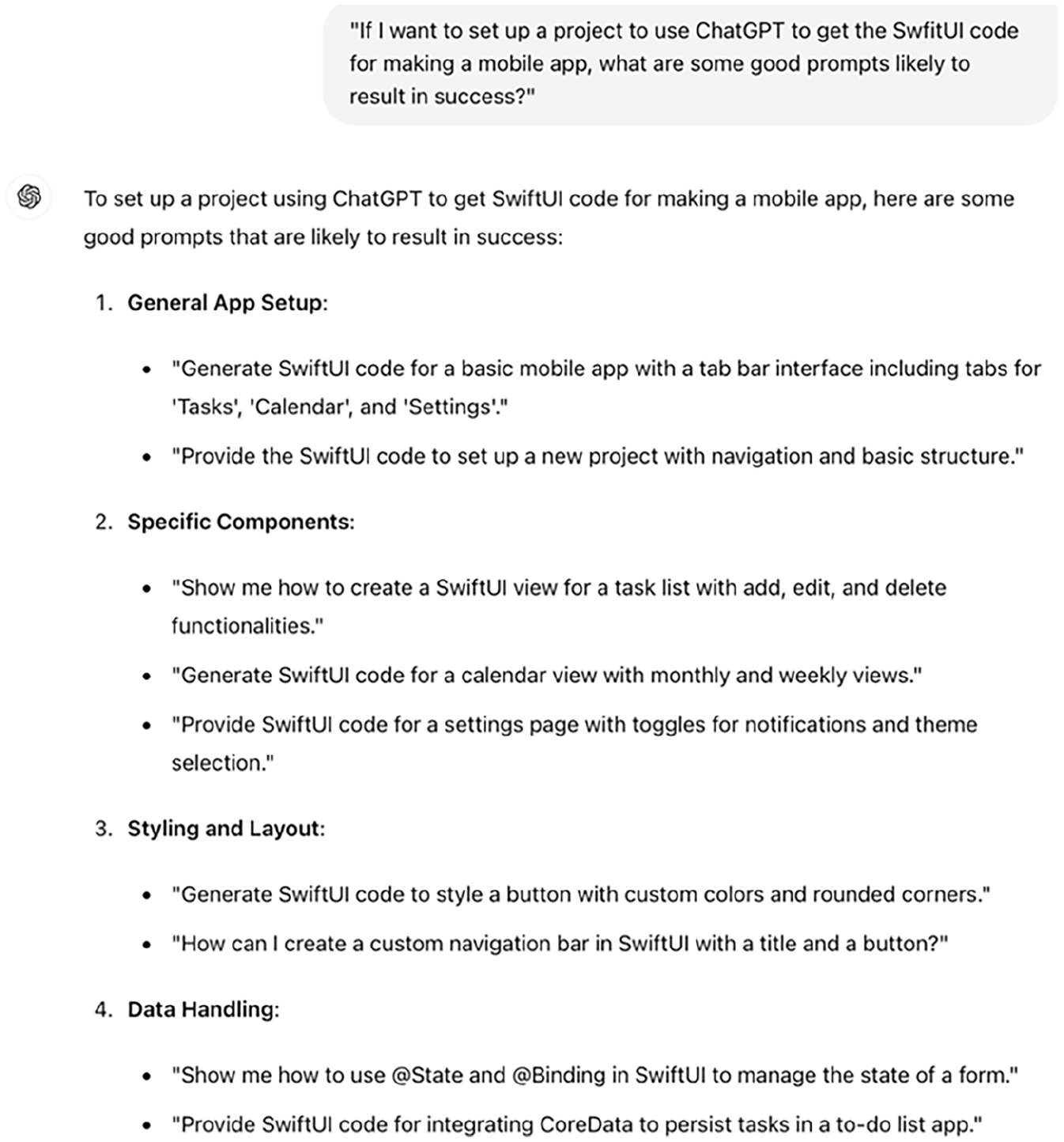
Example of ChatGPT Response to Initial Prompt
The instructor also demonstrated follow-up prompts to fine-tune results. “Can you provide more specific prompts for more specific types of applications?” (Figure 2)
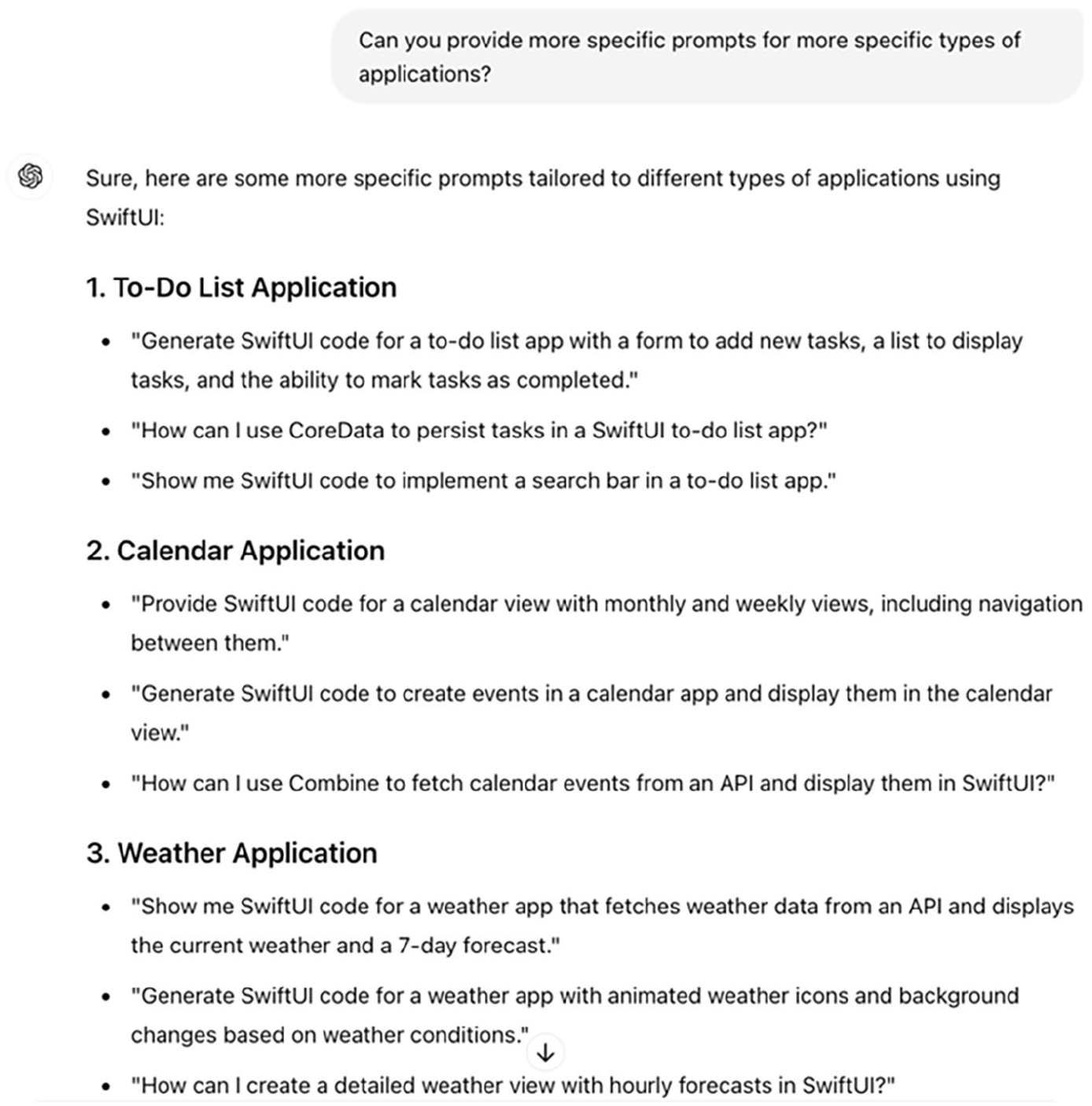
Example of ChatGPT Response to Follow-Up Prompt
Students were encouraged to start with this method to ask ChatGPT for the prompts that could lead to a successful implementation of an application of their choice. Students were not told which AI platform to use, but all examples were shown using the free version of ChatGPT, and most students indicated using ChatGPT in the post-survey.
The instructor also demonstrated prompts designed to generate code. For example, the prompt “Can you generate SwiftUI code for a simple to-do list app with a form to add new tasks, a list to display tasks, and the ability to mark tasks as completed?” In addition to providing code, ChatGPT also provided explanations for each segment of code and how to use it in the XCode interface, With continued prompting, it could respond to questions and issues. Figure 3 shows the results of the prompt with a snippet of the code sample.
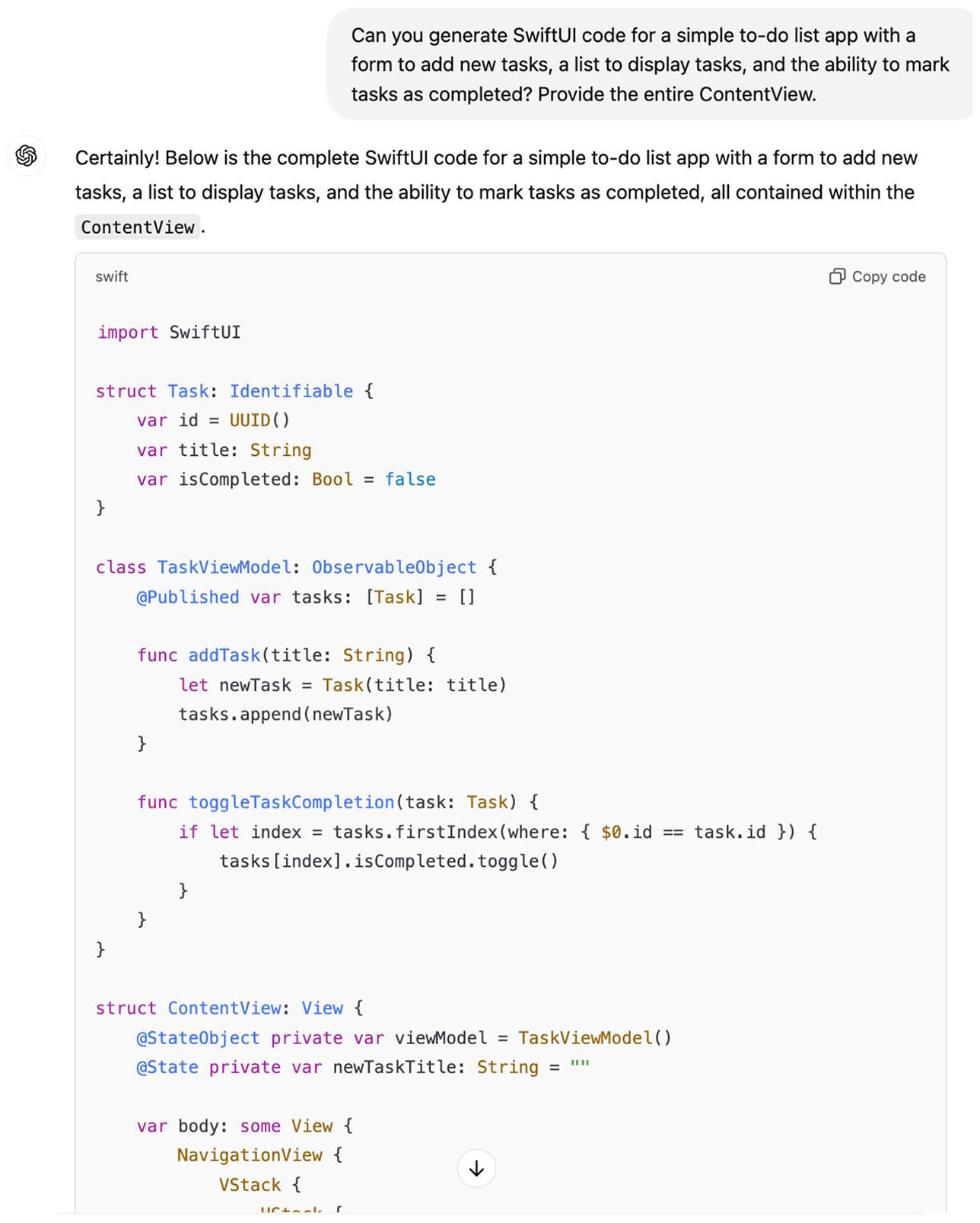
Snippet of Code Generated by ChatGPT
The instructor demonstrated how to include code generated by the AI platform in the XCode interface (Figure 4). Having demonstrated how to work within the interface for previous assignments facilitated students’ understanding of using the AI platform to generate code and how to resolve errors.
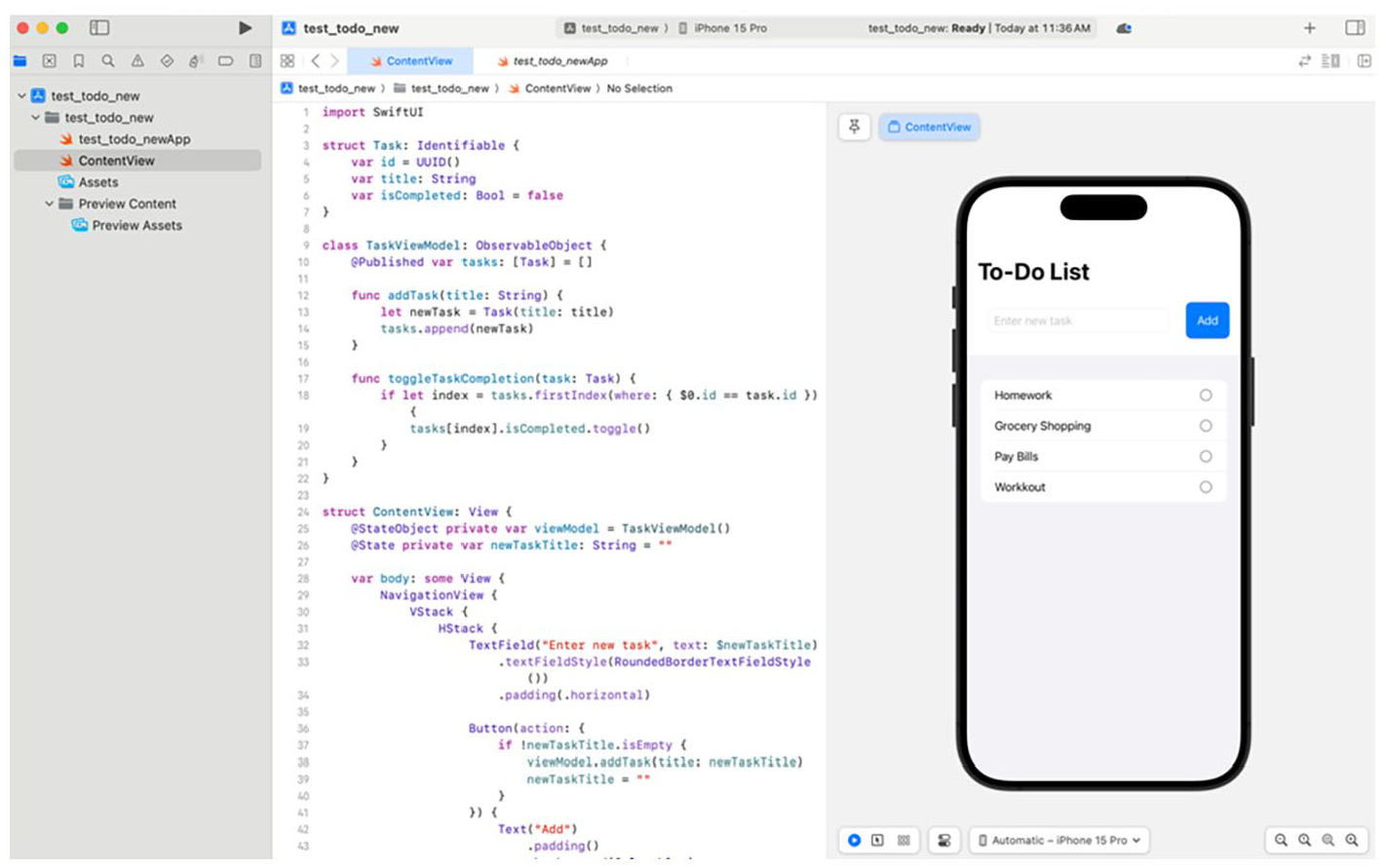
XCode Interface Demonstrating Code for To-Do List Application
Students were instructed to pick two options from the prompting exercise, prompt the AI for the code for each, and test in the XCode interface. Prompts were to be specific, mentioning “SwiftUI,” the type of application, and any specific features required. The goal at this point was working code, not a finished project. With few exceptions, most students were able to get their initial code samples to work during these exercises. It is important to note that the same prompts may provide different result at different times for different users.
After experimenting with these ideas for the first few class periods, students were encouraged to decide on one approach to continue and customize for the final project. They were also expected to include visuals, improve the interface design, and add features.
Active and Engaged Classroom
The classroom environment was quite active, what could be descried as “controlled chaos.” At times, there was a lot of chatter and laughter in the computer lab, with students helping others or cheering when they solved a difficult problem. There was also frustration. Most students started forming informal groups in which they shared ideas, suggested approaches, and helped with errors. The instructor assisted as needed for numerous different types of issues when the AI program did not provide the desired results or students needed additional explanations.
At the beginning of each class period, approaches and issues were reviewed with the entire class. Common problems for issues such as properly and consistently naming functions within XCode and troubleshooting common errors were discussed and shared. Regular exercises had students working in small groups to display their projects on screens to discuss functionality, resolve issues, and gain feedback. Final presentations were made on the last day of class.
Method
The method employed to assess this project is a case study designed to critique the effectiveness of introducing AI in teaching a coding course in a mass communication program. The use of AI was introduced before the final project and addressed over the last 4 weeks of the course. As such, students learned and practiced the range of skills to program a mobile app prior to being encouraged to use an AI platform. Students were given a pre-survey to assess attitudes and experience with AI before AI was introduced in the course. They were given a post-survey with the same questions after the final project. The post-survey included additional questions about student attitudes toward the process and effectiveness in using AI for their projects. Both instruments included quantitative and qualitative questions. Pre-survey/post-survey instruments have been used to assess specific interventions in an educational setting (Han & Newell, 2014; Kanuka & Jugdev, 2006; Zabava Ford & Wolvin, 1993). All 13 students completed both pre- and post-surveys.
Research Questions
Three research questions were developed based on the three basic principles of transformational teaching.
Results and Discussion
Experience Using AI
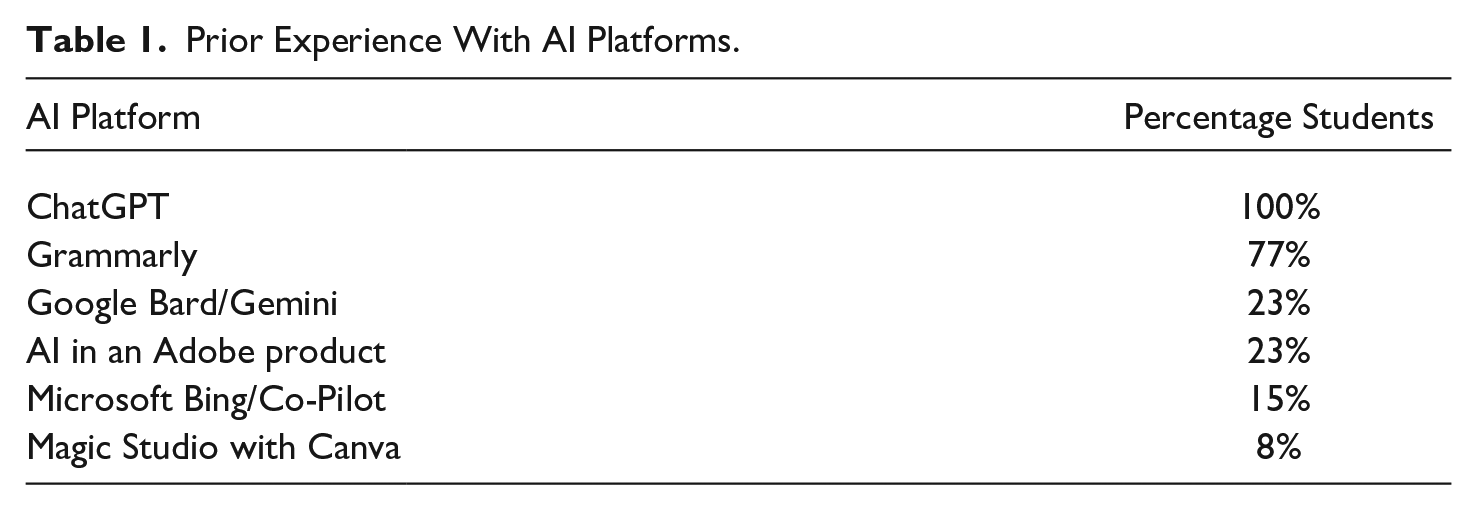
The pre-survey asked students to indicate the AI platforms in which they had experience. All students indicated having used ChatGPT, and many indicated using Grammarly (77%), but experience with other AI platforms was limited (Table 1).
Prior Experience With AI Platforms.
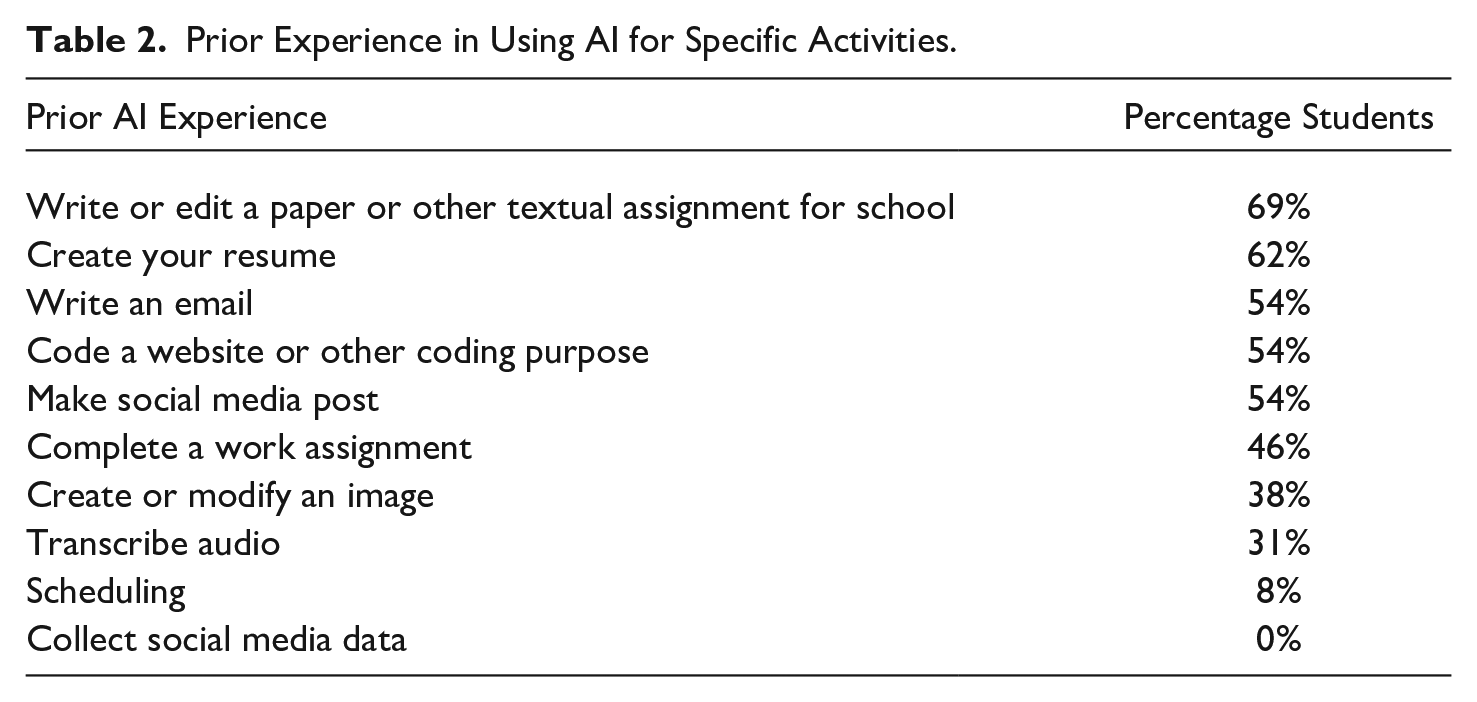
Regardless of their limited exposure to AI platforms, students indicated using AI to assist with a range of activities, including editing or writing papers for school assignments (69%), creating a resume (62%), writing an email (54%), and making a social media post (54%). Fifty-four percent of the students had already used AI to assist with a coding project (Table 2).
Prior Experience in Using AI for Specific Activities.
On both pre-survey and post-survey, students were asked to rate a series of statements associated with the final project (scale of 5—strongly agree to 1—strongly disagree). The pre-survey results indicated that students had above average confidence in using XCode and SwiftUI and in their current coding skills. Comparing these results with the post-survey indicated significant (two-tailed, paired t-test, p ≤ .05) differences in these two statements (Table 3). Pre-survey to post-survey responses for the other statements were not considered significant. Because this is a small sample and with several items already rated highly in the pre-survey, the direction of the improvement on both mean and percentage of agreement (rating of 4 or 5) on each of these statements is still notable as they relate to associated research questions.
Comparison of Quantitative Results From Pre-Survey to Post-Survey.
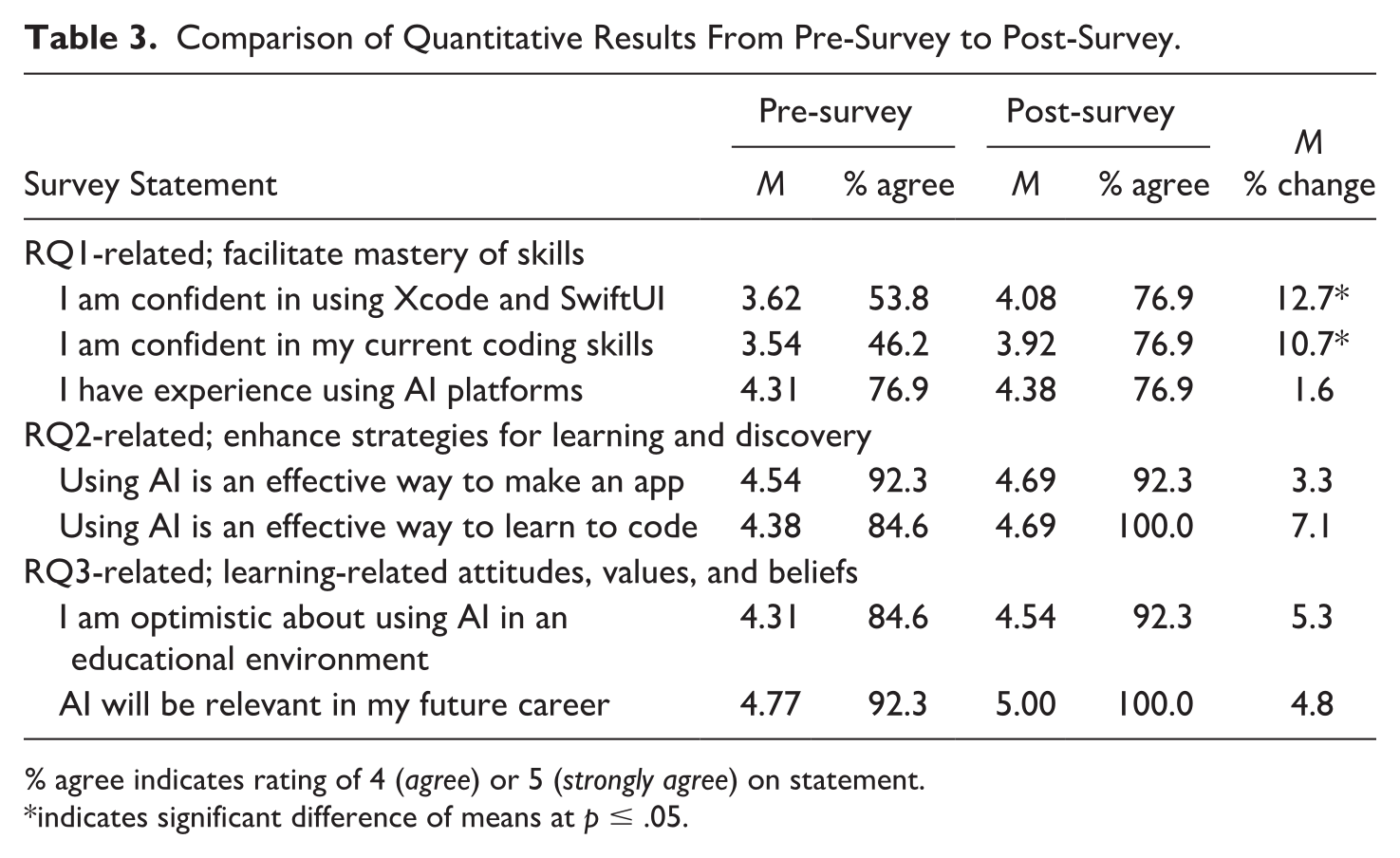
% agree indicates rating of 4 (agree) or 5 (strongly agree) on statement.
indicates significant difference of means at p ≤ .05.
Learning to Use AI While Learning to Code
Post-Survey: Mastery of Course Concepts.
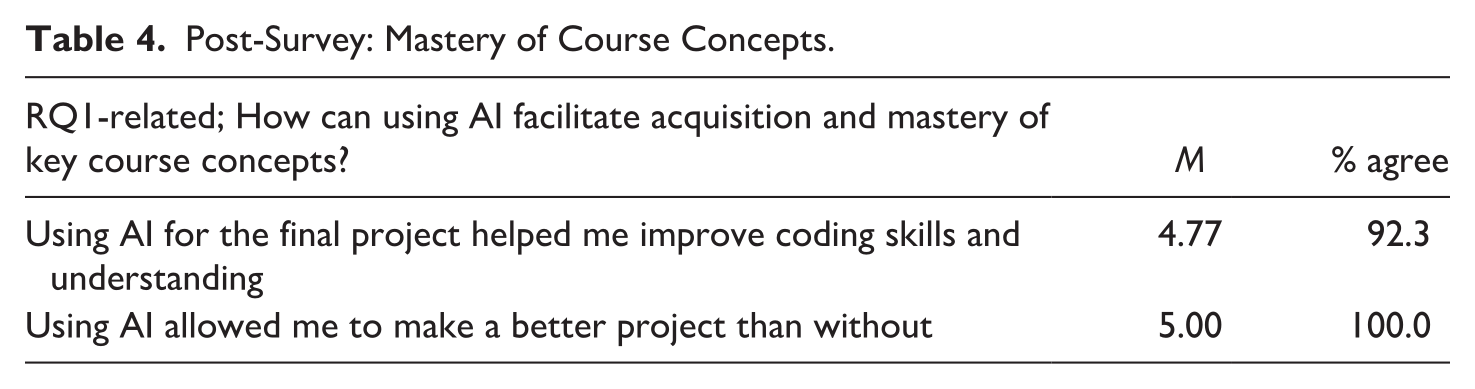
An open-ended, qualitative question supporting
Although the primary purpose of the course was learning how to code, many emphasized the skills they gained in using AI and the relevance to their future careers.
The way you use the programs and how to phrase your request is going to become a very hot skill for jobs in the next couple years. Prompting with AI was definitely an important thing I learned in this project.
Many indicated that AI alone could not generate the code for a working application, and they still needed an understanding of the coding environment and practices to be successful:
The most valuable lessons and skills I gained from doing the final project using AI was learning how important it is to understand the code you are working with, because as helpful as AI was when giving me code, it’s up to us to know where to put it. I learned how to troubleshoot using AI, which was extremely helpful for this project. Overall, I have a better understanding of code. Learning how to problem solve and fix the errors that popped up in the generated code is still vital for being able to code and create apps with AI. The code generated by chat GPT often had errors or outdated code, and you still needed to be able to solve these problems yourself.
Prompting and Patience
Responses in the post-survey indicated positive attitudes toward problem-solving and collaboration with the statements. “AI helped me solve my own problems” and “Discussions, group activities and exercises contributed to my ability to execute the final project” (Table 5).
Post-Survey: Strategies for Learning and Discovery.
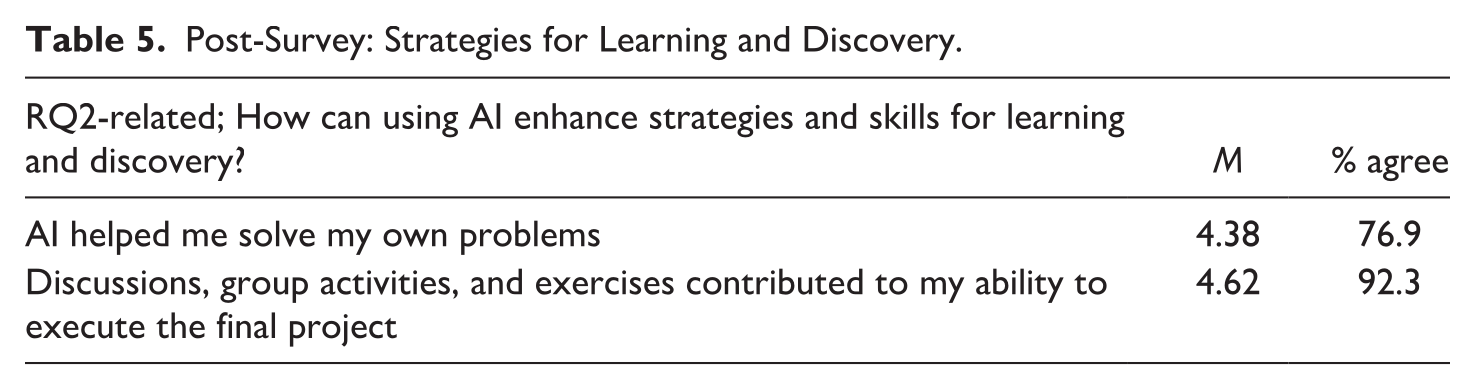
A qualitative question also supported The most challenging aspect was figuring out how to fix errors from the code ChatGPT gave me. I asked ChatGPT how to fix the errors and tried multiple versions of the code it gave me. One challenge was solving the errors that popped up in the generated code. The way I ended up doing this was by entering the error code into ChatGPT and asking for a solution to the error. I was then able to ask ChatGPT to integrate this solution into the original code. Knowing how to get out of your comfort zone, but also know how to play safe, was challenging. Before I wanted to add more features for the project, I would save the successfully built version and launch another project.
Having patience was also mentioned in relation to the ways in which students overcame challenges:
Patience is very important when using AI to assist you in programming projects and assignments. For this final project, you had to first understand very basic Swift to even understand what to prompt. I think just trying to get AI to understand exactly what I wanted and figuring out AI’s limits was a challenge. I had patience and tried rewording what I was asking so that I had a better outcome.
Gaining Perspective Through Critical Thinking and Creativity
Post-Survey: Learning-Related Attitudes, Values, and Beliefs.
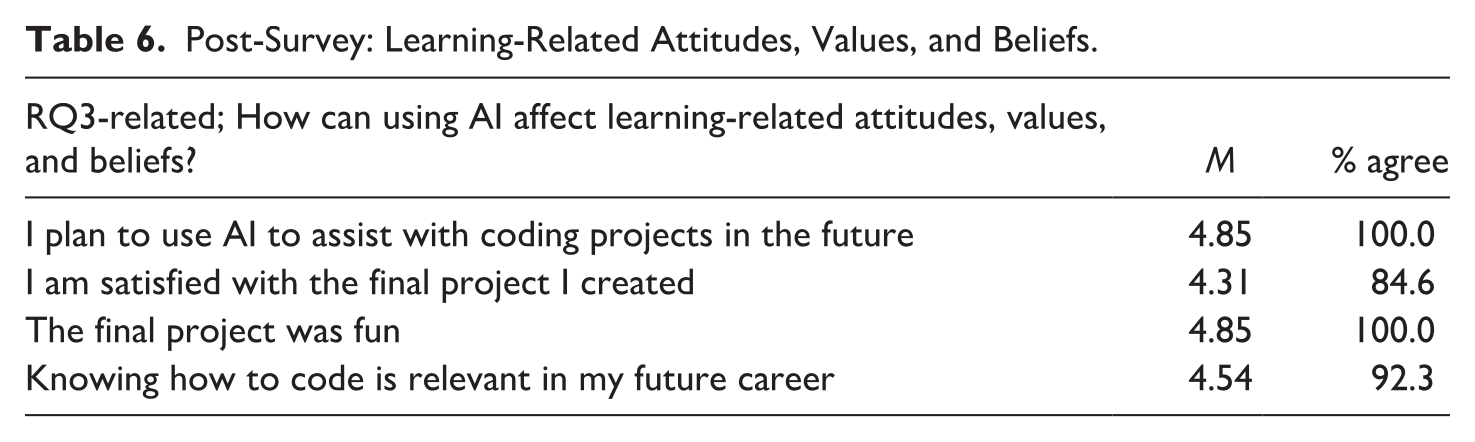
Related to I like it, and I feel that I would use something like it in the future because I love to cook and share recipes. I really like my app! It’s on the simple side in terms of design, but for the type of app it is, I think that it works very well. This is something that I definitely think I would use if I saw this app on the App Store.
Although most students indicated overall satisfaction with the AI segment of the course, some provided insights and suggestions for future iterations in their responses to “Do you have any suggestions for how the course should be adjusted for the future?”
I would definitely keep the AI segment at the end of the semester to make sure students still have to take the time to learn the key concepts that are vital for knowing how to effectively use AI in development. Maybe a group project to develop a higher end and functioning app would be a good addition. I’d allow for some time to play with chat GPT and other AI programs before the final project. I can see wanting to play with it a bit more before the project. While most people have experience with AI, I think talking more about how to use it for code could be useful. Trying to use AI to create data sets for the early projects could be fun.
Conclusion
The final projects in the course included applications dealing with naming pets, a poker game, a recipe app, a word search game, a money manager, and a data-driven news application (see Figure 5).
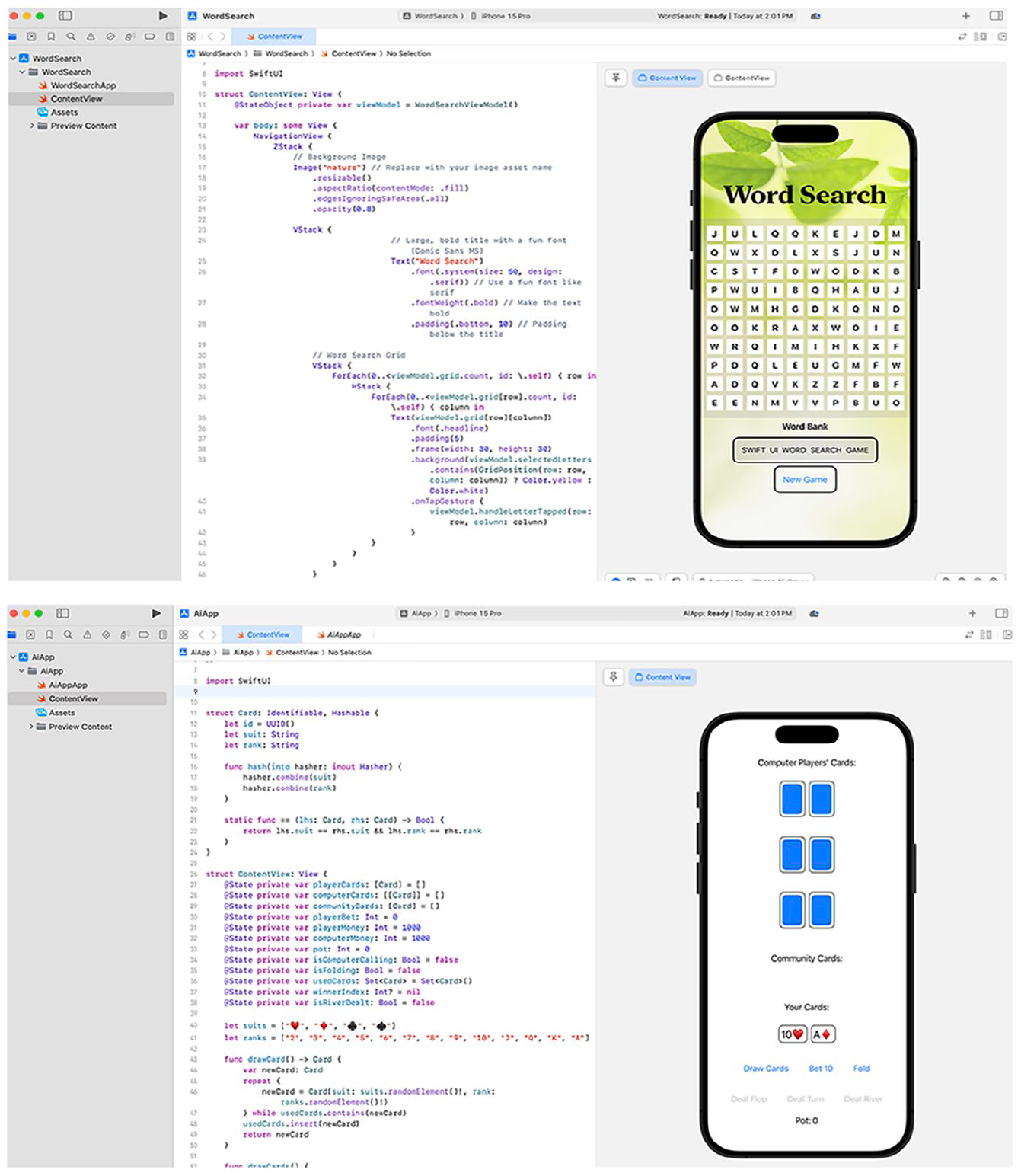
Examples of Completed Projects in the XCode Interface
A final quantitative statement “Overall, I had a good learning experience with using SwiftUI and Xcode for the final project” generated a high mean of 4.85, with all students indicating 4 or 5 (agree or strongly agree) regarding their impression of the learning experience.
General comments indicated overall satisfaction with the use of AI in the course, emphasizing their perceived importance of overcoming intimidation and learning how to use AI.
I really liked using AI for the final project. I was intimidated at first, but in the end, I really liked using it. I loved using AI for the final project, because it is important we learn how to use it. I really enjoyed this class and everything that it taught me! AI was helpful and easy to use for the final project. It was fun being able to test out different ideas using AI to help with the project.
Results of this study support the value to students of using AI in developing competency and confidence in their ability to solve problems, access resources, and improve coding skills. Responses also indicated a collaborative learning environment that was enjoyable and fun.
Although not the focus of this study, it does bring to light potential value to teachers in using AI to encourage and support those who wish to learn and teach technology topics. As noted above, many journalism programs lack the faculty expertise to offer coding courses, even though coding is considered a desirable skill for journalism graduates (Foust & Bradshaw, 2020). It will also be important to use tools that can effectively assist students in the learning process, in conjunction with or in lieu of traditional teaching and assistance models. This study may also encourage instructors in non-technology-based courses to consider ways in which AI can be introduced in existing curriculum.
Future studies should focus on differences in experiences and attitudes across a range of student demographic categories. With this study’s primarily female sample, it begins to introduce ways in which groups not traditionally present in technology careers might be encouraged and supported through the use of AI across disciplines.
Much more can be expected ahead in incorporating AI in education. This study demonstrates one way in which AI can be useful in media education, but there are many other uses that will need to be researched and evaluated, from responsible usage of AI platforms across a range of disciplines to customizing AI tools within specific contexts to exposing students to the ways AI systems are developed. The environment is undergoing rapid change and is evolving in ways that may be difficult to predict. The role of research will not only be to report and share ways in which AI is used but also provide a record of how it progresses in academic environments. Incorporating AI at all levels of education will be critical to developing a population that can think critically about its usage and make assessments regarding the ethics and challenges associated with these practices.
Limitations of the Study
Limitations of this study have to do with its basis in a small sample of students in one course. This case study, however, begins to provide evidence of the ways in which AI can assist in transformational teaching through the mastery of skills and student attitudes toward the enhancement of learning and discovery approaches. It can also generate positive attitudes and beliefs associated with learning to code and regarding the use of AI in educational settings. Much more research using a range of methods will be necessary to fully inform our understanding of AI in education.
Footnotes
Declaration of Conflicting Interests
The author declared no potential conflicts of interest with respect to the research, authorship, and/or publication of this article.
Funding
The author received no financial support for the research, authorship, and/or publication of this article.

Author Biography
Cindy Royal is Regents’ Teacher and Professor at Texas State University in the School of Journalism and Mass Communication. She is Founding Director of the Media Innovation Lab. She launched the Digital Media Innovation degree in 2016. Her research focuses on emerging roles in media organizations, including product management, data journalism, and web development, and the pedagogy of teaching digital skills and concepts. More information can be found at cindyroyal.com.