







Abstract
Using a feminist pathways general strain perspective, we explore the victim–offender continuum for women who perpetrated intimate partner violence/abuse (IPV/A). We use data from 86 women court-mandated to “female offender” domestic violence treatment programs, located in an American East Coast state, who were surveyed about their adverse childhood experiences and mental health/well-being as adults. Findings from bivariate linear regressions indicate childhood trauma negatively affects adult mental health/well-being, exacerbated for Black Indigenous People of Color women, suggesting a victim rather than an offender categorization for women using force against their abusive partner. Results imply the need to consider women's traumatic histories and IPV/A victimization, given an incident-driven system that criminalizes victimization over the life course.
Introduction
In recent years, research exploring the trajectory of women's offending has revealed a complicated process that exposes women's resistance to abuse. This resistance culminates in acts designated by the criminal legal system as offending behavior yet more accurately reflects a criminalization of victimization. There has been concomitant attention paid to linkages between childhood trauma and adult offending, often structured as feminist pathways research or research using adverse childhood experiences (ACEs) to characterize these links. Criminologists have long noted the role of adversity and its influence on adult offending in the developmental life course perspective or general strain theory (GST). Against the backdrop of a feminist life course strain perspective, this article aims to better understand the victim–offender continuum for battered women who have used force against their abusive partner. Using a sample of 86 women court-mandated to “female offender” domestic violence treatment programs and measures of ACEs, posttraumatic distress (PTD), well-being, self-esteem, and danger assessment we elucidate the pathway to women's use of force in intimate relationships. We seek to better understand the relationship between ACEs and arrest for using force in an intimate partner violence/abuse (IPV/A) relationship with these questions: What can we infer about the role of early trauma and its effects on adult well-being and behavior? How do early life experiences manifest a
Literature Review
The Criminalization of Victimization
Arresting abused women who fight back emerged as an unintended outcome of mandatory arrest laws enacted in the United States 1 to treat the crime of intimate partner violence and abuse more seriously (Comack et al., 2000; DeLeon-Granados et al., 2006; Frye et al., 2007; Miller, 2005). Policies to better respond to the enormous problem of spousal abuse, such as establishing warrantless arrests of offenders in IPV/A situations or mandatory/proarrest laws were enacted to address the low arrest rates reported in the 1970s and 1980s (between 7% and 15%), indeed increasing to about 30% or more after these changes (Hirschel et al., 2021). However, arrests of women and dual arrests increased due to officer inability or unwillingness to distinguish between a “real” offender and a victim who fought back. An incident-driven policing approach determines that the law has been violated and police make an arrest without investigating the context in which victims of violence resort to using violence themselves (Goodmark, 2012; Larance & Miller, 2017; Osthoff, 2002). Multiple studies that examine women's motivations for using force in intimate relationships find that few women can be characterized as the primary aggressor (Johnson, 2006; Johnson et al., 2014; Miller, 2005; Pence & Dasgupta, 2006; Stuart et al., 2006; Swan & Snow, 2002). For example, Larance and Miller (2017) found that a majority of their sample of 208 court-involved women in two states used force against a partner in self-defense against abuse or to assert dignity, the latter defined as “women seeking autonomy by using non-self-defensive force in the midst of batterers’ ongoing demonstrations of coercive control” (Larance & Miller, 2017, p. 1547).
The consequence of police practices that emerge is that anyone who uses force—regardless of the underlying reason, such as self-defense—is susceptible to an arrest (Dichter, 2013). Misidentification of the “victim” in these cases is common (Finn et al., 2004; Miller, 2005), resulting in arrests of the actual abuse victim or dual arrests, even when police departments purport to follow primary aggressor guidelines to determine who is the offender (Gezinski, 2022). Indeed, recent research using 10 years of the National Incident-Based Reporting System (NIBRS) data in 36 U.S. states and the District of Columbia reveals that primary aggressor laws have the opposite effect of what was intended: police are unlikely to make any arrest at all (Hirschel et al., 2021). Moreover, IPV/A arrest decisions are gendered. Using 2005 NIBRS data for states with mandatory, preferred, or discretionary arrest policies, Durfee (2012) found little variation overall in male (41%) versus female (40%) arrest rates. However, in mandatory arrest states, females were 1.47 times more likely to be arrested alone, 1.69 times more likely to be coarrested, and the likelihood of a dual arrest was 1.38 times more likely (Durfee, 2012, in Hirschel et al., 2021). This trend is reflected in the data used in this article: in a state that follows mandatory arrest procedures, women who used force in intimate relationships were arrested regardless of their resistance rather than initiating violence.
The Role of Adversity
Trauma from childhood has demonstrated effects on later behavior, including self-harm, substance abuse, criminal offending, and victimization (Bloom et al., 2006; Gehring, 2018; McKeown, 2010). In an investigation of the relationship between ACEs and violent behavior for men and women, Burke et al. (2022) found a strong correlation between childhood adversity and engaging in violence and that the relationship was significantly stronger for women. In discussing gender differences, Burke et al. (2022) note that while both men and women experience early childhood trauma, men are more likely to report exposure to community violence whereas women are more likely to report physical and emotional maltreatment by caregivers; sexual abuse in the home, or at the hands of peers and nonfamilial adults; and attachment traumas such as parental dysfunction or traumatic losses and separations (Kerig, 2018) and women report trauma at a younger age (Olff, 2017). Women also report more posttraumatic stress disorder (PTSD) symptoms because they experience higher levels of associated risk factors such as peritraumatic fear, horror, and helplessness (Christiansen & Hansen, 2015); are more likely to develop anxiety and trauma disorders that leave them more vulnerable to stress-related psychiatric disorders (Bangasser & Valentino, 2014); and are also more likely to experience stronger subjective stress responses and to seek social support in coping with stressful situations, lack of social support being the most consistent predictor of negative outcome of trauma (Olff, 2017).
Burke et al. (2022) further note that research also supports the notion that cumulative trauma influences adult criminal behavior. For example, Messina et al. (2007) found that incarcerated women reported much greater exposure to ACEs than incarcerated men as well as ongoing sexual abuse through adolescence and adulthood; women also had generally higher levels of traumatic stress. In a study of over 1,000 incarcerated women, Saxena and Messina (2021) found that childhood victimization (physical or sexual or intimidation under age 18), ongoing criminal justice involvement, and substance use significantly increased the likelihood of adult perpetration of violence (physical violence or intimidation). Kubiak et al. (2017) suggest that the effect of childhood adversity on violence (toward a partner or nonpartner) among incarcerated women is mediated by victimization (by a partner or nonpartner), mental illness, substance use, and anger “with the target of the violence [being similar to the type of violence … previously endured” (Burke et al., 2022, p. 4).
Previous work by Miller and Becker (2021) compared the present study's sample of 86 court-involved women who were arrested on an IPV/abuse-related charge and mandated to treatment, that is, female offenders, to a group of 80 women who self-referred into survivor groups or individual counseling sessions, that is, self-identified victims of IPV/A. The study found that although the self-identified victims were more likely to report having experienced ACEs, trauma-related distress and risk of lethality than were the female offenders, the results suggest that the two groups “are more similar to each other than to the general population” with both groups exhibiting high levels of trauma (Miller & Becker, 2021, p. NP6968). Given the similarities between survivors and court-involved women, we extend this earlier work by focusing explicitly on the pathways to court involvement by the women who used force. The trauma histories of these “female offenders” arrested for the use of force against their abusive partner speak to the role of adversity and thus a victim rather than an offender categorization. Thus, we explore pathways that include past and present measures that contribute to victim resistance. We anchor our exploration in the feminist life course and strain traditions.
Feminist Life Course Perspective: The Victimization-Offending Link
An integration of life course theory (Elder, 1994, 1998) and feminist pathway approaches (see DeHart & Lynch, 2013; Zahn et al., 2010 for reviews; Holtfreter et al., 2022; Salisbury & Van Voorhis, 2009), the feminist life course perspective has come to characterize examinations of women's crime (Jones et al., 2018, 2020, 2021). Life course theory (Elder, 1998) views the social trajectories of education, work, and family as embedded in and shaped by historical time and place; the developmental impact of life events depends on their timing over the life course; lives are lived interdependently; and agency or self-determination depends on the opportunities and constraints afforded through history and social circumstances. Similarly, the developmental life course perspective in criminology argues for examining individuals’ significant life transitions, turning points, and causal factors occurring from childhood to adulthood to account for offending (Loeber & Le Blanc, 1990; Sampson & Laub, 1993). Studies by Jones et al. (2018, 2020, 2021) on a sample of incarcerated women demonstrate the link between ACEs and women's adult IPV/A experiences. From a feminist life course perspective, the researchers found that ACEs were positively associated with women's adult IPV/A perpetration and that this relationship was mediated by PTSD symptoms (Jones et al., 2020, 2021), “suggesting that PTSD symptoms may be a central mechanism in pathways to using physical violence in adult intimate relationships of criminal justice involved women” (Jones et al., 2020, p. 9).
Trauma and victimization play a profound role in conditioning responses to abuse and have been linked with other adverse life events as risk factors for offending (Widom & Maxfield, 2001). Widom et al. (2018) explored the cycle of violence by analyzing court-documented cases of physical, sexual, and/or neglect victimizations before age 12, finding that these experiences increased the risk of future arrests, both as juvenile and as adult violent offenders (Widom et al., 2018). The feminist pathways approach recognizes the role of patriarchy in offending in terms of “socialized gender roles, structural oppression, vulnerability to abuse from males, and female responses to male domination” such that “girls’ and boys’ trajectories into delinquency may be partially gender specific—with gender differences in developmental processes, resulting problem behaviors, and social and official responses to troubling (and other) behaviors … and emphasizes childhood abuses as significant risks for subsequent delinquency” (Belknap & Holsinger, 2006, pp. 50–51). Feminist scholars have looked specifically at girls’ traumatic life histories that create a pathway to greater risk of offending (Comack, 1996; Covington & Bloom, 2006; Daly, 1992; Gilfus, 1992; Richie, 1996), finding that “girls’ and women's survival strategies lead them into crime … [in] that the state tends to criminalize female responses to abuse” such as running away, joining gangs or using drugs in an effort to overcome or resist abuse (Chesney-Lind & Chagnon, 2016, p. 314). Victimization has lifelong effects on well-being and behavior and may give rise to conditions conducive to offending. For instance, in the trauma literature, the concept of polyvictimization deals with the effects of childhood or youth victimization on becoming victims of further abuse and trauma (Finkelhor et al., 2007). Research also demonstrates that these polyvictimized individuals are “at increased risk of becoming perpetrators towards peers and future partners” (Wolfe, 2018, p. 832).
GST and Women's Crime
GST posits that three major sources of strain—the presence of negatively valued stimuli, the loss of positively valued stimuli and failure to achieve positively valued goals—are indirectly related to crime and deviance through a negative emotional response to strain (anger, frustration, or impulsivity) that can entail both legitimate and illegitimate coping strategies (Agnew, 1985, 1992, 2002, 2015). An inability to avoid an aversive situation can result in anger and frustration (Agnew, 1985), and the anticipation of physical victimization can equate with fear (Agnew, 2002). Moreover, males and females differ in the types of strain they are exposed to, expressions of the negative emotional response to strain, and coping strategies available to them (Broidy & Agnew, 1997). Men are more likely to experience agentic strains related to self-determination, and women are more likely to experience communal strains related to maintaining relationships; women's anger is more likely to be accompanied by depression and they are more likely to internalize behavioral outcomes; and women tend to possess more social/coping resources (Broidy & Agnew, 1997).
Although GST came to serve as a significant explanation of the gender gap in delinquency (Agnew, 2015; Broidy & Agnew, 1997) it also faced criticism for ignoring abuse victimization as a gendered source of strain (Belknap & Holsinger, 2006; Jang, 2007; Watts & McNulty, 2013). Indeed, women experience strains conducive to crime and limits on available coping strategies that are linked to gender inequality and oppression such as sexual abuse, gender discrimination, and partner violence. Belknap and Holsinger (2006) examined gendered risk factors for delinquency among incarcerated male and female youth, incorporating GST, feminist pathways, and life course/cycle of violence. The authors noted that although their findings supported each of these perspectives, they were most consistent with a feminist pathways approach, which made clear the need for mainstream criminological theories like GST “to identify childhood traumas as precursors to delinquency (and adult offending)” (Belknap & Holsinger, 2006, p. 65).
Slocum et al. (2022) unite a feminist life course framework with GST to explore the relationship among childhood physical and sexual abuse and neglect, adult strains, and two types of offending in incarcerated women. Using retrospective data, the researchers distinguish between distal “carryover” effects of childhood abuse and the proximal effects of strain experienced in adulthood on women's violence perpetration and regular serious drug use. 2 Among their findings, the proximal strain of negative life experiences increased women's initiation of violence and serious drug use. Similarly, having a near-violent experience was positively associated with violence, while violent conflict increased drug use. The distal experience of both childhood physical and sexual abuse accentuated the effect of proximal predatory victimization on violence perpetration (Slocum et al., 2022).
Sharp et al. (2012) take a distal, life course view of strain noting the overlap of GST and the ACE study (Anda et al., 2002; Felitti & Anda, 2010; Felitti et al., 1998) to examine prior daily substance use among incarcerated women. The ACE study argued that rather than any specific type of strain, it is “the cumulative impact of multiple types of strain experienced during childhood that leads to risky behaviors and negative outcomes in adulthood” (Felitti & Anda, 2010, as cited in Sharp et al., 2012, p. 202). The study authors operationalize strain as individual measures of strain (10 dichotomous ACEs) and a cumulative index (summing the 10 ACEs); they found support for both types of measurement in predicting drug and alcohol use (using one of 14 substances at least once per day) mediated by anger expression, in line with GST.
IPV/A has also been examined through the lens of general strain theory (Anderson & Lo, 2011; Eriksson & Mazerolle, 2013; Katz, 2000; Steele et al., 2022). Theorizing the most extreme category of IPV, intimate partner homicide (IPH), Eriksson and Mazerolle (2013, p. 465) note that “GST has been identified as a theoretical framework for explaining non-lethal partner violence (Anderson & Lo, 2011; Katz, 2000)” and that “[g]iven the centrality of emotions in partner homicides, GST, thus, has the potential to provide a valuable contribution to the theoretical landscape of IPH” (Eriksson & Mazerolle, 2013, p. 464). In terms of gender differences, the authors note that sources of strain for women who perpetrate IPH include frequent and severe emotional, physical, and sexual abuse or vicarious abuse directed at children at the hands of their partner, or women may be prevented from achieving and maintaining healthy romantic relationships (Eriksson & Mazerolle, 2013 citing Broidy & Agnew, 1997), and experience restricted freedom and loss of identity as abusive partners control their interactions with family and friends (Eriksson & Mazerolle, 2013 citing Browne, 1987; Peterson, 1999; Stark, 2007; and Walker, 1989). With regard to negative emotionality, rather than anger, terror is often the motivating factor for women who murder their intimate partners as they do so as a form of self-help (Eriksson & Mazerolle, 2013 citing Peterson, 1999), out of fear and desperation (Eriksson & Mazerolle, 2013 citing Browne, 1987; Walker, 1989). Eriksson and Mazerolle (2013) speculate that women who perpetrate IPH may experience anger in conjunction with fear and engage in violence as a means of survival. As for factors conditioning the response to strain, women who kill their intimate partners are more likely to perceive a lack of social support and access to legal resources (Eriksson & Mazerolle, 2013, p. 468). Further, the availability of legitimate resources such as law enforcement is an important factor for understanding women's use of lethal force against their abusive partners (Eriksson & Mazerolle, 2013 citing Browne, 1987).
The feminist life course strain perspective is well-suited to the situation of justice-involved women arrested on an IPV/A-related charge. ACEs may equate with strain or may condition the response to strain experienced in adulthood in the form of carryover effects. We thus examine the relationship between ACEs and arrest for using force in an IPV/A relationship with the following questions: Does early trauma affect adult well-being and behavior? How do early life experiences put women on a pathway to adversity later in adulthood such as PTD and IPV/A? Is women's use of force a traumatic response to earlier trauma/victimization experiences?
Methodology
Data
Using an established partnership with a nonprofit organization in an American East Coast state that provides an array of services for both victims and perpetrators of IPV/A, we had access to one of the programs developed for women arrested on IPV/A charges. This state has a preferred arrest policy, requiring officers to make an arrest whenever individuals use force regardless of either party's preference to press charges unless officers are able to articulate why they deviated from the policy. Despite an emphasis on proarrest or primary aggressor training that officers completed, here and in other jurisdictions, police routinely circumvent policy by failing to arrest, by claiming that the victim was uncooperative, or by downgrading the charge (Miller, 2005). Typically in this jurisdiction, following a guilty plea, the court assigns arrested women to probation in lieu of more substantial punishments such as jail time and mandates their participation in an intervention/treatment program designed for women arrested on IPV/A charges. Probation officers monitor compliance with the order, which stipulates participation in a 15-week program. 3 The arrested women mandated to the intervention program here did not attend any victim services nor had counseling prior to their court involvement.
The agency provided demographic data for the women in the sample and administered the survey for 2 years as part of their intake process, culminating in a final sample of 86 court-involved women (the response rate was 93%). Assurances were given to participants that engaging in the research project was separate from any activity related to the agency; participants’ anonymity was assured following standard university institutional review board procedures; women received gift cards from the agency upon completion of the survey. Surveys took approximately 1 hr and 5 min to complete and were then sealed by participants, placed in a postage bin, and directly sent to the research staff at the university. Surveys were comprised of checklists, Likert-type scale items, and open-ended questions in case participants wished to write detailed responses. Topics included social support, obstacles faced, involvement with the criminal justice system, and family life. Participants also completed an ACE checklist, Campbell's Danger Assessment, and a PTD checklist.
Measures
These measures were created in tandem with the treatment specialists at the partner agency who worked with us to develop meaningful measures that were important to the needs of their unique client base and reflected the lived experiences of clients’ ACEs and PTD.
Independent Variables
Demographics
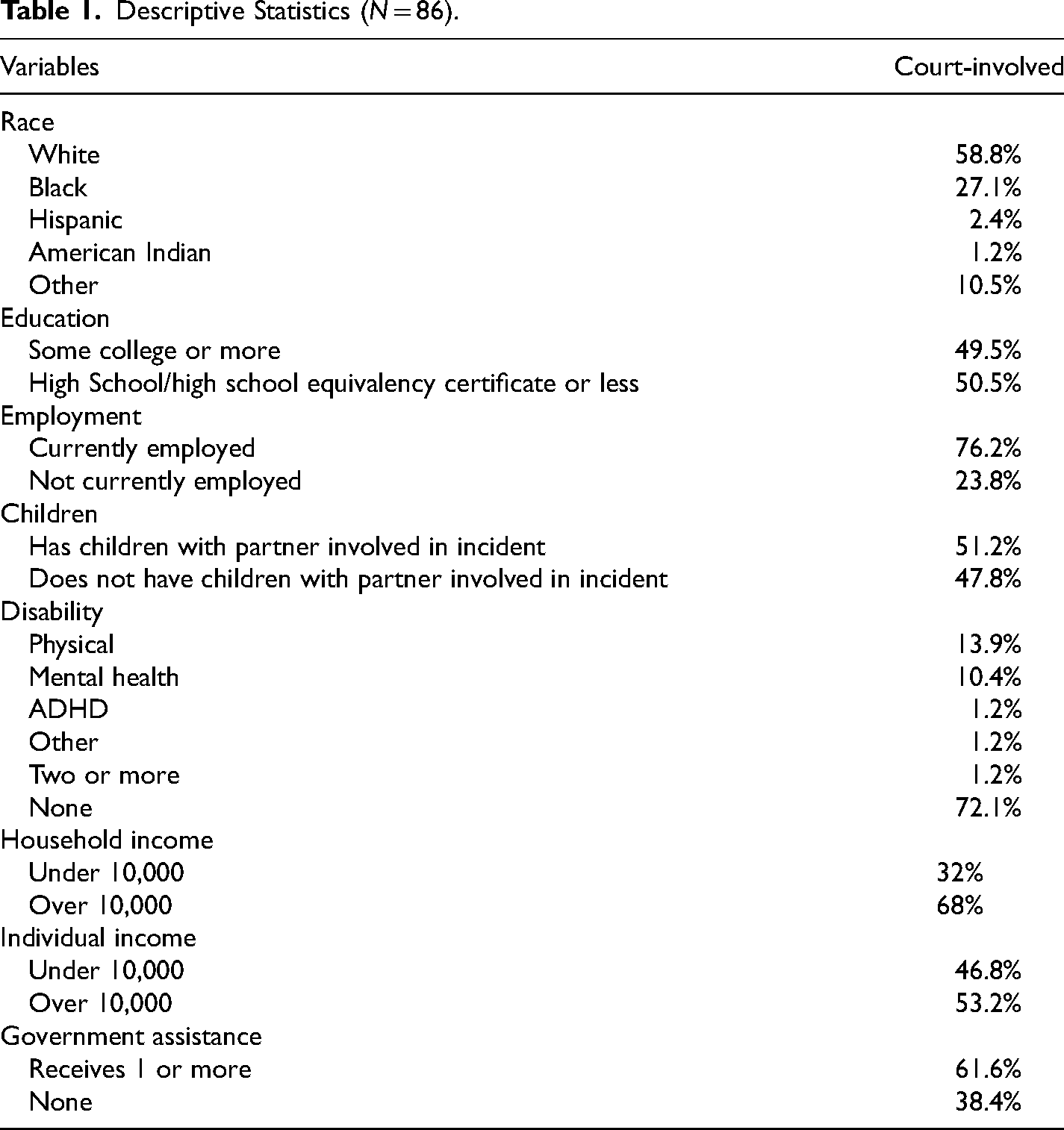
We collected demographic data including race and age. We also asked the women about their employment status, household income level, educational background, and whether they received any government assistance. Table 1 lists the breakdown of these demographic factors.
Descriptive Statistics (N = 86).
Adverse Childhood Experiences
Our measure of ACEs included the 10 original items plus other items found to be associated with trauma, such as having been abused by a boyfriend/girlfriend, been abandoned by a parent before age 6, or experienced the death of a parent, severe injury or illness, or homelessness. 4 The findings of the ACEs foundational study have been replicated across diverse populations (Gilbert et al., 2015; see also Center for Disease Control [CDC] website). For instance, an examination of expanded ACEs in a nationally representative sample of youth and their caregivers found that peer victimization and community violence exposure added to the prediction of mental health conditions, and low socioeconomic status added significantly to predicting physical health problems (Finkelhor et al., 2015). The CDC notes that evidence-based practice/empirical findings frequently demonstrate a relationship between ACEs and negative health and well-being outcomes such as broken bones, pulmonary disease, depression, and cardiovascular disease in adulthood (Felitti et al., 1998). Further, this relationship is graded: as the level of exposure to a stressor increases, the severity of the outcome also increases (CDC & Prevention, 2016). Furthermore, the good to excellent test–retest reliability of retrospective reports of ACEs (Dube et al., 2003) support the wide use of the ACE measure and its importance in the CDC's prevention program.
Dependent Variables
IPV/A Experiences
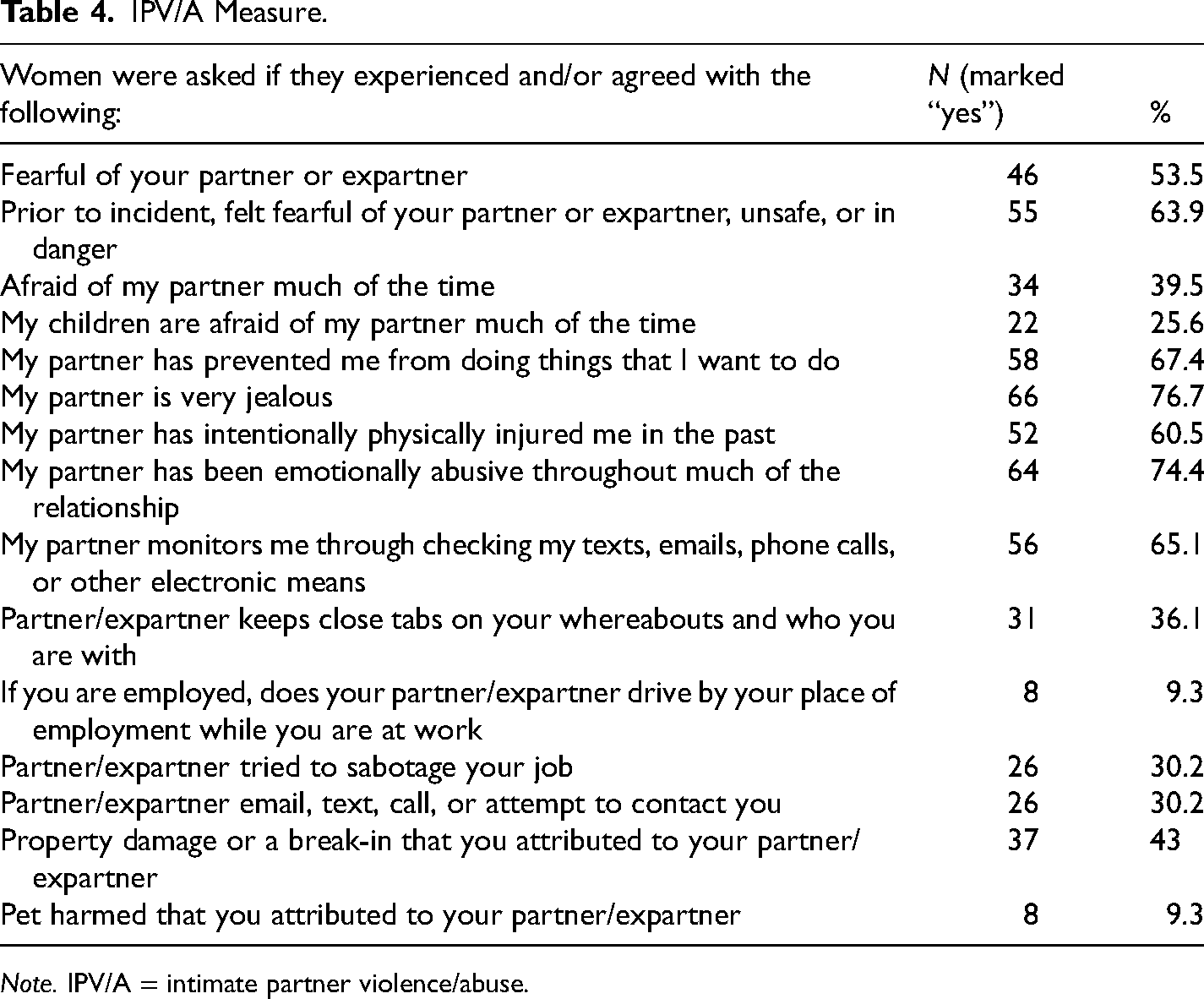
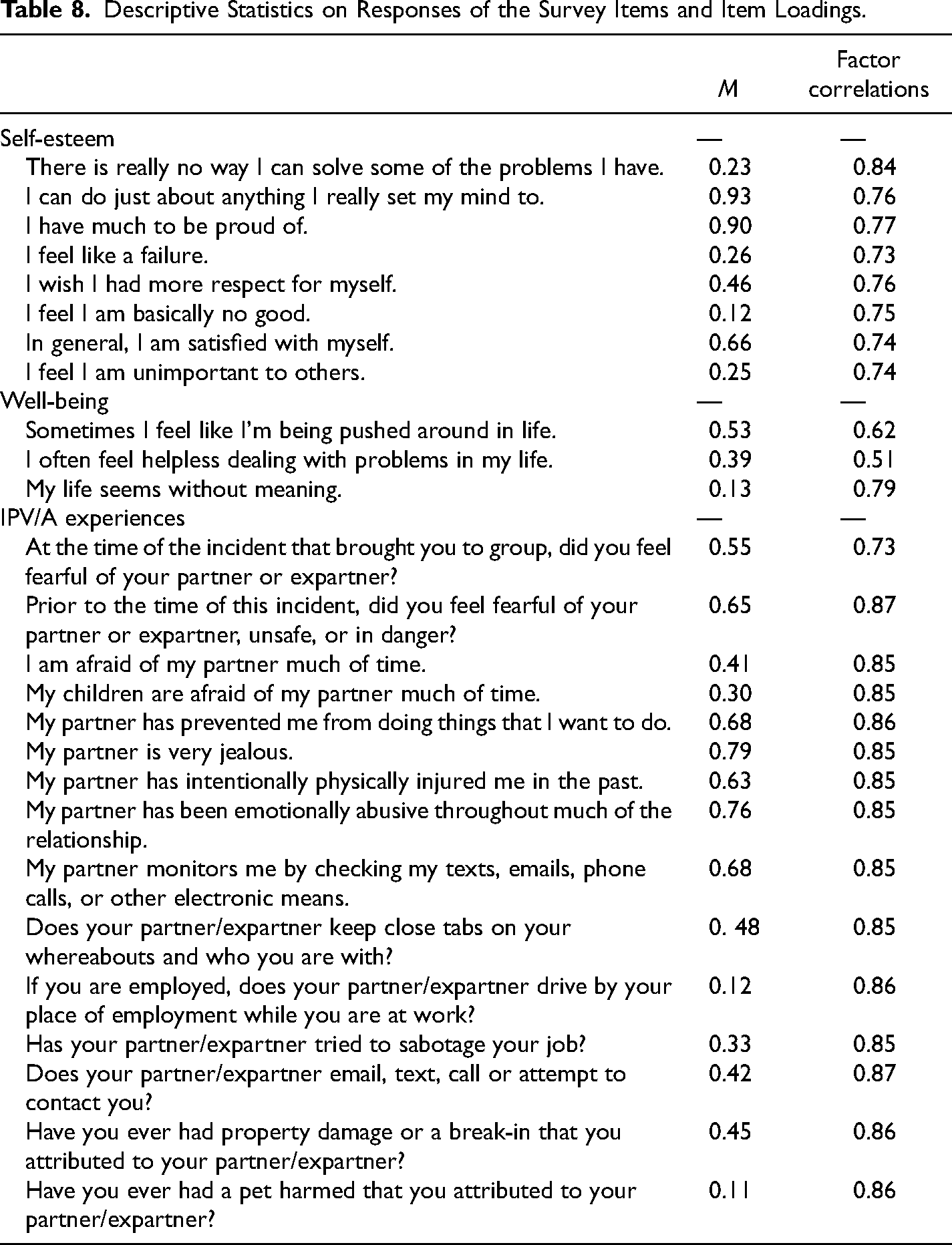
IPV/A experiences was a latent factor constructed from 15 questions tapping into a variety of abusive experiences respondents endured in their intimate relationships. Our IPV measure does not reflect levels of violence but a constellation of factors that the partner agency and the IPV literature recognize as related to IPV and/or are unique to this client base of justice-involved victims. The agency was adamant that intake experiences that documented IPV and abuse must be captured in our measure in addition to broad relationship experiences. These questions asked respondents whether or not they agreed with or experienced the following statements: (a) at the time of the incident that brought you to group, did you feel fearful of your partner or expartner, (b) prior to the time of this incident, did you feel fearful of your partner or expartner, unsafe, or in danger, (c) I am afraid of my partner much of time, (d) my children are afraid of my partner much of time, (d) my partner has prevented me from doing things that I want to do, (e) my partner is very jealous, (f) my partner has intentionally physically injured me in the past, (g) my partner has been emotionally abusive throughout much of the relationship, (h) my partner monitors me through checking my texts, emails, phone calls, or other electronic means, (i) does your partner/expartner keep close tabs on your whereabouts and who you are with, (j) if you are employed, does your partner/expartner drive by your place of employment while you are at work, (k) has your partner/expartner tried to sabotage your job, (l) does your partner/expartner email, text, call, or attempt to contact you, (m) have you ever had property damage or a break-in that you attributed to your partner/expartner, and (n) have you ever had a pet harmed that you attributed to your partner/expartner? These questions were coded as (1) participant indicated agreement with and/or experienced the statement and (0) as participant did not agree and/or did not experience the statement. Table 4 presents the frequencies of these items. Reliability analysis results showed acceptable internal consistency of the construct (Cronbach's alpha = .87). Additionally, the factor correlations are presented in Appendix A. Standardized factor scores were used to create the value of this composite. It should be noted that it is problematic to simply add the numeric values of the items to create a latent factor because this practice disregards the items’ loading weights and cannot effectively reduce measurement error (DiStefano et al., 2009).
IPV/A Measure.
Note. IPV/A = intimate partner violence/abuse.
The women's responses reveal how terror and harm are common experiences for the women in this sample, which is consistent with victims of IPV/A, not offenders.
Women's fear of their partner/expartner is very high, and, as noted above, fear may serve as a catalyst for using violence as a form of self-help. They also experienced classic risk factors associated with IPV/A, such as abusers’ high level of coercive control (preventing victims from doing things they want to do, exhibiting jealousy, and closely monitoring their whereabouts), and the women also reported experiencing a great deal of physical injury and emotional abuse.
Self-esteem
Self-esteem was a latent factor constructed from eight questions tapping into a variety of self-esteem measures. These questions asked respondents whether or not they agreed with or experienced the following statements: (a) there is really no way I can solve some of the problems I have, (b) I can do just about anything I really set my mind to, (c) I have much to be proud of, (d) I feel like a failure, (e) I wish I had more respect for myself, (f) I feel I am basically no good, (g) in general, I am satisfied with myself, and (h) I feel I am unimportant to others. Questions b, c, and g were coded so that a higher value indicated a negative self-esteem response. Reliability analysis results showed acceptable internal consistency of the construct (Cronbach's alpha = .79). Additionally, the factor correlations are presented in Appendix A. Standardized factor scores were used to create the value of this composite.
Well-Being
Well-being was a latent factor constructed from three questions tapping into a respondent’s mental health. These questions asked respondents whether or not they agreed with or experienced the following statements: (a) sometimes I feel like I’m being pushed around in life, (b) I often feel helpless dealing with problems in my life, and (c) my life seems without meaning. Reliability analysis results showed acceptable internal consistency of the construct (Cronbach's alpha = .75). Additionally, the factor correlations are presented in Appendix A. Standardized factor scores were used to create the value of this composite.
Posttraumatic Distress
To measure PTD, the women responded to a list of statements that describe some feelings, thoughts, and behaviors that may follow negative experiences, selecting the statements that sometimes applied to their experiences. We did not administer the full psychometric scale for PTSD, but instead provided a list of common trauma symptoms to determine what issues or feelings the women were currently facing. The list included standard PTSD measures plus additional items observed by the treatment specialists from the partner agency who have worked with IPV/A victims and court-mandated women for over 20 years and reflected the format and questions treatment providers used for over a decade to assess trauma-related distress. 5
Danger Assessment
We employed Campbell's revised Danger Assessment to determine an abused woman's risk of being killed by her intimate partner (Campbell et al., 2008). 6 Women marked yes or no for a series of possible risk factors for homicide if they had experienced them during the past year. Several measures are scored with additional weight such as if their partner: owns a gun, is unemployed, has ever used a weapon against them, has threatened to kill them, has avoided being arrested for domestic violence, has ever tried to choke them, and if the victim has left their partner after living together in the past year. The sum of the yes responses corresponds to the level of perceived danger: fewer than eight items indicates variable danger, 8–13 increased danger; 14–17 severe danger; and 18 or more extreme danger.
Analytic Strategy
We utilized bivariate linear regressions to analyze the relationships between our dependent variables and reported ACEs. This methodological strategy allows us to better understand the relationship between trauma/well-being measures and victimization for women arrested for their use of force in current or former relationships. The results are presented below.
Findings
Table 1 reports descriptive statistics for this study. Women ranged from 19 to 63 of age, with a mean age of 34 years. The majority of our respondents were White (58.8%), while 27.1% were Black, and the remaining women were Latina, American Indian, and others (which included multiracial). A little over half of women in our sample reported having children with their partner involved in the current domestic violence incident (51.2%). Half of the sample had a high school diploma or less (50.5%). Three-quarters were employed (76.2%); however, a large percentage of women (46.8%) reported a household and individual income of less than US$ 10,000. In addition, over half received one or more forms of government assistance (61.6%). These options included temporary assistance for needy families, food stamps, disability insurance, unemployment insurance, and others. Lastly, the majority of respondents reported having no disability insurance (72.1%).
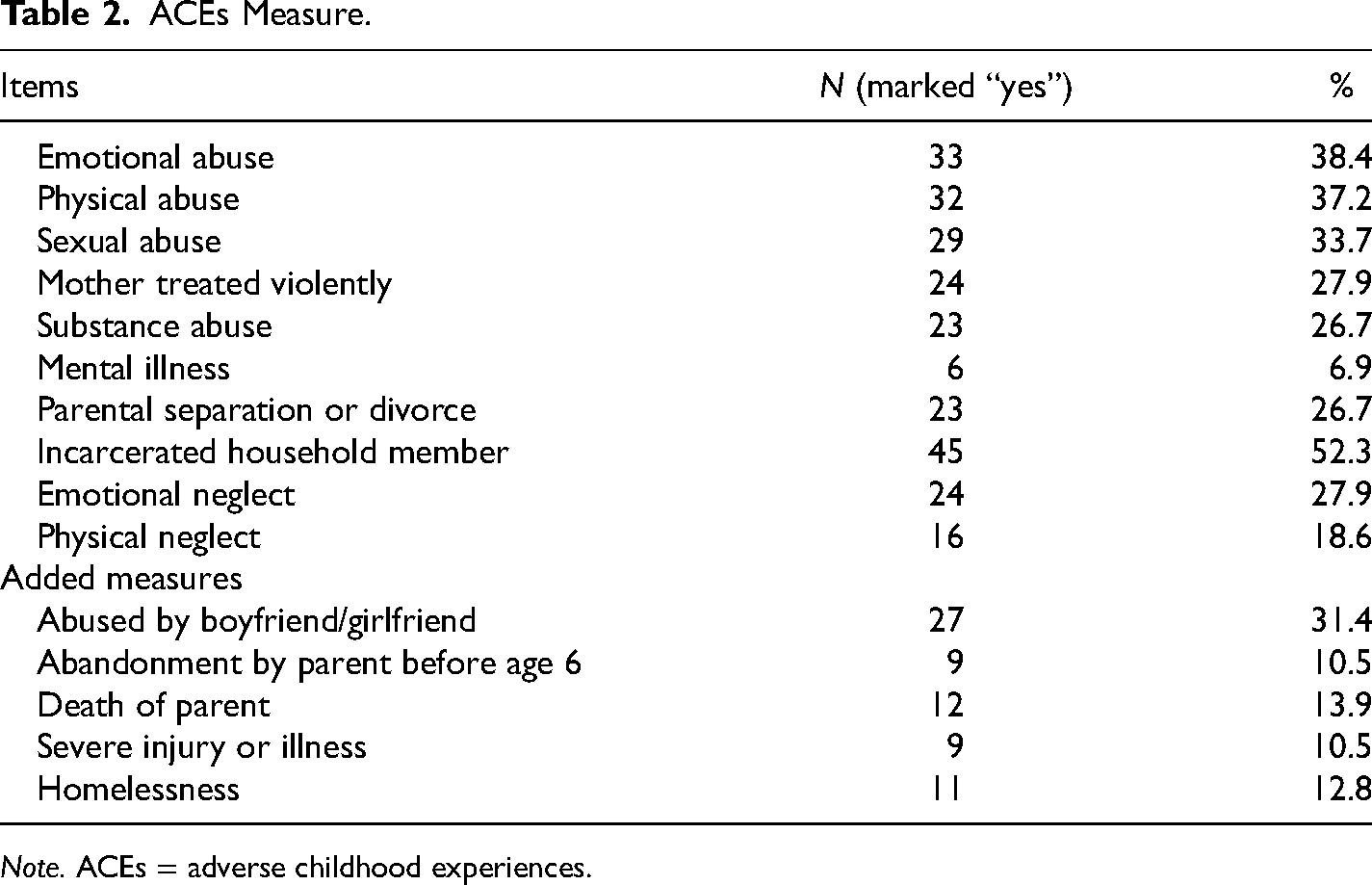
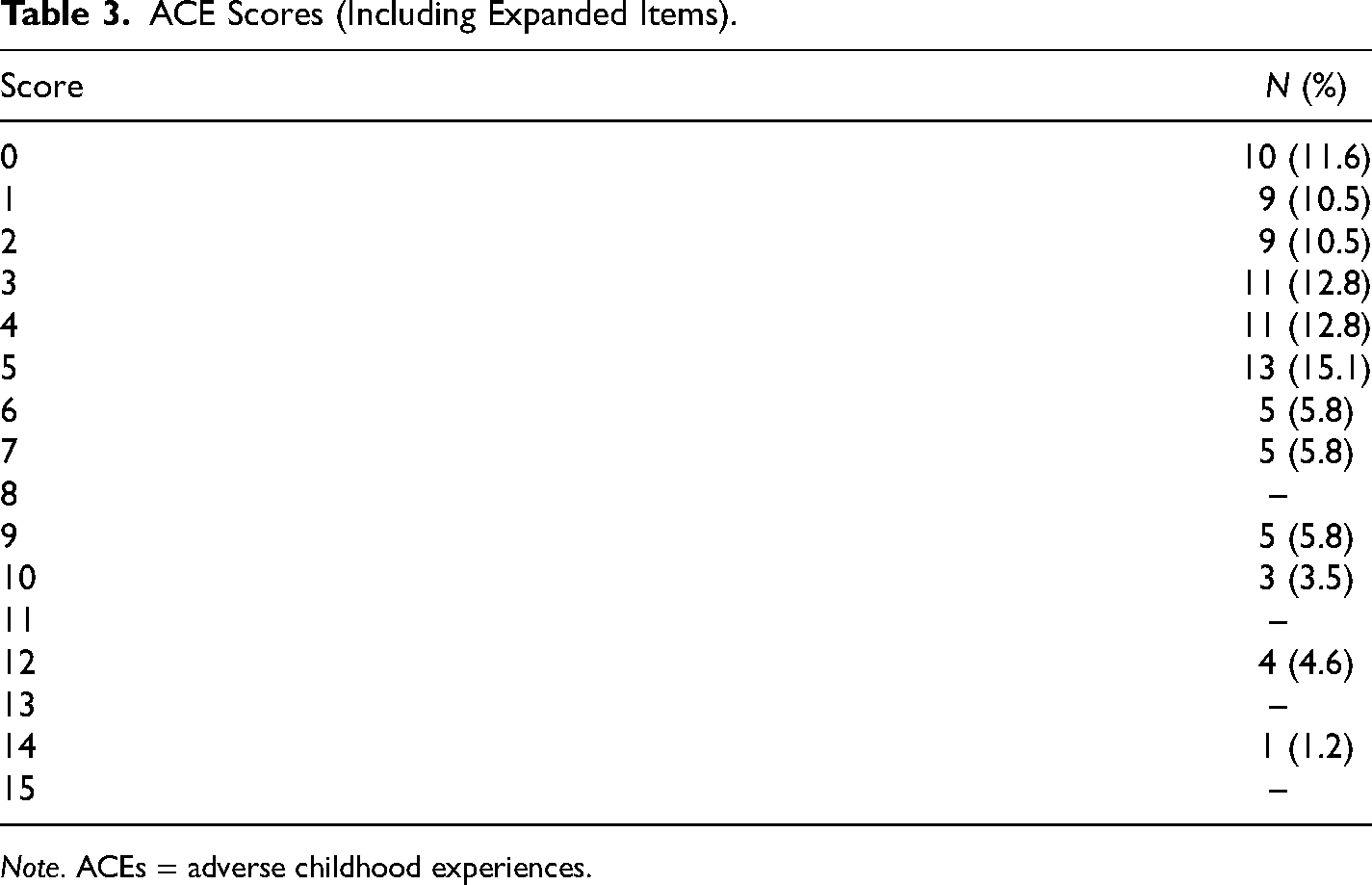
Tables 2 and 3 show the percent and number, as well as, the ACEs score, respectively, of women who report ACEs in our sample. We added additional items to the ACE measure, similar to other researchers (Finkelhor et al., 2013) who seek a more inclusive measure of ACEs that affect adult well-being (see Table 2). The prevalence of four or more ACEs (54.6%) for women in this study was strikingly high. This finding is critical given the research on ACEs and negative health and well-being outcomes (Felitti et al., 1998). The court-involved women's ACE scores are similar to the ACE scores of women who self-referred into survivor groups in the same agency (Miller & Becker, 2021) and both groups exhibit much higher ACE scores than the general population (CDC, Kaiser Permanente, 2016).
ACEs Measure.
Note. ACEs = adverse childhood experiences.
ACE Scores (Including Expanded Items).
Note. ACEs = adverse childhood experiences.
Taken together with the extended ACE measure, there were only 10 women in our sample who reported experiencing zero items on our ACEs measure. Thus, our data reveal an overwhelming number of traumatic experiences that shaped women's lives. In the results below, we aim to further contextualize the ways in which these traumatic experiences shaped the lives of the women in our sample.
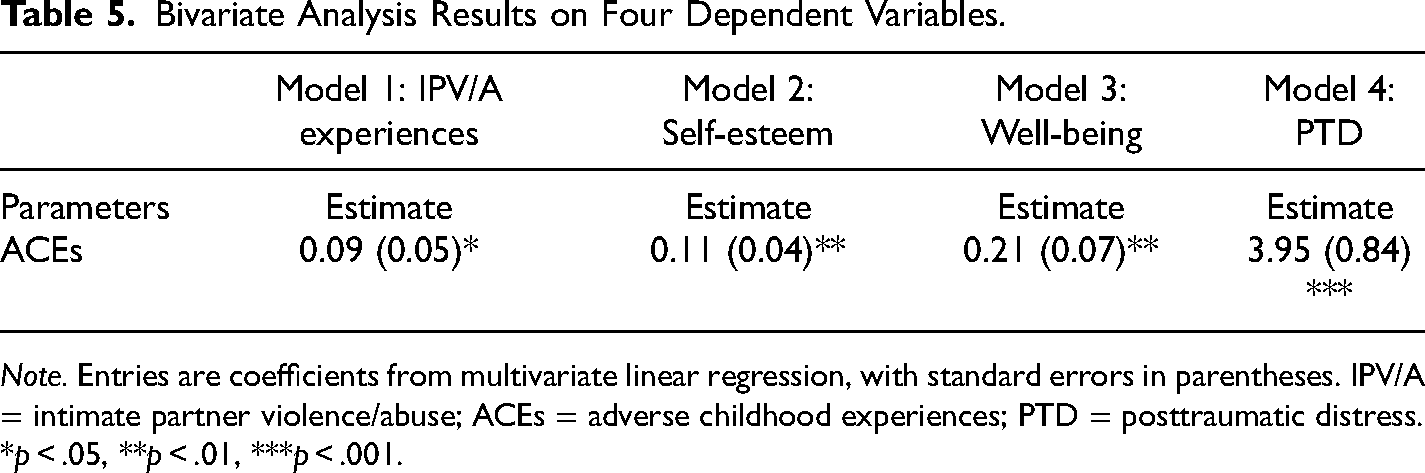
To contextualize the IPV/A experiences, Table 4 lists the variety of abusive experiences respondents endured in their intimate relationships and the number of women who reported experiencing each. To further examine the relationship between ACEs and IPV/A outcomes, Table Model 1 provides the results from our linear regression. We found that there was a significant and positive association between ACEs and our dependent variable: IPV/A experiences. ACEs significantly increased IPV/A experiences; a one-unit increase in ACEs was associated with a 0.09-unit increase in IPV/A experiences (p < .05, 95% CI [0.06, 0.16]). Thus, women in the current study who experienced ACEs were also significantly more likely to experience IPV/A incidents, consistent with our theoretical framework.
To elucidate the lasting impact of trauma from childhood, Models 2, 3, and 4 in Table 5 capture the impact of ACEs on self-esteem, well-being, and PTD experiences, with each model showing a strong positive association between the independent and dependent variable. First, Model 2 presents the results between ACEs and our latent factor of self-esteem. ACEs significantly increased negative self-esteem experiences; a one-unit increase in ACEs was associated with a 0.11-unit increase in negative self-esteem experiences (p < .01, 95% CI [0.03, 0.17]). Thus, the cumulative trauma experienced by women in the current study during childhood had a significant impact on their self-esteem as an adult. Model 3 presents the results between ACEs and our latent factor of well-being. ACEs significantly increased negative feelings of well-being; a one-unit increase in ACEs was associated with a 0.21-unit increase in negative well-being (p < .01, 95% CI [0.05, 0.34]).
Bivariate Analysis Results on Four Dependent Variables.
Note. Entries are coefficients from multivariate linear regression, with standard errors in parentheses. IPV/A = intimate partner violence/abuse; ACEs = adverse childhood experiences; PTD = posttraumatic distress.
*p < .05, **p < .01, ***p < .001.
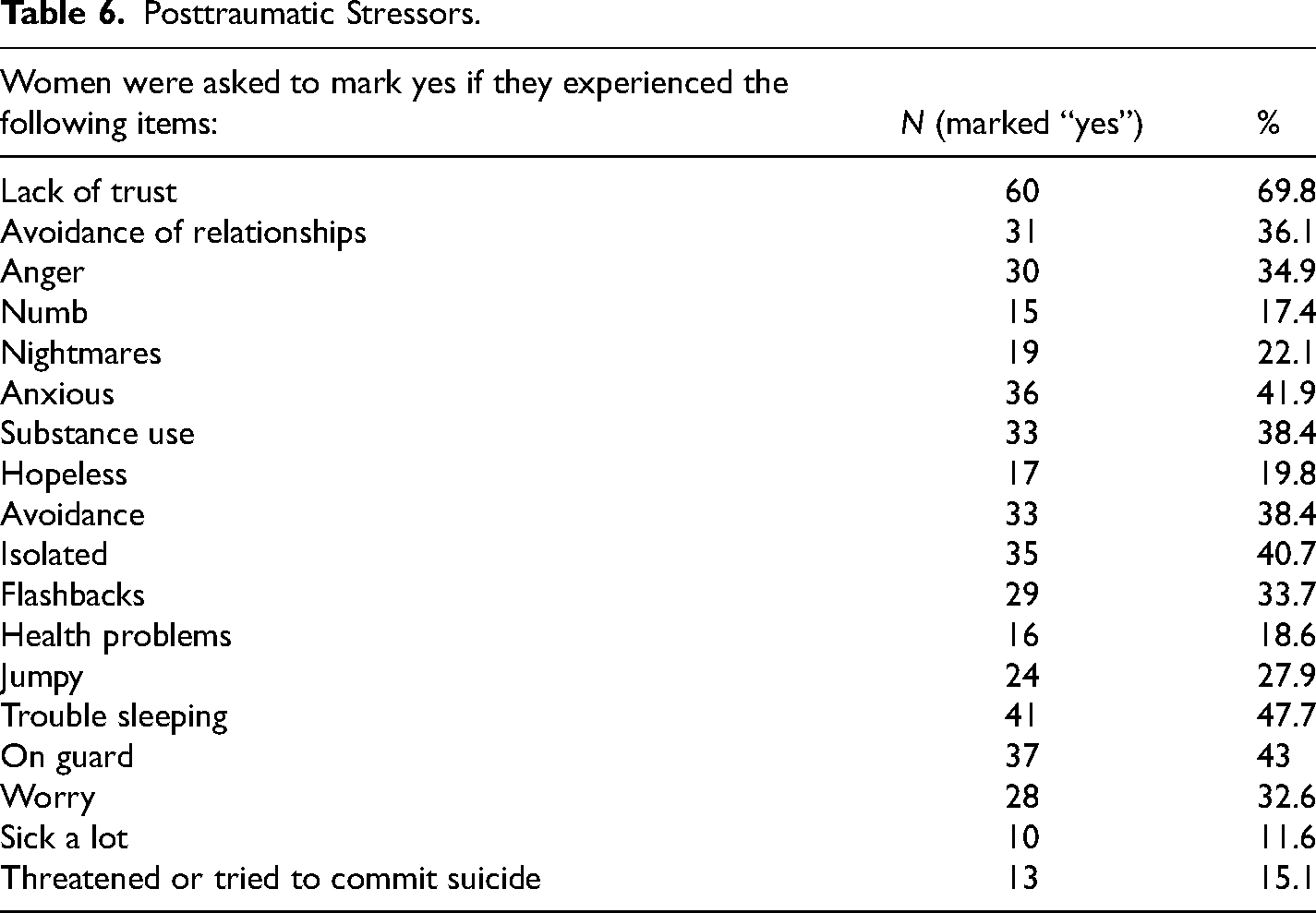
We use an expanded measure of PTD. To contextualize the feelings, thoughts, and behaviors that may follow negative experiences, Table 6 provides the breakdown of stressors and the number of women who reported experiencing each. Looking at some of the individual items (see Table 6), it is not surprising given their experience with abusive partners that the women scored high on the measure “lack of trust.” Furthermore, a larger percentage of women also reported feelings of being on guard and having trouble sleeping.
Posttraumatic Stressors.
Model 4 presents the results between ACEs and our PTD measure. Similar to the results above, there was a strong positive association between these variables. ACEs significantly increased PTD experiences; a one-unit increase in ACEs was associated with a 3.95-unit increase in PTD (p < .001, 95% CI [0.27, 0.63]).
Taken together, Models 1, 2, 3, and 4 provide evidence that trauma in childhood affects mental health and well-being as an adult. Prior research notes (Burke et al., 2022) how cumulative trauma, similar to that experienced by the women in our study, influences adult criminal behavior. Further, the results of our models are consistent with our feminist pathway general strain perspective. The trauma histories of the “female offenders” in our study arrested for the use of force against their abusive partner speak to the role of adversity, making for a profile that is more illustrative of a victim rather than an offender categorization.
Regarding the danger assessment results, there was a positive association with reported ACEs. A one-unit increase in the ACEs was associated with a 0.54 increase in danger assessment score; however, this was not a significant result.
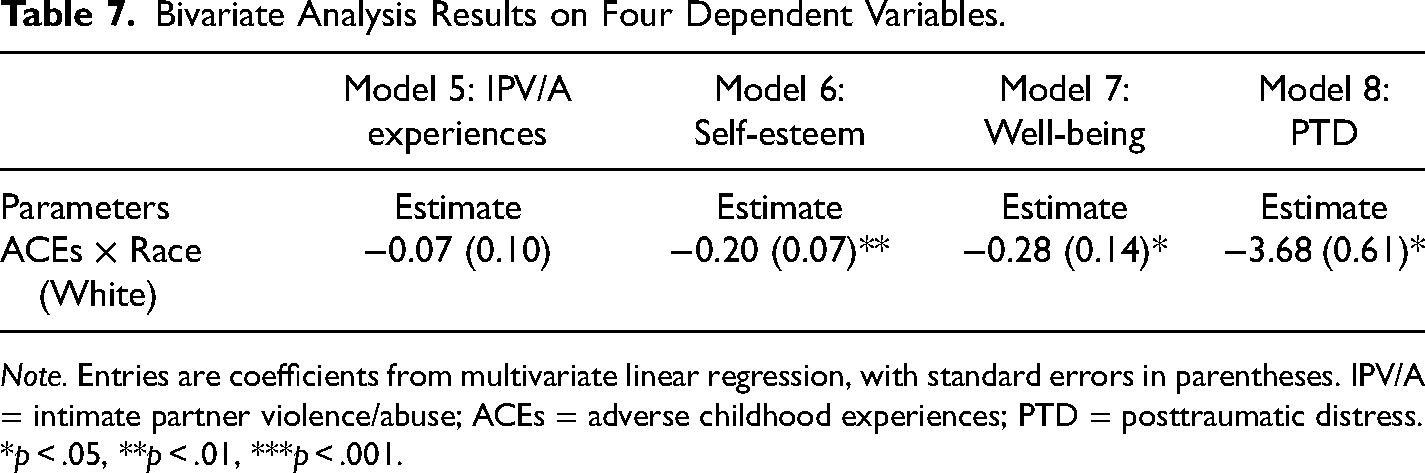
Proceeding to Models 5, 6, 7, and 8 in Table 7, we present the bivariate effects of the interaction term between ACEs and race for each of our dependent variables. Out of the four dependent variables, the interaction term, ACEs × Race 7 exhibited a significant and moderate negative association on self-esteem (p < .01, 95% CI [−0.34, −0.06]), well-being (p < .05, 95% CI [−0.56, −0.003]), and PTD (p < .05, 95% CI [−0.94, −0.42]). Thus, the effect of childhood adversity on adult mental health is not evenly distributed across races. While early trauma adversely affects women of all races, it appears that women who are Black, Indigenous or Persons of Color (BIPOC) are more likely to suffer these detrimental effects on their mental health as adults. Given the small sample size overall, the data suggests a pattern that needs to be confirmed with larger sample sizes.
Bivariate Analysis Results on Four Dependent Variables.
Note. Entries are coefficients from multivariate linear regression, with standard errors in parentheses. IPV/A = intimate partner violence/abuse; ACEs = adverse childhood experiences; PTD = posttraumatic distress.
*p < .05, **p < .01, ***p < .001.
Discussion
When abused women resist IPV, their actions are prejudged by the criminal legal system's myopic operationalization of criminal offending that uses an outdated assessment of the use of force and fails to consider motivation. Given women's narrow options for more peaceful resolutions of conflict due to enduring coercive control and abuse, economic dependency, and a lack of support from social others or institutions (and so forth), they may turn to aggressive acts as a way of self-defense. These behavioral outcomes are exacerbated by long-standing exposure to trauma emerging from childhood. For the women in this study, a trauma history is a profoundly important factor in their feelings and behavior as adults. Indeed, not only did the women experience substantial ACEs, and much higher prevalence rates in comparison to the general population (CDC, Kaiser Permanente, 2016), but the demographics show they are disadvantaged due to their lower educational levels (half attained a high school degree or less), low socioeconomic status (almost half earned under 10 k annually), almost 2/3 of the sample received government assistance of one form or another, and nearly 1/3 of the women were disabled in some way. Past research finds that trauma and victimization condition responses to abuse (Widom et al., 2018). For women who use force in self-defense, or to protect their children, or to resist long-standing patterns of abuse when nothing else has helped (see Miller, 2005), an abundance of trauma and risk factors exacerbate the situation, leading to a sense of having no other options to combat abuse.
We frame our examination of the cumulative effects of trauma and adversity in the feminist life course and general strain perspectives. Studies that take a feminist pathways or life course approach demonstrate that we need to view women's self-determinative choices in their historical and social context (see DeHart & Lynch, 2013; Jones et al., 2018, 2020, 2021). But feminist scholars also recognize that a missing element in GST is the recognition of victimization as a gendered source of strain (Belknap & Holsinger, 2006). Studies that incorporate GST in a pathways approach view strain as both proximal and distal, and thus include adversity experienced early in the life course (Sharp et al., 2012; Slocum et al., 2022) to understand women's choices and behaviors as adults. In our feminist life course strain framework, we first investigated whether adult women's trauma, manifested in their use of force, is related to earlier traumas and victimization experiences. Model 1 reveals a strong association between ACEs and IPV/A experiences where ACEs significantly increased IPV/A experiences. This is consistent with other research that found that exposure to adversity in childhood may make women more susceptible to IPV/A relationships in that they may normalize abuse in adult relationships (Jones et al., 2018, 2021; Whitfield et al., 2003; Widom et al., 2014). This sample of women arrested for using force against their abusive partners evidenced high levels of fear and coercive control, as well as high levels of adverse childhood experiences, that is, both proximal and distal sources of strain. Their life trajectory of victimization culminated in using violence to quell their fear and stop the abuse.
We also sought to explore connections between early trauma and later mental health/well-being challenges. A feminist pathways approach suggests that victimization is a key factor in understanding the dynamics of offending for girls and women where past trauma has a lifelong effect on both well-being and behavior (Miller & Becker, 2021, pp. NP6955–NP6956).
Similarly, traumatic experiences early in life also constitute distal strain that can lead to myriad negative outcomes in adulthood (Slocum et al., 2022). Specifically, we were interested in the effect of adversity during childhood and other victimization experiences on self-esteem, well-being, and PTD in adulthood. Models 2 and 3 expose the role of early adversity in later mental health challenges, with self-esteem and well-being affected negatively. These bivariate relationships reveal the devastating toll that adversity has on victims’ coping skills. Model 4 explores the relationship between ACEs and PTD, showing that adversity in early childhood contributes significantly to increases in PTD.
Our focus was on court-involved women's experiences with childhood trauma and its association with negative self-esteem and well-being as an adult as well as resistance to abuse. While effects were enhanced for BIPOC women, we do not know whether these groups are underrepresented in our sample. To know this, we would need data on whether they are disproportionately represented at earlier points in case processing, such as if more BIPOC women received jail sentences rather than being mandated treatment while on probation. However, given what we know about get-tough crime policies that increase surveillance and overpolicing in communities of color (Kim, 2020; Richie, 2012), it is likely that the criminalization of victimization is greater for BIPOC women. What is clear from our bivariate linear analyses is the enormous role adversity plays in later behavioral and emotional outcomes for victims of IPV/A, decreasing well-being and psychological health, and leading to adult women's IPV/A perpetration as survival strategies.
Conclusion
Reliance on a criminal legal system response to social problems not only exacerbates an already uneven playing field but also fails to acknowledge how victims/survivors are harmed by neoliberal crime control policies. The punitiveness associated with pro/mandatory arrest policies for IPV/A offenders fails to consider victims who use force in order to thwart their abusers’ violence in self-defense situations, in defense of their children, or for other reasons. While primary aggressor training is one way to redirect IPV/A arrest policies, its success rests on a commitment that police training includes material about the asymmetrical power divisions in violent relationships. For victims whose lives have been impacted by adverse childhood experiences and other stressors, physical resistance to intimate abuse may seem like a viable option or the last resort, particularly if formal and informal help-seeking efforts have not helped. The criminal legal system is not designed to meet the needs of these “offenders.” Greater attention to women's well-being and stressors, as part of a larger emphasis on “violence” prevention, needs to expand (Peacock, 2022) so violent resistance is not readily used by victims. Though this current article explores the ramifications of a court-mandated treatment program, policy implications include involving key providers at earlier stages of the legal system, such as using social service providers in police training to provide a contextual understanding of the effect of a victims’ social trauma history on their actions/reactions to violent abusers in intimate contexts. Victim service professionals could play a role after an IPV/A arrest, to assist police in distinguishing who is most at risk for future victimization/offending, similar to assessments of risk/danger using Campbell's lethality assessment protocol. For court-involved women like those in this sample, these policy ideas would have informed the system's handling and adjudication of women who used force in IPV/A situations and who had long histories of IPV/A victimization. We need to continue challenging an incident-driven criminal legal system that criminalizes victimization, particularly when the women facing formal charges and sanctions are likely the ones also most marginalized across social class, disability status, and racial-ethnic identities. Further theoretical development would also shed light on the plight of these women in various social locations. Feminist pathways, life course, and strain proved to be promising avenues, but researchers should also consider other approaches.
A final concern highlighted in our study is the lack of clarity regarding the effect of women's race on their pathways to resistance. Future research needs to look at earlier points in the system to better understand if the temporal ordering of case processing affects system decision-making. In addition, it is important to look at other jurisdictions with larger BIPOC populations to determine system processing effects. It is also critical for future studies to intentionally include more BIPOC female respondents to provide additional contextual information as this study only begins to scratch the surface of exploring how negative self-esteem, well-being, and PTD are especially pronounced among BIPOC women who have used force in abusive relationships. Furthermore, future studies should prioritize understanding the unique ways BIPOC women engage in acts of resistance that may be further criminalized given the very real and pervasive racial discrimination that pervades the criminal justice system.
Footnotes
Declaration of Conflicting Interests
The author(s) declared no potential conflicts of interest with respect to the research, authorship, and/or publication of this article.
Funding
The author(s) received no financial support for the research, authorship, and/or publication of this article.

Notes
Author Biographies
Appendix A
Descriptive Statistics on Responses of the Survey Items and Item Loadings.
| M | Factor correlations | |
|---|---|---|
| Self-esteem | — | — |
| There is really no way I can solve some of the problems I have. | 0.23 | 0.84 |
| I can do just about anything I really set my mind to. | 0.93 | 0.76 |
| I have much to be proud of. | 0.90 | 0.77 |
| I feel like a failure. | 0.26 | 0.73 |
| I wish I had more respect for myself. | 0.46 | 0.76 |
| I feel I am basically no good. | 0.12 | 0.75 |
| In general, I am satisfied with myself. | 0.66 | 0.74 |
| I feel I am unimportant to others. | 0.25 | 0.74 |
| Well-being | — | — |
| Sometimes I feel like I’m being pushed around in life. | 0.53 | 0.62 |
| I often feel helpless dealing with problems in my life. | 0.39 | 0.51 |
| My life seems without meaning. | 0.13 | 0.79 |
| IPV/A experiences | — | — |
| At the time of the incident that brought you to group, did you feel fearful of your partner or expartner? | 0.55 | 0.73 |
| Prior to the time of this incident, did you feel fearful of your partner or expartner, unsafe, or in danger? | 0.65 | 0.87 |
| I am afraid of my partner much of time. | 0.41 | 0.85 |
| My children are afraid of my partner much of time. | 0.30 | 0.85 |
| My partner has prevented me from doing things that I want to do. | 0.68 | 0.86 |
| My partner is very jealous. | 0.79 | 0.85 |
| My partner has intentionally physically injured me in the past. | 0.63 | 0.85 |
| My partner has been emotionally abusive throughout much of the relationship. | 0.76 | 0.85 |
| My partner monitors me by checking my texts, emails, phone calls, or other electronic means. | 0.68 | 0.85 |
| Does your partner/expartner keep close tabs on your whereabouts and who you are with? | 0. 48 | 0.85 |
| If you are employed, does your partner/expartner drive by your place of employment while you are at work? | 0.12 | 0.86 |
| Has your partner/expartner tried to sabotage your job? | 0.33 | 0.85 |
| Does your partner/expartner email, text, call or attempt to contact you? | 0.42 | 0.87 |
| Have you ever had property damage or a break-in that you attributed to your partner/expartner? | 0.45 | 0.86 |
| Have you ever had a pet harmed that you attributed to your partner/expartner? | 0.11 | 0.86 |