







Abstract
Clergy's understanding of intimate partner violence (IPV) underpins the support they provide to Christian women affected by IPV. However, the understanding of intimate partner violence by Cameroonian and Nigerian clergy living in England is unknown. This article explores their understanding of intimate partner violence through remote nine semi-structured interviews. The results showed that clergy understood that the intersection of individual, Christian, and cultural beliefs around marriage and acculturation factors causes intimate partner violence. They acknowledged a lack of adequate knowledge of intimate partner violence. Developing training programs on intimate partner violence for clergy and their congregations will enhance awareness and support for affected women.
Keywords
Introduction
Clergy's lack of knowledge and understanding of intimate partner violence (IPV) negatively impacts the support they provide to Christian women who have experienced it (Drumm et al., 2018; McMullin et al., 2015; Nason-Clark et al., 2018). Therefore, clergy's understanding of IPV is crucial for offering adequate support to these women. With adequate knowledge, clergy are better positioned to effectively address IPV.
IPV is a significant public health issue affecting one in four women in England (Office for National Statistics, 2023). IPV encompasses behaviors in intimate relationships that cause physical, sexual, or psychological harm, including physical aggression, sexual coercion, psychological abuse, and controlling behaviors (World Health Organization, 2021). It affects all populations irrespective of race, ethnicity, or religion.
The prevalence of IPV among Christian communities has been documented in Sub-Saharan Africa (Kagou & Kamgno, 2015; Takyi & Lamptey, 2020) and the United Kingdom (Aune & Barnes, 2018; Office for National Statistics, 2018). A survey of churchgoers and church leaders in England found that 42.2% of 438 Christians have experienced partner abuse. Among these survivors, 57.4% were women (Aune & Barnes, 2018). Notably, 42.9% of those who experienced partner abuse sought support from their clergy. These findings highlight the significant role clergy can play in supporting survivors, emphasizing the importance of clergy having an accurate understanding of IPV in order to provide effective support.
Intersectionality posits that a woman's experience of violence is shaped by the interplay of multiple identities, including gender, race, class, religion, and social practices, rather than by gender alone (Crenshaw, 1991). Crenshaw highlights how these overlapping identities interact to create unique experiences of oppression. For an African Christian woman, her gender, cultural background, Christian faith, and migrant status will shape her experience of IPV. Acknowledging these intersecting factors is vital for clergy who seek to understand and address IPV within African Christian communities in England. Utilizing an intersectional lens allows clergy to provide effective culturally faith-sensitive support to African Christian women (ACW) survivors of IPV living in England. This study explored Cameroonian and Nigerian (CN) clergy's understandings of IPV within the African Christian community in England.
The Intersection of Christianity and IPV
The intersection of Christianity and IPV is widely documented in the literature, with most biblical scholars criticizing conservative Christian ideologies and teachings on male dominance and female submission for contributing to IPV (Cappel, 2016; McMullin et al., 2015; Nason-Clark et al., 2018; Nevhutanda, 2019; Shaw et al., 2022; Zust et al., 2017). They believe that conservative Christianity adheres to strict male–female roles and male supremacy and uses biblical scriptures out of context to justify abuse. Other researchers contend that Christian beliefs on male headship and female submission may not be the primary cause of IPV, but may interact with other factors to create an environment for abuse (Heggen, 2019; Wendt, 2008; Wendt & Zannetino, 2014). Their thoughts align with the intersectional feminist perspective of IPV.
Clergy's Understanding of IPV
Clergy, in several studies, demonstrate their understanding of IPV by describing its types and the underlying causes. They identify types of abuse, including spiritual, physical, verbal, and emotional (Clayto-Day, 2020; Dyer, 2010; Houston-Kolnik et al., 2019; Mahomva et al., 2020; Nevhutanda, 2019; Shaw et al., 2022; Tedder & Smith, 2018). Additionally, they identify serial adultery, where an individual consistently engages in extramarital affairs, thereby undermining trust and stability in the relationship (Dyer, 2010). Furthermore, they note cultural abuse, which involves the exploitation of cultural norms and values to justify controlling or abusive behaviors (Nevhutanda, 2019). Clergy's insights regarding these various forms of IPV are crucial for understanding the complex nature of the issue. This understanding can help guide more effective interventions and support for those affected.
Research indicates that clergy have identified patriarchal teachings and practices that promote male dominance and female submission as a major contributing cause of IPV in the Christian community (Clayto-Day, 2020; Davis & Johnson, 2020; Dyer, 2010; Houston-Kolnik et al., 2019; Mahomva et al., 2020; Nevhutanda, 2019; Peterson, 2009; Shaw et al., 2022; Tedder & Smith, 2018). Furthermore, they highlight other contributing factors such as childhood victimization and community violence (Dyer, 2010), poverty and economic challenges (Clayto-Day, 2020; Dyer, 2010), acculturation stress (Raufu, 2019), and lack of training, ignorance, poor upbringing, and socialization issues (Clayto-Day, 2020). These complex underlying causes of IPV underscore the necessity for a comprehensive approach to address IPV in the Christian community.
The Current Study
Despite what is known about the clergy's understanding of IPV, there is limited knowledge of CN clergy living in England's understanding of IPV in the African Christian community. To address this gap, research was conducted using Smith et al.’s (2009) interpretative phenomenological analysis (IPA) through the lens of Crenshaw’s (1991) intersectional feminist theory. This study is part of the primary author's thesis, which explores the experiences and perceptions of service providers, as well as CN clergy, who support ACW survivors of IPV living in England (Shelley, 2023).
This article aimed to explore CN clergy's understandings of IPV within the African Christian community. ACW who have experienced IPV seek support from their clergy (Nevhutanda, 2019; Stiles-Ocran & Leis-Peters, 2025). Therefore, understanding their perspectives on IPV can significantly impact how they support ACW survivors of IPV. The findings of this study may contribute to more effective intervention strategies to address IPV within the African Christian community.
The researcher invited clergy from most Black African-majority churches in England. However, only CN clergy were considered eligible, as they had direct experience supporting ACW survivors of IPV. Clergy from other Sub-Saharan African countries were excluded because, despite years of ministry in both Africa and England, they did not have this experience.
Methods
Design
IPA was chosen as our research methodology due to its capacity for in-depth exploration of individuals’ lived experiences and the ways in which they make sense of these experiences. IPA emphasizes capturing the essence of participants’ experiences in their own words, highlighting their unique perspectives (Smith et al., 2009). As Smith et al. (2009, p. 47) note, “we ask questions about people's understandings, experiences and sense-making activities, and we situate these questions within specific contexts, rather than between them.” However, traditional IPA approaches have limitations, particularly when the research question involves strong relational or systemic dimensions (Larkin et al., 2019). To overcome this, researchers can utilize a multiperspectival IPA approach, engaging directly related groups—such as participants who share an environment or experience a common phenomenon but hold distinct perspectives (Larkin et al., 2019). This approach is especially appropriate for exploring the understanding and experiences of African clergy who support ACW survivors of IPV in England. It enables deeper insight into the complexities of IPV and offers practical implications for supporting survivors and informing future interventions.
The principles of IPA informed our participant recruitment, data collection, and analysis. Additionally, we utilized Crenshaw's intersectional feminist theory (1991) to guide the study because IPV in the African Christian community is caused by an intersection of multiple factors, including gender, culture, and Christian beliefs, rather than a singular Christian factor (Istratii & Ali, 2023; Nevhutanda, 2019; Stiles-Ocran & Leis-Peters, 2025).
Reflexivity
Reflexivity involves continuous self-examination of the researcher's perspective, recognizing that it can influence the research process and outcomes (Berger, 2015; Smith & Nizza, 2021). The first author kept a reflexive diary throughout the study. She conducted all interviews. She approached the research as a female Cameroonian, Christian leader, IPV survivor, former midwife, research nurse, and nurse assessor who has supported ACW who have experienced IPV. Her personal beliefs, values, and biases may have affected the research. Importantly, she did not know the participants before undertaking the study.
Recruitment and Participant Inclusion Criteria
We used a purposive and snowballing sampling to select CN clergy from Pentecostal, Baptist, and Catholic churches in England. The lead author searched the internet for Pentecostal, Baptist, and Catholic churches in England to get telephone numbers and email addresses. She emailed participant information sheets outlining the purpose of the study, ethical considerations, and confidentiality to the clergy at least a week before the interview to ensure that the clergy gave informed consent. This was followed by a telephone call to discuss the study. Clergy were invited to participate in the study when they met the following inclusion criteria: (a) clergy from Pentecostal, Baptist, and Catholic churches in England; (b) aged over 18 years; (c) had experience in supporting ACW who have experienced IPV; and (d) spoke English.
Additionally, the potential participants were given an opportunity to ask questions and have a face-to-face meeting before the COVID-19 lockdown in March 2020. The researcher met with three clergy members face-to-face after their Sunday services and discussed the study with them, and they agreed to participate.
Participants
Nine participants aged between 38 and 54 years from Pentecostal, Baptist, and Catholic churches in England were recruited for the study. Table 1 shows the characteristics of the participants.
Clergy Participants’ Demographic Matrix.
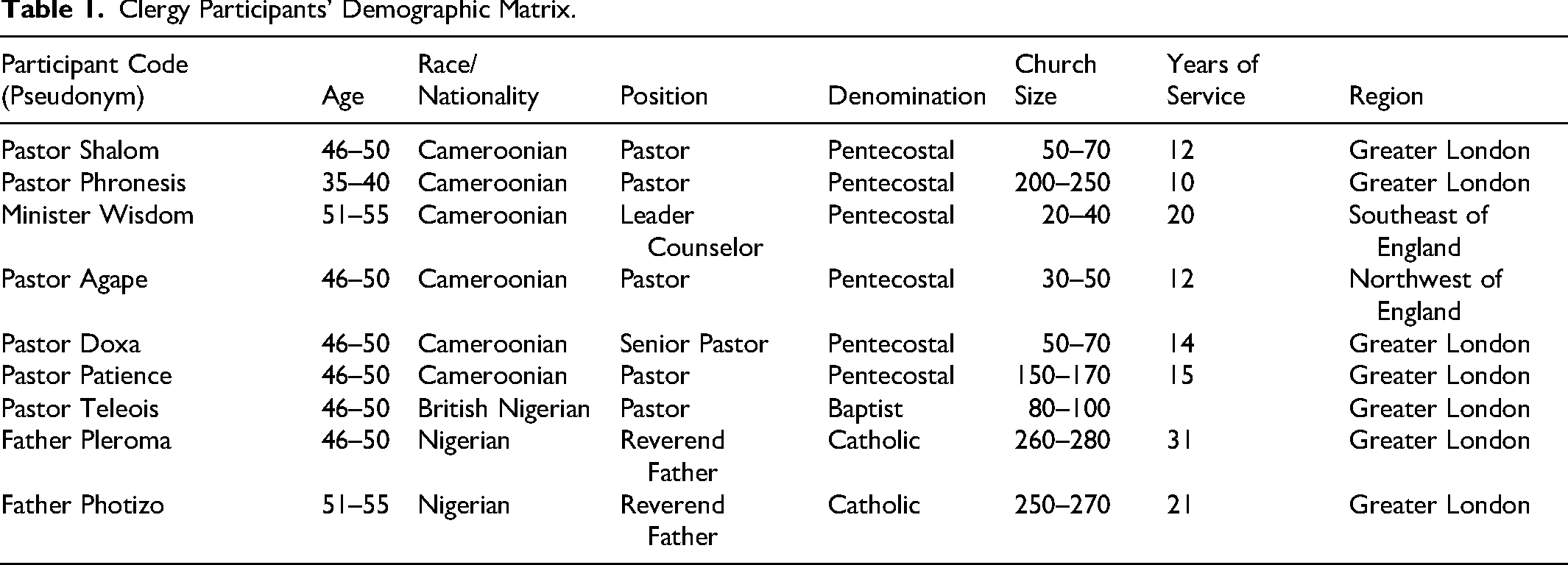
There were six Cameroonians and three Nigerians, including six Pentecostals, one Baptist, and two Catholics. Additionally, seven were male, and two were female, reflecting the male-dominant nature of pastoral ministry in Pentecostal, Baptist, and Catholic churches (Campbell-Reed, 2017; Slater, 2019). Their years of service ranged from 10 to 28. Seven clergy served in both Africa and England, while two served exclusively in England. Congregation sizes ranged from 30 to 250 members, with most congregants being Sub-Saharan Africans, and a minority comprising North Africans, Asians, British, and Europeans. All Pentecostal clergy held additional professions alongside their pastoral ministry, whereas Baptist and Catholic clergy served full-time. Pseudonyms were used to protect confidentiality.
Ethical Considerations
This study was approved by the College of Health and Life Sciences Research Ethics Committee (approval no. 18008-MHR) in March 2020. All participants gave informed written consent to participate in the study and were informed of their right to withdraw their consent at any time. They were provided with pseudonyms to ensure confidentiality.
Procedure
The lead author collected the data between June and December 2020. Due to the COVID-19 pandemic and lockdowns, in-depth, semi-structured, non-contact interviews were used to collect data. Participants were interviewed online via Zoom. An interview guide was used to help the clergy give a detailed account of their experiences (Smith et al., 2009). The guide was developed following a literature review on Christianity and IPV.
Each interview started with the question, “What are Cameroonian and Nigerian clergy's understandings of IPV?”
In order to explore this question, the researcher asked the following sub-questions:
How do clergy describe IPV? What are the causes of IPV?
The interviews were audio-recorded and lasted between 45 and 90 min. After the interviews, participants were allowed to debrief, but they did not require it. They were provided with contact information for support if later required.
Data Analysis
The recorded interviews were transcribed verbatim and analyzed following the IPA's six steps to analysis: reading and rereading, initial noting, developing emergent themes, searching for connections across emergent themes, moving to the next case, and looking for patterns across cases (Smith et al., 2009). The data collection and analysis occurred before the changes in terminology outlined in Smith and Nizza (2021). The lead author read and reread each transcript multiple times while listening to each audio recording to ensure the participant is the focus of the analysis, recollects the interview experience, and understands the narrative. Then, the author entered an analytical dialogue with each line of the transcript, making descriptive, linguistic, and conceptual notes while commenting on the similarities and differences of the narratives. The lead author transformed the notes into succinct emergent themes grounded in the data. She discussed the themes with co-authors. A connection across the emergent themes led to the construction of superordinate and subordinate themes for each participant. Steps 1–4 were repeated for the remaining transcripts.
Finally, the author compared the cases to consider the participants’ similarities and differences and produced a master table of superordinate and subordinate themes across participants. The data analysis was an iterative and inductive process that uncovered the meaning of the experiences of clergy in supporting ACW survivors of IPV. As part of the interpretative process, the lead author kept a reflexive journal to remain accountable for any potential bias.
Methodological Integrity
Levitt et al. (2017) state that the methodological integrity of qualitative research can be evaluated through two composite processes: fidelity to the subject matter and utility in achieving research goals. They described fidelity to the subject matter as when the researcher selects procedures that develop and maintain a commitment to the phenomenon under study within an appropriate inquiry approach. Furthermore, they describe the utility of achieving research goals as the researcher selecting procedures that successfully answer the research questions and address the research aims. We used semi-structured interviews, field notes, and reflexive journals in order to understand the clergy's experiences in supporting ACW survivors of IPV.
We used the following strategy to enhance the credibility of this study: prolonged engagement, triangulation, member checking, peer debriefing, reflexivity, and audit trail (Creswell et al., 2018; Smith et al., 2009; Smith et al., 2022). The interviews lasted between 44 and 90 min. All clergy participants requested excerpts of their transcripts for validation. The transcripts were emailed to them; five participants validated their transcripts, and four did not reply.
Findings
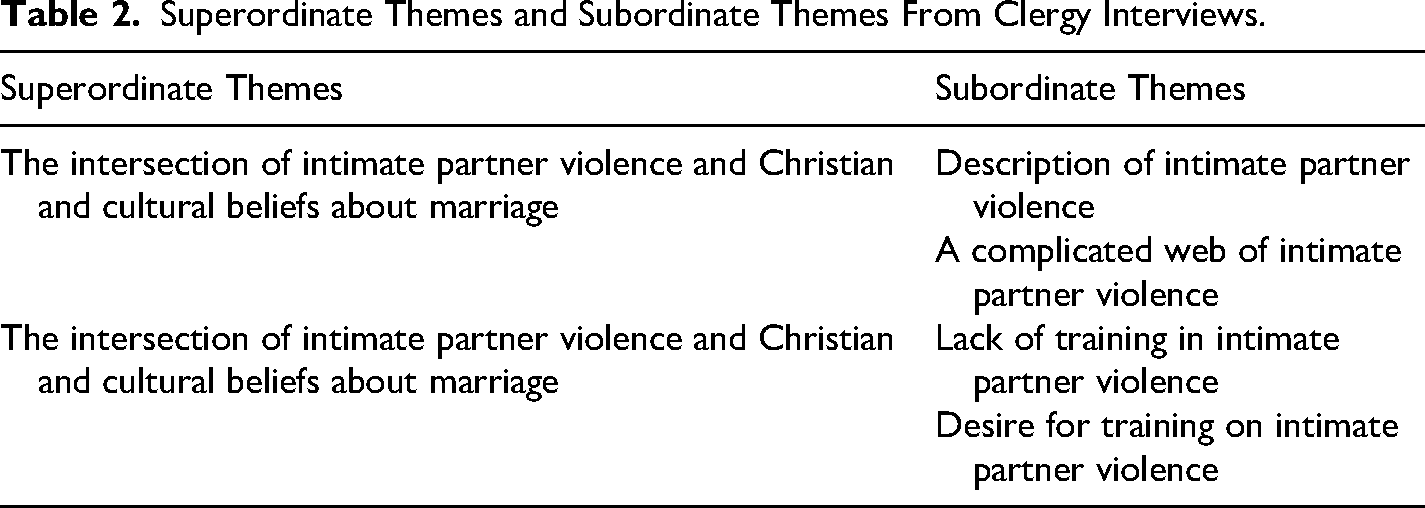
Two superordinate themes emerged from participants’ narratives: (1) the intersection of IPV and Christian and cultural beliefs about marriage and (2) lack of knowledge of IPV (Table 2). These themes are presented below, explained, and supported with direct quotations from the participants in order to capture their voices.
Superordinate Themes and Subordinate Themes From Clergy Interviews.
Superordinate Theme 1: The Intersection of IPV, Christian, and Cultural Beliefs About Marriage
This superordinate theme emerged because all the participants demonstrated their understanding of IPV as the intersection of IPV and Christian and cultural beliefs about marriage. They described the types of IPV and their complexity in the African Christian community. Clergy's understanding of IPV in the Christian context underpins the support they provide African women who have experienced IPV (Nason-Clark et al., 2018). Therefore, an African clergy's personal, professional, and theological background will shape their understanding of IPV.
Two main subthemes further highlight this superordinate theme. The first subtheme, the types of IPV, explores how the participants describe the types of IPV. The second subtheme, a complicated web of IPV, describes the intersection of the individual, Christian, and cultural beliefs around marriage and acculturation associated with IPV. These findings are discussed below.
Subtheme 1A: Description of IPV
Participants described the types of IPV experienced by ACW based on their experiences supporting these women. They described coercive control, physical, spiritual, emotional, verbal, financial, and sexual abuse and neglect. Their description aligns with the World Health Organization’s (2021) description of IPV, the Domestic Abuse Act 2021 (Government, United Kingdom, 2022), and the Church of England (2017).
Participants had a shared understanding that the underlying cause of most violence in intimate partner relationships is that the abusers feel the need to control, manipulate, coerce, and oppress their wives. Pastor Teleios’ account is an example of participants’ descriptions of IPV as coercive control: …it has to do with sort of oppression that comes from a partner, either to manipulate, coerce or … to be very, very violent in that sense, that the woman feels she has no other options but to stay in that relationship. (Pastor Teleios, 32–35)
Pastor Teleios’s comment provided valuable insight into the challenges that some women face when trying to leave abusive relationships. All participants demonstrated an understanding of manipulation and coercion within a Christian context by discussing spiritual abuse. They described spiritual abuse as a misinterpretation of biblical scriptures related to male headship and wifely submission, used by men to control and manipulate their wives or to maintain them in abusive situations. For example, Pastors Agape and Doxa, both male Pentecostal clergy, stated: In Ephesians Chapter Five, from verse twenty-one, the verse says to submit to one another. They [African Christian men] like to use verse twenty-two, the woman submits to the man. That's where they stop. But the verse before says to submit to one another (Pastor Agape: 188–190). They misuse the scripture about submission. (Pastor Agape: 257) …those [African Christian men] who tell you that Christ is the head, and so too is the man who is the head of the family … what they forget to tell you is that Christ is the head of the church, and the church is that wife for whom He sacrificed himself. So, in other words, men are supposed to sacrifice themselves for their wives. (Pastor Doxa: 271–274)
Pastors Agape and Doxa noted that some African Christian men proof-text and misinterpret Ephesian 5:21–25 of the Bible to endorse dominance and control over their wives and justify abuse against their wives. This mindset leads them to think they are divinely appointed as the heads of the household, resulting in attempts to manipulate or coerce their wives into submission when they perceive it to be lacking. Such beliefs arise from misunderstanding biblical teachings on mutuality, equality, and the husband's role in demonstrating Christ's sacrificial love.
Participants articulated various forms of abuse and concurred that one type of abuse could lead to others. For instance, Pastor Shalom, a Pentecostal male clergy, illustrated how one form of abuse can escalate into additional forms. …the first one was an example where let me call her Lady X … Her husband was kind of a leader in the church as well. So, she called me, and she said this is the problem … when he gets angry, he is verbally abusive … he would insult her, insult her in front of her family … just called her a prostitute and stuff like that … sometimes it would escalate to physical abuse. (Pastor Shalom: 27–32)
Pastor Shalom's extract above demonstrated his understanding of the progression of abuse from verbal to emotional and physical abuse and its impact on the woman and her family. During the interview, he expressed the view that derogatory words such as “prostitute” usually destroy a woman's confidence and self-esteem and affect other aspects of her life. Additionally, the woman's family may experience emotional trauma as they witness the abuse. He emphasized that the woman's husband is a leader in the church, indicating that church leaders are not immune to perpetrating IPV. Likewise, Pastor Doxa also stated: I have different cases where you wouldn’t believe that pastors who are separate [due to IPV]. You know what I am saying? It's crazy! (Pastor Agape: 157–158)
Pastor Agape is frustrated and disappointed with pastors who engage in abusive behaviors. He believes clergy should uphold biblical standards of marriage. However, when clergy lack an understanding of biblical teachings on marriage and IPV, they risk becoming abusers, which harms their congregations. This situation leads to inadequate support for women and children facing abuse, as these pastors may fail to recognize IPV or view their behaviors as normal. Consequently, congregants remain uninformed about abuse, and women may be reluctant to seek help. Most clergy have reported instances of financial abuse, sexual abuse, and neglect. Father Photizo, a Catholic priest, provided a notable example of financial and sexual abuse combined with neglect in his account below: …a lady came to me. She is married, and they have three or four children. She said her husband does not want to provide anything in the house. The only way the man will provide anything is when he has sex with the woman. And when the woman is not ready for sex, physical abuse comes in. (Father Photizo: 337–340)
Father Photizo's account revealed how the lady's husband used a “web of control” of financial tactics, neglect, and physical violence over his wife's sexual decision-making. Sexual abuse in marriage is more complex for people to believe and understand, especially in a patriarchal culture. Therefore, clergy's understanding of sexual abuse is crucial, as they can raise awareness in their congregations and offer support to women who have experienced such abuse.
Subtheme 1B: A Complicated Web of IPV
Participants described the causes of IPV as a complicated web of individual, Christian, cultural, and acculturation factors. They agreed that the dominant male culture and the misinterpretation of the biblical scriptures on male headship are the leading causes of IPV in the African Christian community. Participants identified the individual causes of IPV as ignorance, intergenerational, and communication problems. Culturally, they identified a culture of male dominance and family involvement. From the Christian perspective, the misinterpretation of biblical scriptures on headship and submission, poor relationship with God, interdenominational and mixed marriages, and spiritual sins were other factors. Additionally, stress and frustration from the process of acculturation contribute to IPV. Throughout their narratives, the participants emphasized that IPV in the African Christian community results from the intersection of these factors rather than solely from Christian factors.
Many participants identified individual factors that contribute to IPV. While some noted that men's ignorance plays a role, others highlighted that women's ignorance can also be a contributing factor. For instance, Pastor Doxa's account below illustrates the relationship between IPV, ignorance, and lack of knowledge of IPV: …the men themselves are not educated to know that these particular things that they are doing are … punishable by law … it has an effect over their partners … the women themselves are not educated enough to know that there are solutions, there are ways for them … to get out of … those shackles. (Pastor Doxa: 126–130)
Pastor Doxa pointed out that many African Christian men and women lack awareness of IPV. In some Sub-Saharan African patriarchal cultures, IPV is often accepted as a norm (Muluneh et al., 2020; Takyi & Lamptey, 2020). When individuals from these cultures migrate to the United Kingdom without a proper understanding of IPV, they may continue to engage in these harmful practices, which can lead some women to remain in abusive relationships for longer periods. This situation underscores the urgent need for greater awareness of IPV within the African Christian community.
Similarly, Pastor Phronesis highlighted the connection between witnessing violence in childhood and the increased likelihood of perpetrating violence in adulthood and marriage: I will classify that some will be coming from the upbringing … if you come from a house where … you have seen where your mother has been beaten, or your uncle beating his wife. (Pastor Phronesis: 90–92)
Some men raised in abusive environments view violence as a normal way to resolve relationship conflicts, leading them to carry these behaviors into their marriages. Recognizing the intergenerational causes of IPV can help clergy support couples more effectively during pre-marital counseling by identifying and addressing abuse histories.
Participants reported that some African Christian men who lack accurate contextual interpretation and understanding of the biblical scriptures on marriage and relationships are more likely to control and manipulate their wives or partners than those who have accurate contextual interpretation and understanding of the biblical scriptures on marriage and relationships. Furthermore, these men are likely to use their patriarchal beliefs and practices to substantiate their misinterpretation of these scriptures, and vice versa, as expressed below by Pastor Teleios, a Baptist: The beauty of Christianity is that it lends itself to contextualism … so you always have to incarnate Christianity in culture. But I suppose the problem with that is, what would be the limit umm of how far culture goes with Christianity? What practices do we take from that culture? Which is healthy, and which is not healthy? (Pastor Teleios: 127–131)
Pastor Teleios acknowledged the impact of contextualization in Christianity. This process involves making the word of God and Christian teachings relevant to people's cultural contexts without altering the core message (Ejenobo, 2014). He pointed out that every culture has both valuable practices that align with biblical teachings and harmful practices that may lead to IPV, especially in marriage. His account highlights the important role of clergy in teaching God's word and guiding congregants to embrace healthy practices while rejecting harmful ones.
Father Photizo, a Catholic priest, and Pastor Patience, a Pentecostal female clergy, eloquently described how some of these African Christian men misuse the Bible to substantiate their cultural beliefs: …even in our African perspective too, it comes into play whereby the man also goes with that domineering attitude … And then autocratic attitude, and then sometimes a dictatorship attitude, to say: I am the head of the house, you must obey me. And then the man uses the … Bible to substantiate his stance. (Father Photizo: 253–261) …again, it's all interwoven into this where I spoke about it on the religious side. But I think a lot of our African cultures embrace that distorted image of the religion, umm, of what the Bible says woman submit. Back at home, our cultures are that the woman submits. (Pastor Patience: 161–163)
Father Photizo and Pastor Patience highlighted the intersection of cultural beliefs around marriage and Christianity, noting that some men misuse biblical scriptures to justify their cultural beliefs. Pastor Patience succinctly articulated this intersection of Christian and cultural factors around marriage as “distorted Christianity.” When women challenge these norms, fail to comply, or refuse to submit, some men may resort to violence as a means of asserting their dominance.
Minister Wisdom, a female Pentecostal clergy, highlighted other Christian contributory causes of IPV. She noted that interdenominational marriages, where Christians from different denominations marry, as well as mixed marriages between Christians and non-Christians, can lead to IPV due to differing beliefs. Her insights emphasize the importance of pre-marital counseling in interdenominational and mixed marriages, where issues such as church attendance and belief differences can be addressed to help prevent IPV.
Some participants reported the intersection between acculturation and IPV. They articulated that in many African cultures; men are traditionally seen as the primary earners and providers for their families. However, on migration to the United Kingdom, these perceived gender roles are reversed. Women become financially stronger than their husbands, take on more financial responsibilities, and have financial freedom; some husbands perceive this as threatening their traditional roles as their families’ providers and financial and decision-makers. As a result, they resort to abuse to assert their perceived authority. For example, Pastor Patience stated: …they [ African Christian men] find out that they can’t get the kind of job. For example, somebody has studied back home in Africa, to be maybe a medical doctor, coming over here the transition program is very difficult. The conversion program to become a medical doctor here is difficult (Pastor Patience: 338–341). So, that frustration builds up, and the people most intimate with you are the people at home, and especially if your wife seems to be doing well. Especially in the case where the woman has come ahead, already settled and is doing well, and all those little jealousies, you know, can come in. You see, the man may feel threatened by his position as the head of the home, providing for his family. (Pastor Patience: 356–360)
Pastor Patience cited acculturation factors contributing to IPV. These factors include difficulties in securing desired jobs, integrating into UK culture, and the dynamics of a wife moving to the United Kingdom before her husband, along with their financial responsibilities. Another clergy, Pastor Agape, pointed out a link between Westernization and IPV. He noted that when a wife has a high level of acculturation, her husband may experience feelings of inadequacy and insecurity. He referred to this as an “inferiority complex.” As a result, the husband may resort to violence as a means of asserting control and maintaining a sense of security. This highlights the need for clergy and service providers to create culturally sensitive IPV prevention programs that support healthy acculturation and reduce violence.
Pastor Shalom's comment summarized participants’ understanding of IPV in the African Christian community in England: I mean, if you take a complicated web … I am in a church that is mainly African. One, you have to deal with the fact that they are Africans and also living in Europe, so that conflict of okay, we Africans, we are living in Europe. One person thinks we’re living in Europe; we have to behave like people who live in Europe. The other person thinks we live in Europe, but we’re Africans … And then you now have the cultural aspects as well there. And then you have the Christian thing … and the individual personalities. So, when you get all that mixed up, it's a complicated web. (Pastor Shalom: 429–440)
Pastor Shalom succinctly described IPV in the African Christian community as an intersection of cultural beliefs, acculturation, Christian beliefs, and individual personality. His account indicates the complexity of IPV in the African Christian community—a “complicated web.” Recognizing this complexity is crucial, as it necessitates an intersectional approach to addressing IPV within the African Christian community.
This finding revealed that unlike previous research, which often reported clergy denial or minimization of IPV, these clergy acknowledged the presence of IPV within their congregations and responded using a range of approaches, including prayer, Christian counseling, and referrals to professionals. The findings suggest either a self-selection bias, since only clergy with experience supporting ACW survivors of IPV participated in the study or broader shifts in the awareness of IPV within African church communities in England. Such changes may be attributed to increased exposure to survivor experiences, participation in workshops on IPV, and ongoing media discussion about the rise in IPV rates during the COVID-19 pandemic and lockdown period.
Superordinate Theme 2: Lack of Knowledge on IPV
CN clergy recognized the issue of IPV in the African Christian community. However, they feel inadequately prepared to address it due to a lack of training. They expressed a desire for training on IPV to address it effectively. Further details on these findings are discussed below.
Subtheme 2A: Lack of Training on IPV
Most participants reported a lack of formal training and adequate knowledge regarding IPV, which hindered their ability to address it effectively. A gender disparity emerged among Pentecostal clergy: all female participants had completed IPV-specific workshops as part of their professional development, equipping them with the knowledge and confidence to respond to IPV.
In contrast, none of the male Pentecostal participants had received such training; their experience was confined to general domestic violence and abuse seminars, which did not provide the same depth of IPV content. This gender difference in IPV training seems to stem from the female clergy's professional backgrounds outside the ministry, rather than from differences in ministry roles or institutional expectations. There was a divergence in experience among the Catholic participants; one had received specific training on IPV, while the other had not received any training.
Pentecostal clergy noted that IPV training was not included in their theological education. Pastor Shalom further elaborates on this issue. …I attended the School of Ministry in [X], where I did a diploma for a year … I did a master's in theology as well … I did a course in general counselling, but I don’t think that it was specifically on domestic violence or intimate partner violence. (Pastor Shalom: 8–15) Personally, I don’t think I have all the knowledge I need to handle it effectively. And I know a lot of pastor friends who don’t have that degree of knowledge and experience to be able to handle it as well. (Pastor Shalom: 634–636)
Pastor Shalom highlighted ministry and theological educators’ failings to train and equip clergy with adequate knowledge of IPV. When theological education does not prepare clergy with the necessary knowledge and skills to recognize and address IPV, Christian women who have experienced IPV are at risk of receiving inadequate support. During the interview, Pastor Shalom expressed his appreciation of this research and hoped the findings would benefit the African Christian community. Other participants expressed a similar viewpoint.
There was a divergence of opinion among the Catholic participants regarding training on IPV: Umm, not apart from safeguarding … issues with safeguarding and that [intimate partner violence] also are inclusive (Father Photizo: 4–5). We’ve done the safeguarding but not on this very part [intimate partner violence]. (Father Pleroma: 821–822)
Father Photizo believed that the safeguarding training addresses IPV because adult safeguarding training usually includes training on domestic abuse and brief training on IPV. Father Pleroma did not consider the training on domestic violence and abuse during the safeguarding training adequate for addressing IPV effectively. Although there is an overlap between adult safeguarding and domestic abuse, they are separate in their scope. The divergence between the Catholic participants in training on IPV reveals inconsistencies in the training that should be addressed. From the extracts above and the transcripts, it is evident that a lack of training on IPV persists among African Christian clergy due to the absence of IPV-focused modules in their theological curriculum.
Subtheme 2B: Desire for Training on IPV
All participants expressed their desire for training on IPV. They acknowledged the importance of acquiring more knowledge and understanding of IPV in order to effectively address it. They specifically requested workshops and seminars focused on IPV. Additionally, they noted that clergy should not rely solely on prayer and the Holy Spirit to address IPV in the African Christian community. Pastor Shalom's comments emphasize the need for pastors to receive training on IPV: One of the things I believe so much since we are mainly in the Pentecostal and charismatic settings, we tend to believe that we are like a carpenter who has a hammer that solves all the problems. You just need to hammer the problem with prayer, and it will go (Pastor Shalom: 584–586). It's an area we can’t say because we have the Holy Spirit, we have all the knowledge like that. We need that training to understand certain things that God has put into place that we need to understand … I perceived that there is a need to train leaders in the African community, especially churches that are to deal with Cameroon and African communities. So, they can know how to handle some of these things. (Pastor Shalom: 618–630)
Pastor Shalom emphasized the vital role of the Holy Spirit as a teacher for Pentecostal and Charismatic Christians, guiding them in all aspects of life. However, he highlighted the importance of formal training for clergy in addressing issues like IPV. While the Holy Spirit can help recall learned knowledge, having a solid foundation through training equips pastors to manage such sensitive situations effectively. By prioritizing IPV education, church leaders can create safer and more supportive communities. This initiative could inspire other leaders to seek out similar training opportunities. Furthermore, Pastor Doxa voiced the need for comprehensive training for pastors and their congregations: Simple, in every community, like in our church, you can come to our church and do it. And I am a leader in a big association of [X] pastors in the UK. So, you go to such groups, and you make them available. You work with a group like that one and ask them to bring their men for the conference … and teach the men. And then ask the women to come to the conference and teach the women. (Pastor Doxa: 825–829)
Pastor Doxa believed that to address IPV in the African Christian community effectively, pastors and congregations need training on this issue. Cultural stereotypes are the cultural factors of male dominance and female subordination that contribute to IPV and need to be confronted in order to address IPV effectively in the African Christian community. His desire for clergy and congregations to receive IPV training is evident as he wants to leverage his leadership role in the association of pastors to raise awareness of IPV.
Some participants suggested that the congregation should regularly train on IPV, and that clergy should actively participate in seminars and conferences on IPV. For instance, Father Photizo states: The church could also be having a seminar on that [IPV] periodically because it is prevalent in the church and modern society today. (Father Photizo, 1250–1251) …for ongoing seminars or academic conferences, it is important that you guys also invite the religious people so that we would also participate and even give our discussion from the religious perspective on this [IPV]. (Father Photizo, 1234–1238)
Father Photizo recognized that the church is a growing organization with a continuous influx of new members. Therefore, regular IPV seminars will help new members receive training on the topic while allowing existing members to refresh their knowledge. This approach serves as an effective strategy for preventing IPV within the Christian community. For Father Photizo, learning is a two-way process. Therefore, clergy can share their Christian perspectives on IPV and their experiences supporting Christian women survivors of IPV, while professionals can gain knowledge to better assist these women. This collaboration allows clergy to be acknowledged for their spiritual expertise and actively participate in IPV training.
Discussion
This study contributes to the growing body of knowledge on the intersection of Christianity and IPV by gaining unique insight from CN clergy's understanding of IPV. Study findings suggest CN clergy were able to describe the types of IPV, the individual, Christian, and cultural factors around marriage, and the acculturation factors that cause IPV. They acknowledged inadequate knowledge of IPV and desired training to address it effectively.
The research findings indicate that CN clergy had some understanding that the underlying cause of violence in an intimate relationship is power and control, coercion, and manipulation. This finding is consistent with previous research, where pastors expressed that IPV is rooted in the dynamics of power and control within relationships (Dyer, 2010; Houston-Kolnik et al., 2019; Peterson, 2009). In this study, clergy noted that some African Christian men misinterpret biblical scriptures on male headship and female submission to gain power over their wives and control, coerce, and manipulate their wives.
This misinterpretation of biblical scriptures on marriage can be evident in a congregation where the clergy's teachings promote male dominance and female submission. This finding indicates that clergy must accurately interpret these biblical teachings on marriage. Doing so will help both men and women apply these principles effectively, leading to healthier, violence-free relationships and reducing IPV. Consequently, theological institutions should include contextual interpretations in their marriage curriculum.
CN clergy report that IPV in the African Christian community is caused by factors such as individual, Christian, and cultural beliefs around marriage and acculturation. This finding confirms previous research in which clergy described individual, societal, and religious factors (Dyer, 2010; Houston-Kolnik et al., 2019; Shaw et al., 2022); cultural factors (Peterson, 2009; Raufu, 2019); and acculturation factors (Raufu, 2019) that lead to IPV. While these clergy reported the individual, Christian, cultural, and acculturation factors contributing to IPV, they did not highlight the intersection of these factors. This study builds on previous studies by emphasizing that IPV in the African Christian community is caused by the intersection of multiple factors rather than solely Christian beliefs. Understanding this complex relationship is crucial for developing more effective interventions and support systems within the community.
In this study, the understanding of IPV among clergy in the African Christian community aligns with the intersectional theoretical framework developed by Crenshaw in 1991. Crenshaw argues that IPV results from an intersection of multiple factors rather than being solely attributed to gender inequality. A male Pentecostal clergy described these interconnected factors as a “complicated web,” highlighting the complexity of IPV within the African community. Therefore, clergy should adopt an intersectional approach when addressing IPV, considering all contributing factors rather than focusing solely on gender or Christian beliefs. Most CN clergy reported a lack of adequate knowledge of IPV and training on IPV, which hinders their ability to address it effectively. Only two Pentecostal female clergy acknowledged receiving IPV training through their secular jobs. This finding is consistent with previous research that highlights the ongoing lack of training among clergy regarding IPV (Davis & Johnson, 2020; Mahomva et al., 2020; Nevhutanda, 2019; Shaw et al., 2022; Tedder & Smith, 2018). In this study, clergy recognized that their limited training reduces their effectiveness in addressing IPV in their communities. In response, they expressed a desire for further training on IPV to improve their responses. Additionally, they recommended that the African Christian community receive training on IPV to better support ACW survivors. The clergy believes that such training would raise awareness of IPV, break the silence surrounding IPV, and create an environment where women feel safe to disclose their experiences and seek the help they need.
Limitations of This Current Study
This study contributes valuable insights but also has limitations, so conclusions should be drawn with caution. The sample was purposively selected from Pentecostal, Baptist, and Catholic churches in England. Consequently, the findings are limited to the African clergy from these denominations. Additionally, there was an overrepresentation of Cameroonian clergy over Nigerian clergy, Pentecostal clergy over Baptist and Catholic clergy, and a higher number of male clergy than females in our sample. These disparities arose due to difficulties in recruiting from Baptist and Catholic denominations and other African countries. Hence, the findings may reflect more of the views of the male and Pentecostal Cameroonian clergy. However, the idiographic nature of IPA ensured that each clergy's voice was heard and represented.
Implications for Practice, Policy, and Future Research
This study has addressed a vital gap in the literature by providing new evidence and in-depth insights on the intersection of Christianity and IPV in England. Arguably, it is one of the few studies that have examined the relationship between Christianity and IPV in England from conservative CN clergy.
The findings are relevant for the Christian community, domestic violence services, and policymakers.
Clergy and their congregations need training on IPV and interpreting biblical scriptures related to marriage. Additionally, training should be offered across various groups, including men's, women's, youth's, and children's, to ensure broad awareness. Service providers of IPV services should take the lead in the training on IPV, with clergy facilitating it within the African Christian and wider African communities. Joint seminars and workshops can be organized for clergy to share their biblical and cultural perspectives on IPV, contributing to developing appropriate solutions.
Policymakers should adopt an intersectional approach when developing IPV policies for the African Christian community. The government can, therefore, sponsor training on IPV for African clergy and their congregations to increase their knowledge of IPV and thus prevent and intervene in IPV. For instance, in Western Uganda, Boyer et al. (2022) showed that incorporating a church-based curriculum emphasizing the reinterpretation of scriptural passages concerning male dominance, the advancement of gender equality, and the training of clergy to model equitable behavior into standard marital counseling led to more balanced power dynamics and greater reductions in violence than intensive secular programs. Couples also experienced significant improvements in trust, intimacy, and communication. These findings underscore the effectiveness of tailored Christian relationship training for clergy and the broader faith community in preventing IPV.
Further research should evaluate the effectiveness of training clergy and their congregations by evaluating knowledge and attitudes before and after the training. Furthermore, future research should explore the experiences of clergy from diverse African countries who support ACW survivors of IPV. It should also examine how the length of clergy's stay in England influences their understanding of and response to IPV.
Conclusion
The study provides a unique contribution to the literature on Christianity and IPV by presenting the first known phenomenological approach to explore the CN clergy's understanding of IPV in England. Clergy in this study described IPV as the intersection of IPV, individual factors, and Christian and cultural beliefs around marriage and acculturation. The findings indicate the complexities of IPV and the need for clergy to adopt an intersectional approach to addressing IPV. This research has the potential to inform intervention approaches that provide comprehensive and holistic care to ACW survivors of IPV.
Footnotes
Acknowledgments
The authors would like to thank the participants for contributing to this study.

Ethical Considerations
This study was approved by the College of Health and Life Sciences Research Ethics Committee, Brunel University London (Approval No. 18008-MHR; March 2020).
Consent to Participate
Participants provided written informed consent prior to taking part in the interviews.
Consent for Publication
Participants provided written informed consent for publication of the study findings.
Funding
The authors received no financial support for the research, authorship, and/or publication of this article.
Declaration of Conflicting Interests
The authors declared no potential conflicts of interest with respect to the research, authorship, and/or publication of this article.
Data Availability
The datasets generated and analyzed during the current study are not publicly available for 3 years to allow for the publication of a series of articles but are available from the corresponding author on reasonable request.