






Abstract
Keywords
In the United States, sexually transmitted diseases (STDs) have increased for three consecutive years with more than 20 million new STD case reported annually (Centers for Disease Control and Prevention [CDC], 2017). The adolescent population, 15 to 24 years old, represents nearly 50% of these 20 million cases, costing 8 billion dollars (Owusu-Edusei et al., 2013). Adolescent sexual risk behavior places the adolescent at a higher likelihood of mood disorders (e.g., anxiety, depression) and impulse control disorders (U.S. Department of Health & Human Services, 2017a). Thus, adolescent adverse sexual health outcomes represent an urgent need for prevention and intervention. By addressing adolescent sexual risk behavior, psychiatric nurses promote positive mental and emotional well-being.
Adolescent sexual risk behavior is a major objective for national health priorities and is consistent with the Office of Disease Prevention and Health Promotions’ Healthy People 2020 initiative (CDC, 2017; Owusu-Edusei et al., 2013; U.S. Department of Health & Human Services, 2017b). Among the Healthy People 2020 goals are objectives to reduce the proportion of adolescents and young adults with STDs (U.S. Department of Health & Human Services, 2017b). As a behavioral health priority, therefore, adolescent sexual risk is a primary concern among psychiatric mental health nurses during the assessment, diagnosis, planning, intervening, and evaluating at primary, secondary, and tertiary levels of health care (American Nurses Association, American Psychiatric Nurses Association, & International Society of Psychiatric-Mental Health Nurses [ANA, APNA, & ISPN], 2014).
Late adolescents (ages 18-20), who are on the verge of a prolonged period of sexual exposure (Arnett, 2014; U.S. Department of Health & Human Services, 2017b), constitute a disproportionate share of STDs and national health-economic burden (CDC, 2017; Owusu-Edusei et al., 2013). For example, U.S. adolescents, 18 to 24 years of age, represent 26% of the sexually active population who are between the ages of 18 and 44 years (Copen, Chandra, & Febo-Vazquez, 2016). Yet, disproportionately, 18- to 24-year-old females represent 47% of the U.S. births (Martin, Hamilton, Osterman, Curtin, & Mathews, 2015). In addition, 81% of all new HIV diagnoses in the United States occur in individuals ages 20 to 24 (CDC, 2016a, 2016b). Because late adolescence represents a vulnerable population for STDs, the identification of protective factors that may reduce the late adolescents’ sexual-risk behavior and adverse behavioral outcomes is a national crisis and priority area for psychiatric mental health (PMH) nursing assessment, evidence-based interventions, and research.
No single theory identifies all factors that predispose adolescent sexual risk behavior (Zimmer-Gembeck, & Helfand, 2008) but identified factors in late adolescents include initiation or increase in sexual activity, inexperience with emotional relationships, and deficits in sexual-risk knowledge (Arnett, 2014; Daugherty & Copen, 2016). Both theory and numerous empirical studies have demonstrated that sexual issues knowledge and parent sexual communication are associated with adolescent sexual decision making and behavior (Albert, 2012; Jaccard, Dodge, Dittus, Feldman, & Rosenthal, 2002; Widman, Choukas-Bradley, Noar, Nesi, & Garrett, 2016; World Health Organization, 2007). In addition to parent sexual communication, parental influence on an adolescent’s autonomy has been cited as a potential intervention focus in reducing sexual risk behavior (Hardy, Dollahite, Johnson, & Christensen, 2015; Moilane, 2014). Autonomous (sustainable) motivation is demonstrated when one performs a behavior because it is personally valued (spontaneously from an internalization of values), and because one feels confident in achieving a chosen behavior and not because of external pressures (Deci & Ryan, 2012). Furthermore, both fathers and mothers have been found to be important in helping adolescents establish autonomy appropriately (Lansford, Laird, Pettit, Bates, & Dodge, 2014). However, there exist a paucity of research examining parental roles in communication and autonomy support related to sexual-risk behavior and knowledge in late adolescents. This deficit in knowledge identifies a gap that when filled can provide opportunities for the possibility of establishing new PMH nursing evidence-based interventions to reduce adolescent sexual risk behavior and improve mental health and emotional health outcomes.
To date, it remains unclear how parental communication about sexual-risk topics might increase late adolescents’ sexual-risk knowledge or help them avoid the negative aspects of sexual-risk behavior, raising the need to examine potential intervening variables affecting these associations. One possibility, for instance, is that parental sexual-risk communication may be more likely to lead to safer sexual-risk behaviors and greater awareness of these issues if the communications occurred within a healthy, supportive parent–child relationship. This assertion is closely aligned with the theoretical underpinnings of self-determination theory (SDT), which highlights the importance of parental autonomy support and autonomous motivation (Deci & Ryan, 2012; Deci & Vansteenkiste, 2004). SDT has been used to show that autonomous motivation (an achievement of the innate needs of autonomy, competence, and relatedness) is associated with healthy outcomes related to risky behavior (Deci & Ryan, 2012; Hardy et al., 2015; Williams, Niemiec, Patrick, Ryan, & Deci, 2009). In addition, adolescent autonomy combined with an interdependence (maintenance of a familial connectedness) was strongly suggested as having a connection to an adolescent’s health behavior in a concept analysis of autonomy and adolescence (Spear & Kulbok, 2004) citing the need for further research on this connection. This study provides preliminary evidence of the major and qualified position of the PMH nurse in achieving improved sexual health outcomes in adolescents through the application of motivational theory.
The Present Study
The present study examined a model testing factors of parent–adolescent sexual-risk communication, parent autonomy support, and adolescent autonomous motivation as predictors of adolescent sexual-risk behavior and knowledge (see Figure 1). Adolescent sexual risk behavior and knowledge provide opportunities for PMH nursing prevention and intervention in the reduction of negative mental health outcomes. The following hypotheses were advanced:

Model of parental sexual-risk communication, parental autonomy support, adolescent autonomous motivation, adolescent sexual-risk behavior, and adolesent sexual-risk knowledge.
Method
Participants
Eligibility criteria for this convenience sample of late adolescents’ participation in the study were the following: (a) must be either 19- or 20-years-old, (b) must speak and read English, (c) must be unmarried, (d) must not be a parent, and (e) must be enrolled at the institution during the academic year where the data were collected. The range for participation was estimated to be from 155 to 310 to achieve adequate power (Bollen’s rule; Bollen, 1989) and to allow for rejected surveys (i.e., both parents not living). Sample demographic characteristics are provided in Table 1.
Sample Characteristics (N = 249).
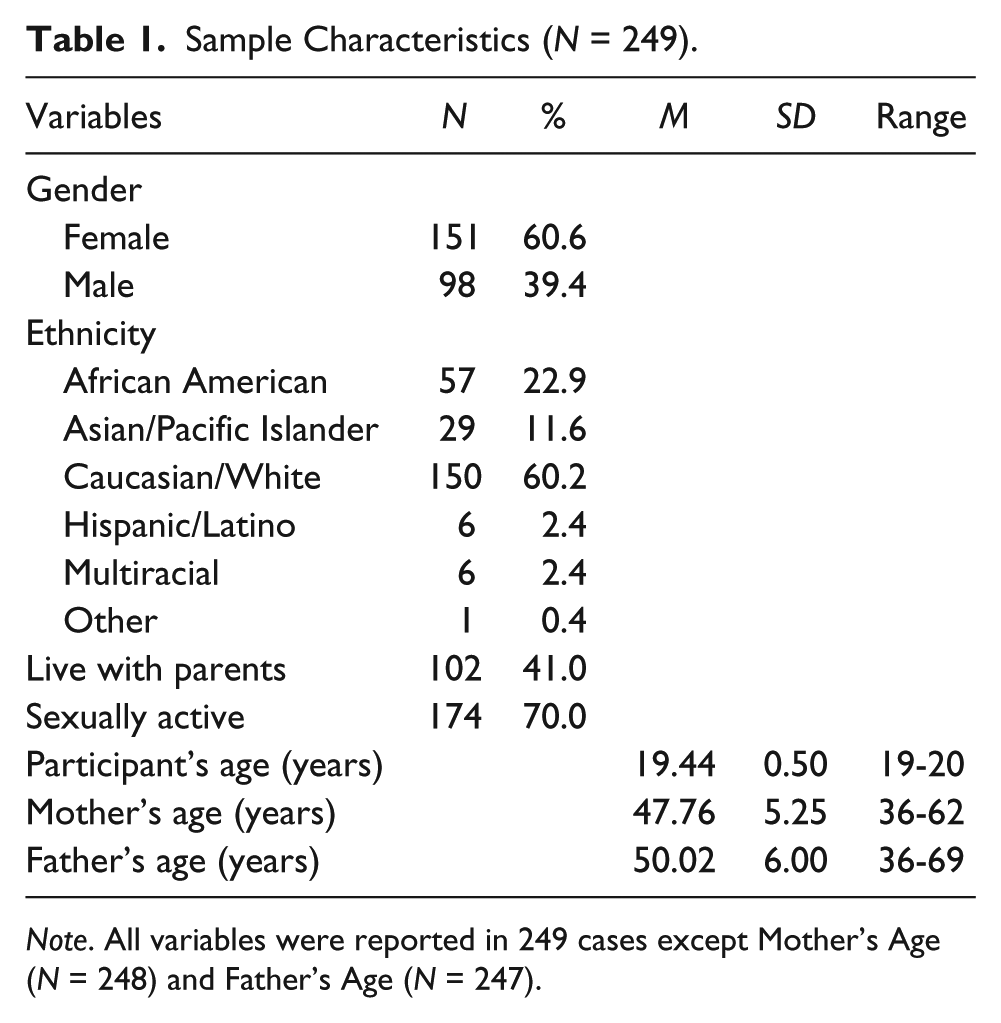
Note. All variables were reported in 249 cases except Mother’s Age (N = 248) and Father’s Age (N = 247).
Recruitment and Data Collection Procedures
Institutional review board for human use (IRB) approval (University of Alabama at Birmingham IRB Protocol Number X091222022) and site-specific agencies’ support letters were obtained prior to initiation of any data collection. Recruitment was accomplished from places on campus that 19- to 20-year-old college students were likely to gather, for example, library, common area outside the cafeteria or bookstore, and a recreation area. Participants responded to personal approaches, advertisements, or announcements. Due to the anonymous participation in this survey and the sensitive nature of the survey content, incentives were awarded in the form of a $5 food gift card from a commercial dining establishment that was in close proximity with the institution. A cover letter conveyed this study’s (1) purpose, (2) voluntary nature, (3) anonymity and confidentiality of responses, (4) no influence on student status or grades, and (5) no special treatment for participating. Consent was implied with completion. Surveys were collected anonymously to reduce the influence of social desirability and to foster honest and confidential responses (Waltz, Strickland, & Lenz, 2005). Data collection occurred over two semesters. Reasons the eligible individuals did not participate included not having the time and not wanting to participate.
Measures
The questionnaire contained six measures including the investigator-developed demographic questionnaire. The order of the surveys was arranged with the least sensitive items first and measures with the most sensitive items last. The instruments were selected based on their intended purpose, their relationship to the conceptual model for this research, their appropriateness for the age of the sample, and their psychometric properties. In the sections to follow, each measure is briefly described.
Demographics
The Demographics Questionnaire measured the variables of gender, age, race/ethnicity, current living arrangements, and current enrollment in the institution where the data were collected. In addition, the participant was asked to provide his/her mother’s age, father’s age, whether his/her mother or father were living or deceased, mother’s education, father’s education, mother’s occupation, father’s occupation, and biological parents’ marital status.
Parent–Adolescent Sexual-Risk Communication
The Parent-Teen Sexual-risk Communication Scale-III (PTSRC-III) is a self-report of the amount of sexual-risk communication the late adolescent received from their mother-figure and father-figure over the teen ages 10 to 18 years of age (Hutchinson, 2007). The PTSRC-III is a subscale of 8 items contained in a larger scale of 15-items that measured parent–adolescent sex communication. The 15 items are repeated for mother and father (a choice of alternative parent figures was allowed). Only the 8 items constituting the PTSRC-III were used in the data analysis of this study since the PTSRC-III focused on sexual-risks and negative outcomes.
Evidence for high internal consistency was found in testing of the measure among 18- to 21-year-old adolescents. Cronbach’s α for adolescents’ reports of mother–adolescent sexual-risk communication ranged from .93 to .94 across two studies, and the Cronbach’s α for adolescents’ reports of father–adolescent sexual-risk communication ranged from .88 to .94 (Hutchinson, 2002, 2007).
Parental Support of Adolescent Autonomy
The Perceptions of Parents Scales (POPS) concern the degree to which a parent provide what SDT considers an optimal parenting context (Deci & Ryan, 2012; Grolnick, Deci, & Ryan, 1997) and was developed initially for use in children (Grolnick, Ryan, & Deci, 1991). In this study, only scores from the parent’s autonomy support subscale of the college student version (Robbins, 1994) were used in the data analysis. This subscale consisted of 9 questions duplicated for mother and father with responses made on a 7-point Likert-type scale, ranging from 1 (not at all true) to 7 (very true). The Cronbach α for the mother and father subscales was .79 and .77, respectively.
Adolescents’ Autonomous Motivation
Adolescent autonomous motivation was assessed by an adaptation of the Treatment of Self-Regulation Questionnaire (TSRQ; Ryan & Connell, 1989; Williams, Grow, Freedman, Ryan, & Deci, 1996). The TSRQ assesses the extent to which someone engages in or changes certain health behaviors of their own volition because the behaviors are personally important to them rather than in response to external pressures. In the past, the TSRQ has been used to address specific health behaviors such as smoking cessation, diet, exercise, HIV treatment adherence, and alcohol use. The TSRQ was modified to address sexual-risk behavior in this study by following the guidelines developed by SDT theorist and researchers, one of whom was an author of the TSRQ (Deci & Ryan, 1985; Williams, Cox, Kouides, & Deci, 1999). The adapted TSRQ was titled TSRQ–Healthy Sexual Behavior for the purposes of this study.
The TSRQ (Ryan & Connell, 1989; Williams et al., 1996) consists of three subscales: autonomous motivation (6 items), controlled motivation (6 items), and amotivation (3 items). The 15 items were measured using a 7-point Likert-type scale with a range from “not at all true” to “very true.” The score from the autonomous items were used independently of the scores from the controlled and amotivation items in the present study. The scores on the autonomous motivation subscale had a range from 6 to 42, with higher scores indicating higher autonomous motivation. Cronbach’s αs of the measure were .89 and .88 for males and females, respectively.
Adolescents’ Sexual-Risk Knowledge
The STD-Knowledge Questionnaire (STD-KQ) was used to measure adolescents reported sexual-risk knowledge (Jaworski & Carey, 2007). The STD-KQ is a comprehensive measure of STD knowledge consisting of 27 items. Six of the most prevalent STDs are included in the items of this measure (i.e., chlamydia, genital herpes, gonorrhea, hepatitis B, HIV, and the human papillomavirus); a higher score demonstrated more knowledge about STDs. The range of possible scores was 0 to 27.
Reliability and validity was established through a series of five studies (Jaworski & Carey, 2007), and internal consistency reliability was good for the sample of male and female college students including late adolescents (Cronbach’s α = .86). Test–retest reliability over a two2-week period was acceptable (r = .88). Confirmatory factor analysis supported two factors of a cause/cure and general knowledge of STDs. Convergent validity was established (r = .64, p < .01) in a comparison of the measure with an HIV-specific knowledge questionnaire (Carey & Schroder, 2002).
Adolescents’ Sexual-Risk Behaviors
Sexual risk behaviors were assessed using the Adolescent Risk Inventory (ARI) Sex Risk subscale (Lescano et al., 2007). The ARI was derived from longer measures and has 20 items with seven subscales, three behavioral and four attitudinal subscales. The Sex Risk subscale’s range of scores was 7 to 16, with higher scores indicating higher sexual-risk behavior. Internal consistency reliabilities ranged from .53 to .80, including Cronbach’s α of .72 for the Sex Risk subscale. Analyses suggested that the ARI could be useful in quickly identifying the broad range of risk behaviors found among adolescents with psychiatric disorders.
Data Analysis
A quantitative, cross-sectional, descriptive, correlational design was used to examine the relationships among the variables: mother and father autonomy support, mother-adolescent and father-adolescent sexual-risk communication, adolescent autonomous motivation, adolescent sexual-risk knowledge, and adolescent sexual-risk behavior. Basic analyses were conducted in SPSS (SPSS Inc., 2005) including descriptive statistics, correlations, and a covariance matrix (correlation matrix available as a supplement). Mplus version 7.31 (Muthén & Muthén, 2012) was used to perform structural equation modeling (SEM) to examine the direct and indirect effects in the hypothesized model (see Figure 1). Because SEM generally requires at least three manifest (i.e., observed) variables for each latent variable (Kline, 2011), item parcels were generated as observed indicators to form latent variables for the model using the procedures recommended by Russell, Kahn, Spoth, and Altmaier (1998). Specifically, item parcels were created by performing an exploratory factor analysis in a one-factor solution for each instrument and interactively assigning items to respective parcels (Russell et al., 1998).
Results
Pilot testing was completed with a sample of 19- and 20-year-olds to determine the feasibility of study procedures, preliminary reliability of study measures, and variability of item responses. The pilot study analysis suggested that all measures had acceptable reliabilities. The dispersion of scores and internal consistency reliabilities of all measures were consistent with reports of other investigators. Therefore, the measures were deemed appropriate for use with university students and were retained for implementation in the larger study.
Descriptive Statistics
Means, standard deviations, and ranges for descriptive variables are given in Table 1. The sample (N = 249) was predominately female and Caucasian/White. Fifty-five percent of the sample was 19-year-olds and 45% was 20-year-olds.
Measures
Overall, this study’s measures’ scores were varied as evidenced by the respective means, standard deviations, range of scores, and internal consistency coefficient alphas (see Table 2). Means and standard deviations reflected close to full dispersions of all variables. Acceptable to excellent Cronbach alphas were also evident.
Measures’ and Their Statistical Properties.
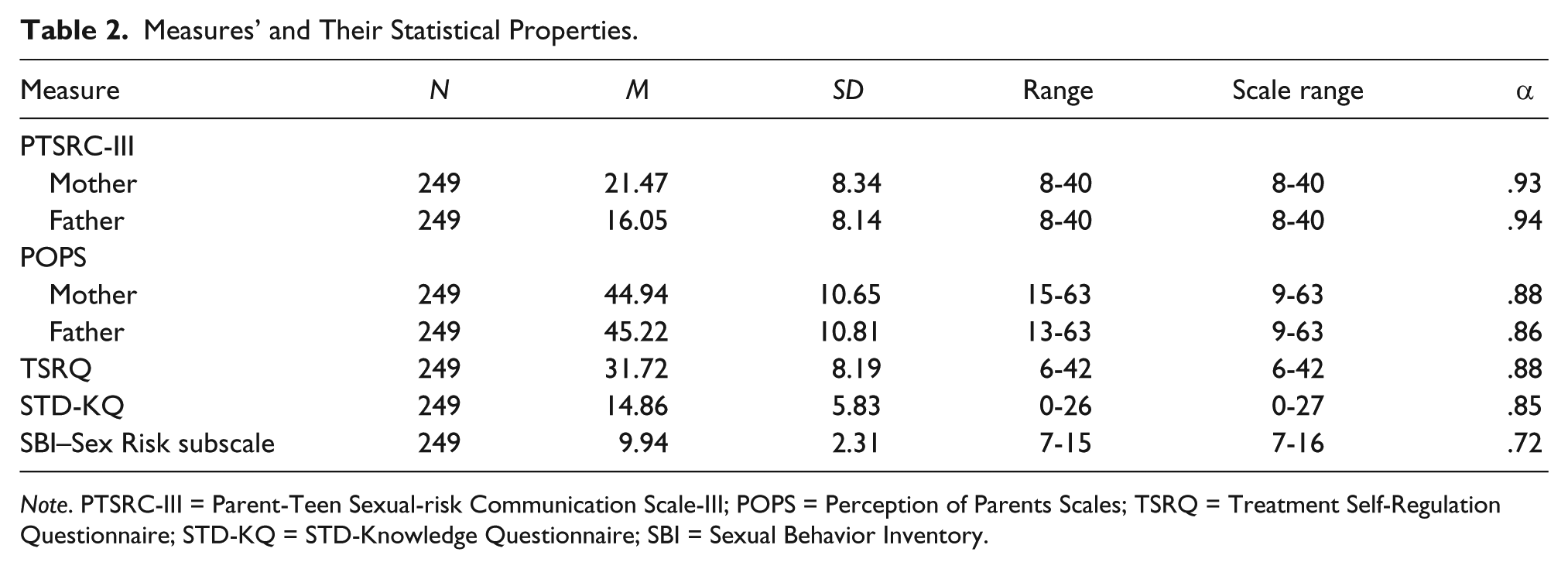
Note. PTSRC-III = Parent-Teen Sexual-risk Communication Scale-III; POPS = Perception of Parents Scales; TSRQ = Treatment Self-Regulation Questionnaire; STD-KQ = STD-Knowledge Questionnaire; SBI = Sexual Behavior Inventory.
Primary Analysis
A series of steps were followed to evaluate the hypothesized model following best-practice recommendations for SEM (e.g., Kline, 2011). First, a measurement model was examined to assess whether the latent variables had been adequately represented by their observed item parcels, as well as to determine the bivariate relationships between latent variables. Next, a structural model was used to estimate the regression weights of the hypothesized prediction paths. Following the examination of a structural model, bootstrap tests were then performed to determine the significance levels of the indirect effects hypothesized in mediated model. Because the preliminary analyses indicated that scores on most variables in the present study were skewed, a maximum likelihood estimator with robust standard errors (Muthén & Muthén, 2012) was used to address violations of normality.
Measurement Model
A confirmatory factor analysis was used to examine the measurement model. Across all models, the chi-square test statistic was significant; all other indices of fit were excellent: χ2(168, N = 249) = 267.72, p < .001, comparative fit index (CFI) = .97, TLI (Tucker-Lewis index) = .96, RMSEA (root mean square error of approximation) = .049 (90% confidence interval [CI; 038, .060]), and SRMR (standardized root mean square residual) = .04. Moreover, all the factor loadings were large in magnitude and statistically significant, indicating that each latent variable was appropriately measured by its respective item parcels (see Table 3).
Factor Loading of the Measured Indicators on the Latent Variables in the Measurement Model.
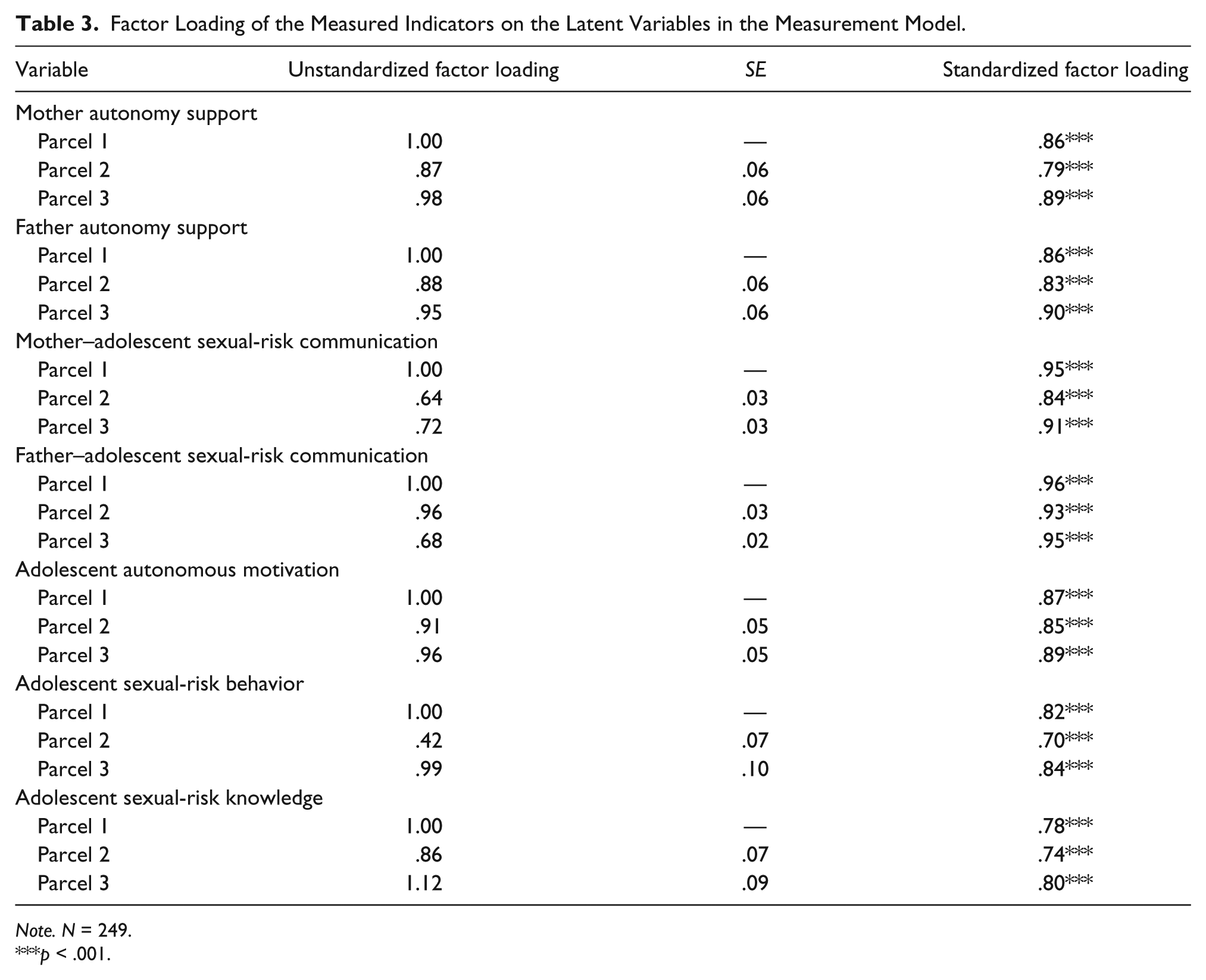
Note. N = 249.
p < .001.
The intercorrelation matrix between latent variables (see Table 4) revealed a significant negative bivariate correlation between adolescent autonomous motivation and sexual-risk behavior but not sexual-risk knowledge. Mother autonomy support was associated solely with mother adolescent risk communication, whereas father autonomy support was associated with risk communication from both parents, as well as adolescent autonomous motivation. Regarding risk communication, only mother-adolescent sexual-risk communication was associated with sexual-risk behaviors or knowledge.
Intercorrelations Among the Latent Variables in the Measurement Model.
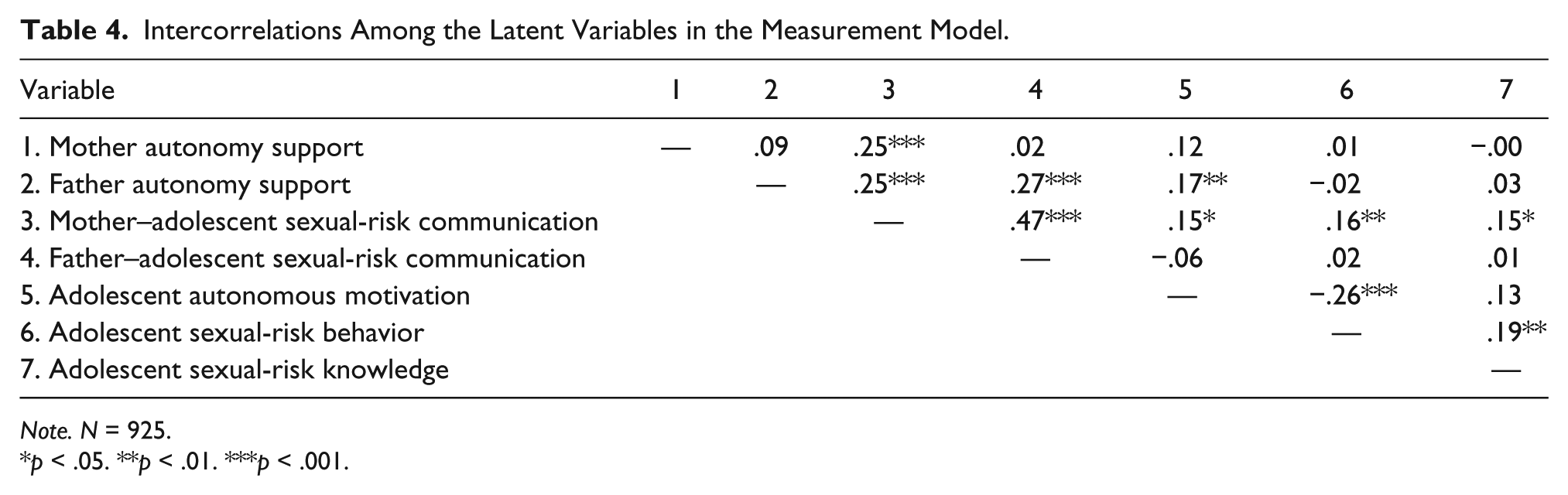
Note. N = 925.
p < .05. **p < .01. ***p < .001.
Structural Model
To test the proposed mediated structural model depicted in Figure 1, unidirectional prediction paths were specified. The model again evidenced a strong fit: χ2(168, N = 249) = 267.72, p < .001, CFI = .97, TLI = .96, RMSEA = .050 (90% CI = [.038, .060], and SRMR = .04. Several paths were nonsignificant in the structural model, and thus a more parsimonious model, in which the nonsignificant paths were constrained to zero, was examined against a model with all paths freely estimated. The results of the parsimonious model also indicated a good fit to the data, χ2(176, N = 249) = 272.87, p < .001, CFI = .97, TLI = .96, RMSEA = .047 (90% CI = [.036, .058]), and SRMR = .05. Moreover, a scaled chi-square difference test indicated that the model in which nonsignificant paths were removed was comparable to the model in which all paths were freely estimated, Δχ2(8, N = 249) = 5.60, p = .692. Thus, the more parsimonious model was retained for further analysis. The unstandardized and standardized path coefficients are depicted in Table 5. Of note, the negative, but not statistically significant, relationships between father–adolescent sexual-risk communication and adolescent autonomous motivation increased in magnitude and became statistically significant in the final structural model, suggesting the presence of a suppression effect (MacKinnon, Lockwood, Hoffman, West, & Sheets, 2002).
Final Parsimonious Model, Magnitude, and Statistical Significance of Direct Effects.
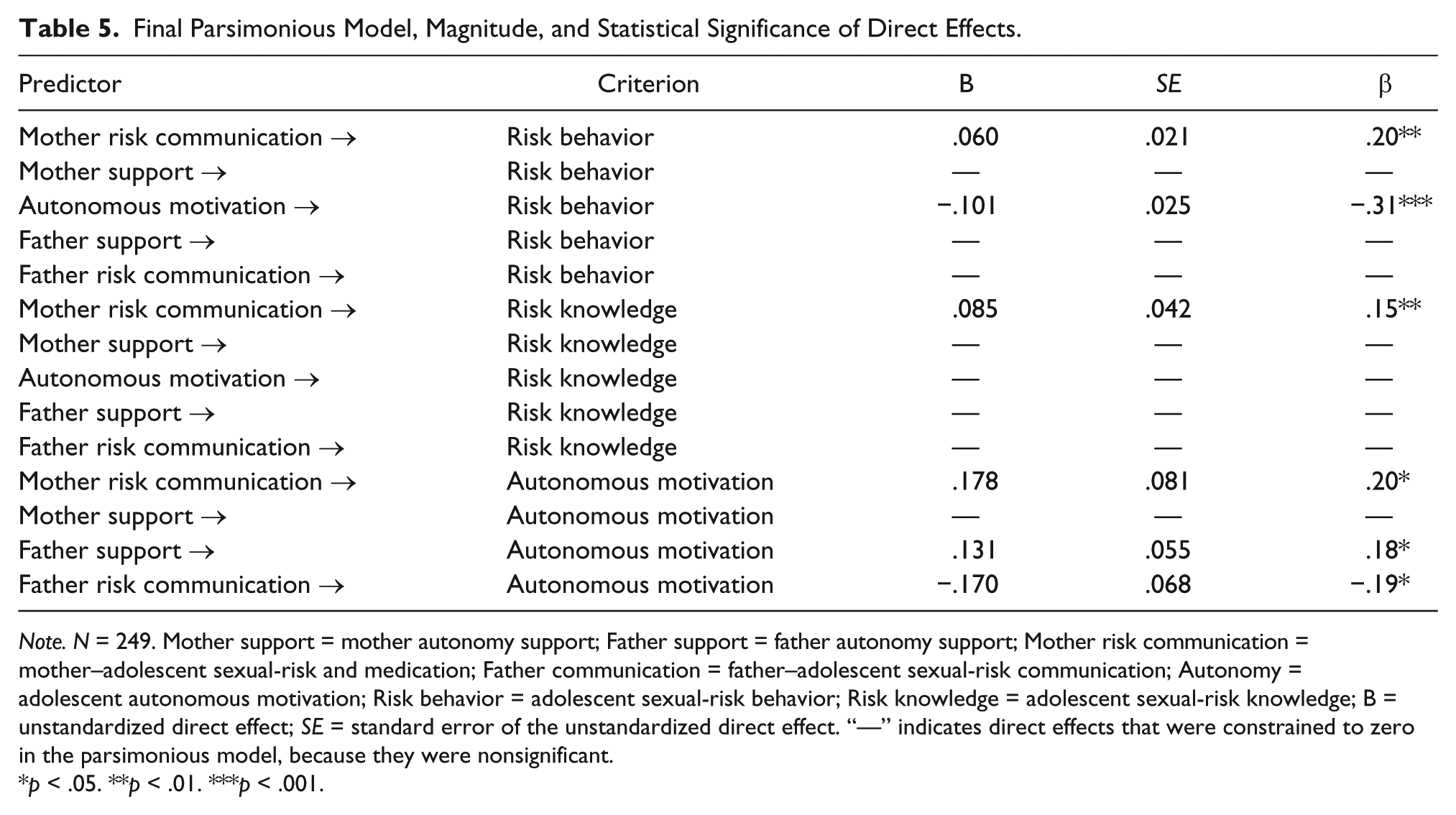
Note. N = 249. Mother support = mother autonomy support; Father support = father autonomy support; Mother risk communication = mother–adolescent sexual-risk and medication; Father communication = father–adolescent sexual-risk communication; Autonomy = adolescent autonomous motivation; Risk behavior = adolescent sexual-risk behavior; Risk knowledge = adolescent sexual-risk knowledge; B = unstandardized direct effect; SE = standard error of the unstandardized direct effect. “—” indicates direct effects that were constrained to zero in the parsimonious model, because they were nonsignificant.
p < .05. **p < .01. ***p < .001.
Significance of Indirect Effects
Last, bootstrap procedures recommended by Shrout and Bolger (2002) were used to determine the significance of indirect (i.e., mediation) effects. Specifically, the procedure involved instructing Mplus (Muthén & Muthén, 2012) to generate 1,000 bootstrap samples to estimate bias-corrected confidence intervals for each of the proposed mediation relationships. If the 95% confidence intervals did not include zero, the indirect effects were considered to be statistically significant at the .05 level (Shrout & Bolger, 2002). Table 6 presents the bootstrapping results. Although several indirect effects could not be calculated due to the absence of one or more paths from the mediating variable to either the dependent or independent variables, thus precluding ability to determine if mediation occurred for these paths, all hypothesized indirect effects that could be calculated were statistically significant. The final model accounted for 12% of the variance in adolescent sexual-risk behavior, 7% of the variance in adolescent autonomous motivation, and 2% in adolescent sexual-risk knowledge.
Bootstrap Analysis of the Final Parsimonious Model, Magnitude, and Statistical Significance of Unstandardized Indirect Effects.
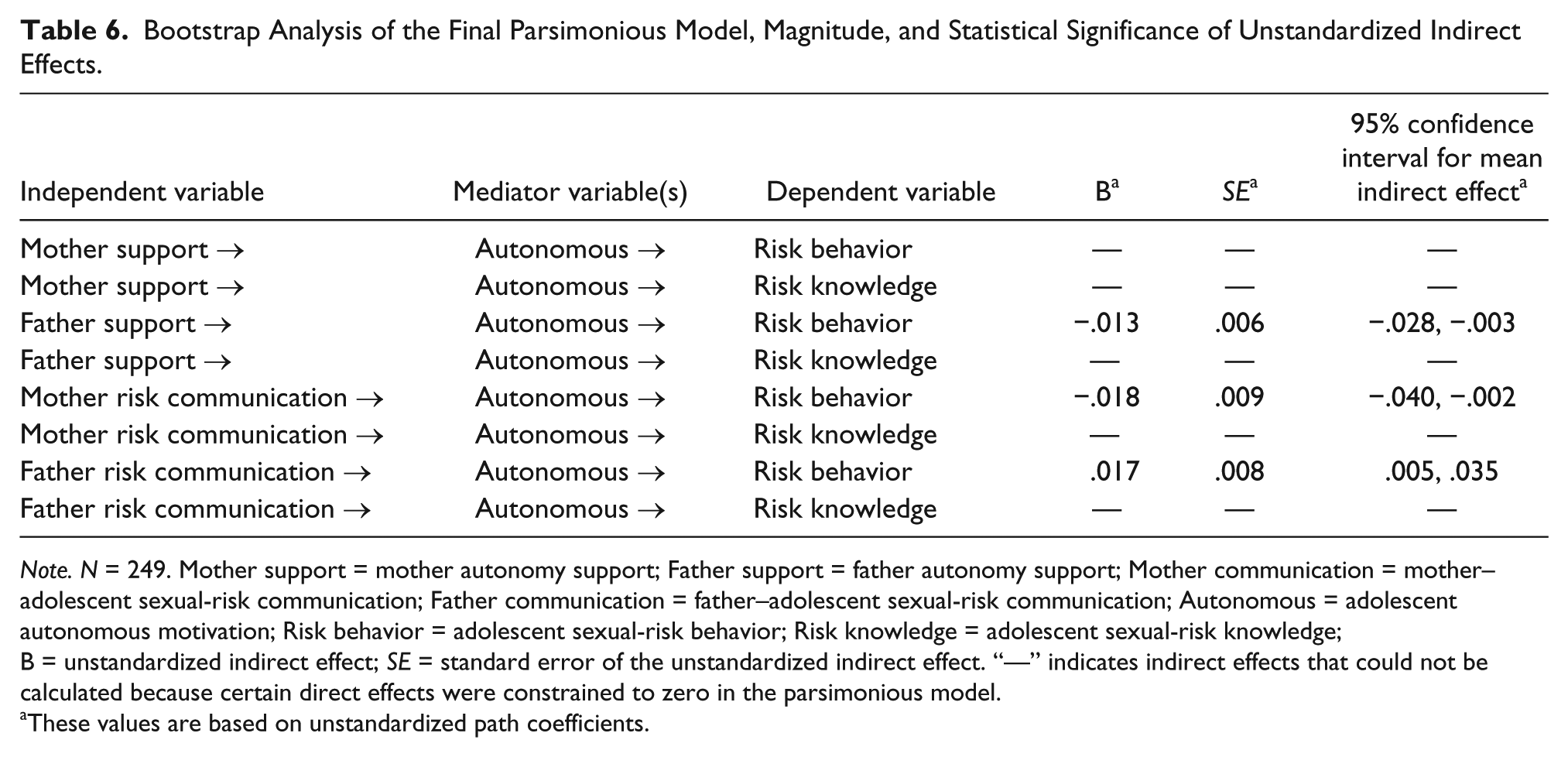
Note. N = 249. Mother support = mother autonomy support; Father support = father autonomy support; Mother communication = mother–adolescent sexual-risk communication; Father communication = father–adolescent sexual-risk communication; Autonomous = adolescent autonomous motivation; Risk behavior = adolescent sexual-risk behavior; Risk knowledge = adolescent sexual-risk knowledge; B = unstandardized indirect effect; SE = standard error of the unstandardized indirect effect. “—” indicates indirect effects that could not be calculated because certain direct effects were constrained to zero in the parsimonious model.
These values are based on unstandardized path coefficients.
Discussion
Reduction of negative sexual-risk behavior in adolescents has important public health implications (U.S. Department of Health & Human Services, 2017b). However, few studies have examined motivation in relation to sexual-risk behavior/knowledge. The hypothesized model demonstrated support for autonomous motivation as a mediator of parental support and sexual-risk communication variables on adolescent sexual-risk behavior. The final model indicated that mothers and fathers contributed uniquely—albeit modestly—to late adolescents’ autonomous motivation which, in turn, predicted an inverse effect on adolescents’ sexual-risk behavior. The mediating role of adolescent autonomous motivation in the present study is consistent with SDT (Deci & Ryan, 2000, 2008, 2012; Deci & Vansteenkiste, 2004). These findings extend the meager literature related to adolescents’ motivation to reduce sexual-risk behavior and improve mental health outcomes. Research by PMH nurses would provide evidence-based knowledge for assessment and interventions. Thus, the present findings suggest that adding sexual-risk behavior to the existing health areas examined through SDT may be a viable framework for future research.
Concentration on the late-adolescent period in the present study provided a focused examination of SDT with a specific group of adolescents in an urban university setting, likely transitioning from a less diverse home environment to a worldlier environment. In addition, the use of a more robust measurement and analysis (i.e., SEM) of adolescents’ specific risk behaviors that occurred (i.e., had a STD, used alcohol or drugs during sex; Lescano et al., 2007) provided a refined outcome variable that may have utility for health interventions. This contrasted with another study examining autonomous motivation and sexual-risk behavior where the assessment of sexual behavior was categorical (i.e., whether one had sex or not; Williams, Hedberg, Cox, & Deci, 2000).
Although the present model predicted sexual-risk behavior, it was a poor predictor of sexual-risk knowledge. Nevertheless, the positive, modest relationship between sexual-risk knowledge and mother-adolescent sexual-risk communication was consistent with mothers being more often tasked with providing sexual communication (Widman et al., 2016). Despite some theoretically congruent relationships with sexual-risk knowledge in the present study, several factors may account for the lack of predictive power (i.e., explaining only 2% of the variance). First, sexual-risk knowledge scores in this sample reflected mostly moderate to low levels of knowledge about STD, with 50% of adolescents scoring less than 15 out of a possible 27 on sexual-risk knowledge items and almost 2% of the adolescents scoring 0 out of a possible score of 27. Thus, the lack of association in the present study could be due to a lack of variability. Second, sexual-risk knowledge may be genuinely unrelated to parental sexual-risk communication and supportive parental relationships. Indeed, other major sources of sexual-risk knowledge that have been self-reported by late adolescents include friends, school, and television (Wagner, 2011; Widman et al., 2016). These self-reported major sources of sexual-risk communication have been associated with negative sexual-risk outcomes (Busse, Fishbein, Bleakley, & Hennessy, 2010; Chandra et al., 2008; Kann, Tellijohann, Ches, Wooley, & Ches, 2007; Kennedy & Roberts, 2009; Lefkowitz & Espinosa-Hernandez, 2007). All these sources could easily have moderated or canceled out any positive impact parents may have on sexual-risk knowledge.
Several of the support and risk communication variables evidenced mixed findings. For example, mother’s sexual-risk communication and father’s autonomy support were positively related to adolescent autonomous motivation, while father’s sexual-risk communication was negatively related to autonomous motivation, suggesting unique influences mothers and fathers have on their adolescents’ autonomous motivation. This pattern of results is consistent with sexual-risk communication literature where mothers and fathers play distinct roles in their adolescents’ sexual socialization (Akers, Schwarz, Borrero, & Corbie-Smith, 2010; Kirkman, Rosenthal, & Feldman, 2002; Widman et al., 2016). Although fathers perceive a shared responsibility in sex communication with their adolescents, fathers have found adolescent sex communication difficult and distressing and typically leave the task of sex communication to mothers (Kirkman et al., 2002; Widman et al., 2016).
The present findings may shed new light on the disparate effects of mother compared with father sexual-risk communication. Indeed, the negative, but not statistically significant, relationship between father–adolescent sexual-risk communication and adolescent autonomous motivation in the present study increased in magnitude and became statistically significant in the final structural model. Such a pattern is indicative of a unique suppression effect. These findings, therefore, suggest that the error from one of the predictors variables was correlated systematically with the true variance of father sexual-risk communication, thus purifying it as a predictor. Removing what father autonomy support is not capturing from father sexual-risk communication might have resulted in a negative sexual-risk communication variable (i.e., communication of sexual-risk without a supportive relationship between the adolescent and parent). Such findings raise the intriguing possibility that fathers may actually increase the sexual-risk behaviors of their adolescents and lower their ability to make healthy, autonomous sexual decisions later in life if they communicate sexual risk in a harsh or punitive fashion. Additional research—especially prospective longitudinal models—are needed to confirm or reject this possibility, however. Interestingly, although mothers’ risk communication was also positively associated with increased sexual-risk behavior, no suppression effect was observed, and mothers’ sexual-risk communication evidenced a negative relationship with sexual-risk behavior through autonomous motivation. These findings highlight the need for additional research to help identify how parental sexual-risk communication can increase or decrease the likelihood of adolescents engaging in risky sexual behaviors and the unique contributions of fathers and mothers on these outcomes.
In addition to addressing the complicated roles of mother and father sexual-risk communication and autonomy support, it is important to note that these variables explained a modest (7%) of variation in adolescent autonomous motivation. Such small variances explained values are common in psychosocial research due to the randomness that affects human behavior. Furthermore, correlation coefficient values of .1 or .2 are standard in analyses of family data (Greenstein, 2006). The small amount of variance explained in the present study suggests that other factors (not measured in this model) may play a more salient role in developing autonomous motivation in adolescence. Nevertheless, the present findings provide important preliminary support of the role of autonomy in sexual-risk behavior. By considering these findings implications for PMH nursing are vast.
Implications for Nursing
The negative health consequences for adolescents due to sexual-risk behavior makes sexual-risk a critical part of the PMH nurses’ assessment of mental health (ANA, APNA, & ISPN, 2014; CDC, 2017; Owusu-Edusei et al., 2013; U.S. Department of Health & Human Services, 2017b). To meet the urgent need for prevention and intervention of adolescent sexual risk behavior, it is imperative for nurses to use their communication expertise when assessing and intervening with adolescents and parents about sexual-risk. Because this study has demonstrated the role of autonomy as mediator of parental sexual-risk communication/autonomy support with reduction in adolescents’ sexual-risk behavior, PMH nurses should incorporate these findings in their practice.
Consistent with this study’s findings, the PMH nurse can help parents have better sexual-risk communication with their children because such healthy conversations may help promote autonomous motivation. PMH nurses should develop prevention, assessment, and interventions to assist and encourage parents to provide autonomy-supportive sexual-risk communication and share autonomous sexual-risk knowledge.
PMH nurses use interpersonal relations theory (Peplau, 1952). Use of this theory provides the principles of therapeutic nurse–patient relationships and communication. Use of therapeutic communication leads to positive mental health outcomes built on trust and engagement with the patient especially important when discussing sensitive topics such as sexual-risk behavior. Because sexual risk behavior is an integral part of mental health assessment, the PMH nurse may be the health care worker who has the initial professional conversation about sexual-risk behavior. This is especially true with an adolescent who is transitioning to adulthood and their sex initiation and sexual-risk behavior is the gateway behavior into an adult mental health care system (ANA, APNA, & ISPN, 2014; Arnett, 2014; CDC, 2017; U.S. Department of Health & Human Services, 2017b).
PMH nurses can initiate clear and honest sexual-risk communication with adolescent patients including how to communicate with peers and sexual partners. In addition, PMH nurses can model communication techniques, such as motivational interviewing (Resnicow & McMaster, 2012), to deliver sexual-risk communication for parents. PMH nurses can educate parents when to discuss sensitive sexual-risk topics with children and adolescents, as well as how to encourage and support autonomously motivated healthy sexual choices with direct, autonomy supportive, sexual-risk communication during different key developmental stages, recognizing that autonomy develops throughout childhood and adolescence. Specifically, parents should receive education on their unique sexual-risk communication and autonomy support roles and how to optimize that uniqueness with their adolescent. Emphasis should be placed on how fathers can play a prominent if not leading role and how mothers can increase their role in the support and development of adolescent autonomous motivation. This educational/intervention effort may only capture those parent figures who are motivated to help their children to have healthy behaviors. To increase parental figures involvement in sexual-risk communication, PMH nurses should use therapeutic communication and motivational interviewing (Resnicow & McMaster, 2012) with reluctant parents to share how this communication is important in their adolescents’ physical and mental health positive outcomes. Outcomes of these interventions should be disseminated.
Further research is needed to explain additional variance in this study’s model to uncover the influences of parents on an adolescent’s sexual-risk behavior and to develop effective communication to reduce sexual-risk in the late adolescent population. PMH nurses should use an education model/framework combining SDT (Deci & Ryan, 2008) and bioecological systems theory (Bronfenbrenner, 2004) that includes autonomy development/supportive interventions. These nursing interventions should be tested in several systems (e.g., sociocultural, government and industry, community, school and peers, family, home and classroom, self) that may influence a child/adolescent’s sexual-risk behavior. A systems approach would enhance a developmental perspective of sexual-risk behavior research in children/adolescents and help guide a future longitudinal design of age-appropriate interventions to increase sexual-risk communication and autonomy support.
Strengths, Limitations, and Future Research
The present findings need to be considered in light of its strengths, limitations, and future research. A major strength is the use of SEM measurement error. Furthermore, findings in this study support SDT tenets, thus adding to the body of literature about motivational sexual-risk behavior. In addition, this study’s sample was not limited to individuals seeking help for sexual-risk behavior, making it less likely to biased restrictive inclusion criteria. However, because of the cross-sectional design, convenience sample, and study exclusions, findings are limited in their generalizability. Further research is needed with more diverse and generalizable samples and methods.
In this study, female and male students were combined as one group. Trends present in different groups can be reversed when the groups are combined (Pavlides & Perlman, 2009). However, differences among dyad combinations based on parent and adolescent gender could not be discussed in the present study due to sample size constraints. Mother–daughter, mother–son, father–daughter, and father–son dyads have provided different results in studies of parental autonomy support and parent-adolescent sexual-risk communication studies (Clawson & Reese-Weber, 2003; Hutchinson, 2002; Hutchinson & Montgomery, 2007; Widman et al., 2016). Therefore, additional research is needed to examine such dyads in larger samples.
The measures used in this study were robust and were not limited to broad sexual communication or knowledge but were risk-based and specific to both genders. Because the parent–adolescent sexual-risk communication measure used in this study only examined the amount of sexual-risk communication from the parent to their adolescent, other dimensions of sexual-risk communication were not measured. Other dimensions of sexual-risk communication, such as quality, timing, content, context, accuracy, frequency, and style, are identified in the literature as components of sexual-risk communication (Jaccard et al., 2002) and thus investigators should consider determining if the present model can be modified to include other communication factors. Likewise, although adolescents’ perspective may offer the best explanation of the parent’s sexual-risk communication and autonomy support because the adolescent’s perceptions are more closely associated with the adolescent’s own sexual-behavior outcomes (Jaccard et al., 2002) further information would have been gleaned from obtaining the parents’ perspectives of their autonomy support in addition to their sexual-risk communication. Moreover, since the discussion of adolescent sexual-risk is a sensitive topic, participant responses could be due to social desirability (Weiderman, 2002) and sexual-risk behavior could be underreported. Thus, investigators should consider using a variety of self-report and objective report measures in future research.
Conclusions
This study provides new preliminary information about mediation of adolescents’ sexual-risk behavior by autonomous motivation, which was supported by both mothers and fathers. PMH nurses are experts in theory-based building trust and communication techniques and are in a unique position to (1) educate and model for parents the communication techniques conducive to delivering autonomy supportive sexual-risk communication, (2) educate and model for adolescents the process and delivery of autonomous health decisions and partner communications about sexual-risk behaviors, and (3) develop research building off the present study to understand the impact of adolescents’ autonomous motivation and parental autonomy support in an effort to facilitate reductions of adolescents’ sexual risk behavior and increases in their sexual-risk knowledge.
Footnotes
Acknowledgements
This article is part of the primary author’s dissertation archived at Electronic Theses and Dissertations repository of the University of Alabama at Birmingham ( ). The primary author acknowledges the assistance of her doctoral committee members: Dr. Carol Dashiff (Chair), Dr. Gwendolyn Childs, Dr. Susan Davies, Dr. Linda Moneyham, Dr. Tina Simpson, and Dr. David E. Vance.
Author Roles
The primary author contributed to all phases of this original research study from conceptualization to writing and revision of this manuscript. The secondary author contributed to the analysis and interpretation and writing and revision of this manuscript.
Declaration of Conflicting Interests
The author(s) declared no potential conflicts of interest with respect to the research, authorship, and/or publication of this article.
Funding
The author(s) disclosed receipt of the following financial support for the research, authorship, and/or publication of this article: The primary author received a $750.00 research grant from Sigma Theta Tau, Nu Chapter, in Birmingham, Alabama.
Continuing Education
The primary author received a $750.00 research grant from Sigma Theta Tau, Nu Chapter, in Birmingham, Alabama.
to access the post-test, evaluation and certificate.
The American Psychiatric Nurses Association is accredited with distinction as a provider of continuing nursing education by the American Nurses Credentialing Center’s Commission on Accreditation.