






Abstract
Anterior glenohumeral joint (shoulder) dislocations are common orthopedic injuries that require timely recognition and effective reduction to prevent long-term complications. Traditional reduction techniques are typically performed on land where inherent mechanical advantage is present. This case study explores a novel in-water, prehospital technique used to reduce a shoulder dislocation during a high surf event in San Diego, California. The case involves a 36-year-old male who sustained an anterior shoulder dislocation while surfing. After initial reduction attempts using commonly described techniques were unsuccessful due to an inability to achieve adequate leverage while afloat, an improvised reduction technique was implemented, which successfully reduced the joint while floating on the ocean surface. The novel maneuver and subsequent clinical course are outlined in this case report. This technique has applications in neutral buoyancy or low-gravity environments in which the typical reduction maneuvers that require gravity or friction as leverage may not be feasible.
Keywords
Introduction
The glenohumeral (shoulder) joint, characterized by its wide range of motion and relatively shallow glenoid cavity, is highly susceptible to dislocation. Traumatic shoulder dislocation is a common orthopedic injury, comprising as much as 50% of all major joint dislocations. 1 The incidence is particularly high among young, active individuals, with a peak between ages 15 and 29 years old. 2 Anterior displacement occurs in approximately 95% of traumatic shoulder dislocations.1,3 Anterior dislocation most commonly occurs during abrupt abduction and external rotation of the affected upper extremity. Traumatic anterior shoulder dislocations often result from direct trauma or high-energy impact, frequently observed in contact sports or motor vehicle accidents. 2 This injury results in acute pain, limited range of motion, and debilitating functional impairment, requiring prompt diagnosis and management.
Initial management of traumatic anterior shoulder dislocation typically involves closed reduction and immobilization. Although there are more than a dozen various shoulder reduction maneuvers and techniques described in the current literature, 1 there is a fundamental amount of anchoring and leverage required to perform each maneuver. This renders shoulder reduction nearly impossible when attempting these techniques in a weightless or waterborne environment. A literature review revealed no epidemiological data for shoulder dislocation in such an environment or techniques in the current literature describing the management of this injury pattern under these unique austere conditions.3–5
We present the case of a successful reduction of an acute shoulder dislocation using an improvised technique that was performed while afloat on the ocean surface. We also describe a unique method of post-reduction upper extremity immobilization utilizing a modified surf leash.
Case Report
A 36-year-old male with no significant past medical history was surfing at a Southern California reef break located approximately ½ mile from the shore when he was suddenly cut off by another surfer and was struck by an oncoming wave while attempting to avoid the collision. The force of the breaking wave impacted the patient in such a way that when he surfaced, he was in significant pain and unable to abduct his left shoulder. An emergency medicine physician also surfing nearby noted that the patient was having difficulty staying afloat and paddled over to assist as a Good Samaritan. He quickly performed a basic physical exam and found that the patient's left upper extremity was held in a position of adduction, slight external rotation, and with a prominent acromion. The extremity had an intact radial pulse with no appreciated sensory deficit in the fingers. A presumed diagnosis of traumatic anterior shoulder dislocation was made, with the present depth of water, distance from shore, and actively crashing waves posing significant danger if the injury was not swiftly addressed.
An initial attempt at having the patient self-reduce using the Davos technique 1 was unsuccessful. A second reduction effort was attempted using a modified Cunningham technique 1 but proved unsuccessful due to the turbulent nature of the water surface and lack of leverage while treading water. A third attempt was made with both the patient and the emergency physician floating on their backs. The physician grasped the patient's left wrist with his right hand and left ankle with his left hand. The physician then placed his left foot directly in the patient's left axilla and applied gentle traction (Figure 1). A tactile reduction was felt by the physician with relief of the patient's pain and improved extremity range of motion. The patient was subsequently able to paddle to shore with assistance.
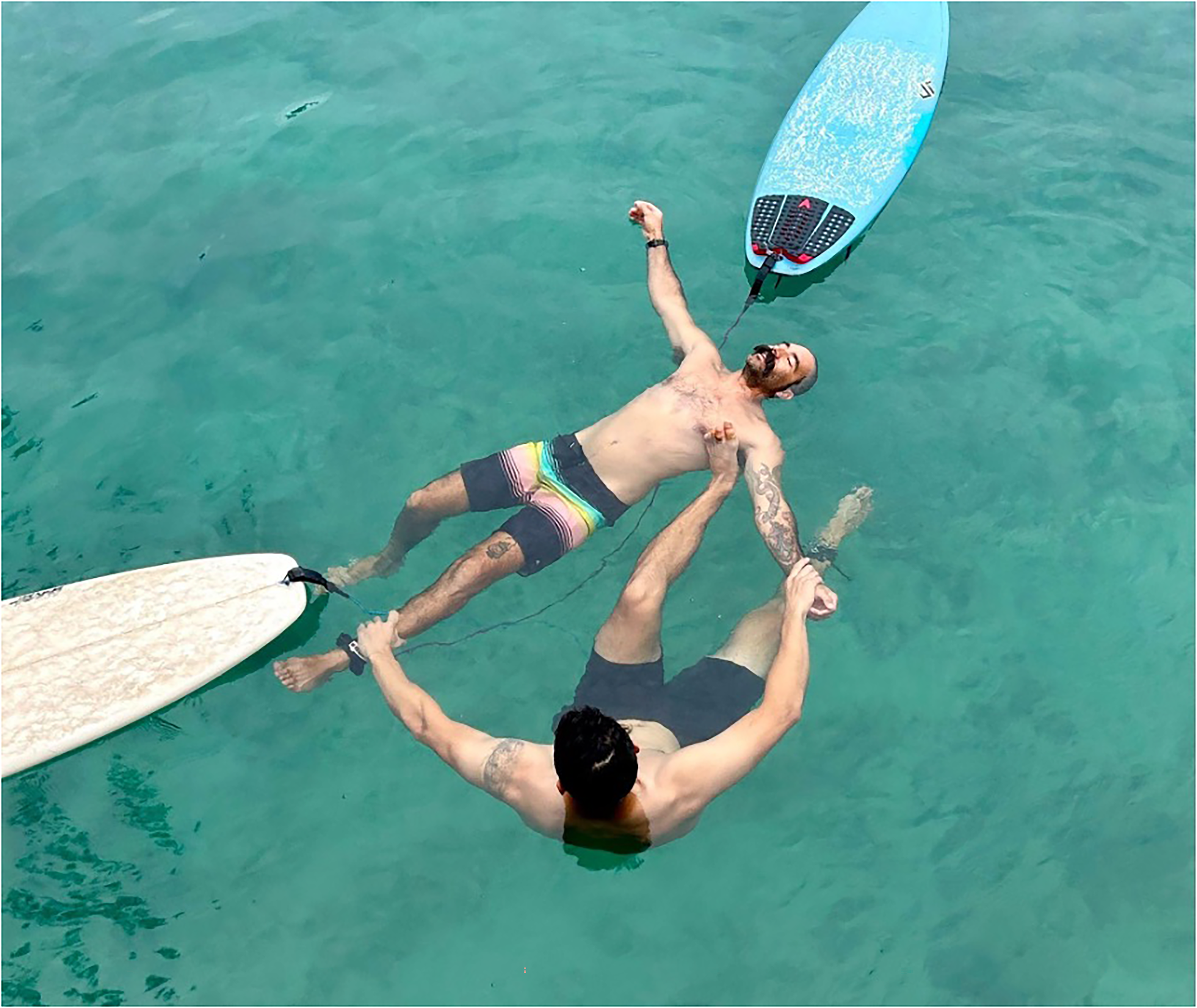
Demonstration of the improvised waterborne shoulder reduction technique.
Once ashore and in a safe area, the physician recognized the importance of immobilizing the reduced shoulder out of concern for potential occult fracture or persistent joint instability. Utilizing a 7-foot surfboard leash, an improvised arm sling was applied to the left upper extremity (Figure 2). The patient was transported by private vehicle to a local emergency department where plain film radiographs of the left shoulder demonstrated a successfully reduced shoulder with both Hill-Sachs deformity and Bankart lesion (Figure 3). The patient was transitioned to a sling and was appropriately referred to physical therapy for shoulder dislocation–associated injury protocol, as well as an orthopedic specialist for follow-up thereafter.
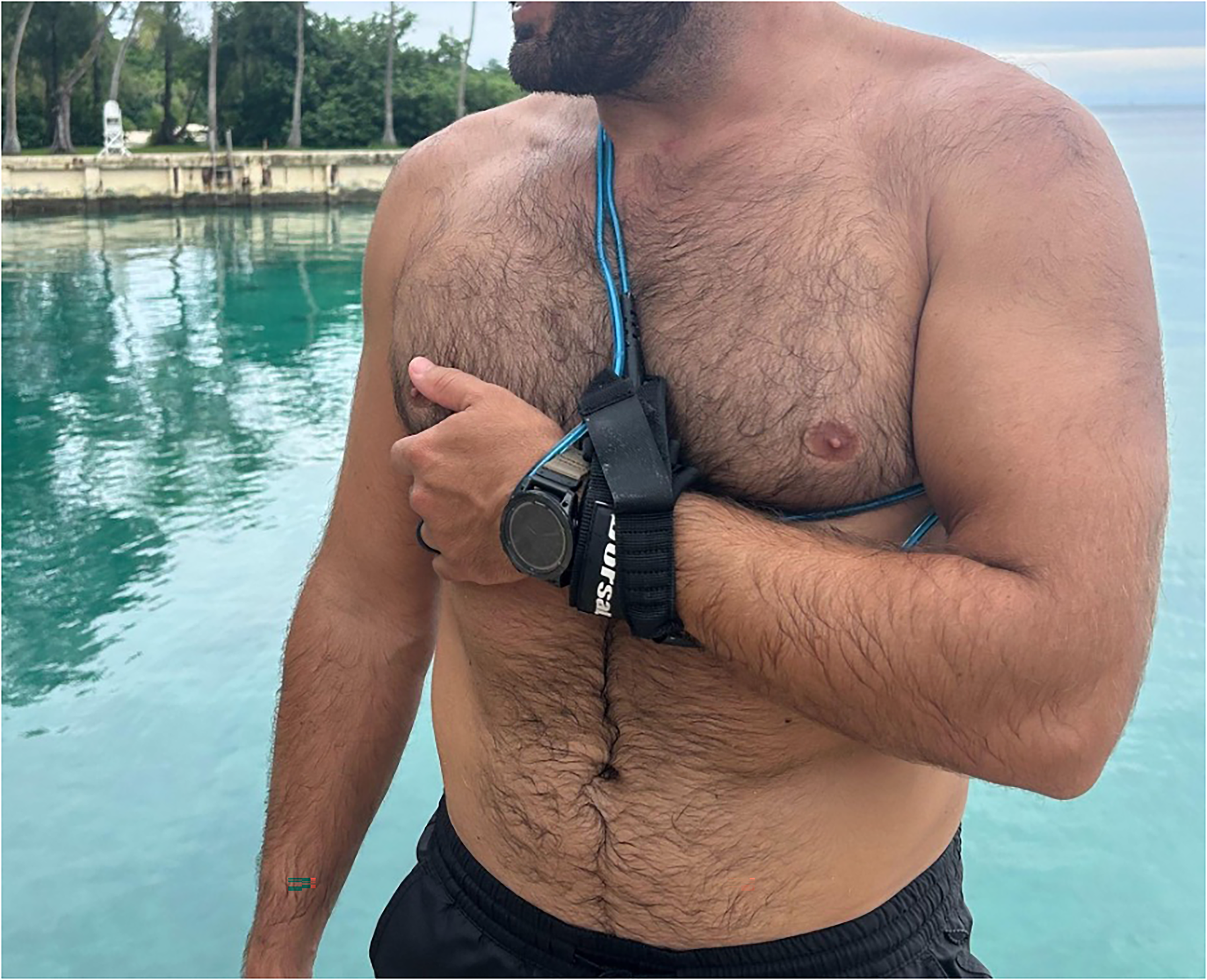
Example of a makeshift shoulder immobilization sling using a surfboard leash.
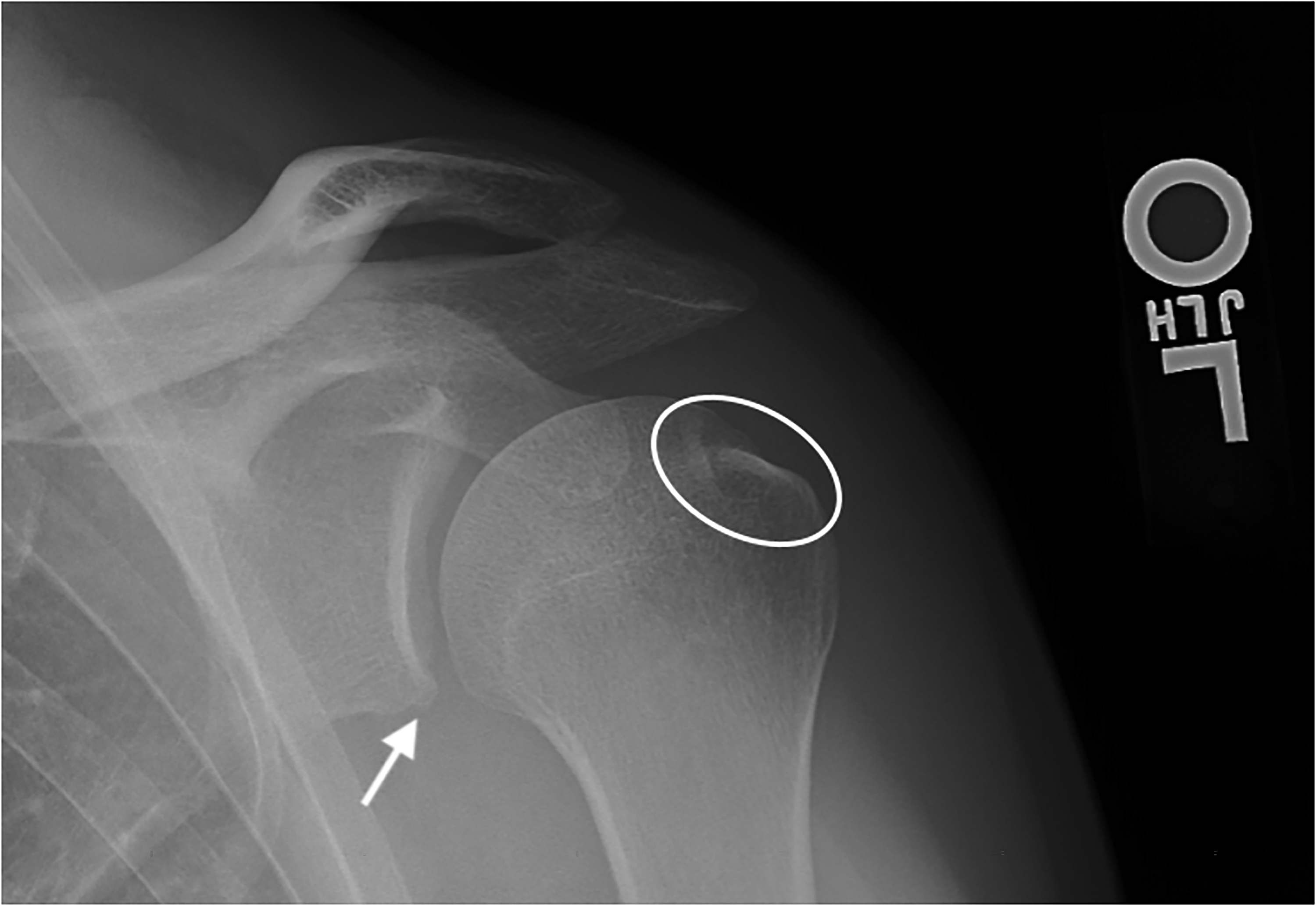
Anterior-posterior plain film x-ray of post-reduction shoulder joint demonstrating Bankart lesion (white arrow) and Hill-Sachs deformity (within white circle).
Discussion
Shoulder reduction is standard training and an essential skill for emergency medicine physicians. Many case reports and multiple reduction techniques are described in the current literature; however, each fundamentally requires leverage that is difficult to achieve without the mechanical advantage of closed-chain environments observed on land and is non-existent in conditions such as neutral buoyancy, low gravity, or deep water scenarios. There are additional environmental considerations that increase the danger of an acute shoulder dislocation under surfing conditions, and expedient recognition and management are critical to minimize the risk of an injury-related drowning incident and improve the likelihood of a first-attempt reduction success.
In cases of water rescue, a unique shoulder dislocation reduction method designed for application under these circumstances would be a valuable clinical tool to rapidly relieve pain, improve the functional range of motion and neurovascular integrity of the affected extremity, reduce the risk of secondary adverse outcomes, and provide a reliable method of self-rescue in a similar austere environment. Following a water rescue, stabilization of the successfully reduced shoulder is prudent for continued pain relief and out of concern for potential underlying occult fracture or persistent instability of the affected joint.
An extensive literature search of the PubMed database, as well as premiere journals of wilderness medicine, emergency medicine, and sports medicine, revealed no similar case reports or published shoulder reduction techniques intended for in-water reductions. The reduction method most similar to the one performed in this case is the Hippocratic method, 1 although the addition of the clinician's hand stabilizing the patient's ipsilateral leg to provide redistributed leverage under neutral buoyancy conditions makes the improvised technique described in this case novel.
This improvised technique can also be applied under similar waterborne, weightless, or austere submerged environments such as kayaking, spaceflight, or military personnel performing amphibious combat operations. This technique can be easily added to established water safety, rescue swimmer, or amphibious combat training courses. The authors recommend practicing the positioning of this improvised technique while on land to allow for familiarity when the need arises to expediently perform the technique while afloat.
The Improvised Waterborne Shoulder Reduction Technique: Step-by-Step
Position the patient supine with the affected arm adducted and in neutral anatomic position. Medical personnel hold the wrist on the ipsilateral side of the injury with one hand and the ipsilateral leg with the other hand. Medical personnel places one foot in the patient's ipsilateral axilla. Medical personnel pulls in-line traction (inferiorly). Immobilize with (improvised) sling as soon as possible.
Complications of Shoulder Dislocation Reduction
In addition to emergent neurovascular compromise of the affected limb, anterior shoulder dislocation and subsequent relocation are associated with potential complications, including Hill-Sachs deformity, Bankart lesion, bony Bankart lesion, labral tear, and greater tuberosity fracture.6–8 The Hill-Sachs deformity, where the posterior humeral head sustains an indentation fracture from forceful contact with the anterior glenoid, occurs in an estimated 58% to 93% of first-time anterior shoulder dislocations.6,7 The Bankart lesion occurs when the humeral head tears part of the labrum away from the anterior-inferior glenoid bone. 7 If the force is severe enough to avulse part of the glenoid bone and the labrum, it is called a bony Bankart lesion. 7 Greater tuberosity fractures occur in an estimated 10% of anterior shoulder dislocations and require surgical intervention to prevent avascular necrosis of the humeral head. 8 These are well-documented potential complications that may be sustained either during the initial injury or subsequent reduction attempts for first-time traumatic anterior shoulder dislocations. This patient had no neurologic or functional deficits to suggest an underlying brachial plexus injury. Because there was no pre-reduction radiography, it is unclear if the dislocation mechanism, status as a first-time dislocation, the reduction itself, or other unidentified factors contributed to this patient's Hill-Sachs deformity, Bankart lesion, and labral tear.
Conclusion
This case describes an improvised reduction method for anterior shoulder dislocation while afloat on the ocean surface. This technique allows medical personnel to address the injury without the need for leverage, which is difficult to achieve without the mechanical advantage that is fundamentally present during land-based reduction. This method is easily reproducible, simple to teach, and can be potentially lifesaving when applied in the appropriate waterborne, neutral buoyancy, low gravity, or amphibious environment.
Footnotes
Acknowledgments
Thank you to Corey Rice and Teddy Elsenbaughm for their contributions as model and photographer.
Author Contribution(s)
Disclaimer
The views and opinions expressed are those of the authors and do not necessarily reflect the official policy or position of the United States Navy, Department of Defense, or United States Government.
Funding
The authors received no financial support for the research, authorship, and/or publication of this article.