






Abstract
Cape gooseberry (Physalis peruviana L.) fruits are highly perishable berries that exhibit a climacteric respiratory behavior. The objective of this study was to evaluate the effect of ethylene and the ethylene action inhibitor 1-methylcyclopropene on the postharvest behavior of cape gooseberry fruits (ecotype Colombia). Fruits were treated with ethylene, in an ethephon application (1000 µL L−1), and pretreated with 1-methylcyclopropene (1 µL L−1), 1-methylcyclopropene+ethylene, and results compared with a control without application. Subsequently, the fruits were maintained at room temperature (20 ℃, 75% RH) for up to 11 days. The pretreatment of the cape gooseberry fruits with 1-methylcyclopropene delayed most of the ripening-associated parameters, with a reduction in the respiration rate and ethylene production, skin color development, total soluble solids, total carotenoid content, loss of firmness, loss of total titratable acidity and emission of volatile compounds such as ethyl octanoate, ethyl butanoate, ethyl decanoate, and hexyl decanoate. Conversely, application of ethephon accelerated most of these physiological changes and also overcame most of the effects prevented by the ethylene action inhibitor. Altogether, the results supported the idea of a climacteric-like behavior for cape gooseberry fruits and pointing out that the pretreatment with 1-methylcyclopropene may be a promising and efficient postharvest treatment to delay maturity and extend the postharvest period.
Introduction
Cape gooseberry (Physalis peruviana L.) is a species of the solanaceae family with a particular development because they remain inside the calyx during the entire development and maturation period. The berries are round in shape, vary in size (1.5 to 2.50 cm diameter) and weight (4 to 10 g) and contain a large number (150 to 300) of small seeds (Fischer et al., 2011). Cape gooseberry fruits are valued for their taste as well as for their functional, nutritional and health-related properties. The fruits contain an appreciable concentration of ascorbic acid, β-carotene, phosphorus, iron, protein and dietary fiber (Fischer et al., 2011). Moreover, the high antioxidant activity of cape gooseberry extracts is noteworthy, with significant anti-inflammatory and anti-proliferative capacities (Wu et al., 2005, 2006). Because of these health-related properties, cape gooseberry fruits have been included in the list of ‘Superfruits' (Superfoods for superhealth, 2016). Currently, Colombia is the biggest producer of cape gooseberries in the world (Novoa et al., 2006), and the Colombian ecotype has outstanding quality and is highly demanded by international markets because of the characteristic sweet taste, aroma and shiny color (Galvis et al., 2005).
The cape gooseberry is a perishable fruit, exhibiting a significant increase in ethylene production that is initiated at the mature-green stage and increases progressively during ripening, indicating a ripening behavior typical of a climacteric-like fruit (Gutiérrez et al., 2008; Majumder and Mazumdar, 2002; Valdenegro et al., 2012). In addition, several studies have evaluated the response of cape gooseberry fruits to the application of the ethylene action inhibitor 1-methylcyclopropene (1-MCP) (Gutiérrez et al., 2008; Valdenegro et al., 2012). These studies showed that 1-MCP was able to suppress the development of some ripening-associated processes, such as fruit softening, coloration, and loss of antioxidant activity, among others (Gutiérrez et al., 2008; Trinchero et al., 1999; Valdenegro et al., 2012). Moreover, the ethylene production and respiration rate were also reduced in 1-MCP-treated fruits, but the inhibition of ethylene biosynthesis was greater than that observed for respiration. It is interesting that the effect of 1-MCP in delaying fruit ripening is dependent on the stage of maturation, with mature-green and breaker fruits being more sensitive to the inhibition of the ethylene action. These results indicate that ethylene appears to be the triggering factor for the induction of fruit ripening in cape gooseberries, similar to other climacteric fruits (Cara and Giovannoni, 2008). Despite these results, the involvement of ethylene in the different metabolic processes that accompany ripening in cape gooseberry fruits is very limited and the impact in other ripening processes is still unknown, such as volatile emission, which is critical in order to establish an efficient manipulation of the ethylene action, allowing for an extension of the commercial shelf-life with minimal detrimental effects on the fruit quality.
Applications of ethylene concentrations higher than 10 µL L−1 have also been proven to have a positive impact on the production of volatile compounds in pears matured at 20 ℃ (Villalobos-Acuña and Mitcham, 2008). Previous studies have reported the role of ethylene in the induction of esters in climacteric fruits (Beekwilder et al., 2004; Defilippi et al., 2004; Flores et al., 2002), particularly in the control of the enzyme alcohol acyltransferase (AAT) (Yahyaoui et al., 2002). In papaya fruits, internal ethylene levels of 0.4 ppm are needed to increase esters (Fuggate et al., 2010). In addition, the production of esters and alcohols was found to be ethylene dependent in apples (Defilippi et al., 2004).
Moreover, 1-MCP is a competitive inhibitor of the ethylene action because 1-MCP is able to covalently bind to the ethylene receptors and prevent its action (Serek et al., 2006). The emission of volatile compounds is a ripening-related process with an important impact on fruit quality, since this process may be determinant for consumer perception. The profiling of volatile emission of fruit of different species is extremely variable and complex. The total content of volatile compounds may decrease with the application of 1-MCP, but each individual volatile compound may be differentially affected (Bai et al., 2005; Marin et al., 2009). Defilippi et al. (2004) and Kondo et al. (2005) found a reduction in the production of esters and alcohols caused by 1-MCP in apples. Defilippi et al. (2005) also found that the AAT activity and the amount of esters were decreased in 1-MCP-treated fruits, suggesting that the synthesis of volatiles is regulated by ethylene. Therefore, the objective of the present study was to evaluate the effect of ethylene (applied as ethephon) and 1-MCP, individually or in combination, on the postharvest behavior of cape gooseberry fruits (ecotype Colombia) in order to understand both the climacteric ripening of the fruit and the potential commercial use of the ethylene action inhibitor as an effective and reliable system to retard fruit ripening and extend the postharvest life and commercial period of the fruit.
Material and methods
Plant material, treatments and storage conditions
Cape gooseberry (Physalis peruviana L., ecotype Colombia) fruits were harvested from a commercial plantation in Ventaquemada, Boyacá (Colombia), located at 2630 m.a.s.l. with an average temperature of 12 ℃. The fruits were used within the first day after harvest for processing and analysis. The fruits were harvested at the green-yellow stage of maturity with the following color values: L* = 65.85 ± 4.5, a* = 10.66 ± 1.2, b* = 52.6 ± 3.8 and color index (CI) = 3.10 ± 0.5. Then, the fruits that were free of damage and uniform in size and color were submitted to the different postharvest treatments: ethephon, 1-MCP, 1-MCP+ethephon and air-control. A completely randomized design with four replicate samples for each treatment was used, and each replicate was composed of 125 g of fruit without calyx.
The effect of ethylene on the cape gooseberry fruits was evaluated as the ethylene-releasing agent ethephon (2-chloroethylphosponic acid, Ethrel™ Bayer Crop Science). The fruits were immersed in a solution of 1000 µL L−1 of ethephon for 10 min. The 1-MCP application was done following the manufacture's (Rohm and Haas) instructions. The amount of 1-MCP powder required to generate the desired concentration of 1-MCP (1 µL L−1) in the gas phase was placed in a beaker inside a flask containing the fruits. The tank was sealed and 30 mL of hot water (45–50 ℃) were injected through a septum into the beaker to release the gaseous 1-MCP to the headspace of the flask. The fruits were exposed to 1-MCP overnight (16 h) at room temperature and then ventilated with air. For the treatment with 1-MCP+ Ethylene, the fruits were immersed for 10 min in an ethephon solution (1000 µL L−1) five days after the application of 1-MCP. After different treatments, the fruits were packed in thermoformed polyethylene terephthalate packages and incubated at 20 ℃ and 75% relative humidity for up to 11 days.
Determination of fruit color, firmness and soluble solid content
At 1, 6, and 11 days after harvest, the skin color, fruit firmness, total soluble solids (TSS) and total titratable acidity (TTA) were determined. At each sampling date, the skin color of whole fruits was measured using a Minolta CR-330 colorimeter (Minolta, Osaka, Japan) on three locations of the equatorial plane of the fruit. The CIELab parameters L*, a*, and b* were measured and the CI was calculated using the formula CI = (1000 a*)/(L* b*). The fruit firmness was measured using a PCE-PTR200 digital penetrometer, and the values were expressed as Newton (N). The TSS were determined by measuring Brix degrees of the juice using a Hanna digital refractometer with a range of 0 to 85% and 0.1 °Brix accuracy. The TTA was determined using a 916 Food Ti-Touch 120 automatic titrator.
Analysis of total carotenoid content
Carotenoids were extracted from 1 g of fresh pulp and 5 mL acetone. The sample was mixed with acetone and centrifuged for 10 min at 4000 r/min. Then, the supernatant was poured into a 25 mL volumetric flask, and 5 mL of acetone were added again to the pellet; this procedure was repeated three times, until complete discoloration of the pellet. The absorbance of the acetone extract at 450 nm was determined using a spectrophotometer (Thermo Scientific, Genesys 10 S), and the total carotenoid content was determined by using a calibration line with different concentrations of β-carotene. The total carotenoid content was expressed as µg β-carotene/g fresh weight.
Determination of respiration rate and ethylene production
At daily intervals after the harvest, the respiration rate and ethylene production in the cape gooseberry fruits were analyzed. The respiration rate was determined by placing approximately 50 g of fruit in a 0.25 L sealed flask for incubation at room temperature for 30 min. A CO2 infrared sensor analyzer was installed and connected to a Labquest data collection device. CO2 values were registered every 4 s for 5 min, and the values were used to calculate the slope corresponding the to the respiration rate, which was expressed as mg CO2 kg−1 FW h−1. For analysis of the ethylene production, a gas sample of the headspace of the flask was withdrawn with a syringe and injected into a gas chromatograph (Agilent Technologies 7890A) equipped with a flame ionization detector (FID) and a HP-PLOT column (30 m × 0.55 mm × 40 µm). The injector, oven and detector temperatures were 70, 50 and 250 ℃, respectively. The values of the ethylene production in the cape gooseberry fruits were expressed as µL C2H4 kg−1 FW h−1.
Analysis of volatile compounds
Analysis of the emission of volatile compound in cape gooseberry fruits was carried out on the sixth day after harvest by a headspace solid-phase micro extraction system. Fruits (80 g) were placed in a 0.25 L sealed flask at room temperature (20 ℃) for 1 h. A microextraction fiber (PDS CU100 SUPELCO) was exposed for 30 min to the headspace. And then, the desorption was performed in the injection port of a gas chromatograph for 5 min. Limonene was used as an internal standard for the quantification of the volatile compounds. The identification of the volatile compounds was done using a gas chromatograph connected to an Agilent Technologies 5975C mass spectrometer. The obtained spectra were compared with those reported in the NIST 8 library.
Statistical analysis
For the statistical significance, an analysis of variance test was performed, and a Tukey test was applied for the mean separation (p < 0.05).
Results and discussion
Effect of ethylene and 1-MCP on ethylene production and respiration rate of cape gooseberry fruits
The freshly harvested cape gooseberry fruit produced relatively high amounts of ethylene; more than 250 µL kg−1 FW h−1 were detected in fruits at the breaker stage (Figure 1(a)). In the control non-treated fruits, the ethylene production increased after the third day, reaching a peak at day 5 as high as 600 µL kg−1 FW h−1, which progressively declined. The application of ethephon advanced the increase in ethylene production, but the maximum was similar to that obtained for the control fruits. In contrast, the inhibition of the ethylene action by 1-MCP considerably reduced the ethylene production after day 5, and the maximum was near 50% lower than that of the non-treated fruits. An intermediate response was observed in the fruits treated with 1-MCP and ethylene because the ethylene peak at day 5 was similar to the 1-MCP-treated fruits (Figure 1(a)).
Effect of ethylene and 1-MCP, individually or in combination, on (a) ethylene production, and (b) respiration rate during the storage of cape gooseberry fruits at 20 ℃ and 75% RH for up to 11 days. The vertical bars on each mean indicate the standard error (n = 4). According to the analysis of variance, ns: no statistical differences, * differences at 5%, and ** statistical differences at 1%.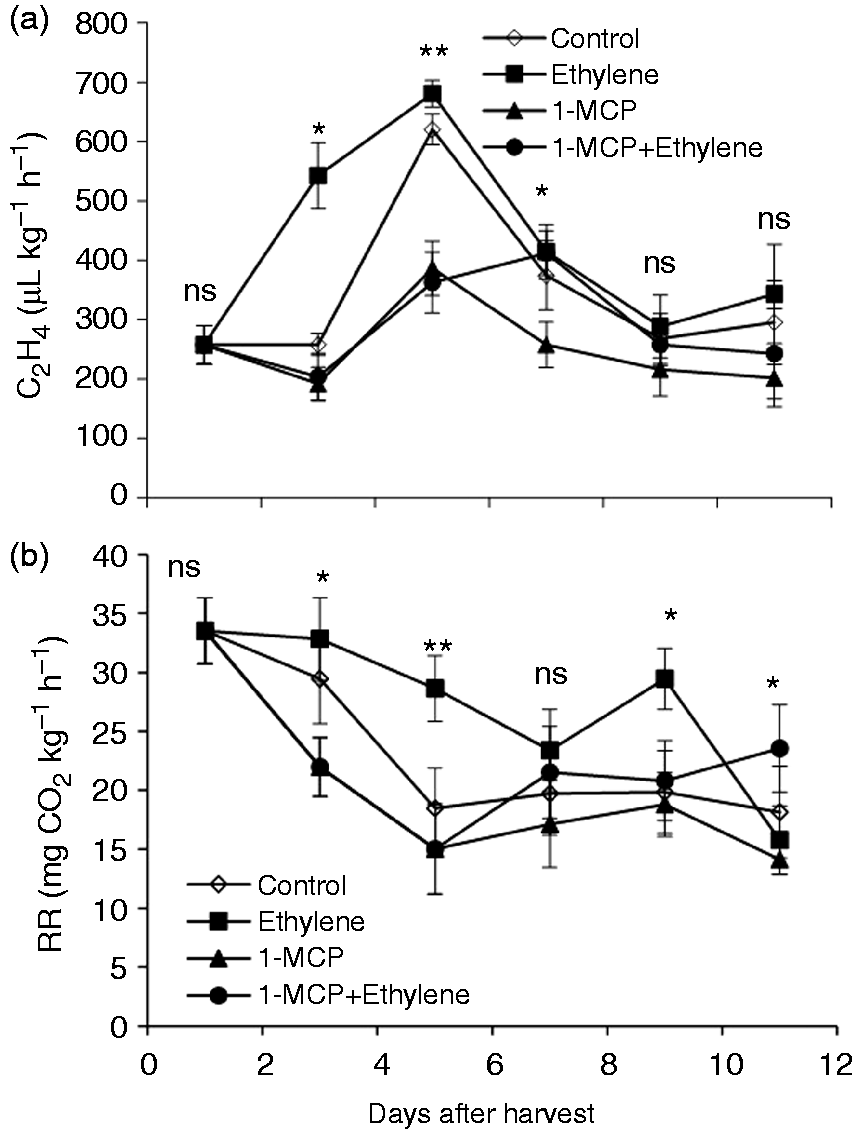
In general, our results agree with those of Valdenegro et al. (2012), who also observed a stimulation of ethylene production with an ethylene application and a reduction by 1-MCP. It is interesting to note that the rate of ethylene production in cape gooseberry fruits grown under Colombian climatic conditions was higher than that observed by Valdenegro et al. (2012), suggesting an influence of the environmental growing conditions that may also influence the perishability of the fruit. Our results also reinforce the climacteric-like ripening of the cape gooseberry and the involvement of ethylene in different maturation-associated processes, for example softening, antioxidant activity, and color change (Gutiérrez et al., 2008; Majumder and Mazumdar, 2002; Valdenegro et al., 2012). Because 1-MCP blocks ethylene binding to its receptor and prevents ethylene-dependent responses (Serek et al., 2006; Watkins, 2006), the reduction of the climacteric ethylene peak observed in the present study indicated an autocatalytic regulation of ethylene biosynthesis in the ripening of cape gooseberry fruits, although the molecular mechanism of that process is still unknown. In addition, the increase in ethylene production detected in the fruits treated with 1-MCP+ethylene with respect to the fruits treated only with 1-MCP indicated a partial recovery of the ethylene action, probably due to a de novo biosynthesis of ethylene receptors (Blankenship and Dole, 2003; Watkins, 2006).
The maximum respiration rate in the control cape gooseberry fruits occurred 1 day after harvest and declined progressively up to day 5, remaining nearly constant afterward (Figure 1(b)). These changes in the respiration pattern indicated that the fruits were more likely harvested at the climacteric respiration peak since the respiration declined in the fruits exposed to the different postharvest treatments. Therefore, our results showed that the climacteric-like increase in the respiration rate (Figure 1(b)) in the harvested cape gooseberry fruits preceded that of the ethylene production (Figure 1(a)), similar to other climacteric fruits (Kays and Paul, 2004). This temporal difference between the climacteric increase in the ethylene production and respiratory rate is consistent with the results of Valdenegro et al. (2012) during the storage of cape gooseberry fruits at 20 ℃. They also found that the increase in respiration occurred two days after the harvest, whereas the maximum in the ethylene production occurred 1 day later. The application of ethylene reduced the decline in the respiration rate and, with the exception of fruits at days 8 and 11 after harvest; the respiration rate was always higher in the ethylene-treated fruits than in any other treatment. The respiration rate was reduced in the 1-MCP-treated fruits and the application of ethylene to these fruits overcame the effect of 1-MCP, with a respiration rate from days 7 to 11 that was similar to that of the control fruits (Figure 1(b)). The inhibitory effect of 1-MCP on the respiration of the cape gooseberry fruits is consistent with the results in other climacteric fruits, such as Solanum lycopersicum L. (Choi et al., 2008) and Psidium guajava L. fruits (Cerqueira et al., 2009), among others (Barry and Giovannoni, 2007), and corroborates the observation of Valdenegro et al. (2012). Respiration has a significant influence on the rate of fruit perishability, and then it is likely that 1-MCP could become a practical alternative to improve the postharvest life and quality of cape gooseberry fruits.
Effect of ethylene and 1-MCP on the skin color and total carotenoid content of the cape gooseberry fruits
The color of the skin, measured as the CI, increased significantly six days after the harvest in the control (non-treated Cape gooseberry) fruits and only a slight increase was observed by day 11 (Figure 2(a)). The application of ethylene produced a small but significant increase in the CI. The pre-treatment of fruits with 1-MCP reduced the CI and the skin developed a yellowish coloration that was paler than the other treatments (Figure 2(a)). These results indicate that fruit coloring was delayed by the application of 1-MCP. Different studies on climacteric fruits have shown a significant reduction of fruit coloration by 1-MCP as a result of both a reduction in the degradation of chlorophyll and in the stimulation of the carotenoid content (Sun et al., 2012; Watkins, 2006). Tomato fruits treated with 1-MCP did not develop commercial coloration, becoming greenish-pink, and accumulated low lycopene content (Zhang et al., 2009). Gutiérrez et al. (2008) reported that the effect of 1-MCP on fruit coloration was maturation-dependent, with mature-green fruits more sensitive to the delay in coloration, in accordance with our results. In citrus fruits, it was demonstrated that the response to ethylene is higher in green-mature fruits than in colored fruits despite the non-climacteric ripening behavior (Martínez-Jávega et al., 2008), probably related to the effect of ethylene in the stimulation of the expression of genes related to carotenoid biosynthesis (Rodrigo and Zacarias, 2007). Our results for cape gooseberry fruits show that the skin coloration experienced a significant increase from days 1 to 6, which was reduced but not suppressed by 1-MCP, suggesting that the induction of fruit coloration was already initiated at the time of treatment and that some of the metabolic processes taking place at this stage of ripening are partially ethylene independent.
Effect of ethylene and 1-MCP, individually or in combination, on (a) color index of the skin, and (b) total carotenoids during the storage of cape gooseberry fruits at 20 ℃ and RH 75% for up to 11 days. Means followed by different letters at the same sampling point indicate statistical differences according to Tukey's test (p < 0.05).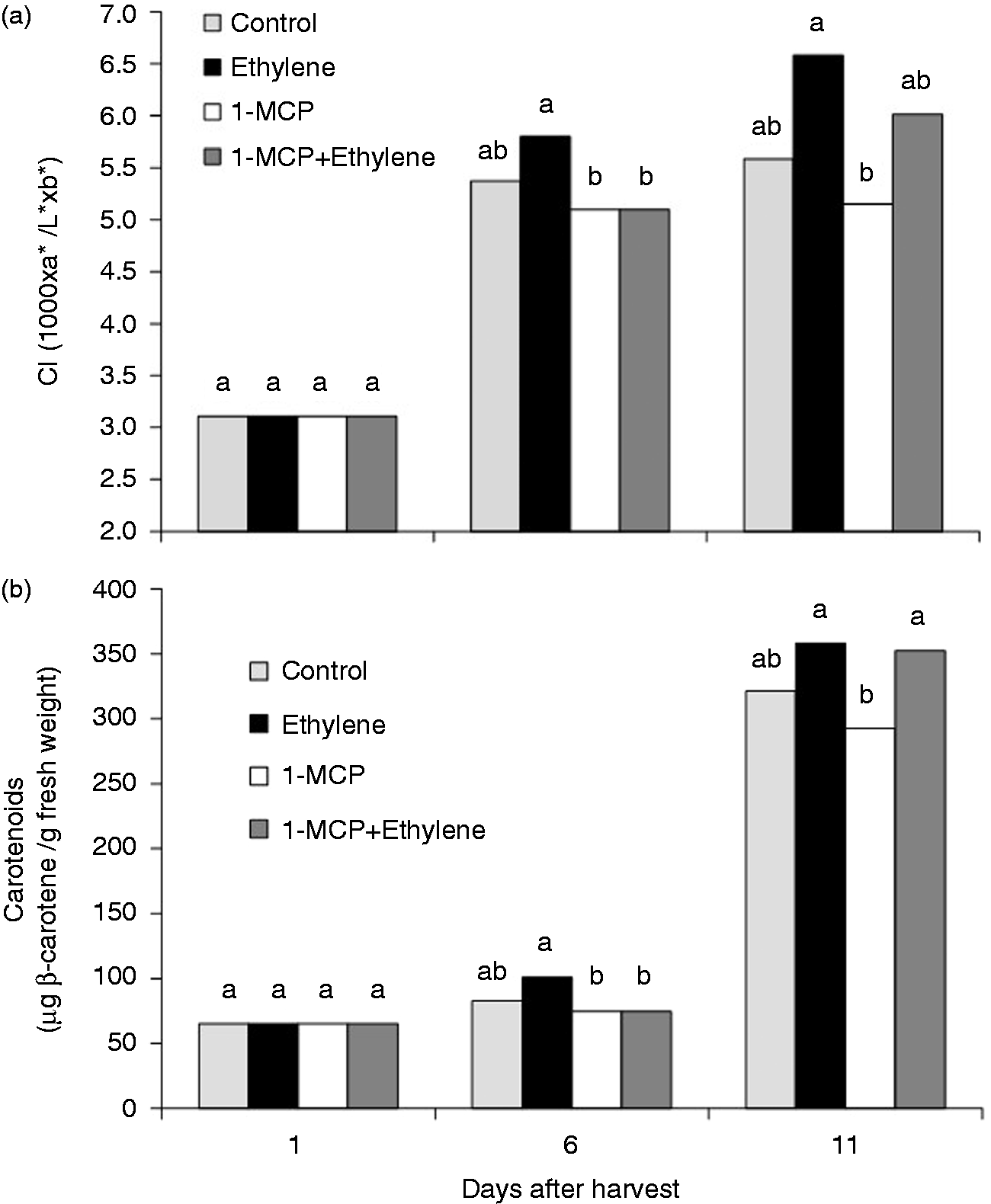
The total carotenoid content in the skin of the cape gooseberry fruits treated with ethylene and 1-MCP is shown in Figure 2(b). From 1 to 6 days after harvest, only a small but significant increase in the total carotenoids content was observed in the control fruits. After day 11, a three-fold increase in total carotenoids was detected in the untreated fruits. The application of ethylene and 1-MCP produced only a moderated, but significant, increase and reduction, respectively, in the total carotenoids as compared to the control fruits (Figure 2(b)). Fischer et al. (2000) reported that β-carotene is the main carotenoid in cape gooseberry fruits and a significant increase in its concentration occurred in fruits with a full orange color (Fischer and Martínez, 1999). This observation is consistent with our results since, despite the major increase in the CI took place six days after harvest, carotenoids only experienced minor variations, and the maximum was reached at day 11. It is tempting to speculate that, from days 1 to 6, the development of color may be mainly determined by chlorophyll breakdown and even tough total carotenoids were low, may be still sufficient to produce the observed CI. It is clear that, after day 6, the massive accumulation of carotenoids in the skin provided a more intensive coloration (Figure 2). These events at this ripening stage appear to be only partially regulated by ethylene because only a moderate stimulation and reduction were observed by exogenous ethylene and 1-MCP, respectively, in agreement with the results of Gutiérrez et al. (2008).
Effect of ethylene and 1-MCP on the firmness in the cape gooseberry fruits
As expected, the fruit firmness decreased during the postharvest life of cape gooseberry, from values of 14 N at harvest to about 7 N after day 11 (Figure 3). The reduction of firmness was accelerated in ethephon-treated fruits, and 6 and 11 days after treatment it was a 10 and 30% lower, respectively, than in the untreated fruits. In the fruits pre-treated with 1-MCP, the loss of firmness was delayed even when the fruits were supplied with exogenous ethylene (Figure 3). The loss of fruit firmness and the softening process during maturation are mainly governed by the co-ordinate activity of cell wall hydrolytic enzymes breaking down structural and reserve polysaccharides (Kays and Paul, 2004). In the cape gooseberry, the activities of polygalacturonase (PG), pectin methyl-esterase and some glycosidases have been related to the loss of fruits firmness (Majumder and Mazumdar, 2002). In melons (Cucumis melo), ethylene has been proven to regulate the expression of several genes coding for hydrolytic enzymes, such as (CmPG1, CmPG2, CmPG3), xyloglucan endotransglycosilase (Cm-XTH1), expansin (Cm-Exp1) and β-galactosidases. Altogether, these results indicate that the depolymerization of pectins and xyloglucans are primary regulated by ethylene (Nishiyama et al., 2007; Pech et al., 2008; Sitrit and Bennett, 1998). In the cape gooseberry, the PG activity is correlated with the presence of ethylene in the fruits (Majumder and Mazumdar, 2002), indicating the potential relationship between ethylene and the loss of firmness. In tomato fruit, it has been shown that 1-MCP reduced softening, and PG (Choi and Huber, 2008) and cellulase activities (Feng et al., 2000). Similarly, Khan and Singh (2007) found that 1-MCP delayed the loss of firmness and reduced the activity of exo-PG, endo-PG, pectin esterase, and endo-1,4-d-glucanase in Prunus salicina Lindl cv Tegan Blue. Guava fruits treated with a high dose of 1-MCP (900 nL L−1) resulted in the highest values of firmness at the end of the storage period (Cerqueira et al., 2009). Our results are also consistent with the involvement of ethylene in the loss of fruit firmness in cape gooseberry fruits. Nevertheless, the effect of 1-MCP on the process was not very remarkable and only a mild increase over the non-treated fruits was observed (Figure 3). A smaller effect of 1-MCP on fruit firmness was also found by Gutiérrez et al. (2008) in other cultivars of cape gooseberry, suggesting that the softening process in these fruits might operate in a different pattern than in other fruits and that the involvement of ethylene is not as remarkable as in other edible fruits. The reduction of firmness in banana fruits treated with 1-MCP was associated with a low expression of an expansin gene (MaExp1) that is induced by ethylene (Trivedi and Nath, 2004); even the activity of other hydrolytics, such as pectin methylesterase (PME), PG, EGase and pectate lyase, was also involved (Lohani et al., 2004).
Effect of ethylene and 1-MCP, individually or in combination, on fruit firmness during the storage of cape gooseberry fruits at 20 ℃ and 75% RH for up to 11 days. Means followed by different letters at the same sampling point indicate statistical differences according to Tukey's test (p < 0.05).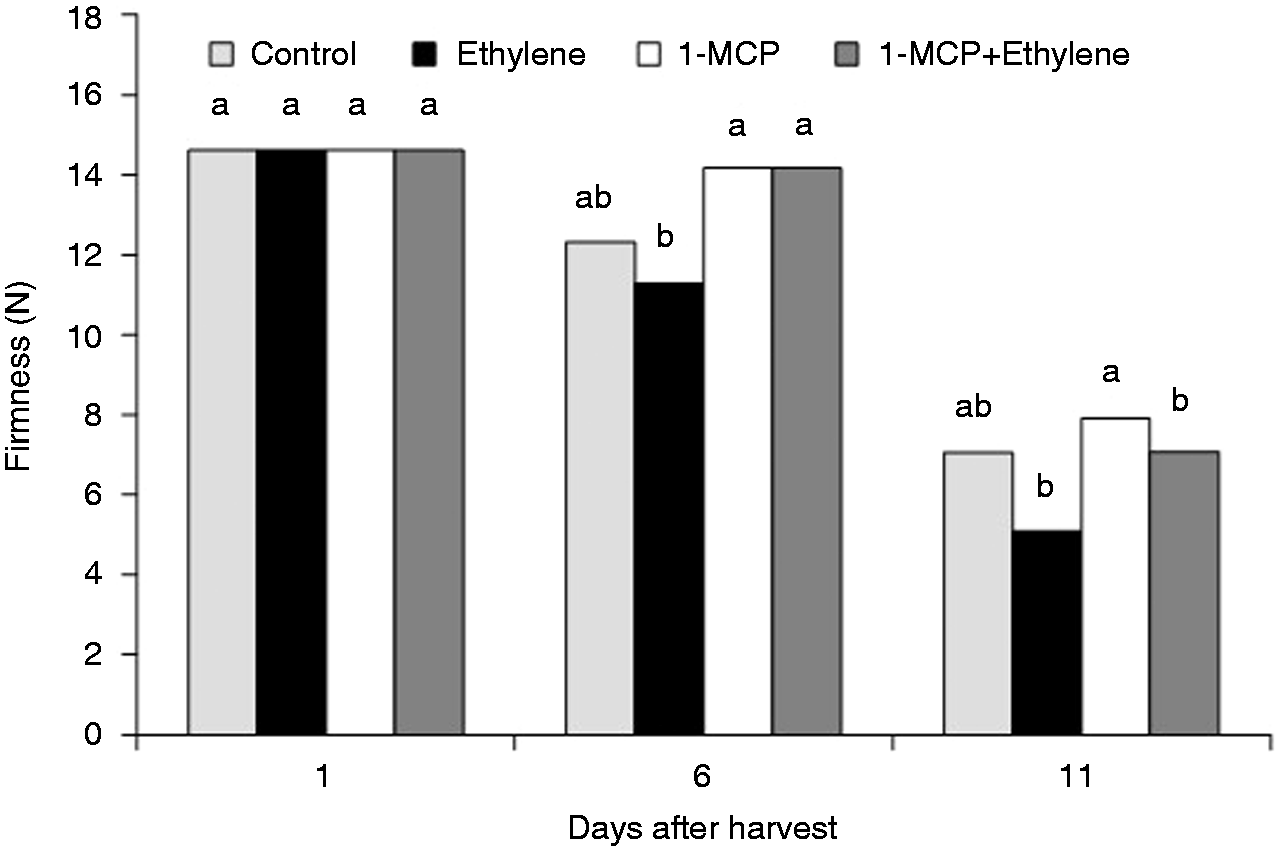
Effect of ethylene and 1-MCP on the TSS and acidity in the cape gooseberry fruits
The TSS increased during fruit storage, especially from days 6 to 11 after the harvest. The application of ethylene and 1-MCP did not produce consistent effects since only significant differences were found for ethylene at day 6, as well as a reduction by 1-MCP at day 11 (Figure 4(a)). The total acidity declined progressively during the storage, but no significant differences were observed among the different treatments and time of storage, with the exception of fruits treated with 1-MCP after 11 days (Figure 4(b)). The increase in the concentration of soluble solids and the reduction in the content of organic acids are general characteristics during fruit maturation in a large number of species (Kays and Paul, 2004). Our results did not show important differences by these quality parameters in fruits treated or not with the inhibitor of ethylene actions, suggesting that the increase in the TSS and the reduction in acids during the storage of the cape gooseberry fruits appear not to be affected by ethylene at least at certain postharvest states. These results are consistent with the observations of Gutiérrez et al. (2008) who did not find a significant effect of a pretreatment with 1-MCP (5 µL L−1) on TSS. All these observations suggest that factors such as the maturity stage and the levels of endogenous ethylene may affect the response of fruits to 1-MCP (Valdenegro et al., 2012; Zhang et al., 2009).
Effect of ethylene and 1-MCP, individually or in combination, on (a) total soluble content, and (b) total acidity during the storage of cape gooseberry fruits at 20 ℃ and 75% RH for up to 11 days. Means followed by different letters at the same sampling point indicate statistical differences according to Tukey's test (p < 0.05).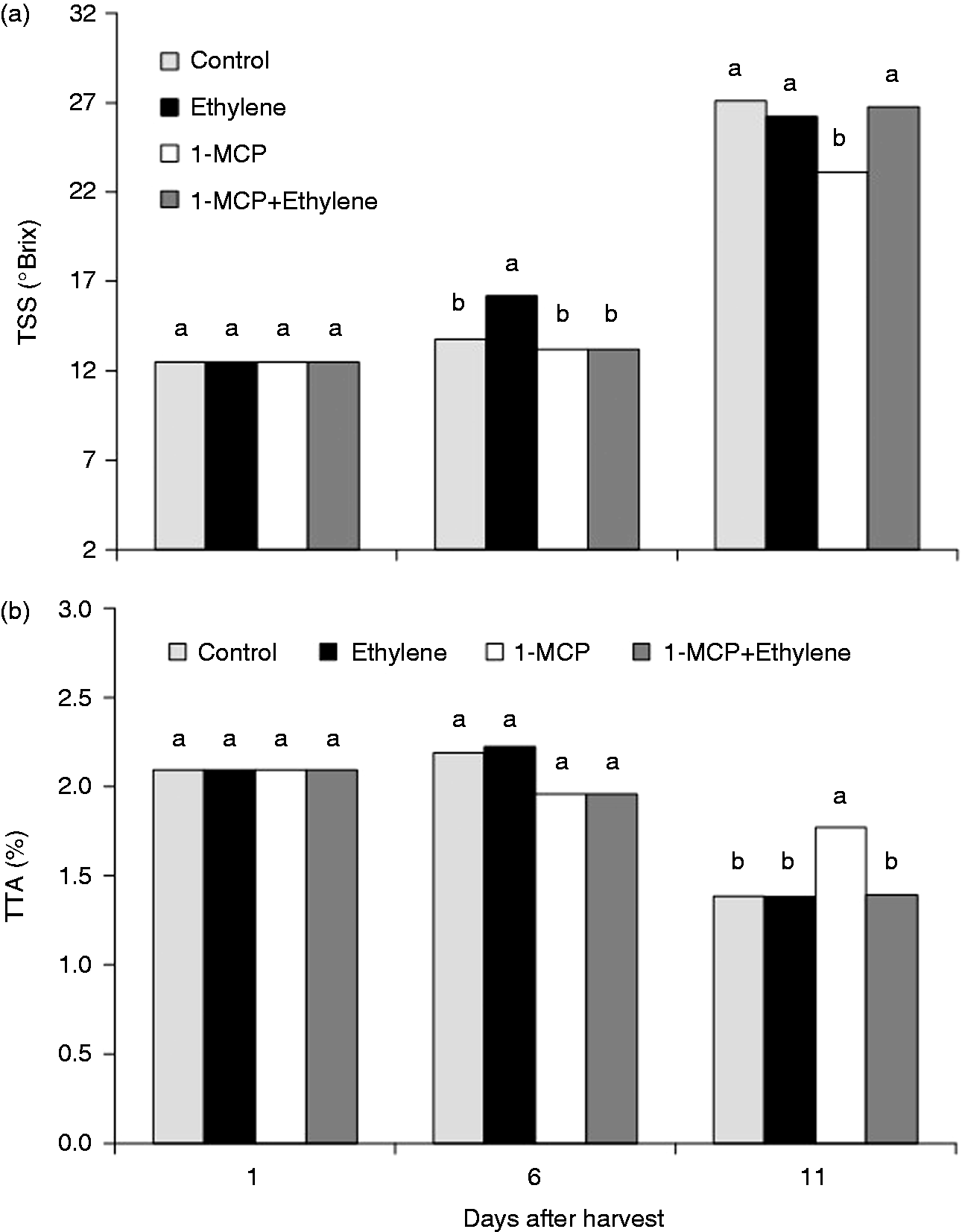
Effect of ethylene and 1-MCP on the emission of volatile compounds in the cape gooseberry fruits
The emission of volatile compounds is an important determinant of fruit quality and may also affect consumer acceptance. To determine if the potential commercial application of 1-MCP during the postharvest storage of cape gooseberry fruits affects their volatile profiling, the emission of four aliphatic esters, which have been reported to be important components of the aroma perception, were evaluated. After six days of treatments, important statistical differences (p < 0.05) in the emission of the four studied ester compounds were detected in the 1-MCP-treated fruits. The extent of the emission of ethyl octanoate, ethyl butanoate, ethyl decanoate and hexyl decanoate was reduced in fruits treated with 1-MCP, and the application of ethylene completely restored the emission of these esters as compared to the controls fruits. In fruits treated with ethylene, the emission of ethyl octanoate, ethyl butanoate and ethyl decanoate was only slightly increased, or not affected in the case of that of hexyl dodecanate, indicating that probably the endogenous ethylene produced by the fruit was affecting the emission of such volatiles (Figure 5).
Effect of ethylene and 1-MCP, individually or in combination, on the emission of the aliphatic esters (a) ethyl octanoate, (b) ethyl butanoate, (c) ethyl decanoate and (d) hexyl decanoate after six days of storage of cape gooseberry fruits at 20 ℃ and 75% RH. Means followed by different letters show statistical differences according to Tukey's test (p < 0.05).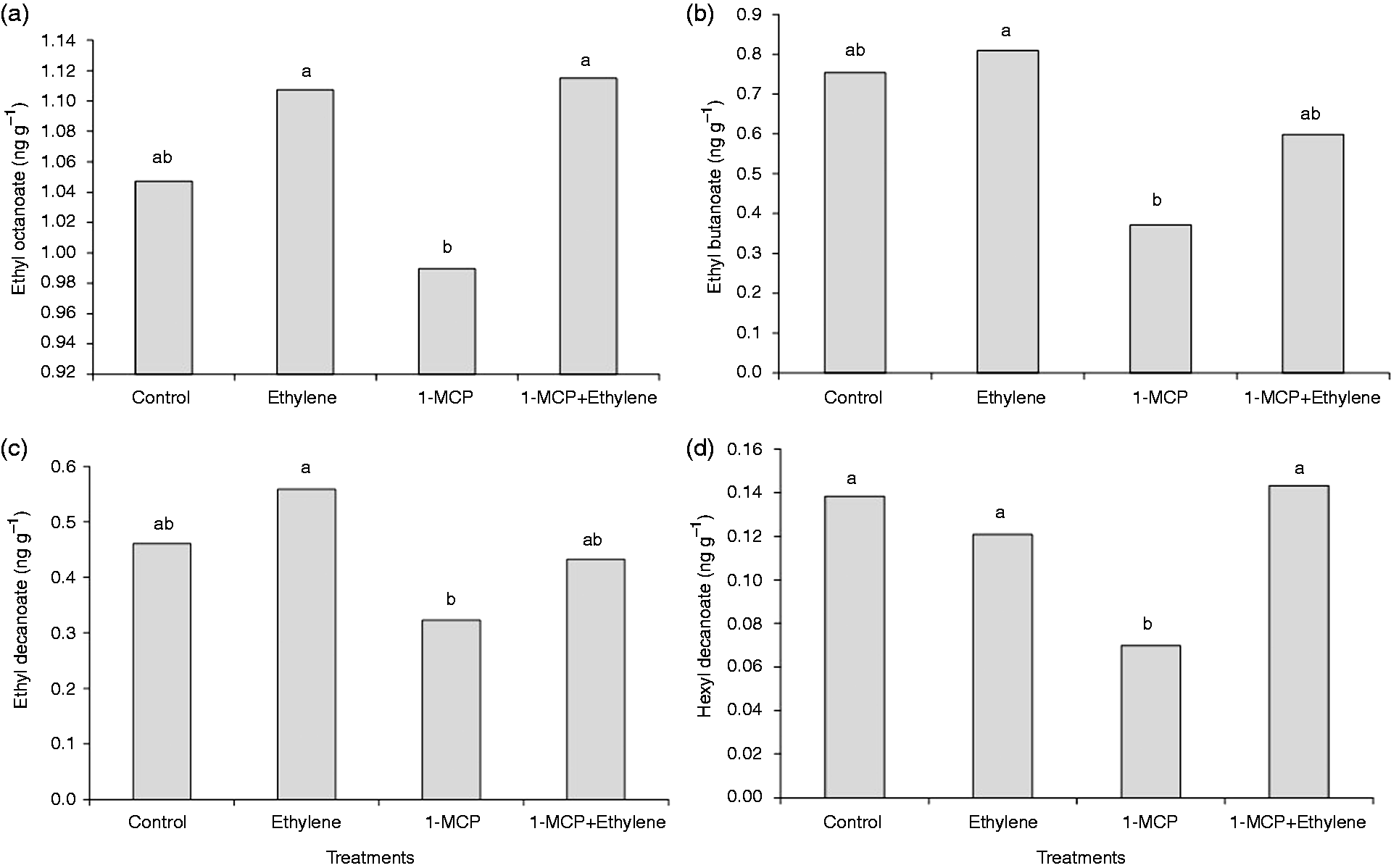
These results are in accordance with those observed for both apples and melons, where the production of volatile compounds was inhibited by 1-MCP and accelerated by ethylene (Defilippi et al., 2004; Yahyaoui et al., 2002). Similar to the results observed for banana, ethylene has been found to be a regulator of the production of volatile compounds during fruit maturation (Yang et al., 2011). Previous studies have also reported the role of ethylene in the induction of volatile esters in climacteric fruits (Beekwilder et al., 2004; Defilippi et al., 2004; Flores et al., 2002), particularly regarding the control of the AAT enzyme activity (Yahyaoui et al., 2002). This enzyme catalyzes the last step of the biosynthesis of esters with the acetylation of alcohols, transferring an acyl-CoA group to an alcohol, and it is considered the last limiting step in relation to the emission of these compounds. Ethylene regulates the reduction step of fatty acids and aldehydes, and partially the esterification of aliphatic esters, which means that the alcohol dehydrogenase enzymes (ADH) implicated in this path are ethylene dependent (Flores et al., 2002). Therefore, ethylene appears to play an important role in the regulation of aliphatic esters in many fruits (Pech et al., 2008). Thus, in cape gooseberry fruits, it is likely that ADH might be also under ethylene regulation and would then explain the increase in esters emission induced by ethylene and the reduction of these volatile compounds after the application of 1-MCP. These results provide the basis of the emission of volatile compounds during the storage postharvest of cape gooseberry fruits and clearly associated a regulation by ethylene.
Conclusions
The application of 1-MCP (ethylene action inhibitor) to cape gooseberry fruit produced a reduction in the respiration rate, ethylene production, skin color, total carotenoid content, loss of firmness and the emission of aliphatic esters. The pretreatment of the fruits with 1-MCP (1 µL L−1) may be a promising and efficient postharvest treatment to delay fruit maturity and extend the storage and shelf-life period of cape gooseberry fruits. Moreover, the results indicated the involvement of ethylene in the regulation of ripening in cape gooseberry fruits, supporting their climacteric-like behavior.
Footnotes
Declaration of Conflicting Interest
The author(s) declared no potential conflicts of interest with respect to the research, authorship, and/or publication of this article.
Funding
The author(s) received no financial support for the research, authorship, and/or publication of this article.