





Abstract
The use of healthy ingredients in meat-based products is gaining popularity. The goal of this study was to use plant proteins to partially replace meat in beef burger compositions. In a lab, ground beef burgers were made with 4%, 9%, and 14% wheat germ flour. The final products’ physical, chemical, and microbiological properties were determined. The obtained results indicated that as the amount of replacement with dehydrated wheat germ flour (DWGF) increased, the moisture and crude protein contents of fresh laboratory-made beef burgers decreased significantly. On the other hand, the level of ash and total carbohydrates increased. Also, the results showed that substituting beef with DWGF caused changes in the chemical properties (decreased total volatile nitrogen, trimethylamine, acid value, peroxide value, thiobarbituric value, and cholesterol content), color properties (increased L* while decreasing a* and b*), decreased textural properties, and cooking properties (increased water-holding capacity, water retention, fat retention, cooking yield while decreasing cooking loss) of the burger. Except for threonine and lysine, the majority of necessary amino acids in fresh laboratory-made beef burgers were steadily enhanced as the substitution level increased. For the control sample, the limiting amino acid was valine; for the beef burger using dehydrated wheat germ flour DWGF, the limiting amino acid was threonine. Even at a 9% substation level, the physical and organoleptic properties of a fresh laboratory-made beef burger containing DWGF were not changed fundamentally. As the substation level of DWGF increased, the number of microorganisms gradually reduced and the beef burger with 14% DWGF had the lowest bacterial load.
INTRODUCTION
Meat is a significant source of high-quality proteins, which, when combined with its taste, aroma, and texture profile, puts meat at the top of the world food demand list (Bohrer, 2017). Its great nutritional value is due to the inclusion of important amino acids; it is also a good source of vitamin B12, zinc, phosphorus, and iron, but is poor in carbohydrates (Godfray et al., 2018). Even though meat is an excellent source of proteins with a high biological value, there has been a growth in interest and demand for reduced meat in products. This desire is motivated by a variety of principles, including economy, health, and animal welfare (Bohrer, 2017).
Some meat-free customers choose a flexitarian diet or products with reduced animal protein content (i.e. greater plant proteins) (Kemper, 2020). On the other hand, people seeking to limit their meat consumption may benefit from the inclusion of texturized plant proteins as extenders. Extenders derived from plants will enhance the finished product's overall functional properties, such as water retention, fat emulsification, and texture (Smetana et al., 2018). These properties, on the other hand, are not noticeable when the extenders are hydrated or cooked. Proteins derived from plants are suitable for use in food preparations due to their structural integrity, which is resistant to hydration, heating, and other common food processing procedures. Furthermore, the high cost of meat, along with the lack of a customer safety guarantee, pushes producers to substitute components in the production of meat products with other substitutes (Oostita et al., 2014). In this regard, novel products must be developed to meet consumer demands and overcome market gaps.
Various plant proteins, such as legumes, cereals, oilseeds, and soy proteins may be employed to address the above-mentioned issues (Malav et al., 2015). These ingredients offer distinctive functional features (e.g. emulsification, water, and oil absorption capacity) as well as excellent nutritional benefits (e.g. well-balanced amino acids, vital fatty acids, vitamins, and easy digestibility) (Malav et al., 2015).
Wheat germ is well-known as a nutritionally raw ingredient for use in food product formulations or as a standalone meal. The chemical composition of the wheat germ was determined as 28.5% protein, 14.0% starch, 11.7% moisture, 10.4% fat, 7.5% cellulose, 6.8% hemicellulose, and 4.5% ash (Çetinkaya and Oz, 2019; Nagib, 2018). Germ-enriched bread, snack foods, and breakfast cereal additives are common uses, as well as the production of wheat-germ oil (wheat germ, containing about 8–14% oil). This oil is utilized in a variety of applications, including in food preparation, medicinal treatment, and the cosmetics sector (Zhu et al., 2006). As a by-product of the wheat milling industry in Egypt, a large amount of wheat germ (about 150,000 tons) is generated each year. Unfortunately, the majority of the germ produced is now used in the production of animal feed (Mahmoud et al., 2015). As a result, it is suggested that this by-product be utilized properly. Several studies have indicated that adding plant proteins to meat products could increase production, improve stability, and alter textural qualities. Furthermore, plant protein is effective not only in cutting the cost of finished goods but also in lowering fat and cholesterol levels (Morin et al., 2002). The use of plant proteins in the ground meat, such as texturized soybean, maize protein, sorghum flour, or lupine protein isolate, increased the water retention in the final products (Kassem and Emara, 2010). The high quantities of plant proteins in processed meat products, on the other hand, may produce color and taste issues (Feng et al., 2003). The current research was conducted to analyze the physical, chemical, and microbiological properties of a fresh laboratory-made beef burger containing wheat germ flour at escalated levels (4%, 9%, and 14%) to improve the quality of beef burgers.
MATERIALS AND METHODS
Plant origin substitute
Fresh wheat germ (FWG) was obtained from the Middle and West Delta Milling Company at Tanta, Gharbia Governorate, Egypt. Fresh beef carcasses prim round pieces and fat (tallow) were bought from the local market in Tanta city. Other chemicals were purchased from El-Gomhouria for Trading Chemicals and Medical Appliances, Egypt.
Preparation of dehydrated wheat germ flour
To inhibit all enzymes, especially lipoxygenases, FWG was steam sterilized for 10 min at 1.1 kg/cm2 in an autoclave. It was then dried at 105 °C in an electric oven, milled in a laboratory mill (Braun multi-quick system 100 2k 100, Germany), and sieved at 45 m to produce dehydrated wheat germ flour (DWGF). Rehydrating the DWGF with water at a ratio of 1:4 (w/v) produced the rehydrated wheat germ flour slurry. To gelatinize the starch and increase water binding, the slurry was heated to 65 °C on a magnetic hot plate with continuous stirring and then held at room temperature for 90 min to ensure complete hydration of DWGF (Huang et al., 1999).
Preparation of beef burger
The lean portion of fresh beef meat (FBM) was trimmed. A meat mincer was used to grind both lean (90/10) and fat (95/5) beef meat separately. The Pearson's square calculations were used to determine the amount of lean and fat portions required to make a 20% fat ground beef burger. To achieve a uniform distribution of lean meat in the mixture, ground fresh lean beef and fat were mixed again in a blender, followed by cold water. Ground beef (20% fat) was divided into 12 batches for three replications of each of the four treatments (control sample and beef meat burger contained 4%, 9%, and 14% DWGF) (Table 1). The burgers were formed and frozen between waxed paper sheets at −20 °C, then packed in polyethylene sheets and stored at −18 °C for 5 days until further analysis.
Beef burger ingredients (20% fat).
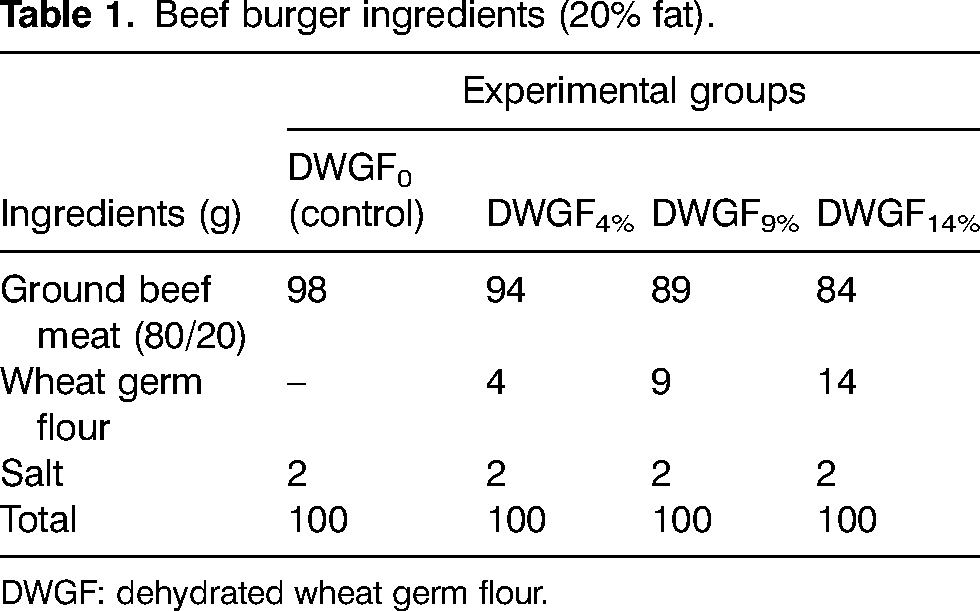
DWGF: dehydrated wheat germ flour.
Chemical analysis
FBM burgers were homogenized in a food processor before sampling for proximate analysis. Moisture, ether extract, crude protein, ash content as well as acid value, and peroxide value of FBM burger were determined according to the methods described in AOAC (2000). The amino acid composition was performed using an amino acid analyzer (Beakmann, Model 119 CL) at the Central Laboratory, Faculty of Agriculture, Alexandria University. The pH value of raw beef patties was estimated in triplets using a digital HAANA, HI902-m pH-meter (Köln, Germany) following the technique described by Elsebaie et al. (2022). Total volatile basic nitrogen, trimethylamine (TMA), and thiobarbituric acid (TBA) of the samples were determined according to the method described by Pearson (1984). Cholesterol content (mg/100 g) was estimated via a spectrophotometric technique, as previously outlined by Ramadhan et al. (2011).
Color and texture properties
The color parameters, including the CIE b*, CIE L*, and CIE a*, were determined by evaluating the color of uncooked burgers via a Colorflex Hunter Lab Colorimeter (Houston, USA) (Essa and Elsebaie, 2018). Texture parameters like springiness (mm), hardness (N), cohesiveness, gumminess (N), and chewiness (N × mm) were noted in an uncooked burger sample using a Stable Micro TA-XT2981 texture analyzer (Bradford, United Kingdom) in accordance with the procedure validated by Essa and Elsebaie (2022).
Microbiological analysis
A variety of microbiological tests were used to assess the microbiological quality of raw meat samples as well as the treated burger samples, including total mesophilic aerobic bacterial count, total coliform count (TCC), psychrophilic bacterial count (PBC), molds, and yeast (MY). All microbiological parameters were tested using APHA-approved methods (2001). The meat and burger samples were diluted in normal saline and spread onto a plate with a growth medium appropriate for each parameter. Samples were plated on a nutrient agar medium for TBC detection, MacConkey agar for TCC detection, potato dextrose agar (PCA) medium for PBC detection, and samples were plated on PCA medium for yeast and mold detection. All samples were incubated at 35 °C ± 0.5 for 48 h while MY detection samples were kept at 25 °C for 5 days.
Cooking properties analysis
In order to evaluate the cooking qualities of the burgers, they were cooked for 3 min on each side at about 150 °C on a White Whale WA-BBQ01 electric grill (Banha, Egypt). Water-holding capacity (WHC) was measured according to the method of Huang et al. (1999) while cooking yield was determined as described by Feng et al. (2003). According to Huang et al. (1999), water and fat retentions were calculated as follows:
Sensory analysis
Sensory evaluation of cooked laboratory-made beef burgers was carried out following the standard sensory evaluation procedure by Elsebaie et al. (2022). Twenty panelists, aged 24 to 55, were selected for the test from among postgraduate students as well as staff at the Food Science and Technology Department of the Faculty of Agriculture at the University of Tanta. Based on their prior experiences of eating regular beef burgers, the panelists were selected. Additionally, they were given a pre-testing session to allow each panelist to fully explain and discuss every quality that will be assessed. The test took place in a wide area of the laboratory illuminated by white fluorescent lighting. The panelists were fed the burgers at 60 °C after they were sliced into rectangular shape of around 1.5 cm × 2 cm and wrapped separately with foil. Samples of burgers were placed on a covered plate with a three-digit number. The panelists evaluated the specimens’ color, taste, firmness, meat or cereal flavor, juiciness, and general acceptability. After each specimen inspection, water and tiny flakes were made to freshen the flavor. Every panelist assessed three duplicates of every formula in a different sequence. A hedonic scale ranging from 1 to 15 was used for the sensory evaluation. A score of 1 indicates a strong dislike, while a score of 15 indicates a strong liking.
Statistical analysis
The data was analyzed using SAS, Ver. 2000 Statistics program. The Shapiro–Wilk and Levene tests were used to determine variance normality and homogeneity. The results of the one-way analysis of variance at P < 0.05 and Duncan's post-hoc test were provided as a mean of three replicates with standard deviations (SD).
RESULTS AND DISCUSSION
Proximate analysis and microbial properties of DWGF
Table 2 shows that FBM had significantly higher crude protein (N × 6.25) and ether extract contents than fresh wheat germ flour (DWGF). However, FBM had significantly lower ash and total carbohydrates than DWGF. Meanwhile, there were no significant differences between the pH values of FBM and DWGF. In terms of microbial involvement, it is clear that FBM contained a variety of microorganisms, whereas DWGF lacked such microorganisms. This could be related to the heat of autoclaving and dehydration temperatures used during the preparation of DWGF from FWG.
Proximate analysis (g/100 g on a dry weight basis), pH value, and microbial properties of fresh beef meat (FBM) and dehydrated wheat germ flour (DWGF).
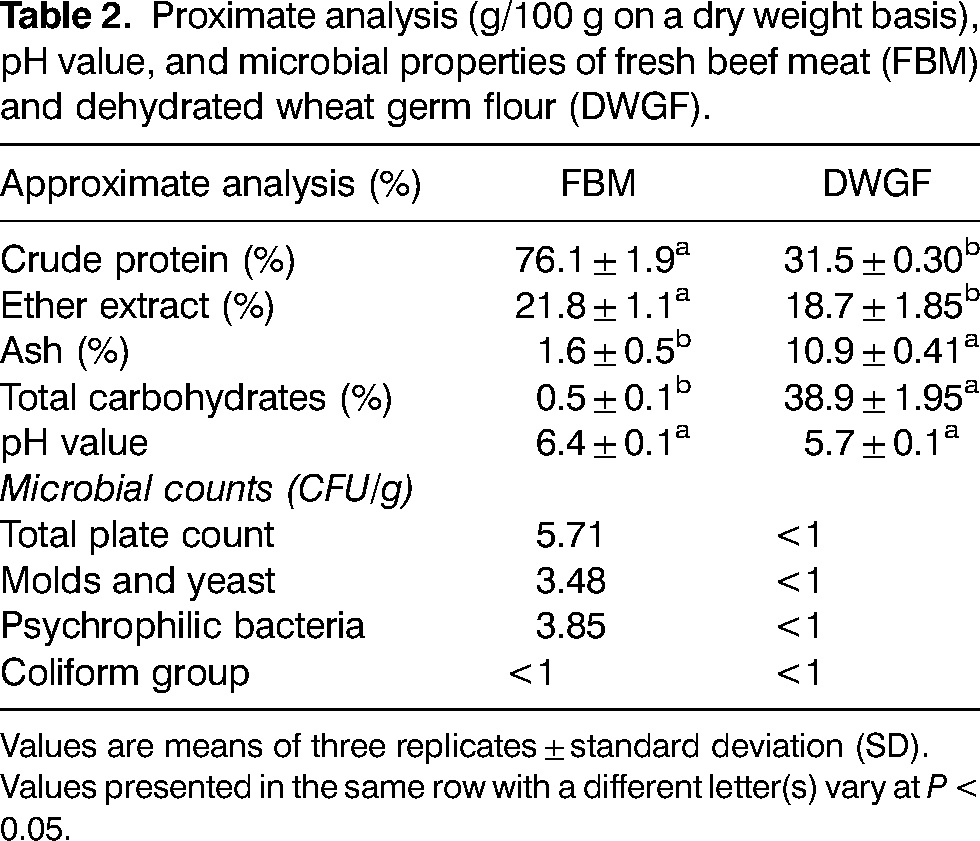
Values are means of three replicates ± standard deviation (SD).
Values presented in the same row with a different letter(s) vary at P < 0.05.
One of the most promising paths in the creation of products with a particular chemical composition is to combine elements of animal and plant origin in prescription formulations to mutually complement and enhance the lacking biologically active compounds (Chomanov et al., 2012). Furthermore, the majority of meat products are high in fats but low in complex carbs. High levels of animal fat, saturated fatty acids, and cholesterol in various meat products have been linked to heart disease, cancer, and obesity. To make meat products healthy, high-fat content should be kept to a minimum while other components with good effects should be increased (Arihara, 2006).
Moreover, meat and meat products are ideal development media for a wide range of microorganisms (bacteria, yeasts, and molds), some of which are pathogenic. Staphylococcus, Bacillus, Campylobacter, Clostridium, Listeria, Salmonella, and other bacteria are the most common genera identified in the meat before it spoils (Jay et al., 2005). These findings were similar to those of Elbakheet et al. (2017) and Nahla and Makarim (2018).
The effect of DWGF substitution on the nutritional composition of fresh beef burgers
As the level of DWGF substitution increased, the moisture and protein content of laboratory-made beef burgers decreased (Table 3). This could be since FBM contains a higher percentage of moisture and protein than DWGF, as well as the hydrophilic property of plant proteins in DWGF (Elbakheet et al., 2017). On the other hand, as the substitution level with DWGF increased, the ash and total carbohydrate contents of fresh laboratory-made beef burgers (control) gradually increased. The increase in ash and total carbohydrates in the substituted laboratory-made beef meat burger could be attributed to the fact that DWGF contains more carbohydrates and ash than FBM (Brandolini and Hidalgo, 2012). Similar results were found by Bilek and Turhan (2009) and Kassem and Emara (2010).
Proximate analysis (g/100 g on a dry weight basis) of fresh laboratory-made beef meat burger as affected by FBM substitution with DWGF at different levels (4%, 9%, 14%).
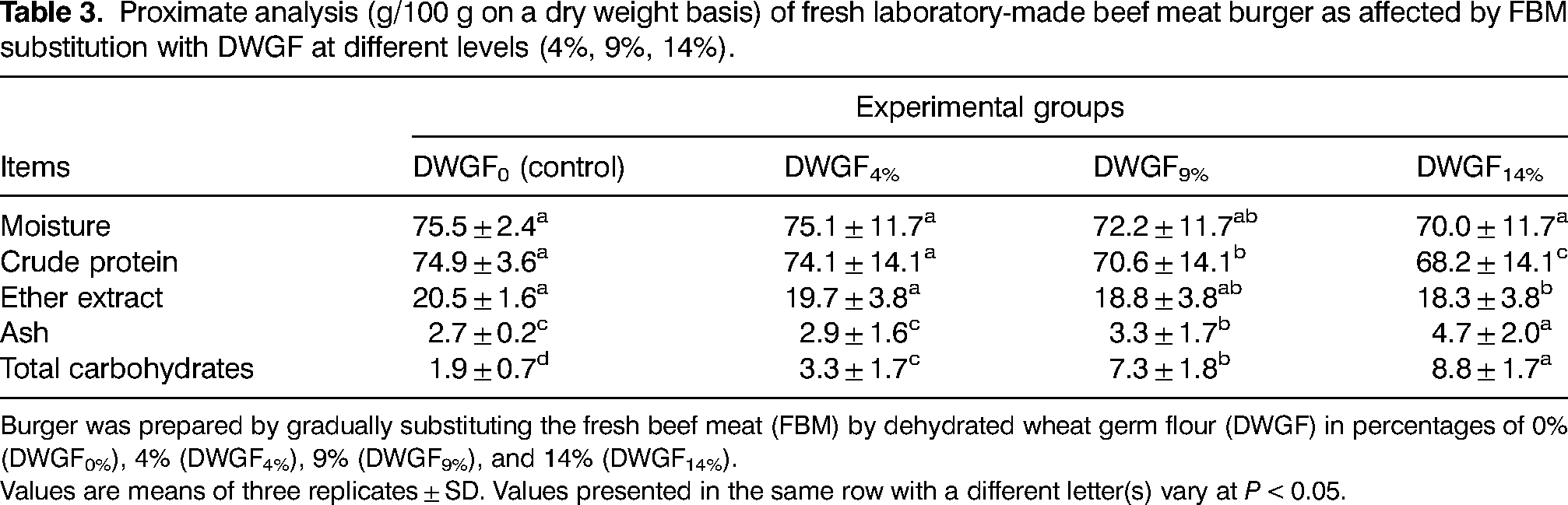
Burger was prepared by gradually substituting the fresh beef meat (FBM) by dehydrated wheat germ flour (DWGF) in percentages of 0% (DWGF0%), 4% (DWGF4%), 9% (DWGF9%), and 14% (DWGF14%).
Values are means of three replicates ± SD. Values presented in the same row with a different letter(s) vary at P < 0.05.
The effect of DWGF substitution on the amino acid content of fresh beef burgers
Table 4 shows the amino acid composition of laboratory-made beef burgers in which FBM was partially replaced with DWGF at levels of 4%, 9%, and 14%. The substitution affected both essential and non-essential amino acid profiles. Among the essential amino acids, leucine, valine, methionine, and phenylalanine increased with higher DWGF inclusion, with leucine rising from 5.91 to 6.74 g/100 g protein and valine from 3.26 to 5.67. This indicates that DWGF enhances certain amino acids, particularly branched-chain and sulfur-containing ones. However, reductions were noted in threonine and lysine, decreasing from 3.75 to 2.01 and 5.16 to 4.16 g/100 g protein, respectively—likely due to the lower content of these amino acids in wheat germ. The sum of essential amino acids remained relatively stable, ranging from 27.59 to 28.66 g/100 g protein across all treatments.
Amino acid composition (g AA/100 g protein) of a fresh laboratory-made beef burger as affected by FBM substitution with DWGF at different levels (4%, 9%, and 14%).
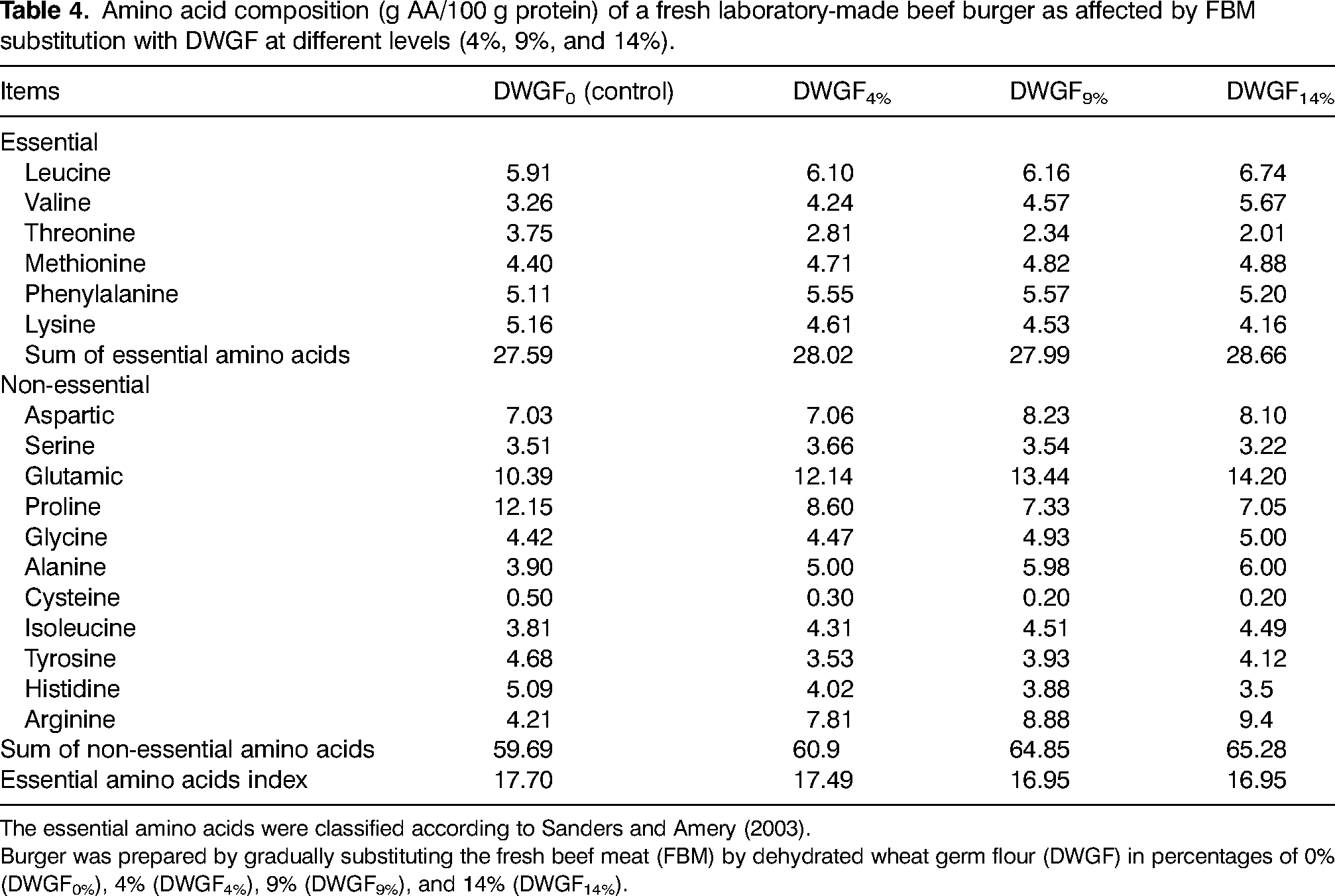
The essential amino acids were classified according to Sanders and Amery (2003).
Burger was prepared by gradually substituting the fresh beef meat (FBM) by dehydrated wheat germ flour (DWGF) in percentages of 0% (DWGF0%), 4% (DWGF4%), 9% (DWGF9%), and 14% (DWGF14%).
Non-essential amino acids generally increased with DWGF substitution. Glutamic acid, alanine, glycine, and arginine all showed considerable improvement, with glutamic acid increasing from 10.39 to 14.20 g/100 g protein and arginine from 4.21 to 9.40. These changes suggest enhanced nutritional and flavor properties, particularly through higher umami-related amino acids. Meanwhile, proline and cysteine decreased, possibly due to their greater presence in beef than in DWGF. The overall sum of non-essential amino acids rose from 59.69 to 65.28 g/100 g protein. Despite these improvements, the essential amino acid index decreased slightly with higher DWGF levels—from 17.70 in the control to 16.95 in DWGF9 and DWGF14—highlighting a modest decline in protein quality, mainly due to reductions in limiting amino acids like lysine and threonine. This could be since DWGF, as a plant protein (Zhu et al., 2006), lacks both amino acids in comparison to beef meat.
For control, valine (chemical score 0.60) was the first limiting amino acid in a fresh laboratory-made beef meat burger (Table 5). However, threonine is the limiting amino acid for fresh laboratory-made beef meat burgers supplemented with DWGF at the different levels. The defatted germ meal is the principal by-product of oil extraction, with a protein level of 30–32%, a high concentration of albumin (34.5% of total protein) and globulin (15.6%), and a well-balanced amino acid profile (Brandolini and Hidalgo, 2012). Similar findings were noted by Mikhail et al. (2014).
Chemical composition and limiting amino acid concentration of fresh laboratory-made beef burgers including FBM at varying levels of substitution with DWGF (4%, 9%, and 14%).
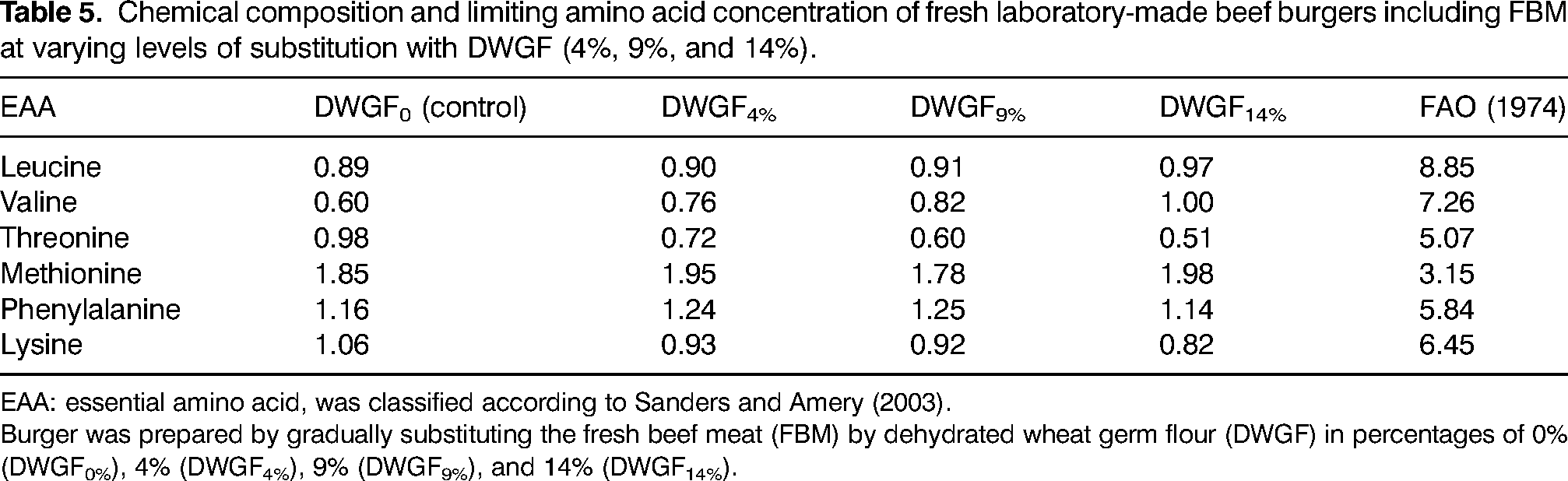
EAA: essential amino acid, was classified according to Sanders and Amery (2003).
Burger was prepared by gradually substituting the fresh beef meat (FBM) by dehydrated wheat germ flour (DWGF) in percentages of 0% (DWGF0%), 4% (DWGF4%), 9% (DWGF9%), and 14% (DWGF14%).
The effect of DWGF substitution on the chemical properties of fresh beef burgers
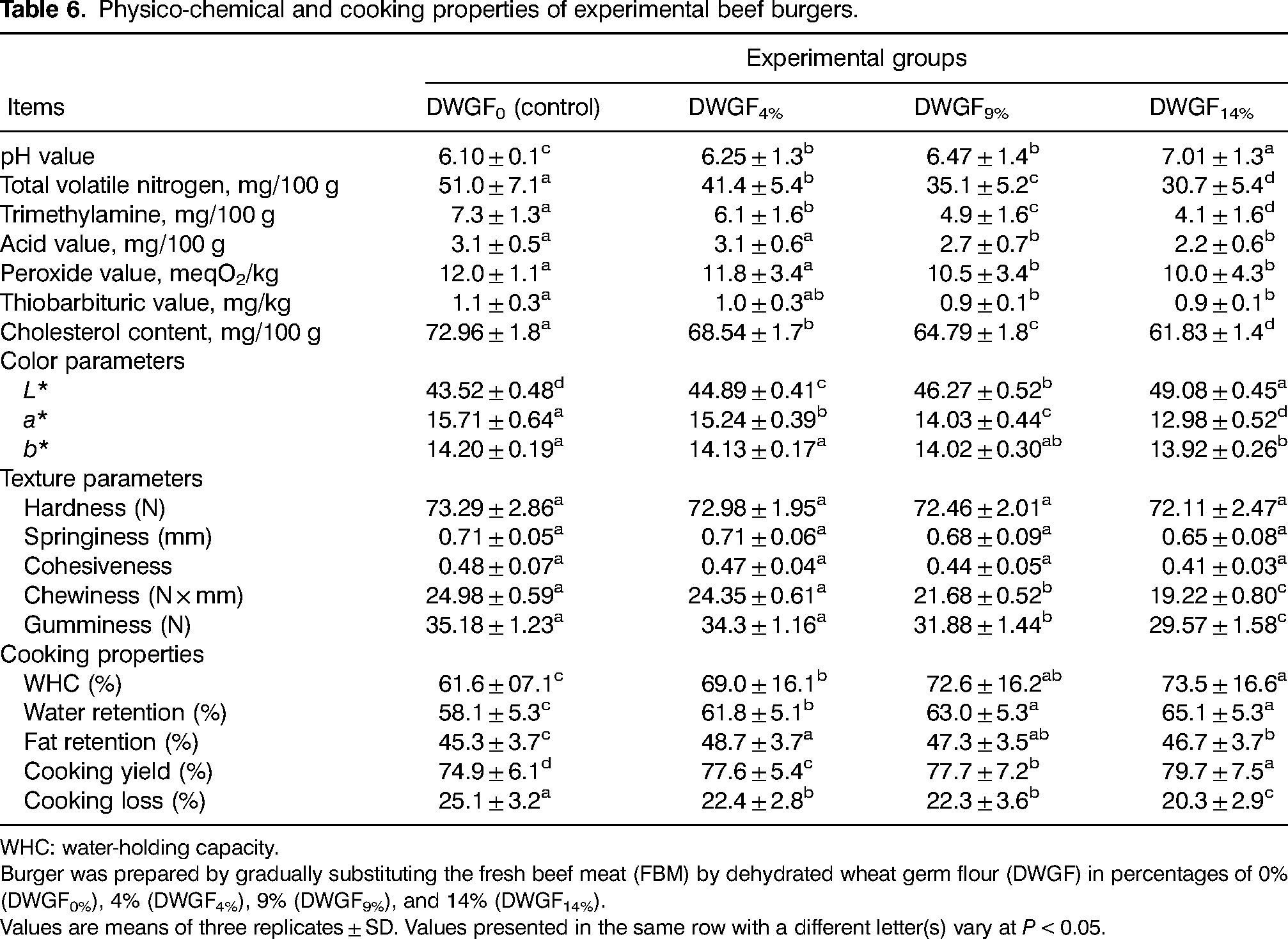
By increasing the substitution level with DWGF, the total volatile nitrogen (TVN) and TMA of fresh laboratory-made beef meat burgers were significantly reduced. In contrast, as the level of DWGF substitution increased, the pH value increased (Table 6). The increment in pH value caused an improvement in product quality, such as taste and texture. The improvement in taste are related to the fact that with increasing of pH caused an enhancement in flavor formation and amino acids antioxidant activity as well as sugars interaction products (El-Ghorab et al., 2010). Also, the increment in pH value caused an increase in WHC which caused an increment in burger juiciness and reduction in its hardness (Andrés-Bello et al., 2013).
Physico-chemical and cooking properties of experimental beef burgers.
WHC: water-holding capacity.
Burger was prepared by gradually substituting the fresh beef meat (FBM) by dehydrated wheat germ flour (DWGF) in percentages of 0% (DWGF0%), 4% (DWGF4%), 9% (DWGF9%), and 14% (DWGF14%).
Values are means of three replicates ± SD. Values presented in the same row with a different letter(s) vary at P < 0.05.
The increment of pH value may be related to the specificity of plant protein and its alkaline ash (El-Sayed et al., 2018). While the decrement in TVN and TMA could be related to low amounts of volatile nitrogen of plant proteins (Abd EL-Rahman, 2015; Huang et al., 1999) explain due to the antioxidant properties of phenolic and flavonoid compounds of wheat germ. Thus, this reduction causes an extension on the shelf life and improvement in the quality of the product.
Acid value, peroxide value, and TBA value of lipid extracted from fresh laboratory-made beef meat burgers were not significantly different at a 4% DWGF substitution level as compared with control. However, these values significantly declined at substitution levels of 9% and 14% with DWGF. These results are in agreement with Abd EL-Rahman (2015).
The replacement ratios had a substantial (P < 0.05) impact on the cholesterol levels in the burger, as the percentages of meat replacement with DWGF increased (Table 6). At 4%, 9%, and 14% replacement percentages, the cholesterol content dropped to 68.54, 64.79, and 61.83 mg/100 g, respectively, from 72.96 g/100 g for the control one. The results were consistent with those of Al-Asadi and Al-Mossawi (2021), who discovered that the cholesterol content of burgers significantly decreased as the amount of beef substituted with plant powder increased.
The effect of DWGF substitution on the color and texture parameters of fresh beef burgers
The samples’ color changed when DWGF was used in place of beef flesh (Table 6). Consequently, a notable and gradual rise in lightness (L*) was seen, indicating that the burger's lightness values dramatically decreased as the percentage of germ in the formulation rose. As DWGF was added, independent of the amount of replacement, there was a notable drop in a* in addition to this increase in L*. The b* value decreased a little as the replacement proportion increased. The color of DWGF could be the cause of this shift in the specifications for the color of the beef burger. This result was consistent with the findings of Rodríguez-Fernández et al. (2025).
Data presented in Table 6 showed that there was a decrease in all texture parameters as a function for increasing beef substituting with DWGF from 0 to 9%, but this reduction was significant in all texture parameters except for chewiness and gumminess. These results may be due to the high fiber content of wheat germ as noted by Zangana and Al-Shamery (2016). Also, there was no significant variation between control beef burgers and others prepared with substituting 4% meat with DWGF in all texture parameters.
The effect of DWGF substitution on the physical characteristics of fresh beef burgers
The WHC of laboratory-made beef meat burgers was dramatically reduced as a result of the inclusion of DWGF in the burger formula. The total net charges of the beef proteins diminish when the pH drops. Because there are fewer charged protein sites available to bind water and because muscle proteins can pack closer together due to the absence of repulsive charges, more immobilized water is forced into the free water compartment, resulting in decreased WHC.
On the other hand, when the level of DWGF replacement increased, the cooking yield, water, and fat retention of fresh laboratory-made beef meat burgers increased significantly (Table 6).
A decrease in WHC of laboratory-made beef burgers may be attributed to protein denaturation and/or aggregation, which have a significant effect on its chemical bonds, particularly the functional groups responsible for water-binding properties. However, the increases in cooking yield, water, and fat retention may be attributed to plant protein's ability to bind more moisture and fat than beef protein. Wheat germ protein flour works as a binder for the moisture and fat contained in finely ground meat (Kumar et al., 2017). These results are in agreement with those reported by Huang et al. (1999), Su et al. (2000), Abd EL-Rahman (2015), Méndez-Zamora et al. (2015), Elbakheet et al. (2018), and Kamani et al. (2019).
The effect of DWGF substitution on the sensory evaluation of fresh beef burgers
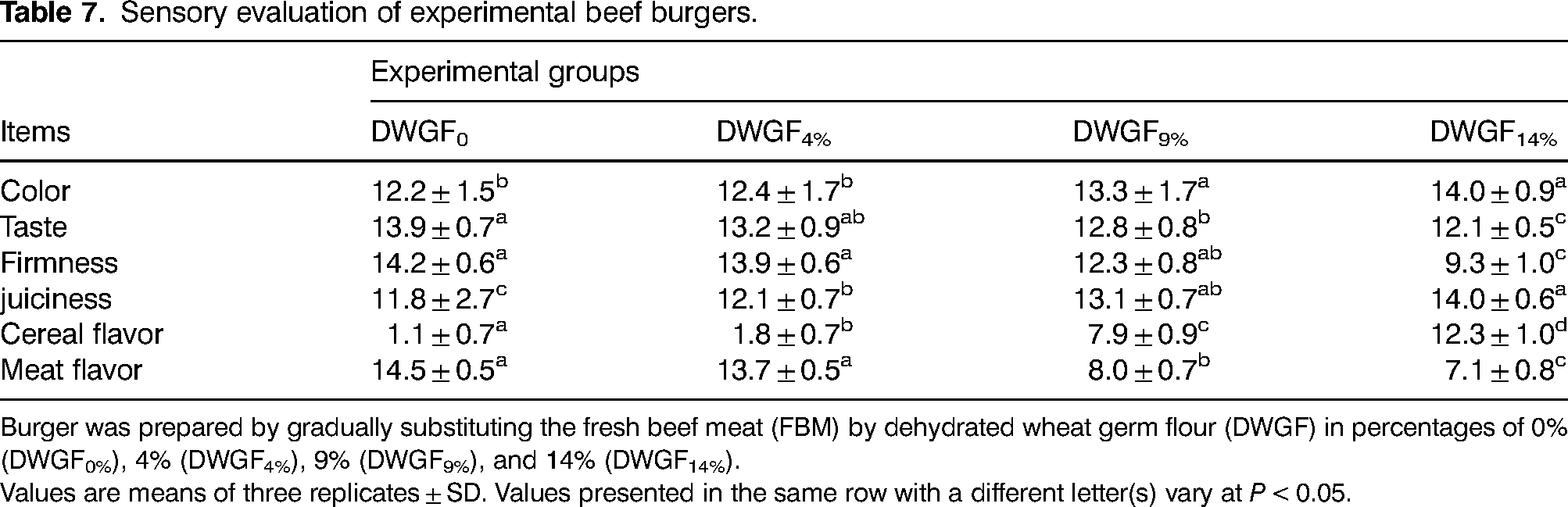
The presence of DWGF had a significant effect on the sensory evaluation of fresh laboratory-made beef burgers. However, increasing the level of DWGF reduced the color, taste, firmness, and meat flavor scores of beef meat burgers (Table 7). On the other hand, the final product's juiciness and cereal flavor improved significantly when the DWGF replacement amount was raised. The obtained results were in the same line with those obtained when meat was substituted with faba bean concentrate (Do-carmo et al., 2021) or edible mushrooms and soy protein isolate (Yuan et al., 2021).
Sensory evaluation of experimental beef burgers.
Burger was prepared by gradually substituting the fresh beef meat (FBM) by dehydrated wheat germ flour (DWGF) in percentages of 0% (DWGF0%), 4% (DWGF4%), 9% (DWGF9%), and 14% (DWGF14%).
Values are means of three replicates ± SD. Values presented in the same row with a different letter(s) vary at P < 0.05.
The reduction in the color score for prepared beef meat burgers with DWGF might be related to the dilution of meat colors and the ability of plant protein particles to adsorb meat juice (Cáceres et al., 2004; Méndez-Zamora et al., 2015). The improvement in firmness might be attributed to the increased tissue degradation caused by the greater pumping volume and the high water content of this treatment (Abd EL-Rahman, 2015; Kamani et al., 2019; Méndez-Zamora et al., 2015; Savadkoohi et al., 2014).
The effect of DWGF substitution on the microbiological properties of fresh beef burgers
The microbiological parameters measured in the present study reflect the ability of wheat germ to improve the quality of beef burgers by decreasing the number of microorganisms which may include pathogenic species responsible for a huge number of health threats for consumers. The antimicrobial activity of DWGF may be due to the ability of bioactive molecules of DWGF to interact with the microbial cell causing its damage or death of the microbial cell.
The control sample had the greatest count of total mesophilic aerobic bacterial (5.26 log CFU/g), total coliform bacteria (3.15 log CFU/g), psychrophilic bacteria (2.98 log CFU/g), as well as yeast and molds (4.13 log CFU/g) (Figure 1). Also, burger samples containing DWGF had count of total mesophilic aerobic bacterial (ranging from 5.18 to 4.04 log CFU/g), total coliform bacteria (ranging from 2.65 to 2.04 log CFU/g), psychrophilic bacteria (ranging from 2.92 to 2.60 log CFU/g), as well as yeast and molds (ranging from 2.98 to 2.75 log CFU/g).
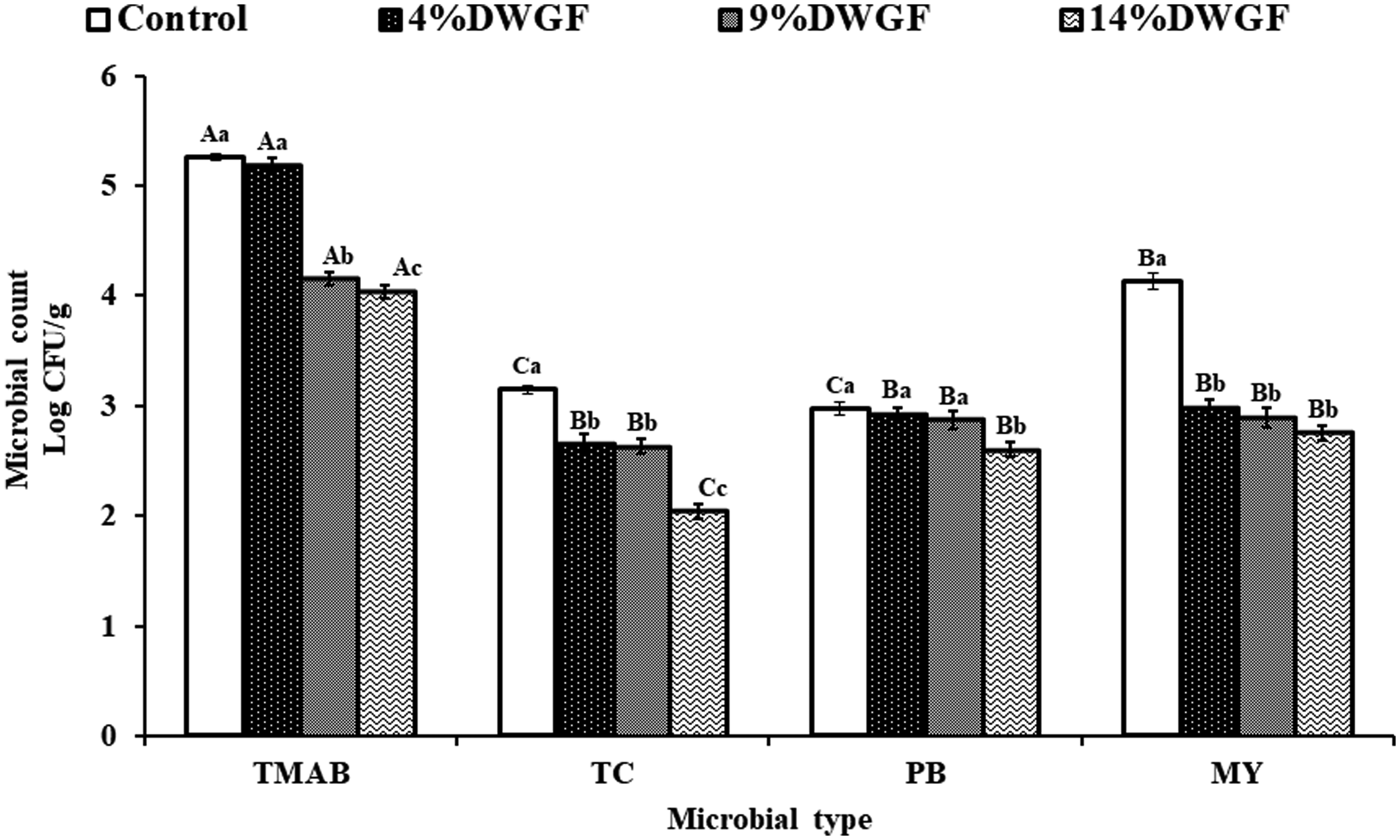
Microbiological properties of fresh burger meat and beef burgers containing DWGF.
The total mesophilic aerobic bacteria count, total coliform bacteria, psychrophilic bacteria, and total count of yeast and molds decreased gradually with the increase of wheat germ (Figure 1), whereas the samples containing 14% DWGF had the lowest microbial count. It is worth to note that the tested microbial quality criteria of all beef burger were within the permissible counts reported by EOS (2023), that recommended the total bacterial and coliform bacteria group counts not exceed 5 and 3 log CFU/g; respectively for frozen beef burgers.
The present results agreed with previous results obtained by Tariq et al. (2023) reported a high antibacterial activity of wheat germ powder against some pathogenic bacteria such as Escherichia coli, Pseudomonas aeruginosa, Staphylococcus aureus, and Streptococcus sp. In addition, Mahmoud et al. (2015) reported a high antibacterial activity of wheat germ extract against Gram-positive and Gram-negative bacteria.
CONCLUSION
Wheat germ is a by-product of wheat milling and is rich in nutrients such as high-quality proteins, minerals, vital fatty acids, sterols, and vitamins that help prevent coronary heart disease. The study investigates the nutritional and chemical properties of fresh beef burgers made with DWGF. FBM contains higher crude protein and ether extract contents than DWGF, but has lower ash and total carbohydrates. The pH values of FBM and DWGF are not significant. As DWGF substitution levels increased, moisture and protein content decreased, while ash and total carbohydrates increased. Leucine and valine content increased as substitution levels increased, possibly due to DWGF's plant protein lack of amino acids. pH values improved product quality, taste, and texture. TVN, trimethylamine, TBA, and cholesterol levels in burgers decreased with increasing substitution ratios. The color and texture parameters of burgers changed, and the WHC was reduced. Sensory evaluation showed a significant effect of DWGF, with increased levels reducing color, firmness, and meat flavor scores. The microbiological properties of burgers showed that wheat germ can improve quality by decreasing the number of microorganisms, including pathogenic species. Wheat germ flour can be added up to 4% (w/w) for the production of a beef meat burger.
Footnotes
AUTHOR CONTRIBUTIONS
Omar Turki Mamdoh Ershidat: investigation, methodology, conceptualization, data curation, software, and writing—review and editing. Mohamed Bassim Atta: data curation, formal analysis, software, and writing—original draft. Essam Mohamed Elsebaie: writing—original draft and writing—review and editing. Mohamed Reda Badr: conceptualization, data curation, formal analysis, investigation, methodology, validation, and writing—original draft.

DATA AVAILABILITY
Data are available on request due to privacy/ethical restrictions.
DECLARATION OF CONFLICTING INTERESTS
The authors declared no potential conflicts of interest with respect to the research, authorship, and/or publication of this article.
FUNDING
The authors received no financial support for the research, authorship, and/or publication of this article.