






Abstract
While the prevalence of attention deficit hyperactivity disorder (ADHD) among university students varies depending on the population studied, it has been estimated at approximately 16%. University students with ADHD may find that the condition affects their academic performance, social interactions, and well-being. This meta-ethnographic review synthesizes findings from 25 qualitative studies to explore the lived experiences of university students with ADHD. The studies, published between 2000 and 2023, were predominantly conducted in the United States with sample sizes ranging from 4 to 135 students. Students came from a broad range of academic disciplines and included undergraduates, recent graduates, and attendees of various post-secondary institutions. Findings show that difficulties with organization, time management, and maintaining focus during lectures or while completing assignments are common struggles. These students also face challenges transitioning into university life, particularly in terms of academic expectations and social participation. Whilst universities often provide accommodations such as extended test times, these supports are often too generic and insufficient, failing to address the specific needs of individual students. Furthermore, stigma around ADHD can exacerbate challenges. Tailored accommodations, such as check-ins or more flexible assessment formats, together with effective peer support programs, enhance academic success. Targeted support for the transition to the workplace may help students feel more confident as they complete their degrees. Additionally, addressing societal stigma can contribute to creating a more neurodiverse-friendly environment. There is an urgent need for universities to rethink support structures and ensure a more inclusive academic experience for students with ADHD.
Introduction
From time to time, it is common for university students to have trouble focusing and giving their studies their full attention. But for students with attention deficit hyperactivity disorder (ADHD), a lack of focus and attention can have a major effect on their university experience. ADHD is a neurodevelopmental condition characterized by persistent patterns of inattention, and/or hyperactivity-impulsivity that has a direct negative impact on academic, occupational, or social functioning (World Health Organization, 2024). The impact of ADHD can be shaped by interactions with environmental contexts, such as the structure, expectations, and support systems of educational institutions.
The university experience of students with ADHD can therefore be influenced both by the features of the condition and by the university environment. This includes the structure of teaching and assessment, the heightened emphasis on self-directed learning (as compared to high school), and the availability of university support services and policies. Even the physical environment—such as classroom layouts, the organization of online classes, and campus design—can shape how students experience university life. Social factors, including peer relationships and classroom dynamics, also play a significant role in influencing the overall student experience.
Symptoms of ADHD can affect students’ experiences in different ways and can also vary between people (Prakash et al., 2021). In children, ADHD symptoms can include struggles with attention, difficulties with sitting still or waiting their turn, forgetfulness and hyperactivity. Adults with inattentive ADHD tend to have difficulty focusing their attention and remembering details. In a university environment, this may manifest as having trouble with getting to class on time, being disorganized with projects and assessments, or becoming distracted by thoughts while in class or conversations with their peers. Conversely, adults with hyperactive or impulsive type ADHD are more likely to have symptoms associated with impulse control and restlessness (ADDA Editorial Team, 2024). At university this may result in a tendency to take over other students' tasks in group work, interrupting in conversations, and fidgeting when sitting in class. It is therefore not surprising that students with ADHD experience more academic difficulties than their peers who do not have ADHD (DuPau et al., 2018).
Students with ADHD have been reported to make up around a quarter of those who access disability support at university (DuPaul et al., 2009). Universities may provide accommodations for students with ADHD such as extra time for assessments, a quiet place to take exams or note taking services. However, there are mixed reports on the effectiveness of these accommodations for students - for instance, extra time has been shown not to improve test performance (Wadley & Liljequist, 2013). This could potentially be due to accommodations provided being too generic, or inappropriate for the student as an individual. It may be that providing accommodations is not the answer, and rather rethinking traditional teaching styles and evaluation methods may be more effective (Jansen et al., 2017). Further, a focus on the positive aspects and strengths of people with ADHD, such as creativity, may help to move away from a deficit-focused view to an empowered, strength-based approach to education (Varrasi et al., 2023).
The prevalence of ADHD in university students varies depending on the population studied and criteria used, with estimates of ADHD in university populations of 7% in the United Kingdom (Pope et al., 2007) and 16% in Mexico (Yáñez-Téllez et al., 2021). The 2022 WHO World Mental Health International College Student Project survey, based on 24 universities across nine countries, estimated 16% of college students had ADHD based on self-completed surveys (Mak et al., 2022). Some students with ADHD may not have a formal diagnosis or might only seek evaluation during their university years as a result of academic challenges and poor academic progress.
With diagnoses of ADHD continuing to increase (Abdelnour et al., 2022; Fairman et al., 2020), it is important for tertiary educators to have a better understanding of the lived experience of students with this condition, to better assist their learning. By capturing personal challenges and coping strategies from those with lived experience, qualitative research provides valuable insights into university students' experiences. Qualitative research can also reflect the diverse needs and perspectives of students with ADHD.
The aim of this study was therefore to synthesize findings of peer reviewed qualitative studies to develop an understanding of the lived experiences of university students with ADHD. Elucidating what supports and disadvantages students with ADHD will potentially contribute to environmental and cultural shifts toward a more neurodiverse-friendly university experience for students with ADHD.
Methods
Research Design
The phenomenon of interest was university students who described their views, opinions and experiences of studying at university with ADHD. A meta-ethnographic research design was used, as described by Noblit and Hare (1988) and Luong et al. (2023). This study design was chosen as it focuses on interpreting and synthesizing concepts, offering deep insights and enabling discovery of common themes across studies (Cahill et al., 2018).
Search Strategy
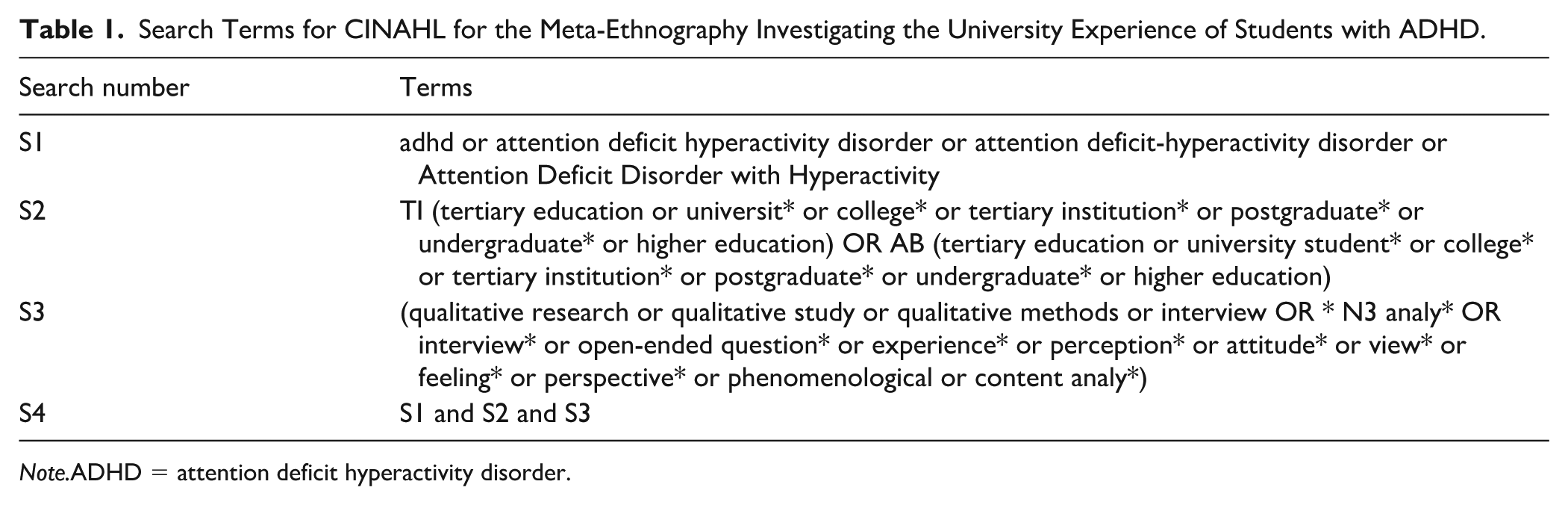
Six databases were searched (CINAHL, MEDLINE, PsychINFO, Scopus, Education Source and Proquest) with a combination of keywords, thesaurus and MeSH terms used. An example of the search strategy used for CINAHL is presented in Table 1. Searches were conducted between the 28th November 2023 to the 24th February 2024, and later in March 2026, with support from a university librarian. The PRISMA Checklist for systematic reviews was used to illustrate the search study procedures (Moher et al., 2009). Figure 1 shows the PRISMA flowchart. Covidence, a web-based collaboration software platform was used to compile and review articles (www.covidence.org). Searches were limited to English language publications, but no limits were applied to the date of publication.
Search Terms for CINAHL for the Meta-Ethnography Investigating the University Experience of Students with ADHD.
Note.ADHD = attention deficit hyperactivity disorder.
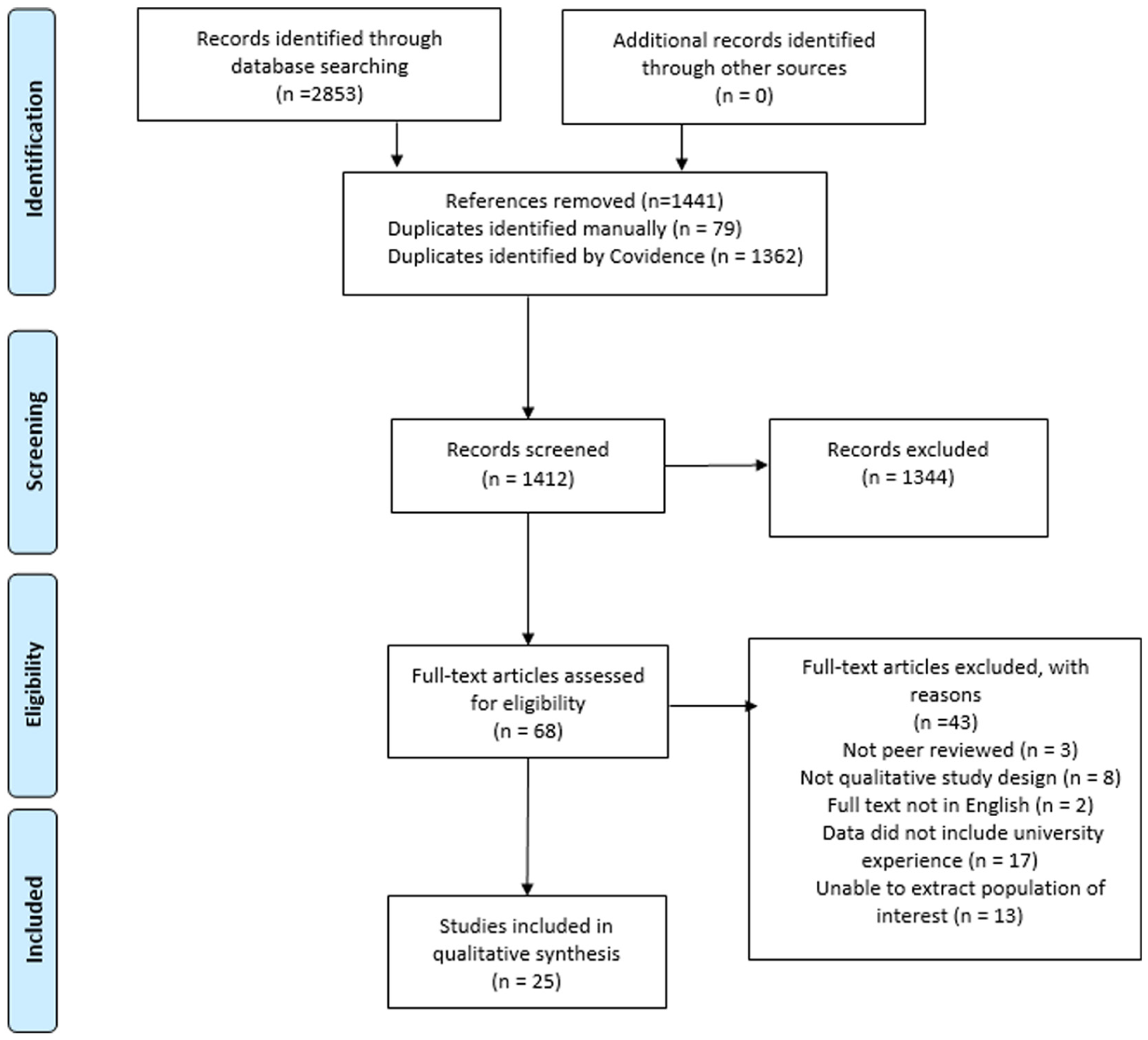
PRISMA flowchart describing the selection process of studies for the meta-ethnography investigating the university experience of students with ADHD.
Inclusion and Exclusion Criteria
The inclusion criteria for this study required participants to be university students who either self-identified or were clinically diagnosed with ADHD. Individuals with ADHD and a co-occurring specific learning difficulty or neurodevelopmental diagnosis, such as Autism Spectrum Disorder (ASD), were included to reflect the commonality of such co-occurrences (Mak et al., 2022). Eligible studies employed a qualitative or mixed-methods design, were peer-reviewed original journal articles, and had full-text availability in English. Exclusion criteria ruled out reviews, protocols, theoretical work, editorials, opinion pieces, conference proceedings, dissertations, grey literature, and theses. Studies including university students with different diagnoses were excluded if the views and experiences of students with ADHD could not be distinctly extracted. Additionally, studies examining the perspectives of individuals other than those with lived experience of ADHD, or those specifically designed to test interventions (e.g., coaching or mindfulness), were also excluded.
Screening
Once duplicates were removed, two authors screened each title and abstract against the inclusion/exclusion criteria. Any conflicts were resolved by a third author. Full text screening was conducted in the same way.
Quality Appraisal of the Included Studies
All articles were reviewed for methodological quality using the Critical Appraisal Skills Programme (CASP) qualitative checklist (https://casp-uk.net/casp-tools-checklists/) which was entered into Covidence to improve efficiency. Nine of the 10 items were rated as “yes,” “no,” or “unclear.” The final item asked reviewers to consider the utility of the research and if the results could be applied, the reviewer was instructed to provide a comment. Five study investigators independently appraised each paper (minimum of two reviewers per paper) and once completed, the appraisal findings were checked for any contrasting opinions. Variations in decision were examined, and consensus was reached via discussion amongst the research team.
Data Extraction and Analysis
Data were extracted from the articles included using Covidence. Information extracted included: the author details, title of study, country in which the study was conducted, the aim of the study, study methods, participant characteristics (gender, age, university year level), inclusion and exclusion criteria and themes including direct quotes. The data in Covidence were imported into Delve, a qualitative data analysis software (https://app.delvetool.com). The findings were then thematically analyzed by all authors following the seven stages described in Noblit and Hare (1988). Reading all the included studies (first order constructs) allowed for an in-depth understanding of key concepts before we coded extracted data (second order). In the next step, synthesizing translations, the Delve AI tool was used to brainstorm potential themes and the team reviewed these, and relationships were further explored through translating the studies into one another by comparing findings from different studies, mapping similarities and differences, where findings were compared and synthesized. The process concluded with expressing the synthesis, where the findings were presented in a coherent way and a line of synthesis was established. The research team met regularly and worked collaboratively throughout each of these stages.
Results
Study Characteristics
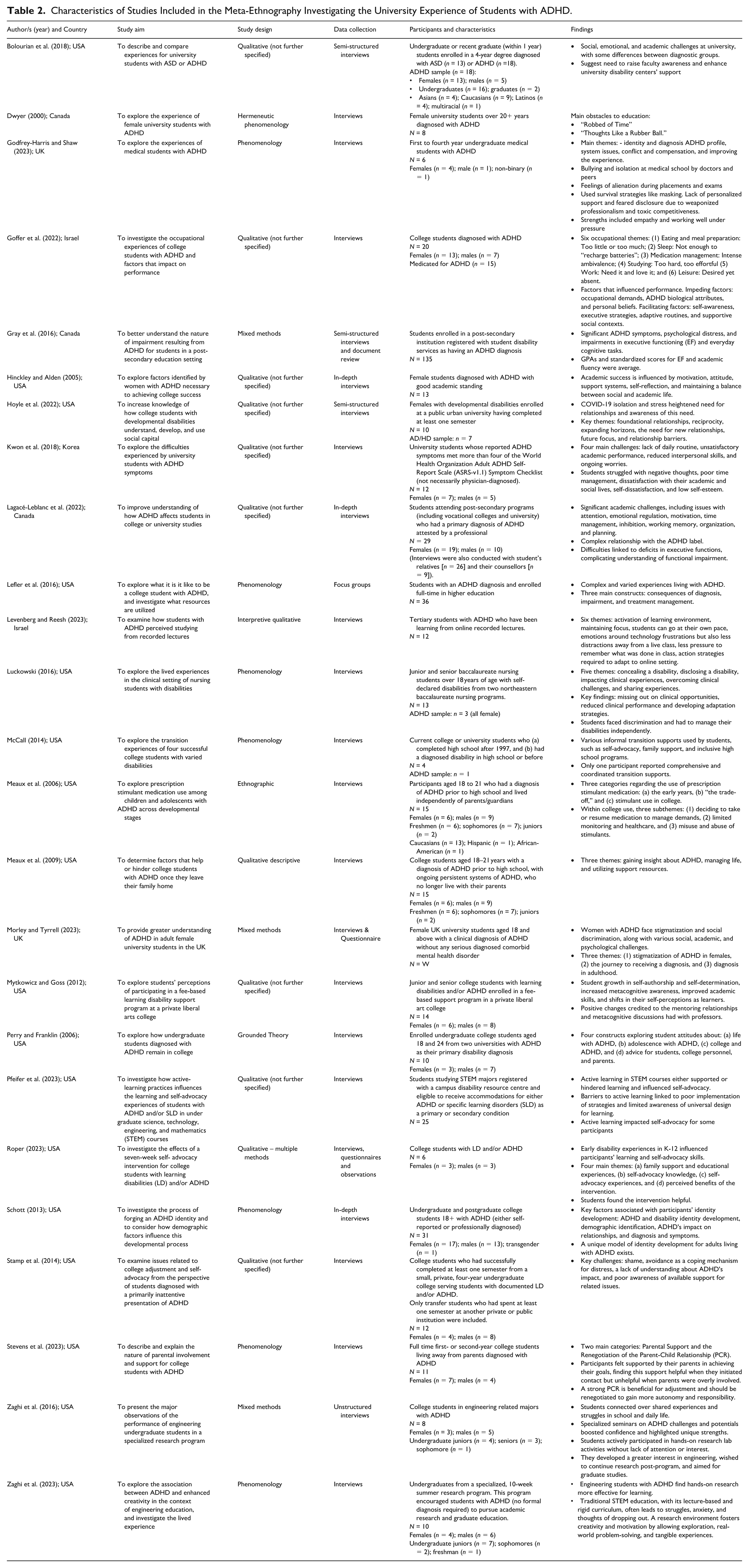
The study characteristics of the 25 articles included in this meta-ethnography are presented in Table 2. All were published between 2000 and 2023 and the majority were conducted in America. Participant sample sizes ranged from 4 to 135, with most studies having a sample size of less than 20. Students also represented a wide array of disciplines. Most studies explored the lived experiences of students with ADHD and the factors that hinder or facilitate student performance.
Characteristics of Studies Included in the Meta-Ethnography Investigating the University Experience of Students with ADHD.
Quality Appraisal
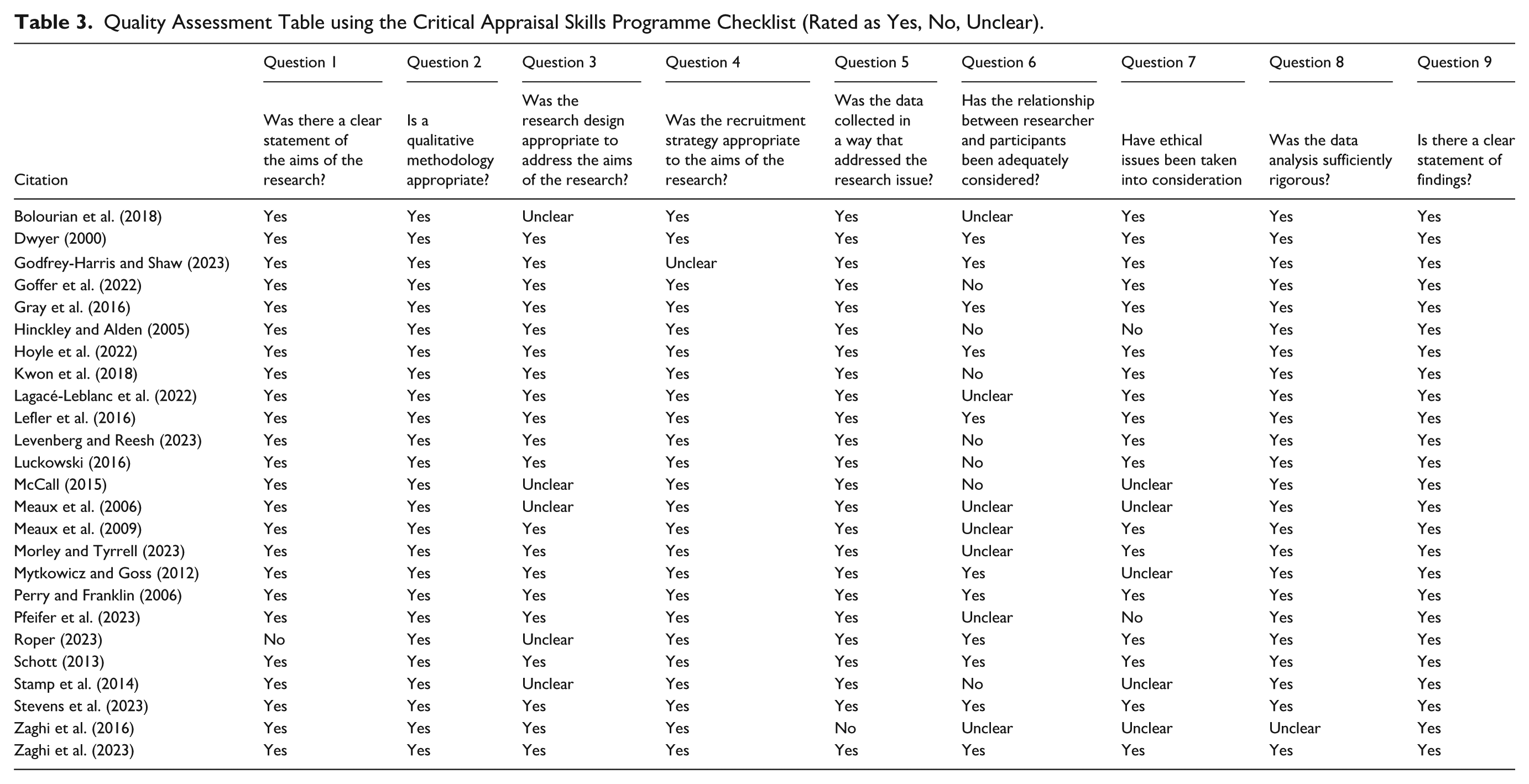
Appraisal of the reviewed papers revealed some variation in methodological quality across the studies as seen in Table 3. All studies provided a clear statement of findings, however, the relationship between the researcher and the participants was often not addressed. No studies were excluded based on quality as the experiences were clearly captured in rich data.
Quality Assessment Table using the Critical Appraisal Skills Programme Checklist (Rated as Yes, No, Unclear).
Line of Synthesis
From the studies reviewed, we have compiled a line of synthesis for the experiences of university students with ADHD (Figure 2), starting with the individual strengths and struggles brought into the university environment by students, and finishing with transition to the workforce.
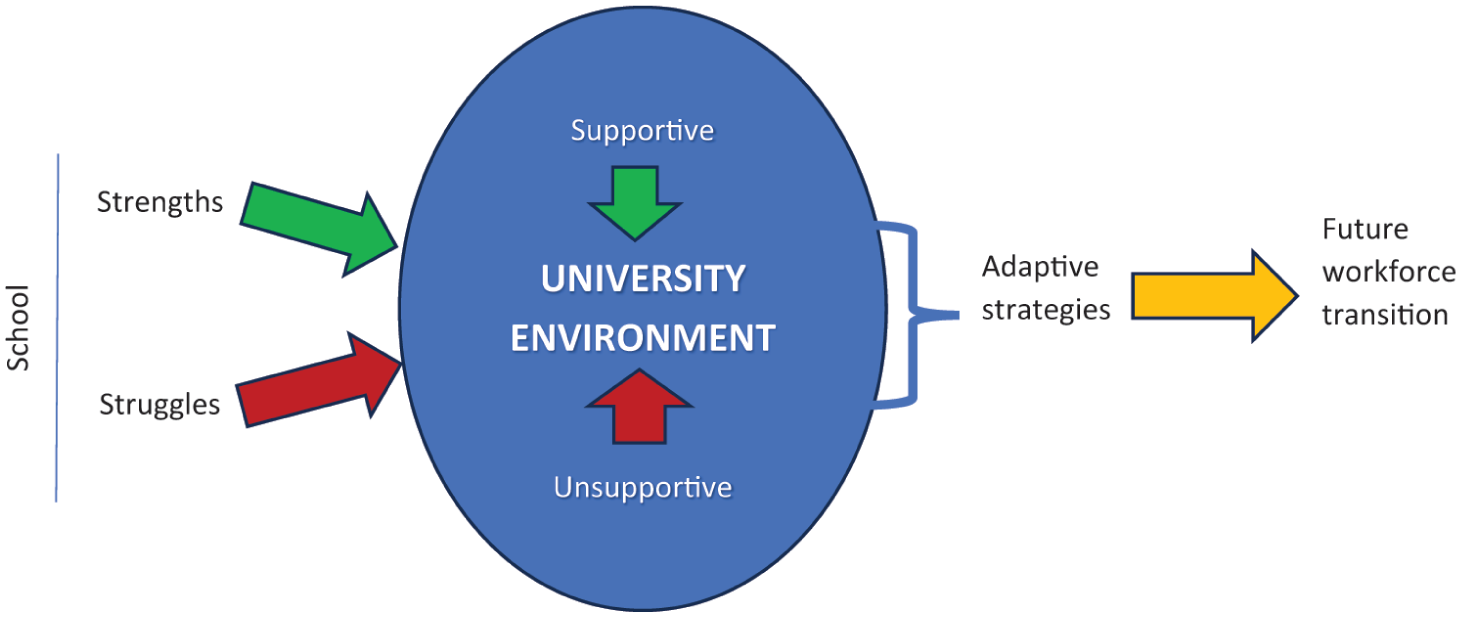
Illustration of the line of argument synthesis for experiences of university students with ADHD.
ADHD-Related Strengths
Participants described advantages of having ADHD, such as the capacity for hyperfocus, facilitating the ability to work under pressure. As a participant stated, “I am able to focus quite a lot. . .get work done, especially when I am enjoying it. . .when I get started and when I am in the zone, I can keep going for hours” (Godfrey-Harris & Shaw, 2023). Participants also stated that their ADHD led them to be more inquisitive, lateral thinkers and that these attributes were appreciated by neurotypical colleagues. Others described their ADHD as a gift (Perry & Franklin, 2006) that gave them empathy and the insight to embrace diversity. Creativity was also positively associated with having ADHD, as one participant stated, “I have always heard that people with ADHD can have more creativity, and I know I’ve been a real creative person all my life” (Mytkowicz & Goss, 2012). Students associated developing an understanding of their own ADHD and coming to an acceptance of it with more favorable academic participation and wellbeing (Meaux et al., 2009; Mytkowicz & Goss, 2012; Stamp et al., 2014). This led to a reframing of their ADHD, the realization that they were not ‘aberrant’ or alone, and to recognize the positive aspects of ADHD.
ADHD-Related Struggles
Organizational or Time Management Difficulties
Organizational or time management difficulties were some of the most reported barriers to academic performance by study participants (Dwyer, 2000; Hinckley & Alden, 2005; Lagacé-Leblanc et al., 2022; Lefler et al., 2016; Morley & Tyrrell, 2023). Lagacé-Leblanc et al. (2022) study elucidated that inaccurate perception of time led to underestimation of how long to allocate to academic tasks and resultant overloading of schedules. Participants described inadequate capacity to mentally project forward in time which impeded scheduling study activities and concurrent life priorities, such as work and family commitments. This resulted in difficulties in completing academic work, falling behind, submitting assessments late, or submitting assessments that they viewed as substandard. One participant cited difficulty completing assignments due to impaired time management, which resulted in not being able to complete courses (Gray et al., 2016). Prioritizing activity within timeframes was also identified as challenging by some students with ADHD. A student explained that his difficulties with time management were related to planning issues: “I have trouble projecting myself into the future, like with my schedule. I have trouble devising a schedule, a fixed one for the week” (Lagacé-Leblanc et al., 2022).
Attentional Difficulties
Attentional difficulties were also commonly highlighted (Bolourian et al., 2018; Dwyer, 2000; Goffer et al., 2022; Lagacé-Leblanc et al., 2022; Lefler et al., 2016; Perry & Franklin, 2006; Zaghi et al., 2023). Students described concentration lapses that caused them to lose track of what was going on in class or lose focus on assessment tasks such as exams. This sometimes resulted in taking longer to complete exams or to miss answering exam questions altogether (Lagacé-Leblanc et al., 2022). One student stated “I really get distracted during tests, especially when I’m anxious or when I’m nervous. . . I listen to everyone. If someone gets up or finishes before me, I freak out or I blank out” (Bolourian et al., 2018). Difficulty sustaining concentration was also reported to impede reading and listening: “I can’t focus long enough to retain anything [when reading]. . .if the sentence is too long, I’ve lost the concept by the end of the sentence.” Another subject described their listening difficulty as “You don’t hear anything on a focus-level but you’re very aware of everything going on around you” (Dwyer, 2000). Lefler et al. (2016) stated that some participants indicated that they do not attempt assigned readings because of reading comprehension difficulties. Students with ADHD were also noted to have particular difficulty sustaining attention on classical lecture-style teaching where teachers do not illustrate information with examples or put students to work (Lagacé-Leblanc et al., 2022). Most of the students in Goffer et al. (2022) described their learning outcomes as incompatible with their efforts, alluding specifically to simultaneously listening, writing, and actively participating during lectures. By watching recorded lectures, organization was noted to be particularly important due to the lack of a binding class time and the potential for procrastination (Levenberg & Reesh, 2023).
Procrastination
Procrastination was identified by many students as an impediment to academic performance (Gray et al., 2016; Kwon et al., 2018; Lagacé-Leblanc et al., 2022; Lefler et al., 2016; Morley & Tyrrell, 2023). This would in turn lead to high levels of anxiety and frustration and, for some students, having to retake courses of study. Difficulty getting started, or a sense of inertia, was described by some participants as causing procrastination. For others, procrastination came from attempts to avoid negative emotions. Whilst the feeling of pressure was what some students needed to commence their work; others found it so overwhelming that they avoided their work. One participant stated, “I’ll start and then I’ll get overwhelmed, and I’ll just be like ‘You know, I’m going to take a break, and then I never get back to it” (Lefler et al., 2016).
Motivational Difficulties
Motivational difficulties were described by participants as contributing to procrastination and, more generally, to less favorable academic performance (Hoyle et al., 2022; Lagacé-Leblanc et al., 2022; Lefler et al., 2016). Some reported lacking persistence in completing tasks, getting tired easily and losing interest in what they were doing. A participant stated that he “has to really like what I’m working on or risk botching it” (Lagacé-Leblanc et al., 2022).
Hyperactivity, Restlessness or Fidgeting
Hyperactivity, restlessness or fidgeting was described by students in Gray et al. (2016) and Lagacé-Leblanc et al. (2022). Participants reported feeling the need to move around in classes despite the expectation to remain seated. They also engaged in behaviours to relieve restlessness such as foot tapping, leg bouncing and picking at skin or nails. A participant described the need to “keep active, I get anxious if I’m not engaging in some kind of physical activity” (Gray et al., 2016).
Feeling Overwhelmed
A sense of feeling overwhelmed with the demands of their study caused participants to experience significant mental distress which put one student on the pathway to diagnosis with ADHD. She stated, “It just overwhelmed me. . .There was no kind of safety in anything. . .If I wasn’t in medical school I would never have been in that situation where everything felt out of control and unsupported” (Godfrey-Harris & Shaw, 2023). Masking ADHD was also described as exhausting in this study. Perry and Franklin (2006) highlighted a central theme of students’ burden of the daily hurdles that they had to jump to keep their young lives from spinning out of control.
Mental Health
Participants described internalized stigma about having ADHD. Godfrey-Harris and Shaw (2023) noted a student’s sense of inferiority: “when you have ADHD, you don’t know what’s normal and what’s not normal. You just think you’re kind of like lower than the general ability compared to your peers.” Morley and Tyrrell (2023) identified a recurring theme amongst participants of low self-esteem which had a profound impact on their social, academic, and psychological functioning. Internalized stigma was a factor that discouraged some students from seeking help from educators (Stamp et al., 2014), with the fear that asking for help may be perceived as a sign of weakness or that they may be ridiculed by other students or instructors. For some, the fears were founded on negative experiences of having asked for help in the past. For many students, avoidance of certain classes, teachers, learning specialists, tutors and disability support staff was primarily due to embarrassment about failure to follow through on assigned work, not taking action until it was too late (Stamp et al., 2014). A student in Godfrey-Harris and Shaw (2023) elucidated the harm of “depathologisation” of ADHD through clumsy normalisation: “ADHD is downplayed quite a lot. . . it’s like how people say. . . ‘every-one’s a little bit ADHD” and noted the “superpower rhetoric.” Another stated, “apparently, it’s big on social media, so I think it’s less stigmatized, but it doesn’t feel that way. . . I feel like they very much glamorize or romanticize the things that I struggle with. . . I clearly have something else. I’m clearly more broken somehow, more incapable somehow” (Godfrey-Harris & Shaw, 2023).
Some participants disclosed co-occurring mental health conditions, such as anxiety (Arash Esmaili et al., 2016; Hoyle et al., 2022; Kwon et al., 2018; Roper, 2023). Anxiety was often more prominent in interpersonal situations, impacting their ability to communicate with peers and educators. Kwon et al. (2018) highlighted the anxiety that participants experienced about their future (e.g., finding employment in their field of study) due to ruminating about past ADHD-related difficulties that engendered a sense of self-mistrust. Stamp et al. (2014) stated that 58% of their participants disclosed depression or severe discouragement related to their efforts to cope with ADHD.
Social Difficulties
Prior to commencement of tertiary education, the earlier educational experiences of some participants of being treated differently to their peers, being misunderstood, and isolated from their peers, engendered concern about social participation in the tertiary context (Hinckley & Alden, 2005; Kwon et al., 2018; Perry & Franklin, 2006; Roper, 2023; Schott, 2013). Some participants described ongoing interpersonal difficulties at university as due to a combination of factors including ADHD symptomatology, internalized stigma and social-environmental factors. For students who identified that social participation produced favorable higher education experiences, the changes and restrictions brought about by the Covid-19 pandemic magnified challenges of studying with ADHD (Hoyle et al., 2022).
Environmental Factors
Unsupportive Environmental Factors
Institutional Ignorance and Stigma
Ignorance and stigma within educational environments contributed to participants’ unfavorable learning experiences. Dwyer (2000) described participants being blamed by educators for their difficulties, quoting one as stating “. . .you’re not trying, try harder, you don’t put any effort into what you do. . .” Stamp et al. (2014) described educators’ expectations placed upon students as “myths” held by educators about a person’s ability to “get over” ADHD, quoting a participant describing educators’ beliefs as “if you actually try. . .it shouldn’t really give you any problems. You should just concentrate harder and pay better attention.” In more extreme cases, students expressed the opinion that their courses wanted them out (McCall, 2015); causing one student to drop a course. Some students had difficulty obtaining accommodations for their ADHD, despite the school’s statements to the contrary (Godfrey-Harris & Shaw, 2023). Others were offered standard accommodations such as extensions and extra time that they viewed as unhelpful, instead preferring more personalized learning plans.
Negative Interpersonal Experiences with Peers
Students with ADHD described discrimination and rejection from peers: “I have had people that tell me I am full of it. I just get frustrated. . .about not being able to maintain relationships with people because I feel like there’s some kind of a disconnect” (Schott, 2013). Other students described negative interactions with peers as due to a toxically competitive educational environment. A medical student in Godfrey-Harris and Shaw (2023) stated “at the end of the day. . . I don’t think I would get much empathy from anyone. . . I don’t think they would take me like, you know, um, seriously.” Pfeifer et al. (2023) highlighted instances where peers did not want to work with students with ADHD because they viewed their in-class performance negatively.
Unhelpful Traditional Teaching Practices
Students noted how they were disabled by the environment around them, rather than an intrinsic impairment, with one participant explaining, “people with neurodivergent conditions aren’t lesser, it’s just society” (Godfrey-Harris & Shaw, 2023). Some participants described traditional learning activities, such as lectures, as not being conducive to their learning. In Lagacé-Leblanc et al. (2022), traditional teaching methods, such as lectures, where instructors don’t give examples, don’t put students to work and don’t break the class up into teams were particularly problematic for students with ADHD. In contrast, recorded lectures were positively evaluated by students in Levenberg and Reesh (2023) as mitigating the need to sit still and concentrate until the lecture’s end. Lecturer characteristics were identified to have an important influence on the activity of students with ADHD, with one student stating “In a course where I don’t like the lecturer, when she is boring and unpleasant, it’s very difficult for me. I don’t have the energy [to study]. If it’s lecturers I like, I perform all the assignments on time” (Goffer et al., 2022).
Supportive Environmental Factors
Non-Traditional Learning Experiences
Participants identified hands-on learning experiences as facilitating a deeper understanding of subject material and their ability to apply their knowledge in a variety of contexts. One participant compared the positive experience of using divergent thinking for creative problem solving with its absence in traditional learning environments (Zaghi et al., 2023). The results of this study seemed to contradict another study where students with ADHD described flipped classroom contexts as unhelpful because they found it difficult to learn the material before class; a participant stating, “The thing I didn’t really like about the flipped class room was if you had fallen behind on lectures or homework, it just made me feel uncomfortable to struggle through questions working with other people.” (Pfeifer et al., 2023). Online recorded lectures (Levenberg & Reesh, 2023) were identified by students as empowering by way of flexible management of their learning experience.
Hinckley and Alden (2005) advocated for courses to offer opportunities for students to experiment with various learning strategies so that students could evaluate their usefulness. They went on to encourage faculties to include courses on metacognition, organization and self-advocacy for students with and without disabilities, to develop essential skills for academic success. With regards to feedback, Hinckley and Alden (2005) also advocated for the clear articulation of assessment measures so that students could direct their focus on the salient components. In addition, frequent and tangible feedback was highlighted as helpful for student performance. Although these practices are recommended for students with or without disabilities, they may be particularly helpful for those with ADHD. The establishment of strong instructor-student relationships was also deemed critical for student success, highlighting the effect of instructor encouragement. Dwyer (2000) emphasized the importance of teachers understanding the learning styles of each learner and not assuming that ADHD affects each person the same way.
Environments where medical students could safely engage with learning material together without the fear of repercussions was highlighted by Godfrey-Harris and Shaw (2023) as most conducive for learning. They gave examples of small-group discussions and simulations. Collaborative learning activities, such as small group projects, were recommended by Hinckley and Alden (2005).
Students’ Adaptive Strategies
Obtaining or Sharing a Diagnosis
Studies revealed the largely positive participant perspectives of being diagnosed with ADHD (Dwyer, 2000; Godfrey-Harris & Shaw, 2023; Lefler et al., 2016; McCall, 2015; Meaux et al., 2009; Morley & Tyrrell, 2023; Perry & Franklin, 2006; Roper, 2023; Schott, 2013; Stamp et al., 2014). Whilst some students were diagnosed in childhood or adolescence, some were not diagnosed until adulthood; their difficulty coping with an adult learning environment prompting assessment and diagnosis, especially for females, given non-stereotypical presentations (Morley & Tyrrell, 2023) and symptom masking (Godfrey-Harris & Shaw, 2023). Most participants described receiving a diagnosis positively, as emotionally validating and as a relief; “feeling like a weight had been lifted off their shoulders—an explanation for why they had been struggling in many areas of their life” (Morley & Tyrrell, 2023). Some participants, after being formally diagnosed, felt that they could undertake university study and pursue the career that they always wanted and others returned to study, believing that could “approach things differently this time around” (Morley & Tyrrell, 2023). Other benefits of diagnosis included enhanced self-awareness with one participant stating, “the best thing is being self-aware, so you can learn to live with it” (Meaux et al., 2009) and increased compassion towards themselves following diagnosis (Morley & Tyrrell, 2023).
Disclosing the Diagnosis
The issue of disclosure of ADHD was noted in many studies (Bolourian et al., 2018; Dwyer, 2000; Godfrey-Harris & Shaw, 2023; Luckowski, 2016; Meaux et al., 2009; Morley & Tyrrell, 2023; Stamp et al., 2014). Non-disclosure or fear of disclosure of ADHD was a response of some participants to the ignorance, stigma and discrimination regarding ADHD they perceived within the university environment (Godfrey-Harris & Shaw, 2023; Luckowski, 2016; Meaux et al., 2009; Stamp et al., 2014). Godfrey-Harris and Shaw (2023) stated “fear of weaponized professionalism was a barrier to participants disclosing their ADHD to the medical school” referring to the view of the behavior of people with ADHD as inappropriate or unprofessional. Despite this, many study participants viewed disclosure as bringing about a range of favorable outcomes: openness to share (Morley & Tyrrell, 2023), stigma reduction (Bolourian et al., 2018) academic accommodations (Luckowski, 2016; Roper, 2023), and more constructive relationships with teachers (Luckowski, 2016; Roper, 2023).
Seeking Academic Accommodations
Whilst some participants opted not to seek accommodations or voiced reluctance to seek accommodations, most participants reported favorable experiences and outcomes from doing so (Bolourian et al., 2018; Dwyer, 2000; Hoyle et al., 2022; Lefler et al., 2016; Perry & Franklin, 2006; Pfeifer et al., 2023; Roper, 2023; Schott, 2013; Stamp et al., 2014). Reasons for reluctance to seek accommodations included not viewing their ADHD as a disability and therefore not worthy of accommodations; Lefler et al. (2016) quoting one participant as stating ‘‘when I hear ‘disabilities’ I don’t necessarily think of mental disorders. I think physical mostly.’’ Other students did not seek accommodations in the effort to rely on their own resources with one participant stating “My philosophy is that the world is not going to make all these accommodations just for me. And I best deal with [it] while I can learn to deal with [it] . . .” (Perry & Franklin, 2006). Fear of stigma was a factor that deterred many students from seeking accommodations. Lefler et al. (2016) stated that when a focus group participant shared ‘‘There was one professor . . . who said [to the entire class] ‘John has some extra time accommodations, so I’m just going to let everybody here have extra time on this test’’ his sentiment was echoed by fellow focus group participants. Some students in the same study described the onerousness of applying for accommodations as off-putting.
Many participants reported utilizing such accommodations as extra time on tests/examinations, note-takers, alternative assessment venues and other more individually- oriented accommodations. One participant who had previously avoided seeking accommodations stated, “I think it was my therapist and I who had talked about it. And I was like, ‘You know what, maybe I’m gonna take advantage of it this semester, because I didn’t at [community college]. And now I wish I did.’ You know, just because I didn’t realize all the help that could be given to me” (Hoyle et al., 2022). Another participant stated, “I did not really know that you could ask for accommodations for test anxiety and have the professor actually believe you” (Roper, 2023).
Traditional or typical accommodations such as extra time and extensions were criticized by some participants who advocated for more personalized support in their learning plans (Godfrey-Harris & Shaw, 2023). Zaghi et al. (2023) emphasized the limitations of traditional accommodations as failing to address the underlying issue of the most popular modes of education prioritizing a style of learning with which students with ADHD struggle. A participant in Stamp et al. (2014) also criticized the problem of extra time given that he viewed his difficulty as “getting started.”
ADHD-Responsive Accommodations and Strategies
ADHD-responsive accommodations and strategies were indicated by Hinckley and Alden (2005) who stated that many participants benefitted from working with instructors or advisors to help them with organization, such as one-on-one conferencing and after-class check-ins to receive and internalize feedback, specifically about organization. Specialist support programs for neurodiverse students with such conditions as autism, learning disabilities and ADHD were deemed helpful by Hinckley and Alden (2005), Meaux et al. (2009) Mytkowicz and Goss (2012) and Perry and Franklin (2006). Many participants benefitted from the sense of safety and care that facilitated effective working relationships with their learning disability support professors (Mytkowicz & Goss, 2012) who they described as ‘friends, mentors and guides’ and who scaffolded support to promote independence. Many students reported positive experiences and outcomes with campus disability services (Lefler et al., 2016).
ADHD-Specific Peer Support and Peer Mentoring
Participants deemed formal and informal peer support activities to be highly valuable for wellbeing and academic performance (Bolourian et al., 2018; Godfrey-Harris & Shaw, 2023; Meaux et al., 2009; Perry & Franklin, 2006). Prior to meeting other medical students with ADHD, participants described ‘a culture of silence that was isolating’ for them and ‘a yearning for belonging’. Peer support with fellow medical students and medics with ADHD yielded validation, a sense of universality and exchange of material and strategies that improved their study experience, with a participant explaining “humans like to form communities with people who are similar to them in environments that are different and challenging” (Godfrey-Harris & Shaw, 2023).
Social Capital and Social Support
Social capital and social support were described by participants as necessary for wellbeing and for effective participation in tertiary education (Bolourian et al., 2018; Godfrey-Harris & Shaw, 2023; Goffer et al., 2022; Hinckley & Alden, 2005; Hoyle et al., 2022; McCall, 2015; Meaux et al., 2009; Mytkowicz & Goss, 2012; Perry & Franklin, 2006; Stamp et al., 2014; Stevens et al., 2023). Family/parental support of participants with ADHD throughout their childhood and adolescence was deemed essential and effective when the parental support was guided by a good understanding of the child’s ADHD and its treatments, empathy, and proactivity with medical and educational systems and services (Hinckley & Alden, 2005; McCall, 2015; Meaux et al., 2009; Perry & Franklin, 2006; Stevens et al., 2023). A minority of participants described experiences of parental over-involvement or conflict with parents over issues emanating from their ADHD (Stevens et al., 2023). Parental support often continued when the participants commenced tertiary education, tapering off thereafter, with more reliance on peers and college personnel. For instance, a participant stated that her mother had initiated contact with college disability services on her behalf about accommodations prior to commencing college (McCall, 2015).
Participants cited making new friends in classes, college accommodation, learning communities and through participation in extra-curricular social groups, such as improv troupes, LGBT groups and cultural associations, as highly valuable (Bolourian et al., 2018; Goffer et al., 2022; Hinckley & Alden, 2005; Hoyle et al., 2022; Meaux et al., 2009). They stated that their friends helped them stay on track, studied with them and even helped them get to class on time, one student stating, “if you are around the right people, you can overcome it [ADHD] and they can help you” (Meaux et al., 2009). Another stated “I remember my parents saying they noticed I’ve been socializing more in a few months of college than four years of high school” (Hoyle et al., 2022). The discussion/chat functions of online learning management systems were also used by a participant in Hoyle et al. (2022) to connect with peers with good effect. Participants demonstrated awareness of the value of participating in leisure and social activities (Goffer et al., 2022; Hinckley & Alden, 2005) but lamented the lack of time and finances to participate in them. Saying that, students who integrated these activities into their day-to-day routines, such as taking breaks together and walking to campus, indicated benefits to wellbeing and academic participation (Goffer et al., 2022).
Medication
Central nervous system simulant medication was viewed by most participants as helpful, and often necessary, for effective participation in tertiary education and broader activities (Bolourian et al., 2018; Dwyer, 2000; Goffer et al., 2022; Lagacé-Leblanc et al., 2022; Lefler et al., 2016; Morley & Tyrrell, 2023; Meaux et al., 2006 ; Perry & Franklin, 2006; Roper, 2023; Schott, 2013). Specific effects included improved attention, concentration and focus that ameliorated performance in class activities and assessment tasks. One student stated ‘‘I just feel like a better writer, a better speaker, . . . I interpret things better,’’ and ‘‘I went from Ds and Fs to As and Bs in one semester’’ (Lefler et al., 2016). Although the vast majority believed medication helped, many participants reported significant adverse medication effects such as insomnia, nausea, anorexia, increased thirst, irritability and feeling dulled/not themselves. For these reasons, some participants elected to medicate when required to perform academically and take intermittent drug holidays and, for fewer participants, to cease medications.
Future Workforce Transition
Some participating students described concerns regarding post-graduation, both in graduate programs and in the workforce, due to their ADHD (Bolourian et al., 2018; Hoyle et al., 2022; Kwon et al., 2018; Luckowski, 2016; Schott, 2013; Stamp et al., 2014). Some thought that their ADHD might limit their work opportunities due to their perceived weaknesses, stating that they would choose jobs that would best accommodate them. As one participant expressed, “I feel like the real world won’t be so generous towards people with ADHD” (Bolourian et al., 2018). Stamp et al. (2014) stated that half of participating students believed they could achieve future success, provided they selected a career that highlighted their strengths and minimized some of their weaknesses and that that they could overcome and/or compensate for many of the challenges they faced. The post-graduate concerns that were specific to graduate programs and to employment were identified in Bolourian et al. (2018) and could form the basis of future support for graduating students with ADHD.
Discussion
The rich insights from synthesizing the findings of qualitative studies provides educators, students and disability support services with knowledge about how to enable academic success. Given the number of included studies, it appears that further research on the experience of students with ADHD is not needed but rather greater academic attention should focus on evaluating the success of support programs and accommodations.
Our line of argument synthesis shows that there are two major points of transition for students: from school to university and from degree completion to the next stage - which may be further study, or into the workforce. Considerable attention has been paid to the transition to becoming a university student, but it appears that there has been little study of the transition at the end of the degree. This is a time of increasing anxiety for the graduate who is unsure if they are going to be able to transfer the strategies they have employed to ensure future success, or if they will be able to secure the same accommodations in the workplace. Universities could assist by expanding current employability supports to specifically address the transition process for students with a disability including ADHD.
It is evident when reading the included articles that there has been a shift in thinking over time to be more inclusive of students with ADHD. However, students still report experiencing stigma from peers and staff, especially in academic programs that are highly competitive such as medicine. To access accommodations from the university, students generally are required to have a diagnosis and provide medical evidence and some students may be hesitant to disclose this due to stigma. Until stigma is addressed in the tertiary sector and in broader society there will be limits to what can be achieved with students employing strategies or using accommodations to support their learning.
Once students seek support from university disability advisors, they are usually able to access accommodations to support their learning. However, typical or traditional accommodations, such as extra time for assessments and examinations, do not address difficulties with organization, time management, and actually getting started on assessment tasks. Individually tailored accommodation and support that meets the needs of the student with ADHD, such as regular organization check-ins, are recommended. Online lecturers are appreciated by students with ADHD as it allows them to view or listen at their own pace, in an environment with less distractions than a classroom (Levenberg & Reesh, 2023). Peer support and peer mentoring programs are showing promise and could be more widely promoted and implemented.
In addition to tailored supports, students would benefit from gaining more knowledge about meta-cognition which could easily be provided by disability support departments within the university and have been shown to be effective (Álvarez-Godos et al., 2023). Workshops or short courses could be scaled up to include students with other disabilities such as anxiety or other forms of neurodivergence. Given the growing numbers of students who experience anxiety or live with ADHD or are neurodivergent, education about meta-cognition would appear to be a wise investment.
Strengths and Limitations
The study design is an important strength of this research. The line of synthesis used in this meta-ethnography captured the overall experience of university students based on studies with different focuses. By comparing and synthesizing 25 different in-depth studies, we were able to connect separate findings into a cohesive narrative. This approach is particularly valuable in qualitative research, because it can illustrate the shared and unique aspects of students’ experiences across different studies. Additionally, the decision to include studies conducted before ADHD was reclassified from a hyperkinetic disorder to a neurodevelopmental disorder in the ICD-11 further strengthens this study. This ensured our analysis was not constrained by arbitrary cut-off dates, allowing for a broader exploration of the literature.
However, some limitations should be noted. We were unable to include all potentially relevant studies because some studies combined data for students with ADHD with students with other conditions, and it was not possible to isolate findings specific to students with ADHD. This exclusion may have resulted in the omission of some additional insights. Our search was limited to studies published in English, which may have introduced language bias and excluded relevant research conducted in other languages. Although we used rigorous methods to ensure transparency and reliability, some interpretive judgment was involved in determining themes and the line of synthesis. We acknowledge that alternative interpretations of the data may also be possible.
Implications for Practice
In addition to the suggestions that have already been made in this section, there are implications about the importance of a diagnosis. Only a minority of university students with ADHD access treatment services and special academic accommodations (Chew et al., 2009). Obtaining a diagnosis of ADHD is often a lengthy and expensive process and is not accepted within some cultures. Students who have not been diagnosed may need support through the diagnosis process. Confidential online screening for all first-year students has been suggested (Mak et al., 2022).
There is a clear need to tailor the accommodations for individual students which may necessitate upskilling of disability advisors and teaching staff to effectively tailor to students’ individual requirements. It also requires getting to know each student as a unique person. Having time allocated within academic workloads for this more personal approach would increase the chances of success, although this can be challenging in a time of uncertain budgets and fiscal restraints. Final year students may particularly benefit from tailored resources to assist with their transition into the workplace.
Our results also highlight the need for universities to prevent disadvantage or harm to students with ADHD and other psychosocial disabilities from the stigma and discrimination that many have reported in this study. Promoting a campus-wide culture of inclusivity and respect can help students with ADHD and other conditions feel seen and supported. Initiatives could include awareness campaigns, structured social activities, promotion of peer support networks, and establishing student advocacy groups. A safe, anonymous system for students to report instances of stigma may help to identify areas for improvement and quickly address any harmful behaviors. University staff training can also help lecturers and tutors to better understand ADHD, clarify misconceptions and provide more effective strategies for supporting students.
Conclusion
Students with ADHD starting at university bring their own strengths and challenges to the university environment, which can be both supportive and unsupportive in different ways. As they go through their course, students develop their own adaptative strategies such as asking for academic accommodations, working on self-management, taking medication, participating in social groups, and utilizing peer support. These experiences subsequently feed into future workplace transition. Our meta-ethnography highlights numerous opportunities for improvement, with teachers, university administrators, student support services, and peers all playing important roles in creating a more positive university experience for students with ADHD. Prioritizing pathways for diagnosis, encouraging cultural change, and providing both tailored support through the course and specific support for the transition process to the workplace are likely to improve both the academic and social experiences of students. This will help to foster a more inclusive and effective university community.
Footnotes

Author Contributions
All authors contributed to the study conception and design, and data extraction and analysis. Searches were conducted by TT, MM and EP under the supervision of AC. The first draft of the manuscript was written by MM, EP, TT, MS and TO’S. All authors commented on subsequent versions of the manuscript. All authors read and approved the final manuscript.
Funding
The authors disclosed receipt of the following financial support for the research, authorship, and/or publication of this article: The School of Medical and Health Sciences at Edith Cowan University funded Covidence access. We would also like to acknowledge the support for open access publishing through the Edith Cowan University CAUL agreement.
Declaration of Conflicting Interests
The authors declared no potential conflicts of interest with respect to the research, authorship, and/or publication of this article.