






Abstract
Key Points
Six-step exhibits movement-inherent asymmetry, with greater lower limb range of motion demands on the axis side.
The asymmetrical pattern of Six-step provides a basis for movement assessment in breakers and informs future research on mobility, strength, and technique-related demands.
Future research should investigate the biomechanical and clinical significance of repeated exposure to Six-step asymmetry.
Introduction
Breakdancing, also known as breaking, is widely recognised as a form of self-expression that encompasses cultural, artistic, and dance-sport elements. Recently, the global development of breaking has culminated in its inclusion in the official competition for the 2024 Paris Olympics. However, epidemiological studies have reported a higher incidence of injuries, including injuries to the lower extremities, in breaking than in other dance genres.1-4 Breaking features acrobatic, full-body movements,5-7 and is considered a significant contributing factor to injuries. One such movement is called “footwork”: dancers perform intricate steps with their feet while alternately supporting themselves with their hands on the floor. Footwork is characterised by rapid movements; it requires larger lower-extremity ranges of motion (ROMs) than do other dance genres 8 and has been linked to bilateral hand injuries 9 ; however, the mechanisms and risks of lower limb injuries remain unclear. Generally, movement asymmetry and unilateral overuse are established risk factors,10,11 underscoring the need to clarify side-specific demands during breaking. “Six-Step” is the most foundational footwork pattern practised across skill levels and frequently used as an entry to more complex sequences. Because its execution varies in the direction of rotation according to the dancer’s axis, the interlimb joint demands are expected to be inherently asymmetric. Therefore, this study investigated the side-specific lower limb ROM requirements during a Six-step task, accounting for axis-limb dominance, using a markerless motion capture system.
Materials and Methods
Ten breakdancers (hereafter referred to as breakers), including nine male and one female dancer, with a mean age of 29.0 ± 10.8 years (range: 8-39 years) were included in this cross-sectional study. All participants had sufficient proficiency in performing footwork movements and were experts in breaking. Of the ten participants, each met at least one of the following criteria: five had achieved the first place in regional dance battle competitions, nine were currently active competitors, five had served as judges, seven were working as instructors, and two were enrolled as dance school students. Exclusion criteria were participants with ongoing injuries under treatment, an inability to perform basic footwork movements, or contractures in any limb joint; however, no participants were excluded from the present study. This study was approved by the Institutional Clinical Research Ethics Committee (Approval No.: 2408016). All participants provided written informed consent before enrolment. Height, weight, grip strength, breaking proficiency, and standardised limb length were assessed as the physical characteristics. Breaking proficiency was defined as the total practice duration (hours) calculated based on self-reported weekly practice time and years of experience from a questionnaire survey. Standardised limb lengths were calculated by dividing the upper and lower limb lengths by the body height. The participants’ characteristics are summarised in Table 1.
Participant Characteristics.
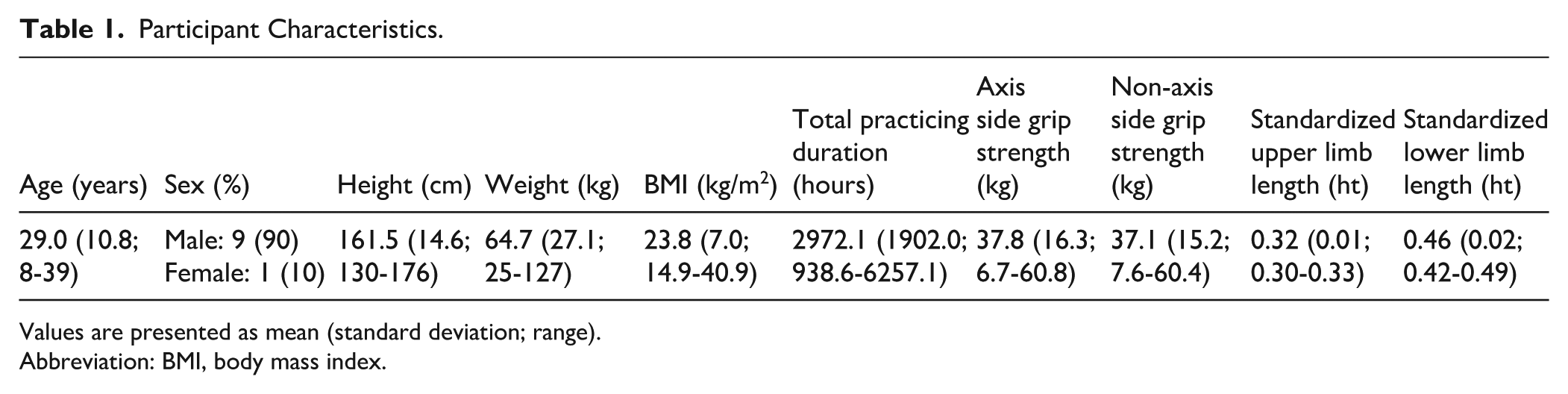
Values are presented as mean (standard deviation; range).
Abbreviation: BMI, body mass index.
This study evaluated Six-step, a movement in which dancers rotate their lower body once while performing a six-phase step sequence (Figure 1, Supplemental Video 1). Two rotational directions exist in this process: clockwise and counterclockwise. Dancers typically select their rotational direction based on their axis hand and foot, which constitute the primary stance during breaking. Dancers with right-axis dominance were predisposed to rotate clockwise, whereas those with left-axis dominance rotated counterclockwise. In the present study, four participants exhibited right-axis dominance with clockwise rotation and six exhibited left-axis dominance with counterclockwise rotation.
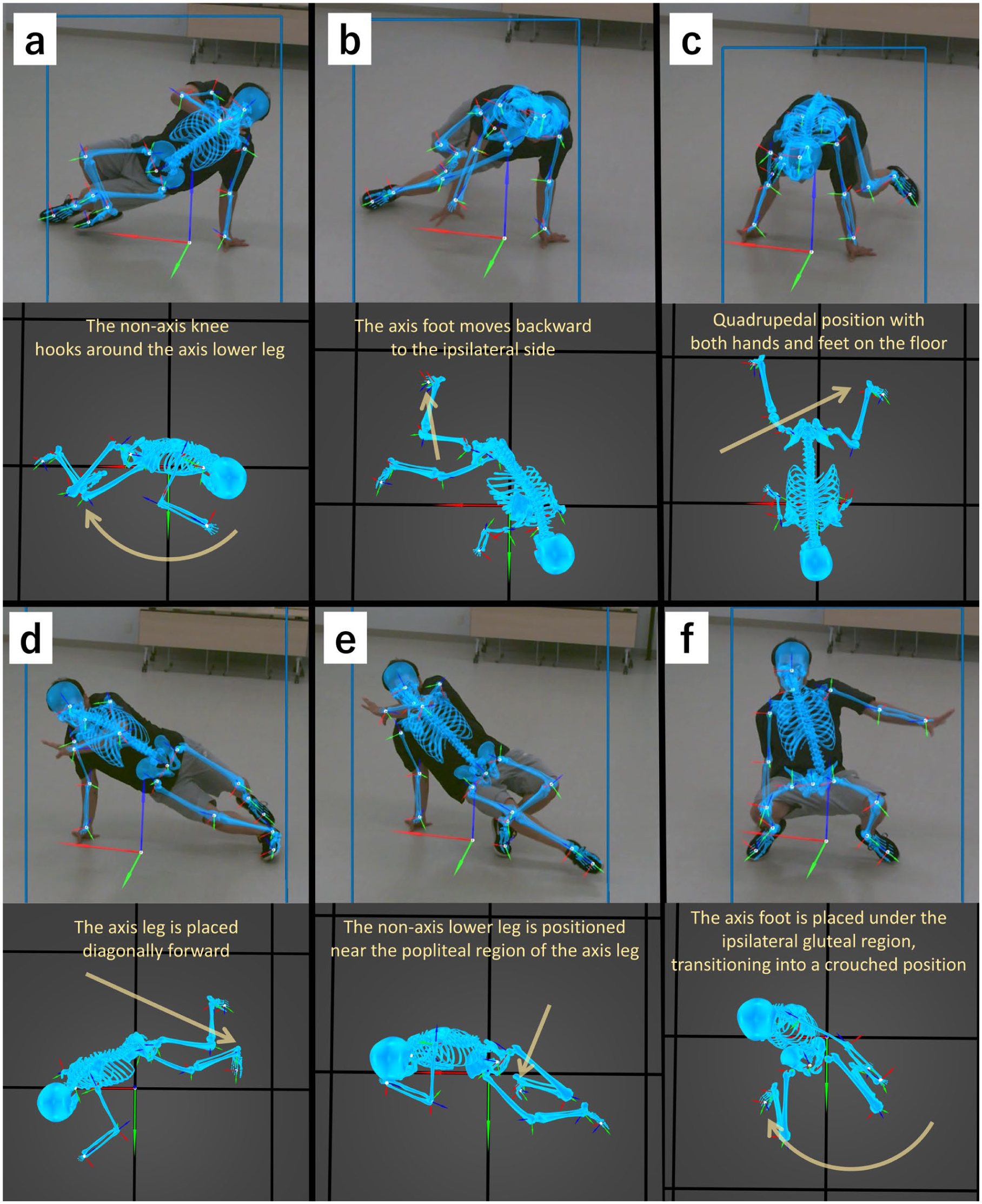
Schematic photographs of a clockwise Six-step by a right-axis breaker. (a) Phase 1, (b) Phase 2, (c) Phase 3, (d) Phase 4, (e) Phase 5, and (f) Phase 6.
The Six-step process was delineated into separate phases as follows. Phase 1: The non-axis knee hooks around the axis lower leg with support from the non-axis hand and both feet (Figure 1a). Phase 2: The axis foot moves backwards to the ipsilateral side, supported by the non-axis hand and both feet (Figure 1b). Phase 3: Quadrupedal position with both hands and feet on the floor (Figure 1c). Phase 4: The axis leg was placed diagonally forward, with support from the axis hand and both feet (Figure 1d). Phase 5: The non-axis lower leg was positioned near the popliteal region of the axis leg and supported by the axis hand and both feet (Figure 1e). Phase 6: The axis foot was placed under the ipsilateral gluteal region, transitioning into a crouched position supported by the tiptoes while switching hand placement on the floor (Figure 1f). The entire Six-step cycle was defined as one torso rotation throughout the six phases (Phases 1 to 6).
Global biomechanics were measured using the markerless motion capture system Theia3D (Version 2021.2.0.1675; Theia Markerless, Inc., Kingston, ON, Canada). This system estimates and constructs three-dimensional models from two-dimensional video data by utilising deep-learning algorithms trained on a dataset of more than 500,000 digital images. One remarkable advantage of markerless motion capture is the elimination of the need for reflective markers, which allows measurements to be performed in a more natural setting without interfering with the dance performance. Additionally, several studies have demonstrated that markerless systems achieve an accuracy comparable to that of marker-based motion capture systems,12,13 regardless of clothing type. 14 Furthermore, recent validation studies confirmed the reliable accuracy of both upper and lower limb kinematics, including sports-related movements.15,16 Data acquisition was performed using Qualisys Track Manager (Version 2021.1.6470; Qualisys AB, Gothenburg, Sweden) controlled by a high-speed camera system comprising six Miqus High-Speed Plus MICOLOR/P cameras (Qualisys AB, Gothenburg, Sweden). Video data were recorded at 85 Hz at a resolution of 1080p. The cameras were arranged within a 7 m × 10 m measurement area, with four cameras positioned at the corners and two at the midpoints of the shorter sides, all mounted at a height of 2 to 3 m. Three-dimensional space calibration was performed via epipolar matching, following the manufacturer’s recommended protocol, using a ground plane and T-frame wand calibration tool (WAND CALIBRATION SET 130456, Qualisys AB, Gothenburg, Sweden). The extracted three-dimensional models were subsequently analysed using Visual3D software (C-Motion Inc., Germantown, MD, USA).
Each participant was instructed to perform four continuous cycles of the Six-step process within the recording area, starting from Phase 1. The participants wore their usual training attire and footwear without additional accessories such as support braces, hats, or masks. No specific beats per minute (bpm) for the music were designated; instead, participants performed six steps at a speed suitable enough to maintain smooth movements and consistent silhouette quality. The average performance speed of the evaluated Six-step cycles across participants was 0.51 ± 0.08 cycles per second. The second and third cycles, which were the least affected by silhouette disruption or acceleration effects, were selected for analysis from the four cycles.
The hip and knee joint angles, parameters for which the system demonstrated reliable measurement accuracy, 16 were assessed for joint parameter evaluation. The system enables frame-by-frame measurements of joint angles across six degrees of freedom for each joint, particularly flexion/extension, adduction/abduction, and internal/external rotation. Subsequently, the mean differences in the maximum ROM between the axis and non-axis limbs were compared, and the correlations between the maximal ROM of each joint were analysed. Furthermore, correlations were analysed between interlimb differences in maximum ROM and participant characteristics, including age, height, weight, body mass index, total practice duration, grip strength difference, and standardised limb lengths.
The within-subject repeatability of the maximum ROM at the hip and knee between the second and third cycles was sufficiently high across all directions, with average intraclass correlation coefficients (ICCs) of 0.72 ± 0.23. However, several directions exhibited lower reliability when examined according to individual movement directions (Table 2). Therefore, only parameters that showed statistically significant differences and achieved an ICC of >0.7 were considered to indicate acceptable reproducibility based on previous studies 17 and were included in the analysis.
Intraclass Correlation Coefficients [1, 2] for Each Direction.

Statistical analyses were performed using JMP version 19.0.0 (SAS Institute, Tokyo, Japan). The Shapiro-Wilk test was used to assess data normality. As several variables deviated from the normal distribution, nonparametric tests were employed. The Wilcoxon signed-rank test was used to compare the paired groups. Spearman’s rank correlation coefficient was used to evaluate the relationships between two variables. A level of 95% confidence interval (P < 0.05) was considered statistically significant. A power analysis was conducted based on the mean and standard deviation calculated from five consecutive preliminary measurements. The required minimum sample size was determined to be six participants to detect a correlation with δ = 11.2 and σ = 6.8, achieving 80% power at an α level of 0.05, based on the mean difference in maximum knee flexion angles between the axis and non-axis sides. Accordingly, a total of ten participants were assessed to account for the small sample size and ensure sufficient statistical power.
Equity, Diversity, and Inclusion Statement
Our study included breakers across a broad age range and more than one gender. However, females were underrepresented in the sample of the present study, and all participants were experts with substantial experience; therefore, the findings may not be generalizable to novice breakers or community settings. Participants were exclusively Asian, and we did not collect detailed ethnicity or socioeconomic status, which limits our ability to examine how these factors may influence the outcomes. We acknowledge these limitations and, in future work, will broaden recruitment to achieve a more gender-balanced and demographically diverse cohort and prospectively capture sociodemographic variables relevant to equity.
Results
The axis limb showed significantly greater hip adduction and knee flexion ROM than the non-axis limb (20.3° ± 8.4° vs. 9.2° ± 4.3° and 152.8° ± 3.4° vs. 142.0° ± 5.1°, respectively; P = 0.006 and P = 0.002, respectively; Table 3). Knee flexion ROM on the axis side was positively correlated with hip adduction and internal rotation on the axis side (ρ = 0.73 and 0.90; P = 0.02 and 0.0003, respectively; Table 4). However, no significant correlation was observed between the interlimb differences in maximum ROM and participant characteristics (Table 5).
Comparison of Maximum Joint Range of Motion Between Axis and Non-Axis Limbs.
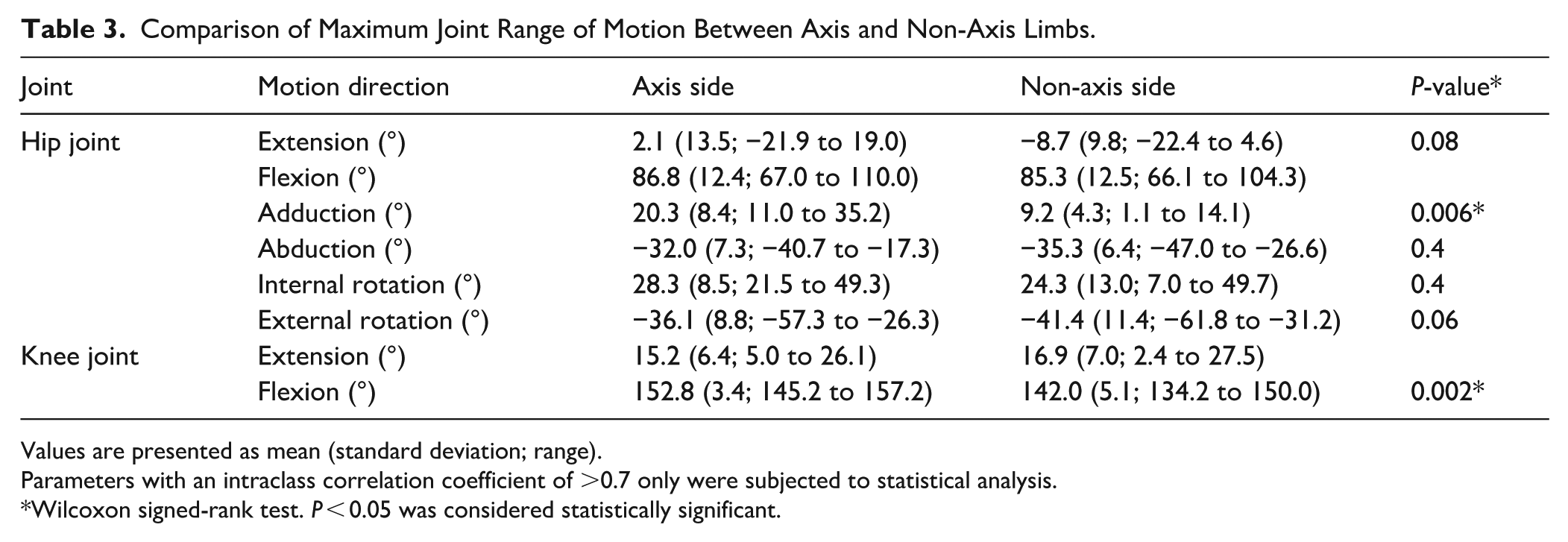
Values are presented as mean (standard deviation; range).
Parameters with an intraclass correlation coefficient of >0.7 only were subjected to statistical analysis.
Wilcoxon signed-rank test. P < 0.05 was considered statistically significant.
Correlation Coefficients Between Hip and Knee Maximum Range of Motion.
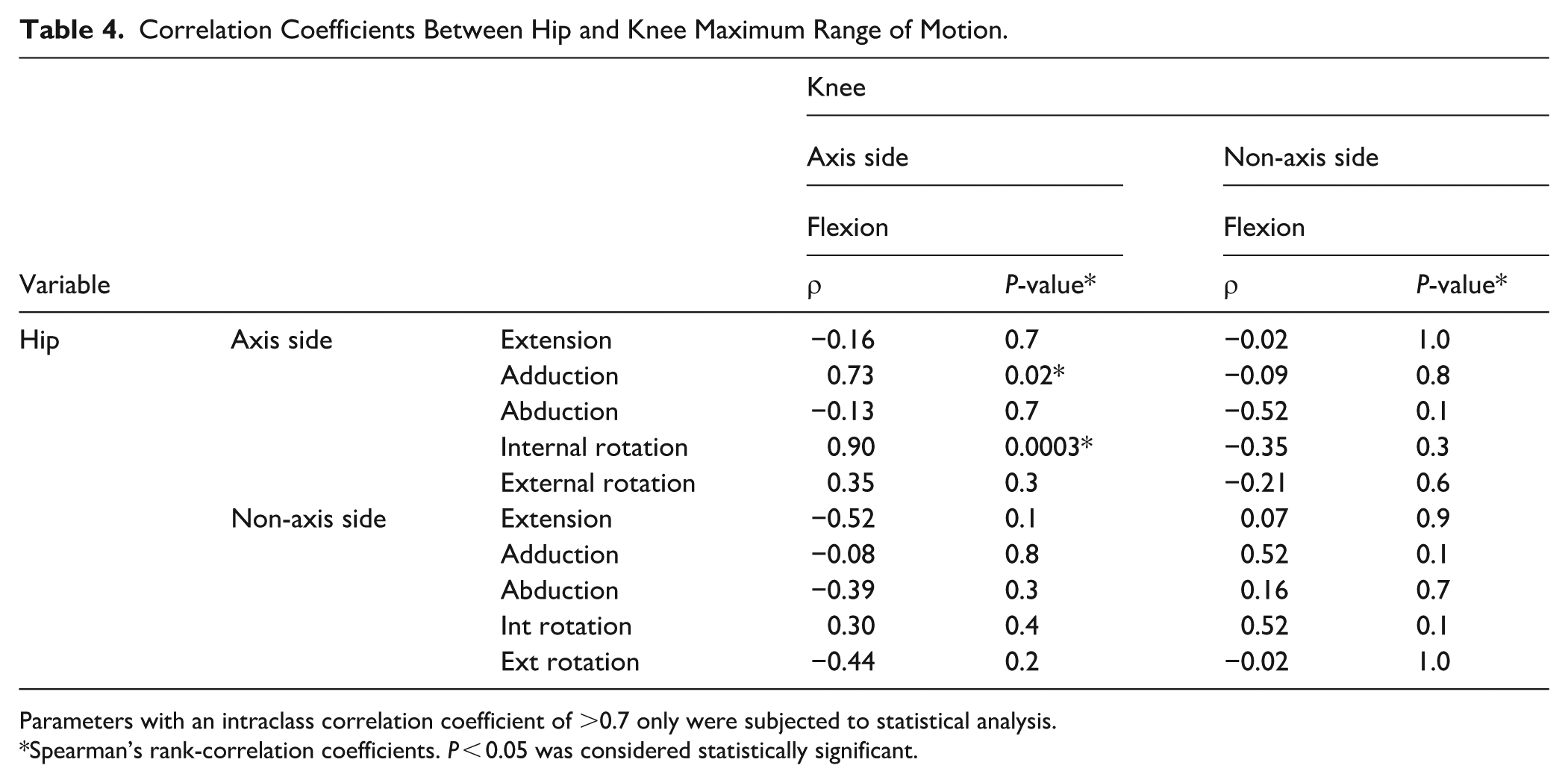
Parameters with an intraclass correlation coefficient of >0.7 only were subjected to statistical analysis.
Spearman’s rank-correlation coefficients. P < 0.05 was considered statistically significant.
Coefficients of Correlation Between Participant Characteristics and Interlimb Differences in Maximum Joint Range of Motion.
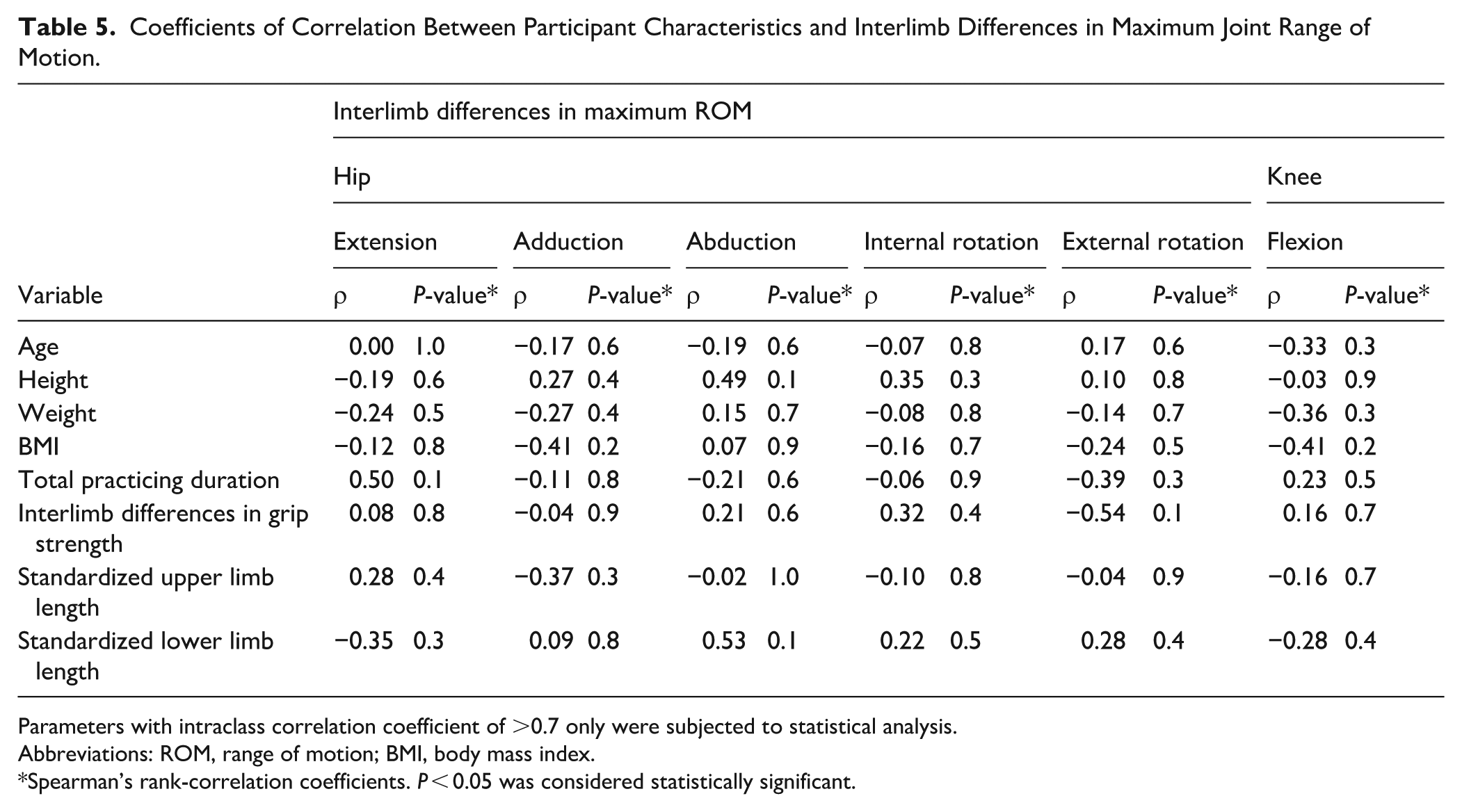
Parameters with intraclass correlation coefficient of >0.7 only were subjected to statistical analysis.
Abbreviations: ROM, range of motion; BMI, body mass index.
Spearman’s rank-correlation coefficients. P < 0.05 was considered statistically significant.
Discussion
A key finding of this study was that Six-Step exhibited asymmetry in lower limb ROM, requiring greater ROM on the axis side. Techniques that involve asymmetrical body postures and specific directions of rotation exist in other dance genres18,19 and have been associated with increased injury risk.10,11 Breaking likewise includes multiple techniques that produce asymmetry by shifting the centre of gravity predominantly toward the axis-side upper limb; these techniques have been linked to greater contact force and injury.5-7,20 Our findings further indicate a comparable tendency in the lower limbs during footwork, particularly in terms of ROM asymmetry. Accordingly, asymmetrical ROM demands in Six-step suggest a potential relationship with lower limb loading characteristics during footwork and provide a basis for future studies on injury mechanisms in breaking.
For instance, the knee flexion on the axis side averaged over 150°, approaching the physiological maximum observed in healthy individuals. Previous studies have reported that deep knee flexion generates significant net quadriceps moments and net posterior forces, 21 increased cartilage contact stress, 22 and elevated meniscus pressure. 23 Several researchers have identified the knee as the most frequently injured site in the lower limb region during breaking.1,3,24,25 Footwork involves rapid transitions into deep knee flexion under loading conditions; thus, it is potentially related to knee joint loading during breaking. Similarly, for the hip joint, the Six-step ROM demanded the physiological limited angles in multiple directions. 26 In particular, the adduction angle on the axis side exceeds the angles typically required for virtually all daily living activities. 27 Taken together, sustained demand is suggested for axis-side adduction during the repeated Six-step movements. Indeed, cases of unilateral pelvic avulsion fractures involving the ischial tuberosity and attachment site of the adductor muscles have been reported in breakers.28,29 These findings highlight the movement-specific demands placed on the adductor muscle group during Six-step; however, the preventive value of adductor strengthening or any other targeted intervention was not examined in the present study.
Another noteworthy finding was that the maximum ROM on the axis-side of the hip and knee increased synergistically. In ballet, compensated turnout places greater demands on knee ROM owing to limited hip mobility, which exhibits the opposite relationship to the Six-step turnout.30,31 Conversely, in figure-skating jumps, increases in the in-air revolution count were accompanied by greater ROM on both the axis-side hip and knee, showing a pattern similar to Six-step. 32 The way the hip and knee function—whether in a compensatory or synergistic manner—varies across aesthetic sports, depending on movement-specific characteristics. Furthermore, when compared to other sports, the Six-step model exhibits unique temporal features, including differing timings of peak hip and knee ROM. Accordingly, further evaluations within the framework of global biomechanics and injury risk are required. As axis-limb dominance is self-selected by individual breakers, recognising the required side-specific ROM and its biomechanical correlates represent a new perspective.
In contrast, no specific dancer-related factors associated with differences in joint ROM were identified in the present study. McCarty et al 33 revealed that higher proficiency and more aesthetically refined movements were associated with greater asymmetry in female dancing, which partly contradicts our findings. In contrast, breaking footwork emphasises smooth stepping and rapid torso rotation, suggesting that a consistent degree of ROM asymmetry is inherent regardless of age, proficiency, or body composition. Similarly, this study assessed physical parameters using grip strength on both sides, which has been reported to correlate strongly with lower limb muscle strength across a wide age range.34,35 However, these results contrast with previous findings that reported side-to-side differences in muscle mass among dancers.11,36,37 Wanke et al 38 highlighted that the right side of the body, which is used more frequently in formation dance, exhibits greater muscle strength and is associated with a higher incidence of injuries. Other studies have documented asymmetries in strength, stability, and ROM in dancesport, hip hop, and ballet, with hip joint asymmetry being particularly linked to injury risk. 39 Meanwhile, although a systematic review focusing on ballet and contemporary dance suggested a potential relationship between lower limb strength imbalance and injury occurrence, the underlying mechanisms and preventive implications remain unclear. 40 Regarding breaking, Arundale et al 24 reported no significant association between hip injury and hip abductor/adductor strength. Taken together, these findings suggest that the relationship among muscle strength asymmetry, kinematics, and injury occurrence remains controversial across dance genres. The present study revealed that muscular balance, as assessed by grip strength, did not influence the ROM asymmetry associated with axis-limb dominance. Further investigation is warranted to clarify the relationships among body condition, kinematics, and movement demands in breaking, as well as the possible relevance of those relationships to injury mechanisms.
The present study has some limitations. First, although the variability was minimal, the participants performed different movement speeds without standardisation. Although movement speed has the potential to influence the kinematic outcomes, the methodology prioritises the natural performance speed of each breaker. Second, the study was limited by a small sample size, despite prior power analysis. As part of the statistical power evaluation, a post-hoc analysis was performed based on a sample size of 10 participants, an effect size of |ρ| = 0.73, and α = 0.05, yielding a power (1-β) of 0.74. This value indicates that the study was likely underpowered, particularly for detecting weak-to-moderate correlations. Therefore, the absence of significant associations, including those between interlimb ROM differences and participant characteristics, should not be interpreted as firm evidence of the lack of a relationship. In addition, significant correlations observed in the present study require cautious interpretation, as correlation coefficients derived from a small sample can be unstable and sensitive to individual participant characteristics. Larger cohorts are required to provide stronger statistical support for interpretation of the correlation analyses. Finally, this study did not clarify the effect of the observed ROM asymmetry on dance performance. Further investigation is required to evaluate whether such asymmetry is advantageous or detrimental and to identify the physical and kinematic characteristics that support both aesthetic quality and safety. Nevertheless, this study is novel and meaningful because it focuses on side-specific global biomechanics during a specific breaking skill, an area that has seldom been investigated. Future research should investigate the clinical and biomechanical significance of repeated exposure to Six-step asymmetry. Continued accumulation of evidence is essential for establishing breaking as a globally practised and medically supported dance sport.
Practical and Clinical Applications and Implications
The asymmetrical pattern of Six-Step provides a basis for movement assessment in breakers and informs future studies on mobility, strength, and technique-related demands during footwork.
Conclusion
Six-step is an asymmetrical breaking footwork technique that imposes greater demands on hip adduction and knee flexion ROM on the axis-side lower limb. On the axis side, hip adduction and internal rotation, along with knee flexion, concurrently exhibited a large ROM.
Supplemental Material
Footnotes
Acknowledgements

Ethical Considerations
The study procedures were performed in accordance with the ethical standards of the Declaration of Helsinki and approved by the Institutional Clinical Research Ethics Committee (Approval No.: 2408016).
Consent to Participate
All participants provided written informed consent before enrolment.
Consent for Publication
Informed consent was obtained from all participants.
Author Contributions
TT conceptualised and designed the study, collected the data, analysed the statistics, wrote, and edited the manuscript. TK analysed the data. HK analysed the data. TK analysed the data. MT supervised the project and provided final approval for the version to be published. All the authors discussed the results and commented on the manuscript.
Funding
The authors disclosed receipt of the following financial support for the research, authorship, and/or publication of this article: This study was funded by a research grant from the Japan Society for the Promotion of Science (JSPS KAKENHI, Grant-in-Aid for Early-Career Scientists, Grant Number JP25K20964) and Cactus Communications. The funders played no role in the study design, data collection and analysis, decision to publish, or preparation of the manuscript.
Declaration of Conflicting Interests
The authors declared the following potential conflicts of interest with respect to the research, authorship, and/or publication of this article: TT reports receiving a research grant (paid to the author) related to this work from Cactus Communications (Editage).
Data Availability Statement
The data that support the findings of this study are available on request from the corresponding author, MT. The data are not publicly available because of restrictions on information that could compromise the privacy of the research participants.
Patient and Public Involvement
Patients or the public were not involved in the design, conduct, reporting, or dissemination plans of this research.
Supplemental Material
Supplemental material for this article is available online.