






Abstract
As a novel and booming medium, the livestreaming industry has attracted millions of broadcasters and viewers worldwide. Gifts from viewers have become the main revenue source for most broadcasters and livestreaming platforms. This study employs data from a major showroom livestreaming platform in China to examine this practice of “gifting” during a livestreaming event. The authors first explore the antecedents of gift-receiving, which mainly focus on the effect of social interaction. The results show that the more social interactions in a live session, the more likely the broadcaster receives more gifts, and the effect is enhanced when a more experienced broadcaster is participating. Furthermore, the authors examine the consequences of gift-receiving and social interaction on broadcasters’ short-term activation and long-term retention. They find that both gift-receiving and social interaction can positively affect broadcasters’ live content provision in the short and long run, and the effects change with the increase of broadcasters’ experiences. This study offers insight into gifting in livestreaming, which gives scope for relevant future explorations.
In recent years, livestreaming has experienced a surge in popularity worldwide. For example, in 2017, 48% of U.S. internet users watched livestreaming content once a week, and 23% did so once a day. 1 In China, the market size of livestreaming was $7.5 billion in 2018, $10.6 billion in 2019, and is estimated to reach around $16.3 billion in 2020. 2 Apart from professional livestreaming platforms, such as Periscope, Twitch, and Panda TV, many social media platforms, such as Facebook, Twitter, and YouTube, have incorporated livestreaming functions into their offerings. Livestreaming is so popular that even before Facebook officially launched its livestreaming service in April 2016, one-third of Facebook users had already watched at least one live video by celebrities on the platform. 3 Livestreaming was a $42.6 billion industry in 2019 and is expected to grow at a compound annual growth rate of 20.4% from 2020 to 2027. 4
As a novel medium, livestreaming is a typical two-sided market that connects broadcasters and viewers. Broadcasters are defined here as the content providers on livestreaming platforms. They may sing, dance, play video games, and even sell products. Viewers can participate in the live sessions via real-time interactions, such as sending “likes,” text messages, and virtual gifts (e.g., electronic payments). Livestreaming platforms can be classified into three major categories: showroom, gaming, and e-commerce (Chen and Xiong 2019). Showroom platforms commonly feature real-time talent performance or everyday activities, such as a talk show or people eating a meal. Gaming platforms broadcast video games, during which game enthusiasts gather to broadcast, watch, and communicate about video games. E-commerce livestreaming is a rising star in the industry. It provides a new way to sell products online. The COVID-19-induced lockdowns and isolation resulted in the e-commerce livestreaming industry surging in popularity, and it is expected to reach more than 800 billion RMB by the end of 2020. 5 Figure 1 presents snapshots of these livestreaming platforms.
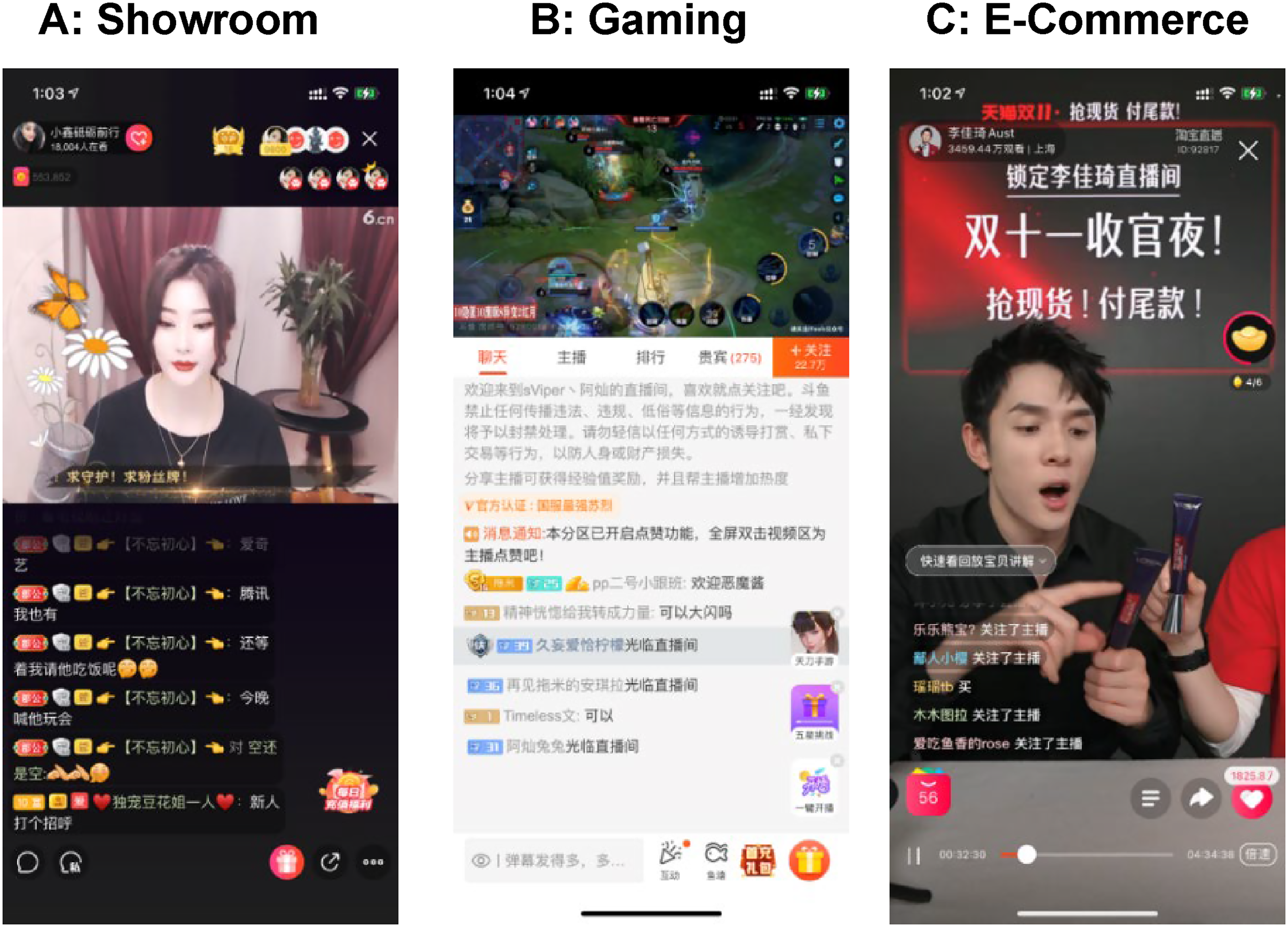
Snapshots of livestreaming.
Different livestreaming platforms adopt different business models. For e-commerce livestreaming platforms, advertising and commission fees are the main revenue sources. Showroom and gaming platforms employ an innovative gifting-based business model, which is among the main reasons behind their popularity, especially in China. Such platforms (e.g., Kuaishou and 6Rooms in China, TikTok and Twitch in the United States) monetize livestreaming content via virtual gifts. Viewers can purchase virtual gifts from platforms and send them to broadcasters during live sessions. The monetary value of the received gifts is then shared between the platform and broadcasters. Even though platforms often take 60% to 70% of the gifts, 6 they offer a convenient channel for broadcasters to capitalize on their talents. Notably, gifting during a livestreaming event is a “pay what you want” pricing strategy. Gifting, which can be regarded as payment, is voluntary. In most instance, viewers can watch any live session or interact with any broadcaster regardless of whether or how much they pay. However, the wide practice among several livestreaming platforms indicates that the gifting-based business model is viable. For example, in 2019, Kuaishou generated 31.4 billion RMB in revenue from gifting during livestreaming events. 7 Further, in the United States, users spent close to $41.3 million on TikTok from its inception through March 2019. 8
The interactive format of livestreaming is critical in the gifting-based business model. Relative to traditional media, livestreaming provides a real-time and engaging experience. Viewers can not only watch a broadcaster's performance in real time but also participate in the live session by interacting with the broadcaster and other viewers via text messages. Prior research has documented the positive effect of social interaction on viewers’ watching frequency (Hamari and Sjöblom 2017) and learning performance (Payne et al. 2017) during livestreaming. However, how social interaction affects broadcasters’ gift-receiving (i.e., viewers’ gift-sending) remains unclear. Moreover, how the gifts that are received by broadcasters influences their future broadcasting and churning behavior is also worth exploring.
Accordingly, this study focuses on broadcasters’ gift-receiving in livestreaming. It employs an exploratory and empirical approach to provide initial evidence of the antecedents and consequences of gift-receiving during a livestreaming event. First, using data from a major livestreaming platform in China, we explore the relationship between viewer-initiated social interaction and broadcasters’ gift-receiving. Social interaction is “an interpersonal action, or relations between self and other” (Varey 2008, p. 86). In the context of livestreaming, viewers interact with broadcasters and other viewers by sending text messages, and thus, social interaction initiated by viewers is characterized as viewers’ message-sending in our empirical analysis. Our empirical results show that viewers’ within-session social interaction is positively related to broadcasters’ gift-receiving. Moreover, the positive effect of viewer interaction on gift-receiving becomes even stronger as broadcasters’ experience increases.
Second, the research examines the consequences of gift-receiving as well as social interaction. Specifically, we test the role of gift-receiving and social interaction in driving broadcasters to provide more live content in the short term and stay longer on the platform in the long term. The results show that the more gifts broadcasters receive, the sooner they start the next live session and the less likely they are to leave the platform. They suggest that gift-receiving plays a positive role in broadcasters’ short-term activation and long-term retention. In addition, the relationship between broadcasters’ received social interaction and their livestreaming behavior is also explored. Results are similar to those of gift-giving to the extent that social interaction is positively related to broadcasters’ broadcasting frequency and retention. We also find the effects to be heterogeneous among broadcasters with different experience levels. The incentive effect of gift-receiving on broadcasters’ long-term retention becomes stronger as their experience increases, while there is no difference between more- and less-experienced broadcasters on short-term activation. As for the effect of social interaction, we find it becomes less useful to drive broadcasters to start a new live session quickly but tends to be more effective at retaining broadcasters on the platform as their experience increases.
The rest of the article is organized as follows: The next section summarizes the related literature on gifting and tipping, social interaction, and incentives. We then develop hypotheses related to gift-receiving, social interaction, and livestreaming behavior. Next, we present the data description. The following section reports the empirical analysis results, including how social interaction affects broadcasters’ gift-receiving and the relationship between gift-receiving, social interaction, and broadcasters’ short-term broadcasting frequency and long-term retention. The article concludes with a discussion of our results, implications, and recommendations for future research.
Literature Review
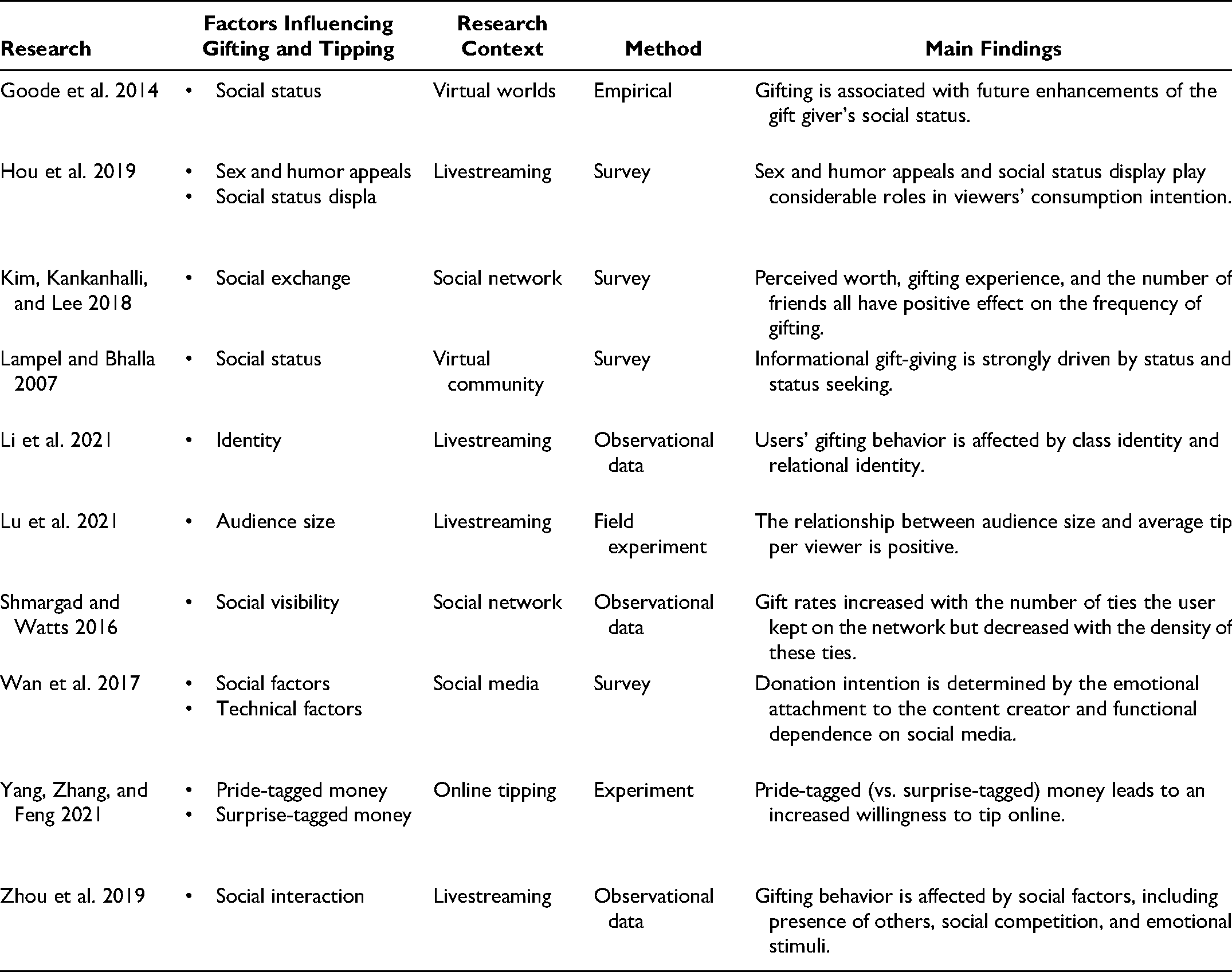
Our exploratory research mainly relates to four streams of literature: gifting and tipping, social interaction, incentives, and livestreaming. The first is the literature on gifting and tipping. In these studies, gifting and tipping behavior are documented to be affected by both individuals’ intrinsic and extrinsic motivations. Intrinsic motivation is the value of giving per se, derived from individuals’ private preferences, such as altruism (Andreoni 1990), reputational concerns (Cappellari et al. 2011), and prestige (Harbaugh 1998). Extrinsic motivation is driven by external benefits, such as social status (Goode et al. 2014), social image (Ariely et al. 2009), and social interaction (Wan et al. 2017). This study focuses on the gift-sending in livestreaming—a novel online medium; therefore, we summarize the recent literature on the gifting and tipping behavior in the online context in Table 1. Studies show social signaling to be an important factor affecting individuals’ gifting and tipping. For example, Lu et al. (2021) explore viewers’ gift-giving in livestreaming; their field experiment shows that an increase in audience size leads to an increase in broadcasters’ revenue because of viewers’ social image concerns. Hou et al. (2019), Lampel and Bhalla (2007), and Li et al. (2021) verify the role of status seeking in gifting and tipping. Users’ gifting behavior is always positively related to their social status motivation. Interactivity can also drive viewers to gift and tip. The presence of others (Zhou et al. 2019), social visibility (Shmargad and Watts 2016), and social identification (Wan et al. 2017) all have a positive effect on gifting and tipping behavior on online platforms. Kim et al. (2018) used social exchange theory to analyze the antecedents of gifting on social network services platforms. Their findings show that users’ frequency of social network services gifting is affected by perceived worth, gifting experience, and the number of friends on the platform.
Summary of Selected Literature on Gifting and Tipping in the Online Context.
The second stream of literature is related to social interaction. While traditional tipping is a norm-driven behavior (Azar 2007), especially in a private context, online tipping has a stronger social basis (Hilvert-Bruce et al. 2018). In this research, we specifically focus on social interaction in livestreaming. Previous literature suggests that social interaction plays an important role in driving individuals to give gifts and tips in several aspects. Zhou et al. (2019) separate social interaction on broadcast media into two categories: broadcaster–viewer interaction and viewer–viewer interaction. They focus on the latter and argue that viewers’ gifting can be driven by the presence of others, social competition, and emotional stimuli through affecting viewers’ arousal level. Wan et al. (2017) propose that responses from content creators make people feel socially connected, create an emotional attachment to a content creator, and thus increase the intent to donate to content creators on social media. Li et al. (2018) explore the relationship between interactivity, social presence, and gift-giving intention based on flow theory. The online environment with a high level of interactivity and social presence makes people feel immersed and leads to a flow state, which is useful to drive users to send virtual gifts to broadcasters.
Our research also relates to incentives of content provision and specifically focuses on the effects of monetary rewards and social interaction. Studies show that monetary rewards are useful to motivate users to provide more content on online platforms (e.g., Garnefeld et al. 2012, Roberts et al. 2006). Liu et al. (2014) explore the effect of monetary rewards of task submission on a crowdsourcing platform and show that the users’ participation level is positively affected by monetary incentives. Sun and Zhu (2013) show that the quantity of content provision of blog posting increases after introducing an ad revenue–sharing program. As for social factors, audience size (Zhang and Zhu 2011), social ties (Shriver et al. 2013), and self-image (Chen et al. 2018, Toubia and Stephen 2013) all play a significant role in stimulating people to provide online content. Goes et al. (2014) verify a “popularity effect” in users’ review provision, showing that users write more reviews, and more objective reviews, when the number of followers increases. McIntyre et al. (2016) study users’ review-writing behavior on Yelp and show that receiving positive feedback increases users’ probability to continue providing reviews. Prior research also shows the heterogeneous effects of different motivations on content provision. For example, Garnefeld et al. (2012) confirms that monetary incentives are useful to improve users’ participation in the short run, while explicit normative pleas are only effective for active users.
Finally, this study contributes to the emerging literature on livestreaming. Researchers have found several factors to be useful in driving viewers to send gifts during livestreaming. For example, Lu et al. (2021) find a concave relationship between audience size and broadcasters’ gift-receiving, which supports the explanation of social image rather than reciprocity seeking. Lin et al. (2021) examine the role of emotion in inducing gift-sending and find that a happier broadcaster is likely to receive more tips from viewers. Li and Peng (2021) explore the effect of livestreamer characteristics (e.g., trustworthiness and expertise) and live-scene characteristics (e.g., telepresence and instant feedback) on viewers’ gift-giving intention. Li et al. (2021) find that identity-based motivation can drive viewers to send paid and free gifts in distinctive ways. The current study differs from previous research by focusing on the role of interactivity, which is a salient feature of livestreaming. Specifically, we examine the relationship between social interaction initiated by viewers and broadcasters’ gift-receiving, which provides new insights to our understanding of gifting in livestreaming.
Overall, our study on gift-receiving in the context of livestreaming contributes to the literature in the following three areas. First, prior research is lacking in exploring the effect of social interaction on gift-receiving. As summarized in Table 1, the social aspect of gifting and tipping is important in the online context. Social factors, such as social status (Goode et al. 2014; Lampel and Bhalla 2007), social exchange (Kim et al. 2018), and social visibility (Shmargad and Watts 2016) all have been documented to have a positive effect on gift-giving, while the research on how social interaction affects gift-sending is still scant. Second, we extend the existing literature by focusing on the effect of gift-receiving and social interaction on both the short- and long-run behavior of broadcasters, that is, when to start the next performing and whether to stay on the platform, which can provide deep understanding of the role of monetary and nonmonetary incentives in a novel context. Third, there is limited research on the dynamic effects of gift-receiving and social interaction, and this study provides insights into how these effects change with the increase of individual experience.
Hypothesis Development
In this section, we first elaborate the theoretical foundations of this study. Specifically, we adopt uses and gratification theory (UGT) as the overarching theory to explain the antecedents and consequences of gift-receiving. UGT proposes that people adopt a certain media to satisfy their desires and needs to achieve gratification (Katz et al. 1973). Previous research has documented that needs for entertainment, social interaction, and tension release all can drive people to use certain social media (Wei and Lu 2014; Zolkepli and Kamarulzaman 2015). In this study, we focus on two primary research questions. First, we examine the impact of social interaction on gift-receiving. Viewers’ motivation to watch and engage in livestreaming has a strong social basis. Hilvert-Bruce et al. (2018) find that social motivations, such as meeting new people and interacting with others, are key reasons for viewers’ livestreaming engagement. Sjöblom and Hamari’s (2017) findings also show that social integrative motivation drives people to spend a longer time watching streams. These findings suggest that social interaction is an important factor that contributes to users’ gratification with livestreaming. Thus, we expect that social interaction should be positively associated with viewers’ gift-sending, that is, broadcasters’ gift-receiving.
Second, we explore the role of gift-receiving and social interaction on broadcasters’ livestreaming behavior, including their short-term live content provision and long-term retention. UGT has also been used to explain why users would like to contribute social media content. Gratification factors for providing livestreaming performance cover both intrinsic motivations, such as challenge seeking, enjoyment, and self-presentation, and extrinsic motivation, such as monetary reward, feedback, and social benefits (Sjöblom and Hamari 2017; Zhao et al. 2018). Based on these findings in UGT, we further explore how broadcasters’ short- and long-term content provision behaviors are associated with gratification factors—including gift- and social interaction–receiving. Figure 2 presents the research framework of this study. We formally propose our hypotheses in the following subsections.
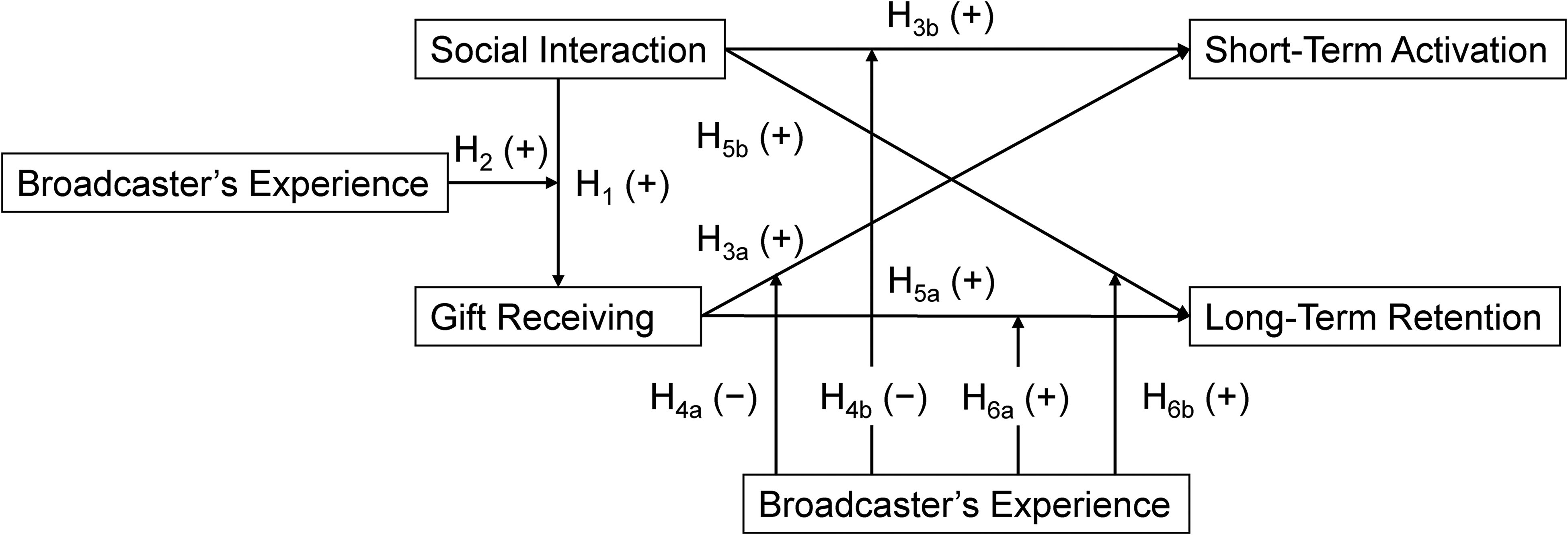
Research framework.
Social Interaction and Gift-Receiving
The interactive format is one of the most notable features of livestreaming. Relative to traditional media, livestreaming provides viewers with a real-time and engaging experience. Viewers can interact with broadcasters and other viewers during live sessions via sending text messages or comments. All the messages are visible to everyone in the live session. In previous findings in UGT, social motivation plays a vital role in driving viewers to engage in livestreaming (Hilvert-Bruce et al. 2018, Hou et al. 2019). We propose that social interaction can affect viewers’ gift-sending in several ways. First, social interaction is a way for viewers to engage during live sessions, which can increase their involvement levels (Wongkitrungrueng and Assarut 2020). On social media, user engagement and interaction have a positive effect on elements such as participation (So et al. 2021), repurchase intention (Wu et al. 2020), and retailer sales (Kumar et al. 2016). Broadcaster–viewer interactions can be vital in inducing virtual gifts. For example, viewers might be more likely to send gifts to broadcasters when broadcasters respond to their messages or address their requests. 9 Kang et al. (2021) find that broadcaster responsiveness (i.e., the response rate for customers’ questions in unit time) positively affects broadcasters’ gift-receiving.
Second, social interactions can be effective in promoting viewers’ gift-sending by increasing the level of arousal and social presence. An individual's arousal level can be affected by many factors, such as social color (Batra and Ghoshal 2017), physical exertion, and emotionally charged stimuli (Sanbonmatsu and Kardes 1988). In the context of livestreaming, viewer interactions can be regarded as sensory stimuli (Zhou et al. 2019). High levels of arousal can be positively associated with customer purchase intentions (Yoon et al. 1998) and willingness to pay (Bagchi and Cheema 2013). Regarding livestreaming, Zhou et al. (2019) show that the more viewer–viewer interactions, the higher the arousal level, which induces viewers’ gift-sending. Besides, even for viewers who do not actively participate by themselves, observing interactions from others would make individuals be aware of the social closeness. Since viewers’ social interactions would increase their levels of involvement and feelings of social presence and arousal level, we hypothesize the following:
We also explore how the effect of social interaction changes with the increase of broadcasters’ experience. We propose that relative to less experienced broadcasters, experienced ones can benefit more from viewers’ social interaction. Prior qualitative research on livestreaming has shown that viewers would like to send messages to broadcasters in exchange for broadcasters’ responses (McIntyre et al. 2016) and receiving feedback will increase viewers’ willingness to pay (Hilvert-Bruce et al. 2018). Broadcasters with more experience are better able to interact with viewers, which involves the knowledge, capabilities, and understanding of livestreaming (Li and Peng 2021). Thus, experienced broadcasters are more likely to recognize valuable interactions from users, respond to these interactions, and monetize social interactions. Therefore, we hypothesize the following:
Gift-Receiving, Social Interaction, and Livestreaming Behavior
Previous research in UGT has documented that users’ content contribution can be driven by various motivations, such as enjoyment (Kaufmann et al. 2011), monetary payoffs (Chen et al. 2010), and social motives (Goes et al. 2014). This study investigates the effects of two gratification factors on broadcasters’ livestreaming behavior. One is gift-receiving, which satisfies broadcasters’ needs for monetary compensation; the other is message-receiving, which provides broadcasters with social benefits.
Gift-receiving, as a kind of monetary incentive, is the dominant revenue source for broadcasters. Popular broadcasters can earn millions of dollars from livestreaming. 10 The potential to earn money attracts many people to become broadcasters to monetize their talents. Prior research has shown that monetary incentives could positively affect individuals’ willingness to work. For example, Hammermann and Mohnen (2014) show that monetary prizes lead to better performance. In addition, DellaVigna and Pope (2018) show that monetary payoffs (even low rates) are highly effective in motivating people to complete tasks. In the online context, several studies show that monetary reward positively affects users’ intention to provide content, such as blogs (Sun and Zhu 2013), reviews (Khern-am-nuai et al. 2018), and crowdsourcing tasks (Liu et al. 2014).
As for the effect of social interactions, Li et al. (2021) show that readers’ positive feedback affects writers’ output. McIntyre et al. (2016) show that receiving positive feedback can drive Yelp review writers to continue to produce reviews. Accordingly, on livestreaming platforms, we expect that broadcasters who receive more virtual gifts and social interactions are likely to provide live sessions more frequently. Thus, we propose the following hypotheses:
However, prior research has also found that people will work less if they feel they are compensated enough. For example, Lazear (2000) shows that using piece-rate pay instead of hourly wage increases workers’ productivity by 44%, but the positive effect might disappear when the amount of monetary gain is adequate. Camerer et al. (1997) and Farber (2008) show evidence that taxi drivers would stop working after reaching their day's target income. Thus, monetary compensation leads to reduced work supply after a certain point. Similarly, prior research shows evidence of nonmonetary incentives having the same effect. In the context of online content provision, users may feel satisfied with their current state and discontinue contribution (Chen et al. 2018). Goes et al. (2016) show that the positive effect of glory-based incentives is increasingly smaller for more highly ranked users. In our context of livestreaming, experienced broadcasters are more likely to have received a considerable amount of gifts and social interactions in the past. Accordingly, we propose that the impact of both monetary and nonmonetary incentives on broadcasters’ content provision will become weaker with the increase of their experience. In other words, the marginal effects of gift-receiving and social interaction on the frequency of performing diminish over time, more experienced broadcasters’ content-provision behavior is less affected by extrinsic rewards. Thus, we hypothesize the following:
Regarding broadcasters’ long-term retaining behavior, the relationship between monetary incentive and long-term retention has been documented in many economic, human resource, and psychological studies (e.g., Kryscynski 2021; Trevor et al. 1997). For example, Gardner et al. (2004) find that high pay levels will maintain and enhance employees’ future performance. Besides monetary incentives, the nonpecuniary utility also plays an important role in keeping users on platforms: Bode et al. (2015) present empirical evidence of a positive retention effect associated with participation in corporate social initiatives. Moreover, Wang and Chiang (2009) explore the effect of social interaction on users’ continuance usage in the context of online auctions and show that social interaction positively affects users’ auction continuance intention. Zhao et al. (2018) surveyed broadcasters in livestreaming and found that extrinsic rewards, social benefits, and feedback all can motivate broadcasters to continue providing livestreaming content. Accordingly, we propose that broadcasters with higher gift-receiving and more social interactions are less likely to leave the platform.
Regarding the moderating effect of broadcasters’ experience on the platform, we expect it to enhance the positive relationship between broadcasters’ gift- and social interaction-receiving and long-term retention. Trevor et al. (1997) showed that the effect of salary growth on decreasing turnover was greatest for high performers. In our context of livestreaming, experienced broadcasters are like the high performers who are more likely to receive a larger amount of gifts. Thus, we expect the increase of gift-receiving should have a stronger positive effect on retaining them. Moreover, broadcasters with more experience tend to build a stronger connection with viewers and acquire more loyal followers. Maintaining interaction with existing viewers and followers can also be a reason for experienced broadcasters to stay on a platform. Thus, we predict that experienced broadcasters who receive a large amount of virtual gifts and social interactions are the most likely to stay on a platform. Therefore, we propose the following hypotheses:
Data and Description
This study collected data from a major showroom livestreaming platform in China, which featured more than 180,000 registered broadcasters and 100 million monthly active users by the end of June 2017. Figure 3 presents a snapshot of a live session on the focal platform. Both the gift-sending and message-sending activities are socially visible to everyone in the live session. The observation period spans from November 14, 2016, to June 18, 2017, comprising 217 days in total. During the observational period, 46,457 registered broadcasters performed at least once, and 63.41% of them are newly registered broadcasters who joined the platform during the observational period. We observe the date and length of their broadcasting sessions as well as viewers’ gifting and messaging behavior in each session. For our analysis in the following, we aggregate the observations at the broadcaster-day level. We also observe broadcasters’ characteristics, such as gender, performance type, and experience of broadcasting on this platform. We explain in detail each of the variables in the following.
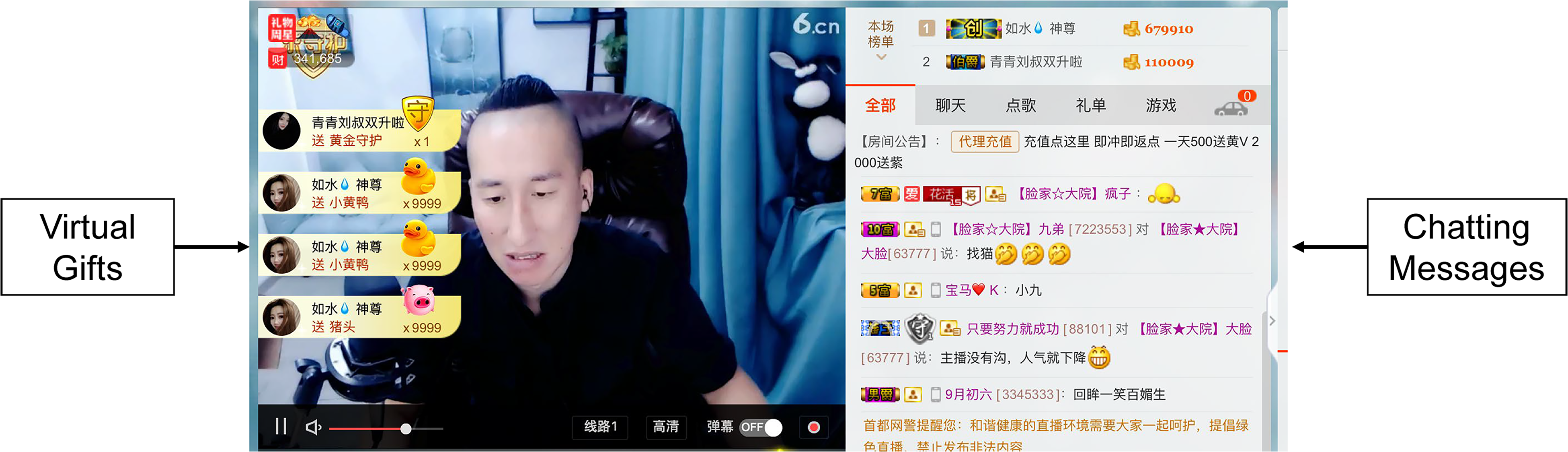
Snapshot of a live session on the focal platform.
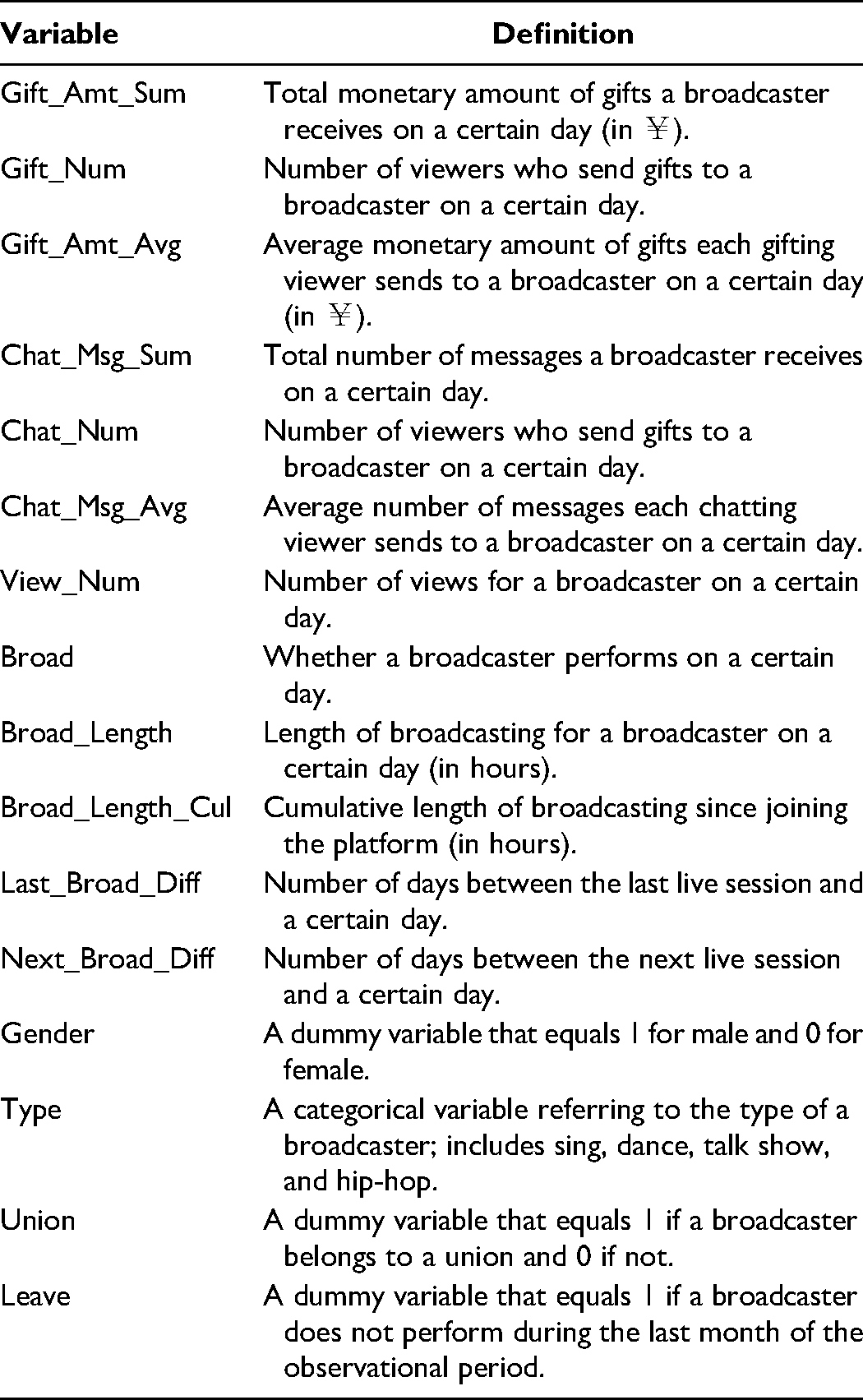
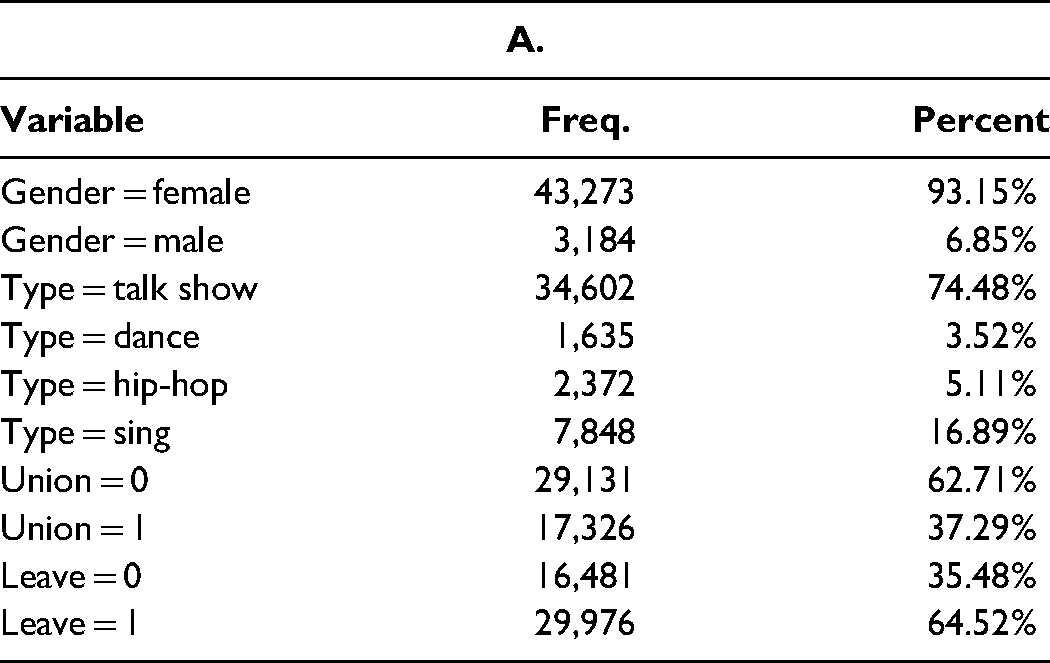
Table 2 lists the key variable definitions, and Table 3 presents the summary statistics. Table 3, Panel A, shows the descriptions for the dummy and categorical variables, and Panel B shows the summary statistics of broadcasters’ and viewers’ behavior on each broadcasting day. There are 6,912,771 observations at the broadcaster-day level in total, 1,324,126 (19.15%) of which comprise broadcaster livestreaming behavior, that is, broadcasters choose to perform on these days. Panel B only includes the 1,324,126 observations with broadcasting behavior. The distributions of key variables are presented in Figure I in Appendix A and the Pearson correlations of all continuous variables are reported in Table 1 in Appendix B.
Variable Definitions.
Summary Statistics
Continued
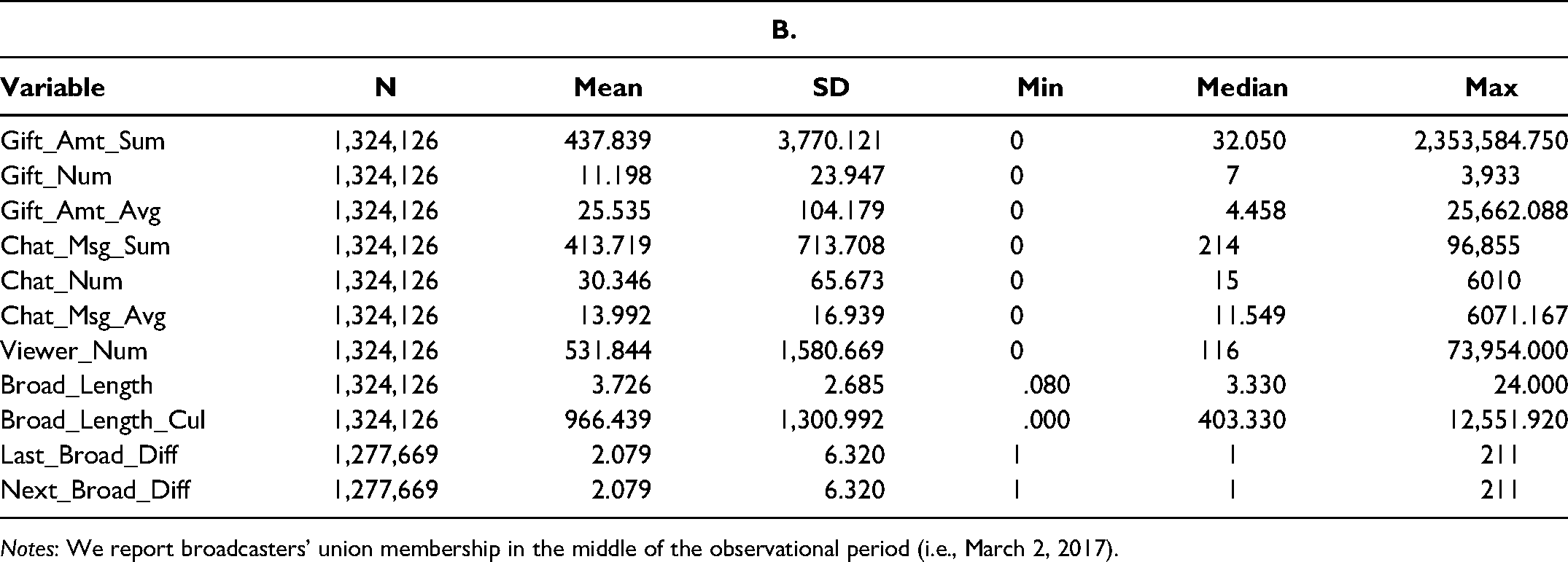
Notes: We report broadcasters’ union membership in the middle of the observational period (i.e., March 2, 2017).
Gift-receiving
In this research, we specifically focus on broadcasters’ gift-receiving. We generate three measures related to it. 11 The first one is Gift_Amt_Sum, which refers to the total monetary amount of virtual gifts a broadcaster receives on a certain day. The second one is Gift_Num, which refers to the number of viewers who send gifts to a broadcaster on a certain day. To determine how much money each viewer gifts, we constructed the third measure, Gift_Amt_Avg, which refers to the average monetary amount of gifts each gifting viewer sends to a broadcaster on a certain day. The virtual gift is the major revenue source for showroom broadcasters in livestreaming. On our focal platform, examples of virtual gifts include animated images of flowers, claps, and luxury cars, sold from .05 to 10,000 RMB. 12 On broadcasting days, a broadcaster receives 437.84 RMB a day on average with substantial variation, ranging from 0 to 2,353,584.75 RMB. The distribution of gift-receiving is extremely skewed. On 12.06% of performing days, broadcasters do not receive any gifts. The average number of viewers who send gifts is 11.20 for each broadcaster on each performing day, and the median is seven. As for the average amount of gifts each gifting viewer sends, the average is 25.54 RMB and the median is 4.46 RMB, which suggests that small amounts of tips are more common.
Social interaction
This research explores the effect of social interaction on broadcasters’ gift-receiving. We observe viewers’ chatting behavior in each broadcaster's live session. Chat_Msg_Sum is the total number of chatting messages received by a broadcaster on a performing day. Broadcasters receive 413.72 messages on each broadcasting day on average, with a median of 214. The distribution of message-receiving is also highly skewed, such that most broadcasters receive less than 40 chatting messages during livestreaming. Chat_Num and Chat_Msg_Avg refer to the number of chatting viewers and the average number of messages sent by each chatting viewer for each broadcaster on a performing day, respectively. On average, 30.35 viewers interact with the broadcaster in each live session, and each sends 14.00 messages on average in a live session.
Control variables
We consider three sets of control variables in the empirical analysis. The first set is broadcasters’ characteristics, including gender, type of performance, and union status (a broadcaster union is a featured organization in the livestreaming industry). The distribution of gender is significantly unbalanced, with 93.15% female and 6.85% male. In terms of broadcaster type or live-streaming content, we observed four main types, denoted by Type: chatting or talk show, dancing, hip-hop, and singing. Talk show is the largest category, attracting 74.48% of the broadcasters, while dancing, hip-hop, and singing content account for 3.52%, 5.11%, and 16.89%, respectively. Broadcasters can choose to join (or exit) a broadcaster union on the platform. The variable Union refers to whether a broadcaster belongs to a union at a given point of time. In broadcaster unions, professional managers and administrators oversee unions and provide broadcasters with a variety of resources, including training, equipment, facility, marketing, and public relations. In return, a portion of broadcaster income is shared with the unions to which they belong. In our data, 9,385 broadcasters were already in a union at the start of the observational period. We observe that 22,036 broadcasters joined a union, 14,657 broadcasters chose to quit the union, and 4,987 broadcasters switched from one union to another one during the observational period.
The second set is viewers’ viewing behavior in live sessions. View_Num is the total number of viewers who watch the broadcaster's live performance on each broadcasting day. The number of viewers varies from 0 to 73,954, with a mean of 531.84 and a median of 116.
The third set of control variables includes broadcasters’ behavior. Broadcasters are free to choose whether to perform and how long to perform on each day. On average, broadcasters performed 28.5 days during the 217-day observational period. The length of broadcasting on a day, Broad_Length, ranges from .08 hours to 24 hours 13 ; the average and median are 3.73 and 3.33 hours, respectively. Broad_Length_Cul captures broadcasters’ livestreaming experience, which is the cumulative length of broadcasting hours since joining the platform. It ranges from 0 (new broadcasters) to 12,551.92 hours, with an average of 966.44 hours. Last_Broad_Diff refers to the number of days between the last live session and the current session.
We are also interested in broadcasters’ short-term activation and long-term retention. We measure the former with Next_Broad_Diff, which refers to the number of days between the next live session and the current one. From these two measures, we find that broadcasters perform roughly every two days on average. The latter considers broadcasters’ churning. Since our data is right-censored, we cannot observe each broadcaster's exact churning date. We define churned broadcasters as those who have no broadcasting behavior in the last month of the observational period. The 99th percentile of the time interval between two performing days of a broadcaster is 24 days. It suggests that the probability that a broadcaster would broadcast again after one month of no activity is low. Leave records whether the broadcaster leaves the platform based on our definition of churning, which is equal to 1 if the broadcaster churns and 0 otherwise. 64.52% of broadcasters churned by the end of the observational period, and 65.23% of broadcasters newly joined the platform during the observational period.
Empirical Analysis
Antecedents of Gift-Receiving
First, we explore the antecedents of gift-receiving during livestreaming events and especially focus on the effect of social interaction. Figure 4 plots the number of messages received versus the amount of gifts received by a broadcaster on a performing day. We find a positive relationship between the message-receiving and gift-receiving. We further use the model to examine the relationship between social interaction and gift-receiving formally. Because broadcasters can only receive virtual gifts from viewers in their live sessions, and no gift-receiving is observed if they do not perform live on a given day, there exists a sample-selection issue. We address this issue using the Heckman two-stage model to incorporate a selection-correction term in the main equations (Heckman 1979).
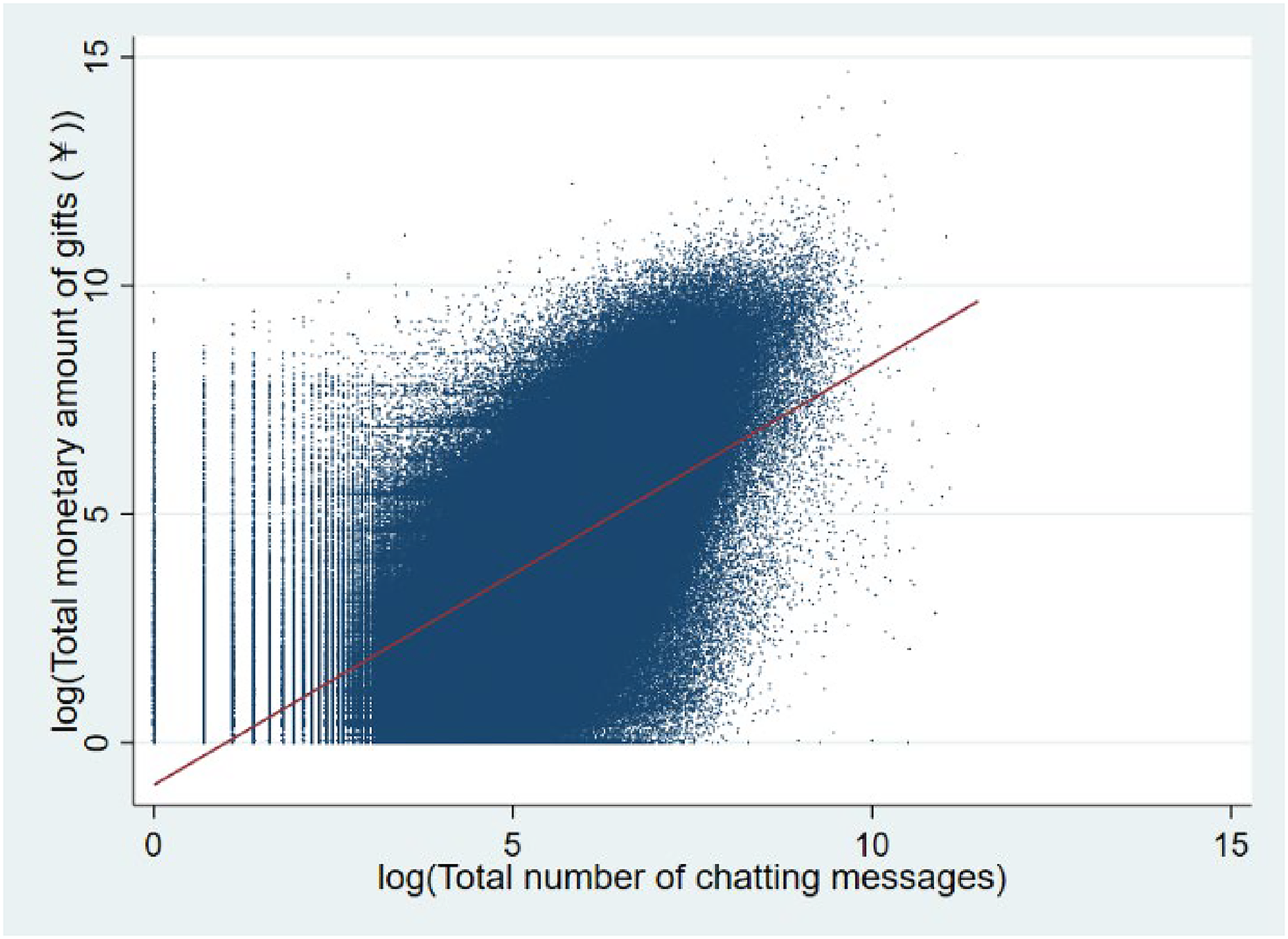
Relationship between social interaction and gift-receiving.
The first-stage probit model captures an individual broadcaster's decision of whether to broadcast:

In the second stage, we estimate a model of broadcasters’ gift-receiving conditional on the decision to broadcast with 


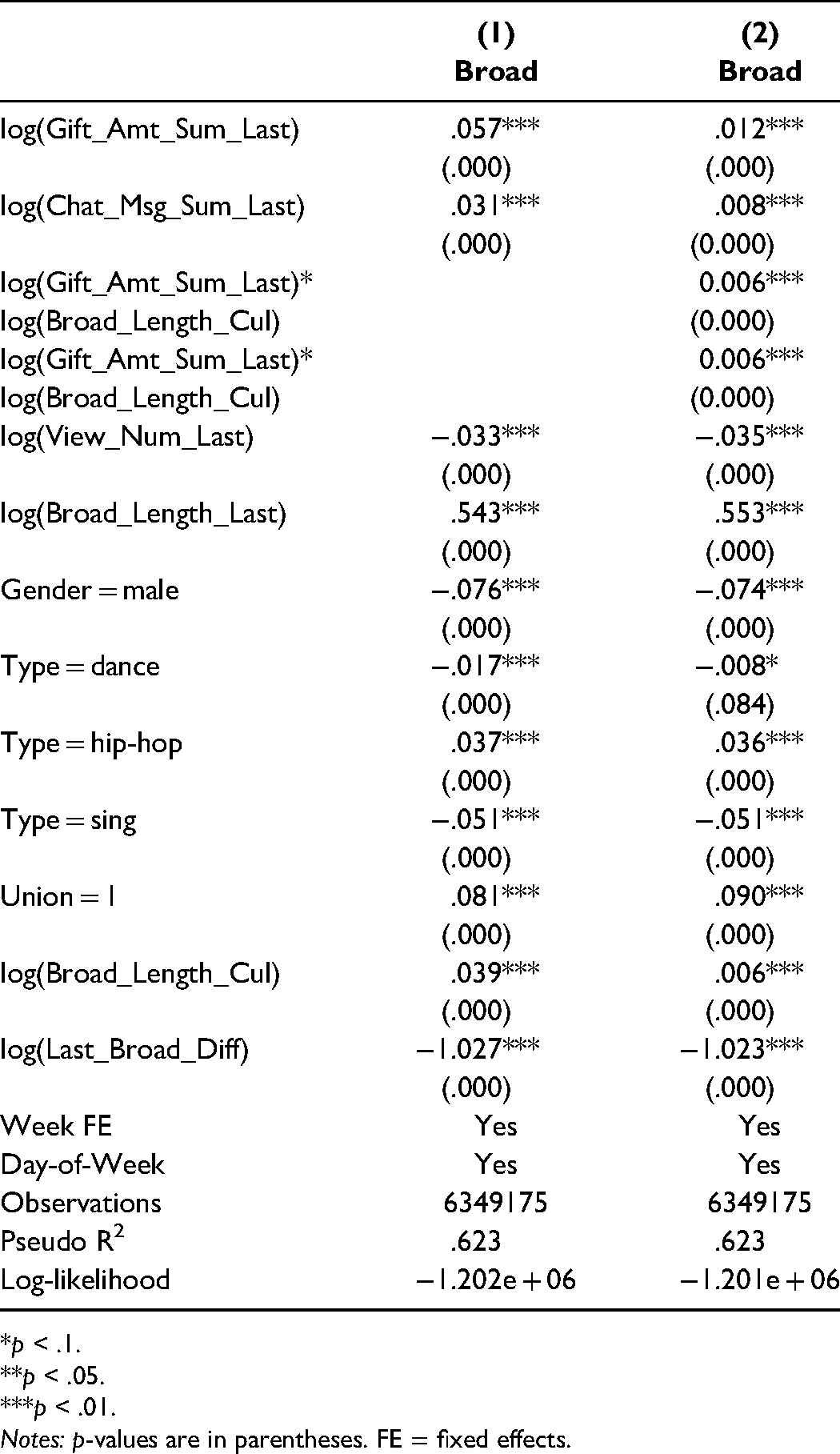
Table 4 presents the first-stage estimation results. Column 1 shows that broadcasters who received more gifts and more chatting messages in the past are more likely to provide livestreaming content. It reveals that both monetary and nonmonetary gains can drive broadcasters to provide live content. Results also show that relative to women, men are less likely to broadcast. Broadcasters who perform hip-hop and talk shows are more likely to broadcast than dancers and singers. Being in a union is positively related to one's broadcasting probability. Experienced broadcasters perform more frequently than inexperienced ones. Broadcasters’ decisions to broadcast can also be influenced by their past broadcasting behavior. Broadcasters who performed longer in the last session and whose last session is more recent are more likely to initiate a live session on a certain day. Moreover, to explore how the effects of viewer behavior change over time with broadcaster experience, we introduce two interactions: (1) the interaction between viewers’ gift-sending (Gift_Amt_Sum) and broadcaster experience (Broad_Length_Cul), and (2) the one between viewer message-sending (Chat_Msg_Sum) and broadcaster experience (Broad_Length_Cul). Column 2 of Table 4 shows that the effect of viewers’ gifts and messages on broadcaster's content provision enhances as the broadcasting experience increases.
First-Stage Results.
*p < .1.
**p < .05.
***p < .01.
Notes: p-values are in parentheses. FE = fixed effects.
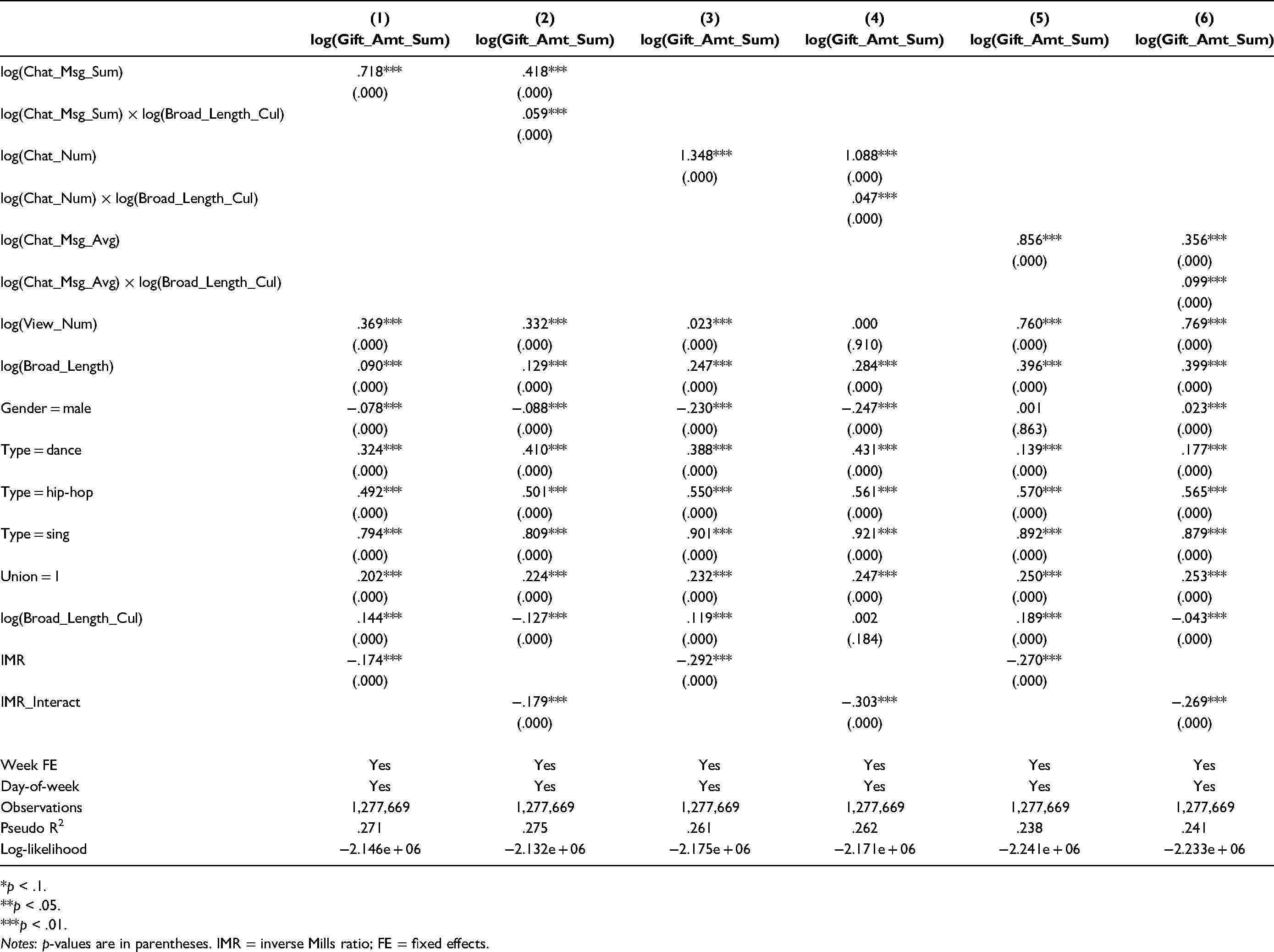
Table 5 reports the estimation results of the second-stage model. Our primary interest is the effect of viewers’ social interaction on broadcasters’ gift-receiving. We report the results using Gift_Amt_Sum, the total amount of gifts received on a certain day, as the dependent variable 14 with three measures of social interactions, that is, Chat_Msg_Sum, Chat_Num, and Chat_Msg_Avg, which refer to the number of chatting messages, chatting viewers, and the average number of messages sent by each chatting viewer, respectively. Columns 1, 3, and 5 in Table 5 report the main effect of social interaction. We find that a 1% increase in the number of chatting messages received increases the broadcaster's total amount of gift-receiving by .718%. And the numbers are 1.348% and .856% for a 1% increase in the number of chatting viewers and the average number of messages sent by each chatting viewer, respectively. The empirical results support H1.
Antecedents of Gift-receiving.
*p < .1.
**p < .05.
***p < .01.
Notes: p-values are in parentheses. IMR = inverse Mills ratio; FE = fixed effects.
Columns 2, 4, and 6 incorporate the interaction between viewer chats and broadcaster experience. The significant and positive coefficients of interaction terms reveal that as the broadcaster’s experience increases, viewer interactions become increasingly important in inducing a broadcaster’s gift-receiving. The results provide strong support for H2.
Regarding the effects of other control variables, we find that broadcasters’ gift-receiving is positively related to the number of viewers in their live sessions and that being in a union can help broadcasters get more gifts. Longer live sessions tend to have a larger total amount of gifts. Finally, the inverse Mills ratio coefficients are significant, which justifies the joint estimations of Equations 3 and 4 as we did. And the negative coefficients imply that estimates would be downward-biased without the correction.
Short-Term Consequence of Gift-Receiving
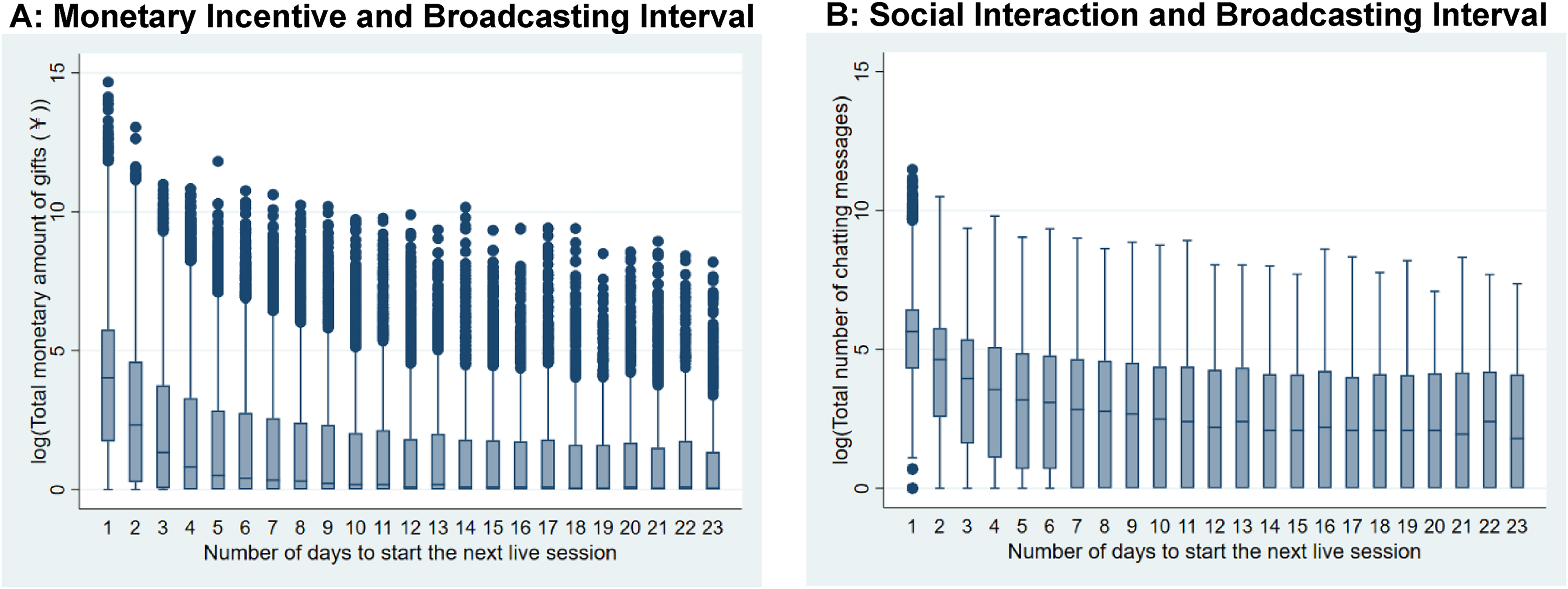
This section focuses on the short-term consequence of broadcaster gift-receiving and social interaction to explore how these two factors affect broadcasters’ decision to provide the next live performance. Next_Broad_Diff refers to the number of days between the broadcaster's current broadcasting day and the next one. We present the relationship between the amount of gifts received on the current performing day and the number of days to start the next live session in Figure 5, Panel A, and the relationship between the number of messages received on the current performing day and the number of days between the next and the current session in Figure 5, Panel B. The figures show that broadcasters who receive more virtual gifts and chatting messages on the current performing day are more likely to start the next session sooner.
Relationship between monetary incentive, social interaction, and broadcasting interval.
As with the analysis in the section “Antecedents of Gift-Receiving,” we also use the Heckman two-stage model to address the selection issue of whether a broadcaster chooses to perform on a certain day, and we rely on observations on broadcasters’ performing days to examine how their current gift-receiving and social interactions influence their broadcasting decision in the future. The problem of simultaneity may occur that broadcasters’ gift-receiving and social interactions can affect their frequency of performing, and the livestreaming frequency can also influence how many gifts and how many messages broadcasters can receive. The generalized method of moments (GMM) is a proper approach to deal with the simultaneity (Ullah et al. 2018). Following Arellano and Bond (1991) and Blundell and Bond (1998), we propose the dynamic GMM model:
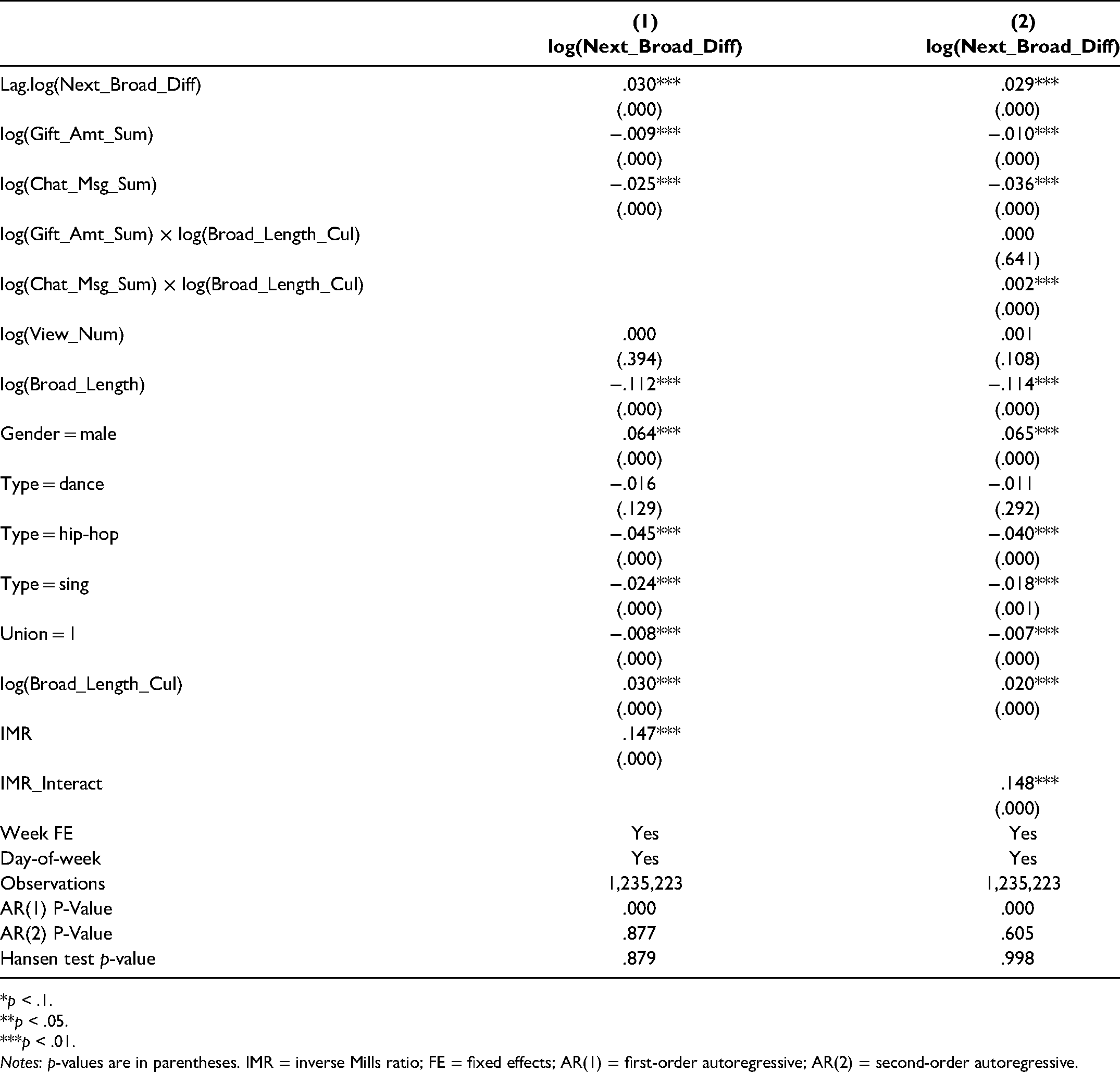
Table 6 reports the results. Column 1 presents the baseline model, and Column 2 displays the results after adding two interactions between viewer behavior and broadcaster experience. First, in Column 1, the coefficients of Gift_Amt_Sum and Chat_Msg_Sum are negative and significant. A 1% increase in broadcasters’ gift-receiving reduces the number of days between the next live session and the current one by .009%. And a 1% increase in the number of received messages decreases the number of days between two live performances by .025%. The results suggest that both monetary (i.e., gift-receiving) and nonmonetary (i.e., social interaction) incentives can motivate broadcasters to provide live content frequently, which supports H3a and H3b.
Short-Term Consequence of Gift-Receiving and Social Interaction.
*p < .1.
**p < .05.
***p < .01.
Notes: p-values are in parentheses. IMR = inverse Mills ratio; FE = fixed effects; AR(1) = first-order autoregressive; AR(2) = second-order autoregressive.
Regarding the moderating effect, Column 2 shows that the interaction between Gift_Amt_Sum and Broad_Length_Cul has no significant effect on broadcasters’ frequency of broadcasting, which means H4a is not supported. One plausible explanation is that many broadcasters regard livestreaming as an important source of revenue rather than an entertainment channel. As reported in the data description section, many broadcasters spend considerable time on livestreaming: 3.73 hours every two days on average, equivalent to a half-time job. Therefore, monetary incentive can be an important driver for broadcasters to perform frequently regardless of their experience level. As for the effect of social interaction, we find that the interaction between Chat_Msg_Sum and Broad_Length_Cul is positive and significant. It supports H4b's prediction that the positive effect of social interaction on shortening the time interval between two live sessions is weakened with broadcasters’ experience.
Other factors, including broadcasters’ characteristics, behavior, and viewer participation, are related to broadcaster decisions about when to initiate the next live session. Relative to female broadcasters, the number of days between two performances is about 6% longer for male broadcasters. Broadcasters who rap, DJ, and sing perform more frequently than those who chat and dance. Being in a union decreases the number of days between two live sessions, possibly due to the arrangement of unions. Broadcasters with longer cumulative broadcasting experience are less likely to perform frequently, but those who stream longer during the current broadcasting day are more likely to perform sooner the next time. The number of viewers in the current live session does not affect broadcasters’ streaming frequency, after controlling for gifting and social interaction.
Finally, the Arrelano–Bond serial correlation tests show that the second-order serial correlation of the residuals is not significant for both regressions, .15 (p = .877) and −.52 (p = .605), respectively. The Hansen tests of overidentification restrictions are also insignificant. Consequently, the dynamic GMM models appear valid.
Long-Term Consequence of Gift-Receiving
Apart from the short-term consequence of gift-receiving, this study also analyzes the decision by broadcasters to leave the livestreaming platform, which can be regarded as the long-term consequence of gift-receiving and social interaction. Figure 6, Panel A, shows the probability of leaving on a certain day since registration. We also compare the leaving probability between two groups of broadcasters with above-average versus below-average gift-receiving (message receiving), as presented in Figure 6, Panels B and C. The patterns show that broadcasters who receive more gifts and messages are less likely to leave the platform. On average, a broadcaster performed for 127.92 hours on 13.20 days in total before leaving the platform, and the medians are 21.50 hours and 6 days, respectively.
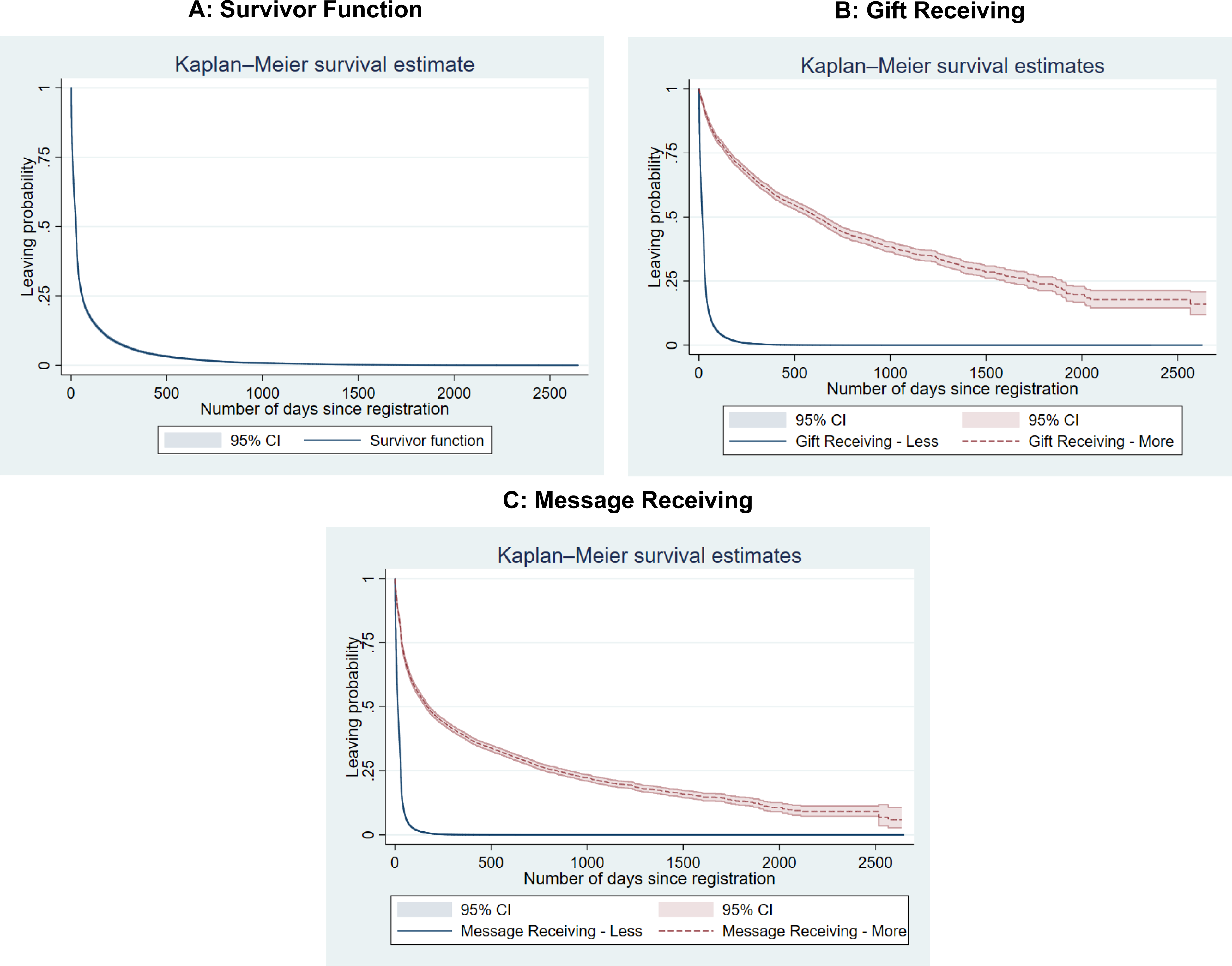
Kaplan–Meier curves.
We use the Cox proportional hazard model to predict the probability of leaving. The data are right-censored, so we cannot observe the exact leaving time for each broadcaster. Instead, we labeled broadcasters who performed in the last month of the observational period as retaining broadcasters and those who were inactive during that period as churning ones. In the Cox proportional hazard model, the hazard rate 
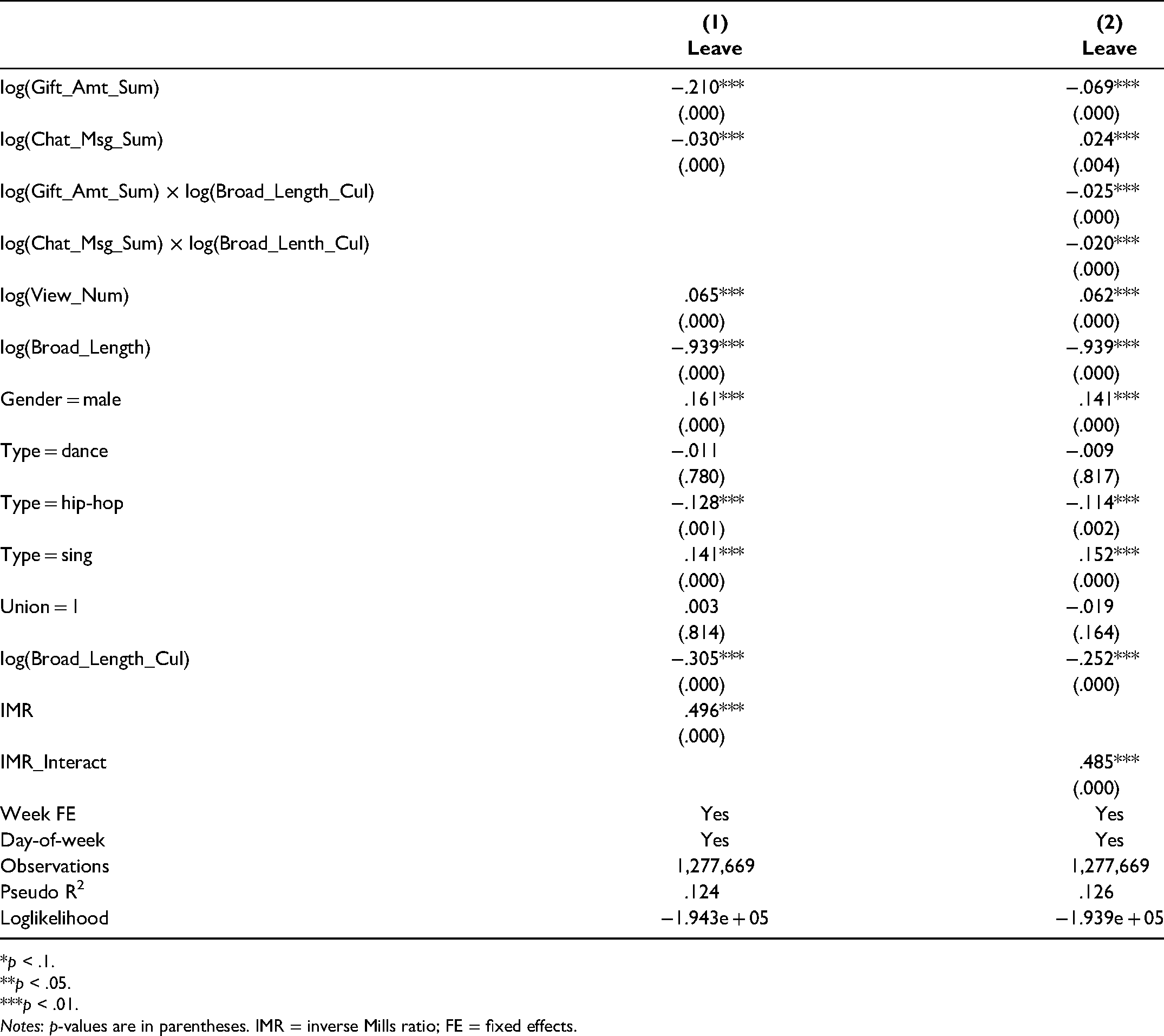
Table 7 presents the Cox regression results. Column 1 affirms the importance of gift-receiving in broadcasters’ long-term retention. The coefficient of Gift_Amt_Sum is significant and negative, which suggests that broadcasters who receive more gifts are less likely to leave the platform. The result is similar for Chat_Msg_Sum that receiving more social interactions can also increase the probability for broadcasters to retain. These findings provide support for H5a and H5b.
Long-Term Consequence of Gift-Receiving and Social Interaction.
*p < .1.
**p < .05.
***p < .01.
Notes: p-values are in parentheses. IMR = inverse Mills ratio; FE = fixed effects.
We also focus on the moderating effect of broadcasters’ experience. In Column 2, as the cumulative length of broadcasting increases, gift-receiving becomes increasingly effective in reducing broadcasters’ churning, which supports H6a. We also find evidence to support H6b that viewers’ message-sending (i.e., Chat_Msg_Sum) is useful to keep broadcasters staying on the platform, especially for those who have long cumulative broadcasting hours. These empirical results show that the time-varying effects of gift-receiving and social interaction are different regarding the short-term activation and long-term retention. For example, as a broadcaster's experience accumulates, the positive effect of social interaction on broadcasting frequency attenuates, while its positive effect on long-term retention increases. Regarding other controls, most factors affect broadcasters’ long-term behavior in the same way as short-term behavior. One exception is broadcasters’ experience. We find that experienced broadcasters are more likely to stay on the platform but are less likely to perform sooner after the current live session.
Discussion and Conclusion
Discussion of Findings
This study provides a broad overview of the livestreaming industry and focuses on its gifting-based business model. Using a unique data set from one of the largest showroom livestreaming platforms in China, we examine the antecedents and consequences of broadcasters’ gift-receiving. First, we explore the effect of social interaction on broadcaster gift-receiving. Results show that social interactions from viewers, including the number of chatting messages, the number of chatting viewers, and the average number of messages sent by each chatting viewer, all positively affect broadcasters’ gift-receiving. Further, the positive effect of viewers’ social interaction on broadcasters’ gift-receiving is enhanced by the broadcaster experience.
Furthermore, we examine the short-term and long-term consequences of gift-receiving and social interaction. Both factors drive broadcasters to perform more frequently in the short run and stay on the platform in the long run. However, the effect is different among broadcasters with heterogeneous experiences. While gift-receiving can always motivate broadcasters to provide livestreaming content frequently, the positive effect of social interaction tends to be weaker as one's experience accumulates. In the long term, both the effect of gift-receiving and that of social interaction become stronger when broadcasters on the platform have increased experience.
Theoretical Contributions
This research makes several theoretical contributions. First, we contribute to the literature on gifting and tipping by considering the social interaction perspective. Existing literature has explored the effects of several social factors, such as audience size (Lu et al. 2021), social status (Goode et al. 2014; Lampel and Bhalla 2007), social exchange (Kim et al. 2018), and social visibility (Shmargad and Watts 2016), on gifting and tipping behavior. However, hardly any research focuses on the effect of social interaction, which is one of the most notable features of livestreaming. Compare this with Lu et al.’s (2021) study, which investigates the role of audience size in gift-receiving in livestreaming; we control for the audience size and focus on the effect of social interactions initiated by viewers on broadcasters’ gift-receiving. Our findings suggest that gift-receiving increases for a fixed audience size when the number of social interactions increases.
Second, we extend current gifting and tipping literature by focusing on the effect of gift-receiving on individuals’ short-term activation and long-term retention. We consider multiple aspects of livestreaming content provision behavior, including the short-term behavior, that is, when to initiate the next live session, and the long-term behavior, that is, whether to stay on the platform. We find that gift-receiving and social interaction have different impacts on broadcasters’ short- and long-term behavior. The results provide insights into the underlying motivation of multiple aspects of content provision.
Third, little extant research focuses on how the effects of gift-receiving and social interaction change with time, and we add to the literature by emphasizing the role of individual experience. Although prior research has shown that individuals’ motivation can change over time (Goes et al. 2016), the time-varying effects of gift-receiving and social interaction are still unclear. We focus on how the effects change with the increase of individual experience and verify the importance of the heterogeneity of individuals.
Practical Implications
Our findings also have important practical implications for livestreaming platforms as well as for broadcasters. First, our findings show that social interaction is positively associated with broadcasters’ gift-receiving, and the relationship is stronger for more experienced broadcasters. On the one hand, based on the findings, we would encourage broadcasters to pay more attention to social interactions initiated by viewers. Besides directly interacting with viewers, broadcasters can also facilitate interactions among viewers, such as choosing appropriate topics worth discussing. On the other hand, these findings suggest that platforms could highlight social interactions in livestreaming to attract more gift-sending from viewers. For example, platforms can enlarge the message area or place it in an eye-catching position to make the social interaction salient.
Second, the empirical evidence on the short- and long-term consequences of gift-receiving suggests that monetary incentive can always be regarded as an effective way to activate and retain broadcasters. As for nonmonetary incentive, with the increase of broadcasters’ experience, the effect of social interaction on increasing performing frequency tends to be weaker, while it tends to be more effective at retaining them on the platform. These findings suggest that platforms should consider both broadcasters’ experience levels and outcome goals when recommending live sessions to viewers. For example, if platforms want to retain less-experienced broadcasters, recommending their live sessions to viewers who are likely to send gifts rather than messages could be an effective way to do so. To retain more experienced broadcasters on the platform, it may be useful to lead viewers who would like to interact in their live sessions.
Limitations
This study has limitations, which give scope for future extensions. First, we construct three variables related to broadcasters’ gift-receiving (namely, the total amount of gifts, the number of gift senders, and the average amount of gifts sent by each sender) and explore the effect of social interaction separately on the three dependent variables. However, the three dependent variables could be correlated. Future research may develop simultaneous equation models to account for this possibility.
Second, because we do not observe detailed information in each live session, our analysis mainly focused on basic broadcaster and viewer behavior, such as the length of broadcasting and the number of messages sent. However, more angles can be explored with richer data. For example, given data on text messages, text analysis techniques can extract relevant topics. With live-session videos, machine learning techniques can be applied to conduct audiovisual analysis to understand user behavior better.
Finally, due to the limitation of data and the lack of experimental control, our empirical analyses may not be sufficient in making causal inferences. Further analyses and experiments could explore causal relationships. Such studies could provide more insights into understanding the antecedents and consequences of broadcasters’ gifts-receiving, viewers’ gift-giving, and user retention, which would help livestreaming platforms design better pricing strategies and engagement mechanisms.
Recommendations for Future Research
Our exploratory study is the first step toward exploring the antecedents and consequences of gifting in livestreaming. Future research can study additional angles of gifting in livestreaming by using more transactional and viewer–broadcaster relational data. Figure 7 presents an overall conceptual framework to shed light on gifting and its consequences in livestreaming. Regarding the antecedents of gifting, we differentiate between the characteristics and behavior of viewers and broadcasters. In particular, first, on the broadcaster side, future research can focus on the effects of broadcasters’ demographics, characteristics, performance content, and individual motives. It is especially worthwhile to investigate the type, content, and quality of live shows. Given that previous research mainly codes live content manually but lacks automatic analysis (Hu et al. 2021), we encourage future researchers to collect video data and use machine learning models to facilitate content analysis.
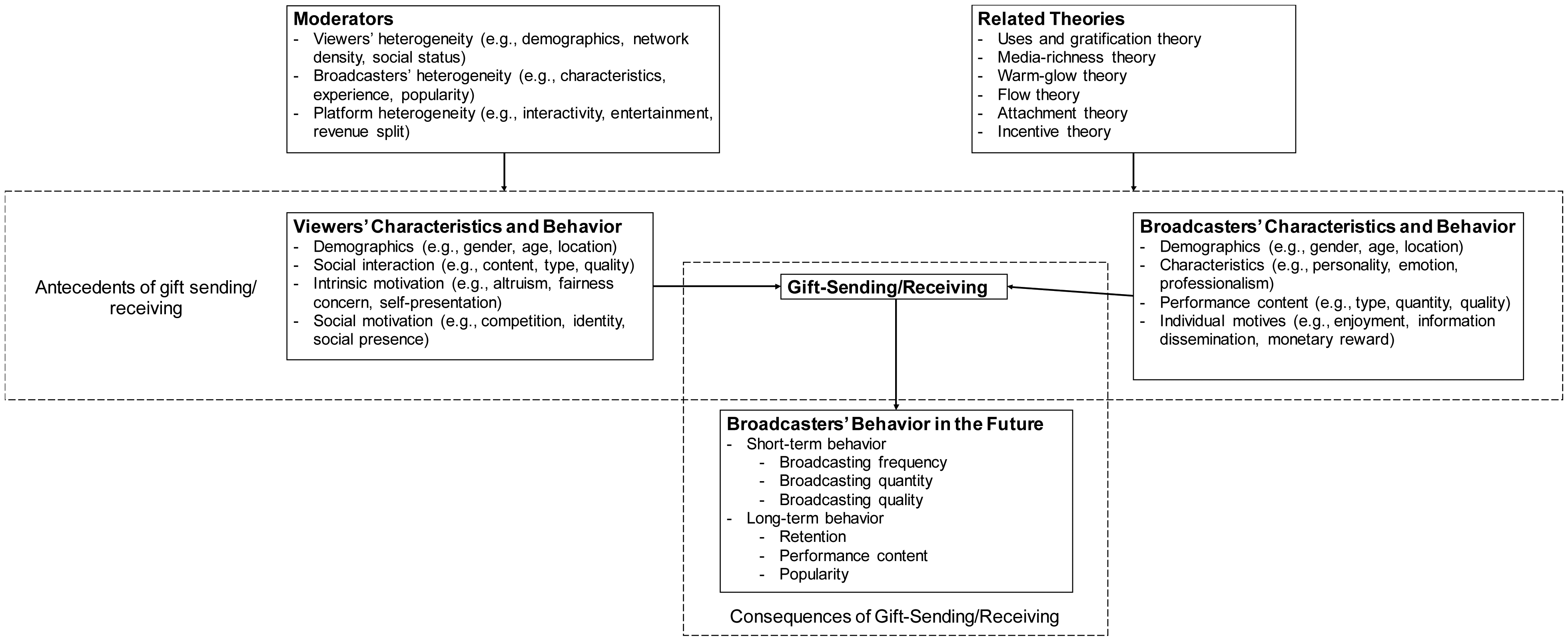
Overall conceptual model about gifting in livestreaming.
Second, on the viewer side, future research can consider the role of viewers’ demographics, social interaction, and intrinsic and social motivation. In this study, we find a positive relationship between the number of social interactions initiated by viewers and gift-sending. Other dimensions of social interaction, such as the type and quality of interaction, also deserve investigation. What kind of social interaction can foster more gift-sending? How do the effects vary with live content? These questions may be addressed in future research by analyzing social interaction texts.
The consequences of gift-receiving in live steaming can be discussed from two aspects: the short- and long-term behavior of broadcasters. In this article, we study the effect of gift-receiving on broadcasters’ frequency of performing in the short run and their retention in the long run. Besides these two outcomes, other short-term behavior, such as the quantity and quality of live content provision, and long-term behavior, such as broadcasters’ popularity and content choice, can also be taken into consideration. We encourage future research to further investigate the impact of gift-receiving on broadcasters’ behavior in livestreaming.
In addition to the relevant constructs and main effects, we also propose several potential moderators to enrich the framework. As depicted in Figure 7, heterogeneity of viewers, broadcasters, and platforms can either amplify or mitigate the direct relationships described in the framework. For example, a viewer with higher social status in the live session could be more strongly driven by social motivation to send gifts. And, as what we have investigated in this study, broadcasters’ experience of livestreaming can also moderate the relationship between social interaction and gift-receiving, and the effect of gifting-receiving on broadcasters’ future behavior.
Some relevant theories can be used to explain the relationships in the framework. Uses and gratification theory is the overarching theory used in this research. It explains why viewers’ gift-sending is motivated by social interaction and why broadcasters’ livestreaming behavior is affected by both gift-receiving and social interaction from a perspective of need satisfaction. Other related theories, such as media richness theory, warm-glow theory, and incentive theory, can also help shed light on viewers’ gift-sending behavior. For example, building on media richness theory, we would predict that perceived media richness would positively affect users’ gratifications and thus influence their gifting behavior. Warm-glow theory suggests that the feeling of “warm glow” may drive viewers to tip voluntarily.
In conclusion, given livestreaming's growing popularity, it is worthwhile to study the gifting-based business model in this industry. While our research presents an initial step toward understanding the antecedents and consequences of gift-receiving in livestreaming, there remain many avenues for future research. We hope this work can stimulate more studies in this area to help move the research forward.
Footnotes
Editor
Arvind Rangaswamy
Declaration of Conflicting Interests
The author(s) declared no potential conflicts of interest with respect to the research, authorship, and/or publication of this article.
Funding
The author(s) disclosed receipt of the following financial support for the research, authorship, and/or publication of this article: Qiaowei Shen acknowledges financial support from the National Natural Science Foundation of China (8200904061), Hongju Liu acknowledges financial support from the National Natural Science Foundation of China (72131001), and Xuejing Ma acknowledges financial support from the Fundamental Research Funds for the Central Universities (2021ECNU-HWCBFBLW003).