






Abstract
Wellness tourism has undergone rapid development in recent decades. Based on the transmission model of inspiration, this article aims to explore the antecedents and consequences of tourist inspiration in the context of wellness tourism. Survey data (N = 494) from Shizhu county, a well-known China local tourism destination renowned for its health-and-wellness tourism, showed that tourist inspiration can be elicited by a wellness tourism experience, which in turn has a positive influence on tourist engagement. By using openness to experience as a moderating factor, we uncovered significant and positive relationships between experience and inspiration when tourists have high levels of openness to experience. Through this original study focusing on relationship management in wellness tourism, we demonstrated the cruciality of inspiration and its underlying role in creating tourist engagement. Our research results have yielded theoretical and practical findings and outcomes that will benefit both academia and industry practitioners alike.
Keywords
Introduction
In our contemporary world, individuals struggling to keep up with the tempo of life dictated by a heavy workload are increasingly suffering from burnout or other similar mental health conditions (Moreno-González et al., 2020). With the onset of these phenomena, there is a collective desire to find effective ways to ensure enduring health and vitality in modern society where the subhealth status of people has gained global prevalence and attention (Tian et al., 2017). Fueled by this desire, the nascent wellness tourism sector has exploded in growth as it provides an effective way to satisfy consumer desire (Wang et al., 2020), especially amid the postpandemic world. According to a report from the Global Wellness Institute, the wellness tourism sector was a global market worth about $639 billion in 2017, accounting for about 14% ($438.6 billion) of all domestic and international tourism expenditures, and growing twice as fast as overall global tourism (Hunt & Harbor, 2019).
Despite the emerging role of wellness tourism as a subset of global tourism, there is little empirical data about guiding tourists and engaging them emotionally in wellness tourism destinations. This question is pertinent as we consider the importance of a new dimension in customer relationship management (CRM) where customers have the liberty to construct and shape their own consumption experiences through personalized interaction and engagement, thereby cocreating unique experiences for themselves (Rather, 2020). In the wellness tourism context, the issue of tourist engagement should be given adequate attention because it not only benefits health enhancement for wellness tourists but has a highly positive impact on the tourism destinations (Villamediana-Pedrosa et al., 2020). As one of the most important topics in CRM, the construct of customer engagement has been documented to be strongly related to customer loyalty (Harrigan et al., 2017), corporate reputation (Dijkmans et al., 2015), and value cocreation (Jaakkola & Alexander, 2014). Particularly, tourist engagement gains in prominence because engaged and loyal visitors will enable industry practitioners to survive and thrive in increasingly dynamic and interactive tourism marketing environments (Fang et al., 2020). Despite such psychological and economic implications, academia has tended to confine itself to restricted research areas in wellness tourism, mainly from the angle of therapeutic engagement and enhancement of personal well-being (Lee et al., 2014; Ohe et al., 2017; Thal & Hudson, 2019). There is a significant literature gap in studying the underlying mechanism between the effectiveness of wellness tourism and individual engagement behaviors.
A marked departure from mainstream tourism destinations, wellness destinations are mainly characterized by different types of landscapes with therapeutic or spiritual appeal (e.g., hot spring resorts, forests, and sacred places offering spiritual restoration) with priority on gaining therapeutic or restoration effect (C.-C. Chen, Huang et al., 2016), resulting in inspirational experiences (Hinsch et al., 2020). The state of inspiration may be characterized as a kind of motivational experience that involves the eliciting of imagination and the evocation of ideas. Inspiration, therefore, encompasses a transcendence from the ordinary and this elevates the saliency of inspiration in the context of wellness tourism (Thrash & Elliot, 2004). Enriched by their experiential experiences, wellness tourists will tend towards behavioral inspiration (i.e., engagement). This two-part process—inspired-by → inspired-to—completes the transmission model of inspiration proposed by Thrash and Elliot (2003). This comprehensive framework has received wide acclaim from scholars in both psychology and marketing disciplines (Böttger et al., 2017; Liang et al., 2016; Wartiovaara et al., 2019) but scant attention in the tourism field. Using the transmission model of inspiration as part of our conceptual framework, this article aims to illuminate the correlation between wellness tourism experience and its effect on wellness tourists. We also explore the moderating factors at play in an attempt to provide practical guidelines for formulating marketing strategies for destination marketing organizations (DMOs) of wellness tourism destinations.
Building on the above background, our article will comprise four parts. First, we review current literature including our applied theories and focal constructs. Next, we demonstrate the rationale of our hypotheses and our methodology for testing our hypotheses. Our findings are then discussed and last, we discuss the theoretical and practical implications, and propose suggestions for future research.
Theoretical Background and Literature Review
Transmission Model of Inspiration
Inspiration has been regarded as an emerging and promising concept in psychology, marketing, and tourism fields (Thrash et al., 2017). It is a psychological experience which we are all familiar with because anyone can be inspired by role models, through reading a book, sense of beauty, and so on (Thrash & Elliot, 2003). The definition of inspiration from the Oxford English Dictionary is “a breathing in or infusion of some idea, purpose, etc. into the mind; the suggestion, awakening, or creation of some feeling or impulse, especially of an exalted kind” (Weiner & Simpson, 1989). There is an abundance of inspiration studies in the fields of psychology (Liang et al., 2016), anthropology (Hoover, 2010), education (Ahmed et al., 2020), and literature (Regosin, 2018). These scholars commonly view an inspirational state as a static personality trait and a dynamic impactful experience. Thrash and Elliot (2003) showed that current studies share a commonality in conceptualizing inspiration characterized by three facets: evocation, transcendence, and motivation. Evocation is the feeling of being aroused by external factors while transcendence refers to a state of gaining clarity and enlightenment which may fuel the onset of positive psychological consequences and trigger peak experiences in tourists. Motivation plays a role in triggering and guiding human behaviors, which allow creative ideas to develop into actions.
Böttger et al. (2017) pioneered the study of inspiration in consumerism—customer inspiration. Similar to the definition of inspiration as mentioned above, a more context-based definition has been provided to the construct of customer inspiration which has been specifically discussed as a customer’s transient motivational state that paves the way for the transition from “inspired-by” the marketing and consumption-induced stimulus to a consumption-related response, “inspired-to” (Tang & Tsang, 2020). Related research suggested that the customer’s inspirational state contains both motivation and intention and is in turn driven by external factors related to behavioral tendencies (Thrash & Elliot, 2004). There are two main processes at work (i.e., inspired-by and inspired-to) to create a full episode of inspiration (Böttger et al., 2017; Oleynick et al., 2014). The former is a relatively passive process with links to evocation and transcendence, while the latter is an active process correlated to motivation (Thrash et al., 2017). In this way, the transmission model of inspiration was proposed because intrinsic value is transmitted from the inspired-by stage into the inspired-to stage (Hinsch et al., 2020). Overcoming the limitations of previous studies that dissected the integrated model, this framework provides a deeper understanding of the underlying mechanism of inspiration formation and therefore, has gained scholarly recognition (Hinsch et al., 2020; Izogo et al., 2020; Oleynick et al., 2014).
Wellness Tourism Experience
There is a growing demand from consumers who are motivated to maintain health and wellness even while traveling (Moreno-González et al., 2020; Travis & Ryan, 2004). The Global Wellness Institute (2016) defines “wellness tourism as the travel associated with the pursuit of maintaining or enhancing one’s physical and psychological health.” In contrast with medical tourism, which usually includes traveling for the objective of medical intervention to treat or cure illness (Carrera & Bridges, 2006; Yu & Ko, 2012), wellness tourism can be regarded as a personal lifestyle choice where tourists are able to attain an integrated state of health (body and spirit) during their holidays in the absence of direct medical intervention (Wang et al., 2020).
Unlike conventional tourism experience, the wellness tourism experience is more associated with the pursuit of maintaining or enhancing one’s health physically and psychologically (Mueller & Kaufmann, 2001). There is little doubt that experience is the core and heart of the tourism business (Choi & Choi, 2019; Pine & Gilmore, 1998). Luo et al. (2018) systematically analyzed individuals’ wellness experiences based on the extent of their participation and response to an external stimulus. They found that the wellness tourism experience comprises multiple dimensions that include educational, entertainment, esthetic, and escapist facets. Specifically, educational experience refers to customers’ intellectual growth and horizons broadening through active engagement in a wellness destination. Entertainment experience refers to the perception of fun or enjoyment and spontaneous moments of intense joy gained by tourists while traveling. Esthetic experience refers to tourists’ enjoyment induced by an appreciation of art or beauty of local landscapes, which may consequently enhance their spiritual life. Escapist experience is typically obtained by breaking away from routine life and discovering novelty. We will consider all these four dimensions as part of a comprehensive wellness tourism experience in this study.
To date, tourism scholars have explored an array of wellness tourism experiences and subsequent consequences. For example, the effect of wellness tourism on tourists’ quality of life (Luo et al., 2018), well-being (Lee et al., 2014), life satisfaction (C.-C. Chen, Petrick et al., 2016), physiological and psychological relaxation (Ohe et al., 2017) were verified from the perspective of the demand-side, although there is limited attention directed towards the supply-side such as how to form good relations with tourists and encouraging engagement. Therefore, this article aims to explore the supply-side effect of wellness tourism from the perspective of relationship marketing (i.e., tourist engagement).
Inspired-By Wellness Tourism Experience
Routine and repetitive daily lives, heavy workloads, budget constraints among other toils in life can sap individuals’ internal energy and motivation (Moreno-González et al., 2020; Tao et al., 2020). Revitalizing tired individuals and activating their inspirational states, in order to improve their mental subhealth conditions, become an essential issue in modern life. Inspiration is a motivational state where thought-eliciting stimulus perceived by brains sparks a sense of necessity and excitement (Wartiovaara et al., 2019). As a psychological construct, inspiration is mainly derived from three sources: supernatural, intrapsychic, and environmental sources (Thrash & Elliot, 2003; Verhoef et al., 2010). In a consumption context, Böttger et al. (2017) suggested consumer inspiration may come from various revelations, for example, new product mix, shopping experiences, transcendent moments during consumption, and many other sources in the consumption environment. Individual personality traits such as openness to inspiration have also been documented to have a strong effect on the frequency and intensity of inspirational experiences (Khoi et al., 2019).
Among various sources of inspiration in tourism, the potential of experiential factors (e.g., tourism or consumption experience) is increasingly perceived as influential factors in the prediction of the inspirational state (Khoi et al., 2019; Thrash et al., 2014). Particularly, in the experiential economy context, tourism experience is usually perceived as memorable on the demand-side and lies in the center of economic offerings on the supply-side (Luo et al., 2018). Cohen (1979) argued that the tourism experience is fundamentally rooted in tourists’ spiritual centers and the experience itself acts as a trigger towards specific psychological effects. C.-C. Chen, Petrick et al. (2016) reminded us that unlike general tourism destinations, wellness destinations are destinations with specific therapeutic or restorative characteristics such as hot spring resorts, forests, sacred, or religious sites. These sites have the potential to elicit inspiration from visiting tourists. However, the psychological response of inspiration remains a little-studied concept, especially in wellness tourists. We argue that wellness tourism experience can evoke tourists’ inspiration as a psychological response. The following hypotheses are thus proposed:
“Inspired-To” Tourist Engagement
In contrast with other relational concepts (e.g., involvement, loyalty), customer engagement plays a decisive role in governing CRM (Brodie et al., 2011; Ou et al., 2020). Accessibility to internet access and its counterparts (e.g., social media and VR) have offered tourism companies more opportunities to cultivate positive relationships with their customers beyond face-to-face encounters, and vice versa (So et al., 2020). Some scholars have found that cocreative customer experience and consumer’s brand experience are both highly linked to customer engagement (Brodie et al., 2011; Pansari & Kumar, 2017), and such findings revealed that the customer’s perceived experiential values can affect their engagement behaviors (Garay & Morales, 2020). However, the underlying mechanism of this process has yet to be discussed, especially in tourism-related contexts. The transmission model of inspiration reveals that inspiration is a process that somebody experiences something that causes them to have exciting new ideas or makes them want to create or engage in something (Tang & Tsang, 2020), which paves the way for shedding light on the important role of inspiration played in the potential mediation process.
Various factors (motivational, relational, organizational drivers, etc.) have been documented to play a role in increasing engagement levels (R. Chen et al., 2020; Sun & Yoon, 2020); however, until recently, tourism studies still lack adequate focus on inspirational factors, especially tourist inspiration. From the perspective of behavioral intentions, inspiration can elicit consumers’ intrinsic motivation, which leads to continued engagement beyond purchase (So et al., 2020). For example, an inspirational state induced by experiential factors motivates tourists into making recommendations about the wellness destination and sharing their positive tourism experiences on social media after traveling (Wartiovaara et al., 2019). Several scholars have found that selected psychological factors (e.g., mindfulness and reflection), promoted by yoga and forest tourism destinations, are strongly associated with tourists’ engagement behavior (Barbaro & Pickett, 2016). Those tourists are more likely to be aroused towards optimal experiences and be motivated to achieve in-depth interaction with places or destinations. Therefore, this study suggests that in the context of wellness tourism, landscapes with therapeutic or restorative effects will be perceived as more inspirational, thereby, evoking engagement behaviors. The following hypotheses are therefore proposed:
The Moderating Role of Openness to Experience
Openness to experience is one of the most important components in the Big Five factors which has been well utilized within psychology and tourism research (Kvasova, 2015). This personality trait describes the receptiveness of an individual to learn new things and adapt to change (Moghavvemi et al., 2017). Specifically, in this study, openness to experience refers to the extent to which a tourist accepts a novel experience (i.e., wellness tourism experience), divergent thinking, and aesthetic goals. That is to say, tourists with high openness to experience show that they are more likely to immerse themselves in the local atmosphere and show pronounced interest in discovering more about a destination which results in salient psychological effects (Khoi et al., 2019).
Residents or service providers with the personality trait of openness to experience are positively correlated to their attitudes toward tourists or customer-oriented behavior (Hee & Johari, 2014; Moghavvemi et al., 2017). In contrast, there is no significant correlation observed between openness to experience and ecofriendly tourist behavior (Kvasova, 2015). Despite the different themes in these studies, the opposing conclusion prompts tourism researchers to explore and to further provide more empirical evidence. Individual characteristics, such as personality type, are found to influence the state of mind significantly in a particular moment (Walls et al., 2011). The different personality types would elicit different levels of satisfaction with escapist and aesthetic experiences (Bujisic et al., 2015). Considering this, we propose that tourists with a higher score on openness to experience are more likely to be actively involved in their chosen wellness tourism activities which can elicit their inspirational state. The following hypothesis is thus proposed:
In summary, our study—applying the transmission model of inspiration—evaluates inspiration that may explain the relationship between experience and engagement, with openness to experience being identified as a moderator of the underlying mechanism. Therefore, this article brings forth the following research framework (see Figure 1):
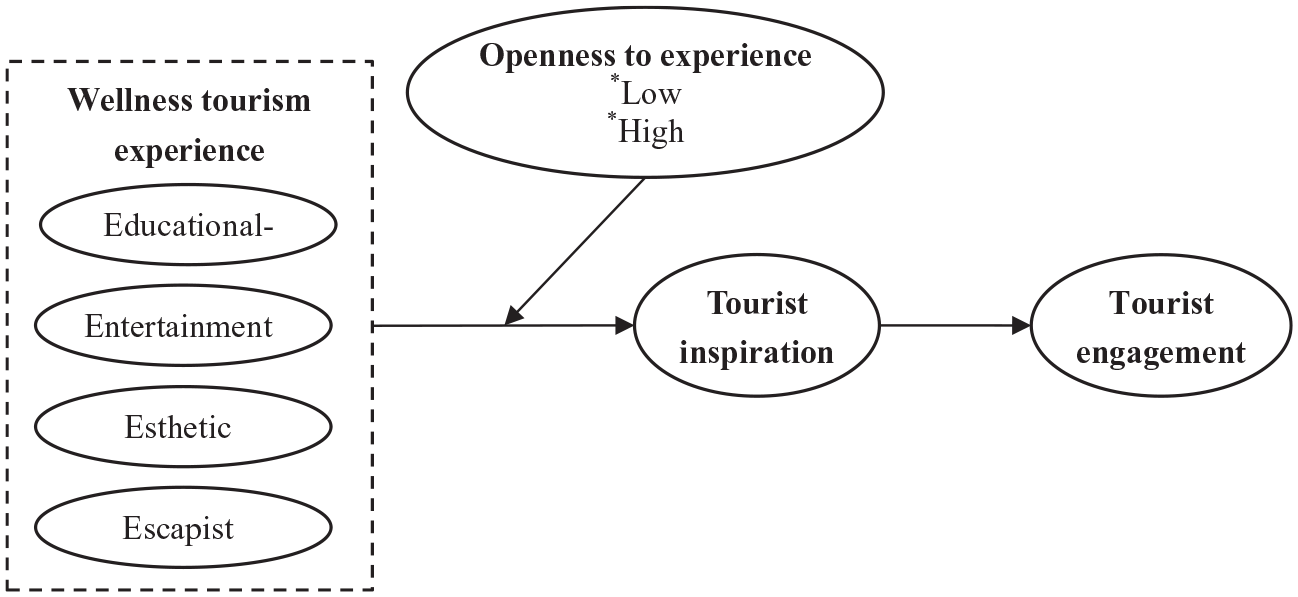
Research Framework
Method
Research Site
We decided to conduct our research in Shizhu County as a result of its rapid growth and emergence as one of the top health-and-wellness tourism sites in China. Shizhu County is located in the eastern side of Chongqing province, southwestern China. With its high forest coverage rate, comfortable climate, abundant healthy food, and beautiful natural landscapes, there is an increasing number of wellness tourists (see Supplement Figure 1; available online) visiting Shizhu, which was awarded the title of “China’s natural oxygen bar,” “China (Chongqing)’s climate tourism destination” and “Home of Healthy Food in China.” According to the local government’s annual report (Government Work Report of Shizhu County, 2020), the primary motivation of tourists coming to Shizhu is to find ways to stay healthy and recover from chronic illnesses with the help of its beautiful and natural landscapes as well as health-restoring practices. Also, the local Government of Shizhu County is making significant efforts to develop the wellness tourism industry based on the local conditions, which paves the way for Shizhu County to become one of the most renowned wellness tourism destinations in China.
Questionnaire Design
Our research data were primarily drawn from a questionnaire covering seven main variables and the sociodemographic profile of the respondents. Specifically, four items were used to measure education, entertainment, esthetics, and escapist experiences, respectively (Luo et al., 2018). Four items were used to measure inspiration (Thrash & Elliot, 2003). Because of relationship management the article focuses on, the measurement of tourist engagement mainly stresses the absorption and interaction dimensions with three items (Fang et al., 2020; So et al., 2014). Finally, three items were used to measure openness to experience (Khoi et al., 2019). The measurement used the Likert-type 7-level scale (1 is very disagreeable, 7 is very agreeable), and based on the actual situation herein, the items were properly adjusted.
Data Collection
We collected our data from July 20 to July 30, 2020, for this study. To improve the quality of our collected data, the targeted respondents were asked to participate in the survey only after their tour (Choi & Choi, 2019). Following the advice of Li et al. (2020), we collected our data in the rest area of the resort in order to allow our participants sufficient time to complete the questionnaire in a relaxed environment (Li et al., 2020). We screened the participants by asking whether they arrived at the destination for the purpose of obtaining a wellness tourism experience. After the screening process, we informed the respondents of the research purpose of our study and provided them with the relevant instructions and supplementary information necessary for completing the questionnaire before questionnaire issuance. The participants were assured that data collection was anonymous and that all the information they gave would only be used for academic research purposes. In total, there were 494 valid samples from the sample pool of 508. The sociodemographic profile of respondents is provided in terms of gender, age, education, marital status, monthly income, and occupation (see Supplement Table 1; available online).
As this study used cross-sectional data, multiple approaches were adopted to control common method bias (CMB). First, as mentioned above, the confidentiality and anonymity of participants were assured (Conway & Lance, 2010). Second, when correlations are at a level below 0.9, we can infer that CMB is unlikely (Hair et al., 2010). As shown in Table 1, there were insignificant correlation values in the correlation coefficient matrix. Finally, we controlled CMB by estimating a single-factor model which showed a poor model fit to the data (χ2/df = 19.52, comparative fit index [CFI] = 0.66, Tucker–Lewis index [TLI] = 0.59, root mean square error of approximation [RMSEA] = 0.32, standardized root mean square residual [SRMR] = 0.17), thereby suggesting that CMB is not a serious issue in this study (Podsakoff & Organ, 1986).
Results of Convergent Validity, and Discriminant Validity Analysis
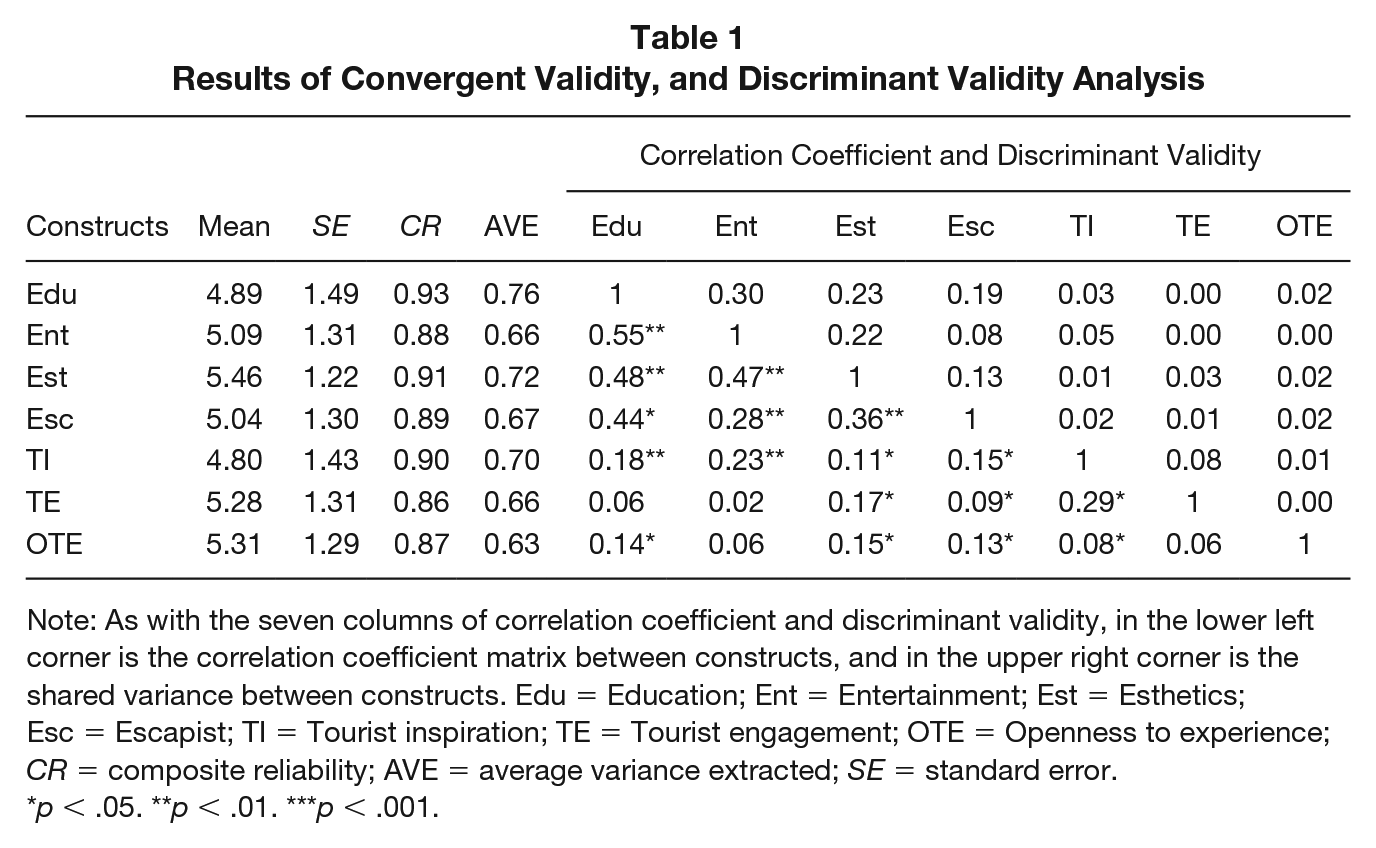
Note: As with the seven columns of correlation coefficient and discriminant validity, in the lower left corner is the correlation coefficient matrix between constructs, and in the upper right corner is the shared variance between constructs. Edu = Education; Ent = Entertainment; Est = Esthetics; Esc = Escapist; TI = Tourist inspiration; TE = Tourist engagement; OTE = Openness to experience; CR = composite reliability; AVE = average variance extracted; SE = standard error.
p < .05. **p < .01. ***p < .001.
Data Analysis
Reliability and Validity
We have analyzed our data using both SPSS 24.0 and Mplus 7.0, respectively. Cronbach’s α coefficient for each respective scale exceeded 0.8 (Nunnally, 1978), whereas the composite reliability (CR) value exceeded 0.7 (Bagozzi & Yi, 1988; Choi & Choi, 2019) as illustrated in Tables 1 and 2. These findings demonstrate that the scales we used in our study were dependable and appropriate for the purposes of our study (see Table 2).
Results of Measurement Model
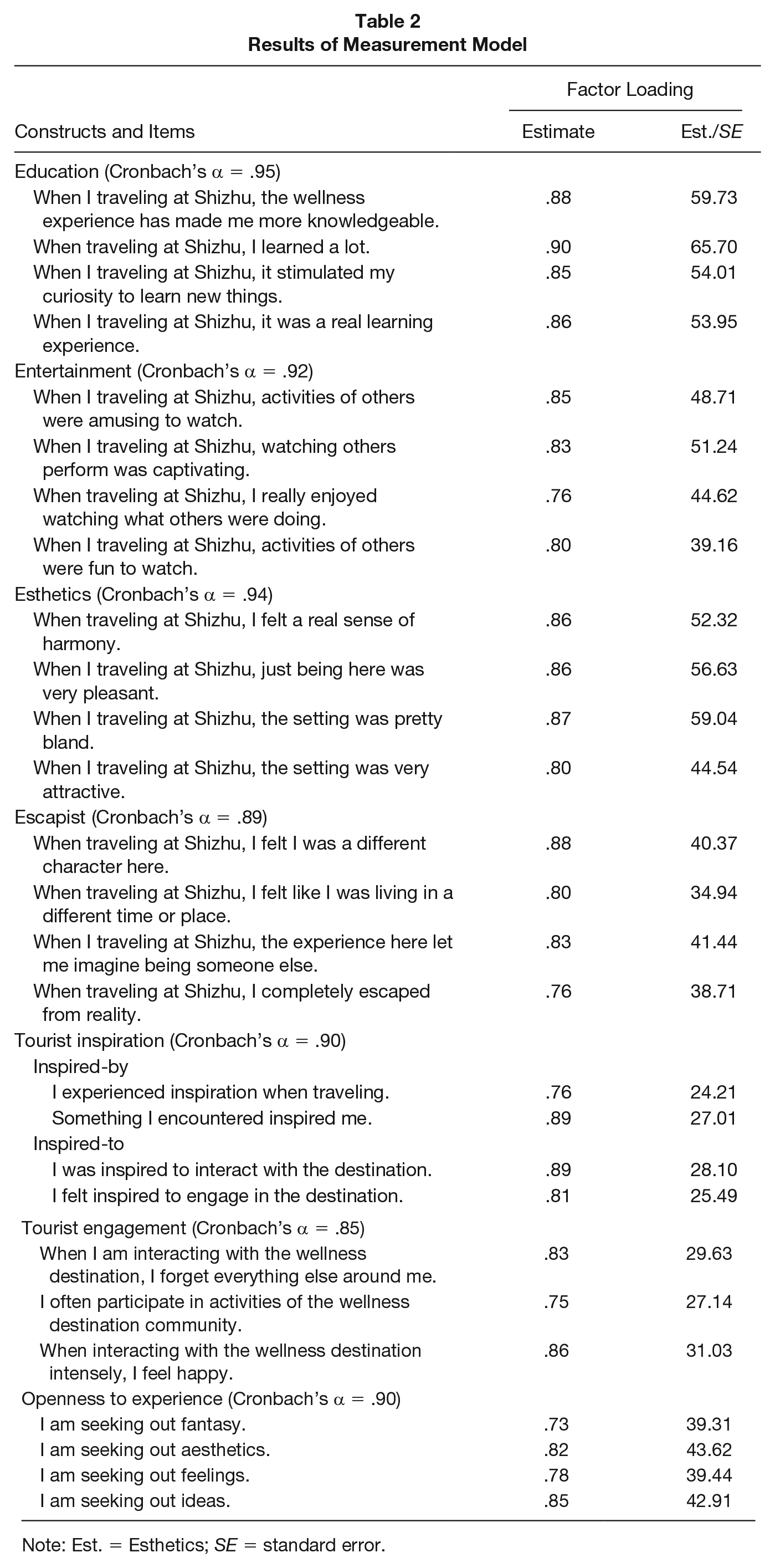
Note: Est. = Esthetics; SE = standard error.
To assess our chosen scales’ validity, we employed Mplus 7.0 for our confirmatory factor analysis test (see Tables 1 and 2). The model fitted our data appropriately (χ2 = 598.48 with 218 degrees of freedom; χ2/df = 2.75, CFI = 0.97, TLI = 0.96, RMSEA = 0.04, SRMR = 0.04). It was found that the estimated value of the standardized factor load of each construct measurement item exceeded 0.7 and this attained the required level of significance. Notably, we had a value greater than 0.6 for average variance extraction (AVE), demonstrating high convergent validity for the scale as suggested by Choi and Choi (2019). When we carried out further shared variance comparison between AVE and the construct, we uncovered that the AVE value of each construct exceeded the greatest value of the shared variance between the construct and other constructs. Our scale is therefore empirically proven to have high discriminant validity (Fornell & Larcker, 1981; see Table 1).
Hypothesis Test
We used Mplus7.0 to model the questionnaire data, and the research hypothesis was tested by 5,000 bootstrap calculations. The model fitted the data well (χ2 = 635.49 with 219 degrees of freedom; χ2/df = 2.90, CFI = 0.96, TLI = 0.96, RMSEA = 0.06, SRMR = 0.04). Specifically, education (β = .32, p < .001), esthetics (β = .19, p < .01), and escapist (β = .47, p < .01) had a significant positive impact on inspiration, while no significant relationship was observed between entertainment and inspiration (β = .02, p = .85). We found that inspiration had a strong correlation with intention to engage in wellness tourism (β = .87, p < .001). Openness to experience had a significant moderating effect on the correlation between the education (interaction item β = .22, p < .01), esthetics (interaction item β = .13, p < .01), and escapist (interaction item β = .36, p < .01), and inspiration. Therefore, the majority of the research hypotheses were supported (see Figure 2).
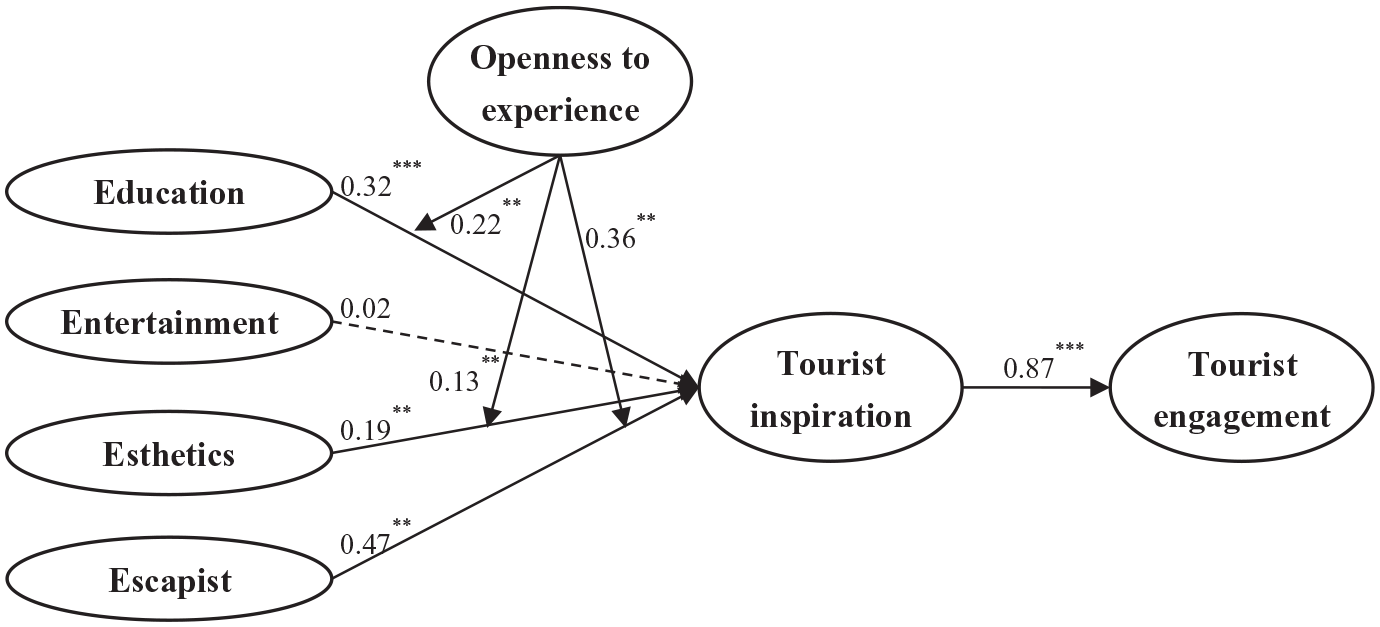
Path Coefficient of the Conceptual Framework
To further test the moderating effects of openness to experience on the relationships between the three components and inspiration, we further divided the moderating variable into a low-score group and a high-score group by mean ± 1 standard deviation [SD] for a simple slope test. Specifically, in the high-openness-to-experience score group, the education (β = .46, p < .01), esthetics (β = .31, p < .05), and escapist (β = .57, p < .01) had a significant positive effect on tourist inspiration. However, the effect was insignificant in the low-openness-to-experience score group (βeducation = .05, p > .1; βesthetics = .02, p > .1; βescapist = .08, p > .05; see Figure 3).
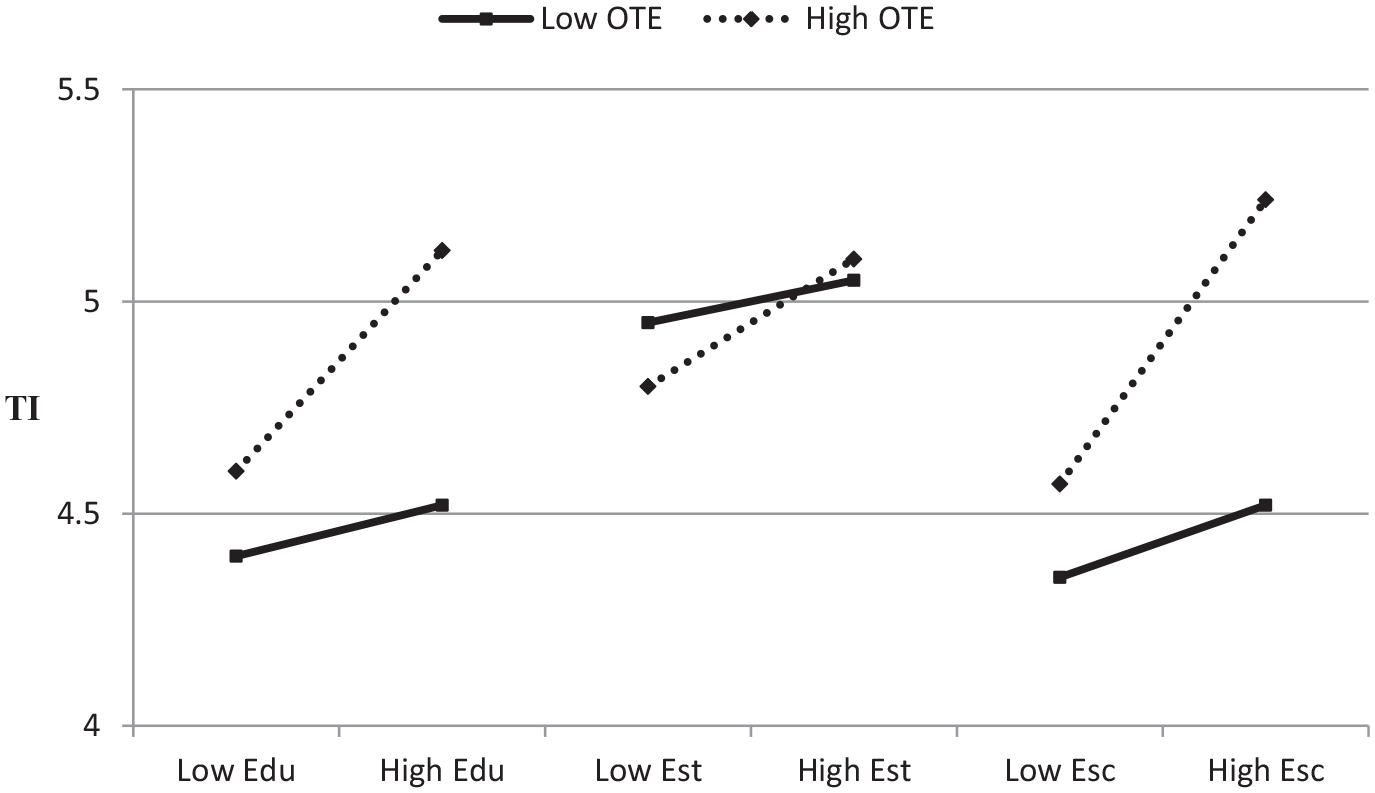
Moderating Effects of OTE on the Relationships of Edu → TI, Est → TI, and Esc → TI
Discussion and Implications
Discussion
Applying the transmission model of inspiration as part of our conceptual framework, this article aims to explore the antecedents and consequences of inspiration in the context of wellness tourism. This study constructs an integrated model illustrating the relationships between wellness tourism experience, inspiration, engagement, and openness to experience. After a survey of 494 wellness tourists coming to visit Shizhu County, we discovered that the three components (education, esthetics, and escapist) of the wellness tourism experience can elicit inspiration, and therefore, positively influence engagement. Additionally, the positive relationships between the three components and inspiration are significantly strengthened when tourists are at a high level of openness to experience. This study stresses the vital role of inspiration in wellness tourism, and it considers the mechanism behind the formation of engagement, yielding research findings with theoretical contributions and practical implications.
However, Hypothesis 1a2 was not supported by the results. That is, the entertainment component fails as a predictor of inspiration, which echoes with Luo et al.’s (2018) work that also found a negligible relationship between experiential economy and entertainment. Wellness tourists may tend to spend more time on wellness activities (e.g., pursuing health-related knowledge and relaxation/mediation) and nature sight-seeing (e.g., enjoying landscapes of beauty and therapeutic appeal) as these activities fulfill their objectives to maintain or improve health status (Han et al., 2018; Hjalager & Konu, 2011). Therefore, entertainment experience is less likely to elicit tourist inspiration.
Theoretical Contributions
First, we seek to enrich the existing literature on wellness tourism research and deepen the knowledge regarding the correlations between psychological health-and-wellness tourism with our theoretical contribution. To date, the psychological aspects of wellness tourism remain an understudied area and our study has contributed to the knowledge gap on the cross-disciplinary study of the psychological health of tourists and wellness tourism by focusing on the psychological effect of wellness tourism from an innovative angle.
Second, using the transmission model of inspiration, this study constructed the pathways of wellness tourism experience–inspiration–engagement and explored the underlying mechanism of antecedent and consequence of inspiration in the context of wellness tourism. Although the transmission model of inspiration proposed by Thrash and Elliot (2003) has been empirically tested in social psychology and marketing fields, there are few tourism studies applying this model empirically to analyze the impact of wellness tourism experience (inspired-by) on tourist engagement (inspired-to) in depth.
Third, to our knowledge, this study is a pioneer in empirical analysis on the tourist engagement behavior-eliciting process in a wellness tourism context. From the supply-side of tourism, we propose a new direction for future studies of wellness tourism–related research from the visual angle of relationship marketing. Along with the rapid development of the international wellness tourism industry in recent decades, the wellness tourism industry needs to understand how to attract, maintain, and enhance relationships with visitors from the perspective of engagement behaviors.
Fourth, this study also explores the moderating effect of openness to experience. The findings revealed how tourists’ openness to experience affects the relationship between wellness tourism experience and tourist inspiration, thus, expanding and enhancing the transmission model of inspiration. The effect of personality traits on inspirational factors in the tourism-related field has not received adequate academic attention in previous studies (Tran & Ralston, 2006). There are also some conflicting data in the existing body of related scholarship. This study clarifies some aspects of conflicting data and confirms the substantial impact of the personality trait of openness to experience. We also discuss ways of further strengthening the positive effect of the wellness tourism experience from the supply-side perspective and clarify the boundaries related to these relationships.
Practical Implications
From a practical perspective, our research outcomes present noteworthy suggestions for government officials, tourism administrators, and local DMOs. First, this study shows that a wellness tourism experience can positively influence engagement. Industry practitioners can take advantage of this insight to develop and expand the offerings of their destinations in this direction. For example, supporting infrastructures and facilities should be planned and relevant policies initiated. In addition, tourists might become more health-conscious in the postpandemic world, which would further strengthen their motivation to visit a wellness destination with a health-maintaining/enhancing desire. Therefore, the effects of “inspiration-enhancement” and “engagement-enhancement” which this article tested could motivate government officials to encourage more public participation in wellness tourism. This is not only beneficial to nurture a harmonious host–guest relationship and maintain the sustainability of wellness destinations but also contributes greatly to boosting tourism economy recovery amid the postpandemic world.
Second, the present study uncovers that three components of wellness tourism experience (education, esthetics, and escapist) have a high significance with inspiration, except for entertainment. Therefore, we suggest that tourism developers pay more attention to education, esthetics, and escapist aspects rather than entertainment. That is to say, unlike the widely discussed mass tourism which pursues entertainment factors to elicit hedonic or fun experiences (Choi & Choi, 2019), wellness counterparts should integrate the other three components which have a higher possibility to increase positive psychological and behavioral consequences into the construction of wellness tourism attraction, and design of wellness tourism activities. For example, more attractive landscapes could be designed to evoke or enhance the tourist esthetics experience. Novel forms of wellness tourism activities (i.e., spa, yoga, and Tai Chi), knowledge-building (education experience) and “get-away” activities (escapist experience) could be initiated and actively promoted. In this way, it will be easier for DMOs to capture tourists’ expectations more accurately and increase their overall engagement by fulfilling their expectations.
Third, tourists with strong openness to experience are more likely to elicit an inspirational state and lead to further engagement. Thus, the moderating effect of openness to experience shows that marketing strategies can be adjusted to emphasize imagination, creativity, open-mindedness, and novelty, because tourists with the personality trait are curiosity-seekers and more likely to pursue and appreciate novel experiences. For example, advertising expressions relevant to imagination, fantasy, aesthetics, and creativity should be incorporated into tourism market campaigns to resonate and appeal to targeted tourists with this personality trait, therefore, resulting in better design of experiences to meet specified individual needs.
Limitations and Summary
This study has a few limitations, requiring attention from future researchers. First and foremost, health-related factors (e.g., health goal salience) could influence the targeted tourists’ motivation to engage in wellness tourism. These factors, however, may be affected by the fluid pandemic environment, which is evolving and changing constantly. Thus, extending the current research into a longitudinal study is highly expected to draw a holistic picture. Next, this study adopted the use of cross-sectional data, so our research outcomes may not be able to indicate a causal relationship. It is possible that follow-up research in related areas may better illuminate the mechanism of the inspiration effect. Third, we restricted data collection to Chongqing, China, which may limit the external validity of the findings. Our research framework could be tested in other sample pools and cross-cultural contexts. Fourth, this study only considered the inspirational variable as an intermediary factor to explain our research outcomes. This study has not taken into account the implications of other feelings such as arousal. To expand the scope of our study, further studies could consider other emotional factors. Finally, more moderating factors could be considered. This article has discussed the moderating effects of openness to experience, which might vary during the current pandemic situation. This is illustrated by the disaster-as-divider hypothesis which hypothesized that individuals could become more self-preserving and selfish in postpandemic or other disastrous environments. Such actions are direct consequences of an adaptive survival strategy (Fleming et al., 2014; Vardy & Atkinson, 2019). Therefore, potential tourists may be less salient in openness to experience in countries/regions where the pandemic has yet to be under control.
In conclusion, this study suggests that tourist inspiration can play an effective role in transmitting wellness tourism experience to tourist engagement. Responding to the characteristics of wellness tourism, this article builds on the transmission model of inspiration and through empirical data findings, discovers that a wellness tourism experience (except for the entertainment dimension) can elicit tourist inspiration which positively influences tourist engagement. By testing the moderating effect of openness to experience, we have uncovered significant and positive relationships between experience and inspiration when tourists are in a high level of openness to experience.
Supplemental Material
sj-docx-1-jht-10.1177_10963480211026376 – Supplemental material for Tourist Inspiration: How the Wellness Tourism Experience Inspires Tourist Engagement
Supplemental material, sj-docx-1-jht-10.1177_10963480211026376 for Tourist Inspiration: How the Wellness Tourism Experience Inspires Tourist Engagement by Mang He, Biqiang Liu and Yaoqi Li in Journal of Hospitality & Tourism Research
Footnotes
Author’s Note:
This work was supported by the National Social Science Fund of China [Grant No. 20BGL158].

Supplemental Material
Supplemental material for this article is available online.
References
Supplementary Material
Please find the following supplemental material available below.
For Open Access articles published under a Creative Commons License, all supplemental material carries the same license as the article it is associated with.
For non-Open Access articles published, all supplemental material carries a non-exclusive license, and permission requests for re-use of supplemental material or any part of supplemental material shall be sent directly to the copyright owner as specified in the copyright notice associated with the article.
