






Abstract
To enhance energy absorption and ballistic resistance, a novel auxetic unit cell is incorporated into sandwich structures and evaluated in this work. Starting from a perforated design domain and tested under regulated compressive and impact loading conditions, a topology optimization technique is used to create a re-entrant braced auxetic (REBA) geometry with auxetic behavior. When compared to traditional designs, the resultant unit cell significantly improves specific energy absorption under quasi-static compression and shows a negative Poisson’s ratio. Finite element simulations confirm that the optimized core offers enhanced mechanical performance compared to conventional lattice designs. Using a hemispherical shell, the new unit cell is further incorporated into a sandwich design with many layers, mimicking the use of ballistic impact. Superior ballistic resistance and energy dissipation over conventional core designs are demonstrated by high-velocity impact simulations, highlighting the suggested structure’s potential for defensive applications. The results demonstrate how well topology-driven design works to customize cellular materials for impact loads.
Keywords
Introduction
Auxetic cellular structures, characterized by a negative Poisson’s ratio, have attracted increasing attention for impact and energy-absorption applications due to their ability to undergo transverse contraction under compressive loading.
1
Researchers have recently focused on establishing lightweight structures with excellent energy absorption capabilities.
2
Sandwich structures have become prominent, offering robust strength and stiffness while maintaining a minimal weight.3,4 Figure 1 illustrates a conventional sandwich structure composed of a central core layer enclosed between two external face sheets, highlighting the role of core geometry in structural performance. The outer layers often consist of materials with much higher strength and stiffness than the core, providing greater structural integrity.
5
Their exceptional characteristics make them ideal for use in various industrial and military applications, including high-performance vehicles, helmets, aerospace engineering, and automobile frameworks.
6
Such structures can be adversely affected when subjected to high-speed impacts, resulting in local damage and reduced strength.
7
Sandwich structure with various core shapes.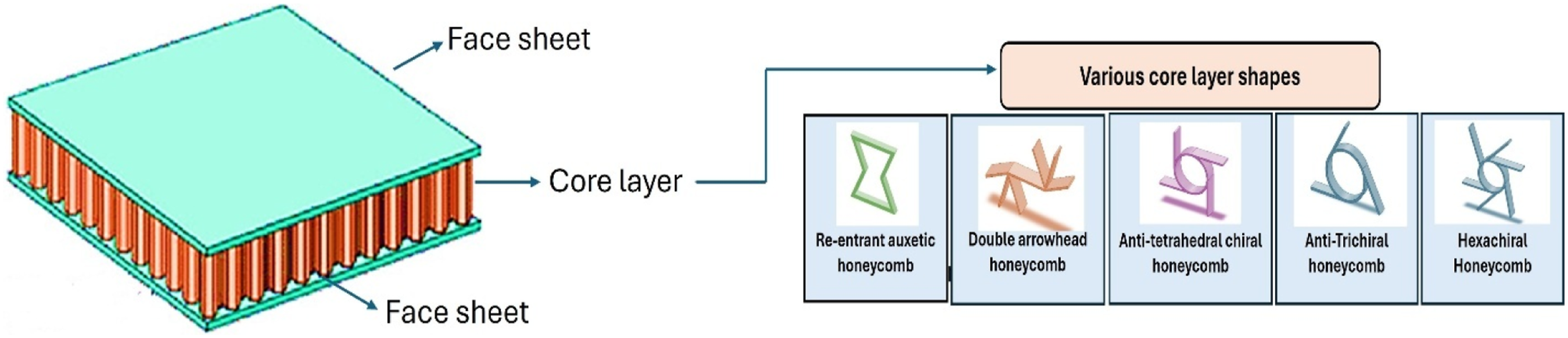
Extensive research, both computational and experimental, has been conducted to investigate the ballistic behavior of sandwich structures under projectile impact.8,9,10 Yahaya et al. 11 investigated how different sandwich structure designs responded to foam projectiles firing at varying speeds. Their findings indicated that in the mid-range velocity spectrum (175–375 m/s), the honeycomb-core sandwich structure demonstrated greater impact resistance. Nia and Kazemi 12 demonstrated that altering the density gradients within the core materials significantly enhanced energy absorption and alters the ballistic limit. Arslan et al. 13 conducted research on functionally graded face sheets integrated with honeycomb-core sandwich designs, which discovered that these sheets effectively improved resistance to impact while reducing deformation and enhancing resistance to damage. Furthermore, Güneş et al. 14 outlined that reinforcing honeycomb sandwich structures with functionally graded face plates can absorb significantly higher kinetic energy than conventional designs. Kollop et al. 15 observed that sandwich panels with a dry fabric face sheet outperformed metallic aluminum skins with equal weight and indentation due to greater penetration resistance of the fabric layer. Ding et al. 16 analyzed Ultra-High Molecular Weight Polyethylene (UHMWPE) composite armor against ogive-nosed projectiles, detailing penetration mechanisms and energy dissipation. The need to modify structural designs according to anticipated projectile characteristics is further supported by the work of Sasikumar and Sundareswaran. 17 Ansari et al. 18 demonstrated that the perforation behavior of GFRP laminates was strongly influenced by projectile nose shape, impact angle, and target thickness, with blunt projectiles and oblique impacts causing more damage and higher energy absorption.
Sandwich and lattice core structures impact response under dynamic loading conditions has been the subject of several investigations. Abbasi et al. 19 highlighted how foam core stacking improved sandwich panels’ resilience to high-velocity impacts. Kepler 20 performed a detailed experimental investigation that examined the impact penetration of sandwich panels at various velocities and established important performance criteria. Ivanez et al.21,22 studied the numerical modeling of sandwich beams and plates with honeycomb and foam cores, respectively, and highlighted their low- and high-velocity impact responses. Similarly, Hou et al. 23 tested the ballistic performance of metallic sandwich panels utilizing aluminum foam cores, demonstrating improved energy absorption capacities. Liu et al. 24 investigated the high-velocity impact scenarios involving sandwich panels composed of metal fiber laminate skins integrated with aluminum foam cores, and found encouraging results in structural integrity and energy dissipation. Mohamed et al. 25 examined ballistic impact effects and highlighted the critical role of core configurations like honeycomb and auxetic geometries in energy absorption and damage mitigation. Walkowiak et al. 26 demonstrated that auxetic sandwich cores enhance energy absorption and reduce rear-face displacement under ballistic loading compared to conventional cores. The drop-weight impact behavior of sandwich panels with metallic micro-lattice cores was examined by Mines et al. 27 who emphasized the panels’ better energy absorption and damage tolerance. The buckling behavior of sandwich panels with strut-based lattice cores, both locally and globally, was examined by Georges et al. 28 Dahiwale et al. 29 demonstrated the advantages of strut-based topologies through analytical and numerical investigations of the buckling and impact of lattice and triangular cores. The bending characteristics of sandwich panels with cellular cores were studied by Yang et al. 30 who discovered that core shape significantly affects both load-bearing capacity and flexural stiffness. Utham et al. 31 demonstrated that a circular re-entrant star auxetic core improves impact energy absorption and dynamic resistance over conventional designs. These studies collectively demonstrate important developments in the design, analysis, and optimization of sandwich structures with different core topologies for improved dynamic performance.
Topology optimization techniques provide a powerful computational framework for identifying efficient core structural configurations through optimal material distribution under prescribed loading conditions. Depending on the optimization formulation, manufacturing-related constraints such as minimum feature size, overhang limitations, and additive manufacturing requirements can also be incorporated into the design process. 32 Creating new lattice structures by optimizing their topology has shown great promise in recent years for improving impact resistance and energy absorption. Understanding the developments in this field requires examining a variety of study findings that provide different approaches, materials, and configurations designed to maximize energy absorption capacities.33,34 Lin et al. 35 emphasized the relevance of density gradients in regulating the compressive behavior of functionally graded BCC lattice forms. They concluded that these gradients enhanced ductile fracture behavior, which was important for continuous energy absorption during impact events. Shi et al. 36 further supported these findings, demonstrating that gradient-density designs outperformed uniform lattices in energy absorption experiments, particularly under quasi-static loading circumstances. Zhang et al. 37 used wood-based materials to strengthen 3D Kagome lattice structures, showing that natural fibers may significantly increase energy absorption while maintaining lightweight properties. Auxetic sandwich structures were optimized to maximize mechanical efficiency and control Poisson’s ratio through geometric tailoring by Francisco et al. 38 Bohara et al. 39 improved energy absorption by employing topology optimization to create lightweight auxetic structures. Better mechanical performance for impact resistance in armored composite panels was demonstrated by their designs. The previous research provided valuable insights that open pathways for designing lattice cores in lightweight hemisphere shells, while offering superior impact-absorbing performance. The majority of auxetic honeycomb designs, such as re-entrant and chiral geometries, are rarely optimized for high-strain-rate impact scenarios despite their benefits. The capacity of current auxetic cores to distribute material optimally for maximum strain-energy absorption is limited because they are typically based on predetermined unit-cell topologies. Furthermore, despite reports of improved performance under quasi-static and low-velocity loading, little is known about the ballistic behaviour of auxetic cores in curved sandwich shells that are pertinent to aerospace and defence applications. Furthermore, impact-induced deformation mechanisms and energy dissipation are not specifically addressed by existing optimization methodologies, which instead focus on static stiffness or strength. Therefore, topology-optimized auxetic metamaterials have not yet reached their full potential for ballistic protection.
In this paper, a novel auxetic core is numerically designed through a topology optimization approach for sandwich structures. The auxetic core exhibits significant mechanical properties, aiming to enhance energy absorption and ballistic performance under impact loading. Section 2 provides the experimental data 8 of a high-velocity impact test using compressed air and infrared sensors. Hemispherical sandwich shell targets with honeycomb core and aluminum face sheets were tested under controlled ballistic conditions. 8 It also deals with the Finite Element (FE) model created in Abaqus/Explicit for numerical validation. The simulation uses comprehensive meshing, bonding, and contact definitions to examine structural reaction to projectile impact. A novel auxetic unit cell is designed using topology optimization with TOSCA optimization in ABAQUS to enhance energy absorption in Section 3. The design exhibits a negative Poisson’s ratio and improved stress distribution under compressive loading. Furthermore, the ballistic impact performance of the new auxetic core in a hemispherical shell configuration is assessed in Section 4. Key metrics, including ballistic limit, residual velocity, and absorbed energy, are analyzed.
Research significance and novelty
Topology optimization has been used extensively to enhance the ability of sandwich structures to absorb energy under challenging loading conditions, including blast and shock loads. The optimization goals and resulting core structures in prior research are mostly designed to withstand loading scenarios dominated by global stiffness, mass distribution, and general structural compliance. However, the physical mechanisms and failure modes of blast loading and ballistic impact are essentially different.
Highly localized loading, incredibly short contact periods, significant stress gradients, gradual penetration, and material failure caused by plastic deformation and fracture are all characteristics of ballistic impact. Several auxetic cellular structures, including re-entrant, chiral, and double-arrowhead geometries, have demonstrated promising energy absorption characteristics. Nevertheless, most existing studies are limited to planar sandwich panels or conventional auxetic topologies, while investigations involving curved sandwich shells subjected to ballistic loading remain limited. In addition, previous topology optimization studies have primarily focused on stiffness or general energy absorption enhancement rather than ballistic-specific structural application.
The REBA configuration developed in the present work is not intended to represent a completely new auxetic mechanism, but rather a topology-optimization-driven re-entrant braced cellular architecture designed for improved ballistic energy dissipation. The primary contribution of this study lies in the implementation and assessment of the optimized auxetic core within a curved semi-hemispherical sandwich shell subjected to high-velocity projectile impact. The ballistic performance is systematically evaluated using metrics including ballistic limit, residual velocity, and absorbed energy under varying geometric parameters such as cell length, wall thickness, and re-entrant angle. Furthermore, the numerical framework is validated against an existing experimental ballistic configuration before being extended toward the analysis of a topology-optimized auxetic core in a curved shell application. Due to the absence of available experimental ballistic data for the topology-optimized REBA core, the numerical framework was first validated against experimental results for a conventional honeycomb sandwich structure before being extended to the proposed auxetic topology. Therefore, the ballistic performance results presented in this study should be regarded as an initial numerical assessment of the proposed REBA core, while direct experimental validation remains a subject for future investigation. Overall, the novelty of the present work lies in the ballistic-oriented application and evaluation of a topology-optimized auxetic core within a realistic curved sandwich shell configuration rather than in topology optimization alone or in proposing a completely new auxetic topology.
Experimental and numerical validation
This section briefly summarizes the experimental configuration and numerical model adopted from Khaire et al. 8 which are used here to validate the finite element (FE) framework before applying it to the proposed auxetic core design.
Experimental configuration
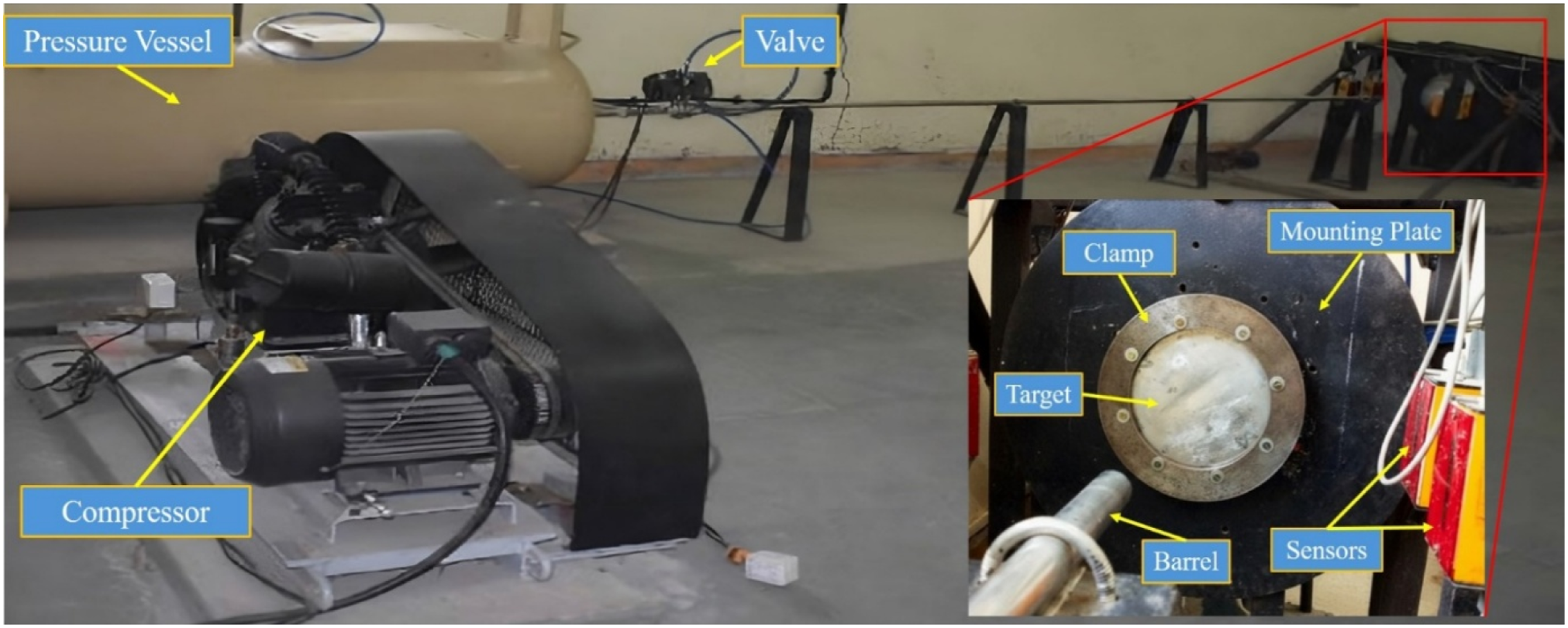
The system consists of a reciprocating air compressor coupled to a 950-liter pressure vessel capable of storing compressed air at up to 40 bar. Figure 2 depicts a schematic of the high-velocity impact test setup used to assess the ballistic performance of a hemispherical sandwich shell structure. A compressed-air system launches an ogive-nosed EN-24 steel projectile with a mass of 52.5 g, a length of 50.8 mm, a diameter of 19 mm, and a hardness of Rc 47–52 toward the target. The projectile’s velocity was monitored before and after impact using a dual-array infrared sensor system consisting of two sets of transmitter-receiver pairs. This configuration enables the exact calculation of incident and residual velocities using time-of-flight measurements. The velocity may be adjusted by changing the internal pressure at the point of release. To minimize aerodynamic disturbances, the free-flight distance between the barrel exit and the target was set to around 50 mm. The targets are hemispherical sandwich shell structures made of aluminum. Both the front and back face sheets are made of AA-1100H12 aluminum alloy, with radii of 100 mm and 80 mm, respectively, and a uniform thickness of 1 mm. The core is a normal hexagonal aluminum honeycomb built of AA-3003H18 alloy, with 3.2 mm cell size, 0.05 mm wall thickness, and a total core thickness of 20 mm. All components are joined using a structural epoxy glue. Target shells were fastened to a 10 mm-thick steel mounting plate with eight equally spaced steel bolts to ensure stable fastening. To minimize collateral damage or bounce, bullets are trapped after impact in a cotton-filled bullet-catching box located downstream of the target. A defined labeling protocol is employed to distinguish between target configurations based on face sheet thickness, core thickness, cell wall thickness, and cell size, allowing for comparison across numerous experimental runs. This setup enables precise and repeatable testing of composite shells under high-velocity impact, allowing detailed analysis of penetration and energy absorption. Schematic of the projectile impact experimental testing system
8
.
Numerical model
A numerical simulation was performed using the Abaqus Explicit Solver, a widely used FE package. The modeled hemispherical sandwich shell structure consists of two face sheets, an adhesive layer, a honeycomb core, and a projectile, as represented in Figure 3(a), while the hexagonal unit cell is represented in Figure 3(b). A structural epoxy adhesive layer of 0.2 mm thickness bonds the core to the face sheets. Six elements are used across each face sheet’s thickness to guarantee that through-thickness stresses and possible delamination are appropriately captured. Similarly, the adhesive layer, which bonds the core to the face sheets, is discretized with two elements through its thickness to reflect its structural role and potential debonding behavior. Semi-hemisphere shell with hexagonal honeycomb core: (a) FE numerical model, and (b) Hexagonal unit cell.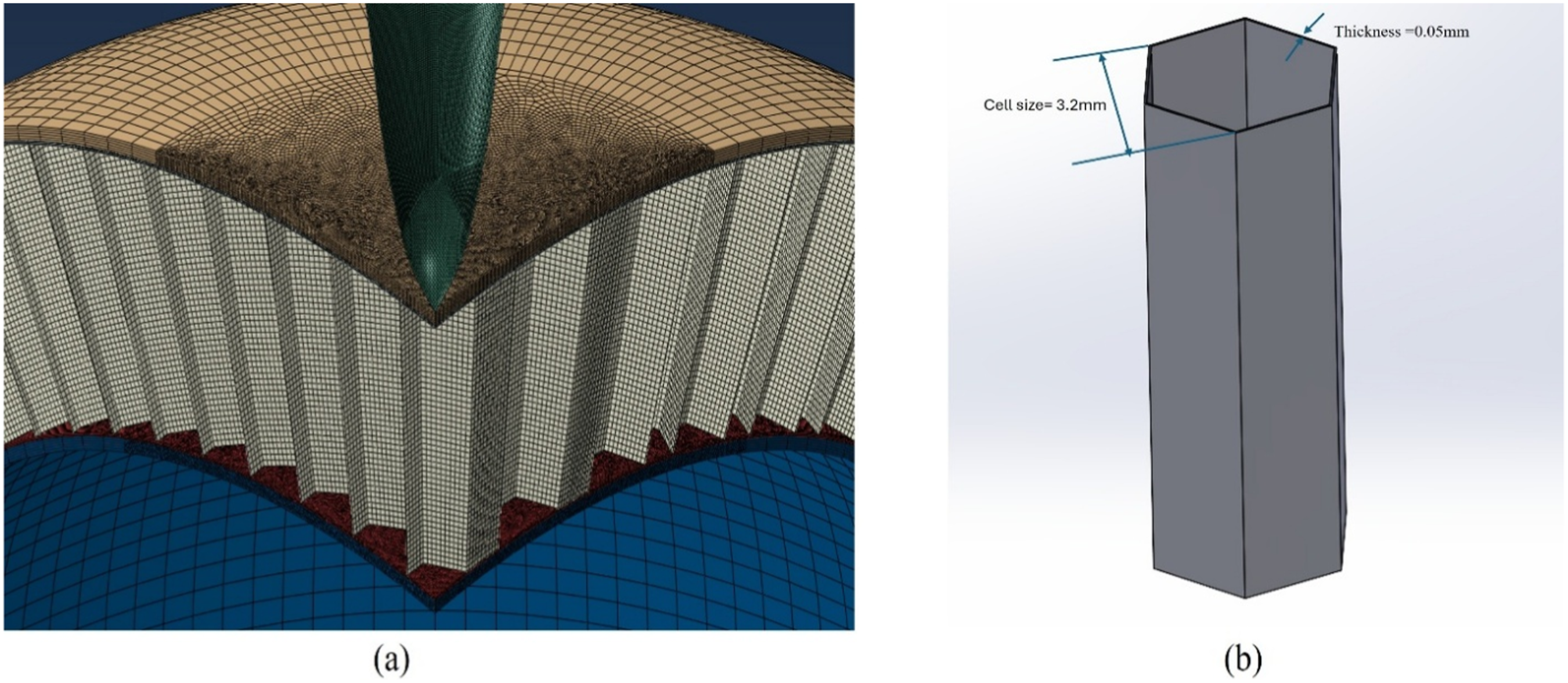
Surface-to-surface contact with friction was defined between the projectile and the face sheets, while tie constraints are used to model the bonded interfaces between the adhesive, core, and face sheets. Furthermore, friction was modeled using a static-kinetic exponential decay algorithm with a static friction coefficient of 0.27 and a kinetic coefficient of 0.16 to account for sliding and energy dissipation during penetration. Figure 4 depicts the damage mechanism occurring during projectile impact. At lower speeds, the projectile embeds without completely penetrating, resulting in local deformation and core crushing. At greater velocities, full perforation occurs, as shown by ductile tearing, petal development in the face sheets, and core buckling. The stress is highly concentrated in the impact zone, with peak values occurring in the front face sheet beneath the projectile. The stress propagates radially and transfers through the thickness into the core. This localized stress concentration causes plastic deformation of the face sheet, progressive core crushing, and increased interfacial shear stresses that promote adhesive debonding. Deformation and penetration response of the sandwich shell subjected to an ogive-nosed projectile.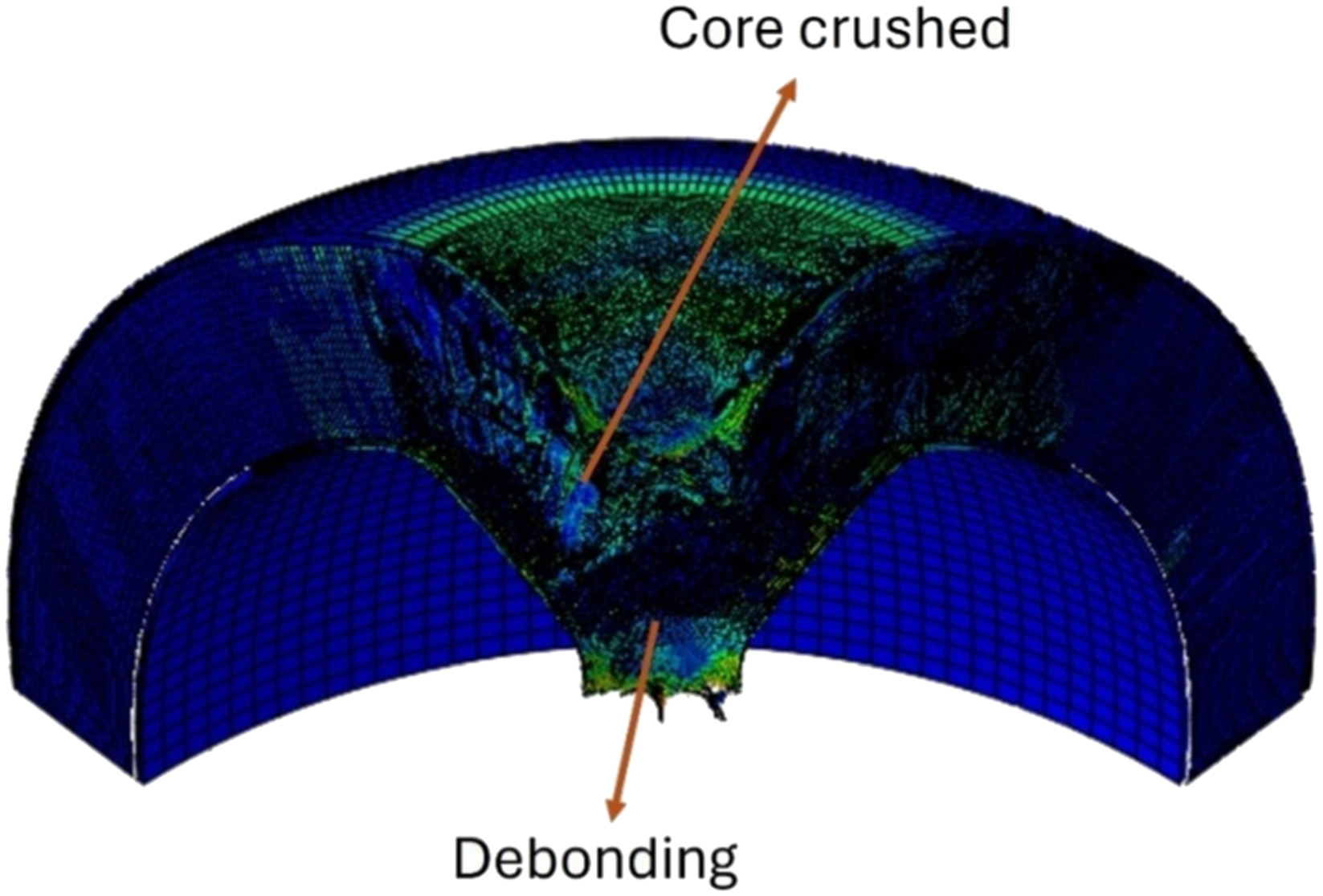
Constitutive model
The combined effects of fracture, strain hardening, strain rate sensitivity, massive plastic deformations, and thermal softening cause metals to behave in a highly nonlinear manner under high-impact loading situations. This complex behavior during impact is effectively modeled using the Johnson-Cook material model.
40



Material properties for face sheet, core, and adhesive layer.
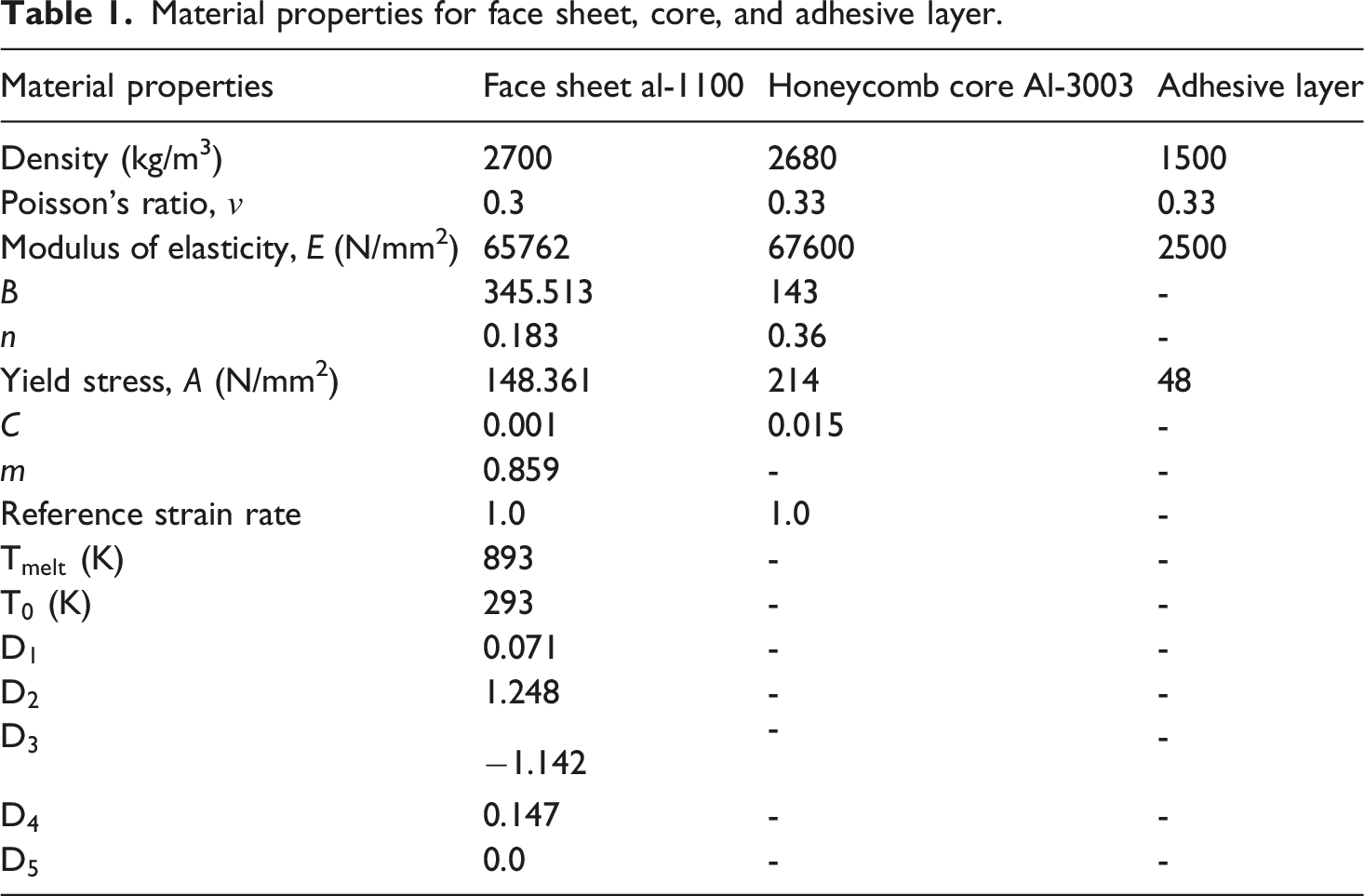
A ductile damage model
41
is used for the honeycomb core and adhesive layer. This model causes material failure when plastic strain accumulation surpasses a certain limit, allowing for gradual element removal to simulate physical material fracture. In the present model, damage initiation is defined by the following condition in equation (4).
Figure 5 displays the variation of bullet residual velocity with mesh size, comparing numerical predictions against experimental measurements to assess mesh sensitivity and convergence. The numerical solution shows low sensitivity and near-converged behavior for fine meshes (0.05–0.5 mm), where the residual velocity remains almost constant. As the mesh becomes coarser (≥0.3 mm), the numerical residual velocity increases significantly, indicating strong mesh dependency and overprediction of the residual velocity, which indicates a lack of convergence. Variation of bullet residual velocity with mesh size.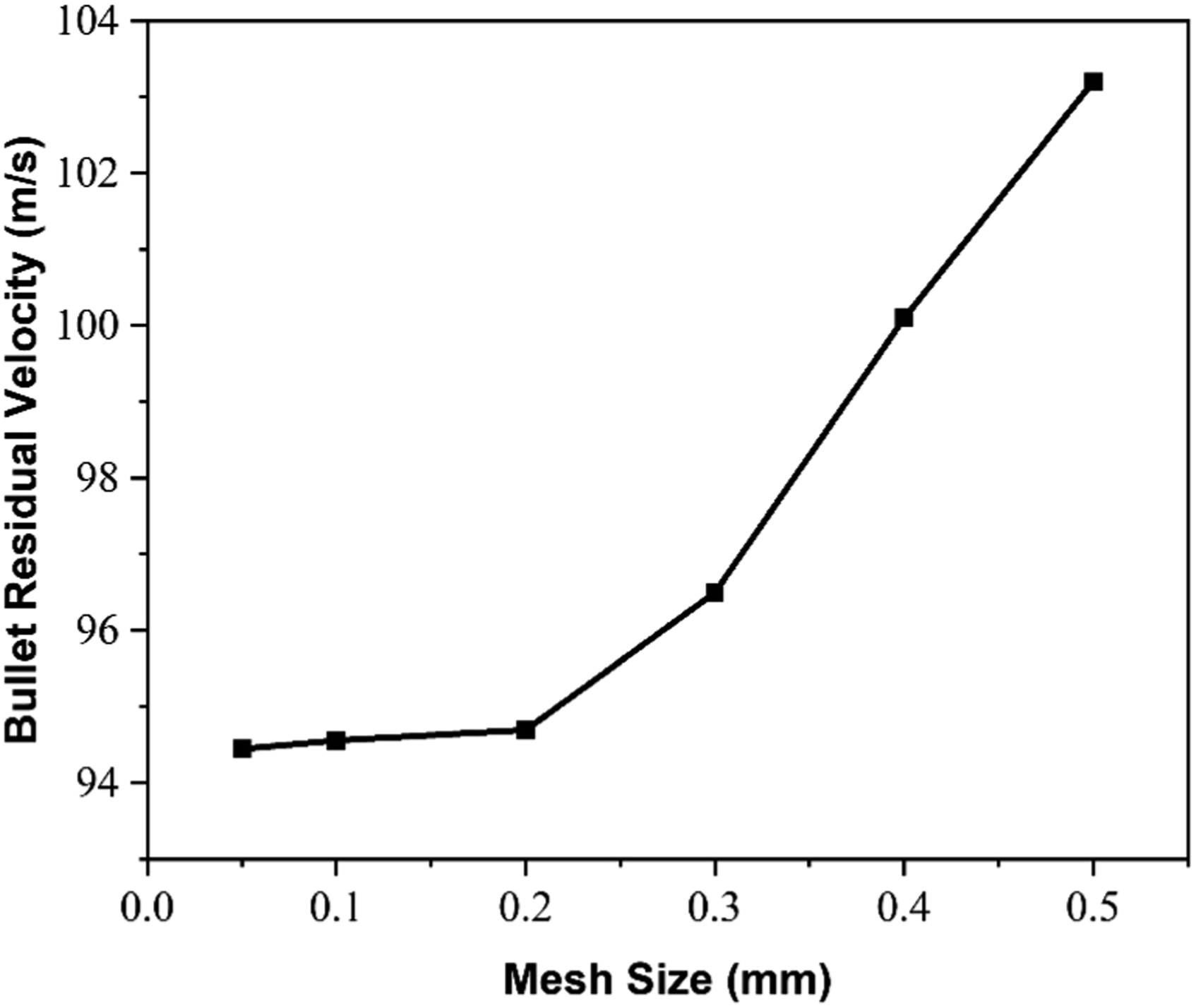
Model verification
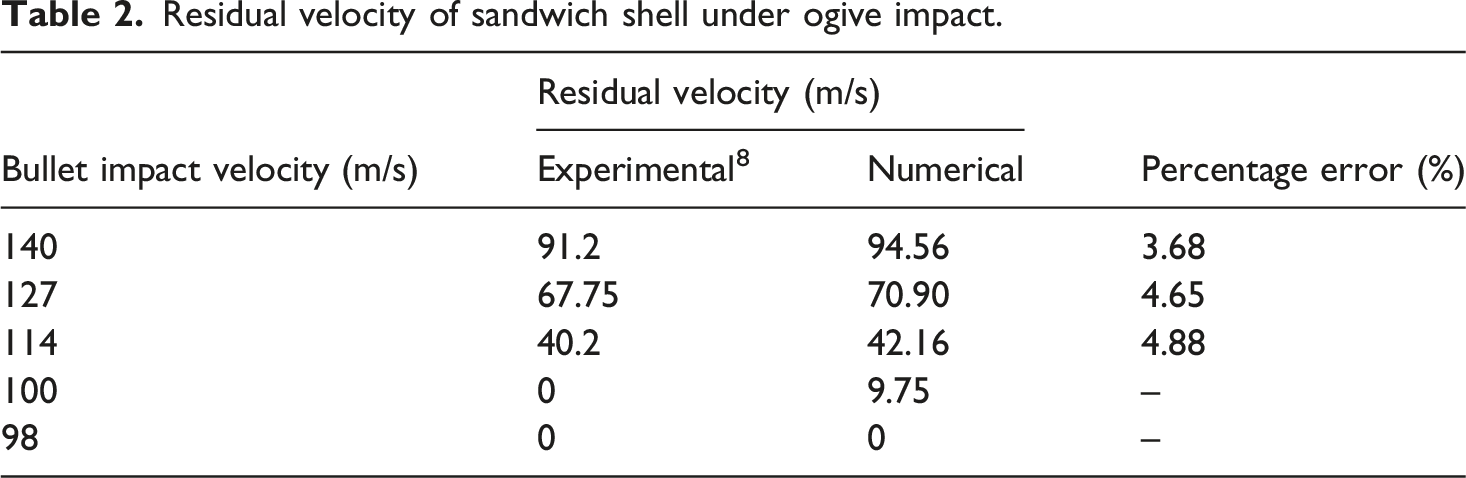
Residual velocity of sandwich shell under ogive impact.
Novel auxetic design by topology optimization
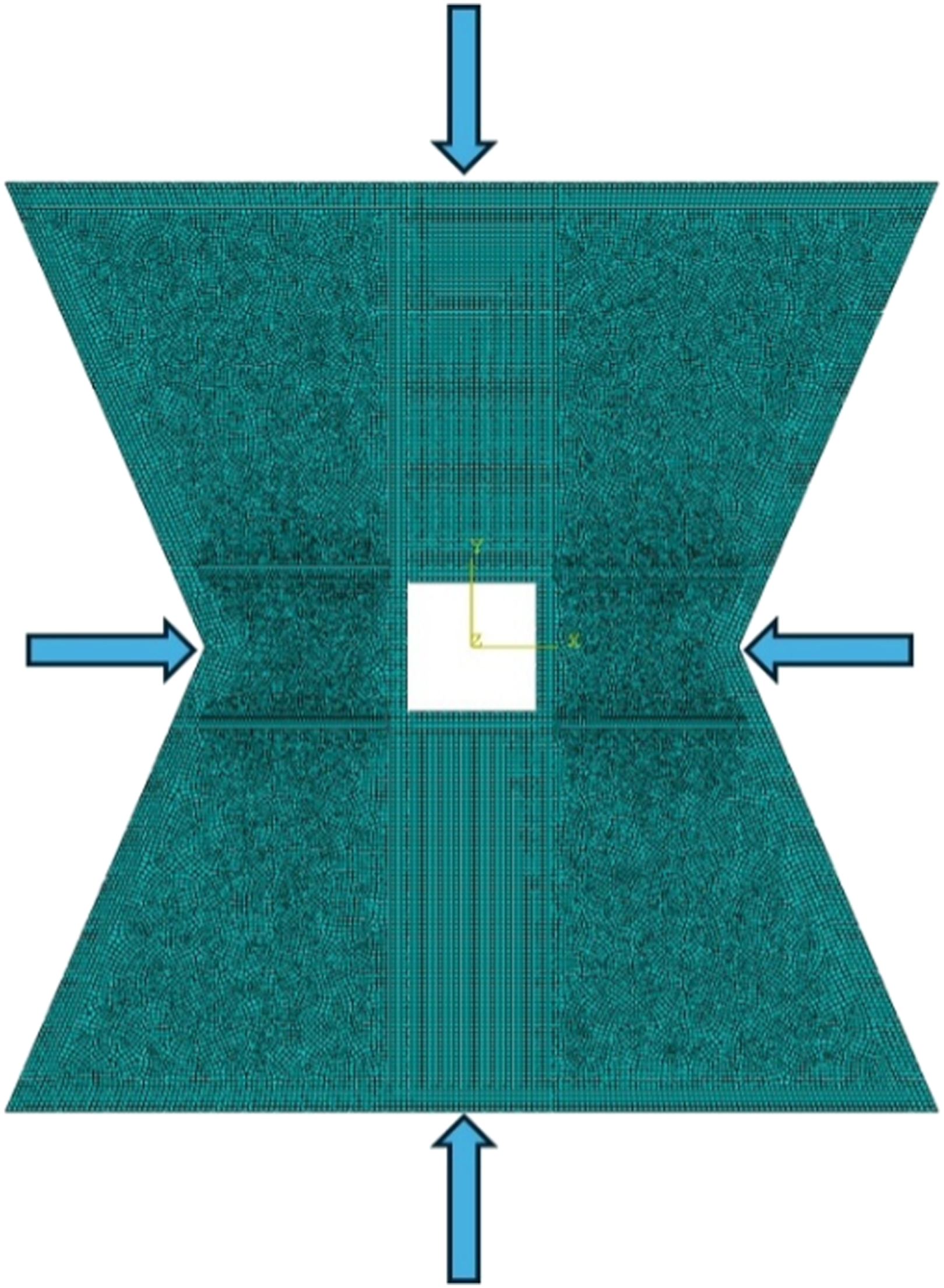
In this work, topology optimization is performed on the auxetic lattice structure using Tosca Structure, which is incorporated into Abaqus. The goal is to improve the mechanical performance-to-weight ratio by increasing structural strain energy while reducing material utilization. This formulation is suitable for generating lightweight auxetic architectures with enhanced deformation-driven energy dissipation characteristics, which may contribute to improved impact resistance. The optimization strategy adopted here is intended to generate a deformation-driven auxetic architecture with enhanced energy dissipation capability rather than directly optimizing ballistic resistance or crashworthiness. The strain-energy-based formulation is employed to promote flexible re-entrant deformation mechanisms and distributed structural deformation within the cellular topology. Under force-controlled loading conditions, maximizing strain energy is mathematically related to compliance maximization, which encourages the development of deformation patterns associated with auxetic response instead of stiffness-dominated configurations. Therefore, the topology optimization procedure is utilized to obtain mechanically efficient auxetic geometries, while the ballistic performance of the resulting configuration is subsequently evaluated through explicit dynamic impact simulations. The topology optimization problem with maximizing strain energy with volume constraint is expressed in equation (5). Design domain for optimization of the unit cell.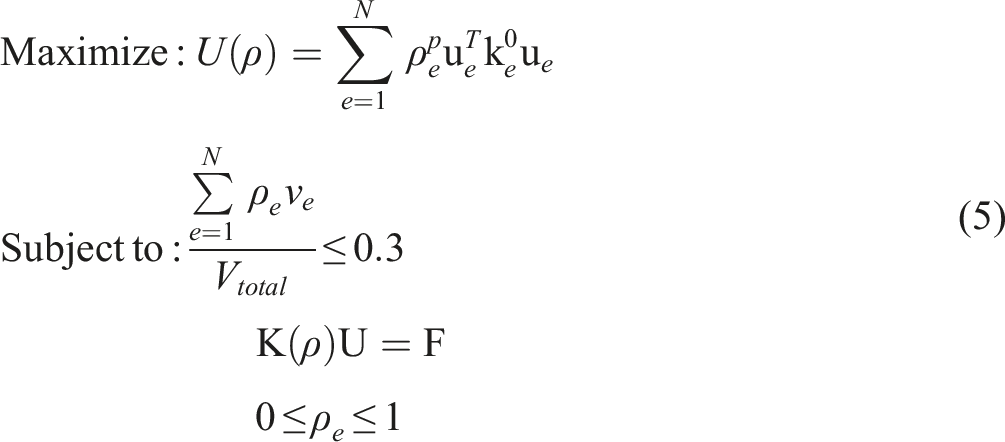
The auxetic cell’s ultimate design is achieved after 200 optimization cycles in Tosca Abaqus. Inward-tapering faces and internal diagonal supports define the re-entrant braced auxetic (REBA) configuration of the resultant geometry, which is seen in Figure 7. This optimized structure removes unnecessary mass from less stressed areas while efficiently concentrating material in areas that are crucial for load-bearing and strain-energy absorption. A braced, open-core design is created when inner material is removed, with material concentrated at the outer boundaries and in the central load-carrying sections. The final topology’s reentrant shape preserves the auxetic behavior, and the central bracing improves energy dissipation and structural stability under axial or impact loading. This result shows how well the strain energy maximization method works to create a lightweight, mechanically efficient auxetic unit cell. Optimal design after topology optimization: (a) 2D design, and (b) 3D design.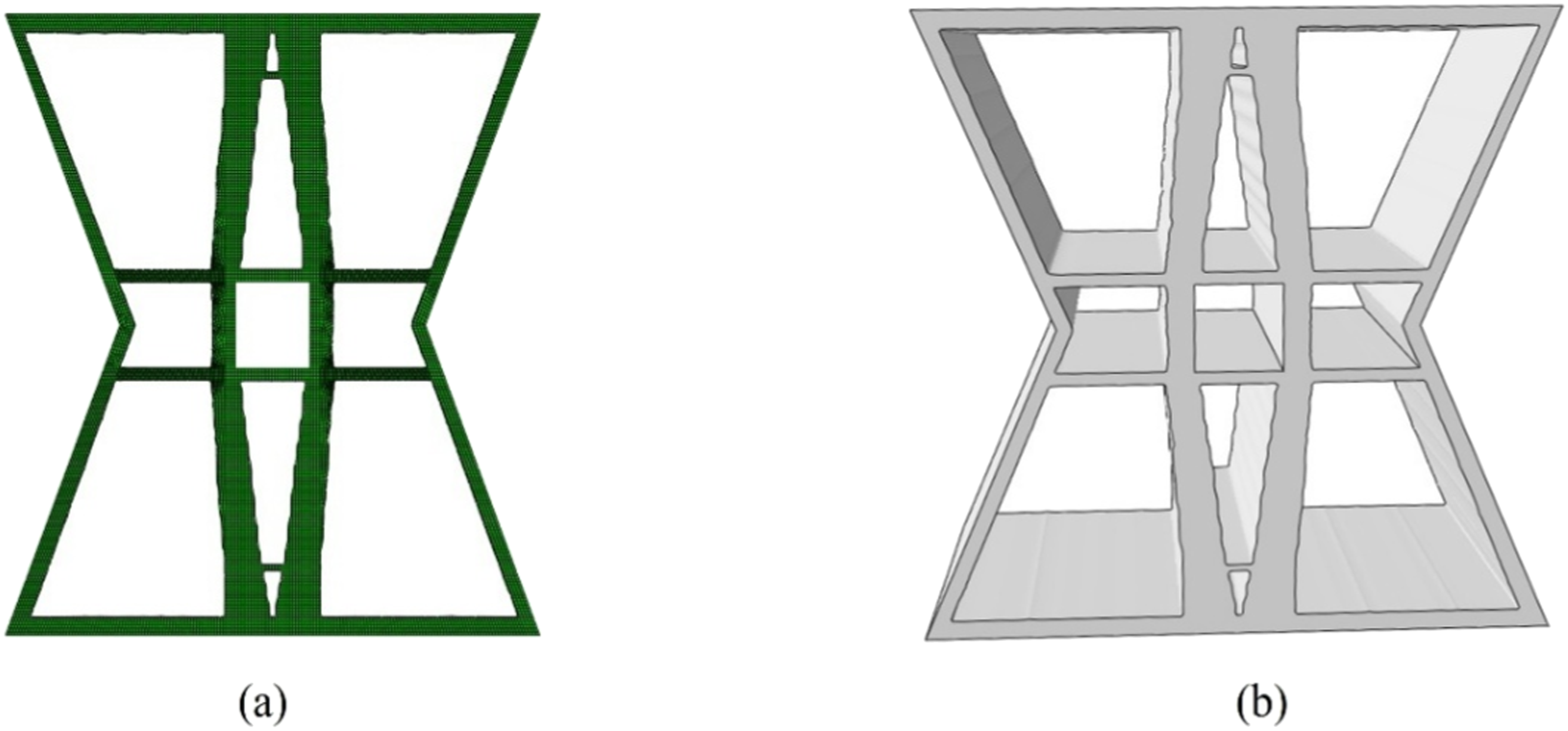
Poisson’s ratio
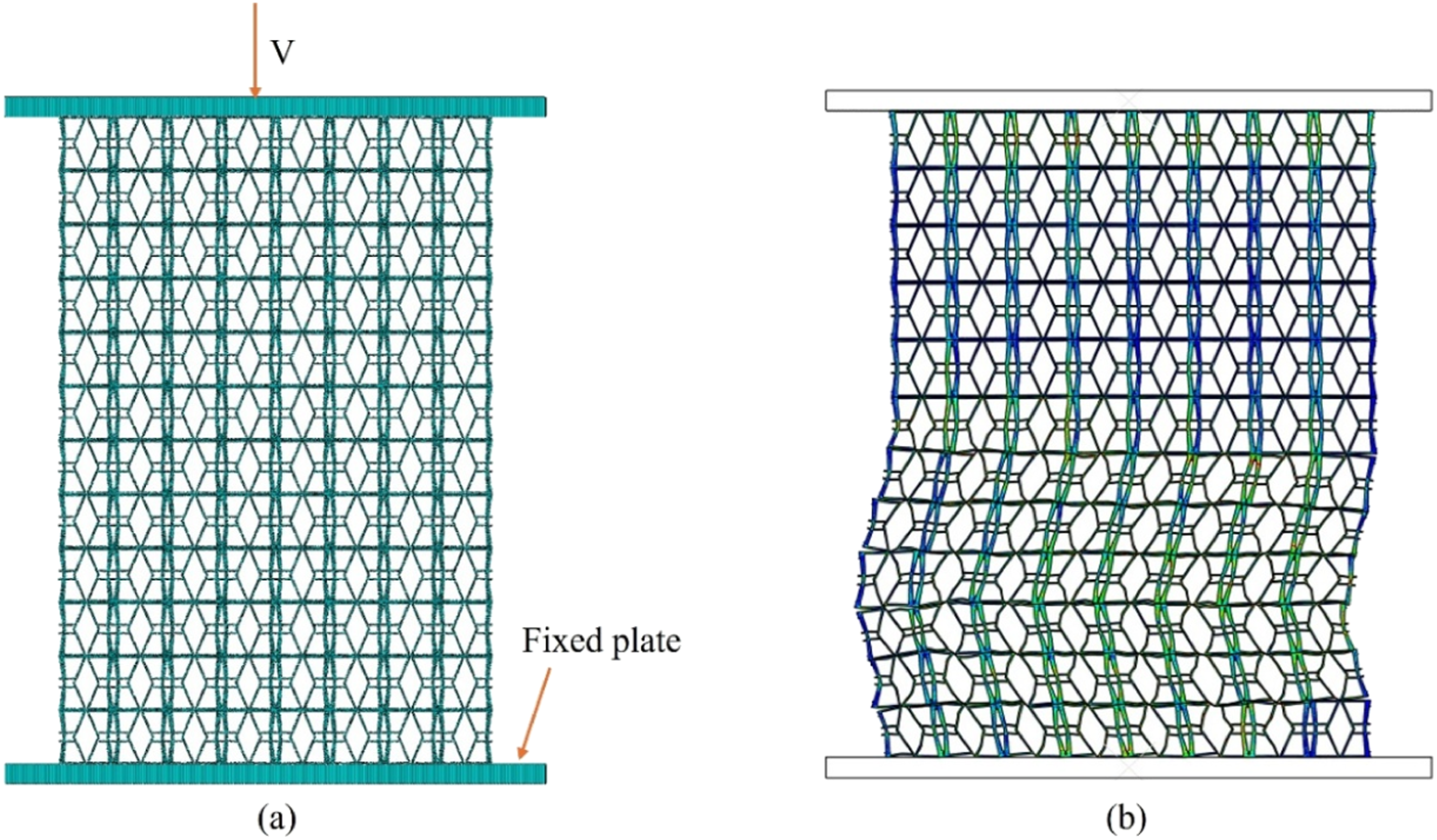
The deformation characteristics of the optimized REBA lattice structure were investigated under quasi-static displacement-controlled compressive loading. Auxetic structures exhibit lateral contraction under axial compression and lateral expansion under tensile loading, resulting in a negative Poisson’s ratio (NPR). The lattice geometry with an array of REBA cells is illustrated in Figure 8. CPE4 elements are utilized to mesh the lattice shape, using elements of 0.1 mm in size. The lattice is compressed in the y-direction, and the bottom platen’s rotational and translational freedoms are all constrained, as displayed in Figure 8(a). Lateral deformation is allowed to occur freely to capture the transverse response of the lattice. Axial and transverse strains are obtained by monitoring the displacement of selected nodes in the central region of the specimen, from which the effective Poisson’s ratio is determined. The effective Poisson’s ratio of the REBA lattice structure was evaluated from the ratio of lateral strain to axial strain during compressive deformation, as shown in equation (6). Numerical simulation model of a lattice with REBA cells: (a) before loading, and (b) deformation after loading.
The Poisson’s ratio of the structure, as determined using the simulation model, is shown in Figure 9. Poisson’s ratio decreases rapidly from values near zero to approximately −0.8 during the initial stages of compression, indicating the onset of auxetic deformation characterized by lateral contraction under compressive loading. A steady low Poisson’s ratio near −1.0 is reached between 26% and 38% strain, indicating a consistent auxetic deformation process, since the ratio continues to decrease as strain increases. The structure exhibits robust and persistent auxetic activity overall, which qualifies it for applications requiring impact resistance and energy absorption. Poisson’s ratio of the new REBA structure.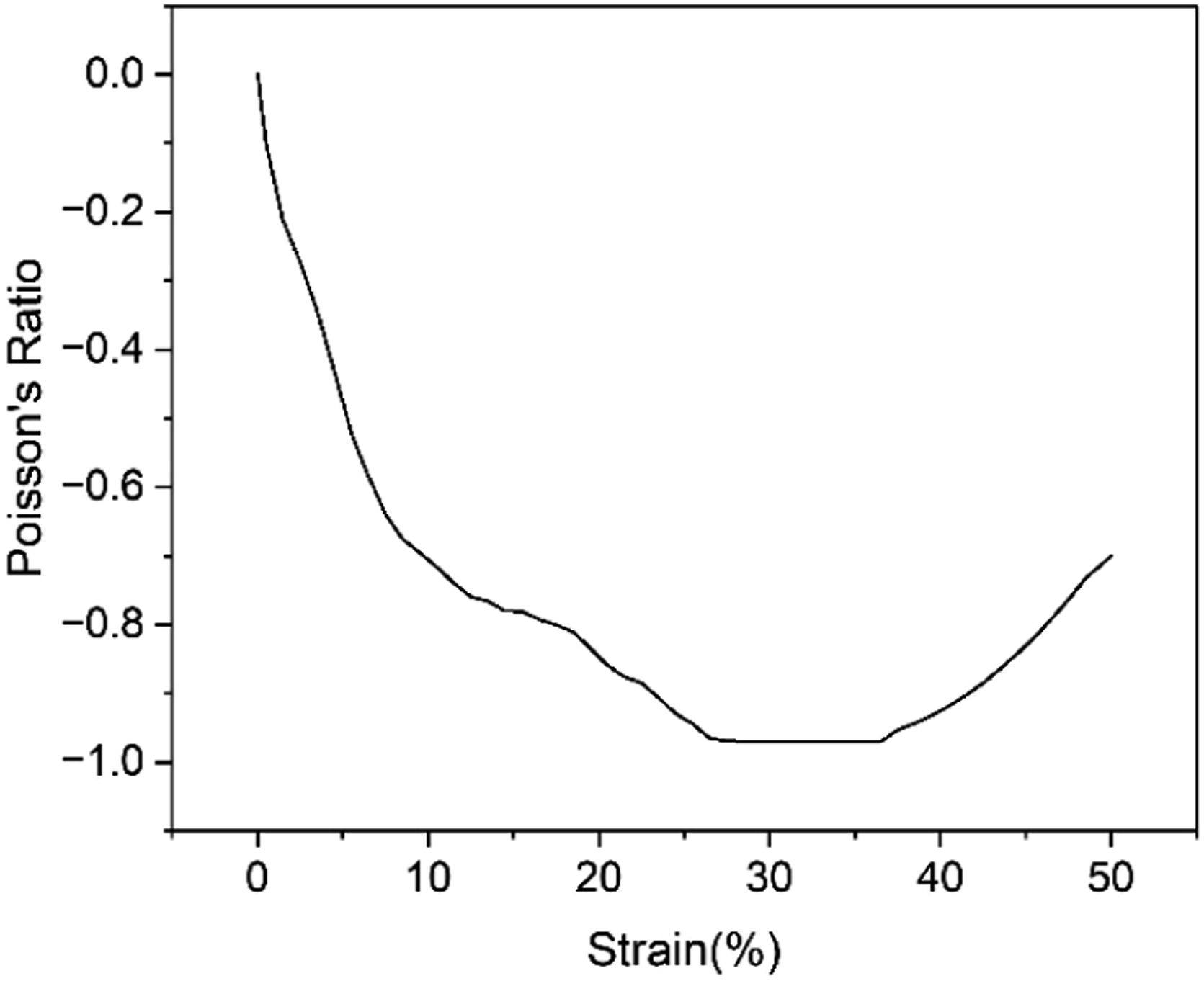
Specific energy absorption
The quantity of energy that a structure absorbs per unit mass is known as specific energy absorption (SEA). The absorbed energy is obtained from the area under the nominal stress–strain curve up to the densification strain, beyond which a rapid increase in stress occurs due to cell-wall contact and compaction. The specific energy absorption (SEA) is then calculated by normalizing the absorbed energy with respect to the mass of the structure. The ability to absorb energy more efficiently is indicated by a higher SEA value.
Under quasi-static loading, it is discovered that the REBA structure performed better at all global strain levels than the selected conventional auxetic configurations considered in the present comparison. The REBA design’s hierarchical unit cell structure, which is made up of a center hourglass and inner supporting ribs, results in an improved SEA. Two stages of deformation are encouraged by this arrangement: the hourglass cell first experiences lateral compression, and then the inner ribs undergo substantial plastic deformation. According to the comparison shown in Figure 10, the REBA honeycomb exhibits higher SEA than the investigated conventional configurations, such as hexagonal honeycomb (HH), re-entrant honeycomb (RE), double arrowhead honeycomb (DAH), and tetrahedral chiral (THC). The specific energy absorption (SEA) values of the conventional auxetic cores (hexagonal honeycomb, re-entrant honeycomb, double arrowhead, and chiral structures) are adopted from the literature.39,42 The results demonstrate that the REBA structure achieves improved energy absorption per unit mass compared with the selected conventional configurations considered in this study, highlighting its potential for lightweight impact-resistant applications. Comparison of SEA for various honeycomb cells.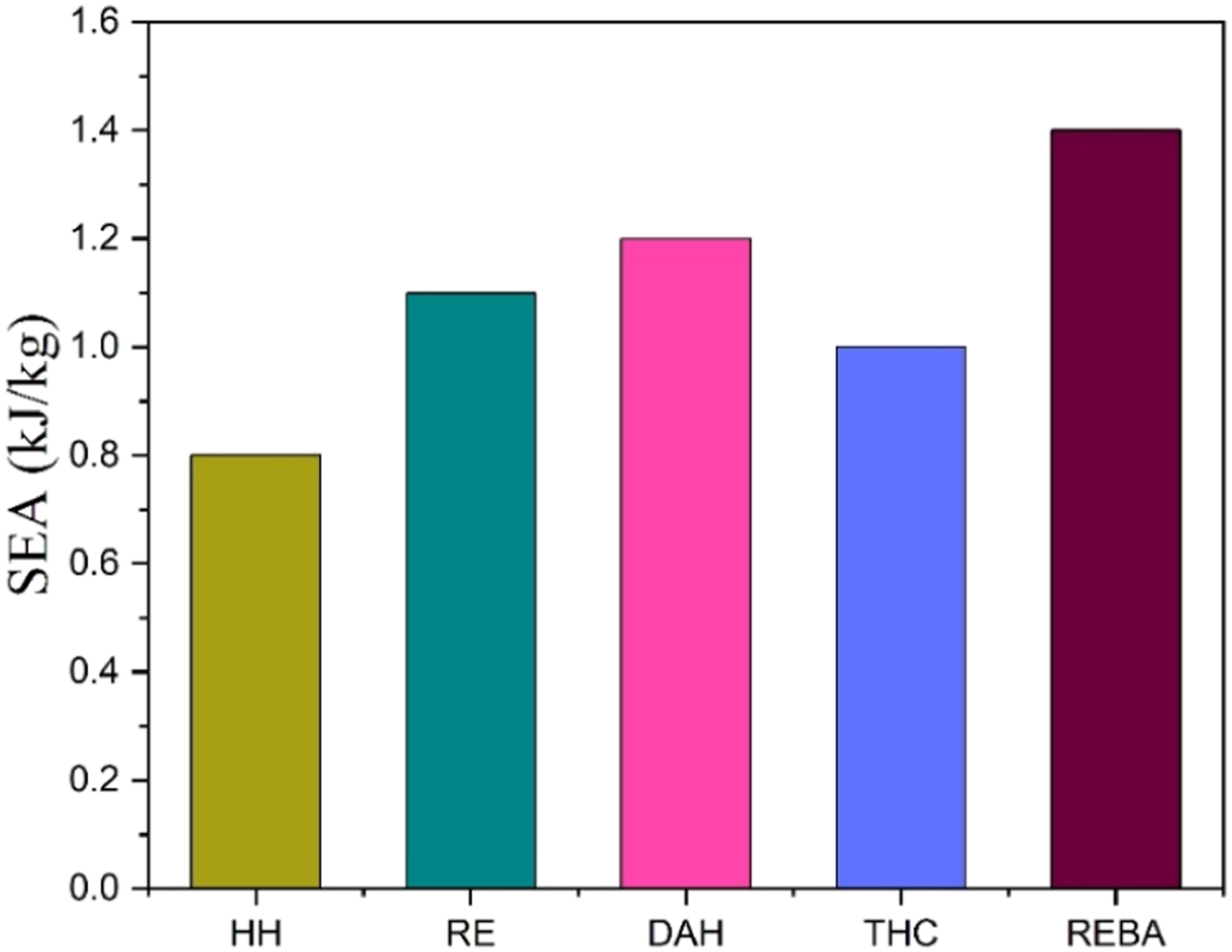
Effect of filter radius on optimal topology and energy absorption
The filter radius in density-based topology optimization determines the robustness and complexity of the optimized unit cell by imposing a minimum feature length scale. In this work, strain energy is maximized over 200 optimization cycles under a fixed material fraction (30%) to get the REBA design. Figure 11 shows the variation of normalized specific energy absorption (SEA) as a function of filter radius (0.75-3 mm) for the REBA auxetic core, given in relation to the element size of 0.5 mm. Filter radii smaller than 1.5 mm tend to generate highly localized thin ligaments and irregular material branches, resulting in complex topologies that may be numerically optimal but susceptible to unstable deformation and premature local buckling under impact loading. In contrast, larger filter radii excessively smooth the topology, reducing geometric distinctiveness, load-bearing efficiency, and consequently the SEA performance. The selected filter radius of 1.5 mm, corresponding to approximately three times the element size, provides a balanced topology by suppressing mesh-dependent features and checkerboard patterns while preserving the re-entrant deformation mechanism and diagonal bracing characteristics of the optimized auxetic structure. This intermediate radius also improves geometric continuity and structural stability during post-processing and impact simulations. Effect of filter radius on normalized SEA.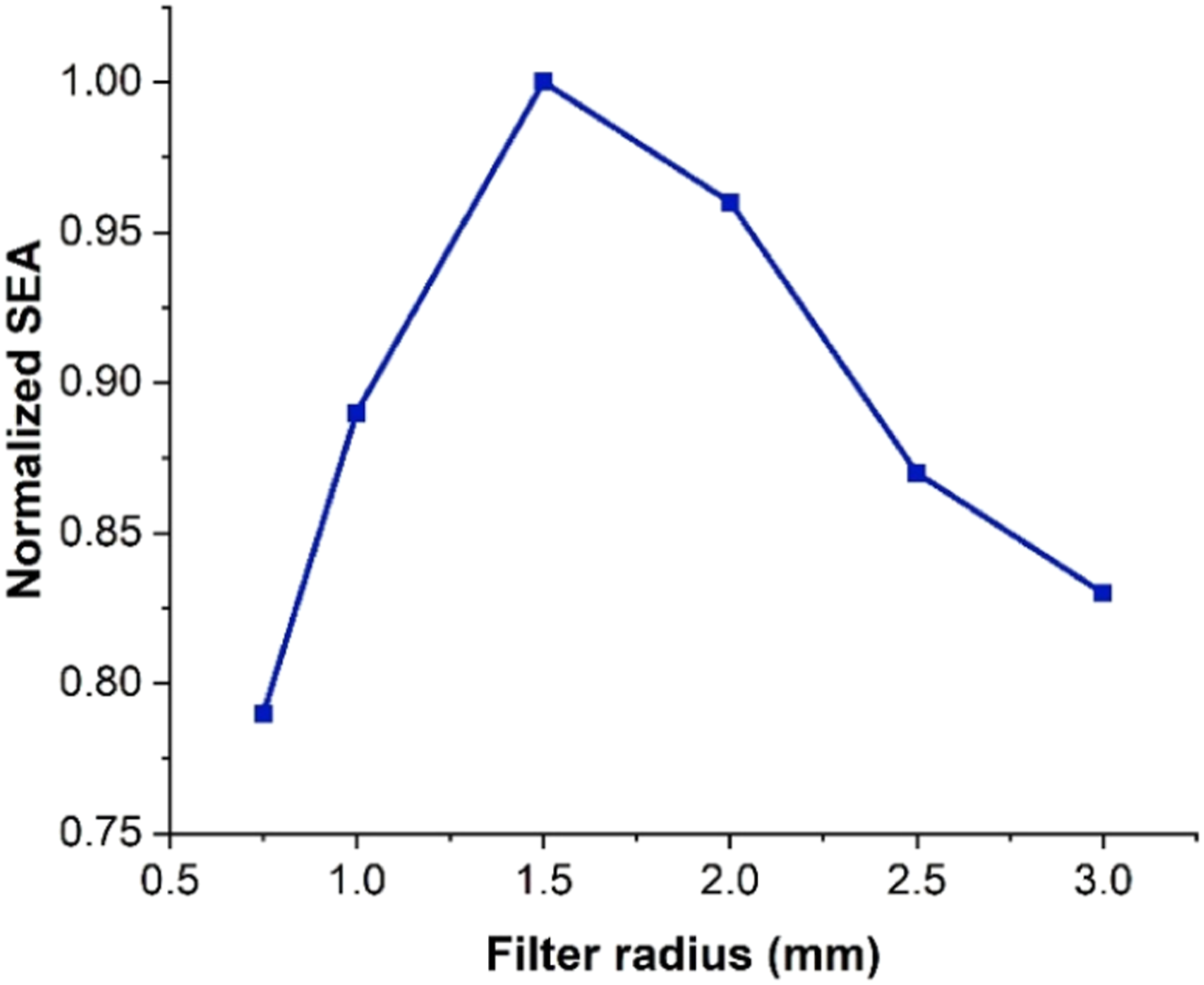
Ballistic performance of REBA core in semi-hemisphere sandwich shell
This section focuses on assessing the REBA auxetic core’s ballistic behavior under high-velocity impact. It investigates how a semi-hemispherical shell design reacts to bullet impact situations. Its efficacy in reducing impact forces will be evaluated by carefully examining important factors, including the ballistic limit, the projectile’s residual velocity, and the core’s energy absorption capacity. Figure 12 shows a 3D finite element model of a semi-hemispherical shell reinforced with a REBA lattice core to evaluate its ballistic performance. The same loading, contact conditions, and boundary conditions described in Section 2 are adopted using the previously validated numerical framework to evaluate the ballistic response of the proposed REBA core. In addition, the same material constitutive and damage models described in Section 2.2.1 were employed for all REBA shell simulations to ensure consistency with the validated numerical methodology. Although direct experimental validation of the REBA topology is not currently available, the validated computational framework provides a consistent basis for an initial numerical assessment of its ballistic performance and comparison with the conventional honeycomb configuration. Numerical model of a hemisphere with REBA core.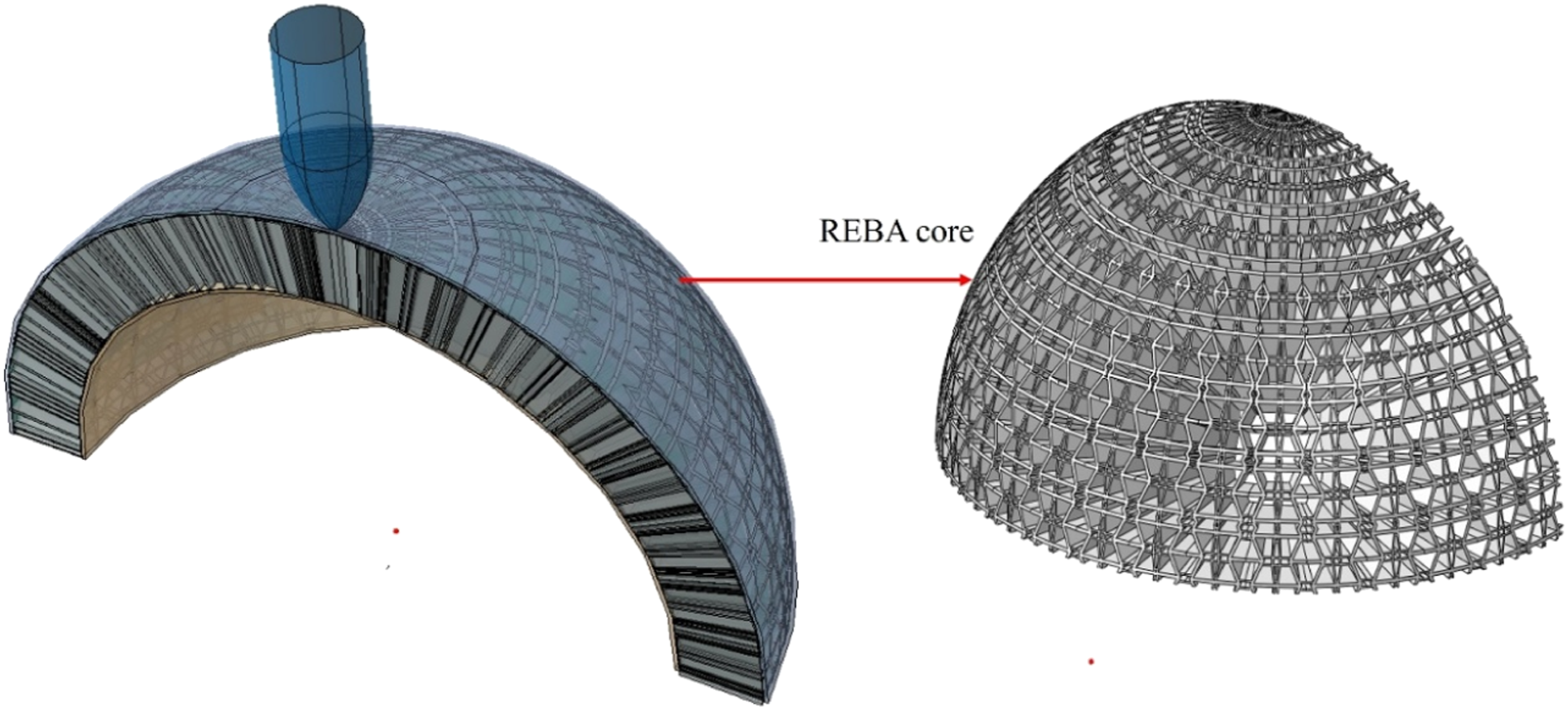
Figure 13 illustrates the mesh convergence analysis of the REBA shell model using different mesh sizes ranging from 0.1 mm to 0.5 mm. Three ballistic performance parameters were evaluated, namely bullet residual velocity, energy absorption, and ballistic limit. As shown in Figure 13(a), the bullet residual velocity increases progressively with increasing mesh size. The residual velocity rises from approximately 87 m/s at a mesh size of 0.1 mm to about 95 m/s at 0.5 mm. This indicates that coarser meshes predict higher projectile exit velocities. Figure 13(b) presents the variation of energy absorption with mesh size. In contrast to the residual velocity trend, the absorbed energy decreases as the mesh becomes coarser. This behavior is consistent with the increase in residual velocity, since lower absorbed energy results in greater remaining projectile energy after perforation. Similarly, Figure 13(c) shows that the ballistic limit decreases with increasing mesh size. The ballistic limit drops from approximately 103 m/s for the finest mesh to about 96 m/s for the coarsest mesh. The reduction in ballistic limit indicates that finer meshes yield higher resistance to projectile penetration. Overall, the results demonstrate a clear mesh dependency of the ballistic response. Finer meshes produce lower residual velocities, higher energy absorption, and higher ballistic limits, whereas coarser meshes lead to comparatively less accurate predictions of impact resistance. Mesh convergence for REBA shell with various ballistic metrices: (a) bullet residual velocity, (b) energy absorbed, and (c) ballistic limit.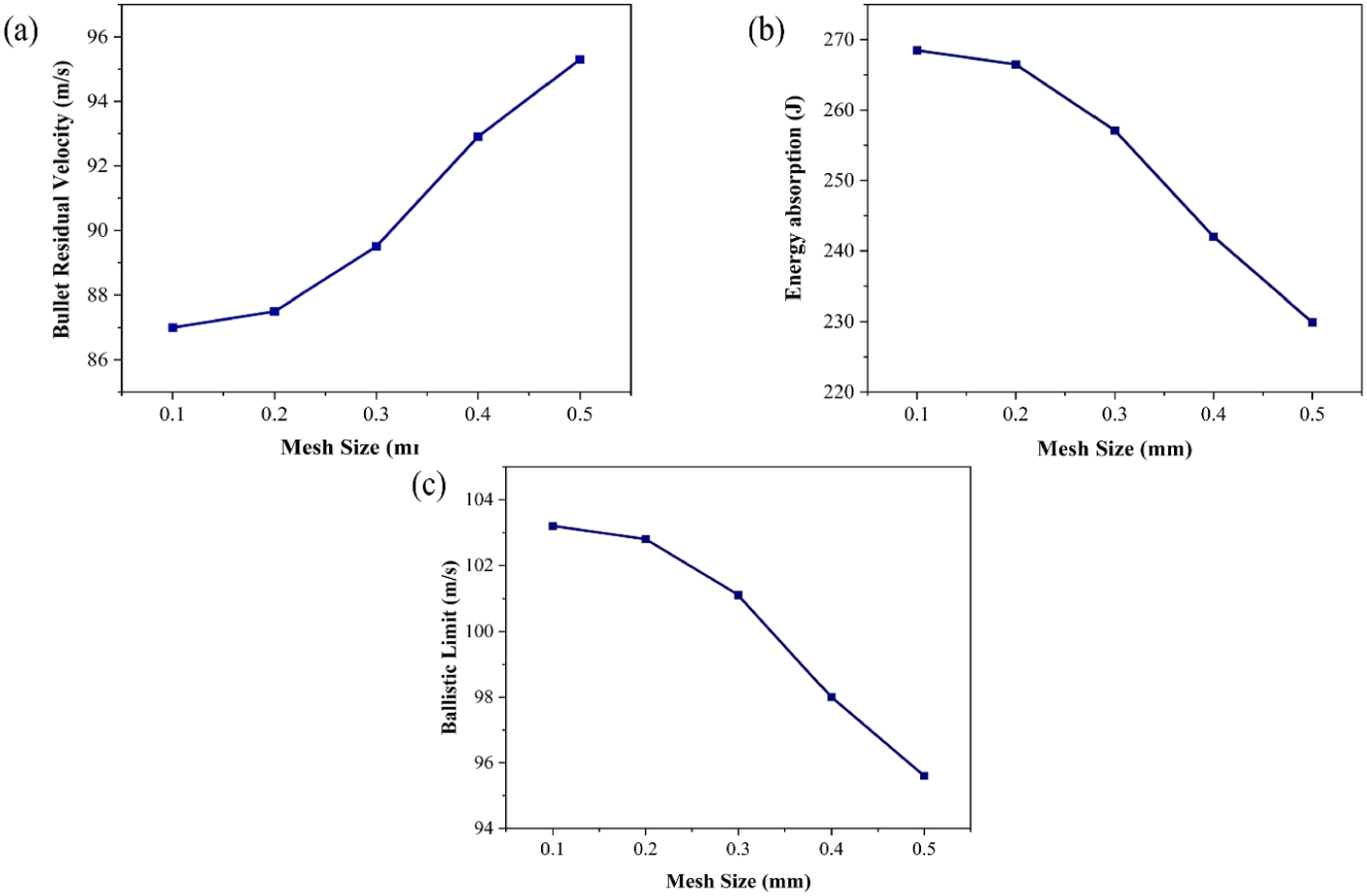
Figure 14 illustrates the progressive deformation and failure sequence of the REBA sandwich shell under ballistic impact. Initial impact causes plastic deformation beneath the projectile, followed by progressive crushing and bending of the re-entrant ligaments. As penetration advances, distributed plastic deformation and core buckling develop within the auxetic structure, promoting gradual energy dissipation and delaying localized collapse. At the final stage, severe core crushing, rear sheet failure, and final perforation occur near the penetration region. Progressive deformation and failure of the REBA sandwich shell under ballistic impact.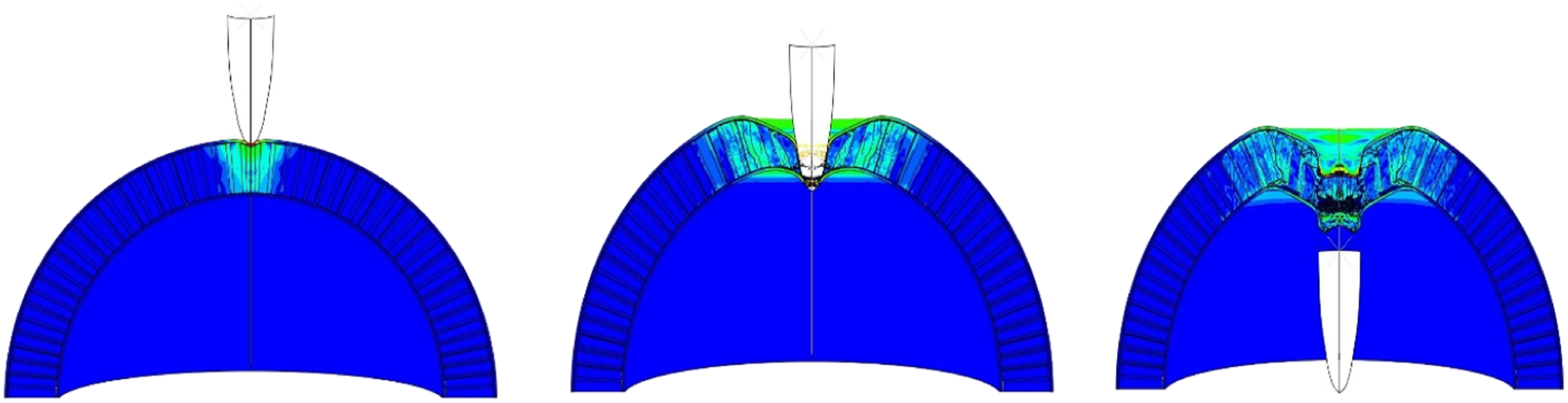
Ballistic limit
A key parameter for evaluating the protective effectiveness of armor structures is the ballistic limit, which is the velocity at which a projectile has a 50% chance of fully penetrating a target structure. Understanding the ballistic limit gives important information about the impact resistance and durability of armor structures, particularly when optimizing auxetic cellular configurations. The ballistic limit variations for a semi-hemispherical shell exposed to ballistic impact under various auxetic cell parameters are shown in Figure 15. The ballistic limit gradually decreases from about 100 m/s to about 85 m/s as cell length increases from 4 mm to 10 mm, as shown in Figure 15(a). Since they are stiffer and have better energy dissipation capacities, smaller auxetic cell lengths are thought to greatly increase impact resistance. As can be seen in Figure 15(b), the ballistic limit is improved to slightly over 100 m/s by increasing cell thickness from 0.04 mm to 0.10 mm. Superior rigidity and improved structural integrity are two qualities of a thicker cell structure that favorably impact ballistic protection. Figure 15(c) shows that the ballistic limit improves significantly from around 90 m/s to almost 100 m/s when the cell angle is increased from 15° to 60°. Because of their stronger negative Poisson’s ratio effects, auxetic cells with larger cell angles are better at absorbing and redistributing impact energy, according to this pattern. Overall, hemispheric shell efficiency against ballistic impacts is improved, and ballistic limits are maximized by the best auxetic cell designs, which are defined by short cell length, thicker cell, and higher cell angles. Ballistic limit with various structural configurations: (a) cell length, (b) cell thickness, and (c) cell angle.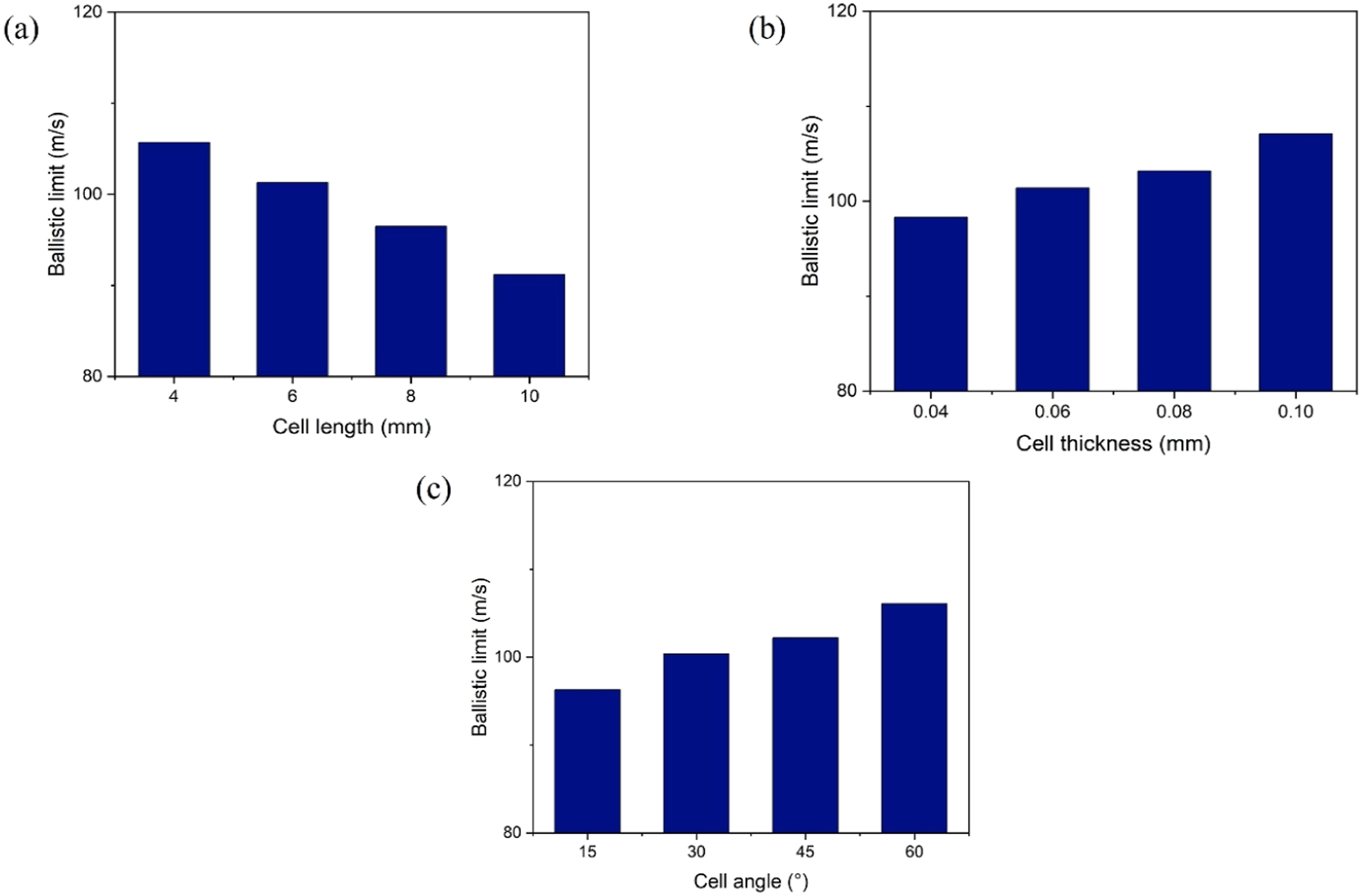
Residual velocity
The velocity that a projectile maintains after entering or passing through a target is known as residual velocity. A portion of the projectile’s kinetic energy is absorbed by friction, elastic strain, plastic deformation, and other dissipative processes when it impacts a semi-hemispherical shell. One important measure of the shell’s ballistic resistance is its residual velocity; a lower residual velocity suggests superior energy absorption and protective capacity. Determining the efficacy and failure mechanisms of protective structures exposed to high-velocity impacts is made easier with an understanding of residual velocity. Bullet impact velocity and residual velocity are shown in Figure 16(a) for topologized cellular structure with different cell wall thicknesses ( Residual velocity variation by changing cell geometric parameters: (a) Cell thickness, (b) Cell length and (c) Cell angle.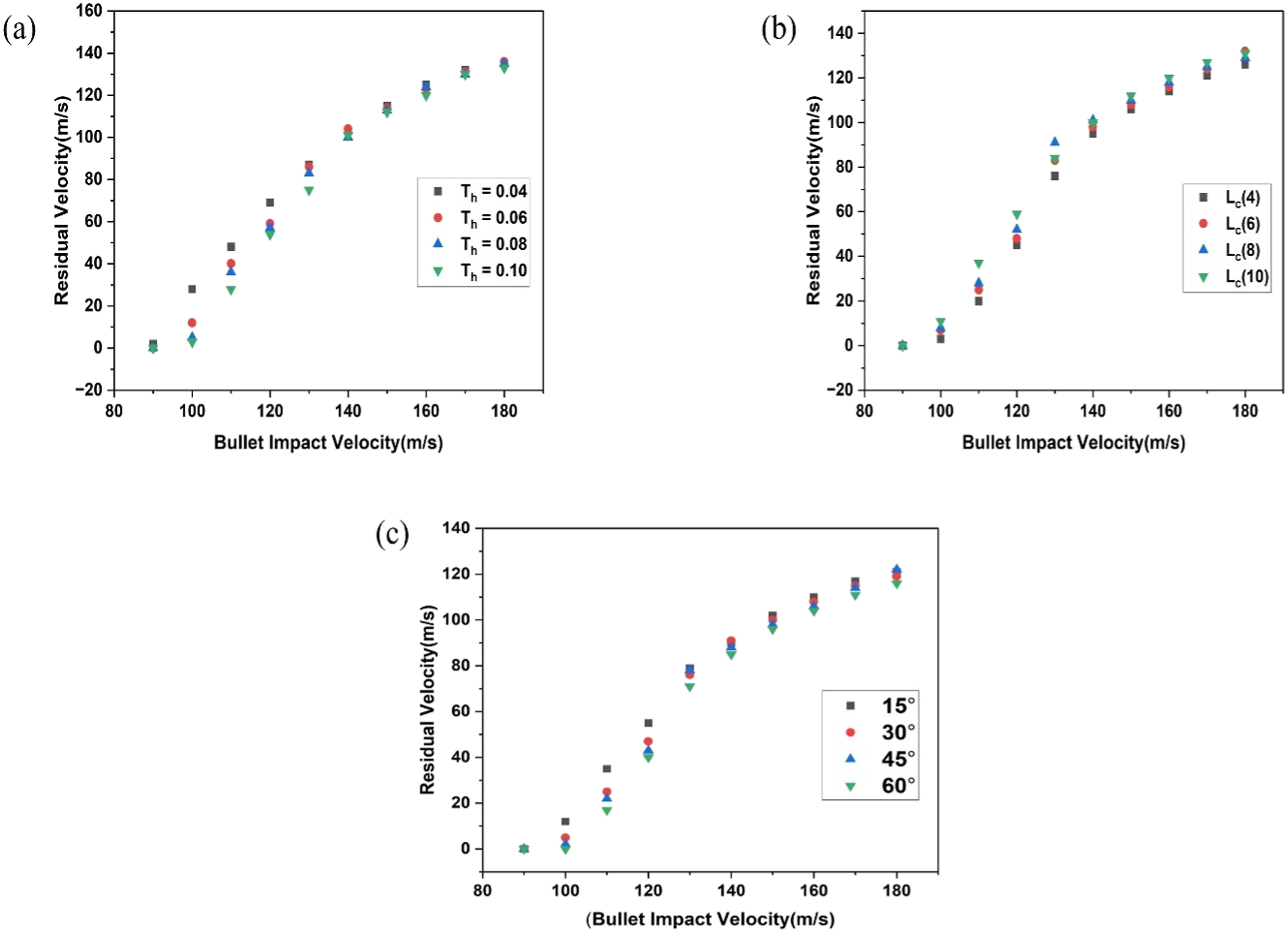
Energy absorption capacity
An important factor in assessing honeycomb sandwich shells’ effectiveness under ballistic impact is their energy absorption capacity. When exposed to ballistic forces, the auxetic core’s distinctive design causes plastic deformation and buckling, contributing significantly to energy absorption. The difference between the projectile’s initial and final velocity as it penetrates through the target is used to compute energy absorption during ballistic impact. Furthermore, SEA is calculated as energy absorbed per unit mass of sandwich structure. In particular, the following formulas are used to evaluate both parameters:

Figure 17(a) displays the effect of cell wall length on the energy absorption performance of a cellular structure. The capacity to absorb energy decreases noticeably and steadily as the cell length increases. This inverse relation implies that longer cell walls weaken the material’s structural integrity and capacity to efficiently release energy when subjected to loads. Shorter cells offer a more compact and dense structure, which increases energy dissipation by producing more load-bearing components and greater resistance to deformation. However, under stress, longer cells are more likely to buckle or collapse, which results in less energy absorption. Figure 17(b) illustrates the impact of cell wall thickness on a cellular structure’s capacity for energy absorption. Energy absorption clearly and consistently increases as cell wall thickness rises from 0.04 mm to 0.10 mm. In particular, the energy absorbed increases from approximately 256 J at a thickness of 0.04 mm to about 295 J at a thickness of 0.10 mm. This pattern suggests that increased cell wall thickness greatly enhances mechanical performance under impact loads. However, it’s also critical to consider any potential trade-offs, as thicker cell walls may need more material and weigh more, which, depending on the application, may affect overall efficiency. However, thicker cell walls are associated with better energy absorption properties throughout the range under study. The impact of cell angle on the structure’s ability to absorb energy is shown in Figure 17(c). The trend indicates that energy absorption rises with increasing cell angle. The energy absorption is maximum in the structure with a 60° cell angle and lowest in the structure with a 15° cell angle. According to this pattern, greater cell angles might improve the structure’s ability to deform under compressive or impact loads, increasing its energy absorption capacity. Energy absorption with various structural configurations: (a) cell length, (b) cell thickness, and (c) cell angle.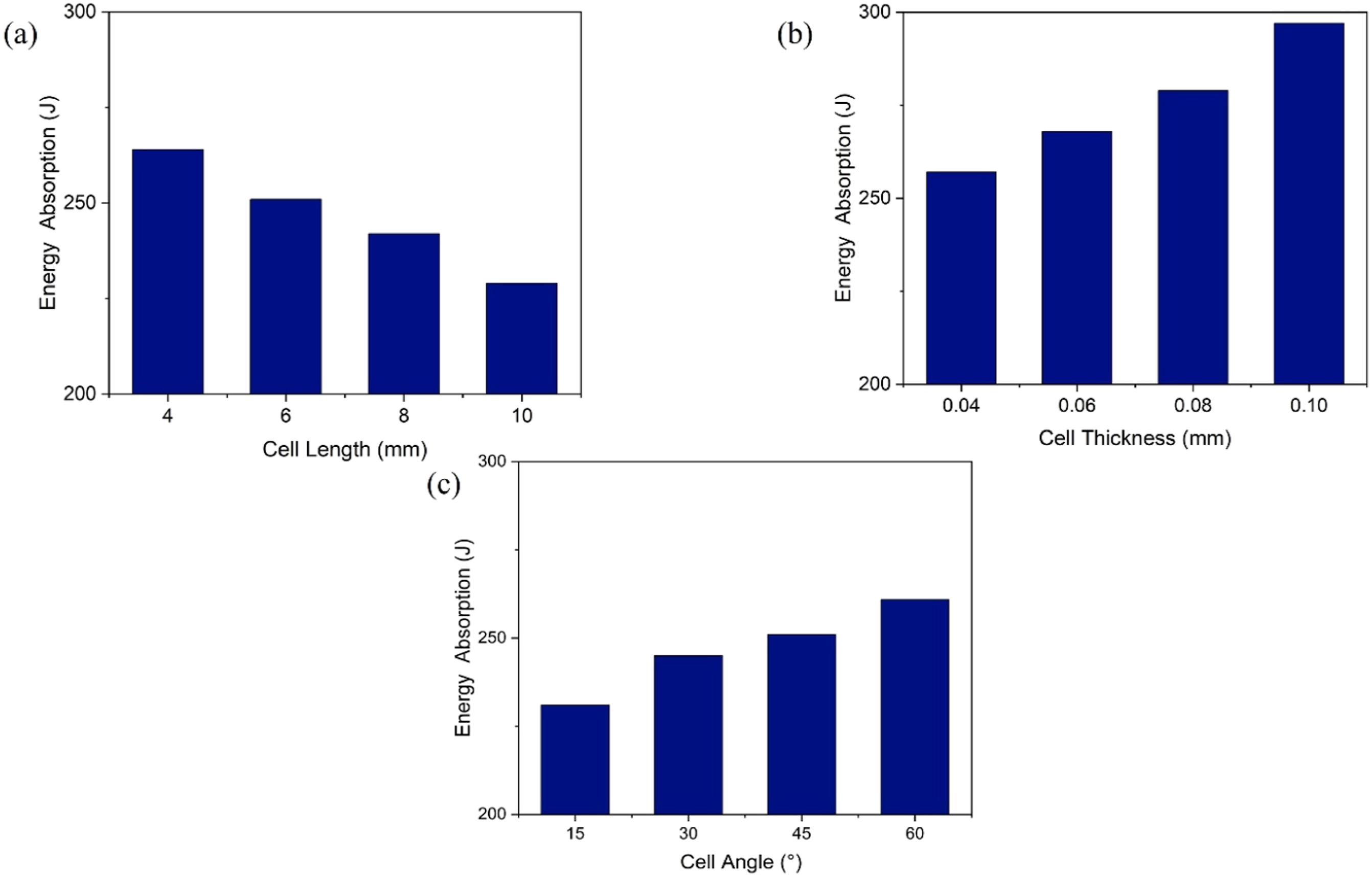
Correlation between quasi-static energy and ballistic metrics
The REBA auxetic lattice was initially designed and optimized under quasi-static compressive loading conditions, as discussed in Section 3, to maximize strain energy absorption while maintaining a fixed mass fraction. The quasi-static response of the lattice was evaluated using the specific energy absorption (SEA), which served as the primary performance metric during the design stage. Since ballistic resistance is also governed by the structure’s ability to dissipate impact energy through progressive deformation and plastic collapse, a sensitivity analysis was conducted to investigate the correlation between the quasi-static SEA and the ballistic performance metrics. Figure 18(a) illustrates the normalized variation of quasi-static SEA and ballistic limit with respect to the cell angle. Both parameters exhibit a consistent increasing trend as the cell angle increases from 15° to 60°. This direct relationship indicates that the geometric configurations providing improved quasi-static energy absorption also enhance ballistic resistance. Figure 18(b) illustrates the normalized SEA compared with the normalized residual velocity for different cell angles. As the SEA increases, the residual projectile velocity continuously decreases. The structure with the maximum SEA corresponds to the minimum residual velocity, demonstrating that improved quasi-static energy absorption capability directly contributes to enhanced kinetic energy dissipation during ballistic penetration. Correlation between normalized quasi-static SEA and ballistic metrics with varying cell angle: (a) SEA and ballistic limit, and (b) SEA and residual velocity.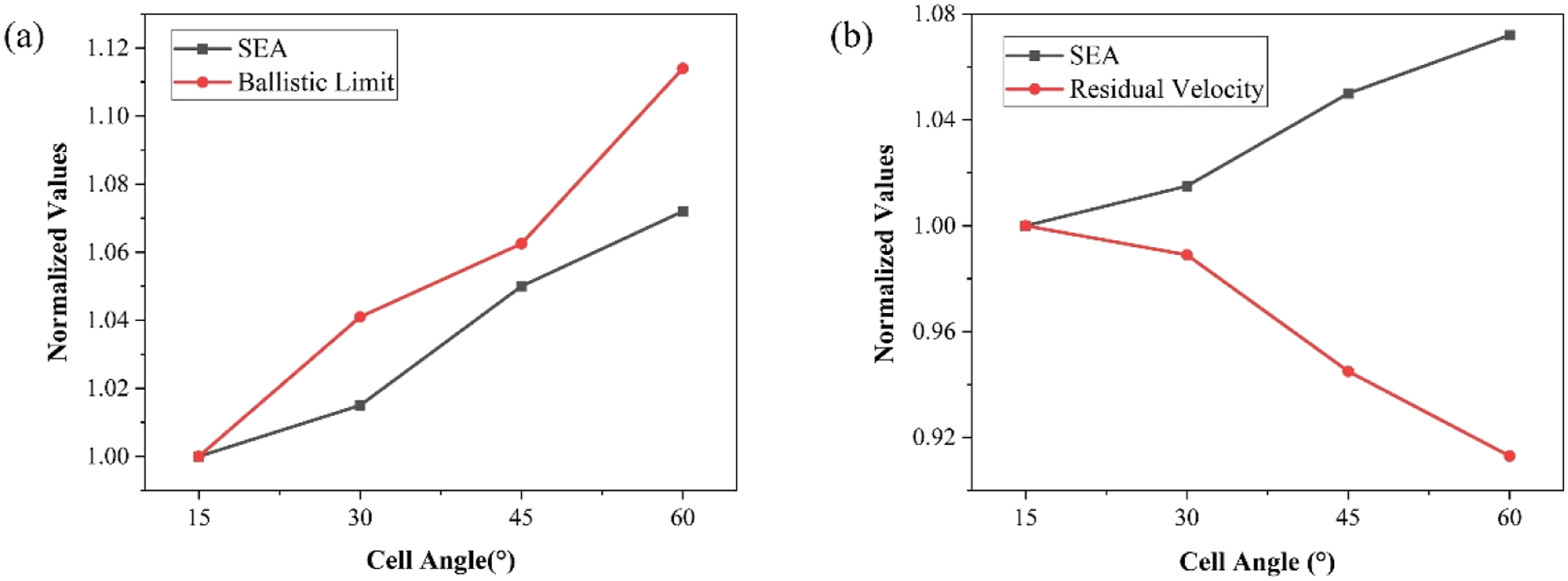
The correlation between quasi-static and ballistic performance is further confirmed through the cell wall thickness sensitivity analysis presented in Figure 19. Increasing the cell wall thickness from 0.04 mm to 0.10 mm simultaneously increases both the normalized SEA and the ballistic limit, as shown in Figure 19(a). Furthermore, Figure 19(b) shows that increasing wall thickness leads to a continuous reduction in normalized residual velocity. The structure with the highest SEA again corresponds to the lowest projectile residual velocity. Thicker ligaments delay structural failure and improve the interaction time between the projectile and the auxetic core, thereby increasing energy dissipation and reducing projectile penetration capability. The observed trends show a clear correlation between quasi-static SEA and ballistic performance metrics, indicating that the energy absorption mechanisms remain effective under projectile impact. However, the REBA topology was optimized under quasi-static loading using SEA as the objective rather than direct ballistic optimization. Correlation between normalized quasi-static SEA and ballistic metrics with varying cell thickness: (a) SEA and ballistic limit, and (b) SEA and residual velocity.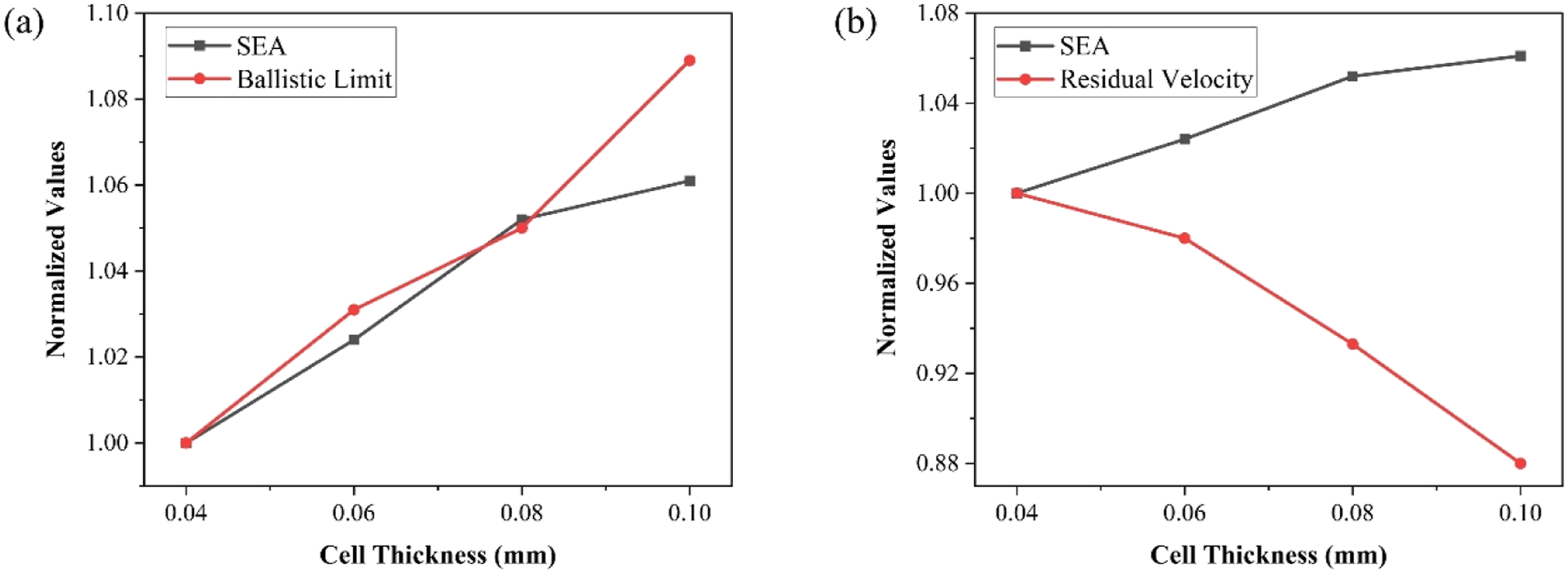
Comparative ballistic performance of REBA core
This section presents a quantitative comparison of the ballistic performance enhancement achieved by the REBA auxetic core relative to the conventional honeycomb core. The comparison is based on the percentage difference in ballistic performance metrics under different geometric conditions. Figure 20(a) shows the percentage increase in ballistic limit for the REBA auxetic core compared with the conventional honeycomb core at different cell lengths. The maximum improvement of 11.3% occurs at a cell length of 4 mm and decreases to 5.4% at 10 mm. Figure 20(b) presents the effect of cell wall thickness on ballistic limit enhancement. The REBA core improves the ballistic limit by approximately 4–5%. Figure 21(a) shows the percentage reduction in projectile residual velocity achieved by the REBA auxetic core compared with the conventional honeycomb core at fixed cell length. The reduction decreases from approximately 10.5% at 100 m/s to about 5.2% at 180 m/s. Figure 21(b) presents another REBA configuration with fixed cell thickness, where the residual velocity reduction reaches approximately 12% at 100–120 m/s and decreases to about 6.3% at 180 m/s. Percentage increase in ballistic limit (a) cell Length, (b) cell thickness. Percentage reduction in residual velocity (a) with fixed cell length, and (b) with fixed cell thickness.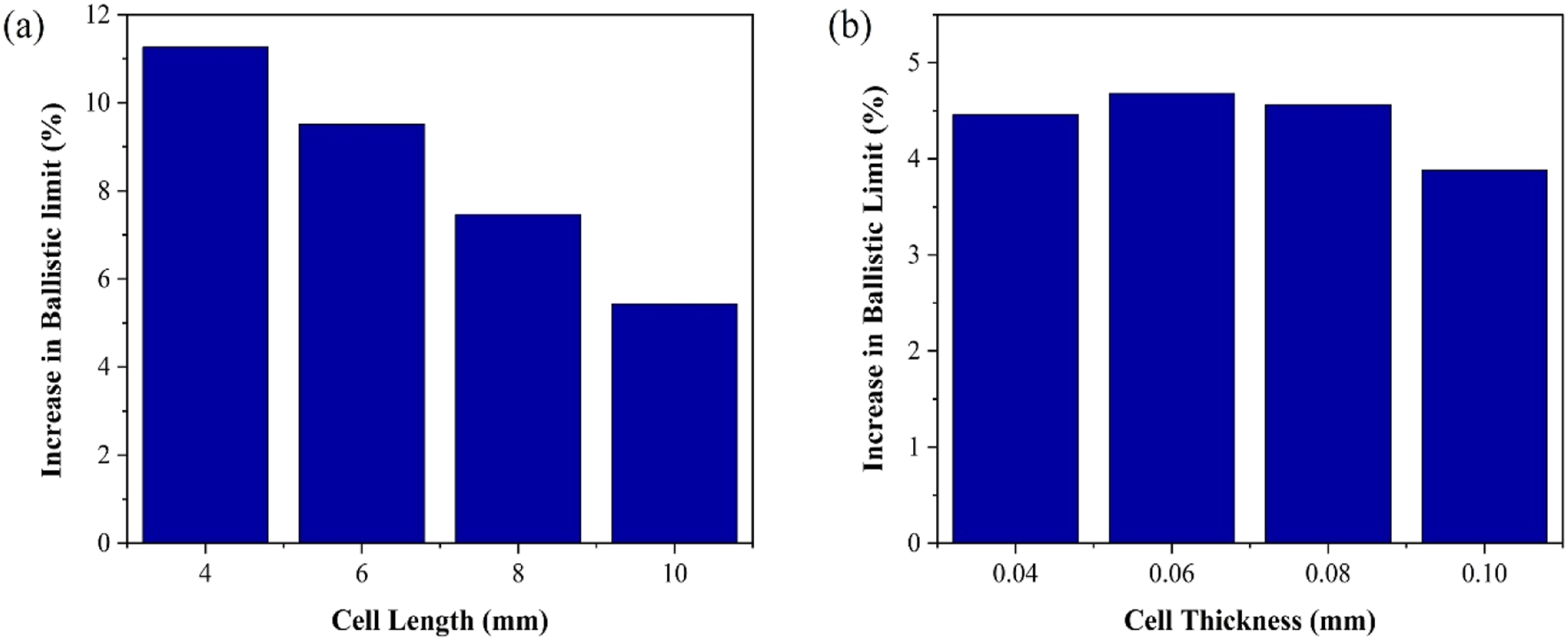
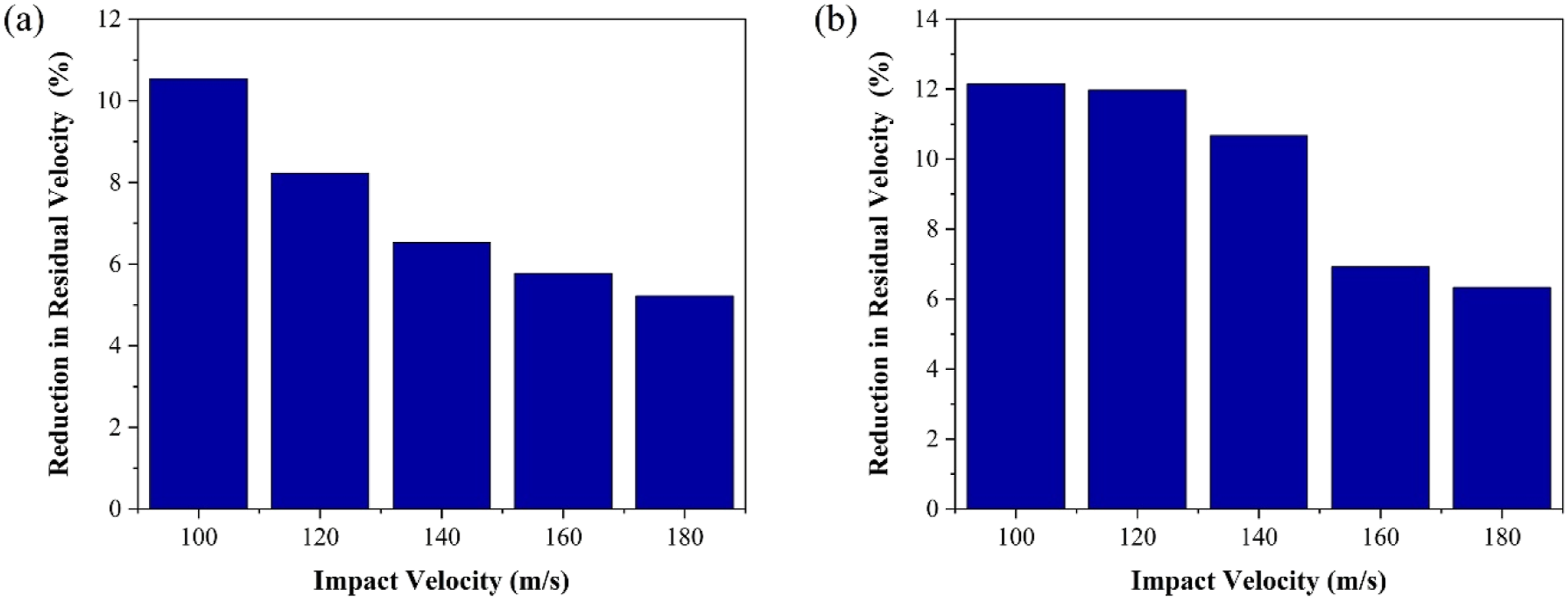
Figure 22(a) presents the percentage increase in energy absorption for REBA cores with different cell lengths. The absorbed energy increases from approximately 11.4% at a cell length of 4 mm to about 18% at 10 mm, indicating improved energy dissipation for larger cell lengths. Figure 22(b) shows the effect of cell wall thickness on energy absorption enhancement. The maximum increase of approximately 15.2% is achieved at a wall thickness of 0.04 mm, while the improvement decreases to about 7.2% at 0.10 mm. Overall, the REBA core demonstrates significantly higher energy absorption than the conventional honeycomb core. Percentage increase in energy absorption (a) cell Length, (b) cell thickness.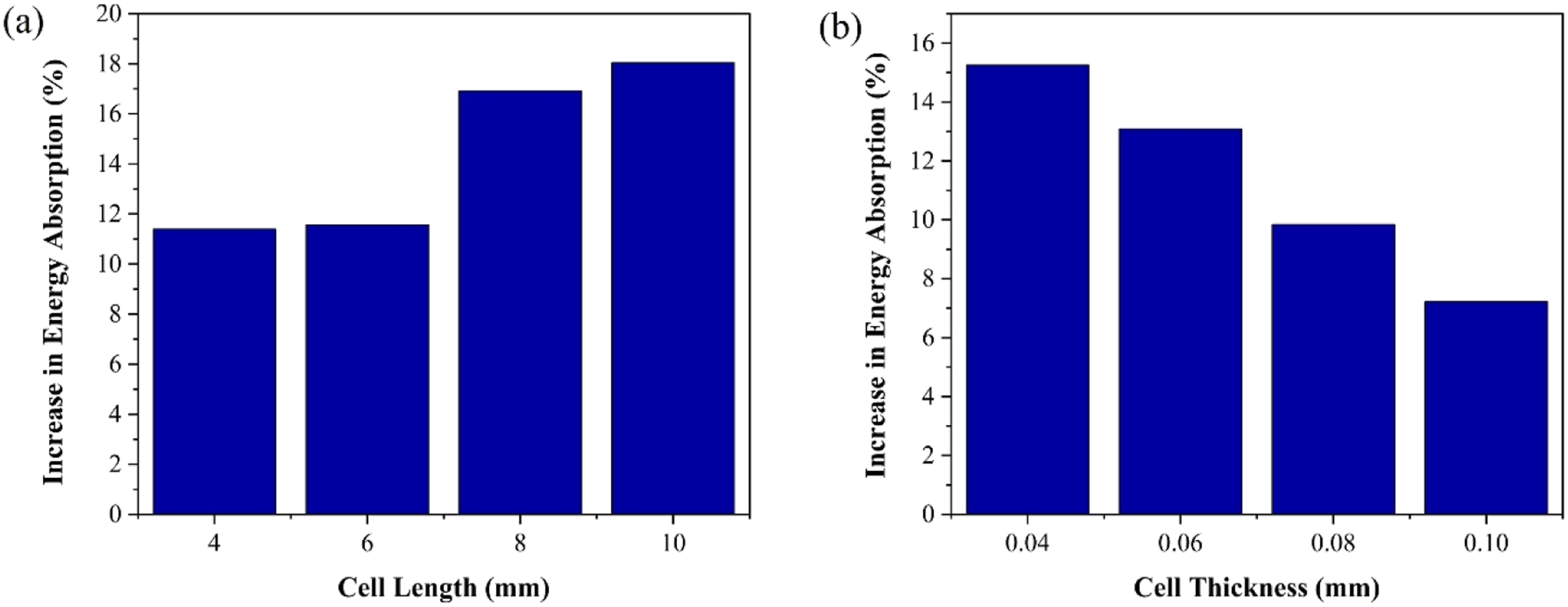
Figure 23(a) shows that the conventional honeycomb core experiences a sharp stress peak at an early stage of impact, indicating severe stress concentration and localized collapse beneath the projectile. In contrast, the REBA core exhibits a broader and more progressive stress evolution with a slightly delayed stress peak, suggesting improved load redistribution through the re-entrant ligaments and diagonal bracing members. Furthermore, Figure 23(b) demonstrates that the REBA structure dissipates higher plastic deformation energy throughout the impact event compared with the conventional honeycomb core. The continuous and progressively increasing plastic dissipation response indicates more stable crushing behavior and distributed plastic deformation within the REBA core. In contrast, the honeycomb structure exhibits earlier stabilization of plastic energy accumulation due to localized core collapse and reduced deformation progression. The enhanced plastic energy dissipation capability of the REBA configuration contributes directly to its improved ballistic resistance and lower residual velocity under impact loading. Comparison of impact response between honeycomb and REBA cores: (a) peak von Mises stress and (b) plastic dissipation energy.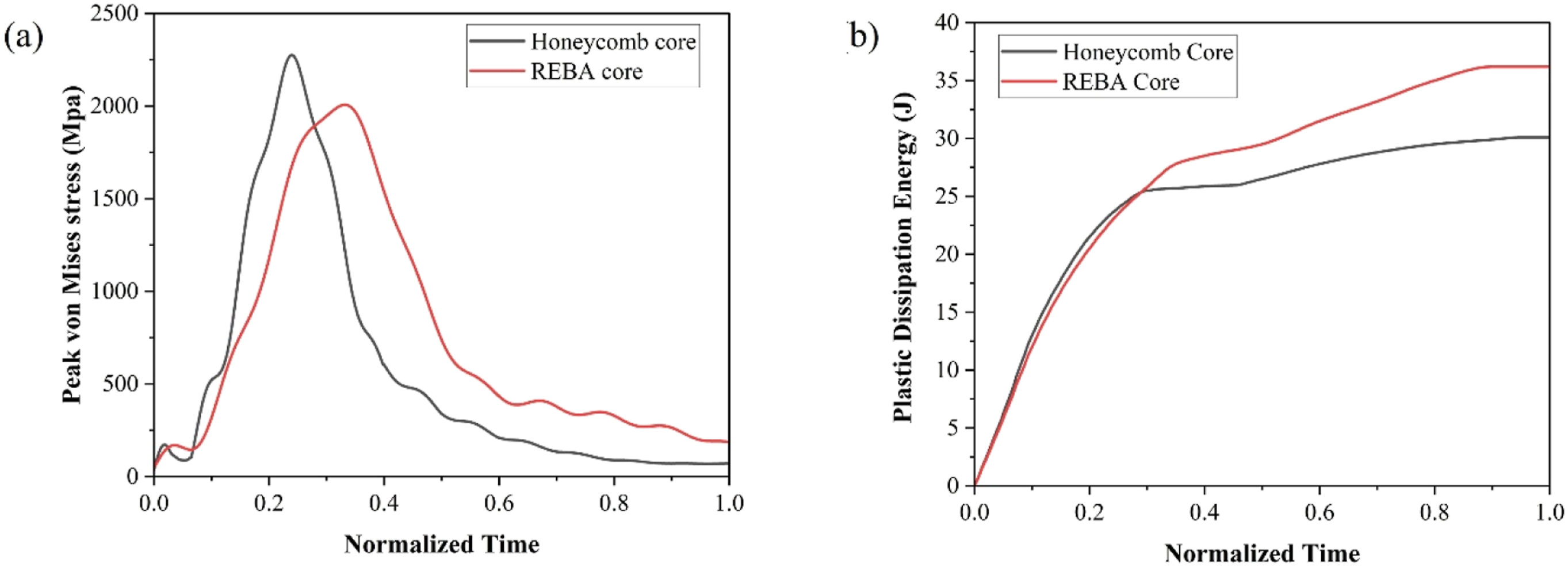
Structural efficiency: Weight reduction and boundary reaction force mitigation
Structural efficiency and ballistic performance comparison of honeycomb and REBA cores.
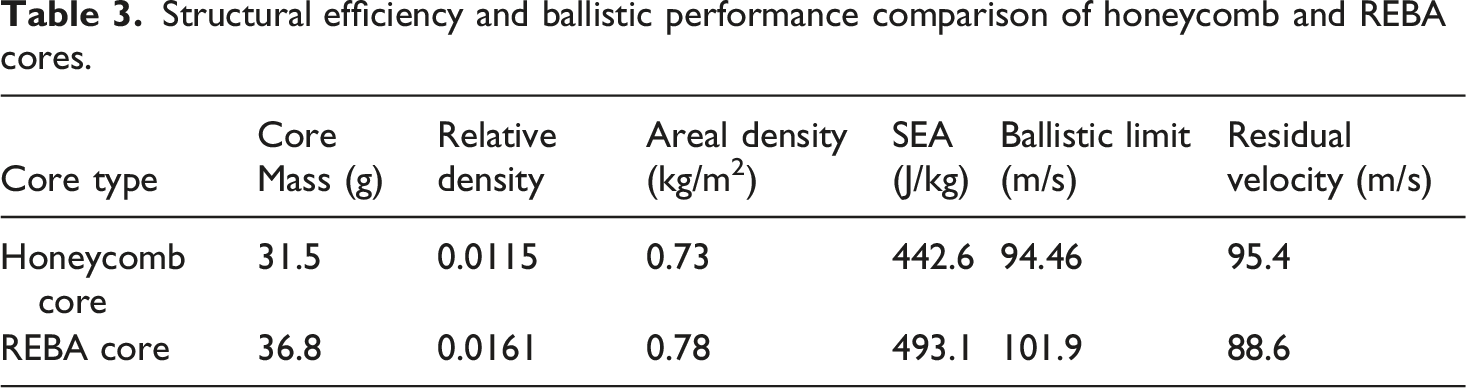
To further validate the ballistic performance, an equal-mass comparison was performed by adjusting the REBA geometric parameters to achieve approximately the same total mass and areal density as the conventional honeycomb configuration. Figure 24(a) presents the ballistic limit normalized by areal density Comparison of ballistic performance of honeycomb and REBA cores: (a) normalized ballistic limit, and (b) residual velocity and SEA.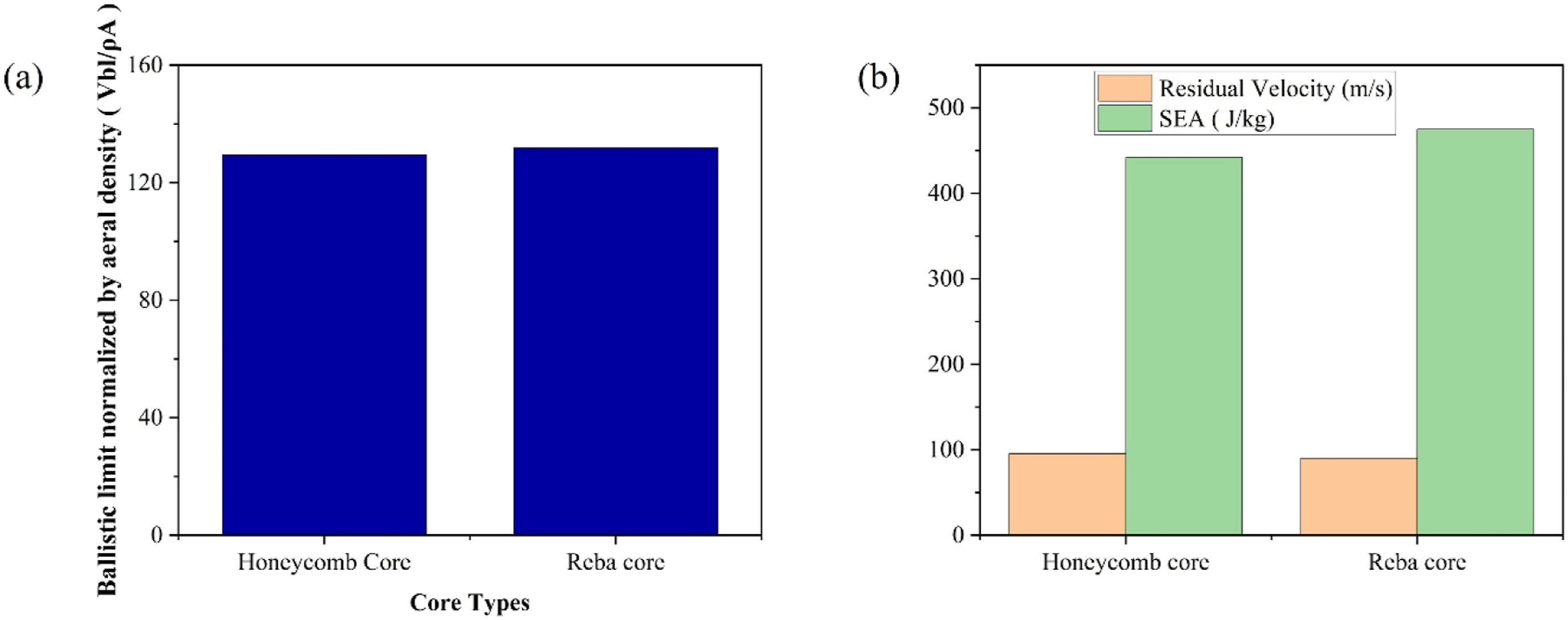
The proposed topology-optimized REBA re-entrant core demonstrates reduced reaction forces and transmitted impulse at the boundary constraints compared with the conventional honeycomb core, indicating improved impact mitigation. Figure 25(a) presents the reaction force–normalized time response of the honeycomb and REBA core structures under impact loading. The honeycomb core exhibits a higher peak reaction force, indicating a stiffer and more abrupt load transfer behavior. In contrast, the REBA core shows a lower peak force with a more gradual increase and extended deformation duration, demonstrating improved impact mitigation characteristics. The smoother decay in the REBA curve indicates enhanced progressive crushing and energy dissipation. Figure 25(b) compares the peak reaction forces, confirming that the REBA core reduces the maximum transmitted force compared to the honeycomb core. Figure 25(c) illustrates the transmitted impulse, where the REBA core exhibits a lower impulse value, suggesting reduced momentum transfer during impact. Overall, the REBA core provides enhanced impact attenuation by lowering both the peak force and transmitted impulse. Ballistic response comparison of honeycomb and REBA core structures under impact loading: (a) reaction force response, (b) peak reaction force, and (c) transmitted impulse.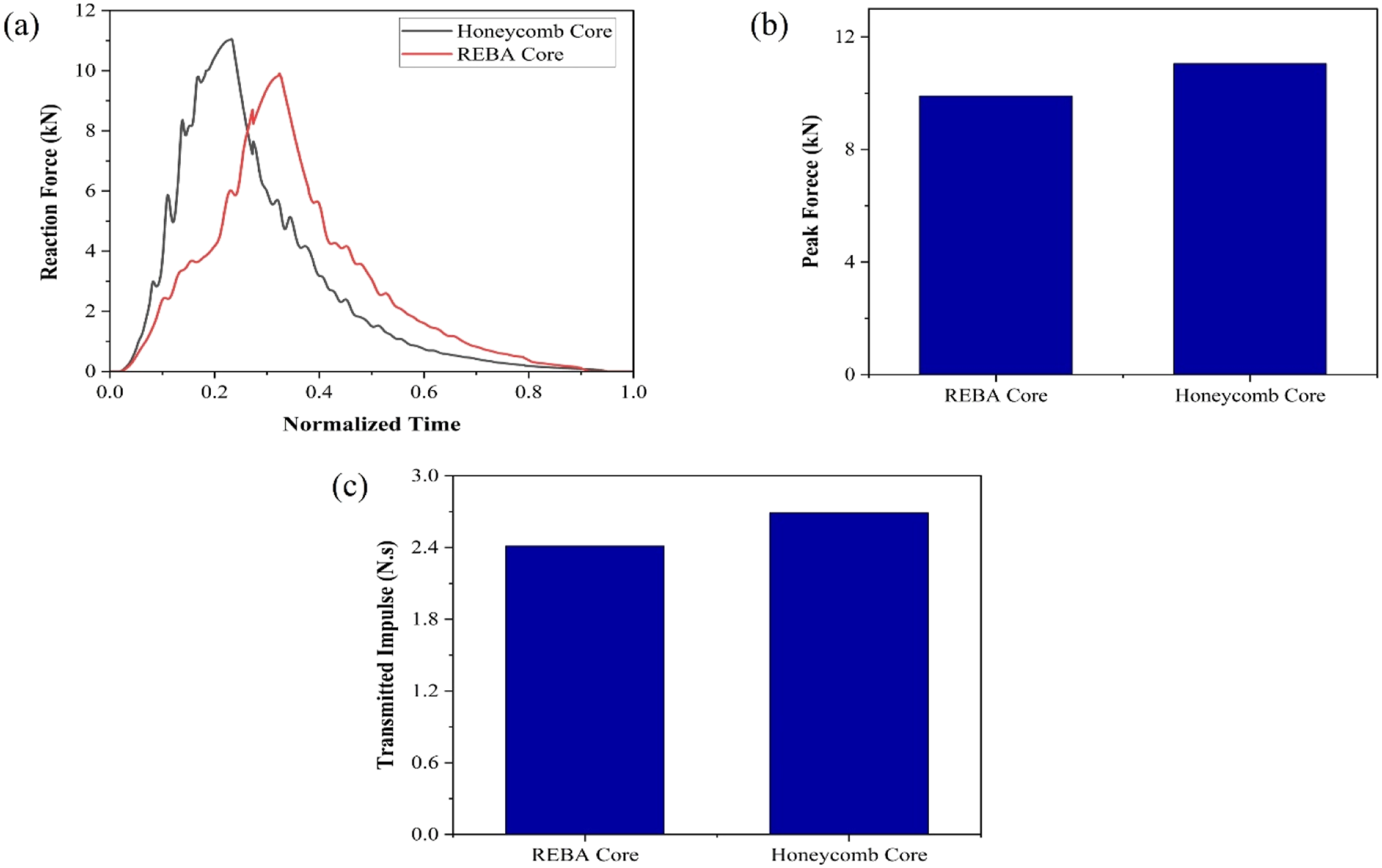
Conclusion and related future work
This study presents the design, optimization, and performance assessment of a unique topologized auxetic core embedded in a sandwich structure to improve impact and ballistic resistance. A unique hourglass-shaped cellular unit cell is designed using a combination of topology optimization and advanced FE simulations. It exhibits both negative Poisson’s ratio behavior and improved energy absorption properties under quasi-static compression loading. FE simulations demonstrated that the REBA core exhibited superior strain energy absorption and better Poisson’s ratio compared to conventional honeycomb and auxetic cores. Under quasi-static compression, the structure maintained consistent auxetic behavior with a Poisson’s ratio approaching −1, indicating excellent potential for impact mitigation. To evaluate the REBA cell’s performance in real-world ballistic impact scenarios, it is further incorporated into a semi-hemispherical sandwich shell. Numerical tests demonstrated the REBA-based core’s distinct advantage in terms of energy absorption, lower residual projectile velocities, and higher ballistic limits. In particular, the structural resistance to penetration and deformation is increased by the design parameters of thicker walls, greater cell wall angles, and shorter cell lengths.
Overall, the work shows that cellular designs may be effectively tailored for performance needs by combining advanced topology optimization with auxetic design concepts. The REBA-based sandwich structure offers a promising solution for next-generation protective systems in aerospace, military, automotive, and personal armor applications, where low weight and high impact resistance are critical. Future work could explore the manufacturability of these optimized geometries using additive manufacturing techniques and investigate their performance under multi-impact or oblique projectile conditions to further broaden their applicability. These developments would also facilitate experimental compression and impact testing of the REBA core for validation of the numerical predictions.
Footnotes
Acknowledgment
The authors acknowledge the Higher Education Commission (HEC) of Pakistan for providing financial assistance. This work is supported by the National Natural Science Foundation of China (project no. 12272270), the Shanghai Pilot Program for Basic Research, and the Fundamental Research Funds for the Central Universities. This work is supported by the National Natural Science Foundation of China (Project no. 52175205 and Project no. 51875565). The authors extend their appreciation to the Deanship of Research and Graduate Studies at King Khalid University for funding this work through the Large Group Project under grant number (RGB.2/750/46).
Ethical considerations
This article does not contain any studies with human participants or animals performed by any authors.
Consent to participants
Informed consent was obtained from all individual participants included in the study.
Author contributions
All authors read and approved the final paper.
Funding
The authors disclosed receipt of the following financial support for the research, authorship, and/or publication of this article: This work was supported by the National Natural Science Foundation of China (project no. 12272270), Shanghai Pilot Program for Basic Research, and the Fundamental Research Funds for the Central Universities, National Natural Science Foundation of China (Project no. 52175205 and Project no. 51875565), Deanship of Research and Graduate Studies at King Khalid University for funding this work through the Large Group Project under grant number (RGB.2/750/46).
Declaration of conflicting interests
The authors declared no potential conflicts of interest with respect to the research, authorship, and/or publication of this article.
Data Availability Statements
Data is available from the authors upon reasonable request.