






Abstract
The study unveiled the art and craft of raffia weaving and its economic significance. It seeks to answer the following objectives: visualize the production process of buri strips and the tools used; document the steps of raffia weaving; analyze the aesthetics of raffia designs; determine the weavers’ status and income; and develop a theory and an instructional model. This qualitative study utilized ethnographic and grounded theory designs. Complete documentation of the intricacies of raffia weaving was conducted. Verbatim accounts from audio-video transcripts were sorted, coded, and analyzed. Reliance on the art and craft of raffia weaving is dependent on the environment’s buri resources. Raffia’s art and craft of weaving reflect perseverance in times of adversity, adaptation to change, and dedication to one’s craft. Through enculturation and government assistance, aspiring weavers improve their craft and get sustainable income. The development of the Quadrant Theory of Cultural Dynamism (QTCD) and the Contextualized Raffia Instructional Model (CRIM) serve as outcomes that may prepare academics to use the dialectical approach to instruction. QTCD is one of the holistic approaches to cultural globalization, asserting to bring out peripheral culture in the mainstream. Using CRIM as an instructional process, teachers and learners engage in 21st-century learning competencies that promote national cultural identity and pride.
Keywords
Introduction
Art makes life wonderful and successful. Despite different indicators of life’s success, quality education is attributed to its strong tradition – the art of teaching. Hence, this art of teaching is a dynamic process (Field & Latta, 2001; Font et al., 2010; Nadelson et al., 2018). In this dynamic process of teaching, learners experience meaningful contexts (Kostiainen et al., 2018). Contextualized teaching has become the most recent trend for the past several decades (Hubbard, 2023); and the theory of culturally relevant education (Wyatt, 2015) has become a buzzword for the 21st century.
Pieces of literature prove that meaningful learning contexts are associated with the learners’ cultural milieu (Boud & Walker, 1998; Nguyen et al., 2006; Tweed & Lehman, 2002). For instance, mathematics concepts, skills, and logical implications are learned in the weaving activities among the indigenous people in Merbaun Village, West Timor, East Nusa Tenggara Province, Indonesia (Dominikus, et al., 2023). Situating this to a cultural learning environment in the Philippines is the arts and crafts of raffia weaving in the province of Bohol which serves as the basis for developing a cultural theory and a new instructional model, in support of contextualization efforts.
Centuries ago, weaving was one of the oldest continuing practices in the world. The practice of weaving had been ingrained in human nature since ancient humans first discovered how to entwine plant fibers to create the thread. The creation of cloth for personal usage is the reason for its emergence; and it has become a way of expressing people’s arts, culture, and tradition, which are essential to the people’s life survival. In the Philippines, weaving started in the 13th century when cotton, fibers, abaca, and pineapple were used as raw materials (Castelo, 2020; Scott, 1992, p. 72–79). Weavers from different regions of the country vary in the type of loom and weaving techniques they use. With the country’s distinct handloom tradition, the weaving techniques have been passed down across generations making weaving culturally sustainable. With this, there is something similar in weaving to teaching – the nurturing image of a ‘mother’ – a nurturing soul that allows the entire weaver’s family to survive and their children to learn propriety. When brought to the classroom context, these learning experiences are enhanced under the tutelage of a professional teacher. Hence, the juxtaposition of these two images is quintessential in the development of a new cultural theory and instructional model.
Developing a Quadrant Theory of Cultural Dynamism (QTCD) is necessary because culture is dynamic and relativistic. QTCD’s pragmatic view opens a window of opportunities to consider art and culture – a centerpiece of an engaging activity for learning in meaningful local contexts, using the art and crafts of raffia as a typical example. As regards to Contextualized Raffia Instructional Model (CRIM), which is grounded on the actual process of raffia weaving. CRIM utilizes local knowledge and wisdom, and the local language in the instructional process to enhance better learning.
Bohol weavers have been weaving raffia for centuries, they sold their products to the locals and also to local and foreign visitors. They benefit from its growing demand for raffia-based items in global markets such as Europe, the United States, Spain, and Japan (Dagooc, 2010). Due to harsh weather conditions, and a threat to the quality of raw materials, the decline of supplies affects the demand for raffia crafts. Mapalad et al. (2021) rejoined that weaving is also a diminishing tradition in the province of Romblon; and the incessant reduction of the fiber industry in the country (Aragon, 2000). Hence, there is a need to respond to these sad scenarios, by initiating measures to increase awareness of cultural and economic aspects through education, with QTCD and CRIM as an innovation.
This study aimed to unveil the art and craft of raffia weaving in Bohol and its economic significance. It seeks to answer the following objectives: (1) visualize the production process of buri strips, (2) document the steps of raffia weaving, (3) analyze the aesthetics of raffia designs, (4) determine the weavers’ income, and (5) develop a theory and a contextualized instructional model. Significantly, the unveiling of the art and craft of raffia weaving has a potential impact on the Philippine education landscape, culture, and the global community in the utilization of new cultural theory and instructional models in academia.
Review of related literature
The impact of globalization affects the political, economic, and cultural landscapes of world countries. In its efforts to make education significant in the 21st century, making global education multicultural, contextualized, and localized is an apt response to tolerance and diversity (Aderibigbe et al., 2023; Mahmud, 2023; Syafieh & Anzhaikan, 2023). Hence, revisiting the weaving culture of the Philippines supports this movement.
The socio-historical background of weaving in the Philippines
Loom weaving has been crucial in the cottage industry of Inabanga, Bohol since the Hispanic times in the Philippines (Bohol Tourism, 2019). Handloom weaving began as a cultural practice – a bridge to the spirits that brings wellness and protection to the Filipinos in the earthly realm (British Council in the Philippines, 2020). This spiritual connection determines the motifs and patterns of the textile they used. In their dreams, the T’boli women are mainly known to weave patterns that come to them from the goddess of abaca, Fu Dalu (Hernani et al., 2021; Inocian et al., 2021). The t’nalak (sacred) textiles are believed to be the only way to trace traditional wisdom, used for rituals and traditional dances for courtship, war, healing, harvest, and protection (Hernani et al., 2021). The choice of textile colors is used to measure one’s identity in indigenous groups, as red signifies power used by the Pinatubo Negrito for healers, different tribes in Mindanao for the bagani (bestowed) warrior class, and in other areas for village chieftains.
Models for economic significations
As one of the species of palms in the Philippines, buri (Corypha utan Lam.) has multiple uses (Butal, 2017; Calapis et al., 2011). It is the third most crucial palm in the country, after the coconuts and nipa. The large fan-shaped leaves are the essential part of the plant, where raffia and buntal fibers are extracted. Australia, Japan, the United Kingdom, the USA, Spain, and Germany are the Philippines’ major buntal hats importers. Ella and Domingo (2017) described those innovative designs that made these products more appealing and competitive in local and foreign markets. High demands for the products are primarily in the summer and Christmas seasons since local and foreign visitors get their items as sinugatan or presents. Raffia fibers are woven into various products, including bags, hats, slippers, and baskets exported to the USA, Hong Kong, Japan, Italy, and China (PHILFIDA, 2006b). According to the Philippine Forestry Statistics (2000), the raffia industry is a significant dollar earner for the country, amounting to about $53 million.
The situation of the raffia art and craft
Bohol’s raffia production both uses the hand weave process for the handicraft items and loom and a machine weave for a more delicate and soft texture. Acknowledging the loom weavers’ skills and knowledge in weaving can educate the youth on the importance of the preservation of buri palms in Bohol. A challenge between the conflict between cultural creation and cultural commercialization in protecting divergent cultures is debated whether art values preserve cultural identity or if cultural identity is valued as a product of art, which generates profit (UNESCO World Report, 2009). Raffia is commercially traded in bleached or unbleached form, and it is usually woven into different handicraft items (PHILFIDA, 2006a).
What underpins Raffia's cultural contextualization of instruction?
The move for cultural contextualization is a progressivist approach to the instructional process. The socio-cultural theory of Lev Vygotsky developed in the 1920s–1930s (Abd Rahim et al., 2023; Asamoah-Poku et al., 2023), Jerome Bruner’s socio-cultural constructivist theory, John Dewey’s pragmatic approach, and Paulo Freire’s socio-cultural pedagogies all support this concept.
John Dewey’s progressive education emphasizes learning by doing either individually or collectively. Dewey’s theory highlights the relationship between humans and nature in demonstrating the use of social action (Pavlis & Gkiosos, 2017), as a basis for his social learning theory (Flinders & Thornton, 2013; Williams, 2017). As learners demonstrate learning in the actual world, they engage in natural settings when they demonstrate learning competencies in realistic and cultural contexts and experience learning transfer – all these serve as foundations of the Pedagogy of Change, as Dewey dubs it.
Rejoining this, Vygotsky’s socio-cultural theory emphasizes the importance of socio-cultural context in shaping human development and behavior (Abd Rahim et al., 2023; Asamoah-Poku et al., 2023). The relevance of his theory recognizes the use of language and social interaction in a cultural milieu. Hence, the language and social interaction of the weavers, the cultural tools they use in weaving, the actions that redirect their purpose, and the aspirations to improve their craft remain significant in the crafting of the QCTD and CRIM for better learning. Using his theory, the teacher, as one of the most important More Knowledgeable Others or MKOs, can assist the learners in the utilization of local culture in the learning process.
Jerome Bruner’s sociocultural constructivist theory asserts that learners learning efficacy is determined by a progression from enactive (action-based learning), conic (image-based learning), and symbolic (figurative linguistic learning) materials that provide active learning (Zhou, 2020; Misra, 2021; Ng, 2015). Paulo Freire also recognizes the learner’s linguistic, cultural, and academic experiences, assets, and needs as dialectical in the learning process and it must be lived (Alim & Paris, 2017; Sherman & Teemant, 2022). Looking critically at the culture allows learners to engage in positive action about their existing environment through reflections (Freiere, 1970).
Henceforth, learning is best achieved if there is familiarity with the lessons based on local contexts. One of the recent developments in teaching that promotes learner contexts is the use of flipped classrooms. Afzali and Izadpanah (2021) concluded that “learners in flipped classrooms performed better than the learners in a traditional class.” Similarly, one of its means to put the lesson in its familiar context is situated through culture-based instruction (Balaza et al., 2021; Cabasag et al., 2021; Inocian et al., 2019; Inocian & Luzano, 2022; Pacaña et al., 2019; Saguin et al., 2020). It is the context that makes the content of the discussion relevant and interesting on the part of the learners. Hence, the necessity of contextualization of the lesson is apparent based on the processes of stripping the buri leaves, the threading of the fiber, the actual weaving, and the aesthetic designs of the fabric.
Research methodology
Research design
The study used ethnographic and grounded theory research designs. The ethnographic design was used in the actual documentation of the art and craft of raffia weaving in one of the villages of Buenavista, Bohol, where one of the researchers had access to the weavers permitted by the village chief. While the development of a theory and an instructional model, the Grounded Theory design was used based on the hefty verbal data documented during the entire immersion. Grounded Theory (GT) is one of the evolving research designs in qualitative research (Walker & Myrick, 2006). As an evolving research design, GT is a new style of communication and association using a method that is responsive to interpretation and process issues not binding itself too closely to old conventions done in other research designs (Suddaby, 2006). According to Starks and Brown (2007), GT aims to produce or develop a theory or theories of “basic social processes” that are grounded in the data generated or studied in context. Vis-à-vis, the exposure of the researchers to raffia weaving in the village has provided an extensive context on the arts and crafts of raffia weaving. This context served as the basis for the formulation of the QTCD as emphasized in the CRIM.
Research participants
The 20 participants of the study were the 15 raffia weavers and strippers, and five buyers of raffia products from Buenavista, Bohol who had direct experience in raffia weaving. The participants have at least five years of weaving experience and their age ranges from 25–85 years old. Most have learned the craft through family heirlooms, while others learn through experience.
Sampling design
Purposive sampling was used in the selection of the participants based on the inclusion and exclusion criteria. It is an enumeration type of purposive sampling because the respondents are the only 20 surviving raffia weavers and strippers left, who resided in Barangay Cambuhat, Buenavista, Bohol.
Research instrument
The interview guide, field notes, observation sheets, and a video camera are the primary tools used in this study. The interview guide contained 15 questions subjected to inter-rater validation among three social science experts. Field notes that contained critical informant responses. Observation sheets reflected the process and procedures of buri leaves extraction and the threading to the weaving processes. A video recording camera documented the weaving process that served as the basis for examining the art principles used in the raffia designs. Using a coding sheet, translations of the verbatim accounts from the video recorded aided the interpretations of the results.
Research environment
The study was conducted in Barangay Cambuhat, Buenavista, Bohol, Philippines. It is estimated that the village’s principal source of revenue comes from fishing supplemented with income from traditional handicrafts such as raffia fabric and accessories, brooms, and other products made of buri palm leaves sold locally at modest prices. In Cambuhat, the women had been weaving bundles of raffia cloth on wooden handlooms beneath their homes, as well as making brooms, doormats, grass skirts, and other goods from the buri palms.
Data gathering procedure
The following were observed during the gathering of data. A permission letter was sent to the village officials of Cambuhat, Buenavista, Bohol to conduct this study. After securing this permission, the village chief directed the researchers to the raffia weavers for a consultation regarding the intent of the study. A letter of informed consent was given to the research participants whether or not they had to participate in the study. There was no compulsion for the research participants. Once they agreed on the ethical considerations, a plan for the actual visit to the site and the interview was initiated. The participants were asked about the specific date, venue, and time to conduct the gathering of data. Their suggestions served as a binding agreement between them and the researchers. The gathering of data was divided into two parts: site immersion and observation of the weaving center, and the actual interview of the weavers and other stakeholders.
Following the naturalistic approach, participant observation was made where everything seen and heard was listed in the field notes. Taking photographs during the actual processes of stripping the buri leaves, threading, weaving, and the equipment used in the process were kept. All these constituted the site observation done for several days. The next part was the formal interview conducted for the weavers and other stakeholders. The interview was audio and video recorded. After the interview, a token of appreciation was given as a formal gesture of their services. A minimal amount was also given commensurate to the number of hours they spent in the interview. The recorded videos and interviews were transcribed using coding and were reflected in the category sheets.
Data analysis
In analyzing the verbal data, several data analysis techniques were used. In visualizing the production process of buri strips, and in documenting the steps of raffia weaving in Objectives 1 and 2, visual analysis was used. Photographs of the stripping process of the buri and the steps of the actual raffia weaving were sequenced, presented, and textually described in tabular form. In analyzing the aesthetic design of raffia designs in Objective 3, a comparative analysis of the seven principles of Mader was used. In determining the weavers’ income in Objective 4, a content analysis was used. Experts defined content analysis as “a systematic, replicable technique for compressing many words of text into fewer content categories based on explicit rules of coding” (Stemler, 2001). Though, Morgan (1993) recommended the use of content analysis in treating qualitative data in making informed decisions.
Amidst the different types of coding, a predetermined coding was used in the study. Predetermined coding is an a priori system of coding data, i.e. used to provide better interpretation. In the study, codes were pre-identified such as (1) the origin of raffia art and craft, (2) the process, materials, and sizes of raffia, (3) raffia’s aesthetic designs, (4) the utilitarian view, (5) status of women, (6) schedules and income, and (7) educational attainment. When all these codes were in place, developing a new theory and an instructional model in Objective 5 was initiated using semiotic analysis. A semiotic analysis of the raffia weaving process was scrutinized using the signifier and the signified lens. The signifier is the denotative meaning of the process of weaving; while the signified is the connotative extraction of meaning from the process of weaving. To develop the QTCD and its CRIM, a signifier and signified lens of semiotic analysis were used. The raffia process of stripping, threading, and weaving were the signifiers. The connotative meaning of these signifiers was the extracted significations to develop the QTCD and the CRI
At the outset, the visual analysis provided the holistic culture of raffia weaving, and the comparative analysis provided a section showcasing raffia designs from a vantage point. The use of content analysis presupposed a connection for a semiotic analysis vital in the development of a new theory and a model, after the reduction of huge verbal data. For instance, the use of emergent codes (paglilas, paghilo, paghablon, and pagpasigarbo) was used as signified steps for CRIM found in Table 6. This was the signifier lens in the actual process of raffia weaving after the content reduction of verbal data was made.
Results and discussion
Visualizing the process of buri strips in raffia
The weavers in Bohol are well-known for their hand-weaving tradition i.e. known in national and international markets for quality and adaptability. Pagtangkis is the process of stripping the raffia fiber from the unopened buri palm leaf (Center for Boholano Studies, 2019). The raffia fibers are then stripped, treated, and made into fabric, locally known as saguran. Fibers like abaca, cotton, and polyester thread can be incorporated into the weaving process. Regardless of size and thickness, woven raffia products of Bohol are sold in plain fabric or transformed into products such as clothes, home decor, and architectural elements.
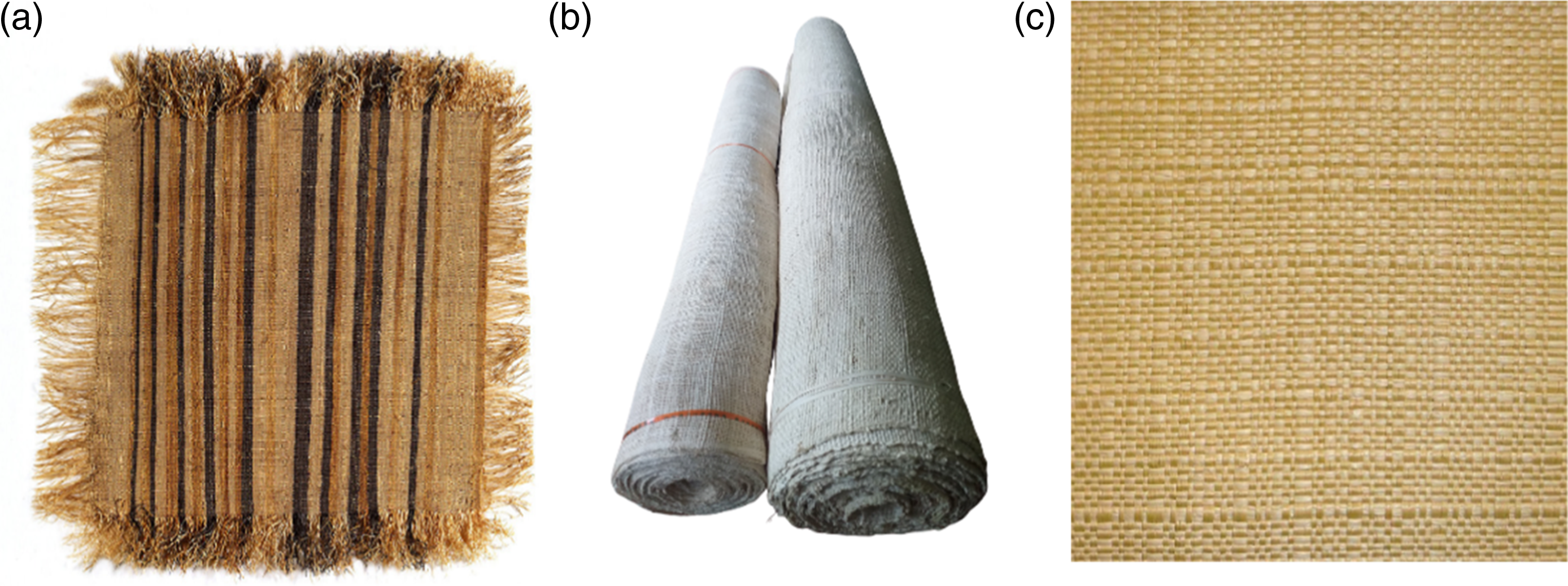
It was observed during the actual immersion that the process of making raffia weaving usually takes time from 8 AM to 5 PM, some of the weavers wake up at 4 AM just to organize or han-ay the buri strips, depending on the weavers’ availability. The result shows that the measurement of raffia is based on its type: sigin measures 7 m; humaran measures 4 m; raffia measures 10 m; and lining measures 30 m. The smaller size is used for blankets, placemats or table runners, bags, and pillows. The bigger is good for fishnet, drying of rice, floor mat or banig, chandelier, and even wall decorations. The buri and the weaving station, hagbanan (stair-well), saguran (fiber), kutsilyo (knife), kawali (wide and dip frying pan), lapwa (boiling), and tubig (water), are the common and essential materials, and process needed for fiber extraction. The three illustrations from (a) to (c) are raffia products from the Democratic Republic of Congo and Madagascar, which have similar practices and utilitarian functions in Bohol. The two countries have palms that create intricate raffia designs and also generate income from raffia products.
The paglilas (stripping) process.

The paghilo (threading) process.

The thread is a very important element in the weaving process without it, there will be no fabric. The six steps of the threading process are performed by the artisans using their patience and perseverance to produce to finest thread for weaving. This production of thread is an ancient tradition in East Asia compared to the production of thread made in animal fur, which is a European tradition (Clark, 2010). The tradition of fiber production is also one of the Austronesian connections among the Philippines, Malaysia, and Indonesia that shared a ‘common ancestor among the Neolithic cultures in Asia’ (Buckley, 2012).
Documenting the steps of raffia weaving and the tools used
The paghablon (weaving) process.

The types of equipment and tools in the weaving process.

Though, this trend is beneficial to protect nature, But, this gradual shift may affect the authentic identity of the culture and art of weaving of Bohol when the use of machines will replace the indigenous materials and tools of weaving in the future. When this situation will happen, capital-intensive production will replace labor-intensive production. As a result, there will be more weavers who will be displaced. Akhtar et al. (2022) highlighted that the development of technological innovation for cloth production dramatically changed the role of weavers. The fastest machine production will affect the quality of raffia products when applied the use of other synthetic materials. Responding to this future apprehension, the local government units in Bohol have forged efforts to preserve the art and craft of raffia weaving, by giving seminars, pieces of training, and workshops to artisans and weavers, forming themselves into cooperatives and networks, and promoting their raffia products for lucrative trade and business.
Analyzing the aesthetic design of raffia designs
Filipino artistry and creativity symbolize the power to unite people into stronger and more resilient communities knotted by lived traditions, colorful textile patterns, and motifs of weaving (Sorilla IV, 2017). Weaving is more than just a necessity; it is a form of art – an expression of culture. It preserves the history and culture of indigenous communities and displays the sheer beauty of nature. The Inbanga Raffia Fabrics went through a long journey before it was featured as one of Bohol’s riches. During the Spanish Period (1565–1989), particularly the Dagohoy Revolt (1744–1829), and the fighters during World War II (1942–1945), the raffia fabric was woven for clothes and used for uniforms (Scott, 1992, p. 72–79; Mapalad et al., 2021; Desmond, 1999).
The woven loom evolved as sleeping mats and drying mats for rice and corn in the 1950s. It started with plain raffia rolls, and the Inabanga loom weavers developed their designs for placemats, colored rolls, and beach mats. The Small Business Assistance Center (SBAC) assisted in organizing the San Isidro Loom-weavers Association, providing skills training, organizational strengthening, and marketing assistance funded by the New Zealand government.
The evolution of art and craft opens opportunities for the creation of various designs. This narrative shows the functionality of the Raffia products across time is inevitable. Today, raffia fibers can be used in producing different products mixed with a combination of polymers (Nimjieu et al., 2023). Design demands creativity and imagination that considers it an art (Rizali, 2018). What are the common designs commonly woven in Bohol? Plates (a) to (f) are the sample designs of raffia fabric documented during the actual observation.
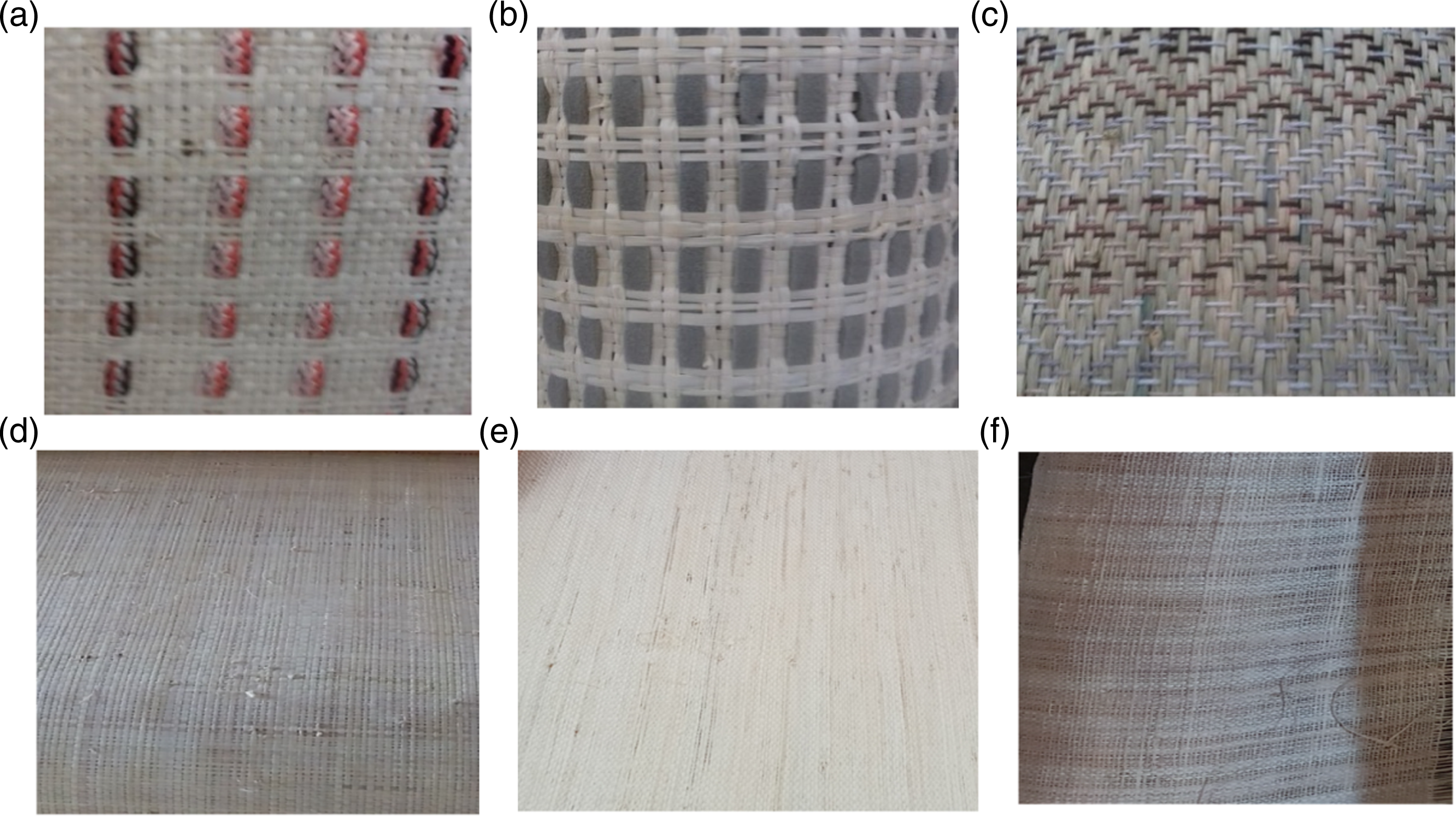
Not only do the illustrated designs present the functionality of the fabric; but, the illustrations also show the designs and pattern of weaving. The designs use the simplest weave, called checker weave. Plate (a) uses raffia fiber as warp and weft but is inserted with different thread colored white, black, and red in between warp and weft to produce a minimalist design. Plate (b) is a combination of white raffia fiber and gray striped cloth. It shows an alternate insertion of the weft by two interlaces before the strip, using raffia as a warp in a twining pattern seen in the two wefts crossing between warps. Plate (c) shows a combination of raffia fiber and rattan with various colors using the wicker technique. The design is pleasing since the combined colors and elements of sturdy rattan and raffia fibers create a unique fabric. Plate (d) illustrates simple patterns of checker weave, using large and thick size strips. Plate (e) shows a combination of white thread as warp and medium-size strips of yarn to create a smooth surface of the fabric, using the basic checker weave. Lastly, Plate (f) is a basic pattern of the fabric, i.e. commonly known, using small-size strips in warps and wefts.
As observed, these six designs represent a practical and innovative functionality, reflecting Filipino economic life. This is rejoined by Adams (1973) that the compositional principles of the fabric in East Sumba, Indonesia are analogous to the rules of society and the activities of the people. For weavers, producing these six designs may create an opportunity for more patterns and designs in the future to fit consumer demand. Pazon and del Rio (2018) highlighted that patterns and designs of weaving could differ by various factors such as the materials used, their function, and the style of the weavers. Also, there can be a hidden message in weaving patterns since Boyle et al. (2021) stressed that African weaving patterns such as the diamond pattern symbolize one’s life cycle wherein the four sides of a diamond can represent birth, life, death, and rebirth. These patterns describe the weavers’ aesthetic perception as important aspects of the African culture.
Castello (2020) inferred that weavers today, traditional or non-traditional, vary their patterns and designs depending on the type of loom and the weaving technique used. Every location in the Philippines has a definite type of weaving patterns and designs of fabric because of the environment’s available resources. Some examples of fabric woven in various regions of the Philippines reflect these variations such as Abel Weave and Pinilian of Ilocano, Bontoc weaves of Bontoc, Kalinga Weave of Mabilog Lubuagan, Piña weave of Aklan, and Hablon weave from Panay Island, Saputagan Tapestry weave of the Yakan, Tabal Tabih of B’laan, Bagobo Inabal of Manobo, Ramit of Mangyan, Dagmay of Mandaya, Maranao Textile of Maranao, T’nalak of T’boli, Hablon Weave of Cebu and Panay, and Pis Syabot textile of the Tausug.
The principles of aesthetic design in raffia weaving.

At the outset, the patterns and designs of raffia fabric are characterized by simplicity. These simple patterns and designs exemplify the law of parsimony. Hiroshi (1997), a 14th-century mathematician, strengthened the law of parsimony or the rule of simplicity. This law stated that “entities should not be multiplied unnecessarily.” Furthermore, Hiroshi wants to emphasize avoiding complexity in the design, as shown in Raffia’s movement, rhythm, and gradation. The comparative analysis in Table 5 attempts to acknowledge the technical and aesthetic side of raffia, which can be used by academia. Hence, raffia is not only seen as part of Bohol’s rich history but as a local art and craft that provides economic opportunities for its quality and quantity; aesthetics and structure; and expression and attraction for instructional use. While, the quality of raffia is appreciatively expressed by the seven art principles; its quantity reflects its utilitarianism, strength, toughness, and patterns used in the art and craft of weaving.
The art of determination, focus, teamwork, attention, continuity, and commitment are some ways how weavers express their feelings in the production of raffia items. As seen in the quality of the products, the relationship between the weaver and the craft is immovable. Rizali (2018) supported the notion that “design involves the human mind and effort in a unique combination to achieve certain goals.” According to the weavers, when they feel good, their passion for weaving enhances their greatest potential to create more raffia fabric rather than feel reluctant and bothered (KI Weavers 3, 7, 12, 15, 19 and 20). The weavers’ responses are governed by the natural law known as the “Law of Attraction,” in which the mind is creative, and correlates the chosen design to actualization. Philosophically, the Law of Attraction suggests positive thoughts, bringing positive results that workers, in the spinning and weaving industry in Iran, have a positive and significant relationship with job stressors, concerning their turnover intention (Saberi et al., 2023).
Determining weavers’ status and income
Some weavers were taught to weave by their parents as young as eight years old. The oldest key informant (KI Weaver 12) was an 84-year-old woman and she started to learn weaving at the age of 12. It has been 72 years already since she started weaving raffia. On the other hand, the youngest key informant (KI-Weaver 15) is only twenty-five years old, yet she already had nine years of experience in raffia weaving, when she was sixteen years old. The varied narrative of the weavers’ status in terms of age signifies enculturation handed by the old weavers to the young, to inherit and preserve the craft and make it sustainable for the next generation of weavers (Lawrence & Calvo, 2023). Thus, as vowed by the participants, they said, “It is my ancestors' work before I was born. I want to preserve it” (KI Weavers 1, 7, 12, 15, 19, and 20). Women weavers are culture-bearers, Kilroy-Ewbank (2018) said, women held the responsibility of demonstrating the complexities of their culture in the Mayan society. Women weavers in Ghana continue to weave despite pressure, to assert their right to employment (Amanor-Wilks, undated). Despite the temptations of modernity, they still manage to stay in the village and teach their children how to weave raffia despite challenges such as (a) delay of the materials/production, (b) weather conditions, (c) weavers’ age, (d) slow process of pagbunos (thread production), and (e) delay in the giving of a cash bonus. As mentioned in the introduction, the weavers received assistance from New Zealand’s government to make their craft sustainable.
Women weavers represent the image of ‘feminization’ of labor and gender segregation depicted in how Filipinos look at the beauty (Beaule, 2018; Clutario, 2023). Gender segregation separates women to weave saguran, a roll of buri fiber for mats, blankets, hats, bags, baskets, and nipa thatches; while the men concentrated on trading, fishing, and farming. This ‘feminization’ was influenced by the transitional colonial powers from the Spaniards (1656–1898), the Americans (1898–1946), and the Japanese during World War II (1942–1945) before the country was granted her liberation on July 4, 1946 (Beaule, 2018; Clutario, 2023). Maimunah (2017) underlined that appreciation of textiles is no longer based on the beauty of the fabrics themselves but on a deeper understanding of weaving as an archive of womanhood.
Indeed, this historical background insinuates a colonial mentality of power exploitation associated with poverty among poor Filipinos in rural areas. This colonial mentality pervades the Filipino psyche; however, over the last decades, Philippine laws abhorred these unjust labor practices. The Philippine Constitution, Sec. 14 provides education as a right (The Constitution of the Republic of the Philippines, 1987), the Violence Against Women and Children Act (Republic Act 9262, 2004), and The Child and Youth Welfare Code – an Act protecting children from child labor (Republic Act 9231, 2003). These laws promote the right to education for children and women and would eliminate any form of exploitation. These developments support weavers to continue their craft, relieve from domestic servitude, and achieve productive economic goals in life, as in the case of women weavers of Ghana. Youngsters need to get a better education to get rid of child labor exploitation (Ekka, et al., 2023).
Weavers’ schedule and income
Based on the actual immersion in the village, the raffia weavers normally begin their work by 8 in the morning until 5 in the afternoon. Some weavers wake up at 4 in the morning to organize (han-ay) the buri strips, depending on their availability. According to the weavers, raffia weaving takes more time to finish the tying (pagbunos). The weavers’ income varies depending on the functionality and design of the fabric as the sigin that measures 7 m is equivalent to ₱2 pesos per finished product; humaran that measures 4 m is equivalent to ₱5 pesos per finished product; raffia that measures 10 m is equivalent to ₱400 pesos per finished product; lining that measures 30 m is equivalent to ₱3000 pesos per finished product. These findings show that weavers' outputs are proportional to income. Devi (2013) affirmed that weaving is culturally significant to women as it contributes to household income and holds higher social status than women who do not know how to weave in the Indian community.
Raffia weavers sell their finished products to multi-purpose cooperatives. They exported their products to Australia and Japan. According to some weavers, their income is sufficient for their family needs. “Yes. For the longest time, this is my work and it helps my family” (KI Weavers 1, 3, 6, 8, 10, and 19). However, raffia products are critical to their economic subsistence. As mentioned, the income cannot support daily living – the reason that I do farming as an option (KI- Weaver 6). In other words, raffia weaving in Bohol is a subsistence economy because the weavers' income is low. This finding confirms that weavers are unhappy in Odisha, India because the mediators earned much more than themselves, and no one among them is recognized as a registered entrepreneur of their craft (Das & Paltasingh, 2023).
Because of no other options, some of these weavers continue to weave and continuously suffer the cycle of exploitation. Based on the series of interviews conducted, only one of the key informants finished tertiary education, eleven finished high school, and eight did not finish elementary. The elderly weavers said that they only reached Grade 3. Due to financial incapability, their parents were deprived to send them to school. Hence, they become the culprit for labor exploitation because of a lack of education (Das & Paltasingh, 2023; Ekka, et al., 2023). This situation is sad when Maimunah (2017) stressed that weaving is increasingly related to poverty. Weavers highlighted that most of them only engaged in raffia weaving because they could not get a proper job with a high salary due to a lack of education. Dias et al. (2020) supported preserving the weaving tradition by exchanging weaving knowledge from one era to another. This idea supports preservation as a very important rationale in the development of QTCD and CRIM.
Developing a theory and designing a contextualized instructional model
With sufficient data grounded on the raffia weaving culture of Buenavista, Bohol, Figure 1 presented the Quadrant Theory of Culture Dynamism derived (QTCD). QTCD is composed of four quadrants: the blue quadrant for cultural beliefs; the green quadrant for cultural skills; the red quadrant for cultural interactions; and the yellow quadrant for cultural transitions. The blue and the green quadrants represent the individual self-knowledge and skills; while the red and the yellow quadrants represent the cultural responsibility of the self to others and the society as well. Cultural dynamism is a phenomenon in which culture evolves from one quadrant to another quadrant. The shift follows a transitional pattern that the individual decides with the influence of their social environments. In the case of the raffia weaving culture, the weavers have their beliefs – a procedural knowledge system in the process of stripping, threading, and weaving of raffia fiber. They have strategic knowledge in terms of the materials and the equipment used. They have episodic knowledge on the occasion that raffia products are demanded by the customers. They have descriptive knowledge in terms of the socio-economic background of raffia and its production. All these types of knowledge represent the knowledge systems of the cultural group, the raffia weavers. Visual presentation of the quadrants theory of cultural dynamism.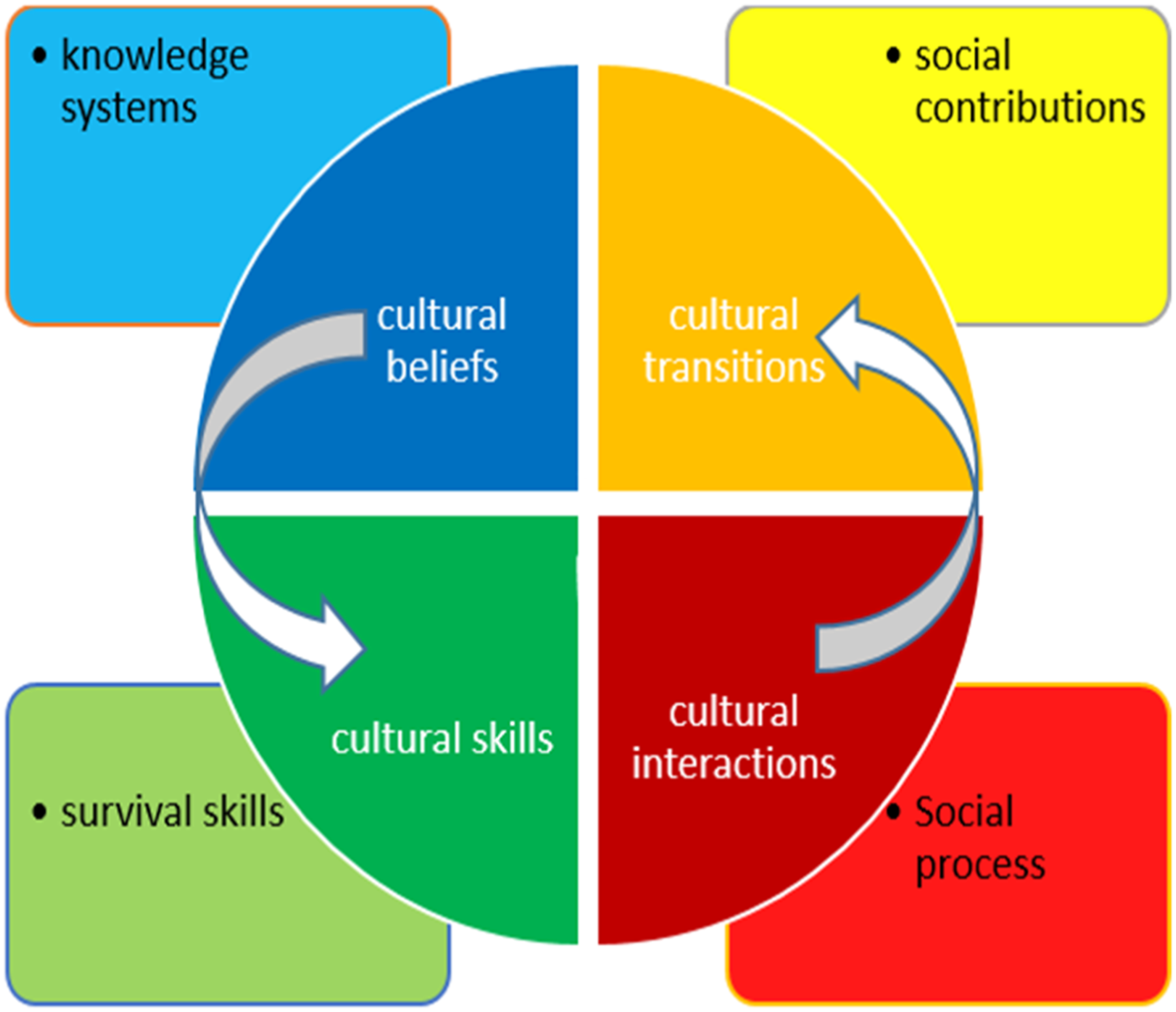
As regards the green quadrant, cultural skills are associated with survival as one of the 21st-century skills that any educator can enhance in the instructional process. This part necessitates mastery to cope with problems and issues confronting society. Survival skills are dependent on indigenous knowledge that people in the village hold on like the stripping, threading, and the weaving process to produce raffia products. These processes are dependent on the waivers' fine and motor skills used in the production of the raffia products. Vis-à-vis, waivers, and other stakeholders of the raffia production consider their craft a source of living for survival. Their income managed them to ‘meet both ends meet’ and send their children to school. Though their income is not as lucrative compared to other means of living, their presence helps in the promotion of the art and craft of raffia weaving particularly in the province of Bohol and perhaps the rest of the country.
As a dynamic characteristic of culture, the red quadrant provides a common ground for cultural interactions such as festivals, rituals, and social engagements. This enhances the socialness of culture as another characteristic that allows the raffia weavers to plan and communicate for the improvement of raffia production. This social phenomenon rejects the notion that culture is static and unchanging. The raffia weavers interact with each other in terms of product types, the volume of supply, and the mandate of the local government of the town, and responding to the plans of their organization.
Some cultures need to change or be replaced. This is the point of cultural transition in the yellow quadrant. The cultural changes or innovations are either preservation or promotion. This quadrant is vital for social contributions that have sociocultural impacts. The preservation of the arts and crafts of raffia for several decades, though some things have changed, may rekindle the spirit of cooperation in recognizing the cultural identity of the people of Bohol. The raffia products that are sold locally and internationally may promote tourism and social contributions that the Republic of the Philippines continuously aspires for.
Using the semiotic concepts of signifier and signified by the findings of the study, the Contextualized Raffia Instructional Model (CRIM) is derived as shown in Figure 2. As juxtaposed in Table 6, the contrast between the raffia weaving culture and the CRIM is visually illustrated. At the outset, the denotation of the raffia weaving can be surmised into four stages such as (1) the stripping of the buri leaves, (2) threading of the buri strips, (3) weaving the thread, and (4) showcasing the aesthetic design. On the other hand, its connotation is dovetailed in the development of CRIM as a relevant significant. CRIM has four important instructional stages. Stage 1 is the Paglilas sa Kinaadman (Knowledge Recall). Learning does not occur in a vacuum which means recalling information and experiences relative to the lesson selected is of relevant value in the instructional process. This stage justifies the use of the blue quadrant. The collective knowledge of the learners is fully exercised with mastery using the different learning skills in the second stage known as Paghilo sa Kahanas. Within this stage, the teacher engages the learners in relevant exercises and worksheets to hone the skills to attain mastery. Contextualized raffia instructional model. The juxtaposition of the raffia weaving.

The mastery of the skills presupposes readiness for the third stage dubbed as Paghablon sa Panabot or the broadening of understanding, which reflects the essence of the red quadrant. The teacher and the learners in this stage are fully engaged in content and context analyses, external and internal criticisms, arguments, and reflections for a deeper understanding of the lesson through individual or group participation. The CRIM’s last stage is the Pagpasigarbo sa Kabantog or the Showcasing of Significant Outcomes. This is the portion of the model where teachers may find opportunities for the learners to create meaningful outputs or outcomes that sustain retention of learning and contribution to the needs of the individual, the institution, the society or the nation, and the world. This stage affirms the realization of the yellow quadrant. Learners are expected to perform learning tasks that matter to them like engaging in civic and community work, experimentation, exhibit, exposition, etc. Utilizing the four stages of the CRIM may enhance holistic learning development which is humanistic and learner-focused.
These descriptions are supported by existing pieces of literature across other fields that weaving is a ‘treasure trove’ of contextualized learning. In the actual teaching, the use of weaving concepts, principles, and skills are learned through weaving activities known as ethno-mathematics (Dominikus, et al., 2023), including the knowledge of lines, shapes, and patterns. While, the teaching of buoyancy on floating boats made of raffia materials supports ethno-science (Djoumessi et al., 2023).
How educators can use CRIM in their actual teaching?
Table 6 presents the contrast between the denotation and connotation of the raffia weaving to the actual teaching using the CRIM. The CRIM is an instructional model that is commonly used by all teachers who teach in different fields of specialization, more especially if they would want to contextualize lessons in a culture-based fashion. What makes this model unique from other models? CRIM is a dialectical approach to instruction that makes use of local language in the process of teaching that promotes nationalism, civic-mindedness, and cultural identity. Not to sound restrictive to foreign scholars, these can also be translated to English to promote global awareness in the context of a Filipino national cultural identity or to fit this into their local context/s as well. For instance, in the Paglilas sa Kinaadman, a lesson in Political Geography requires the teacher to generate information from the class about the tension in the Southeast China Sea (West Philippine Sea) between the Philippines and China. The class is expected to present facts and documents that both countries claim like the 9-Dashline of China, the Exclusive Economic Zone (EEZ) of the Philippines. The class also will have to use the decision of the international tribunal regarding some provisions of the United Nations Conventions on the Laws of the Sea or UNCLOS.
In the Paghilo sa Kahanas, the teacher facilitates the class to consider the cultural differences between China and the Philippines and their territorial interests. Within this stage, the learners illustrate the possibilities of China’s control in the South China Sea. They also consider possibilities in the part of the Philippines if China abides by the decision of the international tribunal.
In the Paghablon sa Panabot, the teacher can organize a debate for the students to make use of their facts and enhance their skills in communication and reasoning. Before the debate, the learners will have to interact with one another, plan, and do the research to produce a sufficient grounding of their arguments. In the Pagpasigarbo sa Kabantog, the teacher challenges the class to make their contributions regarding the issue. The learners can write a manifesto for peace, a resolution, a policy brief, etc. where the learners can disseminate this in vlogs, blogs, Tiktok, and other social media platforms.
What differentiates CRIM from other Sociocultural teaching models?
The shift from the delivery mode to the access mode of instruction has become the trend in the 21st century, even if there are ongoing debates on its efficacy and relevance, still, its transition is still inevitable. Though socio-cultural theorists like Dewey, Vygotsky, Bruner, and Freire firmly support this shifting paradigm, a lot in the academia still uphold the teacher-centric model of instruction, and/or the dialectical blending of these two as morally relevant.
Figure 3 illustrates the similarities of CRIM, PBL, and FC as pragmatist teaching models that allow teachers to facilitate learning using practical examples to solve problems of society, rather than giving the usual exposition and formal lectures inside the classroom. However, these three models have slight differences that contrast how these are intended to achieve learning outcomes. Table 7 shows the detailed comparison and contrast of these three teaching models. CRIM is essentialist/progressivist, while, PBL is reconstructionist/constructivist, and FC is progressivist/humanist. CRIM’s comparison and contrast with other socio-cultural teaching models. Comparison of the CRIM with other established learning strategies.

Reconstructionism addresses the nature of PBL that allows learners to explore and find solutions to a problem. In reconstructionist philosophy, Theodore Brameld and Paulo Freire emphasized that society needs constant reconstruction (Ilyas & Zaman, 2023). Maintaining the role of the guide at the side, the teacher facilitates the immersion of a specific problem of society. Learners engage in brainstorming varied solutions, weigh the pros and cons of each of these solutions, truncate these solutions, and make sound decisions. By doing these, learners use their critical thinking either individually or collectively in an open learning environment, where there is the freedom to investigate the problem (Anggraeni et al., 2023). Constructivism underpins PBL because the context revolves around the problem of promoting meaningful learning based on the learners’ experiences. Learning materials such as worksheets, modules, etc. are accessed during the investigation of the problem. They are given an assessment based on the similar nature of how the problem was investigated and given appropriate solution/s.
Progressivism provides the philosophical framework of FC that engages learners in hands-on activities and human experiences that serve as the foundation of knowledge (Segall & Wilson, 1998, p. 45; Stockard, 2001, pp-8–9). The striking thing in FC is the posting of instructional materials before the actual teaching, either online or offline. The teacher facilitates the learners to engage in reading the posted materials or watching a specific video contextualized in a specific learning competency (Bisande Cabanilla & Pogoy, 2023; Daygbil et al., 2018). Like the PBL, the learners in FC can do the task individually or collectively where they can make use of their autonomy, teamwork, and critical thinking (Huang et al., 2023). The use of inverted spaces is clear in FC compared to other teaching models. The actual instructional time will be used to deepen learning after they know the basic facts posted days before the actual teaching. The learning activities are practical and these are mostly done at home to promote independent learning. Learning assessment emphasizes the use of alternative assessment in line with the interest of the learners.
Unlike the PBL and FC, CRIM emphasizes a dialectical approach to instruction where it utilizes both the learner-centric and teacher-centric perspectives of teaching, which is progressivist and essentialist in nature. Kunjumuhammed et al. (2023) presented the contrasting works of literature of Sabah and Du (2018), who mentioned that the teacher-centered approach “fails to develop reasoning and critical thinking skills, problem formulation skills, collaborative skills, and other lifelong learning competencies,” and Ismael et al. (2018), who argued “that students who learned using this approach “showed higher subjective and objective learning outcomes;” while Yamagata (2016) said that “student-centered approach improves retention rates of learning.”
Amidst these debates on the pros and cons of learner-centric and teacher-centric instruction, CRIM captures and prioritizes the pros rather than the cons. In CRIM, the teacher is the primary agent of change to determine the appropriate culture-based materials needed in the instructional process. The first thing first is to facilitate the learning process, to explore their experiences using culture-based materials. This process is dialectical because it is interactive as the learners engage in reflection and value clarifications when they encounter doubt, dilemma, and skepticism in the context of their own culture. When the learners realize what is important to them, essentialism is the ultimate direction, where they know which context of the culture needs to be preserved, and which one needs to be eradicated. As found in Figure 1, every step of CRIM is spiral and not sporadic, which means knowledge acquisition is knitted to skills mastery, broadened to understanding and bridged to the production of significant learning outcomes.
The CRIM’s learning environment is unstructured; and promotes a ‘classroom without walls,’ which means learning without borders. Learning engagement can be done in the most appropriate physical environment where the learners consider nurturing based on their geographic locations, especially during synchronous and asynchronous classes. While the context of the lesson is based on the cultural material of the country to which they belong, they can access these materials before the beginning of classes. They are also challenged to scout cultural assets in their community that they can relate with aesthetic appreciation and apply these to learn better. The assessment of learning is geared towards the promotion of national identity and pride, using primarily their cultural asset in their respective communities.
Conclusion and recommendations
The unveiling of the art and craft of raffia weaving opens a window of opportunities to various sectors of society. Raffia weaving’s historical origin may invite culture enthusiasts to rally for its preservation and promotion of development and sustainability. From the tedious stripping process of fiber extraction of the buri leaves to the threading and weaving processes, the artisans and weavers continue to hang on despite harsh weather conditions in the harvest of the buri leaves and the meager income they received. Its designs are simple; yet, have reflected aesthetic principles that consider raffia an art and not just a craft. Feminization of labor and child exploitation mirrors the profile of the women weavers who started weaving at a younger age. However, this reality reflects a colonial image of beauty that limits women to working menial jobs. But this colonial packaging has been unwrapped over the past decades by laws and regulations legislated by the country’s solons, to finally put an end to the marginalization of women and child labor exploitation.
Though weavers’ income is meager due to lack of education, the evolution of weaving mats, clothes, and other products invites opportunities for exports, which eventually earn a sustainable income. With the assistance of the local government, private organizations, and the government of New Zealand, the raffia industry of Bohol has made strides in sustaining the industry, strengthening the plantation of buri trees to provide the needed demand for fibers, and providing financial assistance to the weavers in responding to the preservation and promotion of the industry. The development of the QTCD may address a bold stroke in the preservation and promotion of the cultural heritage of the nation, to nurture national cultural identity and pride. This theory presupposes the crafting of CRIM, as a framework for a dialectical approach to culturally-based teaching in the 21st century.
Based on the findings of the study, the following measures are recommended: (1) increase the plantation of buri palms to make the raffia industry sustainable; (2) incorporate loom weaving in education in the curriculum; (3) increase the income of the weavers; (4) enculture the young to uphold the art and craft of raffia weaving; (5) encourage more participant of men weavers to make the industry gender-sensitive; (6) conduct more research to ensure the quality of raffia products; (7) increase participation of local, national, and international networks to increase the production of raffia products; and (8) conduct further research on the efficacy of the CRIM and the validation of the QTCD.
Footnotes
Declaration of conflicting interests
The author(s) declared no potential conflicts of interest with respect to the research, authorship, and/or publication of this article.
Funding
The author(s) received no financial support for the research, authorship, and/or publication of this article.
