






Abstract
Using the necessary condition analysis approach, this paper identifies key sub-dimensions within corporate social performance and evaluates the extent to which they serve as indispensable conditions for operational efficiency of tourism firms. A multi-criteria decision-making method and stochastic frontier analysis are adopted to measure corporate social performance and operational efficiency, respectively. Empirical results show that among the six specific sub-dimensions, only social responsibility is identified as a necessary condition for operational efficiency. The bottleneck analysis shows that social responsibility sub-dimension is not a binding constraint at low levels of operational efficiency but becomes indispensable and must be fully realized when striving for the highest levels of performance. This paper advances tourism scholarship by introducing asymmetric analysis techniques and necessary causal logic to examine the relationship between corporate social performance and operational efficiency.
Keywords
Introduction
The importance of sustainable development and corporate social responsibility (CSR) cannot be overstated, as they are pivotal in addressing pressing social challenges and promoting responsible business practices in today’s increasingly complex global landscape (Gillan et al., 2021). Consequently, it is imperative for businesses to engage in social responsibility investments and explore innovative avenues to enhance their value and competitiveness (Wu et al., 2024). Growing attention has been paid to the relationship between corporate social performance (CSP) and firm value (Wood, 2010), yet this link remains contested (Lee et al., 2023), largely due to differences in industry contexts, variations in CSP proxies, and diverse firm value measures (Wang et al., 2016).
CSP is defined as “a business organization’s configuration of principles of social responsibility, processes of social responsiveness, and policies, programs, and observable outcomes as they relate to the firm’s societal relationships” (Wood, 1991b). The observable outcomes of an organization’s actions and behaviors can serve as valid measures of CSP (Wood, 1991a). Although CSR and CSP are frequently used interchangeably, they are conceptually distinct (Lahouel et al., 2021). CSR refers to a firm’s societal obligations and the actions it undertakes to fulfill them, while CSP captures the outcomes and effectiveness of those efforts. CSP can be understood as encompassing both “doing good” through CSR initiatives and “doing bad” through acts of corporate social irresponsibility or adverse events (Price and Sun, 2017).
A variety of symmetric and asymmetric methods have been employed to investigate the relationship between CSP and firm value. Regression analysis and structural equation modeling typically focus on dissecting sufficient conditions, while Qualitative Comparative Analysis (QCA) emphasize combinations of factors that may determine outcomes (Rasoolimanesh, 2026). Nevertheless, Necessary Condition Analysis (NCA) can provide a novel perspective on significant phenomena (Rasoolimanesh & Olya, 2025), enhancing our comprehension of causal relationships by identifying necessary conditions that must be present for a specific outcome to materialize (Dul, 2024). Besides, the complementary nature of these two methods has made their combined use increasingly popular (Vis and Dul, 2018). QCA separately assesses necessity and sufficiency, identifying necessary conditions and sufficient configurations, respectively (Ding, 2022). While NCA can identify a greater number of necessary conditions than QCA and specify the required condition levels for a given outcome (Dul, 2016). To integrate both approaches, Farmaki et al. (2022) applied fuzzy-set QCA to identify key CSP factors influencing hotel employee job satisfaction and used NCA to estimate the effect sizes of critical necessary conditions.
Although NCA has progressively enriched management research, its application to date has largely been confined to integration with variance-based modeling or configurational asymmetric analysis (Rasoolimanesh, 2026), typically functioning as a supplementary tool rather than being leveraged as a standalone methodology capable of fully realizing its potential. Besides, existing research frequently measures overall CSP score (Lahouel et al., 2021), overlooking how its specific sub-dimensions affect organizational outcomes. It is essential to develop methods for measuring scores across various CSP sub-dimensions. Additionally, current studies predominantly focus on the relationship between CSP and tourism firm financial or market value (Lee et al., 2023), while the exploration of operational efficiency remains insufficiently addressed.
Thus, these practical considerations motivate us to adopt novel methodological approaches to examine the relationship between CSP and operational efficiency through the dual lenses of stakeholder theory and necessity causality. In this paper, we construct a comprehensive evaluation index system and compute CSP sub-dimension scores using the entropy-weighted TOPSIS method. Moreover, we propose a method for operational efficiency measurement using panel Stochastic Frontier Analysis (SFA) models with time-varying decay and time-fixed effects. Lastly, NCA is employed to identify the CSP sub-dimensions that are necessary, and to what extent, for achieving operational efficiency. The research questions addressed are as follows. (1) How can an evaluation system be constructed to effectively measure CSP and assess scores across its sub-dimensions? (2) How can a tourism firm’s operational efficiency be evaluated? (3) Is a specific CSP sub-dimension necessary for operational efficiency? (4) And to what extent do the identified antecedents influence operational efficiency?
The contributions of this paper are reflected in three key areas. First, this paper contributes to the literature on measuring CSP and operational efficiency by offering a viable methodological pathway for future research. Second, it provides the first empirical evidence within a necessary causal logic framework, advancing the exploration of the relationship between CSP and operational efficiency of tourism firms. Lastly, this paper introduces a tool for identifying necessary responsibility dimensions from an empirical perspective. Prioritizing the social responsibility practices may be a critical factor for achieving operational efficiency. Moreover, the social responsibility sub-dimension related to CSP becomes essential and must be fully realized in order to attain the highest levels of performance.
Literature review
Social responsibility practices of tourism firm
It is imperative to focus on specific industry contexts or characteristics and explore the impact of CSP on organizational outcomes (Wang et al., 2016). Tourism firms are frequently engaged in the forefront of social responsibility practices (Font and Lynes, 2018). This is partly due to its high level of risk, financial leverage, competitive intensity, and labor intensity characteristic (Singal, 2015). The uniqueness of social responsibility practices of tourism firms is manifested in several aspects. First, the tourism industry involves a wide range of stakeholders (Yoon and Chung, 2018), possessing significant bargaining power, capable of significantly influencing business decisions and strategic implementation (Wu et al., 2024). Second, tourism development is closely related to social welfare, community development, and other social issues (Font and Lynes, 2018), necessitating firms to shoulder broader and deeper ethical and charitable responsibilities (Lee et al., 2023). Third, the relationship between tourism firms and their external environment is bidirectional (Wu et al., 2023). The operation of tourism firms is influenced by the external environment, while firms also impact the external environment and community development (Wu and Li, 2026a). This bidirectional relationship reinforces the importance of social responsibility strategies and actions.
In the context of tourism firms, which engage in extensive communication and interaction with multiple stakeholders, the creation of firm value consists of a two-way cycle between the firm itself and its broad business environment (Wu et al., 2023), directly impacting business operations and firm performance. Stakeholder theory (Mahajan et al., 2023) posits that businesses should focus not only on shareholder interests but also on the needs and expectations of a broad range of stakeholders (Orlitzky et al., 2017). It advocates for firms to pursue profit maximization alongside a commitment to social responsibility (Parmar et al., 2010), recognizing that addressing diverse stakeholder needs enhances both competitiveness and operational efficiency (Brower & Mahajan, 2013). The tourism industry encompasses a wide array of stakeholders (Font and Lynes, 2018; Wu et al., 2023). It is required to fulfill employee- and product-related responsibilities to safeguard the interests of employees, consumers, and suppliers; fulfill governance and diversity responsibilities to protect the interests of shareholders, investors, and managers; and fulfill social and environmental responsibilities to safeguard the interests of governments, regulatory agencies, and other relevant societal groups.
The impact of CSP on firm value
The relationship between CSP and firm value remains controversial in the current discourse (Wu and Li, 2026b). Environmental, social and governance (ESG) practices may either contribute to enhancing tourism firm value or have a negative impact on it (Lin et al., 2024). It reduces the stock market value of tourism and hospitality firms, rather than enhancing their financial performance (Wu and Li, 2026a). Alternatively, there may be no significant relationship between the two (Belu and Manescu, 2013; Moneva et al., 2020). Previous studies often assumed a linear relationship between CSP and firm value (Wu et al., 2024; Yoon and Chung, 2018), utilizing regression analysis to assess the impact of CSP sub-dimensions such as employee relations, managerial diversity, product quality, community activities, and environmental protection on the profitability of tourism firms (Wu et al., 2023). Additionally, there may be a nonlinear relationship between CSP and firm value, attributed to the coexistence of social responsibility and social irresponsibility practices (Kim et al., 2018).
Variance-based methods, such as regression analysis and structural equation modeling, presume linear, symmetric relationships and focus exclusively on net effects, thereby constraining their capacity to examine the multifaceted drivers of organizational outcomes to a narrow set of competitive antecedents (Rasoolimanesh, 2026). QCA possess characteristics such as equifinality, concurrent causality, and asymmetric causal relationships (Rasoolimanesh and Olya, 2025), along with the advantage of no omitted variable bias (Pappas and Woodside, 2021), offering new insights into unraveling the complex relationship. Fuzzy-set QCA aids in exploring pathways through which sub-dimensions of CSP enhance organizational performance (Wu et al., 2023). It also facilitates exploration of specific sub-dimensions of CSP, such as environmental, social (Halme et al., 2020), and employee relations (Lee and Chen, 2018), to improve firm sustainable performance. When multiple antecedent factors, such as various sub-dimensions of CSP, interact with one another, NCA can evaluate the degree of necessity for each condition, setting it apart from net effect analysis and conditional configurational logic (Vis and Dul, 2018).
Development of hypotheses related to necessity
When fulfilling social responsibility, tourism firms must consider their impact on society or community, such as creating employment opportunities, improving local economies, and supporting educational and cultural initiatives (Wu and Li, 2026a). Given their close connection to the destinations and communities they operate in, actively engaging in social responsibility not only enhances firm reputation but also strengthens its relationships with local residents and government authorities (Yoon and Chung, 2018), thereby fostering a more favorable environment. Moreover, positive social responsibility practices can boost brand loyalty among consumers, helping to attract more visitors and benefit firm operations (Price and Sun, 2017). Thus, we hypothesis that:
Social responsibility practices serve as a necessary condition for ensuring operational efficiency of tourism firms.
Governance responsibility primarily encompasses a firm’s management structure, decision-making processes, and transparency (Yeh and Trejos, 2015). Tourism firms must establish robust governance mechanisms to ensure fairness and transparency in strategic decisions, while also strengthening risk management and internal controls (Li and Singal, 2022). This approach not only enhances managerial efficiency but also mitigates legal and compliance risks in operations. Effectively fulfilling governance responsibilities can build greater trust among shareholders and investors, attract additional capital, and provide the firms with more resources and a stronger capacity to withstand risks (Zhang et al., 2019). Thus, we hypothesis that:
Governance responsibility practices serve as a necessary condition for ensuring operational efficiency of tourism firms.
Diversity responsibility requires tourism firms to prioritize diversity and inclusion in employee recruitment, career development, and supply chain management (Yeh and Trejos, 2015). Diversity encompasses not only race, gender, and cultural differences but also varied backgrounds, experiences, and skills among employees. A diverse workforce brings distinct perspectives and innovative ideas, enabling the firm to better meet the diverse needs of its customers (Trong Tuan, 2020). Furthermore, promoting diversity responsibility enhances the firm’s social image and aligns with modern societal expectations for fairness and inclusivity, thereby increasing the organization’s attractiveness and competitiveness in the market (Yoon and Chung, 2018). Thus, we hypothesis that:
Diversity responsibility practices serve as a necessary condition for ensuring operational efficiency of tourism firms.
Fulfilling employee responsibility involves safeguarding employee rights, promoting career development, ensuring a healthy work environment, and providing competitive compensation and benefits (Yoon and Chung, 2018). Tourism firms should prioritize professional training and skill development, offer a safe workplace, and ensure fair remuneration to boost employee satisfaction and loyalty (Farmaki et al., 2022). As one of the firm’s most valuable assets, employees play a crucial role in operational success. Properly addressing employee responsibility not only enhances productivity but also reduces turnover rates, lowering recruitment and training costs, thereby increasing the firm’s overall operational value (Lee and Chen, 2018). Thus, we hypothesis that:
Employee responsibility practices serve as a necessary condition for ensuring operational efficiency of tourism firms.
When fulfilling environmental responsibility, tourism firms must consider the impact of their operations on natural resources and the environment (Back, 2024). They should take measures to reduce carbon emissions, minimize waste, and promote sustainable tourism practices (Wu and Li, 2026a). With increasing consumer awareness of environmental issues, environmental responsibility has become a significant factor influencing consumer choices. By actively engaging in environmental protection, tourism firms can not only mitigate negative impacts on the ecosystems of their destinations but also enhance their brand image and market competitiveness (Font and Lynes, 2018). Additionally, firms that meet environmental standards are more likely to gain policy support and public trust, further driving sustainable development and operations. Thus, we hypothesis that:
Environmental responsibility practices serve as a necessary condition for ensuring operational efficiency of tourism firms.
Product responsibility is a crucial aspect for tourism firms to ensure that their offerings meet safety standards, comply with quality regulations, and align with consumer expectations (Wu et al., 2023). The quality and safety of tourism products directly affect customer experiences and the firm’s reputation (Park et al., 2014). Tourism firms should establish stringent quality control standards, actively respond to customer feedback, and continuously improve products and services to enhance customer satisfaction and brand loyalty (Wu et al., 2023). Effectively upholding product responsibility not only helps avoid legal disputes and reputational damage but also increases market share and operational efficiency. Thus, we hypothesis that:
Product responsibility practices serve as a necessary condition for ensuring operational efficiency of tourism firms.
Methodology
Data and variables
The research sample comprises 30 tourism-related firms listed on the Shanghai or Shenzhen Stock Exchange between 2016 and 2020. Tourism firms typically have diversified business operations (Wu and Li, 2026b), including attractions, restaurants, hotels, travel agencies, airlines, culture, sports, and live entertainment. This paper extends the standard industry classification by including firms from other sectors whose primary operations or core activities are closely tied to tourism (Liu et al., 2024). The data cleaning process adheres to the following criteria: firms with poor financial conditions are excluded, data from multiple sources are integrated, and observations with missing values for key variables are removed. Thus, we select sample firms that have five consecutive years of CSP ratings and financial data, excluding those that are in financial distress.
The CSP data were sourced from the China Research Data Services Platform (CNRDS), where the design standards of the Chinese ESG database are consistent with those of standard ESG databases (such as the MSCI KLD database). Due to data availability constraints, CSP is typically operationalized using ESG-based dimensions, with ESG ratings widely employed as proxies for its measurement (Chen and Delmas, 2011; Jacobs et al., 2016). The database includes ESG ratings across six dimensions: social responsibility, governance responsibility, diversity responsibility, employee responsibility, environmental responsibility, and product responsibility (Wu et al., 2023). Each dimension is evaluated from two perspectives: “strengths”, representing the items of social responsibility practices, and “concerns”, reflecting the items of social irresponsibility practices. The CSP evaluation index system for tourism firms is shown in Figure 1. The “strengths” and “concerns” are operationalized as binary (dummy) variables, and a composite score is derived by aggregating the cumulative value of each indicator over the past 5 years. A detailed description of the measurement of CSP is provided in Appendix A. The entropy-weighted TOPSIS method is employed to measure the CSP sub-dimensions, with a detailed description of the implementation procedure provided in Appendix B. Corporate social performance evaluation index system. Note. Blue frame represents the six types of responsibilities, orange frame represents “responsibility practices”, and gray represents “irresponsibility practices”. Compared to the Chinese ESG database, we exclude indicators with missing values. Specifically, the following “strengths” are omitted: donation amount (social responsibility); number of pages in the CSR report and social contribution per share (governance responsibility); and number of patents, R&D expenditure, proportion of R&D personnel, and proportion of technical staff (product responsibility). Additionally, the following “concerns” are excluded: employee safety disputes (employee responsibility), as well as environmental penalties and pollutant emissions (environmental responsibility).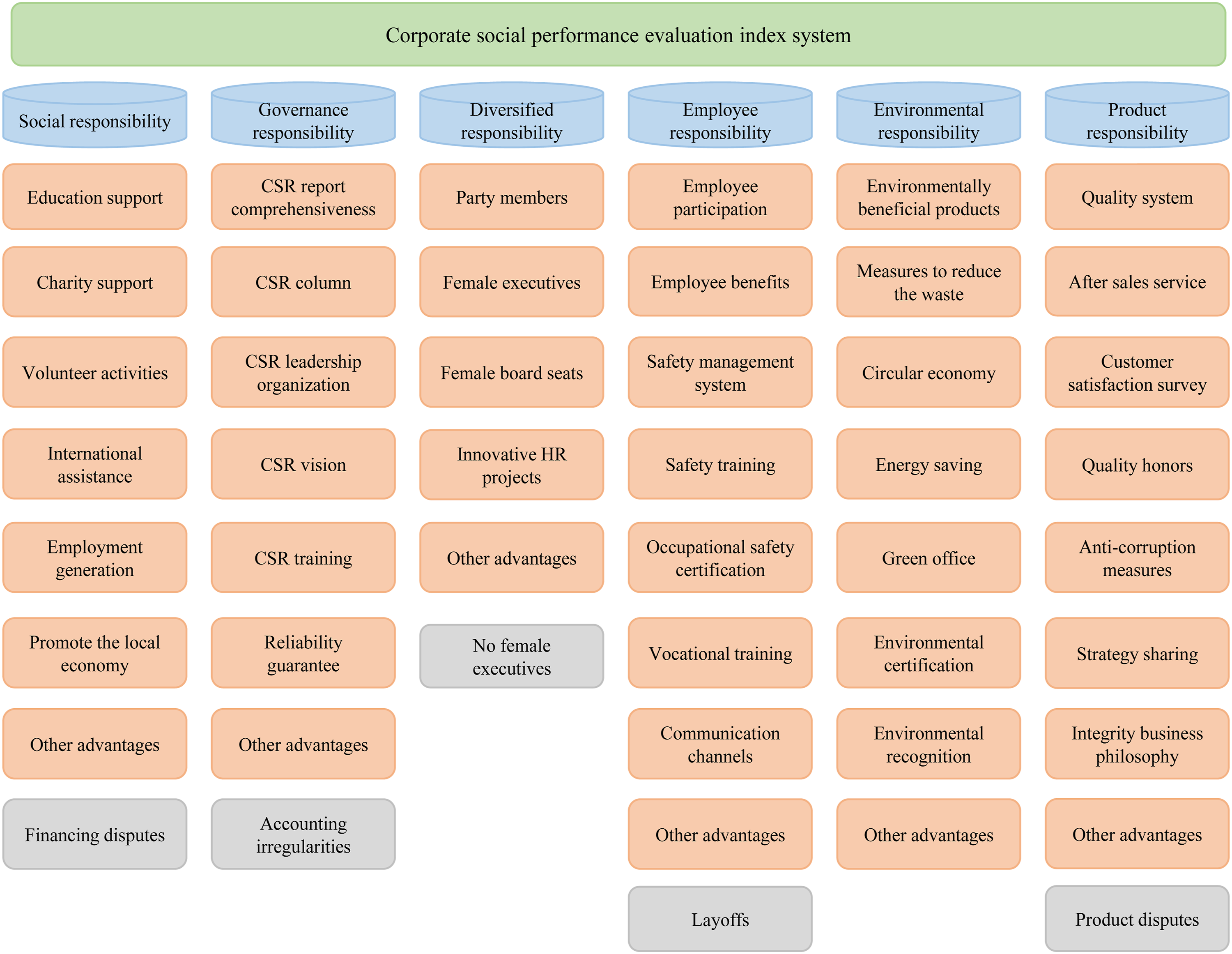
The original data for calculating operational efficiency is sourced from the China Economic and Financial Research Database (CSMAR). Operating revenue is a crucial output factor, while total assets and employees are key input factors related to capital and labor. The units for total assets and operating revenue are “100 million CNY”, and “per person” constitutes for the unit of total number of employees (Li and Wu, 2024). To eliminate the impact of price factors, the total assets and operating revenue are adjusted using the Fixed Asset Investment Price Index and the Added Value Index of the Tertiary Industry, respectively, based on the 2016 constant price. Those indexes are sourced from the China Statistical Yearbook. Stochastic frontier analysis (Assaf and Josiassen, 2016) is employed to measure the operational efficiency of tourism firms, with a detailed description of the implementation procedure provided in Appendix C.
Necessary condition analysis
Traditional symmetric modeling approaches primarily focus on determining the sufficient conditions that influence organizational outcomes, making it difficult to truly eliminate endogeneity bias. NCA holds the power of “veto” and holds significant value in identifying the necessary conditions for organizational outcomes. This method effectively identifies core driving factors across a wide range of organizational management domains, including foreign direct investment in international business (Richter and Hauff, 2022), employee performance and work engagement in human resource management (Hauff et al., 2021) and managerial psychology (Ding and Kuvaas, 2023), supplier-led innovation in supply chain management (Van der Valk et al., 2016), and pandemic-related mortality rates alongside environmental satisfaction in public administration (Yan et al., 2023).
In this paper, we utilized the average CSP score and operational efficiency over the past 5 years as the benchmark to conduct a necessity analysis to identify the core conditions within CSP in influencing operational efficiency. Following the standard procedural guidelines outlined by Dul et al. (2023), NCA typically encompasses the following elements. (1) Scatterplot. Use a Cartesian coordinate system to plot the data points, showing the organizational outcome Y for each scenario corresponding to the potential necessary condition X. If there is a blank area in the upper left corner of the scatterplot of “potential necessary condition X - organizational outcome Y”, then X may be a necessary condition for Y. This blank area is also known as the Ceiling Zone (C), which is primarily formed by drawing an upper limit envelope line between the blank area without observed values using the ceiling technique and the complete area with observed values. (2) Ceiling technique. It mainly consists of two types. Ceiling Envelopment (CE) formed by segmented lines and Ceiling Regression (CR) formed by continuous lines. Each type includes two expressions: Varying Return to Scale (VRS) and Free Disposal Hull (FDH). The precision of the ceiling envelopment line is represented by the ratio of the number of observations below or above the ceiling envelopment line to the total number of observations. CE-FDH and CR-FDH are commonly used as the ceiling envelopment lines. Because the FDH technique is more flexible, the precision of CE-FDH is 100%, while the precision of CR-FDH may be less than 100%. (3) Effect size. The effect size of a necessary condition primarily represents the size of the constraint of the Ceiling Zone on the outcome. It is determined by the ratio of the Ceiling Zone to the potential area with observed values (Scope, S), i.e., effect size (4) Necessary inefficiency. While the effect size can indicate to what extent the necessary condition X constrains the organizational outcome Y, not all necessary conditions X can constrain the organizational outcome Y, and not all organizational outcomes Y can be constrained by the necessary condition X. This leads to condition inefficiency (where the condition does not constrain the outcome) and outcome inefficiency (where the outcome is not constrained by the condition). (5) Bottleneck table. It refers to the necessary level of conditions required for a given level of organizational outcome. It plays an important role in explaining multivariate necessary conditions and identifying combinations of necessary conditions. A necessary condition can be seen as a bottleneck that prevents the expected outcome from occurring. Whether a necessary condition holds true and to what extent it is manifested can determine the outcome.
Empirical results
Descriptive statistics
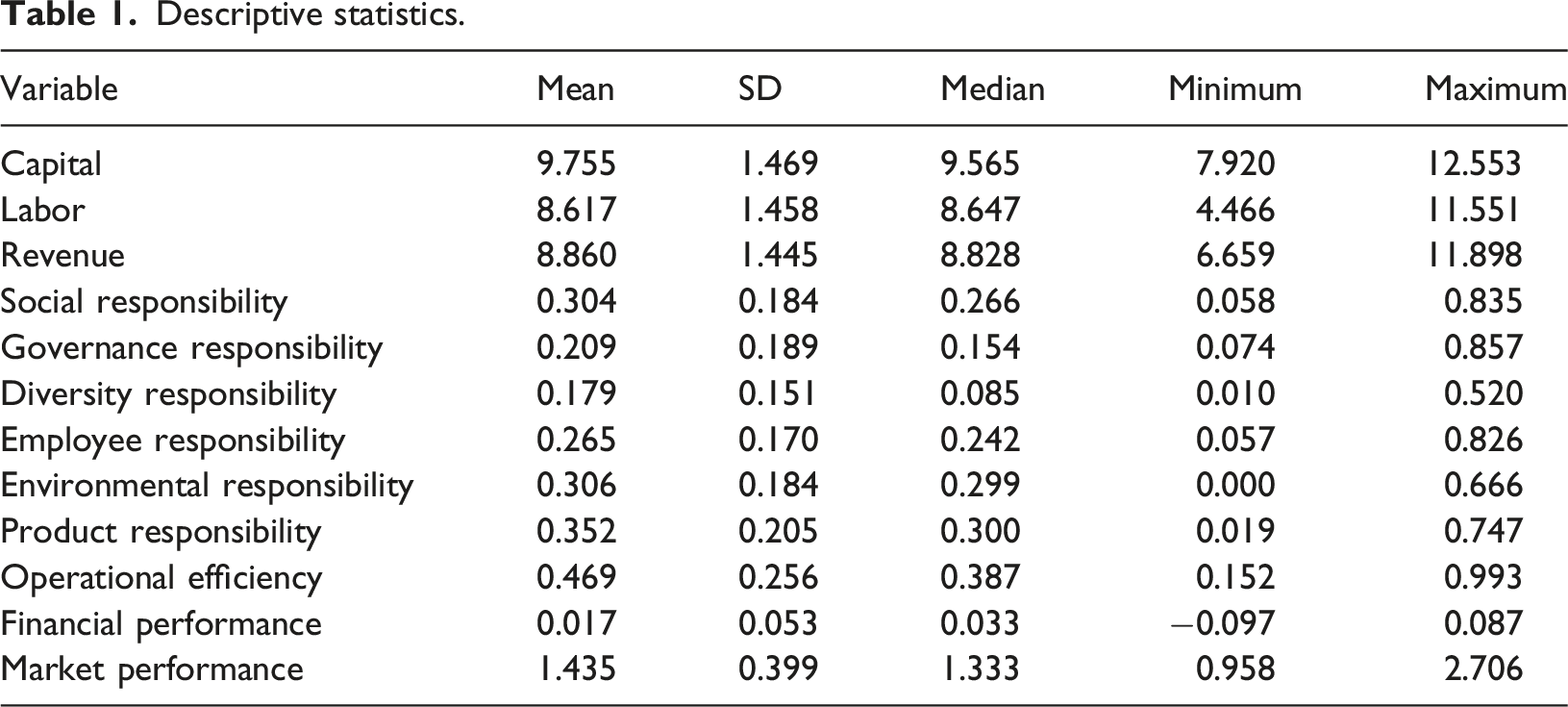
Descriptive statistics.
Correlation analysis.
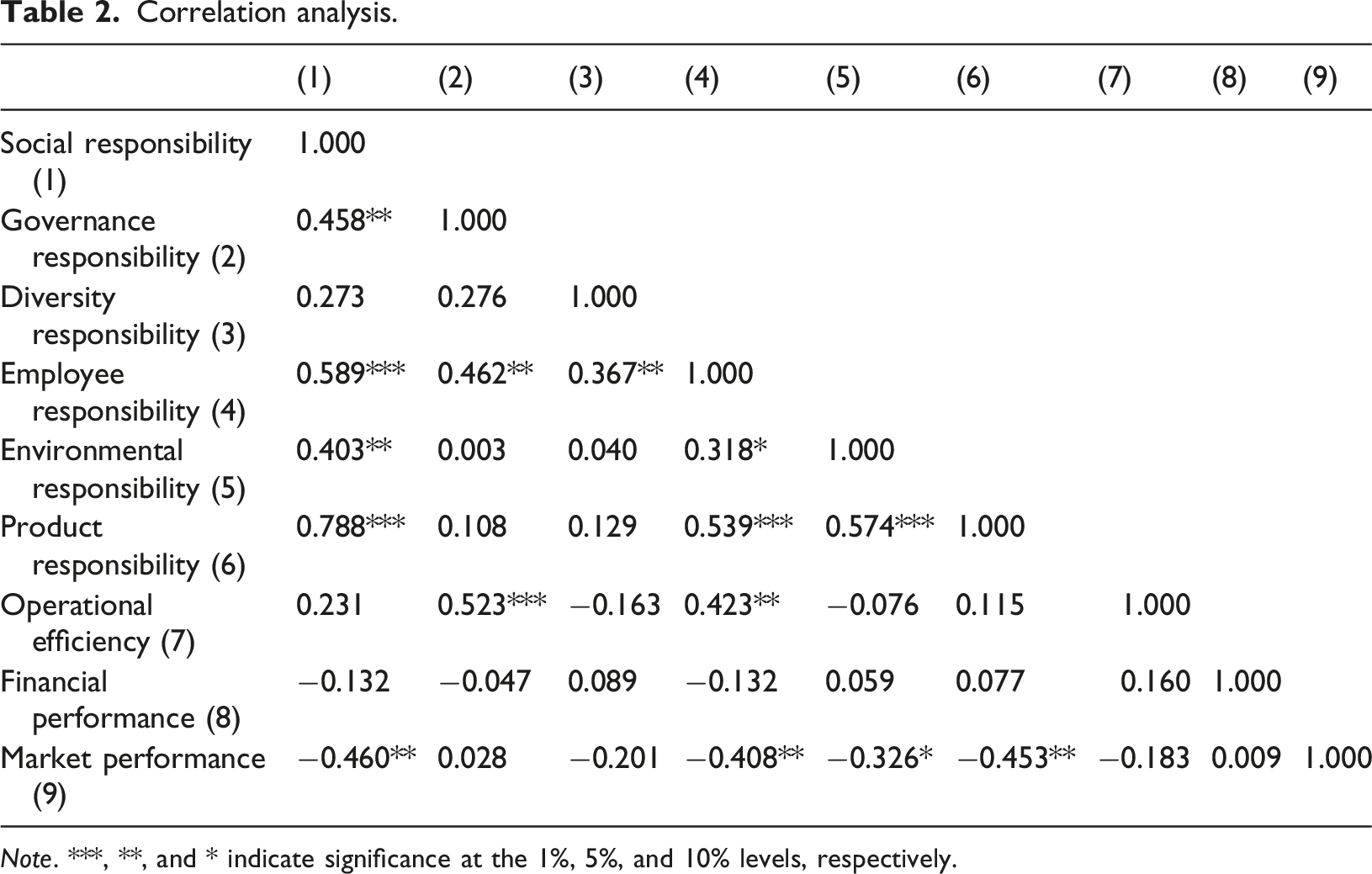
Note. ***, **, and * indicate significance at the 1%, 5%, and 10% levels, respectively.
Regression result of SFA model.
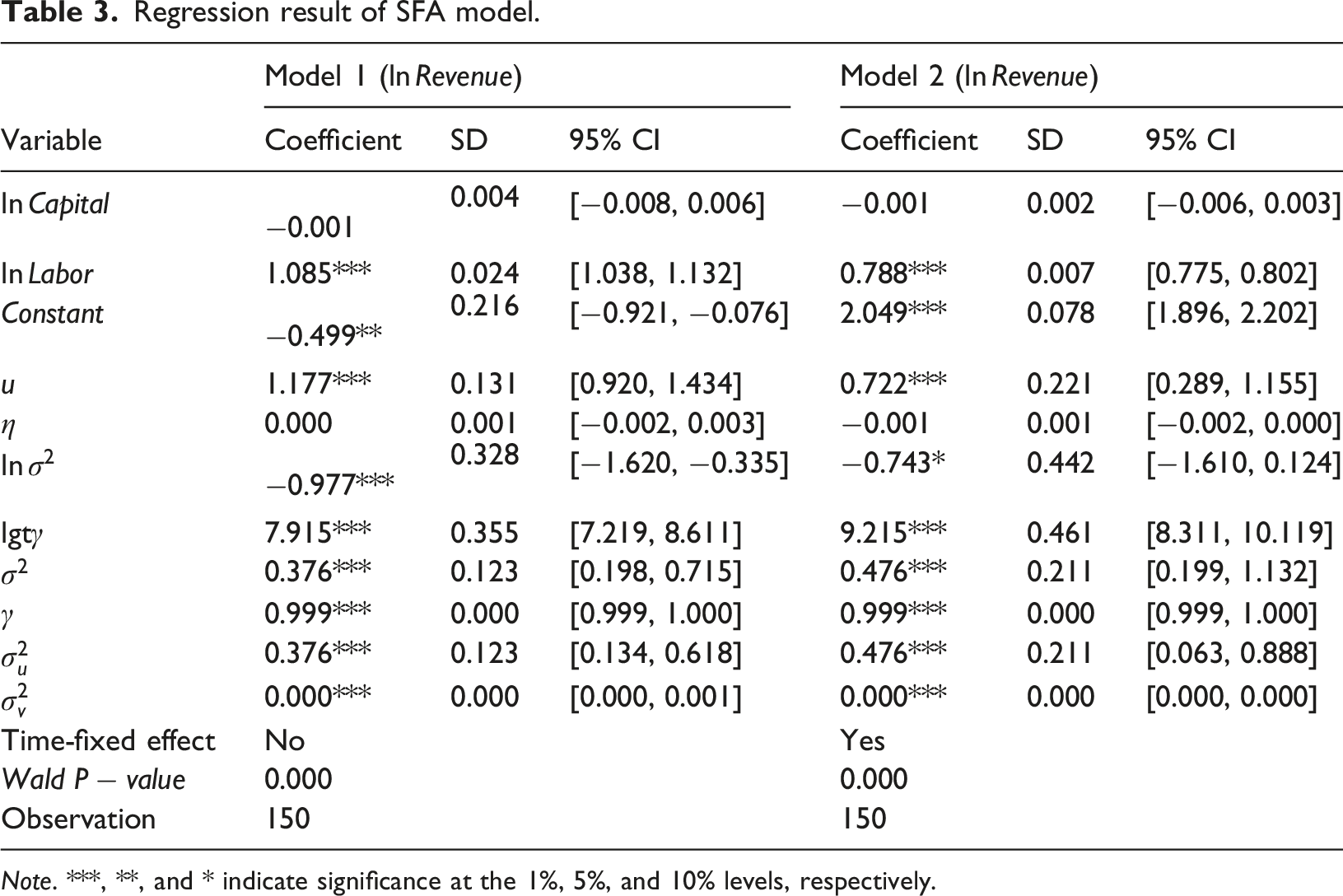
Note. ***, **, and * indicate significance at the 1%, 5%, and 10% levels, respectively.
Empirical results of CSP and firm value
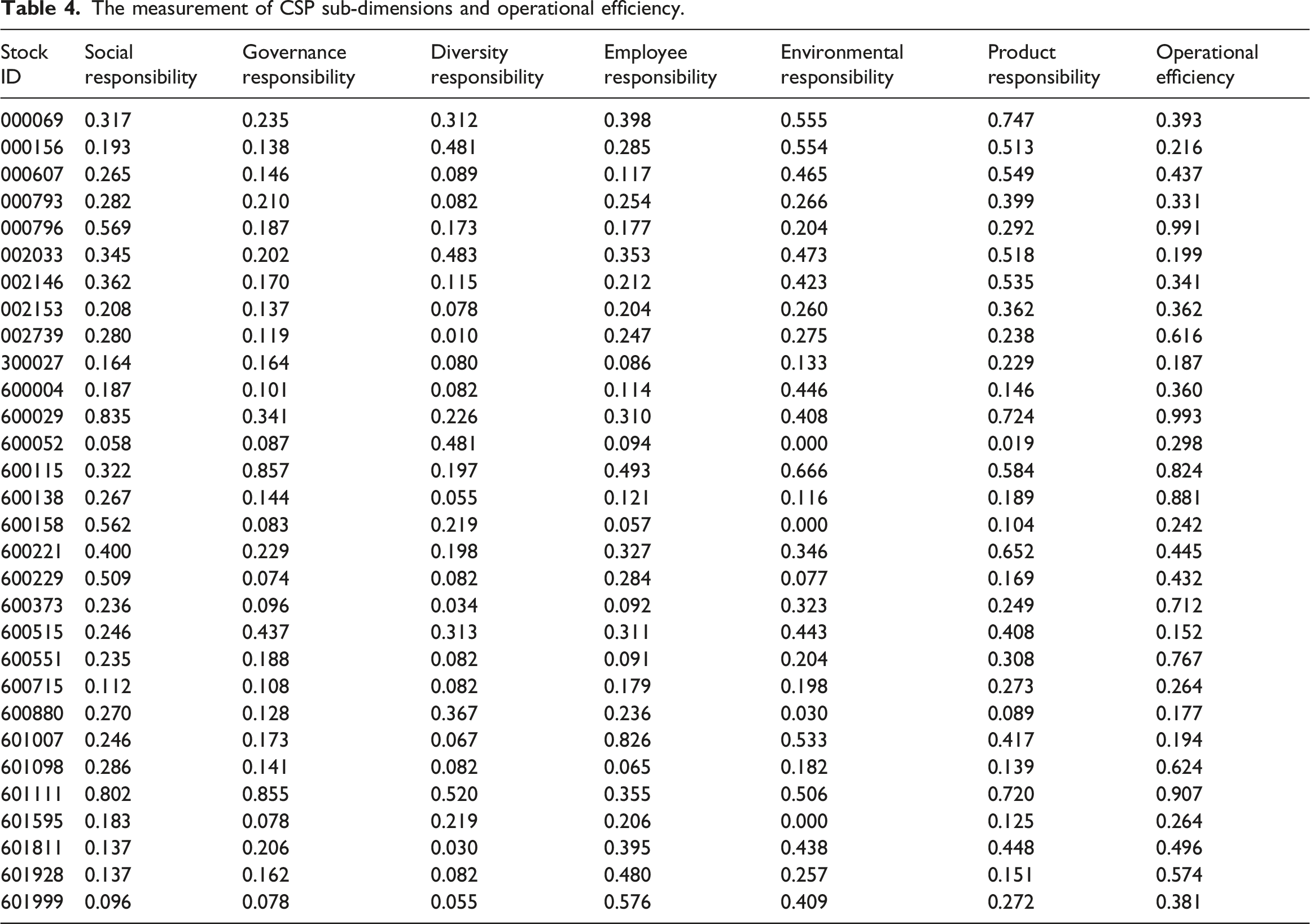
The measurement of CSP sub-dimensions and operational efficiency.
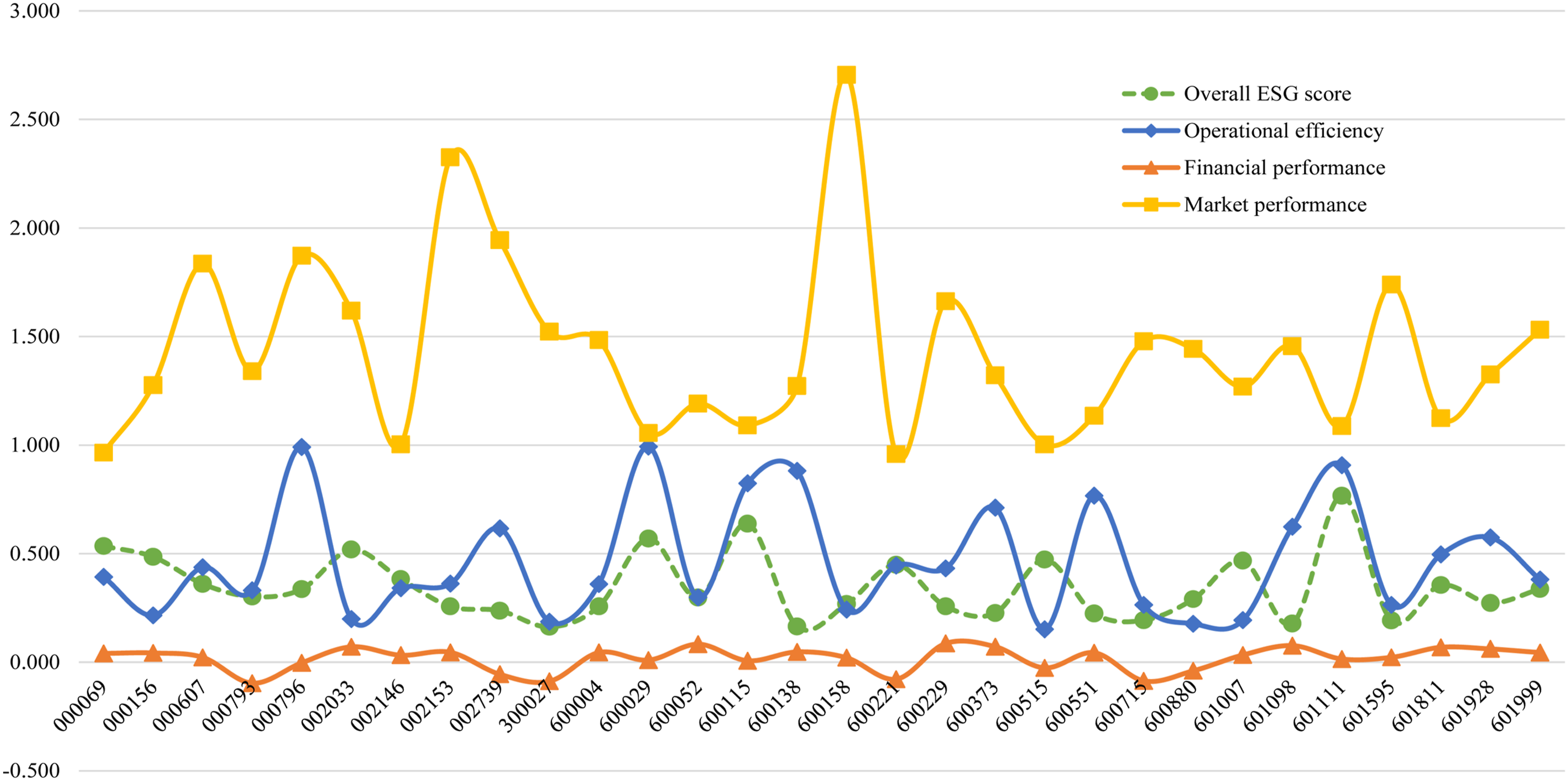
The measurement of overall CSP and firm value.
Linking input and output indicators with social responsibility practices provides a more comprehensive explanation for variations in firms’ operational efficiency. High-efficiency firms that excel in social responsibility practices typically make more effective use of their total assets and human resources to support sustainable development and social responsibility goals (Li and Wu, 2024). By implementing practices like energy conservation, employee welfare improvements, and community engagement, these firms optimize resource allocation, enhance employee motivation and brand reputation, ultimately driving increased operational revenues (Wu et al., 2024).
In contrast, low-efficiency firms with weaker social responsibility practices may exhibit resource waste. A lack of social responsibility initiatives can lead to reduced employee satisfaction and loyalty, adversely impacting work efficiency and corporate culture (Yoon and Chung, 2018). These firms may fail to generate additional value or attract consumers and investors through social responsibility investments, resulting in lower output relative to similar input levels (Wu et al., 2024). By strengthening social responsibility practices (Wu et al., 2023), particularly those related to employee welfare, environmental stewardship, and community support, low-efficiency firms could potentially improve resource utilization efficiency, achieving both higher operational efficiencies.
Necessity condition analysis and bottleneck table
Figure 3 is the scatter plot for the necessity analysis of CSP sub-dimensions influencing the operational efficiency of tourism firms. In the scatter plots of CSP sub-dimension, the upper envelopment line exists in the upper-left corner of each observation, and the range of the blank area is not large (Dul et al., 2023). The preliminary analysis suggests the possibility of the existence of necessary conditions, but further judgment is needed based on the judgment criteria. The CE-FDH method envelopes all observation values at the marginal position in the upper-left corner; and the CR-FDH method takes all observation values on the upper envelopment line of CE-FDH as the sample and fits the envelopment line using a regression model (Toth et al., 2019). Besides, the OLS method takes all observation values as the sample and fits the envelopment line using a regression model. According to Table 5, the accuracy for each CSP sub-dimension calculated by the CE-FDH method is 100%, while the accuracy calculated by the CR-FDH method are all below 100%. Scatter plot of CSP sub-dimensions and operational efficiency. The result of necessity condition analysis between CSP and operational efficiency. Note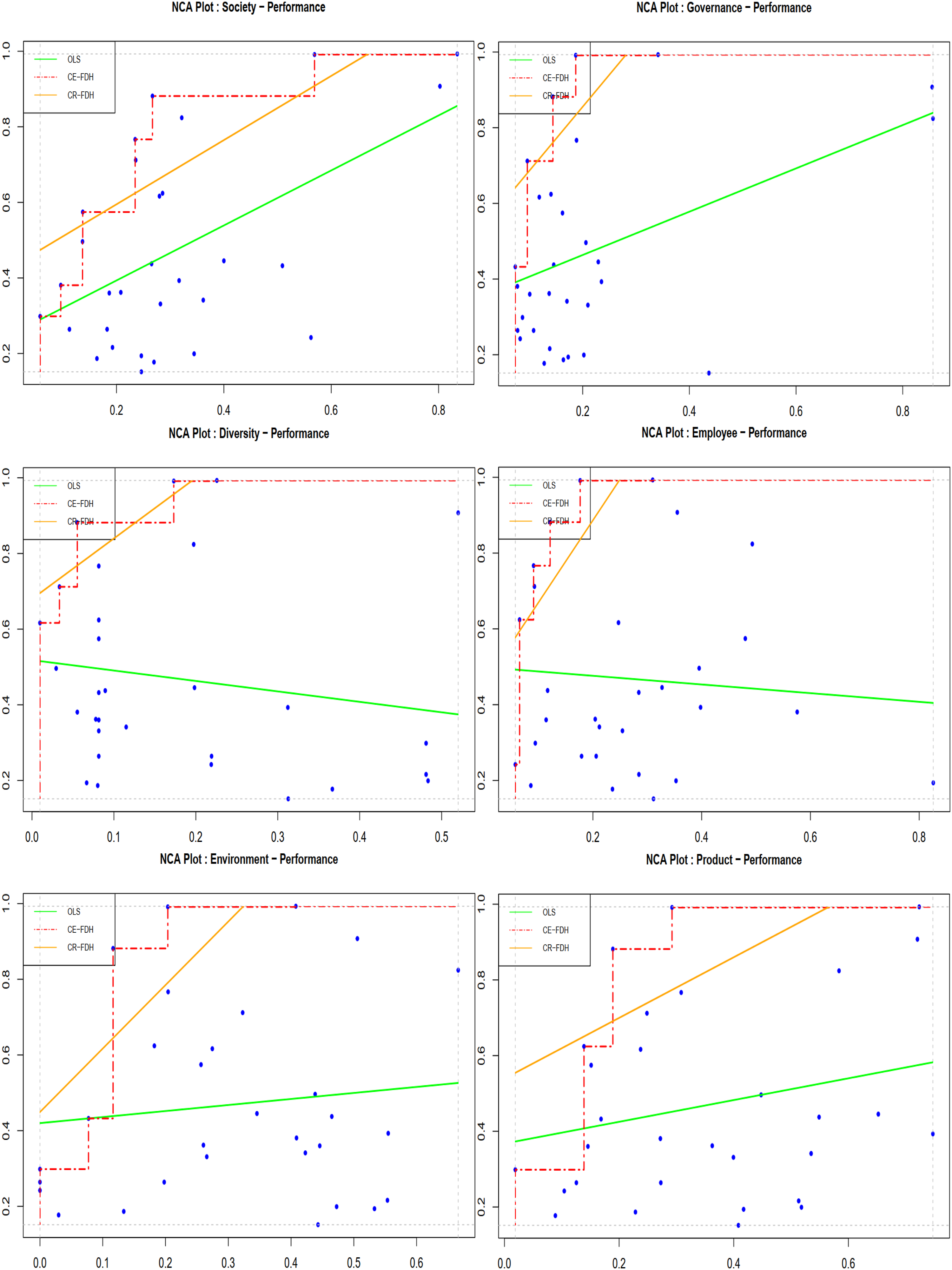
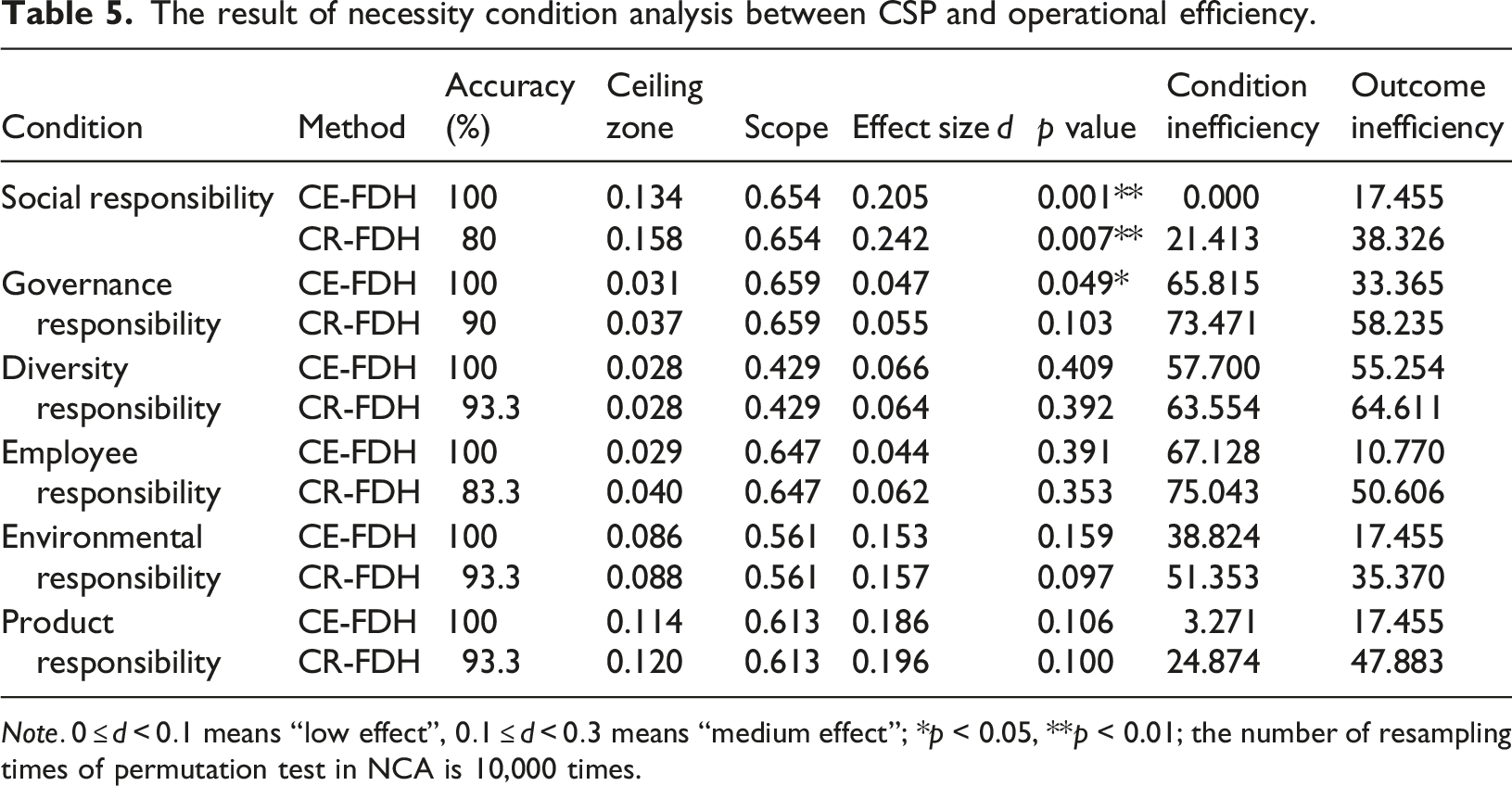
Table 5 shows the result of NCA between CSP and operational efficiency, including the accuracy, ceiling zone, scope, effect size, p-value, condition inefficiency, and outcome inefficiency estimated using both the CE-FDH and CR-FDH methods. The effect size and p-values are calculated by the ratio of ceiling zone to the scope and the Monte Carlo simulation permutation test, respectively (Dul, 2024). Based on the judgment criteria for necessity conditions, that is, the effect size is not less than 0.1 (Dul, 2016) and the effect size is significant (Dul et al., 2020), we found that among the six specific dimensions of CSP, only social responsibility constitutes a necessary condition affecting the operational efficiency of tourism firms. Thus, H1 is supported, while the other hypotheses, i.e., H2 to H6, are rejected.
Specifically, the effect size of the necessity condition for social responsibility has a medium effect size and is significant at the 1% level (CE-FDH method:
Bottleneck table analysis for necessary condition combinations of operational efficiency.
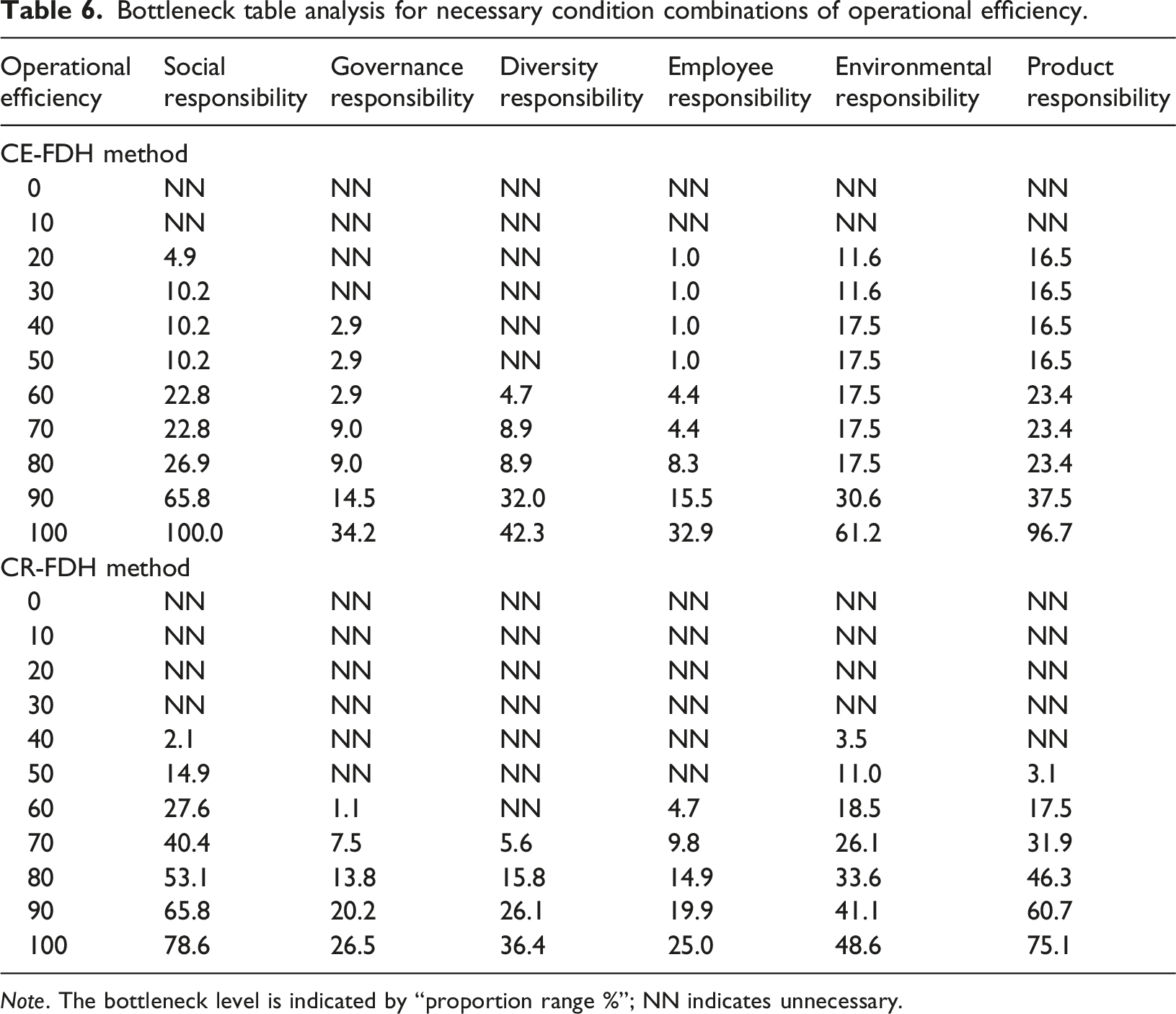
Note. The bottleneck level is indicated by “proportion range %”; NN indicates unnecessary.
Discussion of key findings
NCA offers a valuable methodological lens for identifying and articulating indispensable drivers within complex tourism phenomena (Lee and Lu, 2025). The relevance of this to tourism research has been further emphasized by Toth et al. (2019), who delineated the core procedural steps of NCA and spotlighted its promising applications in the field, and by Dul (2022), who offered practical guidance for tackling methodological challenges in tourism contexts. Building on this foundation, our study leverages NCA to assess the degree to which specific sub-dimensions of CSP are necessary, rather than merely sufficient, for achieving firm value. This approach is particularly advantageous when the research question centers on identifying “must-have” conditions (Rasoolimanesh, 2026), as it moves beyond average marginal effects to reveal threshold requirements that cannot be substituted or omitted (Dul et al., 2023).
The estimation results indicate that tourism firms have made relatively good strategic investments and demonstrated responsibility in the dimensions of social responsibility, environmental responsibility, and product responsibility. This pattern diverges from prior findings in hospitality research (Wu et al., 2023), which emphasized stronger performance in product quality, employee relations, and stakeholder communication. The average operational efficiency for tourism firms is 0.469, indicating a low performance and leaving significant room for improvement. This finding aligns closely with prior research on service productivity in the tourism sector (Wu et al., 2024; Zhang et al., 2019), further underscoring the considerable potential for enhancing operational efficiency through strategic optimization.
NCA approach is adopted to identify the key factors within CSP and assesses their degree as indispensable conditions for influencing operational efficiency of tourism firm. The findings demonstrate that among the six specific dimensions of CSP, only social responsibility constitutes a necessary precondition for influencing the operational efficiency. This result contrasts with prior regression-based studies, which found no significant association between social responsibility and either service productivity or profitability of tourism firms (Wu et al., 2024), highlighting a critical distinction between necessity- and sufficiency-oriented analytical approaches. According to bottleneck table analysis, to achieve a 100% level of operational efficiency, the level of social responsibility must first reach 100%. By undertaking social responsibilities such as education, charity, volunteer activities, assistance programs, and employment promotion, tourism firms can not only implement sustainable development strategies but also promote their operational efficiency.
Firm value is a multidimensional construct that encompasses financial value (such as return on equity, and Tobin’s Q), operational value (including technical efficiency, and total factor productivity), capital market value (like stock prices, and cumulative abnormal returns), and social service value (comprising investor and consumer satisfaction and loyalty). When using financial and market performance as alternative measures of firm value, we find that none of the six specific dimensions of CSP constitute necessary conditions for enhancing the value of tourism firms (see Appendices D and E). This finding is consistent with prior regression-based studies that report a neutral impact of CSP on tourism firms’ financial and market performance (Belu and Manescu, 2013; Moneva et al., 2020). Overall, the results indicate that while practices related to social responsibility dimensions are indispensable for enhancing operational efficiency, they do not constitute necessary conditions for financial or market value improvement of tourism firms.
Conclusion and implications
This paper takes listed tourism firms in China as the sample to explore the CSP sub-dimensions that necessary to influence operational efficiency. First, based on Chinese ESG database, the Entropy-weighted TOPSIS method is used to measure CSP sub-dimensions and overall ESG scores. A comprehensive evaluation index system for CSP is constructed from “strengths” and “concerns” aspects, based on six sub-dimensions. Second, SFA is employed to measure operational efficiency, complemented by a comparative assessment of profitability in the financial value dimension and return on investment in the market value dimension. Finally, NCA is utilized to identify the necessary conditions through which CSP affect firm value, and bottleneck table analysis is conducted to further deepen the understanding of the necessity level of SCP sub-dimensions.
This paper contributes to the literature on CSP and firm value relationship from both theoretical and practical perspectives. First, this paper advances the understanding of asymmetric analysis techniques in examining the relationship between CSP and operational efficiency of tourism firms. Existing methods such as regression analysis, structural equation modeling, or QCA can only qualitatively identify the linear and symmetric or the equifinality, concurrent causality, and asymmetric causal relationships between the antecedents and outcome variables (Rasoolimanesh, 2026). NCA, however, can further quantitatively assess the degree to which the given level of organizational outcomes requires necessary conditions (Dul, 2022). This method has significant advantages for conducting phenomenon-driven research, enhancing the diversity and richness of organizational management in the tourism field (Toth et al., 2019). It helps to elucidate what specific elements of tourism firm value, including operational efficiency, financial or market performance, require to what extent of necessary factors, i.e., CSP sub-dimensions.
Second, this paper seeks to introduce necessity-based causal logic related to the sub-dimensions of CSP to extend and refine stakeholder theory. According to stakeholder theory (Mahajan et al., 2023), a firm’s development relies on the involvement of diverse stakeholders, emphasizing that firms should pursue the collective interests of all stakeholders rather than the individual interests of specific entities (Font and Lynes, 2018). Each necessary sub-dimension of CSP may be linked to a single stakeholder group or multiple stakeholder groups, with the associated stakeholders, individually or collectively, serving as critical conditions for realizing value of tourism firms. While CSP studies should aim to address the interests of multiple stakeholders, empirical methods for identifying core stakeholders remain limited (Wu et al., 2024). The NCA approach can help identify whether particular stakeholders are necessary conditions, while also determining the minimum levels of CSP sub-dimensions required to achieve a given level of operational efficiency of tourism firms.
Third, this paper offers practical value by enabling tourism firms to assess their CSP and operational efficiency, thereby identifying performance bottlenecks and establishing actionable benchmarks to inform and guide strategic decision-making. Our empirical findings indicate that social responsibility is an essential condition for enhancing operational efficiency. The bottleneck table analysis of CSP sub-dimensions provides a deeper understanding of the degree to which the identified necessary condition impact operational efficiency. Consequently, further refining the investment levels within social responsibility dimensions can strategically improve the formulation of allocation strategies, especially for firms operating under resource constraints (Rasoolimanesh and Olya, 2025). It highlights the significance of engaging in social responsibility practices, such as fostering community involvement, educational assistance, philanthropy, boosting the local economy, and promoting employment opportunities. These initiatives could help to enhance a firm’s reputation and ultimately contributing to increased operational efficiency (Wu et al., 2024). In doing so, firms can stand out in a competitive market, laying a solid foundation for long-term success.
This study has certain limitations, which offer opportunities for further explorations. First, by focusing on the period of China’s 13th Five-Year Plan (2016–2020), this study examines publicly listed tourism firms in China to conduct a necessity analysis of how CSP influences firm value. Future research could extend this inquiry by comparing pre-pandemic and post-pandemic dynamics using more recent data and by broadening the scope to include small and medium-sized tourism enterprises. Second, despite the superiority of NCA method in exploring necessary causal logic, it still cannot address the issue of “matching observed data with causal relationships”, potentially being affected by sampling and measurement errors. Further research could explore statistical inference to address this limitation. Third, this paper adopts the objective rating data from the database, without considering the subjective perceptions of stakeholders such as consumers, employees, and local residents. Future studies can explore the necessary conditions that influence stakeholders’ satisfaction, loyalty, and well-being.
Supplemental material
Supplemental Material - Corporate social performance and operational efficiency of tourism firms: A necessary condition analysis
Supplemental Material for Corporate social performance and operational efficiency of tourism firms: A necessary condition analysis by Dongdong Wu and Hui Li in Tourism Economics
Footnotes

Funding
The authors disclosed receipt of the following financial support for the research, authorship, and/or publication of this article: The research was partially supported by the National Natural Science Foundation of China (No. 42371186), the Major Project in Philosophy and Social Science Research from Ministry of Education of China (No. 23JZD014), and the Fundamental Research Funds for the Central Universities (No. 63263070).
Declaration of conflicting interests
The authors declared no potential conflicts of interest with respect to the research, authorship, and/or publication of this article.
Declaration of generative AI use
During the preparation of this work, the authors used GenAI to assist with language polishing and refinement. Following the use of GenAI, the authors carefully reviewed, critically evaluated, and, where necessary, revised the content. The authors take full responsibility for the final content of the published article.
Supplemental material
Supplemental material for this article is available online.
Author biographies
References
Supplementary Material
Please find the following supplemental material available below.
For Open Access articles published under a Creative Commons License, all supplemental material carries the same license as the article it is associated with.
For non-Open Access articles published, all supplemental material carries a non-exclusive license, and permission requests for re-use of supplemental material or any part of supplemental material shall be sent directly to the copyright owner as specified in the copyright notice associated with the article.
