






Abstract
The effectiveness of EU regional development funds in tourism is widely debated, but project-level evaluations often face a methodological difficulty: publicly available evidence does not necessarily reveal actual project outcomes. This study examines the publicly observable alignment between funded project representations and the strategic objectives of Portugal’s regional Alentejo, 2020 programme. Drawing on administrative project records, official project descriptions, and project or company websites, the study applies fuzzy-set Qualitative Comparative Analysis (fsQCA) to 104 explicitly identifiable tourism-related projects. The analysis reveals an uneven pattern of public alignment: economic, territorial, and market-oriented objectives are more consistently visible in project descriptions than environmental and innovation-related objectives. The findings should therefore be interpreted as evidence of how funded projects are publicly represented in relation to programme priorities, rather than as evidence of actual environmental, organizational, or economic performance.
Introduction
The European Union’s regional development funds, such as the European Regional Development Fund (ERDF) and the European Social Fund (ESF), are foundational to its mission of fostering economic and social cohesion across member states (European Commission, 2025). In Portugal, where tourism’s contribution to the national economy is substantial, accounting for 8.1% of gross value added in 2019 with projections for significant growth, these funds are frequently channeled into the tourism sector to stimulate development (Eurostat, 2024). Despite the scale of these investments, their effectiveness remains a subject of intense academic and policy debate. Scholars have pointedly questioned the performance evaluation frameworks for EU-funded projects, criticizing the metrics used and highlighting a potential disconnect between stated objectives and actual outcomes (Perechuda, 2022).
This debate reveals a critical research gap. The challenge is not simply to measure success, but to understand the complex pathways that produce it. Program objectives often revolve around multifaceted concepts such as sustainability, defined as meeting present needs without compromising the future (World Commission on Environment and Development, 1987), and innovation, which involves new processes, products, or paradigms (Tidd and Bessant, 2018). Traditional, linear evaluation models are often inadequate for assessing such goals, as they tend to isolate variables and overlook the complex interrelation of conditions, namely how different factors combine to produce success in varied contexts. There is a pressing need for analytical approaches that can move beyond simple impact metrics to reveal the specific configurations of factors that lead to successful alignment with policy goals.
This study addresses that gap through a configurational assessment of tourism-related projects funded under the Alentejo, 2020 programme in Portugal. However, the object of analysis is not actual project performance, verified impact, or the overall effectiveness of public funding. Rather, the study focuses on publicly observable project representation: the extent to which administrative records, official project descriptions, and project or company websites provide traceable evidence of alignment with the programme’s strategic objectives. This distinction is central to the research design because public project information may document intended actions, declared priorities, and visible outputs, but it cannot by itself verify post-funding outcomes, financial performance, environmental effects, or long-term organizational impacts.
Accordingly, the central research question is: To what extent are tourism-related projects funded by Alentejo, 2020 publicly represented as aligned with the original objectives of the programme? To answer this question, the study applies fsQCA to 104 explicitly identifiable tourism-related projects. The configurational approach is appropriate because alignment with complex policy objectives is unlikely to depend on isolated factors; rather, it may emerge from different combinations of conditions, as emphasized in set-theoretic approaches to social inquiry (Ragin, 2008).
The initial expectation was that funded projects would display strong publicly observable alignment with the programme’s stated objectives, particularly in relation to sustainability, human capital, innovation, and competitiveness. The study therefore examines whether this expected alignment is visible in the available public project evidence and which configurations of publicly observable conditions are associated with stronger competitiveness and internationalization alignment.
The contribution of this study is therefore intentionally bounded. Rather than claiming to measure funding effectiveness or verified project outcomes, the paper develops a configurational account of how publicly available project evidence represents alignment within one peripheral regional funding programme. The findings are analytically relevant for comparable regions facing similar tensions between competitiveness, sustainability, innovation, and human capital, but they should not be read as direct evidence of actual project performance across Alentejo or other EU contexts.
Literature review
The literature review is organized around the main theoretical dimensions used to evaluate the alignment between Alentejo, 2020 objectives and funded tourism projects: innovation, human capital, sustainability, and community-based territorial development. Rather than treating these dimensions as isolated evaluation criteria, the review emphasizes their interdependence in regional tourism development. This structure supports the use of fsQCA, which is appropriate for examining how combinations of conditions, rather than single variables, are associated with stronger or weaker project alignment.
Innovation in regional development and tourism
Innovation is a crucial topic discussed in projects related to funding and subsidization and, therefore, an important indicator of the Alentejo, 2020 project. According to Tidd and Bessant (2018), innovation can be seen as the ability to identify connections and capitalize on them. The creation of new products or markets should not be the sole definition of this.
Companies create a market advantage, making them more resilient and adaptive (Tidd and Bessant, 2018). They give the option to create work opportunities, referring to a measure of continuity. In rural regions like Alentejo, businesses are sometimes limited in their resources; therefore, innovation within these regions more often takes the form of reinterpretation and transformation of traditions rather than new inventions (Dias et al., 2024). However, there can also be a negative side to the aspect of Innovation. Alex Coad et al. (2022) and Haider Ali et al. (2024) stress that technological innovations of some sort might lead to a negative impact on possible job markets or an increase in social inequality. With R&D rates in Alentejo being low, such as in digitalization, this tension may be relevant now but is also important to consider in future investments. Additionally, potential contributions to environmental issues are highlighted with the emergence of specific product innovations. Some innovations are solemnly made to escape possible regulations in which the innovative solution might be more harmful than the original regulation in the ruling.
The human capital as driver or barrier
Human capital is one of the main pillars within the Alentejo, 2020 project, which emphasizes lifelong learning and the measurable objectives of job creation and skill development. The tools to enhance these performances can be found in education, training, and healthcare. These tools are an addition to health and earnings, making it possible to achieve higher productivity and capital (Becker, 2002). The foundation of Beckers’ theory is based on Pasban and Nojedeh (2016), who states that the importance of training and education can enhance productivity, reduce crime, and lead to long-term economic success. This long-term orientation for human capital development is also highlighted by Jancovich (2016). Wilson and Briscoe (2004) link these same aspects to economic growth, referring to the spillover effect in which investments in human capital result in technological spillovers and environmental benefits.
However, these visions are contested, mainly in the field of underdeveloped markets. When overqualified individuals must take lower-qualified jobs due to a lack of job opportunities within their intended field, it is a waste of human capital. Willis (2007) notes that educational choices are linked to cultural capital and social class, which, in the case of Alentejo, may explain the low numbers of higher education. Brown et al. (2012) argue that the worldwide competition for skilled workers results in low levels of local investment in human capital, also referred to as ‘the global auction’.
Sustainability: From economics to environment
Sustainability is an important concept in current policy, also reflected in the Alentejo, 2020 agenda, which focuses on the environment and the use of natural resources. From an economic perspective, sustainability is measured by long-term viability. Authors Baumgärtner and Quaas (2009) focus on the relationship between sustainability and modern-day economics, where economic systems must be able to operate without depleting ecological resources. Stubbs and Cocklin (2008) extend this theory to the business model, emphasizing the importance of endurance over time, as well as its environmental and social significance.
The run for sustainability does not only come with a positive view and mindset. One challenge is the concept of ‘greenwashing’, when businesses create a sustainable reputation towards their consumers while their actual practices do not follow up on this reputation (Steiner et al., 2018). In tourism, this can result in experiences being named eco-friendly or accommodations branded as green while still contributing to environmental problems. This same messaging can lead consumers to feel entitled to consume more, as it is perceived as a morally good thing (Wang and Luo, 2024). This can lead to overconsumption, which is the opposite of the sustainability goal (Acuti et al., 2022).
Tourism within a community
When tourism projects are deeply connected with an existing community, such as is the case in the Alentejo region, Integration is of high importance. Success in the long term cannot be guaranteed solely by economic results when local social dynamics are weak. A hurdle for Tourism-related projects is the aspect of seasonality. Tourism in southern European regions typically relies on weather conditions or specific events, which are the primary source of temporary jobs and lower table income (Baum and Lundtorp, 2001). In Alentejo, this is particularly the case at gastronomic and oenological events, where the harvest season is the main period characterized by high visit rates and significant expenditure on temporary job opportunities. As a result, skill and workforce development lags, and locals working seasonal jobs are deprived of the opportunity for a stable income, negatively influencing the Alentejo, 2020 goals, such as sustainability and social inclusion (Jolliffe and Farnsworth, 2003).
This duplication of existing community accounts facilitates a high level of collaboration within its region. To avoid conflicts over cultural representation among tourism enterprises, engagement with the local community, governments, and residents is required. Participatory governance within business entities can create more responsive development in tourism (Dredge, 2006). A link is created between sustainability and embedded networks, which grants more resilient management of a destination (Beritelli, 2011). This alignment and collaboration ensure high local values and long-term social goals (Arici et al., 2023). To measure the positive or negative outcomes of inclusive regional development, indicators such as seasonality, wage growth, collaboration, and community are researched in the projects surrounding Alentejo 2020.
Conceptual integration
The preceding literature suggests that innovation, human capital, sustainability, and territorial embeddedness are mutually reinforcing rather than independent dimensions of tourism development (Perechuda, 2022). Innovation may strengthen competitiveness, but its effects depend on the skills and organizational capacity required for implementation (Tidd and Bessant, 2018). Sustainability may enhance long-term regional value, but it becomes fragile when treated only as a symbolic or promotional attribute. Human capital development may support competitiveness (Becker, 2002), but tourism’s seasonal and low-wage structure can limit its long-term contribution. These interdependencies justify a configurational approach, as project alignment is likely to emerge from specific combinations of conditions rather than from the isolated presence of any single factor.
Consequently, it is proposed that no single condition is sufficient on its own; instead, different combinations lead to project alignment. This theoretical integration justifies the use of fsQCA, as it moves beyond linear correlations to capture equifinality, where multiple distinct configurations of these conditions can lead to the same successful outcome (Fiss, 2011; Ragin, 2008). Furthermore, the analysis of these pillars as interacting elements of a system, can provide a better understanding of the complex recipes that bridge the gap between policy objectives and actual performance.
Research design
To develop a structured research design, the main research question must be in sight. In this case, To what extent have tourism-related projects, funded by Alentejo 2020, been justifiable in relation to their alignment with the original objectives of the project? The project has been extended with future “ Alentejo” funding. Therefore, since the Alentejo, 2020 project was founded with specific goals highlighted and detailed expected outcomes drafted, it is essential to assess how well these goals aligned with the actual actions taken during the funding process. This could provide the opportunity to create a future measurement opportunity in advance of granting funding towards specific projects and avoid possible unintended errors by applicants.
To structure this research and assess the publicly observable alignment between Alentejo, 2020 objectives and funded tourism projects, a mixed-methods design combining quantitative project information and qualitative content analysis was used. The quantitative data were collected from public administrative datasets, while the qualitative material was obtained from official project descriptions, project or company websites, and other publicly traceable sources. Because these sources may present projects in a positive or promotional manner, the coding procedure was designed to assess publicly observable alignment with programme objectives rather than verified operational performance. Within the method of content analysis, four main categories can be distinguished. Within this specific research, content analysis is used to test the earlier-mentioned hypothesis. The research method of content analysis is mainly suitable for researchers that have a limited ability to obtain information directly from its human sources (Stepchenkova, 2012). Within this research, the time scope and public information regarding contact points for specific projects do not allow the research to go directly to the source. Therefore, secondary and public data are being used, making content analysis a suitable research method for this paper. The data analyzed primarily consists of qualitative data obtained by reading and analyzing various sources.
Data source and collection
The primary data source concerning specific funds is the data set supplied by the Alentejo, 2020 project itself. These are publicly available via the official website of the funding created by the Portuguese government, the municipality of Alentejo, and the European Union. The data stems from June 26, 2018, and is accessible on the project page of the website. Within the document, the specific dates of the projects are exposed.
Firstly, the project is assigned a code to identify it. Secondly, the operational project name gets exposed, which in this case is always Programa Operacional Regional do Alentejo for the Alentejo, 2020 project. After that, the annex under which the project was funded is exposed. These are one of the previously highlighted annexes. Competitiveness and Internationalizations of SME’S 1. Human Capital 2. Research, Technological Development and Innovation 3. Sustainable Urban Development 4. Employment and Economic Valorization of Endogenous Resources 5. Social Cohesion and Inclusion 6. Energy Efficiency and Mobility 7. Environment and Sustainability 8. Institutional Training and Administrative Modernization 9. Technical Assistance
The data then shows the percentage of the funding provided for the project that came directly from the European Union. Another element is the thematic objective is added to the project. A total of 13 objectives has been designed for the project. The sheet is followed by different investment categories, varying in terms of the project’s specific investment and its significance. This is less valuable for this specific research. Afterwards, the operational typology is exposed, moving down to a more hands-on level of the project and the exact goal the project aims to achieve. These can vary from the reuse of urban spaces, mobility improvements, or, very valuable for this specific research, the topic of 032-Tourism promotion. Since projects with more than one typology can only be assigned one, this research will not solely filter typology 032 to ensure that no tourism-related activities are missed within the data.
To finalize the project’s origin, a summary is provided, followed by the eligible funds in euros and the source of the funds. Then, an overview of the actual approved funds is provided, along with the start and end dates of the project. The country and region are exposed, which in this case refers to Portugal and Alentejo, followed by the specific region within Alentejo. Moreover, it is a municipality. Lastly, the intervention width is categorized, separating small and medium enterprises, and the severity of the support is again specified.
After using the previously mentioned data sheet as the primary source of qualitative data, all tourism-related projects were filtered out, resulting in a shorter list of data. Since the administrative dataset identifies the project names and applicant organizations, the next step was to collect additional public evidence from project and company websites. These sources were used to complement the official project descriptions and to code the observable presence of the indicators included in the measurement model. The purpose of this stage was not to verify actual post-funding performance, but to assess whether the public representation of each project provided concrete evidence of alignment with the objectives of Alentejo, 2020. The full project-level coding matrix is provided in the supplemental material, while the main manuscript reports the condition definitions, indicators, coding rules, and calibration thresholds used in the fsQCA.
Sampling
The primary data source for creating the measurement table was the public Excel spreadsheet for the Alentejo, 2020 programme. This document lists 4041 funded projects across different thematic axes, typologies, municipalities, and investment categories. Since the purpose of this study is to analyze tourism-related projects specifically, a targeted filtering procedure was applied. First, projects classified under the operational typology code 032-Tourism were selected. Second, the full dataset was searched using the keyword “turística” to identify additional projects whose descriptions indicated a direct relationship with tourism but that were not necessarily classified under the tourism typology. This procedure resulted in a final dataset of 104 projects.
The number of cases is also appropriate for fsQCA. Unlike conventional regression-based designs, fsQCA does not require large random samples; it requires a sufficient number of substantively comparable cases to examine set relations and configurational patterns. With four causal conditions and one outcome, the truth table contains a manageable number of logically possible configurations, while the 104 cases provide enough empirical diversity to identify recurring combinations rather than relying on isolated observations. The use of a minimum frequency threshold of 2 further reduces the risk of interpreting configurations represented by single cases. Thus, the dataset is sufficient for a medium-N, case-oriented configurational analysis, while the claims remain bounded to this regional tourism-funding context.
The 104 cases should be understood as an analytically defined set of explicitly identifiable tourism-related projects within the Alentejo, 2020 portfolio. They are not treated as a random inferential sample, and the study does not seek to estimate the prevalence or performance of tourism projects in the full population of 4041 funded projects. Rather, the sample is appropriate for the study’s configurational purpose: to examine how different combinations of project-level conditions are associated with stronger or weaker alignment with programme objectives among tourism-related projects.
This sampling strategy results in a non-probability sampling method, specifically, selective sampling. Within this strategy, the search filters are based on specific characteristics and criteria that are desired. This is the most logical approach within this research to create more analytical relevance, rather than focusing mainly on averages (Bryman, 2016).
At the same time, this sampling strategy entails a possible under-coverage limitation. Some tourism-adjacent projects may not have been captured if they were not classified under tourism-related typologies and did not use tourism-related wording in their project descriptions. This may include projects in cultural heritage, urban regeneration, mobility, landscape management, food and wine, creative industries, environmental conservation, or local infrastructure that indirectly supported tourism development. Accordingly, the dataset should be interpreted as the set of explicitly identifiable tourism-related projects according to the adopted filtering strategy, rather than as an exhaustive census of all projects with potential tourism effects.
Within the creation of the measurement table, a second phase of sampling was applied by testing the table on two projects initially. After sampling these two projects, researchers observed that some factors in the measurement table did not meet the standards for creating proper research. The subjects of ‘still active’, ‘Funding logo’, and for further research were therefore added only after the first set of sampling.
Reliability and validity
Reliability indicates the consistency of a measurement when it is repeatedly performed by different researchers (Bryman, 2016). Reliability and validity were addressed at two distinct levels: source reliability and measurement reliability. Source reliability concerns the credibility, traceability, and stability of the documents used in the analysis. Measurement reliability concerns the consistency with which the qualitative evidence was interpreted and transformed into coded scores. These two issues are related but not equivalent.
Source reliability was strengthened by relying on publicly available administrative data from the Alentejo, 2020 programme, official project descriptions, and publicly traceable project or company websites. The use of official and publicly traceable documents strengthens source traceability, but it does not eliminate bias. In particular, project websites and public descriptions may emphasize positive aspects of funded projects and omit operational difficulties, unsuccessful outcomes, or environmental trade-offs. For this reason, the study distinguishes source reliability from measurement reliability and interprets the coded data as evidence of publicly observable alignment rather than as audited evidence of project performance. Additionally, the same sampling method was applied to all 4041 sources, utilizing the exact keywords and characteristics, thereby creating internal consistency that can be applied in further research or replicated by future researchers. Validity searches for the answer to whether the research has truly achieved the measurements of its initial purpose (Creswell and Creswell, 2018). Since the research only aims to review tourism-related projects, the main validity depends on the sampling method and relevance. Since the sampling method filters out projects with these specific characteristics, the construct validity is enhanced. As some projects may not have used the exact typology or might have resumed their projects in a different manner than they were originally executed, a triangulation approach was adopted by complementing the data set review with a review of the websites and documents for the specific projects (Flick, 2018).
These sources provided the project identification codes, funding information, thematic axes, project summaries, implementation dates, and additional public evidence used to assess project alignment with the programme objectives. However, because several indicators required interpretation of qualitative material, source reliability alone was not sufficient to establish the reliability of the measurement process. To strengthen measurement reliability, a coding protocol was developed before the final coding stage. The protocol defined each condition, its indicators, the 0–4 scoring scale, the rules for treating missing or ambiguous evidence, and the procedure for aggregating indicator-level scores into condition-level raw scores. After the first round of coding, an independent reliability check was conducted. A second coder, familiar with tourism policy and regional-development research but not involved in the original coding, independently recoded a random subsample of 26 projects, corresponding to 25% of the final dataset of 104 projects. The subsample was selected to include projects from different typologies, subregions, and funding axes.
Inter-coder agreement was assessed at two levels. First, agreement was examined for the indicator-level 0–4 ordinal scores using weighted Cohen’s kappa. Second, agreement was assessed for the aggregated condition-level scores using the intraclass correlation coefficient. Disagreements were then reviewed through a reconciliation procedure. When differences resulted from unclear evidence, the original public sources were rechecked. When differences reflected ambiguity in the coding rule, the coding protocol was clarified and applied consistently across the dataset. The final fsQCA dataset reflects the reconciled coding.
To further address data-quality concerns, the coding followed a conservative evidentiary logic. Higher scores were assigned only when the public material contained specific and traceable evidence for an indicator. Generic promotional claims, such as broad references to sustainability, innovation, or competitiveness, were not treated as strong evidence unless accompanied by concrete descriptions of practices, outputs, investments, or expected effects.
Limitations
This study entails limitations inherent to its design and evidence base. First, the analysis relies on secondary data sources, particularly administrative project information, public project descriptions, and project or company websites. These sources are useful for assessing publicly observable alignment with Alentejo, 2020 objectives, but they may also introduce optimism bias because funded organizations have incentives to present their projects in a positive way and may not disclose operational difficulties, environmental trade-offs, or post-funding challenges. Consequently, the analysis should not be interpreted as an audit of actual environmental, financial, or organizational performance. Rather, it examines the extent to which the public representation of funded tourism projects aligns with the strategic priorities of the programme.
This limitation is particularly relevant for the interpretation of sustainability-related claims. The study does not verify environmental practice through site visits, direct environmental indicators, interviews, or post-funding audits. Therefore, the analysis cannot confirm greenwashing in the strict sense of a discrepancy between claimed and actual environmental performance. What it can identify is a risk of symbolic sustainability alignment: cases in which sustainability language appears in public project representations but is not accompanied by concrete, traceable evidence of environmental measures such as energy efficiency, CO2 reduction, water conservation, waste reduction, biodiversity protection, or reduced seasonality. Accordingly, the study uses cautious terminology such as ‘symbolic sustainability alignment’ rather than treating public sustainability claims as verified evidence of environmental practice.
Measurement, coding protocol, and calibration
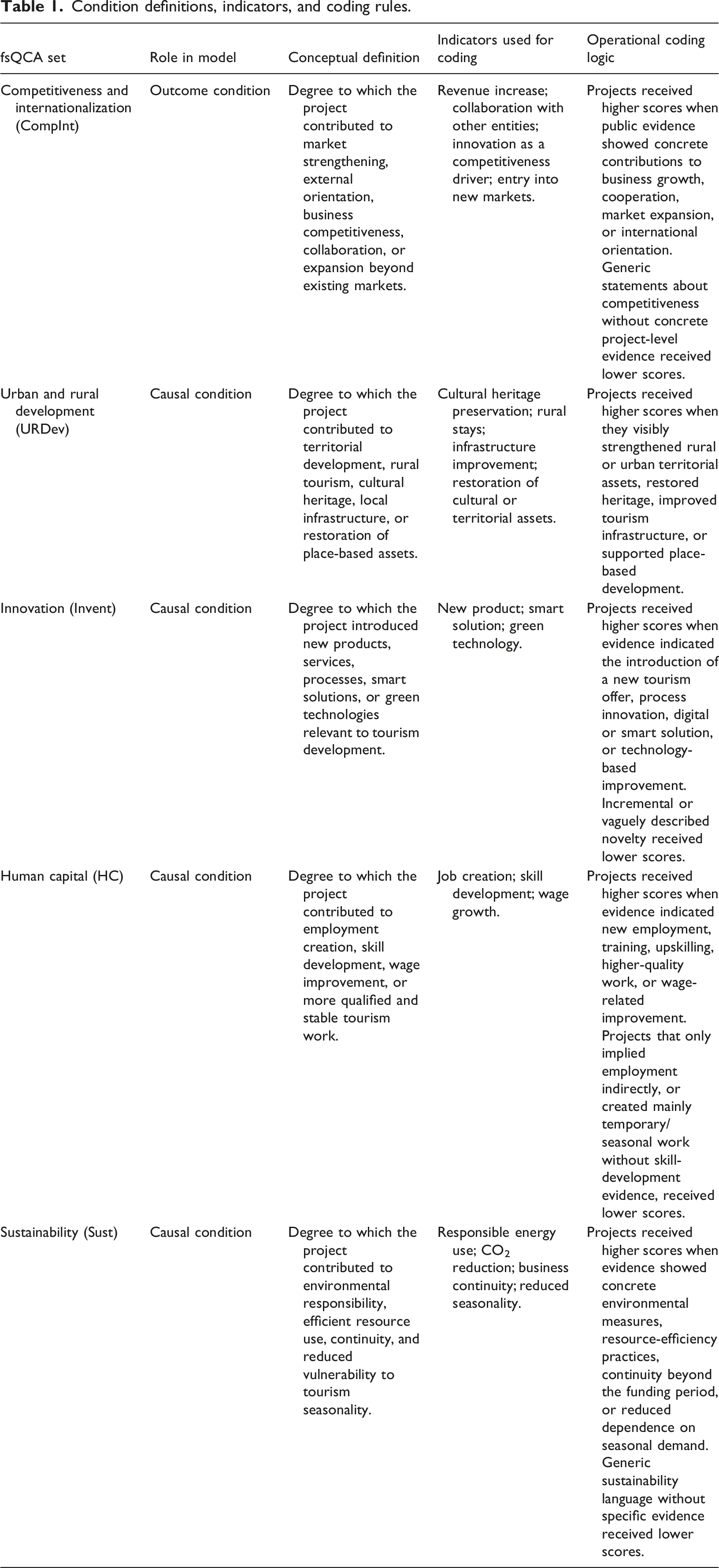
The analytical procedure followed four steps. First, the policy objectives of Alentejo, 2020 were translated into a set of theoretically and programmatically relevant conditions. Second, each condition was operationalized through observable indicators derived from the official project database, project descriptions, project websites, and publicly available administrative information. Third, each indicator was coded using a standardized 0–4 scale. Fourth, the condition-level raw scores were calibrated into fuzzy-set membership scores for the fsQCA.
The coding framework was constructed from the strategic priorities of Alentejo, 2020 and from the literature on tourism development, regional competitiveness, innovation, human capital, and sustainability. The broader measurement model included several dimensions: competitiveness and internationalization, urban and rural development, innovation, human capital, social inclusion, environmental performance, sustainability, and accountability. For the fsQCA, the analysis focused on the five dimensions most directly connected to the research question and to the core strategic objectives of the program: competitiveness and internationalization, urban and rural development, innovation, human capital, and sustainability. Competitiveness and internationalization was used as the outcome condition, while urban and rural development, innovation, human capital, and sustainability were treated as causal conditions.
Condition definitions, indicators, and coding rules.
Indicator-level coding scale.
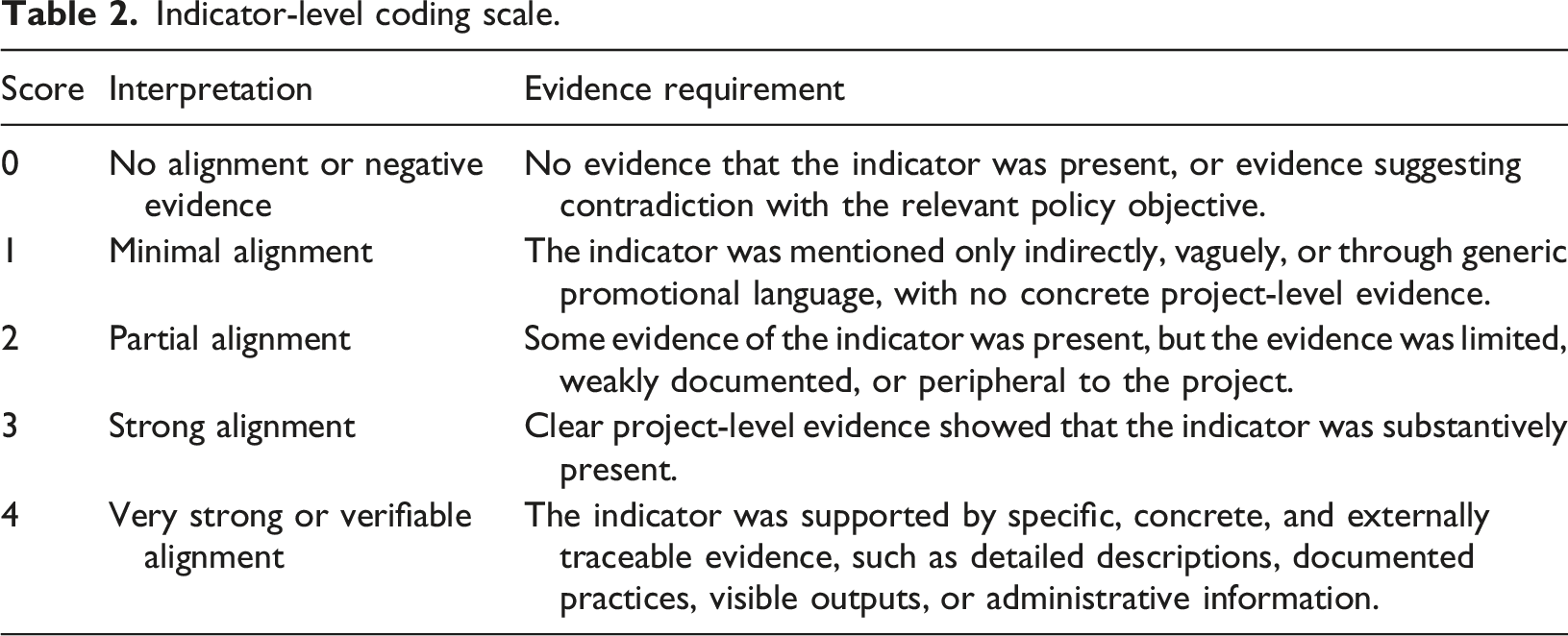
For each fsQCA condition, the raw condition score was calculated from the coded indicators belonging to that condition. Each indicator was coded from 0 to 4, and the condition-level raw score was computed as the arithmetic mean of the relevant indicators. This procedure produced condition scores ranging from 0 to 4. Indicators were weighted equally because the purpose of the study was to assess the degree of alignment with each policy dimension rather than to impose an ex ante hierarchy among sub-indicators.
The treatment of missing or ambiguous information followed a conservative logic. When no reliable evidence was available for a given indicator and the absence of information could not be interpreted substantively, the item was treated as missing and flagged for verification. However, when the absence of evidence was meaningful in relation to the project’s public representation — for example, when neither the official project description nor the project website mentioned training, environmental practices, internationalization, or innovation — the indicator was coded as 0. This distinction was important because the study evaluates publicly observable alignment with policy objectives, not audited internal performance.
The calibration of raw scores into fuzzy-set membership scores followed the direct calibration approach recommended in fsQCA research. Three qualitative anchors were used for each set: full membership, the crossover point, and full non-membership. Because the raw condition scores were constructed on a 0–4 scale and because the empirical distribution varied across conditions, percentile-based anchors were used. The 95th percentile was used as the threshold for full membership, the 50th percentile as the crossover point, and the 5th percentile as the threshold for full non-membership. This procedure made the calibration sensitive to the distribution of the observed cases while preserving the theoretical interpretation of set membership.
Raw calibration thresholds for fsQCA conditions.
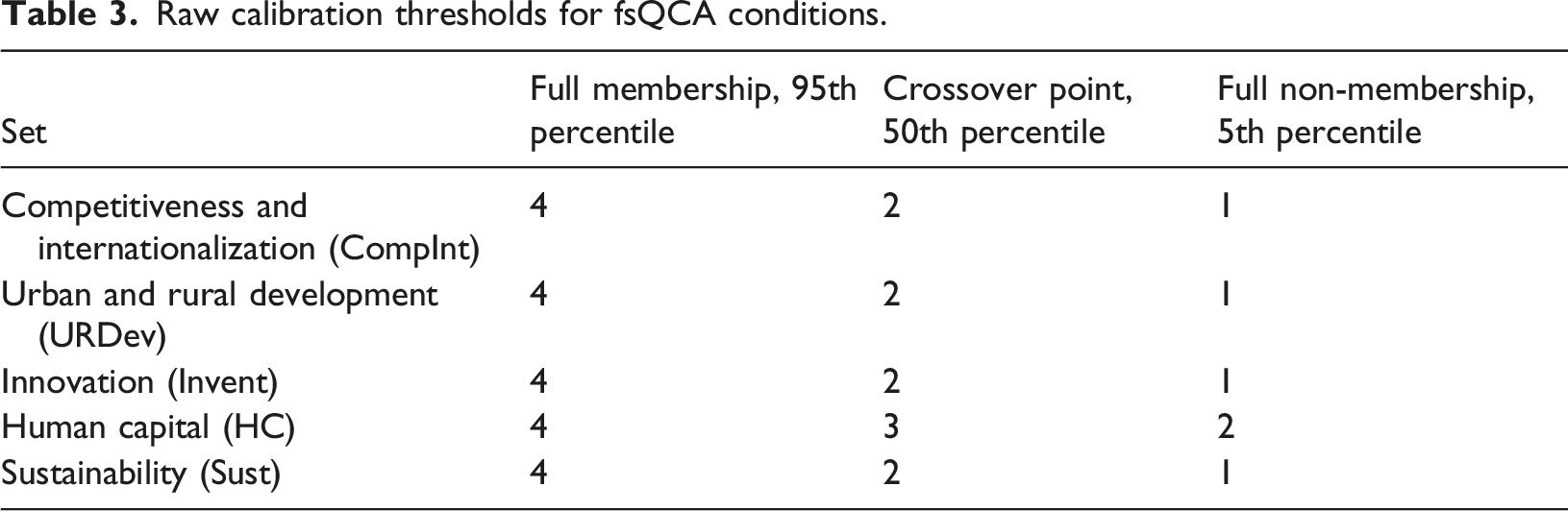
This calibration procedure transformed the raw condition scores into fuzzy-set membership values ranging from 0 to 1, where values closer to 1 indicate stronger membership in the set and values closer to 0 indicate weaker membership. The crossover point of 0.5 represents the point of maximum ambiguity, where a case is neither more in nor more out of the set. The calibrated scores were then used to construct the truth table and conduct the necessity and sufficiency analyses.
To illustrate the coding logic, consider a project that restored a rural heritage building, created a new tourism accommodation offer, and documented collaboration with local producers. Such a project would receive relatively high scores for urban and rural development and potentially for competitiveness and internationalization if the evidence showed market expansion or collaborative business development. However, if the same project provided no evidence of training, upskilling, wage growth, or stable employment, its human capital score would remain low. Similarly, sustainability was not inferred from the use of rural or nature-based language alone; it required evidence of concrete practices such as energy-efficiency measures, CO2 reduction, resource conservation, continuity beyond the funding period, or reduced seasonality.
fsQCA methodology
To strengthen the Validity of the model, an fsQCA test was conducted. This type of analysis is used to analyze case and variable-oriented quantitative data. It examines how combinations of variables produce a specific outcome, rather than isolating each variable in isolation (Ragin, 2008). The qualitative comparative analysis tries to combine both qualitative and quantitative data aspects (Ragin, 2014). This strategy, combined with the use of a fuzzy set, establishes a connection between data analysis and the underlying theory. They are therefore mainly used in the analysis of theoretical concepts or case-oriented studies, which strictly fit this research (Ragin, 2008). What is specific to this analysis is that it examines the impact of different combinations of conditions on a specific outcome, rather than assessing each variable individually.
The analysis was conducted using the created measurement model creating: - URDev: urban and rural development - Invent: innovation - HC: Human capital - Sust: sustainability - CompInt: Competitiveness and internationalization.
CompInt was chosen as the key component of achievement, therefor the outcome variable. the analysis configures which components are correlated in which way to the outcome of CompInt. Further details about the measurement are described in the supplemental materials.
After the calibration procedures described in the previous section, the next step is to construct a truth table to identify inconsistencies and determine configurations. The truth table was constructed using a minimum case-frequency threshold of 2, which is appropriate for a medium-N fsQCA design and reduces the risk of interpreting configurations represented by isolated cases. The initial raw consistency threshold for sufficiency was set at 0.80. In addition, a PRI consistency threshold of 0.70 was applied to reduce the risk of accepting configurations that were simultaneously consistent with both the presence and the absence of the outcome. The use of PRI consistency is particularly important in fuzzy-set analysis because high raw consistency alone may conceal contradictory subset relations.
Three solutions were generated: complex, parsimonious, and intermediate (Greckhamer et al., 2018). In the revised analysis, the intermediate solution is used as the primary basis for interpretation. This choice reflects the fact that the intermediate solution provides a theoretically informed balance between the empirical detail of the complex solution and the stronger simplifying assumptions of the parsimonious solution (Pappas and Woodside, 2021). The parsimonious solution is used to identify core conditions, while the complex solution is reported as a conservative reference. Conditions appearing in both the parsimonious and intermediate solutions are interpreted as core conditions, whereas conditions appearing only in the intermediate solution are interpreted as peripheral (Fiss, 2011).
To assess the stability of the findings, a sensitivity analysis was conducted by lowering the raw consistency cut-off from 0.80 to 0.75 while keeping the same frequency threshold and PRI consistency threshold. This robustness check produced no changes in the identified configurations, indicating that the reported solution is not an artefact of the selected 0.80 consistency threshold. The stability of the configurations under this alternative threshold strengthens confidence in the empirical interpretation of the fsQCA results.
Results and discussion
Results from fsQCA
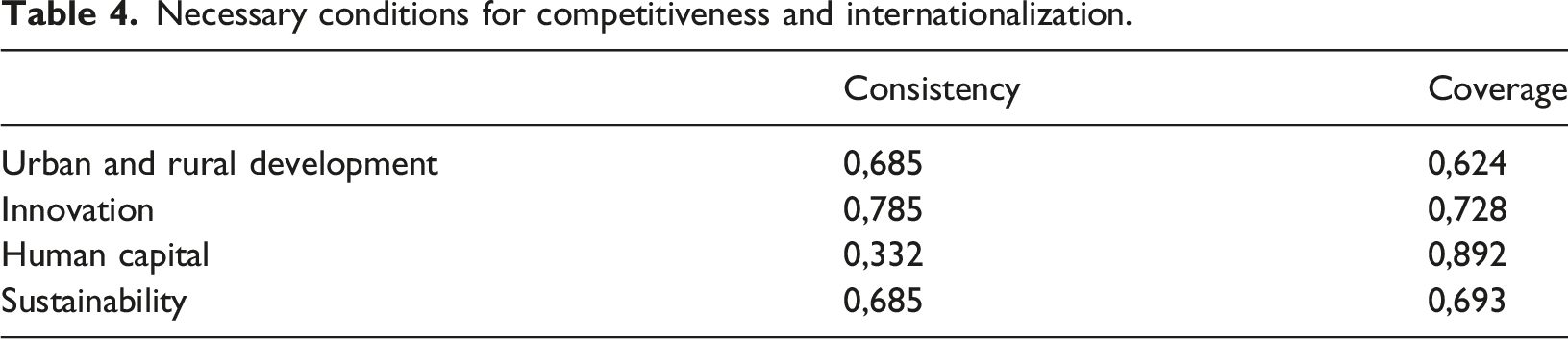
The first step in the fsQCA procedure was to assess whether any single condition was necessary for the presence of competitiveness and internationalization. In fsQCA, a condition is usually considered necessary when its consistency reaches or exceeds 0.90 (Ragin, 2000). Necessity analysis therefore evaluates whether cases displaying the outcome are consistently a subset of a given condition.
Necessary conditions for competitiveness and internationalization.
Necessary conditions for the absence of competitiveness and internationalization.
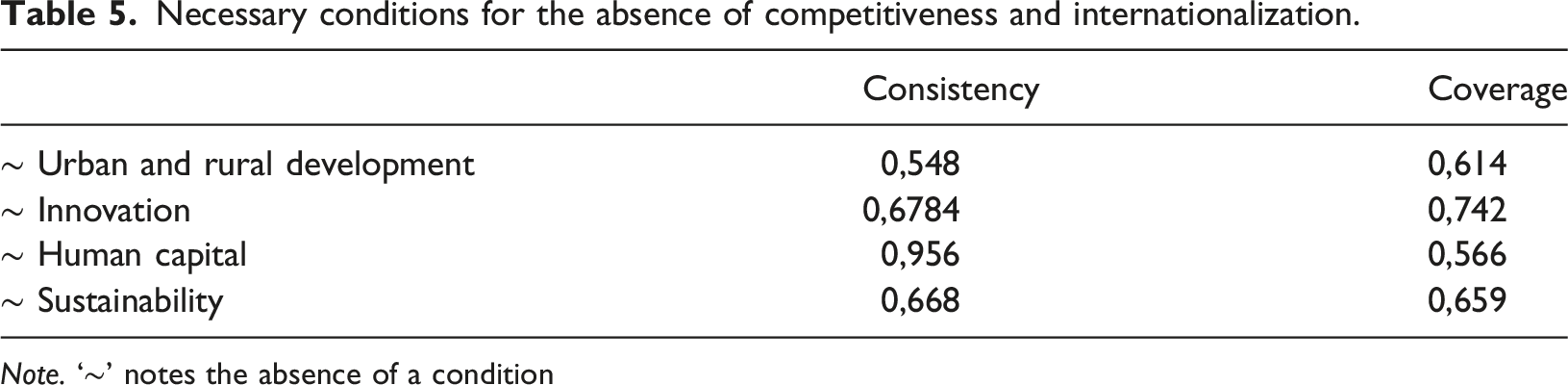
Note. ‘∼’ notes the absence of a condition
The results in Table 5 provide a clearer interpretation of the role of human capital. The absence of human capital reaches the necessity threshold for the absence of competitiveness and internationalization, with a consistency value of 0.956. This means that projects lacking competitiveness and internationalization are very consistently also characterized by weak or absent human-capital alignment. In other words, the absence of human capital appears to be a necessary condition for failure to achieve competitiveness and internationalization in this dataset.
However, this result should be interpreted with caution. The coverage value for ∼Human capital is 0.566, which indicates moderate empirical relevance. Thus, although the absence of human capital is highly consistent with the absence of the outcome, it does not by itself explain all unsuccessful cases. The finding should therefore not be read as evidence that human capital alone guarantees success. Rather, it suggests an asymmetric relationship: strong human capital is not necessary for competitiveness and internationalization, but weak human-capital alignment is a systematic feature of projects that fail to display competitiveness and internationalization.
This asymmetry is theoretically meaningful. It indicates that employment quality, skill development, and wage-related improvement may function less as direct drivers of competitiveness than as enabling conditions whose absence constrains project success. In the context of tourism funding, projects may achieve some competitiveness through innovation, market expansion, or territorial assets, but projects that lack any meaningful human-capital component appear unlikely to achieve strong competitiveness and internationalization outcomes.
Effect of variable groups combined.
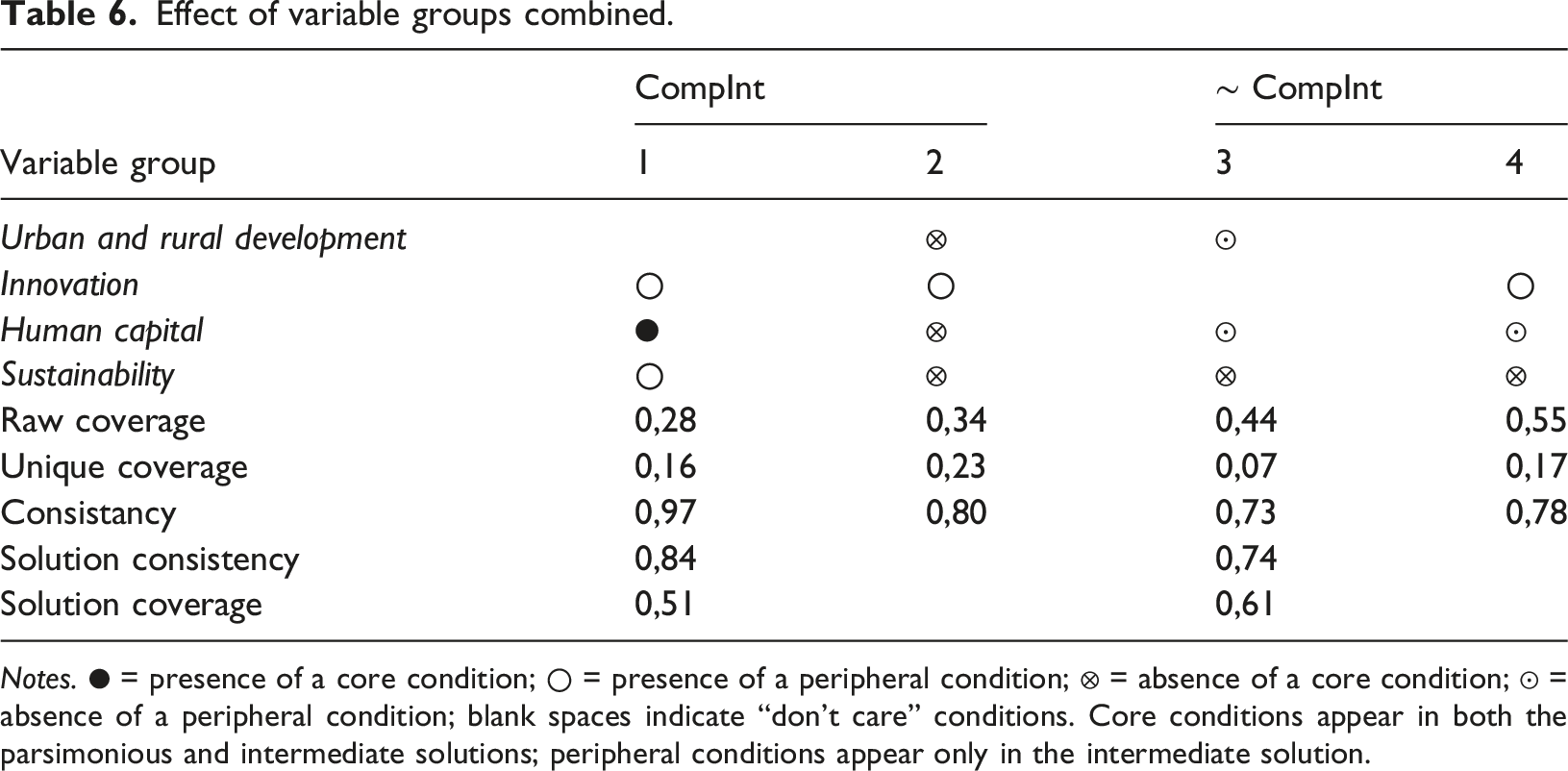
Notes. ● = presence of a core condition; ○ = presence of a peripheral condition; ⊗ = absence of a core condition; ⊙ = absence of a peripheral condition; blank spaces indicate “don’t care” conditions. Core conditions appear in both the parsimonious and intermediate solutions; peripheral conditions appear only in the intermediate solution.
Discussion
The evaluation of the Alentejo, 2020 projects reveals a complex picture of partial alignment, with clear strengths in some areas and significant weaknesses in others. The program was most effective in fostering rural and community-centric tourism. Projects focused on cultural heritage preservation, restoration, and rural stays scored consistently high, aligning with theories of embeddedness (Arici et al., 2023) and participatory governance (Dredge, 2006). This success in leveraging local assets reflects a strong connection to the region’s identity. However, these investments were often concentrated around larger urban centers rather than the more remote rural areas most in need of development to combat depopulation.
Sustainability was the weakest dimension of publicly observable alignment. While Alentejo, 2020 and wider EU policy frameworks place sustainability at the centre of regional development, the project-level evidence analyzed in this study suggests that environmental objectives were less concretely documented than economic, territorial, or market-oriented objectives. Many projects used sustainability-related language, but fewer provided specific and traceable evidence of environmental measures such as energy-efficiency improvements, CO2 reduction, resource conservation, biodiversity protection, or reduced seasonality. This does not allow us to conclude that projects engaged in greenwashing in the strict sense, since actual environmental practices were not independently verified. It does, however, indicate a risk of symbolic sustainability alignment, where sustainability is present as a policy vocabulary or promotional claim but is weakly supported by observable project-level evidence. From a policy-design perspective, this suggests that sustainability criteria may have functioned more as aspirational evaluation categories than as binding, evidence-based requirements.
The roles of innovation and human capital were more intricate and should also be interpreted in light of the study’s evidence base, which captures publicly observable project claims and documentation rather than direct organizational outcomes. Innovation manifested primarily as experience-based and process-oriented, such as creating new tourist experiences, rather than technological advancements, which aligns with the region’s low R&D rates (Tidd and Bessant, 2018; Coad et al., 2022). While this form of innovation is valuable, the lack of digital transformation represents a missed opportunity. Human capital presented a paradox; the fsQCA analysis confirmed its critical importance, as its absence was a strong predictor of failure. Yet, the program’s impact was undermined by the prevalence of seasonal, low-skilled jobs, which do little to address long-term wage growth or create stable employment, reflecting the challenges of seasonal tourism (Jolliffe and Farnsworth, 2003). Ultimately, the findings show that while individual objectives like community involvement were met, the program struggled to achieve the synergistic combination of innovation, human capital, and sustainability that the fsQCA results identified as the most consistent pathway to success.
An integrative evaluation framework
To create a better understanding of the measurements and analytical methods used, combined with the outcome of the results, a project evaluation framework is created (Figure 1.). Project analysis framework.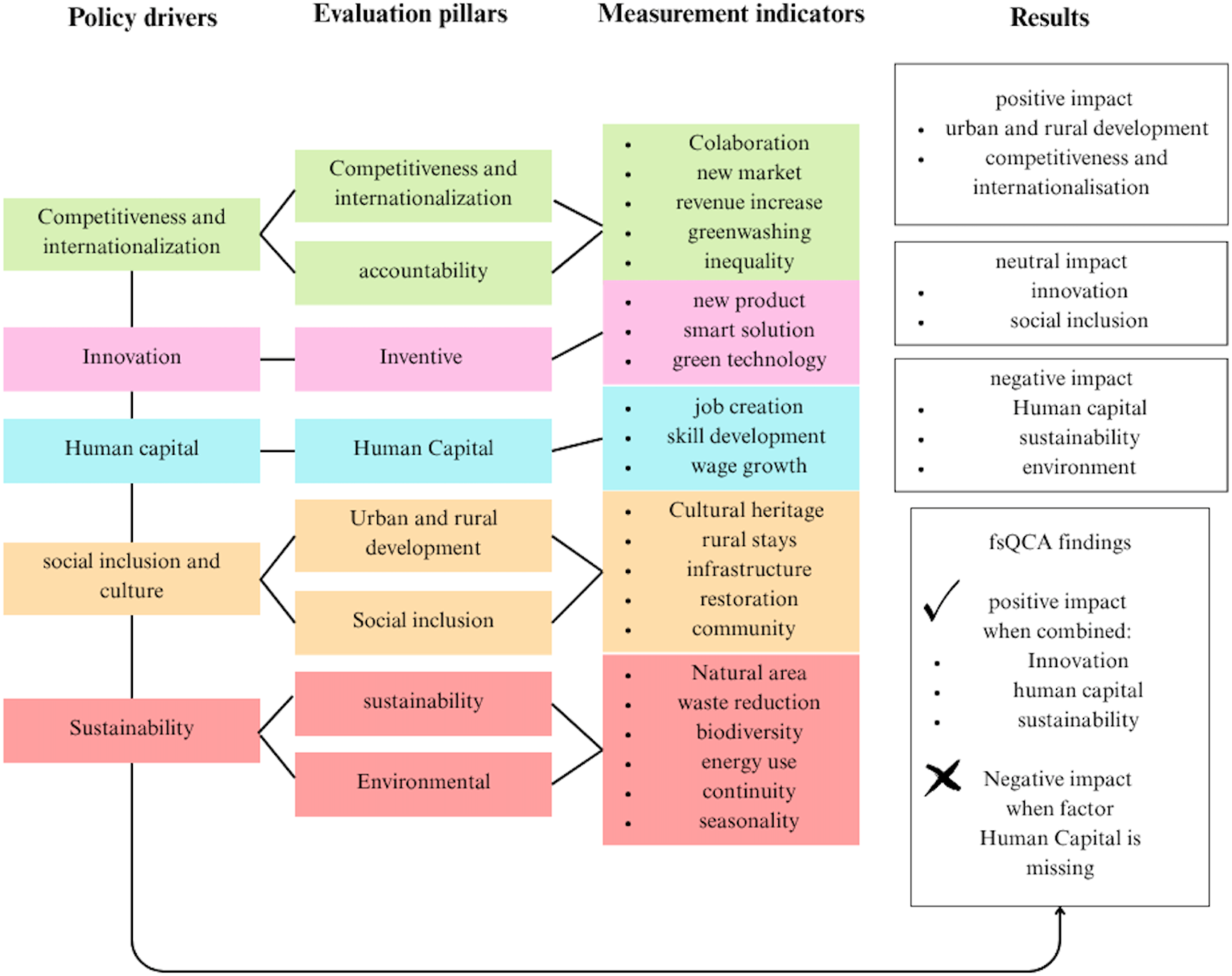
Policy drivers outline the primary subjects of the funding, which were the subjects used in the fsQCA analysis. The positive and negative impact of these findings is depicted in the results column under fsQCA findings. These policy findings align with the evaluation pillars, which are the primary categories used in the measurement table. To create a detailed scoring possibility within the objectives, the pillars were divided into separate measurement indicators. The results of the measurement table are categorized as active, neutral, and passive, depending on the final scoring within the scale.
Systemic challenges in program implementation
The project-level analysis revealed several issues that are relevant for interpreting the alignment between Alentejo, 2020 objectives and funded tourism projects, although these observations should be treated cautiously because the study did not conduct financial audits, administrative interviews, or longitudinal tracking of firm performance. Some projects showed limited publicly observable continuity after the funding period, either because the associated company or project website was inactive or because the funded activity was no longer clearly visible in the public domain. This does not allow us to conclude that the project failed financially or operationally. However, it suggests that future evaluations would benefit from longitudinal monitoring of project survival, activity continuity, and regional economic contribution after the end of the funding period. Some cases appeared to involve similar project descriptions or overlapping project purposes, while others were difficult to classify neatly within a single thematic axis. Rather than treating these cases as confirmed evidence of duplicated funding, procedural failure, or misallocation, the revised interpretation is more cautious: they indicate the need for greater transparency in how project distinctiveness, additionality, and cross-cutting objectives are assessed. Because tourism projects often combine cultural, environmental, territorial, and economic objectives, classification ambiguity can create difficulties for evaluation. Future funding schemes should therefore make cross-cutting project classifications more explicit and allow evaluation frameworks to recognize multi-objective projects. In a small number of cases, public information suggested that the funded activity or firm presence may have become less clearly tied to Alentejo over time. The study cannot establish whether this reflects relocation, expansion, website restructuring, or changes in public communication. Accordingly, this observation is treated as an indication that future monitoring should include clearer post-funding evidence of regional embeddedness and territorial continuity.
Policy implications and recommendations
The findings offer cautious implications for the design and evaluation of tourism funding programmes in peripheral regions with characteristics similar to Alentejo. Although the findings are specific to Alentejo, 2020, they may be analytically relevant for comparable peripheral regions where tourism funding seeks to balance competitiveness, innovation, human capital, territorial development, and sustainability. The results suggest that conventional evaluation frameworks may benefit from complementing indicator-based assessment with configurational approaches that examine how multiple conditions combine at the project level (Perechuda, 2022). Consequently, future programs should shift from isolating variables to assessing recipes, recognizing that successful alignment requires the simultaneous presence of innovation, human capital, and sustainability, rather than checking these boxes in isolation (Ragin, 2008).
To reduce the risk of symbolic sustainability alignment, ex-ante evaluation criteria should require applicants to provide concrete and measurable environmental evidence rather than relying mainly on general sustainability narratives. Funding applications could require specific indicators, such as expected energy savings, water-use reduction, CO2 reduction, waste-management practices, biodiversity protection measures, or mechanisms to reduce seasonality.
Regarding ex-post monitoring, the focus must shift from quantitative metrics, such as job creation counts, to qualitative indicators of human capital development. Since the absence of human capital is a primary driver of failure, monitoring mechanisms should track the retention and upskilling of workers to combat the precarity of seasonal employment (Jolliffe and Farnsworth, 2003).
Conclusion
This research set out to evaluate the publicly observable alignment between the strategic objectives of the Alentejo, 2020 programme and the tourism-related projects funded under it. The findings reveal partial and uneven alignment in the way projects are represented in public administrative records, project descriptions, and project or company websites. Projects were more visibly aligned with community engagement, territorial development, and market-oriented objectives than with concrete sustainability and innovation objectives. These findings should not be interpreted as evidence that projects actually succeeded or failed in operational, environmental, or financial terms. Rather, they show that the public evidence available for these projects provides stronger support for some programme objectives than for others. The fsQCA results were particularly useful in showing that no single publicly observable condition was sufficient to explain stronger competitiveness and internationalization alignment. Instead, the combination of innovation, human capital, and sustainability appeared as the most consistent pathway to stronger public alignment, while the absence of human capital was associated with the absence of such alignment.
The first theoretical contribution is to show how a configurational approach can help unpack project-level alignment in complex public investment settings. By employing fsQCA, this study moves beyond the limitations of traditional, variable-based evaluation models that dominate literature. Results provide project-level evidence for the relevance of complexity and equifinality in tourism funding evaluation, showing that competitiveness and internationalization are associated with combinations of conditions rather than with isolated factors. This adds support to critiques of purely linear evaluation approaches and highlights the value of frameworks that recognize multiple pathways to stronger alignment with strategic objectives. In doing so, the study contributes to debates on EU regional funding evaluation by showing how configurational methods can complement conventional assessment approaches, while remaining bounded to the Alentejo, 2020 case and to the public project evidence analyzed.
Second, the study contributes to debates on sustainability and innovation in regional tourism development by showing a decoupling between the prominence of sustainability in policy discourse and the weaker visibility of concrete environmental measures in project-level public evidence. Rather than claiming to verify greenwashing, the study identifies a risk of symbolic sustainability alignment in publicly funded tourism projects. This finding suggests that theories of sustainable regional development should pay closer attention to how sustainability objectives are translated into measurable project requirements, and to the role of economic imperatives in shaping how environmental commitments are represented.
Third, this research contributes to human capital theory in tourism contexts. While confirming the centrality of human capital (Becker, 2002), our findings highlight a human capital paradox: its absence is detrimental to success, yet its presence through seasonal, low-skilled employment does not necessarily fulfill the long-term development goals of wage growth and stable employment (Jolliffe and Farnsworth, 2003). This suggests that for tourism-dependent regions, human capital theories must be adapted to account for the structural challenges of seasonality and underemployment. The findings should be interpreted as those of a regional case study rather than as statistically generalizable evidence about EU tourism funding as a whole. Their broader relevance lies in analytical transferability: the study identifies configurations and evaluation challenges that may be useful for understanding comparable peripheral regions, but further comparative research is needed before broader claims can be made.
A central implication of this study is therefore methodological. Publicly available project descriptions are valuable for analysing how funded initiatives are represented, justified, and aligned with programme priorities, but they cannot replace ex-post performance evaluation based on audits, longitudinal monitoring, interviews, or objective outcome indicators. For this reason, the conclusions are deliberately framed in terms of publicly observable alignment and symbolic sustainability alignment, rather than verified funding effectiveness, environmental performance, or organizational impact.
Future research should build on these theoretical foundations, employing longitudinal studies to track how successful configurations evolve over time and conduct comparative analyses across different EU funding programs to test the generalizability of these complex pathways.
Finally, in terms of practical policy design, these theoretical insights translate into three concrete recommendations for future EU funding cycles. First, regarding formulation, funding calls must abandon siloed objectives; instead of funding innovation or sustainability in isolation, criteria should prioritize projects that demonstrate a configurational approach, integrating upskilling with process innovation. Second, to improve ex-ante evaluation, managing authorities should require quantifiable environmental commitments and post-funding verification mechanisms, reducing reliance on self-reported or promotional sustainability claims.
Supplemental material
Supplemental material - Evaluating EU regional tourism funding through a fuzzy-set analysis
Supplemental material for Evaluating EU regional tourism funding through a fuzzy-set analysis by Fay Klomp and Alvaro Dias in Tourism Economics
Footnotes

Funding
The authors disclosed receipt of the following financial support for the research, authorship, and/or publication of this article: This work was supported by the Fundação para a Ciência e a Tecnologia (UID/315/2025).
Declaration of conflicting interests
The authors declared no potential conflicts of interest with respect to the research, authorship, and/or publication of this article.
Supplemental material
Supplemental material for this article is available online.
Author biographies
References
Supplementary Material
Please find the following supplemental material available below.
For Open Access articles published under a Creative Commons License, all supplemental material carries the same license as the article it is associated with.
For non-Open Access articles published, all supplemental material carries a non-exclusive license, and permission requests for re-use of supplemental material or any part of supplemental material shall be sent directly to the copyright owner as specified in the copyright notice associated with the article.
