







Abstract
Communities and regions throughout the United States are investing in the development and enhancement of requisite resources to leverage the growth of mountain bike tourism. However, an understanding of mountain bike tourists’ demographics, travel patterns, trip behaviors, and expenditures is lacking, thereby hampering product and market development efforts. The purpose of this study was to explore the demographics, travel preferences, and travel behaviors of US mountain bike tourists. Through an online survey hosted on a popular mountain bike website, a sample of US mountain bike tourists (N = 810) was gathered. Data revealed that mountain bike tourists are predominately middle-aged affluent males who take an average of five short-break trips annually of about 400 miles per trip during the spring and summer months, and in the process spend approximately US$400 per trip. Stemming from the results, implications for mountain bike tourism development are discussed.
Keywords
Introduction
Beginning in the late 1970s from a risky experiment in the hills of Marin County in northern California the ‘fat tire’ or mountain bicycle was created, it has since developed into a global sport (Kelly, 2014), with widely recognized tourism destinations such as Whistler, British Columbia; Moab, Utah; and Finale Ligure, Italy. Mountain bikers travel to these iconic destinations and others in search of diverse experiences and, as a result, generate a wide range of positive impacts on local economies (e.g. Fix and Loomis, 1997; Schaefers and Buckley, 2006). With outdoor recreation increasingly becoming commercialized and offered in tourism destinations, it is clear that adventure tourism products have grown rapidly in both size and scope in recent years (UNWTO, 2014). Concomitantly, in the United States, outdoor recreational cycling in general has grown at an average annual rate of 1.13% from 2006 to 2012, from 39.7 million to 42.3 million participants (OIA, 2013). Specifically, mountain biking participation during that time outpaced overall cycling growth with an annual average growth rate of 2.5%, from 6.7 million to 7.7 million participants (OIA, 2013). The economic impact of the US cycling industry is substantial and has been estimated at US$81 billion annually, of which US$71 billion is tourism-related supporting over three quarters of a million jobs (OIA, 2012).
Given the indicators presented above, mountain bike tourism is clearly a growth market within the United States. Moreover, a growing number of communities and regions in the United States are investing in development and enhancement of requisite resources to attract mountain bike tourists in order to leverage this growing popularity of mountain biking (Freeman and Thomlinson, 2014). However, published knowledge of the characteristics, travel patterns, trip behaviors, and activity preferences of mountain bike tourists is anecdotal at best (for a limited exception, see Gajda, 2008). Research to date on mountain bike travel is limited to industry reports and minimal academic studies that are either based on visitor spending (e.g. Boozer and Self, 2012; Buning et al., 2016) or provide limited anecdotal findings often without delineating between locals and tourists (e.g. Bowker and English, 2002). Such information is crucial for destinations and supply-side stakeholders to inform prudent strategic decisions around business model composition; tourism product development and marketing; and ancillary services designed to meet the needs of mountain bike tourists (Freeman and Thomlinson, 2014; Gibson, 2005). While research into cycling tourism more broadly is now firmly established within tourism and leisure studies literature (Lamont, 2014b), there has been little attention paid by scholars to specifically understanding demand-side characteristics of mountain bike tourism. Consequently, the overarching purpose of this study is to contribute timely and warranted exploratory insights into the demographics and travel behavior characteristics of US mountain bike tourists, with the view to providing a platform for future research.
Literature review
Cycling tourism
Cycling tourism has established itself at the intersection of sport and adventure tourism as a tourism segment worthy of scholarly investigation. To date, a range of contexts and sub-groups have been investigated including mid-to-later in life cycling tour participants (Gibson and Chang, 2012), charity event participants (Filo et al., 2008), amateur road racing cyclists (Bull, 2006), and spectators at major professional cycling races (Lamont, 2014a). However, little attention has been paid to travel to participate in mountain biking. Much of the cycling tourism literature to date has focused on cycling-specific and broader destination attributes necessary to attract cycling tourists. These contextual variables have been examined from the perspective of host/supply (Lamont and Buultjens, 2011; Lee and Huang, 2014) and visitor/demand (Deenihan and Caulfield, 2015; Lee et al., 2014). However, a recent trend in cycling tourism research has focused on the travel preferences and behaviors of cycle tourists, utilizing a variety of methods (Buning and Gibson, 2016a).
Literature addressing cycling tourists’ travel preferences and behaviors has largely focused on road-based cycling tourism. A seminal study by Ritchie (1998) found that touring cyclists in New Zealand preferred campgrounds and hostels for their accommodations; sought alternate routes to avoid traffic and experience the natural environment; and ranked road safety, weather, scenery, quality of driving, traffic, and signage as the most important factors influencing their destination selection. Recent studies have demonstrated that segmenting cycle tourists is viable based on variables such as gender, age/life stage, skill, experience, cycle frequency—involvement profile, specialization, and regularity of travel (Chen and Chen, 2013; Gibson and Chang, 2012; Ritchie et al., 2010). However, little attention has been paid to date to understanding the travel preferences and behaviors of mountain bike tourists, despite such insights being crucial to the development of prudent strategic plans underpinning mountain bike tourism development initiatives (Freeman and Thomlinson, 2014).
Bull (2006) found that a majority of road racing cyclists in the United Kingdom took part in events requiring only a day trip or overnight stay. Only one-fifth indicated they incorporate vacations into cycling trips, while half indicated that the destination was not important in influencing their travel decisions. Similarly, Kulczycki and Halpenny (2014) found that among racing cyclists, competition and event infrastructure were more important relative to destination elements (i.e. tourism infrastructure and scenery). In the only investigation of mountain bike racers' preferences to date, Getz and McConnell (2011) found the highest rated event preferences were organization, a challenging course, scenery, and an informative website. From this work, it is clear that cycling tourists are not a homogeneous market and there is merit in exploring nuances between different subgroups of cyclists. Indeed, the travel preferences and associated trip behaviors among US-based mountain bike tourists are yet to be specifically examined, an oversight by scholars given the growth indicators of this market that have emerged recently.
Mountain bike tourism
For effective market segmentation to occur, definitional directness in understanding how the cycling tourism segment under investigation is distinct from other tourists is necessary. Lamont (2009) contributed a comprehensive discussion of defining cycling tourism in the broad sense. Drawing upon a critique of existing published definitions, Lamont (2009) proposed parameters inclusive of a wide range of cycling modes (i.e. including travel for mountain biking) such as active participation in, or, passive observation of cycling events as the primary purpose of the trip; minimum trip duration; and minimum distance from an individual’s home region to ensure consistency in measurement. Other issues that have been considered in defining cycling tourism have included the competitive versus noncompetitive nature of cycling (Bull, 2006) and participating in the context of leisure and/or recreation.
Given the lack of scholarly attention paid to mountain bike tourism to date, there has not been a thorough debate regarding an agreeable definition. Common characterizations of mountain biking is that the activity normally occurs on natural surfaces and/or at minimum away from vehicular traffic, that is, on trails and gravel/dirt/unpaved roads. Further differentiation is evident in the equipment used for mountain biking, notably larger tires and suspension, to traverse rough surfaces and obstacles. For the purposes of this study, and notwithstanding the characteristics of mountain biking discussed above, we adopt the definition proposed by Moularde and Weaver (2016) who define mountain bike tourism as, ‘trips of at least 24 hours away from a person’s home environment for which active participation in mountain biking for recreational purposes is the primary motivation and determining factor in destination choice’ (p. 3).
Demographics, travel behaviors, and travel preferences of mountain bike tourists
The demographic range and differences in travel patterns among cycling tourists have prompted researchers to identify cycle tourism market segments as a means to understand preferences and behaviors, insights that are invaluable to (potential) cycling destinations in determining resource allocation (Arnold et al., 2012). Although several studies have contributed market profiles for cycle tourists generally (e.g. Bull, 2006; Ritchie et al., 2010), only a few have examined mountain bike tourists specifically (Gajda, 2008; Getz and McConnell, 2011; Green, 2003). Gajda (2008) evaluated the travel patterns, motivations, and demographics of members of the International Mountain Bike Association’s UK branch (N = 99). Nearly all were male (97%), aged 30–49, with higher levels of education. Similarly, Green’s (2003) and Getz and McConnell’s (2011) samples were predominately male with above average education and income levels. In describing their sample (N = 128), Getz and McConnell (2011) stated ‘it was surprising to find an average age of 37, and this is a point where event tourism appears to differ from the sport in general’ (p. 330), as age presented higher than in other studies up to that point (i.e. Gajda, 2008; Green, 2003). Similar findings are also reported by Buning et al. (2016) on a study of a portfolio of mountain bike events.
Other studies have examined user preferences around recreational mountain biking, albeit with little distinction between tourists and local residents within their samples. Lamont (2009) argued that failure to do so makes it ‘impossible to measure accurately the size, economic value, and benefits and impacts of the bicycle tourism market’ (p. 7). However, these studies do provide insight into a general profile of mountain bikers. Bowker and English (2002) found that most of their sample constituted White males (71.5%), with 96.5% of the overall sample identifying as White. Education levels were quite high, with only around 10% of respondents claiming no college education, while the average age of the sample was 34.1 years, with 80% between 20 years and 49 years. Income levels were relatively high as 60% of the sample reported earning US$50,000 or more annually. Similarly, Hollenhorst et al. (1995) and Cessford (1995) found that mountain bikers tended to be White males around 30–35 years with above average education and income. Indeed, this image of mountain biking being a male-dominated sport is so pervasive that it has been found to permeate media coverage and development of mountain bike products, despite a growing female market (Huybers-Withers and Livingston, 2010).
Limited published studies have sparked a fledgling understanding of mountain bike tourists’ travel motivations and preferences. Utilizing a sample collected from New Zealand and the United Kingdom, Taylor (2010) explored push and pull factors associated with mountain biking. Push factors primarily included physical exercise, thrill/escape, skill in relation to the difficulty/risk of the trail, and meeting a challenge. Participants also noted sociability among mountain bikers created a positive orientation toward the activity, while peer influence affected the timing and location of rides. Regarding pull factors, the study found site attributes were wide ranging from fast flowy single track trails to nearby amenities. Another study utilizing a sample collected in New Zealand by Moularde and Weaver (2016) used the serious leisure framework to explore destination attractiveness. They found that the quality of trails and riding opportunities are at the core of mountain bikers’ destination preferences, but for ‘serious’ riders, the destinations are evaluated as they seek to collect new experiences that align with their skill level.
Data regarding mountain bike tourists’ travel patterns are also scarce. Academic research examining the travel behavior of mountain bike tourists is complemented by industry-planning documents (e.g. Forest Commission Scotland, 2009). Previous academic studies reported average mountain bike-specific trip durations of between 3.7 nights and 5.82 days (Bowker and English, 2002; Buning et al., 2016; Green, 2003). Other findings include accommodation choice of 45% camping, 40% small inns/lodges, and 8% hotels (Green, 2003), although such preferences may be constrained by the properties available.
The elementary nature of extant knowledge pertaining to mountain bike tourists’ travel behaviors and preferences reviewed above points to a clear need for additional, more rigorous research. This article is timely and significant as it seeks to develop a profile of the travel behavior and demographic background of US mountain bike tourists by drawing upon a considerably larger and more comprehensive sample than previous, related studies. As Gibson (1998) argues, ‘As with any research domain, the first need is to describe’ (p. 56) before a field may move on to explanatory research. Hence our purpose is to provide an exploratory, descriptive profile of US mountain bike tourists and from these foundational insights, signpost directions for future, more theoretically informed research. While our primary intention in this article is to develop a descriptive profile of US mountain bike tourists’ demographics and travel preferences and behaviors, we must bear in mind the extensive body of leisure studies research demonstrating that leisure participation and preferences can change across the human life course (e.g. Iso-Ahola et al., 1994; Kuentzel and Heberlein, 2008). Thus, the following research questions (RQs) served as a guide for the study.
Methodology
Research design and instrumentation
Due to the paucity of published scholarly research addressing mountain bike tourism, this study adopted an exploratory, descriptive research design incorporating an online questionnaire. Neuman (2006) advocates an exploratory research design where the intention is to ‘examine a little understood issue or phenomenon to develop preliminary ideas and move toward refined research questions by focusing on the “what” question’ (p. 33), while descriptive research designs are useful for presenting ‘a picture of the specific details of the situation, social setting, or relationship’ (p. 35). These contextually appropriate situations for deploying exploratory, descriptive research designs advocated by Neuman were reflected in the present study, in which the overarching aim was to develop a descriptive profile of an under-researched phenomenon, that being mountain bike tourism in the United States.
Neuman (2006) argues that survey questionnaires are a suitable tool for collecting descriptive information regarding people’s behaviors and characteristics relating to a particular social phenomenon. Therefore, to explore the demographics, travel behavior and travel preferences of US mountain bike tourists, a questionnaire was developed consisting of both closed and open-ended questions in consultation with experts in the mountain bike industry. Based on expert opinion, closed-ended questionnaire items included the following: accommodation preferences, preferred travel month, air travel frequency, and local guide hire. Open-ended questions included annual overnight trips, annual trip nights, average trip duration (i.e. nights), non-mountain bike purpose trips with a ride, average travel distance, average trip expenditure, average trip ride mileage, average daily ride hours, preferred other activities during mountain bike trips, and preferred post-ride food and beverage. Demographic items assessing location, age, income, and gender were also included. Subsequently, the questionnaire was hosted on an online survey platform for data collection.
Sampling and data collection
Due to the absence of a comprehensive and accessible sampling frame from which a sample of mountain bike tourists could be drawn, it was necessary to deploy a non-probability sampling technique to gather a relevant and suitably large sample to conduct this research. Data were collected through a popular mountain biking website that is focused around providing North American mountain bike trail information (e.g. location, description, maps, user ratings). The website appears prominently in Google searches for search terms such as ‘mountain bike tourism America’ and has more information on mountain bike trails around the world than any other source (Singletracks, 2019). Following the tailored design method, potential respondents were contacted via multiple modes and offered an incentive for completion (Dillman et al., 2009). The survey was advertised on the website through news posts and the survey link distributed through forum posts, social media outlets, and e-mails to the website’s users. To provide an incentive for survey response, all respondents received mountain bike-themed decals.
Three screening questions were utilized to ensure that only respondents pertinent to this study’s aim completed the questionnaire. The screening questions were (1) how many overnight trips did you take in the last year where mountain biking was the primary purpose? (2) How many nights did you spend away from home for during these mountain bike-specific trips? (3) How many trips within the last year did you take where mountain biking was not your primary trip purpose, but you still fit in at least one ride? A response period of 1 week resulted in 1267 responses; logistical issues with the previously mentioned mountain biking website precluded leaving the survey open any longer than 1 week. Survey responses from outside the United States, along with responses with a large amount of missing data, and/or responses that did not comply with Moularde and Weaver’s (2016) aforementioned definition of mountain bike tourism were excluded from the analysis, resulting in a usable sample of N = 810.
Analysis
Data analysis consisted of several sequential steps and was conducted via SPSS 22.0. First, descriptive statistics were calculated for all items and were examined for outliers, skewness, and kurtosis. Subsequently, the descriptive statistics were recalculated with the clean data set. Next, the responses to the open-ended text items were open coded then grouped into themes by the research team. Specifically, to answer research question three, χ2 tests were conducted with age and the categorical items (e.g. preferred travel month, gender, income) and a multivariate analysis of variance (MANOVA) was conducted with age and the continuous travel behavior items.
Results
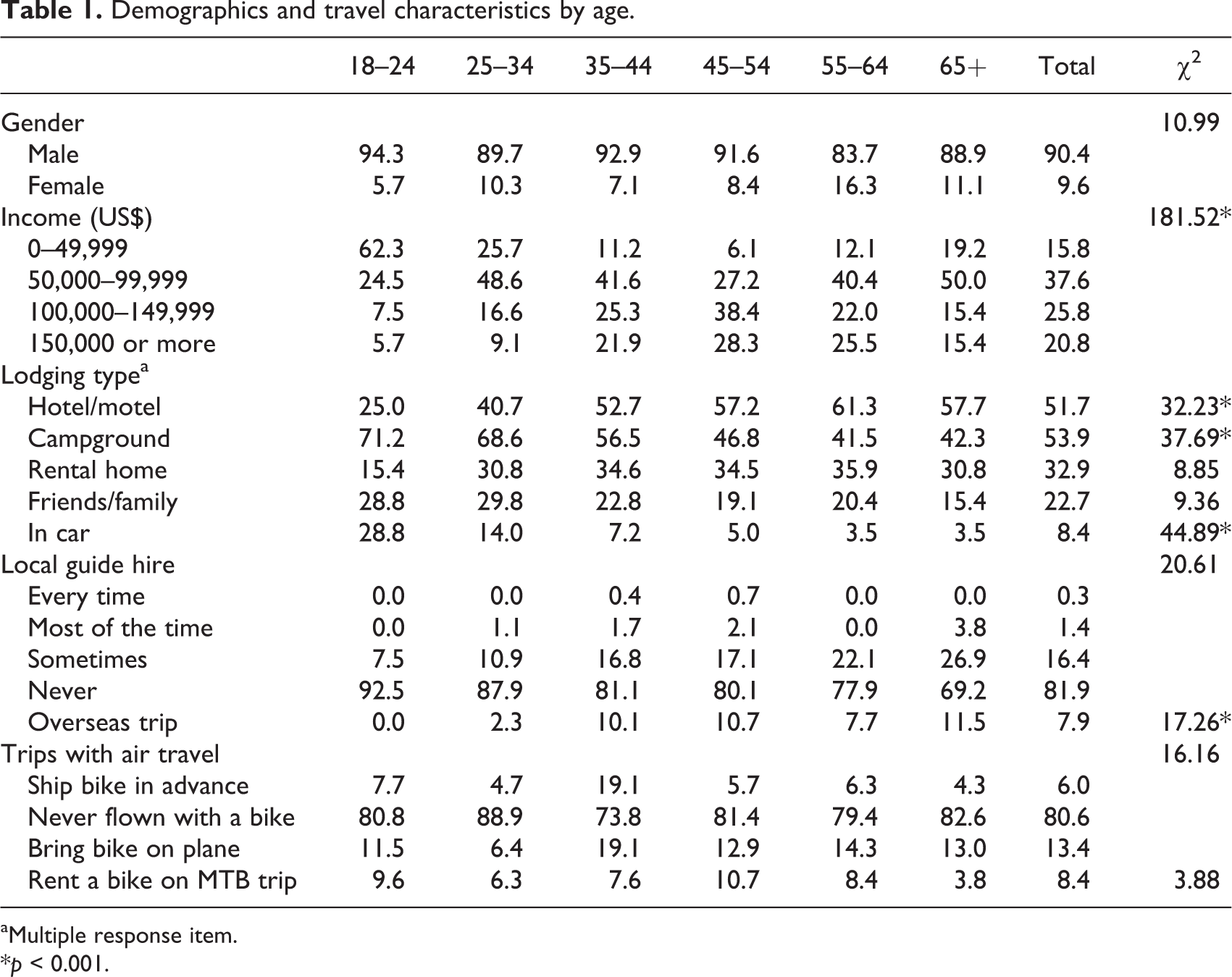
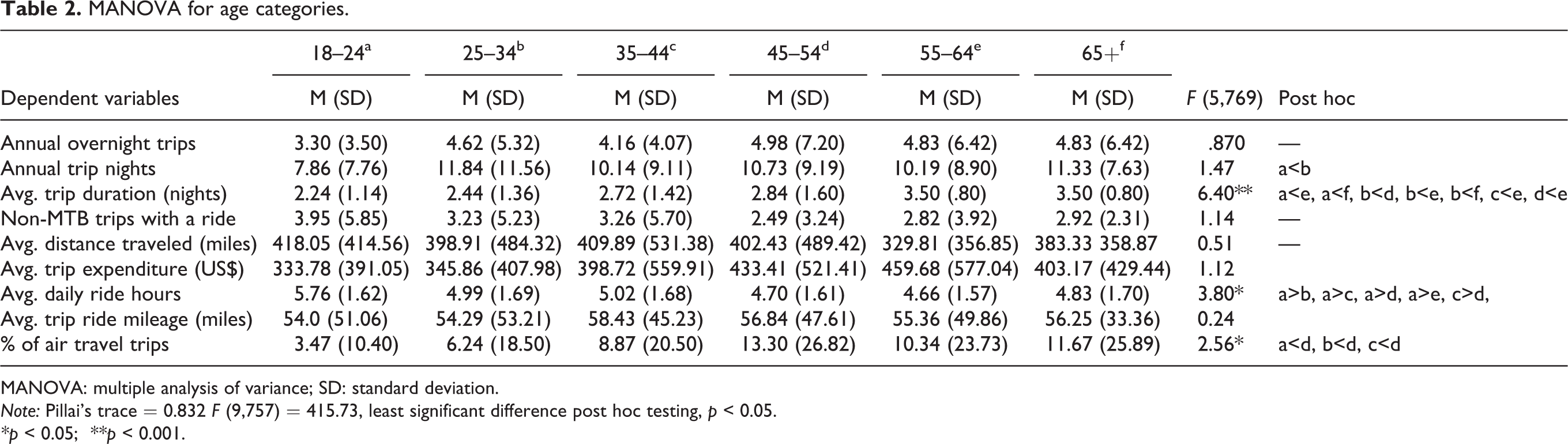
Table 1 contains a descriptive overview of categorical demographic and mountain bike tourism travel variables by age, while Table 2 contains a MANOVA of continuous travel behavior variables by age. The sample comprised 90.4% male and 9.6% female respondents. Respondents’ mean age was 43.81 years (standard deviation (SD) = 11.79). The most prevalent annual household income category was between US$50,000 and US$99,999 (37.6%). Respondents reported taking an average of 4.53 mountain bike-specific trips in the last year (SD = 5.63), spending 10.71 nights (SD = 10.31) away from their home community. The mean mountain bike-specific trip duration reported was 2.70 nights (SD = 1.58), although respondents also reported including mountain bike rides during non-mountain bike-specific trips on a mean of 2.95 trips annually (SD = 4.91).
Demographics and travel characteristics by age.
aMultiple response item.
*p < 0.001.
MANOVA for age categories.
MANOVA: multiple analysis of variance; SD: standard deviation.
Note: Pillai’s trace = 0.832 F (9,757) = 415.73, least significant difference post hoc testing, p < 0.05.
*p < 0.05; **p < 0.001.
US mountain bike tourists traveled an average of 408.04 miles (SD = 502.72) from their home to their mountain biking destination, of which only 9.77% of mountain bike-specific trips involved air travel (SD = 22.71%). Mean trip spend was US$399.36 per trip (SD = US$510.97). While at their destination, the mountain bikers averaged 50.68 trail miles (SD = 43.28) and a mean of 4.81 h (SD = 1.70) ridden per day. During mountain bike-specific trips, most respondents preferred campground accommodation (53.9%), and a majority of respondents indicated they ‘never’ hire local mountain bike guides (85.9%).
The χ2 tests (Table 1) revealed significant differences across the age categories with respect to household income, preferred accommodation for mountain bike trips, and whether one has previously undertaken an overseas mountain biking trip. Table 1 suggests a general pattern of increasing household income across the life course, with those aged 18–24 overrepresented in the US$0–US$49,999 category. Younger mountain bikers (18–34) were more likely to utilize campground accommodation, while those aged 35–54 were more likely to stay in hotels/motels/resorts. Having undertaken an overseas mountain bike trip previously was almost nonexistent for those aged 34 years and under. Table 2 identifies significant differences between various age categories for mean mountain bike–specific trip duration and mean daily ride hours. Those aged 55–64 exhibited a significantly higher mean trip duration of 3.50 days than those aged 18–24 (2.24 days), 25–34 (2.44 days), and 35–44 (2.72 days). Significant differences for mean daily ride hours were noted between respondents aged 18–24 (5.76 h) and the 45–54 (4.70 h) and 55–64 (4.66 h) age categories, suggesting that younger mountain bikers rode longer each day on average.
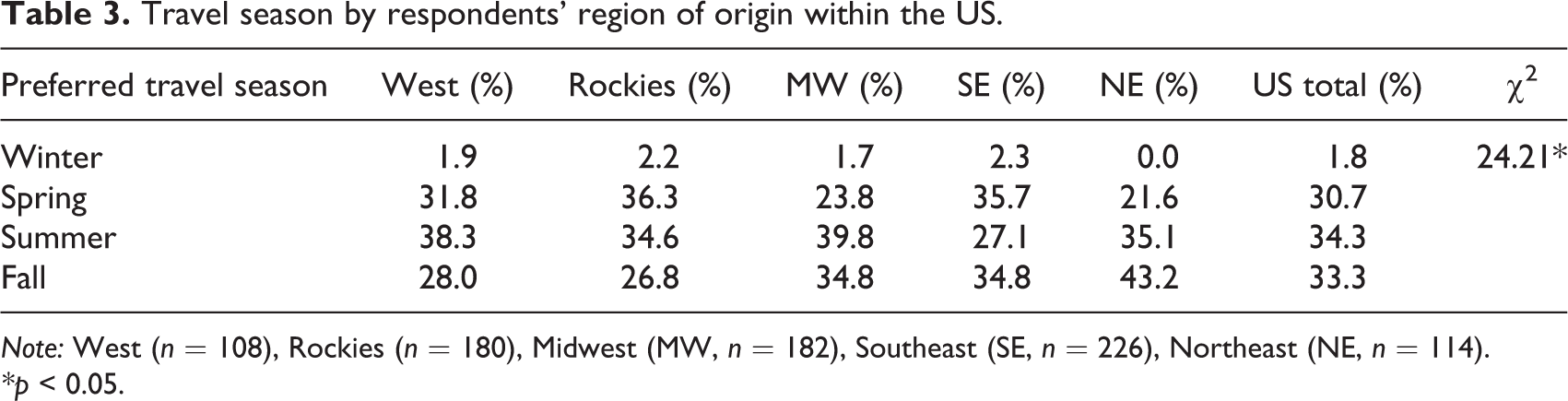
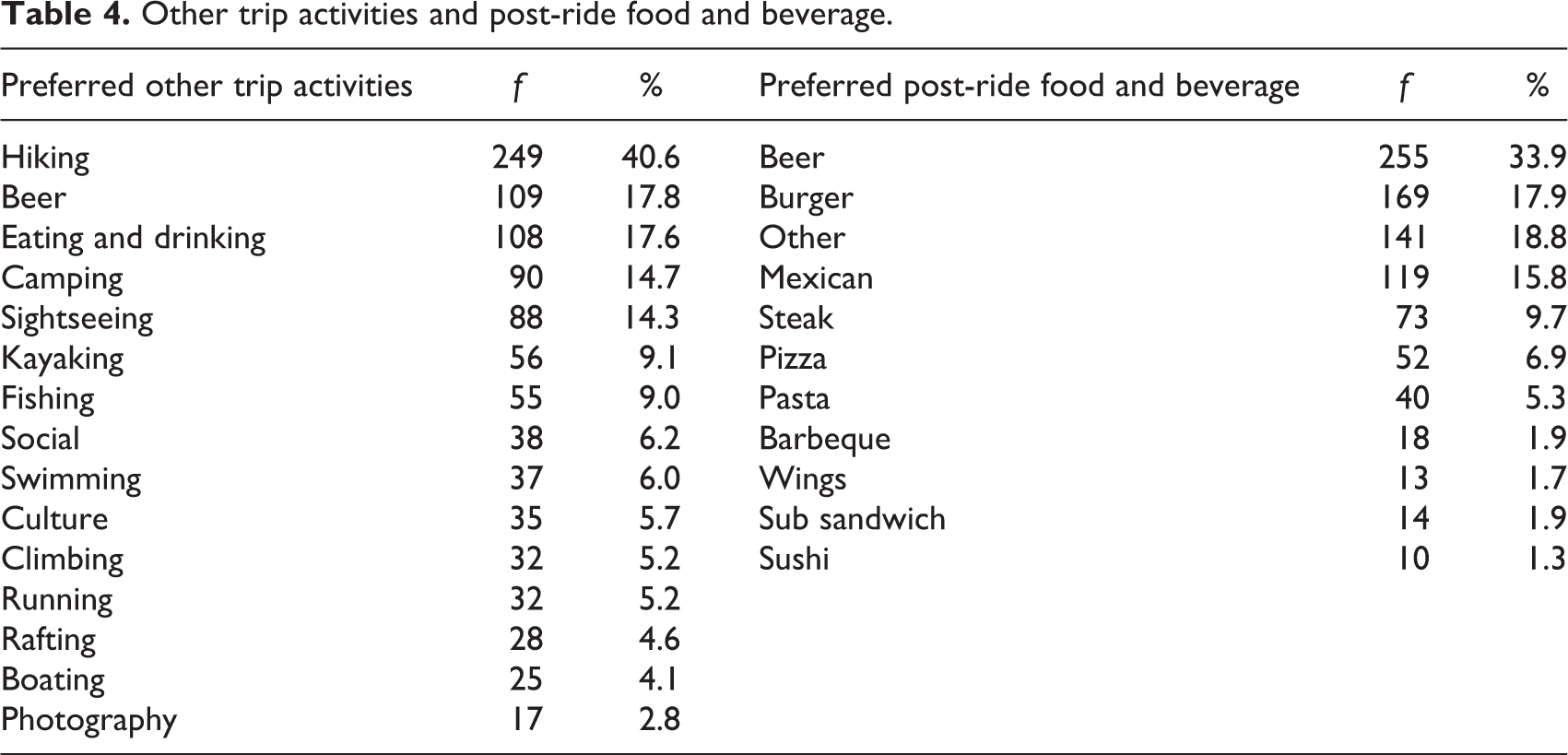
From Table 3, it was evident that the majority of respondents (34.3%) preferred taking mountain bike–specific trips during summer months, closely followed by fall (33.3%) and spring (30.7%). Only a negligible proportion of respondents preferred mountain bike trips during winter (1.8%). Variation in preferences for travel season between respondents originating from five geographic segments across the United States was found to be significant. For example, those in the northeast preferred to travel in the fall, while those from the west and Midwest preferred travel in the summer. Lastly, Table 4 displays the respondents’ most preferred supplementary activities during mountain bike trips were hiking (40.6%), followed by eating and drinking (17.6%). The most preferred post-ride food and beverage included beer (33.9%) and burgers (17.9%).
Travel season by respondents' region of origin within the US.
Note: West (n = 108), Rockies (n = 180), Midwest (MW, n = 182), Southeast (SE, n = 226), Northeast (NE, n = 114).
*p < 0.05.
Other trip activities and post-ride food and beverage.
Discussion
We now turn attention to teasing out four eminent issues that emerged from our exploratory analysis of the US mountain bike market. These include a dominant demographic group; the US mountain bike market being characterized by frequent, short breaks; considerable age-based heterogeneity in mountain bike tourism travel characteristics and preferences; and opportunities for mountain biking tourism to contribute to reducing impacts of seasonality in winter snow sport destinations. Implications for destination marketing and management are interspersed throughout the ensuing subsections along with suggestions for future research.
Demographic characteristics of US mountain bike tourists
The present study examined mountain bike tourists through exploratory analysis to identify a potential travel profile and any variation in travel behavior. The study contributes to the cycling tourism and sport tourism literature by providing a pragmatic overview of the current US mountain bike tourism market, differentiating features of mountain bikers’ travel behaviors, and a platform for future research. Demographically, the sample was prodigiously middle aged, male, with above average income akin to findings of previous studies of mountain bikers (Gajda, 2008; Getz and McConnell, 2011; Green, 2003). Regarding income, 84.2% of the sample earned more than US$50,000 in annual household income, representing predominately above-average income levels in the United States (Fontenot et al., 2018). This finding further supports previous research suggesting that mountain bike tourists constitute a segment with slightly higher than average household income (Bowker and English, 2002; Gajda, 2008).
The gaping discrepancy between male and female participation in mountain bike tourism reflected in this and previous studies is a noteworthy discussion point. This gender divide has long been a subject of debate in literature addressing active sport tourism (Gibson et al., 2018). Gender imbalance has also been noted in the context of road cycling, with Minello and Nixon (2017) calling for further gender-informed inquiry into cycling. It is highly plausible that constraints to female participation may be embedded within mountain bike social worlds dominated by men. Destinations may be therefore be missing out on lucrative opportunities through a lack of understanding around how latent demand among female mountain bikers is not being converted into participation. Hence, there is a clear need for sociological research exploring social worlds among mountain bikers.
A frequent, ‘short break’ lucrative market
Mountain bike tourists in the present study reported a mean of 4.53 mountain bike-specific trips annually with a mean trip duration of 2.7 nights. This suggests that mountain bike tourism in the United States constitutes a frequent (most likely quarterly), short-break (i.e. weekend/long-weekend) market. These results differ from previous research with regard to average trip duration; Green (2003) and Bowker and English (2002) reported 4.6 night and 5.82 day average durations, respectively. Comparing the 2.7 night average with the more conservative of the noted studies (4.6) gives a 41.3% reduction in average trip duration, a potentially significant difference when considered in the context of tourism development and forecasting. These differences might seem insignificant; however, trip duration, along with income level, party size, and distance traveled are critical determinants of visitor expenditure (Buning et al., 2016; Downward et al., 2009). Further, visitor spending by mountain bikers is quite lucrative as the results here found that more than US$100 per day is spent on average.
Another variable relatively inconsistent with previous findings was the mean number of hours ridden per day. Respondents rode an average of 4.81 h/day, notably more than 3.67 h reported by Bowker and English (2002) or 3 h per session from Cessford (1995) and Hollenhorst et al. (1995). This disparity could be largely due to the inclusion of local mountain bikers in the latter studies, where a logical assumption could be that locals need not accumulate as many ride hours per day due to reduced pressure to maximize time in the destination as a tourist may (i.e. lower opportunity cost). This reasoning also follows Buning et al.’s (2016) findings among mountain bike event participants that depict higher spending relative to how far they travelled. If we consider riding time to carry with it an opportunity cost, it is reasonable to assume greater spending of available time on riding, the further one travels to their participation destination (e.g. trail, trail network, ride center), particularly if mountain biking is the primary purpose of the trip.
A heterogeneous market
Age-based variation in travel characteristics identified in this study suggests US mountain bike tourism is not a homogenous market. This gives rise to numerous product development and strategic marketing implications. Our data showed that older mountain bike tourists tended to exhibit a longer mean trip duration than younger respondents. This variance could be explained by older mountain bikers being at a life stage where they have more accumulated wealth and can thus afford lengthier stays (Kuentzel and Heberlein, 2008). Indeed, household income tended to increase in value across increasing age categories. Older mountain bikers may also be retired or transitioning to retirement and therefore have more available leisure time, whereas younger mountain bikers may be more constrained by money, work, and family obligations. Younger mountain bike tourists exhibited a longer average daily ride time, possibly explained by younger riders being more physically able to endure longer ride times than older riders.
Consequently, destinations need to develop mountain bike tourism products that are priced with sensitivity to available discretionary income and varying available leisure time across different age categories. Tiered-pricing products may be one viable solution here. For example, shorter (e.g. one-to-two night) packages bundling less expensive accommodation with trail access options may be developed to cater for younger mountain bikers who are, evidently, more time and financially constrained. It is important for destinations to develop rapport with and loyalty among younger mountain bike tourists to encourage repeat visitation. Given their propensity to take frequent, relatively short mountain bike-specific trips, coupled with an increasing length of stay and annual household income as age increases, destinations may be able to leverage enhanced long-term economic value from loyal, repeat visit mountain bike tourists as they age. Indeed, our data suggest that mountain bike tourists aged between 45 years and 64 years seem to yield the most economic value to host communities. Minello and Nixon (2017) argue that men are increasingly gravitating toward cycling to facilitate healthy ageing, hence targeting more mature age groups for mountain biking tourism seems a prudent strategy.
Age-based variation also manifested with respect to accommodation preferences among the mountain bike tourists. Previous research has found accommodation to be the most important destination attribute for mountain bike tourists besides trail characteristics and site facilities (Bowker and English, 2002). Similar to Green (2003), the current sample largely preferred staying in campgrounds or hotels/motels. However, those aged 35–54 were more likely to prefer hotels/motels/resorts, whereas 68.6% of those aged 25–34 preferred campground accommodation for mountain bike-specific trips. Again, higher income and accumulated wealth among older mountain bikers due to life course stage may largely explain such differences (Kuentzel and Heberlein, 2008); the more financially endowed can afford to stay in more expensive lodging. However, the actual stock of accommodation in a particular destination may override individual preferences.
Marginally more mountain bikers aged 35 and over took overseas mountain biking trips compared to younger age categories, and 80.6% of the sample had never taken a bicycle on a trip involving air travel. Previous research has documented logistical difficulties of travelling with one’s own bicycles, especially given policy constraints commonly imposed by airlines (Lamont and Buultjens, 2011). However, this presents a significant opportunity for US domestic destinations. The apparent reluctance of US mountain bike tourists in this study to take overseas mountain bike trips lends further support to our recommendation for destinations to leverage US domestic demand by focusing on developing visitor loyalty and repeat visitation.
Opportunities for smoothing seasonality in winter tourism destinations
Our findings indicated that mountain bike tourists prefer traveling to participate in mountain biking during the warmer months. There was also a statistically significant difference with regard to preferred travel month by region of origin within the United States, indicating that mountain bike tourism is a seasonal activity. Seasonality particularly impacts upon destinations that are heavily dependent upon winter snow sports. The drying up of tourist expenditure during summer months forces many businesses to close, evoking a range of impacts for the local community such as seasonal unemployment (Pegg et al., 2012). As Pegg et al. (2012) point out, winter tourism destinations are increasingly diversifying their product mix to include summer recreation activities in order to ameliorate seasonality. Freeman and Thomlinson (2014) note that diversification of alpine tourism destinations in British Columbia, Canada, through mountain bike tourism is already widely occurring. Indeed, mountain biking presents an ideal opportunity for winter tourism destinations as trails may be constructed from ski fields to enable cross-country mountain biking and ski lifts can be utilized to transport mountain bikers for downhill mountain biking.
However, the seasonality of mountain bike tourism appears to be evolving with the popularization of new technology such as ‘fat bikes’ (bikes equipped for snow travel). From both a planning and marketing perspective, it is critical for potential mountain bike destinations to understand when tourists are most likely to travel and from where they are coming. For instance, future research should explore whether there is overlap between mountain bike and snow sports demand. It could be that some mountain bikers are also snow sport participants in alternating seasons. If so, this could have destination marketing and management implications in terms of strategically targeting and developing loyalty with repeat visitors, albeit for different activities during different times of the year.
Other opportunities for winter tourism destinations may be drawn from the findings on mountain bikers’ preferred supplementary activities. Respondents identified hiking and eating/drinking as popular activities while on mountain biking trips. Regarding food and/or beverage while on a mountain bike trip, beer, burgers, and Mexican food were preferred by the sample. Opportunities to participate in other activities such as hiking, along with access to restaurants and breweries, are clearly critical factors for mountain bike tourists’ destination selection. Interestingly, the ‘beer and bike’ connection reflects a trend that has been recently identified in a number of popular cycling media outlets (Lockwood, 2015). As noted by Taylor (2010), many of these factors can be commodified through the creation of specific built mountain bike ride centers that will appeal to a wide range of mountain bikers. Indeed, this intriguing connection further emphasizes a need for future work exploring social worlds of mountain bikers, particularly the role of travel within such social worlds and how destinations can market to these preferred characteristics (e.g. Buning and Gibson, 2016b).
Given the ‘short break’ pattern as reflected in the mean trip duration, and that on average, mountain bike tourists spend around half of each day riding their bikes, it is not surprising to see they prefer engaging in more leisurely pursuits during the noncycling components of their trips. Mountain bike tourists typically have limited time in which to enjoy activities besides mountain biking at their destination, hence destinations may consider augmenting mountain biking with complementary, less physically strenuous activities to facilitate physical recovery and social interaction such as brewery and spa experiences. Winter sport destinations are well placed to cater for mountain bike tourists in this respect. Similar to snow sports, mountain biking can be physically demanding, thus a network of supporting infrastructure and businesses (e.g. food and beverage establishments, spas, physiotherapy and massage providers) are likely to already be in place.
Conclusion
There are strong indicators of growth in demand for mountain bike tourism in the United States. However, to date, there have been few efforts made by scholars to establish baseline, descriptive understandings of the demand-side of this market. This study has provided descriptive insights into US-based mountain bike tourists utilizing a sample considerably larger than previous attempts at profiling mountain bike tourists. Middle-aged, middle-class men were the dominant group within this study, and due to a severe underrepresentation of women noted in this and previous studies of mountain biking, we call for future research examining constraints to women’s participation similar to Rowe et al. (2016). We identified a strong pattern of frequent, ‘short-break’ lucrative travel marked by extensive periods of trail riding at the destination among the US mountain bike tourists surveyed. Considerable age-based variation with respect to travel behaviors and preferences was evident, with older mountain bike tourists exhibiting significantly longer trip durations and higher household incomes. Younger mountain bikers appeared more constrained by limited resources, leading to shorter mean trip durations. Consequently, we recommended mountain bike destinations prioritize developing loyalty and fostering repeat destination among younger mountain bikers as economic yield is likely to increase as repeat visitors traverse their life course.
From the current research, there is a need for theoretically informed research addressing mountain bike tourists. There are opportunities to segment mountain bike tourists utilizing established theoretical frameworks within leisure and tourism studies to understand nuances in tourism product preferences, destination preferences, and if and how mountain bikers develop and evolve in a travel career. Longitudinal research could be fruitful by tracking evolution in mountain bike travel behavior and the link to regular engagement with the activity in daily life using conceptions such as active sport event travel careers (Buning and Gibson, 2016b) and recreation specialization (e.g. Shafer and Scott, 2013). Similarly, there is scope to explore social worlds and smaller subworlds among mountain bikers (e.g. Crosset and Beal, 1997). This line of inquiry is especially pertinent, given the significant discrepancy between proportions of males and females cited in previous work.
Despite advancing understanding of the mountain bike tourism market, there are limitations to the study that present opportunities for future research. The study used a nonrandom sampling, thus future research should use probability sampling to garner generalization to the wider international market, although acquiring an adequate sampling frame will likely be a challenge. In such a study, travel party composition and variations in mountain bike disciplines (i.e. downhill vs cross-country) will be welcome additions.
Footnotes
Acknowledgements

Declaration of conflicting interests
The author(s) declared no potential conflicts of interest with respect to the research, authorship, and/or publication of this article.
Funding
The author(s) received no financial support for the research, authorship, and/or publication of this article.