






Abstract
This article examines the algorithmic construction and dissemination of counter-narratives regarding touristification in the city of Naples, Italy. In recent years, Naples has experienced a dramatic increase in tourist flows, driven by low-cost mobility, short-term rentals, and the algorithmic amplification of urban imaginaries on platforms such as TikTok and Instagram. Drawing on a content analysis of posts published on these platforms, the study investigates how their logics shape the visibility and legitimacy of urban discourses. The article examines the dynamics of algorithmic touristification, the symbolic appropriation of tourist aesthetics by critical actors, and the emergence of digitally mediated forms of resistance. The findings highlight the epistemic asymmetries embedded in platform infrastructures, showing how celebratory narratives of tourism tend to dominate digital space, while dissenting voices are systematically marginalized. However, the analysis also reveals the presence of sophisticated counter-strategies that allow activists to reclaim algorithmic visibility and contest hegemonic representations.
Introduction
Over the past decade, European cities have undergone significant reshaping due to the intersecting dynamics of mass tourism, housing commodification, and digital platformization. These processes have not only produced profound socio-spatial inequalities but also transformed the symbolic economy of urban life, reconfiguring what is visible, desirable, and legitimate in the city. At the heart of this transformation lies the role of digital platforms, particularly Instagram and TikTok, which have emerged as central infrastructures for producing and circulating urban narratives. These platforms operate as algorithmic engines of visibility (Bucher, 2018; Cotter, 2019), that actively participate in processes of urban touristification, selectively amplifying certain representations of place while marginalizing others. In this context, the concept of touristification – understood as the process by which urban spaces are restructured to cater to the consumptive desires of global tourists (Cocola-Gant and Gago, 2021; Sequera and Nofre, 2020) – gains renewed analytical relevance. Touristification does not merely alter the physical environment through gentrification or commercial displacement; it also redefines the cultural and symbolic meaning of place. As Gravari-Barbas and Guinand (2017) argue, tourist cities are increasingly scripted as spectacles for external consumption, often at the expense of local identity and everyday life. Several scholars have drawn attention to the platformization of urban space (Poell et al., 2022; Van Dijck et al., 2018), highlighting how platforms co-construct urban imaginaries through algorithmically governed content flows. In particular, TikTok’s ‘For You Page’ and Instagram’s Explore feed act as systems that privilege visual appeal, emotional engagement, and algorithmic compatibility (Bishop, 2021; Duffy and Schwartz, 2018). These infrastructures shape tourism imaginaries not only by promoting idealized versions of the city but also by marginalizing dissenting voices that contest the socio-political costs of tourist-led urban change. In this sense, algorithmic visibility becomes an epistemic and political terrain, central to the negotiation of urban meaning and belonging (Zuboff, 2019). Naples has recently emerged as one of Italy’s top urban destinations. Between 2015 and 2023, overnight stays in Naples more than doubled, fueled by low-cost airline routes, short-term rentals, and the viral dissemination of stereotypical and aestheticized cityscapes on social media (Comune di Napoli, 2024; ISTAT, 2024). Despite this rapid rise in touristic centrality, Naples has received limited scholarly attention in debates on algorithmic touristification, especially given the speed, scale, and platform-driven nature of the city’s recent tourist boom. Yet this boom has also triggered resistance. Grassroots collectives, urban activists, and independent media actors have increasingly turned to the same platforms that promote touristification to articulate counter-narratives that denounce displacement, housing precarity, and the erosion of local identity. These practices reflect a growing trend of digitally mediated urban resistance (Askanius, 2021; Gerbaudo, 2012), where symbolic and political struggles unfold within the logic of platform capitalism. This article examines the algorithmic construction and circulation of counter-narratives regarding touristification in Naples, with a focus on how various actors leverage or resist platform logics. Our analysis draws on a corpus of posts (TikTok and Instagram) produced between 2023 and 2025 by activist groups, independent media, content creators, and local political actors. In this article, counter-narratives are understood as strategic practices through which critical actors resist dominant touristic imaginaries and engage with algorithmic visibility on social platforms. Using a content analysis that combines quantitative metrics of engagement with qualitative content analysis, we explore how the urban image of Naples is co-produced through algorithmic curation, aesthetic conventions, and digitally embedded practices of critique and resistance. The study is guided by the following research questions: (1) How do algorithmic infrastructures shape the visibility of counter-narratives around touristification in Naples? (2) What aesthetic, discursive, and tactical strategies do activists and critical actors adopt to contest dominant urban imaginaries on social media? (3) To what extent can platform-native storytelling practices enable new forms of civic engagement and resistance in the context of tourist-led urban change? Our goal is to contribute to current debates on media activism, platform governance, and the right to the city, offering an empirically grounded reflection on how symbolic struggles over urban space are increasingly fought through visual content, hashtags, and algorithmic circulation. In line with recent work on connective action (Bennett and Segerberg, 2013) and antagonistic aesthetic appropriation (Boy and Uitermark, 2021), we argue that even within the constraints of platform logics, critical actors find ways to reframe dominant narratives and reclaim visibility. By focusing on Naples as both a local and emblematic case in Italy, the article advances a broader reflection on how platform-based cultural production intersects with processes of urban transformation, enabling some voices while excluding others. In doing so, it underscores the urgency of considering algorithmic infrastructures not just as media environments but as sites of urban governance, where struggles over housing, identity, and belonging are mediated, amplified, or silenced by platforms’ affordance and algorithmic logics.
Narratives and counter-narratives on tourism in the city
Over the last decade, European urban environments have become increasingly subject to intersecting pressures of mass tourism, housing commodification, and platform capitalism. In cities such as Barcelona, Venice, Lisbon, Florence, and Naples, the transformation of housing from a fundamental right into an asset for speculative profit has triggered growing discontent among residents, culminating in new forms of digital and physical mobilization. The proliferation of short-term rentals, driven by platforms such as Airbnb and the spectacularization of cities on social media platforms like TikTok and Instagram, has exacerbated long-standing processes of gentrification and displaced local communities. These dynamics are not simply the outcomes of economic trends; they are the result of deliberate socio-technical arrangements that prioritize tourism and capital accumulation over residents’ rights to remain, live, and inhabit their neighborhoods (Cocola-Gant and Gago, 2021).
It is the growing intensity of mass tourism and touristification that makes the ‘right to the city’ a key issue in contemporary urban conflict, turning concerns about housing, access to space, and local identity into clearly political issues. The concept of the ‘right to the city’, as initially formulated by Lefebvre (1996 [1968]), has regained traction in this context as residents and activists seek to reclaim urban space from market-driven logics. Central to this struggle is the notion of the right to housing, which is increasingly under threat in cities undergoing touristification: a process by which neighborhoods are reshaped to cater to the desires and consumption patterns of global tourists rather than local inhabitants (Sequera and Nofre, 2020). Touristification not only transforms the urban fabric but also erodes social cohesion, inflates rental prices, and reconfigures the city’s symbolic economy around visual narratives optimized for digital consumption (Gravari-Barbas and Guinand, 2017).
The growing intensity of mass tourism increasingly results in an excessive and unsustainable presence of tourists in specific places, a condition commonly referred to overtourism, which has become a defining feature of many European destinations. The phenomenon, intensified by low-cost travel and algorithmic amplification on social platforms, is increasingly framed by urban dwellers as a driver of housing emergency and social displacement (Milano et al., 2019). These urban crises have in turn fueled the emergence of social movements that combine traditional collective action with connective action (Bennett and Segerberg, 2013), leveraging the digital affordances of social media to organize, protest, and mobilize across dispersed networks.
In this sense, the role of platforms like Instagram and TikTok is profoundly ambivalent. On the one hand, these platforms contribute to the spectacularization and commodification of urban experiences, often promoting stereotypical and aestheticized representations of cities that feed mass tourism. On the other hand, they serve as infrastructures of resistance, enabling the articulation of counter-narratives, the exposure of injustices related to real estate speculation, and the coordination of campaigns that contest urban inequalities (Askanius, 2021). Movements such as ‘No Grandi Navi’ in Venice, ‘Ci vuole un reddito per restare’ in Naples, and ‘Lisboa Não Se Vende’ in Lisbon exemplify a broader digital turn in urban activism, where content creation, hashtagging, and virality are harnessed to assert visibility and claim urban rights.
This growing wave of activism converges around a key demand: the right to stay, to remain a resident in one’s own neighborhood in the face of economic, spatial, and symbolic displacement. Housing is not only viewed as a shelter or commodity but as a socio-political space that sustains community, belonging, and identity (Marcuse, 1986). The inability to access or retain housing under conditions of mass touristification is therefore framed not simply as an economic issue but as a violation of citizenship and urban belonging (Purcell, 2002).
The intersection between touristification and algorithmic visibility further complicates these dynamics. Social media do not just represent urban realities; they actively participate in shaping them. Through the logic of algorithmic amplification, specific places, aesthetics, and experiences are rendered hyper-visible, while others are obscured (Bucher, 2018). This process fuels feedback loops of visibility and desirability, reinforcing spatial inequalities and deepening the commodification of the city (Zuboff, 2019). In this scenario, digital visibility operates as a key site of politicization, where antagonistic urban actors compete to define legitimacy, responsibility, and rights within the online public sphere (Wilson et al., 2021). As a result, resistance movements find themselves engaged in a dual battle: on the ground and in the social media feed.
Therefore, understanding urban resistance today requires attention to the platformization of social life and the mediatization of protest. Digital activism does not simply mirror offline concerns but creates new possibilities for action, solidarity, and confrontation (Gerbaudo, 2012). In light of this, the current work investigates how social movements in Naples, a city that has recently entered the top tourist cities in Italy, are contesting the narrative and material outcomes of touristification by appropriating and subverting the very platforms that contribute to their displacement. Through a focus on algorithmic visibility, digital storytelling, and urban rights, this article contributes to an emerging field of inquiry that situates tourism, housing, and social justice at the intersection of digital media and urban sociology.
TikTok and Instagram algorithmic narratives: roles and position in the construction of city touristic profiles
Social media platforms such as TikTok and Instagram have become central infrastructures for the production and dissemination of city narratives, profoundly shaping the symbolic economies of urban destinations. These platforms do not merely reflect tourist imaginaries; they actively co-produce them through algorithmic logics of visibility, virality, and aesthetic curation (Bucher, 2018; Highfield and Leaver, 2016). The tourism-related content circulating on TikTok and Instagram is highly curated and governed by opaque recommendation systems that favor certain representations – typically those that are visually appealing, emotionally charged, and easily consumable – over others. These content preferences result in a phenomenon that can be understood as algorithmic touristification, wherein urban spaces are continuously re-scripted as desirable backdrops for platform-native storytelling (Duffy and Schwartz, 2018; Gillespie, 2018).
Instagram, with its emphasis on visual aesthetics and aspirational lifestyles, has long been implicated in the commodification of place (Scolari, 2021; Zukin, 2010). Hashtagged images of colorful alleys, curated meals, and iconic landmarks contribute to the reproduction of urban spaces as consumable experiences, often devoid of social and historical complexity. TikTok, while newer, amplifies these dynamics through its ‘For You Page’: a feed curated by predictive algorithms that prioritize engagement metrics over contextual richness. As a result, tourist experiences become standardized, creating what Boy and Uitermark (2021) describe as ‘algorithmically induced convergence’ of urban representations. Neighborhoods such as Trastevere in Rome, the Alfama in Lisbon, or the Quartieri Spagnoli in Naples are no longer just places but become digital tropes, branded fragments of city identity shaped more by algorithmic circulation than by local realities.
The influence of these platforms extends beyond the realm of cultural perception into the domain of urban governance. The way a city is represented on TikTok or Instagram can have material consequences: influencing travel decisions, altering pedestrian flows, and indirectly shaping urban policy decisions about infrastructure, mobility, and policing (Díaz-Parra and Jover, 2021). In this sense, TikTok and Instagram can be considered quasi-institutional actors within the urban field, capable of orchestrating attention and desire in ways that rival or surpass traditional media and tourism boards.
Furthermore, the rise of influencer economies and user-generated content (UGC) reinforces a new stratification of digital labor and narrative authority. Influencers, often unaffiliated with local communities, become privileged narrators of urban experience, guiding platform users through their aestheticized and monetized itineraries (Abidin, 2021). This dynamic raises questions of epistemic injustice, as local voices, particularly those expressing concern about overtourism, gentrification, or housing precarity, struggle to gain algorithmic traction in feeds dominated by promotional content. Thus, the algorithmic architectures of TikTok and Instagram not only amplify dominant touristic scripts but also marginalize counter-narratives that could challenge the sustainability and inclusivity of current urban imaginaries (Poell et al., 2022).
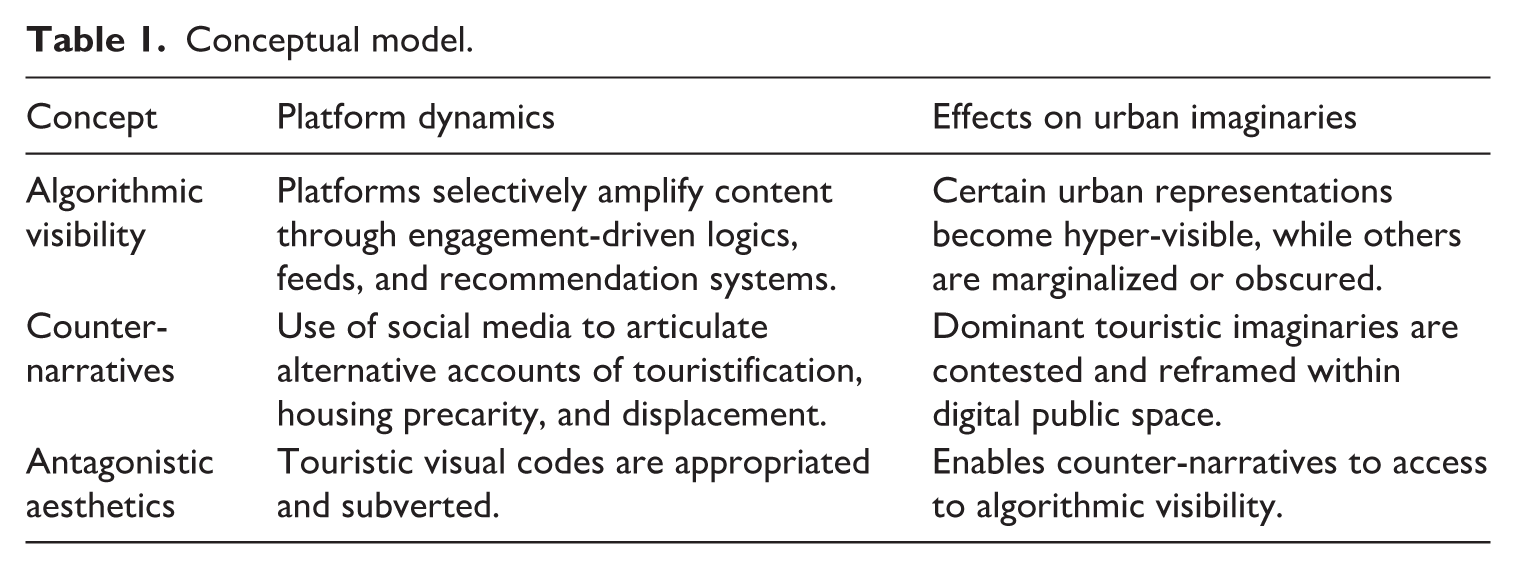
Understanding these platforms as algorithmic narrative engines is therefore essential to decoding the contemporary tourism-media nexus. Their role in shaping what is visible, desirable, and ultimately inhabitable must be critically interrogated, especially in European cities where the pressure of tourism intersects with acute housing crises and urban inequality. It is within this feedback loop, between platform affordances, algorithmic filtering, and user practices, that the touristic profile of cities is continually constructed, circulated, and contested. Table 1 summarizes the conceptual framework guiding this study, illustrating how counter-narratives interact with regimes of algorithmic visibility through the tactical use of antagonistic aesthetics.
Conceptual model.
Naples and the new algorithmic and touristic centrality
Understanding contemporary forms of urban resistance necessitates examining the entanglement between the platformization of urban imaginaries and the digitally mediated infrastructures of protest (Gerbaudo, 2012; Poell and van Dijck, 2018). Nowhere is this more evident than in the case of Naples. This city has risen to the top of Italy’s most visited urban destinations in recent years, ranking third nationally in tourist arrivals in 2023, after Rome and Milan (ISTAT, 2024). Between 2015 and 2023, the number of overnight stays in Naples more than doubled, rising from approximately 2.3 million to over 5.1 million annually, a growth driven mainly by low-cost flight routes, short-term rental platforms, and the viral dissemination of touristic imaginaries through social media (Comune di Napoli, 2024). Platforms like TikTok and Instagram have played a crucial role in amplifying Naples’ touristic appeal, particularly through algorithmically promoted narratives that showcase street food, panoramic views, and the performative aestheticization of local life (Tham et al., 2024; Wengel et al., 2022).
However, this algorithmic touristification has had significant material consequences. The historic center of Naples, designated as a UNESCO World Heritage Site, has undergone rapid transformation, with entire blocks converted into short-term rentals, the displacement of long-term residents, and the proliferation of businesses catering exclusively to tourists (Comune di Napoli, 2024). In this context, several grassroots collectives and activist accounts have begun to mobilize on the same platforms responsible for tourist amplification, producing what could be called counter-touristic narratives. These actors repurpose platform affordances to contest the logics of visibility and rent extraction shaping the urban core.
For instance, the Instagram account @setnapoli_restaabitante serves as both an observatory and a campaigning tool, documenting the disappearance of local commerce, the expulsion of tenants, and the conversion of homes into ‘Airbnb hotels’, while simultaneously advocating for housing as a fundamental right. Similarly, @socialforumabitare contributes to a national-level discourse on housing precarity and gentrification, offering statistical data, policy critiques, and mobilization strategies across multiple urban contexts. Local spaces of resistance, such as @scugnizzoliberato and @mare_liberonapoli, extend the struggle to defend common goods, from historical buildings repurposed for community use to urban beaches threatened by privatization and speculative coastal development. These actors articulate a connective action model (Bennett and Segerberg, 2012) grounded in local identities but amplified through digital storytelling.
The Instagram page @ecologiapoliticanapoli, for example, bridges housing justice with environmental politics, emphasizing the ecological footprint of mass tourism and the extractive dynamics of real estate-driven development. Independent media projects, such as @vdnews, and national outlets, like @fanpage.it, document these transformations through investigative formats, offering alternative journalistic framing that is often absent in mainstream tourist promotion. Political actors and urban activists, such as @gennaroesposito137 and @luigicarbone081, use their personal profiles to denounce speculative practices and advocate for policies that center the right to stay and live with dignity in the city.
Collectively, these digital practices constitute a form of algorithmic resistance (Cammaerts, 2018), whereby activists, residents, and organizations strategically utilize the aesthetic and interactional logics of social media to destabilize dominant narratives and increase visibility for previously invisible struggles. In a city like Naples, where tourist-led gentrification is both a symbolic and economic process, the battle over urban meaning is increasingly waged through hashtags, stories, and viral posts. These counter-narratives not only contest dominant visions of the city but also attempt to reclaim algorithmic space for civic engagement and counter-hegemonic urbanism (Milan and Treré, 2019).
Methodology: an algorithmic study of the algorithmic narratives and counter-narratives on Naples’ touristic city
This study adopts a content analysis approach to investigate the algorithmic construction and circulation of counter-narratives related to touristification in Naples. While primarily qualitative, the study employs a hybrid approach, combining systematic coding tools with selected quantitative indicators to facilitate a critical and contextual interpretation of the data.
The analysis focuses on two key visual and algorithmic platforms – TikTok and Instagram – which, as discussed in the previous sections, play a pivotal role in both promoting and contesting the city’s touristic profile. The sampling strategy followed a purposive and socio-technically informed logic: a cluster of activist and media profiles engaged in urban resistance and public discourse around housing justice, the right to the city, and critiques of mass tourism was identified.
To ensure a transparent and replicable sampling process, three criteria guided the inclusion of accounts:
Topical relevance, requiring that profiles had published at least one post explicitly addressing housing struggles, overtourism, or touristification in Naples during the 2023–2025 period;
Public role and continuity, privileging actors with an established involvement in local activism, independent journalism, or urban justice debates;
Platform-native activity, including only accounts that produced original content (rather than simple reposting) and were sufficiently active to participate in the algorithmic cycles of visibility on TikTok or Instagram. Profiles that mentioned tourism only marginally or episodically, as well as accounts not engaged in the public debate around housing and urban transformations, were excluded to avoid conceptual noise in the dataset.
The accounts selected include local collectives such as @setnapoli_restaabitante, @scugnizzoliberato, and @mare_liberonapoli; national actors like @socialforumabitare; environmental and urban justice initiatives such as @ecologiapoliticanapoli; and independent journalistic projects like @vdnews and @fanpage.it.
Additionally, individual political figures and activists, @gennaroesposito137 and @luigicarbone081, were included to capture more personalized and politicized modes of communication that often achieve viral reach. Data collection was conducted via a combination of manual and semi-automated methods, leveraging platform APIs and supported by hashtag tracking, keyword-based queries, and chronological exploration of profile timelines. Data were collected between 1 January 2023 and 14 June 2025, a time frame that reflects the emergence and intensification of touristification processes in Naples following the COVID-19 pandemic. The year 2023 marks a pivotal turning point, having registered the highest tourist influx since the crisis, with Naples climbing to the third most visited city in Italy, after Rome and Milan (Comune di Napoli, 2024; ISTAT, 2024). The final dataset comprises 143 TikTok posts and 141 Instagram posts. The dataset was constructed with attention to the social and political embeddedness of the digital artifacts, following a logic of interpretive saturation and contextual reconstruction of the activist discourses on housing and touristification. The posts are not treated as isolated texts, but as situated communicative practices shaped by platform affordances and collective narratives.
To isolate content specifically addressing touristification and related urban transformations, we developed a customized dictionary of keywords, inductively generated during a preliminary exploration phase. These included recurring terms in activist communications such as ‘Stop Airbnb’, ‘Diritto all’abitare’, ‘Overtourism’, ‘Gentrification’, ‘Turistificazione’, ‘Speculazione immobiliare’, ‘Napoli venduta’, ‘Emergenza abitativa’, and ‘Casa come diritto’. Particularly effective were hashtag combinations with spatial qualifiers, such as #turistificazione + Napoli or #overtourism + Napoli, along with platform-native expressions like #stopbnb, #stopsfratti, and #turismosostenibile. To respond adequately to the research objectives, we chose not to work exclusively with data organized automatically via API. Instead, this raw structure was integrated with a dedicated coding schedule, developed to serve as a tool for axial coding of the extracted content. The schedule enables the operational definition of key variables derived from the dimensions discussed above and from interpretive categories identified in the literature and during the exploratory phase. This decision reflects a methodological approach that stresses the value of non-automatic, theory-informed interpretation when dealing with complex, multimodal, and politically situated data such as digital activist content (Amaturo and Punziano, 2013). The coding scheme (in the Supplemental Appendix) was designed to capture both the structural and performative features of the videos. It includes metadata such as platform, author type, follower count, and publication date, alongside interpretive variables such as discursive tone, narrative function, thematic focus, territorial reference, and kind of communicative strategy (e.g. denunciation, testimony, mobilization). Particular attention is paid to how content engages with dominant urban imaginaries and attempts to subvert or reconfigure them through platform-native storytelling. To assess what we define as the algorithmic reach of each post, we introduced a quantitative variable based on the post’s engagement rate (ER), the ratio of interactions (likes, comments, shares) to the number of followers. While not a direct measure of visibility within TikTok’s ‘For You Page’ or Instagram’s Explore feed, the ER functions as a proxy for content circulation and algorithmic traction. This metric is widely used in platform studies to estimate the attention value of digital content (Bishop, 2021; Cotter, 2019; Van Dijck et al., 2018). Posts with high ER values are more likely to be surfaced by recommendation systems, aligning with Bucher’s (2018) theorization of algorithmic governance through ‘if. . .then’ logics. In the context of social movements, this kind of metric-based visibility becomes a space for tactical negotiation and contestation, a form of ‘algorithmic resistance’.
However, using ER as a proxy for algorithmic visibility entails several limitations. First, ER is structurally influenced by the size and composition of follower bases, meaning that accounts with small but highly active communities may appear disproportionately visible, while larger accounts may register lower ER despite substantial reach. Second, ER does not capture the platform-specific mechanisms of recommendation, especially on TikTok, where algorithmic promotion frequently exceeds follower networks. Third, posting frequency, content type, and temporal variability (e.g. posts shared during protest events) can bias ER independently of narrative intention. As such, ER should be interpreted not as a direct measure of algorithmic exposure but as an indicative metric of how content performs within the socio-technical constraints of each platform.
In addition, we introduced a qualitative variable to identify aesthetic appropriation and subversion of dominant tourist imaginaries. This captures instances where activist videos mimic, reframe, or parody the visual codes of travel content, such as scenic drone shots, influencer-style montages, or hyper-curated cityscapes, to denounce housing commodification, spatial displacement, or the erosion of local identity. These practices exemplify how activists engage in reassembling the city through platform aesthetics (Boy and Uitermark, 2021) while reclaiming visual narrative authority from dominant promotional discourses (Duffy and Schwartz, 2018). Coding was conducted manually by three researchers who independently analyzed all content using a shared codebook. Although the study adopts an interpretive and theory-informed approach, we assessed intercoder alignment to ensure consistency. During a pilot phase, the three coders independently analyzed a subset of 30 posts (approximately 10% of the corpus) to identify ambiguous cases and refine the operational definitions. Agreement on categorical variables (e.g. tone, narrative function, aesthetic format) was discussed qualitatively and iteratively rather than formalized through statistical coefficients, in line with methodological perspectives on multimodal and politically situated content. This choice reflects the exploratory and context-sensitive nature of the material: videos containing irony, hybrid aesthetics or overlapping narrative intentions required negotiated interpretation rather than mechanistic codification. Divergences were resolved through collective discussion until a shared interpretive frame was reached. This iterative process ensured interpretive consistency and contributed to achieving theoretical saturation, enabling the construction of a corpus that not only describes but also interprets the narrative, aesthetic, and algorithmic strategies employed in digital resistance to touristification in Naples.
The narratives on touristification in Naples on social platforms
Based on the proposed theoretical framework, three main conceptual axes guided the analysis of digital content: (1) algorithmic touristification and the logics of digital visibility that govern the emergence of urban representations on platforms; (2) forms of counter-narrative and digital resistance that take shape through mediated and connected activism practices; and (3) the symbolic appropriation of tourist aesthetics as a tactic to destabilize dominant imaginaries, through what the literature refers to as ‘antagonistic aesthetics’.
In this perspective, five interrelated analyses were conducted, each with a specific focus:
Corpus exploration: the reconstruction of the morphology of the dataset by examining the distribution of posts across key variables. It focused on: (a) The frequency of central themes and narrative strategies, to identify the most recurrent discursive lines in the representation of the city and its tourist transformation. (b) The distribution of content by type of author (activists, collectives, content creators, media, institutions) and by platforms (Instagram, TikTok, or both), to understand who is producing these narratives and within which socio-technical environments.
2. Algorithmic visibility comparison: this analysis investigates how algorithmic visibility logic influences the circulation of narratives. Contents were categorized based on visibility levels (Low, Moderate, High, Viral, Outlier) to assess which types of content tend to surface in users’ feeds and which remain marginal. The performance of posts produced by collectives or activists was compared to that produced by media or influencers to highlight any structural inequalities in access to digital visibility.
3. Intersection between aesthetics and content: the relationship between form and meaning was explored to examine how stylistic choices influence the type of narrative. It investigated the interaction between aesthetic formats (such as montages, environmental shots, voice-overs) and communicative intentions (critique, proposal, irony, information). The analysis also examined how elements characteristic of tourist aesthetics (glossy visuals, emotional storytelling, and music) are incorporated into critical content, shedding light on the phenomenon of antagonistic appropriation, the strategic use of mainstream visual codes to convey messages of dissent.
4. Engagement Analysis: the analysis of how algorithmic visibility correlates with both narrative strategy and topic allows for the identification of which counter-narratives succeed in breaking through the algorithmic bubble. Furthermore, the presence of slogans, keywords, and hashtags was also observed to detect shared discursive dynamics and the semantic tactics used by actors to achieve recognition and resonance.
5. Actor-keyword network analysis: a co-occurrence network was created linking actor categories (activists, collectives, creators, media, etc.) with the recurring keywords associated with the videos. The goal was not only to track keyword frequency, but also to observe their role as semantic bridges across different subjectivities, thereby making a shared discursive field. This aligns with studies on connective counter-narratives (Milan and Treré, 2019) and discursive activism, which argue that the circulation of standard frames, hashtags, and lexicons plays an aggregate role even in the absence of centralized coordination.
The quantitative-qualitative approach used for the analysis provided a multifaceted view of the phenomenon, capturing both the structural configurations of the narratives (who speaks, where, with what visibility) and the symbolic and communicative strategies employed by the actors in their attempts to negotiate space and meaning within the platforms. The analyses offer a detailed mapping of the narratives and counter-narratives circulating around the theme of overtourism in Naples, confirming many of the theoretical hypotheses discussed.
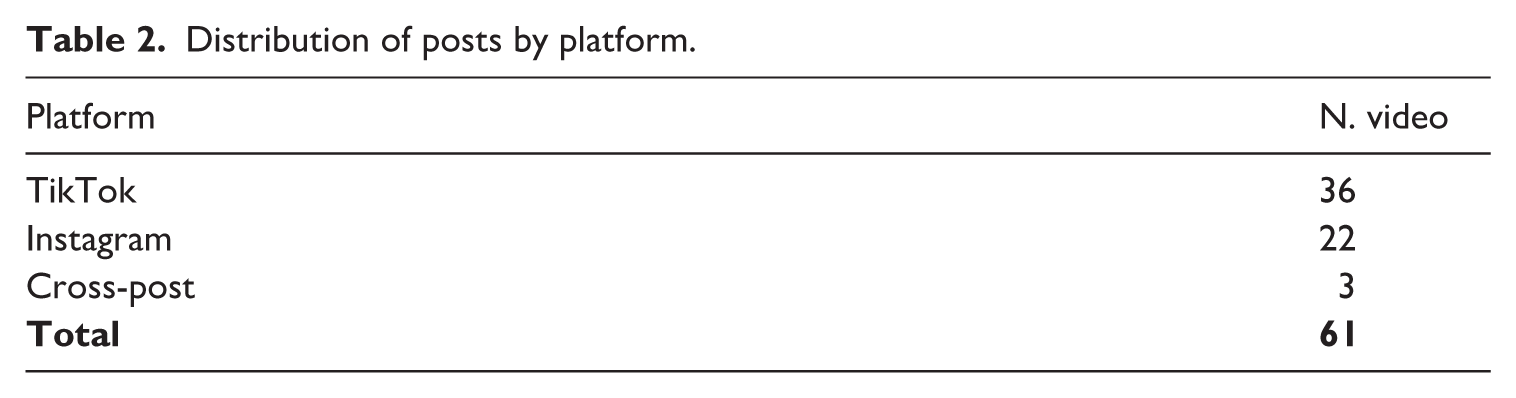
Content distribution reveals, first and foremost, the centrality of TikTok (Table 2), which hosts the majority of the analyzed videos (36 out of 61), compared to Instagram (22 posts) or content shared across both platforms (3 posts). While TikTok tends to feature content with a more dynamic and viral visual structure, Instagram appears as a more structured space for documentation and the construction of collective identities. For example, TikTok more frequently hosts hybrid and dynamic formats such as narrated montages or talking-head videos combined with protest footage (about 15 cases), whereas Instagram favors static environmental shots and interviews (about 17 cases in total), often connected to information and documentation.
Distribution of posts by platform.
The distribution by type of author also reflects a plurality of voices, with independent media/journalists dominating (32), followed by content creators (11) and local resident accounts (9). More marginal are promoted contents published by association/collective accounts (3), economic actors – including shopkeepers and economic agencies (5) – or institutional figures (1). Despite the consistent presence of videos related to journalistic investigations on both platforms, 1 there are some differences: while TikTok appears to be dominated by individual creators, content denouncing collectives, associations, and activists is mainly found on Instagram. Examples of these critical narratives are shown in Figure 1.
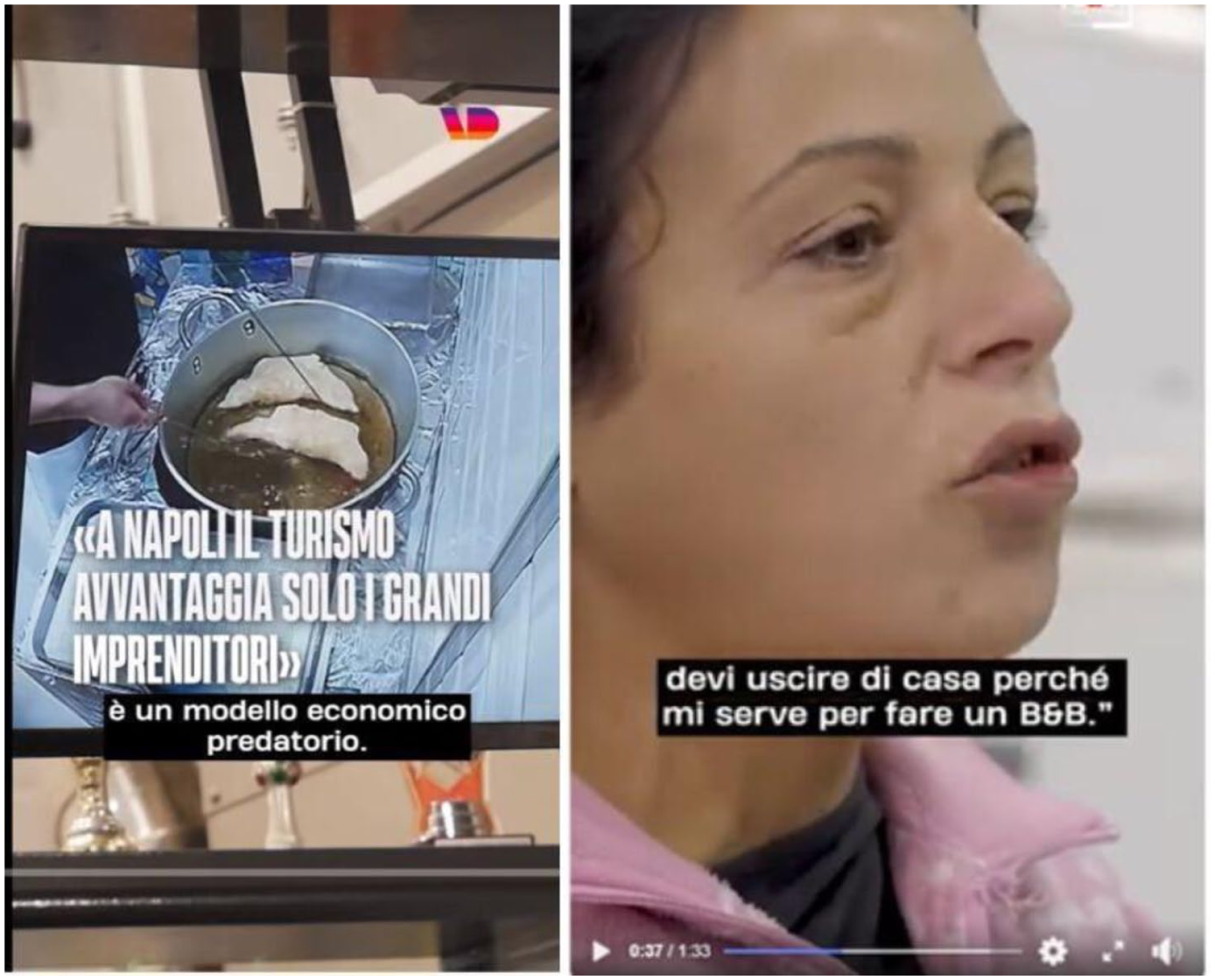
Examples of critical narrative. Italian idiom.
In terms of key themes, digital narratives about touristification in Naples highlight the polarized and often conflictual nature of the online public discourse, shaping a discursive field structured around two predominant positions. On one hand, a critical narrative – primarily driven by collectives, independent media, and activists – denounces the forms of mass tourism and its adverse effects on the urban social fabric. On the other hand, a counter-narrative – mostly articulated by residents, content creators, and economic actors – responds to such criticism by minimizing or even provocatively denying the very existence of overtourism in the city 2 (11 cases). The critical narrative on touristification raises several issues related to the right to the city. These include the erosion of housing rights, particularly for vulnerable groups such as students and families renting in the historic center, 3 loss of local identity through cultural trivalization, 4 powered by forms of foodification, 5 and broader economic and environmental repercussions, such as rising costs of living and increased urban congestion. 6
Controversially, some residents highlight the benefits of tourism, such as the spread of a new positive imaginary of the city, shaped through tourist frame (‘Napoli piena = Napoli viva’), 7 a perceived decline of crime in gentrified urban contexts (such as the Spanish Quarters), 8 and the economic opportunities associated with the concern that critical narratives may threaten the development of local entrepreneurship. 9 Representative examples of celebratory narratives are presented in Figure 2.
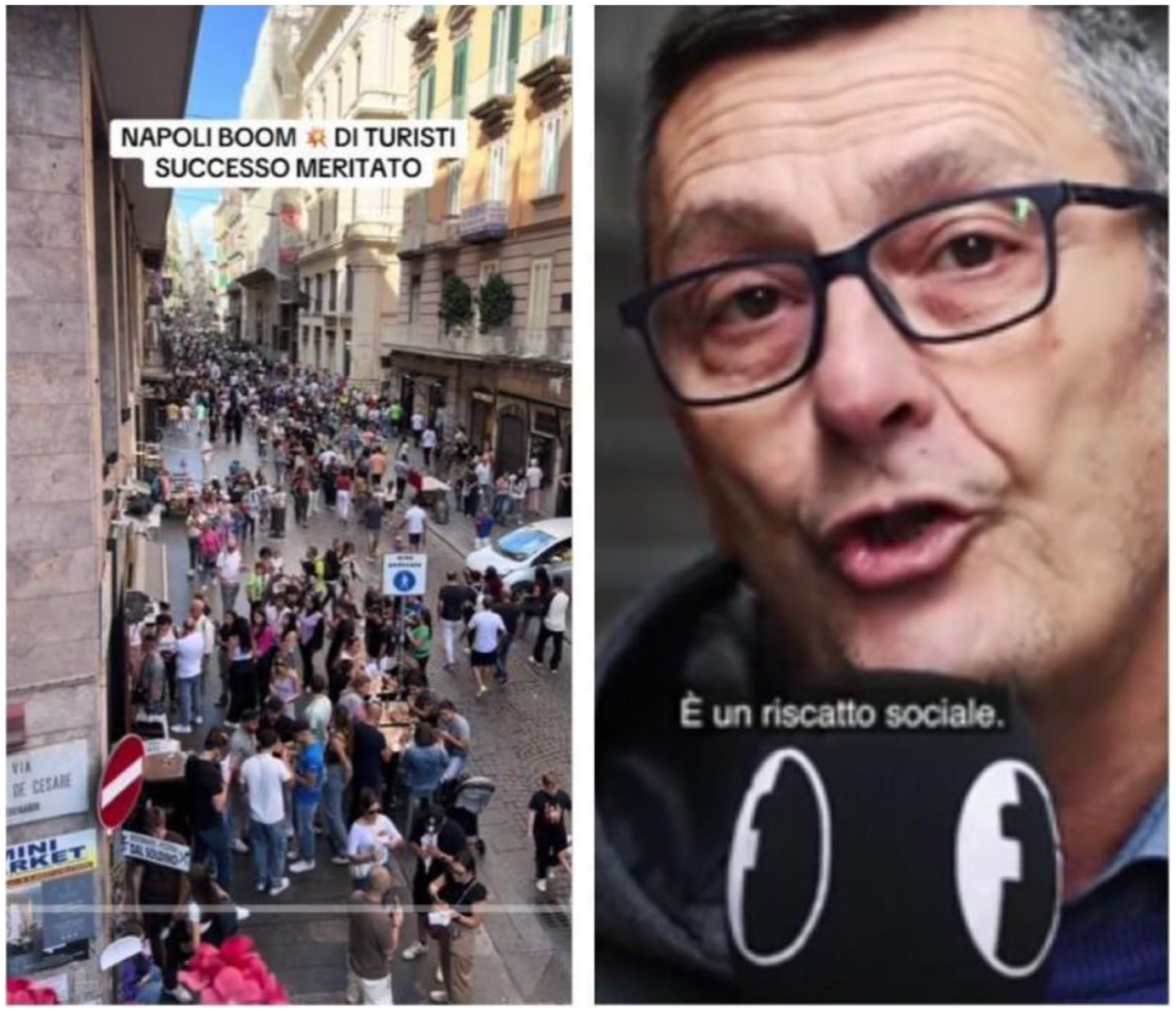
Examples of celebratory narrative in relationship with ‘touristification’. Italian idiom.
Here, too, notable differences emerge between the two platforms: on TikTok, content generally favorable to tourism tends to dominate, featuring light-hearted, visually appealing content that promotes tourism and showcases the city as a desirable backdrop. In contrast, Instagram hosts more frequent and detailed critical narratives. While the former tends to reiterate a stereotypical tourist aesthetic, with postcard landscapes, food, and folklore, and is often disconnected from the local social context, the latter reveals a conscious use of the platform’s codes for antagonistic purposes. In some cases, storytelling practices combine testimony and irony, such as when videos alternate images of tourists with voice-over narratives discussing evictions or show protest signs superimposed over picturesque city views. Other content takes the form of actual tutorials on recognizing speculative practices in the housing market, demonstrating both a high level of media literacy and a tactical use of the platform’s affordances, which constitutes a sophisticated strategy of algorithmic reappropriation. In this context, the digital debate not only reflects the complexity of the phenomenon of touristification in Naples but also confirms the central role of social media platforms in shaping urban imagery and local public opinion. Thus, the construction of the dataset based on critical keywords such as ‘touristification’ or ‘overtourism’ effectively reflects the heterogeneity of the content, highlighting the conflicting nature of the algorithmic discourse. The exact keywords that indicate resistance are repurposed for promotional purposes, confirming the hypothesis of a semantic dispute surrounding urban tourism and highlighting how platforms constitute hybrid spaces in which even the languages of resistance can be reappropriated or reinterpreted.
Through comparative analysis, significant asymmetries emerge in terms of algorithmic visibility. Graph 1 visualizes the distribution of algorithmic visibility across narrative types. The graph clearly shows that celebratory and polemical narratives are disproportionately represented in the Viral and Outlier categories, while critical content, particularly posts addressing housing displacement and mass tourism, remains concentrated in the Low and Moderate visibility tiers. This quantitative pattern reinforces the hypothesis of structural marginalization of dissenting voices within platform algorithms. As shown in Graph 2, algorithmic visibility varies substantially according to narrative type.
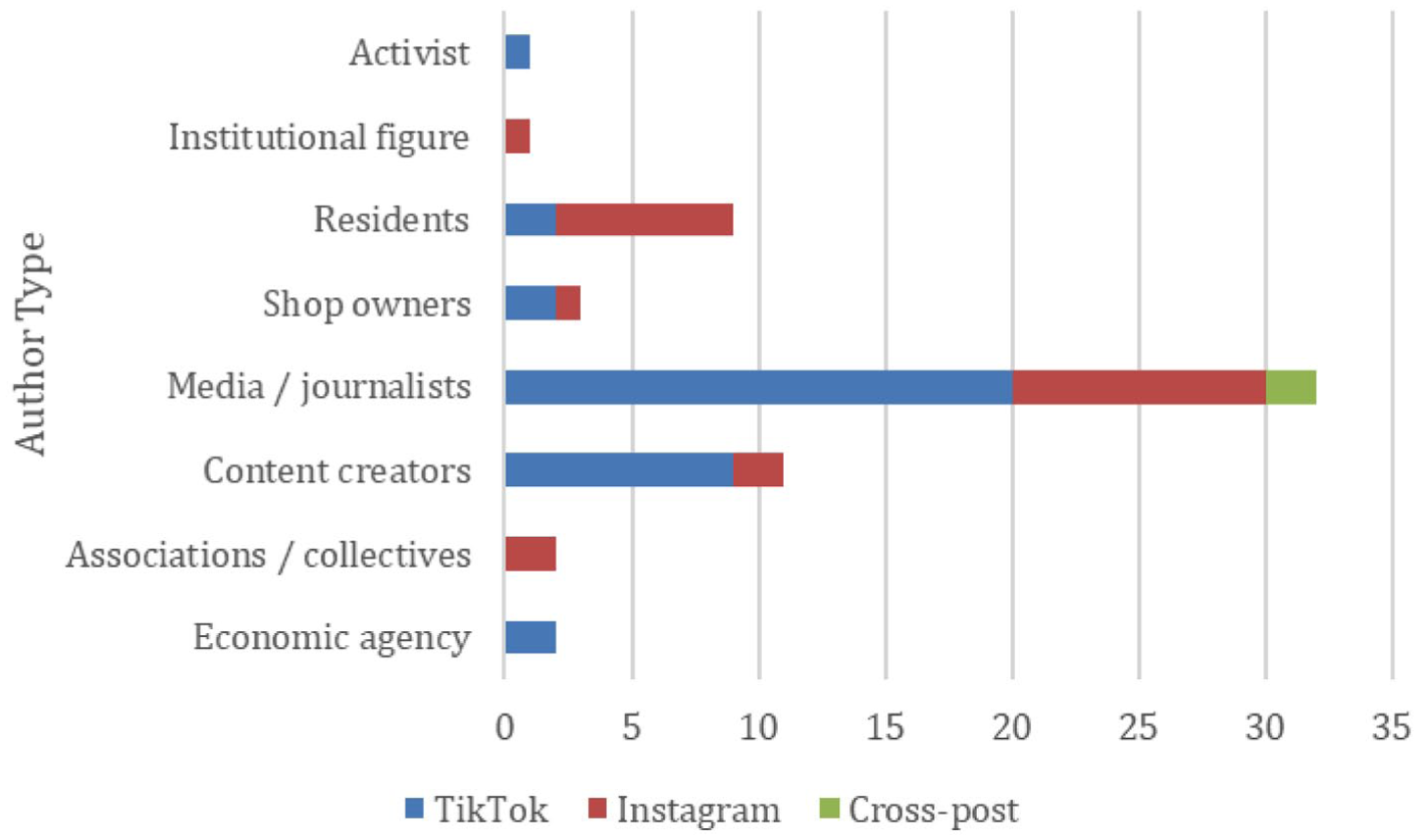
Cross-distribution of platform and author type.
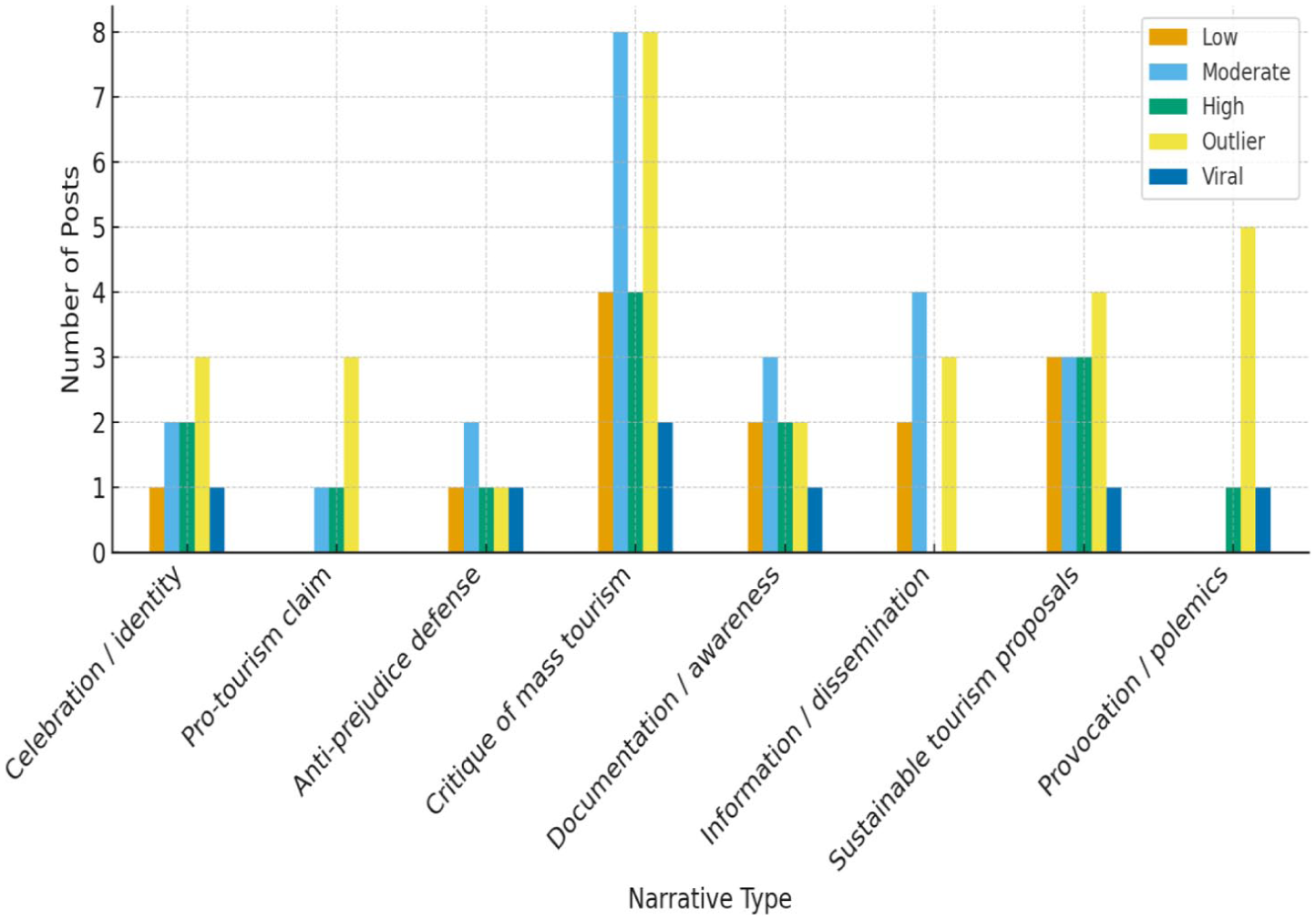
Algorithmic visibility by narrative type.
Content creators and media/journalists dominate the moderate to high visibility ranges, while collectives, associations, and activists are concentrated mainly in the low range. This distribution supports the arguments of Milan and Treré (2019) and Poell and van Dijck (2018): the algorithmic nature of platforms acts as an epistemic selector, privileging appealing aesthetics and messages aligned with commercial logics. At the thematic level as well, contents that promote a positive narrative of tourism, or convey an ambivalent critique of overtourism, tend to receive greater algorithmic exposure (among 12 cases: 2 High, 6 Outlier, 2 Viral). In contrast, content addressing the housing crisis, real estate speculation or distorting effects on the local economy, stay on the fringes (among 32 cases: 8 Low and 14 Moderate), suggesting a process of algorithmic marginalization of critical voices. The cross-analysis between aesthetics and content shows how tourist aesthetics are strategically appropriated even in critical narrative, confirming the hypothesis of ‘antagonistic appropriation’ (Boy and Uitermark, 2021). Environmental footage (14 cases) and single-voice spoken videos (18 cases) are the most commonly used formats for expressing social criticism and documentation, while dynamic montages and interviews convey both provocative polemics and informative content. A critical tone (21 cases) and in some instances an angry tone (10 cases) is strongly associated with content on gentrification, expropriation, and housing difficulties, while a satirical or polemical tone (7 cases) is used to destabilize dominant narratives on tourism, especially on Instagram. On TikTok, where visual codes are more tightly shaped by the logic of virality, the hybridization between criticism and tourist aesthetics is more subtle and implicit, although it does appear in two notable cases parodying the tourist experience with an ironic twist. These examples suggest that, even in an unequal ecosystem, some users manage to implement practices of algorithmic reappropriation (Cotter, 2019), like communication strategies that exploit the logic of the platform to convey dissonant messages. In the analyzed contents, this reappropriation takes place in at least three ways: the use of tourist aesthetics for critical purposes (e.g. environmental footage and emotional music applied to narratives of denunciation); the use of ironic or ambiguous tones to mask criticism in potentially more viral forms; and finally the adoption of influencer-native formats to convey activist messages. These strategies allow critical content to ‘slide into’ algorithmic visibility, although they remain a minority compared to the dominant logic. An example is the contrast between an ironic video featuring ‘Instagrammable’ scenery that achieved viral visibility and an interview with a housing-rights activist that remained largely unseen. These two cases illustrate the gap between algorithmically effective forms of resistance and more marginal forms of counter-narrative.
The engagement analysis confirms the algorithmic advantage of narratives aligned with promotional imaginaries. Content that celebrates tourism or local identity is more frequently found in the Viral or Outlier categories, indicating engagement levels significantly above the average relative to follower count. Similarly, content that denies or minimizes the negative impacts of tourism tends to fall into the High or Viral visibility ranges, consistent with the platform’s logic of rewarding visibility. Conversely, content on gentrification or the housing crisis is mainly distributed in the Low or Moderate categories, even though these issues represent the most urgent concerns in the counter-narrative. Even the most ‘civic’ communication strategies – such as information and awareness-raising – tend to receive lower visibility. Meanwhile, affective and more provocative approaches, including identity-based celebration, polemical provocation, or tourism-positive denunciation, are more likely to reach Viral or Outlier status. This confirms what Cotter (2019) and Bucher (2018) discussed: visibility is not a neutral property, but the outcome of an ‘algorithmic game’ in which some forms of communication are systematically privileged, while others are obscured or deactivated. This gap suggests that engagement does not depend solely on content, but above all on its algorithmically compatible ‘formatting’.
Finally, the analysis of the actor-keyword semantic network highlights an additional dimension of algorithmic counter-narratives, linked to the sharing of vocabularies and interpretive frames. The network mapping connections between actors and keywords reveals discursive and relational dynamics that help uncover implicit forms of connection within the counter-narrative field. Despite the diversity of actors involved – from activists to content creators, from media to collectives, specific recurring semantic nodes emerge, functioning as symbolic glue across otherwise distinct subject positions. Words such as ‘gentrification’, ‘living’, ‘mass tourism’, ‘resistance’, and ‘speculation’ appear associated with multiple categories of actors, indicating the presence of a shared vocabulary that transcends formal affiliations or communication strategies. These keywords not only thematize the protest but also construct a common discursive field in which different subjectivities recognize and legitimize each other. In this sense, the language of criticism of tourism constitutes a common semiotic platform, capable of connecting residents, activists, and content creators beyond formal affiliations. At the same time, the network also reveals uneven participation in the discursive space: some keywords are associated with specific actor categories, indicating forms of thematic specialization or symbolic segregation. Specifically, associations, activists, and independent media responding to social crisis; content creators shaping urban cultural identities; and economic actors linked to economic crisis. Therefore, network analysis allows us to explore not only what is said, but how narratives are articulated and intertwined between different actors. The network thus suggests a form of discursive connectivity in which keywords act as devices of algorithmic coalition, capable of generating transversal visibility and symbolic aggregation within a fragmented informational ecosystem. Graph 3 visualizes the actor-keyword network, showing how different actors converge around shared vocabularies of touristification, housing precarity, resistance, and urban justice while maintaining distinct thematic orientations.
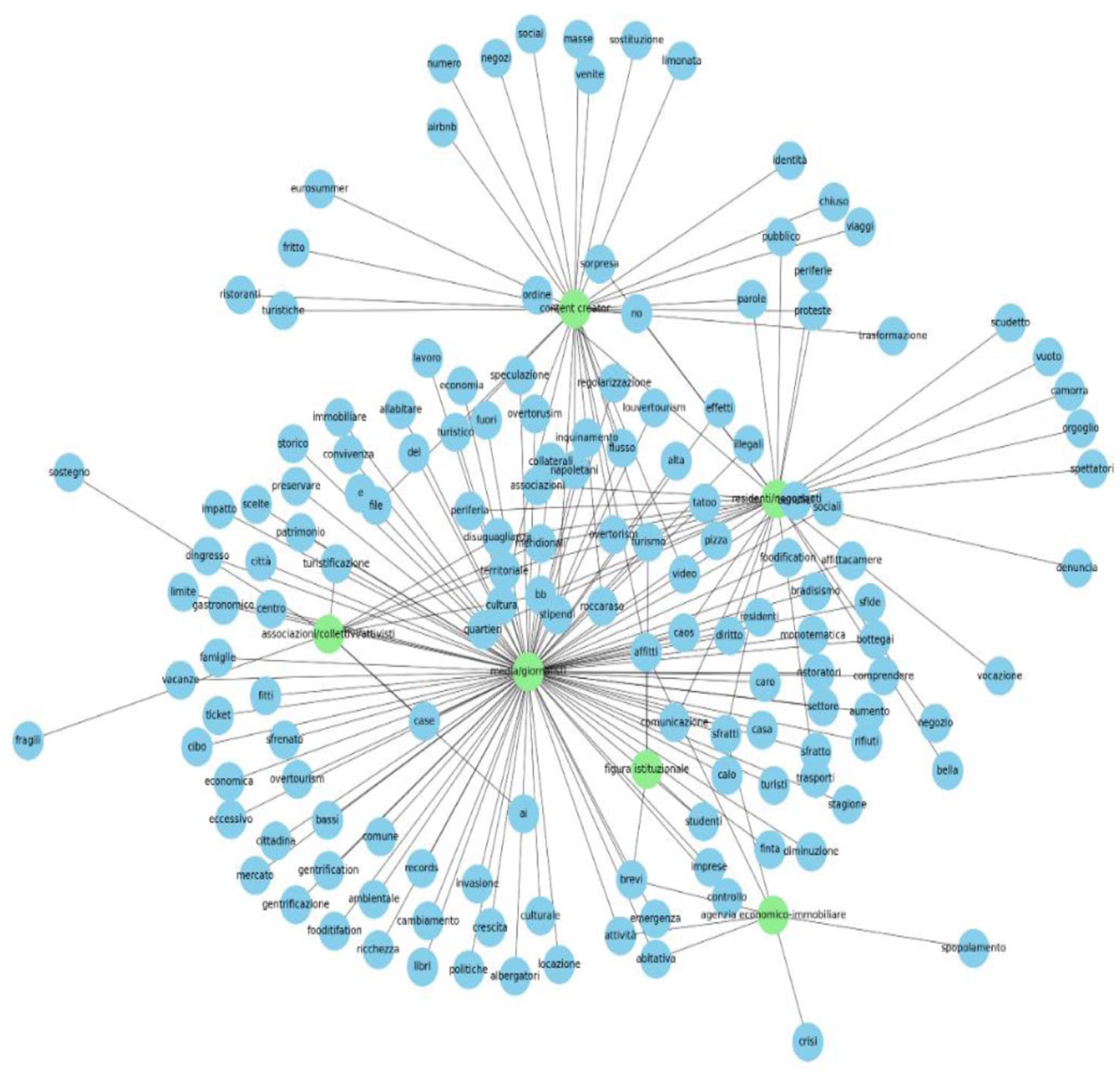
Actor-keyword semantic network. Italian idiom.
Conclusion
The algorithmic analysis of digital narratives on touristification in Naples offers a revealing lens through which to understand the entanglements of platform infrastructures, urban imaginaries, and media-based conflicts. As this case study shows, TikTok and Instagram do not merely reflect the city; they actively contribute to its symbolic construction. The algorithmic logics that govern visibility tend to favor spectacular, aesthetically pleasing content, often detached from the lived experiences of residents. In this sense, visibility is not a neutral or technical byproduct of platform use, but a profoundly political and epistemic field of struggle, shaping whose voices and perspectives gain legitimacy in the digital public sphere (Poell et al., 2022; Zuboff, 2019). Yet, despite the evident asymmetries in algorithmic amplification, Naples reveals a vibrant landscape of digital resistance. Activists, grassroots collectives, and independent media actors have developed counter-narratives that tactically appropriate the very languages and aesthetics of tourism promotion to challenge dominant representations. Their practices, ranging from ironic videos and satirical montages to direct documentation of evictions and protests, constitute not only forms of media critique but also attempts to reclaim space and meaning within algorithmic systems. Through these tactics, platform-based activism becomes a crucial layer in the broader urban struggle, in which symbolic recognition, digital inclusion, and media presence are part of the right to the city itself.
While rooted in the specific socio-spatial history of Naples, the dynamics uncovered in this study resonate with broader urban trajectories observed in Southern European cities. In Barcelona, Lisbon, and Venice, the interplay between mass tourism, housing commodification, and algorithmic mediation similarly fuels tensions between promotional imaginaries and local struggles over liveability (Díaz-Parra and Jover, 2021; Milano et al., 2019). What appears unique in Naples is the convergence of rapid tourist growth with long-standing housing precarity and a tradition of grassroots organizing, which produces an ecosystem in which digital resistance is deeply intertwined with neighborhood-based mobilizations. At the same time, the algorithmic marginalization of critical content and the dominance of celebratory narratives reflect structural tendencies common across Mediterranean tourist cities.
By mimicking tourist formats, such as drone footage, emotional music, and ‘Instagrammable’ cityscapes, and layering them with antagonistic commentary, protest signs, or data visualizations, users engage in forms of ‘antagonistic appropriation’ (Boy and Uitermark, 2021). While often marginal in terms of reach, these interventions reveal high levels of media literacy and tactical adaptation. They suggest that even within the constraints of algorithmic infrastructures, visibility can be renegotiated from below, though always within a structurally uneven field.
The findings also raise significant ethical and political questions. Activists using commercial platforms face a paradox: visibility is necessary to mobilize public attention, yet it exposes individuals and collectives to harassment, misappropriation of messages, or co-optation by the very logics they seek to contest. Moreover, the algorithmic privileging of tourist-friendly aesthetics over critical narratives contributes to a form of epistemic injustice, reinforcing asymmetries between those who profit from tourism and those who bear its socio-spatial costs. This dynamic underscores the need for public debate on the responsibilities of platforms in shaping urban imaginaries and amplifying or suppressing civic voices, especially where touristification intersects with housing emergencies and structural inequalities.
Urban governance cannot afford to ignore the role of digital platforms in shaping spatial desirability and symbolic economies. Regulatory efforts should address the proliferation of short-term rentals and promote tourism diversification, counterbalancing platform-driven narratives that highlight only a few iconic zones while overlooking museums, archeological sites, and neighborhoods excluded from the algorithmic gaze. At the same time, civic initiatives that promote digital literacy and empower residents to intervene in the politics of visibility are crucial to resisting the marginalization of dissenting narratives.
This study also has several limitations that should be acknowledged. First, the dataset focuses on a specific period and on selected profiles, which inevitably constrains the breadth of urban narratives captured. Second, platform-specific restrictions (such as opaque recommendation mechanisms, interface changes, and unequal API accessibility) limit the granularity with which algorithmic processes can be empirically observed. These constraints do not undermine the findings but suggest caution in generalizing results beyond the contexts and platforms analyzed. Future research could develop this work along several directions. Comparative studies across cities experiencing similar tensions (such as Barcelona, Lisbon, Athens, or Palermo) would illuminate how distinct socio-spatial configurations shape algorithmic visibility and digital resistance. Longitudinal analyses could examine how platform dynamics, tourism imaginaries, and activist practices evolve over time, particularly as regulatory interventions or platform policies change.
Ultimately, what circulates about Naples on TikTok and Instagram is not just a representation of the city, it is part of an ongoing struggle over what the city is, who it is for, and how it should be lived. The right to the city today must also be understood as a right to narrate, represent, and contest its image in the algorithmic sphere, an essential dimension for both academic inquiry and urban policy.
Supplemental Material
sj-docx-1-sro-10.1177_13607804261454061 – Supplemental material for Algorithmic Counter-Narratives on Naples’ Touristification
Supplemental material, sj-docx-1-sro-10.1177_13607804261454061 for Algorithmic Counter-Narratives on Naples’ Touristification by Gabriella Punziano, Suania Acampa and Federica Palmieri in Sociological Research Online
Footnotes
Data availability statement
The data that support the findings of this study are available from the corresponding author upon request.
Funding
The authors received no financial support for the research, authorship, and/or publication of this article.

Supplemental material
Supplemental material for this article is available online.
Notes
Author biographies
References
Supplementary Material
Please find the following supplemental material available below.
For Open Access articles published under a Creative Commons License, all supplemental material carries the same license as the article it is associated with.
For non-Open Access articles published, all supplemental material carries a non-exclusive license, and permission requests for re-use of supplemental material or any part of supplemental material shall be sent directly to the copyright owner as specified in the copyright notice associated with the article.
