







Abstract
This study examined the extent to which textual enhancement and task manipulation affect the learners’ attentional processing and the development of second language (L2) grammatical knowledge. A total of 73 Korean college students read an opinion news article in one of four experimental conditions: (1) textually enhanced, careful reading, (2) textually enhanced, expeditious reading, (3) textually non-enhanced, careful reading, and (4) textually non-enhanced, expeditious reading. For the enhanced conditions, the target L2 construction, i.e. the use of English participle phrases in the restrictive use, was typographically enhanced using a different color. In addition, the reading task was manipulated in terms of the speed and the manner of reading, i.e. careful reading to remember textual information as accurately as possible or expeditious reading to figure out the gist as soon as possible. While reading the article, learners’ eye-movements were recorded with an eye-tracker to measure the allocation of attentional resources as well as reading processes. In addition, stimulated recalls were collected for qualitative analysis of learners’ attentional processes. The results revealed that both textual enhancement and task manipulation had significant effects on the way participants allocated their attentional resources during reading, while it did not affect their knowledge of the target constructions as reflected in their grammaticality judgment scores.
Keywords
I Introduction
Given that attention is a principal cognitive mechanism mediating the process of selecting input for further processing, the potential of different types of instructional interventions to draw learners’ attention to target second language (L2) constructions has been the subject of much research in the field of second language acquisition (SLA). Among various interventions to draw learners’ attention to the linguistic constructions, input enhancement (also known as textual enhancement), a type of implicit ‘focus on form’ instruction, has been suggested to be an effective means of making linguistic features more salient to language learners while retaining the overall focus of attention on the meaning of the input provided (Sharwood Smith, 1991, 1993). The assumption that underlies textual enhancement is that visually salient target linguistic constructions will attract learners’ attention and, further, increased attention will result in promoting development in the use of L2 knowledge (Leow, 2015). Against this theoretical account, a number of empirical studies have been conducted to determine whether input enhancement assists language learners in noticing linguistic forms, and further promotes learning (e.g. Indrarathne & Kormos, 2017; Izumi, 2002; Leow, 1997, 2001; Leow, Egi, Nuevo, & Tsai, 2003; Winke, 2013). However, no study, to the best of our knowledge, has examined the extent to which the potential efficacy of textual enhancement is influenced by task manipulation; that is, little is known as to the combined impact of changing textual and task features on triggering learners’ noticing of the target constructions while processing the task input for meaning. Thus, this study aimed to fill this gap by investigating the extent to which textual enhancement and task manipulation (i.e. careful reading and expeditious reading) affect L2 learners’ allocation of attentional resources and furthermore, the development of L2 grammatical knowledge while engaging in the L2 reading task. By triangulating data from multiple sources, i.e. eye-gaze recordings, stimulated recall comments, and grammaticality judgment scores, this study explored both the amount and the level of attentional processes participants were engaged in while performing the reading task.
II Literature review
1 Focus on form and textual enhancement
Focus on form refers to a pedagogical intervention aiming to draw learners’ attention to target linguistic constructions without diverting their focal attention to meaning (Long, 1991), and considerable interest has been placed on determining the effectiveness of various types of focus on form techniques in triggering learners’ attention in the field of instructed SLA. As clarified by Doughty and Williams (1998), there are explicit focus on form that provides explicit learning condition (e.g. dictogloss, consciousness-raising task, input processing) and implicit focus on form, which aims to draw learners’ attention to rules and forms without explanation (e.g. input flood, input enhancement, recasts). Among these, textual enhancement (Sharwood Smith, 1991, 1993) attempts to draw learners’ attention to a target construction by manipulating typographical features through underlining, boldfacing, italicization, capitalization, coloring, or using different font types (Sharwood Smith, 1991, 1993), and its pedagogical efficacy to promote L2 learning has proved to be of particular interest to many researchers (e.g. Izumi, 2002; Labrozzi, 2016; S. Lee, 2007; Leow, 1997, 2001; Leow et al., 2003; Mackey, 2006; Meguro, 2019; Rassaei, 2020; Robinson, 1997).
These studies, however, have produced somewhat mixed findings. For instance, S. Lee (2007) examined the effects of textual enhancement on EFL (English as a foreign language) learners’ reading comprehension and L2 grammatical knowledge development. In this study, a positive effect of perceptually salient input on learning of the target constructions (i.e. passive voice) was reported. More recently, Meguro (2019) also conducted a similar study to investigate to what extent textual enhancement affected L2 grammar learning and reading comprehension. The participants were randomly assigned to a control group and three experimental groups in which the sequence of presenting the target constructions (i.e. auxiliary tag questions, do-support tag questions and modal tag questions) was counterbalanced. The control group was given with three passages without enhancement, whereas the experimental groups were asked to read the passages with typographically enhanced input using bolding and a larger font according to the treatment conditions to which they were assigned. The effectiveness of textual enhancement on grammar learning was observed only in one of the experimental groups (Group 3). Given the Group 3 received enhancement in the sequence from easier construction to more difficult construction, the finding was interpreted as a sequencing effect.
It should be also noted that there are other studies that reported no significant efficacy of textual enhancement in promoting L2 learning. Izumi (2002) and Leow et al. (2003), for instance, examined the textual enhancement on noticing and promoting L2 grammatical knowledge, and textual enhancement did not result in developing L2 grammatical knowledge. Indeed, a meta-analytic review by S. Lee and Huang (2008) reported that textual input enhancement had only a marginal impact on grammar learning with a small effect size (d = .22). However, these somewhat mixed findings that emerged from previous studies need to be interpreted with caution before drawing any firm conclusions due to the methodological variations across the studies, including divergence in the types of typographical enhancement techniques (Han, Park, & Combs, 2008). In fact, in Labrozzi’s (2016) study, which examined the effects of different types of textual enhancement (i.e. underline, bold, italics, font size, capital letters, and a different font), the results showed that changing the font size was more effective than other types of textual enhancement to promote L2 form recognition.
While caution should be exercised in interpreting and drawing conclusions from these empirical studies, one important issue that needs to be addressed is an implied assumption underpinning these studies, that is, enhanced input would be more successful in promoting learners’ attention to and subsequent processing of the target linguistic construction, compared to unenhanced input (Leow et al., 2003). Thus, it is essential to measure whether learners actually pay attention to textually enhanced target linguistic constructions in the input. In more recent studies, premised on the notion that the amount of time spent on viewing linguistic input represents the amount of attention paid (Rayner, 2009), an eye-tracking technique has been used as an alternative method to identify the effectiveness of textual enhancement in drawing learners’ attention. For instance, Simard and Foucambert (2013) recorded the participants’ eye movements to determine the effectiveness of textual enhancement in noticing target language forms (i.e. complex relative pronouns) while reading a given text. The results showed that textual enhancement successfully provoked more noticing, as indicated by total reading time, first-fixation duration, and regression duration; that is, participants were more likely to fixate longer on the enhanced target forms.
Winke (2013) also used an eye-tracking technique to investigate the role of textual enhancement in directing learners’ attention to the English passive construction. While the participants read the texts, data on their eye movements were collected using four measures: (1) total fixation time, (2) number of visits, (3) first-pass reading time, and (4) rereading time. The participants’ gains in understanding passive form constructions were measured using a pretest and a posttest, and a free recall test was used to assess overall reading comprehension. The findings showed that textual enhancement for L2 reading successfully drew learners’ attention to the target form as reflected in rereading time and total fixation duration, but failed to promote learning of the target form. This insignificant relationship between the measures of attention and learning gains was also reported in subsequent textual enhancement studies (e.g. Issa, Morgan-Short, Villegas, & Raney. 2015; Loewen & Inceoglu, 2016),
A similar trend was also found in Indrarathne and Kormos’ (2017) study that compared the effectiveness of textual enhancement to other techniques (input flood, input enhancement, instruction to pay attention to the target construction, and explicit metalinguistic explanation). In this study, textually enhanced input (i.e. highlighted in bold in a reading text) alone was not effective in drawing participants’ attention to the target syntactic construction as well as in improving their L2 grammatical knowledge. Textual enhancement, however, was successful in increasing the amount of attention paid to the target structure and improved related knowledge when combined with a more explicit focus on form interventions, i.e. an instruction to pay attention to the target construction and explicit metalinguistic explanation. This finding seems to indicate the need for an additional pedagogical device to amplify the efficacy of input enhancement so that its impact can surface in not only learner attention but also in the development of the target grammatical construction. In this line of inquiry, there are studies in which the pedagogical potential of textual enhancement was examined in combination with other attention-getting tools, namely captioning. In these studies, visually enhanced input was provided through captions in the video, providing visual, aural and/or textual input simultaneously (e.g. Cintrón-Valentín, García-Amaya & Ellis, 2019; M. Lee & Révész, 2018, 2020; Montero Perez, Peters, & Desmet, 2015). Overall, the findings of the studies have suggested that an increase in the physical salience of targeted grammatical constructions in captions has a positive influence on directing learners’ attention, while the effectiveness of textually enhanced input on promoting L2 grammar learning is still in question. That being said, whether the attested effects of textual enhancement on drawing learners’ attention can extend to the development of the enhanced L2 feature warrants further investigation.
2 Task manipulation and textual enhancement
The factors that may affect the effectiveness of textually enhanced input in drawing learners’ attention to the L2 linguistic input and the development of L2 grammatical knowledge have been subject of handful research (e.g. S. Lee, 2007; Leow, 1997; Overstreet, 1998). For instance, Overstreet (1998) and S. Lee (2007) examined if the effects of textual enhancement would interact with learners’ topic familiarity, and Leow (1997) investigated the combined effects of textual enhancement and text length on second language learners’ comprehension and acquisition of target forms. To date, however, scant L2 research has explored the potential association between textual enhancement and task-related factors in directing learners’ attention to the L2 linguistic constructions and promoting L2 learning. In one of the few studies, Jung and Révész (2018) examined whether and how manipulating the characteristics of reading activities affected noticing of glossed target linguistic constructions and glosses associated. The researchers reported that the manipulation of reading activities, requiring more careful reading, elicited longer fixation on target construction, but did not affect the overall amount of attention paid to the glosses associated with the target language. More recently, Jung (2020) probed separate and combined effects of task manipulation and glossing, another textual modification technique, on L2 reading comprehension and learning of new L2 features from the texts. In this study, manipulating L2 reading tasks in a way to promote more careful reading was shown to affect the learning of L2 grammatical features, i.e. English unaccusative verbs, indicating the need for more research along this line of inquiry.
However, little, if any, studies have focused on the relationship between task manipulation and textual enhancement. Thus, to fill this gap, the present study attempted to examine to what extent the effects of textual enhancement on the learners’ attentional processing and, in turn, learners’ L2 grammatical knowledge development is affected by task manipulation, which was operationalized as requiring careful reading to extract the complete meaning of the text through slow and sequential processes (Hoover & Tunmer, 1993) or expeditious reading including quick, selective, and efficient reading. Thus, the primary purpose of this study is to determine the extent to which textual enhancement and task manipulation affect the allocation of attentional resources to the target linguistic construction and further the development of L2 grammatical knowledge using both online measurement (eye-tracking methodology) and offline measurement (stimulated recall).
III Research questions
Against this background, the present study attempted to fill the aforementioned gaps in the literature, i.e. the role of textual enhancement in promoting L2 grammatical development and the pedagogical usefulness of task manipulation for boosting L2 learning from engaging in a reading task. To be more specific, this study addressed the following research questions.
To what extent do textual enhancement, task manipulation, and their interaction affect learners’ allocation of attentional resources on the targeted linguistic construction as reflected in eye-movements?
To what extent do textual enhancement, task manipulation, and their interaction affect development in L2 grammatical knowledge?
To what extent does learner attention allocated to the target linguistic construction relate to development in L2 grammatical knowledge?
IV Research methodology
1 Overall design
This study featured a pretest–immediate-posttest design, with 73 Korean learners of English. They were randomly assigned to one of four experimental conditions: a textually enhanced and expeiditous reading condition (n = 18), a textually enhanced and careful reading condition (n = 19), a textually non-enhanced and expeditious reading condition (n = 18), and a textually non-enhanced and careful reading condition (n = 18). Five students from each group participated in a stimulated recall session for qualitative analysis of how their allocation of attentional resources on target constructions was affected by task manipulation and textual enhancement.
2 Participants
The participants were 73 Korean university students, who were learning English as a foreign language. Their majors were diverse, including Economics, Education, Linguistics, Politics, Statistics, Engineering. There were 48 female and 25 male students, with an age range between 22 and 26. The students had received an average of 12 years of English instruction prior to the study, given that English is taught from grade three of elementary school throughout high school in South Korea. The participants’ proficiency level of English was determined with TOEFL; participants who had a test score above 90 were selectively recruited and randomly assigned to one of the four groups. The participants’ proficiency level fell into the B2 band according to the Common European Framework for Reference, as determined by the TOEFL score.
3 Target constructions
The target linguistic construction of the present study was English participle phrases, in particular when these constructions are used in the restrictive use. Participle phrases, either present participle phrase (ending in -ing) or past participle phrase (ending in -ed), function as adjectives to describe nouns. For instance, in a sentence, Two students waiting outside look cold, ‘waiting’ is a present participle to modify the noun ‘students.’ Although Korean students learn the restrictive use of English participle phrases in middle schools under the current national curriculum, the appropriate use of participle phrases is one of the challenging grammatical structures to acquire for L2 learners whose L1, like Korean, does not have the same features. Furthermore, although participle phrases are often used to ensure the textual and syntactic variety in academic writing, Korean learners of English appeared to exhibit limited use of the participle phrases (Cho & Park, 2015).
4 Treatment
The treatment task in this study was designed for the participants to read an opinion news article entitled ‘We need to ban or limit smartphone use in schools’ published in the Vancouver Sun (Baines, 2018). Given authentic reading materials such as news articles, literature, magazine articles are often used in the language classroom, a task including a real news article was considered to have more face validity with students. We ensured that 93.3% of the words were within the most frequent 3,000-word list computed via Lextutor (Cobb, n.d.) so that the article was understandable for the participants of this study, who were upper intermediate level learners (CEFR B2 level). The total number of words was 851. We typed the text using 14-size Courier font and divided the text into six segments, each segment having 10 to 14 lines, to present on a computer screen. In addition, the total number of 14 target linguistic constructions (7 present participles and 7 past participles) was included. These target constructions were highlighted in a red color for the textually enhanced groups because other enhancements (e.g. bold font, italicized font, underlining) could be problematic for selecting the area of interest for an eye-tracking study (Winke, 2013). With an authentic reading material (i.e. news article), the number of letters in each target linguistic construction was not controlled; however, the areas of interest for each target linguistic construction were the same between the two groups for the consideration of validity.
In order to enact distinct types of reading behaviors, one of two different reading scenarios was provided to the participants. Under the careful reading condition, participants were told that they had to engage in an argumentative task on the appropriate mobile phone use among teenagers, and thus they needed to read the article thoroughly and attentively to remember textual information as much and accurately as possible. Under the expeditious reading condition, on the other hand, a situation was created for the participants to skim the article for figuring out the gist as quickly as they could, as the library was about to close. To ensure that they understood the given reading scenario and the required type of reading, the instruction was delivered in Korean, and the participants were asked to retell the type of reading they should perform back to the researchers prior to reading. While the participants were reading the article on a computer screen, their eye-movements were recorded using Tobii Pro X3-120. There was no time limit set for the reading session.
5 Assessment of L2 development
To measure receptive knowledge of the target constructions, a pretest and an immediate posttest were constructed with a computer-based untimed grammaticality judgment test (GJT) using Eprime 3.0. A total of 80 items, including 32 target items and 48 distractors, were constructed. A sentence was presented on a computer screen for the participants to read and make a judgment by pressing ‘z’ or ‘m’ to indicate whether they judged an item to be grammatical or ungrammatical, respectively. All items (target and distractors) were randomly presented, and fixation crosses were used to indicate transitions between items. The four sets of GJTs (A, B, C, and D) were counterbalanced across conditions and testing sessions among participants using a Latin Square design. In each set, 16 grammatical and 16 ungrammatical sentences were included, which made the maximum score of 32. The instructions were provided in the participants’ native language, i.e. Korean, and practice items were first provided for the participants. The reliability of each version of the GJT was assessed using Cronbach’s alpha and all four versions were found to be reliable (set A: .53; set B: .58; set C: .62; and set D: .64).
6 Questionnaires
In this study, a background questionnaire, a post-reading questionnaire, and an exit questionnaire were employed. At the outset of the study, the participants were asked to complete the background questionnaire to collect demographic information such as their age, gender, major, and English learning experience. The post-reading questionnaire was administered immediately after the participants completed reading so as for the participants to provide their perceived level of topic familiarity to the reading text content. The exit questionnaire included questions about: (1) whether participants recognized the purpose of the study, (2) whether they focused on any particular grammatical features during the study, and (3) whether they consulted any other sources outside the study (i.e. internet).
7 Stimulated recall
A stimulated recall session was held with five students from each group, making up 20 in total. The participants were asked to watch their eye-gaze tracked video recording and verbalize what they were thinking while they were performing the treatment task. They were instructed to pause the recording at any time to describe their thoughts at any particular point while reading the passage. The researcher also paused the recording when discernible eye-movements or long fixations were observed. The stimulated recall sessions were carried out in the participant’s native language (Korean), and video recorded.
8 Procedure
The data were collected over four weeks. At the outset of the experiment, an information sheet and a consent form were provided to the participants, followed by the background questionnaire and the pretest. Next, they were asked to read the passage on a computer screen under the condition they were assigned to. While performing a treatment task, the participants’ eye movements were recorded using a Tobii Pro X3-120 mobile eye-tracker with a temporal resolution of 120 Hz. The mobile eye-tracker was mounted onto a laptop computer with a 17-inch screen. The distance between the participant and the computer screen was approximately 60 cm. The experiment was delivered with Tobiipro Studio (Tobii Technology, 2018). Upon completion of the treatment task, the post-reading questionnaire and the immediate posttest were administered. Then, those who were assigned for the stimulated recall condition were asked to recall their reading processes. The entire session took approximately one hour for non-recall participants and two hours for the participants who attended the stimulated recall sessions (see Figure 1).
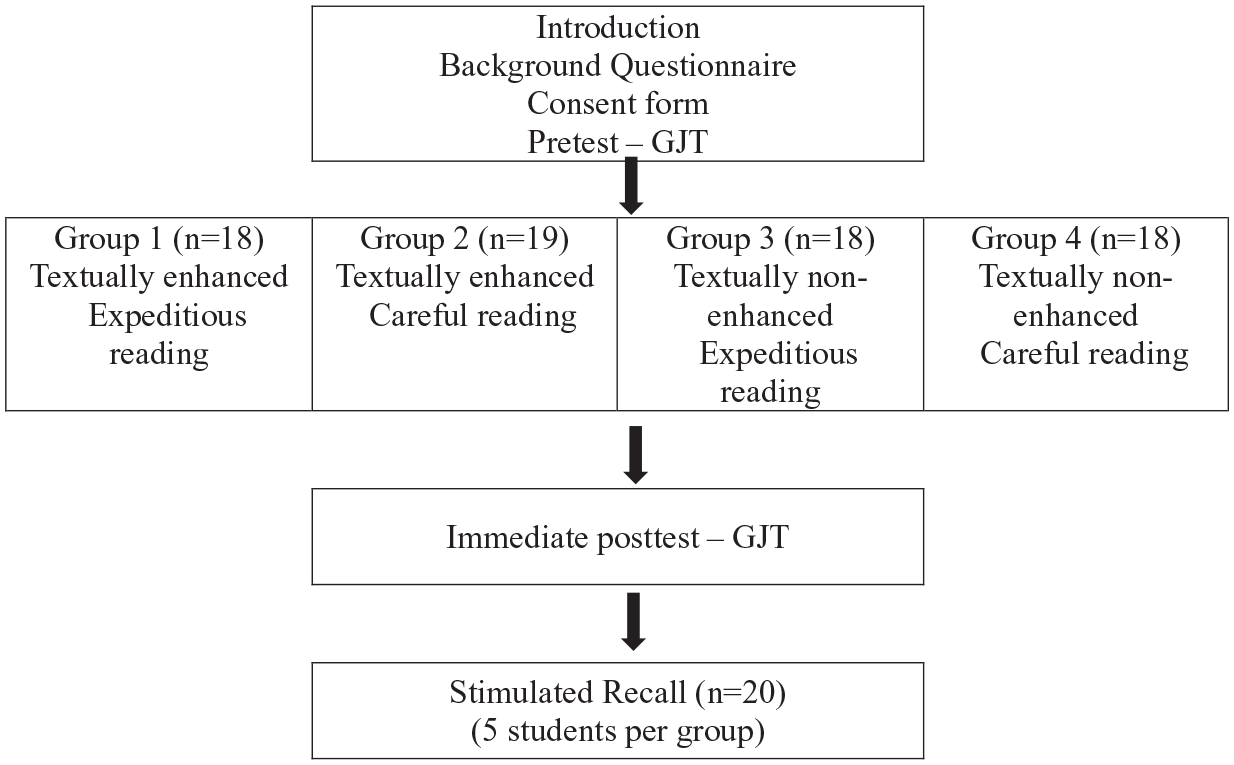
Study design and procedure.
V Data analysis
1 Eye-gaze data
To analyse eye-movement data, areas of interest were selected around each target item as shown in Figure 2. Then, three measurements – first fixation duration, total fixation duration, and total fixation count – were used to determine the amount of attention paid to the target linguistic construction. First fixation duration is defined as the duration of the first fixation within the area of interest irrespective of whether it is the only fixation or the first of multiple fixations within this region. Total fixation duration is the sum of all fixation durations. Fixation count refers to the number of all fixations made within a given region of interest. Mean fixation durations and SDs were calculated for each participant. Following the common procedure of eye-movement data trimming (Conklin, Pellicer-Sánchez, & Carrol, 2018), fixation durations that were three standard deviations below or above each participant’s overall mean were identified as outliers and removed from the data set and not included in the subsequent statistical analysis.
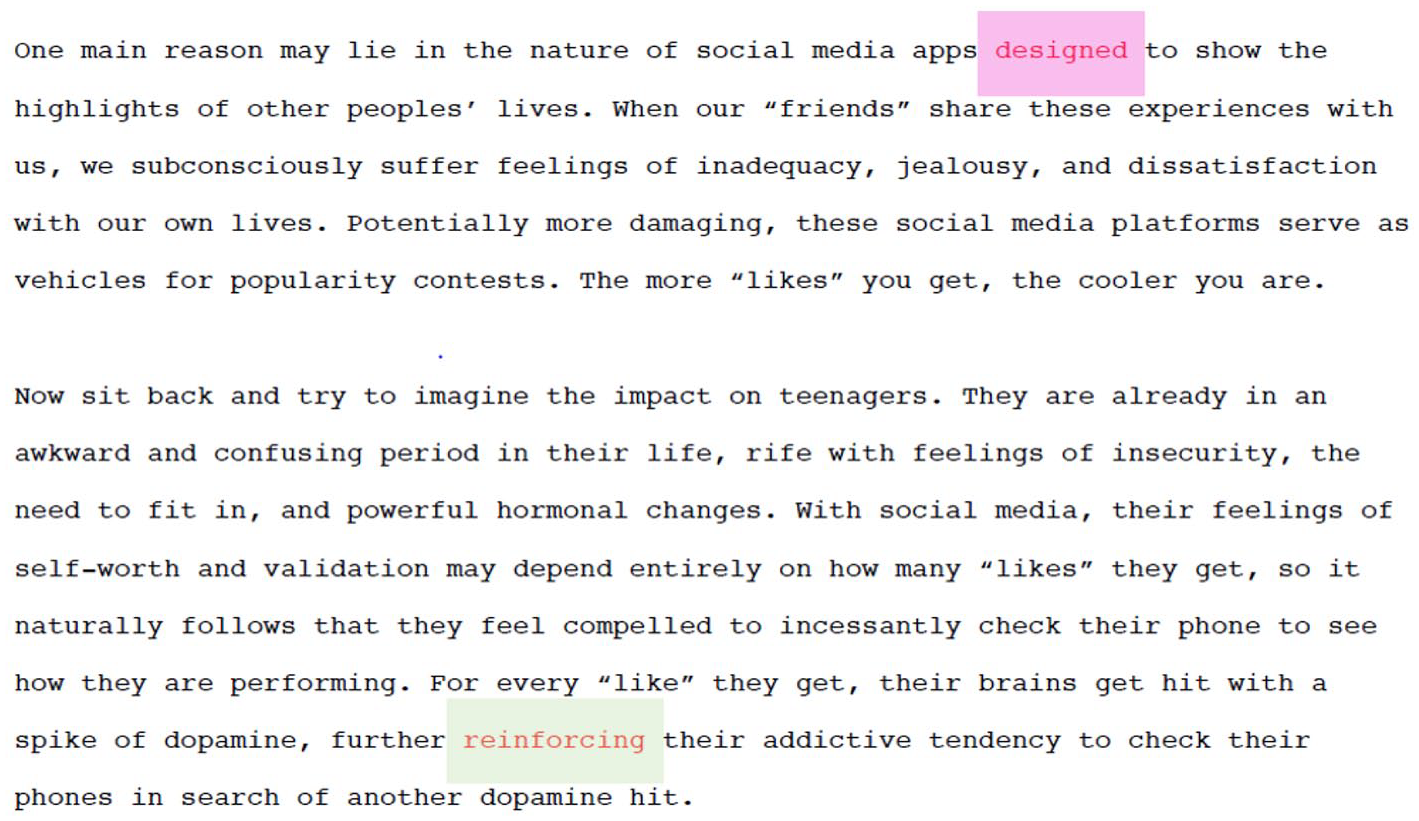
Area of interest.
2 Statistical analysis
SPSS 24.0 (Statistical Package for the Social Sciences) was the main statistical analysis software used to calculate both descriptive and inferential statistics in this study. A series of two-way ANOVAs were carried out to determine the effects of textual enhancement and task manipulation on (1) learners’ allocation of attentional resources on the target linguistic constructions (research question 1) and (2) the learning gains on the target linguistic construction, measured by the GJT (research question 2). A series of Spearman correlation analyses were conducted to examine the relationship between learners’ attention allocated to the target linguistic construction and learning gains (research question 3). An alpha level of p < .05 was set for all tests and effect size estimates were obtained by calculating eta-squared (η²) values for the two-way ANOVAs (Norouzian & Plonsky, 2018). Following Plonsky and Oswald (2014), η² values of .06, .16, and .36, and r values of .25, .40, and .60 were considered as small, medium, and large, respectively.
3 Stimulated recall analysis
The stimulated recall comments were transcribed for the researchers to review the participants’ comments describing the attentional processes in which they engaged during reading. The transcripts were coded in a bottom-up manner by annotating comments using NVivo 12 Pro so that patterns and categories could emerge from the data. The participants’ reading behaviors were annotated along four categories: Fast reading, Slow reading, Re-reading, and Pausing. In addition, four categories were identified for noticing behaviors, namely, Red-coloring, Unfamiliar words, No reason, and No memory (see Table 6 below). The first category, Red-coloring, included the comments related to the participants’ noticing of the target linguistic construction on account of the typographically enhanced font, i.e. red-colored font. The participants’ comments were categorized as Unfamiliar words when they commented that they fixated on the target linguistic construction because they did not know the meaning of the word. The third category, No reason was related to the case when the participants fixated on the target linguistic construction without a specific reason. No memory, the last category, referred to the case when the participants commented that they noticed the target linguistic construction but were not able to remember the reason. The first coder annotated the comments using NVivo 12 pro and the second coder reviewed the comments that were classified into micro-categories. The percentage agreement between the coders was 99% for coding categories. The coders met face-to-face to resolve any disagreement in their annotations before further analysis of the coding results.
VI Results
1 Preliminary analyses
The comparability among the groups at the outset of the study was determined with the pretest scores. The results of a one-way ANOVA showed that there was no significant difference among the four groups, F (3, 69) = .15, p = .93, η² = .01 (see Table 1). Next, it was checked whether participants shared a similar level of topic familiarity to the content of the article, as prior knowledge plays a significant role in reading comprehension (S. Lee, 2007). As can be seen in Table 1, no significant difference among the groups was found in terms of their perceived familiarity with the topic of the article (F = 1.94, p = .13, η² = .07), indicating that the groups had equivalent topic familiarity.
Results of topic familiarity by condition.
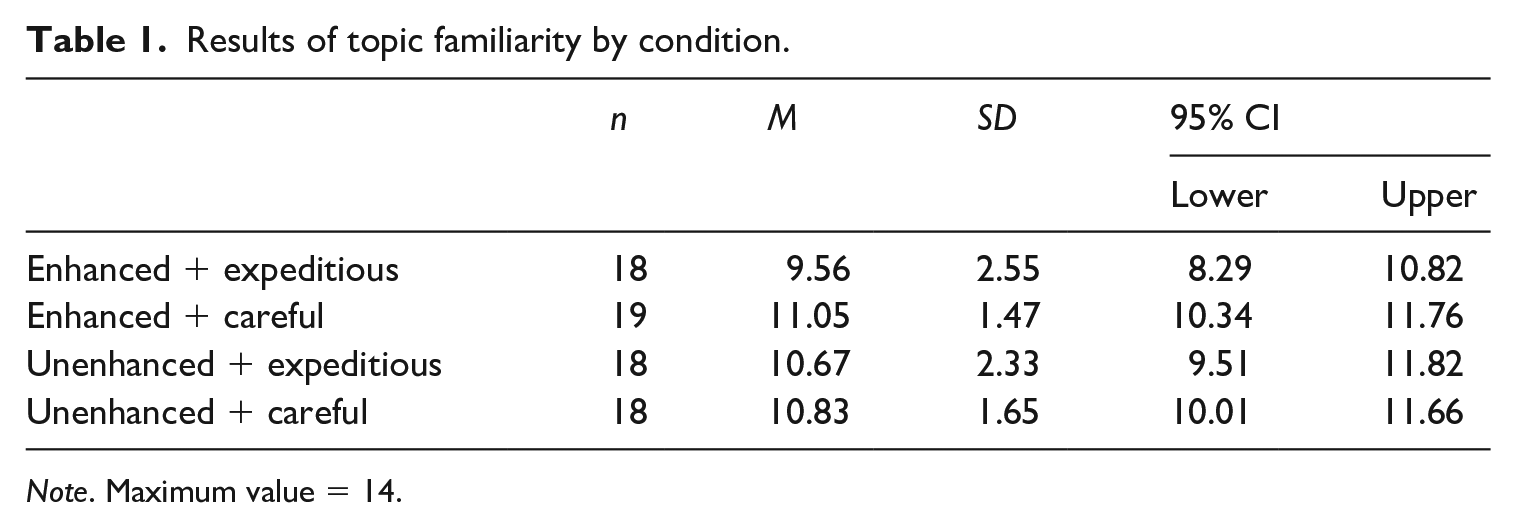
Note. Maximum value = 14.
2 Attention as reflected in the eye-movements
To address the first research question, we ran a series of two-way ANOVAs, including textual enhancement and task manipulation as the independent variables and the eye-movement measurements (i.e. first fixation duration, total fixation duration, or fixation counts) as the dependent variables. The descriptive statistics for the eye-movement measures are summarized in Table 2.
Descriptive statistics for attention measurements.
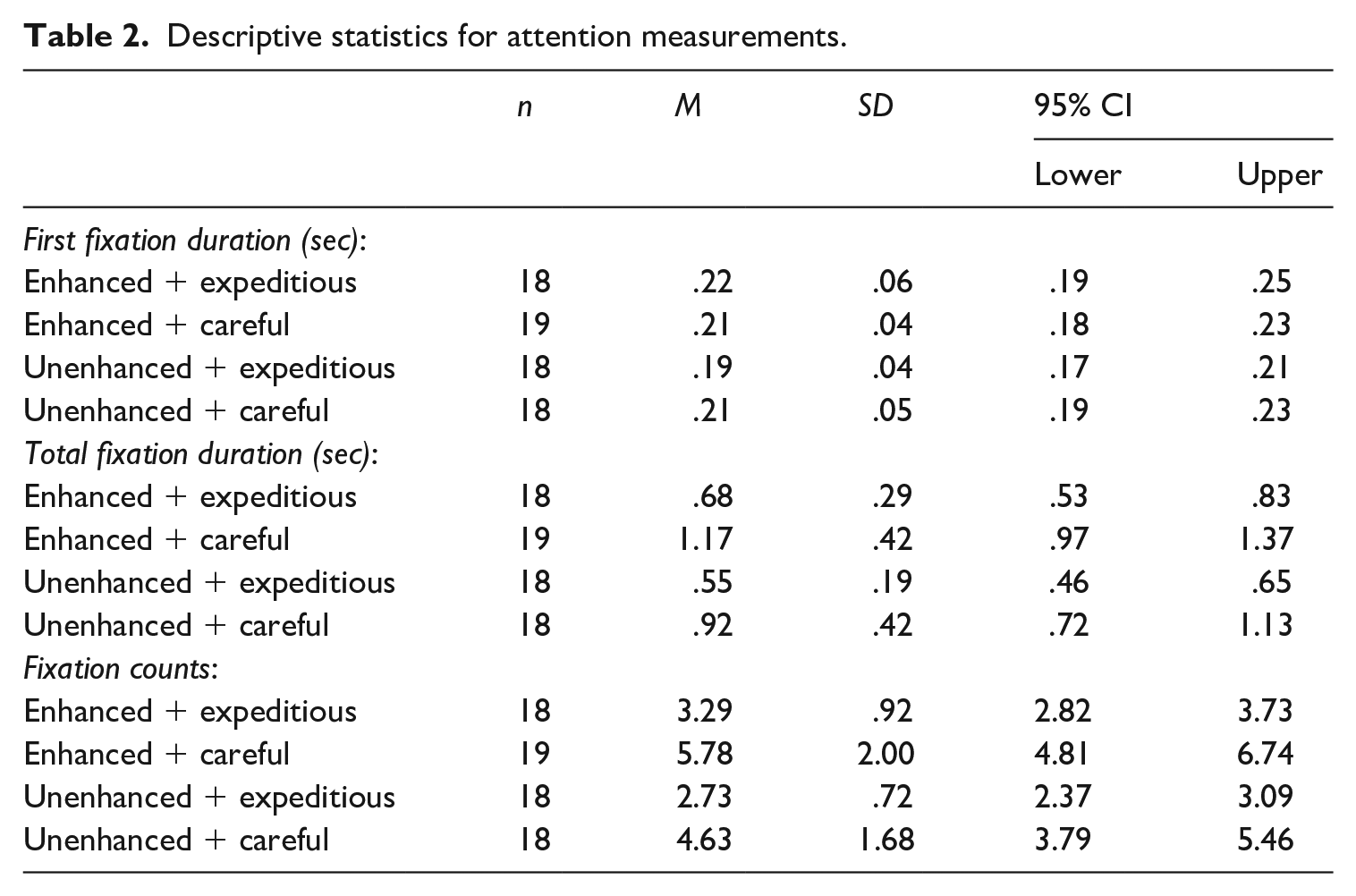
The results of the two-way ANOVA revealed a statistically significant effect for the main effect of textual enhancement in terms of the total fixation duration (F = 5.42, p = .02, η² = .07) and the fixation counts (F = 6.30, p = .01, η² = .08). That is, the textual enhancement attracted learners’ attention, as reflected in both the length and the frequency of their eye-fixations. A similar pattern was found for the task manipulation effects; that is, there were significant differences between the careful reading groups and the expeditious reading groups in terms of the total fixation duration (F = 28.10, p < .01, η² = .29) and the fixation count (F = 42.38, p < .01, η² = .38). These results can be interpreted that, as compared to the participants who were asked to read expeditiously, the participants who read the passage more carefully fixated longer and more frequently on the target linguistic constructions. However, the interaction of textual enhancement and task modification was not statistically significant (F = .81 p = .37, η² = .01).
3 Learning gains as reflected in the GJT scores
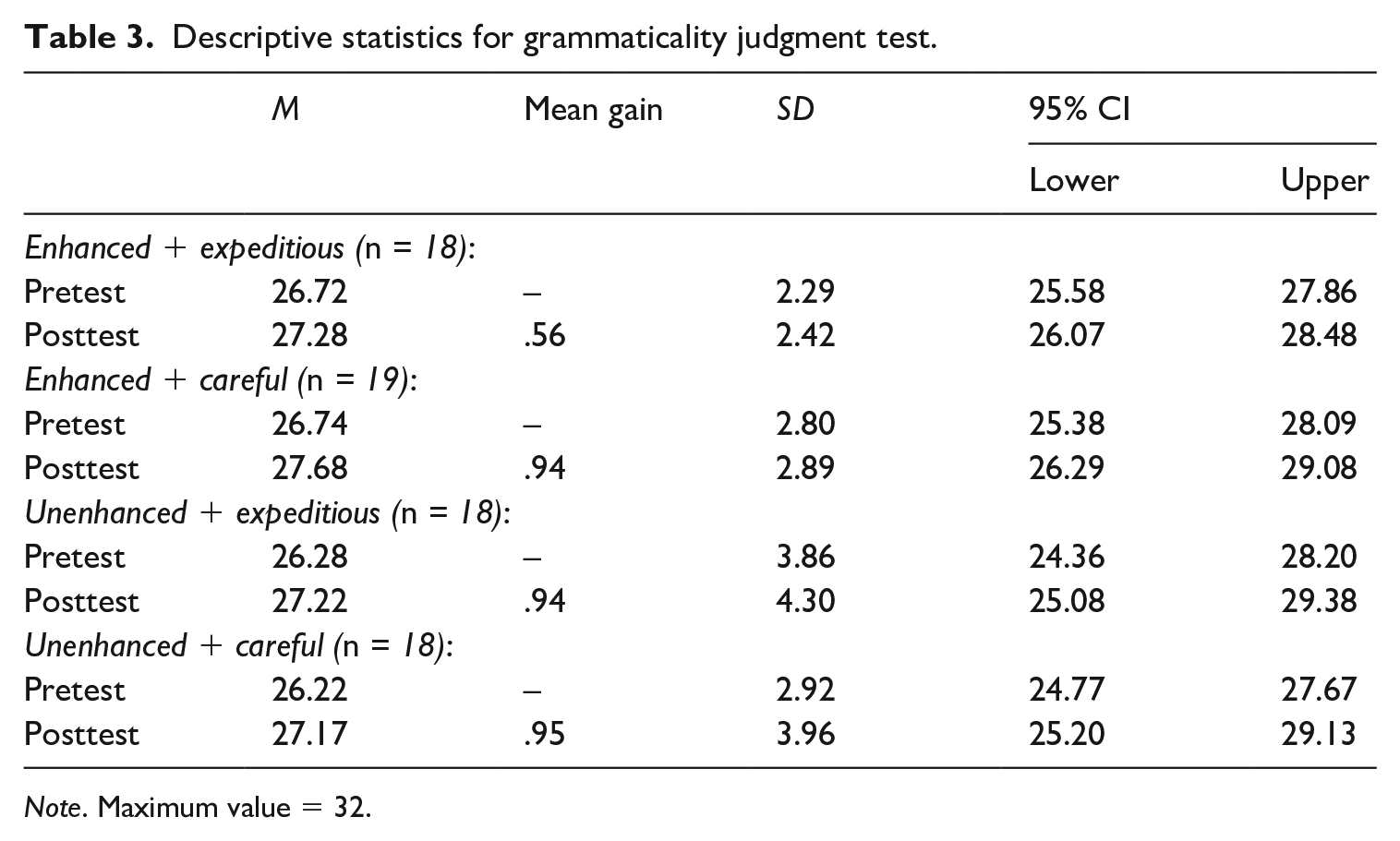
For the second research question, a two-way mixed-model analysis of variance (ANOVA) test with repeated measures was carried out to determine the textual enhancement, task manipulation and their interaction on pretest–posttest GJT gains. Table 3 presents a descriptive statistic for the GJT for the four groups. Results showed that there was no significant main effect of textual enhancement (F = .06, p = .80, η² < .01), task manipulation (F = .07, p = .79, η² < .01), and interaction effect (F = .07, p = .80, η² < .01) on learning the target linguistic construction.
Descriptive statistics for grammaticality judgment test.
Note. Maximum value = 32.
4 Relationship between eye-fixation and GJT scores
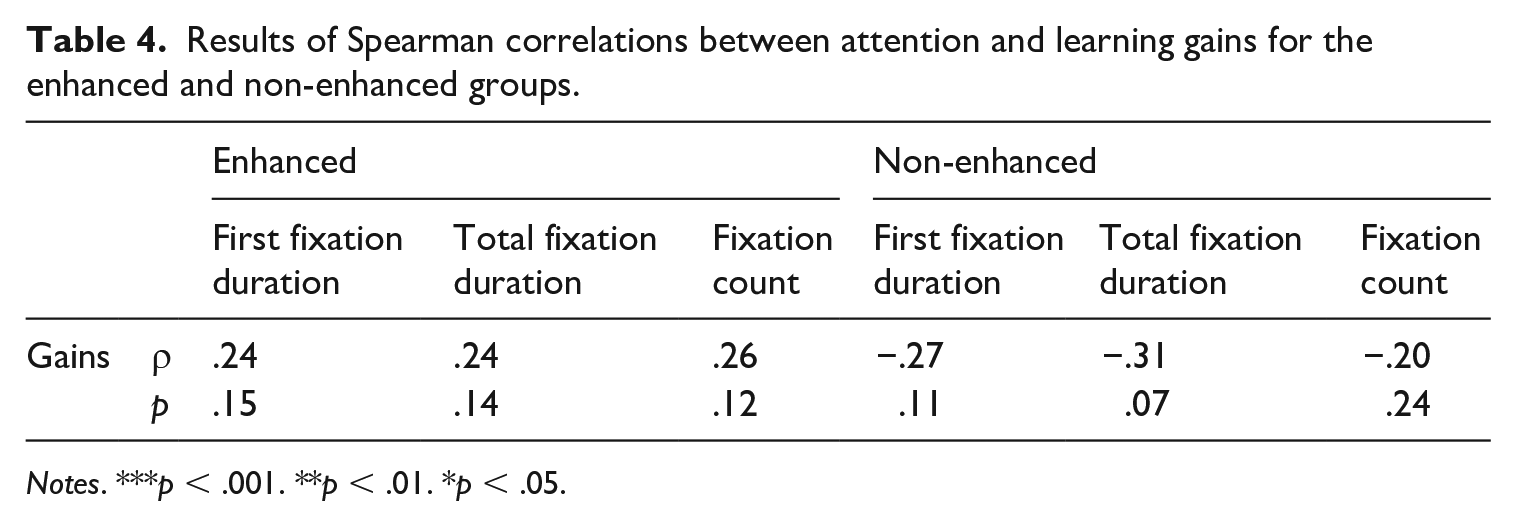
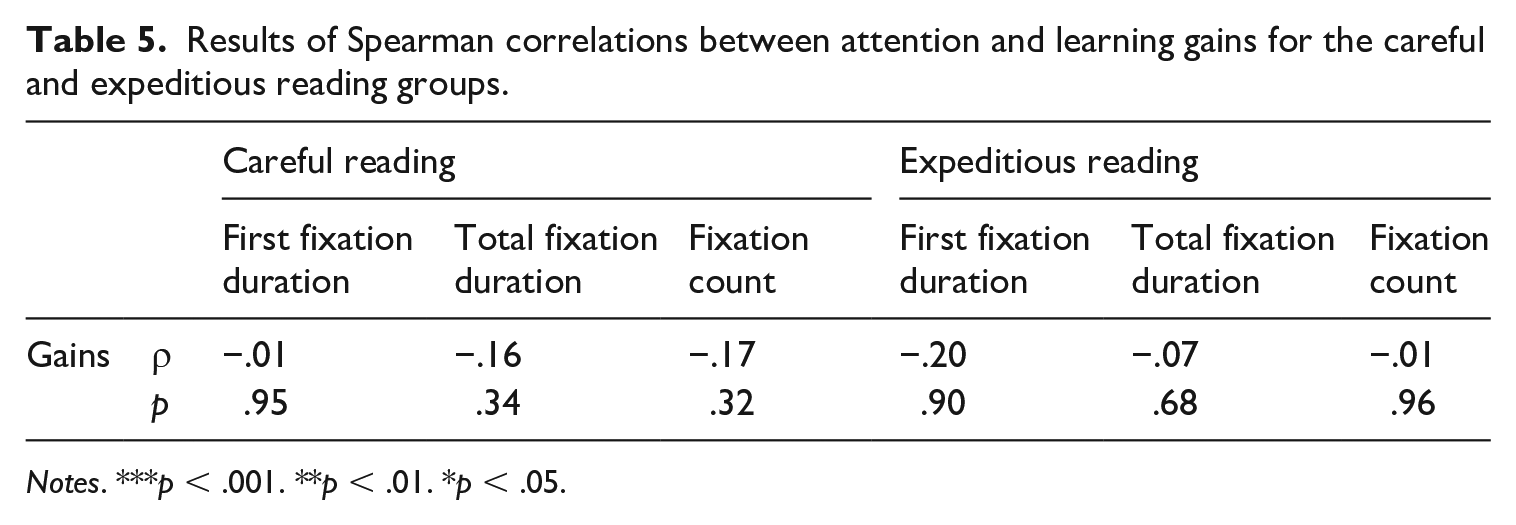
As for the research question three, which posed a possible relationship between the learners’ allocation of attentional resources on the target linguistic constructions and learning gains, no meaningful relationship was observed for both textual enhancement groups and task manipulation groups (see Tables 4 and 5). Such finding suggests that longer fixation on the textually enhanced input did not result in promoting L2 grammatical knowledge development.
Results of Spearman correlations between attention and learning gains for the enhanced and non-enhanced groups.
Notes. ***p < .001. **p < .01. *p < .05.
Results of Spearman correlations between attention and learning gains for the careful and expeditious reading groups.
Notes. ***p < .001. **p < .01. *p < .05.
5 Stimulated recall comments
Table 6 summarizes the codes, frequencies of annotations, and sample comments that were found from the stimulated recall comments, which helped us to speculate the participants’ cognitive operations while performing the task. As shown in Table 6, the participants who read the article carefully made significantly more comments that were related to re-reading and pausing, recalling that they attempted to process the textual information thoroughly by engaging in repeated reading and taking a moment in the middle of reading to synthesize what they had read. By contrast, those under the expeditious conditions reported substantially more about their fast reading behaviors, commenting that they hurried to extract the gist from the article quickly. More importantly, the largest percentage of comments was made by the textually enhanced and careful reading group (68 %), followed by the textually enhanced and expeditious reading group (24 %). This finding indicates that the participants paid more attention to the target linguistic construction when they were provided with perceptually salient input and the task requiring more cognitive engagement. It was also revealed that the saliency, highlighted in a red color, was the main reason for them to pay closer attention to the target linguistic construction.
Stimulated recall comments.
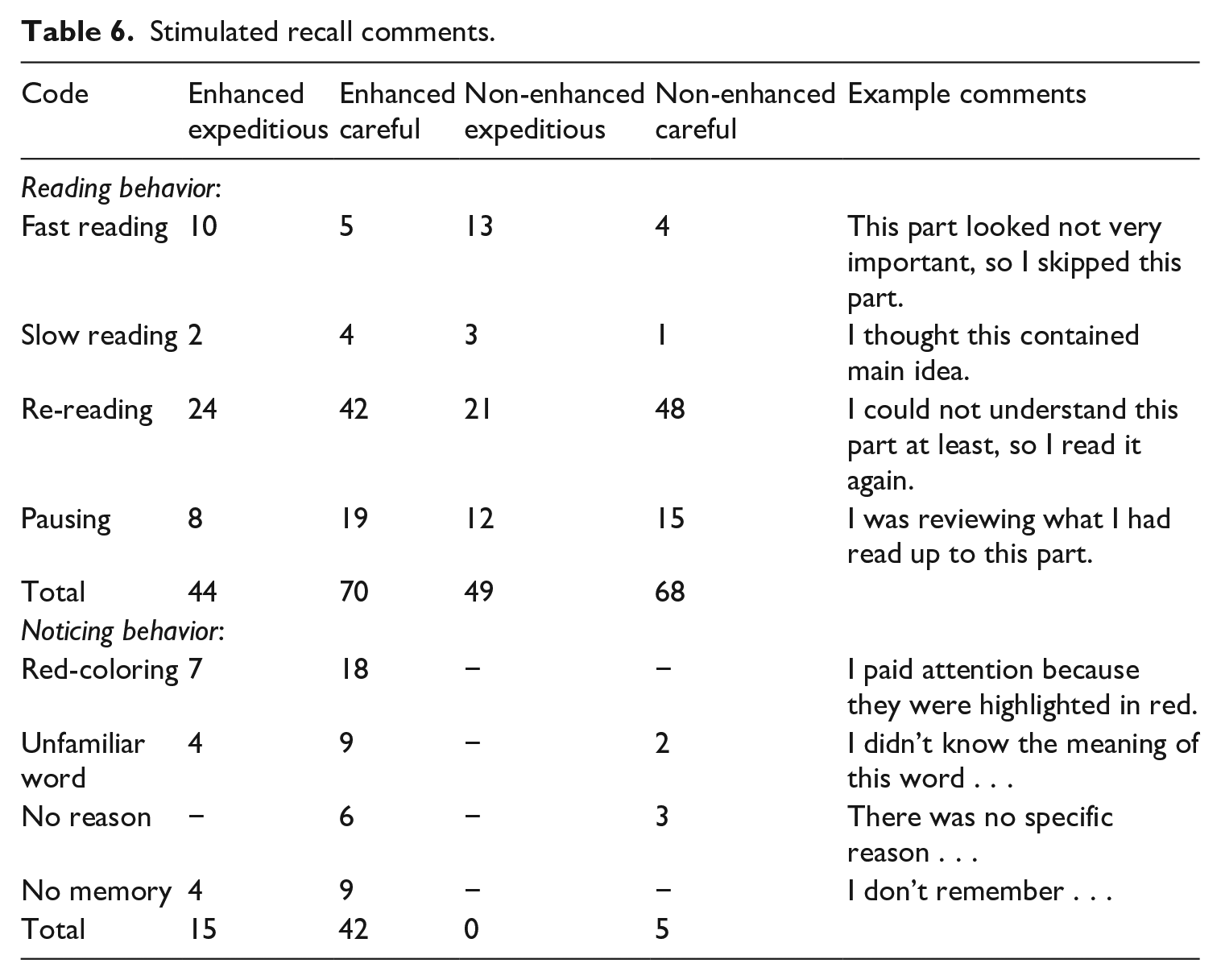
In addition, the characteristics of the task also contributed to learners’ noticing of the target linguistic constructions. That is, the participants who were asked to read the text carefully, regardless of textual enhancement, demonstrated that they noticed the constructions more than the participants who were assigned to read the text expeditiously.
VII Discussion
The main purpose of this study was to determine to what extent textual enhancement, task manipulation, and their interaction would affect Korean college students’ allocation of attentional resources on the target linguistic construction, i.e. English participle phrases in the restrictive use, and furthermore, the development in their knowledge about the construction. To achieve this aim, the target items were enhanced using a different color (i.e. red) and the task was manipulated by requiring the learners either to read carefully in order to prepare for an argumentative activity or to read expeditiously to grasp the gist of the passage.
First, as reflected in the eye-movement data, the participants paid more attention to the target linguistic construction under the enhanced conditions. Thus, the results of the present study added further support to the theoretical assumption that textual enhancement is effective to attract learners’ attention not only to vocabulary (e.g. Choi, 2017; Labrozzi & Villegas, 2020; Pellicer-Sánchez, 2016) but also to morphosyntactic features (e.g. Winke, 2013). However, it was revealed that perceptual saliency of the input did not result in promoting L2 grammatical knowledge development (e.g. Izumi, 2002; Leow et al., 2003; Loewen & Inceoglu, 2016; Winke, 2013), and furthermore, no significant relationships emerged between attention and learning gains of the target linguistic construction. In other words, the significant impact of textual enhancement did not extend to the development of L2 grammatical knowledge. Such a finding can be interpreted as suggesting that the amount of attention induced by textual enhancement may not be sufficient to result in subsequent learning. That is, the amount of attentional resources allocated to the target linguistic construction might not necessarily reflect a higher-level processing (M. Lee & Révész, 2020). However, the interpretation of the findings from these previous studies remained rather tentative due to the absence of the verbal protocol data. Against this background, the present study collected the triangulated data through the combination of eye-tracking with verbal protocol and obtained further evidence that learners’ attention allocated to the target linguistic construction was not linked to their ‘awareness’ of the target linguistic construction. That is, a large percentage of the enhanced groups’ comments indicated that the participants noticed the typographically enhanced input, colored in red; however, none of the participants was able to identify a particular use of the target linguistic construction. The exit questionnaire responses also showed that the participants were unaware of the target linguistic construction of the study. The fact that no comments were made on the target linguistic construction along with the results of GJT indicating no significant effect on learning gains, it could be reasonably assumed that paying attention to the target construction may not be sufficient for subsequent learning to occur. Taken together, the results of the present and the previous studies seem to indicate that the degree of gains in L2 grammatical knowledge, if any, could have been attributed to a higher level of processing at the level of awareness, rather than a lower level of attentional processes they engaged, which was captured in the eye-tracking measures (Leow, Grey, Marijuan, & Moorman, 2014).
However, it should also be noted that there are recent textual enhancement studies, which have reported that textually enhanced input was successful in promoting the development of L2 grammatical knowledge (Labrozzi, 2016; Meguro, 2019). These studies showed the beneficial effects of textually enhanced input on promoting L2 grammatical knowledge development. As mentioned previously, such mixed findings could be due to the methodological variations across the studies, such as typographical enhancement techniques used to make the input salient, the types of measurement used to assess learning gains, and the nature of target linguistic constructions. Thus, it seems essential to explore the effectiveness of different types of textual enhancement in various instructional contexts. In addition, more recently, the pedagogical potential of textual enhancement in combination with other attention-getting tools, such as captioning (e.g. Cintrón-Valentín et al., 2019; M. Lee & Révész, 2018, 2020) and dynamic enhancement (Labrozzi & Villegas, 2020), has been of great interest to researchers in the field of second language acquisition. The results of these studies showed that the joint use of textual enhancement with other attention-getting tools is likely to result in more developmental benefits than using textual enhancement alone. Thus, future studies exploring the textual enhancement along with various attention-getting tools seem warranted.
Task manipulation was also effective in drawing learners’ attention to the target linguistic construction. That is, learners fixated longer and more frequently on the target linguistic construction when the task encouraged them to read the passage more carefully, regardless of textual enhancement. A similar trend was found in Jung and Révész’s (2018) study that explored the impact of reading activity manipulation on reading processes and noticing of target lexical and grammatical features and their glosses. In this study, when the task became cognitively more demanding (i.e. arranging more text segments into a coherent order), participants engaged in more careful reading, which led to more fixations on the target grammatical items. Stimulated recall comments collected in the present study also demonstrated that the participants tended to process the given text more thoroughly through slow and repeated reading with frequent pauses under the careful conditions, whereas those under the expeditious conditions were more likely to skip seemingly unimportant parts or engage in fast reading. Accordingly, the percentage of noticing the target linguistic construction was higher for the participants who were assigned to read the text carefully than for the counterpart. Thus, it can be reasonably assumed that when the task entails more attentive processing of the task input, learners may become more likely to pay closer attention to the textual information and thus notice new linguistic features from the input. Given the scant research existing to draw a firm conclusion, however, further study is warranted.
It is also noteworthy that task manipulation had only negligible effects on the development of L2 grammatical knowledge. This finding seems to suggest that the scenario provided to the learners, i.e. reading to prepare for an argumentative activity, might not have been strong enough to push them to process the target features at a deeper level. To be more specific, in both task conditions, the goal of reading was to establish a textual representation, either at a more or a less complete level. In other words, the sole purpose of reading in this study was mainly extracting meaning propositions from the text rather than paying attention to forms. In one of the authors’ previous studies (Jung, 2020), in which more careful reading significantly facilitated learning of the target L2 grammatical construction, the reading activities were manipulated in terms of the number of sentences to be ordered coherently. In this way, participants were encouraged to parse sentences accurately, and in so doing, paid closer attention to the target constructions, which led to the development in the knowledge about those features.
In a similar vein, the result indicating no interaction effect between textual enhancement and task manipulation could also be explained by the characteristic of the task. In the present study, the task could be described as a meaning-focused task in that the participants were asked to read the text either for thorough comprehension in preparation of the argumentative task (the careful reading groups) or for understanding the gist (the expeditious reading groups). Thus, it can be reasonably assumed that the participants focused on understanding the meaning; consequently, an increase in demands of cognitive resources in comprehending the content of the text might have short-circuited the learning of the L2 grammatical knowledge. The task manipulated for the participants to focus on both forms and meaning might have yielded somewhat different results, which could be an interesting avenue of inquiry for future research. In other words, it appears an interesting question whether textual enhancement may become more effective when embedded in form-focused or output-prompting tasks. In addition, it seems noteworthy that the participants were not aware of the forthcoming writing task until they completed the reading. If they had been informed of the summary writing task before reading, they might have been better primed to pay closer attention to forms in the reading passage, and hence more likely to notice and learn the target constructions. In fact, Montero Perez et al. (2015) found an advantage for enhanced captions only when learners were made aware of the forthcoming test. In this line of inquiry, further investigation would be needed to identify the possible factors that can interact with the efficacy of textual enhancement on promoting attention to the target construction, and moreover, its relationship with gains in the knowledge of the construction.
Another possible explanation for no significant effect of textual enhancement and task manipulation on L2 grammatical knowledge development could be attributed to the ceiling effect and a lack of variation in scores observed at the pretest stage. Given the average score of the pretest was 26.72 for the enhanced and expeditious group, 26.74 for the enhanced and careful group, 26.28 for the unenhanced and expeditious group, and 26.22 for the unenhanced and careful group, there might have not been much room for improvement.
VIII Limitations and conclusions
In interpreting the results of this study, some limitations should be taken into consideration. One methodological weakness lies in the fact that learners’ reading comprehension of the passage was not measured, which could have tapped on the possible trade-off effects between comprehension and learning gains on the target linguistic constructions (Han, Park & Combs, 2008). It should be noted that some studies, however, reported that textual enhancement did not hinder comprehension (Labrozzi, 2016; Lin & Chen, 2007). That said, further investigations might want to explore the potential relationship between learners’ attentional resources devoted to target constructions measured with an eye-tracking method and the quality of reading comprehension. In addition, given that the target construction entailed a learnability problem for the participants for this study, one treatment session with an implicit focus on form technique may not have been sufficient to trigger meaningful gains in the target grammatical knowledge. Thus, future studies may need to address the changing impact of textual enhancement over repeated exposure to the target construction over an extended period. An additional limitation regards the fact that only receptive knowledge of L2 grammar was measured using the GJT in this study. Future research would benefit from including a test to measure the productive knowledge of L2 grammar. Another issue that needs to be raised has to do with the resolution of the eye-tracker. In this study, Tobii Pro X3-120 mobile eye tracker with a temporal resolution of 120 Hz was used, which might be questioned for its low temporal resolution to record participants’ eye movements during reading. Since this study focused only on fixation analysis, the use of an eye tracker with 120 Hz temporal resolution is arguably acceptable (see Raney, Campbell & Bovee, 2014). The last issue that should be addressed regards the location of the target linguistic constructions included in the reading passage. Given that the readers may read more the first line and skip the last line (Brunfaut & McCray, 2015), the location of the target construction in each line may also need to be taken into consideration in future research.
Despite the limitations above, the present research extends the line of textual enhancement research by investigating how the efficacy of textual enhancement would change when embedded in different reading tasks or combined with other pedagogical interventions. Future studies on various grammatical features are also needed in order to elucidate further the pedagogical value of textual enhancement in various contexts for facilitating the acquisition of L2 grammatical knowledge.
Footnotes
Declaration of conflicting interests
The author(s) declared the following potential conflicts of interest with respect to the research, authorship, and/or publication of this article: The data for this study were collected from the same pool of participants that were included in another study under review. The two studies, however, used entirely different sets of data. To be more specific, data for this study include eye-fixation/duration captured at target L2 constructions (i.e. attention/noticing measures) and GJT scores (i.e. intake/learning measures). The other study, by contrast, analysed forward and regressive eye-saccades (i.e. reading processes) and keystroke-logging data (i.e. writing processes). As such, except for the demographic information about the participants, the data between the two studies in fact do not overlap.
Funding
The author(s) received no financial support for the research, authorship, and/or publication of this article.
