







Abstract
Previous research has certified the interconnection of psycho-affective factors and English as a foreign language (EFL) teachers’ emotions and practices. However, there is insufficient evidence regarding the correlates and determinants of teacher work engagement across cultures. To fill this gap, the present multinational study aimed to investigate the correlations and predicting roles of EFL teachers’ dispositions toward loving pedagogy (DTLP), self-efficacy, emotion regulation, and work engagement. A total of 779 EFL teachers were selected from China, Iran, and Turkey to complete the surveys. The results of confirmatory factor analysis and correlation analysis showed significant relationships among teachers’ DTLP, self-efficacy, emotion regulation, and work engagement. Moreover, multiple regression analysis suggested that teacher work engagement could be predicted by all three antecedents. The study discusses the findings and outlines implications for EFL teachers and teacher educators, and it is hoped that, in future research, scholars from different educational backgrounds will further explore the role of psycho-affective factors and emotionality in EFL teachers’ professional development and work engagement.
Keywords
I Introduction
There is a bulk of research suggesting that teaching English as a second/foreign language (ESL/EFL) is bound to emotions and psycho-affective factors (Derakhshan, 2025a; Liu, Chen, et al., 2024; Liu, Lu, et al., 2024; Mercer, 2021). Indeed, teaching is an emotional profession that extends beyond simply the transmission of technical knowledge to learners. Thus, different emotional and cognitive facets of the profession need closer scrutiny (Li & Wang, 2024; MacIntyre et al., 2019). With the growing popularity of positive psychology (PP), the interplay of emotions and teachers’ pedagogical practices and behaviors in the classroom gained momentum in second/foreign language (L2) education (Dewaele, 2020; Gregersen & MacIntyre, 2021). This affective aspect, bonded with various linguistic and sociocultural factors, makes L2 teaching one of the most demanding jobs worldwide (Mercer, 2021). Indeed, various pressures and obstacles in this field exert an emotional burden on EFL teachers (Greenier et al., 2021; Wang & Pan, 2023). However, different positive emotions cultivated in positive institutional contexts can encourage teachers to remain in their jobs and foster professional enjoyment (Fathi et al., 2023; Gregersen & MacIntyre, 2021; Wang et al., 2022). One such emotional-motivational construct is teachers’ work engagement, which is a positive state of getting involved in the job enthusiastically and energetically (Schaufeli et al., 2002). A teacher with this quality shows better performance, dedication, and resilience in facing L2 education setbacks (Skaalvik & Skaalvik, 2019; Wang, 2023). Work engagement is a multidimensional concept that is affected by personal factors, contextual influences, and practices (Dai & Wang, 2025; Wang, Derakhshan, & Rahimpour, 2024). Previous research shows that EFL teachers’ work engagement is influenced by affective dispositions (e.g., enjoyment, well-being, mindset, and burnout), personality traits (e.g., grit, flow, extroversion, and conscientiousness), and contextual factors such as teaching experiences (Ding et al., 2022; Li & Miao, 2022; Liu et al., 2023; Zhi & Derakhshan, 2024, 2025). Given the complexities of teacher work engagement (Schaufeli et al., 2002; Zhi et al., 2024), many other constructs are likely to affect a teacher’s sense of professional involvement.
As a crucial factor guided by PP, dispositions toward loving pedagogy (DTLP) can interact with teachers’ degree of engagement in the classroom (Derakhshan et al., 2023). DTLP is defined as teachers’ tendency to have positive and compassionate attitudes toward their students and treat them with care, intimacy, and respect (Chen, 2023). Furthermore, being concerned about students’ feelings, needs, learning, growth, and experiences characterizes the construct of DTLP (Zhao & Li, 2021). DTLP can play a major role in shaping teachers’ sense of well-being and engagement in their job as reported by several studies in EFL contexts (e.g., Wang, Derakhshan, & Azari Noughabi, 2024). While the concept of loving pedagogy, in general, has been studied in L2 education (Derakhshan, 2025b; Li & Wang, 2024; Wang et al., 2022; Zhi & Wang, 2023), teachers’ disposition toward this approach has received scant attention. Since L2 teachers’ positive and supportive dispositions and tendencies shape their practices and emotions at work (Greenier et al., 2021), it can be assumed that DTLP affects teachers’ work engagement. Yet this interplay has received insufficient attention in L2 research. The second variable that may interact with work engagement is emotion regulation, which concerns the processes through which individuals manage and cope with emotions and emotional experiences (Gross, 1998). Each individual may react to emotional experiences differently. Hence, the proper use of emotion regulation strategies can determine teachers’ well-being and professional performance (Lee et al., 2016). Emotion regulation can also affect EFL teachers’ resilience, efficacy, success, reflectivity, grit, engagement, and burnout rate (Fathi et al., 2021; Li & Lv, 2022; Solhi et al., 2024; Talbot & Mercer, 2018; Xie, 2021). Work engagement may also be an outcome of teachers’ emotion regulation skills (Greenier et al., 2021; Xie, 2021). However, the role of cultural and contextual variation in such an association has been underexplored in L2 research.
The third variable that is postulated to affect EFL teachers’ work engagement is self-efficacy or belief in one’s capacity to complete a task efficiently (Bandura, 1977). Teachers’ level of self-efficacy affects their practices and abilities to deal with emotions and challenges of their work (Fathi et al., 2021). Thus, it is also associated with changes in learning outcomes (Mok & Moore, 2019). Self-efficacy has been the focus of a bulk of research, suggesting its contribution to many aspects of L2 teaching and learning in the past 40 years (Zee & Koomen, 2016). This cognitive aspect can make teachers satisfied with, committed to, and enthusiastic about their job (Klassen & Tze, 2014; Zee & Koomen, 2016). Another area that teacher self-efficacy can permeate into is work engagement (Han & Wang, 2021; Skaalvik & Skaalvik, 2019). However, empirical evidence on the impact of contextual factors on this relationship is limited. Correlational studies on each of the four constructs may exist in the literature, but there is a paucity of multinational research on the associations between the constructs. This is a significant gap in L2 research to be filled out because China, Iran, and Turkey have empirical studies on the variables separately rather than taking a unified approach in the three contexts that share the same backgrounds concerning English language education. In other words, the academic importance of comparing these three countries in terms of the associations among variables is in its emphasis on the role of cultural norms and educational systems in teacher work engagement. In addition, educational support and autonomy may differ across these countries, and this may interfere with the effect of self-efficacy and emotion regulation on teacher work engagement. By probing these associations across China, Iran, and Turkey, a culturally specific pathway to improve teacher work engagement can be identified.
Likewise, a multinational perspective would provide a richer image of the interplay among the constructs rather than a single-context view, which diminishes the generalizability scope of the findings (Derakhshan et al., 2022; Wang, Derakhshan, & Azari Noughabi, 2024). There are cultural, value-based, socio-linguistic, educational, and political variations in these three contexts, the comparison of which can provide a more nuanced and insightful perspective on the factors that develop and sustain teacher well-being in different educational settings. Moreover, exploring the predictors of work engagement is significant because it contributes to a more effective and sustainable EFL teaching profession and fosters targeted interventions and policies for promoting teachers’ and students’ well-being (Azari Noughabi et al., 2024).
To this end, the present study was conducted to test the model of association between DTLP, emotion regulation, self-efficacy, and work engagement based on data collected from Chinese, Iranian, and Turkish EFL teachers. The results would expand EFL teachers’ understanding of the emotional and cognitive aspects of their profession and how their work engagement can be shaped in various L2 teaching contexts.
II Literature review
1 L2 teacher work engagement
In general education and psychology, engagement in the instructional process and classroom is one of the most pivotal factors securing and igniting success (Reeve, 2013). As noted by Skinner et al. (2009), engagement refers to a person’s degree of involvement in what he/she is doing. Engagement is a multi-faceted construct, including cognitive, behavioral, emotional, and agentic dimensions (Hiver et al., 2024; Skinner et al., 2009). Cognitive engagement concerns one’s mental attempts to do an activity, whereas behavioral engagement refers to the way a person engages in a task in terms of attempt, severity, awareness, participation, and perseverance. As another dimension, emotional engagement pertains to an individual’s perceived and experienced emotions when doing a task. Lastly, agentic engagement refers to a person’s proactive and constructive contributions to his/her own learning and performance (Dobransky & Frymier, 2004). Rooted in the general concept of engagement, work engagement is a person’s positive state and an optimal mindset about his/her own profession, which is characterized by vigor, dedication, and absorption (Schaufeli & Bakker, 2010). It is a perception that triggers professional reflection, respect, collaboration, and creativity (Bakker & Demerouti, 2008). In the teaching profession, work engagement is described as an affective factor showing teachers’ voluntary dedication of physical, cognitive, and affective resources to teaching-specific practices (Klassen et al., 2013). Likewise, Rothbard (2001) defined work engagement as a mental state, which is projected through work attention and absorption. Specifically, L2 teachers’ degree and depth of concentration and commitment to their job are known as their work engagement (Derakhshan et al., 2023; Schaufeli et al., 2002). Simply put, the term reflects teachers’ energy, concentration, commitment, passion, and immersion in their profession (Bakker & Demerouti, 2008; Schaufeli & Bakker, 2010). In their seminal model, Klassen et al. (2013) proposed four dimensions for teacher work engagement, namely (1) cognitive engagement (i.e., teachers’ care about their job role and duties), (2) emotional engagement (i.e., teachers’ feelings about their job and its related activities), (3) social engagement with students, and (4) social engagement with colleagues. The last two dimensions concern teachers’ mutual relationships with their students and colleagues.
Motivated by the PP movement, several studies in EFL contexts have recently initiated investigations into teachers’ work engagement. Regarding the antecedents of EFL teachers’ work engagement, Janik and Rothmann (2016) found that low emotional exhaustion, high psychological meaningfulness, and availability foster teacher engagement. In a study in China, Minghui et al. (2018) demonstrated that teacher work engagement positively correlates with teacher efficacy and social support. Likewise, in the Netherlands, Van Der Want et al. (2019) used a mixed-methods design to explore the relationship between teacher identity, self-efficacy, and work engagement. They indicated that teachers’ identity and self-efficacy significantly and positively predict work engagement. Similarly, Greenier et al. (2021) reported that EFL teachers’ emotion regulation and psychological well-being could significantly predict their work engagement. In their multinational study, Derakhshan et al. (2023) revealed that loving pedagogy and creativity can significantly predict EFL teachers’ work engagement. Other correlates of teachers’ work engagement, as divulged in the literature, include L2 grit, enjoyment, growth mindset, well-being, immunity, resilience, and autonomy (e.g., Azari Noughabi et al., 2024; Han & Wang, 2021; Liu et al., 2023; Xie, 2021). As mentioned previously, three other constructs that may interact with teacher work engagement include DTLP, emotion regulation, and self-efficacy, which are outlined in the following section. Concerning why these constructs interact with work engagement, it is noteworthy that DTLP fosters positive teacher-student relationships (Yin et al., 2019), emotion regulation manages classroom emotions (Fathi et al., 2021), and self-efficacy triggers motivation and persistence (Song, 2022), ultimately leading to work engagement (Van Der Want et al., 2019). By examining these constructs collectively, we aim to build on existing literature, providing a more comprehensive model of the factors that promote and sustain L2 teacher engagement. Such an interplay is theoretically in line with the broaden-and-build theory of emotions that considers positive emotions as triggers and enhancers of other positive emotions and outcomes (Fredrickson, 2001). Furthermore, the PP perspective underlies the hypothesized interaction among the four variables in this study. The reason for choosing these three variables as possible predictors of work engagement is that they represent a theoretically coherent and empirically supported understanding of the psychological and relational aspects of teacher work engagement. Moreover, studying these variables would provide a more focused analysis of their individual and combined impacts on teacher engagement.
2 L2 teachers’ loving pedagogy dispositions
The shift toward affective L2 pedagogy in the past decades inspired L2 researchers and practitioners to focus on loving pedagogy, as a hallmark of PP trends (Derakhshan et al., 2023). Love is an integral part of education that is manifested through a positive, intimate, caring, and respectful learning atmosphere with mutual relationships (Yin et al., 2019). Loving pedagogy can be defined as teachers’ care, sensitivity, and empathy toward their students’ learning process, needs, and development (Zhi & Wang, 2023). Philosophically speaking, love is a concept without which education is not education, and it can undoubtedly affect teachers’ teaching effectiveness (Wang et al., 2022). Thus, loving pedagogy can foster teachers’ professional success and satisfaction, as well (Li & Wang, 2024; Zhi & Wang, 2023). The concept of DTLP refers to teachers’ concern and care about learners’ feelings and learning (Zhao & Li, 2021). Loving pedagogy is not limited to learners’ emotions and inner characteristics but endeavors to develop them as unique individuals (Loreman, 2011). Teachers who may favor this approach do not expect anything from their learners. DTLP fosters classroom rapport and motivates teachers and students to handle the challenges (Yin et al., 2019).
As put by Loreman (2011), DTLP is a multidimensional construct including passion, kindness, empathy, intimacy, bonding, sacrifice, forgiveness, acceptance, and community between teacher and students. Moreover, Barcelos and Coelho (2016) assert that DTLP is composed of ethics, growth, care, respect, freedom, and dialogue. This tendency toward love is essential for education (Freire et al., 2018). Research on loving pedagogy in L2 education is mostly about learners rather than teachers (Ghiasvand & Sharifpour, 2024). However, the teacher side of the story has recently gained some attention in L2 research. Specifically, it has been contended that DTLP can facilitate EFL teachers’ well-being, creativity, work engagement, job satisfaction, and self-efficacy (Li & Miao, 2022; Li & Wang, 2024; Liu, Yüce, et al., 2024; Wang, Derakhshan, & Rahimpour, 2024). In an influential study, Derakhshan et al. (2023) conducted a multinational study and indicated that L2 teachers’ DTLP positively connects to their teaching creativity and work engagement. In China, Li and Wang (2024) reported 1591 Chinese EFL teachers’ positive perceptions about the contribution of DTLP to their professional success and job satisfaction. Likewise, Barcelos et al. (2020) affirm that loving pedagogy fosters teachers’ professional identity development. In addition, Grimmer (2021) demonstrated the major effect of loving pedagogy on teachers’ professional performance. DTLP can also prevent teachers’ burnout rate (Chen, 2023). Indeed, despite a strand of research, there is a shortage of evidence about the role of contextual differences in teachers’ DTLP and whether it affects their work engagement differently in different L2 teaching contexts. Teachers from different cultures may not have the same dispositions toward love-based education. As a case in point, EFL teachers with individualist or collectivist cultural orientations may perceive DTLP and emotionality differently. Therefore, this study is significant because it moves from a conceptual basis of loving pedagogy toward evidence-based ideas. It is noteworthy that many aspects of this construct need supplementary research in EFL contexts. This void inspired the current study to unveil more correlates of DTLP.
3 Emotion regulation
With the emotional nature of L2 teaching, teachers need to be competent in regulating and responding to emotions or technically they should have emotional literacy (Ghiasvand et al., 2024). To reach their goals, they sometimes need to conceal or project their emotions (Wang et al., 2021). In the face of an emotion, teachers usually attend to it, unfold it, and then have a certain emotional reaction (Gross, 1998). Emotions can be facilitative or destructive; hence, their regulation differs (Gross, 2015). Teachers can employ emotion regulation strategies to manage such emotional experiences. By definition, emotion regulation refers to the process of detecting and reacting to emotions and determining how they are experienced and expressed (Gross, 1998). Emotion regulation can be directed by intrinsic and extrinsic factors (Thompson et al., 2008). Considering it as an ability, Cole et al. (1994) argue that emotion regulation is the use of flexible and functional strategies to respond to the ongoing demands of emotional experiences. Emotion regulation can be up-regulating (i.e., increasing positive emotions) or down-regulating (i.e., decreasing negative emotions) as contended by Bielak and Mystkowsks-Wiertelak (2022). Since teaching involves various positive and negative emotions during instruction, teachers use both typologies of emotion regulation depending on the positive or negative essence of emotions (Gong et al., 2013). Another classification of emotion regulation was proposed by Gross (2015), who suggested intrinsic emotion regulation (i.e., regulating one’s own emotions) and extrinsic emotion regulation (i.e., regulating others’ emotions). In this study, the intrinsic emotion regulation is focused upon. Most of the studies on this construct have focused on the intrapersonal level rather than the interpersonal level (Bielak & Mystkowsks-Wiertelak, 2022). Since teaching, by nature, is relational, regulation of others’ emotions is also of significant importance (Gkonou & Miller, 2019).
The emphasis on teacher emotions in L2 education has sparked different studies on emotion regulation. For example, Gong et al. (2013) examined the goals of Chinese EFL teachers’ emotion regulation strategies before and after their classes. They concluded that achieving instructional goals and decreasing the negative impact of emotions on students’ learning were the most common goals of using emotion regulation strategies. In addition, Yin’s (2016) study indicated that emotion regulation fosters Chinese EFL teachers’ occupational goals achievement and enhances their well-being. Moreover, Li and Lv’s (2022) research with 323 Chinese EFL teachers revealed that their emotion regulation positively contributes to resilience and professional success. Together with teacher resilience, emotion regulation was found to predict Chinese EFL teachers’ work engagement in Xie’s (2021) study. Talbot and Mercer (2018) conducted a study on American, Japanese, and Austrian EFL teachers and argued that their emotion regulation positively led to emotional well-being. In Turkey, Kesen Mutlu and Solhi (2024) found Turkish EFL teachers’ emotion regulation and cognitive flexibility as preventers of their anxiety in L2 teaching. Emotion regulation is thus linked to teachers’ work-related emotions (Fathi et al., 2021), yet the way it interacts with multinational EFL teachers’ work engagement demands further empirical research. As work engagement is, in itself, a positive psychological state for teachers, the ability to regulate it is critical for L2 teachers’ pedagogical effectiveness and well-being.
4 Self-efficacy
Self-efficacy is one’s perceived ability and competency to do a task and attain expected/desired outcomes (Bandura, 1977). It is teachers’ judgment of their abilities to teach and facilitate learning (Tschannen-Moran & Hoy, 2007). Self-efficacy is a self-evaluation, showing one’s capability to control over their environmental practices (Bandura, 1977). It is a domain-specific belief about what someone can do and how well he/she can do it (Skaalvik & Skaalvik, 2019). Teachers’ sources of self-efficacy can be enactive mastery experiences, vicarious experience, verbal persuasion, and physiological reactions (Bandura, 1977). It is also claimed that teaching environment, students’ behaviors, and demographic factors affect teachers’ self-efficacy (Aldridge & Fraser, 2016). According to Bandura (1977), self-efficacy has two dimensions, namely “personal efficacy” (i.e., one’s belief about their abilities) and outcome expectancy (i.e., one’s belief that their actions will produce optimal outcomes). To illustrate the dimensions of teacher self-efficacy, Tschannen-Moran and Hoy (2007) proposed efficacy in (1) classroom management (i.e., ability to establish discipline and manage the classroom), (2) student engagement (i.e., perceived competence in engaging students in classroom tasks), and (3) instructional strategies (i.e., capabilities to use operative teaching strategies to fulfill instructional goals).
Research suggests that teachers with high self-efficacy usually show more commitment, optimism, and engagement in their professions (Liang et al., 2022). It also positively relates to teachers’ well-being, engagement, and job satisfaction. Although EFL teachers’ self-efficacy is negatively correlated with burnout, emotional exhaustion, and stress, it is positively related to job commitment (Federici & Skaalvik, 2012; Ozkara, 2019). Moreover, Skaalvik and Skaalvik (2019) reported that teachers’ self-efficacy positively correlates with their work engagement. Fathi et al. (2021) suggested that EFL teachers’ self-efficacy is positively related to emotion regulation and negatively related to teacher burnout in Iran. Recent studies have also shown that self-efficacy can be a positive predictor of EFL teachers’ work engagement in Iran and China (Han & Wang, 2021). Wang and Pan’s (2023) research with 372 Chinese EFL teachers found that their self-efficacy is associated with resilience and work engagement. Although a bulk of studies have been conducted on the major effect of L2 teacher self-efficacy on different professional dispositions, what remains is the role of culture and contextual differences on the association between self-efficacy and work engagement of EFL teachers. Moreover, little research, if any, has been done on the interplay of self-efficacy and loving pedagogy practices. Correlational studies are mostly in single educational contexts rather than being multinational and cross-cultural. Analysis of the literature shows that so far, it is known that teacher work engagement separately interacts with each of the predictors, but it is still unknown whether cultural variation and an integrated analysis of the variables affect the associations.
Therefore, taking a multinational approach to explore the interplay of the constructs enhances the importance of considering cultural variations in each of those variables and teachers’ overall well-being in teaching across contexts. To fill the gaps, this quantitative study examined the associations between Chinese, Iranian, and Turkish EFL teachers’ DTLP, emotion regulation, self-efficacy, and work engagement. It also aimed to examine whether work engagement is predicted by the other three variables. Lack of a unified multinational analysis of the interplay of these constructs in prior research led to the following research questions (RQs) in this study.
RQ1: Is there any relationship among Chinese, Iranian, and Turkish EFL teachers’ DTLP, emotion regulation, self-efficacy, and work engagement?
RQ2: To what extent do Chinese, Iranian, and Turkish EFL teachers’ DTLP, emotion regulation, and self-efficacy predict their work engagement?
III Method
1 Participants and context
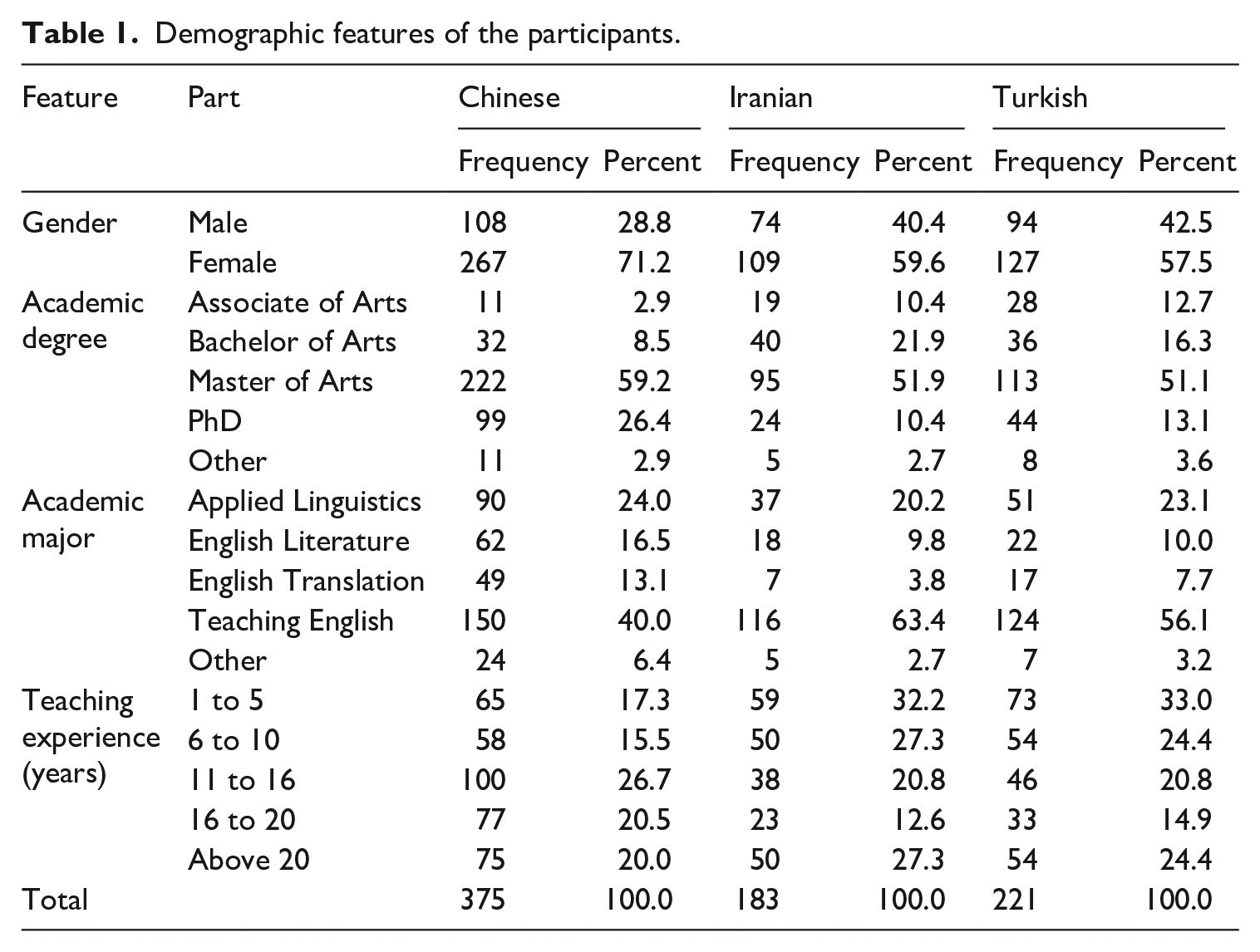
The data of this study were collected from 779 EFL teachers (selected from 841 cases) from three countries, China (375), Iran (183), and Turkey (221), where English is regarded as a foreign language. Convenience sampling was followed in the study despite its potential selection bias because it involves available respondents and is easy to manage. The teachers were working in universities on a full-time and part-time basis. They performed different activities in the classes, including teaching, monitoring, testing, and task assignment. Socioeconomic status of the sample differed across the countries besides their cultural orientations. They had flexible working hours in their offices and universities, mostly 30–40 hours per week. The age of the sample ranged from 21 to 69 (M = 37.28, SD = 10.73). Males and females constituted the gender of the participants. The teachers have the experience of teaching English on a scale of 1-5 years to more than 20 years. They mostly majored in Applied Linguistics, English Literature, English Translation, and Teaching English. Complementary demographic features of the participants are presented in Table 1.
Demographic features of the participants.
2 Instruments
a DTLP questionnaire
To assess teachers’ perceptions of loving pedagogy practice, Yin et al.’s (2019) DTLP questionnaire was used. It includes 29 items under six dimensions: acceptance of diversity, bonding and sacrifice, classroom community, intimacy, forgiveness, and kind acts. The items are answered on a 4-point Likert-scale from 1 (strongly disagree) to 4 (strongly agree). “I try to get to know my students better” is a sample item of this scale. The composite reliability of this scale was 0.84 in this study.
b Emotion regulation scale
To measure this variable, Gross and John’s (2003) emotion regulation scale was used, which included 10 items rated on a 7-point Likert scale ranging from 1 (strongly disagree) to 7 (strongly agree). There was no reverse scoring of the items. An example item from this instrument is “I keep my emotions to myself.” The reliability of this scale was estimated to be .77 in this study.
c Teacher self-efficacy scale
To evaluate teachers’ self-efficacy, the scale developed by Tschannen-Moran and Hoy (2001) was used. It comprises 24 items on a 5-point Likert scale ranging from 1 (nothing) to 5 (a great deal). There are three components in the scale, namely self-efficacy in instructional strategies, classroom management, and student engagement. An example is “to what extent can you use a variety of assessment strategies?” In this study, the reliability of the scale was .86, which indicates good internal consistency.
d Teacher work engagement scale
Regarding work engagement, Schaufeli et al.’s (2006) scale was used, which encompassed 17 items under three subscales of vigor, dedication, and absorption. A 7-point Likert scale ranging from 0 (never) to 6 (always) was used to rate the items. “I am immersed in my work” is a sample item of the scale. The reliability of this instrument was measured to be .88, which is considered acceptable.
3 Data collection
This study adopted a cross-sectional, correlational design to examine the associations among the constructs in a one-shot data collection in three countries. This design was selected because it can efficiently answer the RQs and reflect the objectives of the multinational study. To collect the data, the four questionnaires were converted into online scales using Google Forms and Wenjuanxing platforms. The links were shared with colleagues and coresearchers in these countries to be distributed among willing participants. Different social media applications (e.g., Telegram, WhatsApp, WeChat) were used to share the surveys. The goal of the study was explained to the participants at the outset of the online survey. A formal consent was obtained from all teachers. The data collection lasted 3 months, from April to June 2024. A total of 841 questionnaires were submitted by teachers from China, Iran, and Turkey during this period. The participants were assured that their identity and responses would be kept private and confidential. They were instructed to answer the items carefully at their convenience. After collecting the questionnaires, the data were double-checked and cleaned up for the analysis on IBM AMOS (v. 24).
4 Data analysis
The analysis of the data was done using different statistical methods. To validate the questionnaires and approve their psychometric properties, exploratory factor analysis (EFA) with Promax rotation, maximum likelihood (ML), and extraction method was carried out. In addition, confirmatory factor analysis (CFA) was done to explore the correlations among the variables and to unveil how DTLP, emotion regulation, and self-efficacy could predict teacher work engagement.
IV. Results
1 Preprocessing of the data
Before commencing the analysis, the data went through some preprocesses to exclude the problematic data. Initially, 841 solid answers were obtained from the administration of the questionnaires. No missing answer was found in the data, and the data were first inspected for patterns. Consequently, 25 cases with constant patterns, 16 cases with increasing patterns, and 15 cases with decreasing patterns were identified and excluded. Then, the standard deviation of respondents’ answers was calculated, and those with values below 0.5 were inspected for nonengagement. This resulted in the exclusion of 6 more cases, leaving the final sample with 779 cases.
2 Construct validity
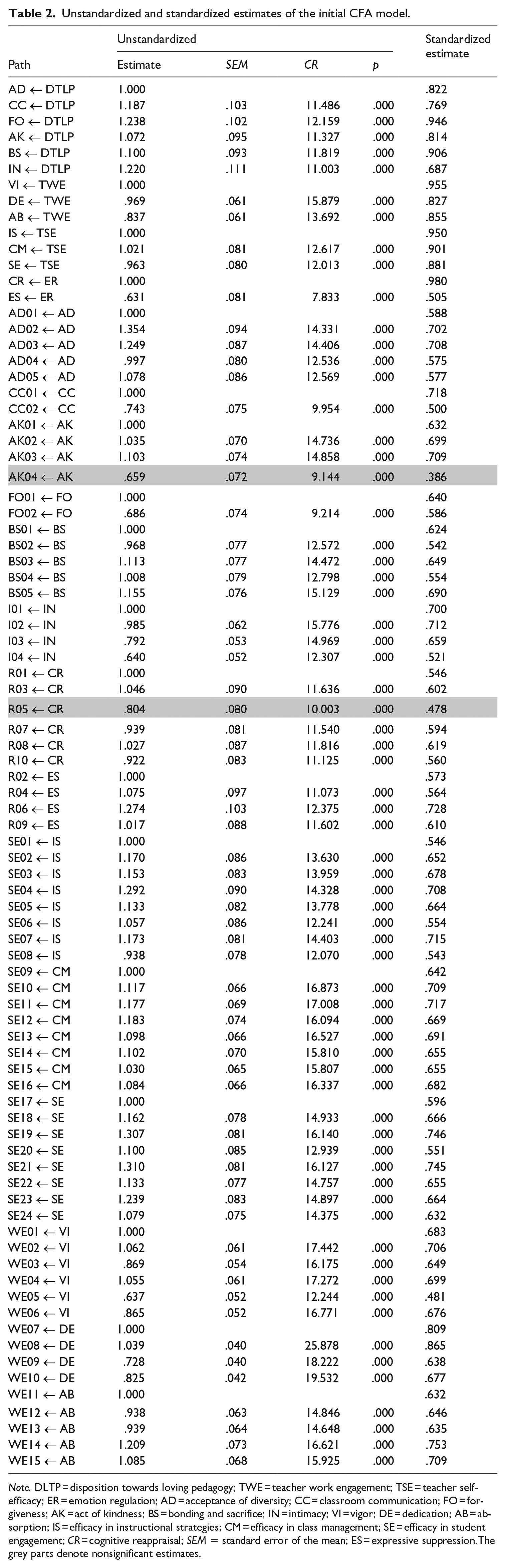
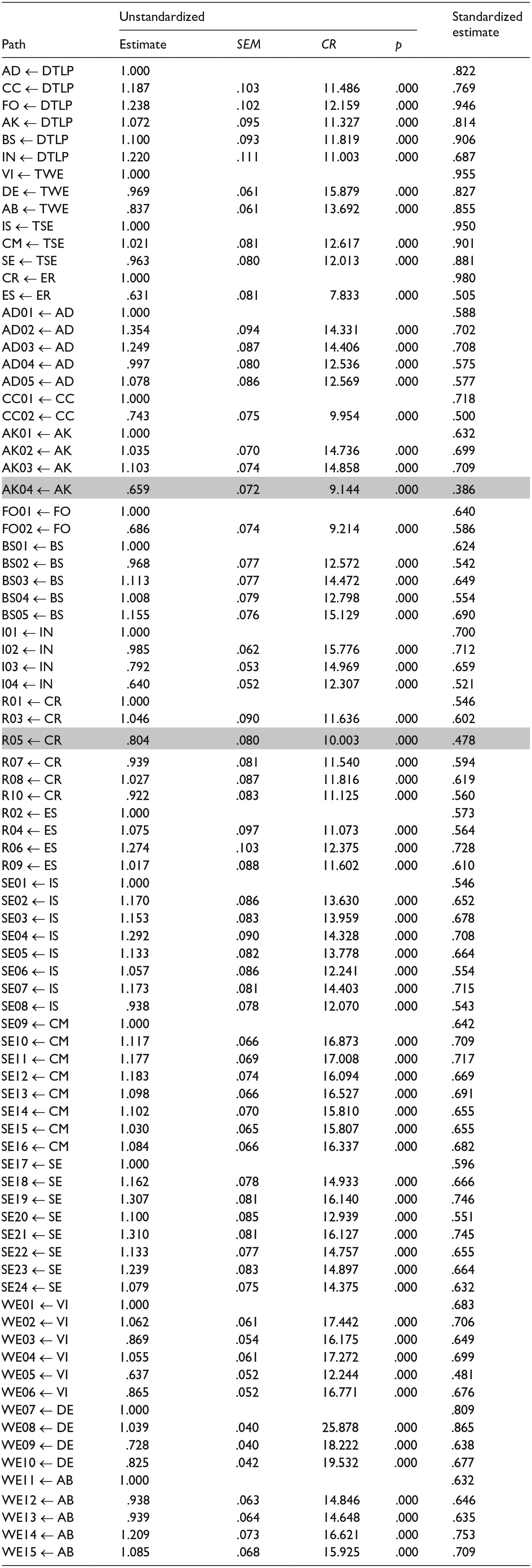
A CFA model was created to make sure that the instruments are valid in the given context. All four questionnaires had items in their second orders. First, each construct was probed for nonsignificant loadings in unstandardized estimation and/or low estimates (below 0.5) in standardized estimation. Table 2 lists the results.
Unstandardized and standardized estimates of the initial CFA model.
Note. DLTP = disposition towards loving pedagogy; TWE = teacher work engagement; TSE = teacher self-efficacy; ER = emotion regulation; AD = acceptance of diversity; CC = classroom communication; FO = forgiveness; AK = act of kindness; BS = bonding and sacrifice; IN = intimacy; VI = vigor; DE = dedication; AB = absorption; IS = efficacy in instructional strategies; CM = efficacy in class management; SE = efficacy in student engagement; CR = cognitive reappraisal; SEM = standard error of the mean; ES = expressive suppression.The grey parts denote nonsignificant estimates.
As reported, no nonsignificant unstandardized estimates were found. Each questionnaire’s components had acceptable standardized loadings (above .05). However, two items (the fourth item in act of kindness (AK04) in the questionnaire of DTLP and item 5 in the questionnaire of emotion regulation under cognitive reappraisal) had standardized estimates below 0.5. Thus, they were excluded as they could endanger the convergent validity (Kline, 2016).
Next, the modification indices with a threshold of 10 were checked, and the suggestions that were not contradictory to the literature were applied. Figure 1 delineates the final modified CFA model.
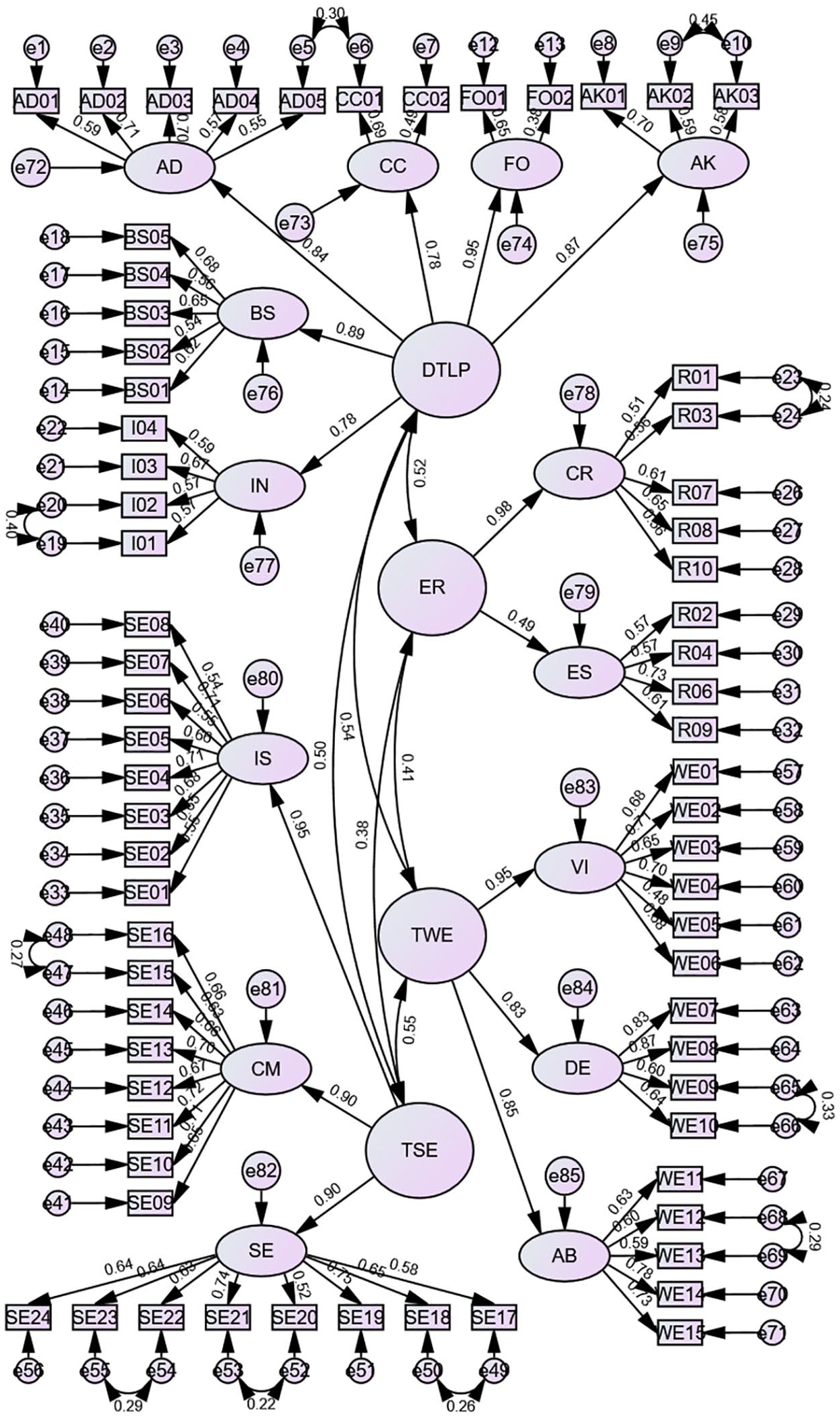
Final modified structural equation model with standardized estimates.
After applying the modifications, the model’s goodness of fit was examined. According to Hu and Bentler (1999), in order for a model to have an acceptable goodness of fit, a number of criteria have to be fulfilled. These criteria, alongside the values obtained from the data, are reported in Table 3.
Evaluation of the CFA goodness of fit.
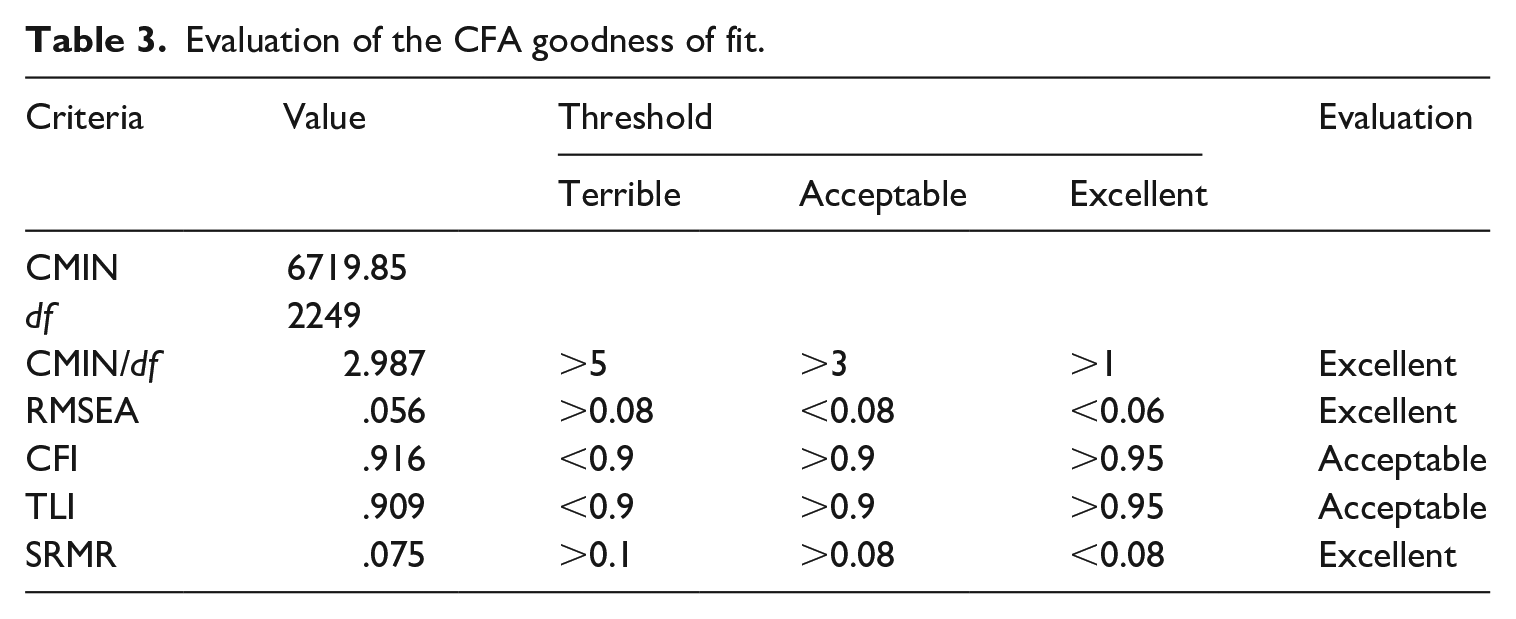
The results reported in Table 3 indicate an acceptable to excellent goodness of fit. Next, the composite reliability (CR) and discriminant validity for each factor were examined (Table 4). As reported, all of the variables had CR values above 0.7, which reveals acceptable reliability. The average variance explained for each factor was safely above .5, and the maximum shared variance (MSV) for each factor was below its AVE. These two conditions support the convergent validity of the model. Moreover, the square root of AVE (the bold values in the table) was above intercorrelations of the factors, indicating discriminant validity, according to Fornell and Larcker (1981).
Reliability and validity of the factors.
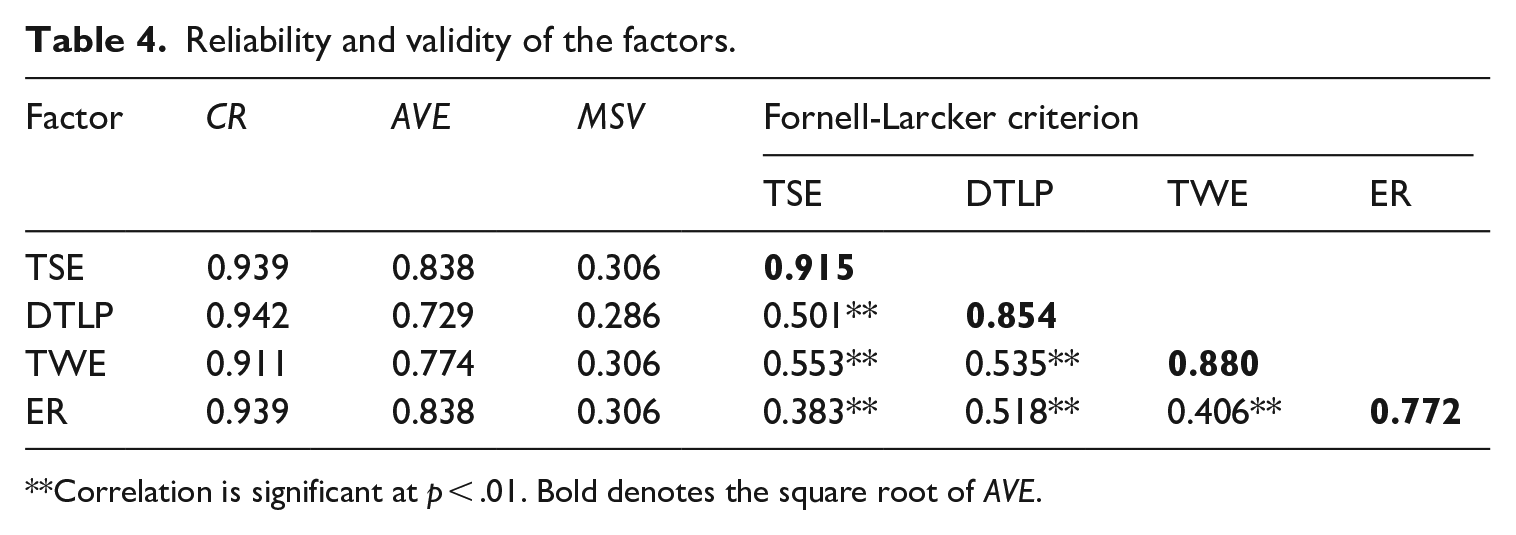
Correlation is significant at p < .01. Bold denotes the square root of AVE.
The inspection of the correlations (values not in bold under the Fornell-Larcker criterion) documented that there are significant correlations (p < .01) between all pairs of factors. Strong correlations were found between teacher self-efficacy, on the one hand, and DLTP (r = .501) and teacher work engagement (r = .553), on the other hand. The correlation between teacher self-efficacy and emotion regulation (r = .383) was considered moderate. Moreover, DLTP had strong correlations with both teacher work engagement (r = .535) and emotion regulation (r = .518). Teacher work engagement and emotion regulation also showed a moderate correlation (r = .406).
Using regression imputation, the data in the CFA model were imputed to be used in the subsequent analysis. Regression imputation functions as the calculation of the average scores for each component; yet, it is a more accurate measure as it takes into account the weighted share of each item in calculating the average. In other words, it calculates the weighted factors in the model. Using the values obtained from the regression imputation, the measurement model (Figure 2) was created to answer the second research question. The results are presented in Table 5.
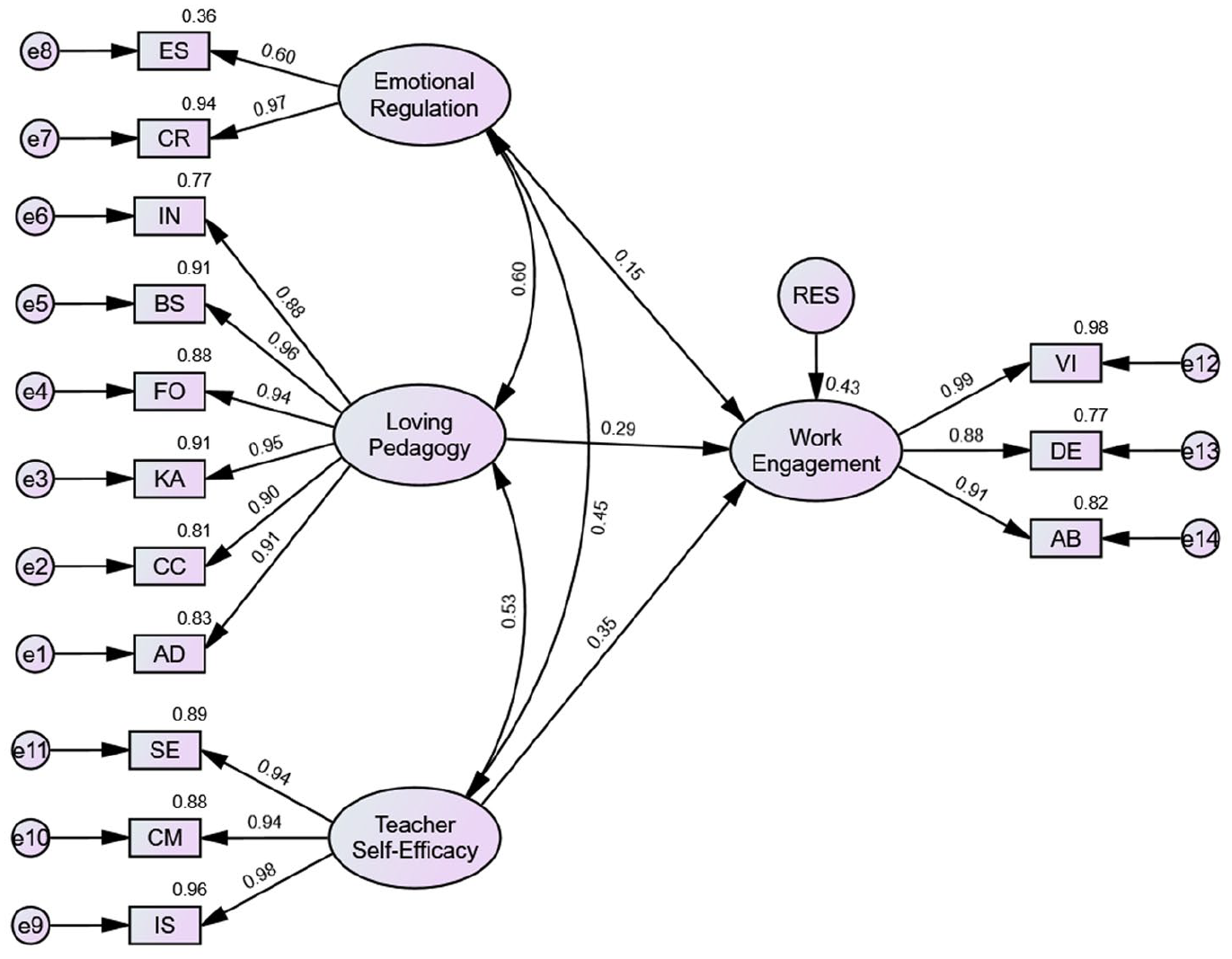
Measurement model.
Results of multiple linear regression analysis with SEM.
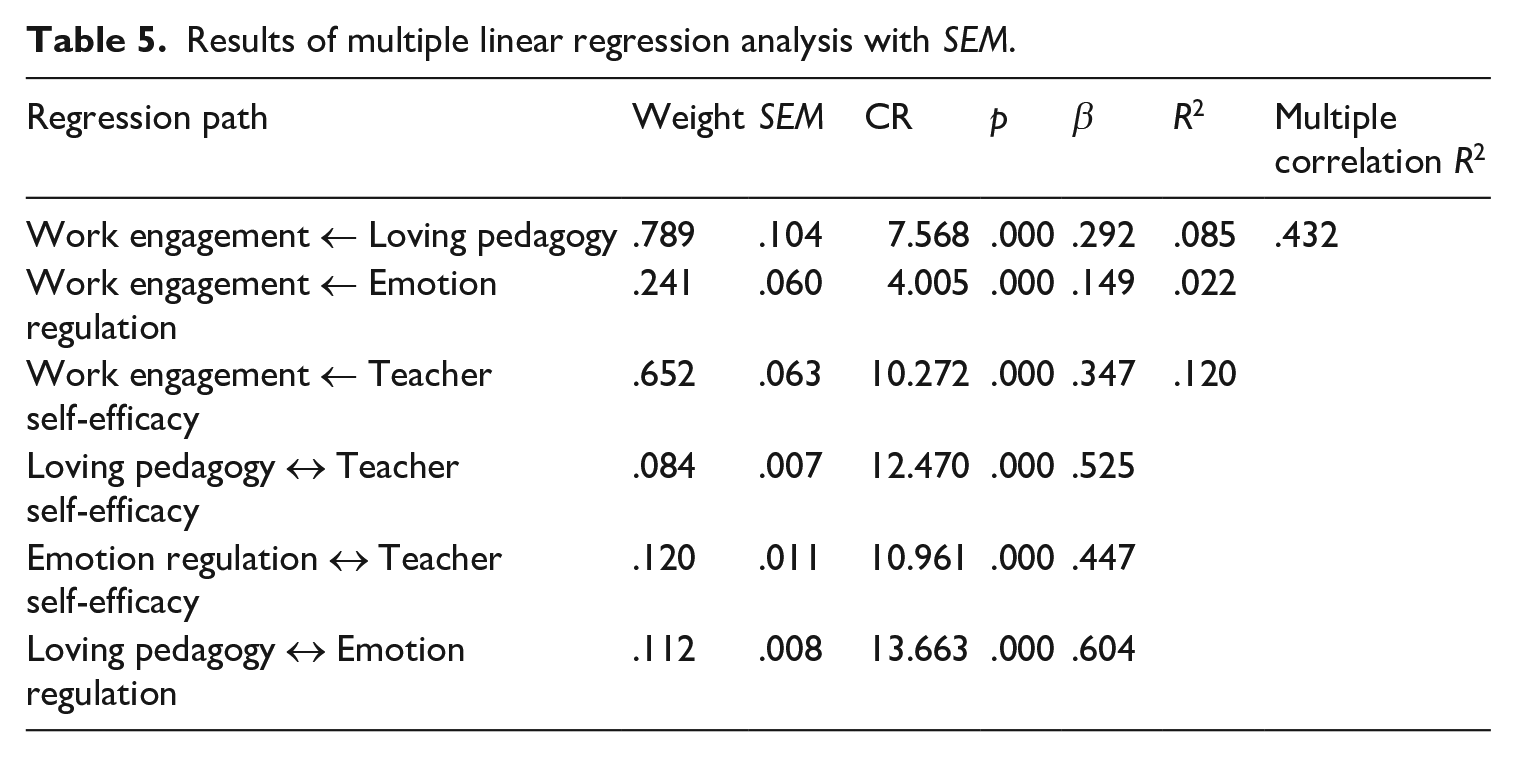
As reported in Table 5, after taking into account the covariances among the three predicting variables, loving pedagogy, emotion regulation, and teacher self-efficacy could jointly predict 43.2% of the variance in work engagement. All three of these variables were significant predictors of EFL teachers’ work engagement. However, teacher efficacy had a higher beta value of .347, uniquely predicting 12% of the variance in work engagement. Loving pedagogy and emotion regulation were the next ones in the row, predicting 8.5% and 2.2% of the variance in engagement scores, respectively.
In order to make sure that the proposed model is applicable to all participants with different nationality, measurement invariance was tested. The model fit indices for the unconstrained model were as follows: χ2/df = 2.756, comparative fit index (CFI) = .975, Tucker-Lewis index (TLI) = .968, root mean square error of approximation (RMSEA) = .048. The constrained model had the following model fit indices: χ2/df = 2.658, CFI = .974, TLI = .970, RMSEA = .046. Therefore, the difference in the model fit indices of the two models was considered nonsignificant (ΔCFI = .001, ΔTLI = .002, ΔRMSEA = .002). Moreover, the chi-square difference in the two groups was nonsignificant (Δχ2(20) = 22.41, p = .318, i.e., p > .05). Therefore, it was concluded that the participants from different nationalities were not significantly different at the model level and measurement invariance existed.
V Discussion
The present multinational study aimed to examine the associations among four constructs of DTLP, self-efficacy, emotion regulation, and work engagement using a sample of EFL teachers from China, Iran, and Turkey. It also set out to find out whether teachers’ work engagement is predicted by the other three constructs. The results indicated that there were significant relationships among all the variables of the study, namely DTLP, self-efficacy, emotion regulation, and work engagement. In prior research, these variables were found to have relationships with other teacher-related constructs or to be separately associated with the core variables of this investigation. However, a multicultural perspective was unknown in this domain. Cultural nuances and orientations happening in China, Iran, and Turkey may have influenced the linkage among the constructs and affected the prediction of work engagement. Moreover, depending on their individualist or collectivist cultures, teachers in these three countries may understand DTLP, emotion regulation, self-efficacy, and work engagement in a different way.
Regarding self-efficacy correlations, the results are in line with studies conducted by Skaalvik and Skaalvik (2019) and Fathi et al. (2021), who respectively reported positive linkage of teacher self-efficacy to their work engagement and emotion regulation. A reason could be the constructive role of self-efficacy beliefs in almost all aspects of teachers’ behaviors and practices, including DTLP, emotion regulation, and work engagement. Without being sure of one’s capacity to handle the teaching profession and cope with its emotional experiences, it would not be possible to effectively regulate emotions and get involved in the work. In other words, everything starts from teachers’ self-belief in the classroom, which shapes their emotionality and practices (Zhang & Wang, 2024). Emotion regulation correlated with self-efficacy, probably because teachers had perceived self-efficacy as a positive factor to be unregulated, a notion supported by Gross (1998). Another outcome was that DLTP had strong correlations with teachers’ work engagement and emotion regulation. This is partly in alignment with Derakhshan et al.’s (2023) multinational study, where DTLP positively connected to creativity and work engagement. Moreover, the results are echoed by Yin et al.’s (2019) study, where EFL teachers’ loving pedagogy perceptions helped educators manage their emotions and practices more efficiently. A reason for this correlation could be the emotional nature of L2 teaching, which makes loving pedagogy a strong trigger of other positive emotions and outcomes in teachers and learners. The participants’ knowledge of teacher psychology, especially the affective turn to L2 education, can justify the results. The three countries seem to provide sufficient affective support and training for the participants, making them aware of emotional connections in various aspects of their jobs. The results also showed a correlation between work engagement and emotion regulation. This undergirds the second dimension of Klassen et al.’s (2013) model of work engagement that highlighted the role of teacher emotions and regulation skills. Likewise, Greenier et al. (2021) reported that EFL teachers’ emotion regulation positively links to their work engagement.
The results also revealed that all three variables were significant predictors of work engagement, with self-efficacy being the strongest antecedent. The predicting effect of self-efficacy aligns with Wang and Pan’s (2023) study results, where Chinese EFL teachers’ self-efficacy was a predictor of work engagement. This finding also reflects Bandura’s (1997) idea that self-efficacious individuals have more control over the working environment. Therefore, EFL teachers from China, Iran, and Turkey showed more work engagement, possibly because of their positive self-efficacy beliefs. Teaching experience and professional development courses on L2 teacher psychology and emotionality may explain this finding. With regard to DTLP, the results are consistent with Derakhshan et al. (2023), who indicated that DTLP predicts L2 teachers’ work engagement. The logic might be the teachers’ understanding of the criticality of love in education (Freire et al., 2018) and its role in their professional performance, as noted by Grimmer (2021). The result implies that loving pedagogy is not limited to learners’ emotions but entails teachers’ feelings and practices at work. The next predicting role was that of emotion regulation, which is in alignment with Xie’s (2021) study, where emotion regulation predicted Chinese EFL teachers’ work engagement. Similarly, Fathi et al. (2021) contended that teachers’ emotion regulation affects their work-related feelings including engagement. Apparently, the participants were competent in using functional regulatory strategies in managing their emotions in L2 teaching, which later shaped their engagement. Without being able to handle emotions, it might be hard to get involved in a highly emotional job involving L2 teaching profession. This knowledge might have been gained through formal university education, field experiences, and community of practice events on teacher psychology and emotions. While this study offers valuable insights into EFL teachers’ emotions and practices, in light of cultural disparity, it excluded the role of demographic factors in the interplay of DTLP, self-efficacy, emotion regulation, and work engagement. It is also essential to mention that while cultural differences are significant in the hypothesized association of the variables, the obtained results showed consistency and universality across the three countries. The cultural nuances did not affect the findings, probably because the central mechanisms through which the variables function are primarily human and less vulnerable to cultural differences at a deep, psychological level. Globalization of education may have also minimized the effect of traditional cultural norms on EFL teachers and their perceptions about the interplay of the four constructs.
VI Conclusion and implications
This multinational study tested an association and prediction model of EFL teachers’ DTLP, self-efficacy, emotion regulation, and work engagement in China, Iran, and Turkey. In light of the findings, it can be concluded that an EFL teacher’s work engagement depends on various psycho-affective dispositions, cognitive factors, and affective practices. It is thus by no means an emotion-free factor. Moreover, it is postulated that teachers from different cultures and contexts may have comparable understandings of work engagement, along with and its correlates and predictors. This shows that the construct of work engagement has identical characteristics across nations in the L2 education community. Another conclusion is that as an emotional variable, teacher work engagement is connected to other positive teacher emotions and cognitive dispositions, including self-efficacy, emotion regulation, and loving pedagogy. This contention reflects the interrelationship and contagious nature of positive emotions and practices in L2 education, as posited by the PP trend.
The results offer implications for EFL teachers and teacher educators. Specifically, EFL teachers in different countries can draw on this multinational research so as to better understand the determinant factors of their work engagement. They may also realize the importance of other teacher emotions in their job involvement. An affective aspect can be conceived for their profession based on the results. Teacher educators can use the study to revisit their training courses by injecting principles and practices of PP and loving pedagogy in to their professional development programs for EFL teachers. Emotionally rich materials and activities can be shared with pre-service and in-service EFL teachers to enhance their well-being and engagement. As practical takeaways, instead of focusing on pure instructional techniques, teacher educators can work on teachers’ psycho-affective factors as facilitators of their professional performance and engagement. Practical strategies to gain positive and augmented views of self-efficacy, emotion regulation, and loving pedagogy can be cultivated in EFL teachers to get further immersed in their jobs. While the study is momentous enough, it suffers from some limitations. The first limitation is the use of a pure quantitative and one-shot design. Second, the study did not include teachers’ perceptions and experiences of the interplay through qualitative tools. The sampling technique was nonrandom, and this may limit the representativeness of the sample. The next limitation is the exclusion of the role of teacher-related factors in the model. Teaching experience and education level may affect the model, and the future research can consider incorporating these demographic variables. Future research is also recommended to employ mixed-methods and qualitative designs so as to more accurately measure the antecedents of work engagement, taking into account their individual perspectives and experiences. The dynamism of correlations can be examined in the future using time-series analysis and longitudinal studies. The way each variable led to work engagement can also be studied through qualitative designs.
Footnotes
Data availability
The datasets generated and analyzed during the current study are available from the corresponding author upon reasonable request.
Funding
The author(s) disclosed receipt of the following financial support for the research, authorship, and/or publication of this article: The study reported in this paper represents a contribution to “Model Construction and Application of Artificial Intelligence Empowered Language Education in the Era of Digital Intelligence” (grant number 202410012) funded by Start-Up Research Project for Newly Recruited PhD Holders at North China University of Water Resources and Electric Power, China.
Ethical approval
All procedures performed in the study were in accordance with the ethical standards of the institutional and/or national research committee and with the 1964 Helsinki declaration and its later amendments or comparable ethical standards.
Informed consent
Informed consent letters were obtained from all the individual participants included in this study.
