







Abstract
This study explores the effectiveness of modified Kazakh literary texts in teaching Kazakhs as foreign languages. Using a quasi-experimental design, 36 university students were divided into two groups: teacher-modified texts were provided to the experimental group and the control group used the original versions. The experimental group showed markedly greater improvements in reading speed and test results. A quarter of the experimental group participants reported experiencing greater motivation toward reading and forming daily reading habits, which was not observed in the control group. The graded readers were rated as having suitable difficulty by 33.3% of the experimental group, whereas 38.9% of the control group found the original text too difficult. The results indicate that there is a need for a uniform process to create graded readers for minority languages such as Kazakhs. This study focuses specifically on second-language learners in Kazakhs and does not include first-language speakers.
I Introduction
In Kazakhstan's post-Soviet period, teaching Kazakhs as a state language became vital because it expresses national identity. Government efforts to rejuvenate the Kazakh language have not fully resolved the difficulties in its widespread use among nonnative speakers. The Kazakh language became marginalized because Russian remained the main language for teaching and communication in Kazakhstan throughout history (Fierman, 1998; Smagulova, 2000). To counteract this trend, educational strategies such as the adoption of trilingual education underscore the need to develop successful teaching strategies for Kazakhs as a second language (L2) (Amanzhol et al., 2024; Kuzhabekova, 2019; Sarmurzin et al., 2021). These educational initiatives face challenges, including the continued dominance of Russians in cities and the lack of appropriate educational materials that engage students from different backgrounds (Fierman, 1998; Sarmurzin et al., 2025). Traditional teaching approaches to Kazakh language instruction depend on both the grammar-translation method and systematic memorization techniques (Kuzhabekova, 2019; Naraliyeva et al., 2015). Moreover, students are often assigned complex and extensive texts that do not align with their language proficiency, resulting in low comprehension and reduced motivation.
Limited adapted materials exist not only in Kazakhs but also in common sociolinguistic trends in the postcolonial regions. The language of the former colonial power remains dominant in educational and administrative sectors across many post-Soviet and postcolonial nations, resulting in inadequate development of L2 teaching methods for indigenous or national languages. During its time as a member of the Soviet Union, Kazakhstan had an extended period of Russian language dominance, and Kazakh instruction focused primarily on native speakers with minimal development of L2 teaching models. Train (2010) highlights that L2 education in postcolonial contexts requires critical engagement with historical and sociopolitical backgrounds to effectively address linguistic inequalities.
The last few years have seen a significant rise in the number of people interested in learning the Kazakhs as a L2. Kazakhstan requires that all schools and universities teach language as a mandatory course (Orynbekova et al., 2024; Sarmurzin et al., 2024). This transition necessitates a complete re-evaluation of instructional design approaches that should focus on creating teaching materials and curricula that address various levels of language proficiency. Zhumashova et al. (2023) stated that innovative high-quality educational resources are immediately necessary to raise Kazakhs’ status as both a national and academic language.
Studies have demonstrated that reading plays a central role in language acquisition by offering both linguistic input and opportunities for developing comprehension skills (Alowais, 2021; Kuper et al., 2021; Verhoeven, 2011). Nevertheless, reading authentic literature is not available to all students because their lower level of competence might make it difficult for them to comprehend the text.
Graded readers have achieved much acclaim as an effective and influential tool for L2 learning. Initially developed to promote extensive reading, graded readers are meticulously crafted to correspond with learners' proficiency levels, offering comprehensible input, a vital element in language acquisition, as suggested by Krashen’s Input Hypothesis (Claridge, 2012; McQuillan, 2016; Naraliyeva et al., 2015). Graded readers provide content that is accessible to and engages with learners. A graded reader may act as a bridge between learners' current skills and their target language proficiency by simplifying linguistic structures, while maintaining semantic integrity (Naraliyeva et al., 2015; Sarsenbay et al., 2023).
Flexible literature inclusion in educational programs matches current pedagogical approaches that emphasize personalization and focus on student-centered learning. Research findings show that graded readers enhance learning comprehension while fostering cultural immersion, thus enabling students to build linguistic and cultural understanding (Sarseke & Khopur, 2024).
The absence of teaching resources tailored to varying language proficiency levels creates substantial barriers to learning the Kazakhs as a L2 (Yermekova et al., 2024). Learners of English benefit from numerous texts graded according to CEFR levels, whereas students of Kazakhs struggle with unmodified literary works that exceed their intermediate proficiency capabilities (Mambetova et al., 2024). According to Zhumashova et al. (2023), learners who study Kazakh as a L2 face major challenges because of the lack of instructional materials that align with their proficiency levels.
This study addressed the mismatch between learners' proficiency levels and literary complexity by graded readers to fit the B1 language level. In the Kazakh context, the B1 level is defined in the Kazakh National Standard ST RK 1929-2023 (Committee for Technical Regulation and Metrology, 2023) as an intermediate level of communicative competence. A person with B1 skills is assumed to be able to understand and reproduce statements associated with everyday life, engage in simple dialogues, read factual texts, and write simple personal notes or short descriptions. Specifically, the B1 level includes understanding the main idea of texts on familiar topics, understanding the general layout of narrative and descriptive texts, and some ability to use functional vocabulary in both speech and writing. The lexical range of this level is around 2,200–2,500 language units, that is, words and set phrases (Committee for Technical Regulation and Metrology, 2023).
The purpose of this study was to assess the impact of graded readers on reading comprehension in university students learning Kazakh as a L2. Bridging the gap between proficiency levels and accessible materials, this study aims to offer empirical insights into effective L2 instruction in minority language contexts.
II Literature review
1 What are graded readers?
In this article, the terms “fiction” and “literary text” are used interchangeably to refer to original artistic prose in the forms of short stories, novellas, and novels. Graded readers are simplified readings tailored to language learners’ competency levels. They used a methodical approach to vocabulary, grammar, and sentence structure, guaranteeing that the content remained accessible while avoiding excessive simplification (Chang & Pang, 2020): “Graded readers are books which are specially written or adapted for second language learners. This involves severely restricting the vocabulary that can occur, controlling the grammatical structures that can occur, and matching the length of text to the vocabulary and grammar controls.” (Nation & Wang, 1999, p. 356). “Graded readers are books written for learners of English using limited lexis and syntax, the former determined by frequency and usefulness and the latter by simplicity.” (Hill, 2008, p. 185).
Graded readers are educational tools used by language learners worldwide. Alowais (2021) stated that graded readers have several advantages, including the gradual acquisition of students’ reading strategies, which further results in an improvement in their reading skills. Moreover, readers help learners acquire a real experience of reading and give a special focus on the development of reading comprehension (Alowais, 2021). Rosemarie et al. (2023) stated that graded readers have a positive effect on the improvement of language learners’ vocabulary. Graded readers are often categorized into levels according to the word count, difficulty, and quantity of unique words used. For instance, basic levels may include texts with 300–500 headwords, whereas expert levels may surpass 3,000 headwords (Nation, 2014a, 2014b; Tickoo, 1993).
The grading process involves the selection of high-frequency language and construction of sentences to reduce ambiguity while maintaining the meaning of the text. Publishers such as Oxford Bookworms and Cambridge English Readers use stringent standards to maintain uniformity across levels, including genres from fiction and biographies to scientific literature (Claridge, 2012). Examples include modified classics such as Pride and Prejudice for intermediate learners and unique narratives such as The Adventures of Tom Sawyer designed for advanced learners. These texts seek to enhance students’ fluency, comprehension, and cultural knowledge (Chou, 2022; McQuillan, 2016).
Word and structure lists in a graded-reader scheme are divided into levels to help writers and editors develop graded books. The results of Nation and Wang’s (1999) study demonstrate that most graded reader systems establish learning environments that boost vocabulary acquisition. Books at each level of a graded-reader scheme contain repeated, limited vocabularies specific to that level. Students encounter previously learned words multiple times in higher-level books, enabling them to strengthen their vocabulary knowledge. Educators and researchers believe that repeated exposure to vocabulary words helps students to build word knowledge.
Stephen Krashen's Input Hypothesis states that L2 learners successfully acquire language when they are exposed to input that is understandable with meaningful content, yet remains just beyond their current proficiency level (Krashen, 1982). The principle known as “i + 1” uses “i” to denote the learner's current language proficiency and “+ 1” represents the next higher level that they can understand. The educational community opposed Krashen's “controversial hypothesis,” because other researchers believe that explicit instruction plays a crucial role in language learning. Krashen supports his position with extensive research on language acquisition studies and bilingual education, which demonstrates how crucial substantial exposure to comprehensible input is for learning a language. According to critics, language acquisition develops through skill formation, which involves conscious rule learning followed by practice. Krashen maintained that language rules emerge from receiving inputs that learners can understand (Latifi et al., 2013).
Young (1999) documented multiple strategies for modifying authentic texts to improve learners’ accessibility. Crossley et al. (2011) categorized text adaptation methods into two main types: structural and intuitive. The structural method uses objective instruments, such as readability formulas and word frequency lists, along with grammatical structures to simplify texts systematically. The adaptation process following this method meets definite standards that enable learners from diverse backgrounds to access the materials. An intuitive approach depends on the author's or educator's assessment to modify the text according to their understanding of learners' requirements and capabilities. This technique focuses on preserving the cultural richness of the material while customizing it for specific classroom needs. Simensen (1987) demonstrated the complementary benefits of these methods by illustrating how they collectively address linguistic complexity and cultural richness. These methods are combined to create a flexible framework that allows instructors to adapt authentic texts, providing learners with understandable input alongside meaningful interactions with materials rich in cultural and linguistic significance.
According to Gillis-Furutaka (2015), publishers must address nonquantifiable readability elements, such as cultural context and literary devices, in graded readers because these elements enhance native texts but obstruct understanding for beginner foreign language students and need proper regulation below the CEFR B2 level.
Graded readers are not only simplified versions of some texts but also controlled sources of language exposure. That is, learners have a chance to gradually gain fluency and simultaneously comprehend the meaningful and culturally authentic content in this text. As such, they are especially useful for students who learn a L2 and are typically intimidated by the complexity of ungraded authentic texts.
2 Using fiction for language acquisition
Contemporary teaching methods underscore the significance of literature integration in language curricula for advancing linguistic and cultural comprehension (Hamimed, 2021). Studies have shown that reading fiction books leads to substantial educational gains and enhances language abilities (Faraj, 2021). They support vocabulary expansion and grammatical proficiency (Jenner & Jebakumar, 2023; Lazar, 1990), while fostering intercultural competence and personal development (Avetisyan & Karapetyan, 2023; Jenner & Jebakumar, 2023).
L2 learners demonstrate a positive attitude toward engaging with and analyzing fictional content. Reading literature advances language acquisition while fostering personal development, because students tend to relate book content to their own life experiences (Economou, 2015; Mary et al., 2023). Through literary texts, students gain an essential understanding of national and cultural speaking patterns, along with insights into diverse aspects of life across various nations. Acquiring sociocultural competency and understanding cultural norms and customs depend on this educational approach (Avetisyan & Karapetyan, 2023).
Literary texts serve as a beneficial tool for learning languages, but learners at the basic and intermediate levels often find their complex nature a significant challenge (Hossain, 2024). Even advanced speakers encounter challenges in literary texts because of their outdated vocabulary, complex sentence structures, and cultural references. Language students who have not yet reached the level of understanding of the original texts benefit from modified books as a critical learning tool. Graded readers maintain key content and style features while making the necessary changes to match their language skill levels (Hashemi, 2025; Kara, 2019). This approach enhances comprehension while supporting step-by-step advancement of language skills. In addition, it increases students’ interactions with literary materials by removing obstacles and building confidence, which is crucial for effective language learning.
Educators in foreign language instruction use graded readers to improve students’ understanding, while also increasing their motivation (Nurlangazykyzy et al., 2023). Studies have shown that modified versions of classic literature texts lead to improved student comprehension, as demonstrated by Karymkhan et al.(2023).
In general, the reviewed studies conclude that graded readers can be viewed as a useful instructional resource for L2 contexts; however, the experience of their use in minority languages is highly limited. In the case of Kazakhs, no empirical research has been conducted on the use of graded literary texts by L2 readers. In addition, the Kazakh language does not have an established corpus of level-based graded readers, although their necessity is being increasingly recognized (Naraliyeva et al., 2015; Zhumashova et al., 2023).
The current study explores whether the use of graded readers as a teaching tool is effective for students in L2 Kazakh courses. The study thus aims to help solve important methodological problems for Kazakh language instruction and to contribute to the practical implementation of measures to increase the usage of Kazakhs. This study is based on the following research questions.
RQ1. How do graded Kazakh literary texts affect the reading performance and reading habits of L2 learners?
RQ2. What are learners’ perceptions of graded readers in terms of difficulty, engagement, and motivational potential relative to the original texts?
By using a quasi-experimental design to explore these questions, the present study provides novel empirical data for this rapidly developing but still relatively scarce field of L2 pedagogy for underresourced and minority languages.
III Methodology
1 Research design and participants
This study employed a quasi-experimental framework as the research strategy. This approach involved the random allocation of participants into both the experimental and control groups. Both groups underwent a pretest as part of the study's methodology. The assessments administered in this study included reading rates and tests. Subsequently, the experimental phase was initiated. Participants in the experimental group (EG) were provided with opportunities for individual reading of the modified texts. A WhatsApp group was established to facilitate student questioning, encourage exchange of ideas, and track reading advancements. The aim was to provide a support system that created a more realistic learning environment and increased exposure. The control group did not receive this support because the researchers wanted to preserve the experimental design and provide an intact environment in which to measure the effect of the adapted texts alone. This support and its potential influence on the results are discussed as limitations. The control group (CG) engaged with the original text of the books used by the experimental group. This reading supplemented the university program, which was confined to the designated syllabus sections.
The experiment was conducted over a duration of 5 weeks. The duration of the experimental study was extended to 5 weeks to accommodate the students' essential assignments, with reading as an additional task. This approach ensured that students had sufficient time to prepare for their final examinations. Upon completion of the experiment, both groups participated in a posttest designed to assess outcomes related to the impact of reading-graded readers on language acquisition.
A total of 36 first-year law students from a regional university in Kazakhstan were included in the study. All individuals involved in the study were engaged in learning the Kazakhs as a L2, specifically at the B1 proficiency level. This study included 19 male and 17 female students aged 17–19 years. The participants were randomly divided into two groups. The researchers divided the participants into two groups of 18 students each.
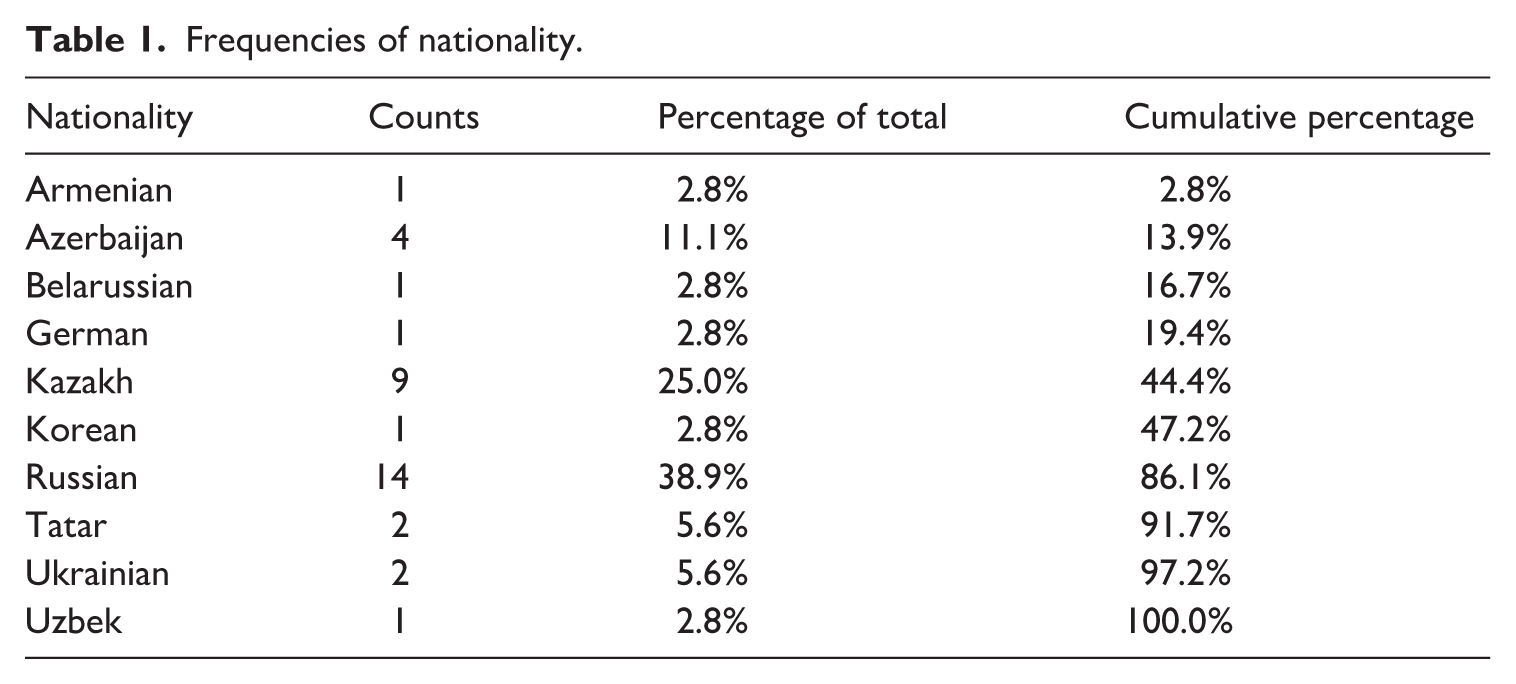
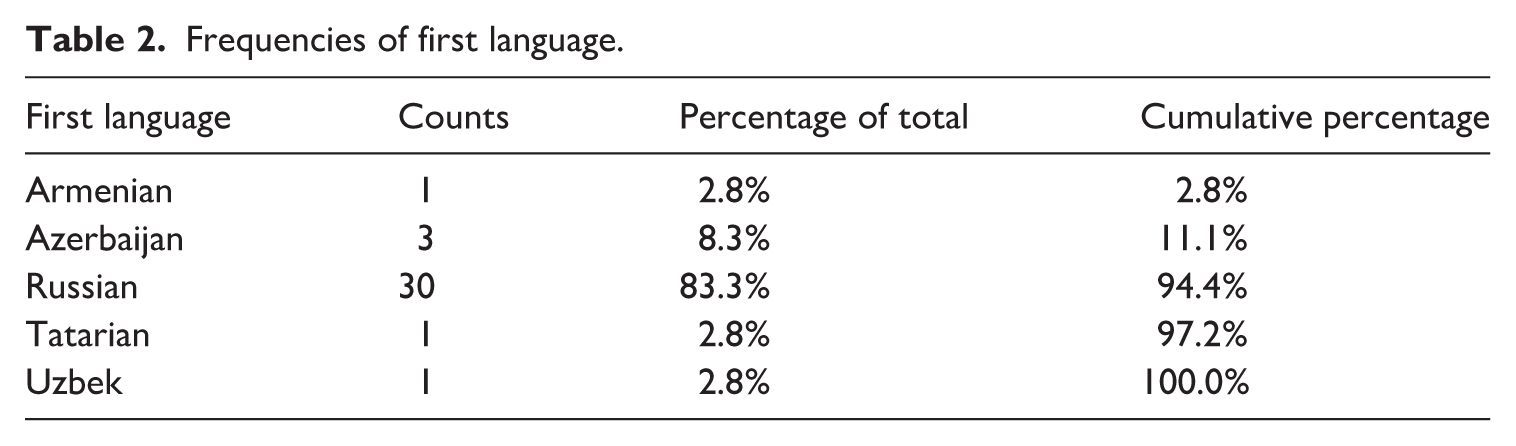
As indicated in Table 1, the participants were of 10 different ethnicities. While their native languages differed, most of the students used Russian as the dominant language in their daily communication and were instructed in Russian at school (Table 2). Despite their ethnic diversity, it is crucial to note that they were not international students as they were born and raised in Kazakhstan.
Frequencies of nationality.
Frequencies of first language.
2 Text adaptation
To match the texts with the B1 level, two literary works were chosen for adaptation: Mukhtar Auezov’s An Orphan’s Lot and Dulat Isabekov’s Gaukhartas. The two stories are original Kazakh classics, which were adapted to be at an appropriate level for Kazakh L2 learners.
The process of simplifying texts for adaptation to the study was based on the didactic principles proposed for working with L2. Crossley et al. (2011) note that these two approaches are the most popular when it comes to text adaptation: structural and intuitive. Structural approaches to text adaptation and complexity reduction include quantifiable tools for vocabulary control using graded word lists, grammar control, and readability formulas, such as Flesch–Kincaid or Dale–Chall. This approach is widely used in English language classrooms, and there is a well-developed standardized system for assessing lexical and grammatical complexity. However, there are no similar standardized readability formulas or scales for the Kazakh language, and this study followed an intuitive approach.
The intuitive approach is based on the teacher’s intuition, knowledge of the language, and personal experiences with the target group of learners. In this study, simplification decisions were made based on the knowledge of L2 learners’ cognitive and language skills at the B1 level, which meant a systematic simplification of the vocabulary, syntax, and style of the original stories, without altering the semantic and emotional content.
Lexical adaptation was based on the principle of replacing rare, figurative, and outdated words and expressions with their more frequent and literal synonyms, as well as with simpler grammatical constructions, so that students could understand without explanations or glossary. Uncommon idioms and cultural-specific items were substituted with less ambiguous counterparts or paraphrases.
Syntactic adaptation was based on “one idea–one sentence” principle. Lengthy, complex, or multiclause sentences were split into shorter sentences to reduce the syntactic load. This made the sentences easier to follow, while still grammatically correct and logically consistent.
The stylistic adaptation was aimed at reducing metaphorical and abstract language but still conveys emotional tone and character voice. Any figurative or poetic language was replaced with direct and unambiguous wording appropriate for B1. However, as much as possible, characters’ speech and expressive passages were left as they were or lightly simplified to maintain the affective level of the original.
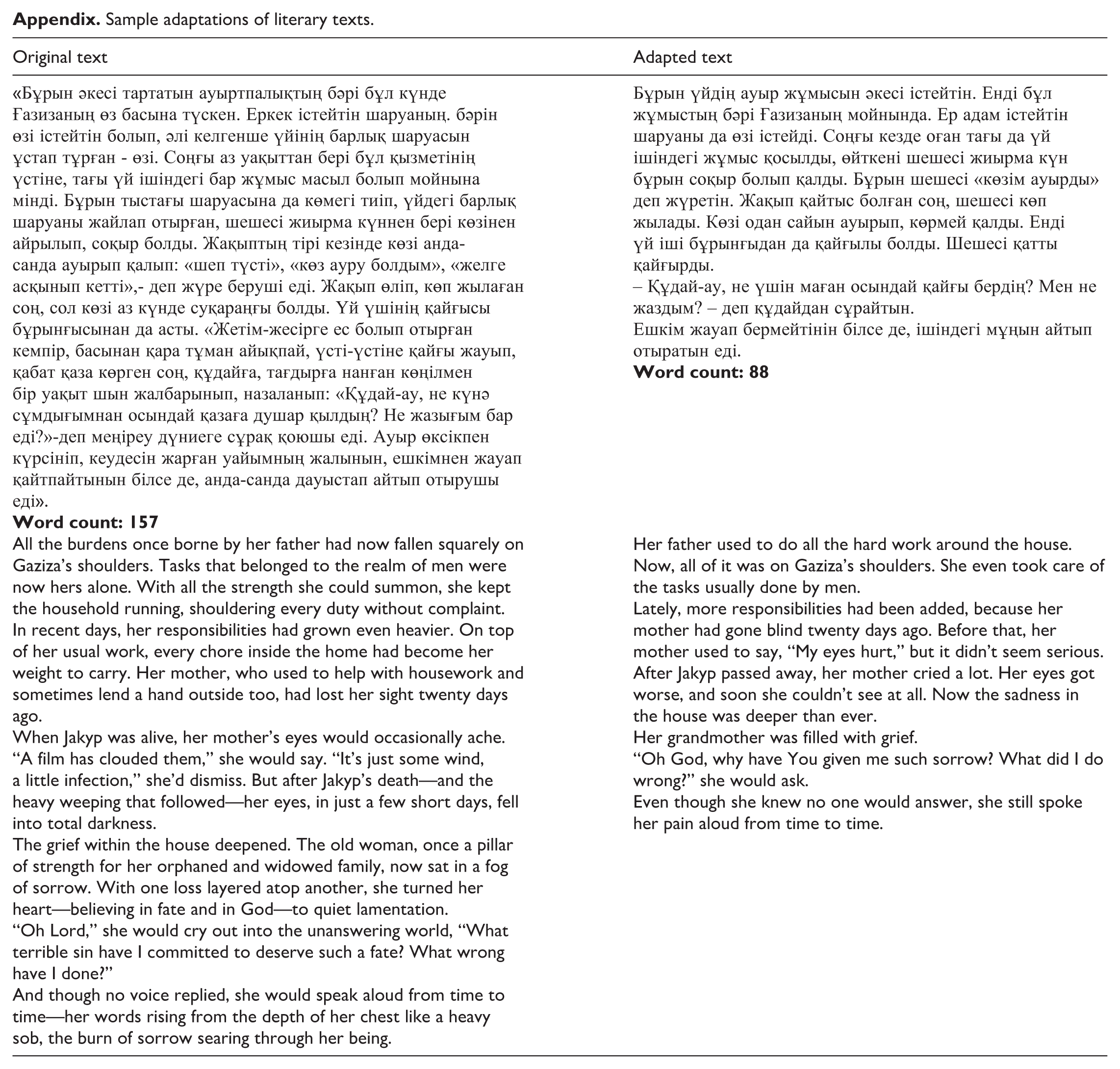
In the case of the short story, structural compression was necessary to a certain extent to remove redundancy and some nonessential details, so the learners would have an easy time following the events of the plot and would not be distracted by unnecessary information that could potentially harm reading engagement and motivation but would not affect plot development. The final versions of the adapted texts were validated by three experienced Kazakh university-level instructors of Kazakh as a L2, who reviewed the material and provided feedback. The excerpts from the original and adapted versions of the text are provided in the Appendix.
IV Data collection methods
1 Pretest and posttest
The reading assessment, which consisted of three texts and 40 questions, followed the KazTest standardized framework to test reading proficiency. The assessment included tasks that measured the understanding of the main content along with specific details, and tested the ability to synthesize conclusions from data interpretation. The chosen texts reflected a detailed evaluation of participants’ reading proficiency level B1. The participants completed multiple-choice, matching, and open-ended questions as part of the assessment.
The KazTest levels are aligned with CEFR and have five levels: A1, A2, B1, B2, and C1 (Yersultanova & Serdalia, 2025). The B1 level is the threshold level of the CEFR and expects learners to understand the main points of clear and straightforward factual texts and identify the key details. B1 learners are expected to be able to follow a logical sequence of sentences and paragraphs, follow a clear narrative or description in the written language, and react adequately to the text they have read (Kazakhtest.kz, n.d.).
The national test for KazTest declares that if test-takers score at least 20 out of 40 (50%) in the reading section, they can be certified at the B1 level. The level of 50% or higher in this section shows that they have adequate receptive skills to process and understand moderately difficult written texts in Kazakhs (Kazakhtest.kz, n.d.). A detailed breakdown of the scores is provided in the national KazTest guidelines, where the passing threshold of each skill area (listening, reading, writing, speaking) is provided in CEFR-aligned proficiency levels.
2 Reading rate
The present study employed the Unassisted Repeated Reading method initially introduced by Samuels (1979) and later modified by Anderson (1983) for L2 acquisition. The method included five steps: participants read a text for 1 minute before they recorded the number of words read and repeated this procedure three additional times, aiming to boost their reading speed measured by words per minute. The participants learned Kazakh as a L2 using this method, which evaluated their reading speed and enabled speed improvement by repeating text passages multiple times. The reading methodology focused solely on speed measurement, and did not evaluate comprehension levels according to Anderson's optimal reading effort and comprehension balance guidelines (Pham et al., 2024).
Measuring reading speed provides information on learners’ automaticity and fluency. Gorsuch et al. (2015) reported that higher reading rates typically result in higher reading fluency, which in the long run helps comprehension. In the present study, reading speed was used to determine whether learners not only understood adapted texts better but also whether they actually read more fluently. While the primary goal of the study was comprehension, we used reading speed as an additional measure to assess the mental effort involved, and thus the accessibility of the texts. This approach was similar to that of Chang (2012), who also found that higher reading rates have a positive effect on comprehension.
3 Questionnaire
After completing the experiment, participants completed a quality-designed questionnaire. The questionnaire included questions about participants' experimental experiences and their satisfaction with the research methods as well as personal evaluations of language learning progress and difficulties encountered during the study.
The questionnaire was self-developed, grounded in research aims and a relevant literature review on the topics of reading comprehension and motivation. It was piloted on six students studying Kazakh as a L2, and their feedback was used for the adjustment of item wording and structure before full administration.
4 Ethics
This study followed the Kazakhstan Educational Research Association’s (2020) Code of Ethics for Educational Researchers by ensuring voluntary informed consent and maintaining participant anonymity. The survey began with an informed consent section that permitted progress only for participants who answered yes. The survey maintained complete anonymity because it collected no identifying information that prevented educational authorities or researchers from determining the identity of the participants. Anonymity protection allowed participants to safely express their opinions and recount their experiences. The survey design permitted respondents to complete the survey whenever they found time available. Participants were required to answer only the consent question, but could choose to skip any survey questions.
5 Data analysis
The pretest and posttest results, along with reading speed data, were evaluated using Jamovi statistical software version 2.6.23. The analysis of results across different groups utilized the Mann–Whitney U and analysis of variance (ANOVA) statistical methods to assess differences (MacFarland & Yates, 2016). The open-ended questions were subjected to thematic analysis for evaluation. The analysis of the responses led to the identification of key themes, including motivational factors, educational challenges, learning preferences, and learners’ comprehension of the graded reader.
V Findings
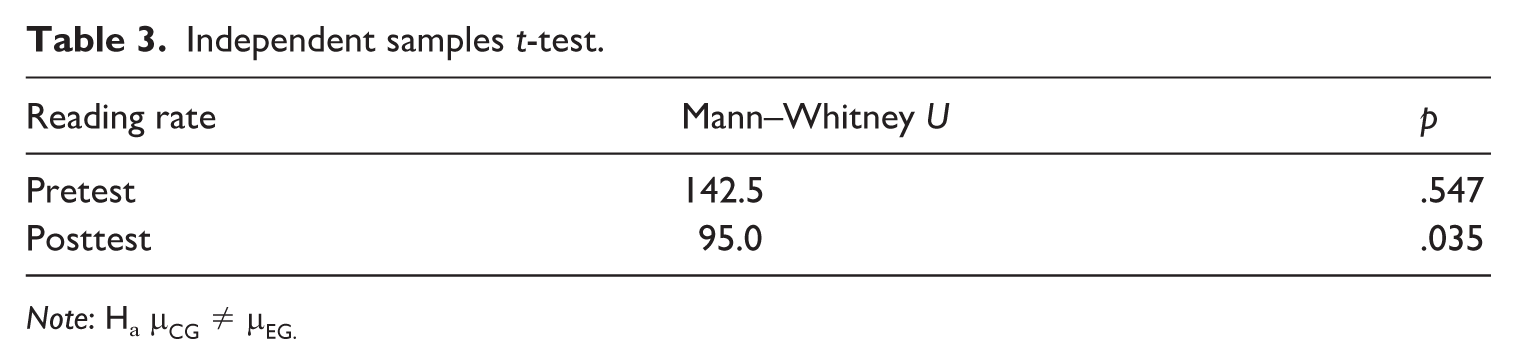
Table 3 presents the findings from analyses conducted using the Mann–Whitney criterion (U, a nonparametric test used to compare differences between two independent groups) to evaluate the variations in reading speed between the CG and EG at two distinct stages: pretest and posttest stages of the experiment. At the pretest stage, U = 142.5 (p = .547). As p > .05, this indicates no statistically significant difference between the groups. Consequently, it can be inferred that the initial reading speed scores of the learners in both groups were similar, which is a crucial factor for evaluating the impact of the intervention.
Independent samples t-test.
Note: Hₐ μCG ≠ μEG.
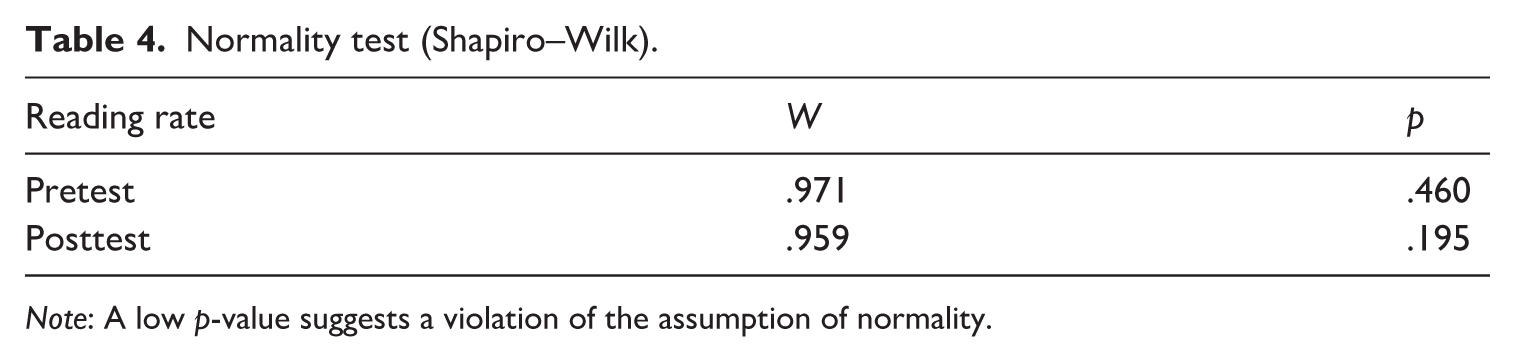
During the posttest analysis, U = 95.0 (p = .035), which was below the threshold of .05. These findings suggest a statistically significant difference in reading speed between the groups, following the conclusion of the experiment. The findings demonstrated that participants in the experimental group exhibited a notable enhancement in reading speed relative to those in the control group, thereby substantiating the efficacy of the intervention implemented. The assessment of normality for the distribution via the Shapiro–Wilk test (W) indicated that the reading speed scores at both the pretest W = .971 (p = .460) and posttest W = .959 (p = .195) conform to a normal distribution, given that the p-values surpass the significance level of .05 (Table 4). The Shapiro–Wilk test is a statistical test that determines whether a dataset is normally distributed.
Normality test (Shapiro–Wilk).
Note: A low p-value suggests a violation of the assumption of normality.
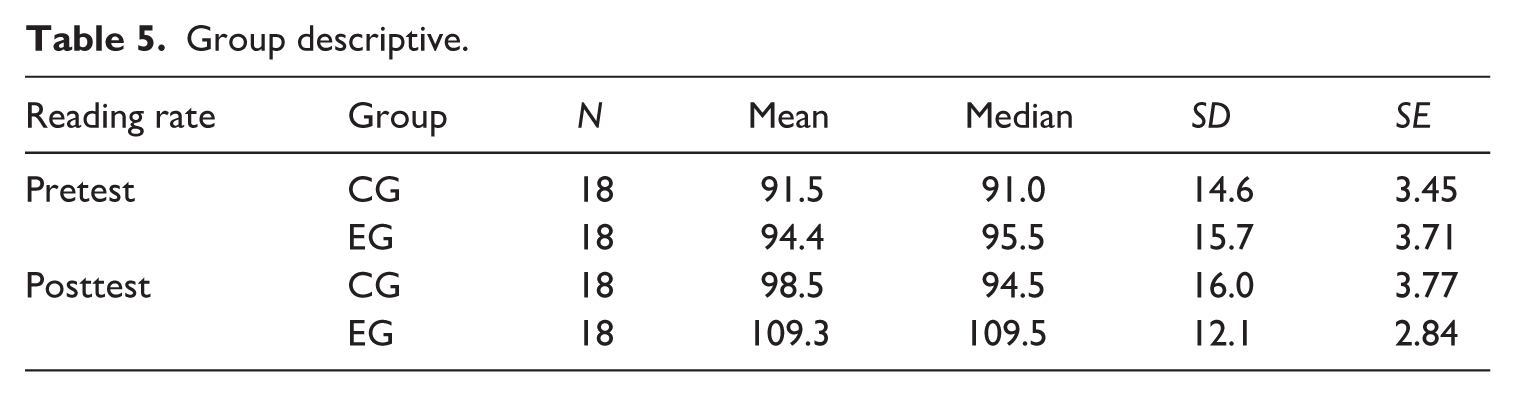
The descriptive statistics in Table 5 illustrate the variations in reading speed (words per minute, WPM) observed in both the CG and EG across the pretest and posttest phases. During the pretest phase, the CG exhibited a mean reading speed of 91.5 WPM (SD = 14.6, SE = 3.5), with a median value of 91.0 WPM. Here, the standard deviation (SD) indicates the amount of variation or dispersion from the average reading speed within the group, whereas the standard error (SE) reflects the precision of the sample mean estimate. In contrast, the experimental group demonstrated a marginally higher mean reading speed of 94.4 WPM (SD = 15.7, SE = 3.7) with a median value of 95.5 WPM. These findings confirmed the initial comparability of the two groups. During the posttest phase, the CG exhibited a mean reading speed of 98.5 WPM (SD = 16.0, SE = 3.8), with a median of 94.5 WPM. In contrast, EG demonstrated a more pronounced enhancement, achieving a mean reading speed of 109.3 WPM (SD = 12.1, SE = 2.8) and a median of 109.5 WPM. The findings indicated favorable trends in both groups, with a more significant enhancement in reading speed in the experimental group, suggesting the efficacy of the intervention.
Group descriptive.
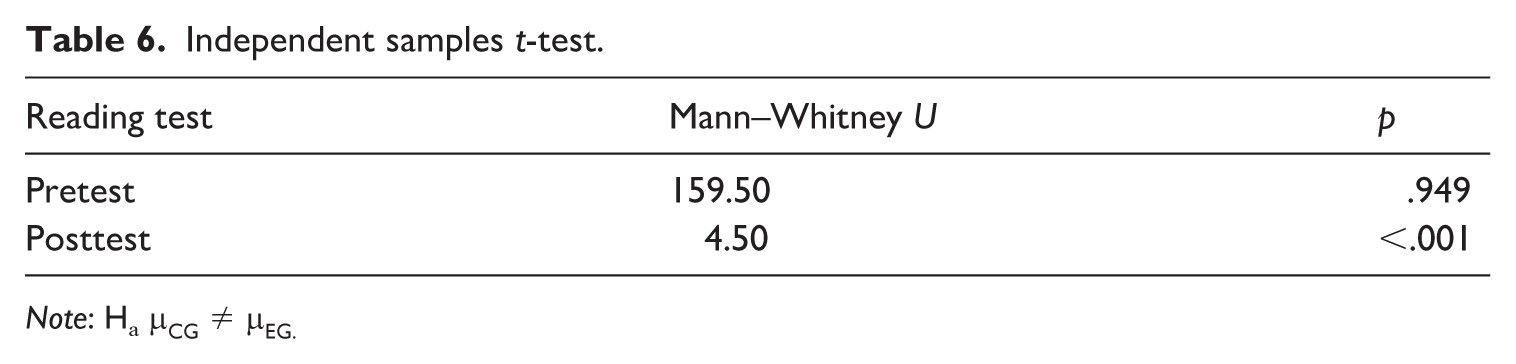
Prior to the experiment, students in both groups completed a reading pretest and subsequently underwent a posttest to assess improvements in their reading abilities. Table 6 indicates that the pretest data revealed no statistically significant differences between the CG and EG U = 159.5 (p = .949), suggesting that the groups were originally equivalent. Figure 1 illustrates these data, demonstrating similar mean values and medians in both the groups.
Independent samples t-test.
Note: Hₐ μCG ≠ μEG.
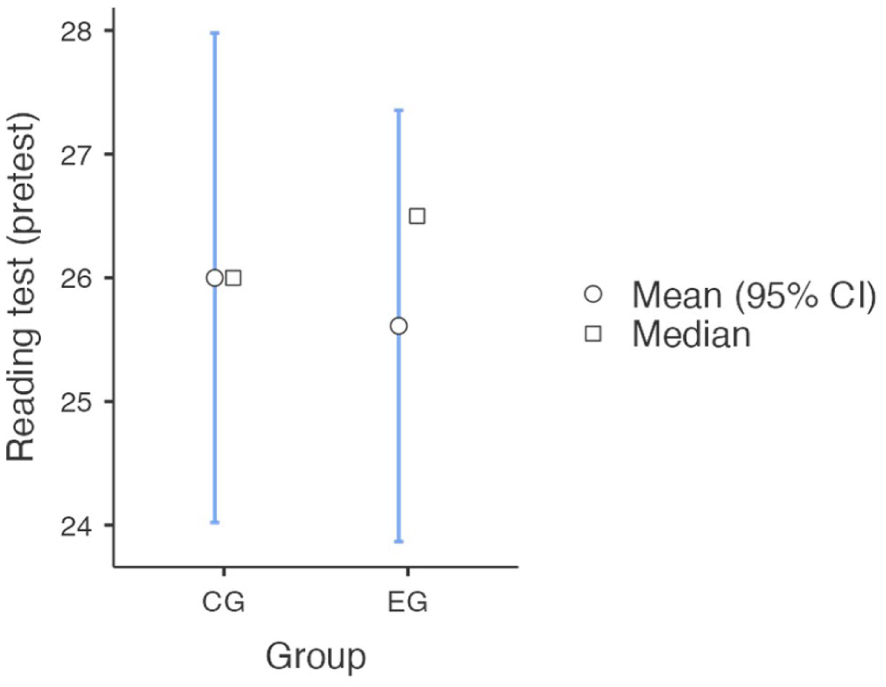
Reading test (pretest).
The postexperiment analysis demonstrated statistically significant differences between the groups U = 4.5 (p < .001), showing a notable enhancement in the reading abilities of the students in the experimental group relative to the control group. Figure 2 confirms that the mean and median values of the experimental group were considerably higher than those of the control group. The results demonstrated the efficacy of the experimental intervention in enhancing reading ability.
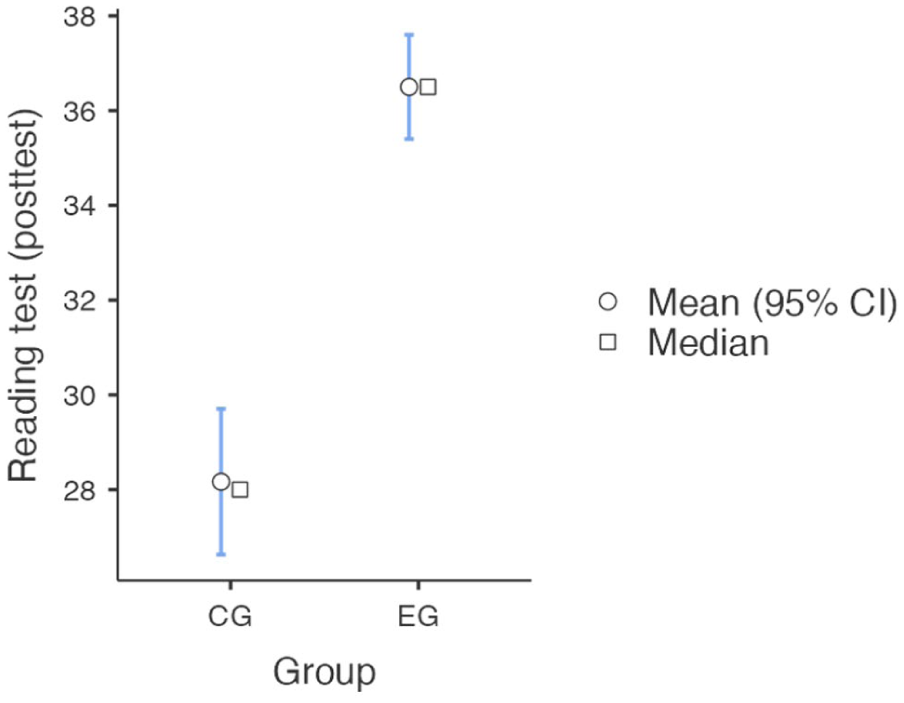
Reading test (posttest).
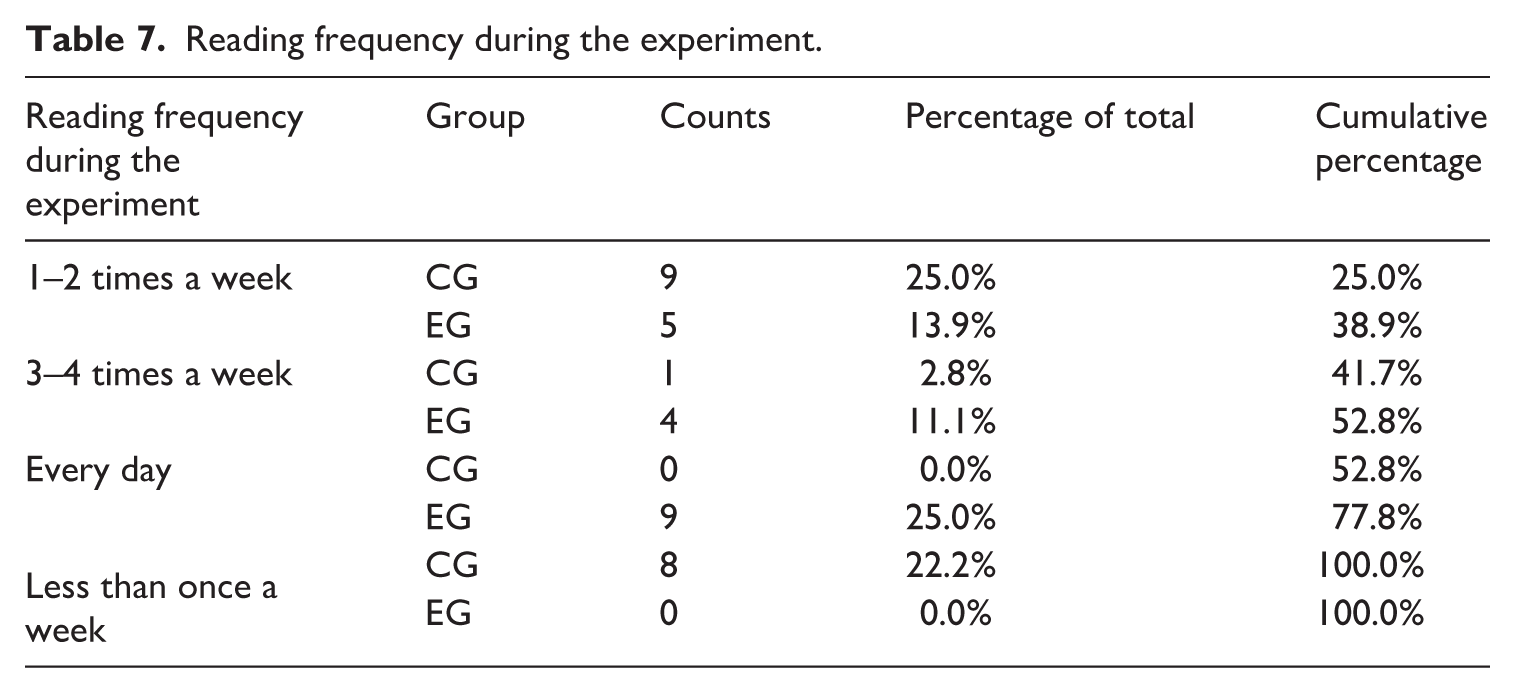
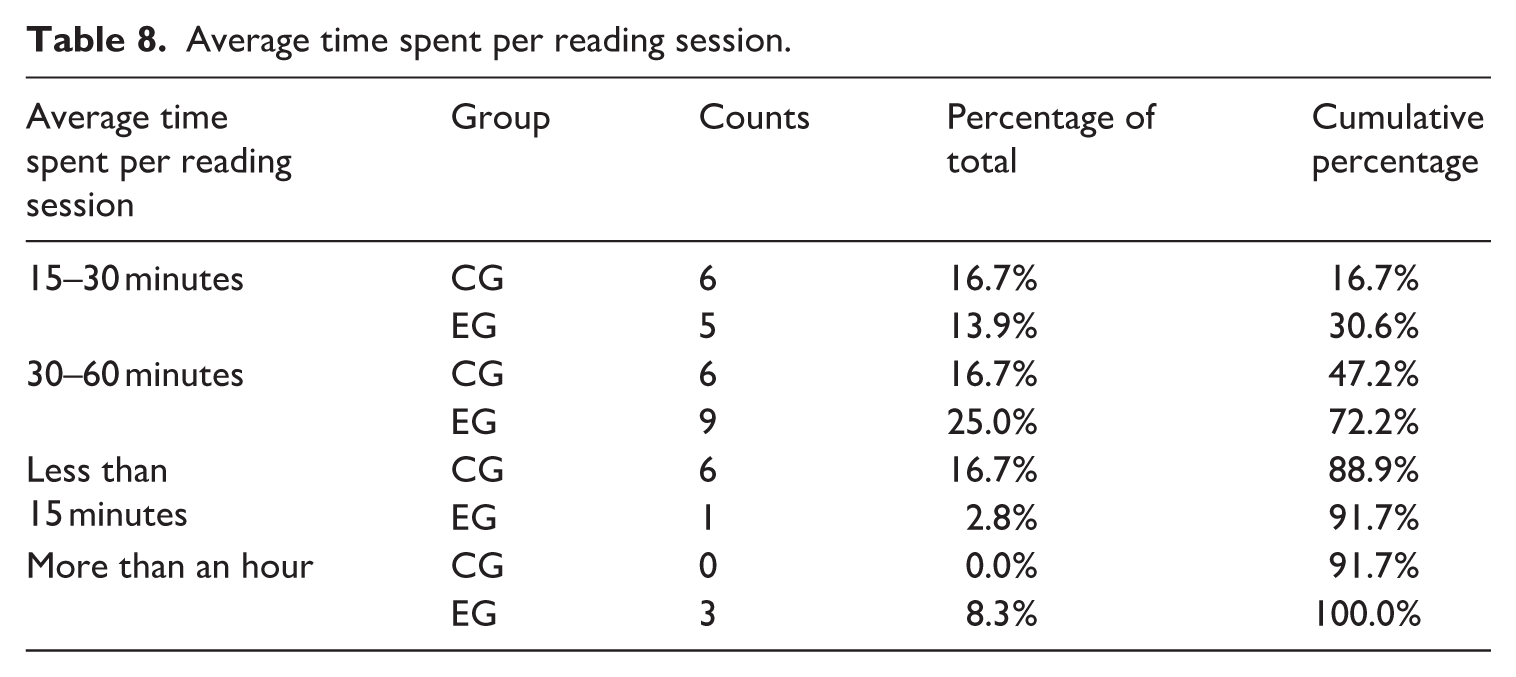
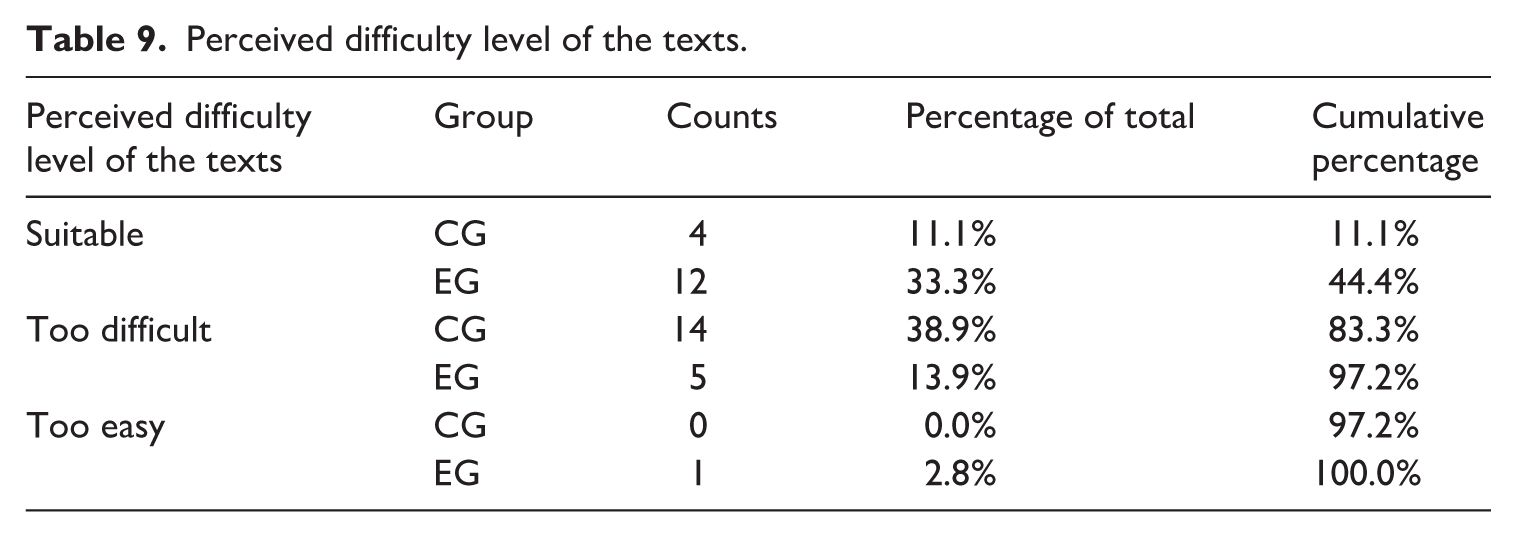
Once the experiment was completed, participants were given a questionnaire to express their opinions on the reading process, how often and for how long they had sessions, how engaged they were, what motivated them, and how they thought about progressing and improving their language abilities. The results indicated that 25% of the EG participants read daily, whereas no CG participants did so. In the CG, 22.2% of the participants read less than once per week (Table 7). Participants in the EG also spent a longer reading time. In this group, 25% of participants read for between 30 and 60 minutes, and 8.3% read for more than an hour in each session. In the CG, 16.7% of the participants read for less than 15 min (Table 8). In the EG, 30.6% of respondents said that the texts were "easy," whereas 33.3% said that the degree of difficulty was "appropriate." In the CG, 38.9% of the respondents said that the texts were “too difficult” (Table 9). In the EG, 11.1% of participants described the texts as "very interesting," whereas 33.3% of CG participants said they were "not interesting at all." This shows that engagement levels were greater in the EG.
Reading frequency during the experiment.
Average time spent per reading session.
Perceived difficulty level of the texts.
As for motivation, 19.4% of the EG cited language development and 5.6% noted teacher support. In the CG, 36.1% of the participants read to finish the experiment. In self-reported progress, 25% of EG noted major improvement, 22.2% some improvement, whereas in the CG 33.3% saw no improvement. The experimental intervention had a favorable effect on the motivation, engagement, and language abilities of the participants in the EG, as shown by these data.
VI Discussion
Educators have debated for many years how graded readers can serve in language pedagogy because they argue that these texts help balance cultural authenticity with linguistic accessibility. This study adds to the current discussion by examining Kazakh language education, which has historically faced difficulties owing to the lack of graded readers. The study underscores essential processes through which text modifications influence the cognitive and emotional components of language learning while offering valuable knowledge applicable beyond Kazakh language instruction to establish general native language education guidelines.
The findings showed that the experimental intervention enhanced participants' reading skills and linguistic abilities. The results of the posttest statistics showed that students in the EG achieved significantly higher reading speeds than those in the CG. Statistical analysis confirmed that these differences were statistically significant, with a p-value less than .001. The results of our research support earlier work, including Baker’s (2015) study, which showed that lower-level EFL students achieved faster reading speeds through graded readers, demonstrating improved reading fluency through graded literature.
The data collected from the questionnaire indicated significant differences between groups regarding their thought processes and actions. The EG participants demonstrated higher engagement with the reading task because they read daily and spent more time on each session. The EG participants reported greater interest in and ease of reading the texts, which contributed to their enhanced involvement. The CG participants faced greater challenges in understanding the material and found the texts overly difficult, which could have affected their motivation and development. These results are consistent with those reported by Schmitt et al. (2022). It was discovered that students who struggle with complex texts experience reduced motivation and engagement levels, leading to poor educational outcomes. This research demonstrated an interaction effect, revealing that reading comprehension instruction influences how text difficulty affects student engagement. The findings indicate that text readability should be considered when planning instructional support for the development of reading comprehension skills (Schmitt et al., 2022).
The teacher’s role also seemed to have had an impact, more noticeably in the EG. Respondents often mentioned teacher encouragement and structured support provided through WhatsApp as motivating factors that led to their consistent performance in the reading tasks and their perceived improvement in the language. This implies that pedagogical scaffolding plays a role in maintaining learner motivation and perseverance (Dörnyei & Ushioda, 2009).
Interestingly, the main motivation for the EG was the desire to develop language abilities and to provide instructor assistance. In contrast, most of the participants in the CG continued to read merely to complete the experiment. This discrepancy highlights the significance of both the substance of the learning materials and presentation techniques, which include the instructor's role in supporting and inspiring students.
The primary focus of this study was the apparent efficacy of graded readers in enhancing reading proficiency. The present study explicitly underscores the potential of strategic adaptations of native literature, a genre that tends to be reserved for advanced learners, to facilitate skill development at intermediate stages, despite prior research demonstrating the significance of simplified texts in L2 acquisition. This is in accordance with sociocultural theories, which contend that cognitive development is the result of engagement with culturally pertinent, but feasible tasks (Vygotsky, 1978). The intervention appeared to maximize the "zone of proximal development" by reconsidering linguistic complexity while retaining narrative integrity and cultural elements, thereby allowing students to demonstrate communicative competence and interest in literature. The enhancements in students' understanding, alongside their continued drive, demonstrate that the graded readers offered scaffolding, allowing students to achieve more than they could on their own. This effectively showcased the operation within a well-established zone of proximal development.
To meet the L2 students' cognitive needs, the text adaptation procedure of this study included simplifying the syntactic and lexical structures, reducing sentence length, and replacing certain culturally marked expressions with paraphrased counterparts, with no omission of plot and cultural key points. This procedure was framed using standard national descriptors (Committee for Technical Regulation and Metrology, 2023).
The experimental group's enhanced engagement and self-efficacy of motivation are consistent with the models of motivational support (Dörnyei & Ushioda, 2009), which posit that the perceived achievability of a task increases persistence. The control group's dissatisfaction and rare practice with the original texts underscore a pedagogical paradox: unmodified heritage literature, despite its cultural riches, may inadvertently promote avoidance behavior by alienating students due to its excessive complexity. In contrast, graded readers seem to have transformed traditions from obstacles to bridges, as evidenced by the increased identification of participants with learning objectives.
The integration of literary genres within foreign language curricula, as highlighted by Sholichah and Purbani (2018), offers authentic examples and a wealth of linguistic resources to students. This approach aligns with the principles of extensive reading and plays a crucial role in the holistic advancement of language competencies. Debates regarding authenticity in language education are intersected by the theoretical discoveries of this study. Critics of text adaptation contend that simplification undermines the authenticity of the cultural and linguistic content (Gilmore, 2007). Nevertheless, our findings indicate that controlled adaptation, when implemented in conjunction with cultural stakeholders (in this instance, teachers), can paradoxically enhance authenticity by facilitating learners’ accessibility to heritage narratives during critical developmental stages. This is in accordance with ethnographic perspectives that regard adaptation as an act of cultural mediation rather than denigration (Kramsch, 1993).
We ensured authenticity through lexical choices that preserved cultural references, original character names, and story structures while simplifying grammatical complexity. The texts were piloted with native speakers to verify that the adapted versions accurately represented authentic language use. Idiomatic expressions were selectively retained or annotated for cultural richness and descriptions were maintained for contextual fidelity. These strategies aim to prevent cultural flattening, while enhancing readability.
Information that students have provided about their own growth and views on language improvement should be given particular consideration. EG participants were not only more likely to claim substantial increases in their language abilities but also reported reading development, which is consistent with their increased participation in the process. These findings demonstrate that a comprehensive strategy that incorporates modified materials, instructor assistance, and a stimulating atmosphere may significantly improve learning experience.
The literature review underscores the significant impact of graded readers on L2 acquisition, emphasizing their role in facilitating accessible language input, enhancing skill development, and fostering cultural understanding. However, the scarcity of such resources in languages other than English presents a notable deficiency in the educational landscape (McQuillan, 2016; Mohamed, 2024). Robb and Ewert (2024) emphasized the critical necessity for further scholarly investigation into graded readers written in languages other than English. Addressing this disparity necessitates the intentional creation of culturally relevant adapted resources for regional and minority languages, alongside collaborative efforts among linguists, educators, and publishers (Claridge, 2012; Nation, 2014b). The use of these materials in educational programs requires an assessment of the existing teacher-training methods. Training sessions should teach participants how to use graded readers together with interactive technologies to increase accessibility (Chou, 2022; Nation, 2014b).
The fact that the WhatsApp group was used in parallel as a medium for teacher scaffolding and peer-to-peer communication might have also played a role in these results. Respondents mentioned supporting their motivation through WhatsApp several times. This means that online scaffolding is not entirely separable from the effect of graded texts. As the reading situation was created in a way that emulates a real learning context, this should not be interpreted as a methodological problem but rather as a potential design for future studies. A randomized controlled trial that included a group without digital support would help to identify the unique contribution of the graded reader condition.
In light of these conclusions, teacher education should equip teachers with knowledge of text-adaptation strategies, CEFR levels, and digital tools to scaffold the reading process. Teachers should also acquire skills to motivate learners and help them in the selection of culturally relevant but accessible texts for varying degrees of language proficiency.
VI Conclusion
The findings demonstrate that graded readers make a substantial difference in heritage language education within underresourced linguistic contexts such as Kazakhs. The educational intervention successfully addressed the historical deficiency of suitable learning materials in Kazakh literature, demonstrating that well-designed text modifications enhance students’ reading abilities and foster sustained engagement and cultural connectedness. The experimental group showed significant gains in reading speed and comprehension, whereas self-reports indicated increased motivation and better text accessibility, thereby demonstrating the combined cognitive and emotional benefits of aligning linguistic complexity with learner development stages. Researchers have argued that deliberate adjustments to teaching materials are essential to merging cultural authenticity with successful teaching methods.
The consequences extend beyond teaching the Kazakhs as a language. The graded reader shows that linguistically complex original texts can be overcome to benefit the learning of the Kazakh languages. Student motivation increases when students use custom educational materials, because culturally relevant and accessible resources transform learning into an identity-affirming practice beyond mechanical exercises.
The results demonstrate that educators and policymakers must create standardized text adaptation frameworks that preserve cultural narratives and meet learner diversity requirements. Future curricula should highlight these materials in fundamental language courses to prevent dropout rates among students who find complex texts discouraged.
Researchers in future studies should undertake to understand how reading gains apply to productive language skills, and how customized books affect diaspora communities. Studies that compare languages with varying levels of morphological complexity can improve adaptation principles. This method demonstrates critical linguistic and cultural support mechanisms that create a sustainable model for maintaining linguistic heritage amidst globalization trends.
This study has some limitations. First, although the study found that the intervention was effective, the support that the participants in the experimental group received through WhatsApp may have affected their engagement and outcome. This was a confounding variable that was not controlled for in this study. Second, the sample size was relatively small, which limits the generalizability of the findings to a broader population. Third, the study did not control for teacher effects, such as differences in teaching style or rapport, which may have affected learners’ motivation and performance. In addition to the sample size and possible teacher effects, another notable limitation of this study was the disciplinary specificity of the participants. Given that the study examined only first-year law students from a regional university in Kazakhstan, its findings may be characteristic of the learning process of this academic cohort. As such, the results cannot be generalized to students from other fields, whose learning tasks, linguistic requirements, and motivational settings are expected to differ.
In conclusion, the process of adapting literary texts should not be seen as surrendering to difficulties but should be understood as a way to increase student involvement in education while preserving cultural heritage for future generations.
Footnotes
Appendix
Sample adaptations of literary texts.
| Original text | Adapted text |
| «Бұрын әкесі тартатын ауыртпалықтың бәрі бұл күнде Ғазизаның өз басына түскен. Еркек істейтін шаруаның. бәрін өзі істейтін болып, әлі келгенше үйінің барлық шаруасын ұстап тұрған - өзі. Соңғы аз уақыттан бері бұл қызметінің үстіне, тағы үй ішіндегі бар жұмыс масыл болып мойнына мінді. Бұрын тыстағы шаруасына да көмегі тиіп, үйдегі барлық шаруаны жайлап отырған, шешесі жиырма күннен бері көзінен айрылып, соқыр болды. Жақыптың тірі кезінде көзі анда-санда ауырып қалып: «шеп түсті», «көз ауру болдым», «желге асқынып кетті»,- деп жүре беруші еді. Жақып өліп, көп жылаған соң, сол көзі аз күнде суқараңғы болды. Үй үшінің қайғысы бұрынғысынан да асты. «Жетім-жесірге ес болып отырған кемпір, басынан қара тұман айықпай, үсті-үстіне қайғы жауып, қабат қаза көрген соң, құдайға, тағдырға нанған көңілмен бір уақыт шын жалбарынып, назаланып: «Құдай-ау, не күнә сұмдығымнан осындай қазаға душар қылдың? Не жазығым бар еді?»-деп меңіреу дүниеге сұрақ қоюшы еді. Ауыр өксікпен күрсініп, кеудесін жарған уайымның жалынын, ешкімнен жауап қайтпайтынын білсе де, анда-санда дауыстап айтып отырушы еді». |
Бұрын үйдің ауыр жұмысын әкесі істейтін. Енді бұл жұмыстың бәрі Ғазизаның мойнында. Ер адам істейтін шаруаны да өзі істейді. Соңғы кезде оған тағы да үй ішіндегі жұмыс қосылды, өйткені шешесі жиырма күн бұрын соқыр болып қалды. Бұрын шешесі «көзім ауырды» деп жүретін. Жақып қайтыс болған соң, шешесі көп жылады. Көзі одан сайын ауырып, көрмей қалды. Енді үй іші бұрынғыдан да қайғылы болды. Шешесі қатты қайғырды. – Құдай-ау, не үшін маған осындай қайғы бердің? Мен не жаздым? – деп құдайдан сұрайтын. Ешкім жауап бермейтінін білсе де, ішіндегі мұңын айтып отыратын еді. |
| Original text | Adapted text |
| All the burdens once borne by her father had now fallen squarely on Gaziza’s shoulders. Tasks that belonged to the realm of men were now hers alone. With all the strength she could summon, she kept the household running, shouldering every duty without complaint. In recent days, her responsibilities had grown even heavier. On top of her usual work, every chore inside the home had become her weight to carry. Her mother, who used to help with housework and sometimes lend a hand outside too, had lost her sight twenty days ago. When Jakyp was alive, her mother’s eyes would occasionally ache. “A film has clouded them,” she would say. “It’s just some wind, a little infection,” she’d dismiss. But after Jakyp’s death—and the heavy weeping that followed—her eyes, in just a few short days, fell into total darkness. The grief within the house deepened. The old woman, once a pillar of strength for her orphaned and widowed family, now sat in a fog of sorrow. With one loss layered atop another, she turned her heart—believing in fate and in God—to quiet lamentation. “Oh Lord,” she would cry out into the unanswering world, “What terrible sin have I committed to deserve such a fate? What wrong have I done?” And though no voice replied, she would speak aloud from time to time—her words rising from the depth of her chest like a heavy sob, the burn of sorrow searing through her being. |
Her father used to do all the hard work around the house. Now, all of it was on Gaziza’s shoulders. She even took care of the tasks usually done by men. Lately, more responsibilities had been added, because her mother had gone blind twenty days ago. Before that, her mother used to say, “My eyes hurt,” but it didn’t seem serious. After Jakyp passed away, her mother cried a lot. Her eyes got worse, and soon she couldn’t see at all. Now the sadness in the house was deeper than ever. Her grandmother was filled with grief. “Oh God, why have You given me such sorrow? What did I do wrong?” she would ask. Even though she knew no one would answer, she still spoke her pain aloud from time to time. |
Data availability statement
Data are available by sending a request to the corresponding author, Yerbol Sarmurzin
Declaration of conflicting interests
The authors declared no potential conflicts of interest with respect to the research, authorship, and/or publication of this article.
Funding
The authors received no financial support for the research, authorship, and/or publication of this article.
Ethical approval
The researchers completed this study according to established ethical guidelines and secured all required ethical approvals from the ethics committee of Karaganda Buketov University.
Informed consent
All participants gave their informed consent before taking part in the study. The publication of anonymized data received consent from every participant.
