






Abstract
This study investigates the effectiveness of multisensory learning (MSL) compared to traditional (TRD) teaching methods in enhancing English vocabulary acquisition among English as a foreign language (EFL) kindergarten-aged learners in Amman, Jordan. A total of 49 children were divided equally into two groups: one receiving traditional instruction and the other exposed to multisensory techniques, including visual aids, auditory input, specific activities, and experiences. Pre- and post-tests were used to assess vocabulary retrieval through two tasks. Descriptive statistics revealed that the MSL group outperformed the TRD group in both tasks, with higher mean scores and reduced variability, indicating more consistent learning outcomes. An independent sample t-test confirmed that these differences were statistically significant. The findings indicate that multisensory instruction not only enhances vocabulary acquisition but also promotes enthusiasm in learning among young EFL learners. In light of Paivio’s Dual Coding Theory (DCT), learning is enhanced when information is presented in both verbal and non-verbal forms, activating the brain’s dual cognitive subsystems through visual aids, physical activities, and tactile experiences. The study highlights the value of incorporating multisensory approaches in early EFL education to facilitate equitable vocabulary development. The study concludes with pedagogical implications and recommendations for further research.
Keywords
1 Introduction
Vocabulary acquisition is a critical component of early language learning, forming the foundation for literacy and communication skills. Vocabulary is often regarded as the building block of language, providing the tools necessary for both expressive and receptive communication. It predicts children’s morphosyntactic development and their cognitive development and future academic performance (Sénéchal et al., 2006), making effective teaching strategies crucial. However, Arabic-speaking English as a foreign language (EFL) learners face particular challenges in acquiring and retaining new vocabulary due to linguistic and cognitive differences between Arabic and English. Several phonological, syntactic, and semantic difficulties arise when switching from Arabic to English, hindering efficient vocabulary learning (Haddad-Najjar & Abu-Rabia, 2025).
Research highlights that conventional methods of teaching, relying heavily on silent reading and memorization, result in limited effectiveness in promoting long-term retention of knowledge and less interest and engagement in the learning process (e.g. Abu-Rabia, 1997; Nation, 2001). This is because such approaches, dominated by drill and practice of vocabulary learning, with little focus on language in context, can lead to an understanding that is too shallow and forgetting that is too quick (Abu-Rabia, 1997). They may not cater to the specific needs of early EFL learners who are navigating the complex linguistic differences between Arabic and English. Notably, disparities in phonetic, syntactic, and morphological structures between the two languages pose additional barriers to vocabulary acquisition, making it harder for children to internalize new words (Abu-Rabia & Siegel, 2003). Such techniques often ignore that young children, particularly those coming from multilingual settings, differ in their learning styles. This necessitates investigating the effectiveness of technology in relation to traditional approaches, particularly for children in kindergarten learning a foreign language.
On the other hand, multisensory learning is an educational approach that engages multiple senses at a time (visual, auditory, kinesthetic, and tactile) simultaneously to enhance learning and retention. Presenting information through various sensory pathways makes learners form stronger and more diverse neural connections. Multisensory approaches have been valuable in supporting the relationships between sound and symbol, word recognition, and the use of tactile methods such as tracing on rough or soft surfaces (National Reading Panel, 2000). This method marries the senses and makes learning more enjoyable because it is more engaging than traditional methods of teaching. Multisensory learning, as it is called, hypothesizes (Dunn & Dunn, 1993) that it caters to a learner’s ability to better retain information by engaging more senses. This is especially important for young EFL learners because they learn better through stimuli that foster their growth and learning capacities.
Research has demonstrated that learning environments incorporating senses provide learners with relevant and purposeful interactions with the language (Berk & Winsler, 1995; Khasawneh, 2024; Saborío-Taylor, 2025). This is compatible with the concepts of Total Physical Response (TPR), which advocates for the use of students’ bodies in language learning. TPR engages learners physically, but more importantly, it uses the learners’ movements for learning, which improves the attitude and outcome of learning (Asher, 2009). TPR has proven effective in promoting vocabulary retention through movement-based learning, mimicking the natural first-language acquisition process where physical responses reinforce linguistic input (Asher, 2009). This leads to the realization that TPR can be considered a subset of the multisensory approach, as it incorporates kinesthetic activities to engage learners physically and mentally in language acquisition.
The value of multisensory learning has a long history in education. Early educators such as Montessori (1912) emphasized sensory-rich experiences in children’s learning. Later studies also highlighted the role of active participation and play-based environments in strengthening vocabulary learning and retention among young learners (Berk & Winsler, 1995; Hattie, 2009). Importantly, these bodily movements not only increase engagement but also serve as cognitive encoding mechanisms. When learners physically perform actions such as ‘hopping’ or ‘twirling’, the meaning of the word is encoded through tactile and kinesthetic experiences, in addition to verbal and visual input. According to Dual Coding Theory, this creates multiple memory pathways, linking the verbal label with sensory and motor representations. As a result, the connection between the word and its meaning becomes stronger, which enhances retention and recall.
Despite these promising alternatives, the empirical research that comprehensively compares the outcomes of these methodologies with traditional approaches in early childhood EFL contexts remains scarce. Most emerging studies done so far have focused on adult students or learners who have certain learning disorders such as dyslexia or ADHD (Khasawneh, 2024; Nada, 2020; Şahmaran, 2025). However, there is one recent study that focused on comparing traditional methods of learning with the Total Physical Response (TPR) learning method (El-Fauri, 2022). As a result, there is a call for further studies of young EFL learners who develop typically and speak Arabic in kindergartens, to test the benefits of multisensory learning approaches for wider applicability and effectiveness.
Therefore, this study endeavors to bridge the research gap by comparing multisensory and traditional methodologies to identify the most effective approach for long-term vocabulary retention in early childhood EFL settings. The researchers hypothesize that there is no statistical difference between multisensory and traditional methodologies for long-term vocabulary retention in early childhood EFL settings. The findings will inform teaching strategies in Arabic-speaking regions and contribute to research on second language acquisition (SLA) by emphasizing the importance of physical movement, sensory engagement, and structured repetition. Ultimately, this research aims to enhance teaching practices and improve learning outcomes for young EFL learners. The findings may also contribute to curriculum development and teacher training programs by identifying effective strategies for vocabulary instruction in Arabic-speaking EFL contexts.
Generally, the significance of this study lies in addressing a crucial gap in early language education for Arabic-speaking children. Vocabulary acquisition is foundational to language learning, especially at the kindergarten level, where cognitive and linguistic development is at its peak. Arabic EFL learners face unique challenges due to differences in language structure and phonetics, making it essential to explore diverse instructional methods. By comparing the effectiveness of multisensory and traditional approaches, this study aims to identify the most effective methodology for long-term vocabulary retention and acquisition. The findings could offer valuable insights for educators in Arabic-speaking regions, informing teaching strategies that align with the developmental needs of young learners. Additionally, the study contributes to the broader body of research on second language acquisition (SLA), highlighting the importance of integrating physical movement, sensory engagement, and structured repetition in early childhood education. Ultimately, this research has the potential to enhance teaching practices, improve learning outcomes for young EFL learners, and provide a model for implementing diverse methodologies in other linguistic and cultural contexts.
2 Literature Review
2.1 Theoretical Framework
This study adopts the DCT proposed by Paivio (1971) to investigate the comparative effectiveness of multisensory and traditional teaching approaches in vocabulary acquisition among Arabic EFL learners. The DCT posits that human cognition utilizes two interconnected systems for information processing: the verbal system, which processes linguistic and textual information, and the non-verbal system, which processes imagery and sensory input. By leveraging both channels, information is encoded in dual formats, creating complementary cognitive pathways that enhance memory retention and retrieval (Mayer, 2014; Paivio, 1990). The DCT emphasizes that encoding information in both verbal and non-verbal formats provides redundancy in memory representation, which is crucial for learners with limited exposure to the target language. This redundancy not only improves retrieval accuracy but also enhances learners’ confidence by enabling them to access stored information through multiple pathways. The current study extends the application of DCT (Paivio, 1971) by examining its implications for vocabulary acquisition among Arabic-speaking EFL kindergarten learners through multisensory and traditional teaching approaches. Learning is optimized when both channels are activated simultaneously, as this dual representation enhances cognitive encoding, retrieval, and long-term memory storage (Mayer, 2014).
In the context of language acquisition, multisensory teaching directly aligns with the DCT by engaging multiple sensory modalities: visual, auditory, tactile, and kinesthetic. For instance, visual aids such as flashcards and videos, along with auditory prompts such as songs and Total Physical Response (TPR), representing kinesthetic movements, activate both verbal and nonverbal systems. This dual activation reduces cognitive load and facilitates the storage of information in long-term memory (Clark & Paivio, 1991). Recent research (Spring & Takeda, 2023) supports this, demonstrating that integrating multiple sensory channels significantly improves vocabulary acquisition and retention.
TPR often relies solely on verbal input, such as rote memorization or isolated word lists. While it is effective to a degree, this method lacks the dynamic interaction between verbal and nonverbal systems and may result in limited cognitive engagement, particularly for young learners with emerging linguistic abilities (Fengyu, 2023). Multisensory approaches offer a more holistic learning experience that caters to the cognitive and developmental needs of kindergarten learners. TPR, a component of multisensory learning, exemplifies the practical application of DCT principles. By integrating physical movement with verbal instructions, TPR activates motor, visual, and verbal systems simultaneously, enhancing both comprehension and retention (Asher, 2009). This is particularly effective in early childhood education, where physical engagement plays a pivotal role in learning.
In early language acquisition, children rely heavily on sensory experiences to make meaning of new linguistic input. Multisensory instruction aligns closely with the principles of DCT by ensuring that vocabulary is encoded through multiple modalities (Shams & Seitz, 2008). This can enhance the linking of linguistic symbols with their conceptual representations and thus strengthen the memory pathways (Clark & Paivio, 1991). Neuroscience evidence also supports a multisensory approach for promoting neural plasticity and deeper cognitive processing, which leads to higher retention rates of information in one’s long-term memory (Brooks, 2018; Shams & Seitz, 2008).
The efficacy of DCT in vocabulary learning is underpinned by cognitive and neurological studies. Cognitive psychological studies have established that information processed through more than one sensory channel reinforces neural connections, thereby increasing retention and recall (Baddeley, 2012). As learners are exposed to verbal and non-verbal stimuli, their brains create association pathways between linguistic and sensory experience, which results in quicker retrieval processes (Sweller et al., 2011). Neuroscientific research offers additional support for DCT by illustrating the role of multisensory integration in enabling neural plasticity (Shams & Seitz, 2008). Functional magnetic resonance imaging research has indicated that when individuals interact with linguistic information using various modalities, there is concurrent activation of brain areas responsible for sensory processing, memory, and motor coordination. Multisensory interaction not only enables initial knowledge uptake but also reinforces synaptic connections, resulting in enhanced and more durable memory retention (Brooks, 2018).
Multisensory learning methods provide an enriched linguistic environment that reduces cognitive load and facilitates implicit learning (Mayer, 2014). When children see, hear, and physically interact with words, such as associating images with spoken words or physically enacting verbs, they establish multiple cognitive pathways, reinforcing memory recall (Paivio, 1990). The study conducted by Etemadfar et al. (2019) found that multisensory vocabulary instruction significantly improved retention among young EFL learners compared with the traditional rote memorization technique.
Literature on early childhood learning indicates that active learning with materials through movement, sound, and touch greatly facilitates understanding and recall (Thomson & Goswami, 2008). Etemadfar et al. (2019) discovered that multisensory vocabulary instruction outperformed conventional rote memorization methods considerably with young EFL students. Likewise, Sadoski and Paivio (2013) believe that early exposure to dual-coded instruction enables children to acquire a better conceptual understanding of vocabulary through the association of linguistic symbols and concrete sensory representations. Glenberg (2008) asserts that sensorimotor actions underpin abstract thought; therefore, using one’s body to learn new words, acting out verbs, for instance, or handling objects associated with words enriches conceptual understanding. Thus, by engaging learners through dynamic and interactive activities, multisensory teaching fosters cognitive, emotional, and physical engagement, which are critical for vocabulary acquisition in early educational contexts (Mayer, 2014; Shams & Seitz, 2008).
2.2 Related Research
A growing attention has been paid to the effectiveness of different methods for acquiring language among EFL learners (Al-Harahsheh, 2014; Hidayatullah et al., 2022). Ellis (1994) criticized traditional, behaviorist language teaching methods such as rote memorization and drill-based activities for producing superficial knowledge. He argued that these approaches, since they do not promote meaningful cognitive connections or long-term retention, are particularly effective among young learners who thrive on interactive and experiential learning. His critique laid the groundwork for a shift towards more holistic and engaging pedagogies in EFL education. Asher (2009) emphasized the dual engagement of linguistic and kinesthetic modalities, noting that such embodied learning methods activate both hemispheres of the brain and reduce stress, making them especially effective for unconscious language acquisition. Nation (2001) echoed these concerns, noting that while traditional methods can be effective for basic word recognition and short-term recall, they are limited in fostering deep cognitive engagement and meaningful retention, particularly among young learners. Research has shown that combining sensory inputs, such as using visual aids like flashcards, auditory stimuli like songs, and tactile activities like tracing letters, leads to more meaningful and lasting vocabulary acquisition compared to traditional, single-sensory methods (Ahmad et al., 2024; Goswami, 2006). This approach not only supports cognitive development but also enhances learner engagement and motivation, which are crucial for young children. By leveraging multiple senses, multisensory learning promotes active participation, deepens understanding, and facilitates stronger neural connections, making it a valuable tool in early childhood education, particularly for EFL learners. Asher (2009) shows how associating language input with physical action improves retention. For example, linking the word ‘jump’ with the actual motion of jumping helps learners embed the vocabulary in their kinesthetic memory. Sariyati (2013) further validated the effectiveness of TPR among first-grade Indonesian students with significantly more vocabulary and higher motivation than those taught through conventional methods.
Recent research in second language acquisition (SLA) has highlighted the value of multisensory learning, supported by neuroscience (Gkintoni et al., 2025; Peña & Cubo, 2025). Engaging multiple senses – sight, hearing, touch, and movement – makes learning more engaging and activates more areas of the brain. Studies show that when learners interact with information through multiple senses, key regions responsible for memory, like the hippocampus and prefrontal cortex, are more active. This increased neural activity facilitates better encoding of information, making it easier to store and retrieve learned material (Shams & Seitz, 2008). By stimulating various sensory pathways, multisensory learning strengthens the brain’s ability to create lasting connections, helping learners recall and apply new vocabulary meaningfully (Mayer, 2014). This approach is especially useful for young learners, who respond better to interactive, hands-on experiences that promote retention and understanding of new language concepts. Brooks (2018) demonstrates that sensory integration promotes synaptic plasticity and long-term memory formation in early learners, making these methods well-suited for early language instruction.
Alptekin and Erçetin (2011) found significantly better performance in comprehension and retention for Turkish-speaking learners with the use of a multisensory approach. These findings imply that multisensory learning could also address the structural or phonological discrepancies between learners’ first and second languages by strengthening conceptual links through multiple modalities. Kosmas and Zaphiris (2020) showed significant gains in productive vocabulary, increased emotional involvement, and improved classroom engagement. Teachers also reported that the multisensory approach was cost-effective and easily implemented. Cahyawati and Antara (2021) indicated that students in the TPR group demonstrated superior vocabulary mastery, attributed to the embodied and emotionally resonant nature of physical engagement. Similarly, Vélez et al. (2021) confirmed that TPR not only aligns with the developmental characteristics of young learners but also serves as an effective tool for vocabulary acquisition across diverse cultural settings. Hidayatullah et al. (2022) revealed increased participation, enthusiasm, and vocabulary retention, affirming that VAK effectively enhances mastery of abstract nouns. In the most recent development, Fengyu (2023) showed that traditional instruction often leads to high attrition rates among EFL learners and fails to activate multiple cognitive channels, and is particularly ineffective for learners at early developmental stages, as opposed to multisensory learning, which was found to be more effective in fostering retention and engagement.
Moreover, a recent study by Palma and Loor (2025) examines the effectiveness of multi-sensory instruction and enhancing English vocabulary acquisition among third-grade learners in a public educational institution. The researchers compared multisensory teaching techniques with conventional instructional methods to determine their influence on students’ vocabulary learning outcomes. The multisensory approach incorporates a visual auditorium, kinesthetic activities, enabling learners to interact with new vocabulary through multiple sensory channels. The findings indicated that students who received multi-sensory instructions achieved higher levels of vocabulary acquisition and demonstrated better retention than those taught through traditional approaches. The study further concluded that engaging multiple senses during instruction increases learner motivation, strengthens memory encoding, and supports long-term vocabulary recall. These findings are consistent with Dual Coding Theory (Paivio, 1986), which emphasizes that information presented through both verbal and non-verbal systems is processed more effectively and retained for longer periods. This study is highly relevant to the present research, as it provides empirical support for the effectiveness of multisensory strategies in teaching vocabulary to young EFL learners and highlights the benefits of combining movement, visuals, sounds, and active participation over reliance on repetition or memorization alone.
A study by Catherine Snow (2014) highlighted the importance of rich language input and meaningful interaction in children’s vocabulary development and early literacy growth. Snow argued that young learners acquire vocabulary more effectively through communicative and context-based environments rather than isolated memorization. She emphasized the role of teachers and caregivers in supporting vocabulary growth through conversation, storytelling, and repeated exposure to new words. The study also suggested that vocabulary learning becomes stronger when children connect new words to prior knowledge and real-life experiences. These findings are relevant to the present research, as they support the effectiveness of interactive and multisensory approaches in enhancing vocabulary acquisition and retention among young EFL learners.
Taken together, these studies collectively affirm that multisensory instruction, particularly when grounded in DCT and embodied through Total Physical Response, provides substantial cognitive, emotional, and physiological benefits for young EFL learners. Traditional methods, while offering structured and systematic vocabulary input, often lack the interactive and stimulating elements necessary to support long-term retention, especially for children in the critical period of language acquisition. Moreover, most existing literature tends to focus on older learners, those already in the learning phase rather than the language acquisition phase. To address this gap, the current study targets five-year-old Arabic-speaking kindergarten students to offer new insights into how young learners process and retain language through dual-channel cognitive engagement.
3 Methodology
3.1 Research Design
This study employed a quantitative quasi-experimental comparative design incorporating pretests and posttests, alongside a nonequivalent control group, to evaluate the effectiveness of two teaching methodologies in foreign language vocabulary instruction for young learners (Altakhaineh & Zibin, 2017). As explained by Cook (2015), quasi-experiments usually test the causal consequences of long-lasting treatments outside of the laboratory. This design allows researchers to attribute observed outcomes to the specific intervention applied during the study (Miller et al., 2020). It is prevalent in educational research, especially in situations where random sampling is not feasible (Gribbons & Herman, 1996). In this study, the effectiveness of the teaching approaches was examined by comparing the academic achievement (dependent variable) of two groups of kindergarten students based on pre- and post-tests. The two experimental groups underwent an intervention of teaching by means of the two teaching approaches in question.
3.2 The Sample
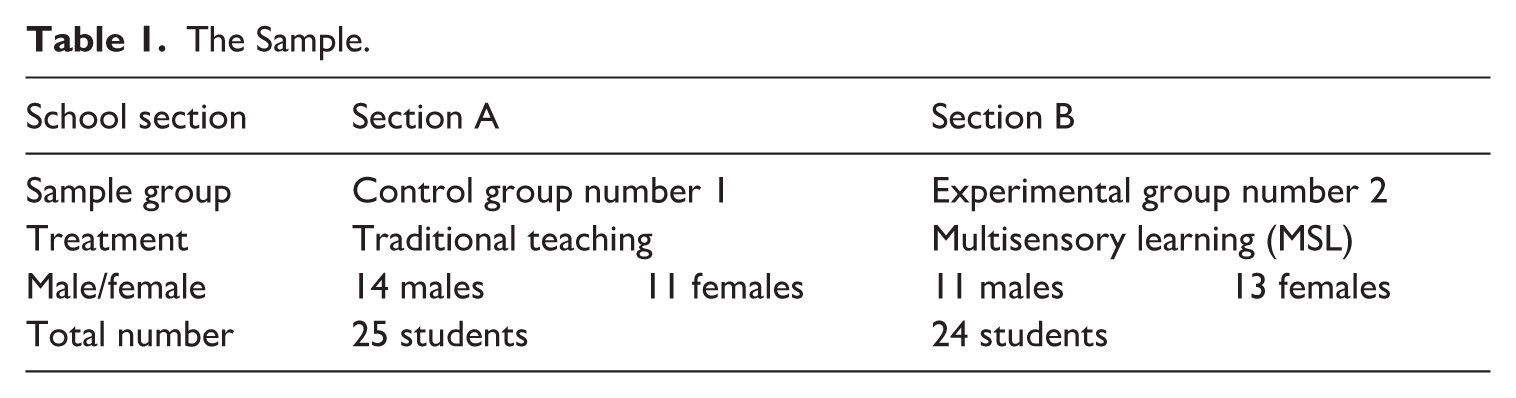
The convenience sample consisted of 49 male and female five-year-old students, all of whom are typically developing children. All of the students speak Arabic as their first language and are learning English as a second language in school. Their exposure to English was primarily limited to the classroom setting through regular kindergarten instruction, and they were considered beginner learners with basic age-appropriate vocabulary knowledge. The participants were drawn from the same educational institution and shared a similar learning environment, curriculum, and instructional background before the intervention, which helped ensure comparability between the two groups. In line with ethical research practices, approval was granted by the Postgraduate Committee at the School of Foreign Languages, The University of Jordan, on 25 December 2024. Informed consent was obtained from parents. The research procedures were explained in age-appropriate language to ensure the children’s voluntary participation. The list of vocabulary, which was selected from the IEC kindergarten school curriculum (Pearson English Portal 1 and reviewed by the kindergarten IEC English school advisor, consisted of (hop, itchy, bike, twirl, t-shirt, shorts, pants, shoes, socks, and sweater). The sample was divided into two sections: control groups (traditional method) and experimental group (multisensory), as detailed in Table 1.
The Sample.
3.3 Data Collection and Analysis Procedures
The first group of students (Traditional method) was taught vocabulary using traditional teaching methods, such as repetition, rote memorization, and visual aids like static flashcards and matching exercises. The second group (Multisensory method) was taught vocabulary using the MSL approach, which incorporates auditory, visual, and tactile components, along with physical movements to reinforce word meanings. For example, for the word ‘hop’, I created a hopscotch activity on the floor where students physically hop between boxes, each marked with the word ‘hop’, while also listening to the song ‘Hop, hop like a bunny’, allowing students to hop to the rhythm while chanting the word ‘hop’. For the word ‘itchy’, students explore textured materials, such as coarse fabric or soft brushes, to simulate the feeling of itchiness on the skin, having them repeat the word ‘itchy’ when they actually feel it. The same applies to teaching other words through providing hands-on experience.
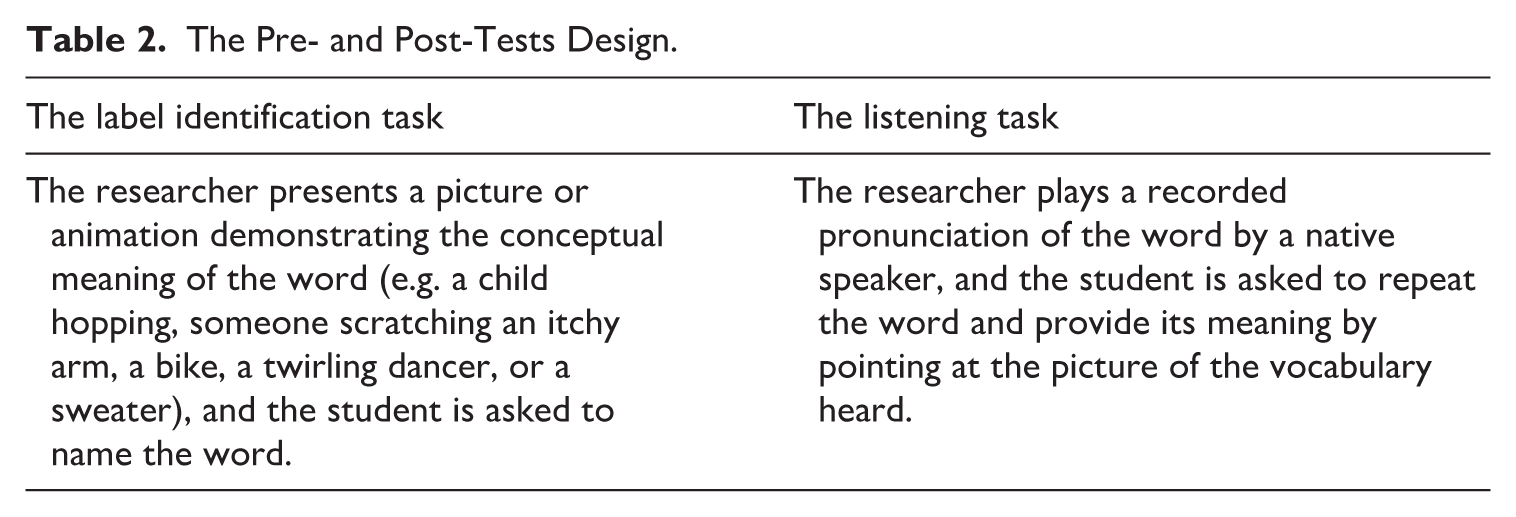
Quantitative data were collected through pre- and post-tests. Before the intervention, the students took a pre-test to assess their knowledge of the words. The test includes two linguistic tasks: an identification task and a listening task (see Appendix A). The experiment was conducted over five sessions spanning a period of two weeks, with each session focusing on a small set of vocabulary items in the sensory group. Each lesson followed a structured sequence that included introducing the word, visually practicing pronunciation, and engaging learners in physical or tactile activities, such as movement, role-play, or object instructions. In contrast, the traditional group followed a more conversational sequence based on repetition, memorization, and visual recognition activities. All sessions were delivered under similar conditions to ensure consistency between the two groups. After the experiment, the students were given a break for two weeks to continue their school curriculum. Following that, the same tasks were assigned to the students in the same order as a post-test. The tasks were conducted over a period of four days, with two days for each group. The pre- and post-tests were held at the school. Each student was called to take the exam individually in the lecture hall while all their classmates watched ‘Alphablocks’ videos or played with playdough. Each student solved the tasks separately under the supervision of the teacher to ensure the authenticity of the students’ performance. All the tasks were designed by the researcher, as explained in Table 2. Task one is the identification task (measured production), and task two is the listening task (measured comprehension).
The Pre- and Post-Tests Design.
To ensure the validity of the research instruments, the vocabulary test items were carefully selected from the kindergarten curriculum and reviewed by two English linguists to confirm their appropriateness and alignment with the learners’ level. Reliability was maintained through the consistent administration of the pre- and post-tests under identical conditions for all participants. Additionally, standardized instructions and procedures were followed throughout the data collection process to ensure consistency and minimize potential bias.
To assess students’ knowledge before and after applying the teaching instruction, ANCOVA was used. To ensure that there were no significant differences in prior knowledge, the mean correct answers of the pretest scores of the two groups were compared using a t-test. To compare the impact of the two teaching practices, posttest scores from both groups (TRD and MSL) were examined using a t-test. For all means and mean differences, 95% confidence intervals were constructed. Statistical significance was determined at a threshold of p < .05.
4 Results
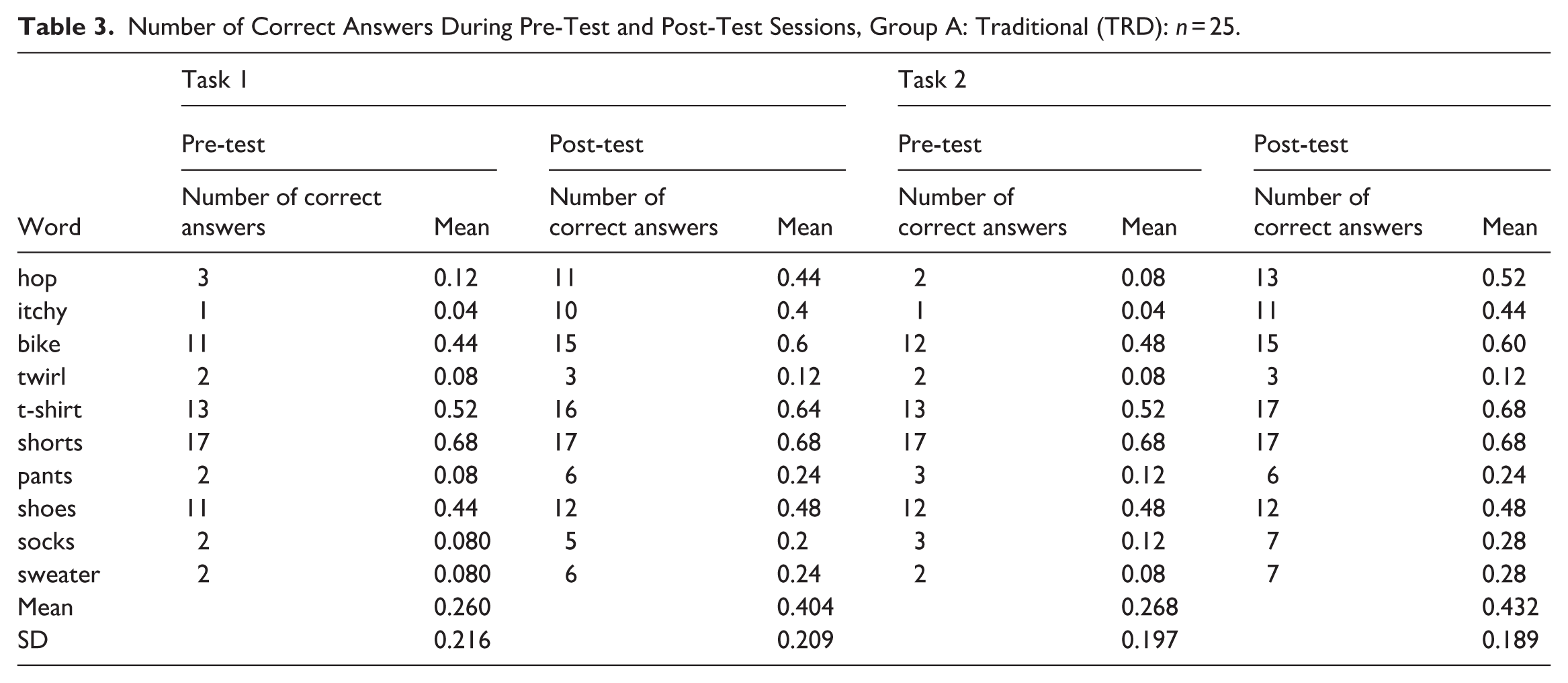
The means of their total results are analyzed first to evaluate their knowledge of the target words in general, and an analysis of their learning regarding each word knowledge criterion is presented later in this section. Tables 3 and 4 present the means of the participants’ results in the pre- and post-tests for each group.
Number of Correct Answers During Pre-Test and Post-Test Sessions, Group A: Traditional (TRD): n = 25.
Number of Correct Answers During Pre-Test and Post-Test Sessions, Group B: Multisensory Learning (MSL): n = 24.
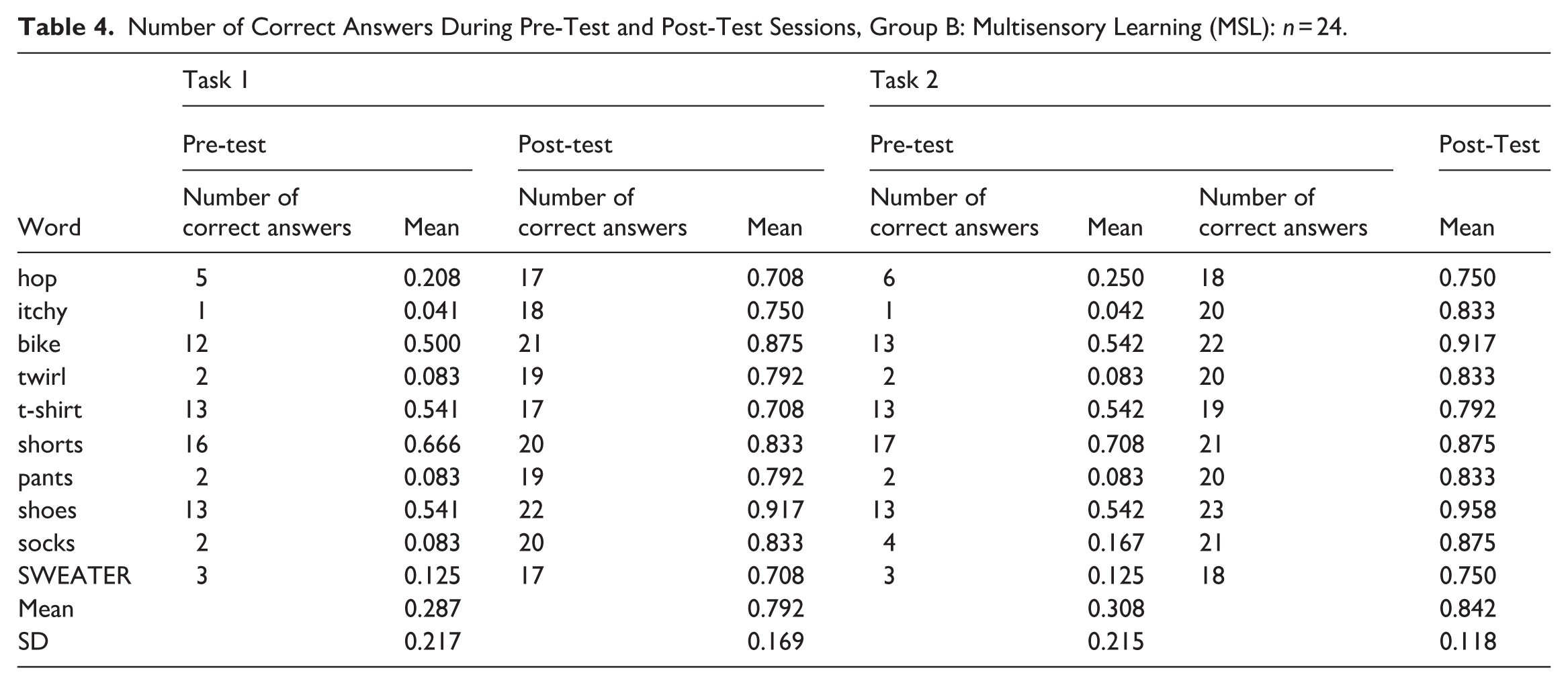
Tables 3 and 4 examine how each teaching approach impacts vocabulary acquisition by comparing the correct answers and means in both the pre- and post-test performance of Group (A) TRD and Group (B) MSL in the two-vocabulary task. Group A vocabulary scores improved from pre-test to post-test across both assessment tasks. The students recognized only a small fraction of the 10 target words, with a mean of 0.26 in the pretest. After three weeks of traditional teaching, their performance rose considerably in the post-test to a mean of 0.40. Given that they were taught through the traditional approach, similar gains were observed in Task 2.
On the other hand, Group B, which was taught using the multisensory method, demonstrated robust gains that outperformed those of Group A on most measures. Like their peers, this group started with a very low score, with a mean of (0.28) on the pretest. After the multisensory intervention, their post-test accuracy reached higher levels, scoring means of 0.79 in Task 1 and 0.84 in Task 2, indicating that the majority of the 10 words were mastered by most children. In Task 1, Group B’s mean rose from about (0.28) to (0.79), and in Task 2 from (0.30) to (0.82). These figures show greater improvement than seen in the traditional group. Based on the means of the participants’ results on the pre- and post-tests, it can be suggested that the participants in the experimental group outperformed their counterparts in the control group due to receiving education through MSL, which are considered modern, engaging teaching approaches. Table 5 presents the participants’ average performance on the pre- and post-tests for both vocabulary tests across the two instructional groups: TRD and MSL.
Summary of Descriptive Statistics of the Correct Answer Percentage for Both Traditional (TRD) and Multisensory Learning (MSL) Groups.
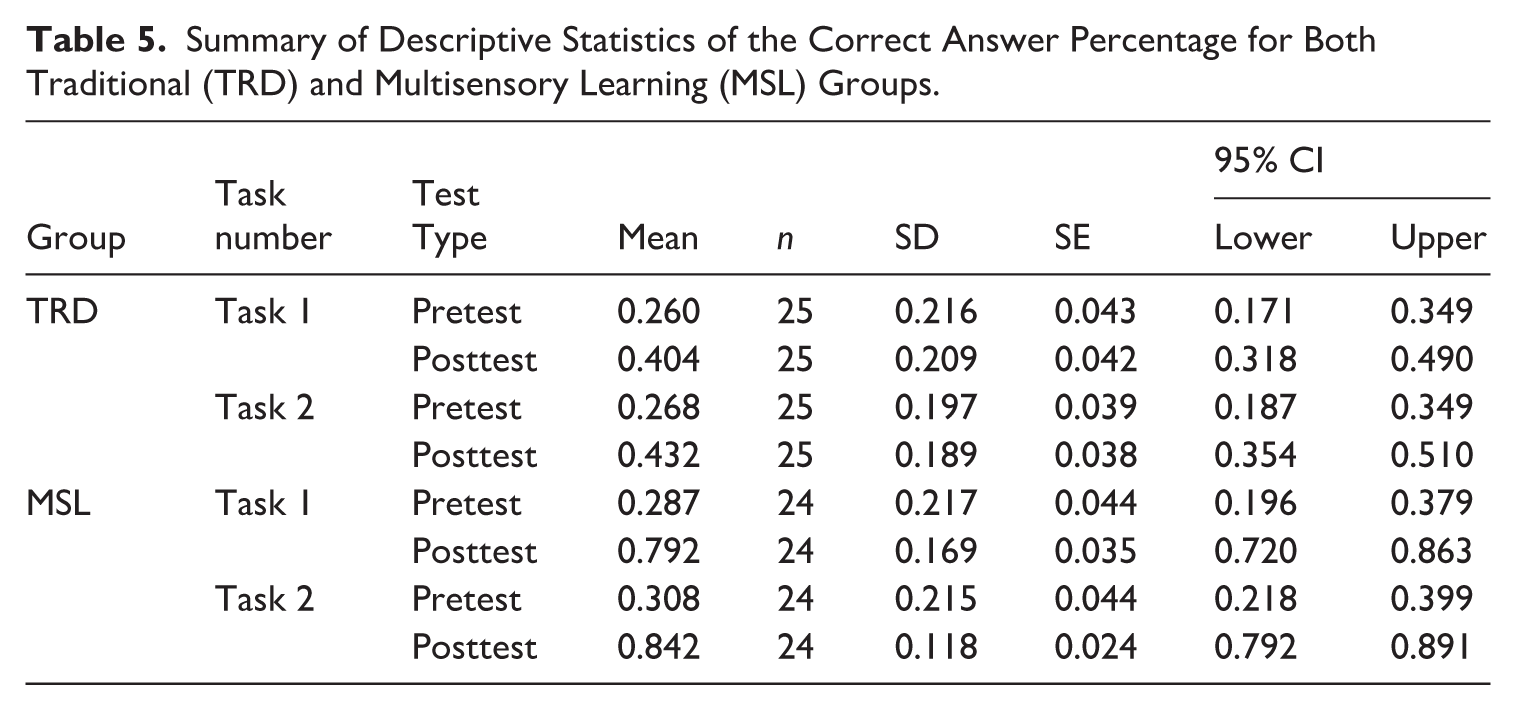
Table 5 summarizes the descriptive statistics for the percentages of the correct responses on vocabulary tests for TRD and MSL teaching groups across Tasks 1 and 2 at pre- and post-test sessions. Table 5 provides data from an experimental study with a sample of Arabic-speaking kindergarten EFL learners, including mean scores (M), standard deviations (SD), standard errors (SE), sample sizes (n) per condition, and 95% confidence intervals (CI). Examining these descriptive statistics provides a perspective on how each instructional method impacted vocabulary learning. Vocabulary development at this early stage is essential, as it underlies subsequent language and educational initiatives. Indeed, early childhood vocabulary knowledge is a strong predictor of reading comprehension and cognitive outcomes later in life. Because early vocabulary acquisition is so critical, the difference between the TRD and MSL groups is not just a difference of numbers; it has an educational impact. The next section elaborates on the trends from table mean gains, the shifts in variability (SD, SE), and confidence intervals to provide meaning to the learning seen for each group. The patterns identified will speak to current scholarship in multisensory learning and early EFL instruction, and what these findings have to say about effective vocabulary teaching in kindergarten classrooms.
The first pattern of interest from Table 5 is that both groups improved in mean scores from pre-test to post-test, with the MSL group revealing dramatically larger gains. In Task 1, TRD reported 0.260 (26.0%) correct responses at pre-test, improving to 0.432 (43.2%) at post-test. That is an increase of roughly 17 percentage points. In Task 2, the TRD mean increased from 0.268 to 0.404 (26.8% to 40.4%), or an overall 13.6-point increase. These gains suggest that even the traditional teaching procedure resulted in some learning of new vocabulary. However, the gains of the MSL group were much more meaningful. In Task 1, the mean was 0.287 (28.7%) for the MSL and 0.792 (79.2%) for the TRD: more than a 50 percentage-point increase. Likewise, for Task 2, the MSL mean increased from 0.308 to 0.842 (30.8% to 84.2%), representing an overall difference of approximately 53.4 points. Practically speaking, at the post-test stage, the average child in the multisensory group was answering more than four-fifths of the vocabulary questions correctly, whereas the average in the traditional group was not even half.
These descriptive findings provide a strong indication that the multisensory approach was significantly more effective than the traditional approach alone for teaching new vocabulary to the young learners, at least in terms of immediate learning gains. This finding is consistent with a large amount of research (Khasawneh, 2024; Mohammed, 2024) indicating that bringing multiple senses to bear can help boost learning. Multisensory training protocols closely mirror natural learning conditions and, therefore, have often been found to be ‘more effective for learning’ than practices that tap into a single modality. By engaging visual, auditory, tactile, and kinesthetic cues, it is likely that the MSL approach produced richer memory traces associated with the new English words. Learning based on multiple senses can lead to better results than ‘unsensory’ training, as Shams and Seitz (2008) point out. By contrast, the TRD approach likely depended more on rote memorization or superficial exposure. Such conventional approaches also have an established set of drawbacks: it has been reported in past work (Liao et al., 2016) that passive vocabulary learning (e.g. reading in silence and memorizing words in isolation) is often associated with limited interest and poor retention on the part of the learners. These limitations are reflected in the modest mean increases in the TRD group’s scores.
In addition to overall gains, Table 5 illustrates variation in student performance before and after instruction. In the TRD group, the SD of Task 1 showed a slight decrease from 0.216 to 0.189, indicating a greater consistency of scores after the teaching. However, in Task 2, the SD actually increased from 0.197 to 0.209, which means there was greater variation in students’ responses: some students improved while many did not. The disparity in improvement may stem from the fact that classic methods do not engage all learners equally well.
In contrast, there was a clear decrease in variability in the MSL group over both tasks. For Task 1, the SD decreased between runs from 0.217 to 0.169, and for Task 2, this value decreased dramatically from 0.215 to 0.118. That seems to indicate that the multisensory approach proved beneficial to most students, closing the gap between high- and low-achieving learners. The MSL group also showed a standard error (SE) decrease, suggesting more precise average performance measurement. These trends lend credence to the theory that multisensory instruction provides a wider range of learners with access to information by addressing different learning styles: visual, auditory, and kinesthetic.
Table 5 also includes a 95% confidence interval (CI), which helps us understand how reliable the main scores are. In both groups, the post-test confidence intervals are clearly higher than the pretest ones, showing improvement. However, the intervals for the MSL group are not only higher but also narrower, especially in the task where the CI shrinks to just 0.099. This means that the MSL learners perform better on average, and their scores are also more consistent with less variation. Such a result suggests strong and reliable outcomes from the multisensory approach. The data in Table 5 highlights the clear advantage of the multisensory method; on average, students in the MSL group scored nearly twice as high as those in the TRD group in both tasks. This would be noticeable in the classroom; MSL learners likely recalled more words and used them more accurately. Importantly, the smaller SDs and narrower confidence intervals in the MSL group show that almost all students benefited, not just a few. This indicates that multisensory teaching is more inclusive and consistent.
Analyzing the participants’ results essentially depends on the means of their marks in the tests. The means of their total results are analyzed first in order to evaluate their knowledge of the target words in general, and an analysis of their learning regarding each word knowledge criterion is presented later in this section. Tables 6 and 7 present the homogeneity using the t-test.
Homogeneity Assessment of Pre-Test Scores for Task 1 in Groups A and B Using the t-test.
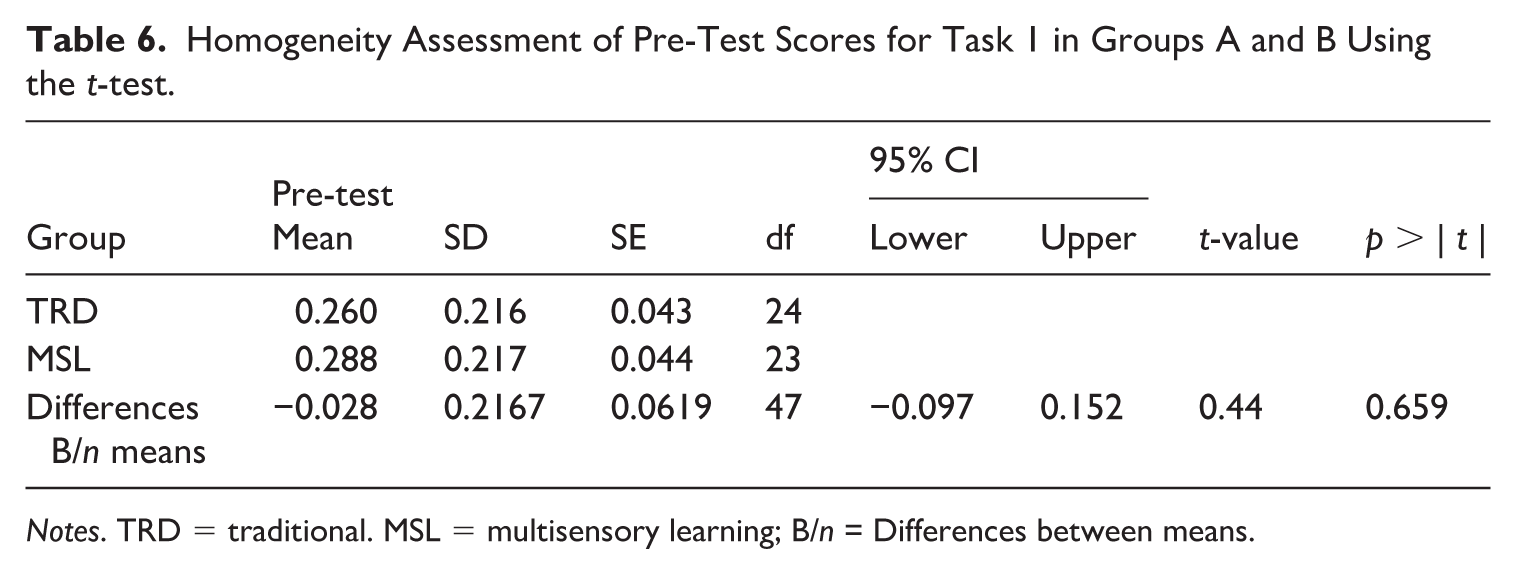
Notes. TRD = traditional. MSL = multisensory learning; B/n = Differences between means.
Homogeneity Assessment of Pre-Test Scores for Task 2 in Groups A and B Using the t-test.
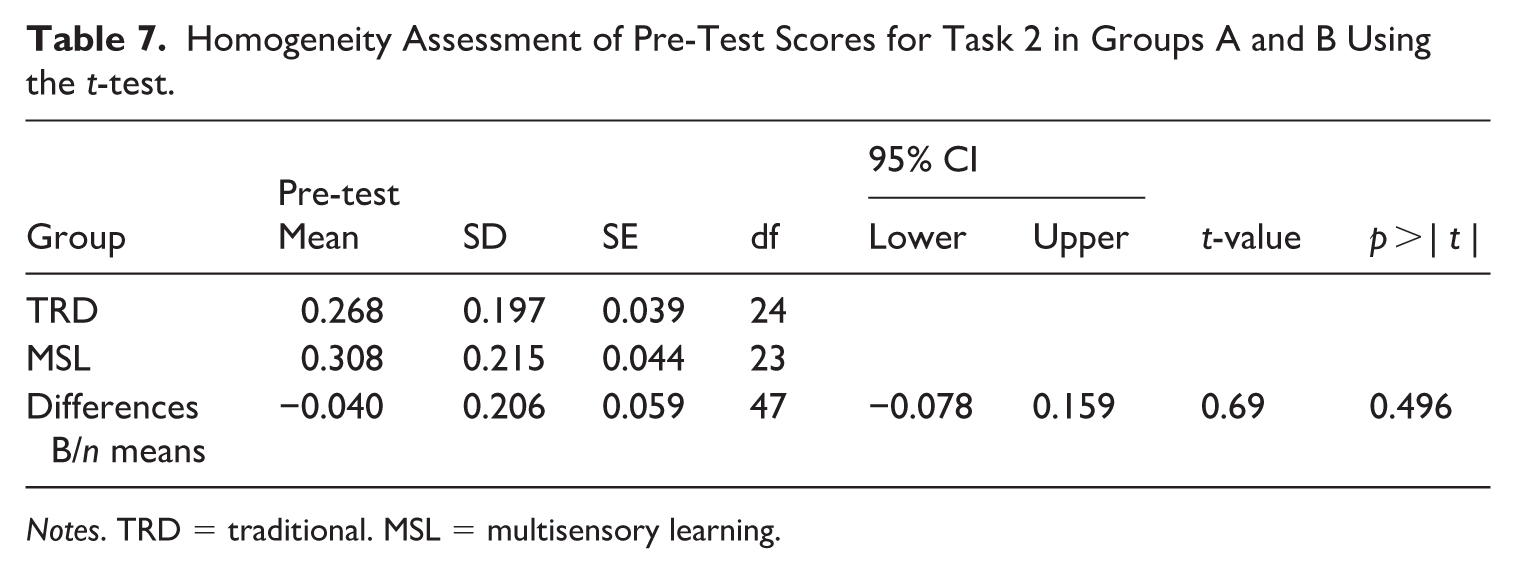
Notes. TRD = traditional. MSL = multisensory learning.
Finally, it is worth pointing out that, in the present writer’s experience as an EFL instructor, instructors often strive to ensure that experimental groups begin at comparable proficiency levels in vocabulary knowledge to strengthen the validity of instructional interventions, as demonstrated in Tables 6 and 7. Table 6 presents the independent samples t-test comparing Group A (TRD) and Group B (MSL) on the Task 1 pre-test. Group A achieved a mean score of M = 0.260 (SD = 0.216), while Group B’s mean was M = 0.288 (SD = 0.217). These means are virtually identical (a difference of only about 0.028 points in the 0–1 scaled score). The variance in scores was also comparable between groups, as indicated by the similar standard deviations.
The similarity in standard deviations between the two groups suggests that the assumption of equal variances was met, meaning that comparisons of means are unlikely to be affected by differences in score dispersion. Table 7 displays a similar comparison for the Task 2 pre-test. Group A (TRD) had a mean of M = 0.268 (SD = 0.197), and Group B (MSL) had a mean of M = 0.308 (SD = 0.215). Again, the difference in means (approximately 0.04 on the 0–1 scale) was very small. Both groups showed comparable variability in scores. This indicates that both groups had a similar spread of scores, suggesting that the assumption of equal variances was satisfied and supporting the validity of the t-test comparison.
The independent t-test results confirm that there is no statistically significant difference between the two groups regarding Task 1’s pre-test. The resulting t-statistic was t(47) = 0.44, p = .659, which is far above the standard alpha level of 0.05. The 95% confidence interval (CI) for the mean difference in scores ranged from −0.097 to 0.152. Notably, this interval contains zero, meaning that a true difference in means may range from slight to either side, or the two groups may be statistically indistinguishable. The difference between the two groups was very small, suggesting that it was not practically important, which emphasizes the insignificance of any performance differential at the Task 1 pre-test. Overall, in the statistics for the Task 1 baseline measure, Group A and Group B performed equally. An independent t-test for Task 2 also revealed no statistically significant difference between groups. The t-value was t(47) = 0.69, p = .496, indicating that the difference between the two groups was not statistically significant at the 0.05 level. The 95% confidence interval for the mean difference ranged from approximately −0.078 to +0.159, including zero, which means that any actual difference in the population might be null or negligible. As expected, the effect size was small. Thus, on the Task 2 pre-test, similarly to the Task 1 pre-test, Group A and Group B performed statistically equally. To further illustrate a clearer visual representation of the comparability between the two groups prior to the intervention, Figure 1 illustrates the distribution of pre-test scores for both the MSL and TRD groups. The overlapping histograms, density curves, and box plots demonstrate that both groups exhibited similar patterns of performance at baseline, further supporting the statistical findings of homogeneity.
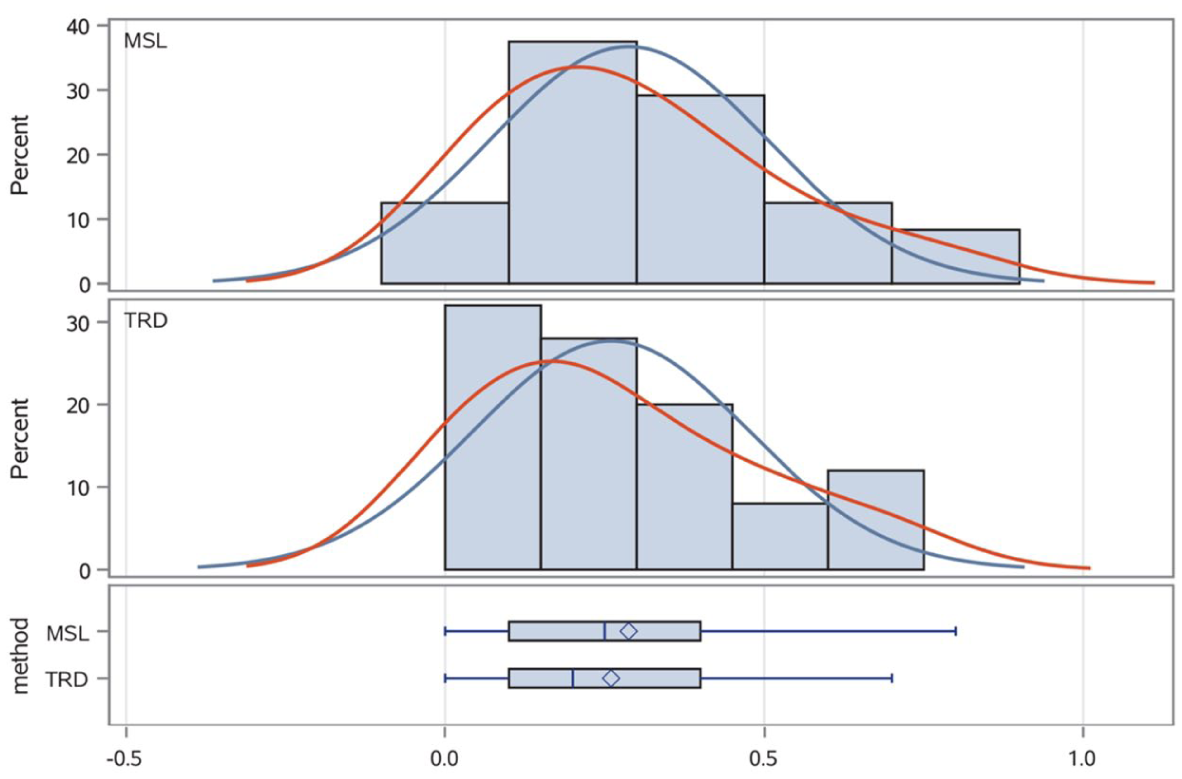
Homogeneity assessment of pre-test scores for Groups A and B using the t-test.
The visual analysis in Figure 1 clearly illustrates that the distribution of pre-test scores for Group A and Group B is almost a mirror image. Both groups’ score distributions adhere reasonably well to a normal-like shape centered at low values, reflecting the fact that this pre-test was challenging (as expected, since it assessed knowledge of new vocabulary before teaching). Crucially, there is no visual evidence that one group was systematically ahead of the other. If Group B had been stronger at baseline, we would expect its histogram to shift rightward and its box plot median to sit higher than Group A’s. The figure shows that this is not the case beyond a negligible degree. The figure indicates that both groups are homogeneous.
The methodological literature emphasizes this point: without baseline equivalence, quasi-experimental and experimental research can (and does) draw valid conclusions about causes only in rare exceptions (Rothman et al., 1998). For example, Turner et al. (2018) explain that pre-intervention imbalance between groups can complicate the interpretation of post-intervention differences between groups, as it would often be unclear whether the intervention or the pre-intervention gap produced the outcome. They explain in their review of educational studies that any significant artifact at pre-test threatens internal validity, such that ‘pre-intervention differences between groups could be confounded with post-intervention differences’ (Turner et al., 2018). In the current study, this is the condition we are able to satisfy, namely that pre-intervention differences are absent (or trivial).
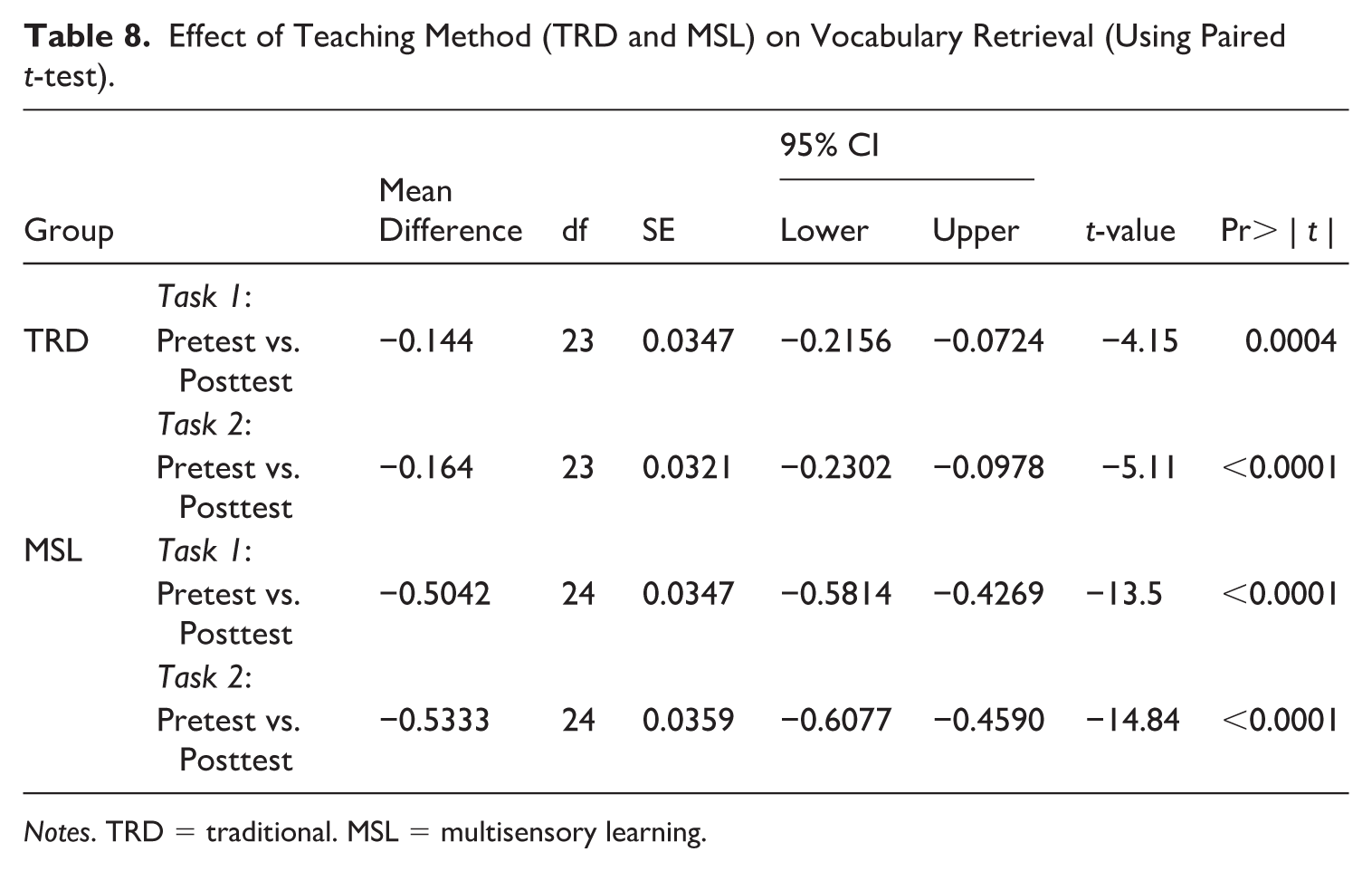
To assess the effectiveness of each instructional approach on vocabulary acquisition, a paired samples t-test was conducted, comparing pre-test and post-test scores for both groups (TRD and MSL) across two tasks. Table 8 presents the statistical results, including the main difference, standard error, confidence interval, and t-values for each group. These values offer insight into the degree of progress achieved within each group and provide a statistical basis for evaluating the impact of the respective teaching methods on students’ vocabulary retrieval.
Effect of Teaching Method (TRD and MSL) on Vocabulary Retrieval (Using Paired t-test).
Notes. TRD = traditional. MSL = multisensory learning.
As shown in the paired t-test for the TRD teaching group, for both Task 1 and Task 2, students demonstrated significant vocabulary learning (from pre-test to post-test). Using label naming a pictured item spoken aloud as Task 1 demonstrated a significant improvement, indicating the mean score improved from that of the pre-test (baseline) to the post-test by an average of (0.144), with an average score tallied at a standard error of (0.0347. The 95% confidence interval for this mean difference excluded zero, and the paired t-test was statistically significant. In practical terms, this means that the TRD group was able to pronounce and identify a larger number of words correctly following the traditional instruction than it was prior to it. Likewise, for Task 2 (a task where students heard a word and repeated the word along with its meaning), there was a significant gain for the TRD group. The post- to pre-test mean difference on Task 2 was approximately (0.164), again positive and significant (p < .001). These results support the idea that even a conventional, mostly unsensory teaching approach (probably with a focus on visual tools and verbal repetition) can trigger significant gains in vocabulary retrieval in a young student population.
The gains are not only statistically significant but also educationally meaningful. Given an increase of this size, the children would have learned and remembered several new words as a result of the traditional method. Given the substantial t-values and low p-values, the effect sizes for the TRD group’s improvement (even though not specifically provided in Table 8) are likely within the moderate-to-large range. In conclusion, the TRD approach successfully increased participants’ vocabulary knowledge on both tasks, addressing some of the research questions by showing that traditional teaching does have a positive effect on word acquisition for this group of learners.
The MSL learning group demonstrated even greater improvements in vocabulary retrieval, as evidenced by the paired t-test outcomes for both tasks. Task 1 in the MSL group showed a large mean increase from pre- to post-test of approximately 0.5042, which was higher in magnitude than the TRD group’s gain for this task. The standard error was relatively small in comparison, suggesting that almost all students responded similarly, and the 95% confidence interval for the mean gain extended completely beyond zero. For the MSL group, a paired t-test on Task 1 was highly significant (p < .001), indicating a great improvement. This means that following multisensory instruction in which kids interacted with new words through a variety of modalities, they were able to read and say many more words correctly than they could prior. For Task 2, the MSL group again outperformed their pre-test by a wide margin. The mean difference on Task 2 was roughly (0.5333), which, like Task 1, was statistically significant at the p < .001 level. The magnitude of this gain suggests a strong learning effect; students taught with multisensory techniques were able to recognize and reproduce significantly more words after the intervention. The similar pattern of improvement across both tasks for the MSL group suggests that multisensory teaching had a positive impact on both forms of vocabulary knowledge (both production and comprehension). These within-group findings clearly demonstrate that the MSL intervention was effective in increasing vocabulary learning. The gains for young learners in the multisensory condition were large and would translate to large effect sizes in concrete educational terms. The data confirm that teaching by involving multiple senses can help learners obtain abundant vocabulary in an early EFL context.
While both teaching approaches produced significant improvements in vocabulary, the size of the gains indicates a relative advantage in favor of the MSL method. The MSL group scored significantly higher than the TRD group in both Task 1 and Task 2, confirming that either more words or deeper and more accurate memories were acquired through multisensory practices. Translated into practical terms, this means that MSL likely allowed learners to identify or articulate a few more words than they could have done in that same instructional period. Although careful interpretation is warranted regarding the broader statistical significance of the differences between the groups, the data indicate that MSL was associated with a beneficial effect on learning, especially from the perspective of long-term retention (or transferability to unlearned vocabulary). Even so, since both teaching strategies resulted in improvements, this emphasizes the importance of organized vocabulary instruction for young EFL students.
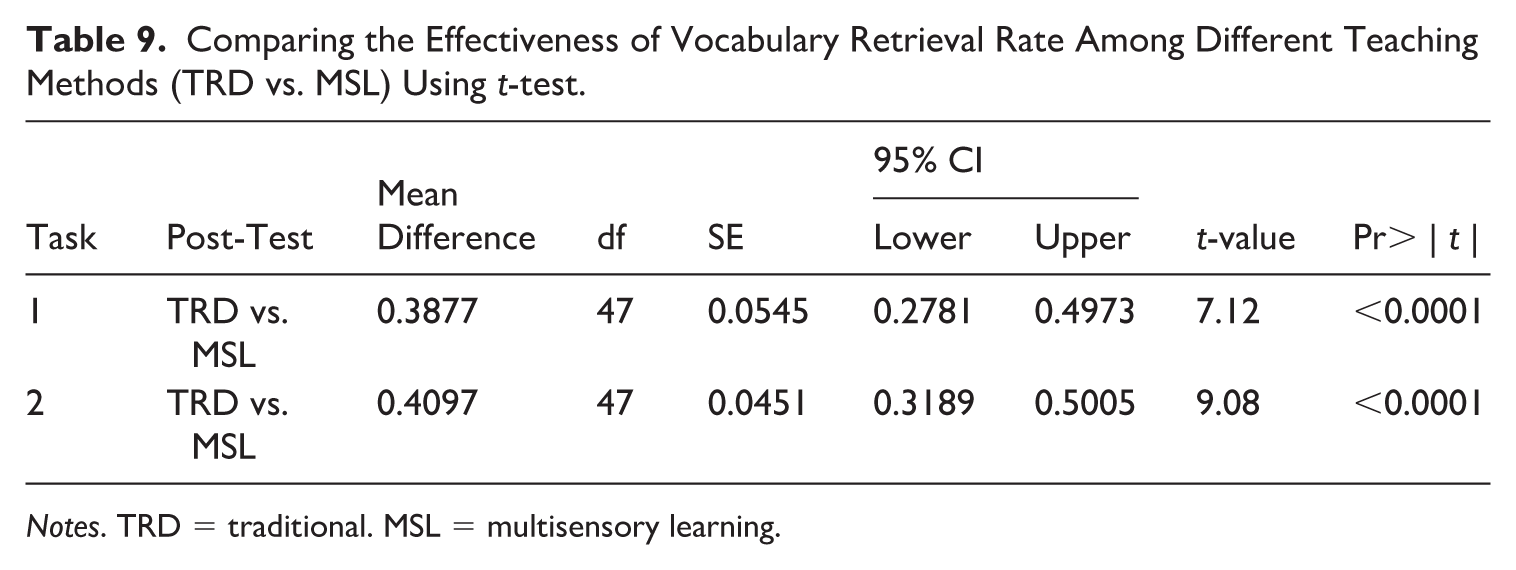
Table 9 presents the results of an independent t-test comparing post-test vocabulary scores between the TRD and MSL groups for both tasks. It compares the posttest vocabulary performance of students using the TRD and MSL methods. The results are based on independent samples t-tests for task one and task two in both cases, which show that the MSL group scored higher than the TRD group. However, the key question is whether these differences are statistically meaningful.
Comparing the Effectiveness of Vocabulary Retrieval Rate Among Different Teaching Methods (TRD vs. MSL) Using t-test.
Notes. TRD = traditional. MSL = multisensory learning.
For task one, the main difference between groups was 0.39, with a t-value of 7.12 and a p-value less than 0.0001. For task two, the difference was even greater at 0.41, with a t-value of 9.08, and again a p-value below .0001. These p-values indicate that the differences in vocabulary retrieval between the two groups are highly statistically significant. The 95% confidence interval for both tests does not include zero, which confirms that the advantage of the MSL group is real and not due to chance.
5 Discussion
The results from both quantitative measures and classroom observations revealed that while both groups showed statistically significant improvements from pretest to post-test, the multisensory group consistently outperformed the traditional group across both tasks. The TRD approach demonstrated clear improvements, with an average vocabulary acquisition increase of approximately 35–40 percentage points from a baseline of about 25%. While an improvement, this was a relatively small figure. In comparison, the MSL groups significantly improved, achieving posttest scores of 75%–80%. These findings indicate that both methods resulted in effective learning; however, this effect was larger and more consistent for the multisensory approach.
Importantly, the multisensory approach significantly benefited the acquisition of all target vocabulary items in Group B, as every word showed higher post-test scores compared to pre-test levels. Some words demonstrated exceptionally large improvements. For example, the word ‘twirl’, which was initially unfamiliar to all participants, was correctly recognized or produced by nearly the entire group after they learned it through physical spinning activities and dance. Similarly, ‘itchy’, one of the least known words during the pre-test, achieved near-universal recognition in Group B following tactile-based activities, such as feeling scratchy materials to simulate the sensation of itchiness.
These two words recorded among the highest gains in Group B, effectively closing the gap that remained in Group A. Action words such as ‘hop’ were also learned very effectively, with students engaging in physical games (e.g. hopscotch) while repeating the word, resulting in near-perfect performance in the post-test. Even more concrete items (e.g. clothing nouns like ‘bike’ and ‘shoes’) showed strong post-test results in Group B. However, because these items were already more familiar or easier to visualize, the relative improvement in percentage terms appeared smaller. For instance, ‘bike’ and ‘shoes’ were among the least improved in terms of gain scores, not due to poor learning, but because many students already had some prior knowledge of them. By the post-test, Group B had reached ceiling effects on multiple items (i.e. 90%–100% correct), leaving little room for further improvement. Overall, the multisensory method enabled nearly all learners to grasp the full set of words by the end of instruction. Group B’s within-group pre-to-post gains were statistically significant for both tasks (p < .001).
The success demonstrated by students under the multisensory condition serves as evidence for using sensory-rich teaching as a foundational instructional approach rather than as occasional supplementary activities. These concrete, embodied experiences likely activated both coding systems, leading to deeper memory traces and enhanced recall (Sadoski & Paivio, 2013; Shams & Seitz, 2008). These findings are interpreted through the lens of Paivio’s (1971) DCT, which posits that information encoded both verbally and non-verbally is more easily retained. This is consistent with prior educational theories that advocate developmental appropriateness and neurocognitive engagement in early education (Goswami, 2008). The findings support prior research (Shams & Seitz, 2008; Seidl et al., 2024), favoring multisensory movement-based learning in early EFL/ESL, as learners retain vocabulary better when learning involves more than one sense. This is precisely why Group B (MSL) remembered more items, such as ‘twirl’ and ‘itchy’, because the embodiment was more concrete and physical, an embodiment level that was deeper in cognitive anchoring than unisensory. These findings mesh well with Kosmas and Zaphiris’ (2020) outcomes that movement-based interventions in language instruction yielded more informative vocabulary gains and higher student engagement, more enthusiastic and active participation among MSL learners.
Furthermore, the effectiveness of the multisensory approach can be explained by its role in reducing cognitive load. By transforming abstract English vocabulary into concrete, tangible, and meaningful experiences through physical involvement, learners are able to process information more easily and retain it more effectively, as the learning task becomes developmentally appropriate and cognitively accessible for young learners.
Crucially, the study design resulted in no differences between groups at baseline, confirmed by a pre-test t-test showing no statistically significant differences (p > .05) in the two groups. This internal validity assures us that the post-test differences can be ascribed to instructional methods (as opposed to what was found before); this is aligned with research design models proposed by Burston and Athanasiou (2020). Although the MSL approach had a substantial advantage in performance, the superiority was not evident for all the words. This could be due to the type of vocabulary learned. Very concrete words (‘bike’, ‘shoes’) are inherently more easily visualized and remembered even through traditional methods involving static visuals, aligning with DCT predictions that multisensory methods provide the greatest benefit for abstract or complex vocabulary (Sadoski & Paivio, 2013). These findings are also consistent with the embodied cognition theory (Glenberg, 2008), according to which performing actions representing vocabulary meanings (e.g. hopping in the case of ‘hop’) associates abstract forms with concrete experiences, facilitating memorization. When instruction was provided with gestures, researchers (Etemadfar et al., 2019; Macedonia & Von Kriegstein, 2012) found that young children recalled second language (L2) vocabulary longer. This kind of cognitive strengthening through multisensory experience may explain the better results in the MSL group.
Importantly, the MSL advantage in our results was present but not overwhelming in magnitude. There are theoretical explanations for why the multisensory benefit might have been attenuated in this specific study. One explanation could relate to the target vocabulary. The taught words (e.g. concrete nouns, such as ‘t-shirt’, or action verbs, such as ‘hop’) were very imageable and had direct terminology equivalents in the learners’ first language. DCT argues that the dual code is even more potent for things that do not already have a strong mental representation; for highly concrete vocabulary items, even standard methods (which, most of the time, involve pictures or translation) will yield high retention. So, at the very least, when a word such as ‘cat’ can be taught with an ordinary picture (visual code) next to the word (verbal code), adding a fully multisensory approach (to include perhaps sound and movement of ‘cat’) might not appear to make much difference. This fits with the observation that both groups performed quite well, indicating that traditional teaching was not, in fact, totally ineffective. However, post-test scores for the highly imageable list were still relatively high for both groups, indicating that even the most traditional methods result in some dual coding using both verbal and visual routes. Moreover, work such as Andrä et al. (2020) indicates that multimodal approaches are better for retention over the long term and among longer test delays.
Finally, the most compelling advantage of the MSL group’s increased engagement is that it aligns well with the existing body of work, suggesting that playful, embodied, and sensory-rich environments foster higher levels of attention and motivation among young learners (Brooks, 2018). Shams and Seitz (2008) and Seidl et al. (2024) also found that the use of senses together enhances memory and facilitates knowledge transfer.
The pedagogical implications of the findings offer clear direction for curriculum development, teacher training, and EFL pedagogical methods in early childhood, particularly in Arabic-speaking contexts. Teachers can effectively teach meanings through tactile and visual activities that engage multiple senses. If resources are limited, teachers can use simple classroom items, drawings, or physical gestures to mimic meanings for abstract vocabulary. Teachers can enhance students’ awareness of how vocabulary is used in specific situations by creating scenarios or role-play activities. For example, teachers can construct a short, relatable story or routine that integrates the target vocabulary (e.g. a morning dressing routine involving ‘t-shirt’, ‘pants’, and ‘socks’). Encouraging students to brainstorm related words, contexts, or scenarios promotes active participation, creativity, and deeper comprehension. Teachers can then incorporate students’ suggestions into matching or classifying activities, reinforcing contextually relevant vocabulary. Interrelatedness knowledge, which involves recognizing how vocabulary items connect or contrast, can be fostered through categorizing and storing activities. For instance, grouping clothing words (‘socks’ and ‘shoes’, ‘shirt’ and ‘pants’) can virtually demonstrate relationships between words. Games such as memory, matching, puzzles, and crosswords are highly effective in reinforcing these connections. The flexibility of these activities allows them to be easily adapted to available resources and classroom conditions, either digitally or using simple paper-based materials. Songs and chants involving target vocabulary provide rhythmic and repetitive exposure to correct pronunciation, encouraging students to participate actively through singing and dancing. Teachers can also use stories or short animated videos to expose students to authentic native pronunciation. If technology resources are limited in the classroom, teachers can provide parents with audio and video materials as homework activities, enabling students to benefit from native speaker input at home.
Teachers may implement multisensory vocabulary instruction through short daily sessions of 10–15 minutes, introducing 3–5 new words each week to avoid cognitive overload. A practical lesson sequence may begin with a visual presentation of the word, followed by pronunciation practice, physical movement or gesture, and a short pair or group activity using the target items. Teachers can also create vocabulary corners in the classroom where learners interact with flashcards, real objects, tracing cards, or matching games during free-play periods. To reinforce retention, quick revision activities such as exit tickets, mini-quizzes, or asking learners to act out previously learned words can be used at the start or end of each lesson. Additionally, differentiated instruction can be applied by allowing visual learners to draw, auditory learners to repeat chants, and kinesthetic learners to demonstrate actions related to the vocabulary.
In terms of teacher preparation, this research highlights the importance of training teachers to create and present instructional content that engages the different sensory modalities. Teacher education programs, particularly in Arabic-speaking EFL arenas, need to incorporate specific units on multisensory lesson organization. The in-service workshop might include information on how to modify currently used lesson plans so that visual, auditory, tactile, and kinesthetic components are incorporated into their lessons while achieving curriculum requirements. This is important, as there is an increasing call to explore provocative and inclusive teaching that addresses varied learner needs and temperaments in kindergartens (Tomlinson, 2014).
At the policy level, the data advocate for institutional recognition of multisensory learning as the best practice in early language learning. Schools may want to enhance classroom environments to be more sensory-friendly or sensorily accessible by adding manipulatives, hands-on materials, and audio-visual materials that support the teaching of language. Such reforms could also be reflected in national or institutional language policies, ensuring that multisensory strategies are integrated systematically into the EFL curriculum rather than treated as optional extras.
This study also contributes to an important discussion about the inclusivity of early childhood education. Multisensory education is especially beneficial for students with special needs, such as those who have difficulty with auditory processing or who are kinesthetic learners. By employing a multisensory approach, teachers can provide a more equitable and accessible foundation for vocabulary, literacy, and overall academic development. Finally, the study informs ongoing debates in applied linguistics and educational psychology regarding embodied cognition: the idea that physical engagement with language supports cognitive processing. For example, when a child physically ‘hops’ while learning the word ‘hop’, they are not merely imitating an action but encoding meaning through their body. In this way, the body serves as a form of cognitive scaffolding (Glenberg, 2008). This view connects DCT with contemporary neuroscience, particularly research on sensory-motor learning pathways in early childhood.
Collectively, these multisensory and interactive approaches not only create a supportive, engaging learning environment but also significantly reduce students’ anxiety, increase their motivation, and strengthen their overall vocabulary retention. Despite potential limitations in classroom resources, teachers have numerous opportunities to innovate and creatively integrate multisensory activities into their instructional practices, continuously enriching young learners’ vocabulary acquisition.
6 Conclusions
This study explored the effectiveness of MSL compared to TRD teaching methods in improving English vocabulary acquisition among Arabic-speaking kindergarten EFL learners in Amman, Jordan. The analysis of data demonstrates that though both approaches can enhance vocabulary acquisition among young EFL learners, multisensory instruction demonstrates notably greater effectiveness, signifying that the multisensory approach provides a more engaging, powerful, and promising strategy for enhancing early EFL vocabulary learning. The results showed that children taught using multisensory strategies achieved significantly higher scores in both identification and listening tasks than those taught through traditional methods, These findings promote teachers’ adoption of multisensory strategies in EFL instruction through engaging learners in activities that integrate movement, visuals, touch, and sound, such as TPR games, object manipulation, storytelling with props, and rhythmic chanting to make vocabulary learning effective and more engaging and consistent. Educators should also prioritize training in multisensory planning and implementation to effectively align their classroom practices with learners’ cognitive and developmental needs. The study recommends future research on the examination of the long-term effects of both traditional and multisensory teaching methodologies, and the exploration of learners’ perceptions and experiences towards each teaching method, assessing how multisensory activities affect their confidence and motivation in language learning.
Footnotes
Appendix A
Acknowledgements
We acknowledge that we used AI tools for proofreading some sentences as we are not native speakers of English. We reviewed our work afterwards and take full responsibility of the content of our article.

Ethical Considerations
Ethical considerations included informing participants that involvement was voluntary and they could withdraw at any time if stressed or uncomfortable. Ethical approval was granted by the Postgraduate Committee at the School of Foreign Language, The University of Jordan on 25 December 2024.
Consent to Participate
Informed consent was obtained from all participants’ parents involved in the study.
Funding
The authors received no financial support for the research, authorship, and/or publication of this article.
Declaration of Conflicting Interests
The authors declared no potential conflicts of interest with respect to the research, authorship, and/or publication of this article.
Data Availability Statement
The data presented in this study are available on request from the corresponding author. The data are not publicly available due to privacy.