






Abstract
Decreased engagement in beneficial physical activity and increased levels of sedentary behavior and unhealthy weight are a continued public health concern in adolescents. Adolescents with autism spectrum disorder may be at an increased risk compared with their typically developing peers. Weekly physical activity, sedentary behavior, and body mass index classification were compared among adolescents with and without autism spectrum disorder. Analyses included 33,865 adolescents (autism spectrum disorder, n = 1036) from the 2016–2017 National Survey of Children’s Health (United States). After adjustment for covariates, adolescents with autism spectrum disorder were found to engage in less physical activity and were more likely to be overweight and obese compared with their typically developing peers (p’s < 0.05). As parent-reported autism spectrum disorder severity increased, the adjusted odds of being overweight and obese significantly increased and physical activity participation decreased (p-for-trends < 0.001). The findings suggest there is a need for targeted programs to decrease unhealthy weight status and support physical activity opportunities for adolescents with autism spectrum disorder across the severity spectrum.
Individuals with autism spectrum disorder (ASD) have been shown to have delays in motor development as well as deficits in motor skills, lack of engagement in daily activities, and decreased motivation to engage in beneficial physical activity (Pan, 2008, 2009; Pan, Tsai, & Hsieh, 2011; Stanish et al., 2015). Recent research has shown that physical activity can be beneficial to deficits present in those with ASD and improve negative behaviors such as aggression and stereotypical behaviors (Celiberti, Bobo, Kelly, Harris, & Handleman, 1997; Elliott, Dobbin, Rose, & Soper, 1994; Lang et al., 2010; Rosenthal-Malek & Mitchell, 1997; Sowa & Meulenbroek, 2012).
It is recommended that children and adolescents (defined as individuals aged 6–17 years), both in the United States (US) and globally, participate in 60 min or more of moderate-to-vigorous physical activity (MVPA) each day and to include vigorous intensity physical activity, as well as muscle and bone-strengthening activities on at least 3 days per week (U.S. Department of Health and Human Services, 2008). The most recent objective accelerometry data from the US National Health and Nutrition Examination Survey presented in the 2016 Report Card on Physical Activity for Children and Youth demonstrates that US children and adolescents received a “D” in physical activity participation. Overall, only 21.6% of 6- to 19-year-old US children and adolescents met the federal recommendation on at least 5 of 7 days (Katzmarzyk et al., 2016). Specifically, for those with ASD, several studies have sought to examine physical activity behaviors using both subjective means and objective measurement. Subjective measurement of physical activity behaviors (parent-report) have shown that children and adolescents with ASD are less likely to participate in physical activity behaviors compared with their typically developing peers. Using the 2011–2012 National Survey of Children’s Health (NSCH) from the US, which used an analysis similar to this study, McCoy, Jakicic, and Gibbs (2016) found that adolescents (aged 10–17 years) with ASD were 60% less likely to engage in regular physical activity compared with their peers of typical development (McCoy et al., 2016). Using the same survey, Dreyer Gillette et al. (2015) found that adolescents (aged 10–17 years) with ASD were statistically more likely than their typically developing peers to have 0 days a week in which they engaged in at least 20 min of physical activity that made them sweat or breathe hard (Dreyer Gillette et al., 2015). Using objective measurement of physical activity, Bandini et al. (2013) found that typically developing children (aged 3–11 years) accumulated more time spent in MVPA on weekdays compared with children with ASD, with only 23% of those with ASD engaging in the federal recommendation compared with 43% of those with typical development (Bandini et al., 2013). Among adolescents, Stanish et al. (2017) found adolescents with ASD spent less time in MVPA compared with typically developing adolescents (Stanish et al., 2017). Among adolescent boys alone, Pan et al. (2016) found that those with ASD were less physically active and engaged in MVPA for a lower percentage of time compared with peers of typical development (Pan et al., 2016).
In the US, more boys (26%) than girls (16.9%) are considered physically active. Furthermore, physical activity levels are higher in younger children compared with older adolescents, with 42.5% of 6- to 11-year-olds meeting the recommendation, but only 7.5% and 5.1% of 12- to 15-year-olds and 16- to 19-year-olds, respectively, meeting the recommendation (Katzmarzyk et al., 2016). Children and adolescents specifically with ASD follow similar physical activity patterns in which boys are more physically active than girls, and children are more physically active than adolescents (Jones et al., 2017; Scharoun, Wright, Robertson-Wilson, Fletcher, & Bryden, 2017).
There is a positive association between physical activity and health throughout the lifespan (Blair et al., 1989). In adults, regular physical activity participation has been shown to decrease the risk of developing cardiovascular disease, obesity, type II diabetes, certain types of cancer, and depression (American College of Sports Medicine, 2013; Warburton, Nicol, & Bredin, 2006). In children and adolescents, the benefits of physical activity include improvements in cardiovascular health, improved fitness, improved metabolic health, and decreased obesity (Daniels, Benuck, & Christakis, 2011; Strong et al., 2005). In addition to the physical benefits of physical activity, there are many mental and social benefits of physical activity, including decreased levels of anxiety and depression, as well as self-concept (Strong et al., 2005). Furthermore, participation in sport may be associated with improved psychosocial health above and beyond those associated with leisure-time physical activity due to the social nature of sport participation (Eime, Young, Harvey, Charity, & Payne, 2013). These social benefits include improved emotional control, confidence, making new friends, improved relationships and social skills, as well as greater social competence (Holt, Kingsley, Tink, Scherer, & exercise, 2011; Snyder et al., 2010). The social benefits associated with physical activity and sport may be of particular importance to those with ASD as they display deficits in social interaction (American Psychiatric Association, 2013). Furthermore, the relationship between physical activity and health outcomes is typically dose-repose such that greater physical activity participation leads to greater improvements in risk for all-cause mortality, cardiorespiratory health, metabolic health, weight loss, musculoskeletal health, colon and breast cancer, and mental health (American College of Sports Medicine, 2013). Given this information, it is important to understand if children and adolescents are meeting the minimal recommended levels of beneficial physical activity, which can inform the need for further research and programs targeting this population.
Physical inactivity is a continued global health issue. Increased physical inactivity and sedentary behaviors such as TV viewing time, has been associated with increased weight gain in children and adolescents (Sisson, Broyles, Baker, & Katzmarzyk, 2010). However, there are currently no quantitative guidelines for sedentary behavior for children and adolescents. The US National Heart, Lung, and Blood Institute and the American Academy of Pediatric recommend that children and adolescents should limit their total entertainment screen time to less than 2 h/day (American Academy of Pediatrics, 2001). In the US, only 37.2% of US children and adolescents 2- to 19-year-olds are currently meeting this recommendation.
Given the social impairments as well as deficits in motor development and motor skills, these barriers may limit the opportunities for children and adolescents with ASD to participate in physical activity and promote unhealthy increases in sedentary behaviors. Many physical activity behaviors, especially sport, require social interaction, making friends, and turn-taking, which may prove difficult for those with ASD (Pan & Frey, 2006). In return, the preferred hobbies and activities of children and adolescents with ASD are generally those that are solitary, require less physicality, and involve screen time (Memari et al., 2015; Russell, 2018; Stiller & Mößle, 2018).
In the 2011–2012 NSCH iteration, McCoy et al. (2016) found adolescents aged 10–17 years with ASD were significantly more likely to be overweight (27%) and obese (72%) in comparison with their typically developing peers (McCoy et al., 2016). More recently, Healy, Aigner, and Haegele (2019) examined overweight and obesity in the 2016 round of NSCH data collection and found after controlling for age, race/ethnicity, income, and sex, adolescents aged 10–17 years with ASD had significantly higher odds of overweight and obesity compared with their typically developing peers, though they did not examine physical activity behaviors (Healy et al., 2019).
Since the release of the 2011–2012 NSCH data, the survey has gone through a complete overhaul in the 2016 version, particularly the questions regarding physical activity participation. Previous iterations of the survey contained a question for only 20 min or more per day of MVPA (2011/12 National Survey of Children’s Health, 2012), and previous papers published examining physical activity in ASD using NSCH used 20 min on 3 days or more per week as an indication of “regular physical activity” (Dreyer Gillette et al., 2015; McCoy et al., 2016), which is equivalent to only 1 day of the current recommendation for children and adolescents. Additionally, in the 2016 survey, ASD medication is included as its own question, whereas previous versions included just a general medication question. Given the update to the physical activity and ASD questions in the 2016 version of the NSCH, this study uniquely adds to the literature on ASD in that it uses the most updated nationally representative data from the US, includes the current recommendation of physical activity in children (60 min or more per day) as a question within the survey, and includes ASD medication specifically as well as ASD severity. Additionally, this study adds to the literature by determining if meeting the current physical activity guidelines of 60 min or more daily mediates the relationship between ASD and BMI classification.
The purpose of this secondary analysis was to determine, within adolescents with ASD compared with their typically developing peers, the relationship between sedentary behaviors, weekly physical activity, and body mass index (BMI). A secondary objective for this study included looking at potential mediation between physical activity and BMI in adolescents with ASD as well as determining the odds of being overweight and obese, engaging in regular physical activity, and sedentary behaviors in association with autism severity. Finally, we sought to determine if the adjusted odds of physical activity participation were different between adolescents with ASD of different age groups (10–12 and 13–17 years), and sex. We hypothesized that adolescents with ASD would have higher levels of overweight and obesity defined by BMI classification, higher levels of sedentary behavior, and lower levels of weekly physical activity compared with their typically developing peers. We also hypothesized that as autism severity increased, overweight and obese levels would increase, levels of sedentary behavior would increase, and physical activity levels would decrease. Furthermore, we hypothesized that younger adolescents aged 10–12 years would be more likely to engage in regular physical activity compared with 13–17-year-olds, and males would be more likely to engage in regular physical activity compared with females.
Method
Survey design and participants
This secondary data analysis used de-identified data from the combined 2016–2017 NSCH from the US. The NSCH recruited a nationally representative from non-institutionalized youth aged 0–17 years in the US. The NSCH is jointly sponsored by the National Center for Health Statistics at the Centers for Disease Control and Prevention and the Maternal and Child Health Bureau (both US). In 2016, the survey was updated and conducted either online or by mail. Further study details have been published elsewhere (Ghandour et al., 2018). For the purposes of this study, the sample was limited to adolescents between the ages of 10 and 17 years (n = 37,409) as BMI classification was only assessed in this age group, and to be consistent with the World Health Organization definition of adolescence, 10–19 years (World Health Organization, 2019). In addition, adolescents were also excluded if they had missing data on outcome variables including autism classification (n = 205), BMI classification (n = 2165), weekly physical activity (n = 589), TV viewing time (n = 180), computer usage (n = 67), sport participation (n = 250), or if parents classified their adolescents as not currently having ASD (n = 88), yielding a final sample size of n = 33,865. The National Center for Health Statistics Research Ethics Review Board and the National Opinion Research Center Institutional Review Board (both US) approved all the study procedures. Informed consent was collected from all parents or guardians.
Variables
Autism classification
Autism classification was determined by parent response to the questionnaire item “has a doctor or other healthcare provider EVER told you that this child has Autism or Autism Spectrum Disorder (ASD)? Include diagnoses of Asperger’s Disorder or Pervasive Developmental Disorder (PDD).” If parents responded “yes” they were asked if the child currently had the condition. ASD was defined as a “yes and current” response and typically developing was defined as “no.” Adolescents placed in the category “has been told by a doctor, but currently does not have condition” were excluded from the sample to prevent misclassification.
Autism severity
Autism severity was determined by parent response to the questionnaire items “has a doctor or other healthcare provider EVER told you that this child has Autism or Autism Spectrum Disorder (ASD)? Include diagnoses of Asperger’s Disorder or Pervasive Developmental Disorder (PDD).” Parents were then asked, “If yes, does this child currently have the condition.” If parents responded “yes” they were asked the follow-up question “If yes,” is it: “mild,” “moderate,” or “severe.”Autism severity was then defined as “mild,” “moderate,” or “severe.”
BMI classification
BMI classification was calculated using parent-reported child height and weight, and then classified using the Expert Committee Recommendations (US): underweight (BMI < 5th percentile), normal weight (BMI > 5th percentile and <85th percentile), overweight (BMI ⩾ 85th percentile and <95th percentile), and obese (BMI ⩾ 95th percentile) (Barlow & Expert Committee, 2007).
Physical activity
Regular physical activity was determined based on parent-response to the question “During the past week, on how many days did this child exercise, play a sport, or participate in physical activity for at least 60 minutes.” Responses ranged on a 4-point scale (“none,” “1–3 days,” “4–6 days,” and “every day”). A dichotomous classification of “regular physical activity” was defined as “everyday,” congruent with the physical activity recommendations for adolescents (U.S. Department of Health and Human Services, 2008).
TV viewing time
Parents were asked “on an average weekday, about how much time does this child usually spend in front of a TV watching TV programs, videos, or playing video games.” Responses ranged on a 6-point scale (“none,” “less than 1 hour,” “1 hour,” “2 hours,” “3 hours,” and “4 or more hours”). TV viewing time was then dichotomized to <2 h/day, and ⩾2 h/day, which is based in the American Academy of Pediatrics recommendations for children and adolescents (American Academy of Pediatrics, 2001).
Computer usage
Parents were asked, “On an average weekday, about how much time does this child usually spend with computers, cell phones, handheld video games, and other electronic devices, doing things other than school work.” Responses ranged on a 6-point scale (“none,” “less than 1 hour,” “1 hour,” “2 hours,” “3 hours,” and “4 or more hours”). Computer usage was then dichotomized to <2 h/day, and ⩾2 h/day to match TV viewing time (Barlow & Expert Committee, 2007).
Sports participation
Parents reported whether their child took sports lessons or participated in a sports team outside of school (after school and/or weekends) within the past 12 months.
Covariates
Age, sex, race, household income, highest level of education in the household, and current ASD medication were included as covariates in the analysis. Covariates were chosen based on the potential for confounding and previous literature on physical activity behaviors and ASD (Curtin, Anderson, Must, & Bandini, 2010; McCoy et al., 2016).
Statistical analysis
Analyses were completed using Stata 15.1 (Stata Corporation, College Station, TX, USA). Adjusted logistic regression models were used to determine the associations between ASD and BMI classification, weekly physical activity, TV viewing time, computer usage, and sports participation. Further analyses were conducted to determine if physical activity and/or sport participation mediated the association between ASD and BMI classification. A secondary analysis was conducted after stratification by ASD severity to examine associations between ASD and our outcome variables. Furthermore, associations between gender, sex, and regular physical activity were examined among individuals with ASD. Each model was adjusted for the covariates: age, sex, race, household income, highest level of education in the household, and ASD medication.
Results
Analyses included 33,865 adolescents, 1036 with ASD and 32,829 typically developing adolescents. Sample descriptives by ASD classification are presented in Table 1. Compared with typically developing adolescents, those with ASD were more likely to be male (80% vs 50%; p < 0.001), were more likely to live in a household ⩾133% of the federal poverty level (18% vs 13%; p<0.001), and were more likely to have Attention Deficit/Hyperactivity Disorder (ADHD) (55% vs 1 3%; p<0.001).Of those with ASD, 53% had “mild” ASD, 37% had “moderate” ASD, and 10% had “severe” ASD, and 35% were currently on medication for ASD. Broken down by age group (10–12 and 13–17), approximately 15% of 10–12-year-olds with ASD engaged in 60 min or more of physical activity each day versus 11% of 13–17-year-olds with ASD. Broken down by gender, approximately 12% of males with ASD engaged in 60 min or more of physical activity each day versus 11% of females.
Demographic characteristics in typically developing adolescents and adolescents with ASD.

ASD: autism spectrum disorder.
Income is grouped into three categories based on household federal poverty level: “poor,” <133% poverty; “near poor,” ⩾133% poverty, but <185% poverty; “not poor,” ⩾185% poverty.
Highest level of education in family.
Bold indicates statistically significant at p < .05.
For adolescents with ASD, the adjusted odds of being underweight, overweight or obese were significantly higher than their typically developing counterparts as shown in Table 2. Adolescents with ASD were more likely to be underweight [odds ratio (OR) = 1.53, 95% CI (1.15, 2.03)], more likely to be overweight [OR = 1.37, 95% CI (1.10, 1.70)], and more likely to be obese than typically developing adolescents [OR = 1.94, 95% CI (1.60, 2.36)]. In addition, adolescents with ASD were less likely to engage in 60 min or more of physical activity everyday [OR = 0.42, 95% CI (0.33, 0.55)] and less likely to have participated in a sport in the past 12 months [OR = 0.19, 95% CI (0.16, 0.23)]. Additionally, adolescents with ASD were more likely to engage in ⩾2 h/day of television viewing [OR = 1.25, 95% CI (1.07, 1.47)]. Odds of computer use ⩾2 h/day was not significantly different among those with ASD versus their typically developing peers.
Adjusted a odds ratios of BMI classification, physical activity, and sedentary behaviors in ASD versus typically developing adolescents.

ASD: autism spectrum disorder; OR: odds ratio; CI: confidence interval.
Models adjusted for age, sex, race, gender, household education, household income, and ASD medication.
Typically developing adolescents and normal weight category used as reference groups.
p < 0.05 in boldface.
The adjusted ORs of BMI classification in those with ASD compared with their typically developing peers after further adjustment for physical activity behaviors are shown in Table 3. Associations between ASD and BMI classification were attenuated in each separate model adjusting for physical activity behaviors one-by-one. After the full adjustment (weekly physical activity and sport participation), there was an attenuation in the relationship between ASD and BMI classification with the odds of obesity remaining significantly increased in those with ASD compared with their typically developing peers [OR = 1.44, 95% CI (1.18, 1.75)].
Odds ratios for underweight, overweight, and obese in adolescents with ASD versus typically developing adolescents.

ASD: autism spectrum disorder; OR: odds ratio; CI: confidence interval.
Model 1 adjusted for age, sex, race, gender, household education, household income, and ASD medication.
Model adjusted for all Model I covariates, physical activity, and sport participation.
p < 0.05 in boldface.
Figures 1 and 2 show the ORs of the main outcome variables stratified by parent-reported autism severity. In terms of BMI classification, Figure 1 shows that as parent-reported ASD severity increased, the odds of adolescents with ASD being underweight, overweight, and obese significantly increased. For obesity, those with “mild” ASD were 83% more likely to be obese, those with “moderate” ASD were 2.14 times more likely to be obese, and those with “severe ASD were 2.21 times more likely to be obese (p-for-trend = 0.002). This pattern was also seen in physical activity behaviors. Figure 2 shows that as parent-reported severity increased, the odds of adolescents with ASD engaging in regular weekly physical activity and participating in sports significantly decreased. Those with “mild” autism were 59% less likely to engage in ⩾60 min of physical activity daily, those with “moderate” autism were 53% less likely to engage in regular physical activity, and those with “severe” ASD were 56% less likely to engage in regular physical activity compared with their typically developing peers (p-for-trend <0.001). Those with “mild” autism were 76% less likely to have participated in a sport in the past 12 months, those with “moderate” autism were 84% less likely to have participated, and those with “severe” ASD were 94% less likely to have participated in a sport compared with their typically developing peers (p-for-trend < 0.001).
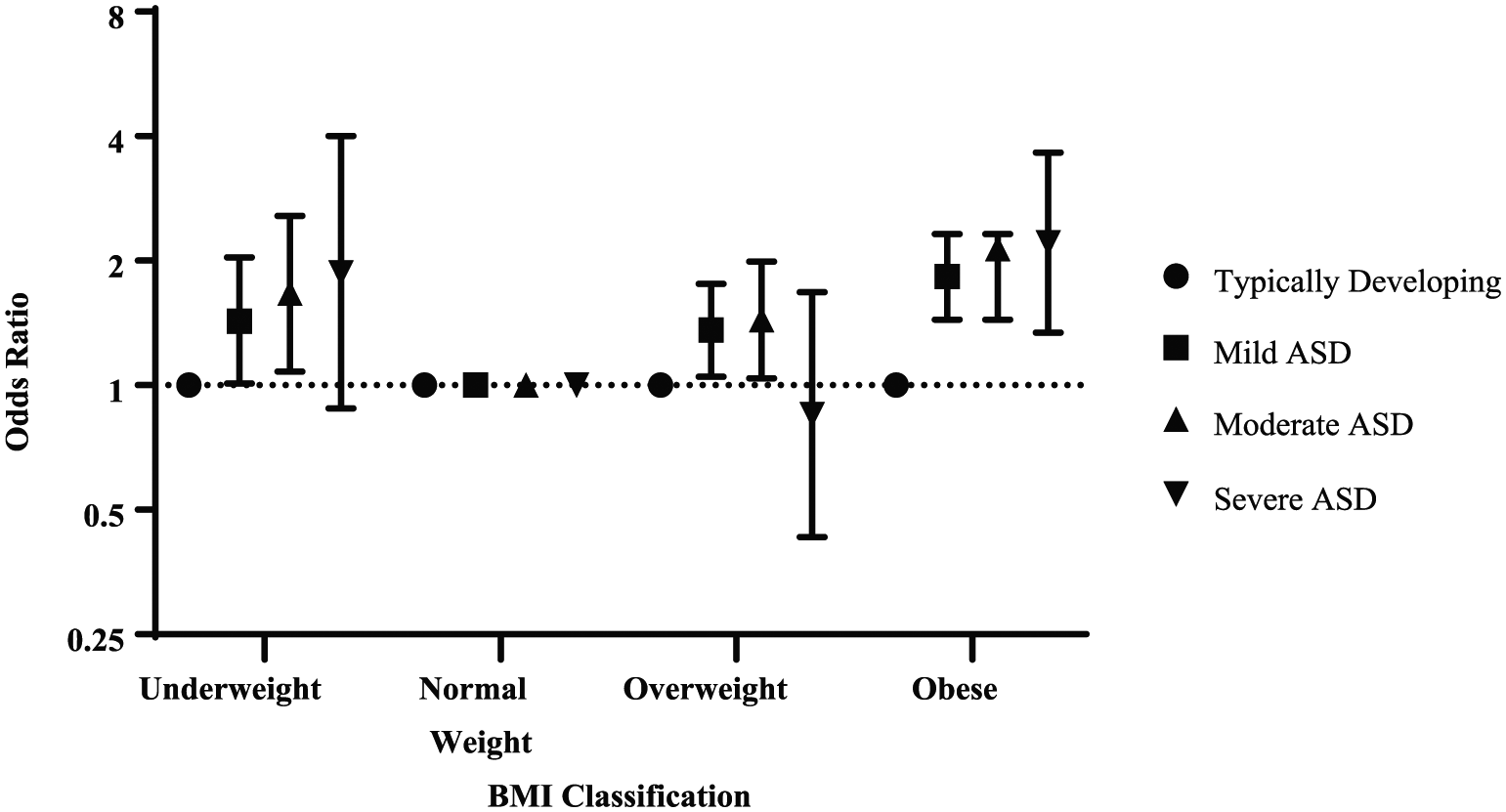
Adjusted odds ratios (95% confidence interval) of BMI classification in ASD by parent-reported ASD severity versus typically developing adolescents.

Adjusted odds ratios (95% confidence interval) of physical activity behaviors in ASD by parent-reported ASD severity versus typically developing adolescents.
Among the sample with ASD, after stratification by age group (10–12 and 13–17 years), the adjusted ORs of regular physical activity participation for 13–17-year-olds with ASD was significantly lower compared with 10–12-year-olds with ASD [OR = 0.68, 95% (0.46, 0.99)]. After stratification by gender, the adjusted odds regular physical activity participation was not statistically different between males and females with ASD [OR = 0.89, 95% CI (0.55, 1.46)].
Discussion
This study sought to examine the relationships between BMI classification, physical activity behaviors, and sedentary behaviors in adolescents with parent-reported ASD compared with their typically developing peers. We hypothesized that the adolescents with ASD would be more likely to be overweight or obese, less likely to engage in physical activity behaviors such as weekly physical activity and organized sports, and more likely to engage in sedentary behaviors such as TV viewing and leisure computer use (⩾2 h/day). The findings in this study support the hypotheses that adolescents with ASD were more likely to be overweight or obese and less likely to engage in physical activity behaviors. However, the results from this study do not support our hypothesis that adolescents with ASD would be more likely to participate in sedentary behaviors.
The findings of this study uniquely contribute to the literature on adolescents with ASD in that we were able to determine the relationship between ASD and BMI classification, physical activity behaviors, and sedentary behaviors by autism severity adjusting for autism medication. Additionally, with the updates to the NSCH in the 2016 round of data collection, we were able to determine if meeting the current federal guideline for physical activity in children and adolescents (60 min or more per day) mediated the relationship between ASD and BMI classification.
Adolescents with ASD were 41% more likely to be overweight and 84% more likely to be obese compared with their typically developing counterparts. These results are consistent with the previous research showing that those with ASD have higher odds of being overweight or obese compared with their typically developing peers (Broder-Fingert, Brazauskas, Lindgren, Iannuzzi, & Van Cleave, 2014; Healy et al., 2019; Hill, Zuckerman, & Fombonne, 2015; McCoy et al., 2016; Segal et al., 2016). Broder-Fingert et al. (2014) examined a large integrated healthcare database of 6672 individuals with and without ASD aged 2–20 years, and found that after adjusting for age and sex, children and adolescents with ASD had significantly higher odds of being overweight [OR = 2.24, 95% CI (1.74, 2.88)] and obese [OR = 4.83, 95% CI (3.85, 6.06)] compared with those without ASD. More specifically, after adjustment, it was found that adolescents with ASD aged 12–15 years had significantly higher odds of being obese [OR = 1.87, 95% CI (1.33, 2.630] compared with those without ASD (Broder-Fingert et al., 2014). One study found a higher prevalence of overweight and obesity in children and adolescents with ASD compared with their typically developing peers. Compared with a general US population sample from the National Health and Nutrition Examination Study (NHANES), adolescents aged 12–17 years with ASD had a significantly higher prevalence of being overweight (42.7% vs 35.3%) or obese (26 % vs 19.5%) (Hill et al., 2015). Additionally, from the 2011–2012 NSCH round of data collection, McCoy et al. (2016) found adolescents aged 10–17 years with ASD were 27% more likely to be overweight (p < 0.001) and 72% more likely to be obese (p < 0.001) in comparison with their typically developing peers (McCoy et al., 2016). More recently, Healy et al. (2019) examined overweight and obesity in the 2016 round of NSCH data collection and found after controlling for age, race/ethnicity, income, and sex, adolescents aged 10–17 years with ASD had significantly higher odds of overweight (OR = 1.48, p = 0.04) and obesity (OR = 1.49, p = 0.02) compared with their typically developing peers (Healy et al., 2019). This pattern is also seen in children and adolescents with intellectual disabilities. Segal et al. (2016) examined the 2011–2012 NSCH dataset and found after adjustment for demographic characteristics, those aged 10–17 years with an intellectual disability were 89% more likely to be obese [OR = 1.89, 95% CI (1.14, 3.12)]. After adjustment for ASD status, those with intellectual disability were 92% more likely to be obese [OR = 1.92, 95% CI (1.14, 3.21)] (Segal et al., 2016). This suggests that ASD status was a confounder in the relationship between obesity and intellectual disability. Another study examining unhealthy weight in 9612 adolescents with and without any developmental disability aged 12–17 years from the 2008–2010 National Health and Interview Survey (US) and found that adolescents with learning and behavioral disabilities were 60% more likely to be underweight than typically developing adolescents, which is similar to our results which results showed adolescents with ASD were 67% more likely to be underweight compared with typically developing adolescents. Additionally, the prevalence of obesity in adolescents with any developmental disability was 20.4% compared with 13.1% of adolescents without developmental disabilities. However, in contrast to our findings, the prevalence of being overweight was 17.5% for both adolescents with and without developmental disabilities (Phillips et al., 2014).
Unhealthy weight in individuals with ASD could potentially be multifactorial. These potential mechanisms include eating and drinking patterns, and medication usage. Adolescents with ASD could have atypical food selectivity which may promote unhealthy weight status. Adolescents with ASD have a significantly different diet composition compared with their typically developing peers (consuming more sugary beverages, snack foods, and less fruits and vegetables) (Evans et al., 2012). Food presentation (i.e. on a special plate with special utensils) can limit food intake in those with ASD. This atypical selectivity is also seen with avoidance of certain food types, textures, color, smells, and temperatures. Adolescents with ASD eat a significantly narrower range of foods and prefer more calorically dense foods (Ahearn, Castine, Nault, & Green, 2001; Schreck, Williams, & Smith, 2004). This food selectivity may contribute to an increase in rates of underweight, overweight, and obesity.
Medication usage may also play a part in the increased rates of unhealthy weight status in adolescents with ASD. An adverse effect of taking atypical antipsychotics that may be routinely prescribed to those with ASD include weight gain. A systematic review showed that those taking risperidone had an average weight gain of 2.7–2.8 kg compared with a placebo group, and those taking aripiprazole had an average weight gain of 1.3–2.0 kg compared with the placebo (McPheeters et al., 2011). This study controlled for general ASD medication usage, which allowed us to look at the influence of medication on obesity in ASD. However, specific medications names are not reported.
The odds of participating in regular physical activity were found to be significantly lower in adolescents with ASD compared with their typically developing peers. Adolescents with ASD were 62% less likely to participate in regular weekly physical activity. Additionally, we found that adolescents with ASD were 81% less likely to have participated in an organized sport within the past 12 months. Our findings are consistent with the previous research examining physical activity behaviors in this population (McCoy et al., 2016; Pan et al., 2016; Stanish et al., 2017). In a study conducted using the 2011–2012 NSCH, adolescents of the same age as in this study with ASD were less likely to participate in weekly physical activity [OR = 0.40, 95% CI (0.34, 0.46)], and less likely to participate in organized sports [OR = 0.26, 95% CI (0.21, 0.29)] compared with their peers without ASD (McCoy et al., 2016). Although these data were parent-reported, similar results have been found with accelerometer measurement of physical activity. A study examining physical activity differences between adolescents 13–21 years old with and without ASD showed that those with ASD (n = 35) spent significantly less time in moderate and vigorous physical activity (29 min/day vs 50 min/day, p < 0.001) compared with adolescents without ASD (n = 60). Additionally, fewer adolescents with ASD (14% vs 29%, p <0.05) met the 60 min/day Physical Activity Guidelines for Americans (Stanish et al., 2017). Another study examining differences in objectively measured physical activity between adolescent males with and without ASD aged 12–17 years showed those with ASD were less physically active overall and engaged in MVPA for a lower percentage of overall activity. Additionally, for those with ASD, only 37% met the federal recommendation compared with 68% of typically developing adolescents (Pan et al., 2016). In contrast, Bandini et al. (2013) examined MVPA via accelerometry in children aged 3–11 years with and without ASD and found that after adjustment for age and sex, daily physical activity was similar in children with ASD compared with those without (50 min/day vs 57.1 min/day). However, parents reported that children with ASD participated in fewer types of physical activities compared with their typically developing peers (6.9 vs 9.6, p < 0.001) (Bandini et al., 2013). This is consistent with the results from this study that adolescents with ASD were significant less likely to participate in sports compared with their typically developing peers, suggesting that differences in sport participation between those with ASD compared with those without persists through the transition from childhood into adolescence.
Uniquely, this study examined the potential mediation of physical activity behaviors on BMI classification. Adjusting for physical activity behaviors decreased associations between ASD and overweight and obesity. Among both children and adolescents (4–17 years), BMI has been found to be inversley related to physical activity, suggesting that as BMI increases, physical activity decreases (Lawson & Foster, 2016). This suggests that an intervention targeting physical activity behaviors may potentially impact unhealthy weight status in the population.
Additionally, this study examined age and sex differences in regular physical activity among adolescents with ASD. After stratification by age group, the adjusted odds of physical activity participation were significantly lower among 13–17-year-olds compared with 10–12-year-olds. This pattern is seen in both adolescents of typical development (Katzmarzyk et al., 2016) and adolescents with ASD (Memari et al., 2013; Pan & Frey, 2006). Memari et al. (2013) examined physical activity among 80 children and adolescents with ASD found that the overall levels of objectively measured daily physical activity decreased with age, with 7–8-year-olds engaging in more physical activity compared with 11–12-year-olds and 13–14-year-olds (Memari et al., 2013). Additionally, Pan et al. (2006) found that elementary school-aged children with ASD engaged in significantly more MVPA (132.58 ± 79.36 min/day) compared with both middle-school-aged children (75.18 ± 32.72 min/day) and high-school-aged adolescents with ASD (39.67 ± 18.69 min/day) (Pan & Frey, 2006). However, we did not find a statistically significant difference in the odds of physical activity participation between males and females. This is contrary to a previous review that suggests males are more physically active than females (Scharoun et al., 2017).
Low engagement in physical activity for adolescents with ASD could potentially be explained by several mechanisms. Engaging in physical activity and team sports (e.g. football and soccer), requires a more advanced level of motor skills. However, it has been shown that both children and adolescents with ASD have deficits in motor skills (Green et al., 2009; Pan, Tsai, & Chu, 2009; Staples & Reid, 2010). Green et al. (2009) found that 79% of adolescents aged 10–14 years with ASD (n = 109) have movement impairments on the Movement Assessment Battery for Children consistent with <5th percentile (Green et al., 2009). Similarly, another study found children aged 6–10 years with ASD (n = 28) had significantly lower scores on tests of gross motor skill, object control, and locomotor skills compared with typically developing children (Pan et al., 2009). Furthermore, team sports and physical activities become more competitive as children get older. The competitive atmosphere may be less conducive to adolescents with ASD compared with their typically developing peers (Nicholson, Kehle, Bray, & Heest, 2011). Another aspect of physical activity and sport that may contribute to decreased participation for adolescents with ASD is the social aspect. Fewer adolescents with ASD feel that sport and exercise are good ways to make friends (68% vs 97%, p<0.001) in comparison with typically developing adolescents (Stanish et al., 2015). While the sports climate, including both competition and social, could potentially act as a barrier toward participation in physical activity and organized sports, some parents and caregivers of adolescents with ASD may believe there are additional barriers limiting physical activity opportunities. Parents of children with ASD aged 3–11 years have reported barriers including the physical activity itself, the physical and social environment, supervision, knowledge and skills, as well as exclusion from peers (Must, Phillips, Curtin, & Bandini, 2015). Based on the parent-report, 60% of children with ASD required too much supervision compared with those without ASD (p < 0.001). Additionally, parents of children with ASD were more likely to report that adults lack the skills needed to include their child in physical activities (58%), their child had few friends (45%), and that their child was excluded by the other children (23%). Furthermore, it was found that the number of barriers reported was inversely correlated with physical activity participation (Must et al., 2015). Adolescent participants themselves also report barriers to participating in physical activity. Compared with their peers without ASD, adolescents with ASD reported more frequent occurrence of barriers limiting physical activity such as fear of injury (54% vs 33%, p = 0.07), weather (94% vs 39%, p < 0.001), and that sports and exercise were too difficult to learn (16% vs 0%, p < 0.01) (Stanish et al., 2015). In another study, examining barriers to physical activity participation in children and adolescents (aged 8–14 years), the most commonly reported barriers were intrapersonal such as playing video games or watching TV (27% and 17%, respectively), as well as interpersonal barriers such as lack of peer exercise partner (friends, siblings) (Obrusnikova & Cavalier, 2011).
Additionally, adolescents with ASD may not find as much enjoyment in physical activities compared with their typically developing peers. One study compared enjoyment in physical activity, perceived barriers, beliefs, and self-efficacy in adolescents aged 13–21 years with and without ASD. Adolescents with ASD enjoyed team sports (65% vs 95%, p < 0.001) and physical education (84% vs 98%, p = 0.02) significantly less than peers without ASD. Likewise, fewer adolescents with ASD would choose to participate in physical activities in their freetime (25% vs 58%, p < 0.01) in comparison with their peers without ASD (Stanish et al., 2015). Similar results were found in an examination of hobby preference of 9-year-old children with (n = 49) and without ASD (n = 49). These results demonstrate that barriers to physical activity participation persist as those with ASD transition from childhood to adolescence. Although not examined in the NSCH and in this study, barriers reported by both the parents and adolescence with ASD may limit opportunities and engagement in physical activities and sport.
Our results on sedentary behaviors were mixed. We found that adolescents with ASD were significantly more likely to engage in more than 2 h/day of watching TV and playing video games compared with their typically developing peers, but computer use was not statistically significant. Published research on this topic is mixed, with some studies showing that individuals with ASD are more likely to engage in sedentary behaviors, and others that show adolescents with ASD spend equal to less time in sedentary behaviors compared with typically developing peers, though each study examined sedentary behaviors with different age ranges (2–5 years, 3–11 years, and 10–17 years, respectively) (Ketcheson, Hauck, & Ulrich, 2018; McCoy et al., 2016; Must et al., 2014). Must et al. (2014), using parent-report, found that TV viewing time, computer time, and total screen time were higher in children aged 3–11 years with ASD on both weekdays and weekends compared with their typically developing peers (Must et al., 2014). In comparison, Ketcheson et al. (2018), using accelerometers, found that young children aged 2–5 years with ASD spent less time in sedentary behaviors compared with peers without ASD (t(52) = 4.57, p < 0.001) (Ketcheson et al., 2018). Moreover, no statistical differences were found examining TV viewing time and computer usage within the 2011–2012 NSCH data set between adolescents (10–17 years) with and without ASD, consistent with the results found in this study (McCoy et al., 2016). However, differences may be explained by the lack of consistency with the measurement of sedentary behavior in this population as well as examination within different age groups. Future research is needed to further examine sedentary behaviors of both children and adolescents with ASD in comparison with typically developing with an objective device, such as an accelerometer to further clarify if differences in sedentary behavior change with age or remain consistent.
The strengths of this study include a large, nationally representative data set from the US. The large data set allowed for an original analysis among BMI classification, physical activity behaviors, and sedentary behaviors in adolescents with parent-reported ASD compared with their typically developing peers. Another strength of this study is including the most recent data, which includes the update to the physical activity and ASD questions in the 2016 version of the NSCH. This study uniquely adds to the literature on ASD in that it uses the most updated nationally representative data, includes the current recommendation of physical activity in children (60 min or more per day), and includes ASD medication as well as ASD severity. However, there are several limiting factors that should be considered. All data from the NSCH is provided based on parental self-report including ASD status. Variables included in our analyses (i.e. autism classification, ASD medication, ASD severity, BMI classification, weekly physical activity, television viewing time, computer usage, and sport participation,) were all parent-reported, which could have resulted in measurement error. Parent-reported measures may lead to error as parents may not understand what constitutes physical activity, especially chores or activities that may not induce visible sweating or heavy breathing. In addition, parents may not have knowledge of physical activities and sedentary behaviors completed while their child was away from home, at school, or with a caregiver. Parent-reported measures of ASD status may lead to missed cases in areas that have limited access to healthcare or decreased levels of health literacy. Additionally, the parent-report of ASD severity (mild, moderate, severe) could include error as parents may not understand the levels of physician-diagnosed ASD severity and parents may have reported an ASD severity based on their own perception. Furthermore, as the NSCH is a survey, unavailability of information regarding specific mediation usage (name and/or type), pubertal status, or school setting from the NCSH limited the interpretation of our results. Further research should employ objective measures of variables to provide a more detailed description of the population. Since parent-reported measurements of physical activity are subjective, accelerometer data could provide an objective measure of physical activity and sedentary behaviors along with physical measures of height and weight. Physician diagnosed severity of ASD alongside with specific medication usage for ASD would provide further evidence supporting any relationships found between ASD severity and medication usage with physical activity levels and sedentary behaviors.
This study purports that adolescents with ASD are more likely to be overweight and obese as measured by BMI, less likely to engage in the recommended amount of beneficial physical activity each week, and more likely to engage in sedentary behaviors such as TV viewing. These findings highlight the need for intervention in this population that includes increasing physical activity and monitoring of sedentary behaviors to increase the overall health (both physical and social) of this population, as well as research determining the effectiveness of these interventions. It is known that regular participation in physical activity is related to healthy growth and development throughout life (Blair et al., 1989). There is strong evidence supporting the benefits of physical activity on physical health including improvements in musculoskeletal health, cardiovascular health, improved fitness, improved metabolic health, and decreased obesity, as well as reductions in the risk of developing chronic disease (American College of Sports Medicine, 2013; Daniels et al., 2011; Strong et al., 2005; Warburton et al., 2006). Furthermore, there are many mental and social benefits of physical activity that may be particularly beneficial to those with ASD, including decreased levels of anxiety and depression, improvements in self-concept, improved emotional control, confidence, making new friends, improved relationships and social skills, as well as greater social competence (Holt, Kingsley, Tink, & Scherer, 2011; Snyder et al., 2010; Strong et al., 2005). However, adolescents with ASD may have to overcome barriers specific to their ASD such as deficits in motor skills, communication, and social skills that may limit their ability to participate in physical activity behaviors and may in fact lead to greater participation in solitary sedentary behaviors. Ryan, Fraser-Thomas, and Weiss (2018) found that significant predictors to having a social sport experience includes socio-communicative abilities, coach–athlete relationships, and parent support (Ryan et al., 2018). Given the results, this study provides evidence for individualized sporting and physical activity opportunities for adolescents with ASD across the severity spectrum. Additionally, program directors should be accommodating to the parent- and participant-reported barriers that may potentially limit physical activity and sport participation in this population. Although more research is needed to determine the feasibility and effectiveness of increasing physical activity in adolescents with ASD across the spectrum, targeted programs are needed to support healthy lifestyles in adolescents with ASD.
Supplemental Material
AUT861579_Lay_Abstract – Supplemental material for Obesity, physical activity, and sedentary behaviors in adolescents with autism spectrum disorder compared with typically developing peers
Supplemental material, AUT861579_Lay_Abstract for Obesity, physical activity, and sedentary behaviors in adolescents with autism spectrum disorder compared with typically developing peers by Stephanie M McCoy and Kristen Morgan in Autism
Footnotes

References
Supplementary Material
Please find the following supplemental material available below.
For Open Access articles published under a Creative Commons License, all supplemental material carries the same license as the article it is associated with.
For non-Open Access articles published, all supplemental material carries a non-exclusive license, and permission requests for re-use of supplemental material or any part of supplemental material shall be sent directly to the copyright owner as specified in the copyright notice associated with the article.
