






Abstract
This study examined how teachers’ perceptions of autism inclusion, Collective Efficacy, and national context relate to readiness for autism-inclusive teaching in mainstream schools in Egypt and Oman. Guided by social cognitive theory, readiness was conceptualized in two dimensions: Professional Knowledge and affective readiness. Survey data were collected from 436 teachers using validated Arabic versions of established measures of inclusive perceptions, teacher readiness, and Collective Efficacy. Hierarchical regression analyses showed that demographic characteristics explained limited variance, and teaching experience was not a significant predictor. Teachers’ perceptions made the largest incremental contribution to both readiness outcomes. The final models explained substantial variance in Professional Knowledge (R² = .455) and affective readiness (R² = .448). Collective Efficacy added explanatory power and moderated selected relationships: It strengthened the association between positive Sentiments and Professional Knowledge, the association between Attitudes and affective readiness, and intensified the negative association between Concerns and affective readiness. Cross-national comparisons showed higher Professional Knowledge and affective readiness among teachers in Oman. National context moderated selected pathways predicting affective readiness, but not Professional Knowledge. Overall, the findings highlight the combined role of teacher beliefs, Collective Efficacy, and national context in shaping readiness for autism-inclusive classrooms.
Lay Abstract
As more autistic students are educated in mainstream classrooms, teachers play a crucial role in making inclusion successful. This study explored what shapes teachers’ readiness to teach autistic students in schools in Egypt and Oman. Readiness was considered in two ways: teachers’ Professional Knowledge about how to support autistic students and their emotional and motivational readiness to include them in everyday classroom activities. A total of 436 teachers completed questionnaires about their views on autism inclusion, their Concerns and Attitudes, their sense of teamwork within their schools, and how ready they felt to teach autistic students. The results showed that teachers’ personal beliefs about inclusion were the strongest predictors of readiness. Teachers who reported more positive attitudes and supportive Sentiments toward inclusion also reported higher levels of Professional Knowledge and affective readiness. In contrast, teachers who reported stronger Concerns, such as worries about classroom demands, behavior management, or limited resources, tended to report lower readiness to support autistic students. Background characteristics, such as years of teaching experience, were only weakly related to readiness. The school environment also played an important role. Teachers who believed that staff in their school could work together effectively felt more capable and prepared to include autistic students. However, when Concerns about inclusion were strong, a shared sense of school capability did not necessarily protect teachers’ affective readiness; instead, Concerns became more strongly linked to lower affective readiness. In some cases, when Concerns about inclusion were widely shared but not addressed, they became more strongly linked to lower affective readiness. Differences between the two countries were also observed. Teachers in Oman generally reported higher Professional Knowledge and affective readiness than teachers in Egypt. In addition, the way teachers’ Sentiments and attitudes influenced affective readiness differed across the two contexts, while the effect of Concerns on affective readiness did not significantly differ between Egypt and Oman. Overall, the findings suggest that improving autism inclusion may depend less on teachers’ years of experience and more on strengthening positive beliefs about inclusion, addressing practical Concerns, and fostering supportive collaboration within schools.
Keywords
Introduction
Inclusive education has become a central priority worldwide, emphasizing the right of all students, including those with disabilities, to participate meaningfully in mainstream schools (UNESCO, 2020). Within this agenda, the inclusion of autistic students presents distinctive pedagogical and relational challenges related to communication, social interaction, behavioral regulation, and sensory processing (American Psychiatric Association, 2013). Although policy commitments to autism inclusion have expanded internationally, classroom implementation remains uneven and depends heavily on teachers’ readiness to translate inclusive principles into practice (Emam et al., 2026; Moosa et al., 2022).
Research consistently identifies teachers’ perceptions as central cognitive–affective mechanisms shaping inclusive engagement (Emam & Al-Mahdy, 2026; Forlin et al., 2011). These perceptions are typically conceptualized through Sentiments, Attitudes, and Concerns. Sentiments reflect emotional responses toward autistic students, including empathy, confidence, or discomfort (Murdaca et al., 2018). Attitudes represent beliefs about the legitimacy and feasibility of inclusion (Sahli Lozano et al., 2024), while Concerns capture anticipated challenges related to workload, classroom management, and resources (Gobrial et al., 2019; Roberts & Simpson, 2016). Together, these dimensions shape teachers’ professional learning, instructional adaptation, and affective commitment to inclusive practice (Adams et al., 2023; Moosa et al., 2022; Sirem & Çatal, 2023).
Teacher readiness, however, extends beyond perception alone. It is a multidimensional construct encompassing both Professional Knowledge—such as familiarity with evidence-based practices—and affective readiness, reflecting willingness and confidence to teach autistic students (Moosa et al., 2022). International evidence demonstrates that knowledge, prior experience, and structured training significantly predict implementation of inclusive practices (Gentil-Gutiérrez et al., 2021; Simó-Pinatella et al., 2023). Yet these individual capacities operate within institutional environments that vary in collaboration, shared responsibility, and professional support (Adams et al., 2023; Moosa et al., 2022).
Collective teacher efficacy—teachers’ shared belief in their school’s collective capacity to support diverse learners—constitutes a critical contextual condition influencing inclusive practice (Bandura, 1997; Goddard, 2002). Schools characterized by stronger Collective Efficacy demonstrate greater collaboration, instructional innovation, and persistence in addressing complex student needs (Mudhar et al., 2024). In inclusive contexts, Collective Efficacy may attenuate the constraining influence of Concerns while strengthening the positive effects of inclusive Sentiments and Attitudes (Fohlin et al., 2025; Sharma et al., 2024). Despite its theoretical relevance, research in Arab educational systems has rarely examined Collective Efficacy as a moderating factor linking teacher perceptions to readiness for autism inclusion. These dynamics warrant closer examination within evolving inclusion systems such as Oman and Egypt.
Both countries have formally endorsed inclusive education and expanded autism-related services over the past two decades (Alakhzami & Huang, 2023; Al Maskari et al., 2018; Gobrial et al., 2019). In Oman, reform efforts have placed sustained emphasis on teacher professional development and structured family–school collaboration as mechanisms for strengthening inclusive practice (Al Jabri et al., 2018; Al Maskari et al., 2018). In Egypt, national strategic frameworks similarly foreground equity and access; however, empirical evidence points to variability in teacher preparedness and pronounced regional disparities in resources and autism awareness (Gobrial et al., 2019; Metwally et al., 2025).
Thus, while both systems articulate comparable policy commitments (Ministry of Education, 2008; Ministry of Education and Technical Education, 2014, 2023; Royal Decree No. 63/2008), they differ in implementation coherence, professional infrastructure, and the institutional pathways through which inclusion is operationalized (Alakhzami & Huang, 2023; Alallawi et al., 2020; Gobrial et al., 2019; Lee et al., 2024). These distinctions—alongside differences in system scale and historical trajectories of disability provision (Emam, 2016; Gobrial et al., 2019)—create a theoretically meaningful contrast for examining whether national context conditions the relationships among teacher perceptions, Collective Efficacy, and readiness for autism-inclusive practice.
Grounded in Bandura’s (1997) social cognitive theory, the present study conceptualizes readiness for autism-inclusive classrooms as emerging from reciprocal interactions among personal perceptions (Sentiments, Attitudes, Concerns), behavioral orientations (Professional Knowledge and affective readiness), and environmental influences (Collective Efficacy and national context). Teachers are viewed as active agents whose beliefs shape professional functioning, yet their engagement is influenced by shared school-level efficacy and systemic conditions (Emam et al., 2026; Sirem & Çatal, 2023). The proposed moderated model is presented in Figure 1.
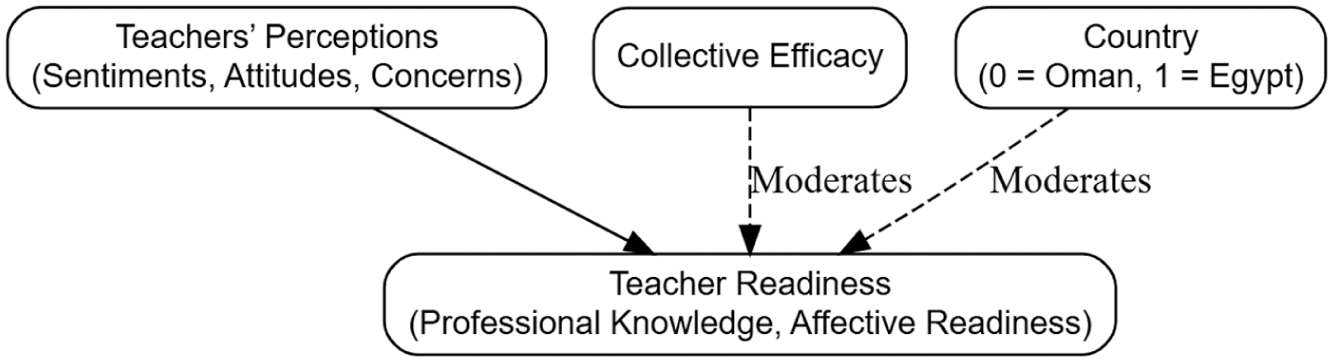
Proposed moderated model of teachers’ perceptions, Collective Efficacy, and readiness for autism-inclusive education.
Accordingly, the study tests the following hypotheses:
Method
Participants
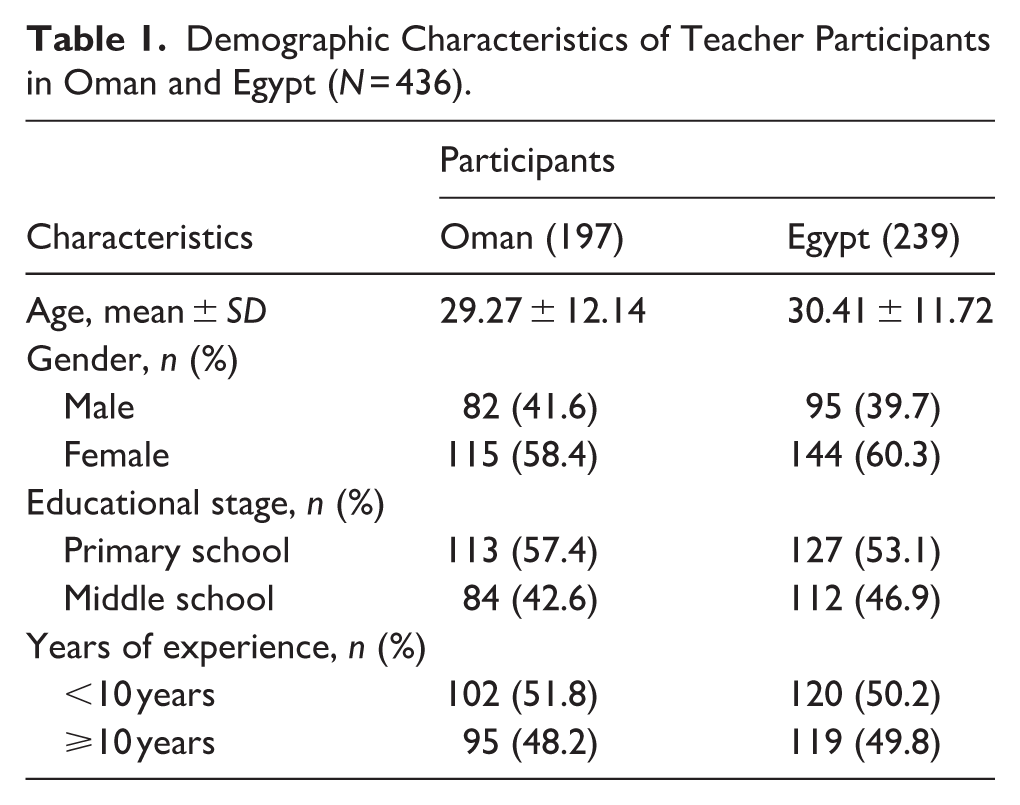
A stratified random sampling procedure was used to enhance representativeness in Oman and Egypt. Stratification was based on educational stage (primary, middle) and geographic region. National school lists obtained from the Ministries of Education served as the sampling frame. Schools were randomly selected within each stratum using computer-generated procedures (Lohr, 2021), and teachers were randomly sampled from staff rosters provided by school principals. Eligibility criteria required that teachers (a) had taught at least one autistic student within their national inclusion framework, (b) had participated in at least one professional development activity related to autism or inclusive education, and (c) demonstrated basic awareness of autism and its classroom implications through a brief screening checklist. An a priori power analysis using G*Power 3.1 indicated that a minimum sample of 210 participants was required to detect a small-to-moderate effect (f² = .05) with 80% power at α = .05. The final analytic sample (N = 436) exceeded this threshold. Of 478 invited teachers, 436 returned valid questionnaires (response rate = 91%). Excluded cases (9%) showed substantial missing data or uniform response patterns. Participants were drawn from 58 schools (197 from Oman; 239 from Egypt). Women were slightly overrepresented, consistent with national workforce distributions. The mean age was 29.27 years (SD = 12.14) in Oman and 30.41 years (SD = 11.72) in Egypt. Approximately half reported 10 or more years of experience (48.2% Oman; 49.8% Egypt). Additional characteristics are presented in Table 1.
Demographic Characteristics of Teacher Participants in Oman and Egypt (N = 436).
Instruments
Perception of Inclusive Education
Teachers’ perceptions were assessed using the Revised Sentiments, Attitudes, and Concerns about Inclusive Education Scale (SACIE-R; Forlin et al., 2011). The 15-item instrument comprises three subscales capturing emotional responses toward inclusion (Sentiments; e.g. I find it difficult to overcome my initial shock when meeting students with autism), beliefs about the value and feasibility of inclusive education (Attitudes; e.g. Students with autism should be in regular classes even though they have attention-related problems), and anticipated practical challenges (Concerns, e.g. I am concerned that I will be more stressed if I have a student with autism in my class). Responses were recorded on a five-point Likert-type scale ranging from 1 (strongly disagree) to 5 (strongly agree). All items were contextualized to refer specifically to the inclusion of autistic students. In the present study, items in the Sentiments subscale were reverse-coded so that higher scores reflect greater emotional comfort and more positive affective orientation toward including autistic students. The Concerns subscale was not reverse-coded; therefore, higher concern scores indicate stronger perceived challenges. This scoring approach preserves the conceptual distinction between affective orientation and anticipated practical difficulties while ensuring clarity in regression interpretation. Internal consistency for the overall scale was strong (Cronbach’s α = .87), and confirmatory factor analysis supported the expected three-factor structure.
Teacher Readiness for Inclusive Education
Teacher readiness was measured using an adapted version of the instrument developed by Porakari et al. (2015) and validated by Moosa et al. (2022). The scale includes 23 items representing two dimensions of preparedness. The original Knowledge and Skills dimension was relabeled as Professional Knowledge to reflect teachers’ perceived competence in identifying and supporting autistic students (e.g. I have knowledge of identifying students with autism). The original Attitudes dimension was relabeled as Affective Readiness to capture motivational commitment and emotional orientation toward inclusive practice (e.g. I care for the progressive learning of students with autism). The revised terminology aligns with the theoretical framework and clarifies the distinction between cognitive–pedagogical competence and affective commitment.
Responses were recorded on a four-point Likert-type scale ranging from 1 (strongly disagree) to 4 (strongly agree), with higher scores indicating stronger perceived readiness to include autistic students. Confirmatory factor analysis supported the two-dimensional structure. Composite reliability coefficients exceeded .90 for both dimensions, and average variance extracted values were above .50, indicating adequate convergent validity and reliability.
Collective Efficacy
Collective Efficacy was assessed using the 12-item short form of the Collective Efficacy Scale (Goddard, 2002), grounded in social cognitive theory (Bandura, 1997). The scale measures teachers’ shared beliefs regarding their collective instructional capability (Group Competence, e.g. “Teachers in this school are able to get through to students with autism”) and their perceptions of contextual supports and constraints influencing school functioning (Task Analysis, e.g. “Students with autism come to school ready to learn”). Items were rated on a six-point Likert-type scale ranging from 1 (strongly disagree) to 6 (strongly agree), with higher scores reflecting stronger Collective Efficacy beliefs. Participants were instructed to respond in reference to teaching autistic students in inclusive classrooms. Internal consistency was strong (Cronbach’s α = .94), and confirmatory factor analysis supported the expected two-factor structure with satisfactory reliability and convergent validity indices.
Data Collection
Data were collected through structured questionnaires administered to schoolteachers in Oman and Egypt during the 2023–2024 academic year. Ethical approval was obtained before data collection from the relevant research ethics bodies in both countries. In Oman, approval was granted by the University Ethics Committee for Humanities Research at Sultan Qaboos University (approval no. RC/RG-EDU/PSYC/23/1), while in Egypt, ethical clearance was obtained from the university research ethics committee at the participating institutions. The three Egypt-based auhtors also obtained formal permission to access schools and approach teachers. All participants provided informed consent and were informed of the study purpose, voluntary nature of participation, confidentiality procedures, and their rights as participants. Data were stored securely and used only for research purposes.
Instruments originally developed in English were translated into Arabic using the committee translation method (Epstein et al., 2015). Four bilingual specialists in educational psychology, autism and inclusive education, psychological test adaptation, and classroom practice reviewed and reconciled independent translations to ensure semantic and conceptual equivalence. A pilot study with 60 teachers, 30 from each country, assessed clarity and cultural appropriateness. Items were rated on a four-point clarity scale, yielding a mean rating of 3.62 (SD = 0.28), with no item below 3.00. Minor wording refinements were made, including culturally sensitive adaptations where needed. For example, “alcohol and drug abuse in the community” was rephrased as “certain harmful social behaviors in the community.” A follow-up pilot (n = 25) confirmed clarity. Participants in both countries responded to all items with reference to the inclusion of autistic students in their classrooms.
Data Analysis
Quantitative analyses were conducted using IBM SPSS Statistics Version 27. Hierarchical multiple regression analysis was used to examine the hypothesized relationships among teachers’ perceptions, Collective Efficacy, and readiness for autism-inclusive classrooms. This approach was selected because the study aimed to assess the incremental predictive contribution of successive blocks of observed variables rather than to test a full latent structural model. Hierarchical regression was therefore considered a parsimonious and appropriate method for examining direct and moderating effects among the observed predictors.
Two outcome variables were examined: Professional Knowledge and Affective Readiness. Gender, years of teaching experience, and country were entered as control variables in Step 1. Teachers’ perceptions of inclusive education, represented by Sentiments, Attitudes, and Concerns, were entered in Step 2. Collective Efficacy was entered in Step 3. Interaction terms involving Collective Efficacy were entered in Step 4 to test its moderating role, and interaction terms involving country were entered in Step 5 to test whether national context moderated the relationships between teacher perceptions and readiness outcomes. Country was dummy-coded as 0 = Oman and 1 = Egypt, and gender was dummy-coded as 0 = male and 1 = female.
Item responses within each Collective Efficacy subscale were summed to compute Group Competence and Task Analysis scores. The overall Collective Efficacy composite used in regression analyses was then calculated by combining the two subscale scores, with equal weight assigned to both dimensions. All continuous predictors were mean-centered before creating interaction terms to reduce multicollinearity and facilitate interpretation of moderation effects.
Prior to regression analyses, statistical assumptions were examined. Missing data were minimal, below 5% per variable, and were handled using listwise deletion. Skewness and kurtosis values were within acceptable limits, supporting approximate normality. Residual scatterplots and Q–Q plots indicated linear relationships, homoscedasticity, and no serious deviations from normality. Variance inflation factor (VIF) values remained below 3.3, indicating no multicollinearity Concerns.
Confirmatory factor analyses were conducted before hypothesis testing to examine construct validity in the autism-specific context. Standardized factor loadings exceeded .50, Cronbach’s alpha coefficients were above .70, composite reliability values exceeded .70, and average variance extracted values were above .50. Multi-group confirmatory factor analysis was then conducted to examine measurement invariance across the Omani and Egyptian samples. Configural, metric, and scalar invariance were supported using recommended change-index criteria, indicating that the measures functioned equivalently across national contexts.
Results
Descriptive Statistics and Correlations
Descriptive statistics and Pearson correlations for all study variables are presented in Table 2. Skewness values were below 3, and kurtosis values below 8, indicating acceptable distributional properties (Byrne, 2010). Across both national samples, correlations among teacher perceptions, Collective Efficacy, and readiness outcomes were moderate to strong and statistically significant (p < .001), suggesting meaningful associations among the constructs.
Descriptive Statistics and Bivariate Correlations Among Key Study Variables for Oman and Egypt Samples (N = 436).
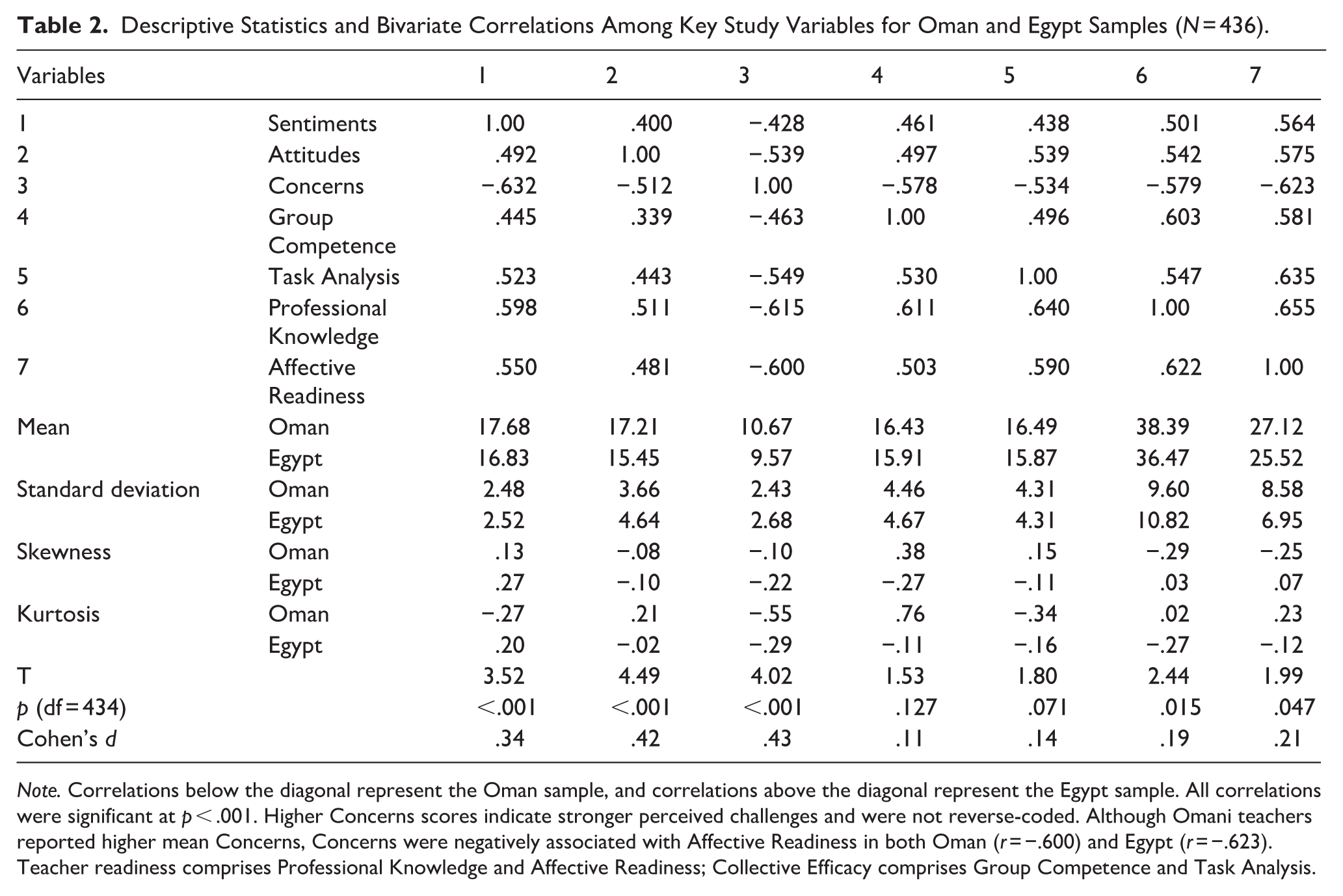
Note. Correlations below the diagonal represent the Oman sample, and correlations above the diagonal represent the Egypt sample. All correlations were significant at p < .001. Higher Concerns scores indicate stronger perceived challenges and were not reverse-coded. Although Omani teachers reported higher mean Concerns, Concerns were negatively associated with Affective Readiness in both Oman (r = −.600) and Egypt (r = −.623). Teacher readiness comprises Professional Knowledge and Affective Readiness; Collective Efficacy comprises Group Competence and Task Analysis.
Independent-samples t-tests indicated that Omani teachers reported significantly higher levels of Sentiments, Attitudes, and Concerns compared to Egyptian teachers, t(434) = 3.52–4.49, p < .001, with small-to-moderate effect sizes (d = .34–.43). Modest differences were also observed for Professional Knowledge and Affective Readiness, t(434) = 1.99–2.44, p < .05, d = .19–.21. No significant differences emerged for Group Competence or Task Analysis (p > .05). Overall, patterns of perceptions and readiness were broadly comparable across contexts, with slightly higher reported levels among Omani teachers on several dimensions. Although Omani teachers reported higher mean scores on both Concerns and Affective Readiness than Egyptian teachers, this pattern should not be interpreted as inconsistent with the regression findings. The mean comparison reflects between-country differences, whereas the regression and correlation results reflect associations among variables within the sample. As shown in Table 2, Concerns were negatively associated with Affective Readiness within both national samples, Oman: r = −.600, p < .001; Egypt: r = −.623, p < .001. Thus, in both countries, teachers who reported stronger Concerns tended to report lower affective readiness, even though the overall country means differed.
Common Method Bias and Measurement Model
Harman’s single-factor test indicated that five factors emerged, with the first accounting for 39.15% of total variance, below the 50% threshold, suggesting that common method variance was unlikely to bias the findings. VIF values were below 3.3.
Confirmatory factor analysis demonstrated good model fit, χ²(968) = 1322.61, p < .001, χ²/df = 1.37, Comparative Fit Index (CFI) = .989, Tucker–Lewis Index (TLI) = .988, Root Mean Square Error of Approximation (RMSEA) = .030, Standardized Root Mean Square Residual (SRMR) = .027. All standardized factor loadings exceeded .50, reliability coefficients were above .70, and average variance extracted values exceeded .50, supporting convergent validity. Multi-group Confirmatory Factor Analysis (CFA) supported configural, metric, and scalar invariance across Oman and Egypt, permitting cross-national comparisons. Psychometric indicators are summarized in Table 3.
Reliability, Validity, and Multicollinearity Diagnostics for Study Constructs.
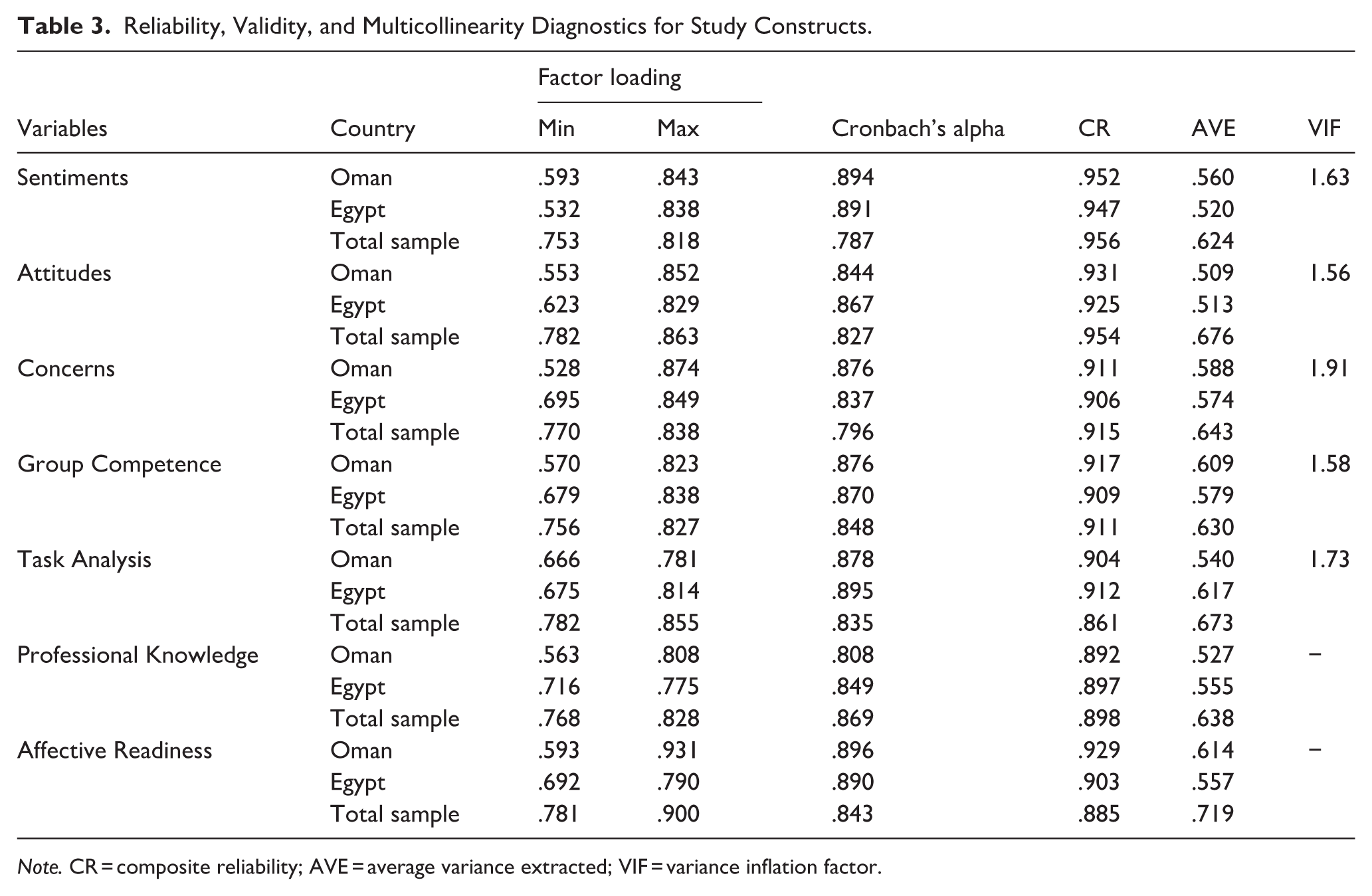
Note. CR = composite reliability; AVE = average variance extracted; VIF = variance inflation factor.
Hierarchical Multiple Regression Analyses
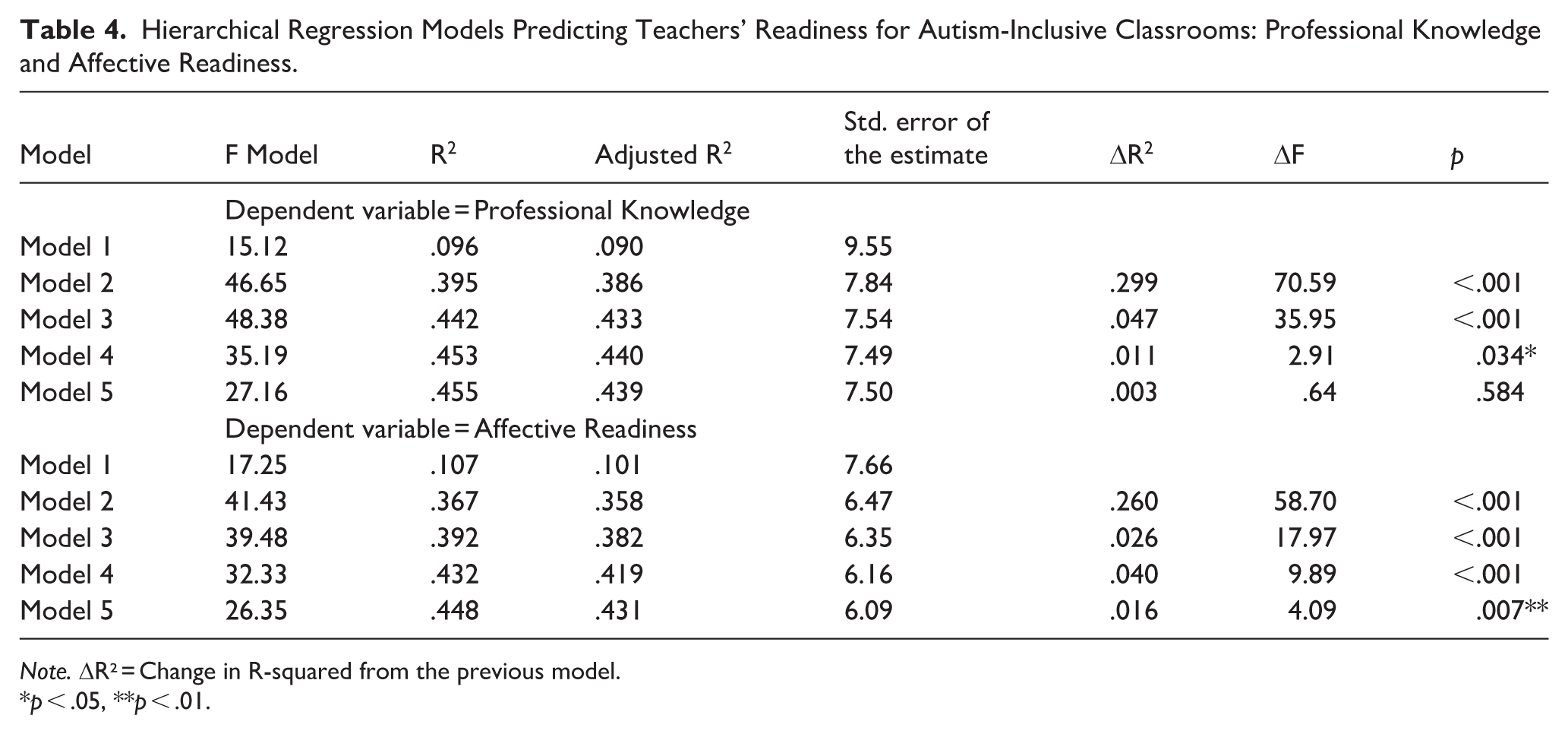
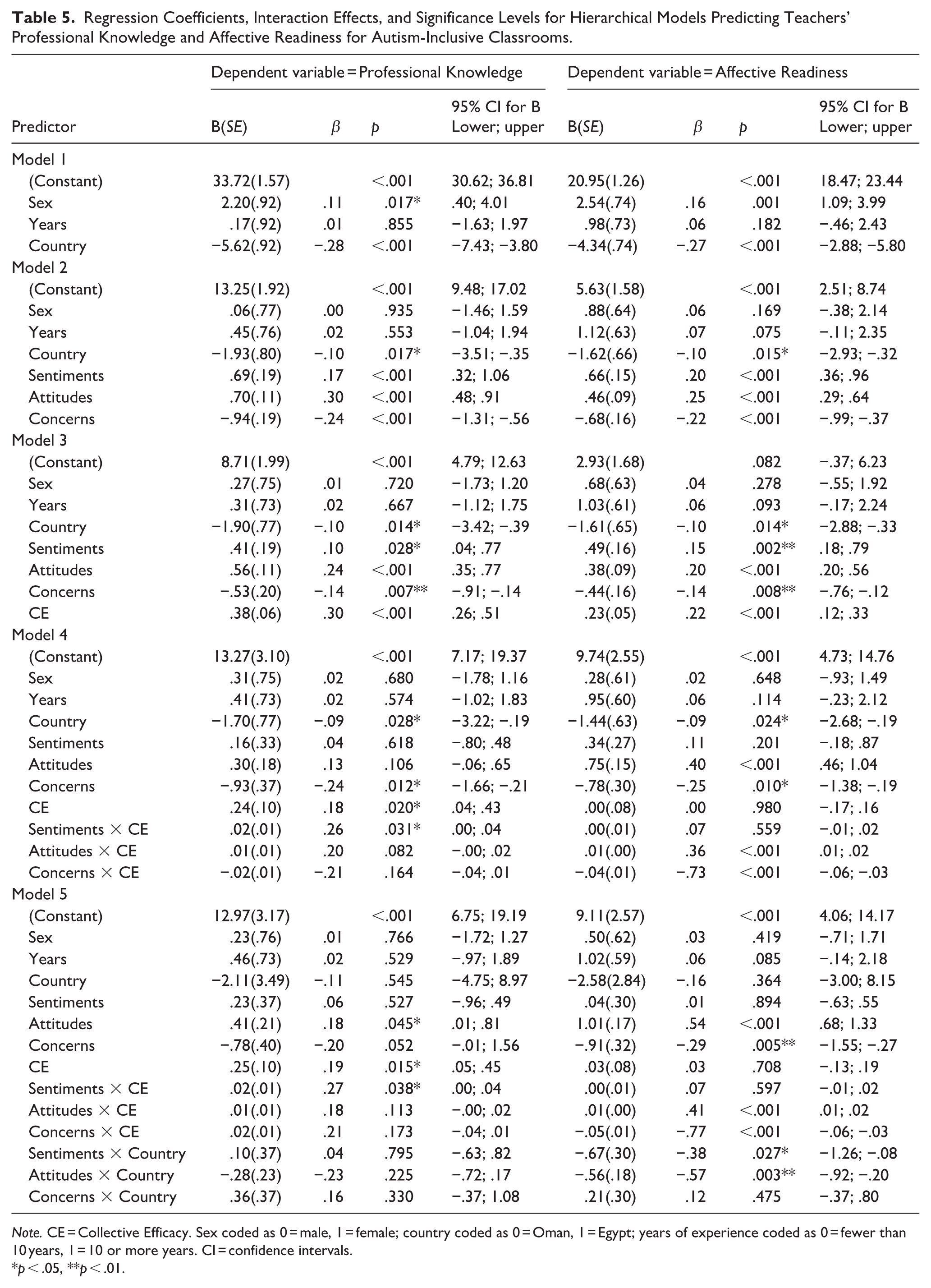
Hierarchical regression analyses were conducted to test the direct and moderating effects specified in H1 to H4. Gender and years of teaching experience were entered as control variables in Step 1 but were not interpreted as theoretically central predictors. Model summary statistics for the hierarchical regression analyses are presented in Table 4, and regression coefficients are presented in Table 5.
Hierarchical Regression Models Predicting Teachers’ Readiness for Autism-Inclusive Classrooms: Professional Knowledge and Affective Readiness.
Note. ΔR² = Change in R-squared from the previous model.
p < .05, **p < .01.
Regression Coefficients, Interaction Effects, and Significance Levels for Hierarchical Models Predicting Teachers’ Professional Knowledge and Affective Readiness for Autism-Inclusive Classrooms.
Note. CE = Collective Efficacy. Sex coded as 0 = male, 1 = female; country coded as 0 = Oman, 1 = Egypt; years of experience coded as 0 = fewer than 10 years, 1 = 10 or more years. CI = confidence intervals.
p < .05, **p < .01.
Predicting Professional Knowledge
In Step 1, control variables accounted for a modest proportion of variance in Professional Knowledge. In Step 2, teacher perceptions (Sentiments, Attitudes, and Concerns) were entered and significantly improved model fit (ΔR² = .299, p < .001). All three perception variables emerged as significant predictors, supporting H1 for Professional Knowledge.
In Step 3, Collective Efficacy was added and explained additional variance (ΔR² = .047, p < .001). Collective Efficacy was a significant positive predictor, supporting H2.
Step 4 tested moderation effects. A significant Sentiments × Collective Efficacy interaction emerged (β = .26, p = .031), indicating that Collective Efficacy strengthened the positive association between Sentiments and Professional Knowledge. No significant interactions were observed for Attitudes or Concerns. Thus, H3 received partial support for Professional Knowledge.
Step 5 examined moderation by country. No country-based interaction effects were significant, indicating that the relationships predicting Professional Knowledge were consistent across Oman and Egypt. Therefore, H4 was not supported for this outcome.
Regression coefficients are presented in Table 5.
Predicting Teachers’ Affective Readiness
For Affective Readiness, control variables accounted for a modest proportion of variance in Step 1. In Step 2, Sentiments, Attitudes, and Concerns significantly improved model fit (ΔR² = .260, p < .001), and all three were significant predictors, supporting H1 for Affective Readiness.
In Step 3, Collective Efficacy was a significant positive predictor (β = .22, p < .001), supporting H2.
Step 4 revealed two significant interaction effects. The Attitudes × Collective Efficacy interaction was positive (β = .36, p < .001), indicating that Collective Efficacy strengthened the positive effect of Attitudes on affective readiness. The Concerns × Collective Efficacy interaction was negative (β = −.73, p < .001), suggesting that higher Collective Efficacy intensified the negative association between Concerns and affective readiness. These significant Collective Efficacy moderation effects are illustrated in Figure 2. These findings provide partial support for H3.
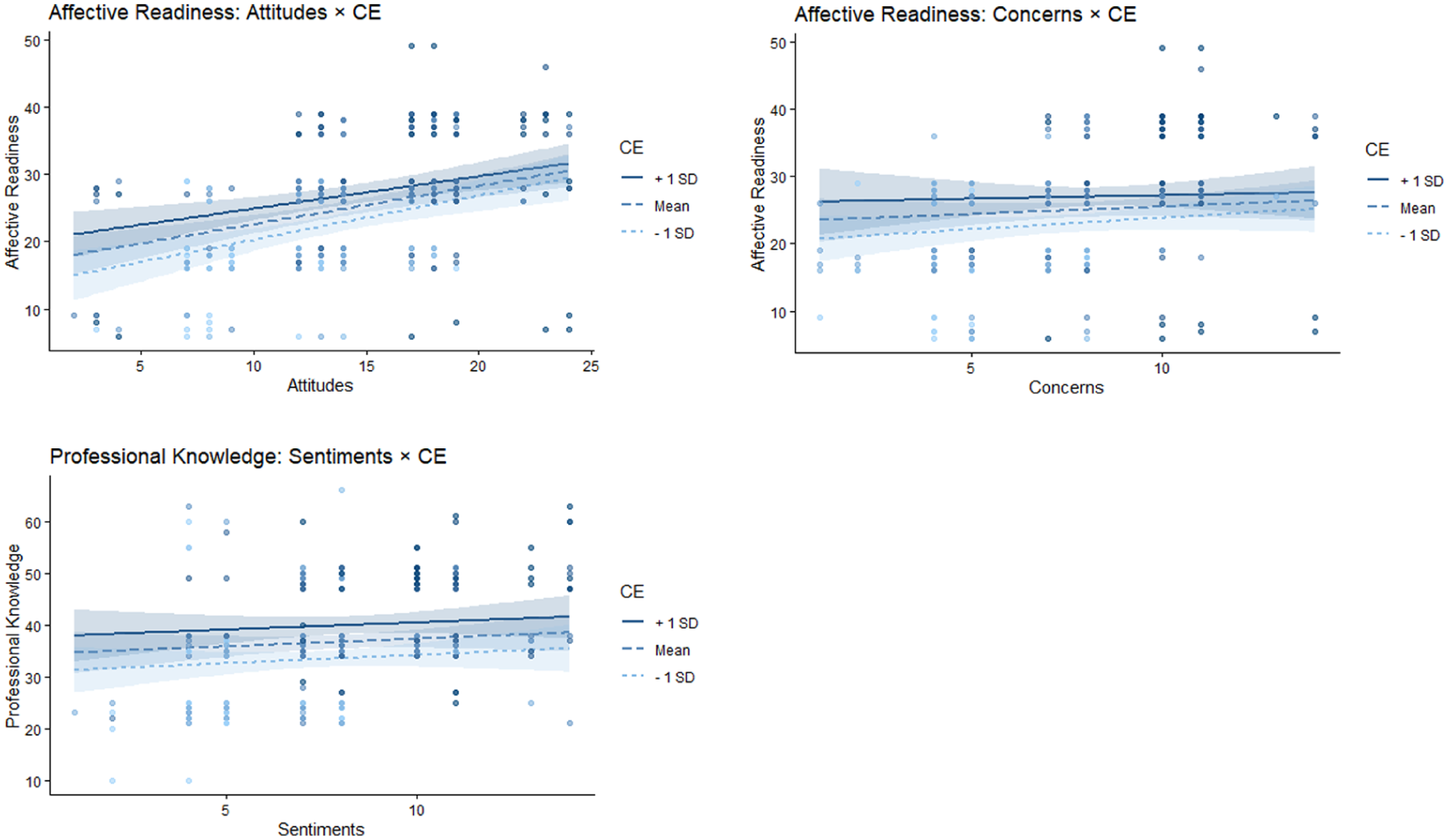
Moderating effects of Collective Efficacy on the associations between teachers’ perceptions and readiness.
In Step 5, two significant country-based interactions emerged. The Attitudes × Country (β = −.57, p = .003) and Sentiments × Country (β = −.38, p = .027) interactions indicated stronger positive associations among Omani teachers. These country-based interaction effects are illustrated in Figure 3. Other interaction terms were nonsignificant. Thus, H4 received partial support for Affective Readiness. Regression coefficients are presented in Table 5.
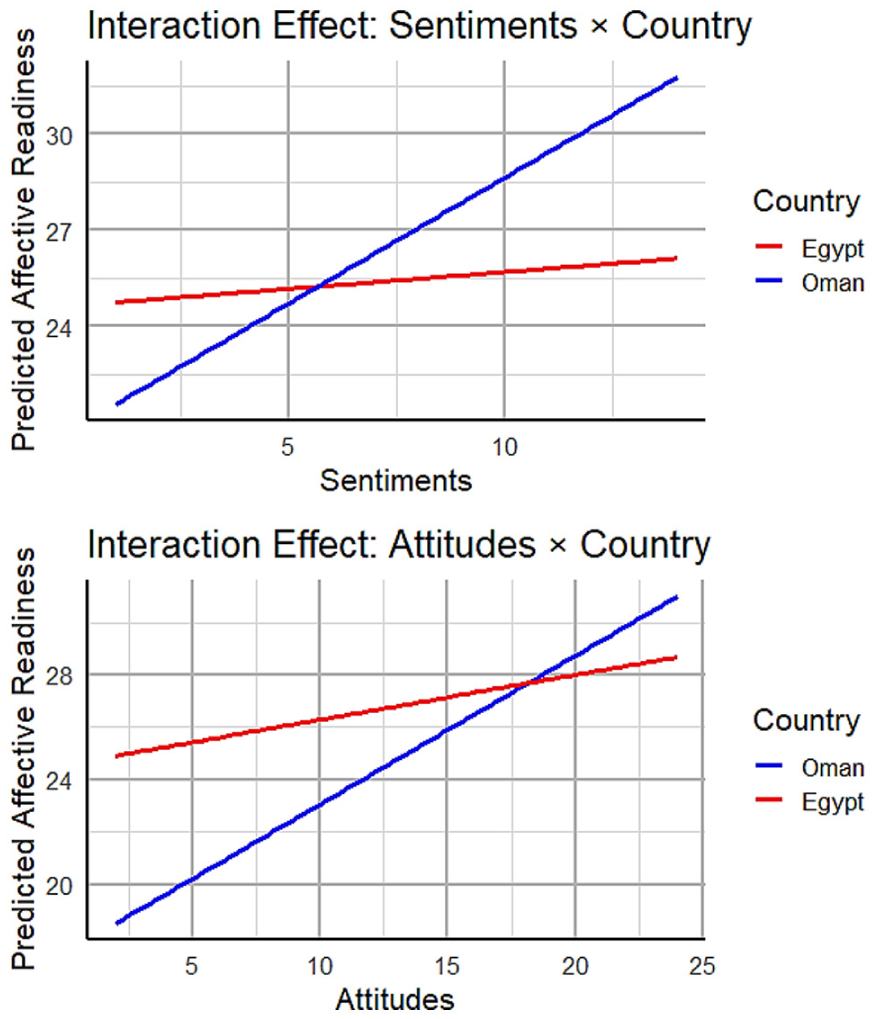
Country differences in the associations of Sentiments and Attitudes with affective readiness.
Discussion
Overview of Findings
This study examined how teachers’ perceptions of autism inclusion, Collective Efficacy, and national context are associated with readiness to teach autistic students in mainstream classrooms. In line with the hypotheses, teachers’ Sentiments, Attitudes, and Concerns were consistently associated with both Professional Knowledge and affective readiness. Collective Efficacy was positively associated with both readiness dimensions beyond teacher perceptions. Moderation analyses indicated that Collective Efficacy and country context shaped specific perception–readiness pathways, although these effects were not uniform across outcomes. Together, the findings highlight that teacher readiness is closely linked to cognitive–affective beliefs while also embedded within collective and systemic contexts. Gender and years of experience were included as control variables but did not demonstrate consistent or theoretically central associations with readiness, reinforcing the conceptual focus on perceptions and contextual mechanisms.
Teacher Perceptions and Readiness (H1)
Consistent with H1, teachers’ Sentiments, Attitudes, and Concerns were significantly associated with both Professional Knowledge and affective readiness. These findings reinforce evidence that inclusive readiness is closely linked to teachers’ emotional orientation and evaluative beliefs about autistic students rather than to demographic characteristics alone. However, the results also extend prior research in two ways. First, Sentiments and Concerns were simultaneously associated with readiness, suggesting that positive orientation and apprehension can coexist. This complicates the common assumption that teachers’ beliefs operate along a simple positive–negative continuum. Second, Concerns remained significant even after accounting for Collective Efficacy, indicating that practical apprehensions about workload, behavior, or instructional demands are not fully offset by collaborative climates. Rather than confirming earlier findings uncritically, the present results suggest that teacher perceptions function as active cognitive filters within social cognitive theory (Bandura, 1997). Teachers who perceive autism inclusion as manageable and valuable appear more likely to report both knowledge-related confidence and affective commitment. At the same time, unaddressed Concerns remain meaningfully associated with reduced readiness, even within supportive environments. Omani teachers reported higher mean levels of Concerns than Egyptian teachers, while also reporting higher Affective Readiness. This does not contradict the negative predictive role of Concerns. Rather, it reflects the distinction between country-level mean differences and within-country associations. Within both Oman and Egypt, higher Concerns were associated with lower Affective Readiness, indicating that Concerns functioned consistently as a negative correlate of readiness in both contexts. At the same time, Omani teachers’ higher overall readiness may reflect broader contextual supports, such as more structured professional development, clearer policy implementation, or stronger school-level support mechanisms, which may coexist with heightened awareness of the practical challenges of autism inclusion.
Collective Efficacy and Readiness (H2)
Collective Efficacy was positively associated with both Professional Knowledge and affective readiness, supporting H2. This finding aligns with social cognitive theory, which conceptualizes Collective Efficacy as a contextual belief system that shapes motivation, persistence, and professional engagement (Knickenberg et al., 2025). Importantly, the present findings refine rather than merely replicate earlier studies. While prior research has shown associations between Collective Efficacy and inclusive practice (e.g. Fohlin et al., 2025; Mudhar et al., 2024), this study demonstrates that Collective Efficacy for autism inclusion remains associated with readiness even when controlling for teachers’ individual perceptions. This suggests that readiness is not solely a function of personal Attitudes but is also embedded in shared professional norms. In addition, the findings should not be interpreted as implying that Collective Efficacy causes readiness. Instead, the results indicate that teachers who perceive stronger shared instructional capability within their schools also report higher Professional Knowledge and affective engagement. These associations are consistent with environments characterized by collaboration, shared problem-solving, and mutual reinforcement (Emam & Al-Mahdy, 2026; Gentil-Gutiérrez et al., 2021; Simó-Pinatella et al., 2023).
Moderating Role of Collective Efficacy (H3)
H3 received partial support. Collective Efficacy moderated selected relationships between teacher perceptions and readiness, but not all. For Professional Knowledge, Collective Efficacy strengthened the positive association between Sentiments and knowledge. In schools where teachers perceive strong shared capability, positive emotional orientation toward autistic students was more strongly associated with reported professional competence. For affective readiness, Collective Efficacy produced a more complex pattern. It strengthened the positive association between Attitudes and affective readiness, but it also intensified the negative association between Concerns and affective readiness. This suggests that Collective Efficacy may amplify prevailing group norms. In contexts where positive beliefs dominate, shared efficacy reinforces engagement (Mudhar et al., 2024; Sharma et al., 2024). Where Concerns are widespread and unaddressed, collective dynamics may reinforce apprehension rather than buffer it. These findings challenge the assumption that Collective Efficacy is uniformly protective. Within social cognitive theory, Collective Efficacy reflects shared beliefs rather than inherently positive structures. Thus, its influence depends on the content of shared perceptions. This nuance contributes theoretically by clarifying that Collective Efficacy operates as an amplifier rather than a universal safeguard.
Country as a Moderator (H4)
Country moderated selected perception–readiness pathways, particularly for affective readiness, partially supporting H4. Specifically, the associations of Sentiments and Attitudes with affective readiness were stronger among Omani teachers than among Egyptian teachers. These findings should be interpreted cautiously and without causal inference. They suggest that similar positive beliefs about autism inclusion may be more strongly linked to emotional and motivational readiness in one national context than in another.
It is also important to note that the Concerns × Country interaction was not significant. This indicates that the negative association between Concerns and affective readiness did not differ significantly between Oman and Egypt. Concerns may therefore represent a shared barrier to affective readiness for autism inclusion across both contexts. Within social cognitive theory, readiness reflects reciprocal interactions among personal beliefs, environmental conditions, and behavioral orientations. Differences between Oman and Egypt may therefore reflect variations in policy coherence, professional development structures, institutional coordination, and the extent to which teachers experience inclusive education as practically supported at the school level. In contexts where structural supports are less consistent, individual teacher self-efficacy may also play a more compensatory role. For example, teachers operating in fragmented systems may rely more heavily on personal confidence or self-regulatory strategies when institutional supports are limited (Emam & Al-Mahdy, 2026; Emam et al., 2026). Although individual self-efficacy was not directly measured in this study, its potential role warrants attention in future research.
Cross-National Contextual Interpretation
The finding that Omani teachers reported higher overall readiness should not be interpreted as evidence of systemic superiority. Rather, it suggests that readiness is associated with how inclusive policies are experienced at the school level. In Oman, autism inclusion has been integrated within centralized policy frameworks and structured professional development initiatives. Such coordination may be associated with stronger alignment between inclusive values and classroom practices. In Egypt, although diagnostic and rehabilitation services are widely present (Gobrial et al., 2019; Metwally et al., 2025), service fragmentation and uneven regional implementation may shape how teachers perceive support. Importantly, the mere presence of rehabilitation centers should not be interpreted as directly enhancing mainstream teacher readiness. Their relevance likely depends on whether they provide structured collaboration, consultation, or professional learning opportunities for classroom teachers. Where such linkages are weak, service availability may not translate into perceived readiness. These findings underscore that national systems shape how beliefs are interpreted and enacted, but they do not determine readiness independent of teacher-level processes.
Limitations
Several limitations should be considered. First, the study relied on self-report measures, which may not fully capture enacted classroom practices. Second, the cross-sectional design precludes causal interpretation. Associations between perceptions, Collective Efficacy, and readiness may be reciprocal. Longitudinal research is needed to clarify directionality. Third, although measurement invariance was supported, translated instruments may still reflect subtle cultural differences in interpretation. Finally, school-level variation within each country was not modeled directly. Multilevel research designs could further clarify how institutional contexts interact with teacher beliefs.
Implications for Policy and Practice
The findings indicate that strengthening readiness for autism-inclusive classrooms requires addressing the specific mechanisms identified in this study rather than relying on experience or demographic characteristics alone. Because teachers’ Sentiments, Attitudes, and Concerns were the strongest predictors of both Professional Knowledge and affective readiness, professional development initiatives should explicitly target teachers’ beliefs and emotional orientations toward autism inclusion in addition to instructional strategies. Training that focuses solely on technical skills may have limited impact if teachers’ Concerns about classroom demands, behavior management, or available resources remain unaddressed.
The moderating role of Collective Efficacy suggests that school-level collaboration should be structured around practical problem-solving and shared instructional support. Leadership practices that promote collaborative planning, consultation with specialists, and opportunities to discuss inclusion-related challenges may help ensure that collective beliefs reinforce constructive engagement rather than amplify shared Concerns. The cross-national design of the study further highlights the importance of context-responsive policy implementation. Although both Oman and Egypt endorse inclusive education policies, the findings indicate that similar teacher perceptions relate differently to readiness across the two systems. This suggests that inclusive reforms should be adapted to national professional development infrastructures and institutional support mechanisms rather than transferred across contexts without modification.
Conclusion
This study demonstrates that teacher readiness for educating autistic students is associated with teachers’ Sentiments, Attitudes, and Concerns, as well as with Collective Efficacy and national context. Collective Efficacy functions both as a direct correlate of readiness and as a contextual moderator shaping how beliefs relate to Professional Knowledge and affective engagement. By integrating personal perceptions and Collective Efficacy within a social cognitive theory framework, the study advances the understanding of how individual and contextual processes jointly shape autism-inclusive readiness in Arab educational systems. Strengthening inclusion for autistic students therefore requires coordinated efforts that address teacher beliefs, cultivate constructive collective norms, and align systemic supports with classroom realities.
Footnotes

Ethical Considerations
Ethical approval was obtained from the Humanities Research Ethics Committee at Sultan Qaboos University, reference number RC/RG- EDUPSYC/23/1.
Consent to Participate
All participants provided written informed consent prior to participation.
Author Contributions
Funding
The authors disclosed receipt of the following financial support for the research, authorship, and/or publication of this article: This research was funded by the Ministry of Higher Education, Research and Innovation, Sultanate of Oman. Grant number RC/RG-EDU/PSYC/23/1. The funders had no role in the study design, data collection and analysis, decision to publish, or preparation of the manuscript.
Declaration of Conflicting Interests
The authors declared no potential conflicts of interest with respect to the research, authorship, and/or publication of this article.
Data Availability Statement
Data supporting the findings of this study are available from the corresponding author upon reasonable request.